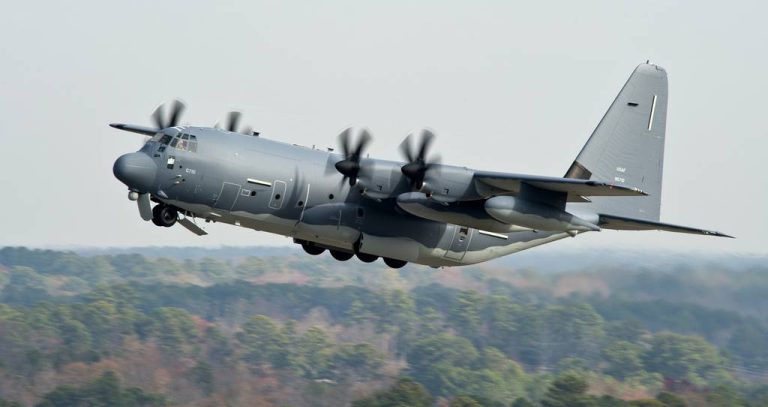
A U.S. Air Force AC-130J gunship took part in battering and sinking a retired U.S. Navy vessel during this summer’s 2024 Rim of the Pacific exercise, according to explosive footage released by the Air Force.
A New Mexico-based 27th Special Operations Wing crew manning the AC-130J bludgeoned the Austin-class amphibious transport dock Dubuque with cannon fire from the air as part of a live-fire sinking exercise last month.
The former amphibious assault ship Tarawa was also sent to the ocean floor as part of the exercise. Footage of the Tarawa’s final moments above the ocean’s surface has yet to be released.
This year’s Rim of the Pacific Exercise, or RIMPAC, involved 29 nations, 40 surface ships, three submarines, 14 national land forces, more than 150 aircraft and 25,000 personnel. It is the largest international maritime exercise and allows militaries the opportunity to test high-powered weapons in real-world scenarios.
Over the roughly minute-and-a-half video, which was recorded off the coast of the Hawaiian island of Kauai, the AC-130J ambushes the Dubuque with a barrage of cannon fire.
Impacts can be seen across the vessel’s surface, with billows of smoke signaling each heavy strike.
Though not included in the video, Dubuque was also hit by U.S. Army AH-64 Apache helicopters and elements from the Japan Ground Self-Defense Force.
The Dubuque, which now rests 15,000 feet below the waves, was commissioned in 1967 and went on to serve in Vietnam before being decommissioned in 2011.
Ships sunk during the RIMPAC exercise must be cleaned of any toxic substances, such as mercury or petroleum, in compliance with Environmental Protection Agency regulations. Vessels must also sink at least 6,000 feet underwater and 50 nautical miles from land.
Riley Ceder is an editorial fellow at Military Times, where he covers breaking news, criminal justice and human interest stories. He previously worked as an investigative practicum student at The Washington Post, where he contributed to the ongoing Abused by the Badge investigation.
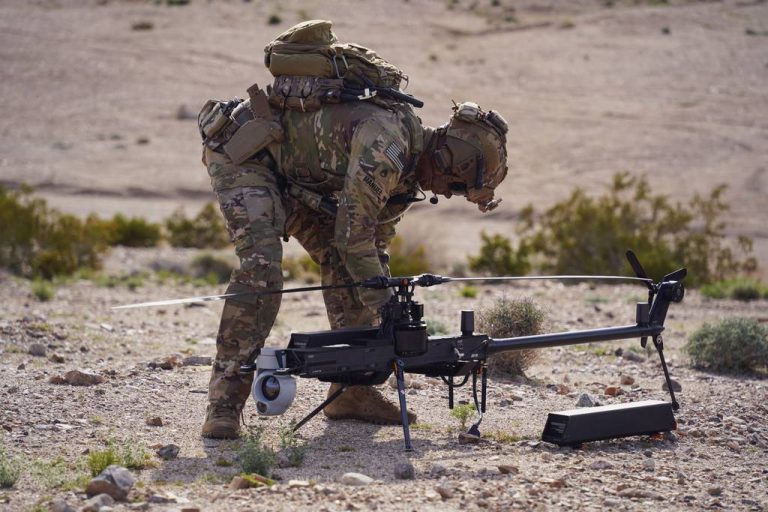
As conflicts across the Middle East and in Eastern Europe have demonstrated, unmanned aerial systems, or UAS, are reshaping the dynamics of modern warfare, emerging as a pivotal technology alongside communication in military engagements.
In contemporary military operations, UAS are being tightly integrated into infantry tactics, used in new and creative ways for reconnaissance, leveraged for forward operating base defense, relied on to provide critical intelligence and deployed for data collection. Because UAS can autonomously operate in hazardous environments and undertake high-risk missions, they have revolutionized warfare by significantly enhancing operational safety and expanding tactical options for ground forces.
In response to China’s historical technological dominance in the UAS market and amid the technology’s rapid evolution, Congress has taken steps to foster technology development while addressing new potential dangers. Legislative measures have been introduced to support the development of domestic UAS capabilities.
H.R. 2864, the C-CCP Drone Act, would mandate the inclusion of equipment produced by Shenzhen Da-Jiang Innovations Sciences and Technologies Company Limited (DJI Technologies), the world’s largest drone manufacturer, on the Federal Communications Commission’s list of equipment that poses a risk to U.S. national security.
The threat of Chinese advancements
DJI and Autel, both Chinese companies, control more than 90% of the global drone market. In the mid to late 2000s, subsidized pricing allowed DJI to penetrate global markets rapidly, including within the U.S. and NATO countries, to the detriment of domestic manufacturers.
The ubiquity and cost advantages of Chinese drones have disrupted foreign markets while introducing security vulnerabilities in sensitive areas such as critical infrastructure, military bases and urban surveillance. Reports have surfaced of data from Chinese-made drones being transmitted back to servers in China, raising concerns about espionage and data security. China’s collaboration with Russia to enhance Russian FPV drone production capabilities could also pose a further challenge to the U.S. and NATO.
US countermeasures and investment
In this environment, ensuring the West’s UAS superiority on the battlefield will depend on the success of efforts to bolster domestic capabilities, increase investments in R&D and develop advanced technologies that can compete with and surpass those produced by China.
The Department of Defense has initiated multiple programs to bolster U.S.-based UAS manufacturers and support the development of a secure and reliable supply chain for critical components.
Meanwhile, private companies like Anduril, Shield AI and Edge Autonomy are leading the charge with new UAS solutions tailored for defense applications. These innovators are not only developing cutting-edge technology but also ensuring their products are free from foreign influence and data security dangers by manufacturing critical components such as cameras, gimbals, flight controllers, and radios onshore.
Private equity can further these efforts by strategically investing in innovative companies and technologies, driving the growth of domestic UAS innovation. Moreover, by supporting these companies’ efforts to develop onshore manufacturing processes and establish secure supply chains, private equity investment can help reduce dependence on foreign sources and enhance national security.
It is therefore paramount to invest in developing and deploying critical technologies and cyber tools to the warfighter that will be necessary to accelerate domestic UAS development and deployment.
Doctrine, training and safety standards
While much is happening on the production front, we also need to consider the impact of UAS on military operations, which will require significant adjustments. Military doctrine will need to continue to evolve to include new tactics, techniques and procedures for UAS-supported fire and maneuver. Following special operations’ lead in this domain, new protocols will have to be rapidly transitioned to the conventional forces.
Training programs must also change to focus on the operational skills required to manage UAS fleets, interpret real-time data and integrate UAS intelligence into broader operational contexts. This training should include ethical considerations related to privacy violations and rules of engagement in settings where civilian populations are often at risk.
Outlook
Innovations in artificial intelligence, machine learning and autonomous operations are certain to further enhance UAS capabilities, making them more efficient and versatile. AI is poised to play a significant role in the future of UAS by enabling drones to perform complex tasks with minimal human intervention and adapt to dynamic combat environments, improving their ability to detect and respond to threats. Autonomous operations will reduce the burden on human operators, allowing for more efficient and effective mission execution.
Soon, we can also expect to see UAS with extended operational ranges, improved stealth features and advanced payload capabilities. Integrating UAS with other emerging technologies such as augmented reality and cyber warfare tools will also create new tactical opportunities and challenges.
The integration of UAS with AI will also give ground troops enhanced situational awareness, as well as better coordination and decision-making in the field. Likewise, cyber warfare tools will enable UAS to disrupt enemy communications and infrastructure, providing a strategic advantage in modern conflicts.
As UAS technology continues to evolve and domestic drone production expands, it is crucial for military and industry leaders to closely monitor threats while fostering an entrepreneurial environment that prioritizes continuous innovation, rigorous training and doctrinal adaptation. Through collaboration, the potential of UAS can be fully realized, ensuring that military operations are as effective and efficient as possible while minimizing risks to combatants and civilians.
Florent Groberg is a vice president at AE Industrial within the firm’s Portfolio Strategy and Optimization Group. Groberg previously held key positions at Microsoft, Boeing and LinkedIn. Prior to that, Groberg was a captain in the U.S. Army, completing both U.S. Army Airborne and U.S. Army Ranger schools. Groberg received the Medal of Honor for his actions in combat operations in Afghanistan in 2012. He currently serves on the American Battle Monuments Commission, an appointment by the president of the United States.
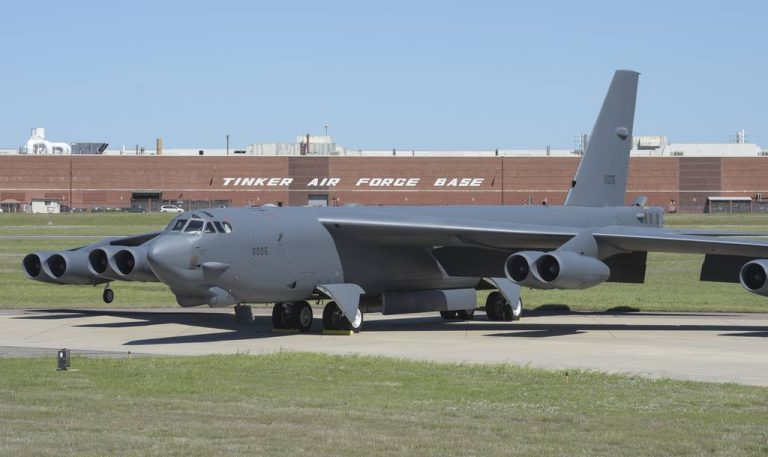
DAYTON, Ohio—The Air Force is working to make up for schedule delays and cost overruns on two central components of its plan to keep the B-52 flying into the 2060s.
The 1960s-era B-52, whose missions have ranged from nuclear alert during the Cold War to precision strikes against the Taliban, is the workhorse of the Air Force’s bomber fleet. The service is undergoing a $48 billion overhaul to keep it operating for another 30 to 40 years alongside its newest bomber, the B-21.
Completing those upgrades is “a no-fail mission,” Brig. Gen. Erik Quigley, who leads the Air Force’s B-52 program executive office, told reporters July 30 at the Air Force’s Life Cycle Industry Days conference in Dayton, Ohio. However, two critical elements of the modernization effort have accumulated significant delays and cost increases.
The first, called the B-52 Radar Modernization Program, has seen its cost estimate grow from $2.3 billion in 2021 to $3.3 billion as of March, according to Jason Knight, deputy senior material leader for the B-52.
Knight said in the briefing with Quigley that while the program is at risk of a critical cost breach — which would require it to notify Congress and craft a new cost and schedule baseline — it hasn’t reached that point yet.
A second effort, dubbed the Commercial Engine Replacement Program, is three years behind schedule, according to a June report from the Government Accountability Office. The program’s cost has increased by $2.5 billion in its latest projection, from $12.5 billion to $15 billion, according to Knight.
For both programs, the Air Force is working with Boeing, the lead integrator, to solidify schedules and new cost estimates, which means their latest projections could change soon. Quigley said the focus is on efficiency — finding ways to adjust requirements or rephase certain development milestones.
The program is working with Shay Assad, the former director of the Pentagon’s pricing office, to help with those cost and schedule discussions. Assad, who has a history of negotiating contracts in the department’s favor, recently helped the Air Force solidify a separate deal for Boeing’s E-7 Wedgetail aircraft.
“We’re leveraging his experience and expertise on how to become more efficient,” Quigley said. “He sat down and did a deep dive with our government team but also with Boeing to just kind of see how we can be more efficient with those business practices.”
That includes streamlining the program’s process for receiving and reviewing proposals and managing contracts, he added. For the engine replacement effort, the program is reexamining its requirements to see if they’re too restrictive or slowing down the design process.
On radar modernization, the service is planning to speed up the effort by purchasing long-lead parts. Quigley said the program has also shifted the criteria for some milestones, which should improve its schedule. Knight added that the program office has asked Boeing to put some pressure on the radar provider, RTX, to speed up its delivery timelines.
“We’re pretty confident that schedule slip is behind us, and now it’s just executing and looking for opportunities moving forward,” Quigley said.
Courtney Albon is C4ISRNET’s space and emerging technology reporter. She has covered the U.S. military since 2012, with a focus on the Air Force and Space Force. She has reported on some of the Defense Department’s most significant acquisition, budget and policy challenges.
In the world of preparedness, learning from fiction can be just as valuable as real-world experience. Movies often depict extreme survival scenarios, providing both entertainment and valuable lessons for those who are keen on prepping.
Whether it’s surviving in a post-apocalyptic wasteland, finding ways to live off the land, or overcoming the harshest environments with limited resources, survival movies offer a wealth of insights. In this article, we’ll explore six survival movies that not only captivate but also serve as practical guides for preppers, offering strategies, mindsets, and skills that could prove vital in real-life situations.
The Craft of Survival Movies: Blending Fiction with Real-Life Experience
Survival movies are more than just thrilling narratives; they are meticulously crafted to reflect the harsh realities of what it takes to stay alive in dire circumstances. Behind the scenes, a significant amount of research, consultation with experts, and attention to detail goes into making these films as authentic as possible. Writers, directors, and actors often immerse themselves in real-world survival experiences to accurately portray the physical and psychological demands of survival.
To create believable scenarios, filmmakers frequently collaborate with survival experts, wilderness guides, and even military personnel who bring their real-life expertise to the table. These professionals help shape the storylines, ensuring that the characters’ actions and strategies align with how a person might actually respond in a similar situation. From the use of proper survival techniques, like building a fire or finding clean water, to the psychological toll of isolation, the authenticity of these details often stems from the input of those who have lived through or studied survival situations.
Furthermore, actors often undergo rigorous training to prepare for their roles, learning the survival skills their characters must demonstrate on screen. This might include training in navigation, first aid, or even basic bushcraft skills. The physical transformation that many actors undergo is also a testament to the lengths filmmakers go to portray survival accurately. For example, in “The Revenant,” Leonardo DiCaprio famously ate raw bison liver and endured freezing temperatures to authentically depict the harsh conditions faced by his character.
The writing of survival films is also heavily influenced by real-world survival stories, often drawing inspiration from historical accounts, biographies, and even survival manuals. By grounding their scripts in reality, writers are able to create tension-filled narratives that resonate with audiences, especially those who have an interest in survivalism and prepping. The plausibility of these stories adds a layer of immersion, making viewers not just spectators but participants, who can imagine themselves in the same situations and question how they would react.
Survival Movies To Watch:
1. The Road (2009)
Movie Overview:The Road, directed by John Hillcoat and based on Cormac McCarthy’s Pulitzer Prize-winning novel, is a harrowing tale of survival in a post-apocalyptic world. The story follows a father and his young son as they traverse a desolate, ash-covered landscape, struggling to stay alive while avoiding roving bands of cannibals and scavenging for food and supplies. The world they navigate is bleak, with the remnants of civilization offering little more than danger and despair.
Lessons for Preppers:
Resourcefulness in Scarcity: In the film, the father and son make use of whatever they can find, from abandoned homes to forgotten stores of food. This highlights the importance of being able to adapt and make the most of limited resources, an essential skill for preppers who may face similar shortages in a collapse scenario.
Security and Trust in a Lawless World: The constant threat from other survivors—some of whom have turned to cannibalism—underscores the importance of security. Preppers can learn the necessity of being vigilant and having a plan to protect themselves and their loved ones in a world where law and order have broken down.
Mental and Emotional Resilience: The psychological toll of living in such a harsh environment is evident throughout the film. The father and son’s survival depends not only on their physical actions but also on their mental fortitude. For preppers, this emphasizes the importance of preparing not just physically but also mentally, to endure the long-term stresses of a survival situation.
2. Cast Away (2000)
Cast Away (2000) – Photo Source: IMDB.com
Movie Overview:Cast Away, directed by Robert Zemeckis, is a gripping survival drama that follows Chuck Noland, a FedEx executive played by Tom Hanks, who is stranded on a deserted island after a plane crash. With no immediate hope of rescue, Chuck must learn to survive alone, relying solely on his wits and whatever resources he can find on the island. Over the course of the film, we witness his transformation as he learns to live in complete isolation and grapple with the physical and emotional challenges of survival.
Lessons for Preppers:
Adapting to Your Environment: Chuck’s survival depends on his ability to adapt to the unfamiliar island environment. He learns how to catch fish, harvest coconuts, and start a fire—all skills crucial for survival. For preppers, this highlights the importance of understanding and adapting to your specific environment, whether it’s a wilderness setting or an urban area, and acquiring the necessary survival skills to thrive in it.
Self-Sufficiency: With no one else to rely on, Chuck must become entirely self-sufficient. From creating tools and shelter to addressing medical needs, he exemplifies the importance of being able to take care of oneself in a survival situation. Preppers can learn from this by ensuring they have the skills and knowledge to be independent, including first aid, food preparation, and basic construction.
Mental Resilience and Companionship: Isolation takes a heavy toll on Chuck, who creates a “companion” out of a volleyball he names Wilson to cope with his loneliness. This underscores the importance of mental resilience and the human need for companionship, even in an isolated survival scenario. For preppers, this highlights the importance of maintaining mental health and, when possible, forming connections or finding ways to stave off the effects of isolation.
3. The Martian (2015)
Movie Overview:The Martian, directed by Ridley Scott and based on Andy Weir’s novel, tells the story of astronaut Mark Watney, played by Matt Damon, who is stranded on Mars after a mission goes awry. Believed to be dead by his crew, Watney must figure out how to survive alone on the hostile planet using the limited resources available to him. The film is a testament to human ingenuity and resilience, as Watney uses his knowledge of science and engineering to “science the shit out of” his dire situation.
Lessons for Preppers:
Problem-Solving and Ingenuity: Watney’s survival hinges on his ability to think critically and solve complex problems with the resources at hand. From growing potatoes in Martian soil to creating water, his ingenuity is key to his survival. For preppers, this underscores the importance of problem-solving skills and the ability to think creatively in crisis situations, making the most out of whatever is available.
Knowledge and Skillset: Watney’s survival is largely due to his extensive knowledge in botany, engineering, and chemistry. This emphasizes the importance of having a diverse skill set and practical knowledge in various fields, including agriculture, mechanics, and basic science. Preppers can take this as a reminder to continuously learn and develop skills that could be life-saving in a survival scenario.
Resource Management: With limited supplies, Watney meticulously manages his food, water, and energy to extend his survival until rescue. This highlights the critical importance of resource management in survival situations. For preppers, it’s a lesson in the careful planning and rationing of supplies, ensuring that resources are conserved and used efficiently over time.
4. Into the Wild (2007)
into the wild (2007) – Photo Source: IMDB.com
Movie Overview:Into the Wild, directed by Sean Penn and based on the true story of Christopher McCandless, is a thought-provoking film about a young man who abandons his conventional life to venture into the Alaskan wilderness. Seeking freedom and a deeper connection with nature, McCandless ultimately faces the harsh realities of living off the land with minimal preparation. The film is both a celebration of the wild spirit and a cautionary tale about the dangers of underestimating nature.
Lessons for Preppers:
The Importance of Proper Preparation: McCandless embarks on his journey with minimal supplies and limited knowledge of the Alaskan wilderness, which ultimately contributes to his downfall. For preppers, this highlights the crucial importance of thorough preparation before venturing into any survival scenario. This includes having the right gear, knowledge of the environment, and understanding the potential risks involved.
Survival Skills and Knowledge: Despite his passion, McCandless lacks the essential survival skills needed to live in the wild. His struggle to find food and his inability to identify edible plants illustrate the importance of having practical survival skills, such as foraging, hunting, and food preservation. Preppers can learn from this by ensuring they are well-versed in basic survival techniques that are vital for self-sufficiency in the wilderness.
Respecting the Power of Nature: The film serves as a reminder of nature’s unpredictability and the importance of respecting it. McCandless’s experience shows how quickly the natural environment can turn dangerous, especially if one is not fully prepared. For preppers, this is a lesson in the importance of having a healthy respect for nature’s power and ensuring that survival plans account for the worst-case scenarios that the environment can present.
5. The Book of Eli (2010)
Movie Overview:The Book of Eli, directed by the Hughes Brothers, is a post-apocalyptic action film that follows Eli, played by Denzel Washington, as he journeys across a desolate, dystopian America. In this harsh world, where society has collapsed, and resources are scarce, Eli carries with him a sacred book that he believes holds the key to humanity’s future. Along the way, he faces numerous threats from ruthless survivors and must rely on his skills, faith, and determination to fulfill his mission.
Lessons for Preppers:
Self-Defense and Combat Skills: In the dangerous world of The Book of Eli, where violence is commonplace, Eli’s survival is heavily reliant on his combat skills. He expertly handles weapons and engages in hand-to-hand combat to protect himself. For preppers, this underscores the importance of self-defense training and being proficient with various forms of weapons, which could be crucial in a survival scenario where law and order have broken down.
Resourcefulness and Adaptability: Eli demonstrates a high level of resourcefulness, making the most of the limited resources he encounters. From scavenging for food and water to repairing his gear, Eli’s ability to adapt to his environment is key to his survival. Preppers can learn from this by cultivating a mindset of adaptability and being prepared to improvise with what is available when resources are scarce.
The Role of Faith and Mental Resilience: Throughout the film, Eli’s unwavering faith and mental strength drive him forward despite the overwhelming challenges. His belief in his mission gives him purpose and helps him stay focused. For preppers, this highlights the importance of mental resilience and having a strong sense of purpose or motivation, which can be essential for maintaining morale and staying committed to survival efforts during tough times.
6. The Revenant (2015)
Movie Overview:The Revenant, directed by Alejandro González Iñárritu, is a gritty survival drama inspired by true events. The film stars Leonardo DiCaprio as Hugh Glass, a frontiersman left for dead after being mauled by a bear and betrayed by his expedition team in the early 19th century American frontier. Struggling against the harsh elements and his own injuries, Glass embarks on a harrowing journey of survival and vengeance through treacherous wilderness.
Lessons for Preppers:
Survival in Extreme Conditions:The Revenant showcases survival in brutal, freezing conditions where Glass must contend with severe cold, rugged terrain, and limited resources. His ability to use his surroundings—such as finding shelter and making clothing from animal hides—demonstrates the necessity of adapting survival skills to extreme weather conditions. Preppers should be equipped with knowledge and gear to handle various environmental challenges, particularly in harsh climates.
First Aid and Medical Knowledge: Glass’s survival depends heavily on his ability to treat his own severe injuries, including a bear attack. His use of natural remedies and makeshift medical techniques highlights the importance of first aid skills in a survival situation. For preppers, having a solid understanding of first aid and emergency medical care can be crucial, as well as being able to improvise when conventional medical resources are unavailable.
Persistence and Mental Fortitude: The film emphasizes the importance of mental resilience and the will to survive against overwhelming odds. Glass’s determination to live despite severe injuries, isolation, and betrayal underscores the power of perseverance. Preppers can draw from this by cultivating mental toughness and maintaining a strong will to overcome challenges, which is essential for enduring long-term survival scenarios.
My 2 Cents
Survival movies offer more than just thrilling narratives—they’re a goldmine of practical lessons for anyone interested in prepping. Each film, from the desolate landscapes of The Road to the unforgiving wilds of The Revenant, provides valuable insights into real-world survival skills and mental fortitude.
What stands out most is the universal truth that in a survival situation, adaptability, resourcefulness, and resilience are key. While these films dramatize scenarios for entertainment, they also remind us that preparation and a strong mindset can make all the difference when facing adversity. So, whether you’re a seasoned prepper or just starting out, there’s always something to learn from these cinematic depictions of human endurance.
Europe,Australia and America are all doing things to improve safety and environment on it self great.On the other side there is ever growing import from countries who ignore this all and so are cheaper. Same reason why medicines and compounds are made in china and india under conditions that are poor and a quality control that is (censored) to say the least.
So governments should add taxes as high as the measures here cost.the ,as the do not do that make you wonder how high the bribe is/was,or the are plain stupid or xxxx.
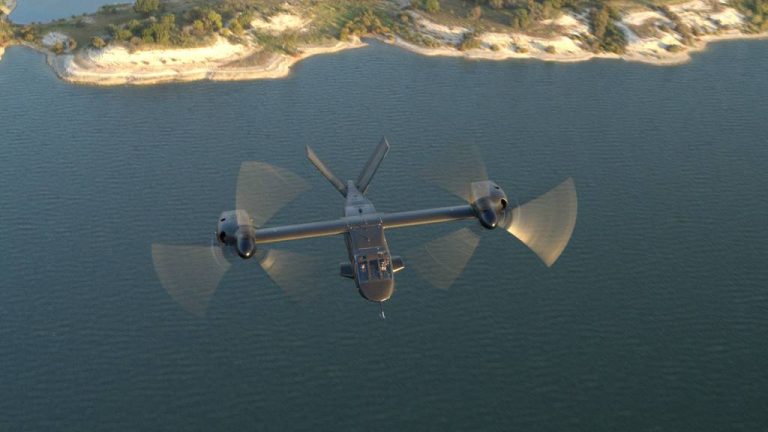
The U.S. Army’s future long-range aircraft is moving out of technology development and into the critical engineering and manufacturing development phase, the service announced Friday.
The Future Long-Range Assault Aircraft program — or, FLRAA — is estimated to be worth approximately $70 billion across its lifespan, including foreign military sales, and is set to replace roughly 2,000 Black Hawk utility helicopters.
The FLRAA will not serve as a one-for-one replacement for existing aircraft, but it is expected around 2030 to take over the roles of the Black Hawk, long the workhorse of the Army for getting troops to and around the battlefield.
The Textron Bell-designed FLRAA went through a successful preliminary design review in April and an Army Systems Acquisition Review Council in June.
“After reviewing FLRAA affordability, technological viability, threat projections and security, engineering, manufacturing, sustainment and cost risks, the [Army Systems Acquisition Review Council] confirmed that all sources of program risk have been adequately addressed for this phase of the program,” the Army statement reads.
The service will now be able to issue a contract option to Bell as it enters the engineering and manufacturing development phase, which, combined with the low-rate production phases, could be worth roughly $7 billion.
Textron Bell won the Army’s bid to build the FLRAA in late 2022 following a competition in which it and a Sikorsky-Boeing team flew technology demonstrators for several years to evaluate aircraft capabilities and drive out risk to a future program of record.
The Army will now equip the first unit with the capability in fiscal 2031. A limited user test is expected sometime in FY27 to FY28.
Reaching the engineering and manufacturing development phase is “an important step for FLRAA and demonstrates the Army’s commitment to our highest aviation modernization priority,” Doug Bush, the Army acquisition executive, said in the statement. “FLRAA will provide assault and MEDEVAC capabilities for the future Army, adding significantly increased speed, range, and endurance.”
The Army’s current fleet of helicopters will be incapable of meeting future distance requirements in places like the Indo-Pacific theater. The service wants the FLRAA to be capable of traveling roughly 2,440 nautical miles — or 2,810 miles — without refueling, but also be agile enough to maneuver troops into dangerous hot spots.
“Future battlefields require expanded [maneuvers], the ability to sustain and provide command and control across vast distances, and of course, evacuate our wounded,” Maj. Gen. Mac McCurry, the Army Aviation Center of Excellence commander, said in the statement. “All of these apply to both conventional and Special Operations Forces. With roughly twice the range and twice the speed, FLRAA brings unmatched combat capability to the Joint Force.”
The contract award in 2022 includes nine options — entering the engineering and manufacturing development phase means the Army will exercise the first option, under which Bell will deliver detailed aircraft design and build six prototypes.
The first aircraft in this phase is expected to fly in 2026, with low-rate initial production slated to begin in 2028.
“The Army will continue to review and refine the schedule as necessary based on the contract award and the latest program activities,” the statement notes.
The FLRAA program has set the standard for digital engineering from the beginning and has allowed for more rapid technology development and design.
“Using digital engineering as a key part of our ‘go slow to go fast’ approach has helped to accelerate the program by investing in requirements development up front,” said Col. Jeffrey Poquette, the service’s FLRAA project manager.
Jen Judson is an award-winning journalist covering land warfare for Defense News. She has also worked for Politico and Inside Defense. She holds a Master of Science degree in journalism from Boston University and a Bachelor of Arts degree from Kenyon College.