LATEST ARTICLES

Determining the Size of a Garden Required to Feed a Family

0

In these times of increasing food costs, political unrest in various areas of the world, and concern about how all of this will eventually affect us, there is a growing interest in home gardening.

Learning to grow your own food is good for other reasons as well. It can contribute to healthier eating habits and provide time with your family away from the technology that infiltrates our everyday lives. There is nothing better than fresh tomatoes or other vegetables from your own garden. It has been shown that by growing even a small percentage of their own food, people can significantly cut their food bill by up to 25% a year.

Growing your own food also cuts down on energy costs and environmental concerns, as less energy is used in the processing, packaging, and transportation of the food.

Food gardening is becoming the number one hobby in the United States of America now, and with the increasingly busy lifestyle, people enjoy foods, flowers, and other vegetables that are direct from the farm to the table. There are very few things that are more satisfying than a meal that has come entirely from the fruits of your own labor.

To accomplish this, it is important that you know how much of a garden you will need to grow enough vegetables and fruits to feed your family. A home garden designed to provide a family of four with all the fruits and vegetables that they need for the year is an economic and desirable way to improve family health and lower your food costs.

There are some factors at play here, though, and each situation is distinctly different. The factors on how big a garden to have include, for example, the amount of space you have to allot to your new garden; the amount of money you will be able to invest in your garden over the season; and your individual tastes, aversions, and recipes.

This article aims to provide some practical guidance to those who are interested in moving toward self-sufficiency by growing as much of their own food as possible. Swift and positive results are realized by many in this hobby. Very little experience is needed to begin with, and a little imagination can possibly make your garden available year-round if you persevere a little.

Importance of Home Gardening

In our fast-paced and technology-driven society, this great American tradition, based on the highest principles of redeeming man’s natural resources for the service of man, is rapidly being lost. Engaging in home gardening offers numerous advantages. It provides physical activity, exposure to sunlight and soil, and promotes mental and emotional well-being. Furthermore, it serves as an enjoyable pastime.

In the past, our predecessors maintained a stronger connection to their food origins. Farming, vegetable growing, hunting, and fishing were the main sources of food supply. Today, most of us are so far removed from the production of food that we are not aware of exactly what we eat and drink. We are unaware of where our food comes from and the nutrition it provides.

An advantage to vegetable gardening is that families can grow their produce organically. In our busy lifestyles, we have little time to garden, but it becomes a family event to enjoy together. What a great opportunity to teach children where their food comes from and the nutritional benefit. Many children think peas, carrots, corn, and other vegetables come from a freezer bag because the families have never seen the live plant.

A home garden can supplement meals and pinch off most grocery items during the summer. Moreover, there are times in our society when gardening becomes an important resource for fresh foods. Often, we may hear reports of various natural disasters and utilities being shut off. Many families in urban areas had no food until the shelves were restocked in twenty-four to forty-eight hours. Bountiful home gardens even helped to feed American families during World War II..

Factors to Consider

Several factors help determine the size of a garden needed for a family to rely on it for some or all of their food. A proper assessment should consider the family’s size and structure, dietary needs, preferred foods and growing seasons, and any dietary restrictions. Families may also wish to store food, so space for growing, harvesting, and storing should be calculated.

The quantity and quality of food required will also be influenced by the family’s dietary choices, and larger families may require a variety of foods to ensure everyone gets the necessary nutrients.

Answering the question, “How much land do I need to grow my own food?” depends on each individual’s food requirements, so considerations should be made for current and projected needs.

BHHLBANSep19vFMiniGarden

Family Size and Composition

For most families, the primary factor determining the size of the garden required to produce a portion of the family’s food is family size. Family size for this chapter is based not only on the total number of people who have to be fed, but also on their needs and eating habits. The larger the family, the more food is needed to feed that family.

Children, especially young ones from about age 2 to teenagers in their early twenties, need larger portions or greater quantities of food compared with adults. This is partly due to higher nutrient needs as they grow, and as a result of higher food expenditure.

Larger households with four or more persons are often more interested in growing at least some of their food. People living alone may share the interest but are more often interested in having and caring for flowers, collecting, and doing small projects with limited space for enjoyment.

For other purposes, such as large-scale farming that might supplement employment and possibly become a business through eco-tourism, we address some aspects in the chapter at the end of this section.

Household composition may also include extended families, for example, grandparents living with younger generations. Provided you know the numbers and know the land, it is possible to estimate household size and basic food needs. People of different ages have different needs for energy and other nutrients in their diet.

In addition to different nutrients and vitamins that one gets from food for general health and well-being, the amount to be eaten and the requirements for storage and preservation for the family have to be estimated.

A little bit of everything: these people may be kitchen grazers. All eaters: general family need. These are people who will eat what comes and will eat anything presented. Their food choice is more relaxed. Mixed diet: generally, the male members of the household.

In the above, the type of diets may influence the type of crops and sizes of gardens to cultivate.

Dietary Preferences and Restrictions when determining the size of a garden

It is just as important to understand dietary preferences and dietary restrictions as it is to know how many calories people require. It does not matter if 100 apple trees produce 60,000 pounds of apples if no one in your family particularly likes apples or if all of the apple trees also have a peanut-producing component and someone is allergic to peanuts.

Among the dietary groups to be considered are vegetarians and vegans. This information can help you decide whether to include animals and/or animal products. For vegans, the obvious choice would be no animals and no animal products.

Other considerations would include if anyone in the family has food allergies and/or food intolerances, if people follow specific cultural dietary practices, and whether anyone in the family dislikes certain foods.

I have received numerous emails from people who have no interest in eating certain types of fruit and/or vegetables. Obviously, these people do not grow their own fruits and vegetables. Growing fruits and vegetables that no one in the family likes or will eat is a waste of garden space, money, and time.

Part of the gardening endeavor should include a discussion about likes and dislikes, and if someone dislikes particular food items, that person should be prepared to try them at least once a year every year until their taste buds decide to change their mind. There is no excuse for an entire garden plot to go to waste simply because one person refuses to eat, for instance, carrots. It may be best to set aside a separate part of the garden for experimental foods to be grown in small amounts and that aren’t to every man, woman, or child’s taste.

Calculating Garden Size

The first step in how to find out the size of a garden to feed a family is to determine how many calories a person would eat in one day. The amount of calories can vary slightly from person to person, as men usually need more calories than women.

As a rough estimate, multiply the number of people in the family by 1,000 for the number of calories per person every day. Divide this number by the percentage of fruits and vegetables that your family uses, and this will give the number of calories from fruits and vegetables that you would need. Those numbers will help you figure out what to grow and how much of each crop to plant.

There are many things to factor in when calculating your garden size, such as the type of plants that you select to grow. Are you planting plants up and tall, or do you plant your plants in long rows? Both ways to plant have an upside as well as a downside.

When one grows plants for the second and third year, they will know the amount of space needed. However, at first, they may not know the exact amount, so it could be a good guess.

Someone who has been planting a garden for two or three years can look back at their records to see what they have planted and the yield that they have gathered. That person will also be able to figure out the weight of what was harvested off of each plant.

Estimating Daily Caloric Needs

Food is our primary source of energy, and the first step to planning a sustainable food supply is to estimate how much energy your family needs each day. Children, women, men, and elders all have different calorie requirements, and young men who engage in heavy physical work require the most calories of any population segment.

To approach food production from a systems perspective, all of these caloric needs should be considered and balanced against the land’s energy budget. If a family is unable to produce a sufficient quantity of food to meet their caloric needs, they may either need to increase the land base under cultivation or reduce their energy expenditures.

In addition to calories, a healthy diet should also contain adequate amounts of protein and vitamins. Complete proteins can be formed from a variety of complementary amino acid profiles, so it is not essential to raise animals for protein. However, since vitamins and minerals are mostly found in plant foods, diets that are largely or exclusively composed of animal products can be quite low in vitamins and minerals.

A diverse, plant-based diet is one of the best ways to ensure an adequate intake of vitamins and minerals, and a garden can help. Even within a specific age and gender category, a family should consider planning for an average intake, as well as boosted intakes during rapid growth (such as during infancy, adolescence, and pregnancy).

In addition to different needs for children and family planning, a local, seasonal diet will vary greatly throughout the year. In traditional agricultural systems, communities often practice seasonal hunger or periodic fasting. Different times of the year can see significant variations in energy needs based on climate.

For example, farmers may require significantly more energy during the hot growing season than during the off-season, and they may need to store extra food for times when they are unable to work.

As the summer growing season approaches, it may also be necessary to temporarily build up food stores to feed the farmers while they are planting, given the low yields of newly harvested crops. Families need to carefully consider these energy peaks and valleys, as well as house projects and other tasks that require extra energy, when planning and planting a garden.

Also critical to consider in estimating energy needs are changes in lifestyle and correlates to health and wellness. A human being will have a different metabolic set point or need for energy if they engage in heavy physical labor, day in and day out as compared with someone whose lifestyle is mostly seated.

Energy requirements for fuel will be an important factor in planning a diet that supports active and heavy labor. As a rule of thumb, a body requires 0.4 to 1.8 kilograms of body weight per day to perform low to high work. If aiming to maintain health and lean body mass without extreme work, approximately 1.76 kilograms per day is a sufficient calculation. In order to calculate this in pounds, take 1.76 times the number of pounds.

The average non-pregnant woman will require 1600 to 2400 calories daily; mothers, 1800 to 3200 calories; infants 0 to 6 months, 400 to 600 calories; infants 6 to 12 months, 750 to 950 calories; children 1 to 7 years, 1000 to 1700 calories; boys and girls age 7 to 10, 1300 to 2000; males 11 to 12 years, 1800 to 2600 calories; females 11 to 12 years, 1600 to 2200 calories; males 13 to 14 years, 2200 to 3200 calories depending on many variables and amount of physical work daily; females 13 to 14 years, 1800 to 2400 calories; males 15 to 18 years, 2800 to 4200 calories daily; females 15 to 18 years, 2200 to 3400 calories daily; men, 2700 to 5000 calories annually depending on daily physical work; and non-laboring elderly, 1800 to 2600.

Crop Yield and Space Requirements

pocketgardenbnr1Some garden vegetables need more space than others. And some will feed a bigger family than others. It makes sense to learn how much space a crop will take in the garden and how much it can contribute in the end before you decide what to plant. There are six different habits that growing crops have, and you will want to know these to help plan your garden space use.

Crops grow in these habits:

Leaf lettuce – these don’t take much space, and you can pick the outside leaves only instead of taking out the whole plant if there isn’t much growing room.

Round bulb – this includes cabbage, cauliflower, beets, and leeks. They take up more space, and the whole plant must be pulled or cut for eating.

Root – carrots, onions, potatoes, and turnips are examples of root plants. They can also be bunched closer together, planted according to instructions, or thinned out for bigger crops.

Runner/spreader – many herbs and such plants as bush beans spread across the ground.

Tall and thin – corn, cucumber, and tomatoes planted on trellises, brussels sprouts, staked peas, and pole beans belong in this category.

Mixed 1 and 2 – tomatoes grown against a fence or cage can be helped that way, towards the sun, but they eat some space along with the 1 spacers, too.

Most gardeners will mix up crops in a plot, choosing what to plant depending on space issues, sun and water availability, and the time of year. You can triple your space with multiple plantings in some cases. That is often ruled by the days to maturity.

Soil and water aspects of a plot make for a healthy place for any garden on any scale. Crops with plenty of good soil and rich levels of organic matter are less likely to be attacked by bugs that bother weakened plants. You can grow good crops in small spaces, but you have to baby them more if you need the yields. It is possible to figure out what space is worth most to you even in a small plot.

Experiment with the use of space and crops to find what suits you and your family’s diet needs, cooking, storing, and trade goals. Since you consume the food, it is your right to choose the crops and plan the use of space in your garden.

Maximizing Garden Productivity

maximizing garden productivity

As we consider gardening and go through the process, there is much food for thought. A key part of gardening is how efficiently our gardens are able to produce. To gardeners familiar with methods aimed at increasing productivity, companion planting could give gardens that extra productivity boost.

This method of gardening involves growing specific plants together because of their mutually beneficial relationships. Good compatibility results in additional vitamins and minerals for those who consume the bountiful harvest produced on a steady basis.

Take this a step further and consider adding these elements to the ecosystems that are developed through our gardening efforts. The key is to stick to the plants that will provide these features and still be able to reach an abundant harvest.

Reduced infestation and pests, or the ability to treat infestations with the use of less or no chemicals, are added elements to consider as we turn our thoughts to our families.

Another important detail is being familiar with the types of relationships plants are known to have; spreading the word to youngsters and allowing these relationships to thrive also gives gardens the capability of abundant production.

As plants grow, they interact with their location and the organisms surrounding them. Sadly, this is more than what you’d think, as there are also a number of diseases that may come into play, affecting them and others growing in the same general area.

The same logic applies to nutrient vitality within the soil. To get the maximum yield from your garden, consider rotating plants as a 7-10 year plan connects all garden vegetables. This strategy is known as crop rotation, and it’s something that everyone should know concerning pest and disease control.

Nutrient depletion and the increased chance for disease spreading are the driving forces behind rotating crops. Applying these various topics can further the learning and productivity that gardens provide. The end goal is a host of the most effective plants and combinations that will come together to yield the most sustainable and healthy type of harvest a family could hope for.

Companion Planting

Many gardeners find that certain combinations of plants can greatly increase garden productivity. Plants may benefit each other through repelling pests, discouraging disease, increasing growth, or contributing a needed product such as nitrogen. There are many examples, but some possibilities are:

Asparagus and tomatoes: the asparagus repels a common nematode of the tomato.

Basil with tomatoes: the basil repels flies and defends the tomato by increasing its oil production, which discourages pests like whiteflies and mites.

Two things to look for when considering companion plants are that the plants have similar growth habits and decomposing times so that they will have similar nutrient needs, and that their ranges of nutrients are not too similar so they don’t have to compete for growth.

Generally, companion planting can reduce the need for chemical pesticides in the garden because many pest control plants can be grown. Even if they may not have the qualities of improved harvests, planting some flowers can enhance the garden’s beauty and health.

The goal is to create a balanced energy in the garden. Your goal is to touch all the bases by understanding what the needs of the creatures and the plants are, and working toward a complete and harmonious ecosystem.

Crop Rotation

For sustainability and high yields in a small garden year after year, one of the most important practices is crop rotation. The components of crop rotation are planting family groups of plants in different areas of the garden from one year to the next so soil depletion of nutrients will not occur. It also interrupts the pest life cycles, making your job easier.

Many vegetables are heavy feeders, while others are light feeders, and a third group are soil builders. If the heavy feeders follow a light feeder, then a soil builder follows the heavy feeder, it is possible that there will be a natural restoration of nutrients in the soil. This is the old idea of crop rotation.

A word of warning: Nature will not restore nutrients to the soil if there is not the proper combination of following crops. Some of the family groups definitely do not get along. You cannot grow onions, then a soil-building legume, and follow with garlic, leeks, or any other allium in the same space year after year.

These plants require too many soil nutrients used by other family groups and will weaken and could eventually sicken and die if they are grown in the same garden bed space one year after the other.

There are substitutions that can be made so this rotation can be followed properly. For now, please just let it be known that alliums require one full year of no other alliums or onions in their required area.

Rotation also means rotating the warm season and cool season groupings in their different garden beds to prevent disease carryover as well as nematodes and insect communities that thrive on the same plant groups. Squash and related plants had difficulty in the garden with powdery mildew. By planting them in September, it eliminated the problem and the plants thrived.

Conclusion

survivalstockpile

In this article, I aimed to explore how we can determine the size of a garden required to feed a family. The main conclusion I have arrived at is that a gardener needs to consider their own situation and the needs of their family. Determining what a family needs in terms of groceries or food will guide a gardener in their efforts. Growing a garden requires more work and effort than other things, so it is necessary to be confident that the gardener and their family are set up for success.

In addition, a gardener needs to consider other factors, such as which practices they prefer to garden and how much work they are willing to do. Other practices that are important are being flexible and learning about gardening, so as to be able to continue gardening even if those needs change.

Additional resources:

A few compost recipes for all your gardening needs

If you see this plant in your backyard, don’t touch it!

Smart tips for gardening on dry soil

The #1 food of Americans during the Great Depression

Can the Air Force make its next-gen fighter jet cheaper than the F-35?

0

Since the F-35 Joint Strike Fighter’s inception, the Defense Department and industry have struggled to wrestle down its price tag to roughly $80 million or $100 million per jet, depending on the model.

It’s been a grueling battle involving inflation, supply chain crunches, evolving requirements and developmental problems, and remains ongoing to this day.

But now, looming over the horizon, Air Force leaders face an even harder challenge: Developing a sixth-generation fighter, a successor to the F-22, that can be produced at or below the cost of an F-35.

It’s an ambitious goal, and one being increasingly floated by Air Force leadership, even as the service continues to sort out what its next-generation platform will entail.

But outside experts caution that cutting costs on an advanced platform could sacrifice capability.

Air Force Secretary Frank Kendall first suggested the F-35′s price tag as a cost goal for the future fighter program, known as the Next Generation Air Dominance, or NGAD, platform in a June interview with Defense News.

Air Force Secretary Frank Kendall has said he wants to see the service’s next-generation fighter jet come in cheaper per unit than the F-35 Joint Strike Fighter. But outside experts warn that costs cuts could sacrifice capability. (U.S. Air Force)

At the Air and Space Forces Association’s Air Space Cyber conference in September, Kendall doubled down.

“The F-35 kind of represents, to me, the upper bounds of what we’d like to pay for an individual [NGAD] aircraft,” Kendall said. “The F-15EX and the F-35 are roughly in the same cost category. I’d like to go lower, though.”

How the Air Force can rein in that cost remains unclear. The price tag for NGAD’s original concept was coming in at about three times the price of an F-35, Kendall said in June. That sticker shock prompted the Air Force to pause its NGAD contract effort — which had been set to be awarded this year — and rethink its plans for a future air dominance platform.

Meanwhile, some aerospace experts worry that the Air Force is setting an unachievable pricing goal for NGAD — one that might require the fighter to be so watered down that it becomes an irrelevant asset for war and leads to the program’s demise.

“I think it would be extremely challenging, if not unrealistic, to get the kind of capability and performance that they need in NGAD [for] less than the cost of an F-35,” Heather Penney, a retired F-16 pilot and senior resident fellow at the Mitchell Institute for Aerospace Studies, told Defense News. “I’m concerned at the way that Secretary Kendall and the senior leadership have been talking about NGAD, because it feels a lot like they’re boiling the frog, that they’re getting people ready for a program cancellation.”

The Air Force is consulting with airpower experts, including former chiefs of staff Norton Schwartz, John Jumper, and Dave Goldfein, to help it figure out how it will dominate the skies for decades to come, Kendall said.

“We’ve got the A-team on this, and we’re moving pretty quickly … to get to some answers,” Kendall said. “Then, by the way, we’ve got to figure out how we’re going to pay for it. Which I think may, at the end of the day, be our biggest problem.”

Cloudy skies ahead

The Air Force wants NGAD to replace the F-22 Raptor fleet sometime in the 2030s. For years, Air Force leaders emphasized how vital NGAD would be to win future wars and it sought to retire older air frames to free up money to develop the system.

But NGAD’s cost has become its Achilles’ heel, and rumors began to spread earlier this year that the program was in trouble.

Kendall told Defense News in June that the service was still planning to build a next-generation fighter, but that it needed a redesign to bring its price tag down and allow the Air Force to buy it in significant numbers.

“We are looking at the NGAD platform design concept to see if it’s the right concept or not,” Kendall said in June. “We’re looking at whether we can do something that’s less expensive and do some trade-offs there.”

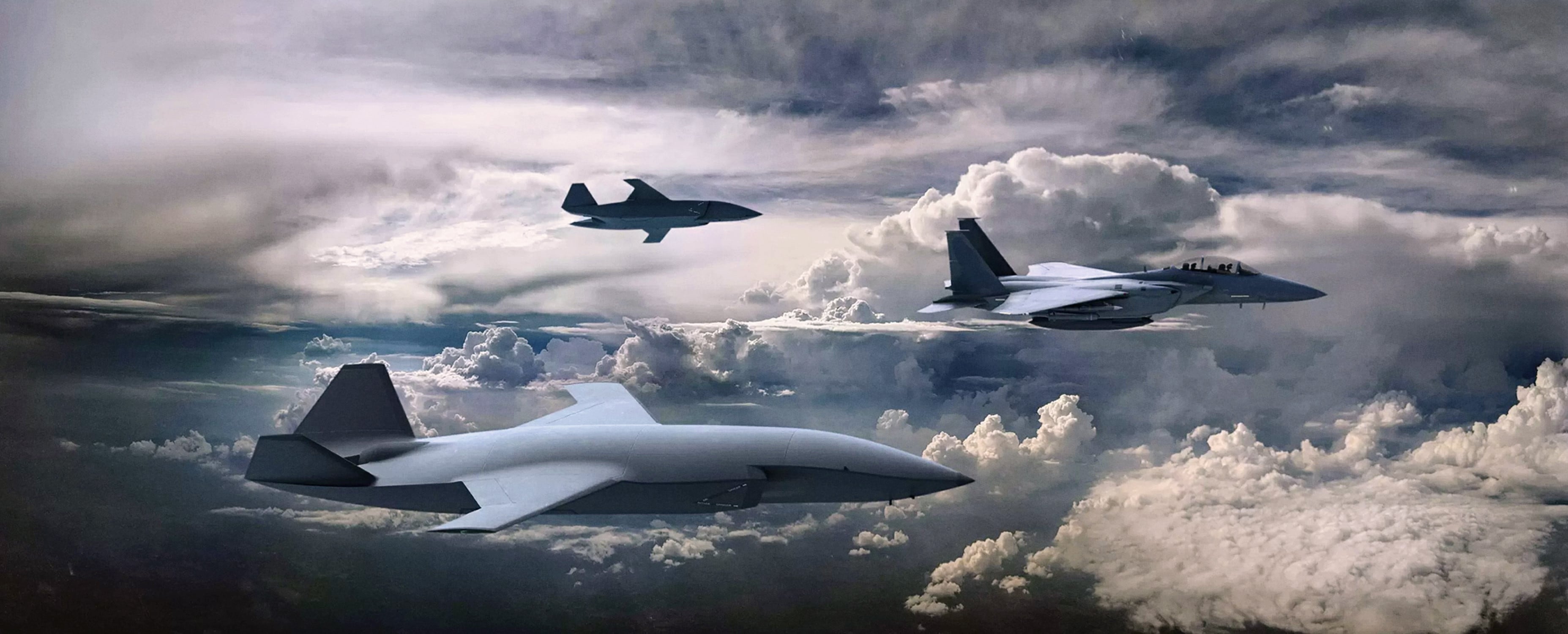
The Air Force envisions NGAD as a “family of systems” that include not only the sixth-generation crewed fighter, but also multiple autonomous drones known as Collaborative Combat Aircraft, or CCA, along with advanced sensors, weaponry and other technology.

The service has been secretive about the details of what NGAD will include and its capabilities, but in recent years has started planning for NGAD to be accompanied by CCAs, which will be drone wingmen for crewed fighter jets, accompanying jets on missions and performing a variety of functions.

The Air Force first started working on NGAD before conceiving of autonomous CCAs, Kendall said, and as NGAD is redesigned, it needs to be structured to better integrate those drone wingman and what they can offer.

Kendall said last month that CCA could help lighten the load for NGAD fighters.

“Once you start integrating CCAs, and transferring some mission equipment and capabilities, functions, to the CCAs, then you can talk about a different concept, potentially, for the crewed fighter that’s controlling them,” Kendall said. “So there’s a real range in there.”

The Air Force also wants to power NGAD with a cutting-edge “adaptive” engine, which would shift to the most efficient configuration as flying conditions change, a capability once considered for the F-35.

And as the entire Pentagon pivots to preparing for a possible war with China, the Air Force is rethinking how it would achieve air superiority against Beijing, Air Force Vice Chief of Staff Gen. Jim Slife said at the Defense News Conference in September.

At the same time, Kendall has also left the door open to other ways of dominating the skies against rival nations like China.

“NGAD itself is still a possibility, it’s one of the things we’re looking at,” Kendall said. “We’d like to get [the price tag] down from [multiple times the cost of an F-35]. But if that turns out to be the most cost-effective operational answer, that’s what we’re going to do, and go fight for the money to have it.”

But that pursuit could come with a cost, he warned.

“You end up with small numbers,” he said. “The more the airplane costs, the fewer of them you’re going to have. Numbers do matter, so it’s a trade-off.”

Will the numbers add up?

Whatever NGAD ends up looking like going forward, it faces multiple headwinds that could make bringing it into the F-35′s price range difficult, if not impossible, said John Venable, senior resident fellow of aerospace studies at the Mitchell Institute, a national security think tank that focuses on air and space power.

The Air Force has benefited by not being the only customer for the F-35, he noted.

By the mid-2040s, the Defense Department plans to have purchased about 2,500 F-35s for the Air Force, Navy and Marine Corps combined. The United Kingdom, South Korea, Germany, Israel and about 15 other allies and partner nations are also buying their own Joint Strike Fighter fleets, which allows Lockheed Martin to build as many F-35s as it can and bring the cost down by producing in bulk.

The DoD and Lockheed Martin have struggled to bring down the cost of the F-35 — a fighter that will eventually number in the thousands across multiple allies’ air forces. But without similar economies of scale, experts say, it will be difficult if not impossible to bring a sixth-generation fighter’s price tag down to a similar degree. (Airman 1st Class Alexander Vasquez/Air Force)

But the F-22 didn’t have that advantage, Venable said. The Air Force was the only customer for that fifth-generation jet, and originally planned to buy about 750 of them from Lockheed Martin.

That fleet was drastically slashed by former Defense Secretary Bob Gates, and the Air Force now has 183 F-22s, which cost $143 million each.

This time around, the Air Force does not plan to sell NGAD to other countries, and it’s not working directly with the Navy on a sixth-generation fighter.

The Navy calls its NGAD effort F/A-XX. In an Oct. 2 Defense Writers Group roundtable with reporters, Chief of Naval Operations Adm. Lisa Franchetti said the Navy is now in the process of selecting from three potential vendors to create F/A-XX.

The Air Force has not officially said how many NGAD platforms it wants, but last year Kendall suggested it might be around 200.

The B-21 — which maker Northrop Grumman has touted as the first sixth-generation aircraft — had an average unit procurement cost of about $692 million apiece when it was rolled out in 2022.

This further casts doubt on the feasibility of a sub-$100 million sixth-gen NGAD fighter, Venable said.

“You really think that you’re going to get an airplane that has that much more capability at the price point of an F-35, when you’re only going to buy [about 200] of those, and you’re not going to sell it to anybody else?” Venable said. “It’s just not a realistic expectation. … The range, the sensor payload, the stealth capabilities of this new system — all of those things are going to cost money to get right.”

Venable fears the steady drumbeat of questionable news for NGAD is jeopardizing its chances of ever becoming a reality.

“The way you kill things today is to study it until it’s no longer viable,” Venable said. “Because the threat is so much higher, NGAD is not going to be viable in the 2030s because of the delays. And so this is where you go down that slippery slope.”

The first prototype B-21 Raider stealth bomber conducts a flight test at Edwards Air Force Base in California on Jan. 17, 2024. (U.S. Air Force)

If the Air Force kills NGAD, that will make other elements of the Air Force’s planned future airpower such as the B-21 and CCAs more vulnerable, Penney said.

And if NGAD is excessively whittled down to bring its cost under control, she said, that could also essentially defeat the purpose of creating a sixth-generation fighter.

To survive a fight against China — which would take place over vast expanses of the Pacific Ocean — NGAD would need to have considerable speed and range, she said.

And if an NGAD fighter has to fly a long distance for its mission, it needs to be able to carry enough of a weapons payload to make the trip worth it, and be a credible enough stand-in force to deter China.

But if those capabilities end up getting pared down so NGAD can survive a budget crunch, she added, that could compromise the jet’s entire reason for being.

“If you go too cheap, it’s not going to be relevant for the things that the need it to be able to do,” Penney said.

Potential solutions

One avenue the Air Force could take will be to increase the modularity of NGAD, Penney said, so more elements such as sensors and processors could be developed separately and later bolted on.

Assistant Secretary of the Air Force for Acquisition, Technology and Logistics Andrew Hunter said earlier this year that the service is looking at the “design concept” for NGAD, or the elements that drive a program’s cost, such as its size, propulsion needs, and the complexity of its mission systems.

“These things all interact and kind of say, this is how much the thing you’re looking at is going to cost,” Hunter said. “As we look at the design concept, we want to get that right, and we are looking at an affordable design concept.”

When asked if the Air Force would release an entirely new solicitation for NGAD following the program’s review, Hunter said that it’s not yet clear what path the Air Force will take. If the review finds the program only needs slight changes, he said, “there may not need to be a huge change to our approach.”

But if the review finds the Air Force needs something dramatically different than its current NGAD path, he said, that will require a more significant shift.

A shift in strategy on NGAD could bring Northrop Grumman back into contention. Last year, Northrop chief executive Kathy Warden told investors the company didn’t plan to bid on the Air Force’s version of NGAD as a prime contractor. But at a conference in September, Warden said Northrop is watching what the Air Force does on NGAD, and that a “material change to the program” would prompt the company to take another look at it.

Andrew Hunter speaks at a panel discussion on "strengthening alliances and partnerships through defense cooperation" at the Center for Strategic and International Studies on March 16, 2018. Hunter, director of the defense-industrial initiatives group and a senior fellow in the international security program at CSIS, is President Joe Biden's nominee for assistant Air Force secretary for acquisition, technology and logistics. Photo courtesy of CSIS.
Assistant Secretary of the Air Force for Acquisition, Technology and Logistics Andrew Hunter said earlier this year that he wants to see if a design concept review could lead to cost savings in the service’s Next Generation Air Dominance, or NGAD, program. (Photo courtesy The Center for Strategic and International Studies)

No matter what NGAD’s final price ends up being, the Air Force will need to be able to afford to field it in sufficient numbers to fight a fierce, vast war against a comparable military, and fly long ranges to get to the battle, Hunter said.

“That’s the puzzle we’ve got to solve, and I grant you, it’s a very challenging puzzle,” he said, adding that there’s more than one way the Air Force can settle on a design for the air superiority it requires.

The Air Force could also finish its NGAD review and conclude there’s no way to bring its price under that of an F-35, Hunter conceded.

“That is possible, yes, but we’ve got to do the work,” he said. “We’ve got to do the analysis. And we know what would be most advantageous.”

Stephen Losey is the air warfare reporter for Defense News. He previously covered leadership and personnel issues at Air Force Times, and the Pentagon, special operations and air warfare at Military.com. He has traveled to the Middle East to cover U.S. Air Force operations.

Pentagon taps commercial vendors for low-cost, throwaway drones

0


Pentagon officials want to build America’s arsenal of cheap, disposable drones, staple weapons of the war in Ukraine, pinging commercial vendors for systems with mass-production potential.

The Defense Innovation Unit released a solicitation this week for one-way, uncrewed aerial systems that can fly at ranges of 50 to 300 kilometers in low-bandwidth, GPS-denied environments.

“Recent conflicts have highlighted the asymmetric impact low-cost, one-way unmanned aerial systems have on the modern battlefield,” DIU said in the notice. “The Department of Defense must be able to employ low-cost precision effects at extended ranges.”

DIU plans to hold a live flyoff demonstration as soon as December to evaluate the proposed systems.

Small, one-way attack drones have featured heavily in recent conflicts — from Ukraine to the Middle East. Since last fall, the Iran-backed Houthi militia group has targeted commercial shipping vessels in the Red Sea, using aerial vehicles, uncrewed surface vessels and cruise missiles. Last week, the group launched what the Pentagon termed a “complex attack” on U.S. ships in the region.

On Monday, Secretary Lloyd Austin announced that the Pentagon would focus the next round of its Replicator effort — a process for quickly fielding high-need technology at scale — on countering drone threats like these. But the department also recognizes the impact these systems can have and wants to stock up on its own supply.

“Reliable, affordable, and adaptable long-range UAS platforms that allow for employment at scale will maximize operational flexibility for the joint force,” DIU said.

A DIU spokesperson told Defense News that while the drones the department wants could perform attack missions, it’s also interested in systems that can fly electronic warfare, ISR and communications relay payloads.

According to the solicitation, the vehicles should also be hard to detect and track, have several pathways for two-way communications and be equipped with mission planning software. Critically, the department wants modular systems that can integrate new hardware or software in a matter of hours.

“Proprietary interfaces, message formatting or hardware that require vendor-specific licensing are not permitted,” DIU said.

The notice doesn’t detail how many systems the department might buy and it doesn’t set a cost target. The spokesperson said that omission was intentional because DIU’s selections won’t be based on the cost of a particular drone, but on the cost of the effect the platform achieves.

“The best way to think of what we’re targeting is a cost per effect,” the spokesperson said. “If we launch one $1M platform or ten $100k platforms and generate the same effect, then the cost per effect is the same and that’s what we want to focus on.”

Courtney Albon is C4ISRNET’s space and emerging technology reporter. She has covered the U.S. military since 2012, with a focus on the Air Force and Space Force. She has reported on some of the Defense Department’s most significant acquisition, budget and policy challenges.

Top 3 Handguns for Self-Defense in 2024

0

In today’s climate, it is crucial for individuals to prioritize their personal safety. Numerous effective tools are available that empower you to protect not only yourself but also your loved ones. While some may not feel inclined towards carrying firearms, handguns for self-defense are among the most powerful and reliable options you can have.

The evolution of the handgun dates back to the 14th century, and modern designs are a far cry from those early models that utilized lit matches as ignition sources. The introduction of semi-automatic handguns in the early 20th century marked a significant advancement, as they employed the recoil from the previous shot to automatically eject the spent cartridge and chamber a new round. Since then, their popularity has only continued to grow.

Understanding the current landscape of firearm ownership reveals that it is not merely about self-defense; it reflects a deeper commitment to safeguarding those we cherish. This responsibility is profound, as it requires training and thoughtful consideration in our actions. It compels us to grapple with the moral and ethical dilemmas involved in the lawful use of a firearm to defend life and to acknowledge the inherent risks of carrying such a weapon in unpredictable situations.

Ultimately, this necessitates thorough research on the latest handgun models, leading to annual reviews of numerous firearms, assessing them based on various important criteria. From these evaluations, three handguns have emerged as standout choices for self-defense in contemporary society.

Criteria for Selecting the Top 3 Handguns

When looking at the best handgun for you, weigh these factors highly, from most important to less important.

Caliber: .380 or higher. 9mm and .45 ACP are the most common defensive calibers today.

Size: Pick a gun that will always be there. Regardless of whether it’s in a backpack, outside your pants, inside your pants, or hanging from your shoulder, it needs to be a size you consistently carry.

Weight: Guns that are too heavy, even if they’re small, may become a hassle. Points 2 and 3 relate to all-day carry. Ease of use: For those with less experience with firearms, double action might be too much of a learning curve in a time of need. More experienced users may be able to switch between safety on or not while adrenaline is rushing through their system. When they make a mistake, they overcome the normal safety mechanisms by not obeying them in the first place.

Reliability: Any gun ever made in the first six months produced has intermittent issues, which will require repair. Pick a proven brand and model. Features like trigger locks, drop safety, ambidextrous controls, and even chamber indicators can be important. If you still can’t decide after looking at the criteria, refer to the top three suggestions and make your pick.

Cost: While price-haggling, look at value. For example, a used gun might be a good enough gun for most people, but that same kind of money could also fetch you a used Glock. The cheapest option might not always be the best value. Inexpensive .380s and .38s have enjoyed relative commercial success. Take a look and see if it gives you a warm and fuzzy feeling when you hold one. Some people find the ergonomics and manual safeties of these popular guns make them work for their personal lifestyle.

Resale: Although used firearms are generally cheaper, certain people may not want the liability of a used gun if it turns out to be a lemon or was converted to full auto. You can also frequently pick one up from an individual haggling within a town like yours, just trying to get rid of it.

Bullet type: Hollow versus Round Nose. Some beginners will want .380 because it’s a bit weaker, but it doesn’t over-penetrate as often. Over-penetration may be a concern for Middle-of-Nowhere. .380 is much harder to find and may require reloading. Bullets with more kinetic energy have three to four times the recoil of lower-energy bullets.

Sig Sauer P322

Image source: sigsauer.com

Sig Sauer recently released the Sig Sauer P322, or simply “P322”. This 9 mm compact pistol possesses an innovative design concept that makes it both accessible to a wide variety of shooters and able to fulfill a wide range of duties.

The P322 has a threaded barrel, and the slide is cut for an open top profile, making it optics ready when the optic-ready plate is installed. The P322 also has high profile steel sights that provide a clear sight picture when a red dot isn’t available. These sights also ensure that other necessary devices, such as a weapon mounted light, co-witness properly.

The P322 has an overall length of 6.5 inches and a height of 4.3 inches with an extended 12-round steel magazine, which brings the gun’s total weight, fully loaded, to 25.3 ounces. The grip frame is made of polymer and has a 4-degree grip angle. The fire control unit is rated for a 20,000 round service life.

The P322 offers several features specifically designed to appeal to newer gun owners who may one day be in the market for self-defense handguns. Due to the P322’s revolutionary FCU design, it can be converted to a subcompact or full-size option with ease.

Overall, the gun, while certainly impressive, is intuitively and thoughtfully designed, perfect for new shooters interested in personal protection. The handgun has been evaluated for fit and function as it relates to personal protection.

In the evaluation, the P322 was tested over a four-month period involving several thousand rounds to see how well the gun holds up if it became an “always” or “in vehicle” personal protection weapon. The legendary reliability that Sig Sauer is known for was tested with many different loadings and while exposed to lots of sand, dust, and general lack of care.

One of my drills for a new carry gun includes just grabbing and pulling, assuming I might not get a full grip on the gun. This jerking of the gun has broken other optics off. So the review is about the balance of everything concerning the P322, and not about relying on the included optic. Just my opinion, but I believe all the best personal protection firearms should have iron sights.

There was also a unique safety feature that the factory P322 experienced, leading to its full-time grind-plate inclusion. It is there now, as it should be, to always be “on” as protection for me and anyone else the gun is left with. Simply put, the P322 “Tool-Less” technology features three components: Fire Control Unit, Barrel, Handguard.

Key Features and Specifications

The Sig Sauer P322 is a subcompact pistol offering for 2023 that can be a good option for those searching for a quality concealed carry option. Available in 9mm, the P322 has a magazine capacity of 15+1. This model measures in at 5.7 inches in overall length with a 3.10-inch barrel. The gun stands 4.2 inches in height and is 1.1 inches wide. The Sig P322 handgun weighs in at 17 ounces while the 9mm listing velocity is 1,000 fps.

This model offers only one chambering at this point. The barrel configuration on this model is fixed with a twist rate of 1:7. A coated stainless steel version is also available. The model boasts interchangeable components including grip frames, fire control unit, and sights. Inside, this pistol makes use of a striker-fired system. The model features XRAY3 Day/Night Sights.

The P322 is also compatible with suppressor, M17, and M18 threaded barrels. The model makes use of a textured polymer grip module frame with an integrated carry baseplate and a fire control unit featuring a curved match-grade trigger. On the slide end, the model shows off front and rear slide cocking serrations, a stainless steel slide and barrel that are both black finished, adjustable sights, and an optics-ready slide cut.

Safety features include a trigger safety, striker safety, disconnect safety, and optional manual safety. Maintenance is easy thanks to the accessory rail for mounting lights or lasers and the quick power-up takedown system.

For many, a gun for personal protection will be one of the most significant investments they can make because it can save your life in a dangerous situation. Each individual will have different answers to what features are most important to them in a self-defense gun, but there are a few factors that come up more frequently than any others.

invisible bph banner 2

Performance and Reliability

In high-stress situations, performance and reliability are the two most important considerations. Let’s discuss how the P322 deals with those two metrics in the real world.

First of all, the P322 proved to be a fast shooter that is almost frighteningly easy to handle. Recoil was minimal, meaning that rapid follow-ups were extremely easy to execute. Even as the tempo of our test firing increased, the P322 just kept on performing. We have heard reports of the P322 being picky with its ammo, but after blasting through nearly 1,000 rounds with ammo from six different manufacturers, we have yet to have a single failure of any kind with the P322.

It has done all that while maintaining an incredibly high level of accuracy. The P322 comes with either a 9mm or .40 S&W barrel, and while the 9mm is just a little bit more manageable due to the smaller caliber, we were able to put rounds exactly where we wanted them quickly and easily with both barrels.

The P322 is not entirely perfect, though. Users have reported that the magazine release can be accidentally activated if the P322 is used in close-combat scenarios while holding the shooter’s thumb in a large weaver grip. This issue is mostly mitigated by the P322’s included extended magazine release, however.

The most common issue is that the standard P322 is only set up for right-handed shooters out of the box, though left-hand magazine releases and left-hand safeties are both readily available upgrades in the shop.

Pros and Cons

The Sig Sauer P322 offers a very impressive capacity of up to 10 rounds, which makes it among the better self-defense options on this list when it comes to ammunition. Many users have praised Sig Sauer for creating an ergonomic and well-designed firearm.

The P322 is also known for its reliability, with no reports of misfeeds or jams after thousands of rounds. Other users recommended this option for beginners due to its easy-to-use functions and straightforward design. Some users wrote favorably about the long-distance accuracy.

The trigger pull from the factory is one of the easiest we have researched with this offering. This is a pro for new shooters but may be a con for users who prefer guns that require more intention to trigger a shot. The weight and perceived size may be a con for some users, as it is one of the heaviest options on this list.

Lastly, the P322 does not come with the same number of aftermarket parts as some other striker-fired options, so keep in mind that unless you really like how it comes out of the box, you may have a hard time personalizing it and making it your own. It should be mentioned that some of these pros and cons will be influenced by what you’re used to.

For example, someone using this weapon will now be more comfortable with a newer Sig Sauer striker-fired pistol than those who are new to handguns or those coming from an all-metal gun in double action and needing to adjust to a plastic striker-fired pistol. Each of these characteristics should be taken into account when selecting your next self-defense option.

Wilson Combat SFX9

wilson combat sfx9
Image source: wilsoncombat.com

The Wilson Combat SFX9 represents another top recommendation for anyone considering purchasing a handgun. This firearm has a number of features often found on custom-grade guns, although most of the guns’ features were specifically designed for the SFX9 as opposed to simply being inspired by custom features.

The custom grip and the sights are examples of these smartly designed features. The sights are a tactical rack U-notch rear sight with a spear front sight post. The front post is able to switch to a fiber optic, and both the front post and rear sight are drift adjustable. The sights are made specifically for the Wilson Combat SFX9.

The Wilson Combat EDC X9 draws some inspiration from the Wilson Combat SFX9. The SFX9 is a shortened adaptation of the company’s own WCP320 Carry – itself a branch-off from a P320X Compact Carry variation with a custom slide.

The SFX9 is among the lightest handguns for modern dual-zone reinforcements. It is manageable, accurate, and features a rapid fire rate that is extremely easy to track. It is so easy to shoot, in fact, that it actually bolsters a shooter’s confidence in close- and mid-range live fire scenarios and, if need be, serves as a legal means of protection.

When it comes down to it, the Wilson Combat SFX9 represents a top-of-the-line offering for someone looking for an exceptional handgun, provided one is willing to put down the high price for this weapon. The SFX9 does not misfire over long range, nor does it attempt to correct any loose aftertastes that would truly ruin your experience of having ever bought it.

Key Features and Specifications

The Wilson Combat SFX9 is a semi-automatic, striker-fired pistol that offers high-quality features uncommon in an off-the-shelf 9mm firearm. Users are able to select between chambering in the powerful and diverse caliber options of 9x19mm, .357 SIG, or .40 S&W. The Wilson Combat SFX9 boasts an overall length of 7.85 in. and a 4 in. stainless steel, match-grade, cone lock-up barrel.

Additionally, the pistol ships at a weight of 24.36 ounces, depending on the customer’s specifications. The Wilson Combat SFX9 offers a modular design in both slide and frame that allows for custom aesthetic and practical enhancements, such as a billeted rail or stippling texture.

The Wilson Combat SFX9 features an advanced safety system that includes both a frame-mounted thumb safety as well as a built-in power drop safety that operates in tandem with the pistol’s patented X-TAC trigger guard. The firearm ships standard with a black coating and a more aesthetically pleasing Armor-Tuff finish, which is designed to offer protection in the harshest of environmental conditions. The Armor-Tuff finish, found on the slide and frame, boasts a price premium of $75.

The SFX9 comes standard with an attractive, low-profile battle sight; however, the firearm can be optionally upgraded with fiber optic, gold bead, or match tritium sights. The Wilson Combat SFX9 has been designed so that nearly every possible built-to-order feature can be added to the firearm. Additionally, each component of the semi-automatic modular firearm can easily be swapped, making the Wilson Combat SFX9 adaptable to essentially any buyer.

Performance and Reliability

specops300x250Ride-along field reports so far are confirming many of our initial hopes about SFX9 reliability and performance. They are cycling tightly, can chug out hundreds of rounds during 12-hour shifts without a hiccup, and owners on East and West Coast ranges are not finding them significantly lacking in accuracy or reliability when going through a first flush of lubrication on a factory-fresh gun.

Some user reports have various issues with reliability and accuracy that we’re still gathering information on or figuring out, but everyone seems to agree with us that it’s really easy for a duty-intent gun to hit with and handle nicely in the unique way that only a steel-framed gun tends to for some reason.

The 4-inch SFX frames its dot picture nicely, and the frame punches in close groups; those smaller ones definitely aren’t from me. So far, our favorite review of the show comes from a SFX9 owner who brought his new gun, first time on steel, to a class and reported that, “I do notice it more as a larger dot than a common dot trick there they are!” Well, that’s one heck of a tough sentence to diagram, for sure.

Pros and Cons

If you’re thinking about the SFX9 for your everyday carry or self-defense situation, it might help to hear more about the pros and cons of the pistol. The SFX9 is not a cheap handgun, which is a big deterrent for many readers after a budget self-defense option. But it also comes with so many pros that it will be hard to not splurge for this as your next handgun purchase.

From its exceptional craftsmanship to the spurless hammer and flat-faced trigger, the gun is built specifically for carry purposes. It’s also so accurate and reliable that you can count on it if the need arises for self-defense.

The upgraded sights and red dot sight options help with that, too. It’s hard to deny that the gun is enticing since customers can customize it based on what they plan on doing with it. The trigger can be customized to your personal preference since it’s tuned in a specialized center, which is a feature that’s popular among previous customers. There are some cons to the gun that should be mentioned, too. Not everyone will want to buy a pistol that’s so heavy.

The SFX9 is a heavier and larger carry option compared to smaller and lighter concealed carry guns that seem easier to walk around with. It’s also somewhat of a bummer that the SFX9 is so expensive because most people can’t spend hundreds of dollars on a handgun every time they want to buy one. Before you buy the SFX9, readers should think long and hard about how they will use a handgun for self-defense and if the SFX9 fits the bill.

Taurus GX4

taurus gx4
Image source: taurususa.com

The top three handguns for self-defense in 2024 represent some great, top-notch choices for addressing your personal defense needs. More than just “fun” guns, these three are all business with features applicable to serious self-defense scenarios. While one is more of a plinker, they can all be very capable afield, focused as reliable and easy to use. These are the guns of interest to students in our personal defense courses, always keeping in mind the cost-to-value equation.

Introduced in 2021, the Taurus GX4 is easily the smallest and lightest handgun in the company’s concealed carry firearm lineup. It’s also easily the most affordable Glock-style handgun on the market. Part of the appeal of the GX4 is simply its price. It’s an easy pick for someone who wants a glovebox or nightstand pistol that won’t break the bank but also offers everything the competition does.

At the range, the Taurus GX4 was dry and generally reliable. And, unlike some of its peers, it functions well with just about any ammunition. Taurus has chosen to throttle back on headline-grabbing features, focusing on practicality and economy that appeals to entry-level and more experienced shooters equally.

The emphasis is on economy without sacrificing reliability and practical accuracy, with features geared towards personal defense use. Numerous companies using a variety of testing protocols awarded the Taurus GX4 top marks for reliability.

Customers also report being highly satisfied with the compact handgun’s performance in daily shooting and self-defense roles, praising it for its accuracy and being one of the better 9mm carry guns on the market as a combination of price, features, and quality.

Key Features and Specifications

The Taurus GX4 is a 9mm subcompact or micro-compact firearm designed for concealed carry. It offers users the choice between two 10-round magazines or a combination of one 11-round and one 13-round magazine. The dimensions of the GX4 are 5.8 inches in length, 4.6 inches in height, and just 1 inch in width. Weighing in at a mere 18 ounces when unloaded, this pistol is lightweight and easy to handle.

Customers can select from a variety of finishes, sight configurations, safety options, and slide serration patterns, with prices beginning at the manufacturer’s suggested retail price (MSRP). All variants come equipped with a MIL-STD-D1913 Picatinny rail, allowing users to attach popular accessories such as lasers and tactical lights.

The Taurus GX4 utilizes a dual-action safety trigger system, eliminating any manual safety selection. This feature provides a long and consistent trigger pull with a distinct break. Additionally, it includes an integrated and streamlined spurred hammer to assist users in managing the 10+ pound trigger pull and reset, enhancing shooting accuracy.

The gun is fitted with Zytel-based grip inserts that provide a reliable, non-slip hold, complemented by an ergonomic grip design for improved comfort and natural aiming. Ambidextrous full-height manual thumb safeties are optional, with price points varying based on configurations. The pistol also includes finger extenders, which can help the compact grip feel more like that of a full-sized firearm, along with an extra magazine and a flush plate.

Performance and Reliability

At the shooting range, the Taurus GX4 is impressive in its lack of hubbub while blasting away at the ten-ring from seven yards. Folks who have experienced right out-of-the-box performance can affirm the efficacy of a carry pistol that performs on command.

So is the GX4 accurate? Well, 357 rounds at seven yards say that it is, at least. That’s where plenty of self-defense shooting happens anyway. A gun’s handling, which encompasses how it shoots, includes the feel in the hand, the behavior with recoil, how often it jams, choice in trigger, and so on.

At its inception, our Taurus GX4 had a couple of poor showings during testing early on, and the remedy of a good cleaning put the GX4 back into blast mode. A lack of maintenance can affect the gun’s shootability, but everyone is on a different maintenance schedule. Ease of maintenance is significant and worth mentioning, in case someone isn’t inclined to use a cleaning rod after each time at the range.

Does the GX4 really need a good cleaning once in a while?

It does, and no one could argue otherwise. Practical matters continue to work well in our favor when it comes to the GX4.

In the midst of a portable composition of firearm parts, the extravagant mixture of bullet grains and velocities still managed to produce a variable level overall of priming issues. But we dove into those weeds in the ammunition section. For less leverage and stance for quite a while, a 25-yard target fired with both pistols has its charm. The GX4 remains a very useful, combat-effective self-defense tool.

Pros and Cons

SVMD B1The Taurus GX4 has many customization options. Plus, it is small enough to be easily carried, yet big enough to be comfortable to use. In addition, the Taurus brand is known for making low-cost weapons, meaning that you can buy the Taurus GX4 for a reasonable price.

Overall, the Taurus GX4 is one of the best handguns for self-defense, as it appeals to a wide group of people and you don’t have to spend very much to get your hands on one. The Taurus GX4 is very easy to use and is reliable, frequently demonstrating great accuracy after the first few shots that wear off the novel parts of the gun.

The Taurus GX4 carries a maximum of 13 bullets, which is less than its two top competitors. Also, while expert users may find the gun aesthetically pleasing, more casual users may find the Taurus GX4’s finish and appearance somewhat lacking.

In summary, if you prioritize customization, simplicity, affordability, and reliability, you may benefit from the Taurus GX4. The Taurus GX4 has a small footprint, but is still big enough to be easy to use. With the option for customization and chambering 13 or 11 rounds, this is a budget-friendly option for those who want a high-quality carry gun.

Before you decide whether to buy the Taurus GX4, be sure to weigh its small magazine capacity, short barrel, lower magazine capacity, and lack of some more premium features. The Taurus GX4 for personal defense – suitable for the average casual user.

Concluding

Final thoughts on the pros and cons of the top three handguns for self-defense in 2024 reveal essential considerations that potential buyers must take into account.

Each of these firearms presents distinct advantages, such as impressive reliability, user-friendly operation, and accuracy, which can be crucial in high-stress situations. However, there are also significant drawbacks to consider, such as challenges related to recoil management, overall weight, and suitability for different hand sizes.

Ultimately, the most suitable choice will depend heavily on individual needs, personal preferences, and intended use cases, such as home defense or concealed carry. Taking the time to evaluate these factors thoroughly will help ensure a more informed decision.

Suggested resources for survivalists:

Learning The Differences Between The Cover And Concealment Concepts

Find Out What’s the Closest Nuclear Bunker to Your Home

10 Reliable Pocket Pistols For Your EDC

The latest innovation in solar pannels – 3D technology

Iran fires missiles at Israel

0


The Israeli military says Iran has fired missiles at Israel and is warning Israelis to shelter in place. The announcement Tuesday followed warnings from a senior U.S. administration official that Iran was preparing to “imminently” launch a ballistic missile attack on Israel.

The U.S. official, who spoke on the condition of anonymity to discuss the intelligence, said the U.S. is actively supporting Israeli defensive preparations.

Israel Prime Minister Benjamin Netanyahu issued a warning Monday to Iran, which backs Hezbollah and Hamas.

“There is nowhere in the Middle East Israel cannot reach,” Netanyahu said, just days after an airstrike south of Beirut killed the leader of the Lebanese Hezbollah group, which is backed by Tehran.

The Israeli military earlier warned several southern Lebanese communities near the border to leave their homes, shortly after starting what it called a limited ground operation against Hezbollah targets.

Hezbollah’s acting leader, Naim Kassem, promised the group will fight on following the death of its long-time chief Hassan Nasrallah and several of the group’s top commanders who have been assassinated in recent days. Kassem said the group’s fighters are ready and the slain commanders have already been replaced.

Israel and Hezbollah have traded fire across the Lebanon border almost daily since Oct. 8, the day after Hamas sent fighters into Israel and sparked the war in Gaza. It’s been almost a year since some 250 people were abducted from Israel, and friends and family are worried about their loved ones as attention turns away from hostages and north toward Lebanon.

Here’s what caused an Air Force F-16 jet crash off South Korea

0


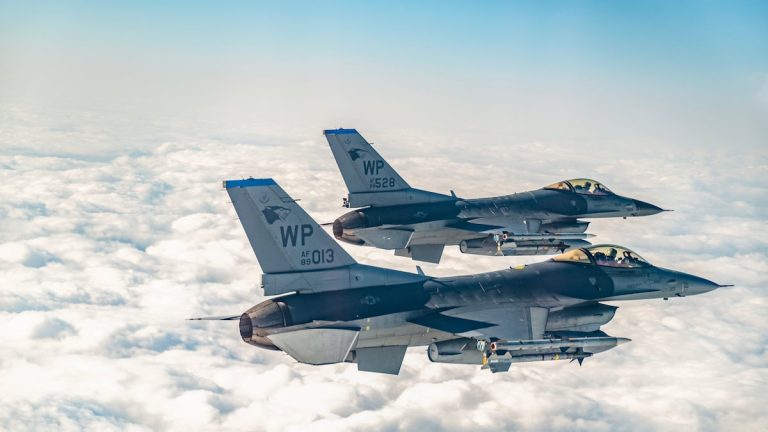
An F-16C Fighting Falcon crashed off the southwestern coast of South Korea last December after a key instrument for measuring the jet’s position related to the horizon failed, an Air Force accident investigation found.

The F-16, whose pilot was assigned to the 35th Fighter Squadron of the 8th Fighter Wing at Kunsan Air Base, crashed during a training flight on the morning of Dec. 11, 2023, causing the loss of the $28 million fighter. The pilot safely ejected from the jet before the crash, sustaining no injuries, and was rescued by South Korean maritime forces.

The pilot was flying in formation along with three other F-16s as part of a defensive counter-air training mission, according to the report released Sept. 26. But the weather was poorer that day than expected, and the pilot flew through dense cloud coverage.

About 13 minutes into the flight, the report said, the jet’s attitude indicator stopped working due to the failure of its embedded GPS inertial navigation system. The attitude indicator is an instrument that tells the pilot where the horizon is relative to the aircraft.

The word “FAIL” appeared on the jet’s center display unit. The pilot switched to a backup attitude indicator, but that instrument was likewise glitching and yielding incorrect information, disorienting him, the report said.

That backup system indicated the fighter’s nose was high, but showed its altitude continued to decline. The pilot later told the investigation board he became “task saturated” — or overloaded with too much information to process and things to do at once — trying to keep the jet under control.

A wingman helped guide the pilot down, hoping to break through the clouds. But weather data later showed the cloud cover was so thick — as low as about 795 feet above sea level — that he would not have been likely to reach clear skies, the report said.

As the pilot reached 3,000 feet above sea level, he tried to level off but his disorientation became worse. As the jet neared the water, the pilot grew increasingly worried that his instruments were unreliable and ejected, 19 minutes after takeoff and 1,730 feet above sea level.

Little wreckage from the F-16 has so far been recovered, the report said. The jet’s black box containing more precise flight data was not found, nor was the Northrop Grumman-made GPS unit in the attitude indicator that is believed to have failed.

Investigators couldn’t determine why the GPS unit malfunctioned, the report said, but that it most likely lost power or experienced power fluctuations, as happened in other F-16 mishaps. That unit’s failure was the primary cause of the crash, the report said. The pilot’s need to rely on a backup attitude indicator that was also unreliable, and his disorientation, substantially contributed to the crash.

The 7th Air Force, which oversees Kunsan, said that the Air Force is working to limit the effects of temporary power fluctuations on F-16 flight instrument systems. Air Combat Command is also increasing its training to help pilots catch and fix problems with flight instruments during emergency situations, the 7th said.

Stephen Losey is the air warfare reporter for Defense News. He previously covered leadership and personnel issues at Air Force Times, and the Pentagon, special operations and air warfare at Military.com. He has traveled to the Middle East to cover U.S. Air Force operations.

Marines to receive new system for zapping drone swarms out of the sky

0

A defense company making high-powered microwave systems that melt drones announced a new iteration of its product last week.

Developed by Eprius, the long-pulse, high-power microwave technology known as Leonidas Expeditionary can drop swarms of drones with massive and pointed walls of electromagnetic energy.

Epirus has already delivered high-powered microwave systems to the Army as part of a $66 million contract last year.

It developed its latest Leonidas capability in partnership with the Office of Naval Research, Joint Counter-Small UAS Office, the U.S. Marine Corps Warfighting Lab and the Joint Counter-small Unmanned Aircraft Systems Office (JCO).

The company unveiled the system on Sept. 23 and is expected to deliver the completed system to the Marine Corps Warfighting Lab by the end of this year.

So far there are four iterations of the Leonidas system including the newest, which is formally known as the Expeditionary Directed Energy Counter-Swarm, or ExDECS.

Earlier Leonidas offerings have included systems that can be attached to vehicles or air drones.

Leonidas ExDECS is another systems entry on the smaller side, capable of “swarm defeat,” with a transportable profile that’s highly mobile and provides a low physical signature, according to Andrew Wargofchik, a spokesperson for Epirus.

The crown jewel of the Epirus system, aside from its microwave system, is a technology called Line Replaceable Amplifier Module, or LRAM. It’s an architecture that allows the company to scale systems up or down.

“We like to think of them as sort of very scalable Lego blocks,” Wargofchik said.

The announcement of the Leonidas Expeditionary comes on the heels of the Air & Space Forces Association’s Air, Space & Cyber Conference, where AI’s role in the defense industry was the talk of the town.

But as the future of warfare arrives, Wargofchik said Epirus doesn’t buy into the concept that killer robots are on the horizon.

He noted projects like the Air Force’s Collaborative Combat Aircraft, or unmanned fighter jets, as a better embodiment of what lies ahead.

Half-man, half-AI is the defense landscape the company envisioned – manned systems existing harmoniously alongside unmanned ones.

“Our CEO, Andy Lowery, likes to call it centaur warfare,” Wargofchik said.

While some in the industry criticize the Defense Department for not adopting existing and emerging AI and machine learning technologies quickly enough, Epirus is more optimistic.

One of the main challenges involves bridging the gap between research and development to mass production, Wargofchik said.

Though the company began with the explicit goal of providing high-powered microwave systems for counter-drone missions, it’s expanding the development of the same systems as a counter for any-and-all electronics.

In April, Epirus demonstrated its capability to effectively take out certain vessel motors at sea during a Navy event.

“We’re kind of arriving at the shores of a whole new beach of maritime applications,” Wargofchik said.

Riley Ceder is an editorial fellow at Military Times, where he covers breaking news, criminal justice and human interest stories. He previously worked as an investigative practicum student at The Washington Post, where he contributed to the ongoing Abused by the Badge investigation.

Air Force awards Lockheed $3.2B multiyear missile contract

0


The Air Force on Friday awarded Lockheed Martin a $3.2 billion multiyear contract for air-to-ground and anti-ship missiles, as part of a Pentagon effort to maximize weapons production through multiyear procurements.

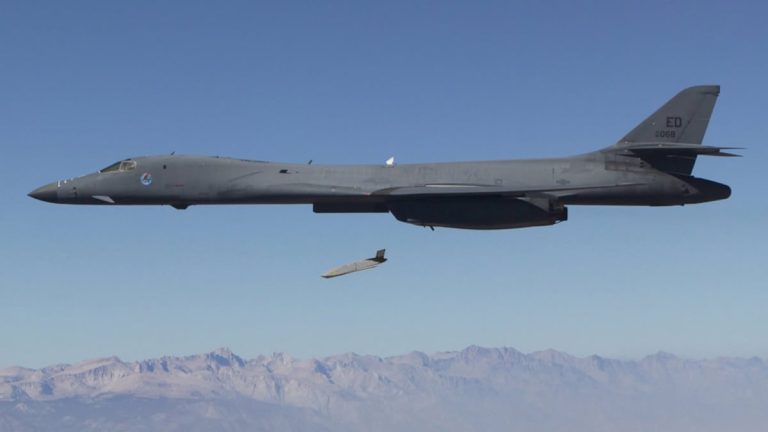
The sole-source contract is for AGM-158C Long Range Anti-Ship Missiles (LRASM) and AGM-158B Joint Air-to-Surface Standoff Missiles (JASSM) and will include foreign military sales to Japan, the Netherlands, Finland and Poland.

The Pentagon in 2023 proposed using multiyear procurement authorities — which are usually used for buying ships or aircraft — to buy munitions, which it hoped would allow industry to expand its production capacity. Defense officials said at the time this was intended to deter China and strengthen the U.S. defense industrial base, but arming Ukraine against its invasion by Russia has also taxed U.S. weapons stockpiles.

The plan included a strategy called a large lot procurement pilot program. This contract will allow Lockheed to increase the number of JASSMs and LRASMs it can produce each year, Lockheed said in a statement

“Multi-year procurements of critical munition systems like JASSM and LRASM are a key anti-fragility measure to increase industry resilience and ensure operations can be ramped more quickly going forward,” Lockheed said.

Lockheed will build the missiles in Orlando, Florida, and is expected to finish the work by the end of July 2032. The Air Force is providing $1.5 billion in missile procurement funds and $2 million in operations and maintenance funds at the time of the award, and the Navy is providing $176 million in its own weapon procurement funds. The Pentagon is also obligating another $752 million of FMS funds for the contract.

The JASSM is a cruise missile designed to allow aircraft to strike ground targets while keeping a safe distance away from enemy air defenses or other hostile aircraft. The LRASM, based on the JASSM’s design, is intended to penetrate enemy air defense targets to take out ships from standoff range.

Also on Friday, the State Department approved a possible $405 million sale of up to 100 Advanced Anti-Radiation Guided Missiles-Extended Range and related equipment to Australia. Selling these missiles to Australia, a key ally in the Pacific, would help support the U.S.’s foreign policy and national security objectives, the State Department said.

Australia would be able to suppress or destroy land- or sea-based radars used by enemy air defenses with those Northrop Grumman-made missiles and improve allied aircraft’s ability to survive a conflict, according to the State Department.

Stephen Losey is the air warfare reporter for Defense News. He previously covered leadership and personnel issues at Air Force Times, and the Pentagon, special operations and air warfare at Military.com. He has traveled to the Middle East to cover U.S. Air Force operations.

The Ultimate Guide to Making Biltong for Survivalists and Preppers

0

Biltong is the most popular traditional South African product, and its origin dates back to the early Dutch settlers. They used biltong and droëwors to stockpile meat that they could take with them on their long treks into the unknown interior before the days of refrigeration.

However, this product is still extremely popular in South Africa and can be found in supermarkets, butcheries, and specialty stores. Biltong is usually eaten straight from the bag; however, it is also becoming increasingly popular as an ingredient in many foodstuffs. The word biltong originally translates as ‘strip of lean meat’ and is used in South Africa to describe either a product that is made from beef or game meat.

Generally, a combination of ingredients delivers the characteristics of biltong: taste, flavor, and color. Ingredients, for example, spice mix, type of meat, and strained yogurt, determine aroma compounds, water activity, and sensory attributes.

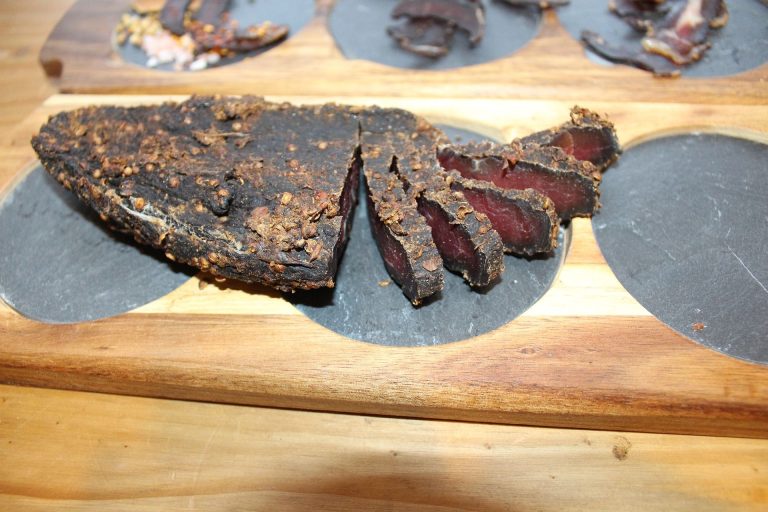
Biltong is traditionally made from strips of silverside beef, while fillet or loin can be used for non-traditional biltong products. Biltong seasoning is known as a secret blend, giving biltong its unique flavor and is usually only known by and made up by each producer. In commercial practice, the spice mix is regarded as a critical key influencing both quality and shelf life.

What is Biltong?

Biltong is a tried-and-tested survival food that has seen many traversing vast spaces with precarious access to food. As a preparation technique, biltong is as old or older than most in history’s records. It deserves its reputation as a highly nutritious, low-suspense method of preserving meats. In its wonderfully uncomplicated list of ingredients and methods, we find the techniques of prehistory and indigenous wisdom.

Biltong is the word used in South Africa for dried and cured meat but is also known in Southern Africa as bulltong (which can translate to bull’s tongue). Traditionally, biltong was made by hanging strips of raw meat up to air dry. This would last for weeks, allowing the people who prepared it to have access to a type of fast food that never went off. The many ethnic groups in South Africa all have their own versions of biltong, which opens us up to stories of the people we can identify as the early biltong hunters and preppers.

Historical Significance

Certainly not a new concept, South Africans have been making biltong for hundreds of years. The practice started as a means of preserving raw meat, which would be eaten by indigenous South Africans. They would take the meat, clean it, slice it into thick strips, and then air dry it. Eventually, the practice evolved to include vinegar and spices before drying.

The results were certainly lean and tasty, which is understandable as game meat is typically very low in fat. They did a great job figuring out the spices and such to make the meat preserve. Being a country of people of various ethnicities, different versions emerged. A few centuries after the original inhabitants of Southern Africa started biltong, the Dutch settlers in the area picked up the practice when they observed the indigenous people preparing biltong. They adopted the practice and replaced the wood used by the indigenous people with a spiced vinegar liquid to cure it, and biltong as we know it was more or less born.

Drying meat out is one of the oldest forms of meat preservation in the world. There isn’t anything special about biltong in this sense. What is special is that South Africans have had quite a bit of time to perfect it due to a lack of refrigeration in the early days. It probably didn’t hurt that the climate is perfect for drying meat either.

Benefits of Biltong for Survivalists and Preppers

Biltong is the perfect food for the survivalist and prepper. If you’re looking for the next thing to take your survival recipes to the next level, then look no further than biltong. Before we start sharing these survival recipes with you, let’s first discuss the benefits of biltong.

Biltong is a kind of South African jerky that is made from dry-cured meat. The biltong we will be making in this guide is not cooked, but rather heavily salted and spiced meat that will last for an extended period of time. It is typically made from beef, but many other types of game meat can be used as well. Biltong is the perfect meal for the prepper or survivalist as it is simple to make, won’t spoil, and is packed with everything you need to keep going in an emergency. Not only is it delicious, nutritious, and portable, but it is also just plain awesome. Biltong reduces fat content and increases protein content as it loses moisture during the curing process. It is a much better and healthier alternative to beef jerky. Jerky is a cooked product, and biltong is dried. There is a difference. Jerky uses nitrates, and biltong uses no nitrates.

Nutritional Value

Biltong is so much more than just meat. With less than 65 calories per ounce, the assumption that biltong is like other dried meat products on the market simply isn’t true. Once we remove the nitrites, dyes, and other preservatives found in traditional beef jerky products, we’re left with something that is full of vitamins B6 and B12, along with minerals like iron, magnesium, phosphorus, potassium, zinc, and the most important mineral of all, selenium. A much better and better-tasting option for your meat snacks. Ideal for individuals with high blood pressure and congestive heart failure, cancer protection, thyroid support, improving metabolic rate, increasing immunity, and improving mood, biltong is an excellent addition to your diet.

Beef biltong nutritional information per ounce: Calories 65, Fat 2 g, Saturated fat 0.6 g, Cholesterol 23 mg, Sodium 106 mg, Carbs 0 g, Sugars 0 g, Protein 12 g, Vitamin B6 0.2 mg, Vitamin B12 1.6 mg, Riboflavin 0.1 mg, Iron 1.1 mg, Magnesium 13.2 mg, Phosphorus 20 mg, Zinc 2.2 mg, Potassium 253 mg, Selenium 6.1 mg.

LostWayscastiron

Long Shelf Life

Biltong should be kept for three to four months, ground biltong for two to two and a half months, and dry wors biltong for two months. As we do not use any preservatives in our biltong, it is of utmost importance to store the biltong in an area where you do not experience high humidity.

Once biltong is taken out of a controlled temperature area, it gives back some moisture which can affect the shelf life of the product. So it is advised not to put any biltong back into the fridge but to utilize it as soon as possible. The dry wors is just for drying purposes. There are no time or texture concerns with this product. For pre-packed retail sales, the sponsors will have to do their own vacuum packing or cling wrap.

In a survival situation, if you lack a vacuum sealer, you can simply use a bag and insert a straw into the open end. Close the bag up to the straw and suck out as much air as possible. Once air is removed, close the bag up before air comes back in.

Choosing the Right Meat

I want to take a moment to bring up toxins. Most survival instincts tell you that you should cook your meat. You will ingest some toxic bacteria when you make biltong. Yes, your meat is going to taste like biltong, and no, it will not make you ill if you make it right. This is something that no one likes to talk about, but it refers to a fungus. While not everyone likes to consider their yummy biltong with a scientific eye, it is important that you understand the part all of these microorganisms play in getting that almost irresistible succulence.

Choosing the meat can be a bit daunting. I, for one, have tried a number of beef cuts. I would recommend that along with the meat counter manager in your local supermarket, you also arm yourself with knowledge and learn the different cuts of meat. The different cuts of beef have quite a huge effect on the actual end outcome of your product. Try to use meat from an animal as close to organic as possible. That is, the animal that it comes from should have grazed on natural pastures, and no extra hormones or chemicals should have been pumped into it. The reason for this is quite simple; we don’t quite know how the chemical elements in the meat would react with our spicing mix. Different cuts yield different textures. I have found the silverside cuts to work best for my taste. I have found that trying different manufacturers yields different end results. Procuring meat that is not too fatty works better, I think. Use fresh, cold, deboned beef. Ensure that all fat is scraped off as explained above. Try to source the best meat that you can buy. Always check the fat for any discoloration, as this may result from added chemicals to enhance the color of the meat. Always purchase your meat as soon as possible prior to starting, as this would ensure that it is fresh.

Types of Meat for Biltong

There are a few factors to keep in mind when you pick a type of meat for the biltong you are making. Price is obviously something to be aware of when purchasing large quantities of top-grade meat. You don’t necessarily have to spend a fortune on the best cuts of meat. There are options when it comes to different cuts of meat you can use. Many people focus particularly on the best taste possible with their biltong and forgo that massive lean steak they own in order to buy more fatty and better-for-biltong steaks. For biltong, the best available meat cut generally tastes the best when it includes marbling. This marbling is the fat source required to help the drying process. The more marbling fat that is available in the meat, the better the biltong will taste.

Meat cuts with a lot of sinew or tendon are tougher and generally taste less with biltong. These sinews are the parts of the meat that are much tougher and generally much more difficult to break down. When your cuts of meat have too much sinew, the slices could become tough while drying. They’re also much tougher to enjoy when feasting on your biltong. Popular meat cuts include the silverside, meat from the topside, and blade cuts. These are generally considered the best because of their muscle grain and marbling fat, but you can only find good silverside, topside, and blade cuts in some parts of the world.

Preparing the Meat

drying and curing process of biltong

How do you plan to prepare the meat to make biltong? There are a couple of steps in this process, and I will outline them below.

Firstly, biltong is traditionally made from cuts like topside, silverside, or thick flank. However, not everyone raises their own cattle or has the luxury of getting them from the butcher. The best way is to make sure your cut meets the followi

ng criteria: it needs to be relatively free of sinew, it must not be excessively fatty, and you may need to slightly increase or decrease the amount of salt in the spice mix depending on how watery or salty your meat is.

Secondly, you will need to cut the meat appropriately. The time of year and the relative humidity will play a role in this. On a dry winter day, you will be able to cut the meat into thicker strips than on a hot and humid summer day. The meat needs to be slender enough for the air to move around and dehydrate it completely. If the air cannot move around the meat, it will rot. However, this problem can also be solved by using a fan to supplement the airflow around the meat. It needs to be sliced along the grain, not across it.

A blade designed for slicing meat will make this part much easier. Several discrete small cuts are better than a single slice in one direction. This will also give you the opportunity to get the longest pieces possible from the shape of the meat. However, avoid excessive wastage and cost. Enough people have also found their well-prepared meat on the floor with the family dog snacking on it. Be careful of where and how you work. It is not a fun day if you have to start again. The strips should be 25-30 mm thick.

Trimming and Slicing

Trimming and slicing your meat is part of the preparation. Bigger chunks of meat won’t dry as quickly and may turn rancid. However, meat dries out, losing its weight in water and becoming more concentrated with protein and fat. This is what prevents biltong from going bad. All your meat will do well as biltong, even when it is turning a bit twangy. However, only the pure muscle will last. Removal of excess fat is essential if you want to store this for more than a few months. If you wish to store it for a really long time, the purer the meat, the better. Any meat will still do you good in a long-term survival situation, but fat may turn rancid and provide a friend for salmonella.

If you’re cutting and freezing meat anyway, chances are it won’t last very long at all — in which case, who cares? Besides, the saltpeter and vinegar or citrus in biltong will prevent some bacterial growth. Absolutely pure muscle will store the longest. Biltong will either be enjoyed by a king or a vulture. Good quality silverside, topside, or round steak — with just the right amount of fat on the edges — is your best bet. Odd bits of steak and wild game from your freezer will do well too. Use chicken and fish meat as soon as possible for best results, as they do not last as long when treating them with a dry method such as biltong. Game and beef with gristle and bone should be cut into easier to handle pieces but will last just as long. The initial

curing of it seemed to be more effective.

Marinade and Seasoning

Now that your biltong slices are prepared, they can be further seasoned before laying them to rest in the refrigerator for about 8 hours. While it is possible to make biltong without adding any additional flavoring, virtually all biltong is seasoned to some extent. Since biltong is preserved with non-toxic agents and then ultimately consumed in a raw state, any flavors added may penetrate the meat, giving it a bite that is stronger than flavors achieved by marinades on cooked meat dishes. Most traditional users advocate minimal seasoning so that the resulting product will have a mild, yet rich meaty flavor.

The general rule by weight is: 2 grams coarsely ground black pepper, 5 grams fine salt, and 40 grams mild vinegar. Another traditional combination is coarse salt, crushed coriander seeds, white wine vinegar, and malt vinegar. These recipes can be varied according to taste, adding a small amount of brown sugar, mild chutney, and Worcestershire sauce in any combination that the user prefers. Marinade and more vinegar for the larger, thicker semi-ripened strips allow the seasoning to penetrate and preserve more thoroughly. The marinade can be drained off after a few hours if the biltong is desired to be less juicy than usual. Salt is sometimes added to ensure that it does not spoil before the vinegar works its preservation magic. Ugly brown streaks and corrosion on the biltong are often a visual indication of a higher than normal salt content.

Many variations are possible. Some additions that are popular are brown sugar, garlic, soy sauce, honey, hot sauce, olive oil, balsamic vinegar, wine, and Worcestershire sauce. A blend can be any sweet, hot, acidic, salty, or overall tasty element that enhances the end flavor of the biltong. While there are a variety of unique recipes for making biltong, and everyone has their favorite flavored biltong recipes, it can be fun to experiment with different herbs and spices to obtain a wider choice of taste variations.

Drying and Curing Process

This is not beef jerky! Jerky is generally a somewhat biblical list of things that could cause health problems, even demise, in a survival situation. Salt can and does store and keep indefinitely. When used properly, biltong, like jerky, is a great way to store meat on the move for later. However, there is a big difference. The absolutely critical part of this process that makes or breaks biltong is the vinegar. Please do not use something from a big box store that does not have enough acidic acid in it to make pickles. The priority is that biltong is typically drier, while not dried out, than jerky.

The drying process will vary according to the composition of the meat mix. Different meats, different overdone or underdone levels of meats, and different storage temperaments of the creator will mean dried meat will differ as well. The basic process is this: Hang your biltong in a cool, dry, non-UV sunny area with air circulation. Typically, about two weeks will give you the average texture that is most popular. A month or more will start to approach the “shelf-stable” preservation that many seek. Drying out can take a bit of time for larger slabs or if stored in a high humidity, lower temperature environment. Keep an eye on your biltong. Check it now and then. Make sure the vinegar water does not pile up on the bottom or that it is not getting direct sunlight and heat, and not drying out uniformly. If you see white collagen, then the vinegar is doing its job of breaking down the connective tissue.

Hanging and Air-Drying

Once the meat has been prepared and spiced, it is time to begin the drying process. Several people prefer a tubed sock or a recently purchased pair of pantyhose that they cut into sections to be fastened on one end and the other tied off. One may also use cooking twine; try not to tie it too tight around the meat as it may damage or cause cuts. One must consider where the biltong will be hanging or drying. Make sure that the string with the meat is long enough to be tied on both ends. Hang the biltong to dry in a warm room; hang it so that it does not touch the walls, and the air is allowed to move around it. No mold can grow in a dry space, so it is safe to hang the biltong out in the open.

Another method is to hang biltong by the meat. In order to do this, poke a small hole at the top of the meat and pull the string through to make it completely secure. The biltong should hang in a dry and warm place. It may take up to 7-8 days to thoroughly dry biltong.

To know when it is ready, tap on the meat lightly with your knuckles. If you hear a clear sound, it indicates the meat is ready; if you hear a muffled sound, then biltong still needs to hang. The most important part of the process is the wind that is needed to dry the meat. If the meat is dried in a shaded area with no light or air, then that biltong will not be that great. The less wind there is, the greater the likelihood for the biltong to begin to grow mold.

Suggested resources for preppers:

Harvesting and canning wild greens

The #1 food of Americans during the Great Depression

Survival Foods of the Native Americans

If you see this plant when foraging, don’t touch it!
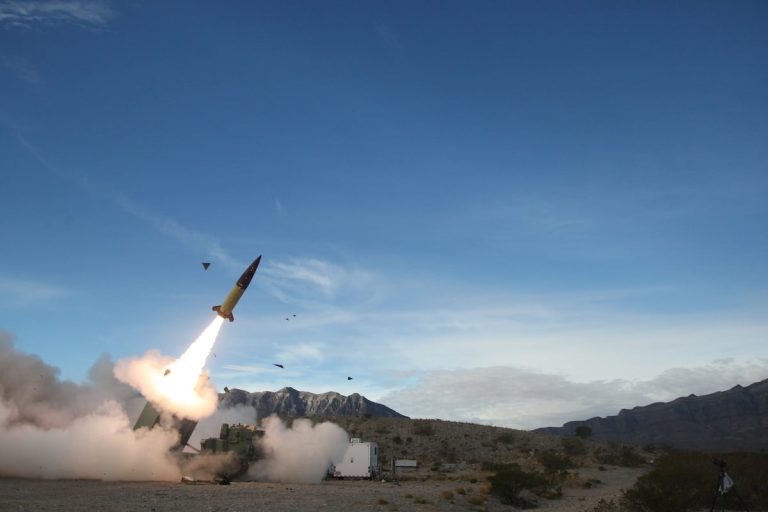
The case for giving Ukraine long-range striking power in Russia

0

Ukraine’s innovative drones are damaging forces and war-supporting industry across western and southern Russia. In a visit to the White House on Sept. 26, Ukrainian President Volodymyr Zelenskyy asked for more help for long-range strikes. He received modest assistance. President Joe Biden said the U.S. would provide the Joint Standoff Weapon (JSOW), an unpowered glide bomb with a range of over 60 miles.

Ukraine had wanted more. It has repeatedly sought permission to use U.S.-built Army Tactical Missile System (ATACMS) missiles for long-range strikes deep in Russia. They have a range of up to 190 miles and, with their speed, are better able to hit mobile targets. Prior to Zelenskyy’s visit, there were hints the U.S. might provide Joint Air-to-Surface Standoff Missiles (JASSM). Unlike ATACMS missiles, these missiles are abundant in the U.S. arsenal, and their stealth capability make them more effective at hitting defended targets.

Sentiment in NATO is growing to give Ukraine more scope for action. This month the European Parliament asked European Union members to “immediately” lift deep strike restrictions, and so have top U.S. House Republicans and several leading congressional Democrats. Nonetheless, the U.S. approach remains hesitant.

There may be risks. On Sept. 25, Russian President Vladimir Putin warned an attack on Russia by a state backed by a nuclear power could lead to a nuclear response. He often cries nuclear wolf, but this time, his timing suggested worry that Biden might cave to pressures and unleash Ukraine to conduct more deep attacks.

A Russian nuclear response, however, seems unlikely and would probably bring little, if any, military gain. Russian troops are not trained to fight on a nuclear battlefield, as in the Cold War. Ukraine has few, if any, concentrated, high-value military targets. Chinese President Xi Jinping and Indian Prime Minister Narendra Modi have warned Putin not to go nuclear, while Biden has warned of “catastrophic consequences” if he does.

There is also a risk that some JASSMs might miss their targets or not be fully destroyed. Russia — and China — could analyze the debris to try to learn more about their stealth capability and sensitive electronics.

Time and again when Ukrainian forces have surprised or shocked Russia — from destroying or damaging one-third of its Black Sea fleet to seizing territory in Russia’s Kursk region — the Kremlin’s response has been weak. Suffering steep manpower losses and needing arms from Iran and North Korea, Russian forces may face limitations.

To its credit, Ukraine is doing a lot on its own to strike deep inside Russia. On Sept. 18, it carried out a stunning attack in Russia’s Tver region, blowing up a huge weapons depot in a blast akin to an earthquake. To overwhelm air defenses, Ukraine used over 100 slow-flying drones. The depot was 300 miles away from Ukraine, well beyond the 190-mile range of ATACMS missiles.

A welcome surprise has been Ukraine’s high-tech drone innovation. Former CIA Director General David Petraeus called it “unprecedented” in scale and pace. Even more is coming. Last month, Zelenskyy said Ukraine had deployed its first high-speed missile-drone, the Palianytsia.

But Ukraine needs more long-range strike power than its own aviation sector can provide. U.S. arms may be a valuable complement, despite their higher cost.

Last spring the U.S. began sending the long-range variant of ground-to-ground ATACMS missiles to Ukraine for use inside its territory. In occupied Crimea, they have ravaged Russia’s navy and air defenses and supporting infrastructure. ATACMS missiles are responsive and can hit mobile targets that elude drones. In June, the U.S. allowed Ukraine some added flexibility — to strike across the border inside Russia with ATACMS missiles wherever enemy forces were engaged in attacks.

On Sept. 26, Biden also promised to send hundreds more Advanced Medium-Range Air-to-Air Missiles (AMRAAM). Armed with them, Ukraine’s F-16s could shoot down some Russian combat aircraft in flight before they release devastating glide bombs.

The long-range strike mission is important for Ukraine, but so are other factors. It faces challenges in several areas, including a soldier shortage, inadequate defensive fortifications and uncertainties about future Western aid.

Nonetheless, the U.S. could benefit Ukraine by doing more to help it to conduct long-range strikes in Russia. Neither U.S. weapons nor Ukraine’s, by themselves, are enough. Together, they could raise the cost to Russia of its perfidy and help strengthen European security.

William Courtney is an adjunct senior fellow at the nonprofit, nonpartisan RAND research institution and was U.S. ambassador to Kazakhstan, Georgia, and a U.S.-Soviet commission to implement the Threshold Test Ban Treaty.

John Hoehn is an associate policy researcher at RAND and a former military analyst with the Congressional Research Service.