


Police .308? | Survival Monkey Forums

At Home on the Range
Nice performance…he could set it to a music score…
Waltz + Harris – cannot wait for the 'debates'

The Dems will get shoved into a meat grinder – Waltz is as Left or more so than Harris…..
Buying more popcorn now….
First Huey replacement helicopter delivered to US Air Force
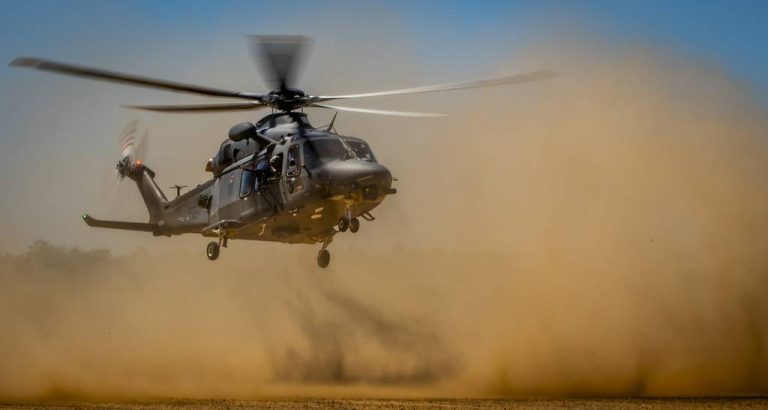
Boeing announced on Monday it has delivered the first production MH-139A Grey Wolf helicopter to the U.S. Air Force.
The helicopter will be stationed at Malmstrom Air Force Base in Montana, Boeing said, where airmen will use it to patrol the sprawling Minuteman III nuclear missile fields surrounding the base.
The MH-139 is a militarized version of Italian aerospace firm Leonardo’s AW139 commercial helicopter, and will replace some of the Air Force’s Vietnam-era UH-1N Hueys to conduct security patrols at nuclear missile bases.
“This aircraft will directly support ongoing U.S. Air Force modernization efforts,” Azeem Khan, Boeing’s MH-139 executive director and program manager, said in a statement on Aug. 5. “Delivering this asset for the MH-139A fleet is critical to the future of national security as the Grey Wolf will play a crucial role in the U.S. nuclear triad for decades to come.”
Boeing last year finished delivering six test MH-139s to the Air Force, ending its research, development, test and evaluation phase and shifting the program to production. The Air Force also in spring 2023 awarded Boeing and Leonardo a $285 million low-rate initial production contract to start building the first 13 Grey Wolf helicopters.
The Air Force then awarded Boeing another contract for seven more MH-139s, bringing the total number of the helicopters on contract to 26.
But the Air Force has since dramatically slashed its planned purchase of the helicopter, which is now leading to cost overrun problems.
The service originally intended to buy 80 Grey Wolf helicopters to patrol nuclear missile fields, transport senior officials in the Washington area and conduct other missions.
Facing tight budgets, the Air Force decided to cut its planned Grey Wolf purchase almost in half, and now expects to buy 42 helicopters. The service also plans to keep some older Hueys at the Air Force District of Washington, Fairchild Air Force Base in Washington state, Kirtland Air Force Base in New Mexico and Duke Field in Florida.
But the attempt to save money had consequences. Because the service now plans to buy fewer MH-139s, the individual price of each helicopter has gone up enough to trigger a cost overrun process known as a critical Nunn-McCurdy breach.
This breach triggers a review that could result in a program getting canceled, unless the Pentagon certifies to Congress that it is essential to national security and has no other cheaper options to get the job done.
The Pentagon also has to show the program is a higher priority than other programs, which could feasibly be cut to pay for it if its new cost estimates are reasonable and the management structure in place can control further cost growth.
The Air Force said in April, when the Nunn-McCurdy breach was announced, that the Grey Wolf’s quantity-related breach could be resolved by Congress adding more MH-139s back into the budget.
To make the MH-139, Leonardo first produces the underlying helicopter at its facility in northeast Philadelphia, Boeing said. The aircraft are then modified by Boeing to install the necessary military equipment.
Boeing said in January that it had finished building the first production Grey Wolf in December 2023, and that it was undergoing flight testing at Leonardo’s Philadelphia facility.
Stephen Losey is the air warfare reporter for Defense News. He previously covered leadership and personnel issues at Air Force Times, and the Pentagon, special operations and air warfare at Military.com. He has traveled to the Middle East to cover U.S. Air Force operations.
Push for self-reliance drives defense revenue surge among Top 100
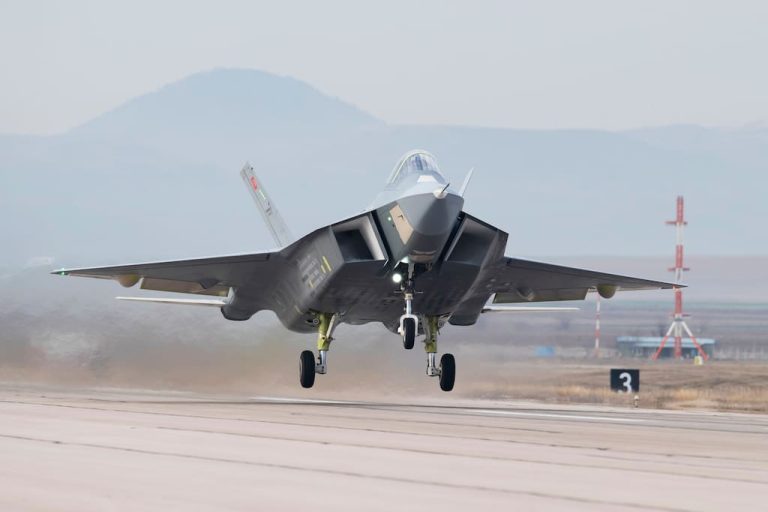
A twin-engine fighter jet bearing Turkey’s red and white flag on its tail coasted down a runway at an air base near the capital Ankara in February. The aircraft — somewhat similar in style to an American F-22 or F-35 — picked up speed and lifted off.
When the fighter, dubbed Kaan, landed 13 minutes later, a mob of revelers flooded the flight line to celebrate with hugs, applause and cheers — not only for the jet but what it represented.
Turkey had flown its first homemade prototype fighter jet, which manufacturer Turkish Aerospace Industries says will have fifth-generation stealth capabilities and the weapons capacity to rival or surpass the F-35 Joint Strike Fighter.
Kaan’s debut came almost 13 years after Turkey began developing its own combat aircraft, and four years after the U.S. kicked Turkey out of the F-35 program over the country’s plan to buy S-400 air defense systems from Russia. That punishment failed to deter Turkey from pursuing the S-400, and instead of the F-35, the country focused on its own indigenous fighter jet.
Turkey’s efforts to go it alone have proved fortuitous for TAI. In Defense News’ latest Top 100 list, which ranks companies around the world by defense revenue, TAI jumped from 58th place to 50th as its defense revenue ballooned nearly 50% to $2.2 billion in fiscal 2023.
RELATED
TAI isn’t the only firm seeing rising revenues. As Russia presses its invasion of Ukraine, Israel attacks Hamas in the Gaza Strip, the U.S. and several allies fight Yemen-based Houthi rebels, and tension over Taiwan’s independence and disputed territory in the South China Sea proliferates, nations are increasing their defense spending — and businesses are seeing their revenues climb.
“There’s definitely a trend there,” said Stuart Dee, a European defense research leader at the think tank Rand. “This rapid and marked re-securitization with three fronts of potential geopolitical instability — Ukraine; Israel, Gaza and the Red Sea; and then Taiwan — what we’re seeing all at once is a whole lot of capability backfilling going on, right across the board.”
A piece of the pie
Defense News each year ranks the top defense contractors for its Top 100 list, by collecting and tallying information on firms’ revenues from the companies, earnings reports, analysts and other research.
Mega-firms based in the U.S., such as Lockheed Martin, RTX, Northrop Grumman, General Dynamics and Boeing, remain some of the largest defense companies worldwide, as reflected in this year’s list. But there are signs that non-U.S. businesses are playing greater roles across the sector.
For example, Aviation Industry Corp. of China is now ranked as the second-largest defense firm in the world, behind only Lockheed Martin. The Asian business saw its defense revenue jump by 45% from FY22 to FY23.
Over the last five years, the worldwide defense revenue share of Asia-based companies (including those in Russia) that have made the Top 100 rankings has fluctuated, but did increase from 16% to 21% from last year’s list to this latest version.
The share for U.S.-based firms also fluctuated over the last five years, but declined from 59% to 54% from last year’s list to this year’s iteration.
For Europe-based businesses, including Turkey and Ukraine, the defense revenue share didn’t change much over the last five years. In FY23, they took up 21% of the worldwide pie.
Notably, the Ukrainian Defense Industry’s defense revenue, which amounted to about $651 million in FY20, has skyrocketed to $2.2 billion. The company formerly known as Ukroboronprom jumped 16 spots on the most recent Top 100 list to 49th place.
‘Wartime footing’
The rising defense revenues among Asian and European firms likely reflect “an enhanced understanding of security challenges in the global environment,” according to Cynthia Cook, who leads a defense industry research team at the Center for Strategic and International Studies think tank.
Russia’s invasion of Ukraine pushed NATO members to spend more on military efforts, she told Defense News.
In 2014, the year Russia annexed Crimea from Ukraine, just three NATO allies met guidelines to spend at least 2% of their respective gross domestic products on defense; that number is expected to reach 23 this year, according to the alliance, which based its findings on 2015 rates.
And NATO Secretary General Jens Stoltenberg said in February that European members will spend a cumulative $380 billion on defense this year, reaching a new record. In comparison, using the same rates, European allies spent $250 billion in 2014.
“The increase in spending and the growth of European defense contractors is an important start for the rebuilding of their industrial base, which will be necessary in any future conflict,” Cook said. “European nations, especially places like Poland, are looking to the right — to the Russian threat on their immediate border. And [Russian President Vladimir] Putin has not ever said anything like: ‘Well, we’re just going to take over Ukraine and then sit tight.’ He’s pretty bold in his territorial ambitions. He’d like to do a Soviet reunion.”
And in Asia, Cook noted, Japan and South Korea are increasing their defense spending in light of potential threats from China and North Korea.
“China’s industrial base is on a wartime footing if you look at things like how many ships they’re producing and so forth,” she said.
But it’s not just American allies investing in defense, she added. After initial setbacks in Ukraine, Russia has poured money into reconstituting its military — with success that surprised some Western observers.
“Russia has ramped up its production,” U.S. Defense Secretary Lloyd Austin said in April. “All of their defense industry really answers directly to the state, so it’s easier for them to do that a bit quicker.”
Shopping local
Global military spending has skyrocketed in recent years, reaching a record $2.4 trillion in 2023, according to an April report from the Stockholm International Peace Research Institute. That was the ninth straight year in which defense spending increased.
“Defense spending is up,” Rand’s Dee said. “But at the same time, what that is being spent on is increasingly national supply chains [and] local champions” so nations can be more self-reliant.
Take Turkey, for example. In the past, he said, the country would have bought more off-the-shelf military equipment from foreign providers, primarily from the U.S. But as Turkish President Recep Tayyip Erdoğan’s administration pivots away from dependence on the U.S. as a supplier, the nation has invested more into its domestic industrial base, Dee added.
This is resulting in Turkey taking a “quite interesting hedged relationship” with the U.S. when it comes to military imports, he said. Turkey still relies on foreign military sales for much of its “bread and butter” military capabilities, he added, while also investing in next-generation capabilities with an eye on exports.
“If you went back 10 years ago, Turkey was an outright defense capability importer,” Dee said. “You’re starting to actually see Turkey transition to being a defense exporter for the first time.”
Five Turkish firms made the 2024 list, with Dee specifically pointing to TAI and the missile manufacturer Roketsan as notable examples of local growth. The latter jumped from 80th place on the list to 71st.
And while drone maker Baykar did not respond to Defense News’ requests for data, nor did it publicly share revenue figures by press time, the company touts its abilities as an exporter to 34 nations — including Ukraine, whose use of the Bayraktar TB2 drone was an early success story in its war against Russia.
A similar pattern is playing out in the United Kingdom, Dee noted. While the U.K. military flies Boeing and Lockheed Martin aircraft, such as Chinook helicopters and F-35s, its sixth-generation fighter program, dubbed Tempest, is largely a British effort.
U.K.-based BAE Systems is taking the lead among industry participants, which also include MBDA, Rolls-Royce and Leonardo. BAE Systems landed at the 7th spot on the Top 100 list; Rolls-Royce the 23rd; and Leonardo the 14th.
“A lot of the [British] next-generation capability investment across the board is going to … developing indigenous capability, which is directly benefiting BAE Systems, Rolls-Royce, as examples,” Dee said.
For its part, South Korea’s industrial base has always been robust, Cook said, and is also a notable exporter of military equipment.
In 2022, Poland struck a $5.8 billion deal to buy Korea Aerospace Industries-made fighter jets, tanks from Hyundai Rotem Co., and howitzers and vehicles from Hanwha Defense. Also in that year, South Korean President Yoon Suk Yeol pledged to make his nation one of the top weapons suppliers in the world.
Three South Korean firms made the list, with Hanwha ranked in 19th place; LIG Nex1 in 58th; and Hyundai Motor Co., of which Hyundai Rotem is an affiliate, in 73rd.
And it’s not only local economic and military issues that are driving further globalization of the defense market. Political turmoil in Washington, which for months stalled U.S. rearming of Ukraine, jolted some European allies into investing more in their own defense industries, according to Saab CEO Micael Johansson.
Johansson in February described America’s wavering on Ukrainian support as “quite scary to see,” adding that Europe must fill any gaps. He called for European governments to make long-term financial commitments with local defense firms to build new production sites and capacity — and not let indigenous capabilities wither, as occurred after the Cold War.
“I am prepared to take risk, but it has to be in some sort of handshake with governments if I’m going to do more in terms of new sites, high capacity,” Johansson said. “We can’t afford to dismantle things once more.”
Saab’s defense revenue grew 18% in FY23 to nearly $4.4 billion, bolstered by a $102 million deal with Boeing to build fuselages for the T-7 trainer aircraft and a $1.2 billion contract to an undisclosed customer to provide Carl-Gustaf recoilless rifles. The Swedish firm made the Top 100 list at 29th place.
In nearby Norway, Kongsberg’s defense revenue jumped 23% to $1.7 billion in FY23. The company, which ranked 59th, builds National Advanced Surface-to-Air Missile Systems, which have been sold or donated to Ukraine to bolster its defense against Russia.
A worldwide defense industry that relies less on U.S. firms could be an overall positive development — even for American companies, Dee said.
The defense-industrial base, while vast, only has so much capacity. For instance, the sector has struggled to produce munitions, such as 155mm shells, at the rate of demand. And so, more companies serving as major players can lead to more capacity, he explained, and more competition.
“The relative lack of competition in the defense market is one of the primary causes that is often pointed out for consistent cost overruns,” Dee said. “More competition, within the confines of export control capacity, is a good thing.”
But a more globalized defense-industrial base could create problems if systems and ammunition created in different countries can’t function well together, Cook noted.
“We want systems to interoperate, and we want ammunition made in one country to fit into the systems of others,” she said. “That is just hard. You have to set joint requirements, you have to set standards. What do you do with the older systems that may require specific ammo? Do you retrofit them? There’s a lot of questions to think about.”
Stephen Losey is the air warfare reporter for Defense News. He previously covered leadership and personnel issues at Air Force Times, and the Pentagon, special operations and air warfare at Military.com. He has traveled to the Middle East to cover U.S. Air Force operations.
Tomato, Cheese, Chives & Ham Omelette
Tomato cheese, chives & ham omelette.
Despite security threats, India’s defense budget remains static

Beset by security issues at home and along its borders, the Indian government unveiled its Fiscal Year 2024-25 defense budget on July 23. Funds amounted to 6.219 trillion rupees, or approximately $74.3 billion in U.S. dollars, according to a government press release.
Defense received the highest share of any government department — 12.9% of the union budget — with Delhi stating in the release that the figure was 4.79% higher than last year’s defense budget and 18.43% higher than the FY2022-23 sum.
While the development sounds positive at face value, the 2024-25 defense budget is actually just 0.06% higher than last year’s total defense expenditure. The close proximity of these figures relates to Prime Minister Narendra Modi’s announcement in February, shortly before national elections, of an extra “interim” defense budget.
These numbers reflect the grave security situation that India faces due to longstanding tensions with Pakistan. What’s more, “India perceives a major defense challenge from China, which is a far larger economy and is spending more than India on its own defense,” Antoine Levesques, a research fellow at the International Institute of Strategic Studies, told Defense News.
The Stockholm International Peace Research Institute calculated India’s defense expenditure at 2.4% of GDP in 2023.
“By comparison, China, with its much larger economy than India’s, spends about 1.7% of its share of GDP on defense,” Professor Manjeet S. Pardesi, of the Centre for Strategic Studies at New Zealand’s Victoria University, told Defense News. “So, in a numerical sense, India is spending an adequate amount.
“The real issue is how this sum is being spent. If India continues to invest in building the capabilities to defend against and deter China (and Pakistan), then India’s defense spending is adequate. … [However,] the challenge for India is that China is rapidly expanding its capabilities and is increasingly technologically capable in terms of indigenous defense production — while spending a smaller share of its GDP on defense than India.”
Budget breakdown
India allocated its latest defense budget with 27.66% on capital assets; 14.82% on sustainment and operational preparedness; 30.66% on pay and allowances; 22.7% for defense pensions; and 4.17% for civil organizations under the defense ministry, the MoD revealed.
“The capital outlay of 1.72 trillion rupees will further strengthen the capabilities of the armed forces,” Defence Minister Rajnath Singh wrote on X, formerly Twitter.
Delhi’s announcement claimed this amount rose 9.4% from last year “to fill critical capability gaps through big-ticket acquisitions,” such as fighters, ships, submarines, drones and vehicles.
In its press release, the MoD promised 75% of this modernization budget would go to domestic industry. However, India did not break down figures for each armed service, something it’s done in previous years.
Sustainment and operational readiness, meanwhile, received INR920 billion, up 48% compared to two years ago. The money “will facilitate procurement of ammunition, mobility of resources and personnel as demanded by the security situation and strengthen the deployment in forward areas for any unforeseen situation,” government officials wrote.
Infrastructure along tense borders also received a boost.
“Up 30% year on year, this allocation of INR65 billion to the Border Roads Organisation will further accelerate our border infrastructure,” Singh wrote on X.
Key projects include the high-altitude Nyoma Airfield and 2.5-mile-long Shinku La tunnel in the northwest part of the country.
Emphasis on self-reliance
India faces a challenge in achieving a defense procurement balance between foreign purchases versus upscaling and upskilling its native defense industry, Levesques told Defense News.
“The Modi 3.0 government is keen to find new domestic policy margins to loosen this dilemma, with the help of foreign partners able and willing to invest in India’s defense industrial base and next-generation co-production and co-creation,” he said.
This approach is seen in “Aatmanirbharta,” a Modi government catchphrase that translates to “self-reliance.”
Correspondingly, the defense budget saw a huge increase for the Innovations for Defence Excellence scheme, which encourages indigenous technological innovation. Last year’s INR1.15 billion rose to INR5.18 billion in 2024-25, the MoD revealed.
The value of defense production hit record levels of INR1.27 trillion (U.S. $15.2 billion) in FY2023-24, according to an MoD press release published July 5. State-owned entities achieved 79.2% of this production, with private firms claiming the remainder. This number came in 16.7% greater than last year and 60% higher than four years ago, the ministry stated.
Still, “while India has had some limited successes in areas like the development of missiles, indigenous defense production — or self-reliance — is a long-term goal at best,” Victoria University’s Pardesi told Defense News.
“India will continue to partner with the U.S., France and even Russia,” he added. “[Not] becoming too dependent upon one single partner … will allow India to exercise a degree of strategic autonomy.”
Simultaneous to boosting domestic production, India’s defense exports topped new heights as well, reaching INR210 billion (U.S. $2.5 billion) in FY2023-24. This was up an impressive 32.5% year on year.
Gordon Arthur is an Asia correspondent for Defense News. After a 20-year stint working in Hong Kong, he now resides in New Zealand. He has attended military exercises and defense exhibitions in about 20 countries around the Asia-Pacific region.
Air Force fires ops group commander after scathing B-1 crash report
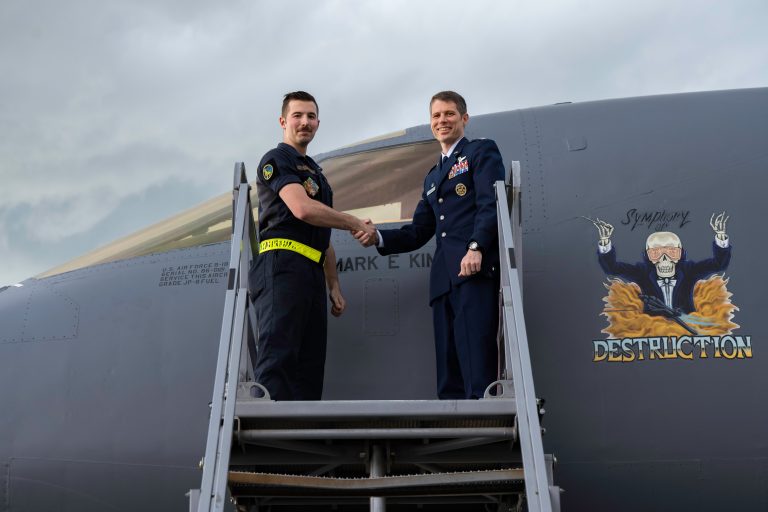
The Air Force has fired an operations group commander at Ellsworth Air Force Base in South Dakota, following the release of a scathing report into a B-1B Lancer bomber’s January crash.
Col. Mark Kimball, commander of the 28th Operations Group, was removed “due to a loss of trust and confidence in his ability to command,” Air Force Global Strike Command said Friday. Kimball was relieved by 28th Bomb Wing commander Col. Derek Oakley based on the findings of the accident investigation board report on the Jan. 4 B-1 crash.
That report, which Global Strike released July 25, blasted “an organizational culture that tolerated decaying airmanship skills” as one of the factors that led to the loss of the $451 million bomber.
“Many failures leading to this mishap were not a one-time occurrence or an aberration,” the report said. “The mishap occurred due to numerous factors, including a culture of noncompliance, widespread deviation from established policy and procedure, and several organizational influences and preconditions.”
Global Strike spokesman Charles Hoffman told Air Force Times that the 28th Operations Group is now under temporary leadership, but a permanent replacement for Kimball has not yet been chosen.
The B-1 that crashed was one of two flying a routine training mission Jan. 4. The weather started off calm that afternoon but worsened as the flight progressed, the report said. Dense fog rolled in across the airfield and limited the pilots’ visibility, and as the B-1 made its landing approach, the winds rapidly shifted.
Investigators found the pilot did not make the necessary throttle adjustments to keep the plane’s airspeed up as wind conditions changed. The bomber started to lose altitude and by the time the pilot hit the afterburners to try to climb, the report said the B-1 was “unrecoverable and out of control.”
The bomber hit the ground and the crew of four ejected; two were treated and released from a medical facility for injuries they sustained in the ejection. The B-1 skidded about 5,000 feet across the runway and burst into flames. It was a total loss.
Investigators found that poor weather conditions, including icing, and a lack of awareness of airfield conditions substantially contributed to the crash.
However, the culture of units within the 28th Operations Group and their levels of airmanship drew the harshest comments from investigators.
The report concluded that the bomber’s crash was mainly caused by the crew’s failure to carry out an effective “composite crosscheck,” in which they consult multiple instruments to keep track of how the aircraft is flying. If this had been done effectively, the report said, the crew should have been able to tell the bomber was losing speed, even in a low-visibility environment.
The report said the bomber’s crew “succumbed to complacency and fixation” and criticized the instructor pilot on board for being “ineffective in his crew leadership and instructor supervision duties.”
The report also criticized the 28th Operations Support Squadron for allegedly failing to communicate airfield and weather conditions, which investigators said also reflected “culture and leadership issues” in the unit.
Hoffman said other airmen received administrative and corrective actions, including a variety of disciplinary letters. Some actions were taken within a month of the crash, after the initial investigation, Hoffman said. He was unaware of any demotions resulting from the report.
Hoffman said Gen. Thomas Bussiere, head of Air Force Global Strike Command, and other commanders “have taken what was written in that scathing report to heart” and are taking steps to ensure those mistakes don’t happen again.
Stephen Losey is the air warfare reporter for Defense News. He previously covered leadership and personnel issues at Air Force Times, and the Pentagon, special operations and air warfare at Military.com. He has traveled to the Middle East to cover U.S. Air Force operations.