
Amish Practices Useful To Survivalists
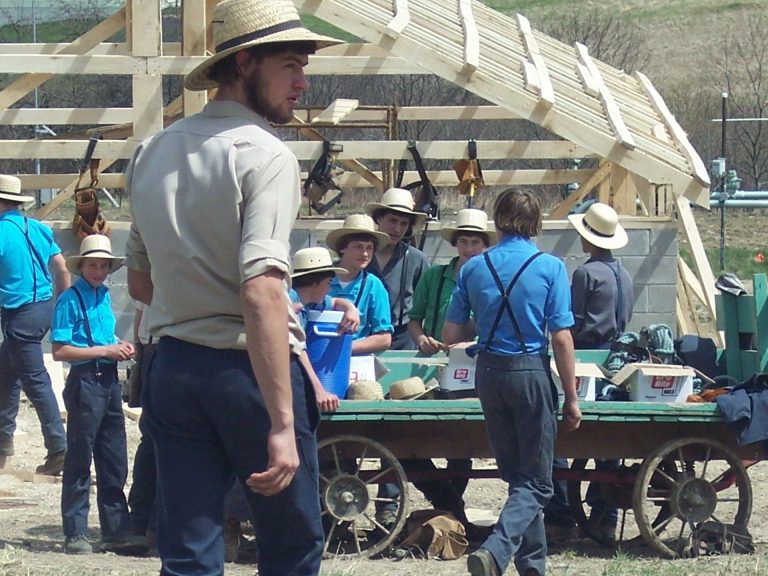
In a world increasingly reliant on technology and modern conveniences, the Amish community stands as a living testament to self-sufficiency and sustainable living. While their lifestyle is often viewed as a relic of the past, it offers valuable lessons for those seeking to prepare for uncertain futures.
Survivalists, who prioritize independence and resilience in the face of potential crises, can find a wealth of practical knowledge in Amish practices. From mastering basic skills like food preservation and off-grid living to cultivating a mindset of resourcefulness and community reliance, the Amish way of life presents a blueprint for surviving—and thriving—when modern systems fail.
This article explores the key Amish practices that survivalists can adopt to enhance their preparedness and live more self-reliant lives.
Who are the Amish?
The Amish are a unique and often misunderstood group, known for their simple living, plain dress, and rejection of many modern technologies. Originating in Europe during the late 17th century, the Amish are a branch of the Anabaptist movement, a Christian tradition that arose during the Protestant Reformation. Anabaptists advocated for adult baptism, a practice that set them apart from both Catholics and mainstream Protestants of the time. This belief in adult baptism led to persecution, prompting many Anabaptists to seek religious freedom elsewhere.
One of the most influential figures in the early Anabaptist movement was Jakob Ammann, a Swiss Mennonite leader. In 1693, Ammann’s desire for stricter religious discipline led to a schism within the Mennonite community. Those who followed Ammann became known as the Amish, and they distinguished themselves by adhering to a more rigorous interpretation of the Bible and by adopting a lifestyle that emphasized separation from the world.
In the early 18th century, many Amish began emigrating to North America, particularly to Pennsylvania, where they sought the freedom to practice their faith without interference. Over time, they established communities across the United States and Canada, with significant populations in Ohio, Indiana, and Pennsylvania.
The Amish live by a set of rules known as the “Ordnung,” which governs almost every aspect of their lives, from clothing and technology use to community conduct and worship. These rules vary from community to community, leading to differences in lifestyle even among Amish groups. For example, some Amish groups allow the use of certain modern conveniences, such as tractors for farming, while others strictly prohibit any use of electricity or motorized vehicles.
At the core of Amish life is a commitment to humility, community, and faith. Their rejection of modern technology is not rooted in a fear of progress, but rather in a desire to avoid distractions that could lead them away from their religious values. The Amish believe that a simple life, free from the trappings of the outside world, allows them to focus on what they see as most important: their relationship with God, their families, and their communities.
Family is central to Amish life. Amish households are typically large, with multiple generations often living under one roof. Children are highly valued and are seen as a blessing from God. From a young age, they are taught the skills necessary for their future roles within the community, including farming, carpentry, and homemaking. Education is also a key part of Amish life, though it is limited to elementary levels. Amish children attend one-room schoolhouses, typically up to the eighth grade, after which they are expected to begin contributing to the family and community through work.
The Amish approach to community is deeply rooted in mutual aid and cooperation. In times of need, whether due to illness, natural disaster, or other hardships, Amish communities come together to provide support, demonstrating a strong sense of responsibility for one another. This communal ethic is also evident in their approach to work; barn raisings, where community members gather to build a barn for a newly married couple or a family in need, are a well-known example of this cooperative spirit.
Despite their isolation from the broader society, the Amish are not entirely cut off from the world. They engage in commerce with non-Amish, often selling agricultural products, handcrafted furniture, and baked goods. However, they are careful to maintain a boundary between their world and the outside, ensuring that their interactions do not compromise their values.
In essence, the Amish are a people committed to a way of life that is deeply intertwined with their faith. Their practices may seem unusual or even antiquated to outsiders, but for the Amish, they are a means of preserving a spiritual purity and a sense of community that they believe is essential to their identity.
Amish skills that would be useful to preppers
Food Preservation
Food preservation is a cornerstone of Amish self-sufficiency and a vital skill for preppers looking to ensure a stable food supply in times of crisis. The Amish excel in traditional preservation methods, including canning, pickling, smoking, curing meats, and using root cellars, which allow them to store food for long periods without relying on refrigeration.
Canning is a technique where food is sealed in jars and heated to kill bacteria, enabling it to be stored safely for months or even years. The Amish are known for their expertise in canning fruits, vegetables, and even meats, often using recipes passed down through generations. This method is ideal for preppers seeking to stockpile nutrient-rich, homegrown produce.
Pickling involves preserving foods in a solution of vinegar or brine, which creates an acidic environment that inhibits bacterial growth. Amish pickling recipes often include cucumbers, beets, and beans, but this method can be applied to a wide variety of vegetables and even some fruits.
Smoking and curing meats are time-honored techniques that enhance flavor while extending the shelf life of pork, beef, and other meats. The Amish commonly smoke hams and sausages in smokehouses, a practice that can be easily adapted by preppers with the right equipment.
Root cellars offer a natural way to store root vegetables, apples, and other produce in a cool, dark environment, extending their freshness for months. These cellars are an energy-free storage solution that preppers can replicate, ensuring a steady food supply throughout the year.

Off-Grid Living
Off-grid living is a hallmark of Amish life and offers valuable insights for preppers aiming to reduce their dependence on modern utilities. The Amish have perfected the art of living without electricity, relying instead on alternative energy sources, traditional heating methods, and innovative water management techniques. These practices are essential for anyone preparing to live independently from the grid.
Solar and wind energy are key components of off-grid living for many Amish communities, particularly those that allow limited use of technology. While they often eschew conventional electricity, some Amish families harness solar and wind power for essential tasks like pumping water or charging batteries for tools. For preppers, these renewable energy sources provide a sustainable way to generate power without relying on external infrastructure.
Water sourcing and purification is another critical skill. The Amish often rely on wells, rainwater collection, and natural springs for their water supply. They use simple filtration methods, such as sand filters or boiling, to ensure their water is safe for drinking. For preppers, mastering these techniques is crucial, as clean water is a non-negotiable survival necessity.
Wood stove heating and cooking is a staple in Amish households, providing warmth and a means to prepare food without electricity. Learning how to properly use a wood stove, including safe wood storage and efficient burning techniques, can be invaluable for preppers looking to maintain comfort and food security during power outages.
Non-electric lighting, such as oil lamps and candles, is common in Amish homes, offering a simple, reliable source of light. Preppers can adopt these methods to ensure they have a consistent light source when modern lighting options are unavailable, making them better prepared for off-grid living.
Agriculture and Animal Husbandry

Agriculture and animal husbandry are at the heart of Amish self-reliance, providing a sustainable source of food and materials. These skills are invaluable for preppers seeking to establish a resilient food system that can operate independently of modern supply chains. By adopting Amish practices, preppers can cultivate a reliable, self-sustaining homestead.
Organic farming and crop rotation are essential practices in Amish agriculture. The Amish avoid synthetic fertilizers and pesticides, instead using natural compost, manure, and crop rotation to maintain soil fertility and prevent pests. Crop rotation involves alternating the types of crops grown in specific fields each season, which helps to replenish soil nutrients and reduce disease. For preppers, mastering these techniques ensures a healthy, productive garden that can yield food year after year.
Seed saving and heirloom gardening are also vital. The Amish often grow heirloom varieties of fruits and vegetables, which are non-hybrid plants with seeds that can be saved and replanted each season. This practice ensures a continuous supply of seeds that are well-adapted to local growing conditions, making it easier for preppers to maintain a garden without relying on commercial seed sources.
Livestock care and breeding form another cornerstone of Amish life. They raise a variety of animals, including cows, chickens, and goats, which provide meat, dairy, eggs, and other products. Amish farmers are skilled in breeding livestock to maintain healthy, productive animals. Preppers can benefit from learning how to care for and breed animals, which can supply a steady source of food and other resources like wool and leather.
Beekeeping is another skill the Amish use to enhance self-sufficiency. Beekeeping provides honey, beeswax, and the vital service of pollinating crops. For preppers, keeping bees is a practical way to produce sweeteners, candles, and salves, as well as to ensure the health of their gardens through natural pollination.
Homesteading and Self-Sufficiency
 Homesteading and self-sufficiency are integral to the Amish way of life, emphasizing the ability to produce and maintain essential goods without outside assistance. These skills are invaluable for preppers seeking to create a self-reliant lifestyle, reducing dependence on external resources and ensuring the ability to meet basic needs during crises.
Sewing and mending clothes are fundamental skills in Amish households. The Amish often make their own clothing from durable fabrics and are skilled in mending and altering garments to extend their life. For preppers, learning to sew and repair clothes is crucial for maintaining a functional wardrobe without relying on stores, especially in situations where new clothing may be hard to acquire.
Soap making is another essential homesteading skill. The Amish traditionally make soap using lye derived from wood ash and animal fats, creating a versatile product that can be used for personal hygiene, laundry, and cleaning. Preppers can benefit from learning to make soap, ensuring a steady supply of cleaning products without depending on commercial sources.
Candle making is also common in Amish communities, where candles are often used for lighting. Using beeswax or tallow, the Amish create long-lasting candles that are both practical and sustainable. For preppers, candle making provides a reliable source of light and can be an important trade item in a survival scenario.
Herbal medicine and remedies play a significant role in Amish healthcare. They rely on a deep knowledge of plants and natural remedies to treat common ailments, reducing the need for pharmaceuticals. Preppers can adopt these practices by learning about local medicinal plants, making tinctures, salves, and teas, and creating a home apothecary to treat minor illnesses and injuries.
Building and Carpentry
Building and carpentry skills are essential in Amish communities, where many structures are handmade using traditional methods. These skills allow the Amish to construct durable, functional buildings and maintain them without needing modern tools or materials. For preppers, learning these techniques can be crucial for creating and maintaining a self-reliant homestead.
Timber framing and barn raising are among the most well-known Amish building practices. Timber framing involves using large wooden beams to create a sturdy framework for buildings, which can last for generations. Barn raisings are communal events where the entire community comes together to construct a barn in a single day. This method not only produces strong, long-lasting structures but also fosters a sense of community. Preppers can adapt these techniques to build homes, storage sheds, or other essential structures using locally sourced materials.
Tool maintenance and repair is another critical skill. The Amish rely on hand tools for much of their work and are adept at maintaining and repairing these tools to ensure their longevity. Preppers can benefit from learning how to sharpen, oil, and repair tools, reducing the need for replacements and ensuring that their equipment remains in good working order.
Traditional woodworking techniques are used by the Amish to create furniture, household items, and buildings without the need for modern machinery. These methods include joinery, where pieces of wood are fitted together without nails, creating strong, lasting connections. Preppers who learn these skills can produce high-quality, durable items that are essential for daily life, even in the absence of modern manufacturing.
Building root cellars and storage structures is another area where Amish carpentry skills shine. Root cellars are essential for preserving food, as they provide a cool, stable environment ideal for storing root vegetables, canned goods, and other perishable items. The Amish are skilled at constructing these underground or partially underground storage spaces, and preppers can replicate these designs to ensure they have a reliable place to store their food supplies year-round.

Community organization is a fundamental aspect of Amish life, where mutual aid, cooperation, and strong social networks are crucial for sustaining their way of life. For preppers, developing similar community-based strategies can greatly enhance resilience and self-reliance, as it fosters a support system that can be invaluable in times of crisis.
Mutual aid and cooperation are at the heart of Amish communities. The Amish believe in helping one another through collective efforts, whether it’s building a barn, assisting with harvests, or supporting families during times of illness. This sense of communal responsibility ensures that no one is left to face hardships alone. Preppers can benefit from establishing mutual aid networks, where community members pool resources, share skills, and provide support during emergencies.
Bartering and trade networks are also essential in Amish society, where cash transactions are often secondary to the exchange of goods and services. The Amish frequently trade farm produce, handmade goods, and labor within their communities. For preppers, establishing barter systems can be a critical strategy when traditional currencies lose value or access to stores is limited. By trading skills and resources, community members can meet their needs without relying on outside economies.
Skills sharing and apprenticeship are common practices among the Amish, ensuring that essential knowledge and techniques are passed down through generations. Young Amish are often taught trades such as farming, carpentry, and quilting through hands-on learning from older community members. Preppers can create similar networks for sharing knowledge and skills, organizing workshops, and setting up apprenticeships. This approach not only builds a more resilient community but also ensures that valuable survival skills are preserved and passed on.
Transportation
Transportation is a key aspect of Amish life, centered around sustainable, low-tech methods that are reliable and independent of modern fuel-based systems. For preppers, adopting some of these transportation practices can be essential for maintaining mobility and transportation capabilities in situations where fuel or modern vehicles are unavailable.
Horse care and maintenance are crucial skills in Amish communities, where horses are the primary means of transportation and power. The Amish are experts in caring for horses, understanding their needs for feeding, grooming, and shelter. They also have a deep knowledge of harnessing and training horses for different tasks, from pulling buggies to working fields. For preppers, learning these skills can provide a dependable mode of transport and labor, particularly in a long-term crisis where motorized vehicles may not be an option.
Wagon and cart building and repair is another important skill. The Amish build and maintain their own buggies, wagons, and carts using traditional woodworking and metalworking techniques. These vehicles are designed to be durable and functional, capable of carrying goods, passengers, and supplies over various terrains. For preppers, being able to build or repair non-motorized vehicles ensures mobility and the ability to transport heavy loads without relying on gasoline or diesel.
Navigation without GPS is a natural part of Amish life, as they rely on knowledge of their local terrain, landmarks, and traditional maps. They navigate their rural environments without the use of modern technology, a skill that can be incredibly valuable for preppers. Learning to read physical maps, use a compass, and recognize natural landmarks are essential skills for anyone preparing for a scenario where digital navigation tools may be unavailable.

Communication and Signaling
Communication and signaling are vital components of Amish life, where traditional methods ensure that communities stay connected without relying on modern technology. For preppers, mastering these techniques can be crucial for maintaining contact and coordinating activities in scenarios where conventional communication methods are disrupted or unavailable.
Non-electric communication methods include practices such as letter writing and using physical notices. The Amish often rely on written correspondence to share information, make requests, and maintain connections within their communities. This method, though slower than digital communication, is reliable and doesn’t depend on electricity or modern infrastructure. Preppers can benefit from honing their letter-writing skills, setting up systems for sending and receiving messages, and using other non-electric means to ensure they can communicate effectively during emergencies.
Morse code is another traditional signaling method used for communication over long distances. The Amish have historically used visual signals, such as flags or lanterns, to convey messages between communities. Preppers can learn Morse code to create an alternative communication system, allowing them to send coded messages over distances using light signals, sounds, or even written codes. This skill can be particularly useful in situations where radio communications are impractical or compromised.
Other signaling techniques used by the Amish include using smoke signals, bells, and other visual or auditory signals to convey messages or alert others. These methods can be adapted by preppers to create a variety of signaling systems, ensuring they have reliable ways to communicate and coordinate actions in the absence of modern communication technologies.
Concluding
Incorporating Amish practices into a prepping strategy offers a practical pathway to self-sufficiency and resilience. The Amish way of life, with its emphasis on traditional skills, community cooperation, and sustainable living, provides invaluable lessons for those preparing for uncertain futures.
By mastering food preservation techniques, off-grid living essentials, agricultural practices, homesteading skills, and community organization methods, preppers can build a robust foundation for independence. Embracing Amish principles not only enhances preparedness but also fosters a sense of self-reliance and adaptability. As we face an increasingly unpredictable world, these time-tested skills and values can be key to thriving in any situation.
Recommended resources:
The medicinal plants the Amish have been using for decades
Survival food recipes that stood the test of time
The best DIY projects for your household to become self-sufficient
best way to get rid of human waste immediately
Does anyone know a way of getting rid of human waste immediately except for burying, incinerating. Are there any other options??
Air Force says restoring nukes on some B-52s would cost $4.5 million

DAYTON, Ohio — The Air Force estimates it would cost about $4.5 million to restore nuclear weapon capabilities on approximately 30 B-52 bombers, a calculation that follows proposals from Congress to assess shoring up the U.S. nuclear weapons arsenal in the coming years.
The House and Senate armed services committees included the recommendation in their respective defense policy bills for fiscal 2025. The bombers in question had previously been equipped with the ability to carry nuclear weapons but were converted to conventional aircraft about 10 years ago to comply with a key U.S.-Russia arms control treaty known as New START.
That agreement, which sets limits on both countries’ nuclear arms capabilities, is set to expire in 2026. Proponents of the recommendation say that serious negotiations with Russia aren’t likely and the U.S. needs to prepare for a future without the same restrictions.
Brian Knight, deputy senior materiel leader in the Air Force’s B-52 bomber program office, said Tuesday the service is prepared to meet the timelines proposed in the bill, which calls for the conversions to begin within a month after the treaty limits lift in 2026. The process is estimated to be completed by 2029.
“The work itself, I’m not going to get into the details other than to say, we know how to do it and it’s relatively easy,” he told reporters during an Air Force Life Cycle Industry Day conference in Dayton, Ohio.
The Air Force operates a fleet of 76 B-52s, which have been in operation since 1976. The bomber was designed to carry nuclear and conventional weapons, but in 2015, the service modified 30 aircraft to a conventional-only status under New START.
Opponents of the policy proposal — including the House Armed Services Committee’s top Democrat Rep. Adam Smith of Washington — worry that making plans now to increase the U.S. nuclear stockpile could complicate future treaty negotiations.
Smith said in June, when the House’s bill passed, that the conversion process could interrupt ongoing efforts to modernize the aging B-52 fleet, which is on track to get a slate of upgrades in the coming years to keep it flying into the 2050s – and potentially until 2060.
“The Department of Defense is not interested in doing this,” Smith said. “They’re currently trying to extend the life of the B-52s out to 2050, which they think they can do. This would be another expense to that.”
Knight said the service could likely perform the conversions during planned depot maintenance. Brig. Gen. Erik Quigley, the service’s program executive for bombers, said in the same briefing this week that while the workload would be manageable, it would require some adjustments to the program’s depot schedule, which is usually set two years in advance.
“It would just take some planning to make sure that we got that into the flow,” Quigley said.
Courtney Albon is C4ISRNET’s space and emerging technology reporter. She has covered the U.S. military since 2012, with a focus on the Air Force and Space Force. She has reported on some of the Defense Department’s most significant acquisition, budget and policy challenges.


First F-16 fighter jets arrive in Ukraine, officials say

BERLIN – Ukraine has received its first collection of F-16 combat jets, Lithuania’s foreign minister and several officials confirmed on Wednesday.
The jets have been long-anticipated, with discussions about providing the fighters to Kyiv dating back to the early days of the February 2022 Russian invasion of its smaller neighbor.
“F-16s in Ukraine. Another impossible thing turned out to be totally possible,” Vilnius’ Foreign Minister Gabrielius Landsbergis wrote on X.
The Associated Press and Reuters cited unnamed U.S. and Ukrainian officials who confirmed the delivery of the first jets. Publicly, Ukraine and its supporters are keeping tight-lipped; a top advisor to Ukrainian President Volodymyr Zelenskyy said he would neither confirm nor deny that Ukraine has received F-16s, NPR reported on Thursday.
Ukraine is to receive six of the aircraft this summer and up to 20 by the end of the year, Bloomberg reported in July.
U.S. President Joe Biden gave the go-ahead in August 2023 for F-16s to be sent to Ukraine, though the U.S. will not be providing any fighter jets directly. Ukrainian pilots and maintenance crews have been training on the warplanes in Western countries for months. The White House said last month that “Ukraine will be flying operational F-16s this summer.”
The Netherlands and Denmark, both NATO members, have been the driving force behind the push to get F-16s to Ukraine. Norway and Belgium have also promised to donate fighters. Between them, the four countries have pledged 79 of the fourth-generation multirole fighter jets.
It is unclear whether the arrival of F-16s in Ukraine will amount to a game changer, but defense officials hope they will assist Ukraine in challenging Russia’s air supremacy, particularly over the Black Sea.
Although the first F-16s took to the skies half a century ago, reportedly around 2,000 of the aircraft are still in use by air forces — particularly in U.S.-aligned countries — around the globe.
Well over 4,000 F-16s have been sold, with over 25 countries operating them today. They were used to enforce no-fly zones in Iraq during the Gulf War and were heavily employed in the Balkan conflicts of the 1990s. More recently, the jets have seen combat over Afghanistan, Libya and Syria.
Linus Höller is a Europe correspondent for Defense News. He covers international security and military developments across the continent. Linus holds a degree in journalism, political science and international studies, and is currently pursuing a master’s in nonproliferation and terrorism studies.
Air Force sees spike in overseas weapon sales

DAYTON, Ohio—The U.S. Air Force expects its annual foreign military sales to grow by 60% this fiscal year due largely to increases in F-35 and F-16 purchases.
Air Force Foreign Military Sales officials told reporters Tuesday at the Life Cycle Industry Days conference in Dayton, Ohio, that the service anticipates booking more than $46 billion in weapon sales in fiscal 2024, up from $28.7 billion in fiscal 2023.
RELATED
Brig. Gen. Jeffrey Geraghty, director of the Air Force Security Assistance and Cooperation Directorate, or AFSAC, said the demand is largely tied to a growing sense of global instability, which is driving U.S. allies to bolster their defense arsenals.
“Business is booming,” Geraghty said. “Our partners recognize that it’s a dangerous world once again.”
Some of the larger deals this year include a sale of up to 40 F-16s to Turkey and modernization kits for another 79 fighters in its existing fleet — a package worth up to $23 billion that has been years in the making. The purchase was approved after several lawmakers tried to block it out of concerns about human rights violations and the potential negative strategic implications of providing jets to Turkey.
The Senate in February voted firmly against the attempt to squash the sale.
Greece was also approved by the State Department in January to buy up to 40 F-35s and associated equipment for up to $8.6 billion. The country signed off on an initial $3.8 billion contract in July for the first 20 of those aircraft with options for up to 40.
Geraghty noted that despite the flurry of new activity in his office, there hasn’t been a corresponding increase in manpower to support that work. But efforts in recent years within the Air Force and the Defense Department more broadly to make the foreign military sales process more efficient has helped the office manage that demand.
Last June, the Pentagon’s Defense Security Cooperation Agency, or DSCA, made six recommendations to reform the foreign military sales process. Among those was a push to streamline the review and release of technology to international partners and a call for more collaboration between the State Department, Congress and other government agencies to reduce barriers.
Much of the responsibility for implementing those reforms lies outside of the military services and within DSCA. AFSAC is focused on improving the parts of its process that it has control over, and according to Deputy Director Shawn Lyman, the office has been able to speed up its processing times in some cases.
“Even with the increase in demand, we’ve been able to accelerate portions of our process that we control and we’re able to go faster,” he said.
Courtney Albon is C4ISRNET’s space and emerging technology reporter. She has covered the U.S. military since 2012, with a focus on the Air Force and Space Force. She has reported on some of the Defense Department’s most significant acquisition, budget and policy challenges.