AURORA, Colo. — The Air Force still isn’t sure when it might resumeflying the CV-22 Osprey, more than two months after an Osprey crash that killed eight special operations airmen off the coast of Japan spurred the U.S. military to ground hundreds of the tiltrotor aircraft.
Air Force investigators are continuing to probe the Nov. 29 crashin parallel with a comprehensive review of whether the service’s Osprey force is properly trained and equipped to fly safely, Air Force Special Operations Command boss Lt. Gen. Tony Bauernfeind told reporters at the Air and Space Forces Association’s Air Warfare Symposium here Tuesday.
Bauernfeind said he is in weekly conversations with leaders from the sister services to determine the path forward to flight, adding that flights will only resume after he has full confidence in training, crews and the platform, as well as measures in place to mitigate future issues.
“What is the information we need to now put the appropriate risk mitigations in place to move forward?” he said. “Just because we’re having those conversations does not mean that we have the information we need yet.”
The U.S. military grounded its fleet of around 400 Ospreys — about 50 of which belong to the Air Force — on Dec. 6 as the mishap investigation got underway. Japan also stopped flying its own 14 Ospreys after the accident.
The tiltrotor aircraft is known for its towering nacelles that allow it to launch and land like a helicopter, and speed forward like a fixed-wing plane. Air Force special operations units use the CV-22 to navigate into and out of areas where fixed-wing planes may not be able to land with troops and supplies. Each Osprey can carry about three dozen troops or 10,000 pounds of cargo.
While it remains unclear what downed the American CV-22 in November, the Air Force has said that an aircraft malfunction — not a mistake by the crew — likely caused the crash. The Associated Press reported earlier this month that the Pentagon believes it has identified the cause but has declined to divulge the information as further analysis is underway.
Four fatal Osprey crashes, including the latest mishap, have claimed the lives of 20 American troops since March 2022. It also marked the first fatal incident involving an Air Force-owned CV-22 since 2010, and the service’s deadliest accident since 2018, when nine Puerto Rico Air National Guard troops died in a WC-130 weather reconnaissance plane crash.
The Air Force grounded its Osprey fleet for two weeks in 2022 following back-to-back “hard clutch” incidents, after the aircraft’s clutch temporarily slipped and then re-engaged. The move unevenly distributes power to the aircraft’s massive rotors and can cause it to lurch. One of those hard clutch problems caused a June 2022 crash that killed five Marines.
Bauernfeind said commanders around the globe have “leveraged other joint force capabilities” to meet their daily operational needs, but did not say how.
“There is a strong desire to return to fly because it is a capability we want to have,” he said. “But we want to be able to return to fly with as much knowledge as we possibly can, so that we can ensure that we’re safely taking care of our crews.”
Navy Rear Adm. Chris Engdahl, chairman of the Joint Safety Council and head of Naval Safety Command, told the Associated Press that commanders across the services may need to gather input on how long troops would need to spend in simulators to get ready to fly again, and what maintenance each Osprey needs before resuming operations.
“The Air Force and Marine Corps have been running the Osprey’s engines; the Marines have been conducting ground movements to keep the aircraft working,” the AP reported.
The Air Force announced Jan. 11 it had called off the weekslong, multinational search effort that recovered all but one of the Osprey’s downed crew members.
The service held a memorial for the fallen airmen earlier this month at Kadena Air Base, Japan, where two of the Osprey’s crew members were assigned. A larger memorial is planned for Thursday at Japan’s Yokota Air Base, where the downed crew was assigned to the 353rd Special Operations Wing.
Courtney Mabeus-Brown is the senior reporter at Air Force Times. She is an award-winning journalist who previously covered the military for Navy Times and The Virginian-Pilot in Norfolk, Va., where she first set foot on an aircraft carrier. Her work has also appeared in The New York Times, The Washington Post, Foreign Policy and more.
DENVER, Colo. — A full-year continuing resolution for fiscal 2024 would have “absolutely devastating” effects on the Air Force and Space Force’s ability to make progress on key programs, the Air Force’s head of acquisition said Tuesday.
“We have this wonderful vision, lots of great programs that we have teed up,” Andrew Hunter told reporters at the Air and Space Forces Association’s Air Warfare Symposium here. “[We] still need that FY24 budget to make it real.”
The Pentagon is now operating under its third continuing resolution of fiscal 2024 as Congress continues to draft defense spending legislation. The latest stopgap deal, passed in January, funds the government through March 8.
Like a traditional CR, the measure pauses funding at the prior year’s levels — fiscal 2023, in this case — and prevents the Pentagon from starting new programs and increasing procurement quantities for existing efforts. While the department is accustomed to operating under a continuing resolution for at least a portion of each fiscal year, the 2023 Fiscal Responsibility Act adds a twist.
The law stipulates that all federal agencies would face a1% cut from fiscal 2023 funding levels if the government was still operating under a CR on Jan. 1, 2024 — which it was. However, the language includes a four-month grace period, so while that initial deadline has passed, Congress has until April 30 to approve FY24 appropriations and avoid slashing the executive branch’s spending.
While lawmakers tend to reach an annual appropriations agreement by March or April each year, Air Force officials signaled a growing concernthat Congress could miss the late April deadline.
During this week’s conference, the Department of the Air Force distributed a fact sheet outlining the impact a 1% cut would have on its two services, the Air Force and Space Force. The measure would reduce the service’s buying power by nearly $13 billion and put $2.8 billion in space modernization projects on hold. It would also limit production increases for key programs like the F-35 Joint Strike Fighter, Small Diameter Bomb and Joint Air-to-Surface Standoff Missile, and delay seven Space Force launches, according to the department.
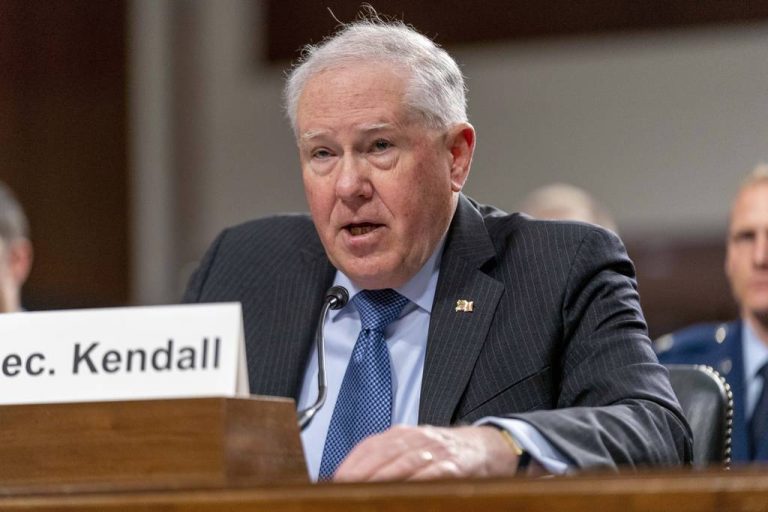
Air Force Secretary Frank Kendall said in keynote speech Monday that the congressional funding standoff has caused significant delays to his vision for modernizing the service. When he took on the role in 2021, he revealed seven “operational imperatives” meant to inform Air Force and Space Force budget priorities.
Initiatives driven by those priorities, 19 of which were included in service’s FY24 budget request, have yet to be fully funded.
“It would be very disappointing to me to have been in office for an entire administration and have never received any of the needed resources to be competitive — resources that we identified in the first six months I was in office,” he said.
The service hopes to narrow its pool of potential CCA providers from five companies to two or three in fiscal 2024, but that timeline depends on when funding is available.
“We’re moving ahead with a sense of urgency on CCAs,” Kendall told reporters Tuesday. “As a preamble, everything depends upon FY24 being appropriated.”
For the Space Force, which requested $30 billion in FY24, the automatic cuts have an outsized impact. The $2.8 billion in stalled modernization projects represents nearly 10% of the service’s total budget.
The Space Force’s budget has nearly doubled since it was created in 2019, and Chief of Space Operations Gen. Chance Saltzman told reporters Feb. 13 that funding delays are having “an acute effect” on the service as it continues to grow.
“Our ability to do all the missions that are required is being severely impacted by not being able to get the resources that we’ve asked for,” he said.
Courtney Albon is C4ISRNET’s space and emerging technology reporter. She has covered the U.S. military since 2012, with a focus on the Air Force and Space Force. She has reported on some of the Defense Department’s most significant acquisition, budget and policy challenges.
Stephen Losey is the air warfare reporter for Defense News. He previously covered leadership and personnel issues at Air Force Times, and the Pentagon, special operations and air warfare at Military.com. He has traveled to the Middle East to cover U.S. Air Force operations.
There is a wealth of information available on food storage, offering various recommendations for the types of foods to stock up on in preparation for unforeseen circumstances. However, the discussion around “survival beverages” is notably lacking.
Typically, experts emphasize the importance of water (which is a no-brainer) and coffee as the two most commonly recommended beverages. While water is essential for survival, coffee is more of a luxury and not critical to sustaining life. Considering that coffee is likely viewed as an indulgence for most people, why not explore other beverage options as well?
Allow me to provide some recommendations for your survival pantry concerning survival beverages. It is up to you to determine whether these should be incorporated into your supplies and the appropriate quantity to store.
Survival beverages for your survival pantry
Water
Yes, I’ve mentioned that this is a no-brainer, but I wanted to shed some light on the analytical thinking of storing water. More precisely, I believe that there is a thought process folks should follow when they decide to store water.
First of all, you should calculate how much water you consume per family member each day and then start from there. Survival experts will recommend a minimum of 1 gallon of water per day for family members, but that’s just a recommendation. Depending on your environment, the season, and the needs of the person, this quantity can increase significantly. If you live in a hot environment and you do more than just lay on the couch, you will consume a lot of water, so 1 gallon might not be enough. If you have a baby or a toddler, you will need more than one gallon for food preparation and sanitation needs.
Do you see my point? Rather than relying on recommendations, how about doing the math and deciding what your real needs are when it comes to water?
Second, water storage comes with a lot of challenges, and you need to make sure you have the means to store the amount of water you need. Water is heavy and bulky, and you will soon realize that you will need a lot of storage space to cover your water needs. This is a big problem for those living in the city or folks with limited living space. If you can’t store enough water, you should consider the following recommendation.
Lastly, water procurement is a topic that shouldn’t be ignored, and you need to plan for it regardless of how much water you are able to store. If your water supply or water source becomes contaminated, you will need to find other water sources to cover your needs. Yes, you can purify the water, but it all depends on the means available and the level of contamination and contaminants. As mentioned above, water procurement is an important planning step for those lacking storage space.
Coffee
storing coffee
Some drink coffee for the extra energy boost it provides, while others enjoy a cup of coffee just for its taste and nothing more. Regardless of the category of people you’re part of, storing coffee comes with its challenges.
Factors that can affect its flavor, aroma, and overall quality. Here are some key challenges associated with long-term coffee storage you should consider:
Oxidation: Coffee beans contain oils that can oxidize over time when exposed to air. Oxidation can lead to a loss of flavor and freshness. It’s crucial to store coffee in airtight containers to minimize air exposure.
Moisture: Coffee readily absorbs moisture from the surrounding environment, leading to the growth of mold and the degradation of the beans. Storing coffee in a dry environment and using moisture-resistant packaging is essential to prevent quality deterioration.
Light Exposure: Exposure to light, especially sunlight, can accelerate the breakdown of coffee compounds and compromise its flavor. Coffee should be stored in opaque or dark containers to protect it from light.
Temperature Fluctuations: Extreme temperature changes can negatively impact the oils in coffee beans and contribute to flavor loss. It is recommended to store coffee in a cool, consistent environment to maintain its quality.
Flavor Contamination: Coffee has a porous structure and can easily absorb odors from its surroundings. Storing coffee near strong-smelling substances can lead to flavor contamination. Keep coffee away from spices, strong-smelling foods, and other aromatic items.
Packaging Quality: The type of packaging used for storing coffee is crucial. Bags with a one-way valve that allows gases to escape while preventing air from entering are ideal. Vacuum-sealed containers are also effective in preserving freshness.
Time: Coffee is best enjoyed when it’s freshly roasted. Over time, even under ideal storage conditions, coffee will inevitably lose some of its aromatic compounds and flavor. For the best results, try to consume stored coffee within a reasonable time frame.
Tea
When it comes to storing tea for your survival needs, there is a purpose of the beverage that needs to be addressed. While some drink tea to improve their morale and take a break from the tumultuous world, others drink it for its medicinal value. I, for one, am one of the folks that stores medicinal tea made from the many plants I’ve foraged.
I do enjoy the occasional cup of tea, but I prefer to drink tea for its medicinal qualities. If you plan to store tea, here are my recommendations:
Air and Moisture Exposure: Similar to coffee, tea leaves can absorb odors and flavors from their surroundings. Storing tea in airtight containers is essential to prevent exposure to air and moisture, which can lead to staleness and flavor degradation. I have containers with good seals to maintain freshness.
Light Protection: Tea is sensitive to light, and prolonged exposure to sunlight or even artificial light can cause it to lose its flavor and aroma. It is advisable to store tea in opaque, airtight containers or in dark-colored packaging to protect it from light.
Temperature: Tea is best stored in a cool and dry environment. Avoid exposing it to extreme temperature fluctuations, as this can affect its quality.
Packaging Material: The material of the storage container matters. If you buy tea in well-sealed packaging, I recommend transferring them to airtight, opaque containers that can provide an extra layer of protection. Glass, tin, or ceramic containers with tight-fitting lids are my choice.
Humidity Control: If you live in a humid climate, consider using desiccants or moisture-absorbing packets in your storage containers to help control humidity levels.
Milk (powdered)
Storing powdered milk for survival needs is a practical and valuable strategy for several reasons besides its long Shelf Life. Properly stored, it can last for several years, making it an excellent option for emergency food supplies or situations where access to fresh dairy may be limited.
Powdered milk retains most of the nutritional benefits found in fresh milk. It is a good source of essential nutrients such as calcium, vitamin D, and protein. Having powdered milk on hand ensures access to these vital nutrients during emergencies or when fresh milk is unavailable.
It is a versatile beverage and can be used in various recipes and applications. It can be reconstituted with water to create liquid milk for drinking or cooking. Additionally, it can be incorporated into recipes for baking, soups, sauces, and other dishes, providing a valuable ingredient in diverse meal preparations.
The shelf life of powdered milk largely depends on factors such as packaging, storage conditions, and the presence of moisture. Generally, if stored in a cool, dry place in a well-sealed container, powdered milk can last for several years.
Cocoa
Storing cocoa for survival needs can be a delightful addition to your emergency food supplies, offering both comfort and versatility. Storing cocoa is beneficial in stressful situations. Having familiar and comforting items like cocoa can provide a morale boost. A warm cup of cocoa can be a source of comfort, especially in challenging times.
Nutritional Value: Cocoa contains antioxidants and some essential minerals, such as magnesium and iron. While it may not serve as a primary source of nutrition, incorporating cocoa into your emergency supplies adds a touch of flavor and a small nutritional benefit.
Versatility: Cocoa is versatile and can be used in various recipes beyond just hot chocolate. It can be added to baking recipes, desserts, and even savory dishes, providing flexibility in creating a variety of flavorful meals.
Long Shelf Life: Similar to powdered milk, cocoa powder has a relatively long shelf life when stored properly. Sealed in airtight containers and kept in a cool, dry place, cocoa powder can remain viable for an extended period, making it a reliable option for long-term storage.
Compact and Lightweight: Cocoa powder is compact and lightweight, making it easy to store and transport. Its low moisture content contributes to its stability, and it doesn’t require refrigeration, making it suitable for emergency kits and long-term storage.
The shelf life of cocoa depends on the same factors as mentioned for powdered milk.
Juice
Storing juice for survival needs can provide a refreshing and nutritious beverage option, especially when access to fresh fruits may be limited. Those who have a family comprised of young and old people decide to store juice since it’s a great morale booster for their loved ones.
Some juices, especially those without added sugars, can provide natural sugars that serve as a quick source of energy. This can be helpful in situations where maintaining energy levels is crucial.
Storing fresh juice poses a challenge due to its limited shelf life. Refrigeration extends its viability to only a few days, and long-term storage alternatives are constrained. While freezing freshly squeezed juice might be considered, it’s not an optimal solution. Unlike store-bought counterparts, homemade juice lacks preservatives, leading to noticeable flavor and nutrient degradation within a month of being stored in the freezer.
However, there are still alternatives to storing juice for more than a year to make sure you enjoy a glass of cold juice when needed.
Unopened commercially bottled juices, especially those sold in aseptic tetra packs, bottles, or cans, have a relatively long shelf life. This can range from several months to over a year, depending on the type of juice and the specific preservation methods used. Always check the expiration date on the packaging for accurate information.
For me, powdered juice mixes are the way to go because when stored in a cool, dry place and kept in a sealed container, they can have a shelf life of several months to a year or more. I recommend checking the packaging for specific storage recommendations and expiration dates. I used the powdered juice mix 5 months after its expiration date, and it was fine. However, I made sure it was stored properly and there weren’t any fluctuating temperatures in my storage room.
An alternative, yet unexplored by me personally, is frozen juice concentrate. These concentrates can be safely stored in the freezer for an extended period, often ranging from several months to a year or more. Upon thawing, it is crucial to adhere to the recommended guidelines for refrigeration and consumption within a specified timeframe. While many preppers have recommended the ones from Old Orchard, I must confess that I have yet to personally test them.
It’s crucial to note that the shelf life is influenced by proper storage conditions. Store juice in a cool, dark place away from direct sunlight and temperature fluctuations. Exposure to heat, light, and air can accelerate the deterioration of both the flavor and nutritional content of the juice.
Energizing drinks
Storing energizing drinks for survival needs can be advantageous for maintaining energy levels during demanding situations. Here are some reasons why some preppers have started adding these to their survival pantry:
Caffeine is a common ingredient in some energizing drinks, and these drinks can enhance alertness and concentration. Having caffeinated drinks on hand can be valuable during emergencies or situations where sustained focus is crucial.
Energizing drinks, often containing electrolytes or other energy-boosting ingredients, can provide a rapid and convenient source of energy. This can be particularly useful in emergencies or situations requiring sustained physical or mental effort.
Some energizing drinks, such as sports drinks, contain electrolytes, which can aid in maintaining proper hydration levels. Electrolytes are essential for various bodily functions and can be depleted during strenuous activities. These beverages are suggested for individuals residing in warm climates who frequently engage in tasks demanding high levels of physical exertion.
Many energizing drinks come in portable and ready-to-drink packaging, making them convenient for on-the-go consumption. This is valuable in situations where time and resources for food preparation may be limited.
The market offers a variety of energizing drinks, including energy shots, sports drinks, and caffeinated survival beverages. This diversity allows individuals to choose the type of energizing drink that aligns with their preferences and needs.
Like other packaged beverages, many energizing drinks have a long shelf life, especially if stored in proper conditions. This makes them suitable for inclusion in emergency supplies, where extended shelf life is a crucial consideration.
When storing energizing drinks, consider the following:
You should opt for drinks with packaging designed for long-term storage, such as sealed cans, bottles, or pouches. Ensure that the packaging remains intact to prevent contamination and maintain product quality.
Store energizing beverages in a cool, dry location, shielded from direct sunlight and temperature fluctuations. Steer clear of high humidity, as it may jeopardize the quality of certain drinks. I once left a Red Bull can on the back seat of my car, and it burst open when the vehicle heated up under the scorching sun.
Regularly inspect the expiration dates and rotate your inventory, consuming the oldest items first. This approach guarantees the presence of fresh and effective energizing drinks in your emergency provisions. It’s worth noting that expiration dates can vary significantly between different manufacturers of these survival beverages.
Immunity boosting drinks
The topic of immunity-boosting drinks and their benefits can be surrounded by varying opinions and some controversy. While certain ingredients and nutrients are generally recognized for their potential immune-supporting properties, it’s essential to approach these claims with a critical mindset.
Many immunity-boosting drinks contain ingredients such as vitamins (e.g., vitamin C, vitamin D), antioxidants, and herbs (e.g., echinacea, ginger, turmeric), which are known for their potential health benefits. However, the effectiveness of these ingredients can vary, and individual responses may differ.
Some ingredients in immunity-boosting drinks have been studied for their potential benefits to the immune system. However, the scientific evidence supporting the effectiveness of these drinks in preventing or treating illnesses may not always be conclusive or universally agreed upon.
The impact of immunity-boosting drinks can depend on factors such as an individual’s diet, overall health, nutritional status, and any pre-existing medical conditions. What works well for one person may not have the same effect on another. Relying solely on specific drinks or supplements may not provide the comprehensive benefits of a well-rounded diet.
Some controversy arises from marketing claims made by manufacturers of these drinks. It’s important for those wanting to store such survival beverages to critically evaluate these claims and be aware of the distinction between scientifically supported benefits and promotional messaging.
The market offers a variety of immunity-boosting drinks, including herbal teas, vitamin-infused waters, and beverages containing ingredients like ginger, turmeric, and echinacea. Having a selection allows individuals to choose drinks that align with their preferences and health needs.
Also, if you have specific health concerns or conditions, you should consult with healthcare professionals before relying solely on immunity-boosting drinks. Healthcare providers can provide personalized advice based on an individual’s health status. I’ve seen young people drinking these survival beverages like water, and I’m pretty sure long-term consumption of such drinks can lead to vitamin imbalances.
I’ve noticed this is a growing trend amongst new preppers, especially the younger ones, and they believe that storing such drinks will cover both their hydration and vitamin requirements.
Many commercially available immunity-boosting drinks come in packaging that extends their shelf life. Properly stored, these beverages can remain viable for an extended period, making them suitable for inclusion in emergency supplies.
However, when storing immunity-boosting drinks, consider the packaging, storage condition, and rotation system. Choose drinks with packaging suitable for long-term storage, such as sealed bottles, cans, or vacuum-sealed pouches. Ensure that the packaging remains intact to prevent contamination. Store immunity-boosting drinks in a cool, dry place away from direct sunlight and temperature fluctuations. Avoid exposing them to high humidity to maintain product quality. Check expiration dates regularly and rotate your stock to consume the oldest items first.
Concluding
So, these are the survival beverages that some preppers include in their survival pantry, and you may have noticed the absence of alcohol in my recommendations. There’s a deliberate choice behind this, as I personally don’t maintain an alcohol reserve. While I have the knowledge to make beer and wine, I don’t prioritize these beverages in a survival scenario.
If you wish to keep alcohol for recreational purposes, that’s entirely acceptable, provided it doesn’t become a primary source of “entertainment” on which you heavily rely. However, if considering alcohol for bartering purposes, I would advise a reconsideration of this strategy. Engaging with individuals who prioritize vices over essentials like food and water could potentially lead to trouble. While alcohol has alternative uses beyond consumption, similar to other products, preppers must establish their priorities regarding what to include in their pantry.
Critical race theory is fast becoming America’s new institutional orthodoxy. Yet most Americans have never heard of it—and of those who have, many don’t understand it. It’s time for this to change. We need to know what it is so we can know how to fight it.
In explaining critical race theory, it helps to begin with a brief history of Marxism. Originally, the Marxist Left built its political program on the theory of class conflict. Marx believed that the primary characteristic of industrial societies was the imbalance of power between capitalists and workers. The solution to that imbalance, according to Marx, was revolution: the workers would eventually gain consciousness of their plight, seize the means of production, overthrow the capitalist class, and usher in a new socialist society.
During the 20th century, a number of regimes underwent Marxist-style revolutions, and each ended in disaster. Socialist governments in the Soviet Union, China, Cambodia, Cuba, and elsewhere racked up a body count of nearly 100 million of their own people. They are remembered for their gulags, show trials, executions, and mass starvations. In practice, Marx’s ideas unleashed man’s darkest brutalities.
By the mid-1960s, Marxist intellectuals in the West had begun to acknowledge these failures. They recoiled at revelations of Soviet atrocities and came to realize that workers’ revolutions would never occur in Western Europe or the United States, where there were large middle classes and rapidly improving standards of living. Americans in particular had never developed a sense of class consciousness or class division. Most Americans believed in the American dream—the idea that they could transcend their origins through education, hard work, and good citizenship.
But rather than abandon their Leftist political project, Marxist scholars in the West simply adapted their revolutionary theory to the social and racial unrest of the 1960s. Abandoning Marx’s economic dialectic of capitalists and workers, they substituted race for class and sought to create a revolutionary coalition of the dispossessed based on racial and ethnic categories.
Fortunately, the early proponents of this revolutionary coalition in the U.S. lost out in the 1960s to the civil rights movement, which sought instead the fulfillment of the American promise of freedom and equality under the law. Americans preferred the idea of improving their country to that of overthrowing it. The vision of Martin Luther King, Jr., President Johnson’s pursuit of the Great Society, and the restoration of law and order promised by President Nixon in his 1968 campaign defined the post-1960s American political consensus.
But the radical Left has proved resilient and enduring—which is where critical race theory comes in.
WHAT IT IS
Critical race theory is an academic discipline, formulated in the 1990s, built on the intellectual framework of identity-based Marxism. Relegated for many years to universities and obscure academic journals, over the past decade it has increasingly become the default ideology in our public institutions. It has been injected into government agencies, public school systems, teacher training programs, and corporate human resources departments in the form of diversity training programs, human resources modules, public policy frameworks, and school curricula.
There are a series of euphemisms deployed by its supporters to describe critical race theory, including “equity,” “social justice,” “diversity and inclusion,” and “culturally responsive teaching.” Critical race theorists, masters of language construction, realize that “neo-Marxism” would be a hard sell. Equity, on the other hand, sounds non-threatening and is easily confused with the American principle of equality. But the distinction is vast and important. Indeed, equality—the principle proclaimed in the Declaration of Independence, defended in the Civil War, and codified into law with the 14th and 15th Amendments, the Civil Rights Act of 1964, and the Voting Rights Act of 1965—is explicitly rejected by critical race theorists. To them, equality represents “mere nondiscrimination” and provides “camouflage” for white supremacy, patriarchy, and oppression.
In contrast to equality, equity as defined and promoted by critical race theorists is little more than reformulated Marxism. In the name of equity, UCLA Law Professor and critical race theorist Cheryl Harris has proposed suspending private property rights, seizing land and wealth and redistributing them along racial lines. Critical race guru Ibram X. Kendi, who directs the Center for Antiracist Research at Boston University, has proposed the creation of a federal Department of Antiracism. This department would be independent of (i.e., unaccountable to) the elected branches of government, and would have the power to nullify, veto, or abolish any law at any level of government and curtail the speech of political leaders and others who are deemed insufficiently “antiracist.”
One practical result of the creation of such a department would be the overthrow of capitalism, since according to Kendi, “In order to truly be antiracist, you also have to truly be anti-capitalist.” In other words, identity is the means and Marxism is the end.
An equity-based form of government would mean the end not only of private property, but also of individual rights, equality under the law, federalism, and freedom of speech. These would be replaced by race-based redistribution of wealth, group-based rights, active discrimination, and omnipotent bureaucratic authority. Historically, the accusation of “anti-Americanism” has been overused. But in this case, it’s not a matter of interpretation—critical race theory prescribes a revolutionary program that would overturn the principles of the Declaration and destroy the remaining structure of the Constitution.
HOW IT WORKS
What does critical race theory look like in practice? Last year, I authored a series of reports focused on critical race theory in the federal government. The FBI was holding workshops on intersectionality theory. The Department of Homeland Security was telling white employees they were committing “microinequities” and had been “socialized into oppressor roles.” The Treasury Department held a training session telling staff members that “virtually all white people contribute to racism” and that they must convert “everyone in the federal government” to the ideology of “antiracism.” And the Sandia National Laboratories, which designs America’s nuclear arsenal, sent white male executives to a three-day reeducation camp, where they were told that “white male culture” was analogous to the “KKK,” “white supremacists,” and “mass killings.” The executives were then forced to renounce their “white male privilege” and write letters of apology to fictitious women and people of color.
This year, I produced another series of reports focused on critical race theory in education. In Cupertino, California, an elementary school forced first-graders to deconstruct their racial and sexual identities, and rank themselves according to their “power and privilege.” In Springfield, Missouri, a middle school forced teachers to locate themselves on an “oppression matrix,” based on the idea that straight, white, English-speaking, Christian males are members of the oppressor class and must atone for their privilege and “covert white supremacy.” In Philadelphia, an elementary school forced fifth-graders to celebrate “Black communism” and simulate a Black Power rally to free 1960s radical Angela Davis from prison, where she had once been held on charges of murder. And in Seattle, the school district told white teachers that they are guilty of “spirit murder” against black children and must “bankrupt [their] privilege in acknowledgement of [their] thieved inheritance.”
I’m just one investigative journalist, but I’ve developed a database of more than 1,000 of these stories. When I say that critical race theory is becoming the operating ideology of our public institutions, it is not an exaggeration—from the universities to bureaucracies to k-12 school systems, critical race theory has permeated the collective intelligence and decision-making process of American government, with no sign of slowing down.
This is a revolutionary change. When originally established, these government institutions were presented as neutral, technocratic, and oriented towards broadly-held perceptions of the public good. Today, under the increasing sway of critical race theory and related ideologies, they are being turned against the American people. This isn’t limited to the permanent bureaucracy in Washington, D.C., but is true as well of institutions in the states, even in red states, and it is spreading to county public health departments, small Midwestern school districts, and more. This ideology will not stop until it has devoured all of our institutions.
FUTILE RESISTANCE
Thus far, attempts to halt the encroachment of critical race theory have been ineffective. There are a number of reasons for this.
First, too many Americans have developed an acute fear of speaking up about social and political issues, especially those involving race. According to a recent Gallup poll, 77 percent of conservatives are afraid to share their political beliefs publicly. Worried about getting mobbed on social media, fired from their jobs, or worse, they remain quiet, largely ceding the public debate to those pushing these anti-American ideologies. Consequently, the institutions themselves become monocultures: dogmatic, suspicious, and hostile to a diversity of opinion. Conservatives in both the federal government and public school systems have told me that their “equity and inclusion” departments serve as political offices, searching for and stamping out any dissent from the official orthodoxy.
Second, critical race theorists have constructed their argument like a mousetrap. Disagreement with their program becomes irrefutable evidence of a dissenter’s “white fragility,” “unconscious bias,” or “internalized white supremacy.” I’ve seen this projection of false consciousness on their opponents play out dozens of times in my reporting. Diversity trainers will make an outrageous claim—such as “all whites are intrinsically oppressors” or “white teachers are guilty of spirit murdering black children”—and then when confronted with disagreement, they adopt a patronizing tone and explain that participants who feel “defensiveness” or “anger” are reacting out of guilt and shame. Dissenters are instructed to remain silent, “lean into the discomfort,” and accept their “complicity in white supremacy.”
Third, Americans across the political spectrum have failed to separate the premise of critical race theory from its conclusion. Its premise—that American history includes slavery and other injustices, and that we should examine and learn from that history—is undeniable. But its revolutionary conclusion—that America was founded on and defined by racism and that our founding principles, our Constitution, and our way of life should be overthrown—does not rightly, much less necessarily, follow.
Fourth and finally, the writers and activists who have had the courage to speak out against critical race theory have tended to address it on the theoretical level, pointing out the theory’s logical contradictions and dishonest account of history. These criticisms are worthy and good, but they move the debate into the academic realm, which is friendly terrain for proponents of critical race theory. They fail to force defenders of this revolutionary ideology to defend the practical consequences of their ideas in the realm of politics.
POLITICAL ENGAGEMENT
No longer simply an academic matter, critical race theory has become a tool of political power. To borrow a phrase from the Marxist theoretician Antonio Gramsci, it is fast achieving “cultural hegemony” in America’s public institutions. More and more, it is driving the vast machinery of the state and society. If we want to succeed in opposing it, we must address it politically at every level.
Critical race theorists must be confronted with and forced to speak to the facts. Do they support public schools separating first-graders into groups of “oppressors” and “oppressed”? Do they support mandatory curricula teaching that “all white people play a part in perpetuating systemic racism”? Do they support public schools instructing white parents to become “white traitors” and advocate for “white abolition”? Do they want those who work in government to be required to undergo this kind of reeducation? How about managers and workers in corporate America? How about the men and women in our military? How about every one of us?
There are three parts to a successful strategy to defeat the forces of critical race theory: governmental action, grassroots mobilization, and an appeal to principle.
We already see examples of governmental action. Last year, one of my reports led President Trump to issue an executive order banning critical race theory-based training programs in the federal government. President Biden rescinded this order on his first day in office, but it provides a model for governors and municipal leaders to follow. This year, several state legislatures have introduced bills to achieve the same goal: preventing public institutions from conducting programs that stereotype, scapegoat, or demean people on the basis of race. And I have organized a coalition of attorneys to file lawsuits against schools and government agencies that impose critical race theory-based programs on grounds of the First Amendment (which protects citizens from compelled speech), the Fourteenth Amendment (which provides equal protection under the law), and the Civil Rights Act of 1964 (which prohibits public institutions from discriminating on the basis of race).
On the grassroots level, a multiracial and bipartisan coalition is emerging to do battle against critical race theory. Parents are mobilizing against racially divisive curricula in public schools and employees are increasingly speaking out against Orwellian reeducation in the workplace. When they see what is happening, Americans are naturally outraged that critical race theory promotes three ideas—race essentialism, collective guilt, and neo-segregation—which violate the basic principles of equality and justice. Anecdotally, many Chinese-Americans have told me that having survived the Cultural Revolution in their former country, they refuse to let the same thing happen here.
In terms of principles, we need to employ our own moral language rather than allow ourselves to be confined by the categories of critical race theory. For example, we often find ourselves debating “diversity.” Diversity as most of us understand it is generally good, all things being equal, but it is of secondary value. We should be talking about and aiming at excellence, a common standard that challenges people of all backgrounds to achieve their potential. On the scale of desirable ends, excellence beats diversity every time.
Similarly, in addition to pointing out the dishonesty of the historical narrative on which critical race theory is predicated, we must promote the true story of America—a story that is honest about injustices in American history, but that places them in the context of our nation’s high ideals and the progress we have made towards realizing them. Genuine American history is rich with stories of achievements and sacrifices that will move the hearts of Americans—in stark contrast to the grim and pessimistic narrative pressed by critical race theorists.
Above all, we must have courage—the fundamental virtue required in our time. Courage to stand and speak the truth. Courage to withstand epithets. Courage to face the mob. Courage to shrug off the scorn of the elites. When enough of us overcome the fear that currently prevents so many from speaking out, the hold of critical race theory will begin to slip. And courage begets courage. It’s easy to stop a lone dissenter; it’s much harder to stop 10, 20, 100, 1,000, 1,000,000, or more who stand up together for the principles of America.
Truth and justice are on our side. If we can muster the courage, we will win.
DENVER, Colo. — The Air Force’s desired adaptations to Boeing’s E-7A battlefield management aircraft are proving to be harderthan expected and complicating price negotiations, top service officials said Tuesday.
“We’re having a hard time with [the E-7 program], getting price agreement with Boeing,” Air Force Secretary Frank Kendall told reporters in a roundtable at the Air and Space Force Association’s Air Warfare Symposium here. “We’re still in negotiations with them, and that’s not been finalized yet.”
The Air Force plans to buy 26 E-7s from Boeing by 2032 to replace its aging E-3 Sentry airborne warning and control system aircraft fleet. The service awarded Boeing a $1.2 billion contract in February 2023 to start working on the aircraft.
The service plans to first buy two rapid prototype E-7s, with the first expected to be fielded in 2027, and in 2025 make a production decision on the rest of the fleet.
Australia already flies the E-7, which it refers to as the Wedgetail, and Boeing is also making the aircraft for other nations such as the United Kingdom. The Air Force’s version of the E-7 will have a modified design to meet U.S. satellite communication, military GPS and cybersecurity and program protection requirements.
“We’re partnering with the US Air Force to deliver this critical capability and are working diligently to reach an agreement,” Boeing said in a statement to Defense News.
Andrew Hunter, the Air Force’s assistant secretary for acquisition, technology and logistics, said in another roundtable the sticky negotiations center on the E-7′s first two rapid prototype aircraft.
The level of engineering work needed to adapt the E-7 to the Air Force’s specifications was “above and beyond what we anticipated,” Hunter said.
“The big surprise there was an unexpected amount and degree of non-recurring engineering required to meet the requirement that the Air Force specified, which we thought was very close to what the U.K. is currently procuring from Boeing,” Hunter said. “Those discussions have been challenging.”
Hunter said the Air Force is trying to better understand Boeing’s proposal and determine what elements are essential, and what are unnecessary or could be deferred. The service has narrowed those nagging issues down to a smaller list, Hunter said, but he declined to detail them.
Hunter said he would prefer the process to be going faster. But he acknowledged it’s not surprising that Boeing is being particularly cautious as it negotiates on this program, and that the Air Force and Boeing are working through these challenges together.
“They’ve gotten into some contracts in the past that it’s apparent that as they were bidding those, there was key information they were lacking,” Hunter said. “At some level, it’s not that surprising that they’re trying hard to do their homework and not bid things and not understand the full scope of the work they can be expected to perform when they prepare their proposal.”
Stephen Losey is the air warfare reporter for Defense News. He previously covered leadership and personnel issues at Air Force Times, and the Pentagon, special operations and air warfare at Military.com. He has traveled to the Middle East to cover U.S. Air Force operations.
The remote cabin appeared to be an ideal location for a strategic retreat, and indeed, it initially served as a valuable safe haven. However, as days and weeks elapsed, contrary to expectations, normalcy did not return. It became evident that you and your loved ones were pitted against the world.
The situation took a turn for the worse when the first group of individuals emerged, resembling an enraged mob from a zombie movie. It became apparent that a peaceful resolution was unlikely as they aggressively sought ways to breach your perimeter defense.
Their weapons, gleaming like beacons in the night, signaled impending trouble at your doorstep. It was imperative to convey that you meant business. Shouting at them to retreat or face the consequences, you asserted your stance. The unfolding confrontation revealed the gravity of the situation, prompting you to take decisive action.
Uncertain about their course of action, the intruders persisted upon realizing that you possessed something worth defending. With determination, you raised your Remington 870 shotgun and discharged 00 buckshot, striking one of them in the chest. In response, they retaliated, seeking cover, but you strategically targeted and repelled their advances. You maintained control over the backwoods and countryside, defending against the invading force. The prolonged struggle took a toll on your weapons, making firearm maintenance challenging due to scarce supplies.
In such dire circumstances, it was noted that while individuals readily brought firearms, magazines, and ammunition when chaos ensued, cleaning supplies were often overlooked. Whether preparing for a mob home invasion or a natural disaster displacing thousands, it is advisable to have a comprehensive firearms kit.
This kit should include tools, spare parts, and essential cleaners and lubricants. Let’s explore the creation of a micro cleaning kit that is compact and easy to pack for such situations. What to put in your gun micro cleaning kit
Gun micro cleaning kit contents:
Cleaning Cloth
To effectively wipe away dirt, carbon, and debris from your firearm, it’s crucial to have an appropriate type of cloth. While almost any piece of cloth will do the job, standard-colored handkerchiefs are particularly effective. They are thin, absorb fluids efficiently, and can be easily folded into compact sections. A practical approach is to cut a standard-sized handkerchief in half, wrap it around your BoreSnake, and pack it away for convenience.
An alternative option is to utilize custom-cut sections of cloth from men’s white undershirts, providing a cost-effective and readily available solution. When selecting cleaning cloths, prioritize materials made from 100-percent cotton, as they tend to absorb fluids better than other blends. This ensures a more effective cleaning process and contributes to the overall maintenance of your firearm.
Additionally, consider the practicality of having multiple cloth sections in your cleaning kit, allowing you to replace them as needed during the maintenance process. Keeping your firearm clean and well-maintained is essential for optimal performance and longevity, especially in scenarios where resources may be limited.
CLP
To ensure proper firearms maintenance, it is essential to employ various task-specific cleaning solutions, typically categorized into cleaners, lubricants, and preservatives.
Cleaners are formulated to dissolve carbon and copper fouling, effectively cleaning all surfaces of the firearm and the bore of the barrel. Lubricants, which consist of various types of oils, are applied to coat metal surfaces that come into contact.
Their purpose is to reduce friction and drag between metal components, while also suspending dirt and fouling in the fluid, preventing their accumulation over extended use. Preservatives are liquids that create a thin film on the metal parts of the firearm, serving as a protective barrier against rust and corrosion resulting from exposure to the environment.
While all three components are crucial for long-term firearm maintenance, carrying separate bottles for each can be impractical for a compact cleaning kit. Fortunately, there are products designed to address multiple cleaning tasks, known as CLP (Cleaner, Lubricant, Preservative).
Notable examples include Break-Free and SLIP2000, both capable of performing all three cleaning functions with a single solution. While individual solutions may offer superior performance within their specific categories, CLPs provide a balanced performance across the board.
When assembling a micro cleaning kit, opting for a CLP solution becomes a practical choice, allowing you to effectively meet all cleaning requirements without burdening your bug-out bag with multiple bottles. An easily packable ½-ounce bottle of CLP, when used judiciously, can last through several cleaning sessions, making it a convenient and efficient solution for maintaining your firearm in various scenarios.
Cleaning Rod
Traditional bore cleaning tools typically utilize a metal rod, either in sections or as a single piece unit. The rod’s end is threaded, allowing for the attachment of various cleaning accessories such as a wire brush for scrubbing the barrel and different diameter barrel jags. Patches are then wrapped around the jag to create a seal, facilitating the removal of fouling from the bore and the application of protective oils inside.
However, conventional cleaning rods have drawbacks – they are bulky to store, even the sectional ones, and are susceptible to bending and breaking. Moreover, they necessitate the use of at least two detachable accessories: the wire cleaning brush and the bore jag, adding to the complexity of the cleaning process.
A superior alternative that consolidates all these features into a compact package is the BoreSnake by Hoppes. This innovative tool comprises a braided nylon cord with small sections of wire bristles integrated into the weave. A short section of nylon preceding the bristles allows for the application of cleaning solution, while a longer braided nylon section behind the bristles aids in pulling out any loosened debris.
The BoreSnake serves as a comprehensive replacement for the cleaning rod, wire brush, and jags, all condensed into a single braided cord that can be tightly folded for efficient storage. This makes the BoreSnake an indispensable centerpiece for any micro cleaning kit, offering convenience, versatility, and space efficiency in firearm maintenance.
Exploring Bore-Cleaning Alternatives
Inspired by the well-established design of the BoreSnake, we can ingeniously fashion a comparable tool using a length of 550 paracord. By tying several knots into the paracord to match the bore’s diameter, we can create a makeshift cleaning device. Once assembled, simply pull the cord through the chamber and bore to effectively eliminate any fouling.
In situations where paracord is not readily available, resourceful substitutes like bootlaces or bungee cords can be employed. These alternatives, while unconventional, prove to be effective stand-ins. Another creative solution involves utilizing fishing string equipped with a hook small enough to navigate the firearm’s bore. By folding several sections of cloth over the hook, this improvised setup can be pulled through the bore, providing a unique yet practical approach to bore cleaning.
Exploring Nice-to-Have Options
Even though our micro cleaning kit is already comprehensive, there are a couple of additional accessories that can enhance the ease of our cleaning tasks, requiring only a minimal trade-off in packing space. The first beneficial addition is a small section of grade #0000 steel wool, specifically the superfine grade. This proves invaluable for scrubbing off hardened carbon fouling, particularly on components like the AR-15 bolt, making the cleaning process much more efficient.
The second accessory is a small brush, and a practical choice for this purpose is an old toothbrush with the handle cut down to size. This modified toothbrush provides an effective tool for reaching and cleaning various nooks and crannies of the firearm, ensuring a thorough cleaning session. These optional accessories can be easily incorporated into the micro cleaning kit, offering added versatility without significantly increasing the overall packing space required.
Exploring Substitute Cleaners
The realm of substitute cleaners for firearms maintenance is virtually boundless and limited only by one’s imagination. Almost any cleaner commonly utilized on machinery can be repurposed for cleaning firearms.
Among the numerous options available, automotive brake and drum spray cleaners, as well as heavy-duty marine degreasers, stand out as effective choices. In scenarios where typical automotive or machinery cleaning solutions are scarce, fuel from abandoned cars, including gasoline, diesel, aviation fuel, or kerosene, can be employed for cleaning purposes.
Furthermore, a range of home-cleaning solutions can also prove effective. Substitutes like mineral spirits, paint thinner, Simple Green, or even Formula 409 cleaner can be adapted for firearm cleaning. Don’t underestimate the efficacy of dishwashing soaps like Dawn or any other grease-removing detergent.
An unconventional yet tried-and-true method involves using Coca-Cola. Due to its high acidity, Coke can effectively clean dirty firearm parts. Regardless of the chosen substitute cleaner, it is imperative to ensure that all firearm components are thoroughly rinsed and dried before reassembly, maintaining the integrity and functionality of the firearm.
Exploring SHTF Lube and Preservative Alternatives
Substitute lubricants and preservatives can effectively serve the same purpose, with most lubricants doubling as preservatives. Applying a thin coating of lubricant on exposed metal surfaces provides a degree of corrosion protection. It’s crucial to strike a balance, using enough liquid to create a slight shine on the metal without making it appear or feel wet to the touch.
Finding substitute lubricants is relatively straightforward, as various machinery requiring engines demands lubrication. Vehicle fluids such as motor oil, transmission fluid, or hydraulic fluid can all serve as effective lubricants for firearms. Additionally, lubricants used for home and gardening tools, including lawnmowers, chainsaws, gas-powered weed whackers, and generators, can be repurposed for firearm maintenance.
Another viable lubricant option is grease, readily available at vehicle grease points on chassis and suspension components. A simple swipe of grease with a finger can serve as an effective lubricant. Even common petroleum jelly offers a level of lubrication. Creativity is key in sourcing lubrication alternatives, so consider anything with an engine as a potential source for maintaining your firearms.
Concluding
The catalyst for assembling a micro cleaning kit shouldn’t solely be the fear of a home invasion. Dedicate some time to collect the necessary supplies for creating a lightweight yet efficient kit, and include it with your firearm and bug-out gear. For those with multiple go-bags strategically placed for different emergencies, ensure each pack is equipped with its own cleaning kit.
In the unfortunate event of being separated from your cleaning supplies, rest assured that you possess the knowledge and skills to improvise a kit in the field. Similar to any survival skill, cultivating awareness and harnessing creativity are essential for adapting to the challenges life may present.
Consider this proactive approach not only as a response to immediate threats but also as an integral aspect of preparedness. By taking the initiative to craft a micro cleaning kit, you enhance your ability to maintain and safeguard your firearm, contributing to an overall sense of readiness in various emergency situations.
Former 2 1/2 pack a day smoker. Ended up with high blood pressure at age 26. Kept on smoking ’till I was 29 and landed in the ER with blood pressure that went way high. I was told at that time that I was not too young to have a stroke.
Stopped cold turkey in February 1983 right after that incident. Started again in 1991 but could stand it for only a couple months, tasted like shit. Quit promptly after that.
Tried quitting before the episode with the high blood pressure (still have it today at age 70, but no stroke or heart disease) several times. The cutting down method never worked.
If I smoked two packs a day and quit for a month, and then light up just one, within a few days I’d be right back up to two packs a day. Nicotine is so highly addictive.
About ten years after that I picked up on small stogies, maybe half dozen cigars per year. Then I began waking up with a blaring sinus headache and a nose so packed full I couldn’t breathe through it for hours. When the congestion finally cleared, I found it was made up entirely of blood clots.
That happened a few times before I dropped the cigars. No more nasal blood clots.
To this day I cannot remain very long around someone while they are smoking. It feels just like stripping the insulation off of a 6 inch piece of 12 gauge solid copper wire and cramming it up my nose.
SINGAPORE — The U.S. Andersen Air Force Base in Guam is set to open its doors to half of Singapore’s F-15 fleet, as the city state seeks to ramp up its combat readiness.
The move to concentrate air warfare capabilities at the remote American installation, located at the rim of the Philippine Sea, is part of a modernization plan proposed by the U.S. air service.
Over the past few years, North Korea has threatened a number of times to attack the small island, as was the case in 2017 when U.S. bombers took off from there to patrol the skies of ally South Korea.
“Andersen AFB is a strategic location used to project airpower and expand combat capability from the forward edge of the Indo-Pacific – our intent is to further resource this location,” a spokesperson for U.S. Pacific Air Forces (PACAF) told Defense News in an email.
“The purpose of the proposed action is to provide critical infrastructure that enhances U.S. posture west of the International Date Line,” the statement said.
The Singapore-related upgrades entail the bed-down and mission support of up to 12 Singaporean F-15SG aircraft, a variant of Boeing’s F-15 Strike Eagle, with plans to provide training facilities for pilots.
The changes, as detailed in a December U.S. Air Force statement, will also increase airfield and munitions infrastructure to address capability gaps and enhance how ground operations are carried out. The construction is expected to affect 209 acres and take place over a period of three to seven years.
There is currently no fixed date for when the work could begin. The Guam installation, one of ten bases under the authority of PACAF, is the only one in the western Pacific that can continuously overhaul American heavy bombers.
It is likely to have been selected by the U.S. Air Force for this project, as Guam is known to have a relatively unconfined airspace and has been deemed vital by analysts in the event of military action by North Korea.
Additionally, it is near the Farallon de Medinilla, a 1.75 mile-long (2.8 km) unoccupied island, used as a training bombing range from Andersen.
The U.S. air service “reviewed requirements for strategic capabilities within the Indo-Pacific region and identified Andersen AFB for enhanced capabilities, dismissing five other potential alternative locations within the Pacific Air Forces area of responsibility from consideration,” the PACAF statement said.
Singapore signed an initial $1.6 billion deal with Boeing in 2005 for the procurement of 12 F-15SG fighter aircraft, after which it ordered an additional 12 aircraft, resulting in a fleet of at least 24 fighters.
“The F-15SGs remain an important part of our fighter fleet – they have been serving us well since 2009 and they are expected to continue to meet our operational needs,” Maj. Gen. Kelvin Khong, chief of the Republic of Singapore Air Force, or RSAF, said in a statement ahead of the Singapore Airshow organized here from Feb. 20-25.
The RSAF has also been operating F-16s for several years, which began undergoing mid-life upgrades in 2016, as the city state plans to retire them from mid-2030 onwards and will soon receive its first F-35Bs from Lockheed Martin.
“The RSAF next-generation fleet will consist of F-35s and F-15SGs, and we expect to take delivery of the first four F-35Bs by 2026 and remaining eight in the following years,” Khong said.
The official added that the country plans to commence the training of its first F-35 pilots in the United States in order to enhance cooperation between the two nations’ fleets.
Elisabeth Gosselin-Malo is a Europe correspondent for Defense News. She covers a wide range of topics related to military procurement and international security, and specializes in reporting on the aviation sector. She is based in Milan, Italy.
If you’ve ever found yourself pondering the veracity of the age-old anecdotes and advice circulating around the topic of winter survival, you’re in the right spot. It’s crucial to arm yourself with knowledge well before facing a real-life survival scenario in the chilly months.
In this exploration of survival winter myths, we aim to unravel the truth behind these traditional tales, providing you with a comprehensive understanding to ensure you’re not only well-informed but also adequately prepared for the diverse challenges that the winter season might present.
So, let’s dive into the realm of winter survival wisdom, examining the validity of those longstanding narratives and equipping ourselves with practical know-how for a resilient and secure winter experience.
Busing Winter Myths:
1. A glass of whiskey will keep you warm and safe
MYTH BUSTED: The notion that a spoonful of whiskey can miraculously ward off frostbite and hypothermia has been a longstanding belief, often passed down through generations. However, let’s debunk this age-old myth and unravel the truth behind staying warm in cold climates.
While it’s true that alcohol might provide a temporary sensation of warmth, it’s essential to recognize that this feeling is deceptive. Contrary to popular belief, alcohol does not alter your body’s core temperature. If you find yourself in a situation where there’s a risk of frostbite or hypothermia, opting for a sip of whiskey is not a viable solution.
According to experts, the wisest course of action involves lighting a fire instead of reaching for the liquor bottle. Not only does this method guarantee a genuine increase in warmth, but it also preserves your cognitive abilities. Maintaining a clear head is crucial in situations where quick thinking is paramount, ensuring you are well-equipped to tackle any challenges that may arise.
In addition to dispelling the whiskey myth, it’s important to emphasize the significance of proper winter preparedness. This includes wearing appropriate clothing, insulating shelters, and understanding the signs and symptoms of cold-related illnesses. By focusing on complete strategies for staying warm and safe in winter conditions, you’ll be better equipped to navigate the challenges of cold weather with confidence and resilience. So, let’s leave the whiskey aside and plan your trip better before getting out during the colder months.
2. If you pour hot water on your hands, you will keep them warm
MYTH BUSTED: It’s a well-circulated belief among cold weather enthusiasts that pouring hot water over one’s hands can provide instant relief from the chilling threat of frostbite. However, let’s delve into the reality behind this common practice and explore more effective strategies for keeping hands warm in frigid conditions.
While some winter adventurers might resort to using warm water or even unconventional methods like urination to fend off frostbite, experts caution against this seemingly intuitive approach. Pouring warm water over your hands, especially in the absence of a reliable heat source for sustained warmth, can prove counterproductive.
Consider the scenario of ice fishing on a frozen lake, armed with a thermos of warm water. The impulsive act of pouring this precious resource over your hands can lead to a dual problem. Firstly, you deplete your supply of warm water, and secondly, you end up with wet hands that quickly lose their warmth, unless dry, insulated gloves are readily available. Instead of haphazardly using warm water, a more strategic approach involves utilizing a consistent heat source, like a fire, to continually reheat the water. Submerging hands in warm water under these conditions can aid in thawing, provided your clothing remains dry throughout the process.
It’s crucial to note that attempting to warm skin affected by frostbite through rubbing or massaging is ill-advised without professional assistance. The initial discomfort or “nip” experienced in fingers during cold weather is usually a warning sign to seek warmth promptly. However, if frostbite progresses to a more severe stage, such as third-degree frostbite where tissue is frozen, attempting to reheat it can be detrimental. Not only does the application of heat increase the risk of complications like sepsis and gangrene, but it also induces intense pain.
In cases of frostbite, immediate medical attention is paramount. Rather than relying on makeshift solutions, individuals experiencing frostbite should promptly seek professional help by heading to the hospital. By dispelling myths and promoting informed winter practices, we can enhance safety and well-being in the face of harsh cold conditions.
3. Never expose bare skin to the elements
MYTH BUSTED: Dressing in layers and donning well-insulated clothing is often touted as a paramount method to combat the cold when venturing outdoors. The conventional wisdom dictates that exposing bare skin to the frigid weather is a strict no-no. However, let’s challenge this notion and explore a nuanced approach that acknowledges the practicalities of dealing with wet conditions in winter.
While the general advice holds true for maintaining warmth, there are situations where exposing bare skin might be the more pragmatic choice. For instance, if you find yourself needing to handle something wet, opting to use your bare hands can be a quicker and more efficient solution. The rationale behind this lies in the ease and speed of drying your skin compared to the time-consuming process of drying a pair of gloves. Once the task is completed, the immediate drying of your bare hands, followed by the prompt reapplication of gloves, ensures minimal exposure to the cold.
Moreover, if your gloves, socks, or other clothing items become saturated, the recommended course of action is to remove them promptly and substitute them with dry gear. This proactive measure prevents the discomfort and potential health risks associated with walking around in wet apparel. The brief exposure of bare skin during this transition is deemed more favorable than enduring the prolonged challenges of navigating with damp clothing.
This nuanced perspective encourages a balance between the traditional wisdom of staying covered in layers and recognizing practical exceptions when dealing with wet conditions. By understanding the context-specific considerations, individuals can make informed decisions to enhance their comfort and well-being in the winter elements. So, when the situation demands, don’t shy away from briefly baring your skin to address wetness, making winter outings a more adaptable and enjoyable experience.
4. A small fire is better
MYTH BUSTED: The adage “Make a small fire and sit close” is a well-known piece of advice in the world of outdoor adventuring. However, the practicality of this guidance may vary, especially in regions prone to bitter cold. Let’s delve into the nuances of campfire size selection and challenge the notion that smaller fires are universally smarter.
Traditionally, the idea of a small, cozy fire close to the body is often idealized. Yet, in extremely cold and snowy conditions, adhering strictly to this principle may pose challenges. When faced with the reality of damp and soggy materials, attempting to kindle a small fire may result in a less-than-optimal outcome, potentially leading to a struggle with ignition or an insufficient source of warmth.
The truth is, in harsh winter environments, where temperatures plummet, and snowfall is abundant, practicality should supersede the traditional wisdom of small fires. As highlighted by experts, the focus should pivot towards prioritizing warmth, recognizing that circumstances may necessitate the creation of a larger fire. In such situations, embracing the reality of a bigger fire becomes not only a pragmatic choice but also a matter of practicality.
It’s crucial to acknowledge the contextual nature of this advice, understanding that the size of the fire should be adapted to the specific environmental conditions and available resources. While the charm of a small, intimate fire remains, it’s equally important to be prepared to scale up when the cold and wet elements demand it. Ultimately, the key lies in striking a balance between the ideal and the practical, ensuring that the primary objective of securing warmth takes precedence in the ever-changing dynamics of outdoor survival.
5. A hill is warmer than a valley
MYTH BUSTED: The notion that setting up your winter campsite on top of a hill is inherently warmer due to the faster arrival of the sun’s warmth is a common belief among outdoor enthusiasts. However, let’s unravel the truth behind this assumption and explore the nuanced considerations for choosing the optimal campsite location in winter.
While it might seem intuitive to seek higher ground for quicker exposure to sunlight, the reality is more complex. The earth heats from the ground up, and various factors must be taken into account when selecting a suitable campsite. Landscape characteristics play a crucial role, introducing considerations such as the risk of avalanches on mountainous terrain, resource availability for fire-making, and other site-specific issues.
In open country scenarios, opting for the bottom of the hill for your campsite might be a more prudent choice. Contrary to the misconception that it would result in a substantial temperature difference, the actual gradations are relatively small. Moreover, situating your camp at the base of the hill offers advantages such as pooling cooler air, which, in turn, provides protection from harsh wind chill. This not only prevents you from feeling colder but also makes it easier to maintain a consistent and reliable fire.
Recognizing the multifaceted nature of winter camping decisions is essential. It goes beyond the simplistic notion of choosing high ground for quicker sunlight exposure. By factoring in the specific landscape characteristics, potential hazards, and the practicalities of fire-building, you can make informed choices for a safer and more comfortable winter camping experience. So, when it comes to setting up your winter retreat, think beyond the hill’s summit and consider the comprehensive factors that contribute to a well-planned and resilient campsite.
6. Eating snow will hydrate you
MYTH BUSTED: The misconception that eating snow is a reliable method of hydration stems from the seemingly abundant resources available in cold environments. Many may assume that since snow is made of water, consuming it directly provides a quick and convenient way to stay hydrated during winter activities.
In reality, eating snow poses risks to one’s well-being, particularly in colder climates. Snow, in its frozen state, can absorb heat from the body during the melting process, leading to a decrease in core body temperature. This can potentially contribute to hypothermia, a condition where the body loses heat faster than it can produce it. Additionally, ingesting frozen snow can cause discomfort and potentially damage the mucous membranes of the mouth and throat.
The more advisable approach is to melt snow before consuming it. Melting allows the snow to transform into liquid water, ensuring that the body receives a safe and effective source of hydration without the associated risks of temperature loss. Methods for melting snow include using a heat source, such as a stove or a portable water purifier with a melting function, to ensure the water is safe to drink.
Furthermore, understanding the snow’s source is crucial. In areas where pollution is a concern, consuming melted snow without proper filtration may introduce contaminants into the water. Thus, it’s essential to consider water quality and, when possible, use reliable water purification methods.
As part of winter survival education, individuals should be informed about the potential dangers of consuming snow directly. Emphasizing the importance of proper hydration practices, such as melting snow before consumption, contributes to safer and more enjoyable experiences in cold environments.
7. All ice is safe to walk on
MYTH BUSTED: Assuming that all ice surfaces are uniformly safe for walking is a common misconception, especially in regions where frozen bodies of water are prevalent. The belief that a frozen surface is inherently strong and stable may lead individuals to underestimate the potential dangers associated with walking on ice.
The safety of ice is not universal, and several factors determine its stability. Thickness is a critical consideration, with thicker ice generally being more stable. However, variations in temperature, the presence of cracks, and the type of water body all contribute to the ice’s overall strength.
Understanding the nuances of ice safety is crucial for individuals engaging in winter activities that involve frozen surfaces. Ice thickness should be carefully measured using an ice auger or other appropriate tools. The recommended minimum thickness for walking on clear ice is around 4 inches, while thicker ice is required for activities involving heavier loads or groups.
Moreover, it’s essential to be cautious around areas where factors like moving water, changes in temperature, or pressure points can weaken the ice. The color of the ice can also provide clues about its strength, with clear ice being generally stronger than cloudy or white ice.
Educating individuals about ice safety involves not only dispelling the myth that all ice is safe but also providing practical guidelines for assessing ice conditions. This includes recognizing potential hazards, understanding the impact of weather conditions on ice stability, and promoting the use of appropriate safety equipment, such as ice picks or life jackets when venturing onto frozen bodies of water. By fostering awareness and respect for the dynamic nature of ice, individuals can make informed decisions, reducing the risk of accidents and enhancing their safety during winter activities.
Concluding
Dispelling winter myths is essential for ensuring safety in cold environments. From the misconception that eating snow hydrates to the belief that all ice is safe for walking, understanding the potential risks is crucial. Winter survival education, focusing on accurate information, empowers individuals to make informed decisions, emphasizing proper hydration practices and ice safety. By fostering awareness and preparedness, we contribute to a safer and more enjoyable winter experience, reducing the likelihood of accidents and emergencies in cold weather.