Only in Flora-duh….

0

Several stolen horses are found slaughtered in rural South Miami-Dade, police say (yahoo.com)

"Police say the thieves walked the horses from the stable where they lived near the 12400 block of Southwest 197th Avenue to a property next door. They cut a hole in a chain link fence, and led the animals to an open field, where officers found them “slaughtered for their meat,” Zabaleta said."
***

When will…

Only in Flora-duh….

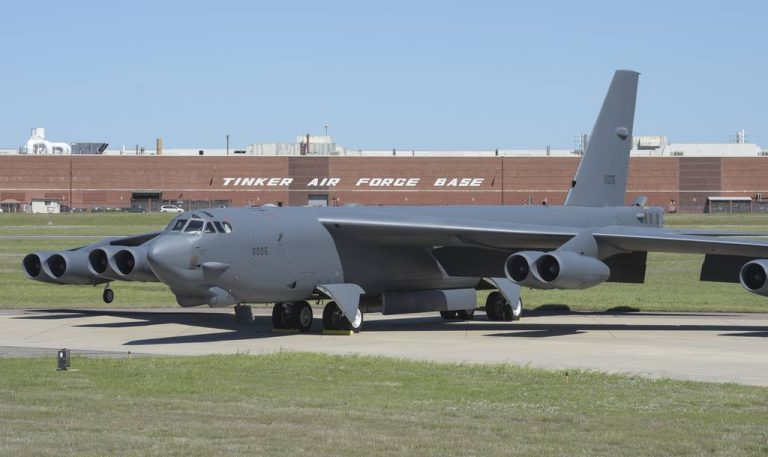
Tinker Air Force base readies for B-52 upgrades as engines tested

0

The Air Force expects to finish qualification testing of the new engines planned for the B-52 Stratofortress by the end of 2024.

And the service plans to make a Milestone B decision on the Commercial Engine Replacement Program by the end of the summer, which would allow it to move into its engineering and manufacturing development phase, officials said in an interview with Defense News.

These developments will mark critical milestones in the Air Force’s effort to upgrade its fleet of 76 Cold War-era B-52s with new engines, radar, avionics, and other improvements to keep it flying until perhaps 2060, about a century after the B-52H was first introduced. The planes’ 1960s-era TF33 engines are at the end of their working lives, and are to be replaced by Rolls-Royce’s F130 engine.

Col. Scott Foreman, B-52 system program manager who oversees the bomber’s sustainment and modernization efforts at Tinker Air Force Base in Oklahoma, and CERP program manager Lt. Col. Tim Cleaver said in the interview that the base is also taking several steps to prepare for the significant modernization work.

This includes plans to build a massive hangar at Tinker starting in 2026, which could house up to four B-52s and increase the amount of work that can be done on the bomber at any given time.

The Air Force wants to “get these H models converted to [B-52]J models as quickly as possible, because … the clock’s ticking on those TF33″ engines, Cleaver said.

The Air Force knows the F130 engine works, Cleaver said, since a version of it has powered the Gulfstream G650 business jet for years. But the F130s will be mounted differently on the B-52, and the Air Force needs to make sure there aren’t any surprises with the bomber’s twin-pod, under-wing configuration.

Rolls-Royce last year completed much of the initial twin-pod testing of the F130 engines at NASA’s Stennis Space Center in Mississippi, Cleaver said, and the last six-week test cycle there is expected to start in early March. Those tests will involve exposing the engine pods to cross-wind blowers, and seeing what happens if one engine in the pod has to operate at reduced power or is even inoperative.

More tests will follow, Foreman said. In April, the F130 will start sea-level performance testing on a stand at a Rolls-Royce facility in Indianapolis. Another engine will undergo durability testing through 2025, Cleaver said. And this fall, F130 testing will move to the Arnold Engineering Development Complex in Tennessee, where it will be subjected to simulated altitudes to produce more data on how it might behave in flight.

Once that round is done, they said, the F130 will have finished its qualification testing that ensures it would be safe to fly, and pave the way for test modifications to begin.

The first two test B-52s will be modified at Boeing’s San Antonio, Texas facility beginning in 2026. It will take a few years to upgrade these bombers for the first time, Cleaver said, and ground and flight tests will go from late 2028 to 2031.

After this year’s testing, Boeing will set up four systems integration laboratories to ensure adding the new engines onto the B-52 will go smoothly, Cleaver said. Three will be in Oklahoma City, near Tinker Air Force Base, and the fourth — focusing on the engines’ electrical systems — will be at a Boeing facility near Seattle.

“We have a mix of simulated functions and hardware … functions to make sure that our systems are working with each other, and that we’re not using the test aircraft as our place to find problems,” Cleaver said. The labs “will really prove out the design before we even cut into a jet.”

The Air Force is still awaiting cost estimate updates from Boeing — which originally built the Stratofortress and is the prime integrator on the upgrade program — before it can finalize its own cost expectations and make a Milestone B decision, Cleaver said. Boeing is expected to provide those updates around late spring or June.

In a statement, Boeing confirmed the Air Force’s statements about the need for updated cost estimates.

The engine contract with Rolls-Royce is worth $2.6 billion; when the development, integration, test and production of other major subsystems is factored in, the cost estimate is roughly $12.4 billion.

Tinker, where all production B-52Hs will be upgraded into B-52Js, is also preparing for its role in the massive modernization effort.

“It is a large scope of work, when you include things like the radar modernization program, the [engine upgrades], integration of advanced extremely high frequency communications, [and] other programs,” Foreman said.

Tinker’s workforce will install the engines, radar upgrades, and other modernizations on B-52s as they cycle through their regular depot maintenance that occurs every four years, Foreman said.

The Air Force sends about 17 B-52s through Tinker for major maintenance each year, and wants to conduct as many upgrades to the bomber as possible as it moves through the depot. But he cautioned some modernization programs are moving at different timelines and all may not be ready when some bombers go through.

“We have a master plan that goes tail by tail, that shows over the next 10 years where [a bomber] is going to get modifications along the way,” Foreman said. “So as we get into the late [20]30s, we have a fleet of 76 aircraft with new engines, new radar, new [weapons], communications, etc. … The plan is ever-evolving as we gain more and more information and individual [modernization] programs move left or right.”

But the upgrades will mean a lot more work, and require a lot more capacity at Tinker, Foreman said. So in 2026, Tinker will start building a massive structure known as the bomber agile common hangar that could house four B-52s and allow for more upgrading work to be done. That hangar will be ready at the end of 2030, in time for the upgrades of production jets to begin in early 2031.

“If you have aircraft that are using depot docks for a longer period of time, you need more docks, and that’s what the agile common hangar brings to us,” Cleaver said.

Foreman said it typically takes a B-52 between 220 and 260 days to go through depot maintenance, depending on parts availability and whether a bomber has any age-related stress fractures or corrosion that need to be repaired. The Air Force is still trying to figure out how much more time the upgrades might add to that schedule, he said.

Cracking and other structural issues are common on the six-decade-old B-52, Foreman said, and sometimes require components to be replaced. But the Air Force is used to catching and fixing those problems, he said, and the aircraft should be able last well into the 2050s — perhaps to 2060 — without more in-depth structural upgrades.

“We’re very disciplined about [structural integrity] inspections every time [the B-52] comes in” to the depot, Cleaver said. “That’s what’s allowed this aircraft to make it here into the 2020s. But he still has life to take her into 2050 and beyond.”

Stephen Losey is the air warfare reporter for Defense News. He previously covered leadership and personnel issues at Air Force Times, and the Pentagon, special operations and air warfare at Military.com. He has traveled to the Middle East to cover U.S. Air Force operations.

The Psychology Of Survival In A Group

0

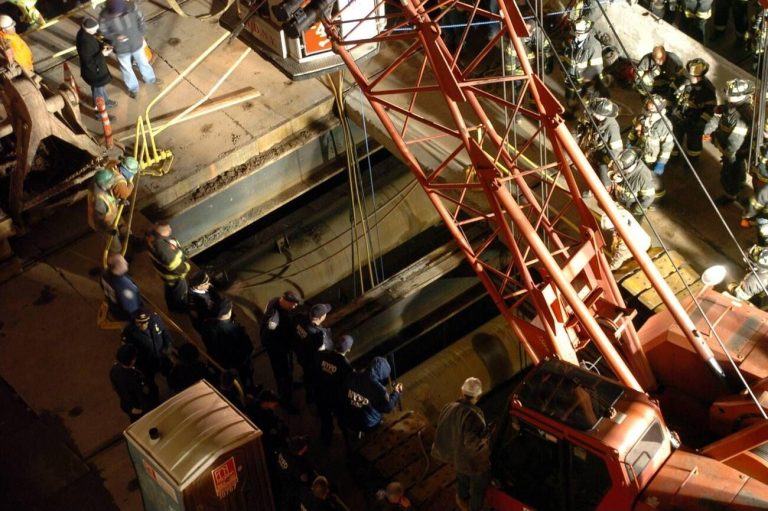
It’s rush hour in New York. The Blue Line of the Metro Rail has just left the station when something unexpected happens. Initially, you and your fellow commuters attribute the vibrations to a bumpy stretch of track, possibly due to construction. People grip their belongings a bit tighter, thinking it’s a minor issue.

Suddenly, there’s a strong jolt, and it’s not just the train swaying – it feels like the whole world is shaking. The train tilts to one side, causing briefcases and purses to spill onto the floor. Lights flicker, brakes screech, and the wheels jump off the track, slamming the train into the wall with considerable force, shifting everything to the right side of the car.

The noise is deafening, and smoke and dust fill the air as the train comes to a stop in the gravel. The ground continues to shake, making it seem like the train is still in motion. It’s an earthquake, and it feels like a significant one.

When the shaking subsides, darkness prevails, illuminated only by dim emergency lights. The smell of smoke stings your nostrils and eyes. Cell phone screens blink sporadically, resembling fireflies. A man nearby is bleeding from his head, and a woman on the floor cries out about a broken leg.

Some passengers remain surprisingly calm, returning to their seats or collecting their belongings as if the train had arrived at the station. Others, however, appear to have lost their composure, screaming uncontrollably and wide-eyed.

Amidst the chaos, everyone wonders: What happens next? Many suggest waiting for help, believing someone else will rescue them. They assume survival in this modern era is someone else’s responsibility. But not you.

Three Types Of People

Imagine finding yourself in a survival situation, not alone but with 12 other people in the same train car, and likely many more in the other cars. The next moments are crucial, revealing a person’s character in a true emergency.

Do you belong to the top 10 percent, taking command of the situation?

Do you fall into the bottom 10 percent, losing control completely?

Or do you stay in the 80 percent, following orders and relying on others for salvation?

Survival experts highlight traits of the 80 percent. Like animals, they tend to gather together, feeding off each other’s panic and negativity. Shallow, rapid breathing leads to cluttered thinking, hindering emotional control. They might come up with impractical solutions or rely on abdication, saying things like, “The government and the Army will take care of us. That’s why we pay taxes.”

Those in the bottom 10 percent aren’t necessarily crazy, stupid, or selfish. They may lack the skills and life experiences to handle sudden changes, making them potentially dangerous, though not intentionally so.

Dr. John Leach, a psychology professor, witnessed the aftermath of a 1987 fire at King’s Cross St Pancras tube station in London. He explained the role of the bottom 10 percent, noting that denial and inactivity can lead them to act dangerously, driven by emotion, impulse, and the desire to return to normalcy. Leach terms this the “Incredulity Response,” where people don’t believe what they see and act as if everything is still okay.

The Top 10 Percent In The Group

In a survival scenario, the top 10 percent stand out by swiftly shifting their mindset from normal to survival mode, avoiding the negative denial and panic that grips others. A successful survivor can silence the fear alarm and channel that motivation into purposeful actions to reduce danger. Essentially, you must be able to switch from ‘I’m going to die’ to ‘I’m going to survive.’

Reasoning that you’re not dead yet implies you’re likely not going to die. The worst has passed, and dwelling on what should-have or could-have been is counterproductive. Staying calm is crucial.

In movies, you often notice the villain is the one overwhelmed by emotions—laughing, cackling, ranting, and raving—ultimately losing. On the flip side, the hero remains calm, collected, and thoughtful, triumphing in the end. Hollywood structures movies this way for a reason; it reflects truth.

Leaders in survival situations share common traits: non-conformity, constant vigilance, thinking outside the box, setting flexible goals, and being empathetic, creative, imaginative, and intuitive. These leaders tap into thousands of years of instinct stored in the oldest parts of the brain, allowing survival instincts to come alive.

As a natural leader, taking action is crucial, but you don’t have to handle everything alone. In this group scenario with 12 others, organizing them with purpose and drive is key.

Identify the capabilities of those around you quickly. Is someone already providing first aid to the bleeding man nearby? Excellent, designate him as the go-to person for medical concerns. Are there sturdy individuals, like construction workers or gym-goers? Consider them your muscle for lifting, moving, or any tasks requiring strength.

Even the seemingly less capable, like the plump guy in tears, can contribute. Suggest he check if the doors will open. The person who stands up, assesses the situation, and shares thoughts is your closest comrade – someone who understands it’s time to work together to save everyone.

Engage two ladies comforting the woman with the broken leg. Ask them to gather belongings, searching for useful items like water bottles, fire extinguishers, painkillers, and working cell phones. Share practical knowledge, explaining how everyday items like tampons or diapers can be used for first aid.

Instead of shouting orders, rationally assign specific tasks to individuals, even small ones, to keep them occupied, divert their minds, and instill a sense of accomplishment. Most people, especially the 80 percent, want to help and can achieve remarkable things when focused with guidance. This is especially true for those in panic or those challenging authority.

The trick is to make each person feel like it was their idea, whether it’s searching for water or checking the emergency radio. If someone is upset, channel that energy into breaking a window for air circulation.

World War Water Banner1

Keep Moving

In navigating a survival scenario, a crucial and often overlooked step is the imperative to keep moving, to sustain positive progress even in the face of seemingly insurmountable challenges. This forward momentum serves a dual purpose—it not only propels the group towards potential solutions but also plays a pivotal role in maintaining the collective morale.

As the designated leader, your responsibility transcends the mere physical aspect of movement; it involves projecting an unwavering air of progress. Succumbing to inertia, expressing uncertainty with shrugged shoulders, or responding to queries with a defeated “I don’t know” can unleash a corrosive poison of defeatism that permeates the entire group, eroding both their trust in your leadership and their individual morale.

It’s paramount to understand that, as the leader, your commitment to forward motion is a binding contract. Once you’ve taken the reins, you are the leader indefinitely, until circumstances or external forces necessitate a change. This underscores the critical nature of your role, as the leader is the linchpin holding the collective determination together.

Contrary to being a source of emotional support, your role isn’t that of a shoulder to cry on or a commiserating friend. If the group needs a companion, they can find solace in a canine companion. What they truly require is a decisive leader capable of making tough decisions in the face of adversity.

Furthermore, these decisions, while prioritizing the collective needs of the group, may not always align with unanimous consent. The leader is entrusted with the responsibility of discerning the best course of action, even if it requires making tough choices that might not be universally agreeable.

In the specific context of being trapped underground after an earthquake, the imperatives are clear: immediate attention to the injured, ensuring they receive necessary medical care, and formulating a strategy for the extraction of the entire group from their confined predicament. This underscores the leader’s pivotal role in navigating the group through the challenges and uncertainties of a survival situation.

The million-dollar question in survival scenarios: Team up or go alone?

the million dollar question in survival scenarios team up or go alone

A perpetual debate among survival enthusiasts revolves around the decision to either stay in a group or venture out solo. Hollywood often romanticizes the lone survivor, the solitary hero confronting overwhelming challenges independently. However, the critical question remains: is going solo truly the optimal choice?

Operating alone offers advantages like faster movement over open terrain, but a group brings extra muscle, enhancing the ability to overcome obstacles. While groups can carry heavier loads, a lone individual faces limitations. With a group comes the need for more supplies such as food and water, whereas a solo survivor requires provisions only for themselves. When scavenging for supplies, a group can cover a wider area, but a solitary person expends more energy covering the same ground.

A single person is stealthier and can hide more effectively, leaving a smaller trail footprint and producing less trash or debris when departing an area. Conversely, more people offer enhanced security and reduce the need for concealment.

Group dynamics introduce diverse ideas, leading to disagreements, while a sole survivor bears the burden of making all decisions and solving every problem. Having someone to challenge a decision can be beneficial, as self-confidence may sometimes cloud judgment.

Loneliness emerges as a significant threat in survival situations. Humans, being social animals, require external encouragement for motivation and morale. This crucial support is absent when alone. Additionally, solo survival means no one to take turns on watch, leaving an individual vulnerable to constant attack.

In a group, a richer mix of ideas, a broader range of expertise, a diverse array of gear, and more people to share the burden of carrying supplies and weapons create a formidable advantage over a solitary individual.

Is there a middle ground between a large group and going solo? Absolutely. Consider forming a group with family or close relatives. In a six-person group, two can watch the camp while a four-person foraging team gathers resources. This foraging team can further divide into two groups of watchers and gatherers, providing cover for escape and timely warnings in case of threats. For those on their own, the risk of capture or attack is significantly higher.

Up To You

SOBMay18 2v2Finding oneself in a life-or-death situation is akin to facing the cosmic roll of the dice, determining one’s initial chances for survival. However, beyond this unpredictable moment, the trajectory of events becomes entirely dependent on individual actions and decisions. The critical question that surfaces is: Will you be prepared to assume a leadership role?

The unpredictability of life-or-death scenarios implies that the initial survival is left to chance—a game of cosmic chance where circumstances unfold beyond our control. Yet, once the immediate chaos settles, the narrative shifts, and agency is reclaimed. The spotlight turns to the individual thrust into the challenging circumstances: Will they rise to the occasion and take charge?

The prospect of leadership in the face of such dire circumstances is a weighty responsibility. It demands a readiness to navigate uncharted territory, make crucial decisions, and inspire others to follow suit. Leadership, in essence, becomes a beacon of hope and direction, shaping the collective destiny of those caught in the throes of adversity.

Preparedness to lead extends beyond the mere possession of survival skills; it encompasses mental resilience, strategic thinking, and the ability to inspire confidence in others. In the aftermath of the initial cosmic roll, the onus falls on the individual to step into a role that transcends personal survival and encompasses the well-being of the collective.

The dynamics of leadership in life-or-death situations are multifaceted. It involves not only making decisive choices but also fostering a sense of unity and purpose within the group. Effective leaders must navigate the delicate balance between autonomy and collaboration, understanding when to act independently and when to rally the collective strength for a common goal.

As one contemplates the gravity of the situation, the imperative to be prepared for leadership becomes evident. It is not merely a question of personal survival but a collective endeavor to navigate the unknown and emerge resilient on the other side. The ability to lead in such circumstances requires mental fortitude, adaptability, and the capacity to instill a sense of purpose and cohesion among those sharing the ordeal.

In essence, the cosmic roll of the dice may set the stage, but the subsequent chapters unfold through deliberate actions and leadership prowess. The question remains: Will you be ready to lead when the cosmic dice have cast their unpredictable lot?

Suggested resources for survivalists:

Learning The Differences Between The Cover And Concealment Concepts

Find Out What’s the Closest Nuclear Bunker to Your Home

Small Vehicle Options For Hunting, Patrolling Your Property Or Bugging Out

The latest innovation in solar pannels – 3D technology

Mrs Krap would not be happy with me :)

0

Soooo I have not done laundry since Mrs. Krap passed away and finally got down to my last clean underwear and a shorts with and exceptionally holey T shirt to wear yesterday.

I don’t know why I kept put running the water lines to the washing machine off. It was a simple 30 minute job to T into the main Water line above the hot water heater and go up into the loft across the loft floor 9 feet and back down behind the washer.

Up

And back down. LOL I was not shooting for purdy plumbing. I was shooting for get the damned water functional. And Avoid the nasty ass crab, lice and bed bug infested laundry mats at all cost. Mrs Krap could live with it up to this point.

DSC03968.JPG

Mrs Krap would and always did approve of the fact that I did my own laundry for the reason my laundry water expresses. At the end of a day here my clothes are…… shall we say filthy :) That is just filling… it has not even started agitating and washing yet LOL.
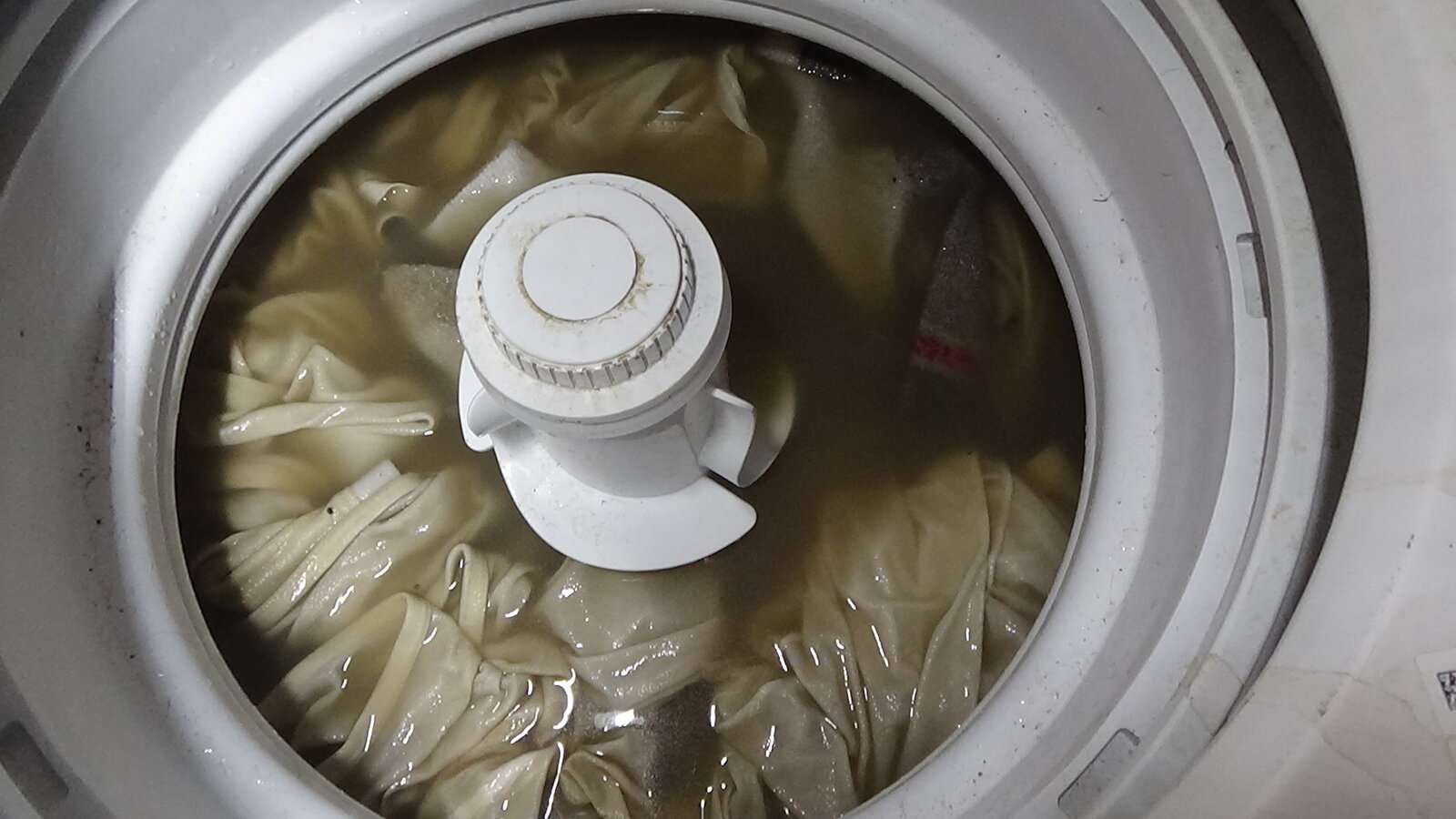
DSC03971.JPG

Here is where MRs Krap would have a Major Malfunction with me :) I Am a cheap ass and won’t run the dryer for a hour for fast drying whites. And well it was raining last night so I strung my clothes lines up across the living room and down the hallway. Cough errr I ended up with 6 lines. And woke up with dry clothes on the lines this morning. I figured it up once and it cost like $3 in electric to dry them in the dryer per load. It cost nothing to hang them on a line :) I did six loads of whites last night and saved $18 worth of electric use.
DSC03972.JPG

While the clothes were washing I went down to the new house and stole the new gas stove, a couple of cabinets to make 4′ of cabinets and a 4′ butcher block counter top. I finally got sick and tired of that junky bargain bin electric stove and tossed it out the back door.
DSC03959.JPG

I relocated the Maple Cabinets and counter from where the stove and unfinished cabinets are now, into the kitchen Where the junky electric stove and tossed together plywood cabinet and short counter were. LOL I have to put the cabinet door back on the Kitchen sink counter frame. And have lots of stuff ripped apart right now.
DSC03956.JPG

I am debating taking that partition between kitchen and dining area out all together. That would give me room to put one of the 14″W Drawer cabinets in and could replace the white counter top inthe kitchen with a 80″ Butcher block counter top. Easy enough to lose the partition there are only 8 screws that hold it to the wall, floor and ceiling…. and it really serves no functional purpose. I am also rewiring almost every circuit and losing the surface mount boxes and changing to in the walls recessed boxes. I threw the surface mounts up because they were fast and easy to do. And well as often happens temporary became temporary for 8 years LOL.

DSC03962.JPG

I hit the realization a few weeks ago that going forward I need to set stuff up how I want it and well I don’t have to make any compromises anymore because there is no one here to object and compromise with.
DSC01290.JPG

I mean doesn’t everyone keep light arms stashed behind the food on the shelves :) And yes Mrs Krap would and did object to my wall of shelves with food on them in the living room idea :) And from a modern civilized stand point her objections were valid… From my not very modern or civilized view point….. I don’t care what it looks like so long as it is serves my purpose well and is highly functional.
DSC01291.JPG

Where I do find conflict is within myself and the part of me that wants to preserve everything the way it was when she was here and alive. And the need and want to change things to better suit my way of doing things. And then the realization that she does not give a shit one way or another if I move the washer and dryer into the cabin or move cabinets around or toss that junk electric stove out that she for some reason liked so much. Even with that realization there is a internal conflict that comes with every change I make.

There was no conflict in putting up 3 shelves to put our DVD Library on and not having to dig through boxes to find a movie to watch LOL.

DSC03950.JPG

I made a kind of big ticket decision a couple of days ago. I am going to replace the old Voglezang Box Stove in the cabin with.. Dee would not approve of this either. Number 1 the price and number 2 the space it will take up on the east wall. I am on the back order list. I visited a friend that has one and she has a cabin the same size as mine. It easily heats her Cabin even in the recent sub zero temps. 95% of My Cooking November through March is on the Voglezang but I would really like a real old school wood fired cook stove. And a bigger one at that, Since Dee passed away A weekend does not pass that I am not cooking for 5-6 people that think they need to come and *Help* me. And the Voglezang sure don’t cut it for cooking for more than 2 LOL. And OK this is a total WANT and not a need and anything I say to justify it is just making excuses for ordering it LOL. But aside from being a pure want, it is practical and functional. And I would probably be wiser changing that order to the smaller Bakers Choice model…… Which I may end up doing.

https://www.lehmans.com/product/pioneer-princess-wood-cookstove/

DSC03956.JPG


Are You Mentally Fit To Survive Brain Fog?

0

Every passing day brings with it the potential for adversity, manifesting in various forms that impact our lives. Financial setbacks, emotional upheavals, or physical challenges—all are facets of the disasters that constantly loom over us.

Some calamities may capture public attention, prompting a fleeting sense of relief that it’s befallen others and not us, at least not yet. However, considering the inevitability suggested by the saying, “It’s not if but when,” there might come a day when we confront a disaster of monumental proportions that rattles the very core of our existence.

Despite the prevalence of this looming threat, many individuals proceed with a nonchalant approach, seemingly convinced that disaster is someone else’s problem. The hope that such catastrophic events never touch our lives is a sentiment often expressed, but as Hunter S. Thompson wisely advised, “Call on God, but row away from the rocks.” The Latin philosophy of “Carpe diem” takes on a lesser-known form—Carpe noctem—encouraging us to seize the night, a metaphor for preparing for the darker times.

In an era where society advances into the 21st century, there appears to be a diminishing illumination, an increasing acceptance of darkness. Our desensitization to the world’s shadows has robbed us of our natural fight-or-flight instincts, potentially placing us in greater peril than the disasters themselves.

Studies exploring human psychological reactions during disasters, including a 2019 research paper in the Journal of Family Medicine and Primary Care, consistently highlight a crucial conclusion: some individuals are more predisposed to survival in the face of calamity.

Setting aside the concept of Darwinism, it becomes evident that psychological and sociological factors play a pivotal role in determining who can maintain composure during disasters and who succumbs to panic.

However, this doesn’t imply that those lacking specific survival traits are doomed. On the contrary, numerous psychological survival skills can be cultivated and honed to sharpen our minds for the inevitable challenges that may confront us in the future.

Dispersing Brain Fog

The concept of the “fog of war” has long been associated with the disorienting sensation experienced by soldiers during combat, a result of the extreme stress war imposes on both mind and body. In warfare, this state of disorientation can significantly hinder a soldier’s ability to act effectively in life-or-death situations.

Similarly, civilians facing disaster scenarios can find themselves enveloped in a mental fog, rendering them confused and paralyzed in their decision-making. To mitigate this cognitive challenge, military strategists devised the OODA loop—an acronym for observe, orient, decide, and act. Originally designed for military decision-making, the OODA loop has proven invaluable not only in the battlefield but also in various other realms such as business, academia, and personal decision-making.

When confronted with the fog of disaster, the stages of the OODA loop break down, leading to a pronounced deterioration in our capacity to make rational decisions. The question then arises: how can we discern if we are susceptible to the potential brain fog that may engulf us during times of crisis?

In our contemporary world, characterized by the “new normal,” here are five quick psychological fitness tests to assess one’s emotional resilience in the face of disaster. Additionally, explore mental exercises aimed at fortifying the cognitive muscle required for survival in challenging situations.

Mental Resilience Assessment #1

Has Complacency Weakened Your Will to Thrive?

Explored in Steve Tarani’s book, “Your Most Powerful Weapon: Using Your Mind to Stay Safe“, the concept of normalcy bias is examined as a cognitive defense mechanism. Tarani defines normalcy bias as a mental state triggered when confronted with a threat that overwhelms our cognitive capacities.

This state of mind induces disbelief in the severity of the situation, leading to a significant underestimation of potential consequences and a tendency to reinterpret events rather than taking decisive or evasive action.

Instances of normalcy bias often surface in historical events, as seen in the case studies of 9/11 victims who, despite imminent danger, were observed searching for personal belongings amidst engulfing flames. When threatened, the brain releases chemicals that elevate heart rate and prepare the body for danger.

Individual responses to these chemicals vary due to the progressive shutdown of psychological tools that enable normal functioning. Blood flows away from the brain, protecting internal organs, and the part of the brain responsible for rational behavior is overridden by the older brain, activating the primitive survival system.

Tarani references a 2004 article from the University of Lancaster, suggesting that 85 to 90 percent of individuals in disaster scenarios succumb to the effects of normalcy bias, while 10 to 15 percent remain composed or fall into blind panic. There is a discernible societal trend reflecting an increasing population ill-prepared to face contemporary threats, possibly attributed to a diminishing reliance on instincts due to technological dependence and adaptive-thinking skills.

Overcoming normalcy bias becomes imperative for survival in calamitous situations. Recognizing its existence in the mind and understanding its potential impact are essential first steps. Mental training, involving the replay of potential disaster scenarios until it becomes habitual, is a proactive strategy.

Transforming the process into a mental game can be a more favorable option, as it increases the likelihood of defeating normalcy bias rather than succumbing to its potential harm or fatality.

Medical banner

Mental Resilience Assessment #2

Are You Knowledgeably Equipped?

Extensive research underscores the critical role of information not only in comprehending the entirety of disaster preparation but also in navigating and surviving calamitous situations. Action in times of crisis relies heavily on access to information, yet the immediacy of such crucial data is often elusive during disasters.

In the face of unfamiliar information, individuals frequently find themselves paralyzed, attempting to process the inundation of data. The brain, overwhelmed by the sheer volume of information, becomes mentally immobilized, potentially costing precious time and lives in a disaster scenario.

Various researchers emphasize that survivors of disasters are those who engage in proactive preparation and practice ahead of time. These individuals do not deliberate amidst calamity; they have already undergone the mental processes that others are currently grappling with.

Through diligent research, receipt of information, and mental rehearsal, they equip themselves for decisive action. Those who actively seek information adopt a proactive stance toward global and local events, staying informed about current trends while enhancing their preparedness through knowledge-building activities.

The quest for accurate information must, however, be anchored in credibility. In a society where everyone seems to wield expertise and information is often politicized, discerning credible sources becomes a formidable task.

Despite the challenges, credible information exists, necessitating thorough investigation. Once citizens attain a state of readiness through informed decisions, adopting a holistic and common-sense approach to disaster preparation becomes considerably more manageable.

Mental Resilience Assessment #3

Are You Mindful of Your Environment?

In an era dominated by mobile devices, hectic schedules, and an overwhelming influx of information, our culture has become inherently distracted. The days of quiet reading, family dinners, and solitary introspection seem to be fading away amidst the exponential surge in social and digital media.

As society and technology advance at an unprecedented pace, the consequence is a growing disconnection from both each other and our immediate surroundings. Unfortunately, this detachment has left us inadequately conditioned to recognize potential threats in our environment.

The argument that American culture has gradually eroded fundamental instincts, particularly the instinct for self-preservation, warrants examination as an underlying issue. The immersion in a digital world limits our reliance to the senses of sight and sound, neglecting the three other vital senses crucial for making well-informed decisions in life.

Consistently engaging only two out of our five senses can lead to a weakening of the rest of our sensory faculties. This sensory imbalance may render us oblivious to potential threats, as our dulled senses fail to recognize dangers in our environment.

As a collective, society has forfeited its innate sense of threat awareness, largely because we have become masters of our digital universe. This trend not only distorts realistic expectations of life but also diminishes our instinctive need for self-preservation.

Mental Resilience Assessment #4

Do You Possess the Soft Skills to Become a Hard Target?

Irrespective of the disaster’s intensity, our vulnerability escalates if we allow ourselves to become “soft targets.” Succumbing to normalcy bias, lacking information, and being devoid of situational awareness render us soft targets, exposing us to additional harm and, in extreme cases, even death. In essence, we become susceptible to harm by neglecting the construction of the necessary mental defenses required for self-protection.

Author Sam Sheridan, in his book “The Disaster Diaries,” delves into the concept of mental preparedness, emphasizing that while physical abilities may come into play during a crisis, clear thinking is equally, if not more, crucial. The capacity for decision-making emerges as the paramount factor influencing survival.

Transforming into a “hard target” demands effort and strategic planning, with potentially lifesaving results for both individuals and their loved ones. Initiating the journey toward becoming a hard target necessitates acknowledging the inevitability of unfortunate events, acknowledging that they could transpire at any moment.

Disasters, by their very nature, are unpredictable, catching most individuals off guard, whether in the form of a vehicle accident, a mugging, or an earthquake. Recognizing this reality distinguishes hard-target citizens from soft-target victims.

Once this truth is accepted, the onus falls on us to formulate a disaster plan, ensuring that we do not fall victim to the calamity of being caught unprepared. This proactive approach not only enhances our readiness but also empowers us to act decisively against specific threats in the face of disaster.

Mental Resilience Assessment #5

do you recognize that predictable is preventable

Do You Recognize That Predictable Is Preventable?

In the culmination of our quick mental fit tests, a fundamental question arises: Have you cultivated a heightened level of awareness to circumvent potential disasters proactively? This proactive stance is commonly referred to as mitigation in disaster-management circles.

Acknowledging that disasters often unfold unexpectedly, it is equally vital to recognize that we frequently place ourselves in compromising positions that may lead to harm. Perhaps it’s prudent to reconsider traversing a dark alley alone or embarking on a new hiking adventure without informing others of our whereabouts. Opting against allowing underage sons or daughters to attend certain social events, such as local college fraternity parties, may also be a means of mitigating potential risks.

The spectrum of bad decisions in hazardous situations is vast and has regrettably claimed thousands of lives. In essence, if a negative situation is predictable, it can be prevented by taking proactive measures to mitigate adverse outcomes.

However, decisions made out of fear often cloud the decision-making process, leading to the construction of emotional walls that limit our comprehension of situations and environments. A Chinese proverb wisely advises that “nothing is to be feared, only understood.” Confronting fear entails not only self-awareness but also an understanding of our surroundings. By facing our fears, we gain the ability to predict potential outcomes and actively work towards mitigating preventable dangerous situations.

Constructing the Cognitive Framework

survivalstockpile

Amanda Ripley, in her book “The Unthinkable: Who Survives When Disaster Strikes—and Why,” imparts the wisdom that understanding our disaster personalities before calamity strikes might improve our chances of survival. This proactive approach not only dispels some of the uncertainties from our imaginations but also unveils hidden aspects of ourselves.

Disasters, by their very nature, are abnormal occurrences, pushing human beings into situations they were never meant to experience. Dealing with calamity in real-time often proves challenging for many individuals, leaving behind emotional scars that persist even after the disaster has subsided.

While billions have been invested in developing mental healthcare programs for first responders and military personnel, a significant gap exists in extending the same comprehensive care to civilians.

The trauma induced by disasters becomes apparent in the survivors, as the untold stories of those who perish remain buried in the rubble. Although not every death can be prevented in a disaster, providing ourselves with a fighting chance before a crisis emerges is a sensible approach.

However, preparation transcends merely gathering equipment and devising plans—it should adopt a holistic nature. Mental preparedness for emergencies should be prioritized as much, if not more, than physical preparedness. Engaging in small emotional and mental steps each day not only readies us for potential disasters but also aids in avoiding the mental fog of calamity that claims so many lives.

Other Useful Resources:

Planning To Evacuate The City When The SHTF

Find Out What’s the Closest Nuclear Bunker to Your Home

Five Reasons Why Most Preppers Won’t Survive A SHTF Event

Knowledge to survive any medical crisis situation during a major disaster

Palmetto State Armory and JTS M12AR

0

  1. In a moment of weakness I bought my first gun online, from Palmetto State Armory. While browsing for parts I visited their “clearance” tab and saw the JTS M12AR for $199, and thought it would be a great fun gun. I’ll review the process and then the gun…
    14 days ago I ordered the gun and paid online. I picked it up last night. I called last week to inquire about it’s whereabouts as I’m in SC, they are in SC, WTF? I was told I would receive an email when it was ready to pick up. So after another week, I called the Myrtle Beach store where I had it shipped, and after 10 minutes the guy comes back on the phone and tells me that it has indeed arrived, and been there since Friday. So much for the email alert. So I drive down to pick it up at the brand new Palmetto State Armory in Myrtle. The clerk takes my CCW then says he needs my license too. I ask why, he says it is store policy. Fine. 10 minutes go by and he re-appears with the shotty, lets me inspect it, then says “follow me”. I thought he was walking me out but instead he leads me to a kiosk where I have to put in my information on a computer screen. OK, 5 more minutes and I think I will be on my way. Nope. I was given a little pager thingy and told it would go off when the gun was ready. SORRY, I’m not playing the “go shop for more stuff” game. I stand there for 10 more minutes before finally asking what is happening and am told they have to check the gun out and the manager has to check the paperwork, 5 more minutes and one of the guys starts walking away with my gun, so I said “what’s the deal?”. He just looks back and says “follow me”. He placed the gun behind the checkout counter, finally gave me my license and CCW back, I said “What the fuck?” to him, “the gun is already paid for”. He said I still have to go through the checkout. 5 more minutes standing in line, and they have to see my license AGAIN to hand me the box and a zero dollar receipt. I will never again darken the doorstep of their business. It was a shitty experience from the word go. I even had to pay $19,00 shipping for a store transfer. I will stick to my local dealer from now on.

    The JTS M12AR is actually a gorgeous gun for $199.00. I loaded a 5 round mag and walked out back when I got home to try it out. The action is stiff feeling, and inspection of the first hull shows that it has a rough feed ramp. The fourth round failed to eject fully. I checked everything out and loaded another 5 rounds which I fired as fast as I could pull the trigger without incident. I think with a little tinkering this will make a great stress reliever to have fun with.

    M12AR — JTS Shotguns


    CraftyMofo and johnbb like this.


survivalmonkey SSL seal


survivalmonkey.com warrant canary

The Freedom Not To Be Offended Is Not Guaranteed by The Constitution

0

Marines and Sailors (and probably Soldiers….but certainly not Airmen! LOL) consider good natured insults to be a regular thing. We’ll even insult one another’s branch of service (what’s in the Marines, that has an IQ of 60? A platoon! ). But God help the poor fool from outside our “family” of veterans, who tries to mess with any one of us! :rolleyes:

@chelloveck , it’s really a shame, that the British, especially, have allowed their government to dictate their speech rights. This is the big difference, between them, and us “colonists”, in the USA. When someone says, “I’m offended!!”, my general response is “DILLIGAF?” :sneaky:


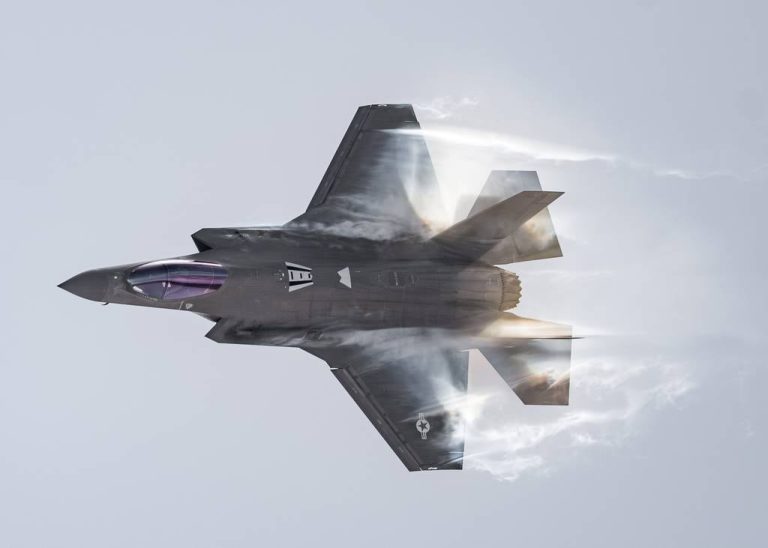
Upgraded F-35 deliveries slipping to fall 2024, Lockheed says

0

WASHINGTON — Lockheed Martin’s production of the latest upgraded F-35 Joint Strike Fighters is slipping further behind schedule, and deliveries likely will not resume until the third quarter of 2024, the company said Tuesday.

Lockheed CEO Jim Taiclet told investors in an earnings call that the business now expects to deliver between 75 and 110 F-35s this year — fewer than the roughly 150 annually the company typically aims to deliver.

The delivery disruption of the newest F-35s, intended to features upgrades known as Technology Refresh 3, means Lockheed’s sales of the jet took a $400 million hit last year.

Taiclet said the company is making progress on the jets enabled with the TR-3 upgrades, which would come with software and hardware improvements including better displays, computer memory and processing power. But the system maturation process “is taking somewhat more time than we originally anticipated,” he added.

“The second quarter customer acceptance of delivery software remains our target,” he said. “However, we now believe that the third quarter may be a more likely scenario for a TR-3 software acceptance.”

The TR-3 upgrades are needed to prepare the F-35 for a further wave of upgrades known as Block 4, which would allow the jet to carry more precision weapons, advanced sensing, jamming and cybersecurity capabilities, and more accurate target recognition. Rep. Rob Wittman, R-Va., worries TR-3 delays could in turn delay the rollout of Block 4 upgrades.

“We are taking the time and attention to get this [TR-3] technology insertion right the first time because it will be absolutely worth it,” Taiclet said. TR-3′s features “will provide our customers with the onboard digital infrastructure of data storage, data processing, and pilot-user interface to provide unmatched capabilities for many years to come.”

But TR-3, which was originally due in April 2023, has repeatedly slipped behind schedule due to software problems and challenges integrating it with the jet’s new hardware. In July 2023, Lockheed Martin began rolling the first jets intended for the TR-3 configuration off its production line in Fort Worth, Texas.

Because those jets could not undergo test flights the Defense Department requires before delivery, the military refused to accept them. New aircraft awaiting TR-3 are now stored at Fort Worth, and Lockheed said between 100 and 120 jets could remain there later this year.

The F-35 Joint Program Office said in a statement to Defense News that it and industry partners are focused on delivering capable fighters, but that delays in software maturity are still putting those deliveries at risk.

The JPO said it and Lockheed are working on a plan to allow the government to accept undelivered jets before the full TR-3 capabilities are validated.

“Any aircraft involved and delivered as part of the truncation plan will provide valuable capabilities to the warfighters while TR-3 completes final verification and validation,” the office said.

In November, the office confirmed a production F-35 had flown with an interim version of the TR-3 software installed. Flying jets with such early release versions of the software is “potentially” one way for deliveries to resume before TR-3 is done, the JPO said that month.

Lt. Gen. Michael Schmidt, who leads the F-35 program, told lawmakers in December that production of a few key components needed for TR-3 hardware also ramped up slower than expected, which is contributing to the delay.

When the Pentagon halted deliveries, it and Lockheed Martin still expected TR-3 to be ready between December and April 2024. But in September 2023, Lockheed and the JPO said TR-3 could take even longer. That revised schedule placed delivery at sometime between April 2024 — which would already be a full year late — and June 2024.

That schedule is now sliding further, it appears.

Taiclet said more than 90% of the TR-3 capabilities are now in flight test, and Lockheed is moving the software integration process forward to include more aircraft and mission subsystems.

Lockheed’s chief financial officer, Jay Malave, said the company is confident it can meet the new third quarter goal to begin delivering TR-3 jets. But if the schedule slips further, he explained, Lockheed would have to reconsider its production pace of F-35s and possibly slow it down.

The company is bleeding cash due to the F-35 delivery halt — and the wound does not appear likely to heal soon.

“As we make progress [on the] TR-3 program, as well as getting ourselves into production, it’s difficult to take risk and rely on risk retirements as we’re still facing this program, and the progress we’re making there,” Malave said. “And so we assume that profit adjustments slow down in 2024 on the F-35 program.”

Lockheed Martin delivered 98 F-35s in the previous TR-2 configuration in 2023, including 18 in the fourth quarter, Taiclet said. The company originally planned to deliver between 147 and 153 fighters last year.

The delivery halt meant Lockheed’s net F-35 sales for the year dropped $400 million, partially offsetting the growth in other areas. Lockheed’s classified Skunk Works unit saw its sales grow by $540 million in 2023, and rising production of F-16s meant its sales grew $230 million for the year, the company said.

Despite the F-35′s troubles, Lockheed’s aeronautics sector saw its sales grow 2% in 2023 to nearly $27.5 billion. The aeronautics sector’s 2023 profit ticked down about 1% to $2.8 billion.

Stephen Losey is the air warfare reporter for Defense News. He previously covered leadership and personnel issues at Air Force Times, and the Pentagon, special operations and air warfare at Military.com. He has traveled to the Middle East to cover U.S. Air Force operations.

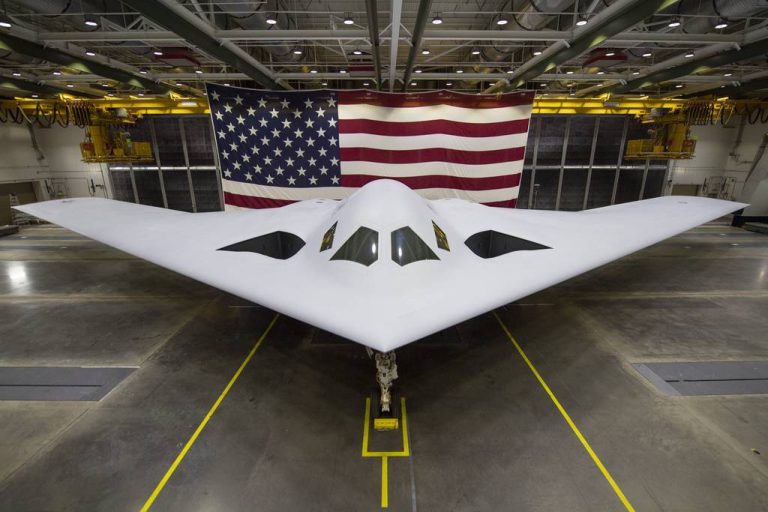
Pentagon OKs B-21 for low-rate production after successful tests

0

WASHINGTON — The B-21 Raider is now in production, the Pentagon’s acquisition chief said Monday evening.

William LaPlante, the undersecretary of defense for acquisition and sustainment, said in a statement to reporters that he approved low-rate production for the Northrop Grumman-made stealth bomber last fall after observing the results of its ground and flight tests. LaPlante also said the B-21 team’s “mature plans for manufacturing” contributed to his decision to move forward on production.

“One of the key attributes of this program has been designing for production from the start — and at scale — to provide a credible deterrent to adversaries,” LaPlante said. “If you don’t produce and field to warfighters at scale, the capability doesn’t really matter.”

The Air Force plans to start fielding a fleet of at least 100 B-21 Raiders, with the first entering service in the mid-2020s. The Raider is planned to eventually replace the aging B-1B Lancer and B-2 Spirit sometime in the 2030s, and make up part of a planned two-bomber fleet along with 76 upgraded B-52J Stratofortresses.

The Raider, which has been referred to as a sixth-generation bomber, is designed to use its stealth capabilities to carry out penetrating deep strike missions against advanced adversaries, and carry both conventional and nuclear weapons.

The Air Force and Northrop Grumman rolled out the first B-21 in a heavily publicized ceremony at Air Force Plant 42 in Palmdale, California, in December 2022. Testing on that initial B-21, nicknamed Cerberus, continued at Plant 42 throughout much of 2023 until it carried out its first flight, to Edwards Air Force Base in California, in November.

Flight testing of the B-21 has continued at Edwards since then, including taxiing, ground tests and flying operations. The Air Force Test Center and the 412th Test Wing have led the B-21′s test campaign.

Northrop Grumman has built or is in the process of building at least six test B-21s, including the first one.

The Air Force Rapid Capabilities Office is in charge of the B-21′s acquisition program, and set an unusual strategy that includes building those test aircraft as close to a production model as possible. This means that the test B-21s are built using the same manufacturing processes and tooling as production bombers. A defense official said in the Pentagon’s statement this approach, which differs from the usual method of flight prototyping, allowed production to start more quickly than usual.

The defense official said the Air Force has worked with Northrop Grumman to create a “digital ecosystem” for the B-21 throughout its lifecycle.

“The engineering and manufacturing data used on the production line will be delivered with the aircraft and combined with modern collaboration and maintenance tools to make the B-21 affordable to buy, fly and sustain at scale,” the official said.

The B-21 program is expected to cost $203 billion over 30 years, and each bomber has an expected average procurement cost of $692 million.

Stephen Losey is the air warfare reporter for Defense News. He previously covered leadership and personnel issues at Air Force Times, and the Pentagon, special operations and air warfare at Military.com. He has traveled to the Middle East to cover U.S. Air Force operations.

Make rats great again.

0

You can't make this shit up.
Yeah it's safe I say I'll never move back to Maine.
Crazy animal rights leftists want to save rats from the city and relocate them to the countryside where they'll starve to death.
https://wgme.com/news/local/portland-group-hopes-save-rats-harbor-view-park-poison-city-maine…

Make rats great again.