Biden takes first ride in new Marine One as Sikorsky wraps delivery

0

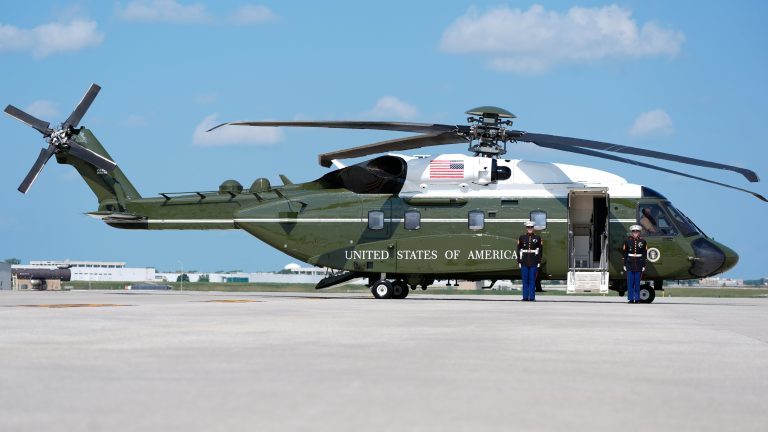
The U.S. Marine Corps received the final batch of its 23 new VH-92A Patriot presidential transport helicopters last week, an air frame most famously known as Marine One when carrying America’s commander-in-chief.

Sikorsky, a subsidiary of Lockheed Martin, delivered the final VH-92A Patriot helicopter in a ceremony at the company’s Owego, N.Y., facility on Aug. 14, Lockheed and Naval Air Systems Command, or NAVAIR, said Monday.

“This delivery represents a significant milestone and new chapter in the rich, 67-year history of Marines providing helicopter transport of the president of the United States,” Lt. Gen. Bradford Gering, the Marine Corps’ deputy commandant for aviation, said in a statement. “The VH-92A Patriot brings increased capabilities for this no-fail mission supporting the commander-in-chief around the world.”

The VH-92A carries the same iconic dark green and white livery as past Marine One helicopters, and will carry the same “White Top” nickname as the older ones.

President Joe Biden on Monday took his first flight aboard the newest Marine One after years of delays to the program to replace the aging aircraft that carry the president and vice president.

Biden boarded the helicopter after arriving on Air Force One in Chicago where he is speak Monday evening at the Democratic National Convention. The maiden presidential voyage carried him from O’Hare International Airport to the parking lot of Chicago’s Soldier Field, often used as a landing zone for presidential travel.

It marked a crucial milestone in a two-decade-long process to replace the Vietnam-era helicopters that have been in use carrying presidents, in some cases, since the 1970s.

An initial effort to purchase new helicopters was kicked off by the Bush administration in an effort to improve communications and mission capabilities in the post-September 11, 2001 environment, but it was scrapped by President Barack Obama after rampant cost overruns.

NAVAIR said the new helicopters will provide better performance and be able to carry a greater payload than the VH-3D and VH-60N, while sporting improved crew coordination and communication systems.

Two of the 23 VH-92A helicopters will be used for testing, NAVAIR said, and the rest will be used for operations. This will provide enough helicopters to transport the president, undergo necessary maintenance and allow pilots and aircrew to train.

The new program was started by the Obama administration, and the helicopter, branded the “Patriot” by its manufacturer, made its public debut during the Trump administration. But issues with the secure communications system on board — required so that the president can carry out classified conversations and make military decisions in an emergency — as well as a tendency to scorch the White House South Lawn led to years of delays to the program.

The Marine Corps reported last year that the communications issues had been resolved, but it was not clear whether modifications to the exhaust system have eliminated the threat to the White House grass.

The Marines have been using the VH-92 helicopters for several years in regular service, including test flights around Washington, D.C. and to carry White House staff and security personnel.

The new helicopters are based on the commercially-available Sikorsky S-92 and are larger and have longer range than the older VH-3D and VH-60N models.

Stephen Losey is the air warfare reporter for Defense News. He previously covered leadership and personnel issues at Air Force Times, and the Pentagon, special operations and air warfare at Military.com. He has traveled to the Middle East to cover U.S. Air Force operations.

Preparing For Possible Economic Collapse

0

The threat of an economic collapse is a significant concern, casting a long shadow over our everyday lives. The potential consequences of such a disaster are severe, and when we take a moment to consider its impact, the gravity of the situation becomes clear.

Though the idea of a financial meltdown might seem abstract and distant, it is crucial not to treat it as an unrealistic possibility. The repercussions of an economic crisis can deeply affect our homes, workplaces, and communities, influencing every aspect of our lives in ways we might not fully understand.

Rather than dismissing this looming threat as something too far-fetched to address, it’s important to recognize the value of being prepared. This is not a signal of impending doom but rather a call to action—a chance to equip ourselves with the knowledge and resources needed to navigate potential challenges.

Examining the details of economic collapse reveals its many facets. From job losses and market fluctuations to rising inflation and diminished financial security, the effects of economic turmoil are widespread. Identifying potential causes and spotting early warning signs can be vital for developing a proactive approach.

Although it might be tempting to ignore the dark clouds gathering on the economic horizon, the old saying “forewarned is forearmed” remains relevant. Preparing for possible economic difficulties isn’t about adopting a defeatist attitude; instead, it’s a sensible strategy to protect your interests and build a more resilient future.

The Recession on the Horizon

Our in-depth analysis suggests a strong possibility that the U.S. economy could slip into a recession in 2024. Here are the key factors behind this forecast:

Money Supply and Growth Trends: We’ve compared the growth rates of M2 (a measure of the money supply) and nominal GDP to gauge economic health. Historically, when M2 growth outpaces GDP growth, it typically signals economic expansion. However, if GDP growth exceeds M2 growth, it often precedes an economic slowdown or recession. The recent -9.9% figure for M2 growth in the U.S. indicates a potential deceleration, hinting at an impending recession.

Declining Savings Rates: The net savings as a percentage of Gross National Income (GNI) has consistently decreased before past U.S. recessions. Negative readings in this metric have preceded severe downturns, such as during the 2008-2009 financial crisis and the COVID-19 pandemic. In 2023, this ratio has turned negative again, suggesting that a significant recession could be on the horizon for 2024.

High Base Effect: The U.S. economy experienced a strong boost in the past two quarters, setting a high benchmark for spending as we move into 2024. Despite this solid start, maintaining robust growth in the first half of 2024 seems unlikely. By mid-year, the economy might slow down considerably, raising the likelihood of a recession in the latter half of the year.

Delayed Effects of Federal Rate Hikes: Interest rate increases generally impact the economy with a delay of about one to one-and-a-half years. Thus, the rate hikes from 2022 and 2023 are expected to have a full effect by the latter part of 2024.

Reduced Government Spending: Government expenditure significantly supported the U.S. economy in 2022 and 2023. However, with increasing pressure to manage fiscal deficits, a notable reduction in spending is anticipated for next year. This cutback could constrain economic activity, potentially contributing to the onset of a recession.

ssanctuarybnr123

What can you do to survive the economic collapse?

Start Preparing Now, Even in Small Ways

Tackling a major issue often calls for a major solution, but it’s important to remember that your direct impact may only cover a small part of the larger situation. Your primary focus should be on securing the well-being of your immediate family. While helping extended family, friends, and neighbors is admirable, it should come after you’ve addressed your own household’s needs.

Before you turn your attention to others, make sure you’ve set and achieved goals that ensure your family’s safety and stability in case of emergencies. Once you’ve secured these basic needs, you can begin to extend your support to others.

Accomplishing these goals takes time and incremental effort. For example, if buying a two-year supply of long-term food storage isn’t feasible right now, don’t let that stop you from starting. Begin by adding a few extra canned or dry goods to your shopping cart each time you go out. Over time, these small purchases will build up.

Don’t be overwhelmed by the size of the task. Even small steps can lead to significant progress, setting the stage for more substantial preparedness.

Stabilize Your Current Situation

Enhancing your preparedness can be greatly aided by streamlining your present lifestyle. Simplify your modern routine by cutting out unnecessary luxuries and addressing any outstanding debts. This will not only free up funds for crucial necessities like food, tools, and supplies but also lighten your load in case of an economic downturn.

Evaluate your job security. Is your position likely to withstand economic challenges, or could it be one of the first to be affected? Consider whether your skills are aligned with those needed during and after an economic crisis.

While these factors shouldn’t be the sole drivers of your career decisions, reflecting on them now can be advantageous. The stability of your current employment may play a role in shaping your long-term preparedness strategy.

The main point is that making prudent and responsible choices in your current circumstances will not only bolster your immediate security but also reduce potential setbacks during an economic collapse.

Prepare for the Unimaginable

Thinking about the worst-case scenario means imagining a complete economic collapse where daily life as we know it is at risk of falling apart. The specifics of this worst-case scenario will vary based on your family’s lifestyle and location.

People living in crowded urban areas might face greater challenges compared to those in rural or remote settings. Your geographical location significantly impacts how well you can manage disruptions to your lifestyle, making it an important factor in your preparedness planning.

For example, those who are not dependent on city utilities have a notable advantage. If city sewer and water systems fail due to malfunction or poor maintenance, individuals with alternative water sources, like well water, have more control. Preparing for this situation might involve securing a means to power the well pump, which can be done using generators, renewable energy sources, or even a manual pump.

If possible, consider relocating your family to a place that reduces the impact of your worst-case scenario.

The worst-case scenario essentially sets the ultimate goal for your preparedness efforts. Start by focusing on your family’s most urgent needs and build your plan step by step. Create a comprehensive list that prioritizes essential items and gradually includes those that are less critical but still beneficial. This structured approach will provide you with a clear plan of action.

Starting your preparedness plan isn’t just a task; it’s an empowering process that helps you take control of your situation. Adopting this proactive mindset not only boosts your immediate security but also strengthens your resilience against uncertainty.

Additional Tips for Facing an Economic Collapse

additional tips for facing an economic collapse

Navigating an economic collapse requires a mix of preparation, flexibility, and ingenuity. Here are some more strategies to help you manage through tough times:

  1. Diversify Your Income: Relying solely on one income source can be risky during economic downturns. Consider exploring extra income opportunities like freelancing, part-time jobs, or starting a side business. Having multiple income streams can enhance your financial stability when times are uncertain.
  2. Build an Emergency Fund: Create and maintain an emergency savings fund to cover essential expenses for several months. This financial buffer can provide security in the event of job loss or unexpected costs during an economic crisis.
  3. Minimize Debt: Focus on reducing high-interest debt as much as possible. Economic instability can make meeting financial obligations difficult, and decreasing your debt load can help ease some of the financial strain.
  4. Develop Self-Sufficiency Skills: Learn skills that promote self-sufficiency, such as gardening, basic home repairs, and food preservation. These abilities can lessen your reliance on outside resources and increase your resilience during shortages.
  5. ss power your home optimisedStock Up on Essentials: Gradually build a stockpile of crucial items like non-perishable food, water, hygiene products, and medications. Having a well-stocked supply can help you manage supply chain disruptions.
  6. Strengthen Community Connections: Build strong relationships within your community. Collaborate with neighbors for resource sharing, mutual support, and joint problem-solving. A unified community can better tackle challenges together.
  7. Invest in Tangible Assets: Diversify your investments by acquiring tangible assets such as precious metals, real estate, or commodities. These can serve as a hedge against inflation and market volatility.
  8. Learn About Bartering: In the event that traditional currency loses value, understanding how to barter and trade goods and services can be valuable for acquiring necessities without relying on money.
  9. Stay Informed: Keep up with economic trends, government policies, and global events. Being well-informed enables you to anticipate changes, adjust your strategies, and make smart decisions to safeguard your financial health.
  10. Focus on Health and Wellness: Prioritize both physical and mental health. A healthy lifestyle can help reduce medical expenses, boost resilience, and contribute to overall well-being during difficult times.
  11. Seek Professional Advice: Consult with financial advisors, attorneys, and accountants to ensure your assets are protected and your financial strategies are solid. Professional guidance can help you navigate legal and financial complexities.
  12. Embrace Flexibility: Cultivate an adaptable mindset. Economic conditions can shift quickly, and being flexible in your approach to work, lifestyle, and financial planning can help you manage uncertainties more effectively.

Each person’s situation is different, so tailor these tips to your specific needs. Staying proactive, regularly reviewing and adjusting your preparedness plans, and being adaptable are key to successfully handling economic collapse.

The US needs more pop-up air bases worldwide to keep enemies guessing

0

The U.S. Air Force completed the eight-day Bamboo Eagle 24-3 exercise on Aug. 10, bringing over 3,000 service members and more than 150 aircraft together to operate in the Western United States and Eastern Pacific. The large-scale exercise paired important Agile Combat Employment (ACE) training with a Red Flag exercise designed to hone cutting-edge tactics for air warfare. This exercise, and future efforts like it, are critical to strengthening the U.S. Air Force’s (USAF) ability to operate in contested environments at all echelons, which is essential to deterring and defeating aggression in the Pacific, Europe, and the Middle East.

By doctrinal definition, ACE is the “proactive and reactive operational scheme of maneuver executed within threat timelines to increase survivability while generating combat power.” In translation, this means air forces must be able to flex from major regional bases to smaller or non-traditional operating sites to survive and continue operations.

Such operations require a challenging reconceptualization of everything in the generative process for airpower, including command and control, maintenance, logistics, and air and missile defense for ground operations, to name a few considerations. Developments in the strategic environment underscore that reconceptualization is also essential.

The Commission on the National Defense Strategy report released on July 30 echoes longstanding concerns of USAF leadership that adversaries will aggressively target overseas air bases to prevent them from being used to launch and recover aircraft. Consider the growing threats in the Pacific, Europe, and the Middle East and initial efforts to respond to challenges the services have not confronted in recent decades.

In the Pacific, Pentagon assessments note the Chinese People’s Liberation Army (PLA) has the ballistic and cruise missiles to target regional air bases, ports, and ground infrastructure in Japan and the Philippines, as well as U.S. bases as far away as Guam. In a major contingency in the Taiwan Strait, the USAF must be able to sink ships and destroy adversary aircraft. It will be difficult to sustain that effort if American pilots have nowhere to land.

In Europe, Russian forces continue to use long-range fires, hypersonic missiles, and unmanned aerial systems (UAS) to target Ukrainian air operations on the ground. Eyeing these developments, even the newest NATO members, Sweden and Finland, are developing low-footprint air operations by landing advanced fighters on highways to refuel and re-arm while rapidly relocating both between and within bases.

Since August 2020, U.S. Air Forces Central Command has telegraphed episodes of its ACE implementation in the Middle East for deterrent effect against Tehran. ACE maneuvers increased in complexity over time and included hot-pit refueling at non-traditional sites, tactical munitions ferrying to forward locations, agile airlift, dynamic command and control, and the deployment of mobile long-range fires for organic forward operating location defense. Most recently, these maneuvers incorporated aircraft launching from U.S. Air Forces Europe for a coalition exercise in the Middle East.

Despite these early ACE-related advances, the USAF seeks to institutionalize ACE in the premier exercise for intensive air combat training: Red Flag. The massive resources invested in recurring Red Flag exercises and large numbers of participants, including coalition partners, create a perennial opportunity for increasingly complex ACE training to reach the largest number of airmen. Traditionally, Red Flag emphasizes aerial combat and is designed to test aircraft, aircrew, maintainers, and flightline-adjacent capabilities. But the incorporation of Bamboo Eagle into Red Flag was a stress test of the entire chain of command and the ability of Air Force wings to execute a kill chain when forced to disaggregate and re-aggregate across operating locations.

Bamboo Eagle also rehearsed the employment of advanced technologies that make such distributed operations and dynamic re-tasking possible. Those technologies included “an architecture where we can talk to any aircraft, any command post, any entity that plays a role in this system, anywhere in the world in real time,” USAF Warfare Center Commander Maj. Gen. Christopher Niemi stated in a media call on Aug. 1.

At a time of growing threats in multiple regions, ACE operations or exercises can be used as a signal to adversaries to bolster deterrence. Such operations cast doubt in the minds of military planners whether they can effectively target U.S. combat forces. That, in turn, will increase adversary concerns that the costs associated with any American response could exceed any benefits associated with prospective aggression. In other words, ACE can play a fundamental role in strengthening both deterrence by denial and deterrence by punishment.

So, how can Congress and the State Department help? Congress should press the Air Force for its lessons learned from Bamboo Eagle, focusing on steps to improve future exercises as well as efforts to implement lessons learned and strengthen the necessary capabilities.

Congress should also provide the funding necessary to conduct increasingly large and complex exercises that span multiple combatant commands and are scripted specifically to improve the capability and capacity of the USAF to implement ACE doctrine in a contested environment in support of joint operations.

Meanwhile, the State Department should redouble efforts to gain host nation approval for Department of Defense access to a larger number of airfields and operating locations while also exploring opportunities to work with allied nations to develop plans and civilian infrastructure that could rapidly be converted for operational use. This could include maintenance of straight roads or highways, reservation of nondescript storage facilities, and even the clearance of terrain to meet landing zone or drop zone criteria. Encouraging their low-cost investments could prove vital in combined major combat operations.

Finally, Congress should press the Army and Marine Corps to redouble investments in, and maximize procurements of, portable air defense and counter-UAS solutions that the effective employment of ACE requires. Those solutions must be operable by the smallest teams possible, set up in minutes rather than hours, and fit in the cargo hold of a C-130 or smaller platforms designed to land in the most austere locations.

Adversary capabilities are growing, and serious new conflicts may be on the horizon. There is no time to waste to ensure the USAF can sustain progress in conducting disaggregated combat operations.

Bradley Bowman is senior director of the Center on Military and Political Power at the Foundation for Defense of Democracies, where Dr. Lydia LaFavor is a research fellow.

How To Learn Primitive Skills By Yourself

0

Delving into the world of primitive survival techniques is not only a rewarding experience but also imparts valuable skills that could prove crucial in an emergency. It’s important to approach these practices with care and always have a backup plan in place for unexpected circumstances.

Make sure your water is properly purified, have a reliable method to start a fire, avoid relying solely on primitive shelters, and bring a map and compass when exploring unknown areas.

While exploring my region, I often come across small stone fragments left behind by the Ancestral Puebloans, likely from their arrowhead crafting. These encounters make me question whether my own survival skills would be enough to withstand such a harsh environment.

Around twenty years ago, I began my journey into learning survival skills on my own, without the use of modern tools. I started with a few instructional books and gradually moved to practicing in my backyard. Over time, I’ve had the opportunity to teach others who are interested in learning, and I’m always enthusiastic about sharing the knowledge I’ve gained.

What one needs to learn to conquer the wilderness

Becoming proficient in the eight fundamental primitive survival skills, often referred to as bushcraft, is surprisingly attainable with dedication, patience, and a sincere interest in learning. Start by choosing a specific skill, work on mastering it at your own pace, and then try it out in a natural environment.

While there are numerous bushcraft techniques to explore, eight are essential for surviving in the wilderness:

  1. Finding and collecting water
  2. Creating a friction fire
  3. Building a survival shelter
  4. Making a weapon for hunting and self-defense
  5. Hunting and trapping small mammals and birds
  6. Fishing using primitive methods
  7. Navigating in the wilderness
  8. Treating common injuries

It’s wise to practice each skill at home before attempting them outdoors. Understanding the broader context and potential challenges of each skill improves your chances of success. However, true proficiency is usually gained through extensive hands-on experience. Once you feel comfortable with a skill, plan a camping trip to put your knowledge to the test.

Keep in mind that becoming truly skilled in these areas is a gradual process, often taking years of committed practice before you can confidently rely on them for survival.

Finding and Collecting Water

In survival situations, securing a reliable water source is critical, as humans can only survive for three to five days without it. To increase your chances of finding water, use a variety of techniques to locate potential sources.

Look for natural indicators such as trees, willows, or shrubs, which often suggest that water is nearby. Since water flows downhill, check the low points in ravines, canyons, or depressions where it might collect. In forested areas, stop and listen closely for the sound of running water or waterfalls, which can guide you to a source.

Observing wildlife can also help you find water. Follow well-defined animal tracks, which often lead to water, or look for clusters of insects like mayflies or caddis as signs of nearby water. Watch birds as well, since they tend to make frequent stops at water sources throughout the day.

The best option is to find water from a free-flowing source like a small stream, but it’s essential to purify the water to remove contaminants such as Giardia and Cryptosporidium. Boiling is one of the most reliable methods, especially if you don’t have a water filter. Boil untreated water for at least one minute, or three minutes if you’re above 5,000 feet in elevation.

Rainwater is another valuable resource for survival. You can collect it by placing a large open container in the open or by making a rain catcher by tying a poncho or tarp to trees to create a funnel.

Morning dew and solar stills are additional methods for gathering drinking water in the wilderness:

  1. Dig a hole about two feet wide and two feet deep in moist ground, placing a container in the center.
  2. Cover the hole with plastic, sealing the edges with rocks.
  3. Place a small pebble on the plastic to create a depression over the container.
  4. Overnight, water vapor will condense on the plastic, draining into the container.

In areas rich with fruit, you can eat it to stay hydrated. In desert environments, carefully remove the spines and skin from cacti to extract some water. Some tree roots may contain water, though the amount is usually minimal. Another method is transpiration, where you tightly wrap a plastic bag around the leafy ends of a tree branch overnight, which can produce a few drops of water.

TLW banner2

Creating A Friction Fire

Mastering the skill of building a fire is essential in primitive survival, providing not only warmth but also serving critical functions like cooking, boiling water, and keeping wildlife at bay. While it’s smart to carry two or three reliable fire-starting tools when you’re in the wilderness, practicing friction fire methods regularly is valuable, even if it can be time-consuming.

To successfully start a friction fire, you need extremely dry tinder and wood, as damp materials can make the process nearly impossible. Here are two proven techniques for creating a friction fire:

The Fire Plow:

  1. Prepare the Fireboard: Find a flat piece of softwood, around 18 inches long and at least 4 inches wide. Softwoods found near water or bamboo work well.
  2. Carve the Groove: Use a knife or sharp rock to carve a groove about 1 inch wide and 8 inches long in the center of the fireboard.
  3. Make the Plow: Choose a hardwood stick about a foot long, sharpening one end to form a point.
  4. Create Wood Dust: Place the fireboard on the ground and rub the plow back and forth in the groove to produce wood dust.
  5. Position the Board: Shift the fireboard onto your knee so the dust collects at the end of the groove.
  6. Generate Heat: Press down firmly and rub the plow quickly in the groove until the wood dust starts to smolder.
  7. Ignite the Tinder: Lift the fireboard and gently blow on the smoldering dust until it catches fire.

The Bow-Drill:

  1. Gather the Components: You’ll need a socket (a flat rock with a central depression), a drill (a sturdy, straight hardwood stick), a fireboard (a flat, soft piece of wood), a bow (a flexible green stick), and a sturdy cord for the bow.
  2. Prepare the Fireboard: Cut a small depression in the center of the fireboard and carve a V-shaped notch that connects to the depression.
  3. Set Up: Place the fireboard on the ground with tinder positioned beneath the notch.
  4. Position the Drill: Place the drill in the depression, wrap the bowstring around it, and use the socket to hold the drill in place.
  5. Saw the Bow: Secure the fireboard with your foot and saw the bow back and forth, applying downward pressure.
  6. Create Hot Dust: As the drill rotates, it will generate hot black wood powder that falls into the tinder.
  7. Ignite the Fire: Once the tinder begins to smolder, remove the fireboard and blow gently on the tinder until it catches fire.

While there are other friction fire methods, these two are among the most effective. Alternatively, if you lack specialized tools, you can also start a fire by striking rocks like flint, quartz, or jasper together to produce sparks.

Building A Survival Shelter

building a primitive survival shelter

There are countless techniques for constructing a survival shelter, and covering them all in a brief article is impractical. Instead, I recommend starting with a lean-to shelter, which is a versatile and straightforward option. Here’s how to build one by observing the trees and shrubs available in your environment:

  1. Choose Your Location: Opt for a flat area, ideally against a rock wall, though you can also face your lean-to towards a fire for added warmth.
  2. Construct the Frame: Use long, straight branches to form the framework of your lean-to. Position these timbers against the rock wall or lean them against nearby trees for stability.
  3. Add Insulation: Gather dense, leafy shrubs to fill in the spaces between the timbers. This will help camouflage your shelter and offer additional insulation.
  4. Create a Bed: Line the ground inside the shelter with more shrubbery to create a comfortable and insulated sleeping area.

By following these steps, you’ll have a basic but effective survival shelter suited to your surroundings.

Making a weapon for hunting and self-defense

Once you have secured fire, water, and shelter, the next imperative is crafting a weapon for various purposes. Here are diverse options for crafting effective weapons:

  1. Simple Club:
    • Utilize a robust length of wood as a heavy-duty club.
    • Use it for clubbing animals or throw it to stun them.
  2. Stone Knife:
    • Crafting a stone knife involves a trial-and-error process, but the results can be remarkably practical.
    • Choose a suitable stone, such as chert, and chip it into the desired shape.
    • Use a hard stone to apply pressure to the knife’s edge, flaking off pieces until it becomes sharp.
  3. Bone Knife:
    • Opt for a large bone, like a deer leg, and break it with a rock to create a sharp point.
  4. Wooden Knife:
    • Ideal for puncturing, carve a pointed stick until it is sharp enough to pierce the skin.
  5. Spear:
    • Sharpen a long, straight stick or cut a notch in the end of a lengthy, straight stick.
    • Attach a stone knife blade using strips cut from clothing or other available cordage.

Having a variety of weapon options ensures adaptability in different scenarios. These primitive weapons can serve both hunting and self-defense purposes, providing essential tools for survival in the wild. Always prioritize safety and precision in crafting these weapons to maximize their effectiveness.

Hunting and trapping small mammals and birds

bor banner remediesOnce you have a weapon ready, the next critical skill is mastering hunting and trapping, particularly for small game and birds, which will be your primary food sources.

Start by learning about the animals in your area—understand their daily and seasonal movements and their eating habits. This knowledge helps you set traps in the most effective locations. Besides basic snares, a practical trap to build is the “Figure 4 Deadfall,” which should be one of your initial tasks after setting up your wilderness shelter.

Another useful trap involves creating a pitfall near an animal’s burrow entrance. Dig a deep, steep-sided hole along a known path and cover it with leaves to trap passing rodents.

While traps can work passively, it’s important to spend a few hours each day actively hunting small game. Using a club to throw at animals can be effective for stunning or killing them. Crafting a spear or gaff is another valuable hunting technique:

  1. Prepare the Spear:

Choose a long, straight branch that is slightly taller than you and strip off the bark.

If you have a knife, attach it to one end to create a spearhead. If not, sharpen the end by rubbing it against a rock.

  1. Hunt:

Learn the daily patterns of your prey, then position yourself discreetly in a tree or behind a large rock.

Aim for the torso or belly of the animal, and throw the spear with force or jab it if you’re close.

  1. Practice:

Regular practice is key to improving your spear-throwing accuracy, so frequently practice on targets.

If you encounter larger game, it’s a chance to diversify your diet. Be ready to track the animal if it’s wounded, as a single spear wound may not be instantly fatal. Mastering both trapping and hunting techniques ensures a comprehensive approach to finding food in the wild.

Fishing using primitive methods

fishing using primitive methods

When you’re near a body of water, spearfishing can be a highly effective method for catching fish compared to hunting small game. Here’s how to do it:

  1. Craft a Spear:

Create a spear using a similar technique to what was described for hunting.

Stand quietly in a shallow part of the lake or river, remaining perfectly still to avoid scaring the fish.

  1. Spearfishing Technique:

Wait patiently until a fish comes close, then quickly lunge forward to spear it. Patience and stillness are crucial for success.

Another effective fishing method is using a net:

  1. Create a Net:

If you have a small piece of mesh or netting, such as what’s found on some backpacks, you can make a simple net by attaching it to a tree branch.

Alternatively, crochet a net using available cordage.

  1. Use the Net:

Hang the net at the water’s edge and wait for a fish to swim near. When a fish approaches, scoop the net quickly to capture it.

If these methods fail, you can use a heavy stick to club and stun fish:

  1. Clubbing Technique:

This method requires quick action, as the fish will only be stunned temporarily and may recover quickly.

By mastering these primitive fishing techniques, you’ll develop a versatile skill set for securing food from aquatic environments.

Navigating in the wilderness

Once you’ve addressed your basic survival needs, the next priority is self-rescue and navigation to ensure safety. Even if you intend to stay in one place for a while, having basic navigation skills is essential for survival.

Basic Navigation Techniques:

  1. Landmark Recognition: Identify and remember prominent landmarks and their relative positions. This method works well for navigating within a few miles of your camp but is less effective over longer distances.
  2. Using the Sun: The Sun rises in the east and sets in the west. As you travel north, expect the Sun to rise on your right and set on your left. Be aware of potential confusion when the Sun is directly overhead at midday.

Nighttime Navigation:

  1. North Star (Polaris): Find the Big Dipper constellation in the Northern Hemisphere. Draw an imaginary line between the two stars forming the outer edge of the Dipper, extending this line to locate the Little Dipper. The North Star is situated at the tip of the Little Dipper’s handle.

Advanced Navigation Technique:

Shadow-Tip Method:

  1. Setup: Find a flat, unobstructed area and place a straight, 3-foot stick vertically into the ground.
  2. Mark the Shadow: Before midday, mark the end of the stick’s shadow on the ground using a rock or twig.
  3. Record Changes: Wait 10-15 minutes, then mark the end of the shadow again.
  4. Determine East-West:
    • Draw a line between the two marks to establish an east-west direction.
  5. Refine East-West Line:
    • Draw another line from the first mark to the second to refine the east-west bearing.
  6. Find North-South:
    • At midday, draw a line from the shadow’s shortest point (at noon) to the base of the stick to determine the north-south direction.

Mastering these navigation techniques will improve your ability to navigate the wilderness, enhancing your chances of safely reaching your destination.

Treating common injuries

Survival MD banner 3When traveling long distances, especially at night, being prepared to handle common injuries is crucial. Understand the basic principles for treating these injuries and have a plan to manage them effectively:

  1. Small Cuts and Lacerations:

Clean the Wound: Use clean, boiled water to wash the cut or laceration promptly.

Protect the Wound: Apply a sterile bandage to cover the wound and reduce the risk of infection.

  1. Controlling Bleeding:

Apply Pressure: Use firm, consistent pressure to stop any bleeding.

Tourniquet Use: If bleeding is severe and doesn’t stop with pressure alone, use a tourniquet as a last resort. Be cautious with its application, as improper use can result in the loss of the limb.

  1. Handling Broken Bones:

Set the Bone: Align the broken bone properly. If you’re unable to set it yourself, seek help, as the bone will heal in its current position if not set correctly.

Create a Splint: Use sticks and cordage to make a splint, securing it to immobilize the injured limb.

Immobilize the Area: For fractures that are difficult to treat, such as a collarbone fracture, try to keep the affected area in a stable position.

Understanding and practicing these basic injury treatments can significantly enhance your safety and well-being during wilderness adventures. Being well-prepared to handle injuries can make a crucial difference in managing and recovering from them effectively.

With these skills mastered, you’ll be equipped to handle various survival challenges and ensure your safety no matter where you find yourself.

Suggested resources for preppers:

Harvesting and canning wild greens

The #1 food of Americans during the Great Depression

Survival Foods of the Native Americans

If you see this plant when foraging, don’t touch it!
Poland buys 96 Apache helicopters to boost attack capabilities

0

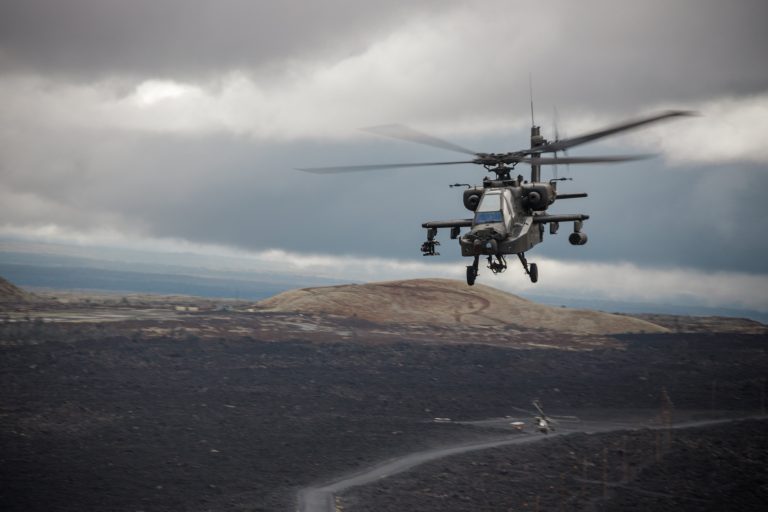
WARSAW, Poland — The Polish Ministry of National Defence has signed a deal with the United States government to purchase 96 Boeing AH-64E Apache attack helicopters — with related gear and weapons — for the country’s armed forces.

The signing ceremony was held on Aug. 13 and was attended by Poland’s Deputy Prime Minister and National Defence Minister Władysław Kosiniak-Kamysz.

“Today we are making a milestone with regards to equipping the Polish Armed Forces with the most modern AH-64E Apache attack helicopters,” Kosiniak-Kamysz said during the event, according to a statement released by the Polish ministry.

Under the offset agreements signed as part of the acquisition, Poland’s defense industry will be involved in servicing and upgrading the helicopters, Kosiniak-Kamysz said.

The contract is worth approximately $10 billion. Once the 96 aircraft are delivered, the Polish military will be the Apache’s second largest user in the world, preceded only by the U.S. military, the release said.

Poland has intensified its military modernization efforts following Russia’s invasion of neighboring Ukraine in February 2022.

Owing to the latest deal, the Polish military will be able to replace its outdated Soviet-designed Mil Mi-2 and Mi-24 helicopters with new aircraft. The contract marks the largest acquisition of Western-made helicopters in Poland’s history.

Under the plan, the aircraft will be deployed to the 1st Aviation Brigade in Inowrocław. Located in the country’s west, the brigade is tasked with providing aerial support to the Polish land forces.

The foreign military sale to Poland was approved by the U.S. State Department on Aug. 21, 2023. In a statement, the Defense Security Cooperation Agency said that, in addition to 96 helicopters and related gear and services, Poland aims to secure a wide range of weapon systems.

These include 1,844 AGM-114R2 Hellfire missiles, 460 AGM-179A Joint Air-to-Ground Missiles and 508 Stinger 92K Block I missiles, among others, according to the agency.

Jaroslaw Adamowski is the Poland correspondent for Defense News.

Assessing The Three Survival Zones When Disasters Strike

0

The sudden realization that you are in a potential life-or-death situation can send your mind and body into shock. Panic can quickly take hold. Your heart races, blood pressure spikes, and sweat begins to drench your clothes. Under such intense stress, your brain may not function as it normally would. Clear, rational thoughts can vanish, replaced by irrational thinking and impulsive decisions, which can escalate an already dire situation into something far worse.

While this reaction is a natural response to fear of the unknown, it can be mitigated with a basic plan that you should develop well in advance of any emergency. This pre-planning isn’t limited to a specific type of disaster or survival scenario. Instead, it’s a broad approach that can be applied to nearly any situation—whether it’s a natural disaster in an urban or rural setting, a man-made threat, or an unfortunate accident that leaves you in a dangerous position.

The key to avoiding panic and unnecessary risks is to evaluate your three critical zones of survival. By doing this, you can create a plan, remain focused, and find a way to navigate out of whatever situation you are facing.

Zone 1: Your Personal Space

The first area to assess in an emergency is yourself and the gear you have on hand. This should be your immediate focus once a crisis occurs. Start by taking a moment to calm yourself. It’s difficult to think clearly when panicked, so pause, sit down, and relax. Begin by checking yourself for any obvious injuries—cuts, bruises, bumps on the head, or more subtle issues like sprained fingers, hands, or swollen ankles.

After a traumatic event, your body may still be under the influence of adrenaline and shock, which can mask these injuries. However, once this initial response subsides, any injuries will become more apparent and should be addressed promptly. Keep wounds as clean as possible, and if needed, use parts of your clothing as makeshift bandages, slings, or even a tourniquet in extreme cases.

Once you’ve dealt with your medical needs, it’s time to consider how you can use the items you have with you. Even the simplest objects can be incredibly useful. For example, pens can double as straws to drink clean water if available, and shoelaces can be repurposed for survival tasks like making a bow drill for fire-starting, crafting bolas for hunting, or setting up primitive snares for small game. Eyeglass lenses can act as solar fire-starters, while their metal frames can be bent into fishing hooks. Cotton socks can be shredded for tinder, and your cellphone can serve multiple survival functions—from using the battery to start a fire, breaking the glass screen to fashion a knife, to using the metallic shell to reflect sunlight as a rescue signal.

As you take stock of your available supplies, think creatively. Focus on the four core survival needs: fire, shelter, water, and food. Consider how your personal items can help you secure one or more of these essentials—you may be surprised at how resourceful you can be.

Zone 2: Your Surroundings

The next zone to assess involves your immediate surroundings—this includes the area where you’ll establish a temporary home until you’re rescued or decide to move on. Start by inspecting the area for potential natural hazards, such as uneven ground, tripping obstacles like stumps or roots, or dead tree branches overhead that could fall during a storm. Next, check for nearby water sources. Within a few days, dehydration will become a serious concern, so having easily accessible water close to your location is essential. While lakes, rivers, and ponds are obvious options, also consider natural springs bubbling from the ground, small streams trickling over rocks, or large leaves that can collect rainwater as secondary sources.

Food sources are another critical aspect to scout within your immediate area. Look for signs of wildlife—birds, small game, and fish in nearby bodies of water are all potential food sources. Tracks in the soil, trails made by animals heading to water, and bubbles or ripples on the water’s surface can indicate the presence of fish or other aquatic creatures.

After identifying possible food and water sources, shift your focus to shelter and fire. Consider whether there are natural materials nearby that could be used to construct even a rudimentary shelter to protect you from the elements. These might include rock formations, fallen trees, naturally concaved terrain, or other natural structures that could serve as a foundation for your shelter.

Next, gather sufficient amounts of leaves, bark, moss, and similar materials that could be used for insulation and to seal cracks in your shelter to keep out rain, helping you stay dry and warm.

Fire is also essential, so ensure that firewood is abundant and easy to collect. Look for materials that can be used as tinder, such as bird and squirrel nests, thick, dry grasses, or cotton-like plants such as pussy willows. This evaluation of your local environment applies not only to wilderness survival but also to urban survival situations, as the four core survival needs—fire, shelter, water, and food—remain constant regardless of your location.

In an urban survival scenario, however, your search for food might involve scavenging deserted stores or markets for leftover canned goods or other non-perishable items that can sustain you. When it comes to finding clean, fresh water in the city, contamination becomes your primary concern. Look for bottled water or, if that’s not available, find ways to purify water using everyday materials you might have on hand.

Finally, be aware that in urban environments, you may encounter other people. If they are rescuers, your situation improves; however, if they are in the same desperate circumstances as you, there is a risk of theft or physical confrontation.

Medical banner

Zone 3: Things To Come

After concluding that a rescue is unlikely, you may need to make the difficult decision to leave your camp and essentially rescue yourself. This is where your final survival assessment becomes crucial. This assessment involves carefully surveying the surrounding landscape and using that information to plan your route.

In a rural survival situation, consider the challenges posed by dense brush that could hinder your movement, lakes or rivers that might block your path, and mountainous or rocky terrain that could be difficult or even impossible to navigate. In an urban environment, be cautious of unstable buildings, electrical poles, or other structures that may have been compromised during a natural disaster. Scattered electrical wires, which could still be live, are particularly dangerous and must be avoided. Additionally, be mindful of areas blocked by fences, gates, or other physical barriers.

The best way to get a clear view of your surroundings is to find the highest point possible, whether it’s a hilltop, a tall tree, the roof of a building, or a climbable antenna tower in an urban setting. However, always climb with extreme caution—falling could turn an already challenging situation into a much worse one.

Once you begin your journey, it’s important to make periodic stops to reassess your environment and ensure that you’re staying on your intended path.

zone 3 things to come

Additional points to consider:

Navigation Aids: Before setting out, try to orient yourself using the sun, stars, or a compass if you have one. In an urban environment, use landmarks such as tall buildings or bridges to keep your bearings. If possible, create makeshift markers or notes along your path to help you track your direction and prevent getting lost.

Energy Management: Conserve your energy by planning your route to avoid overly strenuous paths unless absolutely necessary. If the terrain is difficult, move slowly and deliberately to avoid injury, and take regular breaks to rest and hydrate.

Weather Considerations: Be aware of the weather and how it may affect your journey. In rural areas, sudden changes in weather can create new hazards, like flash floods or hypothermia. In an urban setting, heavy rain could flood streets or basements, and strong winds might bring down damaged structures.

Travel Timing: If possible, travel during daylight hours when visibility is better and it’s easier to spot hazards. Avoid traveling at night, especially in unfamiliar or potentially dangerous areas, unless absolutely necessary.

Emergency Signals: As you travel, keep an eye out for opportunities to signal for help. In rural areas, you can use reflective surfaces or create large, visible markings on the ground. In urban areas, consider using bright materials or writing SOS messages in visible locations. If you’re near a road or open area, try to position yourself where you might be seen by rescuers or passersby.

Stay Calm and Adaptable: Flexibility is key. If your planned route becomes too dangerous or difficult, be prepared to change your plans. Panic and rigid thinking can lead to mistakes, so stay calm, assess new information as it arises, and adapt your strategy accordingly.

Supplies Management: As you move, keep careful track of your supplies, rationing food and water as needed. Take note of potential places to replenish these resources, such as streams for water (purify if necessary) or areas where you might find food.

Concluding

In any survival situation, your top priority is to stay calm and avoid panic. Once you’ve taken a moment to relax and accept your circumstances, you’ll be in a much better position to make logical decisions and develop both short-term and long-term plans.

It’s essential to always follow the three main survival assessments, as they are universally applicable to almost any emergency you might encounter. Ignoring these assessments can lead to disorganized thoughts and reckless actions—decisions that could result in a very unfavorable outcome. Staying calm and focused is the foundation for effectively navigating any survival scenario.

banner1

Other Useful Resources:

Planning To Evacuate The City When The SHTF

Find Out What’s the Closest Nuclear Bunker to Your Home

Five Reasons Why Most Preppers Won’t Survive A SHTF Event

Knowledge to survive any medical crisis situation during a major disaster

Ship-killing guided bomb put to test as Air Force sinks cargo vessel

0

The Air Force in July tested a new ship-killing guided bomb to demonstrate the service’s growing ability to sink enemy vessels.

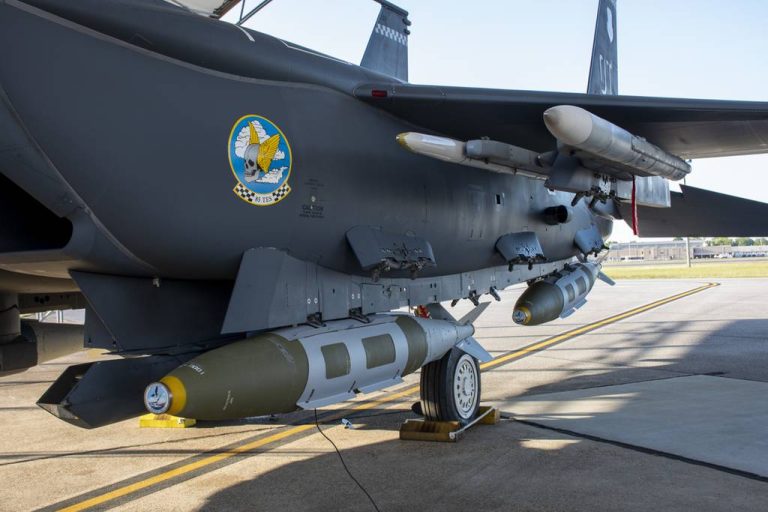
A B-2 Spirit bomber released the weapon, which the Air Force Research Laboratory calls QUICKSINK, against an empty cargo vessel in the Gulf of Mexico, AFRL said in a Thursday release.

Col. Matthew Caspers, head of AFRL’s munitions directorate at Eglin Air Force Base in Florida, said in a statement that the technology will ensure the U.S. can defend its interests, keep seas open, and “seize the initiative over large maritime areas.”

“QUICKSINK is an answer to an urgent need to neutralize maritime threats to freedom around the world,” Caspers said.

The Air Force is developing QUICKSINK to bolster its anti-ship capabilities, which would be crucial in a potential conflict with China or another major adversary. Defense leaders have repeatedly said the U.S. military’s top challenge is China, which views the island nation of Taiwan as a breakaway province with which it must reunify, possibly through a swift invasion.

A war against China would likely involve fierce naval battles across the Pacific, and the Air Force hopes QUICKSINK would provide another weapon in its arsenal to counter the Chinese navy.

The QUICKSINK program will allow the Air Force to modify current or future weapons to hit targets at sea that are either stationary or moving. AFRL said in 2021, as it began testing the concept, that it wants the weapons to home in on specific points on the target vessel, including at its top, at the waterline or just below the water’s surface.

AFRL did not specify which weapon was used in July’s test to sink the cargo vessel, called the Monarch Countess. A previous test in 2022 used a modified GPS-guided GBU-31 Joint Direct Attack Munitions, or JDAM, to strike a target vessel.

The JDAM does not operate under its own power, and uses fins to steer towards its target while the speed of the releasing aircraft and gravity provide the weapon’s velocity.

AFRL said in a 2021 interview with Military.com that the JDAM’s nose plug had been redesigned as part of this effort. That was done to ensure the JDAM does not careen off in an unexpected direction if it hits the water before striking its target, which an AFRL official compared to a stone skipping across a pond’s surface.

While the Air Force hopes QUICKSINK would have a similar ship-killing effect as a traditional torpedo, this weapon would not travel under the water’s surface to the target. Air Force officials say QUICKSINK would be cheaper and more flexible than heavy-weight torpedoes, and could be released from most of the service’s combat aircraft.

A B-2 bomber carried out July’s test, and an F-15E Strike Eagle released a GBU-31 JDAM that had been modified into a maritime QUICKSINK weapon in a previous test in 2022.

AFRL’s munitions directorate is working with the Navy on a Maritime Weapon Program to develop air-launched weapons that can sink enemy ships.

The July test in the Gulf of Mexico was separate from the Navy’s live-fire sinking exercises during the Rim of the Pacific, or RIMPAC, drills that same month, AFRL said.

The RIMPAC exercises included sinking two decommissioned ships — the amphibious transport dock Dubuque and the amphibious assault ship Tarawa — off the coast of Hawaii. Those ships were struck by aircraft and ships from the U.S., Australia, Malaysia, the Netherlands and South Korea, using weapons that included the Long-Range Anti-Ship Missile and the RGM-84 Harpoon missile.

Stephen Losey is the air warfare reporter for Defense News. He previously covered leadership and personnel issues at Air Force Times, and the Pentagon, special operations and air warfare at Military.com. He has traveled to the Middle East to cover U.S. Air Force operations.

DIY Solid Fuel Cooking Stove

0

Interesting solid Fuel cook stove from a front loading washing machine…

https://youtube.com/shorts/pEutsP7nIkM?si=I9HBIgnECp9_cFad

DIY Solar Dehydrator | Survival Monkey Forums

0

Cheap first-person-view drones now hunting larger prey in Ukraine

0

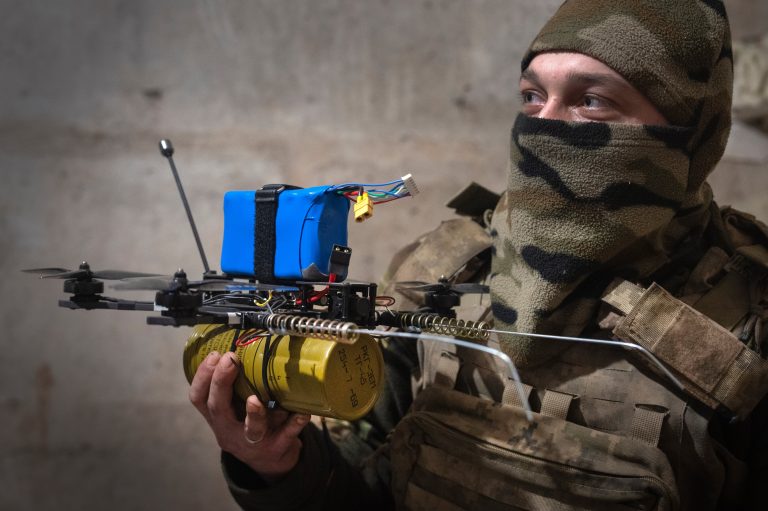
MILAN – Low-cost first-person-view drones are proving increasingly capable of striking larger platforms — such as combat helicopters — in Ukraine, as their pace of development has accelerated to allow them to fly faster and further.

On Aug. 7, the Ukrainian military released footage showing one of its unknown models of FPV drones successfully hitting the tail rotor of a Russian Mi-28 Havoc attack helicopter over the battlefield.

The hit represented one of the first filmed strikes on a manned Russian helicopter, in flight, using a Ukrainian FPV platform. While these variations of drones have been used widely across the battlefield, experts say efforts to use them to bring down larger, expensive aircraft have been previously unsuccessful.

“There were numerous attempts of Ukrainian FPVs trying to chase Russian helicopters before, but all such attacks were near misses,” Sam Bendett, a research analyst at the U.S.-based Center for Naval Analyses, said. “It’s difficult to pilot an FPV drone towards a military helicopter flying at high speeds.”

Although it is not possible from the available recording to certify the overall impact of the hit on the aircraft, Bendett says that the fast-paced evolution of these small drones and the ways they can be used should be watched closely by militaries globally.

“The sky over the [Ukraine] battlefield is now teeming with fast-flying FPVs hunting much larger prey, and assuming one can be piloted to the helicopter’s vulnerable part — like its rear propeller — major damage can be done,” he said.

Helicopters have proven especially vulnerable throughout the war in Ukraine, due in part to the proliferation of ground-based air defenses that have rendered manned flight across the battlefield extremely difficult.

As of July 27, Ukraine’s military intelligence unit, HUR, reported that Russian forces have lost up to 326 helicopters since the start of the invasion. Bendett notes that some of Moscow’s rotorcraft are larger and fly at slower speeds than the Mi-28, which could offer more occasions for a successful FPV attack.

FPV drones were introduced relatively early on in the war to fulfill different tasks. In late 2023, Ukrainian President Volodymyr Zelenskyy announced the country’s intention to produce one million of the platforms in 2024.

Whereas initially the drones had a significantly limited range, between 3 to 5 kilometers on average, Bendett says that number has expanded to 15-20 kilometers today.

The future use of FPVs in combat will likely involve them flying “in swarms and groups in order to overwhelm adversary defenses,” according to Bendett.

Beyond this, other military experts argue that the rise of this new threat alongside the already exposed vulnerabilities of helicopters will necessitate a reconsideration of the use and role of rotary aircraft.

“The future use of helicopters in combat can and should be rethought, especially with the growth of unmanned systems,” Serhii Kuzan, a former adviser to the Ukrainian Ministry of Defense, told Defense News. “It is quite likely that their role as strike means may change after the Russian-Ukraine war, as potentially this feature will be used by attack drones or even unmanned helicopters.”

Elisabeth Gosselin-Malo is a Europe correspondent for Defense News. She covers a wide range of topics related to military procurement and international security, and specializes in reporting on the aviation sector. She is based in Milan, Italy.