Been rethinking my Duel Sport/Enduro bike, I’m not using it as a Duel Sport, mostly off road, and after playing with my neighbors grand son who has a Honda Fat-Cat and his old man has a Yamaha TT-220 like all the coastal towns and cities have for their police, I decided to convert my ATK 604 over to a Fat Tire bike, and it turns out there is a company that does this very thing, though SUPER expensive, I can make my own version, I have the tools, skills, and access to used parts, so what could go wrong! LOL
The way I figure it, any good idea is worth stealing, as long as i’m not selling it or making a profit by selling parts, we should be fine! I wondered how they got the chain drive from the engine to the rear tire, Jack Shaft,, DUHHHH, problem solved! My only issue is with the ATK, it’s not only a right side drive, but dosn’t have the rear brake on the wheel, it’s on the drive sprocket shaft, so I’m going to have to figure that out! Also, ATK are known for their Auto Chain Tension system, which is how they got their name!, and I will need to see if I can make that work still with the new parts and conversion!
SINGAPORE — The Philippines is nearing a breakthrough in negotiations to buy fighter jets from Sweden after two decades of efforts to refresh its fleet.
The two governments are now ironing out the final terms of defense cooperation based on a memorandum of understanding signed in June and ratified in September, the Philippines’ Defense Department explained in a Feb. 16 news release.
The arrangement is key to Sweden’s participation in the Philippines’ multirole fighter jet program, the department said, and the governments are to ink a deal at a meeting next month.
Negotiations had stalled while the Philippine military finalized its new defense acquisition program, dubbed Horizon 3 — the last phase of the government’s massive push to modernize its armed forces. In January, President Ferdinand Marcos Jr. approved a 2 trillion peso (U.S. $35 billion) budget for the decade-long plan.
The Defense Department has not shared a specific list of assets and platforms it wants under the program, but Defense Secretary Gilberto Teodoro told reporters last month the budget will focus on building assets and capabilities to address threats to Philippine resources and vessels. Capabilities will focus on raising domain awareness; connectivity; maritime and aerial deterrence; command and control; communications; computer technology; and intelligence, surveillance, target acquisition and reconnaissance.
The military previously told Defense News most of its assets and platforms are deployed to the country’s western and northern borders.
Following the approval of Horizon 3, the department said it had changed its requirements for the fighter jet and had not disclosed the total number it planned to acquire, nor the price tag.
The Philippines retired its fleet of Northrop F-5 fighters in 2005, and in 2013 it spent 18.9 billion pesos for 12 FA-50 light attack aircraft from Korea Aerospace Industries as fighter jet negotiations continued.
While the government has not identified the final choice for the fighter jet, the Swedish firm Saab’s JAS 39 Gripen was reportedly among the top choice.
A Saab-made JAS 39 Gripen fighter taxis during the NATO exercise Loyal Arrow on June 10, 2009. (Patrick Tragardh/AFP via Getty Images)
The country had its eyes set on Lockheed Martin’s F-16 Fighting Falcon in the 1990s, but economic troubles and a lack of prioritization stalled negotiations.
In 2021, the U.S. approved the sale of 10 F-16C Block 70/72 and two F-16D Block 70/72 aircraft in a $2.43 billion package. However, the Philippines has only earmarked $1.1 billion for the acquisition.
Saab has not participated in negotiations thus far, according to Andrew Wilkinson, the company’s Gripen campaign director. Speaking to Defense News during the Singapore Airshow this week, Wilkinson said Saab will join the discussions once the bilateral agreement is signed and after the Philippines reaches a decision on its preferred fighter jet.
“We are at the very first phase, but right now there is no official decision, no requests,” he added.
Previous negotiations were over the aircraft, but Saab officials said there is an array of systems to provide a “holistic defense solution,” like the GlobalEye airborne early warning and control plane that can provide long-range air, sea, and land surveillance in real time.
“We have ground radars, airborne radars, other types of sensors, and you can fuse all this information to provide one aviation awareness picture that you can distribute to the navy, to the army, even to the coast guard,” Anders Dahl, who leads Saab’s branch in the Philippines, told Defense News.
The company has a history in the region. In 2008, Saab signed a $309 million deal to supply aircraft and surveillance systems to the Royal Thai Armed Forces.
Leilani Chavez is an Asia correspondent for Defense News. Her reporting expertise is in East Asian politics, development projects, environmental issues and security.
Britain has opened up bids for its New Medium Helicopter program as the nation’s modernization program moves into a major new phase, the Defence Ministry announced Tuesday.
The U.K. expects to award a contract in 2025 to build the new helicopters, the ministry said. According to a March 2022 government document about major defense projects, the deal could be worth nearly £1.2 billion (U.S. $1.5 billion).
“The New Medium Helicopter will provide essential support to our military operations, and we’re pleased to have reached this next important stage of the program,” Defence Procurement Minister James Cartlidge said in the news release. “The program’s competition includes essential criteria that are key to securing vital rotary wing operational independence, allowing us to respond swiftly to emerging threats in a highly contested world.”
This program is expected to deliver up to 44 medium-lift support helicopters that can operate in all environments and perform up to five different jobs that were previously covered by different types of aircraft, the ministry said, including carrying out both combat and humanitarian missions. This is expected to streamline the U.K.’s vertical lift capabilities, providing more efficiency and operational flexibility, the ministry added.
The U.K. branches of Airbus Helicopters, Leonardo Helicopters and Lockheed Martin are expected to submit bids now that the British military has released its invitation to negotiate.
The potential to export these helicopters to other countries will be an important element the U.K. will consider as it evaluates bids, the ministry said. Other issues to undergo consideration include the helicopters’ design, production and manufacturing process.
“The New Medium Helicopter contract will secure the vital operational independence we require, as well as investing in U.K. skills for the long term, and demonstrates the U.K. government’s commitment to the Defence and Security Industrial Strategy,” the ministry said in its release.
The winner of this contract will replace the Army’s Puma helicopters, as well as the country’s aging Bell 412, Bell 212 and Airbus Dauphin helicopters.
Lockheed and its subsidiary Sikorsky plan to submit the Black Hawk helicopter for the New Medium Helicopter program. Sikorsky president Paul Lemmo said at the Paris Air Show in June 2023 that it was considering setting up a Black Hawk final assembly line in the U.K. to strengthen its bid for the program. A final assembly line on the European continent — likely Poland — is also an option, Lemmo added.
Airbus has teamed up with Boeing to pitch the H175M for the program, which it would build in Wales. The H175M would be a militarized version of Airbus’ commercial H175 helicopter.
Italian firm Leonardo is eyeing its AW149 helicopter for its own bid, saying the construction style allows for the aircraft to better survive small-arms fire.
Stephen Losey is the air warfare reporter for Defense News. He previously covered leadership and personnel issues at Air Force Times, and the Pentagon, special operations and air warfare at Military.com. He has traveled to the Middle East to cover U.S. Air Force operations.
Military operations in Ukraine have cost Russia up to $211 billion, and the country has lost $10 billion in canceled or paused arms sales, according to the Pentagon. At least 20 medium to large Russian naval vessels have been sunk in the Black Sea, while 315,000 Russian soldiers have either been killed or wounded, the department has found.
Indeed, both countries have experienced heavy losses in life and materiel during the war, which began when Russia launched a full-scale invasion of Ukraine on Feb. 24, 2022. There’s now a growing sense this conflict has reached a stalemate, and that it will likely continue through the year, according to a report released this month by the International Institute for Strategic Studies.
The London-based think tank also recently updated its Military Balance+ database, which assesses the defense capabilities of militaries around the world. The following compares select system types and data points between Russia and Ukraine, based on data from IISS, with footnotes at the bottom of this article. The data is current as of November, meaning it accounts for nearly two years of war.
Data as of November 2023.
Armored Fighting Vehicles are armored combat vehicles with a combat weight of at least 6 metric tons.
Artillery includes guns, howitzers, rocket launchers and mortars with a caliber greater than 100mm for artillery pieces and 80mm and above for mortars, capable of engaging ground targets with indirect fire.
Surface-to-Surface Missile Launchers are launch vehicles for transporting and firing surface-to-surface ballistic and cruise missiles.
Air Defense includes guns, directed-energy weapons and surface-to-air missile launchers designed to engage fixed-wing, rotary-wing and unmanned aircraft.
Noah Robertson is the Pentagon reporter at Defense News. He previously covered national security for the Christian Science Monitor. He holds a bachelor’s degree in English and government from the College of William & Mary in his hometown of Williamsburg, Virginia.
Chris Martin is the managing editor for Defense News. His interests include Sino-U.S. affairs, cybersecurity, foreign policy and his yorkie Willow.
On a clear Tuesday morning, after a heavy thunderstorm the previous night, I unlocked the office door. As I stepped inside, there was a distinct smell in the air that took a moment to identify—it was ozone. I hastened my steps towards the computer room in the back, where most of our small software firm’s employees worked.
Upon entering the room, a scent of burnt electronics hit me, and I was left in shock. It became evident that the building had been struck by lightning during the storm, bypassing our industrial-strength surge protector and causing damage to our development minicomputer and several high-end terminals.
Replacing the equipment would take a couple of days, but thankfully, no one was injured. We were fortunate to have offsite backups for our development and operating software, preventing a complete standstill for the company.
That morning served as a stark reminder of the power of a lightning strike and the importance of understanding how to stay safe when lightning is in the vicinity.
How Lighting Forms
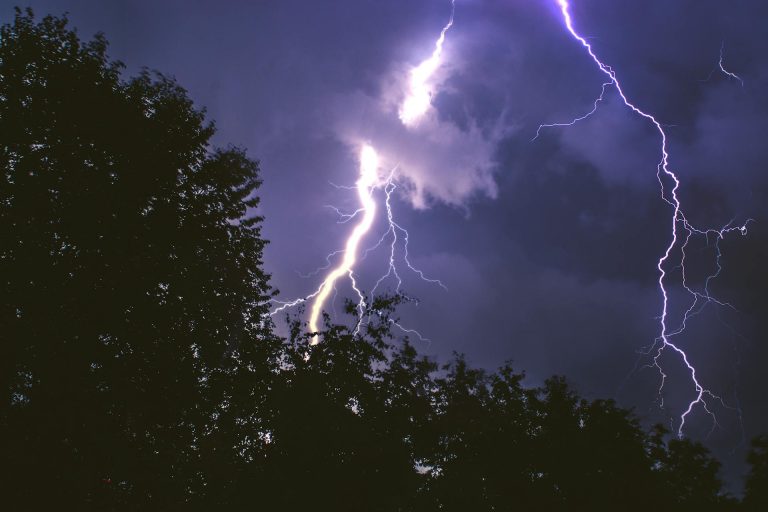
Lightning originates in cumulonimbus clouds, commonly known as thunderheads. These towering clouds, reaching heights of up to 25,000 feet above sea level, facilitate the movement of warm, moist air through updrafts. As this moist air ascends, it cools at higher altitudes, triggering its transformation into a downdraft.
At the pinnacle of this circular process, the moist air turns into ice and, eventually, hail. The formation of numerous ice and hail particles leads to collisions, resulting in an accumulation of negative charges. Once a sufficient number of these negative charges amass at the bottom of the cloud, it creates the conditions for a lightning bolt to form. This bolt then descends to the ground, attracted by the positive charges present in the Earth.
Lightning is essentially an electrical discharge caused by the separation of positive and negative charges within a cumulonimbus cloud. The initial process involves the updraft of warm, moist air, which cools and falls as a downdraft at higher altitudes. As this process continues, the moisture freezes, creating ice and hail particles. These particles collide, leading to the separation of charges—negative charges on smaller particles and positive charges on larger particles.
The accumulated negative charges at the base of the cloud create an electrical potential difference with the positively charged ground below. When this difference becomes significant, a lightning bolt is triggered to neutralize the charge separation. The bolt follows a path of ionized air, creating the visible streak we recognize as lightning.
Understanding the complex interplay of atmospheric conditions that give rise to lightning helps us appreciate the powerful natural phenomenon and underscores the importance of safety precautions during light storms.
The Impact of Lighting
the impact of lighting
As highlighted earlier, lightning stands as one of nature’s most potent forces, capable of inflicting substantial damage upon anything it encounters. Electrical appliances situated in the grounding path of a lightning strike face the risk of being short-circuited or burnt out. Trees, lumber, or items with significant moisture content can undergo immediate boiling and explosive reactions.
When it comes to human encounters, the consequences of a lightning strike vary—individuals may or may not be killed or injured, depending on their level of grounding at the moment of impact. Importantly, lightning doesn’t necessarily have to strike an object directly to cause harm. The electrical current may travel along the ground, wires, or pipes from the initial strike, reaching and affecting objects a short distance away.
Lightning’s destructive potential arises from its ability to discharge a massive amount of electrical energy. When a lightning bolt strikes, it seeks the path of least resistance, and anything in its way may suffer severe consequences. The intense heat generated by the electrical discharge can cause fires, and the accompanying shockwaves can lead to explosive reactions in objects with high moisture content.
Moreover, individuals struck by lightning may experience a range of injuries, from minor to severe, depending on factors such as the directness of the strike and the grounding conditions. Lightning’s capacity to travel along the ground or through conductive materials amplifies its reach, posing a threat not only to the point of impact but also to surrounding areas. Understanding the potential dangers of lightning underscores the importance of safety measures during light storms.
Staying Safe During Lighting Storms
The key to staying safe during a lightning storm is avoiding open areas and finding shelter that can redirect any electrical strikes into the ground. Lightning can strike from distances of up to 10 miles, even without visible storm clouds in the sky. Fortunately, there are warning signs that can help us seek safety before lightning strikes.
Keep an eye out for rapidly growing clouds, darkening at the base, or significant height increase. The darkening is due to increased moisture, while height indicates the presence of the updraft and downdraft cycle forming ice crystals.
Another sign of an approaching thunderstorm is the presence of large, fat raindrops. This not only signals a brewing storm but also suggests that the raindrops are growing larger through the up-and-down cycle.
Listen for audible thunder, which may indicate lightning either within the clouds or striking at a distance. Use the 30-30 rule: if the time between seeing the lightning flash and hearing the thunder is less than 30 seconds, seek shelter immediately. The second 30 is the minimum number of minutes to wait before leaving your shelter.
Pay attention to static or popping sounds on an AM radio, as they can indicate an excess of static electricity in the air, which may lead to lightning. When a strike is imminent, static may also manifest as a tingling sensation, hair standing up, or a soft buzzing or hissing sound. These warning signs can help you take timely precautions and stay safe during a lightning storm.
Medical banner
Safeguarding Against Lighting Strikes
To protect yourself from a lightning strike, seek shelter in a sturdy building equipped with metal wiring or pipes connected to an electrical ground. This setup channels any electrical strike safely into the Earth. Open structures like picnic pavilions or tents without proper grounding won’t offer sufficient protection. The mass and grounding of metal structures are crucial for directing the immense power of a lightning bolt into the ground rather than posing a risk to you or nearby electrical devices.
Whether you find shelter in a building or a vehicle, avoid touching metal surfaces that could conduct lightning into your body. Non-wired devices like cell phones or cordless razors are safe to use as they lack connections to the ground. Steer clear of water pipes, faucets, and other components of the wired conductive circuit within a house to avoid attracting the charge if lightning strikes the structure. Be cautious around areas with excessive moisture, such as concrete patios, sidewalks, or sump pumps, and avoid walls with wiring where lightning could jump from one path to another.
If an appropriate building is not nearby, an automobile with a metal roof is the next best shelter. While the wheels prevent direct grounding, the charge typically jumps out of the vehicle into the Earth. Convertibles, vehicles with soft shell tops like golf carts, or ATVs do not offer adequate protection. Roll up the windows and avoid touching metal parts. Wireless devices, like cell phones not connected to the vehicle, are safe to use, but avoid using them if plugged into the vehicle through a charger or USB connector.
Whether inside a structure or a vehicle, turn off all electrical devices to minimize the risk of damage in the event of a lightning strike. If in a vehicle during a lightning strike, check for potential damage, such as fuel system leaks, which could pose a fire hazard in the presence of another strike or an electrical spark from a short circuit.
Responding To A Lighting Strike Victim
If someone is struck by lightning and survives, immediate CPR is likely necessary. The current CPR protocol involves ensuring your safety and the person’s safety first. Proceed with 30 chest compressions followed by two rescue breaths, repeating this cycle until the individual shows signs of recovery. Additionally, if the person has second- or third-degree burns resulting from the lightning strike or electrical devices, administer first aid for burns. Always address shock symptoms in any injured person.
Further Guidelines:
Prioritize Safety: Before initiating CPR, ensure the safety of both yourself and the lightning strike victim. Make sure the surroundings are secure from potential hazards.
CPR Technique: Begin with 30 chest compressions, followed by two rescue breaths. Continue this cycle until the person shows signs of recovery or until professional help arrives.
First Aid for Burns: If the lightning strike causes second- or third-degree burns, or if the individual has burns from electrical devices, provide appropriate first aid. This may involve cooling the burn with water and covering it with a sterile bandage.
Shock Management: Attend to any signs of shock in the injured person. Keep them comfortable, elevate their legs if possible, and seek medical assistance promptly.
Being prepared to respond to a lightning strike victim is crucial for their well-being, and following these guidelines can contribute to a more effective and timely intervention.
Lightning Storm Myths and Facts
lightning storm myths and facts
MYTH: Lightning never strikes the same place twice. FACT: Lightning often strikes the same place repeatedly, especially if it’s a tall, pointy, isolated object. The Empire State Building is hit nearly 100 times a year.
MYTH: If it’s not raining or there aren’t clouds overhead, you’re safe from lightning. FACT: Lightning often strikes more than three miles from the center of the thunderstorm, far outside the rain or thunderstorm cloud. “Bolts from the blue” can strike 10-15 miles from the thunderstorm.
MYTH: Rubber tires on a car protect you from lightning by insulating you from the ground. FACT: Most cars are safe from lightning, but it is the metal roof and metal sides that protect you, not the rubber tires. Remember, convertibles, motorcycles, bicycles, open-shelled outdoor recreational vehicles, and cars with fiberglass shells offer no protection from lightning. When lightning strikes a vehicle, it goes through the metal frame into the ground. Don’t lean on doors during a thunderstorm.
MYTH: A lightning victim is electrified. If you touch them, you’ll be electrocuted. FACT: The human body does not store electricity. It is perfectly safe to touch a lightning victim to give them first aid. This is the most chilling of lightning myths.
MYTH: If outside in a thunderstorm, you should seek shelter under a tree to stay dry. FACT: Being underneath a tree is the second leading cause of lightning casualties. Better to get wet than fried.
MYTH: If you are in a house, you are 100 percent safe from lightning. FACT: A house is a safe place to be during a thunderstorm as long as you avoid anything that conducts electricity. This means staying off corded phones, electrical appliances, wires, TV cables, computers, plumbing, metal doors, and windows. Windows are hazardous for two reasons: wind generated during a thunderstorm can blow objects into the window, breaking it and causing the glass to shatter, and second, in older homes, in rare instances, lightning can come in cracks in the sides of windows.
MYTH: If thunderstorms threaten you while you are outside playing a game, it is okay to finish it before seeking shelter. FACT: Many lightning casualties occur because people do not seek shelter soon enough. No game is worth death or lifelong injuries. Seek proper shelter immediately if you hear thunder. Adults are responsible for the safety of children.
MYTH: Structures with metal, or metal on the body (jewelry, cell phones, watches), attract lightning. FACT: Height, pointy shape, and isolation are the dominant factors controlling where a lightning bolt will strike. The presence of metal makes absolutely no difference on where lightning strikes. Mountains are made of stone but get struck by lightning many times a year. When lightning threatens, take proper protective action immediately by seeking a safe shelter, and don’t waste time removing metal. While metal does not attract lightning, it does conduct it, so stay away from metal fences, railings, bleachers, etc.
MYTH: If trapped outside and lightning is about to strike, I should lie flat on the ground. FACT: Lying flat increases your chance of being affected by potentially deadly ground currents. If you are caught outside in a thunderstorm, keep moving toward a safe shelter.
Avoid The Lighting Crouch: Updated Safety Guidelines
.
The National Weather Service once recommended the lightning crouch for those caught in the open during a lightning storm, believing it minimized the risk of becoming the lightning strike point. However, in 2008, the advice was revised as subsequent research revealed the lightning crouch did not offer a significant level of safety.
Your optimal response is to remove yourself from the hazardous situation by following these steps:
Plan ahead. Be proactive in knowing where you can seek safety.
Stay informed with the forecast. Monitor weather predictions regularly.
Adjust plans in case of thunderstorms. If storms are forecasted, consider canceling or postponing activities.
Keep an eye on weather conditions. Be aware of changing weather patterns.
Take early action. Ensure you have sufficient time to reach a secure location.
Seek shelter in a substantial building or hard-topped metal vehicle. Do this before threatening weather arrives.
Respond promptly to thunder. If you hear thunder, move to a safe place immediately.
These updated guidelines prioritize proactive measures and getting to a secure location as the most effective means of ensuring your safety during a lightning storm.
Concluding
It’s evident that we must treat lightning with the respect it deserves. Instead of relying on ineffective measures like the lightning crouch or seeking refuge in a ditch, prioritize swift action to reach a sheltered location when signs of a storm or strike emerge.
Additionally, acquiring knowledge of CPR is essential, enabling you to assist anyone who may be struck by lightning. Taking these precautions and being prepared enhances overall safety during lightning incidents.
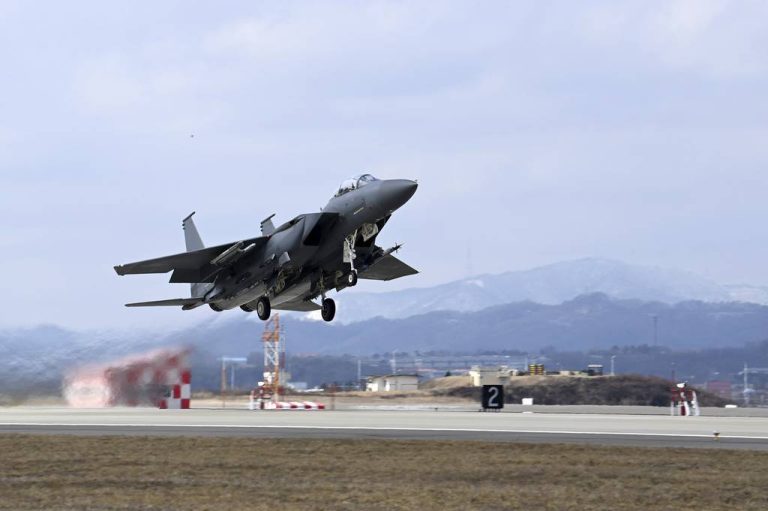
South Korea and the United States flew advanced stealth fighters in a joint missile-interception drill Friday over the Korean Peninsula, South Korea’s air force said, an apparent response to a spate of weapons tests this year by rival North Korea.
North Korea has conducted six rounds of missile tests so far this year, most of them reportedly involving cruise missiles that typically fly at a low altitude to overcome opponents’ missile defenses. Analysts say that in the event of a conflict, North Korea aims to use cruise missiles to strike U.S. aircraft carriers as well as U.S. military bases in Japan.
South Korea’s air force said in a statement the drill on Friday involved fifth-generation stealth F-35A fighter jets from both countries and other fighter jets from South Korea. It said the U.S. F-35As were deployed in South Korea on Wednesday from Kadena Air Base in Okinawa, Japan.
North Korea has ramped up its weapons tests since 2022 in what experts call an attempt to increase its leverage in future diplomacy. South Korea and the U.S. have responded by expanding their military exercises and trilateral training with Japan.
On the sidelines of a G20 meeting in Rio De Janeiro on Thursday, the top diplomats from South Korea, the U.S. and Japan agreed to strengthen their joint response capability against North Korea’s evolving nuclear threats and coordinate to block the North’s financing of its nuclear program, according to South Korea’s Foreign Ministry.
This year, North Korea is expected to step up its testing activities and belligerent rhetoric as both the U.S and South Korea head into elections. North Korea is likely seeking international recognition as a nuclear state, a status that experts say the North thinks would help it receive relief from U.S.-led economic sanctions.
North Korea’s advancing nuclear arsenal has likely emboldened its stance, and there are concerns that the North may launch a limited military provocation against the South. Observers say a full-scale attack is unlikely as the North is outgunned by more superior U.S. and South Korean forces.
U.S. and South Korean officials have repeatedly warned that any nuclear attack by North Korea against them would spell the end of the North’s government, led by Kim Jong Un.
During the initial years of the 1930s, an increasingly paranoid and authoritative leader, Joseph Stalin, initiated a sweeping removal of dissent within the confines of the Soviet Union. His primary targets were individuals affiliated with the Communist Party who dared to scrutinize his treatment of peasants, downplayed the emphasis on industrialization, and advocated for greater internal democracy.
Stalin orchestrated “display trials” for his adversaries, leading to their inevitable execution. Numerous political opponents met their demise through this ruthless purge.
However, the glorification of Stalin extended beyond his dominance within the political structure of the Soviet Union. Simultaneously, a personality cult was taking shape.
Engagement in Religious Suppression
In pursuit of his agenda, Stalin redirected his purges towards both the churches and the common populace of Russia. Religious symbols gave way to glorious depictions of Stalin, replacing the traditional icons. Those clergy members who resisted faced either execution or exile.
Families enthusiastically extolled Stalin, with mothers imparting to their children the belief that he was the wisest man alive. Those who deviated from these teachings found themselves vanishing without a trace. By the mid-1930s, approximately 10 million Russians were forcibly uprooted from their homes and relocated to Gulags nestled deep in the Siberian taiga.
By the conclusion of Stalin’s reign, over 20 million individuals had been dispatched to camps scattered across Russia, and more than half of them succumbed to the harsh conditions. The Siberian taiga, an unforgiving landscape, played a pivotal role in this ordeal.
Taiga, the Russian term for “forest,” gained notoriety for its unpredictable weather patterns. The region experienced freezing temperatures for six months each year, enveloping the land in an icy, snowy tomb with waist-high snow drifts. Pine and spruce stood as the sole greenery for miles.
However, when summer did arrive, albeit briefly, it brought piercing blue skies, warm air, rivers cascading through narrow canyons, the fragrant scents of lilacs and pine, and a fleeting sense of connection with nature. As swiftly as summer graced the taiga, winter crept in through an all-too-brief autumn, nearly imperceptible in its presence.
The Pursuit of Freedom
Arzhan-Khem Valley
For Russians condemned to camps in the unforgiving landscape, it represented a descent into a living hell. Enduring brutal winters, they toiled in logging or mining, where their daily output determined the meager rations of bread and water for the next day. Cloaked in the most threadbare clothing, they slept in dilapidated huts on makeshift wooden planks.
However, for a select few Russians, venturing into the taiga was a matter of choice—a means of survival. It was the survival of their way of life, the survival of their families. This held true for the Lykov family.
The Lykovs were affiliated with a faction known in Russia as the Old Believers—a sect of the Russian Orthodox Church steadfast in their beliefs until the very end. The origin of the Old Believers dates back to the era of Peter the Great and the Great Schism of 1667.
According to Vesily Peskov’s account in his book “Lost In The Taiga,” “The Old Believers regarded the ascent of Tsar Peter the Great, with his particularly severe innovations, as the arrival of the Antichrist they had foreseen.”
In response, many Old Believers sought refuge deeper into the Siberian wilderness to distance themselves from the perceived Antichrist. These individuals formed small sects that isolated themselves from mainstream society, rejecting all worldly pursuits, including, as per Peskov, “state laws, military service, passports, money, authority of any kind, games, singing, anything that people ‘not fearing God, could think up.””
Unveiled
As Stalin’s purges infiltrated the remote reaches of the Siberian wilderness, the Lykovs had already become a self-reliant family, leading a secluded existence far removed from the rest of the world.
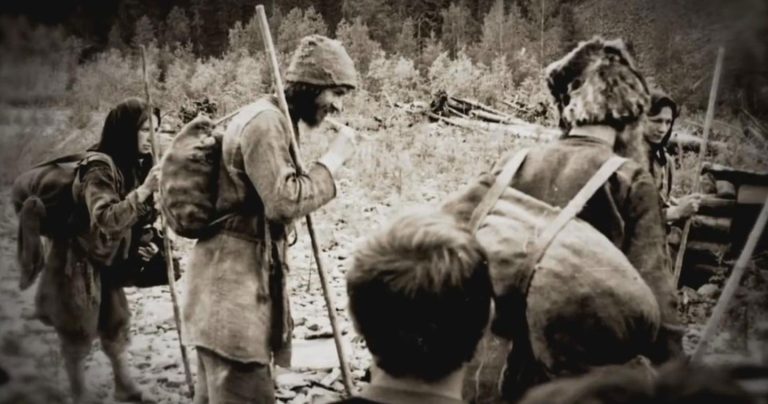
In 1935, after a tragic incident where Karp’s brother was shot by a communist patrol while tending to the family’s potato crop, Karp Lykov, along with his wife Akulina and their two children—9-year-old Savin and 2-year-old Natalia—withdrew entirely from society.
Subsequently, two more Lykovs, Dmitry in 1940 and Agafia in 1943, were born in the wild. Until their chance encounter with a Russian geology team in 1978, these two individuals had never encountered anyone outside their immediate family.
The Lykovs charted their own path, following the Abakan River into the Altai Mountains of southern Siberia. Their initial settlement was stumbled upon shortly after the conclusion of World War II by a group of military topographers. However, upon their return a year later, the family had already relocated.
According to Peskov, the Lykovs were spotted again in 1958 by “a group of tourists descending the Abakan,” stumbling upon a bearded man with a fishing rod. The guide informed the tourists that they were close to the Lykovs’ “hermitage.”
Unlike their 1945 settlement along the river, the Lykovs had now established their cabins higher up in the mountains, eluding sight. With each relocation, they carried essential items such as seeds, limited clothing, a few pots and pans, and the spinning wheel and loom they had originally brought into the wilderness with them.
.
The Art of Surviving Alone
How does a family endure for forty-two years in one of the most inhospitable terrains on the planet?
Forced into isolation, the Lykov family mastered the art of self-reliance, depending on each other and the resources provided by the taiga. Their dwelling, at first glance appearing as a hastily assembled, soot-covered ramshackle hut, was meticulously planned. The roof, with larch boards shaped like troughs and arranged akin to the tiling on European homes, showcased their careful craftsmanship.
Within the modest abode, a fieldstone stove with a sidewall chimney was a testament to their ingenuity. In one corner, the cherished loom and spinning wheel stood, astonishing the first discoverers that six grown adults could coexist within such confined quarters.
While the taiga generously supplied materials for shelter during the harsh, prolonged winters, the Lykovs faced what Agafia termed the “hungry years.” Despite cultivating a large garden on the cold north slope of the mountain, the produce did not sustain them adequately.
Their diet primarily comprised potatoes, onions, turnips, peas, hemp, and rye—cultivated from seeds brought into the wilderness. Carrots, once a part of their diet, were lost to mice years earlier. The cornerstone of their sustenance was simple unleavened bread, crafted from potatoes, resembling a flat, dark pancake.
Nature’s Bounty
In the face of what their gardens couldn’t yield, the Lykovs turned to the taiga for sustenance. Birch trees, versatile providers in their own right, supplied the family with everything from makeshift pots to shoes, skis, and chests for storing potatoes. Birch juice, collected in April, found its place in their natural refrigerator—the river—contained in birch bark containers.
Summer in the taiga presented a bounty of mushrooms, raspberries, huckleberries, currants, and nuts. Late August saw every member of the Lykov family engaged in nut gathering, displaying their adeptness at climbing pines to secure “the potatoes of the taiga.”
The family’s most significant struggle arose from the absence of salt. Karp, expressing his anguish to Peskov, described life without salt as “true torture.” While meat featured in their diet, preserving it for extended periods became exceedingly challenging without salt.
Fishing the Abakan River became their primary means of securing sustenance, complemented by traps set for musk deer frequenting the nearby hills. Fish was often consumed raw, with some dried for future needs, while deer meats were reserved for religious occasions, challenging tasks, or long journeys.
Despite their resourcefulness, the family teetered on the brink of starvation. Agafia recounted the perpetual hunger, holding annual councils to decide whether to consume everything or reserve some for seed. In 1961, a late June snow obliterated their garden, leading to a winter where the family exhausted their stores. Spring brought desperation, forcing them to resort to eating leather shoes, bark, and birch buds. Akulina’s self-imposed starvation allowed her children to survive.
Miraculously, a single rye plant sprouted the following summer, becoming a symbol of hope. The family diligently guarded it against threats from mice, squirrels, and birds, rebuilding their stores from that lone sprout. The harsh diet likely contributed to the deaths of Agafia’s three siblings in 1981—Savin and Natalia succumbing, most likely, to kidney disease, and Dmitry to pneumonia.
The Lykovs, bound by specific roles within the family, adapted to their harsh circumstances. In the 1950s, Savin and Dmitry relocated to a cabin near the river, bringing diversity to their daily lives. Savin, a skilled leatherworker, and Dmitry, an adept hunter, played crucial roles in supporting the family. The separation was attributed to cramped living conditions, the need for a river outpost, strained relations with Savin, and the necessity to prevent incest.
Each family member contributed to the collective survival effort. Savin served as the family’s timekeeper and spiritual guide, tracking time for holidays, prayers, fasts, and periods prohibiting meat consumption. Natalia assumed the role of the family’s “Godmother,” overseeing cooking, sewing, and healing. Agafia, residing at the family homestead, became adept at cooking, ax-wielding, fishing, and even crafting furniture.
The two cabins provided opportunities for family visits, injecting diversity into their routine. Dream recounts around the fire, accompanied by food preparation for Holy Days or loom work as daughters sewed hemp clothing, helped break the monotony of the long winters.
Clothing production, centered around hemp, consumed much of their labor and effort. The family held hemp in high regard, utilizing it for clothing, as thread for birch bark and leather shoes, fishing lines, and rope. The hemp growing around the house served the additional purpose of warding off fleas.
Returning From the Wilderness
Yerofei Sedov and Agafia Lykov
As the years passed, the harsh Siberian isolation took its toll on the Lykov family. Eventually, Peskov observed that “in 1978, the family, worn down by their relentless struggle for survival, lost their desire to seclude themselves from society and meekly embraced whatever fate had in store for them.”
In 1988, exactly 27 years to the day after his wife Akulina’s passing, Karp Lykov succumbed to the challenges of their rugged existence. Agafia, the last surviving member, enlisted the assistance of a geology team to lay her father to rest beside the graves of the rest of her family. Despite occasional visits to the cities, Agafia Lykova steadfastly remains on the remote mountainside in the Abakan Range, situated 150 miles from the nearest town.
Refusing to abandon her family’s homestead, Agafia continues to embody a life of religious devotion, simplicity, and self-sufficiency, drawing from the land and her own abilities. For over seventy years, Agafia Lykova, a child of the Siberian wilderness with the taiga as her mentor, has carved out a life that would deter most. In a letter to her city-dwelling relatives in 1986, she conveyed, “My greetings to everyone. Tell them we have been making ready for the winter.” May we all prepare for the challenges ahead, just as Agafia has for many winters to come.
Agafia Lykova was reported to have experienced leg pain in January 2016, leading to her being airlifted to a hospital for treatment in Tashtagol. Following her treatment, there were plans for her to return to the wilderness once emergency services could facilitate her journey back home. According to The Siberian Times, she did return, and as of mid-2019, she was reported to still be living in the wilderness.
In 2021, it was reported that the oligarch Oleg Deripaska had funded the construction of a new cabin in the wilderness for Agafia. This development was attributed to the deterioration of her previous dwelling.
Concluding
.
The survival story of the Lykov family stands as a testament to human resilience in the face of extreme isolation and adversity. Cut off from the world in the vast Siberian wilderness, the Lykovs endured decades of harsh conditions, relying on their resourcefulness, self-sufficiency, and deep connection with the taiga.
Living in seclusion, the family adapted to the challenges of survival, fashioning their existence from the materials provided by the unforgiving environment. From birch trees for essential items to the abundant offerings of the taiga, they ingeniously sustained themselves despite the lack of modern amenities.
The story is marked by profound sacrifices, such as Akulina’s self-imposed starvation, and the family’s struggle with hunger, particularly during the “hungry years.” Yet, their determination to preserve their way of life, rooted in religious piety and simplicity, persisted.
Agafia Lykova, the last surviving member, continues to embody the family’s legacy, navigating the complexities of the modern world while clinging to her roots in the Siberian wilderness. The assistance provided by Oleg Deripaska in constructing a new cabin underscores the ongoing challenges faced by Agafia.
The Lykov family’s saga reflects not only a captivating tale of survival but also raises contemplation about the delicate balance between human resilience and the formidable forces of nature. Their extraordinary journey serves as an inspiration and a reminder of the indomitable spirit that can arise in the most isolated corners of our planet.