
I was not even a little bit interested in meeting another woman that would be anything more than another friend. And well here we are. It started out just as friendly banter in a FB group in various post, them we started talking in PMs and now we are spending way too many hours per day killing our phone batteries calling each other. We are both widowed, we both have our own places far enough apart to make a relationship challenging. We are pretty much financially equal and secure. We are…
US can still fund Ukraine F-16 training — for now
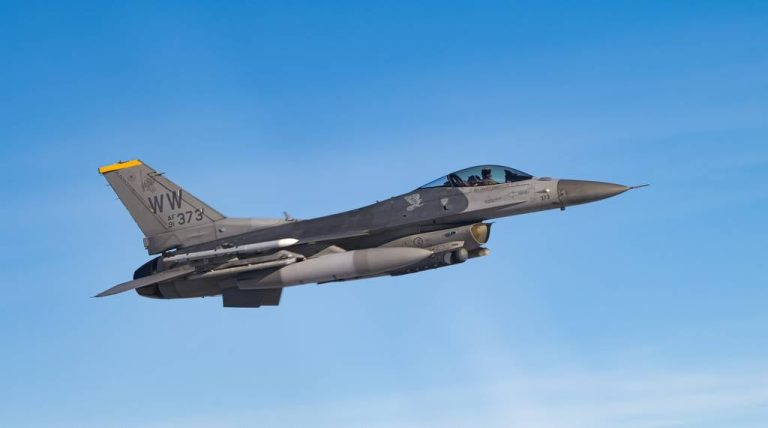
The National Guard still has enough money on hand to finish training Ukrainian pilots on F-16 fighter jets despite the U.S. running out of funds to send additional weapons and assistance to Kyiv, the head of the Guard Gen. Dan Hokanson said Thursday.
President Joe Biden announced in August that the U.S. would begin training Ukrainian pilots on the F-16 as part of a multinational effort to provide Ukraine with the advanced fighter jets. Pilot training began in October at Morris Air National Guard Base in Tucson, Arizona.
Since then, the Ukraine war fund that the U.S. has used to send billions of dollars in other weapons systems and assistance to Ukraine has run out of money while Congress has struggled to pass new aid.
The lack of funding has meant the U.S. has not been able to send any new weapons packages to Ukraine despite a brutal bombardment campaign by Russia. But the pilot training has been able to continue, Hokanson said.
“We do have the resources to continue the training that’s already started,” Hokanson said, and get that initial tranche completed this year. “If we decide to increase that, obviously we’ll need the resources to train additional pilots and ground support personnel.”
The latest legislation that would have approved more than $60 billion in aid for Ukraine was scuttled by a small group of House Republicans earlier this week over U.S.-Mexico border policy; a last-ditch effort Thursday the Senate was again trying to get support for a standalone bill that would fund both Ukraine and Israel’s defense needs.
Ukraine’s leaders have asked for fighter jets from the West since the earliest days of the war. For the first year and a half, the U.S. and other allied partners focused on providing other weapons systems, citing the jets’ cost, concerns about further provoking Russia, the number of deadly air defense systems Russia had covering Ukrainian airspace and the difficulty of maintaining the jets.
Ukraine’s leaders have argued that the F-16 is far superior to their existing fleet of Soviet-era warplanes. In some cases, the U.S. has found ways to deliver some of the advanced capabilities without providing the actual jets.
For example, Air Force engineers found ways to modify the HARM air-to-surface anti-radiation missile so that it could be carried and fired by Ukrainian-flown MiGs. The missile and its targeting system enable the jet to identify enemy ground radars and destroy them.
Tara Copp is a Pentagon correspondent for the Associated Press. She was previously Pentagon bureau chief for Sightline Media Group.
National cyberattack on Change Healthcare, drug availability impared

ANCHORAGE, Alaska (KTUU) – A cyberattack that affected pharmacies nationwide has affected pharmacies in Alaska since the attack was first detected on Wednesday.
UnitedHealth Group said that its subsidiary, Change Healthcare, experienced a breach in its information technology systems that process insurance for pharmacies nationwide.
According to concerned patients and providers in the Anchorage area, some patients are unable to use certain pharmacies, and in other cases, some pharmacies cannot confirm and bill patient insurance.
“My patients can’t get their meds through certain pharmacies, and then the pharmacies can’t verify the insurance,” said Shannon Davis, a psychiatric mental health nurse practitioner who practices in Eagle River.
It gets closer each day…..
US Army spent billions on a new helicopter that now will never fly
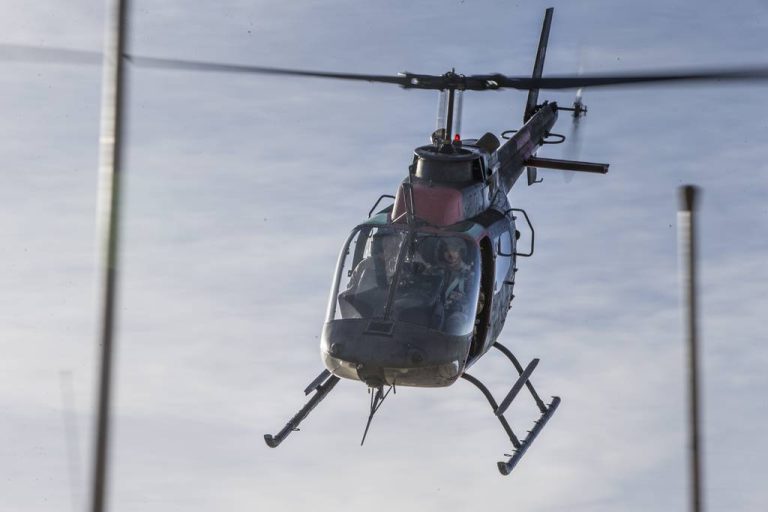
The U.S. Army is ending its latest effort to build a new armed scout helicopter, known as the Future Attack Reconnaissance Aircraft, an abrupt change of direction that marks one of the department’s most significant program cancellations of the last decade.
The service had already spent at least $2 billion on the program and had requested another $5 billion for the next five years, according to budget documents.
The helicopter program arrived in 2018 with lofty expectations. Army leaders hoped it would serve as a model for new acquisition approaches for its most complex and most expensive weapon systems. Prototypes from Bell Textron and Lockheed Martin’s Sikorsky were expected to fly later this year. And, perhaps most importantly, the aircraft was slated to provide a long-needed armed scout solution after decades of starts and stops.
But Thursday, the Army’s top acquisition officials described a new vision and major aviation overhaul. In addition to ending FARA, the Army plans to get rid of its entire Shadow and Raven unmanned aircraft fleets, said Doug Bush, the service’s acquisition chief.
It will also stop fielding its new replacement for UH-60 Lima-model Black Hawk utility helicopter — the Victor-model — to the Army National Guard and instead field UH-60 Mike-models, the latest variant used in the active force, Bush said.
Finally, the service will delay procurement of its next-generation helicopter engine, which was set to be used in all UH-60s, AH-64 Apache attack helicopters as well as to power FARA.
Instead, Bush said the Army will spend the newly available money on Black Hawks, the latest variant of the CH-47F Block II Chinook cargo helicopter, the Future Long-Range Assault Aircraft and research and development efforts to accelerate its unmanned aerial reconnaissance capability.
Gen. James Rainey, an acquisition leader overseeing the program, said he doesn’t view the cancellation “as a failure” for Army Futures Command, the Austin, Texas-based office heading the service’s modernization efforts.
“We are making great progress, we have momentum, the overwhelming majority of our signature modernization efforts are either on time or ahead of schedule and are starting to translate into capabilities,” he told reporters Thursday.
Top priority
The Future Attack Reconnaissance Aircraft, or FARA, was meant to fill Army aviation’s No. 1 mission gap: armed reconnaissance. For the last 10 years, following the retirement of the Vietnam-era OH-58 Kiowa Warrior helicopter, which long performed that mission, the service has relied on the more expensive AH-64E Apache attack helicopter paired with the Shadow unmanned aircraft system.
The Army has already twice canceled potential replacement efforts for the armed scout. In 2004, it terminated the Comanche program after spending $9 billion to produce two prototypes.
Four years later, it canceled the Armed Reconnaissance Helicopter.
In the last attempt before FARA, the service asked industry to bring commercial off-the-shelf aircraft to a “fly-off” to fill the armed scout mission, but the Army walked away from the effort in 2013, finding nothing that met all of its requirements.
Five years ago, the service unveiled Army Futures Command, a new command meant to improve the service’s modernization program track record. FARA quickly became a signature effort of the command, which was tasked with outfitting a fully modernized force by 2030.
At the same time, the Army has been advancing a second helicopter program, the Future Long Range Assault Aircraft. Bell Textron won the contract to provide its V-280 tiltrotor aircraft for the program at the end of 2022.
Skeptics have wondered if the Army can successfully procure two aircraft simultaneously, but service leaders have said they have no choice.
Asked which program he’d choose if future budgets didn’t allow for both, Maj. Gen. Wally Rugen, then director of AFC’s Future Vertical Lift cross-functional team, said the efforts are “not a ‘want to have,’ it’s an imperative.”
“Modernization is an imperative, so as long as that remains the Army priority, which I believe it will, then we’re going to continue to find ways to execute these programs,” he told Defense News in 2021. “I don’t see it as a choice.”
In a statement Thursday evening, Sikorsky said its prototype, the X2, offers “speed, range and agility that no other helicopter in the world can match.”
“We remain confident in X2 aircraft for U.S. and international mission needs now and in the future,” the statement read. “We are disappointed in this decision and will await a U.S. Army debrief to better understand its choice.”
Vision for vertical lift
Army officials said the service still needs armed reconnaissance — but the technology has changed. The service will no longer rely on a manned helicopter to execute the majority of armed scout missions and will instead look to unmanned aircraft and sensors to conduct those missions.
“The future is going to be about who can properly integrate humans and machines effectively, how do you optimize those two things,” Rainey said.
In a statement, Army Chief of Staff Randy George said the service was influenced by the battlefield in Ukraine. It has seen there “that aerial reconnaissance has fundamentally changed.”
“Sensors and weapons mounted on a variety of unmanned systems and in space are more ubiquitous, further reaching, and more inexpensive than ever before,” he added.
The service plans to conclude FARA prototyping activities at the end of fiscal 2024, which will give the service and industry a chance to finish up technology development transferable to other programs.
While Bush would not specify exactly how much money would be available to spend on other efforts to strengthen the Army’s aerial tier, he said the Army plans to spend more on reconnaissance UAS that are more capable of surviving high-end fights, including the Future Tactical UAS and launched effects.
The Army’s inventory of small, runway independent UAS includes more than 575 Shadows and 19,000 Ravens.
The service had long planned to retire a portion of its Shadow fleet, grown during the counterinsurgency years. Raven, a small unmanned aircraft, is also an aging platform and the service considers it no longer effective in multidomain operations against near-peer adversaries.
The Army has sought to replace Shadow with a Future Tactical UAS. In 2022, after a roughly four-year competition, the Army awarded AeroVironment an $8 million contract to provide its Jump 20 system as an interim FTUAS capability for a single brigade.
To buy more, the Army held a second competition and, about a year ago, chose five companies to advance. It quickly eliminated incumbent AeroVironment. By September 2023, the Army whittled the group to just two companies — Shadow manufacturer Textron and Griffon Aerospace. Both are still building prototypes in hopes of winning an FTUAS production contract.
According to Brig. Gen. David Phillips, program executive officer for Army aviation, the Army is planning to get FTUAS prototypes into operational users’ hands by FY25.
And the Army is pushing to award a contract for a short-range launched effect in early 2025, he said. The service has plans to acquire short, medium and long-range launched effects as part of its modernization push.
The FLRAA program will continue as planned, Bush said, and the Army will work to stay on track to field the first operational unit by FY30.
Making adjustments
With the absence of a second future vertical lift platform as part of the Army’s modernization plans, the service will commit more money to modernizing its current fleet.
The service wants a new multiyear contract to procure UH-60Ms beginning in FY26, when the current multiyear comes to an end, according to Bush.
After planning not to buy CH-47F Block II Chinooks for the active force to free up funding for FVL efforts in 2018, the Army is now reversing that decision and plans to formally enter production leading to future full-rate production, Bush said.
Meanwhile, the Army says it will curb its Victor-model Black Hawk utility helicopters, which feature digital cockpits and were intended to replace older Lima-model aircraft for the Army National Guard. Bush said the program experienced “significant cost growth.”
The Army has said it considered the V-model technology a stepping stone in its pursuit of a digital backbone for its FVL fleet, which will allow mission systems to seamlessly plug into the architecture of the aircraft.
Redstone Defense Systems won a contract in spring 2014 to take a Northrop Grumman-designed cockpit and integrate the technology into V-model prototypes. The Army then partnered with Corpus Christi Army Depot, Texas, to convert Lima-models into Victor-models at the rate of 48 aircraft per year, which some called too slow, as it would take roughly 15 years for the service to produce all 760 V-model aircraft to replace the L-models in the Guard.
Phillips said the Army has delivered 60 V-models to the Guard and plans to continue fielding through fiscal 2024. The service will provide the Guard Mike-model Black Hawks to fill out the fleet requirements instead.
The V-model experienced software reliability issues in its initial operational test and evaluation in 2019, which partly delayed the program. The program was further delayed when the Army was unable to reschedule a new operational test and receive certification to fly in national airspace during the early part of the coronavirus pandemic. The Army wrapped up its second initial operational test and evaluation of the V-model in summer 2022.
Bush said the Army still intends to buy its next-generation engine, but will delay production for an indefinite period. The effort, known as the Improved Turbine Engine Program, has already been running years behind schedule.
According to Phillips, there are six ITEP engines in tests, two with the FARA competitors and two more that will go into the first UH-60s in May for testing.
Jen Judson is an award-winning journalist covering land warfare for Defense News. She has also worked for Politico and Inside Defense. She holds a Master of Science degree in journalism from Boston University and a Bachelor of Arts degree from Kenyon College.
Walmart ammo alert

I don't think all walmart have it but you could call around.
Federal 420 round case for $174
Remington golden bullet 22lr 1,625 in some kind of sealed plastic bucket for $74.
Looks like they're on clearance, may not be around long.
My local walmart some white guy bought them all up right after I saw them.
I just noticed I got Remington auto corrected to remote. Ha. Then it took me 3 trys to get it to leave the word "Remington" unaltered.
US, Singapore air forces to team up at vital Pacific base in Guam

SINGAPORE — The U.S. Andersen Air Force Base in Guam is set to open its doors to half of Singapore’s F-15 fleet, as the city state seeks to ramp up its combat readiness.
The move to concentrate air warfare capabilities at the remote American installation, located at the rim of the Philippine Sea, is part of a modernization plan proposed by the U.S. air service.
Over the past few years, North Korea has threatened a number of times to attack the small island, as was the case in 2017 when U.S. bombers took off from there to patrol the skies of ally South Korea.
“Andersen AFB is a strategic location used to project airpower and expand combat capability from the forward edge of the Indo-Pacific – our intent is to further resource this location,” a spokesperson for U.S. Pacific Air Forces (PACAF) told Defense News in an email.
“The purpose of the proposed action is to provide critical infrastructure that enhances U.S. posture west of the International Date Line,” the statement said.
The Singapore-related upgrades entail the bed-down and mission support of up to 12 Singaporean F-15SG aircraft, a variant of Boeing’s F-15 Strike Eagle, with plans to provide training facilities for pilots.
The changes, as detailed in a December U.S. Air Force statement, will also increase airfield and munitions infrastructure to address capability gaps and enhance how ground operations are carried out. The construction is expected to affect 209 acres and take place over a period of three to seven years.
There is currently no fixed date for when the work could begin. The Guam installation, one of ten bases under the authority of PACAF, is the only one in the western Pacific that can continuously overhaul American heavy bombers.
It is likely to have been selected by the U.S. Air Force for this project, as Guam is known to have a relatively unconfined airspace and has been deemed vital by analysts in the event of military action by North Korea.
Additionally, it is near the Farallon de Medinilla, a 1.75 mile-long (2.8 km) unoccupied island, used as a training bombing range from Andersen.
The U.S. air service “reviewed requirements for strategic capabilities within the Indo-Pacific region and identified Andersen AFB for enhanced capabilities, dismissing five other potential alternative locations within the Pacific Air Forces area of responsibility from consideration,” the PACAF statement said.
Singapore signed an initial $1.6 billion deal with Boeing in 2005 for the procurement of 12 F-15SG fighter aircraft, after which it ordered an additional 12 aircraft, resulting in a fleet of at least 24 fighters.
“The F-15SGs remain an important part of our fighter fleet – they have been serving us well since 2009 and they are expected to continue to meet our operational needs,” Maj. Gen. Kelvin Khong, chief of the Republic of Singapore Air Force, or RSAF, said in a statement ahead of the Singapore Airshow organized here from Feb. 20-25.
The RSAF has also been operating F-16s for several years, which began undergoing mid-life upgrades in 2016, as the city state plans to retire them from mid-2030 onwards and will soon receive its first F-35Bs from Lockheed Martin.
“The RSAF next-generation fleet will consist of F-35s and F-15SGs, and we expect to take delivery of the first four F-35Bs by 2026 and remaining eight in the following years,” Khong said.
The official added that the country plans to commence the training of its first F-35 pilots in the United States in order to enhance cooperation between the two nations’ fleets.
Elisabeth Gosselin-Malo is a Europe correspondent for Defense News. She covers a wide range of topics related to military procurement and international security, and specializes in reporting on the aviation sector. She is based in Milan, Italy.
Worst survival rifle and caliber? Enfield 303?
Remington .30 is impossible to find, which sucks, worse then the .307 Winchester, and .35 Remington! Three of the worlds finest rifles were chambered in these calibers, which makes them the worst choices!
Thankfully, my Model 8 Remington was originally chambered in .300 Savage, so converting it to 7.62X51 was super easy to do, and now, one of the finest shooting semi auto Rifles ever made is now a viable and powerful option for what ever future we must endure!
As to the Enfield, the rifles themselves are just fine, not the strongest, or most accurate, and other then the absolute stupidity of the Brits in specifying an odd ball caliber as a standard across the board, there is noothing at all wrong with the rifle or it’s caliber IF you can find ammo, and r loading supplies, which you cannot, thanks to Clinton and later Obummer!
Click to expand…
India prepares to buy 15 C295 maritime patrol variants
Editor’s note: Vivek Raghuvanshi, a journalist and freelancer to Defense News for more than three decades, was jailed in mid-May by India’s Central Bureau of Investigation on charges of espionage. The Indian government has released minimal information on his arrest. Sightline Media Group, which owns Defense News, has not seen any evidence to substantiate these charges and repudiates attacks on press freedom.
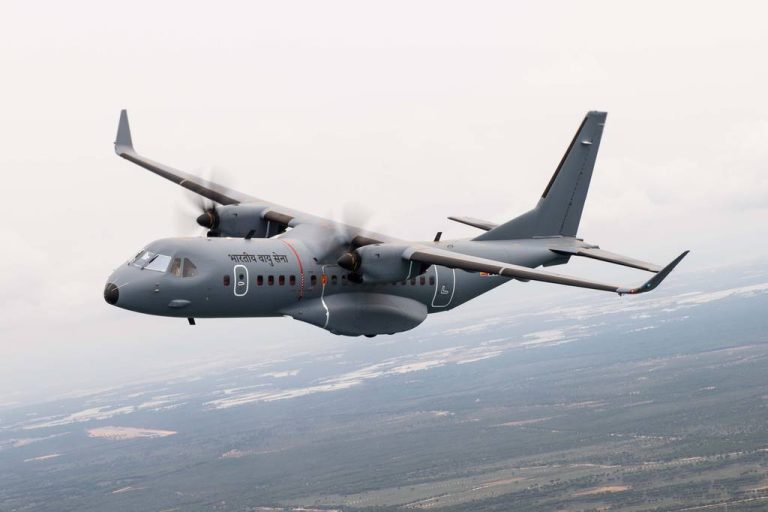
CHRISTCHURCH, New Zealand — India is moving closer to buying 15 maritime patrol variants of the Airbus C295 aircraft, following permission from the country’s Defence Acquisition Council.
This initial approval from Feb. 16, called acceptance of necessity in Defence Ministry parlance, will see the Navy receive nine C295 medium-range maritime reconnaissance aircraft and the Coast Guard get six C295 multimission maritime aircraft.
Once a contract is signed, a joint venture between the French firm Airbus and the Indian business Tata Advanced Systems Ltd. would manufacture the aircraft in India.
The Air Force previously placed a contract for 56 C295 transport aircraft, of which the first 16 are under production in Spain and the remainder in Tata’s final assembly line in the Indian city of Vadodara.
Although Airbus offers a maritime patrol version of the C295 — Spain ordered 16 in December — the Indian Navy and Coast Guard platforms will receive locally made sensors such as an active electronically scanned array radars, identification friend or foe systems, data links, and electro-optic/infrared technology. The Centre for Airborne Systems, a branch of the Defence Research and Development Organisation, is developing this equipment as part of the government’s efforts toward greater self-sufficiency in defense production.
Medium-range maritime reconnaissance aircraft would help India monitor nearby waters as well as gather electronic and communications intelligence. The aircraft would supplement 12 P-8I aircraft used for anti-submarine warfare.
With around 11 hours of endurance, the variant would also provide longer-range capability than existing Dornier 228 aircraft. The Navy is also set to receive 15 MQ-9B SeaGuardian drones to boost maritime surveillance.
The Indian government has expressed concern about the Chinese military’s activities in the Indian Ocean, and the Indian Navy has carried out anti-piracy operations in the nearby Gulf of Aden since 2008.
Meanwhile, the Coast Guard’s C295 variants would conduct maritime surveillance, anti-piracy missions, pollution monitoring, search and rescue, disaster response, and fisheries protection.
The acceptance of necessity brings India’s formal requirement for C295 aircraft to 71.
M. Matheswaran, a retired Indian Air Force air marshal and head of the India-based think tank The Peninsula Foundation, told Defense News that there’s a potential for export opportunities.
“Joining hands with established majors like Airbus is not only [advantageous for] the domestic market, but [also helps it] become part of the global supply chain. Exports are extremely vital for that,” Matheswaran said, predicting Tata could produce 300-400 C295 aircraft.
Gordon Arthur is an Asia correspondent for Defense News. After a 20-year stint working in Hong Kong, he now resides in New Zealand. He has attended military exercises and defense exhibitions in about 20 countries around the Asia-Pacific region.
Surplus Diesel Military Generator Install

This is part 1. I'll add other parts as they get published by the content creator. Great video on what to look for, how to troubleshoot/resolve issues and installation.
Suggest you watch directly on YT for monitization to help keep his content coming. Lots of very cool videos on his site.
Foreign firms vie for South Korea’s airborne early warning contract
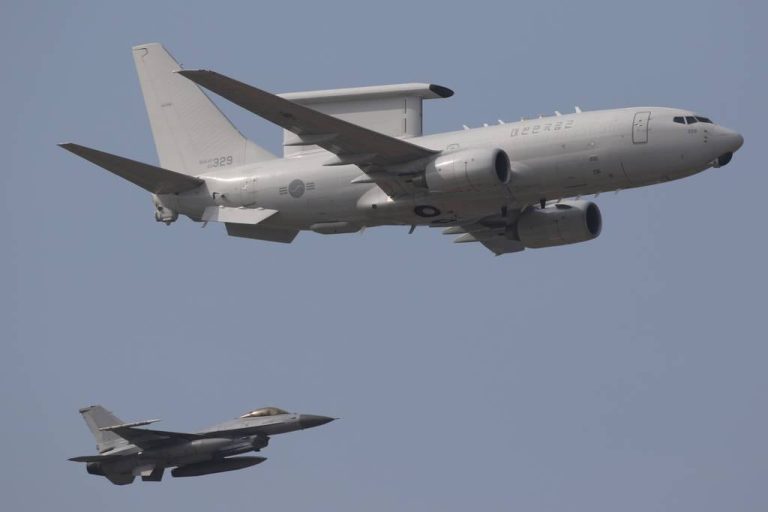
CHRISTCHURCH, New Zealand — Several international vendors are intent on helping South Korea bolster its airborne early warning and control capability, as the country’s Air Force plans to spend at most $2.26 billion on four aircraft.
After the Defense Acquisition Program Administration issued a request for proposals in November, companies had until Feb. 22 to submit their bids.
South Korea is taking on more self-defense responsibilities from the U.S., and the new quartet of AEW&C aircraft will supplement four Boeing E-737 planes delivered around the 2011-2012 time frame. The Defense Acquisition Program Administration said the new platforms would enhance the South’s “ability to monitor North Korean missiles and defend its airspace.”
Boeing is competing with a 737-based platform again, its E-7 having the advantage of aerial refueling to give on-station times stretching to 20 hours.
“Regarding the capability, the unmatched E-7 multirole electronically scanned array radar sensing and tracking provides the most powerful multidomain surveillance, communications and networked battle-management capabilities of any aircraft,” a Boeing spokesperson told Defense News.
The American company, which is the fifth-largest defense contractor in the world, said the E-7 “is production-ready and offers lower operating and sustainment costs, higher mission readiness rates, and unmatched interoperability.”
Boeing executives at South Korea’s Seoul ADEX defense expo last year claimed a 96% availability rate for the E-7. They also highlighted commonality with existing Korean E-737s. “In addition to crew training efficiencies, the E-7 offers life-cycle cost savings inherent with fleet continuity and a global, common logistics model.”
Saab’s GlobalEye is also competing, with the Swedish company proposing a Bombardier Global 6500 airframe.
Saab believes its design, which mounts an Erieye extended-range radar atop the fuselage, is ideal for South Korea’s Air Force. As well as a hot production line, Saab touted its willingness to transfer technology to enhance Korea’s strategic independence. It also highlighted rapid delivery and affordability.
Saab is the 33rd biggest defense contractor worldwide.
The other contender is American firm L3Harris Technologies in tandem with Korean Air and Israel Aerospace Industries. Its Phoenix solution also uses a Global 6500 and integrates Elta Systems-made conformal radars and artificial intelligence algorithms. L3Harris claimed its design will have low sustainment costs and at least a 95% operational availability rate.
L3Harris is the ninth-largest defense company in the world, while IAI lands at 29. The former noted that an initial two aircraft would undergo modifications in Texas before receiving radar integration in Israel. Korean Air would lead work on the two remaining aircraft in-country, as well as perform sustainment.
“Through L3Harris’ agreements with Korean Air, LIG Nex1 and Ace Antenna, and ongoing discussions with additional Korean partners, the team intends that the aircraft and mission system equipment will be fully supported in Korea,” a spokesperson for the group told Defense News. “This … paves the way for independent domestic research and development, and fostering excellence in aircraft system integration, upgrades and modifications, which will contribute significantly to the advancement of South Korea’s research and development program.”
The Defense Acquisition Program Administration declined to provide Defense News with further details. The agency is now proceeding with evaluations.
Gordon Arthur is an Asia correspondent for Defense News. After a 20-year stint working in Hong Kong, he now resides in New Zealand. He has attended military exercises and defense exhibitions in about 20 countries around the Asia-Pacific region.