Making Dandelions Edible and Why They Are Mostly Bitter

0

We’ve all come across tales praising the virtues of dandelions. Enthusiastic advocates of foraging often claim, “Just locate young dandelion leaves in early spring, prior to the emergence of flower stalks. If you do this correctly, bitterness won’t be an issue. Instead, you’ll savor the most delectable and nutritious fresh greens you’ve ever tasted.”

However, my personal encounters with the plant did not align with these glowing recommendations. I couldn’t help but wonder if I was missing a crucial step. Why is it that the accounts of this plant being irresistibly tasty and non-bitter don’t match my own experiences, even when harvesting it in its youth?

Embracing the bitter or not?

Allow me to provide a comprehensive exploration of the reasons behind the perceived bitterness of dandelions in their raw form and the transformative processes that turn these allegedly bitter greens into a genuinely delightful culinary experience, a phenomenon frequently lauded. Throughout this discussion, we will debunk longstanding myths and folklore, offering practical insights to maximize the potential of this abundant food source.

In the early stages of my foray into primitive living skills, the allure of surviving solely on nature’s offerings intrigued me. Among the various plants discussed in my collection of survival literature, dandelions stood out—they were familiar and literally underfoot. As a young, adventurous individual, I couldn’t resist the temptation to try them. Unfortunately, my initial experience was far from pleasant, marked by an overwhelming bitterness that diverted my interest towards alternative survival skills, giving my taste buds time to recover.

During my time at home, my mother, inspired by ancestral traditions, occasionally prepared dandelions gathered from a nearby vacant lot. However, the results were far from the idyllic tales of enjoying these greens. Despite the shared agony around the dinner table, my parents, aiming to be role models, concealed their discomfort, trying to convince us that these greens were indeed enjoyable. The psychological underpinnings of this experience remain a mystery to me to this day.

As I progressed through my college years, my exploration of wild foods evolved beyond mere identification of edibility to the nuanced art of preparation. Many aspiring primitive technologists bypass this critical step, seeking quick information on edibility without delving into the details. Understanding the intricacies of preparation, I discovered, is pivotal to success and the enjoyment of wild edibles.

The recommended method for preparing dandelions, as per the literature, involves boiling the leaves in one or more changes of water. Authors varied on the number of boilings, with most suggesting two. Executed properly, this process is said to eliminate bitterness, leaving behind the rich flavor of dandelion greens. However, overboiling can lead to disintegration.

Yet, contradictory information surfaced. Despite claims that dandelions are not bitter if picked early in spring, my repeated tests proved otherwise. Even the smallest leaves were excessively bitter in their raw form. Picking them early presents challenges, as the flower stalks emerge almost simultaneously with the leaves. Early dandelions, fueled by nutrient-rich taproots, render the emerging leaves unnecessary for supporting the growing flower stalk.

Even young dandelions growing directly from seed exhibited bitterness. Their lower stalks, solely fueled by leaf-generated food, developed later in spring.

Young dandelions

Approximately three decades ago, while assisting a friend pursuing a Ph.D., I conducted a survey-driven research project on senior citizens in a rural farming community. Many had grown up in an era where common amenities were a luxury. Dandelions were a dietary staple, providing diversity to their diets. Surprisingly, when questioned about bitterness, most respondents claimed dandelions were not bitter. The puzzle unraveled when I delved into their preparation method.

Their secret? “Take a bunch of fresh dandelion greens, cook some bacon, pour the hot grease over the greens, chop up the bacon, sprinkle it over the greens, cook a couple of hard-boiled eggs, chop them up, add salt and occasionally vinegar—there you have it, dandelion salad (also known as wilted greens).”

This revelation clarified that experienced dandelion eaters evaluate flavor within the context of preparation, not the fresh plant straight from the ground. Hardly anyone consumes dandelions in their raw state.

Psychological factors contribute to the perception of raw greens as bitter. Those who enjoy the “prepared” dandelions they’ve eaten for years tend to sing their praises, influencing others. Inexperienced individuals, tasting fresh dandelion leaves for the first time and disliking them, often assume they are not picking them early enough or are doing something wrong.

Additionally, the belief that bitterness is beneficial for the liver and digestion, coupled with the perception of dandelions as a healing food, leads some to tolerate and even enjoy bitterness. Their description of dandelions as not being bitter means that, to them, the bitterness is bearable and enjoyable.

Having shared my observations and experiences, let’s delve into the fundamental principles I’ve developed to help you savor dandelion greens.

By thoroughly exploring these aspects, we aim to provide a comprehensive understanding of the complexities surrounding the taste and preparation of dandelions, with the goal of fostering a newfound appreciation for this abundant and potentially nutritious food source.

BHHSBANSep19vF3HealingPlants
.

Understanding the bitter

Dandelions possess a bitter taste attributed to water-soluble chemicals known as sesquiterpenes. The key to savoring dandelions lies in comprehending how to navigate these chemicals to mitigate their impact on your taste buds.

Sesquiterpenes are pervasive in the milky juice that circulates throughout the dandelion plant, excluding the non-green flower parts. While rapidly growing leaves contain lower concentrations of sesquiterpenes, they are still bitter, albeit less so than they could be.

Several theories shed light on factors that intensify the bitterness of dandelions. First, as spring rains subside, the ground begins to dry, slowing leaf growth and concentrating bitterness. Conversely, areas kept relatively wet facilitate year-round rapid growth of dandelions, resulting in less bitter leaves.

Second, direct sunlight plays a role in sesquiterpene development, even in fast-growing leaves. Plants in shaded or grassy areas tend to be less bitter. The lower arc of the early spring sun, compared to the higher summer sun, contributes to less bitterness in shaded summer leaves. In moist, rich, shaded soil, I’ve discovered optimal fresh dandelion leaves year-round. Note that they still carry bitterness, though not overwhelmingly so for most individuals.

Individuals vary significantly in their perception of bitterness. “Supertasters” like myself, endowed with an abundance of taste buds in the bitter-sensitive zones of the tongue, can detect bitter flavors readily. For us, the bitter taste lingers uncomfortably even after swallowing. On the other hand, some individuals have minimal bitter taste buds, leading them to look at us in disbelief as we grimace over bitter greens like infants.

Dealing with the bitter

Drawing from my extensive experience in preparing dandelions and the limited knowledge I possess about taste science, I’ve formulated conclusions to enhance the flavor of dandelion greens while mitigating the bitter sensation.

Dilution: Mixing dandelions with ingredients that dilute their bitterness is a key strategy. This can involve blending them with milder greens like miner’s lettuce or chickweed or incorporating them into dishes with various ingredients. For instance, chopping fresh dandelions into small pieces and sprinkling them over a mixed salad effectively reduces their bitterness while enhancing the overall flavor. The crucial aspect is to keep dandelions less than one-fifth of the total salad mass and ensure the pieces are small enough not to overwhelm the taste buds.

Masking: Employing fat as a taste bud shield is an effective technique. Traditional practices, such as pouring bacon grease over dandelions, highlight the role of fat. Fat, in the form of oils, butter, or bacon grease, covers taste bud receptors, reducing sensitivity to the harshest forms of bitterness. Additionally, fat enhances the overall flavor of the greens.

Distracting: Adding impactful flavors like sugar, vinegar, or other elements to a salad creates competing taste sensations, diverting attention from the bitter one. This effectively diminishes the prominence of bitterness, sometimes masking it entirely amid the other flavors.

Leaching: The process of boiling out water-soluble sesquiterpenes, as mentioned earlier, leaves behind a rich flavor. When using fresh, rapidly growing greens, a single boil for three to five minutes is usually sufficient to release most of their bitterness. The leaching technique involves starting a pot of rapidly boiling water, chopping the greens into one-inch pieces, placing them in the water, and stirring to keep them submerged. After 3 minutes, sample a small piece. If not bitter, remove the greens from the water and serve hot. If it is still bitter, continue boiling and sample again after five minutes. If bitterness persists, consider transferring them to a second pot of boiling water for an additional three to five minutes. Beyond this point, in my opinion, if further cooking is required, the greens are too bitter.

Preferences vary; some favor dilution, masking, and distraction to leaching, as it allows them to consume fresh uncooked leaves. Others lean towards cooked greens. However, for many, these distinctions are irrelevant. Farmers, for example, simply prepare their foods in a way that tastes good, not concerning themselves with labels like dilution, masking, or distracting. For them, bacon grease, bacon bits, shredded hard-boiled eggs, and vinegar are just components of a delicious salad dressing.

Dandelion Salad Recipe

dandelion salad recipe
Dandelion salad

Ingredients:

– 2 quarts cleaned dandelion (cut into ½-inch pieces)

– ½ medium-sized onion, finely minced

– Olive oil (or preferred oil)

– Wine vinegar (or preferred vinegar) (Proportion: 3 parts oil to 1 part vinegar)

– Season with ½ tsp. salt and 1/8 tsp. garlic salt.

Directions:

  1. Carefully dry the cleaned dandelion.
  2. Gently mix all the ingredients together.
  3. Taste and adjust seasonings as needed.
  4. Boil enough hard-boiled eggs (at least 2 per person).
  5. Eggs may be sliced into the salad, or alternatively, serve the eggs separately, allowing each person to add as desired.

Enjoy this flavorful dandelion salad, adjusting the ingredients to your taste preferences!

Concluding

banner floy
.

Now equipped with valuable information, you can derive greater satisfaction from your dandelion greens. Consider the delightful prospect of a melted cheese and dandelion sandwich—a tempting choice to explore and savor!


Suggested resources for preppers:

Harvesting and canning wild greens

The #1 food of Americans during the Great Depression

Survival Foods of the Native Americans

If you see this plant when foraging, don’t touch it!

Recruiting down Army’s response | Survival Monkey Forums

0

The U.S. Army will eliminate nearly 5% of its force, or about 24,000 posts, as the military begins a restructuring effort due to recruiting shortfalls.

Seems all branches of the service are having recruiting problems solution reduce the number of recruits need –looks good on paper for the political generals


Ak as primary rifle?

0

Would you have an AK or AKM as your primary rifle? Or just as a back up?

Zopisign 7.5mg – For Sleep Disorder | Hotmedicineshop

0

There are a great deal of rest issues that can be treated with Zopisign 7.5 One can experience the ill effects of rest issues like sleep deprivation, prompting weakness, trouble concentrating, and a sensation of disquiet. It’s likewise called zopiclone conventionally.
There are likely aftereffects with Zopisign, so adhere to the dose and use guidelines cautiously to hold any dangers down. It’s ideal to converse with a specialist if you have rest issues so they can assess your condition. Zopisign 7.5mg might be incorporated into hotmedicineshop.com attempts to give clients with rest problems a trustworthy and simple method for purchasing Zopisign 7.5mg, assisting them with having a reviving and relaxing rest insight.

Click here: Zopiclone 10 | Zopiclone 7.5 mg


DIY Basic Flatpack Mini Cabin

0

This minimising for 1 person is a step up from a tarp / tent as a temporary living arrangement while building a more substantial permanent structure on an off grid block of land.

The structure is pretty basic but could be improved and refined further.

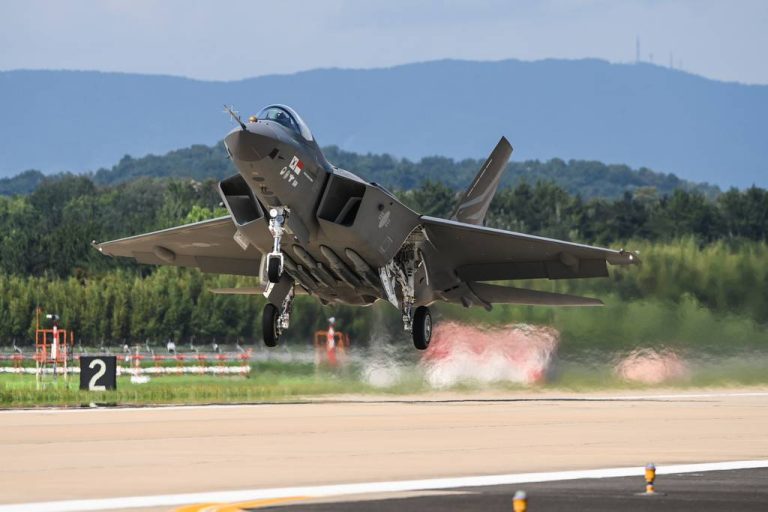
South Korea to start mass production of KF-21 fighter jets

0

MANILA, Philippines — South Korea will build 40 KF-21 Boramae fighter jets this year with the 238.7 billion won (U.S. $178.6 million) allocated for the Defense Ministry, even as the aircraft makes its way through flight and ground tests.

The first mass production of the KF-21 is expected to fill the “power vacuum” left when the South Korean Air Force’s aging fighter fleet retires, the defense minister said in a Dec. 21 statement.

According to Korea Aerospace Industries, which makes the KF-21, the engineering and manufacturing phase will conclude in 2026. The Korea Times reported in January the Air Force plans to deploy the first KF-21 in the second half of that year.

The KF-21 is set to replace the F-4 and F-5 fleets, and the Air Force plans to have some 120 Boramae jets in total by 2032.

The Boramae will serve as the “backbone” of the Air Force, the ministry said, and will play a pivotal role in expanding the three-axis system — a strategy that informs how the South Korean military should respond to an attack from North Korea.

The fighter has been under development since 2015, but the program didn’t gain much ground until 2020, when assembly for the first prototypes took place. The government hired Korea Aerospace Industries to produce the jet, and the company sought technological support from American firm Lockheed Martin. The two businesses previously worked together on the FA-50 light attack aircraft.

The inaugural flight test of six KF-21s took place in 2022. KAI carried out a supersonic test within the first 60 flight tests, and the company unveiled the aircraft at the Seoul ADEX defense conference following at least 300 of the planned 2,000 test flights in October 2023.

Flight, ground and additional tests for the remaining prototypes will continue until 2028 — the same year Air Force squadrons are to begin flying the first batch of KF-21s for air-to-air missions.

The fighter jet boasts cutting-edge avionics, including active electronically scanned array radars, and it can carry a range of advanced precision weapons.

South Korea’s Defense Acquisition Program Administration and KAI have been testing missiles to mount on the KF-21 to boost its competitiveness on the international market. In a December 2022 news release, DAPA announced plans to spend 190 billion won to enable the KF-21 to carry long-range missiles. The agency said it will “increase the export competitiveness of missiles linked to the KF-21.”

And last year, the agency announced plans to develop short-range, air-to-air missiles for the Boramae, to be completed in 2035.

KAI has also tested various missile systems under agreements signed last year with the European weapons maker MBDA. The companies plan to mount air-to-surface missiles and short-range air-to-air missiles following an earlier contract that involved mounting Meteor air-to-air missiles on some prototypes.

In April, German company Diehl Defence announced a KF-21 successfully fired the IRIS-T air-to-air missile.

The KF-21 program was expected to cost 8.8 trillion won. DAPA was to cover 60%, KAI would handle 20%, and the remaining 20% would come from Indonesia. However, Indonesia has run behind on payments since 2017.

CNN Indonesia reported in January the government there intends to fulfill its commitments to the program, even as the Southeast Asian nation grapples with fiscal challenges. Meanwhile, Poland and the United Arab Emirates have reportedly expressed interest in the program.

DAPA did not respond to Defense News’ questions on funding arrangements, but the agency has reportedly not made a final decision on financing schemes.

KAI hopes the KF-21 will become its next export success. In 2022, the company signed contracts with Poland for 48 FA-50 light attack aircraft. Lt. Col. Krzysztof Płatek, a spokesperson for Poland’s Armament Agency, wrote on Twitter at the time the two deals were worth a total of $3 billion.

Last December, the Royal Malaysian Air Force ordered 18 FA-50 Block 20 Fighting Eagles.

And even before KAI unveiled the Boramae at Seoul ADEX, the company’s regional manager, Kim Sang Eung, pitched the KF-21 to the Philippine Air Force, calling the aircraft “the most cost-efficient solution” for countries seeking multirole fighter jets.

South Korea was the ninth largest arms exporter during 2018-2022, according to the Stockholm International Peace Research Institute. The Swedish think tank identified the Philippines, India and Thailand as its top customers during the same time period.

Leilani Chavez is an Asia correspondent for Defense News. Her reporting expertise is in East Asian politics, development projects, environmental issues and security.

Official shoulder thing that goes up post

0

It's only a 22 lol.

Boeing pushes back T-7 plans due to faulty parts

0

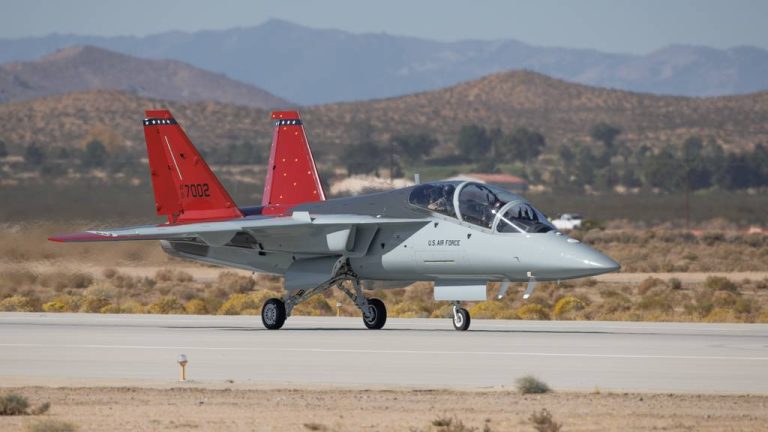
Boeing said Friday that quality problems with parts slated for the T-7A Red Hawk training jet mean it will delay by several months delivering the next test aircraft to the Air Force.

Boeing is also now planning to start low-rate initial production on the T-7 in mid-2024, several months later than the company’s original plan. Boeing vice president and T-7 program manager Evelyn Moore told Defense News Friday that supply chain issues were also why the company will postpone the planned start for its production schedule.

Boeing’s contract with the Air Force requires it to deliver the fourth and fifth engineering and manufacturing development jets in December 2023 and January 2024, Moore said.

However, Moore said, the parts problem now means the fourth jet will probably be delivered later this month, and the fifth jet around March or April.

“We’ve struggled with some part challenges that have caused delays” on those two jets, Moore said. “We’re really focusing on safety and quality, and we are trying to get those jets delivered in the near term.”

The Air Force plans to buy 351 T-7s from Boeing by 2034 to replace its fleet of aging T-38 jet trainers. The T-7 is designed to emulate fifth-generation fighters like the F-35 and make it easier for the service to train new pilots to fly fighters and bombers. The Air Force awarded Boeing a $9.2 billion contract in 2018 to build the T-7 fleet as well as provide simulators and provide other support.

The Air Force told Defense News it did not immediately have a comment on the T-7 delays.

Moore would not detail the type of parts that had problems, but said they were multiple parts of varying sizes from several different suppliers. Boeing had to send some parts back to their original manufacturer for repairs, she said, and already suppliers have started quickly fixing the faulty parts.

The fourth jet now has all of its necessary parts installed, Moore said, and Boeing expects the “handful” of remaining fixed parts for the fifth jet to arrive over the next few weeks.

Moore said Boeing has a quality team working with its suppliers to understand what went wrong with the parts and address the problems.

Boeing is now assembling the new T-7 production line at its St. Louis facility, she added, and expects that to be done by mid-2024. Shortly after that production line is ready, she said, Boeing plans to start assembling LRIP T-7s.

A Government Accountability Office report in May 2023 said Boeing planned to start assembling its first production T-7 in early 2024.

Moore said Boeing could be ready to deliver the first production T-7 in 2025, though she said there is a chance it could be 2026.

Boeing is required to start delivering T-7s 10 months after the Air Force issues an LRIP award, which could come in February 2025. Moore said that by starting production before the LRIP award, the company could deliver jets before its 10-month deadline.

The Air Force expects to make a Milestone C decision on whether to produce the T-7 in February 2025, and for deliveries to start in December 2025. That planned production decision timeline is about two years later than the Air Force originally intended.

GAO raised concerns in its 2023 report about potential increased risk from having the T-7′s development, testing and production phases overlapping. The auditing agency warned this approach can lead to rising costs or schedule delays if problems are found in testing that then must be fixed on the production line.

Moore acknowledged concurrency can be a danger, but noted T-7s have carried out more than 500 flights so far and is about 60% finished with its flight testing process, reducing the risk of overlapping development and production.

“We’ve been flying the T-7 for several years, collecting data [and] integrating that data into new software releases,” Moore said. “It is a risk, but we are managing and mitigating that risk.”

Moore said Defense Contract Management Agency officials are already conducting oversight inspections on components slated for production T-7s.

Boeing delivered the first three of five planned engineering and manufacturing development jets to the Air Force in 2023. One is now undergoing flight testing at Edwards Air Force Base in California; another is expected to wrap up climate testing at Eglin Air Force Base in Florida this month. Boeing delivered the third aircraft in December, and it’s expected to fly to Edwards this month.

The fourth and fifth test jets now in the final phases of construction will stay at Boeing’s facility in St. Louis, Missouri, Moore said, and will be used to check how well maintenance procedures match the instructions laid out in the jet’s technical manuals.

Stephen Losey is the air warfare reporter for Defense News. He previously covered leadership and personnel issues at Air Force Times, and the Pentagon, special operations and air warfare at Military.com. He has traveled to the Middle East to cover U.S. Air Force operations.

Top Survival Crops | Survival Monkey Forums

0

Persistent Systems to supply radios for US Air Force mobility command

0

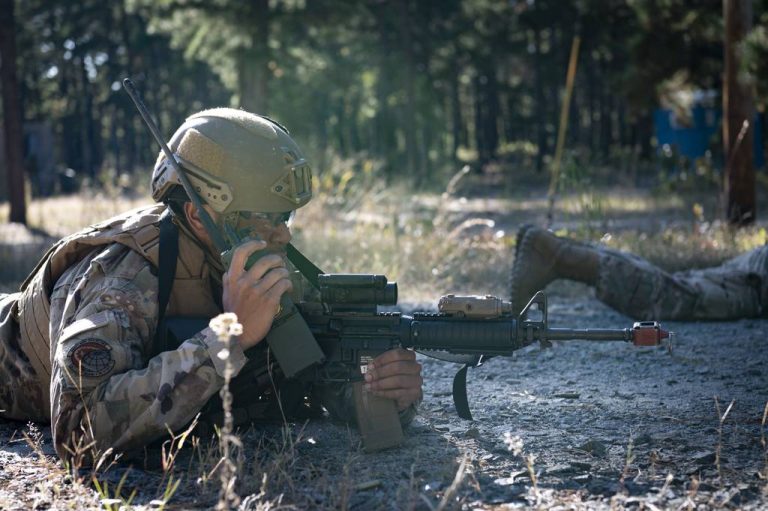
Communications-technology company Persistent Systems is outfitting the U.S. Air Force’s mobility command with hundreds of radios and erectable antennas to soup up logistics in remote environments and disaster-relief operations.

The MPU5 handheld radios furnished under a $5.1 million contract can share voice, video and text, as well as positioning and sensor data, and the antennas further extend connectivity. The tech is a major step up from the old “walkie-talkie” radios sometimes found in the field, the company said in a statement.

“Our MPU5s deliver robust, secure, broadband line-of-sight and beyond-line-sight communications, and they do so without Air Force personnel having to rely on third-party infrastructure, which is key in a contested environment,” Adrien Robenhymer, Persistent’s vice president of business development for Air Force and intelligence community programs, said in a statement.

The equipment will be used by contingency response groups, which quickly deploy to establish command and control, maintenance and refueling hubs where military infrastructure is otherwise lacking.

As the Pentagon prepares for potential fights in the Indo-Pacific and Europe, the Air Force is pursuing what’s known as agile combat employment. The ACE concept envisions a hub-and-spoke layout of bases — some large and fixed, others small and mobile — that will scatter supplies and manpower.

Dated lines of communication could stunt the process.

“Persistent’s [mobile ad hoc networking] products extend the enterprise to the tactical edge and allow full situational awareness even in austere environments,” Robenhymer said.

The Air Force last year tapped Persistent to provide seamless networking for security operations at three U.S. intercontinental ballistic missile bases.

In that deal, worth nearly $76 million, the company planned to roll out its Infrastructure-based Regional Operation Network, or IRON, to link patrolling security personnel with faraway operations centers and to keep an eye out for intruders.

Persistent said some 700 IRON assets would be installed across Malmstrom, Minot and F.E. Warren Air Force bases in Montana, North Dakota and Wyoming, respectively.

Colin Demarest is a reporter at C4ISRNET, where he covers military networks, cyber and IT. Colin previously covered the Department of Energy and its National Nuclear Security Administration — namely Cold War cleanup and nuclear weapons development — for a daily newspaper in South Carolina. Colin is also an award-winning photographer.