

Tips For Planting Edible Windbreaks
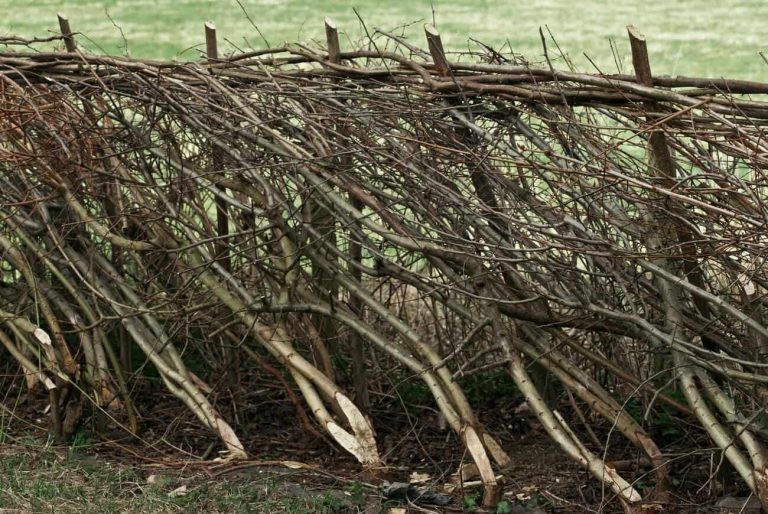
The North Dakota wind howled from the southeast. The driving snow hit me like a sandblaster as I trudged outside to check on the chickens in their coop. I was at the mercy of Mother Nature’s wrath, barely able to see past the tip of my nose.
It took two days for the storm to pass. When I opened the door to face the morning sun, I knew I was in big trouble. My driveway sparkled in the sunlight, packed with nearly 4 feet of snow.
I would have been stuck until spring if it hadn’t been for a neighbor who brought over a small dozer to clear the snow.
The need for windbreaks
I’ve been living on our small homestead with my significant other and our children for a few years. A sprawling riparian forest protects us from northern and western winds, located out of the flood plain near the banks of a small prairie river.
Unfortunately, the worst winter storms frequently arise from southeastern winds. On the east and south sides, there are many crabapples, spruce, boxelder, green ash, and bur oak trees, but they are all mature and do little to stop the snow from blowing.
A nearly 2-acre field of alfalfa serves as the southern boundary. There were no trees of any kind around the alfalfa when we bought the property. We needed a windbreak to capture snow as well as provide wind protection for the rest of the year.
We decided to plant an edible permaculture windbreak, which would include shrubs that would not only grow well in our soils and provide wildlife habitat and wind protection but would also produce food for our table.
Making a plan
On the computer, I began the process of designing a windbreak. The Natural Resources Conservation Service’s (NRCS) Web Soil Survey is a fantastic tool. This powerful, free, web-based program gives you access to a wealth of information. I could have spent hours sorting through the data, but the most important information I needed was about soil types.
Armed with this knowledge, I was able to determine which shrub species would thrive on my property by consulting the North Dakota Conservation Tree and Shrub Suitability Groups. Of course, just because a shrub is rated for a particular type of soil doesn’t mean it will grow in that soil—and vice versa. However, it provides a starting point.
A weed-management strategy should also be considered before selecting and planting trees and shrubs.
My day job is with a soil conservation district, and we use woven weed-barrier fabric on almost all of the conservation plantings we do each year. Weed-barrier fabric has numerous advantages, the most important of which is that it reduces weeding time.
Furthermore, hot, windy summer weather quickly dries out the topsoil, stressing newly planted seedlings. Weed barrier fabric protects the soil while also assisting with water retention. Unfortunately, the fabric does not come cheap. It is costly to buy or have installed, and the fabric also keeps shrubs from suckering.
Planting trees and shrubs without fabric allows certain species’ natural suckering tendencies to establish a solid wall of vegetation. It also appears more natural and appealing to many people, including myself.
Weeding, however, takes time.
Rototilling the ground before planting not only prepares the soil but also allows previously dormant weed seeds to germinate. Tilling to control weeds dries out the soil and can disrupt a plant’s root system.
We chose both techniques for our windbreaks. I didn’t want to till the soil or fight weeds in the yard. I simply planted each tree in the existing sod after digging a hole for it.
A depression was created by filling each hole with soil just below the sod height. This allows rainwater and the water I bucket to each tree to soak into the lowest point above the tree. I simply mow around each shrub, and the plants will sucker out and form a solid wall of snow and wind-stopping vegetation in subsequent years.
Because the alfalfa field is farther away from the house, rather than spending hours each week weeding and watering, I decided to install a weed-barrier fabric after first rototilling strips 6 feet wide. The fabric, while costly, has more than paid for itself by reducing our need to weed and water.

Don’t plant only one type of windbreak
The selection of species is critical for a productive permaculture windbreak. At this point, you must decide which fruits will provide the best edibles for your table.
The chokecherry, for example, is the state fruit of North Dakota. It is a hardy native shrub that produces astringent berries with a pit. Some people enjoy the tartness, especially in jams, jellies, and wine. Others find the sensation of mouth-puckering repulsive. If you fall into the latter category, it makes sense not to plant the species in a permaculture windbreak.
Diversity is the key to a successful edible windbreak. A pest or disease can affect nearly every species of shrub and tree. Years with above-average rainfall and cool temperatures will encourage the spread of fungal diseases. Insect damage increases during dry years.
Rather than losing an entire crop year, diversity ensures that at least some of the species will bear well every year.
When purchasing plants for a windbreak, the conservation-grade bare-root stock is the most cost-effective option. Plants in an edible windbreak, unlike those in an orchard, are not grafted onto rootstock.
Grafted trees are much more expensive than bare-root conservation stock. The primary purpose of an orchard is to produce fruit, whereas a permaculture windbreak serves as a windbreak first and then produces fruit.
Your local Soil and Water Conservation District should stock a wide range of suitable species. Don’t be surprised when you see the conservation-grade plants. While they may appear to be nothing more than sticks with roots, they will eventually grow into beautiful plants.
Unlike potted stock, which is frequently root-bound and shocked when planted, the bare-root stock is dormant. The shrub emerges from dormancy in the ground and takes off quickly.
Edible choices for your windbreaks

CHERRY NANKING (Prunus tomentosa):
The Nanking cherry is a bush cherry native to Central Asia that grows in a dense form up to 10 feet tall, tolerates most soil types, and is drought tolerant once established. Because the ripe fruit is soft, it is difficult to ship or grow commercially. It produces the sweetest cherry that can be grown in a cold state like North Dakota.
AMERICAN PLUM (Prunus americana):
This hardy native shrub can tolerate a wide range of soil conditions. Plants will grow close together to form a thicket if they sucker profusely. The white flowers of the American plum in the spring produce 1-inch stone fruit that is delicious both on its own and in preserves. The shrub, which grows 10 to 20 feet tall and wide, also provides excellent wildlife habitat.
GOLDEN CURRANT (Ribes aureum):
The golden currant is a smallish, leggy native shrub that grows to be 6 feet tall. The plant is adaptable to a wide range of soil conditions and produces beautiful yellow flowers in the spring, which turn into half-inch-diameter dark fruit. Golden currants, which lack the sourness of gooseberries, are delicious on the branch as well as in savory chutneys and sauces.
HIGHBUSH CRANBERRY (Viburnum trilobum):
Although not a true cranberry, this native viburnum family member produces fruit that closely resembles true cranberries in both appearance and flavor. The highbush cranberry prefers moist, loamy soils and can grow up to 12 feet tall and wide.
 NANNYBERRY (Viburnum lentago):
The nannyberry is a native shrub that thrives in moist soils and partial shade. While it can be trained as a single-trunked tree, it’s best to leave the species’ natural tendency to sucker alone in a windbreak, as it will grow into a dense hedge. The fruit has a single flat seed and a distinct, jammy flavor.
COMMON CHOKECHERRY (Prunus virginiana):
This native shrub can grow up to 15 feet tall and thrives in a variety of conditions. It produces dark, astringent berries with a single seed.
AMERICAN ELDERBERRY (Sambucus canadensis):
Each year, the elderberry grows quickly to 9 feet tall, with multiple stems and beautiful flowers. It prefers moist soils and is ideal for riparian areas or soils with good water retention. The large flower clusters produce an abundance of small, dark elderberries, which are highly prized for use in jams, jellies, wines, and syrups.
ARONIA (Aronia melanocarpa):
This shrub, also known as black chokecherry, grows in a wide range of soil types. It is mound-shaped with a plethora of stems and grows to a maximum height of around 6 feet. The taste of the fruit is astringent and similar to that of the common chokecherry when picked fresh from the bush. Aronia is a healthy food star due to its high antioxidant content.
SEABERRY (Hippophae):
The seaberry is a silver-leaved shrub native to Asia and Europe that can grow to be about 10 feet tall. It is extremely hardy and tolerates soils ranging from wet to sandy, but it is shade intolerant. Plants produce beautiful orange fruits that are high in Vitamin C and extremely tart. The juice is frequently combined with other fruit juices. Plant at least ten seaberry shrubs to ensure that some are males, allowing for pollination.
What I’ve learned while planting edible windbreaks
On three sides of the alfalfa field, we planted a tree row and a shrub row totaling over 800 linear feet. The species we selected grew well during the first summer. However, the second growing season presented a number of challenges. There was a spring and a fall flood.
I planted Nanking cherry in what turned out to be the lowest point without considering the topography of the low ground. Every single plant was destroyed by the spring flood. The fall flood was an unusual occurrence. The temperature plummeted before the water receded, covering a portion of the field in water 2 feet deep.
Ice formed around the plants in the windbreak, and as the week progressed, warmer temperatures caused the ice to cleave and shear off some of the shrubs.
We were fortunate to have planted extremely hardy species. The plum and nannyberry, in particular, were broken off to stumps less than an inch tall. I decided not to replace them and instead wait and see what happened. The plants exploded from the stumps the following year, growing multiple feet tall.
The soil map and topography do not lie, as I discovered the hard way. Planting species where they are not suited wastes money and time.
An edible permaculture windbreak will provide a variety of benefits to a homestead regardless of where you live. Planting hardy, fruit-bearing shrubs in a long-lasting, beautiful windbreak can result in energy savings, less time spent on snow removal, abundant wildlife habitat, and delicious fruit for the table and pantry.
This article was submitted by Robert Andrew Brown.
Useful resources to check out:
How To Maximize Your Microclimate
How To Build The Invisible Root Cellar
Ten Tips For Water Efficiency In The Garden
The vital self-sufficiency lessons our great grand-fathers left us


EMP strike – oxygen tanks?
.. .. yep .. .. although humans have been ta 35,853 feet underwater [ in a pressurized sub ] .. .. about 80,000 ta 120,000 feet altitude in pressure suits .. .. we been ta space and back .. ..
.. .. pressurized aircraft operate at 15,000 ta 45,000 feet fer pax planes .. .. when dey lose pressurization dey must immediately dive ta below 10,000 feet .. ..
.. .. mil planes go ta 50,000 feet plus plus .. .. widout pressure suits .. .. higher wid pressure suits [ above ] .. ..
.. .. da human body can survive under da right conditions .. .. wid da right stuff n things .. ..
.. .. reel fast pressure changes can cause injury or death .. ..
Is burning alcohol indoors safe?

Alcohol is a fuel I don’t use much anymore. Partly due to expense, but mostly due to low BTU output. There’s also the invisible-in-daylight flame. That can create its own problems. The paper towel roll and alcohol would get very unpleasant as soon as the paper towels started to burn and smoke. Alcohol will burn very well without any wick, or a non-flammable wick. Look up Cat and Super Cat alcohol stoves. All of these will spill liquid alcohol and create a fire hazard. A Coleman pressure lamp, on the other hand, will burn normally upside down until it’s starved of liquid fuel.
Remember, before electricity, homes were commonly lit with gas and kerosene lamps, and heated with kerosene. The Amish still use mantle lamps and open flame heaters, although today they’re leaning toward propane. All of these fuels burn in lamps and stoves more efficiently than a roll of paper towels soaked in alcohol. It’s all about adequate ventilation and complete combustion. Home designs have changed. Central A/C means they can be much more tightly sealed. Some are tight enough that oxygen deprivation is as much an issue as carbon monoxide poisoning. A poorly functioning gas pressure appliance or wick style heater that doesn’t achieve efficient combustion will create excessive CO. One of my catalytic heaters had a substantial manufacturers recall/bounty on it after its incomplete combustion killed five people.

I’ve heated and lit the beach house during winter power outages with two kerosene Aladdin 23 lamps. If I had to do it again I’d use a three burner Coleman stove and my Perfection heater for heat and Coleman Kero-Lites for light. The house has 16′ ceilings and being on the Coast, it’s pretty drafty without even trying. My CO detectors have never made a peep, and I run Coleman lamps, both white gas and kerosene inside pretty much all year round. Learning how cleanly your chosen heat source operates, and how the air flow in your home works with open flame heat is something that’s good to know before you need it.
Full disclosure: I wore a jacket three days all last winter.
Burning wood chips | Survival Monkey Forums

Well I burned them twice. The fire went out over night so I filled the coal furnace back up with wood chips.
They burn better than I expected.
Not nearly as fast as I thought they would. They do burn fast at first until they build up a layer of ash. Which is good. Then they slow down burning. Taking about 4 hours to burn away completely.
Your results may vary due to moisture content and species of tree.
All I have wood chiped is elm. It’s the only thing tough enough to grow out here.
I was worried that I would have 40lb of wood chips trying to burn up in like 20 minutes.
Why this is good. In new mexico I don’t have unlimited trees. But the trees I do have burn very good, the wood is lower moisture even when green and drys out fast due to the lack of rain, very low humidity and heat.
Also the wood chips go from green to ready to burn in about 4 days.
Being able to burn the twigs and sticks increases my wood yield by 10% to 20% because I was saving sticks down to about 1.5 to 2 inches in diameter. That means every ton of round and split wood I now get a few hundred pounds of wood chips too.
Also I can burn entire weed/nuance saplings. Normally these small trees I get some sticks over 1.5 inch but most of the tree would go on the brush pile. Now the whole thing goes in the coal furnace.
So everytime I burn the coal furnace if 40lb of woodchips burns up, that saves 2 or 3 nice size logs.
I burn the coal furnace about 15 days a month, so saving 3 logs every time I light the coal furnace adds up.
Yeah I could burn sticks and twigs but it was very labor intensive. Just constantly stuffing twigs and sticks in there takes a long time. An hour of constantly feeding twigs and sticks burns up 20 or 30 lb.
This might allow me to build a large surplus of wood and sell some.
It would be nice since logging is expensive.
My echo cs620 was over $600, but it was worth it, starts easy and has so much power, it’s carbide chain $230, f’ed up the carbide chain by hitting a nail, cost $60 to fix, the wood chipper was $800.
I originally got the wood chipper to take care of brush piles when we have near year long burn bans in place. The alternative was a burn barrel.
Oh and if I ever have to shoot some one, they’re going in the wood chipper, Fargo style. Not calling the cops.
The wood chipper solves multiple problems.
So to recap.
Originally bought the wood chipper to reduce brush piles, maybe use the wood chips for compost fertilizer (lame).
It’s increased fuel harvest and availability dramatically.
The green wood I cut won’t be ready be burn till next year but woodchips I made 1 to 6 weeks ago are all ready to burn.
Honestly when I bought it my plan wasn’t to burn wood chips. An unexpected surprise, but a welcome one.
Armed With ‘Weapons Of War’: IRS Agents Shown Assaulting A Suburban Home

About that job report for armed IRS agents- here is a report where it all makes sense. Armed IRS agents are being trained to treat Americans like terrorists. And they apparently plan to assault Americans with ‘Weapons of War’.
Thomas Massie pointed out the Democrat’s exception of ‘Weapons Of War” for the IRS:
Last week, Democrats in the House passed a bill to ban Americans from buying AR-15s, calling the AR-15 a “weapon of war.”
They exempted IRS from the ban.
This week they will add tens of thousands of IRS agents to the budget.
Meanwhile they posted this: IRS Deletes Job Posting Seeking Applicants Willing to ‘Use Deadly Force’ | National Review pic.twitter.com/e8hRSnN3cj
— Thomas Massie (@RepThomasMassie) August 11, 2022
Which is really scary when you consider the following news report from Valiant News:
In the Internal Revenue Service 2021 annual report, IRS Criminal Investigation special agents can be observed simulating an armed assault on a suburban home at the agency’s National Criminal Investigation Training Academy (NCITA), located within the Federal Law Enforcement Training Center (FLETC) in Brunswick, Georgia.
According to the IRS, these IRS-CI agents are “are among the most highly trained financial investigators in the world” and train for 6 months.
While training at the NCITA, new IRS-CI special agents begin an 11-week Criminal Investigator Training Program (CITP) run by FLETC, where they learn firearms training and other traditional law enforcement tactics.
“CITP covers topics common to all federal law enforcement agents, including basic criminal investigation skills, federal criminal law, courtroom procedures, enforcement operations, interviewing skills, and firearms training,” the IRS report states.
While conducting firearms training, IRS-CI special agents wear tactical clothing that reads “POLICE” and “IRS-CI.”
“Following CITP, new special agent trainees take a 14-week NCITA Special Agent Investigative Techniques (SAIT) course. The SAIT program trains new agents in tax law, evidence gathering, interviewing, report writing, methods of proving unreported income, and money laundering violations,” the report continues.
Armed With ‘Weapons Of War’: IRS Agents Shown Assaulting A Suburban Home – UAF Report
My Dog Dirt Slow Dell 3000 laptop

Took forever to boot, sometimes would pop a blue screen forcing a reboot whether I was online, in the middle of a forum story I had not saved , or sometimes right after windows launch. So much Dell bullshit loading then the master dump of Microsoft bullshit and together the poor thing would barely run. Thought about going to Linux a while back but didn’t want to lose all of my saved favorites, then the day came. After a week of Recovery of the Operating System with Dell support I pulled the plug and loaded Linux Mint 21.1. Forgot to save my favorites but I’m Microsoft free and my laptop runs like it was new!!
Shout out to @sec_monkey for encouraging me to make the move.
