Time Pieces: What’s On Your Wrist?

0

Traser H3, Type 6

Traser, U.S. military watches (MIL-W-46374F). No watch in the world is easier to read in low light conditions! Self-activated mb-microtec GTLS (gaseous tritium light source) requires no battery power or any other form of charging and never needs servicing or maintenance.
Military dial
Scratch resistant mineral crystal
Swiss quartz movement
GTLS (green) on hour/minute hands and at hour position 1:00 to 11:00; GTLS (orange) at 12:00
Reinforced carbon fiber case
Rotating bezel with GTLS insert (green)
Not affected by magnetic field
Nylon strap.
Mfr’s 3 Year Warranty.
Swiss Made.
This watch fits most of my needs. It is magnetic field resistant, and it has tritium for night use, which will last at least 25 years. (I have kept this as a backup watch, but use a Casio G-Shock solar AWG-101 for daily use.)

Link:Military and Law Enforcement Gear, ACU’s,Police uniforms,swat,Insignia,Knives,Rucksacks,GORE-TEX,Flashlights,NOMEX,Camping supplies,Survival supplies @ Ranger Joes

Cost: $200 – $260, depending on your source.

A1415.

18 to life.


Hot Diggity's Carolina Story telling thread.

0

I need a place to save these stories. Some here have heard them before, some haven't. My plan is to collect them all in one place to give the kids something entertaining to read.

They said they are coming for our children and now they are

0

Methinks you and others are late to the party…that boat sailed long ago, well before gay folk were able to come out of society’s closet and be out and proud…just that the child abuse was kept well hidden and out of sight by…..by hymn singers and psalmists, among others…of various sexual orientations and various faith traditions. Where is the outrage about that historical, and continuing actual abuse?

https://www.youtube.com/watch?v=cKRy2JS57SY

https://caringwell.com/wp-content/uploads/2019/06/SBC-Caring-Well-Report-June-2019.pdf

Here is the full ‘We’ll Convert Your Children’ video clip…Enjoy!

Just click the link button that says “watch on You Tube”

https://www.youtube.com/watch?v=ArOQF4kadHA

No, enloopian one, The singers of “We’ll convert your children” aren’t threatening a quest to molest your children…oh my, it is far, far WORSE! They are going to convert your children into becoming thoughtful, humane, tolerant, and caring people….oh the horror!!!

A selection of the YouTube comments following the ‘We’ll convert your children’ video clip are instructive…they get it, whereas most of the LGBTQI+ haters don’t.

There is some irony in the song lyrics, and the song title, ‘We’ll Convert Your Children’, and that is, ‘straights’ (mainly conservative religious folk) have for many years tried to convert gays to the ‘straight’ sexual orientation (through ‘conversion therapy’), and it has to be emphasised, with negligible ‘success’…I suspect, that if gays used similar techniques…they would be no more successful converting ‘straight’ kids into gays, any more than ‘straight’ adults have been effective in converting gay folk to ‘straight’….so no, gays aren’t going to be converting ‘straight’ kids into ‘.gays’.

https://theadvocate.org.au/news/reforming-tasmanias-traumatic-gay-conversion-practices/


TOTM January 2023 | Survival Monkey Forums

0

  1. Getting ready for Spring

    It’s early, but I’m starting some early preps. I’m moving my seedling tray and grow light into the garage where the temperatures are higher than in the greenhouse. I may have to tent the whole thing to keep temps high enough to get seeds to sprout, but I’m starting early with lettuces and radishes, maybe cucumbers and tomatoes. Anybody think this is a bad idea?


  1. Dunerunner
  2. Dunerunner
  3. Dunerunner
  4. Dunerunner
  5. Dunerunner
  6. Dunerunner
  7. Dunerunner
  8. Dunerunner
  9. Dunerunner
  10. Catullus
  11. Dunerunner
  12. TnAndy
  13. T. Riley
  14. Dunerunner
  15. Dunerunner
  16. Ganado
  17. Ganado
  18. Gator 45/70
  19. Dunerunner


survivalmonkey SSL seal


survivalmonkey.com warrant canary

Things To Know Before You Put Any Money Down For A Country Property

0

Many city dwellers and suburbanites fantasize about packing up their belongings and moving to the countryside, where they can find a small farm or a cabin in the woods to call their own and enjoy the peace and quiet.

That is even more true today, after the COVID-19 experience, emphasizing isolation and many jobs shifting from crowded offices to private spaces as a result of telecommuting.

As a result, real estate agents across the country are reporting a surge in sales of rural properties, ranging from “raw land” to finished properties. Demographers predict a resurgence of small-scale farming, as well as infrastructure improvements, to speed up internet access in rural areas.

Rural properties that have been vacant for a long time are being snapped up as people flee crowded cities in greater numbers. The market hasn’t yet reached a panic level, but rural properties rarely go unsold for long. So it is across the country, with buyers frequently making purchases sight unseen or based on a few photographs.

Asking the right questions

Finding the rural property of your dreams necessitates, at the very least good answers to a series of questions, if not a thorough hands-on inspection. You have to do your homework, and I can’t stress that enough.

Due diligence entails knowing the right questions to ask because sellers are unlikely to volunteer information if they are unsure of what you want to know.

The first question is about the real estate agent’s mantra of location, location, location:

Where do you want to buy the property?

I don’t mean physically on a map but rather in terms of roads, utilities, services, and supplies, among other things.

If you can’t visit the location, and many sellers are reluctant to have strangers in their homes, then hunker down with Google Maps and focus way, way down. Turn on the “terrain” feature and carefully examine the property before beginning to ask questions:

What’s the status of the drainage?

How does water travel across land?

What kind of soil does it have—sandy, silty, or clay-rich?

What direction is north?

Is it necessary to drill for water, and if so, how far?

Where are the utility lines, septic leads, and sewer connections?

What is the most common plant cover?

What is the sunniest part of the land, and does it vary with the seasons?

Can you grow enough food to feed your family as a supplement, if not a primary source of nutrition?

Should you pick raw or developed land?

Many people prefer raw land to finished properties, especially if they have the means to do so. For starters, they can have the house of their dreams built exactly to their specifications.

However, one factor to consider in those specifications is how long you intend to stay in your new home. Will you sell and return to the city? Will you want to retire to the warm Sunbelt if your home is in cold Vermont or North Dakota?

If you intend to live in your home for the rest of your life, consider future needs as well as present desires. Today, you might want a six-burner, top-of-the-line stove, and a loft study, but in 20 years, you might want hallways wide enough to accommodate a wheelchair and all of your main rooms on one floor.

Many sellers encourage new builders to plan ahead and meet ADA requirements, such as installing grab bars in the bathtub, a stair lift, and ramps into main entrances, among other things. It’s much cheaper to build it now than to tear it down and rebuild it later.

Buying raw land and building to specifications has its advantages, to be sure. However, there are numerous hidden costs that can drive the purchase price through the roof.

You’ll need to drill a well, which can easily cost $15,000 in temperate areas of the country, but three or four times that in the desert and mountains.

You’ll also need to install a septic tank, which will be subject to county regulations. Some places now require a sand filter or peat-moss system, which can cost up to $25,000 for a three-bedroom installation (tank sizes are correlated to bedroom numbers).

A standard tank costs between $10,000 and $15,000.

You may have to pay to bring electricity to the property, and if you need to cut a road or clear the land for construction, you’re adding thousands upon thousands of dollars to what appeared to be a bargain price at first.

Finally, it’s often a better idea to find an existing property with a house on it, one with a septic tank already installed and a well dug. Even if the house isn’t quite to your liking, you can scrape it off and rebuild or modify it, saving you the infrastructure costs.

Check the water rights

There are three things that people fight about in the West: fences, cattle, and water.

Water law does not always align with what you might think common sense would dictate in many parts of the country, particularly the dry West, and many a neighborly conflict has resulted as a result.

Before committing to the purchase of a piece of property, consult with a local lawyer about water rights.

Is the well on your property yours, or is it shared by some prior agreement, and if so, is that agreement binding?

Property lines

property lines

Examine the existing fences and property lines. They may not always line up with where a property survey today indicates they should be, especially on older properties.

Do you have a less than ten-year-old survey map of the property?

If not, you should hire a surveyor—new is generally preferable to old in this case, thanks to advances in satellite technology and other aspects of cartography.

My wife and I own property that borders a large nursery that had been steadily expanding onto our land due to a misplaced fence decades before.

We didn’t mind granting an easement, but we made sure that our neighbors recognized that the true boundaries didn’t line up with that old fence.

We would not have known if we hadn’t hired a surveyor because previous generations simply assumed that the fences were correct and acted accordingly.

How about animals?

What kinds of animals are permitted on your property?

County and municipal regulations can be perplexing. Cows, for example, are permitted in some areas but not pigs. Ducks are permitted in some areas, but chickens are not. You can keep a German shepherd but not a Staffordshire terrier or mastiff in some counties across the country.

If you keep roosters, you may face noise complaints, especially if your property is close to a development or a neighbor’s home.

Check the laws, and don’t be afraid to contact the county authorities. You’d be surprised how these rules differ from place to place, often reflecting the unfortunate fact that people will argue and sue over almost anything under the sun.

Building codes

Do you need a permit to make improvements to your property, such as adding a bedroom or rebuilding a chicken coop?

Building codes are generally consistent across the country, but the details of the rules differ. On a concrete slab, for example, I have a 198-square-foot workshop and tool room.

Why is it 198 square feet?

Because anything larger than 200 square feet requires a permit in the county where I live.

Unless you’re a master builder, always hire licensed, bonded, and insured contractors. It will cost more, but in comparison, it will cost much less than a lawsuit, which you may be unable to pursue successfully if your builder has not covered the legal bases.

The quest goes on

the quest goes on

Here are some additional considerations:

Is there a clear title to the property?

Has the owner kept records of the septic tank and well maintenance?

pocketfarm1Are there any easement agreements in place that provide benefits, such as allowing a neighbor to use your lane to access his or her property?

What kind of tax burden does the property bear, and does it vary with different types of agricultural activity?

Can you sell your produce if you grow vegetables or raise meat or egg-laying chickens?

Do you have to take your household garbage to the dump, and do you need a permit?

Is there internet access?

How long does the growing season last?

What is the best use of the land: farming, forestry, or recreation?

Make a list of everything you’ll need to know before making a deposit. Don’t be put off by the amount of homework you’ll have to do. Consider it an investment that will pay off in a home away from the crowds and close to heaven.

This article was submitted by Ian Tate for Prepper’s Will.

Recommended resources for preppers and off-gridders:

Tips to save energy use on the homestead

Building this simple DIY device helps you get water from the air

Butcher basics for the new homesteader

How to make more than 100 long-term survival foods

The EV and cold weather

0

I read a news article today that many Tesla customers who live in the States hit by the Arctic blast are not able to drive their cars. Not only do they not have enough range to get to where they want to go and back, but the cold weather inhibits the battery warming stage of charging and never reaches a temperature where the charge event will initiate.

So much for the battery powered electric vehicle be viable in a bug out or emergency situation.


ALWAYS CHECK YOUR CREDIT CARD STATEMENT

0

  1. Got my VISA card statement in the mail today and opened it right away…it was much larger than I expected…$300.00 to be exact! Seems that there was a charge to a soft ware/ website company in India, whom I have never heard of before and whose services I don’t need! Called immediately, like within 15 minutes, to dispute the charge and get it removed from my account. Now I am sure that none of the Monkeys has ever had this sort of thing happen to them! But always go over your statement line by line…purchase by purchase! I just hope that I don’t have to get another credit card because of this…or worse, have a bunch of sexy farm girls wanting to send me pictures all the time!:LOL:


  2. Seawolf1090

    Seawolf1090
    Retired Curmudgeonly IT Monkey
    Founding Member

    I have the app for my CC. I check it daily. Have had “shenningans” before, and gotten it fixed quickly. Paper is too slow, too easy to get in trouble. BTDT.


survivalmonkey SSL seal


survivalmonkey.com warrant canary

Taking care of elderly parents

0

How many of you do it? Tips?

After my dad died about 18 years ago, wifee suggested we mom’s house and move it for a while. The thinking is that often, a surviving spouse dies not too long after the first one, and more company and grandkids around will keep her going. It worked.

After a while, wife and kids were ready to get out of there. So when my sister retired, we were out. Sister has been doing a great job with care. We were there for 14 years! And before that, was constantly going over to help with my dad.

I have to tell you, it can be stressful for the family and financially. I was to one to call for whatever because since I am self-employed, they figure I can come any time. What my siblings don’t realize is no work, no eat. And as you know, I love to eat.

Anyway, mom is 100 now and I fly over to spend a couple of days a week. Gives my sister a break. And I usually cook enough to have lots of leftovers. This week, I worked, so only made a small meal. But I bought a bunch of food to last most of the week.

Made fried poke (3 kinds) scramble for breakfast. Served it with Thai sweet chili sauce.


Be Prepared For Deadly Blizzards

0

A blizzard is a powerful, often destructive natural disaster. It is a severe snowstorm with high, sustained winds that can last for hours or days.

The blizzard is a uniquely North American phenomenon caused by the mixing of cold, dry air from Canada, warm moist air from the Gulf of Mexico, and cold, moist air from the west coast.

When all three air currents collide, the conditions are ideal for strong winds and snow. Blizzards are most common in the great plains, northeast coastal states, and states surrounding the great lakes.

Types of blizzards

Blizzards are classified into three types: snowstorms, ground blizzards, and lake-effect blizzards.

A snowstorm blizzard is a traditional blizzard with heavy snowfall, below-freezing temperatures, and winds of more than 35 miles per hour. A regular snowstorm must meet these criteria and have visibility of no more than a quarter mile (about 1,300 feet) to be classified as a blizzard.

Ground blizzards are more common, but they don’t produce much snow. Instead, strong winds swirl around the already-fallen snow.

Ground blizzards are classified into three types based on the direction of the wind and snow: horizontal advection, vertical advection, and thermal-mechanical advection (which is a combination of the first two).

Lake-effect blizzards are most common in the Great Lakes region. When cold winds blow across a relatively warm lake, blizzards form. Winds carry water vapor into the atmosphere, where it falls as snow along the shoreline.

Fearing blizzards

Blizzards can cause massive damage because they combine all of the dangers of snowstorms with the ferocity of hurricanes. Livestock and other animals are at risk.

Cars and even houses can become completely submerged beneath massive snow drifts, and if roofs aren’t ripped off by the high winds, they can collapse under the weight of the snow.

And, of course, once the winds die down, all of that snow is now stuck on the ground; depending on the time of year, it could be there for a long time, blocking roads and restricting travel.

If the blizzard hit at an unseasonably late time of year, as they sometimes do, crops may not have been fully harvested and may have been damaged.

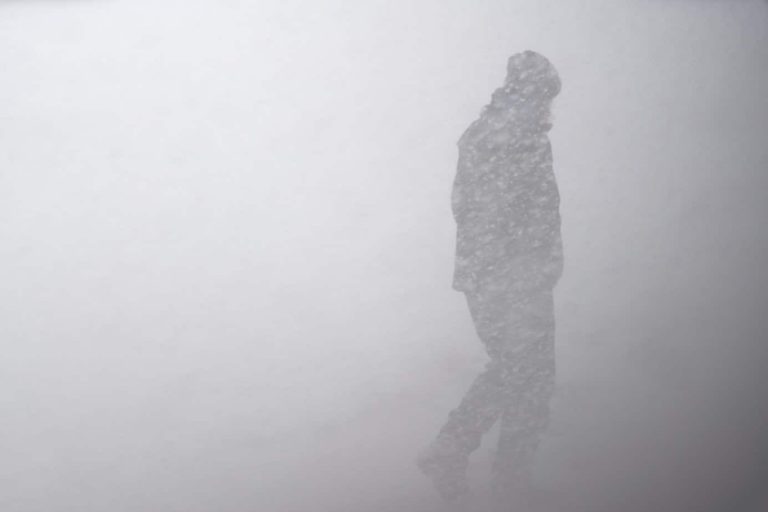
A whiteout occurs when there is so much ambient snow blowing through the air that a person can completely lose sight of the horizon, and general visibility is reduced to practically nothing.

There are numerous accounts of people seeking shelter in whiteout conditions as close as a few dozen yards away in familiar areas, such as their own backyards, only to become disoriented and lose their way.

Frostbite and hypothermia can occur much more quickly than in normal snowstorm conditions due to the chilling effects of the high winds (which can often reach hurricane-level speeds).

Surviving blizzards

selfsb b1Blizzards can range in size from local to nationwide—the Storm of the Century stretched from Canada to Cuba.

By the end of the 1972 blizzard in Iran, a region the size of Wisconsin had been completely covered in up to 26 feet of snow. The worst affected areas were mostly rural, with entire villages buried and no high ground to reach. Overall, 4,000 people were killed, making it the world’s deadliest blizzard by a factor of nearly ten.

The best way to survive a blizzard, like any other disaster, is to be prepared for it.

Blizzards rarely strike without warning in modern times, thanks to satellites and up-to-date news information (though snowfall amounts and storm intensity cannot be predicted for your specific location).

This isn’t to say you shouldn’t be prepared at all times. Keep a well-stocked food pantry (you won’t be able to restock during the storm) and plenty of long-lasting water in your home.

When the weather gets cold enough, expect your pipes to freeze, so all the water you have in storage is all you can use. As a result, keep water supplies available in a non-freezing area of your home, and plan on having enough water on hand to provide a gallon to each person each day.

Sure, you can melt snow to make water, but that presents three challenges:

1) You’ll have to go outside to get it; 2) melting snow requires a lot of energy; and 3) you’ll have to filter it.

So, just in case, it’s a good idea to have a filter on hand in case you run out of water and need to get some more.

When the temperature drops dramatically, it is easy for pipes to freeze and burst. The Federal Emergency Management Agency advises keeping your faucets at a steady drip because even a small amount of moving water can help keep pipes from freezing.

Have the proper gear to survive blizzards

have the proper gear to survive blizzards

You must have a working flashlight and batteries, a charged cell phone (if towers are not affected), any medication required (insulin and EpiPens, for example), general first-aid supplies, carbon monoxide, and smoke detectors, and heating fuel or firewood.

In addition to a flashlight, keep a couple of different lanterns (battery-, solar-, or servo-powered) on hand, which are better for general use than a flashlight.

Maintain your food supply, keeping in mind that it may need to last up to seven days. Even after the storm has passed, the roads will most likely be impassable for some time, especially in areas where blizzards are uncommon.

Drinking water is also important; it’s easy to become dehydrated when the cold temperatures trick the body into thinking it’s not thirsty.

Obviously, the main issue here is heat. If you freeze to death, it makes no difference what supplies you have at home. When it’s freezing outside, and you lose power, there are a few things you can do to keep warm. Your house may not be adequate to keep you warm.

Clothing and candles are two must-haves

It’s always a good idea to layer your clothes. Begin with a moisture-wicking base layer and add as many layers as necessary. If you’re going outside, your final layer should be a waterproof shell.

Remember to bring a wool cap for your head, gloves for your hands, and thick socks for your feet. Keep a few blankets on hand to wrap around yourself or to warm up quickly after being outside.

Make an effort not to break a sweat. You’re dressed in layers so that you can shed them as your physical activity increases. Sweat could freeze, making you colder.

During a blizzard, it can also get very dark. Surprisingly, a couple of candles will keep you reasonably warm. Aside from the comfort of light and heat, candles are inexpensive and can last a long time.

It’s also a good idea to keep a couple of electric lanterns on hand. The type with a dynamo, which allows you to hand charge it if the storm lasts longer than the power, works best.

Being caught at home

Of course, the best place to ride out a blizzard is at home. You’ll be toasty and warm by the fireplace telling ghost stories to the kids while rummaging through your food supplies for supper if you’ve prepared for such an emergency.

That is not to say that all dangers have been eliminated. It’s critical to stay inside. Going outside can be extremely dangerous, depending on the severity of the storm.

There are numerous stories of people who walked off their porch into their own front yard during a whiteout and became lost, only to be discovered dead mere feet from their front door.

To save energy, close off unneeded rooms. If you have a fireplace or a wood stove going, the heat will warm the room you’re in while making the other rooms in your house colder.

Closing those rooms and stuffing towels underneath the doors and around the windows will help to insulate the room you’re in even more.

Cover the windows with a layer of plastic or blankets at night. Although some people consider a blizzard to be a beautiful natural phenomenon, the biggest heat suck in your house can be contained by keeping the windows covered at night when it’s the coldest.

If your home lacks a fireplace, consider stockpiling a space heater if your local laws allow it. A simple 5,000-BTU unit will efficiently heat a 200-square-foot room.

LOY banner 2 1

Being caught outside

You know when the temperatures are going to drop and when potential blizzard conditions are approaching because you pay attention to the weather and news broadcasts.

As a result, you’re more likely to dress appropriately for being outside in the winter, to begin with. That is a critical first step.

You can adjust your body temperature by adding or removing layers by layering your clothing and preparing for the worst. If you’re going to be outside for more than a few hours, it’s critical to stay hydrated. High winds can dehydrate you faster than you realize (and a well-hydrated body stays warmer).

Make every effort to avoid the wind. If you’re in a city, hide behind buildings, and if you’re in the country, hide behind large rocks—find a place where the wind won’t bother you.

If you’re stranded in a blizzard, almost every expert recommends digging a snow shelter, which is sound advice if you have the resources (a shovel or a digging tool of some kind). Snow is a fantastic insulator, as evidenced by the fact that a single candle can warm a decent-sized igloo.

However, if you don’t have digging tools, building a lean-to against the wind will help. If you don’t have a tarp or rope, huddle under the branches of a low-hanging tree or quickly gather branches and lean them against a tree or rock at a 45-degree angle.

Cover your body (and any exposed skin) as much as possible. To prevent heat loss, always wear a hat and gloves.

Simple exercises to keep warm and circulation going, but not so hard that you break a sweat.

Stay in one location for as long as it is practical and safe. Walking in deep snow can quickly exhaust the body because you’ll expend a lot of energy climbing through the snow.

Build a fire if possible, and start thinking about how to signal for help. Burn some green branches to make a lot of smoke, or write “help” in the snow with materials that contrast with the white.

If you don’t already have it, getting food will be difficult, given the blizzard’s restrictions on movement. Though the human body can survive for a few weeks without food, water is a different story.

If you have a container, such as a water bottle, but no fire to melt the snow, fill half the bottle with snow and shake it—the friction will aid in melting. Put it in your pocket or under your coat to keep it from freezing.

Being caught in your car

being caught in your car

Being trapped in your car during a blizzard is a terrifying situation. If you’ve been stranded by snowdrifts, the best advice is to get in your car unless there’s an immediate danger.

The engine of a car can idle for quite some time. A V6 Toyota Tacoma, for example, uses about 0.3 gallons per hour, which means that its 21.1-gallon tank will be depleted after 70 hours, or nearly three days. That means you can use the heater to keep the inside of your car warm, but only for 10 or 20 minutes every hour or so.

Caution: Don’t let snow accumulate in the tailpipe, or exhaust fumes will back up into the car, and make sure your car doesn’t get covered in snow. If you smell engine fumes, keep a window slightly cracked.

If you have them, use chemical light sticks as visual markers so that would-be rescuers can see your vehicle. Tie one securely to the top of your antennae or hang one out on both sides of your car’s windows.

Keep your hazard lights turned on so that people can see you.

When it comes to food and water, it’s always a good idea to keep a couple of days’ worth of supplies in a bag accessible from the car’s cabin. Include a flashlight, a window breaker, and a radio.

Concluding

bannerlost1Blizzards are dangerous because they combine all of the dangers of snowstorms, and the winds that accompany them can be hurricane-force.

The weight of the snow can cause roofs to collapse as well as trees and powerlines to fall.

They create whiteout conditions, leaving drivers and pedestrians disoriented and stranded.

They are not only some of the deadliest storms on the planet, but they are also massive and affect a large area. This will undoubtedly have an impact on services, utilities, and social infrastructure.

Winter can be brutal, and if the conditions are right, you’ll be on your own for an extended period of time, with no one to rely on but your own wits and resources.

Remember that if you plan for disaster, you’re planning for success.

Suggested resources for prepper and survivalists:

How To Stay Warm During Emergencies

The latest innovation in solar pannels – 3D technology

Crucial Preps For Winter Car Survival

How to build a self-sufficient survival sanctuary

Make & Mend | Survival Monkey Forums

0