WASHINGTON — The U.S. Air Force tapped communications-technology company Persistent Systems to provide seamless networking for security operations at the nation’s three intercontinental ballistic missile bases in a contract worth nearly $76 million.
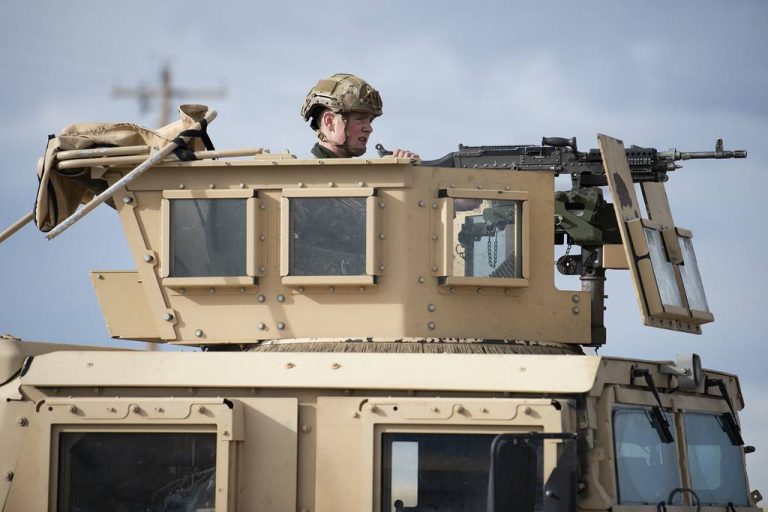
To link security personnel on the missile fields with faraway operations centers and to keep an eye out for intruders, Persistent is rolling out its Infrastructure-based Regional Operation Network, or IRON, which uses antenna systems on fixed towers or poles to enable widespread sharing of voice and video, as well as sensor and GPS data.
The company this month said some 700 IRON assets will be installed across Malmstrom, Minot and F.E. Warren Air Force bases, in Montana, North Dakota and Wyoming, respectively. The project, part of the Air Force’s Regional Operating Picture program, will connect 75 operations centers and more than 1,000 security vehicles across a combined area of about 25,000 square miles.
“U.S. military bases can sprawl tens of thousands of square miles, and as it stands now, there’s no dynamic, high-bandwidth way for headquarters staff to track, and reliably remain in contact with, the security personnel patrolling this vast area,” Adrien Robenhymer, Persistent’s vice president of business development, said in a statement March 1. “The first step will be to roll out ROP across Malmstrom, Minot, and F.E. Warren Air Force bases with eventually more to come.”
The installations are home to closely protected ICBMs, a segment of the U.S. nuclear arsenal some advocacy groups have called superfluous or provocative. Sensitive facilities like Malmstrom were flown over by a Chinese spy ballon in February, though exactly what information was sought or collected is not publicly clear.
The Pentagon’s effort to better connect sensor to shooter and shuttle data is inextricably linked with the high-stakes communication systems of nuclear warfare, and rightly so, the head of U.S. Strategic Command told Congress this week.
The blanket of connectivity Persistent plans to weave — and the one the military is seeking — is in line with the Pentagon’s Joint All-Domain Command and Control vision, which aims to link once-disparate databases and forces across land, air, sea, space and cyber, according the company.
Robenhymer said IRON has “applications beyond” the improved situational awareness it will ultimately provide the Air Force and nuclear triad.
“It facilitates a fully digital battlespace that links multiple weapon systems and programs in a unified network,” the vice president said, a foundation upon which “a true Joint All-Domain Command and Control system could be built.”
Persistent in 2020 received $25 million to upgrade hardware for the Wave Relay Tactical Assault Kit program, or WaRTAK, which helps Air Force convoys communicate and relay information on the move. WaRTAK is used by the 90th Missile Wing, 91st Missile Wing and 341st Missile Wing, C4ISRNET reported at the time.
Colin Demarest is a reporter at C4ISRNET, where he covers military networks, cyber and IT. Colin previously covered the Department of Energy and its National Nuclear Security Administration — namely Cold War cleanup and nuclear weapons development — for a daily newspaper in South Carolina. Colin is also an award-winning photographer.
Editor’s note: The F-35 Joint Program Office announced March 14 that it and the Defense Contract Management Agency had resumed accepting F-35s from Lockheed Martin.
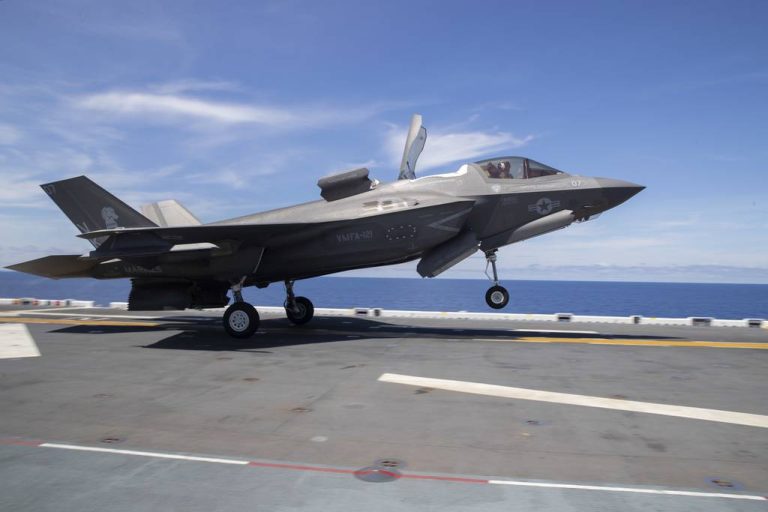
WASHINGTON — Lockheed Martin on Monday morning resumed conducting acceptance flights of newly built F-35 Joint Strike Fighters, nearly three months after an engine problem grounded new jets and halted deliveries.
Lockheed announced Monday that the first flight took off from Fort Worth, Texas, where it builds the majority of F-35 fighters.
“We resumed F-35 production flight operations today following an F135 engine mitigation action,” Lockheed Martin said in its statement.
Lockheed stopped acceptance flights after a Dec. 15 mishap involving an F-35B fighter that was undergoing a quality check flight. A video showed the fighter bouncing on the ground, tipping forward and spinning before the pilot safely ejected.
The investigation that ensued found signs of a problem with the fighter’s Pratt & Whitney-made F135 engine, and engine deliveries were halted in late December. Further investigation found the engine had vibration issues.
Pratt & Whitney as well as engineers from the Pentagon and Lockheed developed a solution to fix the vibration issue in the engine, the F-35 Joint Program Office announced in February. That solution takes about four to eight hours to install in the engines of F-35s.
Pratt & Whitney, which is owned by Raytheon Technologies, and the JPO said in February that the vibration problem was rare.
But the office issued an order March 1 that said all F-35s should have this vibration fix installed within 90 days because the solution is “inexpensive [and] non-intrusive,” and would mean all F-35 engines have the same configuration.
Acceptance flights are required before the government can take delivery of new F-35s. The resumption of acceptance flights will also pave the way for deliveries to resume, though Lockheed did not say when deliveries might resume.
“Safety remains our top priority,” Lockheed said. “We will deliver the aircraft as quickly as possible after undertaking the multiple checks and test flights needed.”
Stephen Losey is the air warfare reporter for Defense News. He previously covered leadership and personnel issues at Air Force Times, and the Pentagon, special operations and air warfare at Military.com. He has traveled to the Middle East to cover U.S. Air Force operations.
Ukraine’s fighter fleet was, by some estimations, far more meager, with 69 jets at most. Experts say that put it at about one-tenth the size of Russia’s.
Ukraine and its supporters say Western fighter jets are now necessary to tip the balance in Ukraine’s favor, while allowing for close air support and air interdiction missions.
“Ukraine never asked the American soldiers to fight on our land instead of us,” Ukrainian President Volodymyr Zelenskyy said during an in-person address to Congress in December. “I assure you that Ukrainian soldiers can perfectly operate American tanks and planes themselves.”
In a February letter to U.S. President Joe Biden, a bipartisan group of lawmakers urged the administration to provide F-16s or other fighters to Ukraine, and to quickly make a decision so the country has time to train its pilots.
“In contrast to the current, ground-based air defense platforms currently used by Ukrainian forces, fighter aircraft’s ability to quickly traverse a large battlespace with a significant weapons payload could prove decisive for control of Ukrainian airspace this year,” the lawmakers — Reps. Jared Golden, D-Maine; Tony Gonzales, R-Texas; Jason Crow, D-Colo.; Mike Gallagher, R-Wis.; and Chrissy Houlahan, D-Pa. — wrote.
Over the last year, the military aid sent from the United States and allies has steadily grown in firepower; weapons include loitering munitions, artillery, High Mobility Artillery Rocket Systems and more. Most recently, after weeks of hesitation, the United States in January approved the delivery of M1 Abrams tanks to Ukraine, alongside Germany’s decision to provide Leopard 2 battle tanks.
Smoke billows from the flaming debris of a crashed Ukrainian fighter jet near the Donetsk area in eastern Ukraine in 2014. The aircraft was flying low low over rebel-held territory. (Dimitar Dilkoff/AFP via Getty Images)
Some Western government leaders have kept the door cracked open when it comes to providing fighter jets, with U.K. Defence Secretary Ben Wallace telling journalists in February: “Don’t rule anything in, don’t rule anything out.”
But not everyone is convinced. Pentagon policy chief Colin Kahl recently told lawmakers weapons for dominating Ukrainian airspace, like Western warplanes, are worth less than air defense equipment aimed at denying the skies to Russia, like the Patriot system.
F-16s or other fighters are “a priority for the Ukrainians, but [are] not one of their top three priorities,” Kahl told the House Armed Services Committee on Feb. 28. “Their top priorities are air defense systems [and] keeping their interceptors and air defense network alive against Russian cruise missiles and the like, and Iranian drones, artillery and fires … and armor and mechanized systems.”
Kahl said providing even three dozen older F-16s would cost roughly $3 billion — and a bigger fleet could cost as much as $11 billion.
During the same hearing, ranking Democrat Rep. Adam Smith of Washington expressed skepticism about the feasibility and effect providing F-16s would have on the war.
“Even if we basically said there’s nothing more important than that one weapon system and spent all of our time and all of our resources on doing it, the best case scenario [is] we could maybe get some operational F-16s into Ukraine within a year, maybe eight months if we really pushed it,” Smith said. “And this is getting lucky. Because you don’t just have to train the pilots; you have to train the mechanics, you have to have airfields that can accommodate the F-16 and you have to have the spare parts to make it work.”
A Ukrainian Su-27 Flanker and MiG-29 Fulcrum escort two B-1B Lancers during a training mission for Bomber Task Force Europe on May 29, 2020, in the Black Sea region. (Courtesy of the Ukrainian Air Force)
‘An existential fight’
Ukraine’s fighter pilots fly MiG-29 Fulcrum and Sukhoi Su-27 Flanker jets. Flight International’s 2022 almanac of air forces listed the Ukrainian service as having 43 MiG-29s and 26 Su-27s in its fleet.
But Justin Bronk, a senior research fellow for air power and technology at the U.K.-based Royal United Services Institute think tank, said Flight International’s tally is “quite optimistic.” Ukraine’s real situation is much more troubled, he said, though he declined to provide specific examples, citing security reasons. Bronk, who is also a professor at the Royal Norwegian Air Force Academy, has extensively researched Ukraine’s military needs and traveled to the country last fall.
Russia, on the other hand, has roughly 370 MiG-29, -31 and -35 fighters as well as 350 Su-27, -30 and -35 fighters, according to Flight International’s almanac. Fighters such as the MiG-35 and Su-35 in Russia’s fleet are also more advanced than Ukraine’s.
RELATED
Russia has several significant advantages over Ukraine’s Air Force, Bronk noted, besides quantity. Russian fighters have “drastically better” radar and missile capabilities, he said. The country also has airborne early warning and command-and-control aircraft, which Ukraine lacks, as well as better ground-based air defenses with the radar to support them.
Newer, more advanced fighters and weapons would allow Ukraine to suppress enemy air defenses, according to Heather Penney, a former F-16 pilot and now a senior resident fellow at the Mitchell Institute for Aerospace Studies. With those cleared, she added, Ukraine could then carry out close air support missions and interdiction strikes against Russian tank columns, artillery emplacements, massed infantry and ships.
A U.S. Air Force F-16 Fighting Falcon connects with a KC-10 Extender over Iraq in 2021. (Staff Sgt. Jerreht Harris/U.S. Air Force)
This would relieve pressure on Ukraine’s land forces and free them up to conduct their own operations.
As for drones, Ukraine has creatively used them, Penney said, but they “are not going to turn the tide of the conflict.”
For example, Ukraine used its handful of inexpensive Turkish Bayraktar TB2 drones to bomb Russian vehicles and other military targets in the war’s initial months. Ukraine has also used U.S.-provided loitering munitions, such as the AeroVironment-made Switchblade 300 and 600 and the Air Force-developed Phoenix Ghost.
But the U.S. is so far balking at sending Ukraine more advanced drones such as the Grey Eagle and MQ-9 Reaper.
A U.S. Air Force MQ-9 Reaper takes off from Creech Air Force Base, Nev., on Sept. 1, 2021. (Tech. Sgt. Emerson Nuñez/U.S. Air Force)
The country is not lacking for pilots, Bronk said, but the problem is they don’t have enough airworthy jets. Ukraine is having an especially hard time with its Flanker availability, he added.
The fact that Ukraine’s fighter fleet is Russian-made severely limits its access to spare parts, which worsens aircraft availability. That is a major reason Ukraine must move away from MiGs and Sukhois and toward Western fighters, U.S. Air Force Chief of Staff Gen. CQ Brown said at the July 2022 Aspen Security Forum.
Brown cited the Swedish Gripen, the French Rafale and the European Eurofighter as possible candidates for Ukraine’s future fleet, besides American-made fighters.
Since Russia launched its invasion, Bronk said, Ukraine has bolstered its fighter fleet as much as it can by “aggressively” renovating aircraft that weren’t airworthy, and by dragging old frames out of mothballs to repair them.
“Those probably wouldn’t meet peacetime airworthiness — certainly not combat readiness — standards,” Bronk said. “But they’re in an existential fight, so of course they are making use of what they can.”
Considering the options
Ukraine has frequently asked for Western aircraft such as the Lockheed Martin-made F-16, but Bronk said the unique challenges its Air Force faces means there are better options.
Keeping an array of small air bases operational is tricky, he said, and Ukraine wouldn’t be able to resurface all its runways to keep them smooth and neat. In the chaos of war, he explained, Ukraine also might be unable to keep its runways regularly cleared of foreign object debris, which could prove devastating for the F-16, given its large, wide air intake below its fuselage that could suck up the rubbish.
Debris would also leave its undercarriage susceptible to damage if it kicks up any during takeoff or landing, he added.
The F-16 “is a lightweight fighter designed for nice runways,” Bronk said. “Most Ukrainian runways are pretty rough. So if they’re moving around like that, the fighter has to be [able to] handle it and not suffer a massive increase in maintenance [needs], and the support equipment and maintenance arrangements have to be able to do it.”
Western fighters in Ukraine would immediately become priority targets for Russia, Bronk said, which would likely force Ukraine to continue its strategy of dispersing aircraft and moving them around. That would present further complications for the F-16, as its ground support equipment tends to be bulky and hard to disperse, he added.
A better option for Ukraine might be the Gripen, Bronk said, as its standard maintenance and logistics equipment can be loaded into standard 20-foot shipping containers and easily moved on trucks.
Meteor missiles are seen on a Eurofighter aircraft.
The Boeing-made F-18, designed for salty sea environments and more rugged than the F-16, is another option, Bronk said, and its support equipment is compact enough for Ukraine’s needs.
But while Western fighters are easier to fly than the MiG and Sukhoi aircraft, Bronk added, their mission systems and weapons technology are more complicated.
Training Ukrainian pilots — especially their experienced fighter pilots — on Western fourth-generation fighters shouldn’t be too hard, Penney said. It generally takes the U.S. Air Force eight months to a year to qualify its pilots on their fighters.
“They don’t need to be perfect, Penney said. “They need to be just good enough … that they can execute in combat.”
She said the U.S. could develop a streamlined, accelerated training program for Ukrainian pilots that would last two to two-and-a-half months.
But John Venable, a former F-16 pilot and senior defense fellow at the Heritage Foundation think tank, said properly training Ukrainian pilots to employ the F-16 would be tricky.
“Learning to fly the F-16 is easy for a pilot,” Venable said. “Learning to employ the F-16 is hard.”
Training maintainers how to fix these fighters would also be a challenge, he added.
But the status quo, Penney said, is untenable. Without a modernized Ukrainian Air Force, she explained, the conflict has become a war of attrition, echoing the trench warfare of World War I.
That places Ukraine in a dire situation, she added.
“Ukraine only has so many people they can feed into the meat grinder of land warfare,” Penney said. “They need to move this into the third dimension, and you do that with aircraft.”
Stephen Losey is the air warfare reporter for Defense News. He previously covered leadership and personnel issues at Air Force Times, and the Pentagon, special operations and air warfare at Military.com. He has traveled to the Middle East to cover U.S. Air Force operations.
AURORA, Colorado — The Air Force is cutting in half the number of tankers it planned to buy as an interim step, as part of a move to rethink its overall aerial refueling modernization strategy, the service’s acquisition chief said Monday.
The revamp of the Air Force’s strategy comes as the service is growing increasingly concerned about the likelihood it will face a dangerously contested airspace in a future war against an adversary like China. The approach is meant to ensure future tankers will be able to survive a war in which they are likely targeted.
As part of this strategic shift, the Air Force will halve the number of tankers it originally planned to buy in the next decade from roughly 150 to about 75, Andrew Hunter told reporters in a roundtable at the Air and Space Forces Association’s AFA Warfare Symposium here.
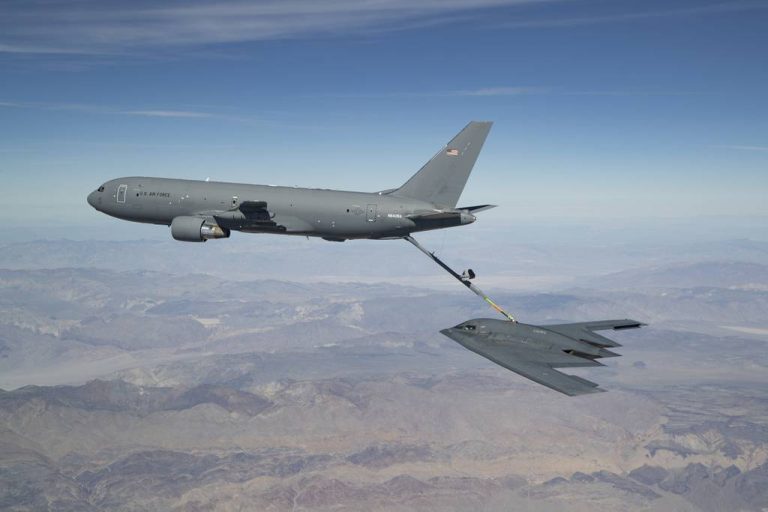
Hunter also said the requirements will be “more modest” than originally planned for the bridge tanker, which is the Air Force’s term for a planned tanker purchase meant to close a gap between buying its final Boeing-made KC-46 Pegasus and a next-generation tanker it originally referred to as KC-Z.
Originally, the Air Force plotted a three-stage modernization effort, with its phases dubbed KC-X, KC-Y and KC-Z, to replace the legacy KC-135 Stratotanker fleet. The KC-46 Pegasus was acquired to fill the KC-X stage, and the Air Force was mulling its next steps for the KC-Y, or bridge tanker, which would tide the service over until it procured KC-Z sometime in the 2040s.
Over the last year, the Air Force has been conducting a business case analysis on the KC-Y to decide whether to hold a competition to choose between Lockheed Martin’s LMXT tanker and the KC-46, or to forgo the competition and buy more modified KC-46s from Boeing. If the Air Force ended up buying more KC-46s, Hunter said, it would likely get those tankers in 2032; if Lockheed won, Hunter expected their tankers would come in 2034.
The Air Force originally thought its KC-Y requirements could be a tweaked version of the KC-X requirements, with additional capabilities, Hunter said.
But after recent reviews and analyses of what the service’s refueling needs might be, he added, the service decided its current strategy for tanker modernization leaves the aircraft too vulnerable to attack.
Hunter said the Air Force is now moving to a program called the next-generation aerial refueling system, or NGAS.
NGAS is “focused on ensuring that the tanker capabilities [in the] 2030s and beyond will be able to survive and operate in a much more contested environment than the tankers of the past, or the tankers that are in our current fleet,” he said.
Hunter said recent Air Force studies, performed as part of Air Force Secretary Frank Kendall’s operational imperatives, underscored the threats potential adversaries might pose to vital aircraft such as tankers.
“We have to have an approach that allows us to address those threats and still refuel the joint force, and allow it to engage in all of the critical operations that are required for high intensity conflict,” he told reporters.
In his keynote address at the conference Tuesday, Kendall said the Air Force must revise its approach to mobility aircraft, including tankers, to account for the threats of a future war.
“Our mobility fleet can no longer operate forward with relative impunity,” Kendall said. “The air threat is becoming much more severe, with increasing range. A particular concern is the survivability of our tankers, which will have to be farther forward to refuel fighters that operate within a few hundred miles of the threat.”
This will require a new design for a more survivable tanker, Kendall said — “one that is not a derivative of a commercial aircraft.” He added that a blended wing body design is one option.
The Air Force said in a January request for information for NGAS it planned to start conducting an analysis of alternatives for the program in October, and is soliciting ideas from the defense industry.
According to the RFI, the NGAS tanker must be able to operate in contested combat scenarios. The Air Force wanted ideas on how a tanker would refuel unmanned aerial systems, integrate with a joint air battle management network, and take off from or land at regional or improvised airfields.
Hunter said the analysis of alternatives will take a “clean sheet” approach that could design an entirely new plane. He said the service wants a competitive pool of vendors — both aircraft companies and mission system providers — to plan the way ahead.
Hunter noted the Air Force hopes to field the “initial increment” of NGAS in the mid- to late 2030s.
He said that, based on the information industry has already sent the Air Force, the service could still end up selecting a modified KC-46 as its interim step. But if the Air Force does end up buying another wave of KC-46s, Hunter said the cost is likely to go up — partly because the KC-46 ended up being more expensive than anticipated, and partly because of the increased capabilities.
The Air Force expects to contract for the last of 179 planned KC-46s in fiscal 2027, and receive them two years later, Hunter said, which would lead to a gap in tanker production under a KC-Y competition.
Hunter said the Air Force expects to wrap up its business case analysis on the path forward on its future tanker needs by the middle of 2023.
Hunter told Defense News on Tuesday he did not expect shifting strategies from KC-Y and Z to NGAS would lead to any significant losses.
“Anything we’ve done to date, we will be able to leverage going forward,” Hunter said.
Courtney Albon contributed to this report.
Stephen Losey is the air warfare reporter for Defense News. He previously covered leadership and personnel issues at Air Force Times, and the Pentagon, special operations and air warfare at Military.com. He has traveled to the Middle East to cover U.S. Air Force operations.
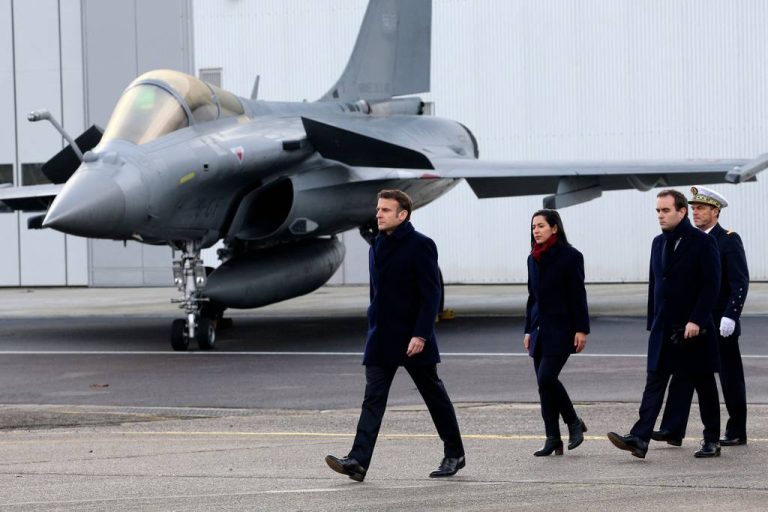
STUTTGART, Germany — The French Air and Space Force has received the first of its most sophisticated Rafale fighter jets, reaching a milestone after four years of development.
The service’s Air Warfare Center, located on the 118th air base in southwestern France, took possession of the first F4.1 standard Rafale on March 2, the Ministry of Defense announced in a March 7 statement.
Development of the F4 standard kicked off in 2019, when then-Armed Forces Minister Florence Parly signed a €2 billion ($2.12 billion) contract with manufacturer Dassault.
A second F4 aircraft is expected to be delivered in the coming weeks. The jets will then be integrated into the service’s 30th Fighter Wing to begin training in anticipation of an Initial Operating Capability (IOC) decision.
France’s DGA began flight tests for the F4 standard in April 2021, and the aircraft is slated for full availability by 2025.
The new standard includes upgrades to existing capabilities like the Thales AESA radar and Talios targeting pod along with the Rafale’s electronic warfare system and communications suite.
New capabilities for the F4 include the Thales Scorpion Helmet Mounted Display, MBDA’s MICA NG (Next-Generation) air-to-air missile and the 1,000 kilogram variant of Safran’s AASM (armement air-sol modulaire) “Hammer” precision-guided munition.
The new aircraft is expected to serve as a bridge between the Rafale and France’s next-generation fighter being developed alongside Germany and Spain under the trinational Future Combat Air System (FCAS) program, slated to be fielded around 2040.
The January delivery of the F3R standard aircraft marked the first Rafale delivered to the nation’s military after a four-year pause. France’s proposed 2023 defense budget, released in September 2022, includes 42 new Rafales, including 30 under the forthcoming Tranche 5 contract.
Vivienne Machi is a reporter based in Stuttgart, Germany, contributing to Defense News’ European coverage. She previously reported for National Defense Magazine, Defense Daily, Via Satellite, Foreign Policy and the Dayton Daily News. She was named the Defence Media Awards’ best young defense journalist in 2020.
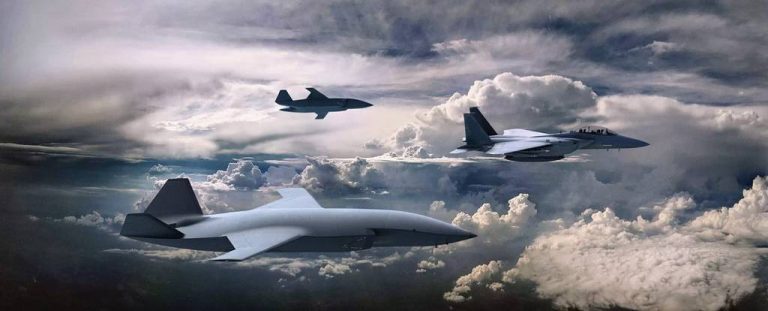
AURORA, Colorado — The Air Force is ramping up plans for incorporating drone wingmen into its fleet, and envisions 1,000 of the so-called collaborative combat aircraft in service as it sketches out ideas.
Air Force Secretary Frank Kendall said Tuesday that the service will ask Congress for funding in the fiscal 2024 budget to move forward with the CCA program, as well as the Next Generation Air Dominance program of futuristic fighter aircraft, so it can map out how it will operate, organize and support these new systems.
In his keynote address at the Air and Space Force Association’s AFA Warfare Symposium in Aurora, Colorado, Tuesday, Kendall said he and Air Force Chief of Staff Gen. CQ Brown told planners to assume the service might acquire 1,000 CCAs. Under this model, the Air Force would acquire two CCAs for each of 200 NGAD platforms, and two for each of 300 F-35s, Kendall said.
Kendall cautioned those numbers aren’t likely to be what the Air Force’s inventory ends up tallying. Instead, he said, it’s a ballpark estimate to allow the service to estimate its basing needs, organizational structures, training and range requirements, and sustainment concepts.
“The CCAs will complement and enhance the performance of our crewed fighter force structure,” Kendall said. “CCAs will dramatically improve the performance of our crewed aircraft, and significantly reduce the risk to our pilots.”
Kendall has made adopting autonomous CCAs into the Air Force’s future fleet one of his top priorities as he seeks to update its fighter fleet to win a future war.
These drones could carry out a variety of missions, including striking targets, intelligence, surveillance and reconnaissance, or electronic warfare, Brown said in a February talk at the Brookings Institution.
The Air Force envisions these drones as being less expensive than traditional crewed aircraft, and in some cases being cheap enough that the service could afford to lose them in combat. This would allow the Air Force to send CCAs on riskier missions, and avoid putting human pilots in danger.
Kendall stressed in his speech that adopting drone wingmen will not mean the Air Force has fewer crewed fighters in its inventory. Instead, he said, CCAs can be thought of as remotely controlled versions of the targeting or electronic warfare pods or weapons that crewed aircraft now carry.
In a roundtable discussion with reporters at the conference, Kendall said the Air Force wants CCAs to cost a fraction of the F-35, which costs roughly $78 million per air frame in its 14th lot. He said affordability is a requirement for the program.
Kendall said the CCA program will be one of nearly 20 new or significantly ramped up programs in the upcoming budget request. About a dozen of those will be new starts that will require Congress’ approval, he said, and the rest are enhancements to already existing programs such as the Advanced Battle Management System.
Kendall said in September 2022 that he hopes the Air Force will hold a competition for CCAs in 2024, though details on that competition are scarce.
Brown said in another roundtable Tuesday that the Air Force has three lines of effort under way to develop CCAs: Developing the platform itself, developing the autonomous software that will fly the CCA, and figuring out how to organize, train, equip and supply the program.
All three of those efforts are under way “in parallel,” Brown said. The Air Force has brought in operators and maintainers to figure out questions such as how the CCAs would be directed and controlled during operations, he said.
Part of that work is figuring out how to design and mature the drone’s autonomous core, so a fighter pilot doesn’t get overwhelmed with the responsibility of directing and guiding the CCA, Brown said. That includes doing experiments on autonomy with the X-62A Variable In-flight Simulator Aircraft, or VISTA, a heavily modified F-16 fighter at Edwards Air Force Base in California
“There’s a number of ways to do this, whether it’s voice [commands] or touchscreen,” Brown said. “Just think about our day-to-day lives, and the autonomy we have. So the technology is there. It’s just how we bring this into our military applications.”
Stephen Losey is the air warfare reporter for Defense News. He previously covered leadership and personnel issues at Air Force Times, and the Pentagon, special operations and air warfare at Military.com. He has traveled to the Middle East to cover U.S. Air Force operations.
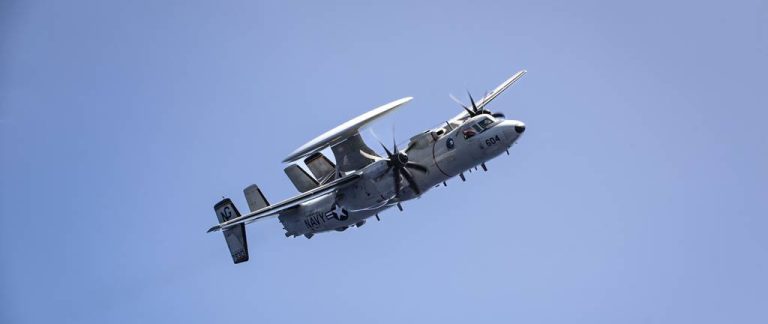
Northrop Grumman, which makes the airborne early warning and control aircraft, will serve as the prime contractor for the nearly $1.4 billion deal. Along with logistics and technical support services, the possible sale includes APY-9 radars and AN/AYK-27 integrated navigation control and display systems already installed in the aircraft.
Now that the agency has notified Congress, the value and quantity of materiel could change while negotiations are underway.
“The proposed sale will improve Japan’s ability to effectively provide homeland defense utilizing an AEW&C capability. Japan will use the E-2D AHE aircraft to provide AEW&C situational awareness of air and naval activity in the Pacific region and to augment its existing E-2C Hawkeye AEW&C fleet,” the statement read.
The announcement comes as Japan seeks to increase its military spending. In December, Japanese Prime Minister Fumio Kishida asked his Cabinet to secure funds to double military spending to 2% of gross domestic product. Later that month, Tokyo released three major national security documents, with the National Security Strategy calling for counterstrike capabilities in response to missile threats from China and North Korea.
Also on Tuesday, the U.S. agency approved the possible sale of 250 Javelin FGM-148F missiles jointly made by Lockheed Martin and Raytheon Technologies. Canberra would purchase the missiles and related equipment for about $60.2 million. The value and quantity could still change during negotiations.
Canberra plans to use the missiles to increases its anti-armore capabilities.
“Australia is one of our most important allies in the Western Pacific,” the agency said in its statement. “The strategic location of this political and economic power contributes significantly to ensuring peace and economic stability in the region.”
Canberra joins other security partners recently approved for Javelin sales from the United States. Last month, the State Department approved a possible sale of 600 missiles to the United Kingdom, a fellow member of the AUKUS trilateral security pact. Under the pact, the two countries will help Australia acquire nuclear-powered submarines.
In October, Australia drew the ire of China when reports said the country would host six nuclear-capable B-52 bombers at Royal Australian Air Force Base Tindal, where the United States is building dedicated facilities for the aircraft.
Zamone “Z” Perez is a rapid response reporter and podcast producer at Defense News and Military Times. He previously worked at Foreign Policy and Ufahamu Africa. He is a graduate of Northwestern University, where he researched international ethics and atrocity prevention in his thesis. He can be found on Twitter @zamoneperez.
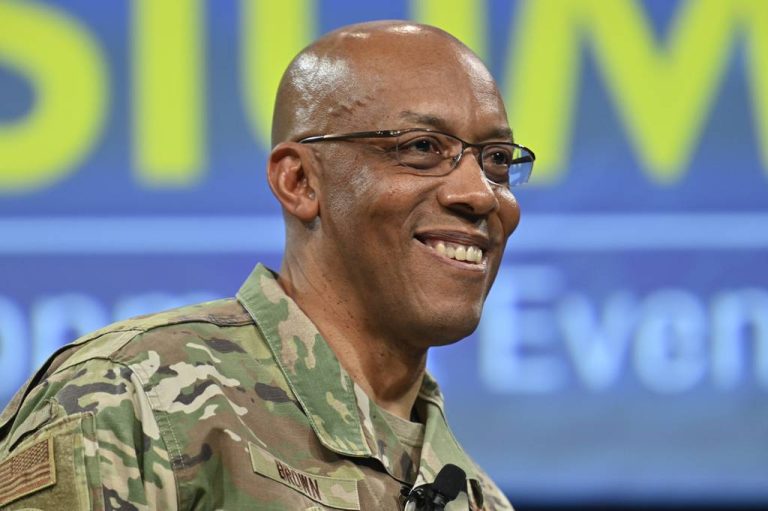
AURORA, Colorado — Gen. CQ Brown took command of the Air Force in August 2020 with a mission: to reshape a service that had spent nearly two decades in uncontested counterinsurgency fights in the Middle East.
Now, Brown said, the Air Force needed to get ready for a future war against a major potential adversary such as China and wouldn’t be able to count on the same military dominance as in the last war.
Within weeks of becoming the Air Force’s 22nd chief of staff, Brown laid out his plan, titled “Accelerate Change or Lose,” which spelled out how the Air Force would adapt. His plan focused on four areas: empowering airmen, shrinking the Air Force’s unwieldy bureaucracy, preparing for global competition, and transitioning to a future force design.
When Air Force Secretary Frank Kendall became the service’s top civilian in 2021, his actions, including establishing a series of operational imperatives, boosted Brown’s efforts, Brown told Defense News in a March 7 interview at the Air and Space Forces Association’s AFA Warfare Symposium here.
“I started a fire — he put gas on it,” Brown said of Kendall.
In his keynote address at the conference earlier that day, Brown announced he had recently signed a new strategic document called the Future Operating Concept to continue pushing the Air Force to change. This document, prepared by deputy chief of staff for strategy, integration and requirements Lt. Gen. Clint Hinote, details how the Air Force will “operate, fight and win” jointly with the other services and carry out its core functions, Brown said.
The Future Operating Concept lays out six different but overlapping fights, which Brown said the Air Force must be able to do at the same time: to compete with and deter adversaries, to hold air superiority, to get into the theater, to deny adversary objectives, to get airborne, and to sustain the fight.
Brown spoke with Defense News about the next steps for his Accelerate Change or Lose strategy. This interview has been edited for length and clarity.
Which of the four key areas of Accelerate Change or Lose have seen the most progress, and which need more work?
The two that I think have made the most progress are on our airmen and on competition. Because they’re intertwined. It’s the aspect of having our airmen better understand the threat and what we’re up against. And moving away from the Middle East mentality … to really have a broader perspective.
The other part on airmen is creating an environment so they can all reach their full potential. It’s the work we’ve done with diversity and inclusion, it’s the work we’ve done on smart talent management perspectives. So that [airmen] can have the ability to cross train much easier than we’ve done in the past.
Some of these may [appear] little, but they’re big. And the reason why I say they’re big is because it’s going to help with our retention. The last thing I’d hit on is my wife Sharene [Brown’s] focus on [the] Five & Thrive [initiative to improve] the key areas that impact our military families: education, childcare, housing, health care, and spouse employment. Because it all helps with retention.
The ones that have slowed down a little bit is the bureaucracy — I kind of knew that one coming in. The future force design and implementation, I’ve seen good progress there. Secretary Kendall has helped us move forward. I saw that [momentum] in the FY23 authorization and [appropriations] bill[s] … and I see the same thing for FY24.
What do you want to do to keep moving forward on the issues that have been a little trickier, such as bureaucracy and future force design?
Let me just talk about bureaucracy first. It’s the collaboration, it’s breaking down barriers. Those of us in senior positions, sometimes our young airmen are afraid to come talk to us because of our rank and position. But we’ve got to set an example, that we want to hear all the ideas. Ideas don’t have rank. And how we were able to break that down and how we’re able to collaborate — one thing that COVID has done for us is, we use Microsoft Teams and other collaboration platforms more so than we have in the past.
Now, it’s still uncomfortable for some people. But we’re able to do more and more of that to bring our airmen in so you can hear all those ideas. You don’t wait until you have a very nicely put together staff package.
On the force design, I think we’ve got the first steps there. The signing of the Air Force Future Operating Concept yesterday sets the foundation for work that Gen. Hinote and [his] team have already started. That kind of change is going to make people uncomfortable. Sometimes you have to have small success to have larger success. But I think we’ve got some momentum going in some of the things we are doing. And now, how do we tie all that together in that future force design? I think we have the right initial building blocks to get us on a good path.
You said you knew coming in that clearing out bureaucracy was going to be a bit of a bear. What’s been the most nagging roadblock to making the changes you feel are necessary?
Maybe I was a bit naïve when I came in and put bureaucracy on the list. I worked in DC last time as a colonel. I saw it, but I probably didn’t see it to the level [it was] because I was working more internal to the Air Force. That’s the reason why, in Accelerate Change or Lose, I put the word collaboration, because I knew I was going to have to work with Congress, [inside] the Air Force, with [the Office of the Secretary of Defense], [and] with our industry partners.
We’ve had some progress here. Because of the collaboration, we’re able to break down some of the bureaucracy. But if I could actually take a big bulldozer to it, I really would, [take] a wrecking ball to some of these things.
We have often had policies and processes where collectively, we will sit and go, well, we can’t do that, because of a policy. And the challenge is we talk ourselves out of things. What I ask now is, OK, what office, what individual owns the policy and owns the approval process. And you figure it out, when you start really digging into it, we were probably slowing our own selves down because of our own misperceptions.
And then sometimes we’ve got to get the right person with the policy in the room to understand how they’re impeding progress, because that policy was made, five, 10, 15, 20 years ago, for a very specific purpose. And the facts and assumptions have changed. And we’ve got to actually address those policies and figure out and talk about how they impact not only the operational environment we execute in, but also the capabilities we require as an Air Force and as a military.
Stephen Losey is the air warfare reporter for Defense News. He previously covered leadership and personnel issues at Air Force Times, and the Pentagon, special operations and air warfare at Military.com. He has traveled to the Middle East to cover U.S. Air Force operations.
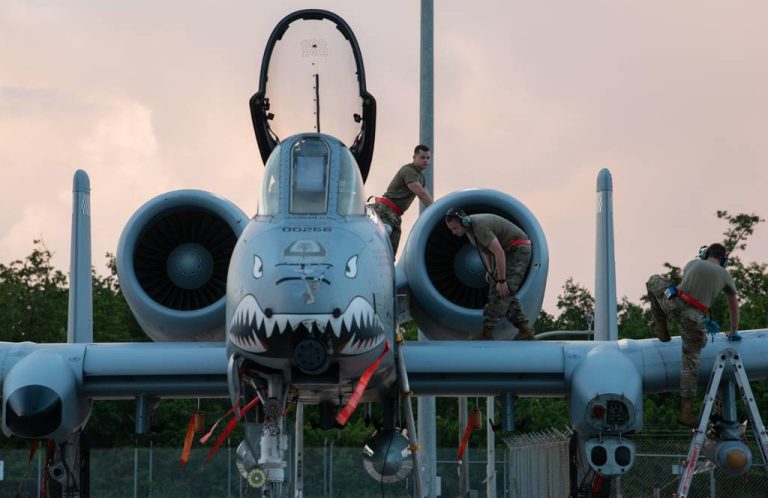
AURORA, Colorado — Air Force Chief of Staff Gen. CQ Brown said Tuesday the Air Force would likely retire all its A-10 Warthogs over the next five or six years.
Until recently, the Air Force and Congress have disagreed over what to do with the famed and rugged attack airplane. While the A-10 was known and beloved for its close air support role in Iraq and Afghanistan over the last two decades, the Air Force says the low-and-slow-flying plane would not be able to survive in a fight against a nation with modern air defenses, like China.
The Air Force has repeatedly sought congressional permission to start retiring the A-10 and instead use those resources to bring on newer jets, but was rebuffed by Congress each time until the fiscal 2023 budget was approved.
The Air Force this year will start retiring its first 21 A-10s Brown told reporters at the Air and Space Forces Association’s AFA Warfare Symposium here. This will reduce the service’s A-10 inventory from 281 to 260.
Those Warthogs will come from an Air National Guard squadron at Fort Wayne, Indiana, which will then transition to an equal number of F-16s.
And in subsequent years, Brown said, the Air Force hopes to continue that momentum.
“I would say over the next five or six years, we will probably [have] the A-10 out of our inventory,” he added.
In future wars, Brown continued, the Air Force needs aircraft that can fill multiple roles, and the A-10′s utility is too limited.
Combatant commands have not been asking for A-10s, Brown said, and he has a hard time getting them to use them because it’s “a single-mission airplane.”
“The A-10 is a great airplane … in an uncontested environment,” Brown said. “The challenge is, we’re going to be in more contested environments in the future.”
Fighters such as the F-35 and bombers are able to carry out close air support missions, Brown said, but in a future, highly contested combat environment, the Air Force will likely play less of a close air support role than it did in the Middle East.
“I’ve got to lean towards where the threat is,” he said.
Stephen Losey is the air warfare reporter for Defense News. He previously covered leadership and personnel issues at Air Force Times, and the Pentagon, special operations and air warfare at Military.com. He has traveled to the Middle East to cover U.S. Air Force operations.