Bannock | Survival Monkey Forums

0

I first saw bannock made many years ago when watching Ray Mears. Think it was this short clip that was aired on BBC.

I have made bannock at home and out camping. My monkeys prefer my chocolate chip sea salt version best.

How do you make yours and what do you put in it?[/QUOTE
6 c flour
1 c lard
3 tbl spoon baking powder
1 tbl salt
3-3 1/2 c water
mix it all up, if cooking on sticks the traditional way, wrap around the end of a clean stick, or pan fry in lard. Add what ever else you have on hand such as berries etc. That recipe is from an old Kookum, or Native Elder, friend who has passed on. Never fails. I like it fried the best.

Click to expand…

What leather gloves do you use?

0

I prefer leather gloves. Haven’t found one that is reasonably priced, rugged, comfortable, not too thick and has a loop or hole to tie on to a carabiner on my pack. Suggestions?

My current gloves are cheap, rugged, fairly comfortable, but not attachment point. This is maybe my fourth or fifth pair? I usually will use them to death then replace. Tried a pair that was partly leather, but did not like it as much. The fingertip dexterity wasn’t that good on that pair.

My current beaters.


Interview with Scott Ritter regarding Ukraine War

0

I wanted to bring this video to the attention of all of you as it is extremely well done. In fact, it’s not really an interview but more of a real expert, with excellent credentials, and without an ax to grind, simply talking about the Ukraine war. If you don’t know who Scott Ritter is, then take a moment and look him up. I realize it is long and most of you will not watch it; nevertheless, I felt I had to do my bit and ensure you are given the chance.

I dislike the title as it really doesn’t go along with the interview and is more to capture viewer attention. However, what Ritter says is definitely not good news…

Most know, that I am the minority here (a minority of 1 LOL!) that agree with supporting Ukraine in their war against Russia. I think it is what America does, helps friendly nations when they are attacked by stronger aggressors, and we solidified that position by signing the Budapest Accords getting the Ukrainians to give up their nuclear arsenal. However, I find myself agreeing with Ritter almost 100% because we are being lied to…yet again.

I believe most Americans are against the war simply because we are dumping money, which we don’t have, into it. While I agree, I don’t think we have a choice since we agreed to help them in exchange for their nukes and, yes, morally I believe it is the right course of action. Personally, I am against sending any taxpayer money anywhere for anything because it is not in the Constitution...I never could understand how they can do this legally (as if that matters). What I am completely against is sending money that is not being accounted for to the Ukraine! That is pure insanity and, of course, is exactly why this corrupt administration loves this arrangement.

Ritter points out the continuing lies the Biden administration tells while given logical reasoning and fact to prove his point. For example, the sanctions are hurting Russia. In fact, they are not. Russia’s economy is thriving. Personally, I know this as a fact as the wife’s family members keeps us informed. There are no shortages and while many products are missing, they have been replaced by Chinese products so things like mechanical parts are not the same quality and/or require more maintenance, no long-lasting negative effects have been felt. Sanctions simply are not working…except against the West.

Another example is the downing of the drone. As soon as I heard about it, I knew. The USA was gathering intelligence, which is common knowledge they feed to the Ukraine forces (BTW some consider this an act of war) and were in an area Russia has stated to be an exclusive zone due to military activity; however, the USA doesn’t recognize it because it’s outside the Crimea which they consider Ukraine and is occupied by Russia. So, can one really blame the Russians for downing it? If the roles were reverse, would we not down it? We cannot provide adequate artillery shells while the Russian defense industry is fully mobilizing, getting stronger every day. Yes, they currently have shortages but those shortages are being addressed by their increase in production.

Yes, I understand the ‘first casualty of war is truth’ but the biggest take away from this interview is can we believe anything Biden and his cabal are saying about the Ukraine war? I think not.

I don’t blame the Ukraine President, Zelenskyy, as his country is fighting for its life and he has had to make some really tough decisions like closing some churches which were pro-Russian (for those that don’t know, Ukraine separated from the Russian Orthodox religion becoming their own religion and no longer recognizing the Russian Orthodox hierarchy). Hell, we threw Japanese Americans in concentrations camps and more when we were fighting for our lives.

Anyway, this is really worth a listen… I believe this war will be over, one way or another, this Spring/Summer.

Scott Ritter: Ukraine JUST Made A FATAL MISTAKE – YouTube


Tropical fruits | Survival Monkey Forums

0

I know that after 7 years on Guam, guava and mango were most prevalent, likely thanks to the fruit bats helping to plant new ones! But short of any fruit that requires a “cold cycle” to grow and fruit, tropical areas have a definite advantage!

@Hanzo , does your area of the world have a hankering for hot food? Thanks to the Spanish influence, Guam enjoyed a hunger for spicy hot food, and the “boonie peppers” that grew there kept my mouth on fire for the better part of the time I lived and worked there! Come to find out (later), they were just good old fashioned tabasco peppers!


Initial review – alpaca hoodie

0

I haven’t worn a hoodie in decades. But I decided to get one as a lightweight cover while traveling. I have been wearing a nice Armani sweater on almost every trip for the past almost 20 years. No, I am not a hoitie toitie kind of guy. I bought that sweater off the clearance rack at the Armani store all those years ago for… wait for it… $5! I did not leave out zeroes. Five freaking bucks. It is nice and comfy and medium warm. It is still a go too even though getting worn out. A young lady complemented me on the Armani at the airport just a few weeks ago.

After all this time, why a hoodie? I like wool and I like alpaca wool. Been feeling cold in the neck when I fly. Planes and airports have been cool lately. Hence the hoodie. Neck gets cold, put on the hood.

Breathe Men’s Full Zip – All-Natural Alpaca Activewear | Paka

I only received it today, so this is just my initial reaction to it. I do not do unboxing reviews. I find those silly since I know how to open a package and look inside.

It came packaged in an economical envelope. And I found the material very nice and soft to the touch. It was also quite warm. I also liked that it packs down really small. Maybe half to even a third of what the Armani packs down to. It has slightly longer sleeves with a thumb hole if you want to pull it down to warm your hands.

Only two things that I did not like too much. The fit runs small to me. I got and XL and it fits snugly like an athletic fit. For a hoodie or sweater, I prefer loose and baggy. I am around 200 pounds and wear a size 46 coat. The XL hoodie fit about as snug as an XL t-shirt.

I’ll be wearing it a couple times a week, when I am flying, so can give a better longer term review later.

Maybe.

Wife tried it on and hasn’t taken it off yet. And asked me to buy one for our daughter on the mainland.


Faith and religion radio show

0

ClassicRedneckRadio

Weekdays 9 pm to 10 pm est and repeats 11pm to 12pm est F.Y.I.

ChatGPT can make short work of Pentagon tasks, Air Force CIO says

0

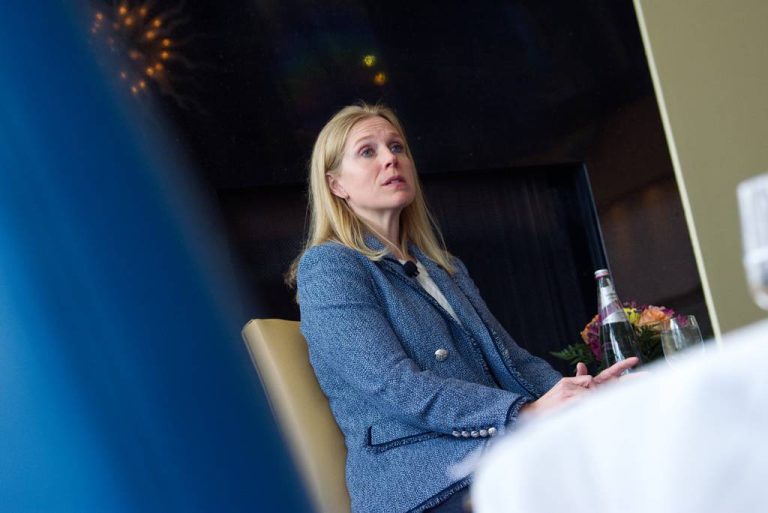
FALLS CHURCH, Va. — Generative artificial intelligence like the wildly popular ChatGPT has a promising future at the U.S. Department of Defense, where time-consuming tasks and red tape can clog the path to accomplishment, according to Lauren Knausenberger, the Air Force’s chief information officer.

A smart assistant or AI-powered chatbot could efficiently find files, answer frequently asked questions or dig up contact information, among other menial assignments, Knausenberger said Feb. 28 at an event in Virginia hosted by Billington Cybersecurity. Automating such processes could save precious time and resources.

“There’s no reason why ChatGPT can’t respond to taskers and take away some of the very heavy knowledge-management work of finding, ‘OK, who are the three action officers across the department that have these different pieces?’ and pulling it together,” she said. “There’s a lot of power there that we can harness in the near-future.”

OpenAI’s ChatGPT — capable of carrying a convincing conversation and churning out content, like computer code or children’s stories — surpassed 1 million registered users within a week of its November launch.

It quickly caught the attention of the Pentagon too. Generative AI, which fuels ChatGPT, was added to a Defense Information Systems Agency tech watch list, which previously featured 5G, zero-trust cybersecurity, edge computing and more.

DISA Chief Technology Officer Stephen Wallace in late January described it as “a pretty interesting capability.”

“We’re starting to look at: How does [generative AI] actually change DISA’s mission in the department and what we provide for the department going forward,” he said.

Militaries worldwide are investing in AI and adjacent tech to improve battlefield analysis, predict maintenance needs and streamline logistics. Knausenberger, who is leaving her CIO post in June, has said the U.S. needs to “automate more” to maintain its advantages.

Knausenberger’s successor has not yet been named.

Public spending on AI, including autonomy, at the Defense Department jumped to $2.5 billion in 2021 from a little more than $600 million in 2016. More than 685 AI projects, including several tied to major weapons systems, were underway as of early 2021.

Colin Demarest is a reporter at C4ISRNET, where he covers military networks, cyber and IT. Colin previously covered the Department of Energy and its National Nuclear Security Administration — namely Cold War cleanup and nuclear weapons development — for a daily newspaper in South Carolina. Colin is also an award-winning photographer.

Pentagon orders engine vibration fix for entire F-35 fleet worldwide

0

WASHINGTON — All F-35 fighter jets should be retrofitted within 90 days with a fix intended to solve a potential engine vibration problem, the F-35 Joint Program Office said Thursday.

The JPO issued an order Wednesday evening recommending the fleetwide retrofit — globally, not just American aircraft — over the next three months, as well as immediately putting it in place for a “small number” of fighters that have been grounded since December.

In a statement to reporters on Thursday, the JPO said it is not grounding other F-35s, aside from the newly built fighters believed to be susceptible to the vibration problem in their Pratt & Whitney-made F135 engines and that have been grounded for more than two and a half months.

The office also said it plans to work with the military services flying the F-35 and international partners to ensure they understand the technical order. “The safety of flight crews is the JPO’s primary concern,” the JPO said.

F-35 deliveries were halted in mid-December after a mishap involving a new F-35B in Fort Worth, Texas. That F-35B, which was undergoing a quality check flight, was videotaped bouncing, tipping forward, and spinning around on the ground before its pilot ejected safely.

After that mishap, Lockheed Martin, which makes the aircraft, stopped acceptance flights for new F-35s. Those flights must occur before the company delivers the jets to the U.S. government. Those groundings had the effect of halting deliveries.

Lockheed confirmed to Defense News on Thursday that it has not yet resumed flight operations or deliveries of new F-35s, most of which are constructed at its Fort Worth, Texas, facility. Lockheed Martin has delivered more than 890 F-35s around the world.

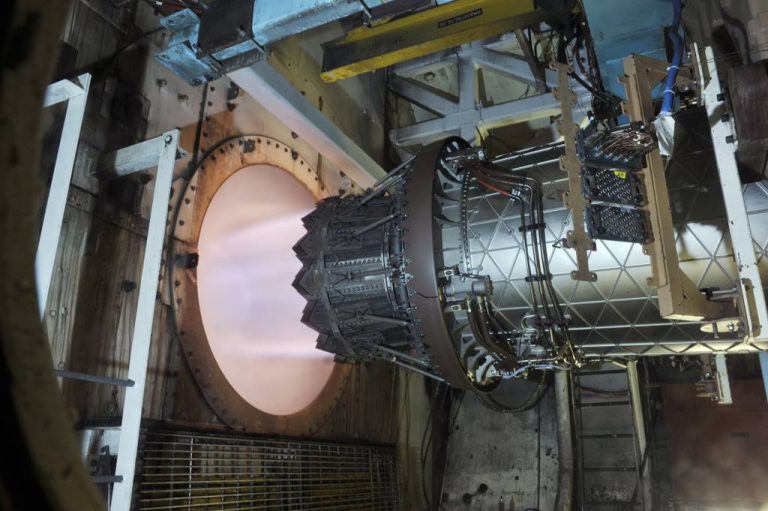
The Pentagon as well as Pratt & Whitney halted engine deliveries later in December. An investigation found a vibration issue in the engine led to the mishap. The JPO said that vibration issue was a “rare occurrence” and announced in February that Pratt & Whitney, which is owned by Raytheon Technologies, and other engineers had developed a fix for it.

The JPO on Thursday said the vast majority of F-35s are not experiencing this engine vibration problem. But it is retrofitting the entire fleet because the fix is “inexpensive [and] non-intrusive,” and will mean all F-35 engines have the same configuration.

This fix can be done at the operational level in four to eight hours, the JPO said. But the office did not detail what this short-term fix will include, besides saying it “mitigates the risk of loss of aircraft should the harmonic resonance occur.”

A longer-term fix is also in the works to keep the vibration problem from happening again, the JPO said, but it did not say what those solutions might be.

In a Tuesday conference call with reporters, Jen Latka, vice president of F135 programs at Pratt & Whitney, said the company is shipping new engines with the fix already installed.

The JPO said Feb. 24 that it had cleared Pratt & Whitney to resume delivering engines.

Latka said the problem is “very rare,” and pointed to the F135′s 600,000 flight hours before the vibration issue happened. Nothing had changed in the F135 engine before this vibration issue happened, she added, and “multiple parameters” had to take place for the dangerous vibrations to show up. She did not identify those factors.

When asked why the vibration issue only cropped up now, the JPO responded: “The harmonic resonance is caused by other systems performing their normal function. Root cause investigation is still ongoing to determine where these system sensitivities intersect with the excitation frequencies.”

Latka said Pratt & Whitney had dealt with “resonance” issues with the F135 engine before the Dec. 15 mishap. But what happened with that F-35B involved “new aspects,” she explained.

“There was new learning there,” Latka said.

The JPO as well as Pratt & Whitney declined to comment on who would bear the cost of the retrofit and other issues with the F135 engine and the delivery halt.

“We will not comment on financial responsibility,” the JPO said. “We are focused on returning the fleet to full safe flight operations.”

Stephen Losey is the air warfare reporter for Defense News. He previously covered leadership and personnel issues at Air Force Times, and the Pentagon, special operations and air warfare at Military.com. He has traveled to the Middle East to cover U.S. Air Force operations.

Another Air Force fleet grounded over fears plane tails may fall off

0

This story was updated March 3 to include new information from NATO and Air Combat Command.

The big search for a tiny component that could cause an airplane’s tail to fall off has uncovered the problem on at least two dozen Air Force jets across at least five aircraft fleets. But the Air Force won’t say exactly how many planes have turned up with potentially dangerous parts.

The E-3 Sentry aerial target tracking planes on Wednesday became the latest to undergo inspection for subpar tail pins, the service’s Air Combat Command confirmed Thursday.

All E-3s in the field were inspected, Air Force spokesperson Capt. Laura Hayden said in an email. Most have returned to regular operations. The Air Force declined to answer how many Sentries needed replacement parts but said enough Sentries have been cleared to meet its daily needs.

“The only aircraft requiring inspection are in depot maintenance and will be inspected before leaving the depot facility,” Hayden said. “No mishaps have occurred in the E-3 … as a result of non-conforming pins.”

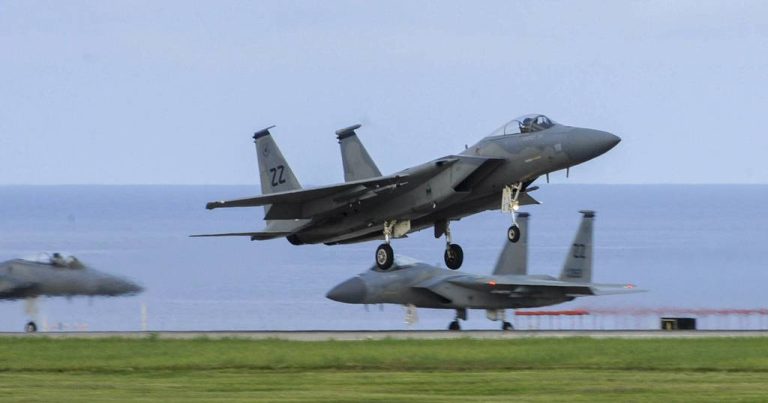
Airborne warning and control system planes are known for their enormous radar domes that track objects moving through nearby airspace. The fleet is spread across Tinker Air Force Base, Oklahoma; Joint Base Elmendorf-Richardson, Alaska; and Kadena Air Base, Japan.

E-3s use a modified Boeing 707 fuselage that is similar to the Air Force’s C-135 family of jets. The service plans to shrink the 1970s-era AWACS fleet from 29 to 16 this year in preparation for the newer E-7 Wedgetail.

NATO owns more than a dozen E-3s as well. The transatlantic air coalition said Friday it is checking its planes after the U.S. alerted all AWACS users, who also include the United Kingdom, France, Saudi Arabia and Japan, to the issue.

At issue are the “vertical terminal fitting pins” that help attach an aircraft’s tail fin — its “vertical stabilizer” — to the rest of the fuselage. The tail gives pilots control over a plane while turning.

Maintainers have checked hundreds of aircraft for substandard pins over the past three weeks. Airmen are done inspecting the KC-135 Stratotanker aerial refueling fleet and are replacing bad pins as needed, service spokesperson Brian Brackens said Wednesday.

As of Feb. 14, 24 of the 90 KC-135s that were inspected had noncompliant pins, Air Force Times previously reported. Planes with the proper parts are then cleared to fly.

Brackens declined to answer how many aircraft need new pins in total, citing operational security.

“The fleet continues to meet operational requirements supporting missions around the globe, which is a testament to the skill, speed and professionalism of our maintenance crews, engineers and logisticians in identifying and addressing the issue and preventing any potential mishaps,” he said.

Work has also finished for three other potentially affected fleets — the RC-135 family of reconnaissance planes, the WC-135 Constant Phoenix radiation‐sensing jet, and their TC-135 training variants.

Hayden said the only planes in those fleets that were found with noncompliant hardware were in depot maintenance. Their pins will be swapped out before they leave the facility.

The service owns about 360 KC-135s, plus around three dozen RC-135 and WC-135 variants that are based on the same Boeing-built fuselage. The Stratotanker fleet entered service in 1956, followed by the RC-135s in 1964 and the WC-135s in 1965.

The Air Force is in the process of retiring its KC-135s to make way for the new KC-46 Pegasus tankers. Stratotankers are based at 10 active duty military bases and nearly two dozen Air Force Reserve and Air National Guard installations around the world.

The RC-135 and WC-135 fleets are headquartered at Offutt AFB, Nebraska.

Each plane has four pins, two on each side of the vertical stabilizer, that are replaced during every round of heavy maintenance.

A leaked memo that was posted to the unofficial “Air Force amn/nco/snco” Facebook page Feb. 9 noted the pins may have been installed during planned depot maintenance between June 2020 and December 2022. The Air Force confirmed the memo’s authenticity to Defense News.

Metallurgical analysis conducted on two nonconforming pins in January found several discrepancies. They were too small, made of the wrong material, and had insufficient plating, the memo said.

If even one were to fail in flight, the results would be catastrophic, the Air Force said.

“Should one pin fail, the other would not be able to carry the remaining load and the vertical stabilizer would depart the aircraft,” the memo said.

Defense News air warfare reporter Stephen Losey contributed to this story.

Rachel Cohen joined Air Force Times as senior reporter in March 2021. Her work has appeared in Air Force Magazine, Inside Defense, Inside Health Policy, the Frederick News-Post (Md.), the Washington Post, and others.

Defense Innovation Unit seeks to convert CO2 into jet fuel

0

WASHINGTON — The Pentagon’s Defense Innovation Unit is seeking to use carbon dioxide, the most readily available greenhouse gas, to fuel military aircraft operating in contested environments.

DIU awarded Air Co., a carbon technology company based in New York City, a contract worth as much as $65 million to convert carbon dioxide into synthetic aviation fuel. The award is part of a DIU effort called Synthetic Fuels for the Contested Environment, or Project SynCE, which aims to create small, mobile fuel production systems that could be quickly deployed during wartime.

“We have an incredible opportunity to reduce our burden on global energy supply chains and simultaneously reduce emissions without sacrificing mission effectiveness,” U.S. Air Force Lt. Col. Nicole Pearl, operational lead for Project SynCE, said in a Feb. 28 statement. “By developing and deploying on-side fuel production technology, our joint force will be more resilient and sustainable.”

The Defense Department is the U.S. government’s largest consumer of fuel, spending more than $11 billion on the resource in fiscal 2022, according to the Defense Logistics Agency. Military aircraft are the heaviest users of that supply.

Because of that reliance, DoD officials are concerned the department’s fuel supply network could be vulnerable to attack and to the impacts of climate change. According to DIU, investing in synthetic fuel technology could “deter adversary targeting while also providing decarbonization pathways for the future joint forces.”

From vodka to jet fuel

Perhaps best known for its flagship product, AIR Vodka — a spirit made from carbon dioxide — Air Company is also focused on alternative fuel production. The company’s process is similar to photosynthesis, converting carbon dioxide derived from sustainable sources into a carbon-negative sustainable jet fuel that it calls AIRMADE.

The company’s processes for creating alcohol and fuel are similar, it said in a statement.

“In addition to its sustainability benefits, our technology enables control of fuel supply and availability for our partners,” Air Company Chief Technology Officer Stafford Sheehan said. “Working with DIU and their stakeholders allows us to continue advancing our technology’s modularity, reliability and efficiency for on-site production.”

The goal is for the military to be able to produce the synthetic fuel at fixed bases or at remote forward operating locations. Unlike many other alternative fuel sources, it doesn’t need to be blended with fossil fuels to operate in aircraft.

“This will give the services the ability to reduce or eliminate their dependence on a ‘commercial-first’ strategy, which creates reliance upon local commercial markets for fuel,” DIU said.

DIU’s partners for the project include the Air Force, the Operational Energy Capability Improvement Fund, the Department of Energy and the Army’s chief engineers office.

Courtney Albon is C4ISRNET’s space and emerging technology reporter. She has covered the U.S. military since 2012, with a focus on the Air Force and Space Force. She has reported on some of the Defense Department’s most significant acquisition, budget and policy challenges.