Living Off The Land Lessons From The Pioneers

0

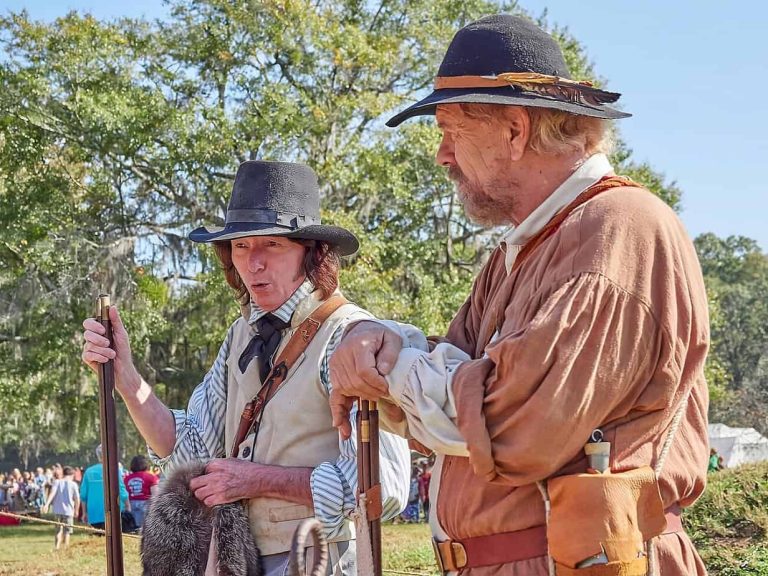
The notion of “living off the land” often evokes a romanticized ideal of simplicity and independence. However, the reality of this lifestyle required specific tools and resources for survival, such as a long-barreled flintlock rifle, gunpowder, lead and bullet molds, a hunting knife, an axe, awls for stitching moccasins, and iron cooking pots.

These items were not easily obtained and often required bartering with animal hides, such as deer, as they could not be manufactured on the frontier. Despite the hardships involved, many people still chose to live this way as a form of rebellion against government interference or simply for the sake of being self-sufficient.

Living off the land back in the day

Modern tools have made gardening significantly easier than the crude, improvised tools used by backwoodsmen and their families. These gardens were typically located in clearings near cabins and required bartering for any metal parts, such as hoe blades. The range of crops was limited, with corn, beans, and squash being among the most widely cultivated.

Saving seeds was essential, but fortunately, many native food plants grew abundantly, including various berries, greens, Jerusalem artichokes, cat-tails, mushrooms, ferns, wild fruit, and nuts. The frontier people relied heavily on these wild food plants for survival, using them not only for sustenance but also for medicine, dyes, soap, and other purposes.

For instance, the blackberry plant was a valuable resource, providing berries for culinary use and for making wine or brandy. Leaves were dried, and roots were dug, cleaned, and dried for medicinal use, as all parts of the plant were helpful in cases of diarrhea and dysentery.

A teaspoonful of crushed, dried root mixed with a cup of boiling water was drunk as a remedy, with one or two cups per day taken until the condition subsided. Even eating a large quantity of fresh blackberries in season could provide relief. Unlike modern times, frontier people paid close attention to the potential uses of native plants, recognizing the importance of these resources in their daily lives.

In the past, having a food garden destroyed by marauding Indians could be disheartening, and losing the whole homestead was even worse. Today, as gardeners, we fret about slugs, cutworms, plant diseases, and neighbor’s cats, which is quite a contrast. In the past, pioneering folks would gather their possessions and move to a different area when the soil played out, or game became scarce.

Today, we are less inclined to move on a whim, and we are not in a fight for survival. However, we still continue to live off the land, albeit not to the extent that our forefathers did. The land is still here, and it is up to us how we use it.

Nowadays, it is uncommon to procure meat by shooting a turkey or deer from the back door of a cabin. Instead, we depend on local markets and suppliers who raise livestock, poultry, and fish. Those who have extensive acreage under cultivation are called farmers, and those of us who like to have our own good quality food supply participate in a top-rated recreational activity known as food gardening.

We are not entirely dependent on what we grow, but we do derive deep satisfaction from living off our land, whether it is a small backyard garden or one that covers half an acre.

There are some gardeners who prioritize aesthetics over vegetables. They enhance the beauty of their surroundings with flower pots and plots, and delight in being part of garden clubs. As tillers of the soil, we are a diverse group with a rich history.

Even today, our gardens still feature many descendants of the plants that sustained pioneers, but they have undergone significant improvements through hybridization and selective breeding. Take greens, for example. For those of us who enjoy them, there are now numerous types of mustard, turnip, sorrel, and more to harvest. Plant breeders have developed superior-tasting turnip greens, like Tokyo Cross and White Lady, whose roots are of higher quality than the old varieties and can even be used in salads.

Living off the land lessons

Turnips

Luckily, transporting vegetable seeds didn’t require much space, and many immigrants from Europe to the New World brought seeds with them. Turnips, believed to have originated in northeastern Europe, were commonly grown by these immigrants.

Turnips are particularly well-suited for cool seasons in spring and fall, and they produce plentiful seeds when they bolt with the onset of warm weather. With proper storage in a cool location, turnips can be preserved for long periods. While pioneers resorted to root cellars for storage, we now have the convenience of refrigeration.

Mustard

Another plant of European origin that has become naturalized in some areas is mustard, thanks to its abundant seed crop. In addition to its flavorful leaves, mustard is desirable for making dry mustard from its dried seeds.

However, it’s best to harvest the seed pods before they are completely dry to prevent scattering. Clipping the stems and hanging them upside down in bags will keep the seeds contained. After threshing and winnowing, the seeds can be ground into a powder using an electric blender and stored in airtight jars indefinitely.

Today, one of the most popular mustard varieties is Florida Broadleaf, which is easy to grow and can survive mild winters, providing tangy leaves throughout the cold season. A delicious sandwich can be made with butter or mayonnaise and a generous serving of fresh mustard leaves.

TLW banner1

Peppergrass

The early settlers relied on various wild members of the mustard family for sustenance. One such plant is peppergrass (also known as pepperweed or poor man’s pepper), which can be found growing in dry soils on roadsides, fields, and clearings throughout the United States and southern Canada.

The leaves have a peppery taste and can be eaten raw or cooked, with the best flavor achieved when they are gathered before seed pods form in early summer. The seeds have a hot, spicy taste and can be used to add flavor to soups, stews, or salads, and may be dried in the same way as regular mustard seeds.

To separate seed pods from stems, rubbing the dry stems between your hands is the best way. Only the tender leaves of peppergrass should be cooked, as the stalks tend to be tough. While it takes a considerable amount of peppergrass alone to make a pot of greens, I remember it from my childhood during the Great Depression when it would be gathered and mixed with other greens. To store the seeds, simply place them in airtight containers and use as desired.

Sheep sorrel

For those of us fortunate enough to have spent our early years in the countryside, memories of walking along paths where sheep sorrel grew in abundance are vivid. I distinctly recall picking a sorrel stem and enjoying the sour taste of both its stem and arrow-shaped leaves.

Sheep sorrel is a plant that shines when mixed and cooked with other greens or used in salads. In our garden, we have French sorrel, an improved version of sheep sorrel with large leaves that are much easier to gather and rinse. Both native and improved varieties of sorrel are perennials, and the native sorrel can be found all over the United States.

There are countless useful native greens, such as lambs quarters, purslane, poke salad, plantain, dandelion, dock, and many more. Most of these are perennials and will re-emerge year after year if left undisturbed. They can be found throughout the United States, southern Canada, and even some parts of Mexico. If you cannot forage for these plants in the wild, most can be grown in gardens, as long as precautions are taken to prevent them from becoming invasive.

Wild garlic & onion

wild grlic foraging just like the pioneers did

The frontiersmen of the past were not only hunters and gatherers but also skilled farmers who knew how to cultivate the land and grow plants to enhance the flavor of their meals. They had extensive knowledge of the Allium genus, which includes several wild and cultivated varieties such as wild onions, wild garlic, leeks, and chives.

These plants were particularly useful as they added a distinctive onion or garlic flavor to meats and vegetables. If you are unsure about their identification, you can rely on your sense of smell to detect their signature aroma. Fortunately, all of these plants are easy to grow, but like some other plants, they can become invasive and take over your garden. Therefore, it is essential to keep them under control.

One way to manage them is to snip and freeze their tops when they are young and tender, especially as they tend to go dormant when hot weather arrives. By doing this, you can preserve their fresh flavors for later use. In addition, the bulbs can be dug up when they are dormant and spread out to dry in a shaded spot. Once dry, you can brush off any dirt and store them in cheesecloth bags in a cool room.

Using these dried bulbs is a great way to add flavor to your dishes, and you can grind them to a fine powder or chop them into small pieces. You can use them as a seasoning for meats, vegetables, soups, stews, and sauces. They are also an excellent addition to marinades and dressings.

In summary, the Allium genus is a versatile group of plants that has been used by frontiersmen for centuries to enhance the flavors of their meals. With a little bit of knowledge and care, you can grow and harvest these plants in your garden and enjoy their delicious flavors all year round.

Jerusalem artichoke

Plants with edible tubers can provide a valuable source of nutrition, particularly when other food sources are scarce. Among these plants, the Jerusalem artichoke stands out as one of the most widely cultivated and appreciated by those in the know. Indigenous to North America, the Jerusalem artichoke is now found across the United States and beyond, and its small, knobby tubers are prized for their unique nutty flavor and versatile culinary applications.

To harvest the tubers, one should wait until the plant has gone dormant and then carefully dig up only what is needed, leaving the rest in the ground or covered with soil nearby. Unlike potatoes, Jerusalem artichokes keep better when covered with soil than when cleaned and refrigerated, so it is best to leave them in the ground until ready to use. Before cooking, simply wash the tubers and scrub them with a vegetable brush; there is no need to peel them.

Jerusalem artichokes can be eaten raw as a snack or in salads, but they are perhaps most commonly boiled, fried, or scalloped. Unlike potatoes, they contain no starch, but rather a carbohydrate called inulin, which makes them a safe choice for diabetics. They are a delicious and nutritious addition to any meal.

To grow Jerusalem artichokes, it is best to plant them alongside a fence, as the plants can grow quite tall and may fall over onto other plants if not supported. They will grow in a variety of soils, but seem to do best in poor soil. With proper care, they will yield an abundant crop of tasty tubers year after year.

Poke salad

Assuming all is well with the landowner, foraging for food plants can be a fun and rewarding activity. In the southwestern region of Arkansas, one of the most dependable and nutritious native plants is the poke salad. This perennial plant emerges early in the spring, producing tender and flavorful leaves that can be harvested for a delicious meal.

banner floy

However, it’s important to be mindful of how you harvest poke salad to avoid harming the plant. Some people may be tempted to cut the young shoots at ground level, but this can be damaging to the plant’s main stem. It’s best to clip the leaves from the plant, leaving the stem intact for future growth.

Luckily, poke leaves are relatively easy to clean, as they are typically left alone by pests such as aphids. Simply swish the leaves in clean water to remove any dust particles, then parboil them by bringing them to a boil for about three minutes in a small amount of water before draining. Be sure to use plenty of leaves, as they will cook down significantly.

Next, put the parboiled leaves in fresh water and season them as you would any other greens. Boil until tender, then serve the delicious dish of poke salad topped with sliced hard-boiled eggs. Yum!

As the plant matures, it will produce small greenish-white flowers, which will eventually turn into purple-black berries when fully ripe. However, it’s important to stop harvesting the leaves once the plant starts producing flowers, as poke can become poisonous after a certain stage in its growth. Once the leaves and stems start turning red, the plant’s phytolaccic acid content increases, making it unsafe to eat.

But don’t let that discourage you from enjoying poke salad! The mature berries of the plant can still be useful for making ink or dyeing, producing a deep and rich royal purple color. However, be aware that birds are particularly fond of the berries and may eat them and then leave behind unwanted “gifts” on your clothesline.

If you’re interested in growing your own poke salad, it’s actually quite easy to raise in a garden. However, keep in mind that it is a tall-growing plant and should be planted along a fence or out of the way of shorter plants. Poke is a sturdy plant and is unlikely to be blown over by strong winds.

When harvesting poke seeds, be sure to save some for planting in the spring, and thin seedlings to stand about 18 inches apart. It’s best to wait until the second spring before harvesting some leaves, as the plant will need time to establish itself. Poke does not seem to be too particular about soil type, though it tends to grow best in rich, fertile soil such as that found in a barnyard. With a little bit of care and attention, poke salad can be a delicious and nutritious addition to any meal.

Fruits and nuts

fruits native to the old land

The pioneers relied heavily on native fruits and nuts for sustenance. Wild plums, with their tart flesh, were often used for jams and jellies. A variety of other wild fruits were also considered desirable, including blueberries, elderberries, blackberries, dewberries, pawpaws, muscadines, wild grapes, crab apples, persimmons, hickory nuts, native pecans, butternuts, American chestnuts (which are now nearly extinct due to chestnut blight), black walnuts, and chinquapins, to name a few. Although these fruits and nuts can still be found today, they are not as abundant as they were in the past, due to deforestation, urbanization, and agricultural expansion.

Despite these challenges, it is still possible to find and gather wild foods. However, much of the land where these plants grow is now privately owned, so it’s important to obtain permission from the landowner before foraging. Trespassing on private property can result in legal consequences and is generally not a good idea.

A last word

If you are keen on foraging or cultivating native plants and living off the land, it would be helpful to acquire a book on the subject or seek guidance from someone experienced in foraging. Practical experience is the most effective way to learn.

The most costly books that cover the entire United States may not always be the best, so it is advisable to look for a book that provides substantial information about plants in your area, as well as recipes for using the produce you intend to gather.

Foraging for valuable native food plants can introduce you to an entirely new world, as it did for the early settlers, and it is still feasible to enjoy many of the same plants that they once depended on.

Suggested resources for preppers:

Harvesting and canning wild greens

The #1 food of Americans during the Great Depression

Survival foods of the Native Americans

If you see this plant when foraging, don’t touch it!

Hi all! New Here! | Survival Monkey Forums

0

  1. I’ve been a “lurker” for about 6 months and I’ve seen several threads I’d like to comment on, so decided to join! I have a small patch of land in the middle of Kansas, grow my own garden, have a few chickens, dogs, cats, and one spoiled horse. I work full time in the aircraft industry as an estimator.


    Gator 45/70 and Dunerunner like this.
  2. Welcome to the Monkey! That plot of land, garden chickens, dogs, cats and spoiled horse sounds like paradise…


survivalmonkey SSL seal


survivalmonkey.com warrant canary

Watch Ukraine use Soviet-era helicopters in fight against Russia

0

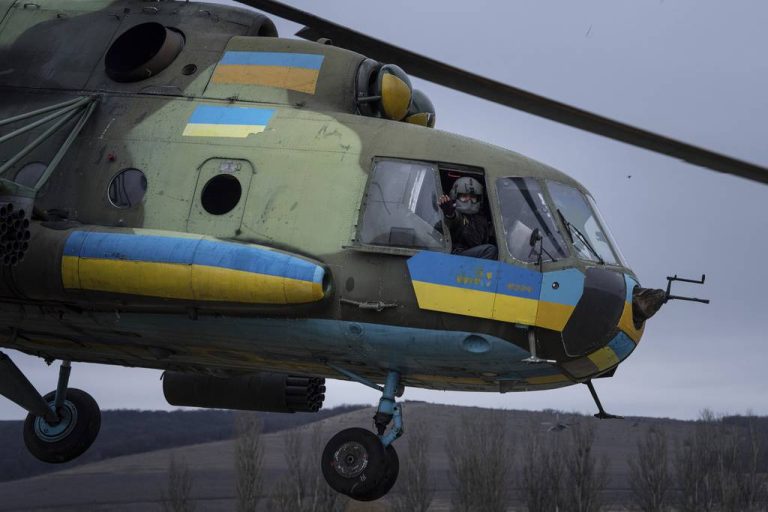
DONETSK REGION, Ukraine — Skimming the treetops, three Soviet-era attack helicopters bank and swoop down on a field after an early-morning mission to the front lines in the fight against Russia’s invasion of Ukraine.

Each day, they might fly three or four sorties, says the commander, whose two-crew Mi-24 helicopter, built about 40 years ago, is older than he is.

“We are carrying out combat tasks to destroy enemy vehicles, enemy personnel; we are working with pitch-up attacks from a distance from where the enemy can’t get us with their air defense system,” said the commander, who spoke on the condition of anonymity for operational security reasons, in line with military regulations.

The conflict in Ukraine is largely an artillery war, with territory being fought for inch by inch under a barrage of shells and missiles. But Ukraine’s aviation capabilities play a significant role in the fight, the pilot said.

“The importance of the helicopters is huge,” said the commander, who is part of Ukraine’s 12th Army Aviation Brigade.

Footage from a camera attached to the helicopter during a recent combat mission shows it flying over fields pockmarked with craters from artillery bombing, and firing missiles at Russian trenches that cut through the landscape.

“We are shooting from the big distance and hit the target clearly, like there’s a cross on the target and [the missiles] go by themselves where they should go,” the commander said.

He would, however, like to fly a newer model.

“We need to master something new, something from abroad,” the commander said. “It has better characteristics. You can maneuver more on it, there are more rockets on it and the weapons are more powerful. We can do more tasks with better quality and with less risk for us.”

Several countries, including the United States and Britain, have pledged to send, or have already sent, helicopters to Ukraine as part of military aid since the start of the war sparked by Russia’s invasion in Feb 2022.

When the Left has grown so completely insane that even Bernie Sanders has to put his foot down…

0

“Do I think we should not have police departments in America? No, I don’t. There’s no city in the world that does not have police departments,” the Democratic socialist responded.

“I didn’t call for more money for police departments. I called for police departments that have well-educated, well-trained, well-paid professionals. And, too often around this country right now, you have police officers who take the job at very low payment, don’t have much education, don’t have much training — and I want to change that,” he continued.

“I also called for the transformation of police departments into — understanding that many police departments and cops deal every day with issues of mental illness, deal with issues of addiction, and all kinds of issues which should be dealt with by mental health professionals or others, and not just by police officers.”

Sanders faced pushback from fellow lefties over the proposals he detailed to Schumer, but he stood by his position in the interview.”

When the Left has grown so completely insane that even Bernie Sanders has to put his foot down…


Bernie Sanders doesn’t support defunding police, wants to pay cops more


Original Work – Flaws and Features, Post-Apocalyptic Fiction (Finished)

0

Chapter Three: 3,100,000,000

“I can’t believe it! We knew what we were in for here, I can’t believe we forgot the lighter fluid!”

Pierre looks at the wet pile of wood in despair. The area must have been hit with some heavy evening showers, because the ground and logs are damp and coaxing a fire from dry kindling alone is a challenge his party lacks the skill to accomplish.

“Gasoline?” suggests Sarah. “We can use gasoline, can’t we?”

“Yeah, but you remember the last time I did that, don’t you? Burned half my beard off!”

Heather chuckles, then she remembers something she had seen from some survival show.

“Guys, can I try something?”

She pulls a couple of corn chips from the bag she had been munching from, holds a lighter to them, then places the burning ends inside the tepee of paper, twigs and pine needles. The corn oil makes for a nice little blaze that rapidly ignites the kindling, and then catches fire to the wood itself, Pierre gradually adds progressively-larger sticks and branches to the pit, and soon they have a good fire going.

“Well, I’ll be damned.” he says in honest admiration. “I’ll have to remember this.”

Pierre and Sarah’s chosen refuge is unsurprising: a trucker and biker bar outside of town, with a large field and pond behind it. Camp-outs and parties are commonly held here, campers and tents sprout up haphazardly as more and more of the patrons gather at their favorite watering hole. It bears a lot in common with another campsite on the mainland some distance to the northwest, just a little louder and rowdier.

Music is blaring over a set of field speakers. Heather wonders if the grid is still up here or if they’re running generators. Either way, it probably won’t last. Batches of moonshine pass from campfire to campfire. That will last quite a bit longer, and maybe without blinding anyone. Taking her chances, she takes a gulp and hands the jug to Kundar, who politely declines.

“Oh yeah, forgot. Sorry!”

“No problem.” he says genially.

“By the way, Kundar, what was that from earlier? That poem you quoted?”

“With the dead bodies coming back to life? Ah, the Rime of the Ancient Mariner, a droll old thing about a cursed sailor and the story of his redemption. Probably one of the most widely-referenced Romanticist poems in the English language.” He laughs. “Obtuse and archaic even by 18th century standards, so of course all the 19th century gothic writers loved it, as did 20th century horror and science fiction writers.”

Kundar has an interesting accent. It’s vaguely British and it contrasts amusingly with the French accents of Pierre and Sarah.

“Heavy metal musicians have a thing for it, too.” says Pierre, riffing an air guitar dramatically. He begins to loudly belt out “Hear the rime of the ancient mariner/ See his eye as he stops one of three.” in falsetto. There are laughs among the group, and then from other nearby groups. Before long, Karyn the bar owner has Iron Maiden blaring on the speakers.

Darkness falls. Several hours later, Frankie finds his way to the place with his wife, several of his adult children and a few of their grandchildren. They begin unloading multiple boxes of foodstuff and other gear from a minivan, and it doesn’t look like they had needed to loot it.

Heather is a bit surprised to learn that the nice old guy from the office is a prepper. She’s even more surprised by the big, military-looking rifles that he and his wife are carrying. Not M16s or AKs, but something older. She recalls from somewhere that he’s some kind of Seventh-Day Adventist, and wonders if his church encourages prepping in the same way that Mormons do.

Won’t that be funny? The whole world is going to be divided between outlaw bikers and outlaw missionaries.

* * *

It did rain a time or two in the night, but Daniel’s poncho is proof against it. Mariam is up before he is, and he awakens to the smell of oatmeal and green tea on a campfire. She burns it a little, but he doesn’t complain. They eat together in silence.

“Have you ever seen that old movie, Invasion of the Body Snatchers?” she finally asks.

“Yeah, but it was a long time ago when I was still a kid.” says Daniel. “Read the book a little more recently. Why?”

“I… I wasn’t sure if I was going to wake up human today…”

A drab green Toyota pickup pulls up to their campsite as they finish off the breakfast. The older woman driving it is in the same rough uniform as the men at the checkpoint—or maybe she normally dresses in jeans and camouflage. Daniel half expects to see another belt-fed gun mounted in the bed like the one on the roof of the Mercedes G-Class, but the only visible weapon is a hunting rifle in the gun rack.

“Mary!” screams the driver as she parks the truck, quickly running to the woman and wrapping her as tightly as she dared. Daniel hadn’t known whether or not Mariam had been close to her in-laws before, but of course it makes sense for them to cherish her now, when shortly before they had every reason to assume her lost among the dead or living-in-death.

The greetings are short and succinct. The pickup driver, Hannah Baker, doesn’t bother asking about her son; either already suspecting his fate, not wanting to know, or a bit of both. They help to clean up and pack and, at her insistence, Daniel follows them to the family farm.

There are now twelve people living permanently on about 100 acres of good growing land, a rare commodity in this area. They’re in the process of amalgamating nearby woodlands and some abandoned vacation properties, and are clearly intent on creating, as much as possible, a fully self-sufficient freehold within the wider community.

Daniel treads gingerly into the two-story stone-and-wood farmhouse and a mug of what looks like beet juice is immediately shoved into his hands. A raucous crowd has gathered to celebrate in the dining room, and Daniel soon discovers that his desultory act of charity has, in their minds, turned him into a Saint George character who saved their princess from the clutches of a winged dragon.

It makes sense, he comes to realize. The strength of a clan is measured in its ability to safeguard and care for its women and children. Someone who helps the clan in that endeavor, saving one of both no less, will naturally be seen as a friend. It feels a little odd to think of modern people in terms of Stone Age tribalism, but then the ability to adopt that kind of mindset is what will likely divide the quick from the dead in this new world of theirs.

Daniel extracts himself from this commotion as fast as courtesy allows. He finds an out-of-the-way place where Hannah is reading a book on home brewing, and takes a seat across from her.

“What’s going to happen to Mariam?” he asks.

“Hard to say. She’s healthy enough physically. I’m a little worried at her having the baby here, but I can’t imagine a better place in this world to do it. We have a doctor and a midwife in town, Cousin Rob is a veterinarian and he seldom loses his foals. Maybe we’ll manage.”

Hannah takes a sip of the oddly-colored beverage. Daniel had noticed a smell like spruce needles in his own drink, and he wonders if she plans on making spruce beer.

“Are you… staying?” she asks.

“I’m afraid not. I have some things I have to take care of on my own property, another 500 kilometers away.”

“Oh well.” says Hannah, crestfallen. “Well, Jamie, Georgie’s older brother, he lost his wife. He and Mary always got along well, maybe he could take her in for awhile.”

Leverite marriage, thinks Daniel glumly. How delightfully Old Testament.

“It wouldn’t have to be real, of course,” she continues. “Just something to keep those creepy kooks at the checkpoints from coming around and bothering her.”

“Wait, what!?” Daniel asks. “You mean your local church?”

“Not our church. They’re a weird bunch, that group. They came around here a few years ago. Set up shop where the big sawmill used to be, minded their own business, they put more money into the economy than they took out, and it was nice to see families and children around town for a change, so we ignored them. There must be some three hundred of them or so now, but it never seemed like there were that many before. The rest of the community is pretty evenly split between local residents, bugged out vacationers, and refugees of various types. The churchies say they don’t want to end up running the place, but they act like they already do.”

Daniel looks up and casts a suspicious eye around the room, concerned at what the answer to his next question might be.

“How bad is it here, really?” he almost whispers. “Are they setting up some kind of theocratic dictatorship?”

She sighs.

“No. Not yet, at least. Fact is, they’ve been nothing but helpful so far. They provide food and fuel for people who need it, they’ve offered advice on surviving in this new world of ours. They’ve even given away guns to families who want them but don’t have any. They say they want everyone to have the ability to defend themselves, which isn’t the kind of thing you do when you want to create a dictatorship. Yeah, they’re kind of preachy and annoying but,” she shrugs, “I don’t know, they’re definitely charitable. Maybe they really do read that Bible they keep thumping.

“Of course, it’s only Day Two of the apocalypse. Who knows what things will look like in a few more months or years? That’s why I’m trying to keep the family as independent as possible, just in case it ends up getting bad for us.”

* * *

Jamie Baker agrees to drive Mariam to the local resource centre to get some clothes and other essential items. Daniel decides to tag along, partially to get away from the mass of people at the farm, and partially because he wants to see what the town looks like.

“Is that an army-issued rifle you’re carrying, Daniel?” asks Jamie as they crowd into the cab of his truck.

“I’m sorry, what?”

“That rifle of yours. I had one just like it in Afghanistan, fighting for the Sackler Family’s Opium, or Justin Trudeau’s Weed, or whatever bloody worthless thing I was supposed to be fighting for.”

“Oh, yeah… I don’t know.” says Daniel. “I pinched it from a security van. Still haven’t had a chance to fire it, it’s not the kind of gun I ever had any practice with.”

The drive is short. He doesn’t know what he expects to find in town, but at least at first glance the place seems normal. More normal than the few desolate highway towns he had driven through. The resource centre is being assisted (or taken over) by the church. They don’t have a wide variety of merchandise, but what they do have comes in abundance. Mariam buys clothes and bedsheets from the store, and receives a free care package of sorts from the church.

Interestingly, they have a “professional tailor” on site today, a bubbly young girl who can’t be more than 16 years old. She takes Mariam’s measurements and tells her to visit or radio back later, and she’ll give her a price on maternity outfits. Daniel is taken aback by the charming girl, and only slightly perturbed by the police-issued MP5 submachine gun she keeps close to her work bench.

Something about these people and their arsenal isn’t adding up, and he asks about it when he’s once again in the safety of the truck.

“Where did they get all of this hardware?”

“You noticed that, eh?” says Jamie. “Yeah, they were the first to hit the local Gendarmerie barracks. They say they got all the military gear from an army warehouse near here, a secret one that wasn’t on any maps. Maybe that’s true, and maybe it isn’t. But I think they must have been stockpiling long before this happened.”

“They’re making a few of their own too, apparently.” notes Daniel. “Did they just happen to have a munitions plant somewhere?”

“Yes.” says Jamie flatly. “Traditional machine shop, and some 3D printers. I guess that’s why they’re in charge: they had the initiative, they had the organization, they had the manpower, and now they have the firepower.”

“Yeah, sucks how that works.”

“Oh, I don’t know. Someone has to be in charge. If not them then probably me and my drinking buddies at the Royal Legion branch, God help us. If not us then some group of thugs or gunsels like we keep hearing on the ham and shortwave. Rumor has it that the church has lots of heavier stuff in hiding, just in case something bigger and stronger comes to visit one day. Smart, if true.”

“Bigger and stronger? Does anything like that still exist?”

“Yeah. We’re only hearing scattered reports on the radio, no one really knows what’s happening for sure, but it looks like the combined zombified militaries of the world are gearing up for war. We don’t know if they’re going after the unaffected portions of the world, or coming after us, or something else entirely. If you have some time after we get home, we’ll fire up the radios and see if we hear anything. And I’ll clue you in on world events as much as I can.”

Daniel thinks about that for a moment. He’s close to home now, and eager to finish his journey. But he also suspects that Jamie, who is clearly more familiar with radio communications, might be able to provide him with information that he wouldn’t find on his own. And in any event, he’ll still probably get there before the end of the day.

“Well… if there’s still wars, then at least we know that free-thinking humans control at least part of the planet.”

* * *

The story in the local area is largely being repeated throughout the English-speaking world. Those affected are disproportionately urban, urbane, conventional and obedient; those unaffected largely rural, rustic, oppositional and defiant. The political and economic elites have almost all turned, as have their managers and petty bureaucrats, the police and military who protect their system, their healthcare workers and others in industries considered essential to their power and lifestyle.

There are exceptions. There are a few billionaires and politicians and generals who remain standing, and there are reports of outlaws and rebels who have fallen, but on the whole the strange sickness largely spares what had once been called the lumpen-proletariat. Bakunin and Stirner would have been happy.

Western Europe is in an even worse state, since undomesticated humans of the kind who seem more immune were simply not as common there. Eastern Europe and Russia, in contrast, seem to be in better shape. However, their upper echelons and essential workers have turned almost as heavily as the ones in the West. And, as rigid and hierarchical as Slavic societies tend to be, it’s likely that the loss of so many in the ruling and managerial class will lead to serious disruptions downstream.

China is in a better state, but not much better. The state apparatus is still functioning and the military is in-tact, but losses have been suffered and national cohesion is low. It is entirely possible that Huaxia will arise from this chaos as one of the more undiminished world powers, equally likely that it will sink into another Warring States or Warlord Era.

It’s the rogue states and hermit kingdoms that seem to be the real winners. Almost no one turned in Afghanistan, Houthi Yemen, Cuba, or North Korea. The forces of the latter swarm south and across the sea to secure the wealth left behind in South Korea and Japan. Within hours, they become among the mightiest military powers in the Pacific Theatre.

In most of Latin America, the Indian Subcontinent and Southeast Asia, the division of affected and unaffected generally reflects the stark class disparities in those regions. On the ground, the situation seems to resemble something of worldwide bloodless (though not deathless) peasant uprisings. Campesinos drive their trucks or mule teams into Mexico City and Rio de Janero to loot the mansions of their former masters, while cartels help themselves to the contents of military bases.

Singapore is under a two-pronged amphibious assault by surviving fishermen and mariners of Malaysia and Indonesia. This is particularly noteworthy, because it’s one of the few cases where the zombies fight against human interlopers rather than placidly ignore them. With fists and teeth, with handheld weapons and thrown detritus, with hastily-built barricades and deadfalls, with homemade explosives and with the few guns available, the businessmen and shopkeepers of the city-state resolutely resist the ad-hoc invasion. People who wouldn’t spit gum on the street in their last life fight like Viking berserkers in this one.

Only a few people in Africa turn, and most of those are among the most affluent, politically-connected and thoroughly westernized. The common people barely notice a difference, even the severance of Western and Chinese aid troubles them little, as so little of it ever trickled down to their coin-purses anyway. If anything, their lives may improve in a world without their politicians and other parasites.

North Africa and the Middle East are the greatest anomaly. Except in those nations with regimes most slavishly loyal to the West, neither the rulers nor the ruled are significantly affected. Israel is almost completely gone, with the only significant number of survivors to be found among the Arabs and some of the small Christian and Ultra Orthodox sects. From comparatively-unscathed Damascus and Tehran to now-leaderless Riyadh and Cairo, the call is rising for the faithful to march forward in Holy Jihad and reclaim their stolen land while they have the chance.

* * *

Mariam’s face turns ashen upon hearing that last one. She is indeed Arab as Daniel had guessed, Palestinian specifically. And while she has no love for NATO’s racist settler colony, she also understands that anything fired at it could easily fall short and wipe out her cousins in the old country. Survive the zombie apocalypse just to die beneath a volley of SCUDs, heh heh, wouldn’t that be some shit?

Jamie keeps his equipment in a little sheet-metal shed with solar panels, a gasoline generator, batteries and a tall antenna mounted on a hilltop near the main house. He has a ham radio and transmitter, an amplified CB/GSR rig, a shortwave receiver, standard AM/FM radio, an emergency services scanner, and a stolen police radio capable of listening in to trunked or encrypted communications on applicable frequencies. Anything he hears, and the frequency he hears it on, is meticulously transcribed with an old Royal Typewriter. He has a niece and nephew who serve as apprentices and listen in when he isn’t around.

Nothing, of course, can be taken as gospel truth. Most of it has gone through several iterations of Chinese Whispers before reaching them, and Hannah, who had originally wanted him to serve as her comms and intel officer, sometimes wonders if the whole operation is anything more than a time-intensive distraction.

Daniel’s bike is lighter when he leaves, and he tears down the road in a choler. He doesn’t feel lighter though, only emptier. It’s as if there’s a void behind him where a small, soft, round figure had once held tight. He frankly feels like pulling over and going behind a tree to have a cry, but he brutally banishes that inclination from his mind.

“You’re leaving?” she had asked.

“Yes.” he had said simply.

“You’ll be back someday?”

“If at all possible, I will be. There are a lot of things here that I would like to work with, and some people I might want to keep in touch with.”

She was silent for several seconds, hazel eyes regarding him. She held a sleeping infant in her arms, Jamie’s youngest son. The motionless child had a look of complete serenity on his face, oblivious to the cares of a dying world.

“Are you scared?” she asked.

“Yes.” he said.

“What will you do?”

He shrugged.

“I was a… a researcher of sorts in a past life. I have some equipment at my property, and I plan to set up shop again and conduct a few experiments when I get there, maybe get a better understanding of what’s happening.”

She didn’t ask why he couldn’t stay with her family, or try to get patronage from the church. Maybe she understood that something was being left unspoken.

“Like a wizard retreating to his hermitage?” she asked gamely.

“Like one, that on a lonesome road
Doth walk in fear and dread,
And having once turned round walks on,
And turns no more his head;”

She had smiled at that. He left unspoken the rest:

“Because he knows, a frightful fiend
Doth close behind him tread.”

There’s one more thing he left unspoken, even to himself: they’re all going to die. That’s the outcome if the models prove accurate: he, she, her in-laws, the church members, the guy with the revolver back at the intersection, Elijah the security guard and Angie the janitor, everyone he’s seen or met in the time since the event will be dead or worse within a couple of years. It’s possible that even the living dead will eventually die, although in a more grotesque fashion as the internal nanomachines their runaway bodies are producing slowly outgrow them.

Those are the odds, if something isn’t done to change the model. Daniel does what he always does with thought like that: he takes hold of it, compartmentalizes it, and buries it so deep in his psyche that it’ll probably cause him problems later. He’s therefore able to continue pretending that he’s done a good and worthwhile thing today.

As he rides on, he thinks about the one last bit of news he heard before he left: a patrol from the church had stumbled upon a group of the possessed in the nearby forest and attempted to capture them. They resisted. One had a pistol and managed to gun down a human with it before running out of bullets. The others rushed forward with clubs and knives, as sullen-faced as ever as they tore into their foes in a bloody frenzy. They fought with no sign of pain or fear, not even speaking a single word as they beat and slashed and stabbed. Gunshot wounds alone failed to reliably stop them, only blood-loss or immediately-incapacitating damage served to end the onslaught. Only one member of the twelve-man patrol survived to tell of what happened.

Daniel thinks back to that first act of violence he had witnessed, when Mariam’s husband had shoved her. First that, then the admittedly-dubious reports from Singapore, now this, all over the course of 24 hours. A frightening escalation, and where it’s leading seems obvious to him.

* * *

Heather’s survivor community has a smattering of radios that they occasionally listen in on. But they don’t monitor them as diligently as the Bakers and would frankly wonder why it matters what’s happening in far-away Israel or Singapore.

Nonetheless, they have noticed things. They see contrails in the sky cut by large cargo planes, their scouts spy heavily-laden convoys of army trucks on the highways, some have gone as far as the nearest harbor to see troops and equipment loading onto ships bound for ports unknown. It’s obvious that the nation is at war, but who they fight and why remains a mystery.

Within a few days, the hordes rehouse themselves in city centres, occupying essential infrastructure such as major factories and farms, and eventually procure weapons to defend them. They open fire on those unaffected who draw too near, but as of yet they don’t attack unprovoked and they seem to leave the hinterlands free for the wild humans.

The days roll on, the campground inhabitants settle into one profession or another. Pierre becomes an officer in the militia, Frankie’s wife becomes the resident doctor, Frankie goes to work building raised-bed gardens, Sarah joins the scavenging parties that sneak into town at night for any needed goods, Heather finds herself helping to set up a system of latrines and shower houses. Sanitation duty is a nasty line of work, but it is essential, and she’s at least glad that they can find something worthwhile for her to do.

Karyn is the de-facto leader, though leadership and governance remain haphazard. The political situation is largely that of individualist anarchism, the economy one of war socialism. Excess and newly-acquired supplies are held in common and distributed on the basis of need and merit, but anything originally brought to the campground remains the property of whoever first brought it. Looting the city is a dangerous affair; when Sarah and the others go out, they very often take losses.

Dying and death are well-known to the survivor community, and not all of the corpses come from that first chaotic day. Many who survived were later found hanging from rafters, sitting in bloody bathtubs or crumpled at the base of high jumps. Some of these were despondent over the loss of loved ones or unwilling to abide a world of preindustrial or even paleolithic hardships. That’s bad enough, but even worse is when they find the remnants of entire families where parents had decided their children are better off not living at all, rather than living in the new world.

Accidents seem to make up the rest, in particular those people—often very intelligent by the standards of the old world—who burn down their houses or suffocate in their sleep because they know less about fire than the average paleolithic child. A few people drink of the cool, clear, woodland water and are rudely introduced to giardia, but most of those will only suffer a painful learning experience from it. It could be worse, and it would get worse. It’s still too early for the more serious risks of food poisoning, and the climate and temperature is not so much of an enemy at this time of year.

Perhaps the most dispiriting source of casualties comes from the so-called “late turners,” people who are fine one moment and suddenly find themselves stricken with those mind-rending headaches that quickly turn them into twitching paralytics. The victims are dangerous if allowed to complete their transformation, and the survivors suspect that other automatons might be able to hone in on them, so anyone thought to suffer such a fate is typically destroyed as soon as possible. Epileptics have to be very careful of the company they keep in this world, though with experience one can usually tell the difference between a transformation and a seizure.

Every able-bodied adult has to take turns at The Pit. At the start, there were just too many dead to bury, and they hadn’t wanted to leave the corpses to spread disease or to give scavengers a taste for human flesh. So they built a pyre that continues to blaze unceasingly. They thought it would be far enough away to not disturb their campground. They miscalculated; the orange glow in the distance and the disturbingly-appealing pork-like smell when the wind is right constantly reminds them of the world they now live in.

* * *

Daniel sets out before noon, expecting to make it home with sunlight to spare. That plan soon goes careening into the void where the road was supposed to have crossed a river.

The bridge is out. Dynamited, by the looks of it. Someone must have heard how the possessed were turning violent, or maybe they’ve reached their limits and don’t want any more hungry mouths passing this way, or maybe it was some other reason. Whatever the reason, a major route of travel is gone.

It hadn’t been inconceivable. Daniel had known that roads and bridges on his route could be hopelessly congested or damaged or even destroyed, though he hadn’t expected the latter to happen so soon. He had thus marked multiple paths by which he might reach his destination. He cuts cross-country along a railroad right-of-way, traveling deep into the woodlands until he comes to a collapsed trestle. He then begins following the access roads of high voltage power lines in the general direction of where he wants to go, finally crossing the river at a shallow ford.

He pops back on the road at a power substation and almost immediately draws a random swarm of bullets. He speeds away rapidly, never knowing who had fired at him or why. He finds another group of gunmen occupying a barricade. They don’t open fire, but they also don’t let him pass. They tell him that the causeway he wishes to cross has been cratered and collapsed in any event, and the only way to his destination now is by ferry. He finds the ferryman and trades a bag of coffee for passage. He never drank the stuff, but he had expected it to be a useful trade good.He is taken across his last water obstacle on a ragged-looking vessel with a disturbing number of holes shot through it. A journey that should have taken hoursends up taking days.

Finally, he pulls up to what looks like an abandoned work site trailer, which is what it used to be. It’s also the trailhead to the place he’ll be calling home. Two old box springs lean against its side and these serve as excellent camouflage for the bike. It won’t be the best of accommodations, but it’s after dark now and Daniel is looking forward to sleeping with a roof over his head for once. Sometime in the night, his sleep is interrupted by the whuppa-whuppa-whuppa of distant helicopters.


EDC – Pocket Pen | Survival Monkey Forums

0

What do you guys carry on your person?

I have a Refyne copper pen. EP1 Copper – REFYNE

I like that you can. use a slew of refills in it. At the moment, I have a Fisher Space Pen refill. Others are smoother, but I have a Fisher in there for practicability. It can write on most surfaces and upside down. It pairs nicely with a Prometheus light in copper. And is discreet, but is long enough to serve as a pointy kubotan with enough point sticking out one end and a flat end for the thumb. I can get almost an inch of the business end out in a hammer fist grip in my size L glove sized hand. I usually only have about 1/2″ exposed though. That way, they feel it and not see it if you ever have to use it.

It rides in my front pants pocket with the deep carry clip and pairs with a small pocket notebook. A practical, non-tactical tactical pen. Just full disclosure, copper is a little heavier in the pocket than say titanium. But the weight feels good in hand.

Oh, and the fidget factor of the bolt action is a nice plus.


Why the US Air Force is eager to get the E-7

0

AURORA, Colo. — For nearly 50 years, the E-3 Sentry aircraft served as the cornerstone of the U.S. Air Force’s ability to keep eyes in the sky. In the waning years of the Cold War, and throughout America’s wars in Iraq and Afghanistan, the airborne warning and control system aircraft, or AWACS, and its trademark 30-foot rotating radar dome swept battlefields and potential conflict zones around the world.

But that Northrop Grumman-made APY sensor takes 10 seconds to fully rotate and refresh its view of aircraft the AWACS crew is trying to track.

A lot can change in a 10-second blink of an eye: An aircraft flying at hundreds of miles an hour can move more than a mile in that timespan, and for a jet topping Mach 1, that could be more than 2 miles.

Boeing’s E-7A, the aircraft set to replace the E-3 AWACS, will give the Air Force a different way of looking at battlefields. Instead of periodic rotational sweeps, the E-7′s multirole electronically scanned array long-range sensor will allow operators to fix its gaze on a target — or several of them.

“It essentially comes down to the ability to stare at something,” Carson Elmore, who runs business development for Boeing’s international E-7 program, said in a March 8 briefing on the E-7′s capabilities at the Air and Space Forces Association’s AFA Warfare Symposium in Colorado.

And top Air Force generals aren’t hiding how eager they are to have the E-7 and its new capabilities at their disposal.

“I want them very quickly,” Pacific Air Forces commander Gen. Kenneth Wilsbach said in a roundtable with reporters at the conference that day.

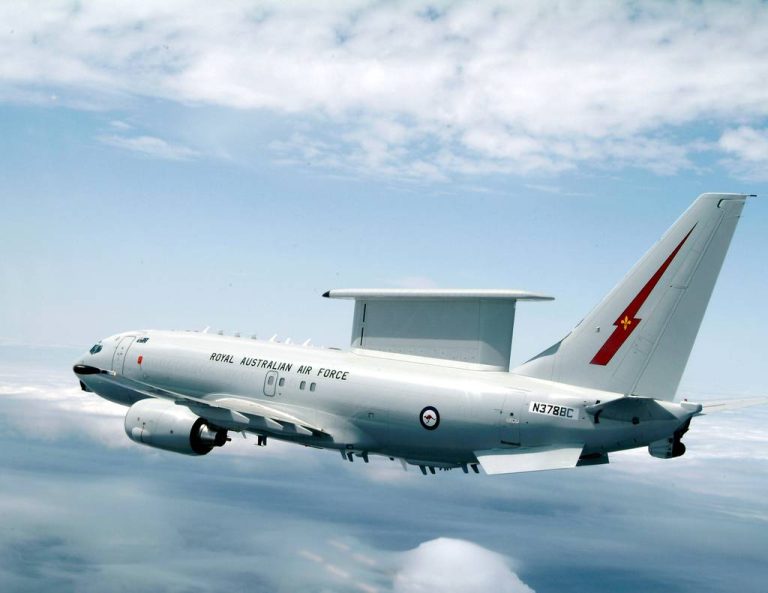
The Air Force in February awarded Boeing a $1.2 billion contract to begin work on the E-7 fleet; the service plans to reach 26 aircraft by 2032. The air forces of Australia, Turkey and South Korea are already flying E-7s, and production is underway for a British fleet. The Royal Australian Air Force calls its E-7 the Wedgetail, but the U.S. has not decided on its own E-7′s name.

The U.S. Air Force plans to first buy two rapid prototype E-7s, with the first to be fielded in 2027, and then make a production decision on the remainder of the fleet in 2025. The service has repeatedly said its AWACS capabilities — which were state of the art when first fielded in the late 1970s — are out of date and not advanced enough for future conflicts.

Furthermore, the AWACS’ aging 707-based airframe and TF33 engines are increasingly hard to maintain, the service argued, and its radar capabilities are outdated. The Air Force is retiring its fleet of AWACS, which once numbered 31, and plans to be down to 16 by the end of fiscal 2024.

In a March 10 budget briefing with reporters at the Pentagon, Air Force Secretary Frank Kendall downplayed the risk of a capability gap emerging by slashing the AWACS fleet nearly in half before the first E-7 arrives.

“The E-3 is essentially not effective in the environments we’re most worried about,” Kendall said. “The sensor is pretty ancient at this point, and the aircraft are very expensive to maintain.”

At the symposium briefing, which took place in a trailer mocked up to resemble the interior of an E-7, Boeing officials walked reporters through how it plans to build the Air Force’s new E-7 fleet, and what makes them different from the AWACS.

New plane and fresh radar

The biggest differences between the AWACS and the upcoming E-7 will be how the sensors work and the views they provide, said Rod Meranda, Boeing’s head of business development for its domestic and international E-7 program.

The E-7′s multirole electronically scanned array, or MESA, will be able to lock its view on a target instead of having to sweep around, and the operators on the E-7 will be able to tell it to refresh that view at certain intervals. Boeing would not say how quickly the MESA will be able to refresh its view, citing security concerns, but Elmore said it would be able to do “rapid relooks.”

The MESA will also be able to look in several directions at once, allowing the operators at the E-7′s array of 10 stations to simultaneously monitor multiple angles. Elmore said this will allow the aircraft to considerably narrow down the possible location of an aircraft, resulting in greatly improved situational awareness.

E-7 controllers will also be able to set its array to conduct periodic sweeps in several directions, Elmore said. For instance, the controllers could set the MESA to watch targets on one side most of the time, and every so often look in the other direction “to make sure somebody’s not sneaking up on me,” he explained.

Like the AWACS, the E-7 will also be able to listen for radar and other electronic signals a potential enemy aircraft is emitting, then locate the plane and check the signal against a database to help identify the type of plane.

Boeing officials declined to discuss the range of the E-7′s sensor and how it compares to the AWACS, as well as its self-defense capabilities, citing classification concerns. Boeing’s website lists chaff and flares among the E-7′s defensive measures.

Mounting the MESA array on the E-7, along with all the power and capabilities that its 737 body can carry, provides a more capable means of conducting surveillance compared to smaller drones, fighters and satellites, Meranda said.

“You can’t put this kind of power in an unmanned” aircraft, Meranda noted. “Space — same thing. [It’s a] massive array to give you a lot of capability.”

Cutting the crew

The E-7 will also require a smaller crew than the AWACS thanks to newer technologies, Elmore said. The Air Force’s AWACS fact sheet said it requires a flight crew of four, plus a mission crew of 13-19 specialists.

Boeing said the E-7 can get the job done with just a pilot and co-pilot, and a variable number of mission operators running the bank of 10 stations lining the aircraft, depending on mission requirements. That crew could be as small as three if a flight only needs one mission operator to use a scope.

And, for example, if an E-7 carries out a lengthy and complex mission — AWACS operations sometimes exceeded 24 hours — it can seat up to 21 people: the pilot and co-pilot, 10 mission operators at the stations, and nine more in reserve to rotate in and out. The cockpit also has a jump seat for a third pilot.

Each station — six on the port side, four on starboard — has two displays operators can use to spread out radar signals, and chat windows used to coordinate with other aircraft, the air operations center on the ground or other teammates elsewhere. The operators also have intercoms, and the plane’s radios will be able to use more capable Mobile User Objective System satellite communications.

Although the E-7 has several features that differ from the AWACS, Elmore said Boeing kept the stations and how they are controlled similar to what E-3 operators are used to. “We wanted to have a very short training and transition time frame for the operators when they get out of the E-3 and they come to the E-7,” he noted.

The E-7 also has a new situational awareness feature, which the AWACS lacks, called the flight deck tactical display, which alerts the pilot to what’s going on in the battlespace and what may be flying nearby. Elmore said the display is tied into the E-7′s electronic warfare self-protection capabilities, but would not go into more detail.

This display, which is mounted near the pilot’s knee, means the E-7 does not need a crew member found on the E-3 — the AWACS monitor — Elmore said. AWACS monitors fly in the back of the aircraft and keep in touch with their pilots to update them on what is in the area.

“All of the tracking on AWACS, you had a whole set of people who worked on tracking and identifying” other aircraft in the area, Elmore said. “We’ve eliminated them because the machine does it.”

Elmore said the E-7 will be able to link up with assets used by joint forces so it can share data — both drawing information that the E-7 can use and sending data to partner forces.

Building the E-7

It typically takes Boeing four years to make an E-7, though the company says it could shave about six months off that timeline by procuring long-lead items in advance. It takes two years to make the commercial 737-700, and then two more years “chopping this airplane up” to modify it into the E-7.

Meranda said that when the Air Force’s E-7 program kicks into gear, which could happen later this decade, Boeing wants to build four per year.

To make an E-7 for the Air Force, Boeing will first buy a 737 tube from Spirit AeroSystems in Wichita, Kansas, and bring it to its factory in Renton, Washington. Once the tube is on the factory’s “line 3,” which is dedicated to military work and is where Boeing builds P-8 Poseidon maritime patrol planes, Boeing will start beefing it up so it can handle the extra wear and tear military flying dishes out.

The central feature of the E-7 is its blade-like MESA sensor, nicknamed the “top hat.” Installing it requires a significant amount of work, and Meranda said Boeing will cut the 737 plane in half to reinforce the structure to bear the weight of the MESA sensor.

The company will also install wings typically used on 737-800s, which Elmore said will give the E-7 greater lift capability, as well as stronger landing gear, among other modifications.

The U.S. version of the E-7 will be similar to the three Boeing is now building for the U.K., particularly in terms of the air frame, sensor and mission equipment, though the U.S. Air Force made unique requests Boeing declined to specify.

Boeing wants the E-7 fleet to be largely interoperable so it’s easier and cheaper to upgrade different nations’ fleets. Meranda said the E-7 will use a suite of open-mission systems software to simplify upgrades; the U.S. Air Force will test the technology in 2025.

The entire acquisition process for an E-7, including testing and Federal Aviation Administration certifications that occur after construction and modification, could take five years, but Boeing wants to get it done sooner.

The company said that advance procurement funding will lower the risk for businesses involved in building the E-7. For Boeing, that funding will allow it to start building the commercial plane earlier, Meranda said. And advance funding allows Northrop Grumman engineers and production facilities to start working on the planes’ sensors, he added.

But Boeing officials reiterated the Air Force’s statements that not much can be done to rapidly accelerate the process of acquiring new E-7s. While the U.K. purchased used planes to convert into its E-7s, Meranda said there’s not many more used airframes available to adapt into additional E-7s.

Elsewhere at the AFA Warfare Symposium, top Air Force generals made no secret of their desire to get their hands on the E-7 as soon as possible.

The E-3s “are a significant challenge to keep them in the air, just because they’re very old and they have a lot of maintenance requirements, and the E-7 obviously doesn’t have that,” Wilsbach said.

And in the air, “the E-7 has significantly greater capabilities [over the E-3] from the standpoint of what it can see and how it can contribute to the overall objectives,” the officer added.

Wilsbach told reporters he planned to visit Boeing within days to discuss how fast the company can produce E-7s.

In another discussion with reporters, Air Combat Command head Gen. Mark Kelly echoed Wilsbach’s urgency, saying he felt “like a proud father” to see the service make progress on acquiring the E-7.

“I just wanted more than twins,” he said, referring to the two rapid prototype E-7s. “I want as many of those kids as I can.”

The Air Force’s effort to update its electromagnetic spectrum aircraft, including the E-7, EC-37B Compass Call, and electronic warfare capabilities in the F-35 and F-15EX fighters, could make the difference between winning and losing a war, Kelly said.

“Coming in second in [the electromagnetic spectrum] is a horrible place to be.”

Stephen Losey is the air warfare reporter for Defense News. He previously covered leadership and personnel issues at Air Force Times, and the Pentagon, special operations and air warfare at Military.com. He has traveled to the Middle East to cover U.S. Air Force operations.

What difference will Polish, Slovakian fighter jets make to Ukraine?

0

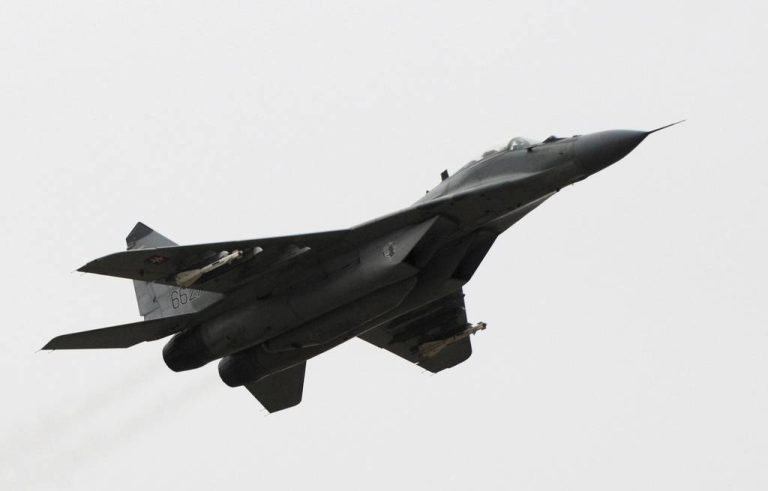
The news that Poland and Slovakia are to deliver MiG-29 fighter jets to Ukraine — some of which have reportedly arrived — signals their departure from the long-standing stance of the international community, which had hitherto resisted Kyiv’s calls for more combat aircraft to help fight off Russia’s invasion. While this donation will be welcomed in Ukraine, it could raise political and practical issues the West must address to maximize the benefits — and mitigate the risks — of this latest move to bolster Ukraine’s defenses.

Poland is expected to deliver four MiG-29s and Slovakia has pledged 13 from its own inventory. This number is expected to include some that are no longer operational and thus would be cannibalized for spare parts, rather than donated in flying order.

Alone, these fighters will be useful to Ukraine’s Air Force, which currently has more pilots than working aircraft after a year of heavy losses. They will help to keep up air operations in the face of a persistent threat from Russian ground-based air defenses and combat aircraft, as well as to support any ground offensives the Ukrainians mount in the spring and summer.

But in current numbers, the envisaged donations will likely neither make a decisive battlefield impact nor fundamentally alter the strategic calculus or the imbalance between the sizes of the Russian and Ukrainian air forces. Instead, the biggest immediate impact of this decision is political.

The willingness to break ranks from the previous consensus against donating fighters underscores the influential role that Poland, Slovakia and other smaller NATO front-line states have played in driving international support for Ukraine. Though the largest donor of military aid is, by a huge margin, the United States, followed by the U.K., many of the Eastern European states have been giving a much larger portion of aid as a percentage of their respective gross domestic product. This reflects how seriously they take the Russian threat as well as their solidarity with Ukrainians, with whom Eastern European countries have especially close social, cultural and economic ties.

Conveniently, these countries have stockpiles of old Soviet-designed equipment — types already used by the Ukrainians and thus can be quickly put into service.

With this politically bold move, then, leaders in Warsaw and Bratislava may be hoping to galvanize wider international action in solidarity with Ukraine. Setting a precedent calls the bluff of Russia’s supposed “red lines” against such donations, and ups the diplomatic and domestic pressure on other governments to follow suit, especially as Russia courts China to bolster its own depleted stockpiles of arms and ammunition. We have already seen how the U.K.’s small but symbolic pledge of Challenger 2 tanks unlocked bigger (and rather more practical) donations from Germany, the U.S. and others.

Other NATO allies will now be under increased pressure either to offer Ukraine their own, Western-designed aircraft directly (as Ukrainian President Volodymyr Zelenskyy is calling for, with his repeated ask for American-made F-16s), or to use these to backfill the stockpiles of those countries that still have Soviet-designed MiGs to transfer to the Ukrainians.

Following Warsaw’s decision, a U.K. defense minister announced Britain would be ready to deploy its own jets to Poland to fill any temporary gaps in air defenses arising from such donations.

On the practical front, integrating any Western-designed fighters that end up being donated alongside Polish and Slovakian MiG-29s could require addressing a raft of operational issues in terms of training, basing, equipment familiarization and integration with ground forces.

Multinational coordination and a credible implementation plan may also be required, alongside the provision of support to training, maintenance and tactical planning. Avoiding fratricidal or “blue on blue” incidents could also need attention; without considerable training and rehearsal, using unfamiliar equipment for complex tasks such as close air support can be a sizable risk. The training pipeline for pilots, ground crew and others involved in embedding new systems of this complexity would usually stretch into years, and while some shortcuts can always be found, there are limits on how far this can be pushed in terms of safety and training capacity.

In short, if the West is going to follow Poland and Slovakia’s lead with further donations of other Soviet- or Western-designed fighters, a credible, long-term package of training, maintenance and other support could be essential to turn this from a symbolic gesture to a decisive impact on the battlefields of Ukraine.

James Black is the assistant director of the defense and security research group at Rand Europe, a unit of the U.S.-based think tank Rand.

wholesale indusrial cleaning wipes | Survival Monkey Forums

0

  1. We provide a wide range of wiping rags, including industrial and non-industrial wipers, P-Caps, and T-Shirts, ranging in price from low-cost general-purpose wiping rags to high-quality cleaning rags composed of 100 percent cotton fully absorbent material that exceed all international standards. We are also a leading dealer in textile waste


survivalmonkey SSL seal


survivalmonkey.com warrant canary