mechstdr submitted a new resource:
Manual of Mending – repair all kinds of things, ceramics-wood-metal-etc.

mechstdr submitted a new resource:
Manual of Mending – repair all kinds of things, ceramics-wood-metal-etc.
mechstdr submitted a new resource:
the math of pulleys, belts and power transmission – figuring input & output speeds, direction, for pulleys turning generators, pumps, etc.

This morning I got a pig with my broadhead arrow. I was able to apply the tips and tricks that all of you shared with me and noticed that the process is getting much easier.
It did help that this pig was smaller (closer to my size.)
Tried the scald and scrape method until I ran out of patience and energy and used the torch.

+++ Please read this entire page! Update at bottom: There seems to be some debate pertaining the differences in package whole blood from a hostpital vs. human to human transfusions. +++
Please consult with a medical professional before following any of this advice. We are merely passing the below as information that has been found or sent to us over the years.
Blood is grouped into four types: A, B, AB, and O. Each type is also classified by an RH factor – either positive ( + ) or negative ( – ). When a blood transfusion is necessary, donor and patient blood must be compatible. If not, the patient’s body will react to the incompatible donor cells, leading to complications, maybe even death.
Your ABO blood grouping and Rh factor are inherited from your parents. Check the chart below to see what percentage of the population shares your ABO grouping.
Possible Blood Transfusion Combinations
This from a reader
I have to clarify your blood compatibility chart. Your data is correct is you are referring to packed red blood cell transfusions (typical in-hospital type). But is you are talking about person to person whole blood transfusions your chart is completely incorrect. As a hospital laboratory tech for 10 years I know what I am talking about. If you want correct information then I will be happy to supply that. But if you do not want to believe me (as on Survivalblog.com) then I do hope that your readers do not attempt a person to person blood transfusion based on your recommendations.
Here is the chart that was sent to me:

Stalking The Wild Asparagus Paperback – Deluxe Edition, March 22, 2005
by Euell Gibbons (Author)
4.7 out of 5 stars 122 customer reviews
https://www.amazon.com/dp/0911469036/?tag=survivalmonke-20
Top Reviews
The Librarian
5.0 out of 5 starsExcellent info from a master gatherer
January 5, 2014
Format: PaperbackVerified Purchase
Euell Gibbons became famous in the 70’s for his Grape Nuts commercial, where he asked, “Have you ever et a pine tree? Many parts are edible!” Pretty good for a guy who was once a hobo, living off the land once!
This book is the real deal. The plant drawings are good, the recipes are great, and if there were only one plant book I would carry into a survival scene, it would be this one. You don’t have to be into survivalist stuff to use it however, try some of these recipes, you’ll find rich, full flavors and it’s all free from Mother Nature!
It’s a god idea to learn these things anyway, just in case, so why not practice gathering and preparing wild foods now, you’ll be glad you did one day, and you may find you love the natural flavors better than hybridized, genetically created foods big business has created so they “transport well.”
Enjoy!
11 people found this helpful
Helpful
Comment Report abuse
lanahi
5.0 out of 5 starsGibbons not only gives great information on a few plants
March 7, 2016
Format: PaperbackVerified Purchase
Gibbons not only gives great information on a few plants, but he does it with a wit that can’t be found in other wild plant food books. He always gives directions on how to cook the wild edible and often the trials he went through in learning the best way to make it. Gibbons is entertaining and even inspiring…this book is the first I ever read on the topic and was enough for me to want to go out right away to find plants…and I did…a long time ago. Since then wild plant foraging has become a fascinating hobby that I’ve shared with several friends and relatives, including those who beg me to make more acorn bread for them every year. Gibbons is rightfully called “The father of the foraging movement”.
2 people found this helpful
Helpful
Comment Report abuse
lanahi
5.0 out of 5 starsBest book to begin with!
October 13, 2009
Format: PaperbackVerified Purchase
“Stalking the Wild Asparagus” is both inspiring and educational. This, I believe, was the first book on wild edibles to be written, and Euell Gibbons earns his right to declare himself the father of the foraging movement, although he never did claim that. He just shared what he loved, and his excitement shines throughout the book.
There are no photos in this book, just line drawings, as it isn’t meant to be a guide to identifying the plants. After you ID them, Euell Gibbons tells you what to do with them, along with all his favorite recipes and something about his experience with the plant he is writing about. There is no question that he speaks through his own experience, often very humerous. He definitely has a great sense of humor, and the book is a good straight read. He tells you about the plant itself and the seasons you harvest the edible parts, tells you some of his experimenting to come up with the best ways to prepare it, sometimes the nutritional value of the plant, and lots more.
I’ve used his recipes on many of the plants and they are all delicious.
The book covers over 45 plants that can be found most places and even some of the wild meat course to go with it!
I’ve owned dozens of this book over the years but keep giving mine away to those who are just beginning to be interested in the topic of wild edible plants. It’s still the best there is to provide the inspiration to learn more. Now I have whole shelves of wild edible plant books, mostly for identifying purposes, but this one is still my all-time favorite and still very useful.
If you get this book, be sure to try the acorn bread!
Read more
17 people found this helpful
Helpful
Comment Report abuse
Randy J. Mercurio
4.0 out of 5 starsValuable foraging reference!
December 6, 2009
Format: PaperbackVerified Purchase
I agree with many of the reviewers (Joanna Daneman, Timothy Ritter, Small Chief & Bret Hall) that explain who Gibbons was and how the book became what it is today. I will elaborate more on the actual contents of the book. Each plant entry gives the common and scientific name, some lore & history, a general description of the plant accompanied by very raw sketches, general habitat and range, flowering and gathering times, recipes, medicinal uses (if aplicable) and will usually have entertaining stories associated with the plant from Euell’s past experiences. Keep in mind this information is found in various places in the text so I find it helpful to underline/highlight the important information to me so when I go back to reference it I can find it easily. This is not a field guide as one reviewer said and should not be relied on to go to your local abandoned lot to find and identify edible plants. With all of the edible plant guides out there with color plates and easier formats to use I suggest you’ll need a supplement to this book if you are an amateur botanist. Otherwise, this book is highly recommended to anyone that has an interest in wild edibles.
12 people found this helpful
Helpful
Comment Report abuse
M. Smith
5.0 out of 5 starsOne of the bibles of edible plants
October 22, 2013
Format: PaperbackVerified Purchase
I lost my old copy of it and was delighted to see it is still in print. Euell Gibbons lived and breathed what he wrote about. This book is written by a man who practiced what he preached and tells you how to prepare wild plants for consumption from first hand knowledge. It is also a fun book to read. He explains ways to do things like clean and cook Bluegill, something every woodswoman or woodsman should know how to do. This book will make you want to go out and forage on nature’s bounty. It is infectious and inspires you to incorporate this way of life into your everyday practice, not simply do it on a rare occasion as a special kind of experiment. Great book!
4 people found this helpful
Helpful
Comment Report abuse
Cynthia Hall
5.0 out of 5 starsA must have for foragers!
May 6, 2016
Format: PaperbackVerified Purchase
I’ve recently gotten into foraging and found this book to be essential. Not only did I learn about common edible plants (where they are found, identifying them, how to harvest, etc.), I learned how to prepare them for meals. And, of course, Euell Gibbons’ stories are wonderful. This is a great resource for anyone who loves to forage for food.
3 people found this helpful
Helpful
Comment Report abuse
Velma B. Lindner
5.0 out of 5 starsI love this book
April 9, 2018
Format: PaperbackVerified Purchase
I have owned Two copies of this book. I found it most useful when I lived in Hawaii in the 70s and 80s. My family went gathering almost every week end using the information in this book as a guide. I was excited to find this copy as I wanted to gift it to my Grandson. He will be spending the next year at least, working in Hawaii, and I hope he finds this book as useful as I did.
Helpful
Comment Report abuse
See all 122 reviews
Write a customer review
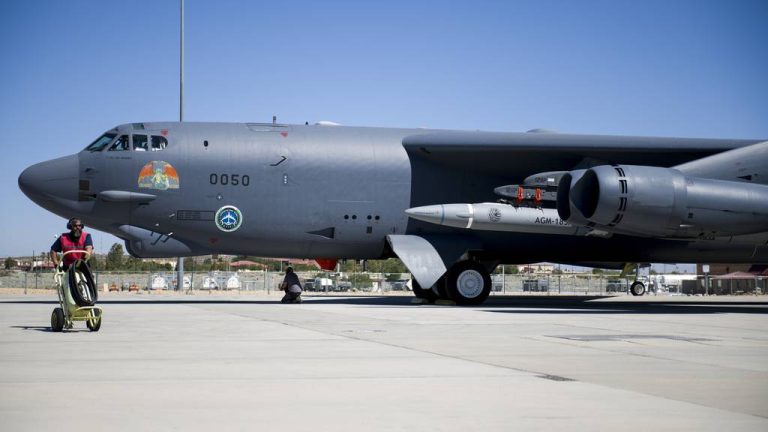
WASHINGTON — The U.S. Air Force has revealed it conducted a test launch of its hypersonic AGM-183A Air-launched Rapid Response Weapon, or ARRW, earlier this month, but it remains unclear whether the event was a success.
The service said in a statement Friday that a B-52H Stratofortress bomber released the fully operational prototype ARRW, which is made by Lockheed Martin, off the coast of southern California. The March 13 test represented the second launch of an ARRW operational prototype and focused on the weapon’s end-to-end performance, the Air Force said.
The Air Force added that “the test met several of the objectives,” without providing further details. The wording differs from a service statement released in December following the first launch of an operational ARRW prototype, which said “all objectives were met” in that Dec. 9 test.
The Air Force’s December statement also said the B-52 “successfully released” the ARRW. The most recent release on the March test did not use the word successful, simply noting that a “B-52H Stratofortress released” the second ARRW prototype.
The statement about the December test specified that the ARRW reached hypersonic speeds greater than Mach 5, completed its planned flight path and detonated. The March statement did not include such statements.
Engineers and testers from the ARRW team “are collecting data for further analysis,” the Air Force said. The test was conducted by the 412th Test Wing at Edwards Air Force Base in California.
Asked whether the March 13 test was successful, the Air Force told Defense News it would not provide further information beyond what was in the release.
“We expect less information to be available on this topic in the future for operational security reasons,” a Defense Department official told Defense News.
Stephen Losey is the air warfare reporter for Defense News. He previously covered leadership and personnel issues at Air Force Times, and the Pentagon, special operations and air warfare at Military.com. He has traveled to the Middle East to cover U.S. Air Force operations.
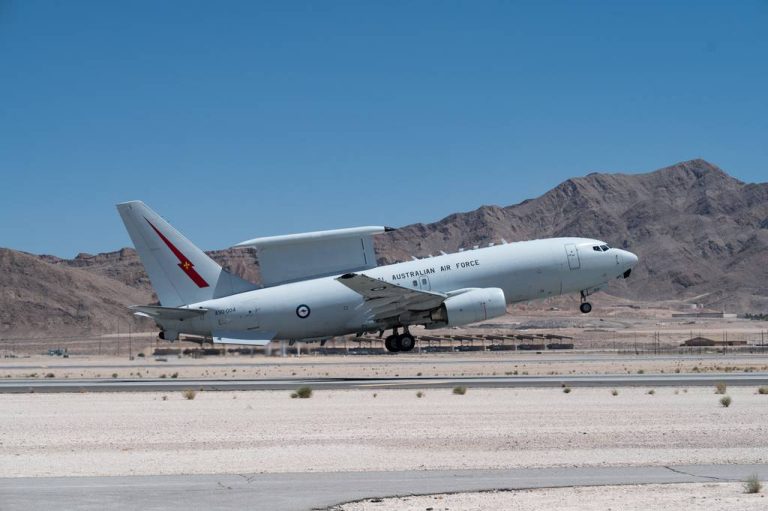
WASHINGTON — The U.S. Air Force wants to speed up its procurement of Boeing E-7A battlefield management and command-and-control aircraft, as part of the service’s so-called wish list for the fiscal 2024 budget.
The nearly $2.5 billion unfunded priorities list, obtained by Defense News, includes more than $633 million for accelerating the delivery of the E-7, which the Air Force plans to eventually replace the E-3 Sentry airborne warning and control, or AWACS, aircraft.
The Air Force earlier this month released a $185.1 billion budget request for 2024, which would be a $5.4 billion raise over the current year.
The service wants to field a fleet of 26 E-7s by 2032, and in February awarded Boeing a contract worth up to $1.2 billion to start building them.
The service first plans to buy two rapid prototype E-7s, with the first being delivered in fiscal 2027. And the Air Force aims to make a decision in fiscal 2025 on fielding the remaining 24 aircraft.
With the Air Force in the midst of retiring nearly half of its aging AWACS fleet, which at one point numbered 31, and the first E-7 about four years away from delivery, some lawmakers have expressed concern that the service could face an airborne battle management capability gap.
The additional funding the Air Force is asking for aims to speed up the process. The more than $596 million in procurement funds requested for the E-7 would help Boeing and its suppliers buy parts in advance to build the first two E-7s.
One of those suppliers that would be able to buy the “long lead item” parts with the additional funding is Northrop Grumman, which is making the massive multirole electronically scanned array, or MESA, sensor that will be mounted on top of the E-7.
The advance funding would also help Boeing procure the 737-700 aircraft that it will then heavily modify into the E-7.
The added procurement funding also aims to speed up the process of procuring the second E-7, and beginning that in 2025 alongside the first aircraft.
And $37 million in requested research and development funds would help pay for rapid prototyping aircraft, to reduce the risk to the program’s acquisition schedule, the Air Force said.
The air forces of Australia, Turkey and South Korea already fly the E-7, and the United Kingdom is buying its own fleet.
The U.S. Air Force’s unfunded priorities list also requests nearly $64 million to buy a dozen conformal fuel tanks for the F-15EX Eagle II fighter aircraft, which now lack the added fuel tanks. Adding these tanks will increase the amount of fuel the fighters can carry and their range, as well as giving the Air Force more places to add weapons on the fighters that could handle advanced smart munitions.
By being able to patrol longer and farther and carry more weapons, the Air Force said, the F-15EX will be better able to defend the U.S. and deter China.
Stephen Losey is the air warfare reporter for Defense News. He previously covered leadership and personnel issues at Air Force Times, and the Pentagon, special operations and air warfare at Military.com. He has traveled to the Middle East to cover U.S. Air Force operations.
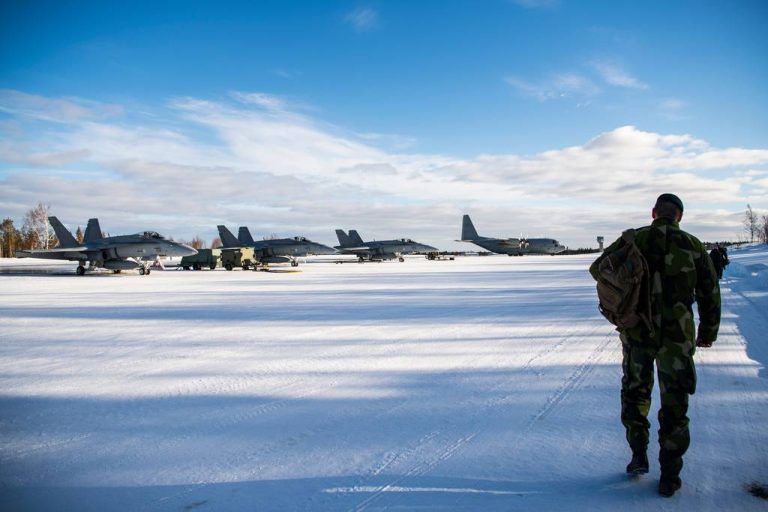
HELSINKI — The Nordic countries have moved to deepen air force cooperation to bolster the region’s air defenses. The initiative, covered by a Joint Declaration of Intent (JDI), takes place against the backdrop of persisting security tensions, provoked by Russia’s war against Ukraine, impacting the High North and Baltic Sea neighborhoods.
The first of its kind between the Nordic states, the JDI was signed March 16 at Ramstein Air Force Base in Germany by the commanders of the Swedish, Norwegian, Finnish and Danish air forces.
The concept of a joint Nordic air force, comprising over 250 modern front-line combat aircraft, has been the subject of periodic discussions between Nordic governments since the mid-1990s. Sweden’s and Finland’s unaligned status remained an impediment to advancing talks and joint initiatives.
With Finland and Sweden primed to join NATO, however, Nordic governments find themselves on more solid ground to discuss a common action plan to create a “mini NATO” that would deliver a formidable and unified air force capability.
The primary aim of the JDI is to strengthen air force cooperation between the four Nordic states, precipitating concrete joint initiatives to develop a strong regional air defense. The JDI envisages elevated collaboration between Nordic air forces allowing them to operate in combination in all situations.
The Air-Defense Operations Concept (ADOC), embedded in to the JDI, envisions joint Nordic air force cooperation to be developed along four principal lines of action. It proposes the development of an integrated management structure for planning and executing of air operations.
Moreover, the concept anticipates the development of a flexible and sustainable support system, joint air situational awareness, as well as joint training and exercise activities between the four Nordic air forces.
Maj. Gen. Rolf Folland, the chief of the Norwegian Air Force (NAF), views the idea as a basis for creating a joint Nordic center for air operations that could also house the United States and Canada under a single command structure.
“There is obvious interest in a regional initiative for a joint air command on NATO’s northern flank. We know the conditions in the High North well, and we have a lot to learn from each other. With a total of almost 250 modern combat aircraft, this will be a large combat force that must be coordinated,” Folland said.
The last operational NATO headquarters in Norway, the Combined Air Operation Center (CAOC-3) at Reitan, located east of Bodø, was closed in 2008, with responsibility transferred to the alliance’s CAOC Finderup in Denmark.
Gerard O’Dwyer is the Scandinavian affairs correspondent for Defense News.

WASHINGTON — A U.S. Air Force office focused on making sure aircraft and weapon systems are hardened against cyber intrusions wants to expand its reach within the Space Force.
The Cyber Resiliency Office for Weapon Systems, also known as CROWS, works with acquisition and testing teams to make sure old and new platforms are protected against cyber threats. The organization established Cyber Focus Teams to do this work within Air Force program executive offices and wants to replicate that work within the Space Force.
Col. Joseph Wingo, chief of cyber and spectrum operations for the Space Force, said CROWS’ approach of pairing experts with the teams that design satellites and ground systems is a good step for the service.
“Bringing folks like CROWS who have experience doing cyber resiliency work and thinking through that with weapon systems and then marrying them up with the engineers and [program executive officers] ad bringing those forces together is going to get us a long way,” Wingo said during the Armed Forces Communications and Electronics Association’s March 22 Space Force IT Day. “It’s going to provide a lot of benefit in the long run.”
The Air Force established CROWS in 2017 and started pairing Cyber Focus Teams, or CFTs, with program executive offices, which are responsible for a portfolio of development efforts that correspond with a particular mission, like fighter aircraft or ISR platforms. The service’s fiscal 2024 budget includes $37 million for the office, some of which will support the work of the focus teams.
Joe Bradley, the office’s director, told C4ISRNET in a March 6 interview that CFTs are usually made up of about seven specialists who work with engineers, logistics professionals and program managers to identify vulnerabilities and develop a plan to address them through “cyber health assessments.” For old or existing systems, the fix could be an upgrade or a hardware change. For new programs, the focus is on ensuring cyber resiliency is “baked in” from the start, he said.
Lt. Col. Zach Lehmann, materiel leader for CROWS, said in the same interview that the goal of the office’s cyber specialists is to be “change agents within the acquisition community.” Working with program executive officers that manage entire portfolios of systems is a great way to impact the broader acquisition culture, he added.
“The Cyber Focus Teams that are embedded at the PEO level are engaging across a portfolio to help ensure that the CFT isn’t the only one applying sound system security engineering best practices,” Lehmann said. “They’re acting within those portfolios to change the culture over time, to help ensure that this perspective becomes a part of the culture.”
In January, CROWS officials met with Space Force program teams based at Los Angeles Space Force Base to discuss the service’s needs and how to best deploy its cyber specialists. Bradley said he’d like to begin embedding CFTs by the end of FY23 or the beginning of FY24.
While CROWS has worked with the Space Force’s cyber community in the past, Bradley said bringing CFTs to the service offers a chance to deepen that partnership.
“We want to make sure that as they have evolved, we continue to evolve,” he said.
Courtney Albon is C4ISRNET’s space and emerging technology reporter. She has covered the U.S. military since 2012, with a focus on the Air Force and Space Force. She has reported on some of the Defense Department’s most significant acquisition, budget and policy challenges.
