Internet Censorship | Survival Monkey Forums

0

Not sure if this is the right section for this but we’ll see

I’ve noticed that Google and other areas of the internet have started massively censoring search results. Especially in relation to the current pandemic and vaccines and so on. I understand from the perspective of way out kookie conspiracy sites but there is a plethora of really good research out there from qualified doctors and so on and lots of relevant testimonies etc etc. Where once I could put a search string into Google and find such material it now doesn’t come up and Google just gives a plethora of the defacto establishment pro-Pharma propaganda.

I assume that this encroaching censorship is impacting all manner of other areas too as globalists slowly start to take over everything. They control the media and they control the internet and it appears to be tightening up at an alarming rate.

This is not tin foil hat stuff, imo, it’s tangible censorship of information.

So my question to others here is where can one go for good honest grass root opinions and “truth” and as the coming dark times get darker and darker where will we all go for uptodate information in regards to what’s really happening?

I’m assuming here that we are not in a WTSHTF scenario but rather that the ruling elite thugs increasingly become Orwellian and shut down our access to lots of websites and information. Where do people go? Is it the “dark web” and if so what and where is that? or are there any sites people can recommend where we might go and use to stay in touch with reality?


Reloading bench

0

mechstdr submitted a new resource:

Reloading bench – another design for another bench

Read more about this resource…

Survivalmonkey.com is now fully SSL TLS encrypted

0

Full Report:

SSL Report: survivalmonkey.com (206.123.114.178)
Assessed on: Tue Jul 01 00:17:10 UTC 2014 |

Summary
Overall Rating
A+

Documentation: SSL/TLS Deployment Best Practices, SSL Server Rating Guide, and OpenSSL Cookbook.
This server supports HTTP Strict Transport Security with long duration. Grade set to A+. MORE INFO »
This server is not vulnerable to the Heartbleed attack.
Experimental: This server is not vulnerable to the OpenSSL CCS vulnerability (CVE-2014-0224).

Authentication

Server Key and Certificate #1
Common names Survival Monkey Forums
Alternative names Survival Monkey Forums survivalmonkey.com
Prefix handling Both (with and without WWW)
Valid from Wed Feb 12 00:00:00 UTC 2014
Valid until Mon Feb 11 23:59:59 UTC 2019 (expires in 4 years and 7 months)
Key RSA 4096 bits
Weak key (Debian) No
Issuer COMODO RSA Domain Validation Secure Server CA
Signature algorithm SHA256withRSA
Extended Validation No
Revocation information CRL, OCSP
Revocation status Good (not revoked)
Trusted Yes

[​IMG]
Additional Certificates (if supplied)
Certificates provided 4 (5665 bytes)
Chain issues Contains anchor
#2
Subject COMODO RSA Domain Validation Secure Server CA
SHA1: 339cdd57cfd5b141169b615ff31428782d1da639
Valid until Sun Feb 11 23:59:59 UTC 2029 (expires in 14 years and 7 months)
Key RSA 2048 bits
Issuer COMODO RSA Certification Authority
Signature algorithm SHA384withRSA
#3
Subject COMODO RSA Certification Authority
SHA1: f5ad0bcc1ad56cd150725b1c866c30ad92ef21b0
Valid until Sat May 30 10:48:38 UTC 2020 (expires in 5 years and 10 months)
Key RSA 4096 bits
Issuer AddTrust External CA Root
Signature algorithm SHA384withRSA
#4
Subject AddTrust External CA Root In trust store
SHA1: 02faf3e291435468607857694df5e45b68851868
Valid until Sat May 30 10:48:38 UTC 2020 (expires in 5 years and 10 months)
Key RSA 2048 bits
Issuer AddTrust External CA Root Self-signed
Signature algorithm SHA1withRSA

[​IMG]
Certification Paths
Path #1: Trusted
1 Sent by server Survival Monkey Forums
SHA1: 9faa8c08e3b9a2703333e7dc2c67e426c86e7df1
RSA 4096 bits / SHA256withRSA
2 Sent by server COMODO RSA Domain Validation Secure Server CA
SHA1: 339cdd57cfd5b141169b615ff31428782d1da639
RSA 2048 bits / SHA384withRSA
3 Sent by server COMODO RSA Certification Authority
SHA1: f5ad0bcc1ad56cd150725b1c866c30ad92ef21b0
RSA 4096 bits / SHA384withRSA
4 Sent by server
In trust store AddTrust External CA Root
SHA1: 02faf3e291435468607857694df5e45b68851868
RSA 2048 bits / SHA1withRSA

Configuration
[​IMG]
Protocols
TLS 1.2 Yes
TLS 1.1 Yes
TLS 1.0 Yes
SSL 3 Yes
SSL 2 No

[​IMG]
Cipher Suites (SSL 3+ suites in server-preferred order, then SSL 2 suites where used)
TLS_ECDHE_RSA_WITH_AES_128_GCM_SHA256 (0xc02f) ECDH 256 bits (eq. 3072 bits RSA) FS 128
TLS_ECDHE_RSA_WITH_AES_256_GCM_SHA384 (0xc030) ECDH 256 bits (eq. 3072 bits RSA) FS 256
TLS_DHE_RSA_WITH_AES_128_GCM_SHA256 (0x9e) DH 4096 bits (p: 512, g: 1, Ys: 512) FS 128
TLS_DHE_RSA_WITH_AES_256_GCM_SHA384 (0x9f) DH 4096 bits (p: 512, g: 1, Ys: 512) FS 256
TLS_ECDHE_RSA_WITH_AES_128_CBC_SHA256 (0xc027) ECDH 256 bits (eq. 3072 bits RSA) FS 128
TLS_ECDHE_RSA_WITH_AES_128_CBC_SHA (0xc013) ECDH 256 bits (eq. 3072 bits RSA) FS 128
TLS_ECDHE_RSA_WITH_AES_256_CBC_SHA384 (0xc028) ECDH 256 bits (eq. 3072 bits RSA) FS 256
TLS_ECDHE_RSA_WITH_AES_256_CBC_SHA (0xc014) ECDH 256 bits (eq. 3072 bits RSA) FS 256
TLS_DHE_RSA_WITH_AES_128_CBC_SHA256 (0x67) DH 4096 bits (p: 512, g: 1, Ys: 512) FS 128
TLS_DHE_RSA_WITH_AES_128_CBC_SHA (0x33) DH 4096 bits (p: 512, g: 1, Ys: 512) FS 128
TLS_DHE_RSA_WITH_AES_256_CBC_SHA256 (0x6b) DH 4096 bits (p: 512, g: 1, Ys: 512) FS 256
TLS_DHE_RSA_WITH_AES_256_CBC_SHA (0x39) DH 4096 bits (p: 512, g: 1, Ys: 512) FS 256
TLS_RSA_WITH_AES_128_GCM_SHA256 (0x9c) 128
TLS_RSA_WITH_AES_256_GCM_SHA384 (0x9d) 256
TLS_RSA_WITH_AES_128_CBC_SHA256 (0x3c) 128
TLS_RSA_WITH_AES_128_CBC_SHA (0x2f) 128
TLS_RSA_WITH_AES_256_CBC_SHA256 (0x3d) 256
TLS_RSA_WITH_AES_256_CBC_SHA (0x35) 256
TLS_RSA_WITH_3DES_EDE_CBC_SHA (0xa) 112
TLS_DHE_RSA_WITH_CAMELLIA_256_CBC_SHA (0x88) DH 4096 bits (p: 512, g: 1, Ys: 512) FS 256
TLS_RSA_WITH_CAMELLIA_256_CBC_SHA (0x84) 256
TLS_ECDHE_RSA_WITH_3DES_EDE_CBC_SHA (0xc012) ECDH 256 bits (eq. 3072 bits RSA) FS 112
TLS_DHE_RSA_WITH_3DES_EDE_CBC_SHA (0x16) DH 4096 bits (p: 512, g: 1, Ys: 512) FS 112
TLS_DHE_RSA_WITH_CAMELLIA_128_CBC_SHA (0x45) DH 4096 bits (p: 512, g: 1, Ys: 512) FS 128
TLS_RSA_WITH_CAMELLIA_128_CBC_SHA (0x41) 128

[​IMG]
Handshake Simulation
Android 2.3.7 No SNI 2 TLS 1.0 TLS_DHE_RSA_WITH_AES_128_CBC_SHA (0x33) FS 128
Android 4.0.4 TLS 1.0 TLS_ECDHE_RSA_WITH_AES_128_CBC_SHA (0xc013) FS 128
Android 4.1.1 TLS 1.0 TLS_ECDHE_RSA_WITH_AES_128_CBC_SHA (0xc013) FS 128
Android 4.2.2 TLS 1.0 TLS_ECDHE_RSA_WITH_AES_128_CBC_SHA (0xc013) FS 128
Android 4.3 TLS 1.0 TLS_ECDHE_RSA_WITH_AES_128_CBC_SHA (0xc013) FS 128
Android 4.4.2 TLS 1.2 TLS_ECDHE_RSA_WITH_AES_128_GCM_SHA256 (0xc02f) FS 128
BingBot Dec 2013 No SNI 2 TLS 1.0 TLS_ECDHE_RSA_WITH_AES_128_CBC_SHA (0xc013) FS 128
BingPreview Dec 2013 TLS 1.0 TLS_DHE_RSA_WITH_AES_128_CBC_SHA (0x33) FS 128
Chrome 34 / OS X R TLS 1.2 TLS_ECDHE_RSA_WITH_AES_128_GCM_SHA256 (0xc02f) FS 128
Firefox 24.2.0 ESR / Win 7 TLS 1.0 TLS_ECDHE_RSA_WITH_AES_128_CBC_SHA (0xc013) FS 128
Firefox 29 / OS X R TLS 1.2 TLS_ECDHE_RSA_WITH_AES_128_GCM_SHA256 (0xc02f) FS 128
Googlebot Oct 2013 TLS 1.0 TLS_ECDHE_RSA_WITH_AES_128_CBC_SHA (0xc013) FS 128
IE 6 / XP No FS 1 No SNI 2 SSL 3 TLS_RSA_WITH_3DES_EDE_CBC_SHA (0xa) No FS 112
IE 7 / Vista TLS 1.0 TLS_ECDHE_RSA_WITH_AES_128_CBC_SHA (0xc013) FS 128
IE 8 / XP No FS 1 No SNI 2 TLS 1.0 TLS_RSA_WITH_3DES_EDE_CBC_SHA (0xa) No FS 112
IE 8-10 / Win 7 R TLS 1.0 TLS_ECDHE_RSA_WITH_AES_128_CBC_SHA (0xc013) FS 128
IE 11 / Win 7 R TLS 1.2 TLS_ECDHE_RSA_WITH_AES_128_CBC_SHA256 (0xc027) FS 128
IE 11 / Win 8.1 R TLS 1.2 TLS_ECDHE_RSA_WITH_AES_128_CBC_SHA256 (0xc027) FS 128
IE Mobile 10 / Win Phone 8.0 TLS 1.0 TLS_ECDHE_RSA_WITH_AES_128_CBC_SHA (0xc013) FS 128
IE Mobile 11 / Win Phone 8.1 TLS 1.2 TLS_ECDHE_RSA_WITH_AES_128_CBC_SHA256 (0xc027) FS 128
Java 6u45 No SNI 2 Client does not support DH parameters > 1024 bits Fail3
Java 7u25 TLS 1.0 TLS_ECDHE_RSA_WITH_AES_128_CBC_SHA (0xc013) FS 128
Java 8b132 TLS 1.2 TLS_ECDHE_RSA_WITH_AES_128_GCM_SHA256 (0xc02f) FS 128
OpenSSL 0.9.8y TLS 1.0 TLS_DHE_RSA_WITH_AES_128_CBC_SHA (0x33) FS 128
OpenSSL 1.0.1e TLS 1.2 TLS_ECDHE_RSA_WITH_AES_128_GCM_SHA256 (0xc02f) FS 128
Safari 5.1.9 / OS X 10.6.8 TLS 1.0 TLS_ECDHE_RSA_WITH_AES_128_CBC_SHA (0xc013) FS 128
Safari 6 / iOS 6.0.1 R TLS 1.2 TLS_ECDHE_RSA_WITH_AES_128_CBC_SHA256 (0xc027) FS 128
Safari 7 / iOS 7.1 R TLS 1.2 TLS_ECDHE_RSA_WITH_AES_128_CBC_SHA256 (0xc027) FS 128
Safari 6.0.4 / OS X 10.8.4 R TLS 1.0 TLS_ECDHE_RSA_WITH_AES_128_CBC_SHA (0xc013) FS 128
Safari 7 / OS X 10.9 R TLS 1.2 TLS_ECDHE_RSA_WITH_AES_128_CBC_SHA256 (0xc027) FS 128
Yahoo Slurp Oct 2013 TLS 1.0 TLS_ECDHE_RSA_WITH_AES_128_CBC_SHA (0xc013) FS 128
YandexBot May 2014 TLS 1.0 TLS_DHE_RSA_WITH_AES_128_CBC_SHA (0x33) FS 128
(1) Clients that do not support Forward Secrecy (FS) are excluded when determining support for it.
(2) No support for virtual SSL hosting (SNI). Connects to the default site if the server uses SNI.
(3) Only first connection attempt simulated. Browsers tend to retry with a lower protocol version.
(R) Denotes a reference browser or client, with which we expect better effective security.
(All) We use defaults, but some platforms do not use their best protocols and features (e.g., Java 6 & 7, older IE).

[​IMG]
Protocol Details
Secure Renegotiation Supported
Secure Client-Initiated Renegotiation No
Insecure Client-Initiated Renegotiation No
BEAST attack Not mitigated server-side (more info) SSL 3: 0xc013, TLS 1.0: 0xc013
TLS compression No
RC4 No
Heartbeat (extension) Yes
Heartbleed (vulnerability) No (more info)
OpenSSL CCS vuln. (CVE-2014-0224) No
Forward Secrecy Yes (with most browsers) ROBUST (more info)
Next Protocol Negotiation No
Session resumption (caching) Yes
Session resumption (tickets) Yes
OCSP stapling No
Strict Transport Security (HSTS) Yes max-age=31536000
Long handshake intolerance No
TLS extension intolerance No
TLS version intolerance TLS 2.98
SSL 2 handshake compatibility Yes


NYT Admits Hunter Biden Laptop IS REAL Implicating Joe Biden In Conflict Of Interest In Ukraine War

0

You say that and yet there are still tons of people who believe the lies. This guy is main stream as well as the NYT. Its really quite something to see all of the stuff that we have been right about and they are JUST NOW coming around to.

The list is getting really long for things we have already forgotten about. Covid Lock downs, 2 weeks to flatten the curve, 10% to the big guy, Obamagate, Russian collusion, Faucigate, Wuhan lab creating the virus, Hillary, pizza gate, Anthony Wiener, Epstein, people still in jail for 1/6, 9/11, Fauci creating AIDS, ventilators, Afghanistan pullout, Biden crapping his pants in front of the Pope, Kackling Kamala, 90proof Pelosi and her insider trading, Hunter smoking parmesan, the southern border, big tech censorship, Ukraine is actual Nazis, graphene oxide, inflation, empty shelves, stock market, China/Taiwan/Australia, gas prices… should I go on? That’s not even a scratch on the surface.

But something else is happening here. The information is starting to come out like we’ve never seen before. With other countries they have a pretty good lockdown on info getting out. Here we are starting to see people fighting back and actual info getting out. Once the flood gates break it is going to pour out like mad.


Second Amendment – Illinois SemiAuto Rifle & Magazine Ban struck down…

0


  1. BTPost
    Stumpy Old Fart,Deadman Walking, Snow Monkey
    Moderator

    A Federal District Court Judge has granted a Preliminary Injunction that stops the State enforcing this Gun Ban Statute, in the State of Illinois… This injunction was issued from the Federal District Court for Southern Illinois…


    VisuTrac and Meat like this.
  2. I’m guessing same in Wa. State in the near future. Fools at the top.


  3. VisuTrac

    VisuTrac
    Ваша мать носит военные ботинки
    Site Supporter+++

    It’s not like it would have stopped the war zone antics there anyway.


  4. That’s why NM didn’t go full retard on guns. They would burn every bit of political capitol they have this session and part of next session to get nothing.


survivalmonkey SSL seal


survivalmonkey.com warrant canary

Key milestone for new Boeing trainer aircraft delayed to 2027

0

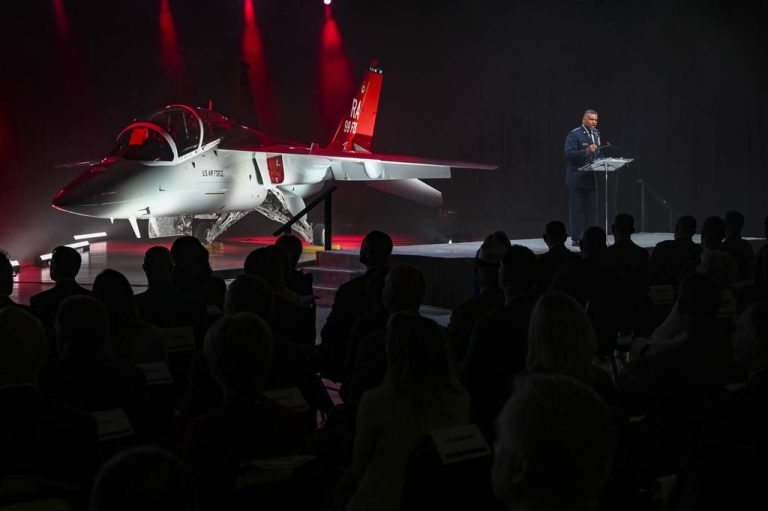
WASHINGTON — Boeing’s T-7A jet trainer aircraft is not expected to reach initial operational capability until spring 2027, three years later than originally planned, the Air Force said.

The Air Force’s next jet trainer has struggled with problems such as a potentially dangerous escape system and ejection seat. Earlier in April, the Air Force acknowledged those troubles, and the time needed to fix them, caused it to delay a milestone C production decision to February 2025. Boeing is now expected to deliver the T-7 in December 2025.

In a follow-up email, Air Force acquisition chief Andrew Hunter said the delay in the milestone C decision means the T-7 isn’t slated to reach initial operating capability until 2027.

Hunter said the Air Force and Boeing are continuing the T-7′s testing process, and completed an on-the-ground sled test in February. The aircraft is on track for its first taxi test in the next few weeks, he said. During taxi tests, an aircraft proceeds down a runway, in some cases at high speed, but does not take off. Such tests are usually carried out before flight tests.

“These tests posture the T-7 program to resolve issues with the escape system and move forward to deliver the training capability the Air Force requires,” Hunter said.

The service is looking for ways to speed processes to recover some of the lost time from the recent delays, Hunter said.

The new IOC date will be three years after the T-7′s original goal to achieve IOC in 2024, and a year behind the most recent revised date of 2026.

The Air Force plans to replace its fleet of 504 aging T-37 Talon trainers with 351 T-7 Red Hawks.

The T-7 was designed to better accommodate both male and female pilots, and pilots with a wider range of body types and heights.

But tests conducted in 2021 found that for some pilots, the plane’s escape system could be dangerous. Some ejecting pilots could be at a high risk of concussions, unsafe acceleration when parachutes open, or losing their visor at high speeds, the Air Force said in December 2022.

The Air Force said improvements to the escape system and testing will make it safe and effective.

The first two production-relevant T-7s are undergoing test flights at Boeing’s St. Louis, Missouri, facility, where the company is finishing construction of five engineering and manufacturing development Red Hawks. Boeing said those five planes will start flight tests this summer in St. Louis.

And the Air Force said the first three of those will then move to Edwards Air Force Base in California, where further flight testing will begin in September.

Stephen Losey is the air warfare reporter for Defense News. He previously covered leadership and personnel issues at Air Force Times, and the Pentagon, special operations and air warfare at Military.com. He has traveled to the Middle East to cover U.S. Air Force operations.

More international forces to join US Army’s aviation experiment Edge

0

NASHVILLE, Tenn. — Now entering its third year, the U.S. Army plans to bring more international partners into the Experimental Demonstration Gateway Exercise next month to improve the ability to connect, share information and execute missions together more seamlessly, according to the service’s two-star general in charge of aviation modernization.

“We have a much larger coalition presence,” Maj. Gen. Wally Rugen, the Army’s Future Vertical Lift Cross-Functional Team lead, told Defense News in an interview ahead of the Army Aviation Association of America’s summit in Tennessee.

Australia, Canada, France and the United Kingdom — all of which observed the exercise last year — are now participating, Rugen said. Those nations will join the Netherlands, Italy and Germany, which participated in the exercise in 2022 at Dugway Proving Ground, Utah.

“I don’t want to oversell it, but we have seven that are bringing technology, two that are observers, and we have actually others who have sent in some late requests, so that number may grow by the time May happens. It may be up to 10 with us,” he added. “We are working through the paperwork and foreign disclosure stuff, but that coalition piece is really good.”

With the addition of more partners, the Army will continue to work on its secret enclave that connects countries on the battlefield at a classified level not previously achieved. The coalition force plans to go through hundreds if not thousands of iterations of a machine-to-machine call for fire, while also testing message traffic, Rugen explained.

If the force at the Experimental Demonstration Gateway Exercise — otherwise known as Edge — can solve such a challenge “I’ll be very, very excited,” he said at a press briefing during the AAAA summit.

Edge will take place at Yuma Proving Ground, Arizona, in May, where events will challenge the U.S. Army and its growing number of partners as the service experiment with concepts and capabilities meant to enhance mission performance in the aerial tier.

The campaign applies space, aviation and network capabilities to show how the Army and the joint force would fight in various theaters. The 2021 iterance focused on the Indo-Pacific region.

The experimentation exercise is meant to feed into Project Convergence, a larger campaign of learning that examines and tests how the Army plans to fight against advanced adversaries across all domains of warfare using capability slated for fielding about 2030 and beyond. The next Project Convergence capstone event will take place in the spring of 2024.

Last year, Edge focused on the European theater and centered around a wet-gap crossing. The U.S. Army’s 82nd Airborne Division and other allied units were tasked with defeating an enemy’s integrated air defense systems. That led to a second phase, introducing maneuver forces through air assaults to seize two different pieces of terrain.

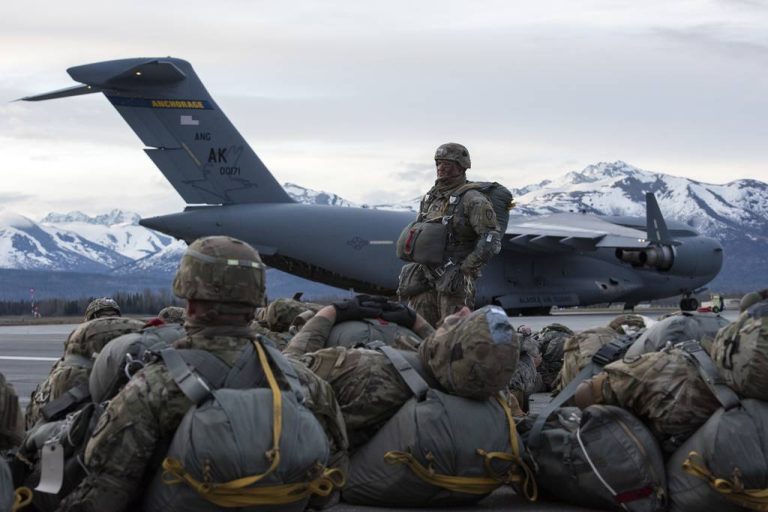
This year, the exercise will focus on the Indo-Pacific theater and will test capability across a vast expanse of territory by tying the Yuma-based exercise to Northern Edge, a joint military training event at Fort Wainwright, Alaska, down to Joint Base Lewis-McChord in Washington state. Two of the Army’s three established multidomain task force units will participate in the exercise. The other task force is European-based.

Participants will use more than 120 technologies at the exercise, an increase over previous years, Rugen said.

The Army will continue to experiment with what it calls “deep sensing” capabilities using aircraft, air-launched effects, unmanned aircraft, sensors, and command-and-control capabilities to see farther, communicate faster and penetrate enemy territory while keeping piloted aircraft out of the range of threats.

To achieve deep sensing on the battlefield, Rugen said, the Army is working to integrate technology developed in the Intelligence, Surveillance, and Reconnaissance Task Force and within Army Cyber Command.

Edge will also help the Army develop and refine its Ariel Tier Network. The Army Requirements Oversight Council will make a decision on the way forward for the capability this calendar year, Rugen noted.

Contested logistics will have a stronger focus in the exercise as well, Rugen said, given its increasing priority as the Army modernizes and prepares to operate in environments under constant surveillance or threat from fort to port.

With the introduction of new partners, some new capability in development with allies will also undergo testing. For instance, Rugen said, Canada is bringing an uncrewed rotorcraft to continue working on related concepts, and the Netherlands is bringing a fifth-generation fighter jet.

Jen Judson is an award-winning journalist covering land warfare for Defense News. She has also worked for Politico and Inside Defense. She holds a Master of Science degree in journalism from Boston University and a Bachelor of Arts degree from Kenyon College.

Trauma Scenarios And How To Handle Them

0

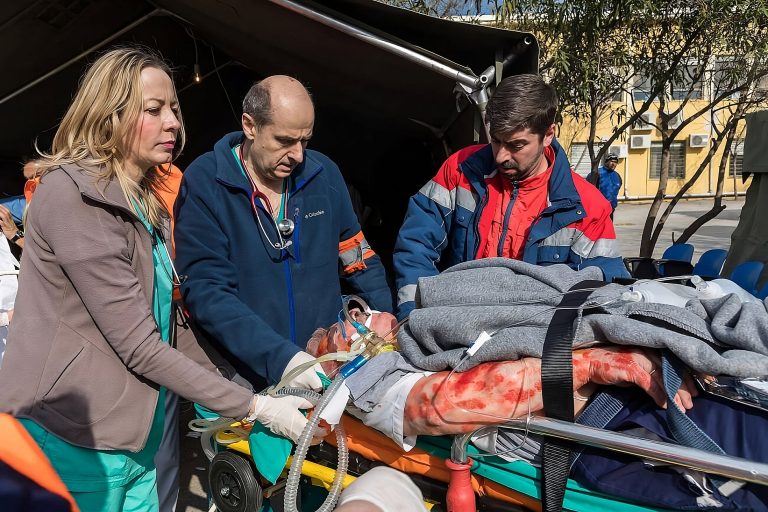
The power outage has persisted for 40 days, transforming what initially seemed like a temporary blackout into a grave situation. Both the fire and police departments are overwhelmed, and the 911 system has been inoperative for weeks.

Nowadays, roving gangs frequently roam the streets, making it perilous to venture outside your home. Your neighbor arrives at your doorstep, his wrist tightly wrapped in a blood-stained T-shirt. He appears disoriented, pale, sweaty, and is breathing rapidly. Collapsing in your doorway, you notice that his hand has been completely severed at the wrist.

In this survival scenario, with the EMS system non-functional, you must confront various traumatic injuries that commonly arise. You are on your own, tasked with addressing whatever you can while your patient is still breathing.

1.Gun Shot Trauma

In the absence of EMS services during a survival situation, knowing how to address gunshot wounds becomes crucial. If you’ve received first aid training, you’re likely familiar with the “ABC” concept, which stands for Airway-Breathing-Circulation. However, when dealing with a gunshot wound, your first priority should be circulation.

Treatment steps:

  • Stop the bleeding: Apply direct pressure, elevate the affected area, and use a pressure bandage in that order. If available, the Israeli Emergency Bandage is recommended. In the absence of specialized materials, you can improvise with a towel or bandana. If direct pressure doesn’t control the bleeding, consider applying a hemostatic agent like Quick Clot or Celox while maintaining pressure.
  • Address shock: Treat for shock concurrently with the other steps. Keep the victim covered for warmth unless there’s a need to examine the wounds.
  • Examine the entire body for wounds: Don’t solely rely on identifying entry and exit wounds, as bullets can cause complex injuries. They may hit bones, fragment, and travel anywhere within the body. Some bullets are designed to inflict multiple injuries.

For gunshot wounds in the arms or legs involving bones: Treatment steps:

  • Direct pressure, elevation, and pressure bandage: Follow the same steps as before. Elevate the wound above the heart and apply a pressure bandage. If bleeding persists, use your fingers to apply pressure to the brachial artery for arm wounds or the femoral artery for leg wounds.
  • As a last resort for extremities, consider a tourniquet: In critical situations, the choice may come down to saving a limb or saving a life.
  • Swelling or suspected bone injury: Rapid swelling indicates internal bleeding or potential bone damage. In such cases, splinting the area is necessary.

For gunshot wounds in the abdomen, with a focus on organ protection: Treatment steps:

  • If the wound is open and exposes the intestines, find a moist and sterile dressing to cover the wound and protect the organs. Immediate medical care is crucial to avoid bleeding to death or severe infection.
  • The victim should refrain from consuming anything orally until the pain subsides, waiting a day or two. Although challenging, this step is vital. Intravenous (IV) fluids would be helpful during this time.

For gunshot wounds in the chest, considering air sucking and potential spine injuries: Treatment steps:

  • Open chest wounds, known as “sucking chest wounds,” can cause a collapsed lung due to air entering the chest cavity. To mitigate this, close the wound using an occlusive dressing. If commercial chest seals aren’t available, improvise with a plastic bag taped on three sides.
  • Exercise extreme caution when moving victims with chest wounds, as the spine is located at the back of the chest. Minimize movement to avoid spinal cord damage. If the heart, lungs, spine, or major blood vessels are affected, and expert medical care isn’t accessible, options in a survival situation are limited.
  • In most cases, it’s advisable not to remove an embedded bullet. It’s challenging to locate and may be obstructing a major blood vessel. Unless there’s an initial infection, the body usually adapts to metallic fragments without severe complications, as evidenced by many military personnel living with shrapnel in their bodies.

2. Traumatic amputation

The treatment of a patient who has experienced an amputation is influenced by various factors. The initial priority lies in managing potentially life-threatening conditions. However, managing amputations resulting from blunt trauma becomes complex due to concerns about additional injuries.

Blunt trauma amputations often occur in situations involving high-energy transfer, such as collapsed buildings after an earthquake, auto or industrial accidents, or debris from a tornado.

These accidents frequently entail the possibility of multisystem trauma, requiring vigilance for other injuries. It is crucial to bear in mind that the most apparent injury may not always be the most significant. Partial amputations should be evaluated and treated as if they were fully intact.

In cases of complete amputation without access to an intact EMS system, the chance of saving the severed limb for possible reattachment is non-existent.

Treatment steps:

  • The primary focus is to immediately control major bleeding by applying direct pressure and elevation. If pressure and elevation fail, tourniquets can be utilized. Place the tourniquet as close to the amputation site as possible.
  • The next priority is to sustain and support essential life functions. Measures such as airway control and maintaining body temperature can help delay the onset of life-threatening shock. Aggressively flush the area with a diluted solution of Betadine (povidone-iodine) or sterilized saline solution using a 60cc to 100cc irrigation syringe. In the absence of commercial sterile solutions, studies suggest that clean drinking water can help keep the wound clean in austere environments.
  • Apply a saline-moistened sterile dressing over exposed tissue to minimize further contamination or injury. Cover it with a dry, sterile gauze dressing. Replace the dressing at least once a day, or more frequently if possible.
  • If an extremity is involved, it should be splinted to provide support and stabilization.

3. Head trauma, Concussion, Skull fracture

Head injuries can be categorized into three groups:

  1. Prolonged unconsciousness (more than five to 10 minutes)
  2. Brief loss of consciousness
  3. No loss of consciousness

SVMDv11Prolonged unconsciousness: If a victim remains unconscious for more than five to 10 minutes, it indicates a significant brain injury. Start by assessing the victim’s airway and perform rescue breathing if necessary. Due to the potential for associated neck and spine injuries with severe head trauma, it is crucial to immobilize the victim’s spine.

In a survival situation where immediate evacuation is not possible, maintain spine immobilization and ensure the victim’s head is pointed uphill. Be prepared to roll the victim onto their side if they vomit. Continuously monitor the airway for signs of obstruction, such as noisy or labored breathing, as well as a decreasing respiratory rate.

Brief loss of consciousness: Short-term unconsciousness followed by the victim waking up after a minute or two and gradually regaining normal mental status and physical abilities indicates a concussion. Concussions typically do not result in permanent damage, but the victim may experience confusion or amnesia about the event and repetitive questioning.

At a minimum, closely observe the victim for at least 24 hours and restrict them from engaging in potentially hazardous activities. Regularly interrupt their normal sleep every three to four hours to briefly assess their condition and ensure they can be easily awakened. If the victim becomes increasingly lethargic, confused, combative, or displays any other concerning signs (outlined under “No loss of consciousness” below), without access to an intact EMS, your only option is to focus on maintaining and supporting essential life functions such as the airway and breathing.

No loss of consciousness: When an individual hits their head but does not lose consciousness, it is usually not a cause for serious concern. They may experience a mild headache, a concussion, bleeding from a scalp wound, or a noticeable bump on their head. However, certain symptoms should raise alarm, including:

  • Progressive worsening headache
  • Gradual deterioration of consciousness from alertness to drowsiness or disorientation. Confirm the victim’s orientation by asking their name, location, date, and what happened. If they correctly answer all four, they are oriented x 4.
  • Persistent or projectile vomiting (vomiting that shoots out under pressure)
  • Significant difference in pupil size
  • Unexplained bleeding from the ear or nose or clear watery fluid draining from the nose
  • Bruising behind the ears or around the eyes without direct injury to those areas
  • Seizures

If any of these symptoms arise, immediate medical attention is necessary. In a survival situation without access to EMS services, focus on maintaining and supporting essential life functions, including airway and breathing, while seeking the best available resources and assistance.

Skull Fractures

A fracture of the skull is generally not life-threatening unless it is accompanied by an underlying brain injury or severe bleeding. Signs of a skull fracture include an uneven sensation when touching the scalp, drainage of blood or clear fluid from the ears or nose without direct trauma to those areas, and discoloration around the eyes (“raccoon eyes”) or behind the ears (known as Battle’s sign).

Scalp Wounds

Scalp wounds are common following head injuries and tend to bleed profusely due to the rich blood supply in the scalp. Fortunately, applying direct pressure to the wound with a gloved hand can usually control the bleeding. It may be necessary to maintain pressure for up to 30 minutes.

To clean the area, use a 60cc to 100cc irrigation syringe and flush it vigorously with a diluted solution of Betadine or sterilized saline solution. If commercial sterile solutions are unavailable, studies suggest that clean drinking water can effectively keep the wound clean in austere environments. After cleaning, cover the wound with a dry, sterile gauze dressing and secure it with a bandage wrap. Replace the dressing at least once a day, or more frequently if possible.

4. Chest trauma/Collapsed lung

chest traumacollapsed lung

In a survival situation, various types of thoracic injuries can occur, such as gunshot or knife wounds, injuries from falling debris, or other impairments. Prompt recognition and treatment of these injuries are crucial. Here are some ways to identify chest trauma:

Patients with a pneumothorax, characterized by holes in the lungs, will exhibit respiratory distress, including difficult breathing (dyspnea), rapid breathing (tachypnea), and rapid heart rate (tachycardia). They may also have reduced or absent breath sounds on the affected side of the chest. Additionally, they commonly experience pain while breathing.

A closed pneumothorax occurs when there is trauma, either blunt or penetrating, without an external wound to the chest wall. This is often caused by a broken rib that punctures the lung tissue. The signs and symptoms of a closed pneumothorax are similar to other types of pneumothorax, including respiratory distress and possibly reduced or absent breath sounds on the affected side.

Chest decompression involves releasing the trapped air within the pleural cavity. The fastest method for this is needle decompression. The needle should be inserted perpendicular to the chest wall, between the second and third ribs (counting from the top), without angling it towards the mediastinum. It is essential to avoid damaging any structures within the mediastinum. If successful, you may hear a rush of air, particularly in a quiet environment.

A sucking chest wound is a specific type of pneumothorax where air is drawn into the thoracic cavity through a wound in the chest wall, rather than through the airways into the lungs. This occurs because air follows the path of least resistance. Breathing in and out may cause the chest wound to bubble with blood.

Treatment:

To address a sucking chest wound, it is important to apply an occlusive dressing over the wound site. Treatment involves placing an airtight dressing over the wound and securing it with tape on three sides, forming a seal while allowing excess air to escape.

5. Severe cuts and puncture wounds

In medical terms, deep wounds refer to injuries that penetrate more than ¼ inch below the skin’s surface. These types of wounds pose a higher risk of damaging ligaments, major blood vessels or arteries, tendons, or organs. The depth of the wound can result in both internal and external bleeding.

Deep wounds commonly include cuts or puncture wounds. Before addressing a wound, it is essential to protect yourself and the victim from blood-borne illnesses by wearing nitrile gloves. Alternatively, you can use improvised materials such as plastic bags or a towel.

svmd longbanner1

Treatment

Direct Pressure: Apply pressure on the injury with your hand and elevate it above the heart level. If this stops the bleeding but it resumes when pressure is released, create a pressure dressing and apply direct pressure to a pressure point.

Upper Arm/Elbow Wounds: Locate the brachial artery on the inner side of the arm above the elbow bone, between the large upper arm muscles.

Groin/Thigh Wounds: Identify the femoral artery in the middle of the crease at the bottom of the groin, between the groin and the upper thigh (commonly known as the “bikini line”). This artery may require significant pressure; press down with the heel of your hand to reduce circulation.

Lower Leg Wounds: Press the back of the knee directly behind the kneecap to access the popliteal artery. Avoid bending or moving the leg to find a more convenient location. Reach around to the back of the leg and apply pressure upward.

Hand/Feet Wounds: On the inside of the wrist, move away from the thumb toward the forearm’s tip. For foot wounds, trace above the front/top of the foot where it meets the shin. In both cases, remember to check for a pulse before applying pressure. If these methods are unsuccessful, apply a tourniquet and tighten it until the bleeding stops.

6. Burns

burn trauma

Burns can occur frequently in survival situations and can range from minor to severe cases.

Severe Burns:

Burns often happen unexpectedly and can lead to life-threatening situations, long-term disfigurement, and loss of function. When caring for burns in a survival scenario, the focus should be on clothing, cooling, cleaning, covering, and providing comfort through pain relief.

Cool the burn to alleviate the pain. Hold the burned area under cool (not cold) running water for 10 to 15 minutes or until the pain subsides. Alternatively, apply a clean towel dampened with cool tap water.

Remove any rings or tight items from the burned area quickly and gently, before swelling occurs. Avoid breaking small blisters (no larger than your little fingernail).

If blisters do break, gently clean the area with mild soap and water, apply an antibiotic ointment, and cover it with a nonstick gauze bandage.

Applying moisturizer or aloe vera lotion/gel may provide relief in some cases. If necessary, administer over-the-counter pain relievers like ibuprofen (Advil, Motrin IB), naproxen sodium (Aleve), or acetaminophen (Tylenol).

Avoid using aspirin products due to the risk of bleeding and platelet inhibition.

Major Burns:

Ensure the safety of the burned individual and protect them from further harm. If it can be done safely, make sure they are not in contact with smoldering materials, exposed to smoke, or excessive heat. If emergency medical services (EMS) are available, it is advisable not to remove clothing stuck to the skin. In a survival situation, use a large-gauge syringe to irrigate the burn thoroughly and remove any embedded clothing fragments.

Check for signs of circulation, such as breathing, coughing, or movement. Administer CPR if necessary. Remove jewelry, belts, and other restrictive items, especially from around the burned areas and neck.

Burned areas tend to swell rapidly. Avoid immersing large severe burns in cold water, as it may cause hypothermia or shock due to decreased blood flow and lowered blood pressure. Elevate the burned area if possible, raising the wound above heart level.

All partial- and full-thickness burns should be covered with sterile dressings. Use a fine mesh gauze (e.g., Telfa) after cleaning the burn and applying a thin layer of topical antibiotic.

The frequency of dressing changes can vary from twice daily to once a week. Dressings should be changed whenever they become saturated with excessive exudate or other fluids. During each dressing change, gently remove the topical antibiotic by washing the area. Then, reapply fresh antibiotic ointment and a new dressing.

Concluding

bor banner remedies

In any medical situation, prioritizing personal safety and using available resources wisely is crucial. While these guidelines offer valuable information, seeking professional medical assistance whenever possible is highly recommended to ensure the best possible care for injuries and conditions. By being prepared and knowledgeable, individuals can increase their chances of effectively managing medical emergencies in survival scenarios.

This article has been written by James H. Redford MD for Prepper’s Will.

You may also want to check this:

Knowledge to survive any medical crisis situation during a major disaster

Surviving drought – How to obtain water from air!

A few survival foods everyone should learn how to make

The vital self-sufficiency lessons our great grand-fathers left us

World War II ice cream

0

Just when I'm trying to eat right, I find this…