Just wondering. I'm going to get one more build (well try to) before the wall goes up. .308. Although I hate the noise, the short weapons have got me hooked. (Yes I have cans on some of my earlier builds). Are they going to clamp down on the stabilizers or the whole ball of wax. This is a "just because" firearm and a "just because" thread…
What say you?
SBR or Pistol?

Tannerite | Survival Monkey Forums

There are several videos out there that show people doing stupid stuff with explosives.
A classic is this “Russian” guy who shoots a rigged truck and somehow survives an absolute metal-storm of shrapnel.
He’s apparently lucky enough to not need any brains–or, at least he was that day.
Imgur: The magic of the Internet
It was a put-up video, concocted for commercial gain. The shooter was a paid actor–not even Russian–and the last I heard the authorities were looking for him and the guy that hired him.
When I was a kid they brought a railroad guy in one day to explain why is was dangerous to mess around with train couplings. Some of them have a lot of pressure in the lines.
Then they brought in a LEO who showed everyone what a blasting cap was–and why you shouldn’t mess with them, either.
That was Our Tax Dollars At Work–and it was some of the best money the School Board ever spent on education.
I don’t have the slightest doubt that it saved several kids from dying early and ugly.
They should do the same with fireworks, black powder, “found” ammunition, and explosives like Tannerite.
You could use that stuff to peel safes like a banana. Or blow parts of yourself (and your friends) into several adjoining counties.
One other thing they should do is make an exception to the medical privacy laws regarding Emergency Rooms and auto crash victims. Nothing exotic: Just allow a class full of Driver Ed students to come in and observe through a window–so they can see first-hand what happens when speed doesn’t quite kill. Or does, but not real fast. Or not fast enough.
Life is dangerous, and refusing to educate our kids on the very real dangers they WILL encounter is just plain stupid–if it doesn’t actually constitute Child Neglect.
But then, the Commies that have taken over the Guberment Skools don’t really care about the kids.
They just want to dumb them down into brainless worker-bots.
As for blowing up stumps, I’d rather spend two weeks burning them out than spend two weeks picking broken toothpicks out of my fabulous fundament.
Davis-Monthan to launch new special operations wing as A-10 retires
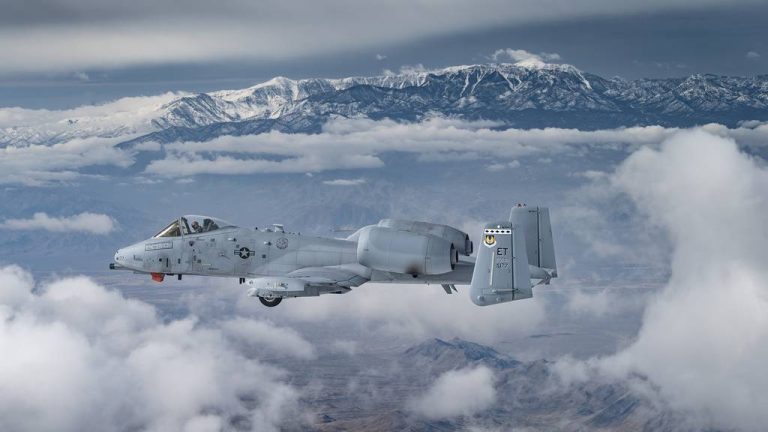
This story was updated April 27 at 10:52 a.m. to correct which missions are moving from Nellis Air Force Base, Nevada, to Davis-Monthan AFB, Arizona.
Davis-Monthan Air Force Base in Arizona appears poised to trade its stalwart fleet of A-10C “Warthog” attack planes for a new special operations wing.
The move follows years of debate in Washington over the future of the A-10, which the Air Force plans to retire by the end of the decade in favor of more advanced fighter jets. Bringing in a special operations wing would keep jobs at the Tucson installation while taking it in a different direction than the service had planned.
A service spokesperson said Tuesday the Air Force is still “working through the details” of the new organization, which is listed in the service’s fiscal 2024 budget request as the “492nd Power Projection Wing.”
It’s unclear what, precisely, the wing will do. Most wings that fall under Air Force Special Operations Command oversee multiple specialized aircraft — from the AC-130 gunship to the U-28 surveillance plane — that allow troops to move around warzones quietly and quickly, and with the substantial firepower needed to protect ground forces.
Members of Arizona’s congressional delegation raised the prospect of a new “special operations capability” with a flying mission at Davis-Monthan in a public letter to Air Force Secretary Frank Kendall earlier this month.
The bipartisan group of Arizona lawmakers — Sen. Mark Kelly and Rep. Ruben Gallego, both Democrats; Sen. Kyrsten Sinema, an independent who caucuses with Democrats; and Rep. Juan Ciscomani, a Republican — said they are encouraged by the service’s vision and urged transparency as its work moves forward.
“The Air Force has laid out an ambitious timeline for executing this transition at Davis-Monthan through a series of facility reviews, military construction and incoming flying missions,” the group wrote in its April 6 letter. “Delivering on this five-year plan requires meeting a number of targets that must be consistently met to avoid delays that negatively impact the base and the local economy.”
Davis-Monthan will continue to host the Compass Call electronic attack mission with a slightly smaller fleet of new EC-37B jets, which will replace the 40-year-old EC-130Hs, and the combat search-and-rescue mission using the fixed-wing HC-130J Combat Kings and the new HH-60W Jolly Green II helicopter.
Lawmakers said Davis-Monthan will still employ around 11,000 airmen in five years, the same size workforce as it has now, despite changes to its core missions. The Air Force must still work through its official basing process before making any firm decisions to bring new missions to Tucson.
The service’s pivot to establish a new special operations wing at Davis-Monthan indicates it has ditched an earlier plan to move the test and training enterprise for A-10s from Nellis AFB, Nevada, to Arizona. It still expects to move those units for the HH-60 fleet to Arizona.
The service plans to continue downsizing its A-10 fleet from 260 to 218 aircraft by the end of September 2024, with the rest to follow over the next five years. Congress ended its yearslong opposition to retiring the A-10 last December, paving the way for divestment of the venerable close air support platform that has protected ground troops on the front lines of America’s wars for decades.
A-10 retirement is one piece of the Air Force’s broader vision to modernize its inventory with equipment that would be most useful and durable in a potential conflict with China. Critics argue the Warthog would be too vulnerable against advanced surface-to-air missiles and lacks the long-range strike capabilities needed for war in the Pacific.
“The A-10 is a great airplane … in an uncontested environment,” Air Force Chief of Staff Gen. Charles “CQ” Brown Jr. said in March. “The challenge is, we’re going to be in more contested environments in the future.”
Rachel Cohen joined Air Force Times as senior reporter in March 2021. Her work has appeared in Air Force Magazine, Inside Defense, Inside Health Policy, the Frederick News-Post (Md.), the Washington Post, and others.

Boeing’s tanker losses top $7 billion
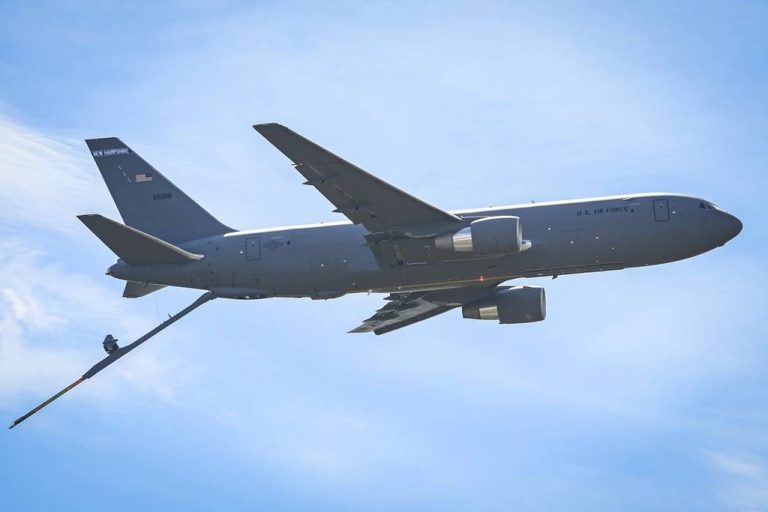
WASHINGTON — Boeing reported a $245 million charge on the KC-46A Pegasus tanker in the first quarter of 2023, due to a supplier’s quality issues.
The penalty means the KC-46 has now racked up more than $7 billion in charges, and follow a $1.2 billion hit the company took on the Air Force tanker in the third quarter of 2022.
The KC-46′s charge brought Boeing Defense, Space and Security into the red for the quarter, with the unit reporting a loss of $212 million, the company said Wednesday. Boeing said ongoing labor and supply chain disruptions also hindered the company’s results.
However, the outlook for Boeing’s defense unit showed signs of improvement from the first quarter of 2022, when it reported a $929 million loss. Boeing defense also brought in $6.5 billion in revenues in this year’s first quarter, a more than $1 billion increase over 2022′s first quarter.
Boeing also trimmed its overall losses in the quarter by about $1 billion from the same period in 2022, while overall revenues grew to nearly $18 billion in the first three months of this year.
Boeing said the charge was largely driven by a previously disclosed quality issue due to a supplier, but did not offer further details in a call with analysts. The aviation news website the Air Current reported in March a subcontractor had not followed proper painting and priming procedures on the center fuel tanks of some KC-46s and 767s, on which the KC-46 is based, which has held up deliveries. That quality issue could risk contamination of the aircrafts’ fuel systems, Air Current reported.
Brian West, Boeing’s chief financial officer, confirmed the quality issue with the 767 center fuel tanks later that month at a Bank of America conference.
David Calhoun, Boeing’s chief executive, said on Wednesday’s call work is progressing on fixing that problem. But the company warned investors more losses on the KC-46 could come during the remainder of the year.
Calhoun said the company is seeing bright spots in its defense business, with the Air Force possibly buying additional, modified KC-46s as an interim step until it can bring on a next-generation tanker. He also pointed to the up to $1.2 billion contract the Air Force awarded Boeing in February to start building the E-7A battle management aircraft, to replace the aging E-3 Sentry airborne warning and control system, or AWACS, aircraft.
Awards in the first quarter for 15 more KC-46s and 184 Apache helicopters for the Army also reflected strong demand, Calhoun said.
Stephen Losey is the air warfare reporter for Defense News. He previously covered leadership and personnel issues at Air Force Times, and the Pentagon, special operations and air warfare at Military.com. He has traveled to the Middle East to cover U.S. Air Force operations.
Will German purchase of Boeing Chinooks relieve pressure on US Army?
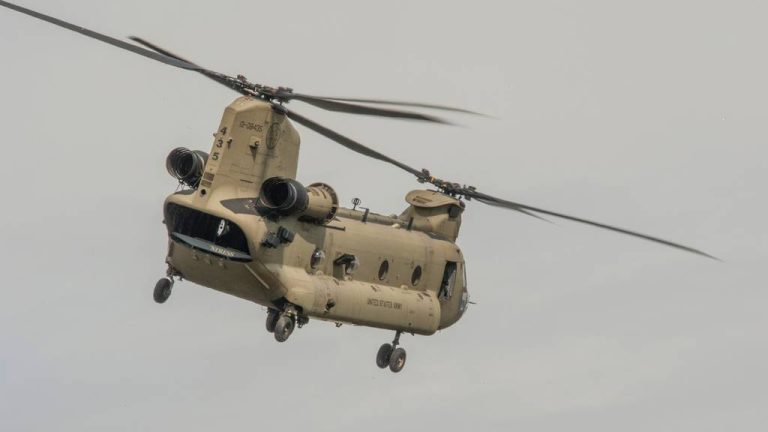
NASHVILLE, Tenn. — Boeing hopes Congress will fund more CH-47F Block II Chinook helicopters for the Army in the fiscal 2024 budget — against the service’s wishes — in order to keep the company’s production line busy. But the service’s acquisition chief said in a recent hearing that Germany’s plan to buy the aircraft should be enough to support Boeing and avoid the Army having to buy more.
The Army decided in 2019 that it would not procure the CH-47F Block II for the active fleet so it could begin heavier investments in its Future Long Range Assault Aircraft and the Future Attack Reconnaissance Aircraft it wants to field in the early 2030s. The service is still seeking 69 of the latest Chinook variant for special operations in the form of the MH-47 “G” model.
Boeing won a contract last year to build 60 CH-47 Chinook helicopters for Germany.
The Block II version of the Chinook featured new rotor blades, but the Army abandoned the effort a year ago due to excessive rotor blade vibrations that, according to the Pentagon’s chief weapons tester, posed a flight risk. The version also incorporates a new fuel system, electrical system and stronger airframe to increase lift capability.
Since the 2019 decision, Congress has pushed back on the Army’s decision and injected funding into the its budget, forcing the service to buy the Block II variant for the active force. Over the last three budget cycles, Congress has funded a total of 10 Block II Chinooks for the regular Army.
Again in the FY24 request, the Army asked for only six G model helicopters, and none for the active force.
“The Army does recognize the importance of [the CH-47] industrial base and especially the human capital aspect of it. It’s vital,” Army acquisition chief Doug Bush said during a House Tactical Air and Land Forces Subcommittee hearing last week.
“The budget request did include, once again, our six aircraft for special operations forces,” he added. “One thing that has changed is the good news that the German military has decided to buy the CH-47 … which gives us the opportunity to retain that workforce. Whichever direction the Army ultimately goes, [it] buys us some more time.”
The Army had hoped foreign military sales might help shore up Boeing’s production line to keep the industrial base for the Chinook going strong. Army Chief of Staff Gen. James McConville argued shortly after the service decided to curb the Block II variant for the regular Army that foreign military sales could bolster the line.
Army officials pointed to both Germany and Israel as potential customers. Israel ultimately chose the Sikorsky-made CH-53K King Stallion for its heavy-lift program in 2021.
Boeing officials told Defense News in 2019 that even if Germany and Israel each went with the CH-47, it wouldn’t be enough to support the production line while also keeping the workforce and sub-tier suppliers active over time.
Boeing’s senior director for international government services, Mark Ballew, told Defense News on April 27 at the Army Aviation Association of America’s annual conference that the sale to Germany is a “huge help,” but it only keeps the production line in Pennsylvania at a minimum sustainment rate.
The company also signed a contract with Egypt to build 12 additional Chinooks, and South Korea has signed a letter of agreement for 18, which will also help fill the gap, according to Ken Eland, Boeing’s Chinook program manager.
Eland said he is hopeful Congress will again fund more Block II Chinooks to the active force in its FY24 budget, which will contribute to the health of the supply chain and the production line.
Boeing and Congress are due for a more definitive answer on the Army’s plan for the active force this year. Bush noted that there is a decision point in 2023, which would feed into the FY25 budget request being built right now, on where it will ultimately land when it comes to providing the latest variant to the active force.
“The aircraft that Congress has added for the Army to procure, we have procured and we are going to field,” Bush said. “But I think at this time, it’s a question of balancing resources across the entire Army. That is the question in front of senior Army leaders with regard to where this falls in the mix.”
But the Army has set its sites on future vertical lift endeavors.
“What I think’s important right now is to get FARA and FLRAA over the hump … get it fielded and there is a program of record,” McConville told reporters at the AAAA conference on April 27. “Having that transformational capability is where [we] want to go. We’d love to continue building out the CH-47, which really comes down to money.”
Jen Judson is an award-winning journalist covering land warfare for Defense News. She has also worked for Politico and Inside Defense. She holds a Master of Science degree in journalism from Boston University and a Bachelor of Arts degree from Kenyon College.
Why I Love America | Survival Monkey Forums
TEN REASONS WHY I LOVE AMERICA
A man should be proud of the place where he lives and live so his place is proud of him.
Abraham Lincoln
Below is an extract of a blog at my website on PATRIOTISM. My reasons might seem a bit naive considering the changes that have occurred in the world since I wrote it, but I’m still glad I live here and not somewhere else.
1» America is where I learned to work for what I wanted—not beg, borrow or steal it. I was born shortly after the Depression so I recall evenings around the campfire—we lived in an Army tent because we didn’t have a house—hearing my parents and their friends recall the suffering of those days. I believed those stories, exaggerated as they may have been, because we were dirt poor ourselves and worked hard to survive.
2» America is why I’m not poor. I grew up in the Eisenhower Years when America was prospering, so despite hard times I was optimistic about the future. Despite today’s hard times, I’m glad I live here, not somewhere else.
3» America is why I live here, not somewhere else. Despite the gap between the American reality and the American dream, my experience in other countries pales in comparison to my life here. That doesn’t mean I’m an isolationist or that patriotism is nationalism, tribalism, or racism. It means that patriots are proud to be Americans living in America—land of the free and home of the brave.
4» America is where people can overcome the inherent tribalism of human nature and the chasm between rich and poor, blacks and whites, conservatives and liberals.
5» America is where diversity can be a blessing if people come here to assimilate their skills and values into the evolving American culture—not to establish their own country in the midst of ours. The optimal number of illegal immigrants is zero.
6» America is where unity has the best chance of not disappearing into zillions of isolated mini-cultures, identity politics and hyphenated American categories. I am not a white-American or a black-American or a Muslim-American man. I am an American. Period!
7» America is where I can cooperate with other citizens to replace political gridlock with grass-roots action and thereby unite us from the bottom up rather than rely on politicians to unite us from the top down.
8» America is where we can stop voting the same idiots into office while expecting different results. America is where we can demand accountability. America is where I can disagree with the majority and still be a patriotic, supportive citizen.
9» America is where I can vote to accept or reject a candidate and tell my representatives to support or oppose legislation.
10» America is where my representatives make it possible for me to spend less time analyzing politics and more time pursuing happiness and prosperity.
It’s time to resource the Air Force fighter enterprise the US needs
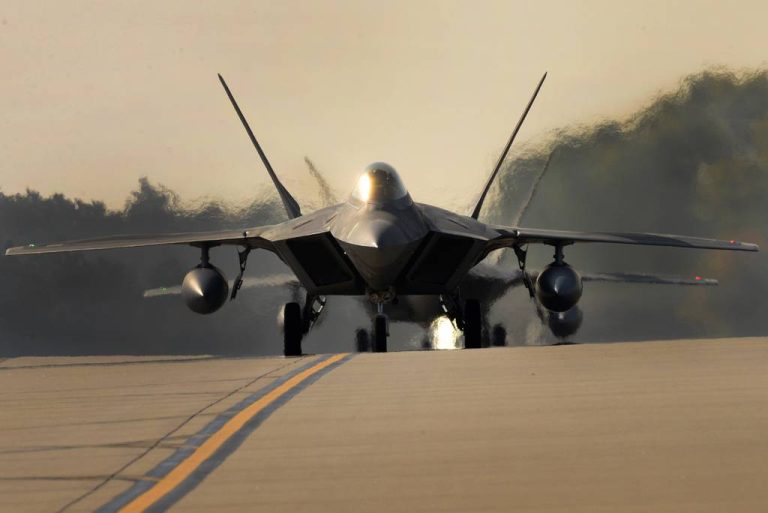
Air superiority involves protecting friendly forces from aerial attack, while concurrently empowering offensive power projection by suppressing enemy defenses. The former is key to not losing a war. The latter is what brings victory. Joint combat power is not viable without control of the sky. Investment in a capable, sufficiently sized fighter enterprise is the down payment required for successful joint force operations.
Given this stark reality, it is crucial that Congress block the Air Force’s budget-driven request to retire 32 of its F-22s, while also providing the resources necessary for tomorrow’s air superiority mission.
The Air Force’s fighter inventory stands at less than half of what it was in 1990. Does anyone think the world is any safer today? Russia’s invasion of Ukraine and Chinese aggression in the Pacific, combined with Iran’s and North Korea’s aggressive nuclear ambitions, suggest otherwise.
These aircraft average nearly three decades in age. They were flown hard in nonstop combat deployments that began with 1991′s Operation Desert Storm and have never stopped. That has exacted an extreme toll on their physical condition. Old, small and worn is a recipe for disaster when facing a burgeoning set of global security demands — but that is an accurate description of today’s Air Force.
Focusing on Air Force fighters is important; while the Navy and Marine Corps have fighters, they largely exist to support organic functions like carrier battle group defense and Marine Air-Ground Task Force support. Even if these objectives are met, these fighter inventories are too small to meet large-scale combatant command requirements.
The same holds true for allied air forces; U.S. Air Force fighters stand alone in the ability to directly meet combatant command demands as job No. 1 in large volume.
Air Force leaders have long known these realities, and that is why they made plans in the 1980s and 1990s to replace F-15s, F-16s and A-10s with a new generation of fighters in the form of the F-22 and F-35. However, post-Cold War cuts, compounded by a subsequent focus on combat operations in Afghanistan and Iraq, saw these plans go by the wayside.
The requirement for 781 F-22s was cut numerous times, with 187 aircraft ultimately procured before production was canceled in 2009, representing less than half the stated military requirement. F-35s were supposed to be acquired in high volume — with Defense Secretary Robert Gates committing to the Air Force procuring 80 F-35s per year from 2015 through the 2020s, with the final Air Force F-35As procured in 2034.
That did not happen — with every annual request far below that figure. That is why the current fighter force is in a freefall, with aircraft retiring without new backfills (note the F-15s withdrawn from Kadena Air Force Base last year without a direct replacement).
Bottom line: The nation has assumed tremendous risk in its fighter modernization portfolio; the legacy fighter backstop is out of life while demand is surging.
That is why Congress must stop further erosion in the Air Force’s fighter inventory and block the request to retire 32 F-22s. Service leaders are arguing that the F-22s in question are early production examples that do not meet combat deployment standards. This is partially true, but even these versions can defeat any fourth-generation enemy fighter.
RELATED
Regardless, even in their present form they are sufficient to meet training requirements. That is a crucial contribution, for absent that capacity, the more modern versions would have to pick up the training load, effectively decreasing the size of F-22 combat force. Not only would this increase fatigue, but it would reduce F-22 availability to combatant commands where they are in high demand; that is more than a squadron’s worth of the world’s most advanced air superiority aircraft. That is taking excessive risk given combatant commands’ demands far outstrip supply.
These circumstances reveal the Air Force’s precarious fiscal position. Service leaders openly acknowledge the issue is money. They are forced to cut the F-22 program due to insufficient funding to invest in both F-22 sustainment and the Next Generation Air Dominance effort — the eventual F-22 replacement. While there is no question that NGAD is crucial, the most optimistic forecasts suggest it will not be fielded until 2030. That is an aggressive target, and reality suggests it will slip.
Hope should not be confused for a viable set of combat capabilities in adequate numbers. The real answer demands resourcing the Air Force to retain and adequately fund its full F-22 inventory, while also providing adequate resources for NGAD.
Build rates for types in production, like the F-35, should also be boosted to fund current capacity gaps. Given that the Air Force has received less money than the Army and Navy for the past 31 years in a row, it is no wonder why its resources are strained. It is older and smaller than it’s ever been in its history.
This Air Force fighter resourcing decision portends massive implications for joint force operations. That this problem exists in the context of the war in Ukraine — a conflict where the inability to secure air superiority highlights the criticality of this mission in the starkest possible terms — makes it even more concerning.
Congress needs to do the right thing: Fund the Air Force sufficiently so it can secure air superiority today and tomorrow. If leaders think this expense is too great to bear, they need to consider the alternative. As Chairman of the Joint Chiefs of Staff Gen. Mark Milley recently testified, “the only thing more expensive than fighting a war is losing a war.”
Douglas A. Birkey is the executive director for the Mitchell Institute for Aerospace Studies.

Military must train to fight through communications breakdown
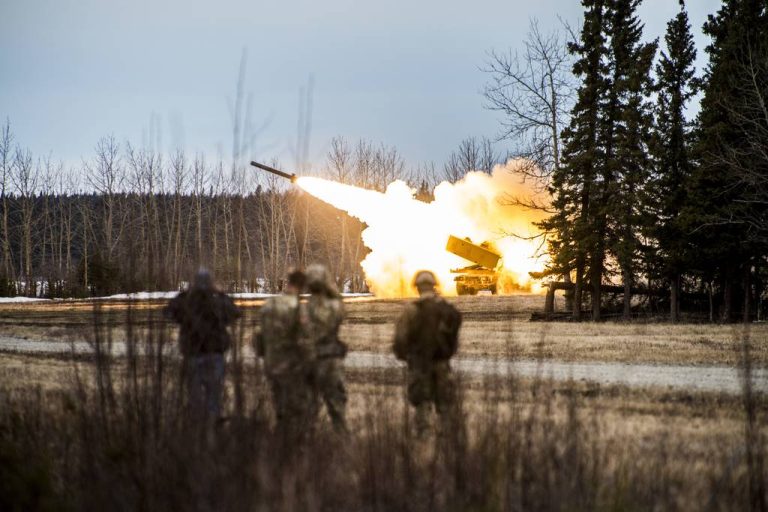
WASHINGTON — The United States’ adversaries will likely target the communications abilities vital to multi-domain operations in a future war, and military commanders will have to be ready to operate during such disruptions, experts said Wednesday.
The U.S. military’s ability to fight a network-integrated war, in which it can use vast arrays of sensors, satellites and communications nodes to deliver large amounts of integrated firepower, is one of its key advantages, said Andrew Metrick, a defense fellow at the Center for a New American Security think tank.
But potential adversaries such as China and Russia have zeroed in on that as a key ability they would need to take out or disrupt in a fight against the U.S., Metrick said during a panel for the C4ISRNet Conference, hosted by a Defense News sister publication.
“We should take it as a given that in places, our communications are going to break and fail,” Metrick said. “When your adversary is as focused and as capable as [China] appears to be, you should not take it as a given that you will have the same degree of comms freedom that you had when that domain was not being tested.”
Adversaries’ advancements in jamming and electronic warfare capabilities have made it necessary for the military to look at a “decentralized” approach to some operations, said Matt Farmer, an analyst for the operational level doctrine division at the Army’s Combined Arms Doctrine Directorate.
The strong networking and communications systems of the American armed forces can provide a significant advantage during war, Farmer said – but the way the military fights can’t always depend on those communication lines remaining up.
“We know that the battlefield, now and in the next five to seven years, we’re going to be experiencing this degraded communications environment,” Farmer said. “We have to be able to operate when you don’t have perfect communications or perfect information.”
If a unit cannot act autonomously, and its effectiveness on the battlefield depends on talking to a command post to get permission to fire weapons or coordinate with other forces, Metrick said, that operational concept will collapse.
“How we think about how those units are able to still maneuver and generate effects in a degraded environment is crucial,” Metrick said.
In addition to developing resilient communications systems that can withstand enemy attacks, Metrick said, the Defense Department needs to create “nodal,” almost self-contained systems. These units need to be able to operate largely on their own across battlefield domains, while only having sporadic, low-quality contact back to command posts, he said, though he acknowledged doing that will be difficult.
Metrick said the war in Ukraine has shown how important it is to have a flexible networking construct, though he cautioned not all lessons would apply in a potential U.S. war in the Indo-Pacific region.
Ukraine has taken advantage of resources such as Starlink satellites and ground terminals to help manage command and control. Kyiv’s forces also have used a variety of small drones to beat back Russia’s invasion, he said.
“It’s very much a bootstrapped approach [in Ukraine], but it’s effective,” Metrick said. “In a lot of ways, you can glean things about the importance of tactical flexibility, about agility, and about the unique combinations of capabilities that produce asymmetric effects from the Ukraine example.”
Stephen Losey is the air warfare reporter for Defense News. He previously covered leadership and personnel issues at Air Force Times, and the Pentagon, special operations and air warfare at Military.com. He has traveled to the Middle East to cover U.S. Air Force operations.