P50 by KelTec | Survival Monkey Forums

0

I’ve sold all three of my 5.7 guns (PS90, FiveSeven pistol, and 5.7 AR-15) recently since I rarely shoot them anymore along with 42 boxes of ammo. I like the concept of the P50, but I dislike the lack of shoulder stock options. I had one friend hate on it due to the odd magazine placement and magazine change difficulty, but with 50 rounds on tap, mag quick mag changes aren’t an issue for me.

I don’t regret divesting myself of the 5.7 caliber for now since the Ruger and Keltec versions are pretty much unobtainable at this time except for exorbitant prices.


The Disiderata | Survival Monkey Forums

0

Every month or so I sit down and read Max Erhman’s Disiderata. It seems like a wise way to deal with the ups and downs of life, whether the poop has hit the fan or not…

***​

Go placidly amid the noise and haste and remember what peace there may be in silence.

As far as possible, without surrender, be on good terms with all persons. Speak your truth quietly and clearly and listen to others, even the dull and the ignorant; they too have their story.

Avoid loud and aggressive persons, they are vexations to the spirit. If you compare yourself with others, you may become vain and bitter, for always there will be greater and lesser persons than yourself.

Enjoy your achievements as well as your plans. Keep interested in your own career, however humble. It is a real possession in the changing fortunes of time.

Exercise caution in your business affairs for the world is full of trickery. But let this not blind you to what virtue there is. Many persons strive for high ideals, and everywhere life is full of heroism.

Be yourself. Especially, do not feign affection. Neither be cynical about love, for in the face of all aridity and disenchantment it is as perennial as the grass.

Take kindly to the counsel of the years, gracefully surrendering the things of youth. Beyond a wholesome discipline, be gentle with yourself.

Nurture strength of spirit to shield you in sudden misfortune. But do not distress yourself with dark imaginings. Many fears are born of fatigue and loneliness. You are a child of the universe, no less than the trees and the stars. You have a right to be here.

Whether or not it is clear to you, no doubt the universe is unfolding as it should. Therefore, be at peace with God, whatever you conceive Him to be,

And whatever your labors and aspirations, in the noisy confusion of life keep peace with your soul. With all its sham, drudgery, and broken dreams, it is still a beautiful world.


Skin care, sunscreen, insect repellent (stores / no stores)

0

Aloha,
I haven’t spent much time researching this topic yet, but I hope that some of you can point me in a direction.

I’ve been reading about the processed food industry and it makes me feel thankful that I’m cleaning up my nutrition and eating more whole foods.

I have a feeling that the products we buy for skincare, sunscreen, and insect repellent may be equally chemical ridden and awful for us.

Do you have any go-to products or recipes for?

  • Cleanser
  • Moisturizer
  • Sunscreen for face and body
  • Insect repellent

I am definitely open to making my own products. For the sunscreen and insect repellent I was thinking that it might be useful to have some kind of clay like kaolin and also zinc. I also know that essential oils are very useful.

Thank you for your suggestions!

<3 Alana


Industry devises plans to keep helicopter fleet capable for decades

0

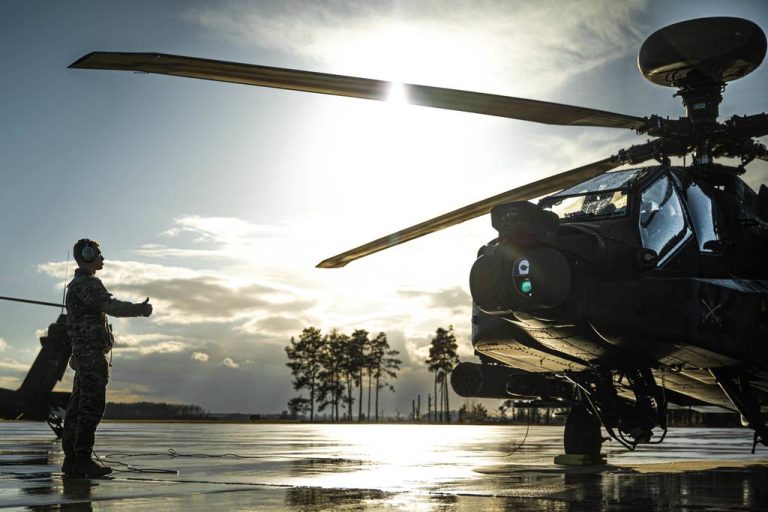
NASHVILLE, Tenn. — Companies that manufacture the U.S. Army’s helicopter fleet are devising plans to modernize the aircraft — now reaching 40 years old — in order to keep them flying for decades more.

The Army plans to develop and field two future vertical lift aircraft by the early 2030s — a Future Long-Range Assault Aircraft and a Future Attack Reconnaissance Aircraft. But officials have acknowledged the current fleet, which took shape in the 1980s, will need to stick around even after the transition is well underway.

“The Apache, the Black Hawk, is going to be around for the next 30 to 40 years,” Army Chief of Staff Gen. James McConville told reporters at the Army Aviation Association of America’s annual conference, which took place in late April.

Army officials also confirmed that the CH-47 Chinook could end up flying for 100 years before retiring around 2060.

Even so, McConville said the current fleet will eventually end up on display stands at Army aviation headquarters, much like the UH-1 Huey, the OH-58 Kiowa Warrior and the AH-1 Cobra attack helicopter.

There’s not much clarity on when the Army will phase out aircraft in the current fleet, how that would happen and what number of new aircraft will replace older ones.

The Army’s program executive officer for aviation, Maj. Gen. Robert Barrie, told Defense News in an interview at the AAAA event that he is hesitant to put timelines on how long the current fleet would continue to be a part of the fighting force.

“I don’t know what the future holds,” he said. “Every day it’s operating, we owe it to our soldiers for it to be relevant and ready to go, and that’s where we’re focused.”

The Army is in the midst of working an aviation force design update, Maj. Gen. Mac McCurry, the Army Aviation Center of Excellence commander, told Defense News in an interview at AAAA. “We’re working on the allocation, the basis of issue, probably not directly one-for-one for a Black Hawk, with an increased capability. You probably don’t need the same amount in each formation. So we’re looking and doing the modeling and how many do you need.”

McCurry said the Army will have more fidelity to make a decision on force structure once the future vertical lift programs get into engineering and manufacturing development phases; that’s when the service can see how the new aircraft perform in developmental and operational testing compared to the roles and missions the Army wants for the systems.

“Then we will probably be able to more readily optimize the fleets and see those kinds of downward curves on the platforms we have today,” he added.

Upgrades for existing aircraft

Some of the current fleet is quite young based on when the last airframes were built along with recent upgrades, McCurry argued. The Apache fleet was an older one, but now it’s considered younger because the most recent variant and upgrade plans are newer, he explained.

The UH-60 fleet is about 16 years old on average, and the Chinook fleet is about 9 years old for a large number of aircraft.

“When I look at the actual flight hours on the platforms, they’re fairly young,” McCurry said.

The Army right now, according to Barrie, is focused on ensuring the current fleet is safe and maintains a baseline capability. Baseline capabilities include making all aircraft in the fleet digital to allow for upgrades, he explained, and increasing the processing power within the aircraft.

And modernizing the current fleet to have the same modular, open-system architecture to continue to import capability and upgrades is going to be key.

The service is also injecting more funding in its fiscal 2024 budget for survivability equipment as adversaries advance capabilities and tactics, Barrie noted.

Radio and communication modifications are also taking place, including improvements to Link 16 technolgoy, which connects aircraft with ground forces.

Furthermore, both the Black Hawk and Apache helicopters are due to receive a new, next-generation engine beginning in the next few years, albeit several years delayed.

Apache Echo-models are receiving the latest upgrade — the V6 — which was first fielded to units in 2021.

Keeping up with the future fleet

At recent trade shows, defense contractor Boeing has begun to showcase what it can do for the Apache beyond its latest version.

“It levels things up, embraces, incorporates new transformation technology, and then you get performance gains,” Jenny Walker, who is in business development for Boeing’s Apache program, told reporters at the AAAA event.

The Apache model on display featured an additional wing pylon, joining the two already there on the current version, to provide additional weapons in a greater variety onboard. The company also showed a concept for a directed-energy capability on one of the pylons.

Adding additional payloads to the aircraft, Walker said, is made possible through the Improved Turbine Engine Program, or ITEP, engine, which will be integrated into Apache helos in the coming years, as well as drivetrain and tail-rotor improvements that will allow the aircraft to fly 135 nautical miles to an objective and stay there for an hour or more and return. The current Apache would likely be able to stay out at the objective for roughly 30 minutes, she added.

Lockheed Martin has also designed a next-generation turret for the Apache’s sensors that help it see and target threats. The turret will enable easier upgrades down the road but also reduces maintenance time and has a faster slew capability for pilots to keep eyes on targets and accurately fire weapons. The turret will go into a yearlong soldier evaluation this month.

Lockheed’s Sikorsky is prioritizing ensuring the Black Hawk’s compatibility to operate alongside the Future Long-Range Assault Aircraft, Paul Lemmo, the subsidiary’s president, said in an interview at AAAA.

The company wants to “ensure they can interoperate — doesn’t mean they have to be the same, but they should be operating on the same open-system standard,” he said.

The company is also looking at the potential application of digital vehicle controls for the aircraft that would enable the insertion of capabilities like Sikorsky’s Matrix, an autonomy system that would not take over for pilots entirely but would offload some of the work so they can focus on the mission. The system will also increase safety by autonomously avoiding accidents like midair collisions and flying through degraded visual environments.

While the Chinook F-model Block II is not yet fielded to the active force, it will provide additional lift capability. The original plan was to swap out the rotor blades with new advanced ones, but trouble with blade stall and vibration in testing led the Army to cancel the effort a year ago.

Barrie said the advanced rotor blade’s technical issues, paired with the cost of the blade, remains “fundamentally unchanged,” but the Army has continued with Block II development and learned that even with the older blades the system is meeting performance requirements.

“I have the paddles out with the U.S. Army trying to keep that patient alive,” Boeing’s vice president and H-47 program manager, Ken Eland, said at AAAA about the advanced rotor blades. “I would like to see that press forward. There’s some challenges we’re working through with them timing-wise, but we’re interested in trying to keep it on life support.”

Jen Judson is an award-winning journalist covering land warfare for Defense News. She has also worked for Politico and Inside Defense. She holds a Master of Science degree in journalism from Boston University and a Bachelor of Arts degree from Kenyon College.

Zero trust would have helped prevent Pentagon leak, CIO Sherman says

0

BALTIMORE — The recent leak of national security documents would have been easier to discover and prevent had the U.S. Department of Defense already instituted the latest cybersecurity practices known as zero trust, according to Pentagon Chief Information Officer John Sherman.

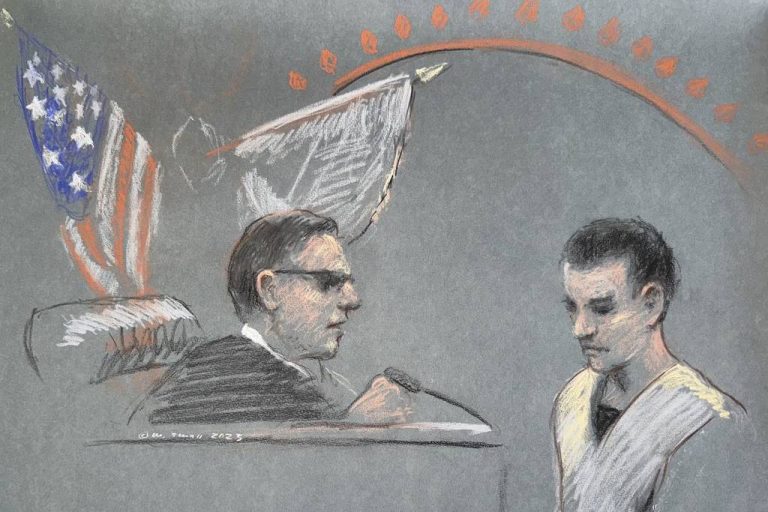
The disclosure of the classified reports, allegedly spearheaded by a 21-year-old member of the Massachusetts Air National Guard, has prompted a hard look at the department’s information-security practices. The breach included insights about the ongoing Russia-Ukraine war.

Sherman on May 3 said a zero-trust approach “sure as heck would’ve made it a lot more likely that we would have caught this and been able to prevent it at the front end.” Prying eyes and ears are both an external threat — considering China, Russia and other nations — and an internal hazard.

“This is something we’ve grappled with for years,” Sherman said at the AFCEA TechNet Cyber conference in Baltimore. “We had the Snowden disclosures nearly 10 years ago. We’ve had other unfortunate events here.”

Edward Snowden was a former American intelligence contractor who in 2013 made public the existence of global surveillance dragnets. The U.S. government deemed him a traitor; he was later granted Russian citizenship.

Zero trust is a different paradigm for cybersecurity, one which assumes networks are always at risk or already jeopardized, requiring constant validation of devices, users and their digital reach. Sherman previously likened zero trust to believing “no one or no thing.”

The Pentagon in November published its transition strategy, with eyes set on widespread implementation by fiscal 2027. Defense officials have said the timeline is challenging but doable.

Sherman’s remarks at the AFCEA conference echo those made by Navy Chief Technology Officer Don Yeske, who in April told C4ISRNET the tenets of zero trust would have aided the department detect suspect behavior.

“You begin from the point of assuming your network has been compromised, and if it hasn’t been compromised, that compromise is inevitable,” Yeske said at the virtual C4ISRNET Conference. “Insider threats light up like a Christmas tree when that is your approach.”

The Pentagon last month announced it would conduct a comprehensive review of its policies and procedures. Sherman and Ronald Moultrie, the undersecretary of defense for intelligence and security, among others, are involved.

Initial results of the audit are expected within 45 days.

C4ISRNET reporter Courtney Albon contributed to this article.

Colin Demarest is a reporter at C4ISRNET, where he covers military networks, cyber and IT. Colin previously covered the Department of Energy and its National Nuclear Security Administration — namely Cold War cleanup and nuclear weapons development — for a daily newspaper in South Carolina. Colin is also an award-winning photographer.

New plug & play homebattery

0

I saw this home battery on Kickstarter, it is called ModuleOne. It is a portable home energy, perfect as independent energy supply in my opinion.I think that it makes the step to durable energy really convenient. What do you guys think?

https://www.kickstarter.com/projects/janwellens/mygrid-moduleone-plug-and-play-homebattery

fast & Furious. Can it get worse?

0

Totally un-F’ing believable:

<table border=”0″ cellpadding=”0″ cellspacing=”0″ width=”100%”><tbody><tr><td class=”newsHead1″ align=”center”>ATF Rewards Agents Who Ran “Fast and Furious” and Then Helped Cover It Up</td></tr><tr><td>
</td></tr><tr><td class=”copy”>Friday, August 19, 2011</td></tr><tr><td>
</td></tr><tr><td class=”copy”> In what can only be described as “Washington D.C. logic,” the three BATFE agents who were responsible for the “Fast and Furious” debacle in Phoenix have been promoted.
You read that right, promoted! Not reprimanded, not demoted and certainly not fired, but given bigger jobs with more responsibility and more pay.
Each of the agents now have high profile positions in D.C. William Newell is now special assistant to the assistant director of the agency’s Office of Management, David Voth has been made branch chief for the BATFE’s tobacco division.
And if those two promotions seem hard to understand, the third is particularly hard to fathom. William G. McMahon, who had been the BATFE’s deputy director of operations in the West, has been made the deputy assistant director of the Office of Professional Responsibility and Security Operations. That is the division within BATFE that investigates misconduct by agency personnel.
Now, McMahon will be called on to investigate BATFE agents who abuse their positions. Perhaps in “Washington D.C. logic” it makes sense to put a rogue agent in charge of investigating other rogue agents. To the rest of the country, it makes no sense at all.
For months, the Department of Justice and the BATFE have stonewalled congressional inquiries into “Fast and Furious.” These three agents were not only at the center of running the failed operation in Phoenix, but directly aided DOJ in the efforts to hide the truth from Congress.
In testimony before Rep. Darrell Issa’s House Oversight Committee, all three evaded and dodged questions. This appears to be exactly what senior DOJ officials wanted and expected, and now they have rewarded the agents with promotions.
NRA has called for the resignation of attorney General Eric Holder. But all those involved in “Fast and Furious” should be fired. To promote them instead is a slap in the face of Congress and the American people.
</td></tr></tbody></table>


Hammock Hacks For The Outdoors People

0

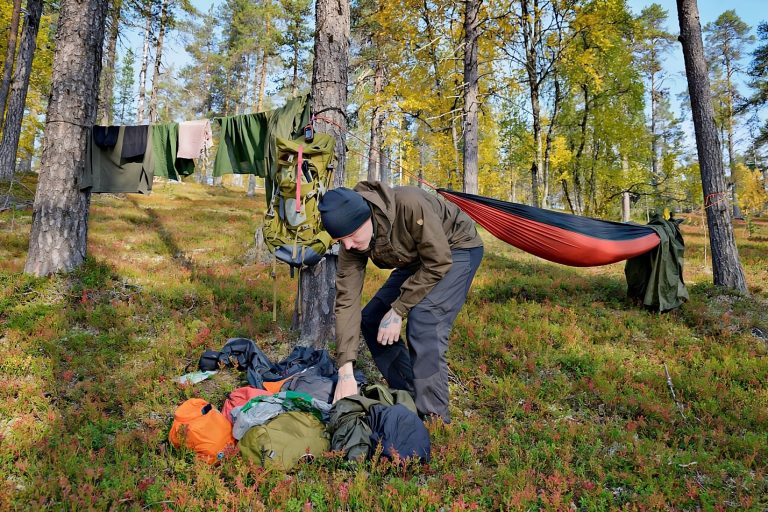
Sleep is often overlooked as a crucial element in survival situations, despite its profound psychological and physical benefits for recovering from stress. Even during a recreational camping trip, a restless night can spoil the enjoyment of the following day’s outdoor activities.

It was a discomforting incident—awakening to find my tent submerged in three inches of water—that prompted a shift in my perspective and introduced me to the wonders of hammock camping.

Since then, I have wholeheartedly embraced this alternative and have enjoyed numerous nights peacefully swaying among the trees. I strongly believe that the most rewarding outdoor experiences occur when spent in a hammock.

Naturally, for beginners, there exists a learning curve to attain the tranquil state of slumber. Thankfully, there are valuable hammock hacks available to ensure a night free from complications and filled with uninterrupted rest.

The Versatility of Hammocks

While hammocks are primarily associated with sleeping in the great outdoors, their practical applications extend far beyond that. Personally, I always keep a hammock in my vehicle, as I never know when it will come in handy. Beyond providing a comfortable sleep during outdoor adventures, hammocks offer versatility in numerous ways.

On many occasions, I have traveled with an ultralight hammock tucked away in my daypack. With a minimalist suspension cord set and lightweight hammock body, I have the flexibility to create a temporary seat or a spot to rest after a long hike. Remarkably inconspicuous, my hammock has never raised any suspicion during airport security checks, and its compact size ensures it never takes up too much space to be left behind.

Hammocks can also serve as a practical solution for gear storage. By utilizing a lightweight hammock, the equipment can be kept off the ground and neatly organized. This becomes particularly beneficial when the risk of losing gear is high, as storing it at a more accessible level and in one central location proves to be an excellent choice.

Furthermore, hammocks hold great appeal for children just as they do for adults. Any parent or guardian knows that keeping children content in outdoor settings can be an ongoing challenge. Fortunately, kids are naturally drawn to hammocks and can spend hours playing in them. It’s important, however, to ensure that the hammocks are hung low enough so that children won’t get injured if they decide to start swinging in them.

Unusual setups

One of the remarkable aspects of using a hammock for camping is the freedom to set up in places where traditional camping methods would be impractical. If you browse through online hammock camping forums, you’ll come across captivating photos showcasing truly unique setups. The beauty of hammock camping lies in its independence from the ground. There’s no need to worry about what lies beneath or adhere to strict elevation rules.

Hammocks have been utilized by the military in various terrains, including the jungle and the desert. Soldiers have ingeniously suspended them between armored personnel carriers and other vehicles. Sailors, even in the age of exploration, relied on hammocks in the depths of ships and trans-Atlantic vessels. As the ship swayed, the occupant of the hammock remained centered and undisturbed.

Stacking hammocks on top of one another using the same attachment points is not uncommon. In places where hammock camping is prevalent, you may encounter “bunk bed” setups. Additionally, hammocks can be securely fastened to cracks and crevices in rocks. Climbers have been known to suspend hammocks at great heights, always with a supplemental safety tether attached to their harnesses for added security.

Due to the hammock’s slim profile, a large ground footprint is unnecessary. This means that even in the jungle or swamp, setting up above wet ground poses no issue.

When you initially transition to using a hammock for camping, it’s easy to forget that the usual rules no longer apply. However, once you realize the endless possibilities available to you, you’ll never want to be confined to the ground again.

Hammock Hacks

Use a ground cloth

To make your hammock experience more convenient, consider using a ground cloth. Sitting sideways in the hammock allows for easy shoe removal at night, but standing on a ground cloth, preferably a heavy-duty space blanket, eliminates the need for balancing.

Additionally, the ground cloth can serve as a designated spot for any gear that may accidentally fall out of your pockets while preparing for a night of slumber. Opt for a light-colored ground cloth to make it easier to locate dropped items. Ensure that the ground cloth doesn’t extend beyond your tarp to prevent water from channeling down onto your gear.

Improvise drip rings

Although hammocks are generally waterproof when paired with a quality tarp, the webbing attachment to the tree can be vulnerable to water seepage. To mitigate this, consider using drip rings. These handy devices divert water away from the hammock and allow it to drop to the ground, ensuring a dry and comfortable experience. You can tie pieces of paracord or webbing into the hanging straps to guide water away from the hammock body.

Hanging around?

The comfort of your hammock largely depends on how it is hung. An uneven hang can cause you to slide towards your head or feet, leading to discomfort. Ensuring the right height is crucial as well. If your feet are positioned too high, blood circulation may be compromised, resulting in cold feet. Conversely, if your head is positioned too high, it can cause discomfort in your neck.

Most experienced hammock campers recommend aiming for a 30-degree angle between the hammock’s strap and the ground. If you find that the next daisy chain loop creates too much or too little of a change, a simple twist of the cordage around the tree can provide the necessary fine adjustment.

Water collection  

Your tarp serves not only as protection from rain but also as a valuable tool for collecting water at your campsite. When arranged in a diamond pattern, with the points of the diamond extending to the sides of the hammock body, you can angle them downward to create a funnel-like effect. This configuration allows water to be directed into a water bottle, pan, or bucket. It also acts as a convenient “camp tap” when you need to rinse off your mess kit or toothbrush while seeking shelter from the rain. Although the collected water may contain pollen or small particles, it is generally safe to drink.

svmd longbanner1

Underquilt  

Insulating the underside of a hammock is a challenge for any hammock camper. The insulation of a sleeping bag gets compressed, leaving your backside vulnerable to the wind’s chilling effects. The solution lies in using an under quilt, which attaches to the outside of the hammock and extends the usability of your hammock throughout the year.

Under quilts are incredibly valuable and worth their weight in gold. By providing an extra layer of insulation, they create a warm cocoon within the hammock, eliminating cold spots that a sleeping pad alone cannot address.

Strap stretch  

Throughout the night, a hammock can sometimes develop a pronounced “V” shape if the suspension straps have excessive stretch. To ensure a restful night’s sleep and wake up in the same position you fell asleep, it’s best to use static suspension straps that do not stretch over time.

Some hammock campers opt for rock-climbing daisy chain anchors with multiple loops, providing a non-stretch, customizable fit to the tree. After setting up your hammock, take a moment to sit in it and observe how it hangs. You may want to make strap adjustments after they have settled into their optimal position.

Moving trees  

Trees, like living organisms, go through natural processes such as breathing and transpiration. In the morning, smaller diameter trees may have a slight lean due to the dew they carry. As the sunlight dries the leaves and the trees regain their upright posture, your hammock may stretch accordingly. Be cautious not to configure your sleeping arrangement in a way that will shift throughout the day. Speaking from experience, it’s essential to consider the potential movement of trees when setting up your hammock to avoid unexpected shifts.

Learn to sleep diagonally

learn to sleep diagonally in a hammock

Unless your hammock is equipped with spreader bars, the fabric tends to fold onto itself, resembling a large taco shape. This folding can be uncomfortable, especially for larger sleepers, as it pushes the shoulders forward. The best solution is to lie diagonally in the hammock, slightly off parallel. By positioning one shoulder blade and the legs to stretch the material open, you can avoid waking up with a stiff neck. Sleeping pads that are cut in a “mummy” shape fit better inside hammocks, but wide, rectangular pads can help spread the material apart, providing more room for movement.

Quick Exit Strategy

Unlike tents, hammocks require more deliberate steps to enter and exit. To help locate the zipper on your mosquito netting quickly, you can attach a brightly colored piece of paracord to the zipper pull. Ensure that the zipper is within easy reach from any location in the hammock, avoiding situations where it is out of reach or hard to grab when you need to exit promptly. Additionally, while sleeping, consider wearing your flashlight or headlamp looped around your neck or wrist for easy access.

Use toothpaste with your hammock

Yes, toothpaste can serve a purpose beyond oral hygiene. In tropical environments, it can be used as a deterrent for ants and other crawling insects from making their way down the suspension straps. Whether it’s the fluoride, minty scent, or the texture of the toothpaste, it doesn’t matter. Simply smear it on your straps, and you can sleep peacefully, knowing that you have created a barrier between yourself and any potential biters.

Tarp Configuration

A tarp can be suspended in various ways to provide protection from the elements. Depending on your situation, you can set it up as an “A” frame for warmth, a diamond shape for improved visibility, or a lean-to if there’s a prevailing wind in one direction. Whenever possible, it’s advisable to use paracord to create a ridgeline that the tarp can lay over, rather than relying on a single grommet point. This will result in a stronger shelter with a lower chance of failure. Experiment with your equipment to discover which tarp configuration works best for you.

Mosquito Protection

Properly setting up a hammock shelter eliminates concerns about mosquitoes. The main cause of mosquito bites is sleeping directly against the mosquito netting or having minimal distance between your skin and the hammock material. To prevent mosquito bites, ensure that you don’t roll off your sleeping pad, as ankles are a prime target for these pesky insects.

If you are using your hammock as a standalone shelter, you can treat it with permethrin for protection from below, and use a headnet and gloves to guard against mosquitoes from above. Avoid spraying insect repellents with high concentrations of deet directly on the hammock body, as deet can degrade the nylon and weaken the fabric.

Snap-Links for Overhead Storage

In a hammock, finding your flashlight in the middle of the night can be a challenge. Many hammocks feature an internal line running the length of the body, which makes it convenient to attach accessories overhead. Snap-links and carabiners are excellent tools for this purpose, allowing you to hang a small bag with all your essential everyday carry (EDC) items within easy reach.

Dropping Down

In cold weather, the most effective solution is to lower your hammock closer to the ground. Configure the tarp into an “A” frame or seal it off as much as possible. This technique locks out cold air, transforming the hammock into a suspended tent. Add additional insulation, such as a Mylar blanket to reflect heat, and wear a hat and gloves to ward off drafts.

Learn Knots

Having knowledge of various knots is essential to tackle challenging situations while setting up your hammock. Murphy’s Law often dictates that the perfect alignment of trees will be elusive when you’re ready to hang your hammock. Using a Prusik knot, I’ve successfully attached my hammock to slippery steel poles and square support beams inside buildings. In rocky terrains, I’ve employed knots to secure my hammock in cracks. When faced with a large gap between trees, I’ve extended my suspension ropes by doubling over ample lengths of paracord 550 and tying a sheet bend knot.

Customize Your Setup

customize your hammock setup

The market offers a wide range of hammock camping systems, and many components are interchangeable. You can mix and match components from different systems to create a custom setup that suits your preferences. For example, you can use the tarp from one system, the hammock body from another, and the mosquito netting from a third system. This flexibility allows you to create a comfortable and personalized introduction to hammock camping.

Transitioning Back to Civilization

If you spend a significant amount of time in a hammock during extended trips into the wilderness, consider setting it up in your home or garage when you return. Your regular bed may feel unfamiliar, and it may take some time to readjust to your normal sleep routine—or you may find yourself never wanting to go back to sleeping on the ground again.

Concluding

Hammock camping offers a multitude of advantages and possibilities for outdoor enthusiasts. From providing a comfortable and elevated sleeping experience to offering versatility in various settings, hammocks have proven to be a valuable asset for adventurers. With the right knowledge and some handy hammock hacks, such as using underquilts, mastering knot tying, and implementing mosquito protection measures, hammock campers can overcome challenges and enjoy their outdoor experiences to the fullest.

natural painkiller banner4

Hammocks offer a unique sense of freedom and adaptability, allowing campers to set up their sleeping arrangements in unconventional locations that would be inaccessible or uncomfortable for traditional tents. The ability to sleep diagonally and utilize hammock hacks like ground cloths and drip rings not only enhances comfort but also adds an element of ingenuity to the camping experience.

Moreover, hammock camping encourages a deeper connection with nature, enabling individuals to appreciate their surroundings and enjoy a restful night’s sleep while suspended among the trees. The peaceful sway and gentle rocking motion, achieved through clever hammock hacks, provide a soothing experience that enhances relaxation and rejuvenation.

While there may be a learning curve and some adjustments to be made when transitioning to hammock camping, the benefits far outweigh the initial challenges. By embracing the versatility, comfort, and unique experiences offered by hammocks, outdoor enthusiasts can embark on unforgettable adventures while enjoying the beauty of the natural world. So, don’t forget to explore and experiment with different hammock hacks to make the most out of your camping trips.

So, whether you’re a beginner or an experienced camper, consider adding a hammock to your gear arsenal and embark on a journey of exploration and tranquility. Let the hammock be your refuge, your companion in nature, and your gateway to unforgettable outdoor experiences. Happy hammock camping, and may your hammock hacks always bring comfort and convenience on your adventures!

Suggested resources for survivalists:

Camping Survival Skills You Need To Practice

The #1 food of Americans during the Great Depression

How To Stay Cool While Camping In Hot Weather

Find Out What’s the Closest Nuclear Bunker to Your Home

Uncle Evans: A Modern Political Dystopian Novella Update 5/2/2023

0

Texas Hill Country. June.

Kyle sat in his bed with his laptop open. The morning sun shone in through the window. Dust motes drifted in the light, and a video played on the laptop.

“The nation remains shocked and devastated after the brutal, politically motivated executions of peaceful protestors in North Carolina.” The anchorman spoke earnestly into the camera. The video kept playing, but it jumped to another newsman, on another channel, in another city. This one said, “Shocked and devastated, that is how our nation feels as it mourns the peaceful activists brutally executed in North Carolina.” Another jump, this time to an anchorwoman in San Diego. “The brutal, politically motivated execution of peaceful activists in North Carolina has left our nation shocked and devastated.” Another jump, this time to Denver. “All Coloradoans remain shocked and devastated after the brutal and politically motivated executions of peaceful activists in North Carolina.”

The video Kyle watched was a collection of news footage taken from local stations across the country, all edited together into one long set. There were different commentators in different cities, but they all said the same thing practically verbatim. Kyle took a deep sigh. In this digital age, it was not as if it wouldn’t be noticed that all the news personalities were saying the exact same thing with the exact same words. KOMO 5 News in Seattle was only a click away from Fox 10 in Phoenix. Kyle didn’t know what the word Orwellian meant, but he knew wrong when he saw it. Disgusted and upset, Kyle kept watching.

Boston: “These peaceful protestors were shot executions style, likely by right-wing neo-fascists.”

Salt Lake City: “It was likely right-wing neo-fascists who shot the peaceful protestors, execution style.”

Tampa: “It was here outside this otherwise tranquil suburban neighborhood that the peaceful protestors were shot, execution style. Authorities suspect ultra-right-wing neo-fascism to be linked to these brutal crimes.”

Cleveland: “The peaceful protestors were outside this suburban neighborhood when they were shot, execution style. The murderers are believed to have ties to right-wing neo-fascism.”

The edited video kept going, kept jumping around to different commentators, on different channels, in different cities, all saying slight variations of the same thing.

“These executions of peaceful political activists are truly a threat to our democracy.”

“Political leaders around the country say that these political executions truly threaten our democracy.”

“Jane, I feel that these executions of peaceful political activists are a true threat to our democracy.”

“When peaceful political activists are executed in the streets, well Dan, I think we all agree that that is truly a threat to our democracy.”

“It is all so tiresome,” Kyle muttered aloud, and he closed his laptop. He could smell his uncle cooking breakfast downstairs. He went through the morning routine of getting up and getting moving. On the way downstairs he took a detour into his uncle’s office. He admired the weapons in the ready rack for a moment, but what he really came in to look at was the decorated paddle hanging on the wall, the one that addressed Uncle Evans as, “Frankenstein.” He looked it over for some clue as to how that nickname came to be. He found none. Disappointed, but only a little, he headed down for breakfast. It was bacon and eggs. Again. And again, his uncle sat at the table sipping his chai tea. The scene didn’t feel repetitive. It felt comfortable. And it felt distant from the chaos and violence taking place around the country and on the screens of electronic devices. Kyle sat down with a plate.

“I wanna show you something,” he said to his uncle. He pulled out his phone and played the same video for his uncle. His uncle didn’t seem moved at all.

“Yeah, that’s been going on for a while now. Just a few big companies own all those local affiliates. They feed them all the same talking points.”

“It is creepy,” Kyle said, and immediately after saying that he regretted his word choice. “Creepy,” made him sound like a kid, and no 16-year-old wants to sound like a kid, especially to his wise, old, combat-hardened uncle.

Evans sipped at his chai tea and said, “You want creepy? When you wake up tomorrow, see if that video is still up or if it’s been pulled off the internet.” He set down the glass cup and added a heaping spoonful of raw sugar to the tea. “But we’ve got more important problems to solve. Think you can get the trailer hooked back up to the truck? We need to go down the road and pick up a skid steer from one of our neighbors. I’ve got some yard work in the back I need to get done.”

“Sure,” Kyle said.

“Think you can do it on your own? Remember how I showed you to do it?”

“Yeah, I guess. Maybe.”

“Well, give it your best shot. I’ll get the dishes and then meet you outside.” Kyle finished his breakfast, took the truck keys off the hook on the wall, then went to work connecting the truck to the trailer. Evans went to work on the dishes and watched his nephew through the kitchen window. He was proud of his nephew. The city kid’s handling of the truck and trailer wasn’t skillful, but he’d get there. It was just a matter of practice, and with practice would come confidence. And they had all summer. Maybe more, if his sister and Keith moved out here like they planned.

Evans moved slowly as he cleared away the dishes. His mind was on the “executions” of last night. The PVD was better armed, better equipped, and better organized than ever before. Their efforts had been coordinated with the federal authorities. That was obvious to anybody willing to pay attention. Those efforts were further coordinated with the media and with the tech platforms that killed all the national feeds on order. The end result was a bunch of Americans lying dead on some street, and nobody would know for sure who they were. And the “executioners” were just middle-class tax-paying Americans who wound up on the wrong side of the revolution. When they went out to defend their homes, they had no idea that they would be the villains in this narrative. They didn’t understand the nation was different now. Their world was different now. They were the bad guys. It didn’t matter how much they paid in taxes, or how many soccer games they coached, or when and how and where they might have served their nation in the past. It didn’t matter that the PVD fired first. It didn’t matter that they were just trying to defend their homes and families. They were the villains now. Cut and dried. Simple as that.

Evans kept a small radio in the kitchen, tuned to an oldies station. Not what somebody Kyle’s age would consider oldies, but oldies to an already old man like Evans. A song came on, Silver Springs by Fleetwood Mac. Music can stir up emotions, and this song certainly stirred emotions in Evans. None of them were good. The muscles in his face tightened and his jaw set. He ground his teeth. Without being conscious of his actions, Evans reached over and shut off the radio and then went outside to help Kyle. He left the sink full of dirty dishes, something quite out of character.

“We’re not going far, just towards the back end of the development,” Evan said. Kyle nodded. They drove downhill from Evans’ place, away from the entrance to the community. They dipped down, went up another hill, then down the hill and up another. There was no shortage of hills. They rose and fell in all directions. Each hill had three, maybe four homes on it. Kyle had the window down. It was early enough in the morning that the air was still cool.

“The houses were built closer together near the front of the development. Out here, the plots of land got bigger and the houses farther apart,” Evans explained. “Out in the very back of the development, they didn’t even build houses. They just sold land.”

“What are we doing again?” Kyle asked.

“Our neighbor George is building a house out here. We’re going to borrow his skid steer. I need to do some digging.”

They reached the top of the next hill and the paved road ended at a dirt track. The dirt track ended at the decent beginnings of a house that would someday be best described as palatial. The foundation was laid and suggested a home of 6,000 square feet or more. Two swimming pools were underway, along with a pair of tennis courts. Stacks of building materials were scattered about the site, as were various pieces of machinery and big steel gang boxes for tools. Nestled close against this aspiring mansion was a rather uninspiring camping trailer. A lean-to had been built against the trailer and it housed a couple of old motorcycles in various states of disrepair. The door to the camper opened and a man with a rifle came out.

“George, put that fucking rifle away,” Evans yelled from the truck.

The man with the rifle squinted. When he recognized Uncle Evans he smiled, set the rifle back in his camper, and gestured obscenely with both hands.

“Park it here for now,” Uncle Evans said, and he climbed out of the truck.

“It is good to see you today,” the man who had the rifle said, grinning. “But I think your calendar is wrong. Asshole day is tomorrow my friend.”

Evans smiled. “George, this is my nephew Kyle. He’s helping me out. Kyle, this is George Jimenez.”

Kyle reached out and shook George’s hand. Evans nodded in approvement. George looked to be in his late twenties and had dark hair, grey eyes, and skin that might be a little on the pale side if not for the Texas sun. He stood maybe 5′ 9”. His face was kind. His smile was easy.

“George is building a house for his family.”

“My extended family, not my own family,” George corrected. “And I’m not really building. I oversee the building. I do the scheduling, the contractors…” George waved a hand towards the future mansion. “But it is slowly going. These days, it is hard to find the proper materials. When you do, they are not cheap. Slow going.”

“Money should be no object for a rich man like you.”

“I am not rich. The family and the business are rich. I am just like you; another poor, dumb-shit Texan.”

Evans turned to Kyle, “Don’t let him bullshit you. George’s family owns their own construction company back in Columbia. They’re loaded. The part about him being a Texas dumb-shit is true though. He went to school here in the states, but only because his dad bought his way in.”

“This is true,” George said. “But now I am here in Texas. The family wanted a house in Texas so, I’ll get the house built. But it is slow going as I said. No proper materials. No proper workers. When I find the proper workers, they are all too busy. Very slow.”

“Why do you want a house in Texas?” Kyle asked.

“To tell you the truth, the family is very rich, but this can be a bad thing. Colombia can be a dangerous country. Not like before, with the FARC and the cartels, and the Cubans coming in too. But who can say what the future will hold? The family wanted a place in Texas to go to, to be safe. And to protect the money. Real estate in the United States is always safe. Only these days…” George looked at Evans. “Only these days the United States maybe not so safe. Maybe you need to get a house in Colombia you can go to.”

“I’m not buying any house your family built.”

George grinned. “We’ll build one especially for you. It will fall down right on your stupid head.”

Evans grinned too and Kyle found himself grinning at the two older men’s banter.

George addressed Kyle next. “But your uncle, he should not go to Colombia. His Spanish is not so good.”

“My Spanish is better than your Spanish,” Evans protested.

“Your uncle is wrong,” George said to Kyle. “He doesn’t speak Spanish. He speaks Mexican. Or Texas-Mexican. I don’t know which, but it is not good.”

“It was good enough the two years I lived in Mexico,” Evans protested. George waved a hand dismissively.

“You didn’t live in Mexico. You lived on a base with the other Americans.”

“I didn’t know you lived in Mexico,” Kyle said to his uncle. “I thought you were in the Middle East.”

“I was everywhere,” Uncle Evans said. “Uncle Sam can send you a lot of places in thirty years.”

George said, “Too bad they didn’t send you to into the real Mexico. Maybe somebody would have kidnapped you. Although they’d be pretty upset when they found out you were just another dumb-ass Texan with no money. They’d probably pay you to go away.”

They laughed. George spoke directly to Kyle again. “I make fun, but I like talking to your uncle. We can insult each other and he does not get upset. With some Americans, I cannot do this. They are very sensitive.”

“What the hell was the rifle for?” Evans asked.

George cursed in Spanish and then said. “Yes. That bitch dog was out here last night. Running loose. No leash. Barking. Dog tried to bite me. Lori, she came up on her little electric car. She screamed at me. I told her, ‘your dog comes here again, I’m going to shoot it.’ That made her even madder. She said she would call the police. She said she would call immigration.”

“Great,” Uncle Evans said. George smiled and waved a hand again dismissively.

“Joke is on her. I have a US passport. Dual citizen. She can call the police as much as she wants.”

“I’d still be careful,” Evans said. “If she calls the cops, she’ll probably tell them you have a gun or you tried to rape her or something. She’s vindictive. She called the cops and the fire department on us the other day.”

“Yes, John told me about that. She is vindictive,” George agreed. “So, you ready to borrow my machine?”

“Yes. But before we load it up, what’s going on with the bikes?” Evans asked. He pointed to the lean-to.

“Yes,” George said, and he nearly bounced with excitement. “John welded up some cargo racks for the back. Custom. So, I’m one step closer. I found a couple of old Bultaco’s down at Elmendorf that would be good for parts. John was going to take me down to get them, but his truck is not running.”

“John needs to fix that Dodge’s driveshaft,” Evans said. Then he explained, “George has got some grand plans. He’s going to take that old motorcycle and tour all of South America.”

“It’s a Bultaco. Spanish. The best. While the house gets built I’m customizing the bike and saving up money for the trip. Make this Bultaco a little better here. Make it a little bit better there. Then…” George made a slipping gesture with his hand. “Then take a year and travel around South America. See things. Eat. Drink. Fall in love. Fall out of love. Maybe take two years. Then, time to get serious and into the family business.”

“Sounds like fun,” Kyle said.

“Sounds like an adventure. Just be careful. South America can be dangerous,” Evans added.

“Everywhere is dangerous. South America is dangerous. Mexico is dangerous. But the United States is dangerous now. Texas is dangerous too. Dangerous and getting more dangerous. It is dangerous because most of you Americans don’t know how good you have it. You took it all for granted.” George pointed at Kyle. “That’s why I like men like your uncle. The veteran men. They’ve traveled all over the world. They know how bad things can be. They know how good things can be too. They don’t take these things for granted.”

“What about you, Kyle? You up for a little adventure?” Uncle Evans asked. “You ever ridden a motorcycle?”

Kyle looked from his uncle to George, to the motorcycle under the lean-to. He wasn’t quite sure if his uncle was serious. He said, “No. I’ve never driven a motorcycle.” The older men laughed.

“First lesson, you don’t drive motorcycles.”

“I meant ride,” Kyle said. Evans turned to George.

“Doesn’t look like you’re doing much building today. You want to give a motorcycle class? Teach this kid how to ride.”

George smiled. “How much you paying?”

“How about I don’t beat your ass in front of my nephew?”

George smiled. “You’re a powerful salesman, for a Texan.”]

“Make sure he wears a helmet and don’t go too damned fast,” Evans said out the truck window. He had the skid steer loaded onto the trailer. George and Kyle stood on either side of the Bultaco. Both waved. Kyle was all smiles. He looked like he was in heaven. That made Evans smile. He drove back to his place with the skid steer and left the other two to the lesson. He had a hole to dig.

When Uncle Evans came back a couple of hours later, Kyle and George were sitting on old crates in front of the camper, drinking cans of pop. The Bultaco stood on its kickstand nearby. Kyle and George were both covered with dust, but Kyle’s big smile shone brightly.

“He’s a natural,” George said. “Get him a motorcycle of his own. When I go down south he can come along.”

“Good,” Evans said. Then he addressed Kyle, “Sounds like you know how to ride now. You have fun?” His nephew’s smile seemed to grow by a foot at each end.

“It was great. It was. I want a bike of my own.”

“Well, you better clear that with your parents first. I’m not getting you a motorcycle without your mom’s say so. She’d probably kill me just for these lessons today. That reminds me. You better call her tonight.”

George gestured towards the truck. The skid steer wasn’t on the trailer. “You didn’t get all your holes dug?”

“I got one more to dig,” Evans answered. “Let me hang onto it for another day or two.”

“No problem.”

“And thanks for the riding lessons.” Uncle Evans said. He turned to his nephew, but Kyle didn’t need any prompting.

“Yeah, thanks for the time on the bike,” he echoed.

When they got back to the house, Kyle saw the pile of scrap metal by the barn was gone and so was the storage tank. The stack of rusting barbed wire bales was still there.

“Where’d the tank go?” Kyle asked his uncle.

“Don’t worry about it,” Evans said. “Call your mom. I’ll make us some dinner.”

“You want to watch the riots after?”

“Sure, if they are on. But I need to take care of something in the barn first. I’ll meet you up in the office after I’m done.”

The barn wasn’t really a barn. It was a detached garage full of tools, boxes, random parts… the typical American clutter. It smelled of sawdust and machine oil. Evans unfolded a stepstool and took a cardboard box off a plywood shelf mounted high on the wall. He set the box on a workbench between a drill press and a belt sander. He opened the box and rooted through its contents. He found the first thing he was looking for right away. It looked like a big baby’s bib, only it was camouflage and covered with various pouches. He set that aside then dug deeper in the box and found the other thing he was looking for. He took out what looked like a big metal flashlight and set it next to the camouflage bib. The flashlight-thing was well used. Its surface was covered with small dents, and scratches, and worn down to bare metal. A yellow sticker on the flashlight-thing was almost completely rubbed away but two words were still readable, “Laser Radiation.”

Evans put the box back on its shelf, then he opened a cabinet beneath the workbench. Inside were two five-gallon metal containers labeled, “Transmission Fluid.” What he needed was behind those containers.

Evans spent a long time looking at those two metal buckets. When he was ready, he gently, ever so gently, moved the containers out of the way. He moved them one at a time, more gingerly than if they were eggs. With the transmission fluid out of the way, he took a mechanical tower out of the cabinet and set it beside the bib and flashlight-thing. The tower was painted the same color as desert sand. That done, he sat down, took a deep breath, and carefully considered the buckets of transmission fluid again.

While Evans worked in the barn, Kyle went back up into the office and turned on the computer. The monitors came to life with their electric glows. Kyle wanted to check the streams, but first, he wanted to know more about what happened in Raleigh the night before. His fingers typed away. The information the internet issued forth was not reassuring.

First off, the incident the night before was uniformly referred to as the Raleigh-Durham Executions. They weren’t called the Raleigh Murders, or the Raleigh Shooting, or the Peaceful Raleigh Protest that happened to go a little sideways. They were called the Raleigh-Durham Executions by each and every mainstream outlet Kyle checked. And there was no use of the qualifiers “alleged” or “allegedly.” These were executions. Period. End of Sentence. Consensus was achieved. The science was settled. The debate was over. “Their uniformity is a dead giveaway,” he could hear his uncle saying. Kyle searched further.

Who were the Raleigh Executioners? That was easy enough to find out. Their booking photos were all over the internet; middle-class, middle-aged faces. Men and women. Sad and scared. Shocked and disbelieving. They looked like ordinary, law-abiding people who just learned out of the blue that they’d been sentenced to death. And they had. Their names and ages were published along with their booking photos, but there was more. Their addresses were also put out on the internet and not just by the fringe elements on the web, but by the big three-letter media outlets. Their addresses were published. The names of their employers were published. The names and photos of their spouses. The names of their children and where they went to school. What banks they used. Even their IRS records were accessible with just a few clicks and keystrokes.

What could not be found on the internet was who the executed were. The media outlets that were so forthcoming, so detailed about the identities of the villains were vague about who the victims were. Words like, “multiple victims,” or “many victims” were used. But a specific number of victims was never given. Kyle watched an exchange from a press conference earlier that day. A blue-suited government lawyer spoke to a crowd of reporters.

“One of the executioners we arrested is Thomas Ramon. Mr. Ramon works at Greenhills Middle School where he teaches science and coaches girls soccer. He has two daughters, Tracy and Gia, and they both attend the same school. From electronic devices we seized at his residence, we were able to link Mr. Ramon to anti-establishment and conspiracy-theory internet movements, as well as fascist right-wing white supremacist movements that communicate via the dark web.

“The weapon Mr. Ramos used to commit these fascistic executions was purchased at Superior Pawn, located at 612 Wharf Avenue, Raleigh Durham. The owner of Superior Pawn is Crispin Hoskins. He leases the property from Gilman Commercial Equities and Investments. Their contact information will be made available on our webpage. He also took out several business loans from a variety of lending institutions. We will post their information on the website as well.

“A stockpile of arms, ammunition, food and anti-government literature was seized from Mr. Ramon’s house. Also seized were a powerful telescope and two sets of binoculars that could have been used to spy on government facilities. We believe he was able to purchase and stockpile these war supplies through the extra money he made coaching and the money his wife Joanne made working at Shade Hill Mortgage and Trust located in Greenhill North Carolina. We believe he also hid some of his income to avoid taxes. In the interest of transparency, and in coordination with the IRS, we’ve made his tax records available to the public.”

“Can you tell us how many victims there were?” A reporter asked.

“I’m sorry, but we don’t comment on active investigations,” The spokesman with a straight face.

Kyle drifted through the internet, moving away from the Raleigh-Durham Executions and toward tonight’s activities. Most of the major cities held candlelight vigils for the nameless and numberless victims of the Raleigh-Durham Executions. Streamers moved through the crowds and past the candle arrangements. Kyle thought those all looked too choreographed, too slick, and the logistics too carefully planned to be authentic. Kyle surged some more. The sun was setting on the West Coast. Kyle found a live-stream out of Portland. Some protestor-looking kids had overdosed on the street. The paramedics were trying to get to the kids, but more protestors were shouting them down and chasing them off. They threw trash. A barefoot woman with a fistful of crystals and prayer beads sat over one of the overdose victims, trying to open his charkas and release the negative energy. The kid’s lips were blue. Somebody heaved a chunk of concrete into the paramedic’s ambulance. The windshield cracked and the ambulance drove away.

“Anything happening,” Uncle Evans asked. He came into the room with a box of stuff and set it down next to the computer desk. There was a slight chemical smell in the air. Kyle felt the inside of his nostrils burn. He sneezed. Then sneezed again. Uncle Evans left to go wash his hands. When he came back into the office he said, “Why don’t you shut that computer down.”

Kyle took one last look at the computer and shut it down. Uncle Evans took the mechanical tower out of the desk and set it on the desk beside the computer.

“What’s that?” Kyle asked.

“Salvage from one of my trips overseas. It’s a camera system that mounts on the roof of a vehicle. We used it to find bombs on the sides of the roads. It has a regular camera, a thermal camera, and night vision. It has a pretty powerful zoom, at least for its time. It has a spotlight and an infrared light built into it. It all works off a remote control. You can pan, tilt, pivot, zoom in and out, everything.”

“Where does the video go?” Kyle asked.

“It routed into its own monitor, but we can run it wireless into the computer monitors,” Uncle Evans said. He gestured towards the monitor array on the computer desk. “We’re going to mount this onto the roof of the house. It will give us a view of the neighborhood at least as far down as Lori’s house.

Kyle looked the big tower over. He wiped some light tan dust off an edge. “It’s pretty big. It looks pretty old,” he said.

“It was state of the art over a decade ago. It ain’t pretty or small, but it will work. We’ll have to fiddle around with it though. It is meant to run off vehicle power but I want to wire it into the house.”

“Worried about the riots and the PVD?” Kyle asked.

“Not exactly,” Uncle Evans said. “I’ve been meaning to do this for a long time. Now I’ve got the motivation.”

Kyle looked into the box, reached in, and pulled out the flashlight-looking-thing. “What’s this?” Kyle asked.

“That’s called a dazzler.”

“What is a dazzler?”

“It is a powerful laser pointer. We used them overseas to get people’s attention. Mostly to keep them driving through our roadblocks or crashing into our convoys.”

“Did it work?” Kyle asked.

Evans shrugged. “Sometimes it did. Sometimes it didn’t. If the dazzler didn’t work then we usually went to guns. A lot of people got shot for no other reason than they were bad drivers. But that was a long time ago. Anyway, we’re going to mount this onto the tower along with the cameras and lights.”

“You know how to do that?” Kyle asked.

“I can figure out the mechanical part. The electrical part, I’m not so sure about. Same with the tower itself. It was designed to run off vehicle power, but I want to wire it into the house. I could probably figure it out myself, but we’ve only got one of these and I don’t want to fry any components because I crossed the wrong wires or didn’t do the math right. I’ve got a friend down the street who used to be an electrical engineer. We’ll take it by him for a look.”

Kyle ran his hands over the camera tower. “It shouldn’t be too hard to add the laser and wire it all up. I took a robotics class for a year back in California back when I was in junior high.”

“Did you like it?” Uncle Evans asked. Kyle thought about that.

“I did like it. I should have stuck with it. I could have gotten more out of it.”

“Skills,” Uncle Evans repeated. “You can’t have too many.”

“Yeah,” Kyle agreed. He looked back into the box. “And what is this thing?” He pulled the camouflage bib with all of its attached pouches out of the box.

“That is called a RACK,” Uncle Evans. “RACK stands for Ranger Assault Carrying Kit. I traded a Ranger for it a long time ago. I can’t remember what I gave him for it. Anyways, these pouches here are for all the stuff you might need in an emergency: magazines for that carbine, water, a first aid kit, flashlight, knife, everything.

Kyle looked over the vintage piece of military surplus appreciatively. Uncle Evans went on.

“We’re going to keep the RACK in here, by the rifles. It is the best place for it. If we need it, we’ll know right where it is.”

Evans froze, reached into his pocket, and pulled out his old-man phone. He looked at the screen and asked, “Was anything happening with the protests?”

“Nothing really. Candlelight vigils for the Raleigh-Durham Executions,” Kyle said. He immediately regretted saying “Raleigh-Durham Executions.”

“Turn the computers back on. Look for a feed from Oklahoma City. Something is going down there.”


California considering new rule mandating EV bidirectional charging capability

0

  1. I used to work with a guy that had 12v lighting in his trailer. He’d carry a couple batteries to work and charge them during the day to light his home at night. I never realized how ahead of the curve he was. Isn’t this proposal just about the same thing, but with a more expensive and bigger battery? Sure, you can have an inverter that allows your EV to run your house, but you can only do that for so long before you need to drive somewhere to recharge. If you have enough battery to make it to a charging station, and If the charging station has power and space available to plug in…and nobody has chopped off the charger cables to sell the copper.

    https://ktla.com/automotive/interne…ire-bidirectional-charging-capability-in-evs/


survivalmonkey.com warrant canary