The Survivalist Series | Survival Monkey Forums

0

The Survivalist series by Arthur T. Bradley is one of the best and the worst of the post-apocalyptic novels I have read. What do I mean by best? Well, I read the first six in the series, and they all overflowed with page-turning drama, suspense, gore, guns and ingenious ways to survive. And they satisfied my opinion of how character and plot should interact to be a page turning story…

Storytelling is the art of compelling readers to admire and respect the characters, cheer for their success and identify with their problems. But every effort to escape the jaws of the enemy puts them in greater peril. We become more and more anxious for their safety and frustrated they are repeatedly unable to outwit and overcome an increasingly vicious and powerful enemy. Just when the conflict takes its darkest turn, our hero snatches victory from the jaws of defeat. In a story well told, we share in their success as if it were our own because it’s psychologically valid and emotionally realistic and therefore more true than if it really happened.

Another way to express my opinion of “best” is to say that fact and fiction dance in every story. The author of Survivalist does an extremely good job of using fiction to tell the truth about humans and how they typically react to disasters. Civilized behavior, for example, is only skin deep and three days long. The story makes it clear that one way to distinguish good guys from bad guys is that a savage lives just below the surface of good and bad guys. But good guys keep their savage under control whereas bad guys don’t. Yeah, good guys resort to violence to protect themselves and their loved ones. But bad guys resort to violence to satisfy their appetite for hating and hurting others.

So, what do I mean by the worst? Wading through the overwhelming number of incidents made me become more and more numb to the drama, the suspense, the guns and the gore. There were just too many things going on that had nothing to do with the problem that motivated the characters to journey from where they were to where they wanted to be. The vast majority of these incidents were side issues that didn’t advance the primary plot of the story.

Another way to say what I mean by “worst” is that even though each of the six that I read were page turners, the next page was just another incident that delayed the characters from getting on with their primary mission. None of these secondary incidents were previews of coming attractions. Well, they were, but the coming attraction was just another incident like the one before it.

So, I began turning pages and skimming through these incidents to get to the end of that book in the series. Then I realized that the series was a book turner. Each of them ended with a cliff hanging ending that left me hanging. Smart economics, of course, because most readers would be motivated to buy the next book in the series. Well, I’m not most readers, so I read the synopsis of the 12th and last book and discovered that it too merely held the promise of another book.

Hey, your mileage may differ… :)


The Founders knew about Pistol Braces, and had no issue with them….

0

The Founders Knew About and Had No Problem with ‘Stabilizing Braces’

Read the above, and understand that ATF has their “Head up their Ass” when it comes to there new Rule…

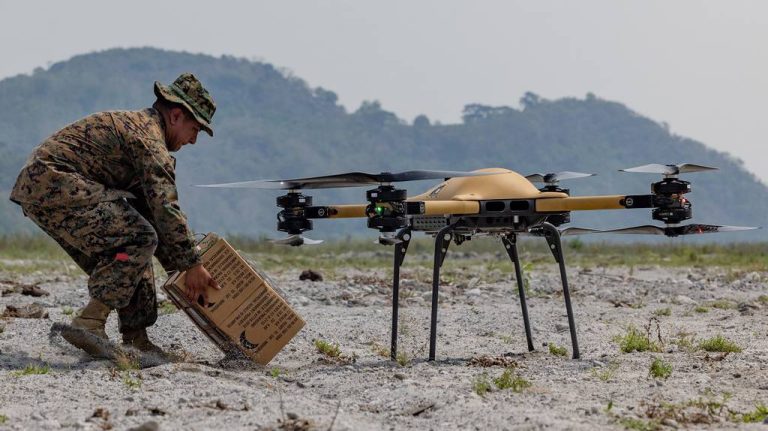
Marine Corps wants $13M for automated war zone air delivery drones

0

Amazon may have had the vision, but the Marine Corps is making it reality.

After years of experimenting with airborne delivery drones, the service believes it has a winner.

In its fiscal 2024 budget request, the Marine Corps is asking to buy 41 tactical resupply unmanned aircraft systems, or TRUAS, for a total investment of more than $13 million.

With the service set to take delivery of previous orders of the drones this spring and expecting to declare initial operational capability on the system later this fall, it will be a big year, not only for tactical resupply unmanned aircraft systems, but also for the concept of unmanned aerial resupply.

Built like large quadcopters, the systems are designed to carry payloads of up to 150 pounds over distances of up to nine miles in containers secured underneath. The unit cost of about $325,000 per drone is certainly steep, but Marine officials say it’s substantially more sophisticated than the remote-controlled commercial drones it resembles.

Rather than being manually flown, tactical resupply unmanned aircraft systems are programmed with waypoints that determine itinerary and flight pattern, meaning it requires less hands-on attention from Marine operators than most of the Corps’ quadcopters.

It takes just two Marines to monitor and maintain one in the field, and those Marines can learn everything they need to know about taking care of it in just five training days, according to Master Sgt. Chris Genualdi, an airborne and air delivery specialist with Combat Development and Integration, who discussed the system in an April news release.

The tactical resupply unmanned aircraft systems concept is closely aligned with the Marine Corps’ all-consuming vision for future warfare, which involves small, independent units operating from great distances from austere outposts ― perhaps on islands in the vast Indo-Pacific.

While the system isn’t designed to cross the ocean with supplies, it might be dispatched from a ship to a landing zone in hostile conditions ashore that might preclude a helicopter or V-22 Osprey delivery.

“As system technology advances in future years, [Unmanned Expeditionary Systems] will … include emerging technologies to include autonomous distribution capabilities for elements across the MAGTF and [Marine Littoral Regiments], enabling more diversified distribution and the sustainment of Marine Corps forces across future operating environments,” officials wrote in fiscal 2024 budget justification documents.

Tactical resupply unmanned aircraft systems provide “an organic battlefield logistics capability to distribute critical supplies via an unmanned platform while conducting” expeditionary advanced base operations safely within a weapons engagement zone, “where the risk to manned aircraft would deny manned aviation resupply operations.”

Marine leaders plan to scale the technology as it proves itself, according to the April news release, eventually building larger and higher-capacity platforms according to the same model that might further advance the objectives of the Corps’ expeditionary advanced base operations.

To this end, the service is also planning to launch a new military occupational specialty, or military job, focused on operating resupply drones. That job will be called small unmanned logistics system — air specialist. The timing of its rollout has not been announced.

In April, defense contractor Leidos announced a contract with the Marine Corps to build a larger autonomous drone prototype ― similar to a helicopter with a double stack of rotors ― that would be able to travel up to 100 nautical miles and carry up to 600 pounds.

“The utility of the TRUAS reaches beyond combat,” the recent Marine Corps release states, with its capabilities being highly effective in humanitarian assistance and disaster relief efforts.

“In disaster areas that may not be accessible by conventional means, the TRUAS could be used to transport much needed supplies.”

The Corps contracted for 35 tactical resupply unmanned aircraft systems drones in August 2022 and 30 more in March 2023, according to Marine Corps budget documents, but all are set for delivery in the first half of this year from SURVICE Engineering, out of Aberdeen, Maryland.

The effort to develop the tactical resupply unmanned aircraft systems began in earnest with a Department of the Navy “fly-off” prize challenge launched in 2020 at Yuma Proving Ground, Arizona, to build a rugged and reliable small cargo-carrying drone. SURVICE took the $100,000 first-place prize in that effort.

While tactical resupply unmanned aircraft systems only have been employed in field user evaluations and training and not proven in combat, the Marine Corps has moved relatively quickly to make its delivery-drone requirement a reality.

It’s far from the only entity seeking to capitalize on reliable unmanned aerial logistics. In 2013, online retail giant Amazon made headlines when then-CEO Jeff Bezos announced that it would be delivering packages via aerial drone by 2018.

A decade later, Amazon has launched a very limited regional version of the service, and the company says it’s still working on developing its vision for “Amazon Prime Air.”

Hope Hodge Seck is an award-winning investigative and enterprise reporter covering the U.S. military and national defense. The former managing editor of Military.com, her work has also appeared in the Washington Post, Politico Magazine, USA Today and Popular Mechanics.

Chachi Left

0

‘Happy Days’ star Scott Baio announces he’s leaving California due to homeless crisis, crime
Even Chachi has had it. He could move here to Washington State but it’s sort of California too. I call it The Former Evergreen State. Yuck!

Original Work – A Hope in Hell (Heirs of Cataclysm III – Finale)

0

Chapter One

The air was hot, humid, and deceptive.

John felt his head ache as the small party galloped over the dunes and made their way down to New Hope. They had broken contact with the bounty hunters – he didn’t want to think about who else was chasing them – weeks ago, but the wildlands were incredibly dangerous even when there were no humans trying to kill them. They had avoided patches of wild magic, fought their way out of traps set by creatures warped and twisted to the point they had developed a certain intelligence of their own, and evaded two elementals that had come very close to capturing them. He saw things at the corner of his eye, never quite there when he turned to look at them properly. The ground below the horse’s hooves shifted constantly, veering between sand and ash and earth to the remains of cities destroyed by the storms that had backed over the world. He thought he could feel unseen eyes watching them, but when he turned to look he saw nothing. His senses were useless. There was so much tainted magic in the air that there was no way to pick out anything from the blur.

Scout shifted against him, her arms tightening around his waist. She was half-asleep. John didn’t blame her. Scout was a weirdling, a child of the badlands, but even she found it difficult to endure the desolation. He felt a rush of affection as she tightened her grip. They’d been lovers for the last two years and …

He gritted his teeth as he felt a sudden surge of guilt. It had been nearly three years since he had carried out the experiment that had nearly killed Katrina Amador, his girlfriend, and been expelled from the College of Wizards, affectionately known as Greyshade School. He had tried, since his exile into the badlands, to make contact with her and offer what little he could in hopes of setting things right, but there had been no response. He had feared her family was intercepting his letters and burning them, yet the truth had been far worse. She had abandoned her family and entered Headmaster Greyshade’s service …

His head swam. The desert was getting to him. It was hard to think clearly, let alone put together a coherent outline of anything. He had burnt Katrina – body, magic and soul – and what little had survived had been worthless, at least to her family. He didn’t know precisely what happened – he had been sent into exile the very day of the accident – but he could guess. Greyshade, the ruthless old manipulator, had offered to restore some of her powers, in exchange for her service. John couldn’t even blame her for taking the deal. He had hurt her so badly, crippled her, that the best she could hope for from anyone else – even her family – was being exiled to the family’s country estate and left to rot.

He must have had something like this in mind from the start, John thought. He had never really liked the headmaster, although he had never been able to put his feelings into words. Greyshade was the most powerful man in the world, the effective master of thousands of sorcerers, magicians, and apprentices. He controlled, directly or indirectly, lives, cities, and even entire kingdoms. Did he know there would come a time when he would have to track us down?

His heart sank. It had been Greyshade who had sent in into exile – and Greyshade who had pointed him to Captain Joyce and her adventurers. It had been Greyshade who had hired them for a handful of missions, all of which – John was sure – were completely off the books. And it had been Greyshade who had sent them to steal an ancient plague box, a deadly weapon from the days before the Cataclysm, before the entire world had been devastated. John hadn’t questioned their orders, at least until they’d discovered a colossal bounty had been placed on their heads and an entire army of bounty hunters was after them. And then … they’d discovered the plague box was nothing of the sort.

John ground his teeth in bitter frustration. Greyshade hadn’t wanted the box stolen to protect the world, but to protect his monopoly on magical motivators. And he had sent Katrina to kill them.

She came very close to killing all of us, he thought. And next time she might finish the job.

He cursed under his breath. He had used a makeshift motivator to trigger a magic storm that should have killed her, that had come very close to killing them both. It was impossible to be certain, but he was positive she was still alive. He wasn’t sure how he felt about her survival. He blamed himself – and rightly – for what had happened to her, but she had tried to kill him and tortured Scout and Greyshade alone knew what else. If it had been just him, he thought he might have walked up to her and invited her to do whatever she wanted … and yet, the stakes were just too high. Greyshade had to be stopped.

So all we have to do is defeat a man who has thousands of sorcerers, soldiers and monarchs under his command, John told himself. Good thing we like a challenge, isn’t it?

He raised his eyes as Joyce, the lead horsewoman, pulled her horse to a stop. The rest of the team cantered up to join her. John hoped she knew where they were going. They’d gone into the badlands before, several times, but they’d never travelled so far from the borderlands. There was no hope, now, of turning around and getting back to the more settled lands before they ran out of food and water. John had picked up a few survival tricks over the last two years, but he knew his limits. Scout was the only one amongst them who might survive long enough to get to safety, if there was any to be had. The bounties on their heads were still waiting to be collected.

“We should be there within the hour,” Joyce said. She was a past master at navigating the badlands, but even she was being pushed to the limits. There was so much tainted magic in the air that normal navigational methods were dangerously unreliable. “Try not to scare them.”

“Perhaps I could sing a song,” Bard said. His voice was raspy and weak. John couldn’t help thinking that it would be a long time before Bard managed to sing anything more than a few lines. “Perhaps a rousing chorus of …”

“And then they drive us out of town,” Sergeant Ted growled. He and Bard normally bantered, exchanging insults as casually as lovers exchanged endearments, but his tiredness gave his words a sharp edge. “The moment they hear you try to sing, they’ll start throwing things.”

“I’ll have you know that King Atherton thought my singing was wonderful,” Bard said. “He loved me!”

“Yeah,” Ted agreed. “How could he possibly hope to find a more economical method of torturing prisoners? Five minutes of you murdering The Ballard of Peeping Tom and the poor bastards will be confessing to everything, even crimes they could not possibly have committed.”

“Ah, you love me really,” Bard said. “Boss Harris said he’d never get another singer like me.”

“No,” Ted said. “He said he never wanted another singer like you.”

John tried not to roll his eyes. Bard was a very enthusiastic singer, but not a particularly good one. He was fond of insisting that he had moved from court to court, singing for monarchs and their courtiers, yet it was hard to believe he’d been allowed to stay at court after he had opened his mouth and sung. Ted said Bard had moved from place to place because he’d been kicked out repeatedly. John would have thought Ted was right, if he hadn’t known Bard was both a skilled fixer and a terrifyingly capable swordsman. Joyce hadn’t hired him for his singing. Bard was easy to underestimate until it was too late.

He looked from one to the other, shaking his head. Ted was a short stocky man who looked – always – as though he just walked away from a battlefield. Bard was a handsome taller man who normally had his blond hair, moustache and goatee perfectly tailored, but now he looked as though he had been through the wars. His tailored outfit – he liked to dress like a cross between a dandy and a travelling minstrel – was practically in rags, even though it had been designed to allow him to move freely. John suspected he didn’t look any better. Two weeks hard riding, without washing or even a change of clothes, had taken its toll. Scout was the only one of them who didn’t look any different and even she was clearly tired.

Joyce glared them both into silence. “As I was saying, before I was so rudely interrupted, try not to scare them,” she said. “New Hope is the only settlement for dozens of miles and there is literally nowhere else we can go if they don’t want us.”

“They must want us,” John said. It was hard to keep the desperation out of his voice. Scout tightened her grip slightly. “They want – they need – more motivators.”

He glowered at the box – the wretched box that had nearly gotten them killed several times – on Joyce’s back. The knowledge within would change the world, if they got a chance to spread it from one end of the Free States to the other. The motivators alone would make one hell of a difference. He knew the New Hope community wanted them – they’d gone to some trouble to buy up every motivator they could find – but would they take the risk of harbouring some of the most wanted fugitives in the world? They wanted their independence from the monarchs, yet …

There’s nowhere else to go, he reminded himself. This is one last throw of the die.

“We’ll see,” Joyce said. “We should have plenty of time to convince them before any hunters track us down.”

“Don’t count on it,” Ted said. “We think we broke contact, and we certainly broke the link leading them to us, but a skilled tracker could have followed us while remaining out of sight.”

“I doubt it,” John said. He might be the least experienced of the team but he’d picked up a few things over the last three years. “They’d have to be on horseback to follow us and we would have seen something … wouldn’t we?”

“Perhaps,” Ted said. “Or they might be using charmed beasts to follow us while the hunter himself stays well back, out of sight.”

“Greyshade certainly has magicians who could do it for him,” Bard agreed. “The bastard has virtually unlimited resources.”

John couldn’t disagree. Joyce had worked for Greyshade – and, by extension, so had the rest of the team. There was no reason to think they were the only team of adventurers – or bounty hunters – under his control. He had the resources to quietly patronise hundreds of teams without making his involvement obvious, as well as the connections to help people and – in doing so – make them indebted to him. If things had been different, if they had never discovered their patron had been lying to them, they might have been on the other side. John didn’t like the headmaster, but he was – had been – in the man’s debt. And a man always repaid his debts if he wanted to call himself a man.

“Or a weirdling,” Scout said. “There are others out there who are far less human than me.”

“You are human,” John said. He had punched a man who mocked Scout to her face for being a weirdling. The man had been bullying a dragon – even in broad daylight, Scout could make herself practically invisible; John had seen her walk up behind someone and slit his throat – but he hadn’t wanted to let her think he didn’t care enough to defend her. “And anyone who thinks otherwise is a complete idiot.”

Joyce looked east, then shrugged. John followed her gaze. The landscape was a rolling nightmare of desert sands, the air a shimmering haze and the sky bright blue and clear of anything that might be following them. He had been cautioned visibility was lower that it seemed; the combination of heat and haze distorted one’s eyesight and generated mirages that could be utterly convincing, at least until one tried to touch them. An entire army could be lurking just out of sight, watching them from a safe distance. Cold logic suggested otherwise – it had been hard enough to keep the five of them in hardtack and water over the last few weeks – but logic was powerless against emotion.

And it doesn’t help that the most powerful man the world is after us, John thought. He has enough magic to smooth the logistics problems and send an army after us.

Ted’s thoughts were clearly moving in the same direction. “Given time, he can get his forces after us,” he said. “New Hope came out this far because they thought they couldn’t be followed in a hurry. They had nothing to make the effort worthwhile. But that will change” – he pointed to the box – “when their enemies realise what we’ve brought them.”

“If they’re not tracking us,” Bard said, “they’ll have to work out where we are going.”

Scout leaned forward. “Where else?”

John hated to admit it, but she had a point. There was no way they could dicker with Greyshade and offer to hand over the box, in exchange for the bounties being lifted. Greyshade could not be trusted and even if Joyce felt otherwise and Greyshade kept his word, some of the hunters wouldn’t get the message until it was far too late. They could go to one of the monarchs, the ones who chafed under Greyshade’s tutelage, and offer to sell the box or even simply give it to them, but Greyshade had too many clients – including a number who were completely off the books – for any of the monarchs to be sure Greyshade wouldn’t find out until it was too late. What else was there? Destroy the box, change the names, and hope the best? John doubted they would ever be safe again. The bounties were just too high.

New Hope is our only hope, he thought. The settlement had openly declared itself to be a whole new kind of society, in stark contrast to the hierarchical Free States or the rough and ready settlements along the borderline. There was no one else might have the nerve to stand up to Greyshade and the monarchs, no one who was far away enough to be reasonably sure of having time to prepare before the enemy armies arrived. And if we can work that out, so can they.

“They couldn’t take it for granted,” Bard said. “I might like to think I’m a very big man indeed, particularly my enormous …”

“I think we need to have his head inspected,” Ted said, deadpan. He sounded more like his old self. “He’s having delusions of adequacy again.”

Bard made a rude gesture. “We are five very small people,” he said. “We are tiny. The region they have to search, if they want to find us, is immense. Even if they work out just how far we could have travelled from the last encounter, they are still going to have to search a vast area. They may think they know where we are going – they may, yes – but they could not be sure. I don’t care how big their armies are. They’re not going to be devoting an entire army to New Hope unless they have some reason to be that’s where we are going.”

“They do,” John said quietly. “Where else could we use the box?”

“He’s right,” Joyce said. “Greyshade isn’t going to lose sleep over the prospect of us hiding the box somewhere, then splitting up, creating new lives and vanishing into the borderlands. He is going to worry about us using the box, for which we need a base of operations that won’t report back to him the moment they see us. New Hope is the only place that fits the bill.”

“Unless we try to set up a settlement of our own,” Bard pointed out. “Or we go to one of the hidden settlements in the borderlands.”

Joyce shook her head. John nodded in agreement. There were hundreds – perhaps thousands – of hidden settlements along the borderlands, from towns set up by bandits and refugees to settlements run by weirdlings who couldn’t or wouldn’t pass for human or fit into human society. Most of them, he suspected, were already known to Greyshade and the Grey Men, even if they were officially off the maps. The remainder were just too small and underdeveloped – or hostile – to be helpful. The team might be able to hide in one of those towns, particularly if they split up, but they would never be able to up watching over their shoulders for possible enemies. And it would take time, time they didn’t have, to set up a town of their own.

“It’s too late to change our minds now,” Joyce said. “Remember what I said. Don’t scare them. Don’t act like bandits. We get to the settlement line, hail them, and asked to speak to the town council. As long as we behave ourselves, they should remember the code.”

John nodded. The code of the borderlands was very clear. If someone needed help, and you could help without compromising your own safety, you helped. Only the very worst bandits ignored the code and they were considered outlaws, to be killed on sight. New Hope should give them a hearing. It was all they could ask for.

Joyce sprung her horse around and dug in her spurs. “Let’s go!”


Hello, new here!

0

hey everyone, I am new here on this forum. I would especially like to find good tips to live a little more environmentally friendly. I have been interested in a green lifestyle for a long time but I do find it difficult to do this in a good way. Therefore, I would like to ask for advice and find tips here from time to time!

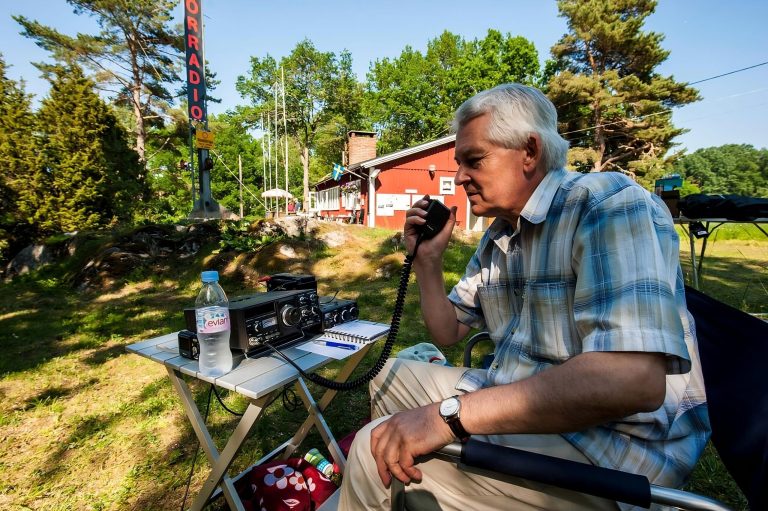
A HAM Radio Should Be A Part Of Your Critical Preps

0

On March 2nd, 2012, an EF4 tornado struck the town of Henryville in southern Indiana, virtually wiping it off the map. A second, less severe EF1 tornado followed the same path about an hour later, compounding the destruction. The storm damaged the infrastructure in the region, causing a complete disconnection from the outside world.

Utility lines and cell phone towers disappeared, while telephone land lines were down across most of the area. The 800 MHz public service radio system used by emergency services was inaccessible in most of the area and severely overloaded where it did work.

Soon after the storms passed, local amateur radio operators, known as “hams,” arrived with their mobile and portable radio stations and quickly sprang into action to reestablish communications. They went on foot to areas inaccessible by vehicle and used handheld radios to help search for victims, provide damage reports, and relay information to emergency management officials.

For several days following the storm, hams continued to pass messages and provide effective communications until the infrastructure could be restored. The impact of these volunteer radio operators and their equipment, which they purchased and maintained, cannot be measured in the number of lives they positively affected.

Occurrences like this happen multiple times each year, and each time, ham radio operators volunteer to establish communications with the outside world. The Henryville tornadoes serve as a reminder of the importance of rapidly and efficiently establishing communication during and after disasters.

HAM Licensing procedures

In the United States, ham radio operators are licensed by the Federal Communications Commission (FCC) after passing a written exam. The different classes of licenses available are technician, general, and extra, with each granting more operating privileges than the previous one. Higher classes require increased technical knowledge, and a good grasp of electronics is helpful.

Knowledge of Morse code is no longer a requirement for any license class, but basic math skills are necessary. License study manuals and smartphone apps are available for prospective hams to prepare for the written exam, and volunteer examiners administer the actual exams.

Upon passing the exam, documentation is sent to the FCC, which then issues the license grant and call sign to the operator. The new ham is allowed to transmit on all permitted frequencies according to their license class.

License upgrades follow the same process and take effect immediately upon passing the exam. More information on exam locations, schedules, and study manuals can be found on the American Radio Relay League’s website: www.arrl.org.

The technician license grants the least operating privileges, while the general and extra license holders have access to additional amateur frequencies, with some portions reserved only for the higher extra class. These two higher-level classes allow for true global communications.

Modern HAM equipment

Obtaining a license is necessary to legally transmit on any of the amateur radio frequencies during non-emergency situations, however, no license is needed to buy amateur radio equipment or listen to communications between hams. In case of an actual emergency, calling for help or responding to a distress call is permissible even without a license.

In the early days of amateur radio, hams used to create their own equipment by piecing together parts from other radios or appliances, or they relied on military surplus equipment. Nowadays, there are commercially manufactured transceivers, antennas, and other gear that can provide reliable and effective communications to hams.

Modern amateur radio stations typically consist of two or three radios that can cover many different frequency bands. Personal computers can be linked to the radios to enable capabilities beyond voice communication, including sending files, images, and even television through ham radio.

One significant advantage of amateur radio is the lack of dependence on grid power. This independence allows hams to operate in any location where an antenna can be installed, such as a deserted island, mountain top, or a ship on the ocean.

Most modern ham radio equipment is designed to operate on 12-volt DC power sources, making it possible to power the equipment using a simple automotive battery. Hams also commonly use solar panels to keep batteries charged. Wind and even small-scale hydroelectric generators can also be utilized to provide power for amateur radio stations.

Band spectrum

To understand why amateur radio is more effective than other radio services, it’s necessary to have a basic understanding of how radio waves at different frequencies behave in the radio spectrum. The spectrum is divided into several regions, four of which are important to amateur radio: mid frequency (MF), high frequency (HF), very high frequency (VHF), and ultra-high frequency (UHF). Each radio service is allocated specific frequency ranges within these regions, referred to as “bands,” to prevent interference with other services.

Amateur radio bands are named based on the approximate radio wavelength of the lowest frequency in the band. For example, the “40-meter” band has a wavelength of approximately 40 meters. All ham bands follow this naming convention. In the United States, mid frequencies include the AM broadcast and 160-meter amateur radio bands, which can propagate over long distances but are susceptible to atmospheric noise interference.

The high frequency region, which includes more than half a dozen amateur radio bands, is the most important for amateur radio communication. Two-way communication over vast distances is possible at low power levels in this region, but it’s dependent on the upper atmosphere to bounce signals back down to the surface. The bands that work best at a given time or direction are determined by constantly changing conditions in the ionosphere.

The upper HF region contains citizens band radio frequencies, which can occasionally produce long-range contacts due to “skips.” However, these “skips” are too infrequent for reliable long-distance communication. General and extra class license holders are authorized to operate on allocated bands spread throughout the HF region, ensuring dependable communication.

When conditions change, causing one band to fade, a different band can be used. VHF radio communication is typically “line-of-sight,” which means the antennas must have a direct line of sight with each other. Depending on terrain and other factors, typical VHF mobile contacts can range from 10 to 50 miles.

To overcome the inherent range limitations, amateur radio “repeaters” have been installed throughout the country. These repeaters are owned and operated by individual hams or ham clubs and can cover vast areas. Although these repeaters are normally powered by the utility grid, many have battery or generator backup power to keep them running during power outages. However, they cannot be relied on for continued operation during disasters or extended power failures.

The 2-meter band is widely popular in the VHF region because of its affordability and ease of installation on various vehicles, including bicycles. More repeaters are dedicated to 2 meters than any other band, and some sites may provide services to multiple amateur bands. Although the 6-meter band is located in the lower VHF region and can sometimes achieve long-distance communication, its reliability for long-range communication is inconsistent, much like CB.

VHF has several other two-way radio services, such as marine VHF, multi-use radio service (MURS), and land-mobile radio for businesses. Local emergency and public services like police, fire, medical, and utilities use VHF frequencies primarily in rural areas, whereas urban areas tend to have moved towards higher-frequency systems.

UHF is also a line-of-sight region but performs better at penetrating structures, making it an excellent choice for urban communication. However, it is more susceptible to heavy terrain and obstacles, particularly for longer distances. Many hams prefer the amateur 70-centimeter band in the UHF range, with several repeaters available to expand the range.

The general mobile radio service (GMRS) and family radio service (FRS) also operate in the UHF range but with low power and regulatory restrictions, rendering them no more useful than two cans and a string. Therefore, do not fall for the “22-mile range” claim on the packaging.

ss banner

Frequency and antennas

As mentioned earlier, frequencies possess different qualities. Lower frequencies are typically more suitable for long-distance communication, while higher frequencies are generally limited to line-of-sight transmissions. Interestingly, VHF and UHF frequencies are utilized in amateur radio for communicating with satellites in low-earth orbit, as well as for moon-bounce or EME (earth-moon-earth) contacts.

For EME contacts, a signal is transmitted from an earth station, reflected off the moon’s surface, and then received by another earth station. Although it can be thrilling, EME requires advanced coordination between the distant stations and specialized equipment, and therefore is not typically used for reliable long-range communication (although it may have strategic uses).

Frequency also affects antenna size. Lower frequencies necessitate a larger or longer antenna, while higher frequencies permit the use of smaller or shorter antennas. This is one of the reasons why VHF and UHF radios are ideal for portable or mobile operations.

Radios

To put it simply, a handheld transceiver (HT) is a portable radio that operates on VHF/UHF frequencies and sometimes includes HF bands. HTs are highly convenient for local communication and can access repeaters to provide the same coverage as higher-powered units. They can be carried on a belt or in a pocket and even used in vehicles with the help of an external antenna.

Therefore, it’s a must-have for all hams. When it comes to mobile use, VHF/UHF radios are the popular choice among hams. Some mobile radios also provide HF band capabilities. Mobile radios typically offer a maximum output power of 50 to 75 watts and are usually sturdy. They can be used as base stations or carried in backpacks or ammunition cans with an external battery and antenna.

Full-featured HF radios are usually larger than mobile radios and offer much greater capabilities, along with higher power output in the range of 100 to 200 watts. Any antenna designed for the band or bands it is used for can be connected. These radios can be used as base, mobile, or even portable radios.

Is HAM Radio worth it?

is ham radio worth it

If you’re wondering whether ham radio is worth pursuing, consider this: ham radio is a multifaceted hobby that can provide a range of benefits. While it may require study and practice to fully understand and operate, the capabilities, reliability, and effectiveness of ham radio make it a valuable skill to have.

Ham radio provides a means of communication that is independent of commercial infrastructure, making it an essential tool in emergency situations when traditional communication channels may be down. It also allows for communication over long distances, making it an ideal way to keep in touch with friends and family across the country or even around the world.

Moreover, ham radio is a great way to meet like-minded individuals and connect with a global community of radio enthusiasts. There are various events, contests, and clubs that bring ham radio operators together, providing opportunities to learn, share knowledge, and make new friends.

bannerlost1

In short, while getting licensed in ham radio may take some effort, the benefits are well worth it. From emergency communication to international friendships, ham radio offers a unique and rewarding experience that can enhance your life in many ways.

Other Useful Resources:

HAM Radio – A Critical Piece Of Equipment For Survival Communications

Find Out What’s the Closest Nuclear Bunker to Your Home

Crisis Communication Advice – Ditch the cell phone (or not?)

Learn how to Safeguard your Home against Looters

Backlash on subway killing of Black man – not what you think

0

Ran across this today:

Black Grievance Politics Is Destroying Civilization
real clickbait to be sure.
(Black Grievance Politics Is Destroying Civilization › American Greatness (amgreatness.com))

This seems to be a "New Conservative" website – and is certainly new to me. The article is def not 'mainstream narrative' gaslighting.

Posted for your…

Backlash on subway killing of Black man – not what you think

Thinking of getting a Flu shot this year?

0

I got a flu shot the first year I got back, just one time, then I asked myself, “It’s their best guess about which flu is going to spread, not a certainty, and if I don’t get the flu shot and catch it then natural immunity is much better than any flu shot so…why bother.” I don’t get them anymore. Now, I am not saying that vaccines aren’t useful, even necessary, see how fast I scramble to get a smallpox shot if I go off to Africa, just saying that I think the flu shot really isn’t necessary. As far as the mRNA Covid crap, I will take my chances and think my chances are better with natural immunity. Maybe my opinion will change in the coming years after they have got more data and time with it but for now – no thank you.

EDIT: Also, it is the CDC, WHO, and the entire health industry fault that they have loss our trust in their products and them. The way the Covid pandemic was handled was a nightmare and totally unnecessary. So, in layman terms, they can go pound sand.