Drones, planes need new weapons and sensors, says special ops official

0

TAMPA, Fla. — More options and less strain on humans are key to modernizing fixed-wing systems for U.S. Special Operations Command, according to the program executive officer in charge of the effort.

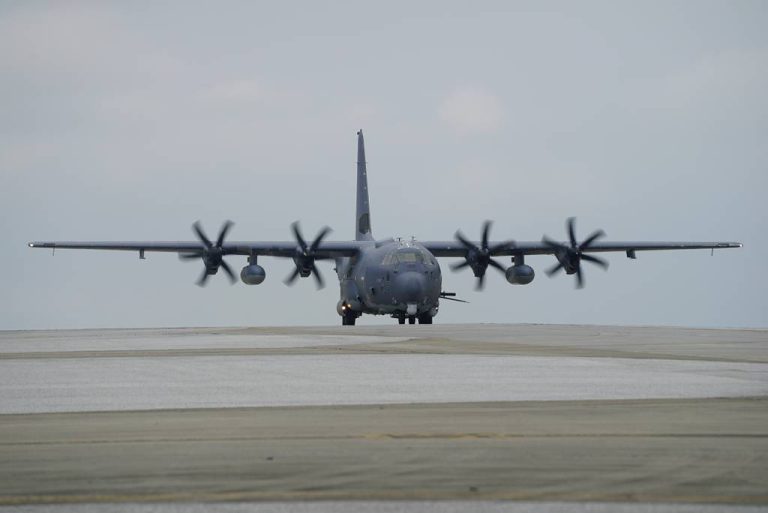
Those themes extend to both piloted and uncrewed airframes, such as MC-130J Commando II and AC-130J Ghostrider aircraft as well as MQ-1C Gray Eagle drones, Air Force Col. Ken Kuebler told an audience Tuesday at the SOF Week conference in Florida.

Additionally, Kuebler noted, secure data transfer and communications are critical in these platforms. “Cybersecurity has to be burnt in from the beginning, and it goes across everything we’re doing,” he said.

In terms of drones, Kuebler said he’s focused on reducing the need for human support. Despite the “unmanned” aspect of drone technology, it is a “manpower-intensive platform,” he explained. For example, a single MQ-9 requires up to 200 personnel when accounting for all support from maintenance to flying.

Finding technology to help with that is paramount, he said.

And given the gunships that have served the special operations community for decades are still in demand, they’ve got their own challenges. Special Operations Command saw the last AC-130W retire in 2022, and the organization is nearly done upgrading older AC-130Js across the 30 currently in the fleet, he said.

The next steps include making the “gunship the premier platform for U.S. Air Force Special Operations Command,” Kuebler said, which requires finding ways to make the aircraft runway-independent and amphibious.

“It’s a really hard engineering problem,” he added.

The command is currently studying the impact of operating at sea on maintenance and support equipment, including the effect of water on airframes and how to incorporate floating support for aircraft.

Kuebler anticipates a float capability demonstration will take place within the next two to three years.

And like the drone family, the colonel wants more remote gunship autonomy in the platform, meaning automated systems to take care of extraneous tasks and watch the skies so crew members can focus on more essential mission requirements.

Kuebler’s office awarded a contract for the Armed Overwatch program in August 2022, Defense News previously reported, with the organization selecting L3Harris Technologies and Air Tractor as the winners for the plane portion, once called the AT-802U Sky Warden but later renamed the OA-1K.

That contract could produce as many as 75 Sky Warden single-engine turboprop planes in a deal worth up to $3 billion. The program adds a strike capability and gives the plane intelligence, surveillance and reconnaissance assets as it replaces the legacy U-28A Draco and MC-12W Liberty aircraft, Defense News reported.

For the strike portion, the command saw BAE Systems’ Advanced Precision Kill Weapon System undergo testing.

The OA-1K’s armament will include 2.75-inch laser-guided rockets as part of the precision kill weapon system, AGM-114 missiles and the GBU-12 Paveway bomb, according to slides Kuebler showed.

The turboprop plane’s ISR assets will include full-motion video and Link 16 communications, among other features.

The key is for the plane to have a modular design; Kuebler wants to have the ability to swap out new tech in the same size package for a variety of missions, from close air support to sensing and electronic warfare.

Right now, Special Operations Command has 16 on contract and expects delivery of the first planes in October, he said. (Those won’t enter the field at that point, but rather begin initial operational capability testing.)

That combination compresses those features into a smaller aircraft that can fly low and support small teams in more austere and remote locations such as Africa, which lacks the robust logistical footprint on which special operators depended during recent wars in U.S. Central Command’s area of responsibility.

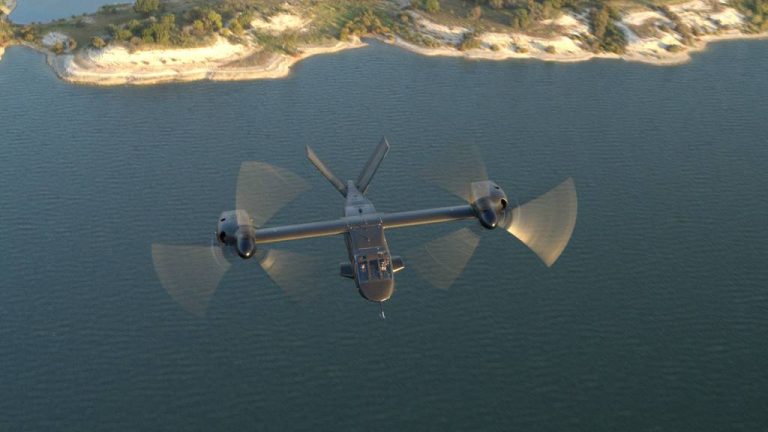
Looking over the modernization horizon, Special Operations Command has teamed with the Defense Advanced Research Projects Agency on the X-Plane program, which aims to give fixed-wing platforms a vertical-takeoff-and-landing capability and the ability to exceed 400 knots (460 mph).

Todd South has written about crime, courts, government and the military for multiple publications since 2004 and was named a 2014 Pulitzer finalist for a co-written project on witness intimidation. Todd is a Marine veteran of the Iraq War.

Our Store was Robbed! | Survival Monkey Forums

0

We have done business with Osage County Guns, nice store and good folks.
Using a stolen car as a battering ram is a well-used tactic for the inner city pieces of shit
I recommend…Hanged, drawn and quartered for the perps..

Fastened to a hurdle, or wooden panel, and drawn by horse to the place of execution, where he is then hanged (almost to the point of death), emasculated, disemboweled, beheaded and quartered (chopped into four pieces). His remains would then be displayed in prominent places across the country.

vvvvvvvvvvvvvvvvvvvvvvvvvvvvvvvvvvvvvvvvvvvvvvvvvvvvvvv
On 9/3/22 a group of young criminals out of St. Louis arrived at our store in three stolen vehicles. One of those vehicles was stolen just hours before they arrived and drove the car through our entrance using it as a battering ram. Roughly eight of the individuals stormed the inside of our store smashing cases and stealing a variety of items including firearms. In the last few weeks there have been roughly six local gun / sporting goods stores robbed in the night and most involved the use of stolen vehicles. The ATF is offering a $7,500 reward and we are offering a $10,000 reward for the arrest and conviction of the individuals involved in the robbery. Details can be found on our blog at


How To Make A Long-Term Financial Security Plan

0

I hope this article leaves you with a stronger sense of self-reliance, which is crucial in times of crisis. When emergencies arise, you can only rely on yourself and your immediate family, as there’s no guarantee that the millions of caring individuals in the world will be able to assist you.

To become more self-reliant, it’s important to establish a plan for achieving long-term financial security. Here are some actionable steps you can take towards that goal.

Get rid of debt

First, free yourself from the shackles of debt, as being indebted makes you a slave to your debt holder and relinquishes control of your finances. Resolve to avoid using credit to make purchases going forward, and adjust your budget to pay off your debts as quickly as possible. Start by paying off one debt at a time while making minimum payments on your other debts until you are completely debt-free.

Make an emergency fund

When life throws unexpected financial challenges your way, it can feel overwhelming and stressful. That’s why establishing an emergency fund is one of the best steps you can take to prepare for economic troubles. Your emergency fund should be divided into three main categories to ensure that you are prepared for any situation:

Cash-on-hand fund:

It’s crucial to have a ready supply of cash available at all times. In the event of an emergency, banks may be closed, and cards may not be accepted, so you’ll need cash to pay for essential items like supplies, fuel, or hotel rooms. Natural disasters, power grid failures, and sudden evacuations can happen anywhere and without warning. Therefore, keep cash on hand and invest in a secure wall safe to store your funds at home.

Short-term fund:

This is the fund you turn to for immediate emergencies, such as an unexpected car repair or replacing a major appliance that stopped working. It should be kept at a local bank with a debit card attached to the account, so you can access your money immediately. Short-term funds can also help you get through larger events where it may take a couple of days to access your long-term emergency fund.

Long-term fund:

This reserve of money is intended to help you get through more extended periods of difficulties, such as a job loss or a major natural disaster. While this fund should be accessible quickly, it should not be too easy to access, as you may be tempted to use it for everyday spending. It’s recommended to save at least six months of regular expenses and place it in a savings or money market account. Remember, this is an insurance policy, not an investment fund, so don’t worry about making money on this account.

By establishing an emergency fund, you’ll have peace of mind knowing that you’re prepared for any financial challenge life may throw your way.

Build a stockpile of long term goods

To prepare for the future, consider building a stockpile of consumable resources that will be valuable and useful in the long run. However, this doesn’t mean hoarding useless items. Instead, focus on gathering items that will hold their value and meet your needs during times of difficulty.

When building your stockpile, consider items that you can’t produce on your own, such as medicine, tools, or equipment. Also, look for things that will retain their value over time, like precious metals or rare collectibles. Finally, think about items that you can use to survive during tough times, such as non-perishable food, water, or first-aid supplies.

Here are some ideas to consider when building your stockpile of long-term goods:

Prioritize Food and Water

It’s an obvious necessity – without these two items, preparing for any disaster becomes moot. The first step for everyone should be to ensure that they have enough food and water to sustain themselves and their loved ones through any calamity. You can use your stockpile of food during times of job loss or economic difficulties, as it can help you stretch your grocery budget by having a few meals a week from your stockpile while keeping the food from spoiling.

Invest in Guns and Ammo

The past few years have shown that guns and ammunition can be scarce during uncertain times. They not only have survival benefits but also serve as a great investment that can hold their value even during a crisis. For example, during the 2012 presidential election, .22lr ammunition was nearly impossible to find in the United States.

Acquire Tools

During the Great Depression, those who could fix things themselves were the ones who survived. Having a good stockpile of tools, coupled with the knowledge of how to use them, is not only a wise investment but can also ensure that you have a means of generating income. If our country ever experiences a total collapse, people who can repair things will be among the most sought-after individuals in the new economy. Furthermore, owning and repairing your belongings can help you save money by not having to purchase new ones.

the best spoil

DIY Items

In addition to having a good set of tools, consider acquiring items that will enhance your self-sufficiency. This could include anything from a sewing machine to produce your own clothes to gardening and hunting equipment to provide for your family’s food needs.

Basic Necessities

It’s important to consider stockpiling basic necessities such as clothing, first aid supplies, and any other essential items.

Stockpile Knowledge

Accumulating knowledge is crucial for survival and financial stability. To prepare for any collapse, start developing skills that will be valuable in such a scenario. Some essential skills to acquire are:

DIY skills: During an economic collapse, being self-sufficient becomes paramount. Learn how to fix things around your house, repair your own vehicles, and use these skills to generate income.

Hunting and fishing: Knowing how to obtain food without relying on a grocery store is essential for long-term survival. Start learning these skills before it’s too late.

Gardening and canning: Growing and preserving your own food is the best way to ensure your family’s sustenance. Mastering these skills can be lifesaving during difficult times.

Buy some land

If you’re considering long-term strategies to secure your financial future, investing in land should be a top priority. If you’re able to do so, begin researching where you would like to settle down in the future. Here are some important factors to consider:

Water Sources

When considering purchasing land, it’s crucial to assess the availability and quality of water sources on the property. Here are some questions to ask when evaluating water sources:

What water sources are on the land?

It’s important to identify all the water sources on the property, such as freshwater springs, rivers, ponds, lakes, or underground well water. Knowing the type and location of the water source can help you determine the feasibility of using it for drinking, irrigation, or other purposes.

Are they renewable and will they be there year-round?

Even if there is a water source on the property, it’s essential to assess its reliability and sustainability. For example, some rivers or springs may dry up during the dry season, while others may be contaminated with pollutants or chemicals. Make sure to research the water source’s flow rate, quality, and reliability to determine if it’s a dependable source of water throughout the year.

Is the property graded in a way that allows for the creation of a pond or cistern to catch rainwater?

In addition to natural water sources, it’s also important to consider the ability to create man-made water storage options, such as a pond or cistern. This can provide a backup water supply during times of drought or when natural water sources may be temporarily unavailable. Assess the land’s topography to see if it’s conducive to creating a pond or cistern, and check local regulations to ensure that you can legally construct these water storage options.

Population Density

population density when buying land

Population density is a crucial factor to consider when looking for a safe location during an economic collapse. The closer you are to large populations, the higher the risk of exposure to epidemics and diseases, as well as the higher the risk of encountering social unrest and crime.

Areas with high population densities will be the most vulnerable during a collapse and are likely to experience shortages of resources and lack of proper sanitation, resulting in higher mortality rates. Therefore, it is recommended to look for areas with low population density when searching for a safe location. Living in a remote area, away from densely populated cities, can significantly increase your chances of survival during a crisis.

However, it is essential to note that being too isolated can also have its drawbacks, such as limited access to medical facilities and emergency services. Therefore, it is recommended to find a balance between safety and accessibility.

Self-Sufficiency

When looking for land to sustain your lifestyle, it’s important to consider the availability of natural resources that can provide food and energy. Here are some questions to consider regarding natural resources:

Natural Resources

selfsb b4

How easy is it to grow food on your land?

Consider the type of soil on the land, the climate, and the availability of water. These factors will determine the ease and success of growing crops. Additionally, consider the space available for gardening and the type of crops that can be grown in the area.

Does the area support a population of wild animals for hunting?

Hunting can be an important source of food in a collapse scenario, so it’s important to assess the availability of wild animals in the area. Look for land that supports a healthy population of game animals, such as deer, turkey, and wild boar.

Can you easily raise livestock on the land?

Raising livestock, such as chickens, cows, and pigs, can provide a sustainable source of meat, eggs, and milk. When considering land for this purpose, look for areas with ample space for grazing, access to clean water, and shelter for the animals. Additionally, consider any zoning regulations that may affect your ability to raise livestock on the land.

Overall, finding land that can sustain your lifestyle involves careful consideration of various factors, including natural resources, water sources, and population density. Take the time to thoroughly research and assess your options to ensure you find the best possible location for your needs.

Concluding

Becoming self-sufficient requires a combination of financial responsibility, emergency preparedness, and sustainable living. By getting rid of debt, building an emergency fund, and investing in skills and resources to sustain your lifestyle, you can increase your chances of weathering economic collapses, natural disasters, and other unforeseen events.

From securing a clean and renewable water source to finding land with adequate natural resources, there are many steps you can take to become more self-sufficient and reduce your reliance on external systems. With the right mindset, education, and planning, you can take control of your own survival and financial future.

This article was submitted by Jason N Clark.

Recommended resources:

Raising livestock for self-sufficiency

How To Make Bread without Yeast, Fire, or Electricity

Grow native fruits on your homestead for self-sufficiency

How To Build The Invisible Root Cellar
Cash is king | Survival Monkey Forums

0

I keep my cash at home in the high 5 figures, too: $25.00, $35.00, and sometimes even $45.00.

However, all humor aside…

No matter what, you’re better off with a well-buried piggy bank than a safety deposit box.

Never put anything you actually want to keep in a bank safety deposit box.

Some people actually believe that BS about the bank not having a full set of keys to their safety deposit box.

Of course they do, silly!.

How else could the banks help the government search all those “suspicious” safety deposit boxes without a warrant?

Or loot the “abandoned” ones at their pleasure? Even when they’re not abandoned?

It does happen. Google on it.

And you can just about bet that the one time you most desperately need access to your safety deposit box will be the one time the bank will decide not to be open–for the duration.


Animal Traction

0

mechstdr submitted a new resource:

Animal Traction – use and care for various draft animals

Read more about this resource…

Resource – Antennas | Survival Monkey Forums

0

mechstdr submitted a new resource:

Antennas – antenna theory and application

Read more about this resource…


How to Convert DOC/DOCX to EPUB, PDF & MOBI

0

Most of the books uploaded to the Resource pages at Survival Monkey are in the PDF format. Some people, however, prefer to read a book on their KINDLE or EPUB reader. If you are the author of a book at the Resource forum, you might consider uploading your book in those e-reader formats as well as the PDF format. Below are ways to do that. The procedures assume your book was originally in either the DOC or DOCX format and that you converted it to the PDF format, then uploaded it to the Resource pages at SM.

DOC or DOCX to PDF

I don’t use Microsoft Word but I assume it has the option to convert DOC or DOCX to PDF. If MSW does not have that option, or if your word processor does not have that option, use this FREE PDF CONVERTER [Best PDF Converter: Create, Convert PDF Files Online (FREE)] I use it because my word processor drops the links when it converts my DOC or DOCX book to PDF. My ZAP! [Zap — a New Beginning for Survivors] novel, for example, has links to each chapter in the Table of Contents. If your word processor drops the links when it converts your book to PDF, I suggest you use the on-line converter mentioned above.

DOC or DOCX to EPUB

My word processor can convert DOC or DOCX to EPUB. If yours doesn’t have that feature, use this on-line converter… DOC (WORD) to EPUB (Online & Free) — Convertio.

DOC or DOCX to KINDLE (MOBI)

My word processor cannot convert EPUB files to the Kindle (MOBI) format, so I use Amazon’s free converter… Amazon.com: Kindle Previewer: Kindle Store. Launch the previewer, click “Open a Book” then select the EPUB version of your book. When conversion is complete, make sure it looks okay, then select the “Export” option. The Previewer defaults to the KPF format. You want the MOBI version for the Resource pages at Survival Monkey. So, click the dropdown arrow to select the “Mobi” format, then choose the folder where you want the Kindle version of your book to reside.

I’ve put this information in a thread so I can include your comments and suggestions before uploading the info to the Resource pages with a nice looking graphic… in all three formats of course! If you need help, PM me or email your book to me and I’ll convert it for you.


How the US Army aviation chief is prepping for the future fleet

0

NASHVILLE, Tenn. — The U.S. Army’s aviation branch is reaching a critical inflection point where it will need to determine how and when to begin retiring its aircraft fleet — while also keeping some of them flying for decades as it adopts new piloted and unmanned vertical lift platforms along with launched effects.

Maj. Gen. Mac McCurry, who runs the Army Aviation Center of Excellence at Fort Novosel, Alabama, is playing a key role in leading that process.

The Army plans to field a Future Long Range Assault Aircraft (FLRAA) and a Future Attack Reconnaissance Aircraft (FARA), as well as a variety of tactical drones and launched effects to aid crewed aircraft, giving pilots greater standoff from enemy threats.

But the Army must also modernize its fleet of AH-64 Apache attack helicopters, UH-60 Black Hawk utility helicopters and CH-47 Chinook cargo helicopters to keep them flying at least two more decades, albeit some will remain in the fleet considerably longer.

At the same time, McCurry is also focused on ensuring aviation training keeps up with the service’s newer, complex missions expected in the future.

Defense News sat down for an exclusive interview with McCurry at the Army Aviation Association of America’s annual symposium on April 26 to talk about how the service is preparing for a new era of aviation. This interview was edited for length and clarity.

The U.S. Army chose the Bell-made V-280 Valor tiltrotor for its FLRAA effort, and this is the first the Army will fly a tiltrotor aircraft. How are the Army Aviation Center of Excellence and Fort Novosel preparing for training with the aircraft and its integration into the fleet?

The team has started working with the Capabilities Development Integration Directorate and the U.S. Army Aviation Center of Excellence, working together to refine all of those things that wrap around a materiel thing to create a capability so you have the trained people at the right time, you have the doctrine at the right time, we have leaders able to employ the system and understand how we want to do that doctrinally, and we have the facilities and things available.

As we look at it, facilities are clearly the longest lead time.

The good news is the models that were downselected have a reasonable correlation to our aircraft today. It’s a larger aircraft, a little bit, but from a height, width, and how it can stack in a hangar perspective, it’s very close. We don’t see a lot of blossoming needs there.

We’re working on the force design update, and we’re working on the allocation. The basis of issue is probably not directly one-for-one for a Black Hawk. With an increased capability, you probably don’t need the same amount in each formation, so we’re looking and doing the modeling [to determine] how many do you need.

On facilities specifically, everyone seems to gravitate to hangars. Most of our aircraft live outside. When you go by an Army airfield, we don’t have all the aircraft parked in the hangar; most of the aircraft are living out on the ramp. When you need to take them into the hangar to do certain things, whether it’s overhead lift capacity or something else, then we do that.

As we look at increased speed and range, then we begin to look at how we’re going to conduct training, and that’s really where our focus will largely be. We have gone out to every installation and done assessments, and the Army G-3/5/7 ultimately decides prioritizations for fielding. Once we get further in the program where we have a Milestone B, and we’re in the [engineering and manufacturing development] phase, and we’re working toward a Milestone C, then some of those things will fall into place, but I would expect them to follow the other Army priorities for the divisions.

The good news is, it’s not the first tiltrotor in the Defense Department, and we have sister services, so we’re relying heavily on what the Marines and the Air Force have done and how they use their platforms. Then we’re going to do individual training, so some sort of individual qualification will have to occur. My focus will be on how you build a cadre of people that know how to fly that. Then from there, it’s almost like when we first brought the AH-64 into the Army, we had a collective training opportunity where we formed those units, and we did one-station collective training before they landed at an installation. We’ll look at models like that in the future.

LUH-72A Lakotas became the Army’s basic trainer about seven years ago replacing TH-67s. That took the fleet from a single-engine to a dual-engine aircraft, among other changes. How has that worked out?

We picked at that time when aviation restructure was being worked. We kind of picked it because we had it, right? It’s not like we went out and said: “This is the purpose-built thing.” We said, “We own them,” and Congress was very gracious and gave us more to create the training base.

It’s been an effective trainer. My daughter and my son-in-law are both aviators, and one of them trained in the TH-67, and one of them trained in the LUH, so I got firsthand feedback from my kids — and my kids will always tell you how it really is.

[The digital cockpit features in an LUH made for an easier transition to more advanced aircraft with similar cockpits]. Some of the more tactile flight skills might be more developed in TH-67. [The Lakota] has been an effective trainer. It probably has a lot of things on it that you wouldn’t necessarily just go out and put on a purpose-built trainer, but it’s worked.

Do you see the LUH-72A as the trainer for many years to come, or is there an appetite within the Army to look at more purpose-built trainers as you modernize?

It’s something we’re always assessing and considering, and certainly as we start to look at future platforms we will continue to assess the training fleet and what’s right. But again, we also have a top line, and you have to be sustainable.

How are you looking at modernizing Black Hawks and Apaches? What upgrades need to take place for these systems if they are to fly for a couple more decades and keep up with the future vertical lift fleet?

You can always do a range of things from nothing to a new aircraft, and so we’re obviously not going to do nothing. The next step would be safety enhancements only; we’re doing more than that. And so we fall into this “targeted modernization” term, and twice a year we get together with product managers in the [Program Executive Office Aviation], with our capability managers, with the branch chief, and we go soup to nuts through each platform.

During the year things emerge — whether it’s the generators on AH-64 that we’re looking at — so we keep a running list of the things in order of priority from “need to do” to “really nice to do” on each platform that we kind of continually modulate. If you look at Apache, for instance, in this year’s fiscal 2024 request, Apache mods went up 30% — about $27.3 million. That’s specifically focused on giving us some additional capabilities with Link 16. Additionally it’s focused on going from metal to composite main rotor blades on the portion of the fleet that was still metal. That’s kind of how we go about it.

When we say “targeted modernization,” we’re watching for those things that are either emerging obsolescence, as in the case of the rotor blades, or some sort of safety or emerging quality problem that we can work together with our [original equipment manufacturers] on. We’re doing that across both of those fleets.

A aside from that, it’s not just the platform — you’ve got the aircraft survivability equipment, you’ve got the [Improved Turbine Engine Program], [degraded visual environment] capabilities that we’re also working on to continue to keep these current capabilities viable as we transition to the future.

There were a few aviation accidents with the National Guard in recent history. What is the service learning from these most recent accidents, including March’s Black Hawk collision that is still under investigation?

For the last three years, we’ve had the safest three years in history — never had another three-year period below one accident per 100,000 [flight hours]. And we were well below that. Last year it was 0.5 per 100,000. And last year we didn’t lose a single crew member in an aviation accident. So from that perspective, we’re proud of the record.

Now, every time we lose a soldier, aviation or otherwise, it’s a tragic occurrence. It’s somebody’s father, mother, sister, brother, son or daughter out there, and so we want to take them all seriously. We’re working with the [Combat Readiness Center], we’re waiting on the outcome of the latest investigation.

I talked with everybody in the Army National Guard, state aviation officers, aviation support facility commanders that are here, and we talked specifically about how across the force — not component specific but component agnostic — we have to continue to apply the same rigid standardization that the branch was built on. That’s from initial mission-approval authority through mission briefing officers, mitigating risk, to final mission-approval authority, and then the crews executing the mission. All of us are focused on that. The great thing is, when we get together and have our [virtual meetings], we’ve got the director of National Guard aviation [attending] each week, and we freely circulate. There’s no component compartmentalization on any of this.

We will work through it, I think that we will stabilize. But as the branch chief, I keep a keen focus on what are the causal factors, so once they come out we’ll be able to see if there’s something we need to change.

In recent years, have helicopter-related incidents more often involved user errors or technical issues?

Historically, we have more accidents because of human error.

There are a couple things to think about as we transition from heel-to-toe rotations for 20 years, where your average chief warrant officer two had two combat tours under his belt and was getting almost 1,000 hours a tour. Now, some will argue those hours were all the same, but it’s experience in an aircraft to help you deal with things in extremis.

We have definitely seen a loss of flight experience across the force with less heel-to-toe rotations. And with retirements and those of us that are around my age retiring out of the force, we’ve seen this decrement in experience. At the same time, we are asking them to do some complex tasks in large-scale combat operations; more tasks focused on combined arms maneuver and operating in larger elements. Those things bring additional risk. That’s why my focus as the branch chief is on standardization.

Without deployment experience in a wartime environment, how are you training and preparing pilots? How much could be simulated training versus actual flight hours?

We’ve never equated one simulator hour to one live flight hour. I don’t know what that calculus is, but it’s not 1-to-1. Emergency procedures of some of our most extreme emergencies should be trained in simulation. Also, in some instances, reaction to threats can be trained in simulation.

We have to be able to collectively maneuver platoons and companies in that simulation, so that’s where our focus is. We’ll continue to leverage that to the maximum extent in both institutional training at Fort Novosel and in the operational force.

We’re not going to fly the number of hours we flew downrange, certainly, but we have been adequately and well-funded by Congress to give us the opportunities to fly.

Jen Judson is an award-winning journalist covering land warfare for Defense News. She has also worked for Politico and Inside Defense. She holds a Master of Science degree in journalism from Boston University and a Bachelor of Arts degree from Kenyon College.

TOTM May 2023

0

Let's see those gardens…

I have planted but given the season and family issues, I am not planting like I would have.

There are seedlings just sprouting of Detroit White Beats, The herbs are going crazy but, for me; that will be about it for this year.

Pics