US Air Force wants drone wingmen to bring ‘mass’ airpower on a budget

0

WASHINGTON — If the Air Force has to fight a major adversary such as China in years to come, a top general said, it must bring “mass” in its airpower — without breaking the bank.

But piloted fighters alone won’t be enough to maintain the United States’ prized air superiority, Lt. Gen. Richard Moore, deputy chief of staff for plans and programs, said in an interview with Defense News. Key aircraft in its fleet such as the F-15C are rapidly aging, and the service is on track to retire more than twice as many fighters as it buys over the next five years.

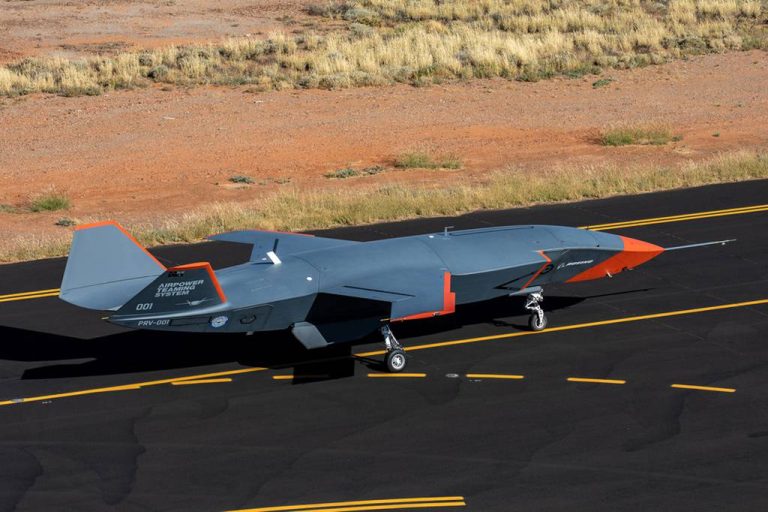
That’s why Moore said it’s vital for the Air Force to build and field a planned fleet of at least 1,000 drone wingmen to augment its piloted fighter fleet. And the service is working to pull together industry ideas for so-called collaborative combat aircraft and its own experiments to figure out how to make this a reality.

“The picture here is changing, and what’s changing the picture is CCAs,” Moore said.

Air Force Secretary Frank Kendall has made it clear creating CCAs is one of his top priorities, and the service is starting to sort out the details of how it will fold drone wingmen into its fleet and use them in a future conflict. In March, Kendall said he ordered the service’s planners to assume the Air Force will have 1,000 CCAs, though the final number could differ from that estimate.

Key lawmakers this spring aired their concerns to top Air Force leaders about the state of the Air Force’s fighter fleet and its plans for fighters in years to come.

In a March 29 hearing of the House Armed Services subcommittee on tactical air and land forces, Rep. Rob Wittman, R-Virginia, pointed to Air Force plans to divest 801 fighters by 2028 while bringing on less than half that with 345 F-35s and F-15EXs.

Moore said in that hearing most aircraft slated for retirement are F-15Cs and A-10 Warthogs, along with some older and less capable F-22s and F-16s.

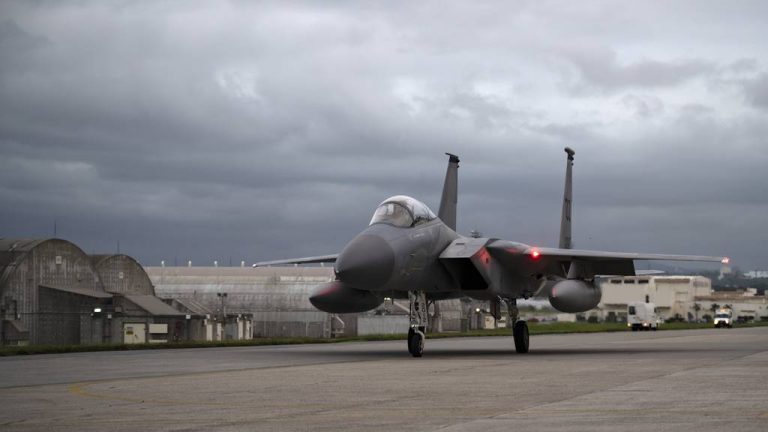
The Air Force’s F-15C and D Eagles are rapidly aging, as their withdrawal from Kadena Air Base, Japan, in recent months has shown, and their numbers are dwindling. The service’s planned Next-Generation Air Dominance fighter platforms won’t arrive until the end of the decade, at best, and will be very pricey, with each system expected to cost hundreds of millions of dollars. And while the Air Force continues to bring on more F-35As, the service has cut its original plans to purchase 144 F-15EXs down to 104.

Wittman, the subcommittee’s chairman, warned continuing on such a “glide slope,” while key adversaries such as China continue to invest in fighter airpower, could turn America into a mere “regional power.”

Moore said that CCAs will be vital to delivering the kind of airpower that will be necessary to face off against a nation with a military comparable to the United States.

But trying to reach that level of airpower with crewed fighters alone would be prohibitively expensive, Moore said, prompting the Air Force’s turn to drone wingmen.

“We have to come up with a way to create affordable mass, and that’s where CCAs came in, and that’s why the numbers are so high,” Moore said, referring to plans envisioning a 1,000-drone fleet. “You can’t just talk about F-35s, and F-15Es, and F-15EXs and F-16s, and call that the enterprise. You have to add CCAs in.”

And the service’s proposed budget for 2024 requests money to make that planning a reality. The service asked for nearly $50 million to start a program called Project Venom that aims to refine autonomous software of the kind that could fly CCAs, and $69 million to launch an Experimental Operations Unit where officials would start developing the tactics and procedures to incorporate CCAs into a squadron.

Industry ideas for CCAs

Moore said that the experimental unit will take advantage of the Air Force’s novel acquisition approach for CCAs.

Usually, he explained, the Air Force first spells out a program’s requirements to industry, which will then come up with something that meets those requirements.

But this time, Moore said, Kendall deliberately told the Air Force not to start by spelling out requirements, and instead to ask industry what was possible. And the Experimental Operations Unit will take companies’ ideas and explore them further, Moore said, figuring out how to incorporate them into day-to-day squadron operations.

Moore said the Air Force expects to have concrete ideas from vendors on the attributes of CCAs within a few years, maybe sooner “if we get lucky.”

The service will then start experimenting with drone prototypes and determine what level of autonomy is possible.

“That will be fundamentally a part of the employment concept as well,” Moore said. “If they’re truly autonomous, if we can get there, then that opens up some additional possibilities. If they are somewhat autonomous, then that would lead you more to a ‘loyal wingman’ concept, or CCAs being part of a formation with manned fighters. We’ll just have to see how that plays out.”

Project Venom, in which autonomous software will be installed in six F-16s for experimentation, will help shape the course of those future experiments on industry aircraft, he said.

And there are many questions that still need to be sorted out once the Air Force has industry’s ideas in hand, Moore said. For example, will CCAs be an integral part of a squadron and deploy together, or will they be a separate unit that deploys on their own? Will they launch from the same bases as crewed fighters or from different locations?

“These are questions that don’t yet have answers, because we don’t yet know the attributes of the CCA that will come,” Moore said. “We’ll work all that out as those attributes begin to crystallize. And I think the answers will become relatively obvious based on the airplanes, but we don’t have them yet.”

Some drones could have multiple applications ranging from strike, intelligence collection or jamming, for example. “The one that we’re focusing on first is the ability for CCAs to augment the manned fighter force as shooters, so that’ll be first,” Moore said.

As for industry interest, some of the combat aviation segment’s largest companies have already expressed interest, including Boeing, Northrop Grumman, Lockheed Martin, Kratos and General Atomics, according to Moore.

“I think we see multiple pathways to what we’re trying to get to,” he said. “I don’t think there’s only one pathway, and we’re not dependent on a single company.”

Stephen Losey is the air warfare reporter for Defense News. He previously covered leadership and personnel issues at Air Force Times, and the Pentagon, special operations and air warfare at Military.com. He has traveled to the Middle East to cover U.S. Air Force operations.

US Air Force wants drone wingmen to bring ‘mass’ airpower on a budget

0

WASHINGTON — If the Air Force has to fight a major adversary such as China in years to come, a top general said, it must bring “mass” in its airpower — without breaking the bank.

But piloted fighters alone won’t be enough to maintain the United States’ prized air superiority, Lt. Gen. Richard Moore, deputy chief of staff for plans and programs, said in an interview with Defense News. Key aircraft in its fleet such as the F-15C are rapidly aging, and the service is on track to retire more than twice as many fighters as it buys over the next five years.

That’s why Moore said it’s vital for the Air Force to build and field a planned fleet of at least 1,000 drone wingmen to augment its piloted fighter fleet. And the service is working to pull together industry ideas for so-called collaborative combat aircraft and its own experiments to figure out how to make this a reality.

“The picture here is changing, and what’s changing the picture is CCAs,” Moore said.

Air Force Secretary Frank Kendall has made it clear creating CCAs is one of his top priorities, and the service is starting to sort out the details of how it will fold drone wingmen into its fleet and use them in a future conflict. In March, Kendall said he ordered the service’s planners to assume the Air Force will have 1,000 CCAs, though the final number could differ from that estimate.

Key lawmakers this spring aired their concerns to top Air Force leaders about the state of the Air Force’s fighter fleet and its plans for fighters in years to come.

In a March 29 hearing of the House Armed Services subcommittee on tactical air and land forces, Rep. Rob Wittman, R-Virginia, pointed to Air Force plans to divest 801 fighters by 2028 while bringing on less than half that with 345 F-35s and F-15EXs.

Moore said in that hearing most aircraft slated for retirement are F-15Cs and A-10 Warthogs, along with some older and less capable F-22s and F-16s.

The Air Force’s F-15C and D Eagles are rapidly aging, as their withdrawal from Kadena Air Base, Japan, in recent months has shown, and their numbers are dwindling. The service’s planned Next-Generation Air Dominance fighter platforms won’t arrive until the end of the decade, at best, and will be very pricey, with each system expected to cost hundreds of millions of dollars. And while the Air Force continues to bring on more F-35As, the service has cut its original plans to purchase 144 F-15EXs down to 104.

Wittman, the subcommittee’s chairman, warned continuing on such a “glide slope,” while key adversaries such as China continue to invest in fighter airpower, could turn America into a mere “regional power.”

Moore said that CCAs will be vital to delivering the kind of airpower that will be necessary to face off against a nation with a military comparable to the United States.

But trying to reach that level of airpower with crewed fighters alone would be prohibitively expensive, Moore said, prompting the Air Force’s turn to drone wingmen.

“We have to come up with a way to create affordable mass, and that’s where CCAs came in, and that’s why the numbers are so high,” Moore said, referring to plans envisioning a 1,000-drone fleet. “You can’t just talk about F-35s, and F-15Es, and F-15EXs and F-16s, and call that the enterprise. You have to add CCAs in.”

And the service’s proposed budget for 2024 requests money to make that planning a reality. The service asked for nearly $50 million to start a program called Project Venom that aims to refine autonomous software of the kind that could fly CCAs, and $69 million to launch an Experimental Operations Unit where officials would start developing the tactics and procedures to incorporate CCAs into a squadron.

Industry ideas for CCAs

Moore said that the experimental unit will take advantage of the Air Force’s novel acquisition approach for CCAs.

Usually, he explained, the Air Force first spells out a program’s requirements to industry, which will then come up with something that meets those requirements.

But this time, Moore said, Kendall deliberately told the Air Force not to start by spelling out requirements, and instead to ask industry what was possible. And the Experimental Operations Unit will take companies’ ideas and explore them further, Moore said, figuring out how to incorporate them into day-to-day squadron operations.

Moore said the Air Force expects to have concrete ideas from vendors on the attributes of CCAs within a few years, maybe sooner “if we get lucky.”

The service will then start experimenting with drone prototypes and determine what level of autonomy is possible.

“That will be fundamentally a part of the employment concept as well,” Moore said. “If they’re truly autonomous, if we can get there, then that opens up some additional possibilities. If they are somewhat autonomous, then that would lead you more to a ‘loyal wingman’ concept, or CCAs being part of a formation with manned fighters. We’ll just have to see how that plays out.”

Project Venom, in which autonomous software will be installed in six F-16s for experimentation, will help shape the course of those future experiments on industry aircraft, he said.

And there are many questions that still need to be sorted out once the Air Force has industry’s ideas in hand, Moore said. For example, will CCAs be an integral part of a squadron and deploy together, or will they be a separate unit that deploys on their own? Will they launch from the same bases as crewed fighters or from different locations?

“These are questions that don’t yet have answers, because we don’t yet know the attributes of the CCA that will come,” Moore said. “We’ll work all that out as those attributes begin to crystallize. And I think the answers will become relatively obvious based on the airplanes, but we don’t have them yet.”

Some drones could have multiple applications ranging from strike, intelligence collection or jamming, for example. “The one that we’re focusing on first is the ability for CCAs to augment the manned fighter force as shooters, so that’ll be first,” Moore said.

As for industry interest, some of the combat aviation segment’s largest companies have already expressed interest, including Boeing, Northrop Grumman, Lockheed Martin, Kratos and General Atomics, according to Moore.

“I think we see multiple pathways to what we’re trying to get to,” he said. “I don’t think there’s only one pathway, and we’re not dependent on a single company.”

Stephen Losey is the air warfare reporter for Defense News. He previously covered leadership and personnel issues at Air Force Times, and the Pentagon, special operations and air warfare at Military.com. He has traveled to the Middle East to cover U.S. Air Force operations.

The cost of Turkey’s TF-X fighter jet could rise, manufacturer says

0

ANKARA, Turkey — The price tag for Turkey’s TF-X fighter jet could be more than previously expected, according to the head of its manufacturer.

Temel Kotil, who serves as CEO for Turkish Aerospace Industries, said in March 2021 during a TV interview that a single TF-X would be $100 million per unit.

But this week, Kotil said that unit price “could be a little bit higher.” He did not offer additional details or a reason for the change in cost.

The executive also said this week that the company will deliver 20 of the Block 10 jets to the Turkish Air Force in 2028.

“By 2029, TAI will be producing two Kaans a month, generating an annual revenue of $2.4 billion,” Kotil forecast, referring to the aircraft’s name recently announced by Turkish President Recep Tayyip Erdoğan.

In October 2016, Rolls-Royce offered a joint production partnership to Turkey to power some of the country’s planned platforms, and provide potential sales to third parties. The British firm’s proposal involved a production unit in Turkey to manufacture engines for the TF-X, helicopters, tanks and missiles.

In January 2017, BAE Systems and TAI signed a deal worth more than £100 million (U.S. $126 million) to develop the Turkish fighter jet. “We work with Turkish Aerospace to bring know-how and engineering expertise to the TF-X programme,” BAE tweeted Feb. 15, 2022.

The TF-X is scheduled to make its maiden flight in 2026.

Burak Ege Bekdil is the Turkey correspondent for Defense News.

For Sale – 10l rotovap

0

  1. The 10l rotovap is one of the most commonly used equipment in the experiments of sample concentration, solvent circulation, extraction and solvent mixture separation; the rotovap receiving flask is one of the more important parts of the rotary evaporator, the rotovap receiving flask rotates on its side to The inside is covered with a thin film, which greatly enhances the evaporation process. The rotary evaporator is used in the rotovap alcohol extraction experiment to evaporate and recover expensive ethanol from the ethanol-extracted concentrate. This article will introduce rotovap alcohol extraction for you. The rotovap machine used in this experiment is provided by ZZKD Laboratory Equipment Company.


survivalmonkey SSL seal


survivalmonkey.com warrant canary

Mini freeze dry machine for sale

0

To freeze dry fruit at home, what do you need?
●Choose your favorite fruit (strawberry, banana, peach, watermelon, grape, orange, grapefruit, etc.)
●A mini freeze dry machine (this machine will help you to omit a lot of tedious steps, easy to operate and easy to use)

Teach you how to use a freeze dryer to make fruit freeze-dried?
➩Step 1: Pick fruits with high water content.
●Apples, berries, grapes, peaches and pears are among the most popular choices for freeze drying. However, you can also use bananas, kiwis, mangoes, pineapples, citrus, or anything else you might want to enjoy in the future.
●Foods that contain a lot of water tend to be the easiest to handle. When you freeze them, they freeze, which helps maintain their structure as the moisture slowly evaporates.

➩Step 2: Wash and dry your fruit.
●Place fruit in a colander or wire strainer and run under cool water. Make an effort to remove as much dirt, debris and waxy residue as possible. When done, pat the fruit dry with a layer of folded paper towels or a clean dry towel.
●It is important to dry your fruit thoroughly before proceeding. Starting with wet fruit increases the amount of ice that must evaporate during freezing, causing the dehydration process to take longer.

➩Step 3: Place Food in Freeze Dryer Tray
(Note: Make sure the food does not exceed the height of the tray)
If possible, arrange your fruit so that there is a little space between each piece. It’s okay if the edges touch, but try not to crowd the baking sheet as this can cause sticking. More space means better airflow, and better airflow means less freeze time.
You can also place the fruit on a metal cooling or drying rack, as long as the fruit is large enough not to slip through the gaps.

➩Step 4: Put the tray in the dryer and close the door
Freeze food between -40 and -50 degrees and allow 24 hours for the process to complete.

➩Step 5: After 24 hours, the fresh and delicious fruit freeze-drying is complete! After completion, freeze-dry the fruit and put it in a fresh-keeping bag or storage jar for sealed storage.


Permanent fighter force for Kadena still an option: Air Force general

0

WASHINGTON — Nearly six months after the Air Force began withdrawing its aging F-15C and D Eagles from Kadena Air Base in Japan, the service is still trying to figure out its long-term plan to maintain a deterrent fighter presence at the Pacific region base.

And permanently stationing a new force of fighters at Kadena is still being considered, Lt. Gen. Richard Moore, the Air Force’s deputy chief of staff for plans and programs, told Defense News.

In an interview at the Pentagon, Moore underscored the Air Force’s intent to keep a fighter force on Okinawa to reassure allies in the Pacific region and deter potential adversaries, particularly China — even if what that might look like is not yet settled.

“We are committed to maintaining a presence at Kadena,” Moore said. “We understand presence is important. We understand its value in deterrence. And so we’re going to continue to maintain that — although there is a price to be paid, that in our minds is well worth it.”

Until a long-term solution presents itself, Moore said the Air Force will continue its strategy of rotating newer fighters such as the F-35, F-22 Raptor, F-15E Strike Eagle and F-16 Fighting Falcon through Kadena as older F-15Cs and Ds return to the U.S. Some of Kadena’s F-15s will keep flying with the Air National Guard, and others are headed to the 309th Aerospace Maintenance and Regeneration Group in Arizona — also known as the Boneyard — for storage.

“We don’t want there to be any lapse in coverage,” Moore said. “So however long it takes to get to a permanent solution, whatever that may be, we will continue to maintain a presence at Kadena. And we’ll do that, as we are now, with rotational forces.”

The Air Force’s announcement last October that it would retire the 18th Wing’s two squadrons of more than 48 F-15s in phases over two years, and rotate newer fourth- and fifth-generation fighters to take their place, drew criticism. Four Republican lawmakers soon sent Defense Secretary Lloyd Austin a letter expressing concern that no longer having fighters permanently stationed on Okinawa sent the wrong message about the United States’ commitment to defending Japan.

Finding a way to station a new, permanent fighter force at Kadena remains an option, Moore said. But for that to become a reality, he said, it will require some careful balancing from the Air Force — and cooperation with Congress and the rest of the Defense Department. With older fighters rapidly approaching retirement across the Air Force fleet, Kadena isn’t the only base in need of new fighters.

“It comes down to the number of aircraft that are available, the number of aircraft that need to divest, and the number of locations that need to maintain a presence,” he said. “We’re working that balance, and as soon as we can, we’ll transition to a solution at Kadena.”

Moore said the Air Force made progress by requesting 72 new fighters in its fiscal 2024 budget proposal, which it says is the minimum procurement necessary to modernize its aging fighter fleet.

If Congress grants the Air Force’s request and funds the purchase of 48 new F-35As and 24 new F-15EX Eagle IIs, the service will then have to figure out how to distribute those new fighters, he said. Part of that will mean working out with Congress and combatant commanders to figure out where the new 72 fighters are most in need, as older fighters retire.

“Certainly, we don’t make that decision [on a long-term fighter solution for Kadena] ourselves,” Moore said. “That decision is overseen by the Department of Defense, and then we’ll propose that to the Congress as part of our budget proposals as soon as we have a more permanent solution [for Kadena] than we have now.”

The costs of rotational fighters

Cycling squadrons of fighters through Kadena on short-term deployments has certain benefits, like keeping aircrews trained and sharp, Moore said.

But it does come with other costs.

“In general, these deployments tend to be readiness depleting, rather than readiness gaining,” he said. “That capacity has to come from somewhere.”

There are only a handful of places where the Air Force can draw fighters to plug the gap at Kadena, Moore said, such as from other bases in the Pacific theater, Europe, stateside, or from deployments to the Middle East. The demand for fighters in the U.S. Central Command region is lower now than it was in previous years, he said. But the region still needs a U.S. fighter presence, and the military’s Joint Staff decides how to balance those needs.

“Of course, there’s a bill to be paid,” Moore said. But “we understand presence [at Kadena] is important. We understand its value in deterrence … that in our minds is well worth” the price in readiness elsewhere.

Moore also has sounded further alarms in recent public appearances about the rapidly decaying state of the overall F-15C fleet.

“Those aircraft are not going to be useful in [fiscal 2028], because they’re not going to still be flying,” Moore told the House Armed Services subcommittee on tactical air and land forces on March 29.

He told lawmakers in March that for every 10 F-15Cs that enter the depot for maintenance, only two come out.

Those other eight F-15Cs could be fixed up and brought out of the depot, Moore told Defense News — “but only with substantial investment.”

The Air Force reported having 149 F-15Cs and Ds in its fleet at the end of fiscal 2023, and expects to whittle that down to 92 by the end of this year.

Pacific Air Forces declined to say how many of the more than 48 F-15s originally at Kadena are left, citing operational security.

For four of those departing Kadena F-15s, the flight home will be their last — and another three won’t even be able to get in the air.

“It is imperative that the F-15Cs and Ds come back to the states,” Moore said. “There are seven airplanes at Kadena right now that either will never fly again, or will only fly once to get to the Boneyard. So they’re not particularly helpful in contributing to either presence or deterrence.”

Stephen Losey is the air warfare reporter for Defense News. He previously covered leadership and personnel issues at Air Force Times, and the Pentagon, special operations and air warfare at Military.com. He has traveled to the Middle East to cover U.S. Air Force operations.

The formal introduction | Survival Monkey Forums

0

Prepsteader13, In response to your ‘formal introduction’, let me pass to you a warm formal welcome! You will find a lot of ideas, experience and good conversation from all over the world here.

Personally, I dislike the word prepper or even prepping because it is nothing more than being prepared, prudent and using one’s common sense. I live in North Idaho and it is indeed a way of life here, everyone does it because it is a necessary fact of life.

Anyway, WELCOME!


Navigation tools, electric-powered fleet top of mind for special ops

0

TAMPA, Fla. — Special operations rotary-wing pilots need to be able to navigate without GPS, and the fleet itself is in need of electric-powered aircraft, according to the program executive officer for U.S. Special Operations Command’s rotary-wing assets.

Those features are not simply nice to have, but are necessities to keep these crucial platforms flying in contested environments, Geoff Downer said Tuesday at the SOF Week conference in Florida.

“We know the window is closing to stay on GPS when denied,” Downer said, referring to technology that can prevent access to positioning systems. The military services are already trying to ensure navigation for the warfighter, but “flying 100-300 feet at 120 knots causes a unique problem for some solutions that are out there.”

Additionally, to expand the pilot’s situational awareness, the command is looking for better sensor data fusion — a recently funded objective. That effort would merge systems and draw different information from the same sensors, thereby reducing the payload of the aircraft, he explained.

For more than four decades each system added to nearly any aircraft did about one thing, which led to stovepiped features and the addition of evermore technology onto platforms that need to be lean and fast.

As an example, Downer noted that special operations personnel were able to cut 1,000 pounds from the MH-60M Black Hawk by changing wiring and making structural modifications. They increased the lift by 300 pounds using a 10% rotor tip modification.

That’s the sweet spot for SOCOM, Downer said, because often the organization takes what the services provide, and then get to work on modifications that fit mission sets.

That approach has proved its worth, as SOCOM continues to use airframes that date back to the Vietnam War, such as the MH-47G Chinook. Though nearly everything on those aircraft was replaced or upgraded multiple times.

Beyond current modifications, the rotary-wing fleet is expected to undergo major technology changes. For example, the Army is acquiring future vertical lift aircraft — the Future Long Range Assault Aircraft and the Future Attack Reconnaissance Aircraft.

In 2022, command officials pushed industry on electric-powered options to replace the AH-6M for close air support and the MH-6M for troop transport. New aircraft should more than double the speed of the existing fleet, according to program requirements.

The aircraft is expected to continuously receive upgrades and use until 2033. Following that, the command seeks to sustain and divest by 2040.

The Future Attack Reconnaissance Aircraft will take over many mission needs as it enters the field, Downer noted.

Meanwhile, the electric-powered effort is proving difficult, Downer said.

So far, the technology isn’t providing the hover time needed for special operations missions. But the team is working with the Defense Advanced Research Projects Agency on a program for an electric-vertical-takeoff-and-landing platform, Downer added.

Todd South has written about crime, courts, government and the military for multiple publications since 2004 and was named a 2014 Pulitzer finalist for a co-written project on witness intimidation. Todd is a Marine veteran of the Iraq War.

Antennas

0

mechstdr submitted a new resource:

Antennas – trying again to post correct file

Read more about this resource…