Back to working on the house finally.

0

LOL when I had to stop working on it last November I sure did leave a mess. Not a trash mess but a tools scattered all over the site mess and having to figure out what I was doing and where I left off. LOL the order of things and how the layers have to go in in a specific order. It only tool 3 days to get all centered and things and thoughts organized again!

The two biggest and hardest jobs that were left is spanning the Master Bedroom with the rafters and getting the post and beam that they have to rest on up. I did the post and beam today. I used temp treated 6×6 post and a temp beam built out of 2x6s and right off the bat made a error.

This is pretty much the face I make when it dawns on me I did something REALLY DUMB and have to pry it apart after putting 600 nails in it so it will be there for all time….. At least I didn’t use liquid nails A 1×6 was supposed to go in the groove NOT a 2×6

That look I make.

On the bright side I got a good board that I hope does not fall off a trailer on the trail the trespassers like to use!

DSC00194.JPG

No getting around the post being heavy and the 2x6x16s heavy and clumsy to maneuver around. I used the simple trick of crossing boards on the post to hold them plumb while I got the beam built and the first two rafters across. The challenge here is I am doing all of the work by myself and the Master bedroom being 16’x20′ is a real challenge to span with the rafters and to get beam square and straight. The top gap on the walls is intended a 1×6 is going to cover the gap behind the plywood and is needed for how I am going to do the ceiling. Why Skin the walls with plywood on laterals. BECAUSE IT IS EASY and I hate drywall :) I really do hate drywall but there is logic behind my wall madness :) I have to wait a year for the Red Oak 1x8s to cure, dry down and shrink. They are real wet and will take every bit of a year stacked in the shed with fans on them before they are ready to run through the planer/sander and across the table saw to angle the edges like / so they fit together nice and snug on the wall. So the plywood walls are what I have until then. The walls also need backing and I got this 1/4″ plywood for $3 per sheet, no idea why but home depot had two full stacks of it marked down 2/3s off and I snagged both bundles of it. I am using R24 Insulation bats inside of every interior wall and compartmentalizing them for heating and cooling. The Master Bedroom and my corner office are going to share a 22btu Mini Split with 2 heads. The Living room and Kitchen are getting a 30k BTU with 3 heads. The Laundry room and bathroom get nothing except a space heater and whatever cool comes in from the living room. The laterals under the plywood….. You can’t screw 1x8s to studs :) Unless you put them crossways but I am putting them up and down so laterals are the right prescription. So R24 Bats, skinned on wither side with 1/4″ plywood and a 1″ air gap on either side between laterals and insulation and finally 2 inches of red oak on either side. Each room will be very well insulated and very little if any sound will make it through the walls. I am going to skin the ceiling with plywood as well but don’t need laterals up the as the 1x8s will be going across the rafters. Filling between the rafter with R30 Rolls and topping it with 3/4″ OSB. Getting the bundle of OSB into the loft is the single biggest and hardest job of the house project……. THAT KRAP IS HEAVY and 38 sheets have to get thrown up on the rafters to make the floor.

DSC00189.JPG

There are going to be 3 rooms in the center of the loft, A pair of 10×12 Kid bedrooms on the South End and 12×20 play/rec/tv room on the North half. 1200 Sq Feet on the first floor and 480sq feet of rooms in the loft down the center end to end. Loft is great for kids at 6′ high ceilings and total head buster for me at 6′ 3″ tall LOL. I would have liked to have gone 7′ but my Truss Stretcher Broker and without it 6′ was all I could get. Mini Me says she will only be 5′ 7″ when she is all grown up and she has claimed the end loft bedroom as her own!

What I started out with….. Was a Open sided hay and catch all barn I built in 2012.

DSC02750.JPG

After I closed the side and put the doors and windows in and poured a 6″ Concrete floor……

DSC03544.JPG

To where it is now….. Its easy to forget just how much I have got done and think only of how much there is left to do. It will take me another 6 months to completely finish it except for the Red Oak and Pecan walls and ceilings, I just wont put it up green and have to deal with the shrinkage on the walls and fresh milled red oak smells like rotten ass LOL.

I am not afraid to talk Money and Cost :) I budgeted $65,000 for the DIY build to finish. I have absolutely everything now to completely finish the build and tallied up all of the receipts today. I brought it all in for $53,860. Real Estate Friend looked it over and the plans for finished and put a $255,000 value on it if I were to list it. Then saw the Red Oak and Pecan and adjusted the value to $345,000 because that stuff is ungodly expensive. A Contractor friend gave me a quote on what he would charge to build it and it was pretty much $200,000 even if I supplied the oak and pecan. I have no intention of ever selling it but was curious of its value and what I have saved building it myself.

I strongly suggest that if you are NOT a Very Carpenter, a Good Electrician and fair Plumber and already have all of the tools to do the build yourself………. That you hire a contractor to do the build. The Country Side is full of homestead/farmsteads with half finished houses that ran out of skill or money or both. I have looked at buying a couple and declined after see all the problems that would have to be fixed to get the build back on track. My County is No Zoning, No Codes, and No Permits needed. MOST of the Country is no longer like that. The only two things I have to get permits for and inspections are drilling wells and installing septic tanks and those permits and inspections are $15 and from the Health Department. And since we usually don’t have a environmental health guy, its usually send them the $15 and they send you the permit minus the inspection. Every four years like clockwork the City gets Zoning out in the County on the Ballot and Annexing most of the County into the City. Every four years like clockwork we vote both down hard with about 80% consistently voting NO. That being said I do try to keep with the State Building, Electrical and Plumbing Codes. Most of those codes are just good practice and common sense, the ones that are just idiotic regulation for the sake of regulation…… I just ignore. LOL like screens in windows and doors mesh size…… If I followed code I may as well put a sheet of plywood in the window and call it a screen…. thats about how much airflow you get through that tiny mesh mandate. Or Code wants 2x10s for rafters that will be a loft or upstairs floor. Sistered 2x6s are just fine when the biggest load bearing span is 48″ Not a reason in the world to use 2x10s for those short load bearing spans. IF I were spanning more than 10′ I might use 2x10s or 2x12s. I did the cabin lost rafter which is a 16′ span with 2x6s and doubled every other rafter and topped it with 3/4 OSB and can jump up and down on the loft floor and get zero spring or bounce. But because Mini Me will be living in the house loft, I am doing 12′ doubled and 12′ tripled every other one. and single 2x6s off to the side of the 12′ Wide Central loft. The sides of the central rooms are just maintenance craw spaces and will hold my weight and tool bag easily. But we are only talking 9′ wide spans on either side of the center rooms.

So looking at it objectively I have gotten a long way in a reasonable amount of time cosidering I have done 99% of it by myself :) LOL obviously not my first rodeo but it is my last rodeo. I just don’t have building another house in me after this one is done. This is the one I will finish out my life in, so I am doing a lot of custom stuff and hidey holes that I won’t go into again.


wooden toolboxes

0

mechstdr submitted a new resource:

wooden toolboxes – couple nice different boxes

Read more about this resource…

Riding Horse Barn

0

mechstdr submitted a new resource:

Riding Horse Barn – nice 2 horse stall barn

Read more about this resource…

Your Best Non-Swearing Insult

0

my personal favority
I hope your finger pokes thru the toilet paper

Resource – Technician Test Question Pool

0

Qwertyportne submitted a new resource:

Technician Test Question Pool – All 412 questions with answers in bold and red

Read more about this resource…


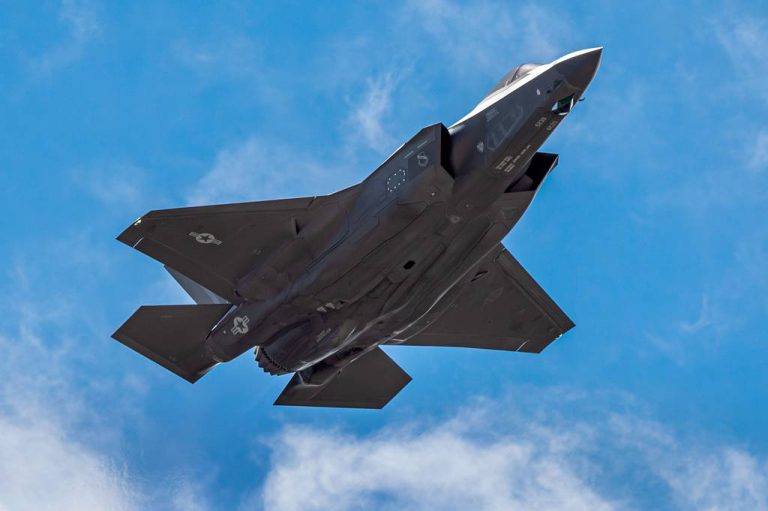
Pentagon to halt upgraded F-35 deliveries in July amid software woes

0

WASHINGTON — The Defense Department will stop accepting some newly built F-35 Joint Strike Fighters beginning next month as delays in upgrading the fighter drag on.

The planned delivery halt of new fighters loaded with Technology Refresh 3 hardware means manufacturer Lockheed Martin may have to store dozens of the planes at its main factory in Fort Worth, Texas, for much of the rest of the year, and perhaps into spring 2024.

The F-35′s Technology Refresh 3 effort — a slate of improvements that aim to give the fighter better displays, computer memory and processing power — was originally due this past April. TR-3 is necessary before the F-35 can receive a more expansive modernization known as Block 4, which will allow the fighter to carry more long-range precision weapons, improve its electronic warfare capability and provide better target recognition.

The TR-3 schedule has slipped considerably, and the F-35 Joint Program Office is now expecting it to arrive no early than this December — and perhaps as late as April 2024, a full year behind schedule.

The F-35 Joint Program Office said in a statement to Defense News that the TR-3 delays will in turn disrupt deliveries, causing new fighters to have to be stored in the meantime.

“Starting later this summer, F-35 aircraft coming off the production line with TR-3 hardware will not be accepted until relevant combat capability is validated in accordance with our users’ expectations,” JPO spokesman Russ Goemaere said in an email. “The JPO and Lockheed Martin will ensure these aircraft are safely and securely stored until [acceptance] occurs.”

Breaking Defense first reported the Defense Department’s plan to not accept new F-35s.

Lockheed is now building F-35s with TR-3 hardware installed, and the first such fighter is expected to come off the production line by the end of July, Goemaere said.

The challenge lies in the TR-3 software and getting the programming to work with the new hardware., he said.

In March, F-35 program executive officer Lt. Gen. Michael Schmidt told the House Armed Services subcommittee on tactical air and land forces that the development of TR-3′s hardware had lagged behind and its production started slow, but that it had improved and became reliable.

Software integration, Schmidt said, began late and was proving difficult.

The JPO on Monday said the Defense Department will continue to accept deliveries of fighters with the previous hardware and software known as Technology Refresh 2.

“The government and industry team will continue to work this issue until full resolution is achieved,” Goemaere said.

Lockheed said it remains committed to delivering the first TR-3-enabled F-35 this year.

“Our team is fully dedicated to delivering TR-3 F-35 aircraft and will continue to work with the JPO on software development while maintaining the highest levels of safety and quality,” the company said in a statement to Defense News. “We continue to deliver aircraft in the TR-2 configuration as planned.”

CEO Jim Taiclet this year downplayed the potential for the problems to affect F-35 deliveries. In an April earnings call, after the TR-3 delays were acknowledged to lawmakers, he said the company expected deliveries to be lower than anticipated, but said they would be a “fraction” of total Lockheed’s total deliveries and would have “little to no” effect on the company’s aeronautics revenue.

If the problem is not resolved by the end of the year, perhaps dozens of new F-35s could be undelivered by the end of the year.

Lockheed Martin said in an email to Defense News that it is too early to say how many fighters might be affected, and the company did not say how many F-35s with TR-3 hardware it expects to build this year. The company originally planned to deliver between 147 and 153 total fighters in 2023.

Lockheed on Monday said that it has so far delivered more than 45 F-35s this year, with about 50 more TR-2 F-35s now under construction.

This will be the third time in less than a year that F-35 deliveries have been halted. In September 2022, the Pentagon announced that it had temporarily halted F-35 deliveries after the discovery of a Chinese-sourced alloy had for years been used to make a key magnet in the fighter. Those deliveries resumed in October 2022 after the Pentagon decided the Chinese material did not pose a danger to security or flight safety and issued a waiver.

Pre-delivery acceptance flights were also halted in December, which had the effect of also halting deliveries, due to an engine vibration problem that led to a Dec. 15 mishap involving an F-35B. After a fix was put in place that allowed Lockheed Martin to resume acceptance flights, the Defense Department once again began accepting new F-35s.

In the March hearing, subcommittee chairman Rep. Rob Wittman, R-Va., called the TR-3 delays “unacceptable,” and said it would hurt Air Force squadrons that need the new fighters to replace older, retiring aircraft.

Wittman also quoted an unnamed Air Force official who said of the F-35, “We currently are paying for a great capability, but we’re currently only getting a good capability fielded.”

Stephen Losey is the air warfare reporter for Defense News. He previously covered leadership and personnel issues at Air Force Times, and the Pentagon, special operations and air warfare at Military.com. He has traveled to the Middle East to cover U.S. Air Force operations.

US Air Force would get A-10, F-15 retirements in draft NDAA

0

WASHINGTON — The Air Force would be allowed to retire 42 A-10 Warthog attack planes in 2024 as part of a proposed version of the House’s fiscal 2024 National Defense Authorization Act.

But if the bill, HR 2670, becomes law, the Air Force wouldn’t be able to cut any more until it shows lawmakers a plan on how it would conduct close air support missions.

This proposal, included in a draft of the NDAA released Monday by the House Armed Services Committee’s tactical air and land forces panel, would leave the service with 218 A-10s. This would fully grant the request the Air Force made in its FY24 budget proposal in March.

For years, lawmakers and the Air Force butted heads over the fate of the A-10. The service repeatedly argued the rugged attack plane — frequently called upon for close air support missions in Iraq and Afghanistan during the wars there — would be too vulnerable to survive in a high-end fight. The Air Force repeatedly asked Congress to allow it to start retiring A-10s, arguing airmen and resources used to keep those planes flying would be better used on newer, more survivable aircraft.

But lawmakers always rejected the Air Force’s request — until last year, when Congress agreed to allow the service to start retiring the first 21 A-10s in 2023. The House’s latest proposal suggests that retirement effort will continue.

This proposed NDAA would also put conditions in place before the Air Force can cut A-10s beyond the 218 count. Under the bill, the service would have to send lawmakers a plan for conducting close air support missions, as well as airborne forward air controller and combat search and rescue missions, including spelling out how many units and aircrews would be needed to conduct those missions. Further A-10 cuts could then come six months later.

The NDAA would also grant the Air Force’s request to retire 57 F-15C and F-15D fighters, some of which are four decades old and reaching the end of their lives.

But lawmakers want to see more information from the Air Force and Navy on their own Next Generation Air Dominance and drone wingman programs.

The proposed language would require the services to send progress reports on the development and technology maturation of these programs. This would include price tags, such as how much an individual aircraft would cost to fly per year and per flight hour.

And the proposed bill would set limits on how much the services could spend on each category of drone wingmen aircraft.

The bill’s proposed language would also require the Pentagon to declare the F-35 Joint Strike Fighter program’s development of software for its Block 4 modernization effort, called Continuous Capability Development and Delivery, as a major subprogram of the fighter’s acquisition program. It would also require the F-35′s program executive officer to designate and build six F-35s to serve as developmental testing and evaluation aircraft to support the program’s future testing.

Stephen Losey is the air warfare reporter for Defense News. He previously covered leadership and personnel issues at Air Force Times, and the Pentagon, special operations and air warfare at Military.com. He has traveled to the Middle East to cover U.S. Air Force operations.

Russian Torture Test of Russian Arms

0

Russian Gun Torture Featuring Real Russians – GAT Daily (Guns Ammo Tactical)

Russian Gun Torture Featuring Real Russians

AK TR3: EXTREME TORTURE TEST

By
Keith Finch
–
October 23, 2020

The Kalashnikov Group puts out some entertaining shorts and informative videos highlighting various wild and weird AK things. Vladimir Onokoy and their media creative team do a very good job and have even made cross collaboration with 9-Hole Review.

The AK TR3 is the civilian AK-12 and it was released in Russia in 2019. The AK-12 is a nicely re-modernized take on the AK-74M for the ancillary accessories of the 21st Century.

It sounds like, if I am reading this correctly, Russian firearm laws are somewhere around Illinois/California levels of hassle but Russians can purchase firearm with the easiest to acquire seeming to be ‘smoothbore’ shotguns. If I am reading this correctly purchasers of rifles must have a documented history with smoothbore shotguns first with no violations on their records before they can purchase rifles, rifles seem to be treated as more dangerous based on range and munitions similar to several US domestic game and hunting laws. Semi-automatics seem to be limited to 10 rounds unless the individual possesses the license for ‘service’ grade weaponry based on their job.

I am assuming that getting a ‘service’ grade AK instead of a civilian limited one is a process similar to that of the NFA and/or getting an FFL where it sounds more prohibitive than it actually is and it for the most part is just paperwork and documentation so that if something goes “wrong” and injury or death occurs accidentally or as a deliberate act of assault that the government is exposed to minimal liability.

I am tickled to find that the Russians have an actual Federal awards procedure for firearms given by the government and it sounds like the local issuing authority will basically license whatever was awarded based on the fact it was awarded without much fuss unless it’s select-fire or the individual is a prohibited person.

They have a training requirement similar to a concealed carry class or a hunter safety course with a duration of six and a half hours followed by standardized testing for their five year license. Limits of ten, and five of a single type of firearm are imposed.

This is a neat little weekend deep dive. Russians are proud of their AKs. They have a right to be, it is a fine series of firearms made by a genius Russian Tanker and inspired by a legendary Canadian-American, John Garand.

This makes AKs something both Russians and Americans can enjoy with pride.


Facebook


NATO’s largest-ever air defense exercise starts in Germany

0

BERLIN — An air deployment exercise billed as the biggest in NATO’s history and hosted by Germany got underway on Monday.

The Air Defender 2023 exercise that is set to run through June 23 was long-planned but serves to showcase the alliance’s capabilities amid high tensions with Russia.

The first planes took off on Monday morning from airfields in northern Germany. Some 10,000 participants and 250 aircraft from 25 nations will respond to a simulated attack on a NATO member. The United States alone is sending 2,000 U.S. Air National Guard personnel and about 100 aircraft.

“The exercise is a signal — a signal above all to us, a signal to us, the NATO countries, but also to our population that we are in a position to react very quickly … that we would be able to defend the alliance in case of attack,” German air force chief Lt. Gen. Ingo Gerhartz told ZDF television.

Gerhartz said he proposed the exercise in 2018, reasoning that Russia’s annexation of Crimea underlined the need to be able to defend NATO.

Russia’s invasion of Ukraine in February 2022 has jolted NATO into preparing in earnest for the possibility of an attack on its territory. Sweden, which is hoping to join the alliance, and Japan are also taking part in the exercise.

Assessments of the extent to which the exercise will disrupt civilian flights have varied widely. Matthias Maas, the head of a German air traffic controllers’ union, GdF, has said that it “will of course have massive effects on the operation of civilian aviation.”

Gerhartz disputed that. He said that Germany’s air traffic control authority has worked with the air force to keep disruption “as small as possible.” He noted that the exercise is limited to three areas which won’t all be used at the same time, and that it will be over before school vacations start in any German state.

“I hope that there we will be no cancellations; there may be delays in the order of minutes here and there,” he said, insisting that a study cited by the air traffic controllers’ union assumes a worst-case scenario in bad weather in which the military wouldn’t fly anyway.

Industry eyes Ukraine war to sharpen proposals for NATO helo fleet

0

STUTTGART, Germany, and ROME — As some NATO nations go to the drawing board for a new military helicopter, manufacturers are studying Russia’s war in Ukraine for clues about features and tactics that would give their designs an edge.

Western leaders have put a premium on conventional ground warfare and related capabilities since Russian President Vladimir Putin launched the invasion in February 2022. For the rotorcraft world, the battles raging around the country have demonstrated how it’s not only the aircraft themselves that are a deciding factor in war, but also commanders’ tactical choices in employing them.

Both Russia and Ukraine fly the 1960s-era Mil Mi-8 helicopters over the Ukrainian battlefield, albeit in very different ways, said Stefan Thomé, the executive vice president of engineering and the chief technical officer for Airbus Helicopters, as well as CEO of the firm’s German arm.

Russian troops have operated their aircraft during the daytime at high altitudes, giving Ukrainian defenders an easy target, he told Defense News. Meanwhile, Ukrainian pilots have flown the same type, but largely at night or at dawn, at low altitudes and always with natural coverage nearby.

“One of the lessons out of Ukraine for everybody is that the way you operate your systems, your weapons, your vehicle, can be more decisive than the vehicle itself,” Thomé said. “Given two identical vehicles, the operational concept makes the difference.”

Since the war in Ukraine began, Airbus has seen client nations reassess operational concepts, envisioning novel ways of using existing and planned equipment to maximum effect, Thomé added. And as Europe looks to refresh its military helicopter capabilities in the next decade, lessons learned from the war are bound to make their way into industry proposals, he noted.

Several NATO members are in the early phases of developing a new multirole helicopter by 2035. The planned Next Generation Rotorcraft Capability, or NGRC, is meant to assist allies in missions that include insertion and extraction of special operations forces, and transporting small- and medium-sized cargo and troops on the battlefield. It could also be used for medical evacuation, search and rescue operations, and anti-submarine warfare.

Six nations signed a memorandum of understanding in June 2022 during the biennial Eurosatory conference in Paris. France, Germany, Greece, Italy, the Netherlands and the United Kingdom then agreed to contribute about $28 million collectively to develop joint concepts for the new rotorcraft. Canada is expected to join the project in June, a NATO spokesperson told Defense News.

So far, the NGRC group has planned a handful of concept studies. One or two of those studies will be awarded this year, focusing on novel power plant solutions and open-system architecture.

Alliance officials have already talked with European helicopter manufacturers in these early days of honing requirements, including Airbus. Thomé called it a “significant” initiative that could potentially emerge with multiple capabilities.

Program stakeholders have largely come together to agree on the size of the next allied helicopter, he noted. NATO documents show a desire for the new aircraft to have an unrefueled range of more than 1,650 kilometers (1,025 miles), eight hours of endurance and a load capacity between 10,000 and 17,000 kilograms (22,000 and 37,500 pounds).

Requirements for connectivity and in-field maintainability are two more elements that appear to be settled, Thomé said.

Other features under discussion include the ability to operate or connect with other crewed or unmanned vehicles as well as real-time decision-making tools for pilots as part of an avionics suite or communication systems, he added.

The United States is not participating in the NGRC effort per se, the alliance spokesperson told Defense News, “but as a NATO member with a very solid experience in innovative rotorcraft, we maintain communication channels to share feedback.”

A trans-Atlantic tech rift?

If European partners of NATO drag their feet for too long, that could exacerbate what some analysts believe is a growing trans-Atlantic disparity on vertical flight technology. Complicating matters is the fact that there are several projects aimed at roughly the same capability.

European Union officials recently announced their own dedicated helicopter effort as part of the bloc’s Permanent Structured Cooperation defense-cooperation scheme. France will lead the Next Generation Medium Helicopter program that also involves Italy, Finland and Spain, which will work on new platforms and upgrade existing types like the NH90.

The program will “ensure the availability and suitability of EU helicopter fleets until 2040,″ the EU said, as well as feeding into the bloc’s existing Next Generation Rotorcraft Technologies program.

“The U.S. has invested in [next-generation helicopter technology] and identified the quantum leap it wants to take, none of which Europe has done yet,” said Alessandro Marrone, head of the defense program at the Rome-based think tank IAI. “Europe has important decisions to make, and waiting too long will be damaging.”

One key fork in the road of future development has to do with propeller setup and, as a result, the weight given to the element of agility in helicopter employment scenarios.

The U.S. Army last year chose the Bell V-280 tiltrotor aircraft to replace Black Hawks in the Future Long Range Assault Aircraft program, or FLRAA, rejecting Sikorsky’s Defiant X coaxial rotor proposal.

The Army hasn’t chosen a platform for its Future Attack Reconnaissance Aircraft program, but any decision in such a large American program would likely shape Western technology choices writ large. “The U.S. programs are the elephant in the room in Europe when it comes to the debate over future helicopters,” Marrone said.

Meanwhile, the U.S. decision to reject Sikorsky’s proposal raised eyebrows in Italy where generals and defense budget officials had come out in firm favor of the technology.

Italy’s coaxial conundrum

Last year, before the U.S. Army’s FLRAA decision, Italian Air Force chief Gen. Luca Goretti urged Italy to partner with Sikorsky and its parent company Lockheed Martin on coaxial rotor helicopters. That type of system features two rotors turning in opposite directions, and pusher propellers that increase speed.

He said the Italian Air Force needed the type, citing his concern that Bell’s tiltrotor solution would come with a large maintenance bill.

The Italian 2022 defense budget included initial funding for a Next Generation Fast Helicopter program “based on advanced and potentially disruptive technology, for example coaxial rotors and pusher propellors.” The program is due to receive €129 million (U.S. $138 million) in funding by 2032, the budget plan states.

To dispel any doubt as to which of the rival American FLRAA candidates the Defence Ministry preferred, the document features an illustration of Sikorsky’s helicopter.

But following the FLRAA defeat, enthusiasm for that specific Sikorsky technology is wavering, according to a source with knowledge of the ministry’s discussions.

“Additionally, the U.S. Army explanation of why it rejected Sikorsky was very critical, almost suggesting the firm was unreliable,” the source told Defense News on the condition of anonymity to discuss internal deliberations.

Insiders in Italy have meanwhile said local company Leonardo was less enthusiastic about the coaxial solution than Italian generals, even though the business was asked by the government to team up with Lockheed Martin on the technology.

The reticence was linked to fears that focusing on coaxial technology could drain funds from Leonardo’s existing development of the conventional AW249, a replacement for its AW129 combat helicopter and of its AW609 tiltrotor.

A Leonardo spokesman recently said the firm had first conducted a study of coaxial technology with Lockheed Martin in 2021 at the request of the Italian Defence Ministry, adding that in “the last few weeks” the ministry had asked Leonardo to undertake “a second phase study based on operational needs of the various services.”

Asked what predictions Leonardo had for future helicopters, the firm said it saw a role for today’s conventional technologies.

“In the nearer future we see greater capabilities incrementally introduced on existing conventional models, or a mix of latest-generation, dual-use and specialized platforms entering the market,” the company said in a statement to Defense News.

Those capabilities would include greater network-centric features, advanced avionics, manned-unmanned teaming and more autonomy.

“In the longer term, even with disruptive solutions and architectures gradually expected to enter the inventories, conventional but ‘smarter’ helicopters will still have a significant role for decades,” Leonardo said.

There is still, however, plenty of opportunity for new “revolutionary” models, according to the company, primarily for delivering higher speeds and longer ranges.

Vivienne Machi is a reporter based in Stuttgart, Germany, contributing to Defense News’ European coverage. She previously reported for National Defense Magazine, Defense Daily, Via Satellite, Foreign Policy and the Dayton Daily News. She was named the Defence Media Awards’ best young defense journalist in 2020.

Tom Kington is the Italy correspondent for Defense News.