Grow These Native Perennials With Pharmaceutical Properties

0

Throughout the annals of history, the indigenous peoples of North America possessed an extraordinary knowledge of their surroundings, harnessing the power of the land’s diverse flora to alleviate ailments that befell them. These Native Americans, with their profound understanding of medicinal plants, forged a symbiotic relationship with the natural world around them, employing botanical remedies passed down from one generation to the next.

Native perennials with a pharmaceutical past

When European settlers arrived on American shores, they, too, recognized the inherent wisdom in these indigenous practices. Eager to adapt to their new environment, these early settlers embarked on a journey of discovery, delving into the therapeutic properties of the unfamiliar plants they encountered. In their pursuit of knowledge, they often relied on a combination of trial and error—a venture fraught with risk—and the guidance of the native inhabitants, who generously shared their herbal lore.

For centuries, this intricate tapestry of herbal wisdom continued to flourish, with each passing generation preserving and expanding upon the vast repository of knowledge surrounding the medicinal uses of native plants. Before the advent of modern medicine, these plants held a place of utmost importance in the everyday lives of the people, often cultivated in home gardens not just for their aesthetic appeal but primarily for their remarkable medicinal properties.

Despite the passage of time and the rise of alternative pharmaceutical options, several of these ancient plant species still find a cherished place in gardens across the country to this day. However, it is regrettable that many individuals remain unaware of the pivotal role these plants played in safeguarding health and facilitating healing long before the advent of conventional medicine.

Among the vast array of North American flora with medicinal potential, certain ornamental trees and shrubs stand out, boasting a range of therapeutic applications. Yet, for the purposes of this article, our focus will center on the captivating world of herbaceous perennials. These exceptional plants, which possess both historical intrigue and remarkable garden-worthiness, have captivated gardeners and enthusiasts alike throughout the ages.

It is important to note that this article does not delve into the specifics of how to utilize these plants as herbal remedies, nor does it explore their medicinal efficacy. Instead, it aims to provide a comprehensive overview, shedding light on the rich tapestry of botanical heritage and serving as a wellspring of information for those seeking to uncover the remarkable stories behind these captivating species.

Commercially marketed plants with a pharmaceutical past

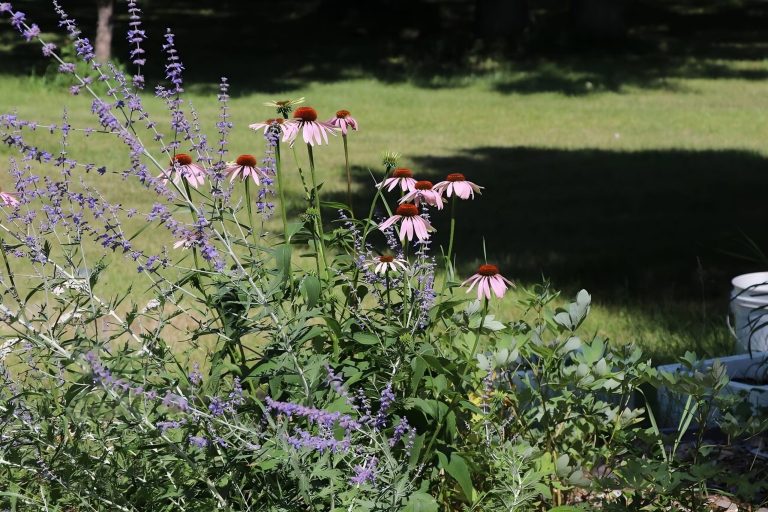
In the realm of commercially marketed herbal remedies, few can rival the popularity and extensive research surrounding medicinal native perennials, with coneflowers (Echinacea spp.) taking the spotlight. Ethnobotanical studies have unveiled the profound significance of coneflowers in the herbal traditions of numerous Native American tribes, spanning centuries of usage.

Presently, millions of individuals worldwide turn to echinacea-based products as a means to fortify their immune system or alleviate the duration and intensity of common colds.

The primary species utilized for these therapeutic purposes include the purple coneflower (E. purpurea, USDA Hardiness Zones 3–9, AHS Heat Zones 9–1), pale purple coneflower (E. pallida, Zones 3–10, 10–1), and narrow-leaf coneflower (E. angustifolia, Zones 4–9, 9–1).

Health products labeled as “echinacea” often contain extracts derived from a combination of these species. Scientific investigations have revealed that each of these plants produces a diverse array of chemicals boasting antioxidant, antimicrobial, and immune-boosting properties.

Endemic to the eastern and central regions of North America, these coneflowers are renowned for their ease of cultivation, resilience against drought, and ability to enhance the beauty of sunlit spaces. Their striking flower heads, adorned with pink-purple rays that encircle prominently raised cones, act as beacons, attracting butterflies, bees, and seed-eating birds. These splendid perennials, reaching heights of two to four feet, bestow their vibrant blooms upon the landscape throughout the entire summer season.

Another illustrious figure among the well-known and widely used medicinal native perennials is goldenseal (Hydrastis canadensis, Zones 4–9, 8–4). This plant has a rich historical legacy, particularly in addressing conditions affecting the body’s mucous membranes. For instance, Iroquois healers traditionally employed a decoction derived from goldenseal’s root to alleviate symptoms of whooping cough, diarrhea, stomach ailments, earaches, and eye irritation.

Additionally, the plant’s thick yellow rhizomes were utilized in the production of dyes. Following the plant’s exportation to Europe by early explorers, it gained popularity for its medicinal properties on the international stage.

Sadly, due to overharvesting and the loss of its natural habitat, goldenseal now faces the threat of endangerment throughout its native range, stretching from New Hampshire and Minnesota to as far south as Alabama and Georgia. However, a glimmer of hope shines through, as several reputable nurseries have undertaken the propagation and sale of goldenseal for both home gardens and commercial production.

This remarkable perennial holds a special place in woodland gardens, forming a lush groundcover adorned with large, palmately lobed leaves that rise on short stems, attaining heights of six to 12 inches. Delicate tufted flowers, tinged in white, grace the plant in spring, followed by a striking raspberry-like fruit that seems to perch upon the foliage. Optimal growth conditions for goldenseal encompass moist and moderately shady settings, with slightly acidic soil, allowing its magnificence to unfold.

Plants with a pharmaceutical past in the Mint family

Within the vast realm of native plants boasting herbal properties, a prominent family stands out—the mint family, scientifically known as Lamiaceae. These plants, united by shared characteristics such as square stems, opposite aromatic leaves, and charming two-lipped flowers arranged in clusters or whorls, hold both ornamental allure and medicinal significance.

However, caution must be exercised with species that spread through rhizomes, as their exuberance may require diligent management to prevent them from overstepping their bounds.

Among the illustrious genera within this family, Salvia emerges as a noteworthy contender, harboring several North American species renowned for their medicinal properties and aesthetic appeal. Hailing from the enchanting West Coast, the hummingbird or pitcher sage (S. spathacea, Zones 8–11, 10-7) finds its natural habitat nestled within the coastal hills of central and southern California. Indigenous peoples of the region have long utilized this sage to combat common colds and soothe throats, and scientific exploration has unveiled its wealth of antimicrobial compounds.

Gracefully reaching heights of about two feet, this resilient plant stretches its foliage to encompass a width of approximately three feet. Its spikes, adorned with magenta blooms, exuding a delightful fruity fragrance, grace the landscape from winter to summer, particularly in milder regions.

As its common name implies, the enchanting allure of hummingbirds is irresistibly drawn to these blossoms. While partial shade serves as its preferred abode, the adaptable nature of the hummingbird sage allows it to flourish even in full sunlight. Exhibiting commendable drought tolerance, a modest amount of irrigation prolongs the flowering season and ensures its evergreen presence in mild winter climates.

BORJul18

Another captivating member of the mint family, hailed for both its ornamental allure and medicinal prowess, is the pink skullcap (Scutellaria suffrutescens, Zones 6–9, 9–6). Revered by certain Native American tribes for its efficacy in treating female reproductive conditions, and employed by early settlers in their battle against nervous system disorders and inflammation, the pink skullcap has a rich heritage of healing. Recent studies conducted over the past decade have further shed light on this plant and its fellow skullcap species, identifying them as sources of potent anti-tumor compounds.

Endemic to northern Mexico, possibly extending into Texas, the pink skullcap presents itself as a low-growing perennial, punctuating the landscape with its perpetual blooms from May to November, braving both heat and drought with unwavering resilience. This vibrant beauty bestows a profusion of cherry-pink flowers upon its diminutive stature of eight inches, accompanied by a slightly broader spread, captivating all who gaze upon it.

Venturing into the realm of moisture-laden environments, the scarlet beebalm (Monarda didyma, Zones 4–10, 10–1) thrives in the verdant meadows and woodland edges that grace the landscapes of North America. Revered by various Native American tribes, including the Oswego, this remarkable member of the mint family has long been relished as a tea and utilized as a remedy for an array of afflictions, ranging from colds and stomachaches to insomnia. Its alternative moniker, Oswego tea, is a testament to its historical role as a substitute for imported tea during colonial America.

Reaching heights of two to three feet, with a graceful spread of about two feet, the scarlet beebalm adorns itself with whorls of deep pink or red flowers, captivating both bees, and hummingbirds alike, during the mid- to late-summer period. Adaptable to both sunlit and lightly shaded environments, this resilient perennial serves as a vibrant beacon of natural splendor, casting its spell upon all fortunate enough to witness its floral symphony.

The mint family’s embrace encompasses a multitude of captivating and medically significant native plants. From the enchanting allure of coneflowers to the splendid beauty of Salvia species, and the delicate charm of pink skullcap to the vibrant elegance of scarlet beebalm, these plants not only bestow ornamental grace upon their surroundings but also harbor a wealth of healing potential within their very essence.

By delving into their stories, we uncover a tapestry woven with the threads of traditional wisdom and botanical marvels, reminding us of the timeless connection between nature and well-being.

Pharmaceutical herbs for shade

pharmaceutical herbs for shade

Within the realm of North American perennials with medicinal properties, many of the plants discussed thus far have exhibited a preference for sun-drenched environments. However, a distinct group of captivating species thrives in the embrace of shade, showcasing their resilience and healing potential in woodland realms.

Embarking on a journey through the woodlands that stretch across eastern North America and extend westward to the majestic Rockies, one is greeted by an enchanting sight—the emergence of pure white flowers heralding the arrival of spring.

These delicate blooms belong to the bloodroot (Sanguinaria canadensis, Zones 3–9, 9–1), a charismatic woodland dweller. Each three-inch blossom, adorned with narrow petals that encircle a cluster of vibrant yellow stamens, graces the landscape for only a fleeting moment. However, the glossy, lobed leaves of bloodroot possess an enduring allure, captivating the eye and persisting until the arrival of autumn.

Among certain Native American tribes, bloodroot was held in high regard for its crimson sap, coveted for its diuretic, emetic, and antiseptic properties. As a close relative of poppies (Papaver spp.), bloodroot harbors opium-like alkaloids that exhibit inhibitory effects against specific bacteria. Yet, caution must be exercised, as the ingestion of large doses can prove toxic to humans, and contact with the roots may cause rashes in sensitive individuals.

Gardeners must also remain mindful of a caveat when cultivating bloodroot—the plant may undergo sudden thinning and, within a few years, even vanish entirely. This phenomenon appears most prevalent when bloodroot is grown in deep shade. Therefore, experts advise planting it in moist, well-drained soil with a slightly acidic composition within partially shaded areas.

While bloodroot can be cultivated west of the Rockies, it presents certain challenges. The plant thrives poorly in the company of firs, redwoods, or pines but flourishes magnificently beneath the sheltering canopy of maples, fruit trees, oaks, and other hardwoods.

Under ideal conditions, bloodroot gradually extends its reach through rhizomes, forming a neatly arranged groundcover standing approximately one foot tall and spanning a width proportional to its stature.

Venturing further into the realm of shaded gardens, we encounter the Western wild ginger (Asarum caudatum, Zones 5–8, 8–5), an alluring groundcover with a rich historical legacy of medicinal use. Revered for its infection-fighting properties and wound-cleansing abilities, this woodland wildflower boasts a remarkable tale from the annals of the Voyage of Discovery. Meriwether Lewis chronicled how the pounded roots and leaves of wild ginger (A. caudatum) provided immense relief to an expedition member suffering from a swollen and inflamed leg wound.

Nestled within the redwood and pine forests spanning from British Columbia to California and western Montana, the Western wild ginger stands adorned with shiny, evergreen, heart-shaped leaves. Late winter and early spring grace this captivating plant with purple-brown flowers, distinguished by their elongated tails. Every part of this remarkable species exudes a distinct ginger fragrance, adding an olfactory charm to its captivating presence.

Its slightly taller counterpart, the Canadian wild ginger (A. canadense, Zones 3–8, 8–1), commands attention with its stature ranging from six to eight inches. Flourishing amidst rich woodlands stretching from New Brunswick and Alberta, southward to the realms of Georgia and Louisiana, this species has been employed in the treatment of respiratory and digestive ailments. While it hosts an array of antimicrobial compounds, it also produces a potentially carcinogenic chemical, thus rendering ingestion of any part of the plant inadvisable.

Nonetheless, the Canadian wild ginger unfolds as a carefree groundcover within the realms of woodland gardens, harmoniously coexisting with mayapples, goldenseal, and native ferns. Thriving in moist soil and seeking solace in the dappled shade, this deciduous spreader adorns woodland landscapes, even in partially sunny locations beneath the nurturing presence of garden phlox.

Amidst the tapestry of North American woodlands, another shade-dwelling luminary reveals itself—the false Solomon’s seal (Maianthemum racemosum syn. Smilacina racemosa, Zones 4–9, 9–1). Considered a veritable panacea, this enchanting species has captured the attention of the Native Medicinal Plant Research Program at the University of Kansas in Lawrence.

Among the 922 plant species documented in the program’s Prairie Ethnobotany Database, false Solomon’s seal stands tall, revered among the ten species with the most extensive range of medicinal applications, as recounted by over 250 Native American tribes. From constipation and coughs to rheumatism, stomachaches, and headaches, its repertoire of healing potential spans an impressive spectrum of ailments.

Standing proudly at heights ranging from one to three feet, false Solomon’s seal spreads its rhizomes, gradually forming substantial clumps. Its arching stems, adorned with light green leaves that metamorphose into a golden hue during fall, command attention. Clusters of petite, fragrant, creamy white flowers grace the ends of these resilient stems, adorning the woodland landscape from mid to late spring. As the seasons progress, the flowers give way to green berries that gradually mature into a vibrant red, adding an exquisite touch of color to nature’s harmonious palette.

Thus, the shade-loving perennials of North America unfold as an enchanting ensemble, defying the notion that sunlight alone is the gateway to vitality. From the ethereal blooms of bloodroot to the intricate beauty of Western and Canadian wild ginger, and the panacea-like qualities of false Solomon’s seal, these resilient species beckon us to explore the hidden realms of woodland gardens. Within their nurturing embrace, they offer both solace and healing, a testament to the remarkable diversity of nature’s pharmacy, concealed beneath the verdant canopy of shade.

Looking beyond their beauty

lbor12The assortment of plants showcased in this collection serves as a reminder that native perennials encompass depths beyond their aesthetically pleasing exteriors. Even the most captivating species, now embraced in gardens worldwide, possess rich histories woven with the medicinal practices of Native Americans and other cultures. In addition to their undeniable allure, these plants infuse our gardens with a cultural essence.

Although scientists have only begun to explore their vast pharmaceutical potential, for gardeners, these plants forge a profound connection to the generations past who have nurtured the flora of this bountiful land.

Useful resources to check out:

The five best herbal antibiotics you should use

Knowledge to survive any medical crisis situation during a major disaster

Top five plants for urban foraging

A few survival food recipes everyone needs to learn

Tom Hanks is a traitor to the United States

0

Tom Hanks is a traitor to the United States. He should be hanged, drawn and quartered.

He comes out with this “How to rig an election” excuse for a movie, and hides behind the thin veil of the historic 1876 election, when we know damn well that he’s talking about the 2024 election, due to the timing of the upcoming election:

https://www.washingtonpost.com/wash…conversation-with-tom-hanks-jeffery-robinson/

We know what he’s doing. He’s a snake and a coward, and frankly, a shitty actor. He doesn’t know how to act. He just plays himself in every role. He is totally fake and a useless human being. A pawn for the Globalist system that will take down America. He only hopes to be a member of royalty when it all comes crashing down. He’s kissing Globalist ass to the best of his ability.


Now here's an idea….

0

Remember my statement on the thread for starting plants, when I said to use whatever you've got on hand, that works? Well, here's an idea, if you happen to have one of the Walton family's big box stores nearby!
Walmart has these small white plastic trash cans for sale (in store and online) for 98 cents. They are 1.5 gallon capacity….approximately the same as a 10" pot…..and the plastic is a recyclable #5. For those not in the know, that is food grade plastic (same # as the "to go" box I…

Now here's an idea….

European forces flex their Indo-Pacific reach

0

STUTTGART, Germany — For decades France served as the European Union’s main representative in the Indo-Pacific, and as the sole member to maintain regional territories, conducting two to three deployments per year.

But in the past two years, the number of allies and partners stretching their ability to launch long-distance, rapid deployments and maintain operational capacity in the area has increased.

Both Germany and the Netherlands first deployed military vessels to the region in 2021 following the EU’s release of its first Indo-Pacific strategy. The Dutch frigate HNLMS Evertsen deployed for seven months as part of a British carrier strike group led by the aircraft carrier Queen Elizabeth. The Dutch also participated in several exercises with Singapore, Japan and the U.S. Navy during that time, as outlined in a March 2023 report from the Hague Center for Strategic Studies think tank.

Germany published its first Indo-Pacific strategy in 2020, with a focus on security and defense, and has asserted itself since then with various services visiting the region each year.

“Today the Indo-Pacific is the most strategically important region on Earth,” German Defence Minister Boris Pistorius said in a recent statement. “Important decisions about freedom, peace and prosperity in the world are made here. Germany is also directly affected by this.”

The German Navy frigate Bayern spent six months sailing around the Horn of Africa, across the seas to Australia and Japan. Last year, the German Air Force sent six Eurofighters, alongside tankers and transport aircraft, tasked with reaching Singapore within 24 hours under the moniker “Pacific Readiness.” German Air Force assets also participated in Australia’s Pitch Black exercise during the deployment.

This year, it will be the German Army that heads to the Pacific, as the service will participate in Australia’s Talisman Sabre exercise, taking place July 22-Aug. 4. The combined exercise will also include German naval and air warfare platforms, a spokesperson for the Defence Ministry told Defense News.

“The German exercise participation in Talisman Sabre 2023 offers a very good opportunity to practice interoperability in a high-intensity battle with land, air and sea forces and to send a clear signal of Germany’s solidarity and willingness to cooperate with the value partners in the region,” the spokesperson said in an email.

Next year, the German Navy is expected to send another frigate to the region, this time with a supply ship. In addition, the Air Force may partake in a trinational air deployment between Germany, France and Spain, an Air Force spokesperson told Defense News. As the three nations participating in the next-generation Future Combat Air System program, the deployment would serve as a joint message of solidarity with partners in the Indo-Pacific region, the spokesperson added.

As of this article’s writing, no plan for this joint deployment is finalized, but the hope is to have the three nations sign a letter of intent at the Paris Air Show, taking place June 19-25, per the spokesperson.

Meanwhile, Italy launched its five-month naval deployment out of La Spezia Naval Base to the Indo-Pacific region in early April, as reported by Naval News. The crew of the second Thaon di Revel-class offshore patrol vessel Francesco Morosini will call in 15 ports of 14 countries, and is also participating in several regional operations. This deployment marks the first operational mission assigned to the ship and its crew, and is the first time the vessel will operate out of the Mediterranean basin, serving as a test of its ability to perform a long-distance deployment.

The British Royal Navy will deploy a carrier strike group to the Indo-Pacific in 2025, Prime Minister Rishi Sunak announced on the eve of the annual G7 summit meeting in May, held this year in Hiroshima, Japan. The news came as Sunak and his Japanese counterpart, Fumio Kishida, signed the Hiroshima Accord, which entails commitments for closer economic, defense, security and technological collaboration.

The deployment will be the second to the region for Britain’s aircraft carrier Queen Elizabeth, and the strike group will include naval escorts and F-35 fighter jets partnering with the Japan Self-Defense Forces and other regional partners.

EU aspirations

Alongside individual member nations’ initiatives, the European Union has taken steps to strengthen its security posture in the Indo-Pacific region.

Security there was one of three main topic areas at the second annual EU Indo-Pacific Ministerial Forum, held May 13 in Stockholm, Sweden. About 60 ministerial-level officials from both regions were in attendance, sending a signal that the EU “is realizing that we have a global theater where different regional challenges are interconnected, and we have, therefore, also to have a global approach in cooperating with partners across the globe,” a senior EU official said prior to the forum.

While the official cited maritime domain awareness as a particular defense and security initiative, the individual also described new instruments meant to tackle “significant cyberthreats” in the region, as well as “foreign information manipulation.”

The EU has developed maritime domain awareness through two lines of effort, said Frederic Grare, a senior policy fellow with the European Council on Foreign Relations’ Asia program.

This includes the Critical Maritime Routes Indo-Pacific project series, launched in 2015 as a capability-building exercise built around maritime domain awareness via the Indo Pacific Regional Information Sharing platform. The flagship initiative was built for maritime coordination and communications, coupled with extensive training programs on maritime data processing in the region, per the EU.

The second is the creation of a coordinated maritime presence in the Indian Ocean via joint patrols, exercises and joint port calls, which Grare described as an “embryonic” effort put forth in February 2022 just as the Russian invasion of Ukraine began.

“We are in very, very early phases of implementation, and it’s going to take time before anything really happens on the ground,” Grare said.

Observers and analysts say it’s too early to judge the extent of the EU’s defense and security involvement in the region. Indeed, the Hague Center report noted that as the EU does not operate the equivalent of the U.S. Navy’s 7th Fleet based in Japan, “it seems obvious that in case of an open conflict, its role may be close to negligible.”

Many of the EU members’ navies are more structured for littoral and coastal defense, rather than expeditionary warfare, analysts said.

However, the reported added, the bloc’s expertise in crisis management, international maritime law, maritime domain awareness and multilateral cooperation toward piracy, crime, migration and illegal fishing helps address real-world regional needs.

“Capacity building in the above issue-areas constitutes the bulk of European efforts and main contribution to regional maritime security. The naval presence may be the proverbial ‘cherry on top,’ whose main purpose is to add visibility and credibility to its engagement,” the report stated.

Another challenge area lies in the EU’s efforts to pursue something of an intermediary approach between the United States and China. This is, however, becoming increasingly difficult to navigate in the era of great power competition, said Ben Schreer, executive director of the International Institute for Strategic Studies’ Europe office in Berlin.

While members of the G7 expressed strong convergence in pushing back against many of Beijing’s approaches to the war in Ukraine, tension with Taiwan, and economic coercion following their annual meeting in May, the repeated emphasis on “de-risking, not de-coupling” reflected the EU’s approach to China, as well as that of major member nations like France and Germany.

These middle-man approaches run the risk of undermining the more constructive efforts at the military level, noted Schreer. France, for example, has been active in organizing joint deployments through the Indo-Pacific with the U.S. and Australia, and has sailed its own military ships through the Taiwan Strait.

But French President Emmanuel Macron’s April comments on the need to avoid being dragged into a confrontation between the U.S. and China over Taiwan has given some stakeholders in the Indo-Pacific pause, Schreer said. Macron’s comments also led to debate over whether European nations will continue to prioritize their own domestic interests in the Indo-Pacific, rather than a collaborative approach from the whole union, Schreer added.

Regional interlocutors attending IISS’ annual Shangri-La Dialogue, held in Singapore from June 2 through June 4, aren’t necessarily expecting the EU to become “a major player in defense terms,” he explained. But they will be looking at speeches from defense ministers, as well as the EU’s defense and security czar Josep Borrell, about “practical, concrete statements in terms of strengthening the defense posture.”

Vivienne Machi is a reporter based in Stuttgart, Germany, contributing to Defense News’ European coverage. She previously reported for National Defense Magazine, Defense Daily, Via Satellite, Foreign Policy and the Dayton Daily News. She was named the Defence Media Awards’ best young defense journalist in 2020.

Hello. | Survival Monkey Forums

0

  1. Hello everyone. I just joined today and I’m very glad I found this site. I was in the military for 20 years and retired from that in 2001. However I continue to work in the civilian world. I have been prepping for a little while but I am by no means an expert at being a prepper. Hoping to learn more and share as I can. I look forward to sharing ideas with everyone as well as expanding my prepping skills and preparation.


  2. BTPost
    Stumpy Old Fart,Deadman Walking, Snow Monkey
    Moderator

    Welcome to our Monkey Tree… Pick yourself out a branch and have a look around… Lots of great information in the forums… and lots of good Folks hang’en around in the tree… again welcome…


  3. Hi there, Tjb61, and WELCOME! You will find lots of prior service folks here, to include myself, did 8 years (Army) then went DoD contracting around the world supporting the services and intel community for the next 32 years. I final got back stateside eight years ago (2015), must admit that I am not too happy at what I found. Nevertheless, that’s a discussion for a different time… You will find a very good mix of folks here with lots of different skills sets. Do not be afraid to ask for assistance or even opinions as that’s the main purpose of this site, to share experience and knowledge and there’s a hell’va lot of it here. What’s was your background in the military?


  4. Welcome Tjb61. Grew up in the Army, and served active duty in the USAF. Now retired from everything except paying taxes and trying to stay healthy. Great people on this site with fountains of good info, though an occasion squirrel will sometimes join the party. Take from it what you will, and leave the rest as mildly entertaining.(y)


survivalmonkey SSL seal


survivalmonkey.com warrant canary

Using chirp to program Baofeng.

0

@Tjb61
I noticed that this is your first post here on the Monkey.
Please introduce yourself by creating a post in the thread New Member Introductions

I’m sure that our resident experts will be along shortly to help you. That said, You can use our site search to find out more about all kinds of comms.


Big F*cking Q

0

Can anyone still get the old school Nyquil anymore? The Nyquil they sell now-a-days is crap.

I've been looking around for it, and I can't find it anywhere. The methheads ruined it for me. They don't even sell it on ebay.

If you did find some dark corner of the the internet to buy it, it would probably laced with fentynal or some sh*t.

Mandela effect

0

Has anyone here heard of the Mandela effect?

The Secrets of CERN Documentary

It's really messing with my head to be honest. Everyone who is at least 40 years old remembers there being a cornucopia on the top of the Fruit of the Loom logo. Now people are saying that there never was a cornucopia on top of the Fruit of the Loom logo. How could that be?

Is this some sort of magic trick?

We all remember the cornucopia…

Mandela effect

Marines barracks bill of rights – how I see it.

0

I’ve been retired for almost a quarter century but I still get a kick out of the “new” stuff that pops up in my feed.

UNACCOMPANIED HOUSING GUARANTEES AND RESPONSIBILITIES > United States Marine Corps Flagship > Messages Display

The description of the barracks as I read through the latest Marine Corps Order on unaccompanied housing sounds like it could just as well be in the 200 area of Montford Point or in the WWIi era barracks at Fort Pickett or Camp Lejeune.

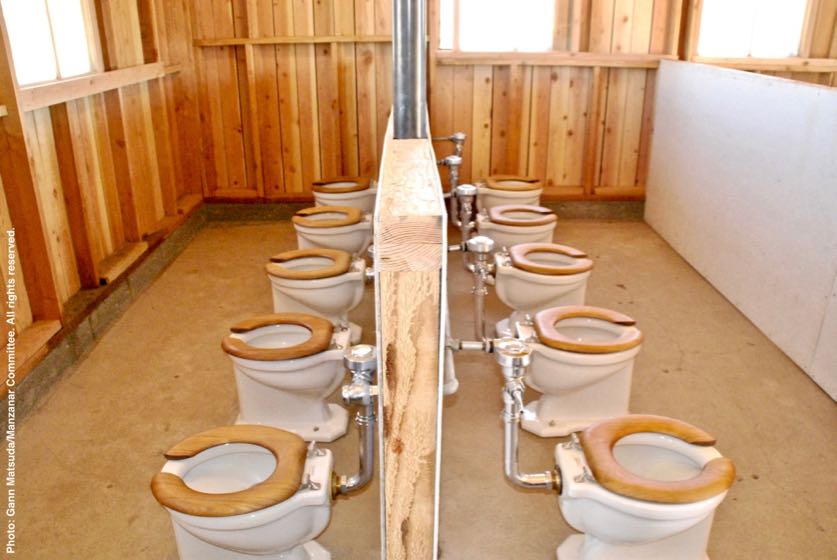
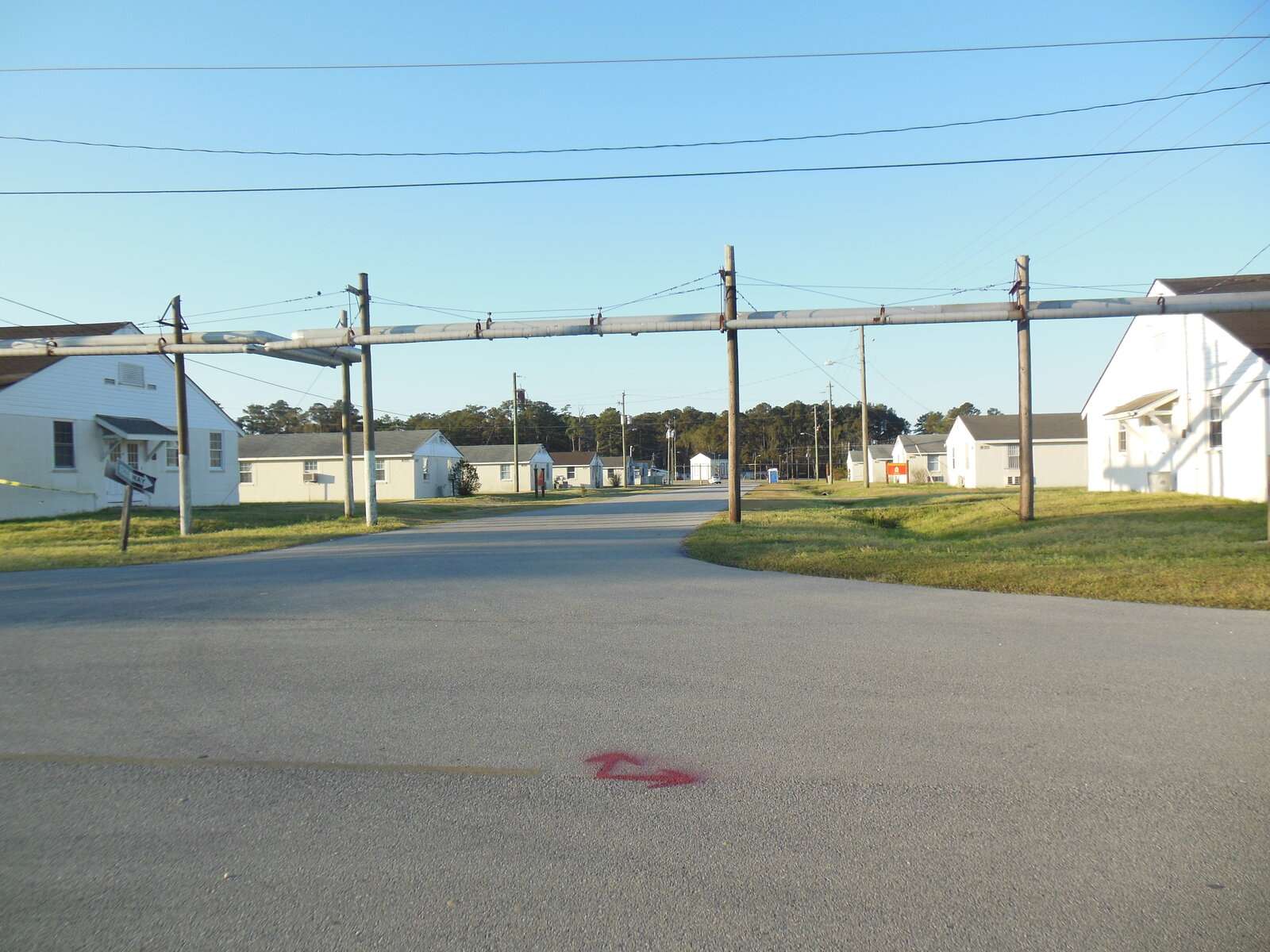
What all these barracks had in common was that they were traditional squad bay layout. Montford Point was the only one where the head was in a separate building at the end of the Company Street. Fun in the winter! This one is a National Historic Site now. A head. How about that.

Imagine running down the street in the pre-dawn darkness in a towel and flip flops…in January.

The divider is wider in the 200 Area, but the layout is the same. (I remember, because I slept on top of one of those dividers while on two-man guard duty. Falling off could be dangerous) Sinks are on the other side of the low wall. No mirrors, you should be able to shave your face without one, or use the little metal one in your shaving kit.
[​IMG]
Looking down the Company Street aboard Montford Point. Camp Geiger had the same layout. My barracks at the end of Company Street C is nothing but grass now, but I’ll never forget it. It was the closest to a mess hall as I ever managed to live.

744.JPG

The only three man rooms were for Sergeant’s and there were usually only two to four of them. Everybody else got a perfectly functional rack, wall locker and foot locker. You tied your laundry bag to the end of the rack and a towel and wash cloth that you never used had your name stamped on it. Your shoes and boots were lined up neatly under your rack, which was made, unless you were sleeping in it.

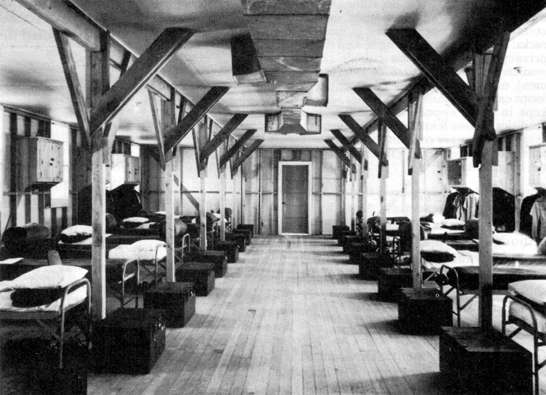
A barracks.

WWII ‘A’ barracks. Looks the same stick for stick at bases and camps all over the country. I was a Sergeant when I lived in these barracks at Fort Pickett. I was attached to Second Tank Battalion to keep their guns moving. These were originally coal heated, and had unbreakable polished metal mirrors in the head.

We had strict segregation. No, not like that. We had the NCO’s in a separate area from the non-rates. At Pickett NCO’s lived upstairs, at Lejeune and Montford Point there was a barrier of wall lockers and a sheet for a door. You had to have permission to enter NCO Country and when your business was done you got out. We had few discipline problems in the barracks. If we did they didn’t last long.

Common areas are spotless and well maintained.
They keep morale high, because the alternative to communal showers and a row of undivided shitters is helmet and wash cloth and a slit trench. Washing machines and dryers are heaven compared to a wash tub, scrub brush and clothes line.

The TV room is where you meet to socialize. It’s spotless too, because you and the fellow residents keep it that way. You even mow the grass and paint the rocks outside. The Police Sergeant takes care of assignments to these duties and makes sure you have all the tools you need.

Meals are served three times a day. After morning, noon, and evening formations you’ll march to chow so nobody misses a meal.

And with all that luxury you still get paid every two weeks. I remember I used to make $412 a month.
That’s before taxes. I didn’t know what to do with all that money, so I took Dad’s advice and enjoyed travel, good food and good drink with good company. Never brought home anything I didn’t intend to and for many years never owned more stuff than would fit in my sea bag.

We had little privacy in the squad bay, and if somebody was upset everybody would see it and after poking fun at the poor soul for a bit, would band together to find a solution. If anybody had a drinking problem we all knew about it and would join them at the club to keep them out of trouble.
We had comaraderie. It was more important to those of us who had always lived in squad bays than any bit of privacy. It seemed perfectly natural to us to share a newspaper while sitting on adjacent shitters, or pass around a roll of toilet paper.

Shitters.

Years later, when we came back to the States and got assigned rooms we had stuff we never had to deal with, or had quickly dealt with in the squad bay. Hygiene issues, drugs, depression, suicide, theft, and unauthorized absence.

This new order sounds a lot like something the Company Gunny might say. He’d keep it short, and memorable. In the end it would have exactly the same impact.

“We never promised you a rose garden.”

Semper Fi

[USMC]


This will be my 3rd attemp at making this post :)

0

LOL the first failed attempt was a Monkey Malfunction. My Attempt this morning was a power grid malfunction. LOL I was literally in the process of hitting the post button when the grid power went out. Not exactly on topic but every morning between 8:50am and 9:10am the grid power has gone out for about 45 seconds for 5 days in a row now. I called and asked the coop WTH is up with that. Long story short there is not enough electric generation to handle the morning surge when the businesses all start opening and powering up. and “If you read the last monthly news letter you would know this was going to be a issue as the temps continue to rise for the summer.” yep I actually do read the news letter and yep they do have a blurb about OCCASIONAL short power interruptions, I guess by occasional they meant daily. The next newsletter it seems will contain the blurb warning residential customers to expect occasional brownouts that will last 1-4 hours July through September.

So kind of keeping with my morning annoyance and the original post I have failed to make twice LOL. We are still living in the Krap Kave and the Kamper which in the East Half of the farm that is still 100% Grid Electric. The house building came to a grinding halt last November and had been in Stasis until 2 days ago when I started working on it again. A lot happened between November and Present. Mrs Krap survived her surgery and the removal of a lot of stuff and is doing fairly well. She resumed chemo last Monday and will have 10 Months of it due to how far the cancer had spread. This chemo is a single med 2 hour session VS the original 4 med cocktail that took 8 hours to drip in and 3 days after with the chemo ball pump……. That almost killed her. The appointmets with Doctors, Surgeons, Oncologist, and a different lab visit for scans and test are A LOT less now. And with new chemo she is only having occasional mild nausea. So I feel a lot more comfortable being out of ear shot for 3-4 hours at a time now and have the 3-4 hours without having to be somewhere to be out of earshot now. I finished up wiring the solar electric from the inverter to breaker box and hooking the generator switch in and shutting the disconnect box from the grid electric service off yesterday and also in this mornings phone call advising them to come pull their meter from that service. I ran a fairly heavy load in the house overnight last night of two big fans, a fridge, a chest freezer, two 18k btu Mini Splits and left every light in the house on. The Battery bank at sun up this morning still had 89% Capacity remaining. The generator did not kick on. I had Ed set the the generator to kick on basically when the battery bank drops to 10% capacity and set it up with a big battery charger to recharge the battery bank while at the same time providing direct power to the house. That part of it was beyond my tech level but a cake walk for Ed.

I left the house with half of the rafters up, some of the plywood wall skin on, all of the wall insulation in and 25% of the ceiling insulation rolled out and about 1/3 of the inside finish work done all together. The goal was to have it finished by the end of APril………. which obviously did not happen LOL. Now the goal is to get the Master Bedroom, my corner room office and the Bathroom finished and get Mrs Krap moved into those rooms and the Cabin emptied out so it can be moved to a new location. The biggest motivator though is the she needs constant dependable electricity for a couple of her med devices and the Grid Electric is already failing in that department and predicting themselves that they are going to be even less dependable going forward.

So I have also been working a lot with one of my lawyer friends that specializes in corporate and Estate stuff. We have been hammering out a Trust that can rule a lot longer than the typical trust can. Basically the Dead Hand can rule at most 3 generations out assuming you are old enough and crusty enough to make great grand children the trustees. BUT a Trust within a Corporation lets the dead hand rule basically forever via the bylaws and the trust. Rather than inheriting a trust my heir will become the new CEO of the Corporation. My Lawyer Friend is already the CFO and reasonably young at 45 and his daughter will take over his firm when he dies or retires and become the new CFO within my corporation. As CEO I alone rule and make all the decisions. John makes sure I don’t blow all of the money and keeps the bank accounts filled before my pockets are filled. And he gives VERY good advice and does it for next to nothing. So we are hammering out the details of the Trust and rewriting the Bylaws. The bylaws being the more PITA part of it and have to be perfect before filing them with the State to make everything iron clad. The Trust is revokeable until the time of my death and I can change anything in it so long as I am of sound mind and alive. Once I Die or go down dementia alley The Trust and Bylaws are written in stone and can never be changed again, even if the corporation is sold. We are writing the bylaws to be so conditional and restrictive that not even the most severe mental patient would buy the corporation for a dime. My primary concern here is the land and protecting it without getting the federal buffoons and their land trust involved. When I croak John’s power as CFO becomes equal to the power of the CEO in short my heir can do nothing outside of what I specify in the conditions without Johns agreement and John can’t do anything with out the new CEOs agreement. Johns primary duties however are paying the property taxes, the insurance and managing the trust bank accounts and investments. His firm is also a accounting firm on the other side of the office, that already does my corporate taxes and accounting. Side Note….. it helps greatly to make friends with the more powerful and better lawyers in you AOO because if you ever get sued it would be a conflict of interest for them to represent the person suing you, leaving them with only the pool of second rate lawyers to come after you with. It also does not hurt to have the circuit judges over for dinner now and then.

So in our hammering out the trust and bylaws John asked if the Cell Tower Leases and Crop Leases were going to be the only income going into the Trust Accounts and investments. We had talked last year about rental cabins or a campground around the lake. And that conversation petered out with the cancer coming to dominate everything. He is strongly opposed to rental anything due to liability concerns and how set ups like I was thinking explode insurance premiums.

So he owns a property very similar to mine via his father in Arkansas where it is set up like a country club with a hefty up front membership fee and a couple thousand dollar per lot lease and maintenance fee. Basically he has no liability beyond the general property liability and the lease makes the insurance and liability of the lots the responsibility of the lessee. The Membership grants the lessee rights to the features and activities and guarantees exclusive use rights to the leased site. Me Krappy Likes it. So I ran with it. His are bit pricier than mine but his are a 10 Year Membership/Lease for $40,000 up front and $2500 per year with year round exclusive use rights to a 1 acre site on a lake. Oh and no perm structures allowed tents up to portable cabins and RV are good. If a lease/membership is not renewed there is a 90 day window for the owner to remove their property. And you can be very selective and discriminatory when it comes to who can be a member of a exclusive private club.

So We drew up the contracts for leases, memberships and a couple of hold harmless agreements. My Insurance premiums went up $200 per year due to a recreational commons area. That is where my cabin is relocating to and will become member restrooms/showers, a laundry room and a kitchen after I gut it and remodel it. I am doing 6 member lease sites and had not intended to make them available until next year. I was talking to a friend and Doc while fishing about what I was up to last week and and both whipped out their check books and said sign us up! LOL stopped by the lawyers office after we were done fishing and they signed up. I had not gotten my copies from the lawyer yet to print more copies.

SO Friend A has no problem with pics so long as I distort faces and Doc does not want his or families pics used at all publicly……. Understandable. Friend used his families site last weekend and could not stop talking about how great it is here and how much better it will be as *We* build it up more. To be fair the Blonde Girl in the pic is my Mini Me, apprentice and heir and lives here with me 2 weeks being apprentice and at home 2 weeks with Mom. No she is not my daughter but I have known her since before she could walk. And no there is not and never been any relationship between me and her mother other than being very good friends. LOL Everyone always assumes she is mine and me and her mom had a wild fling……. TOTAL ASSUMPTION AND MYTH. That being said she sometimes slips and calls me dad and I consider her to be a daughter.

SO my two friends are a couple and my heir is the womans daughter. He is a 3 tour Afghan Vet and combat engineer that served his last two tours in forward bases. And is among my short list of best friends.

Doc juming on board shocked me a bit and when I questioned him about it. “Man if you have not noticed the world is turning to liquid shit around us and I want a safe place me and the family can retreat to if/when it all falls apart. And I would much rather be hanging out with a angel of death than my suburban neighbors when the time comes. And if the time doesn’t come I now have a nice place to retreat to on the weekends where no one can find me!”

So my sites are 3.67 acres each 400’x400′, the members have year round exclusive use rights to their site, and communal rights to the facilities and activities around the lake. If they want to put a big portable cabin like mine up and live on their site full time for the duration of the 10 year lease/membership they are free to. A short list of basic and common sense rules for the sites. 4 of the sites are very spread out. The Two Beach front sites are pretty much side by side. Buy in Membership is $20,000 and annual maint/lease fee is $1500 Sounds like a lot at first glance but averages out to like $250 per Month over 10 years. Current member gets first right of refusal at the end of the 10 years on renewing the lease/membership.

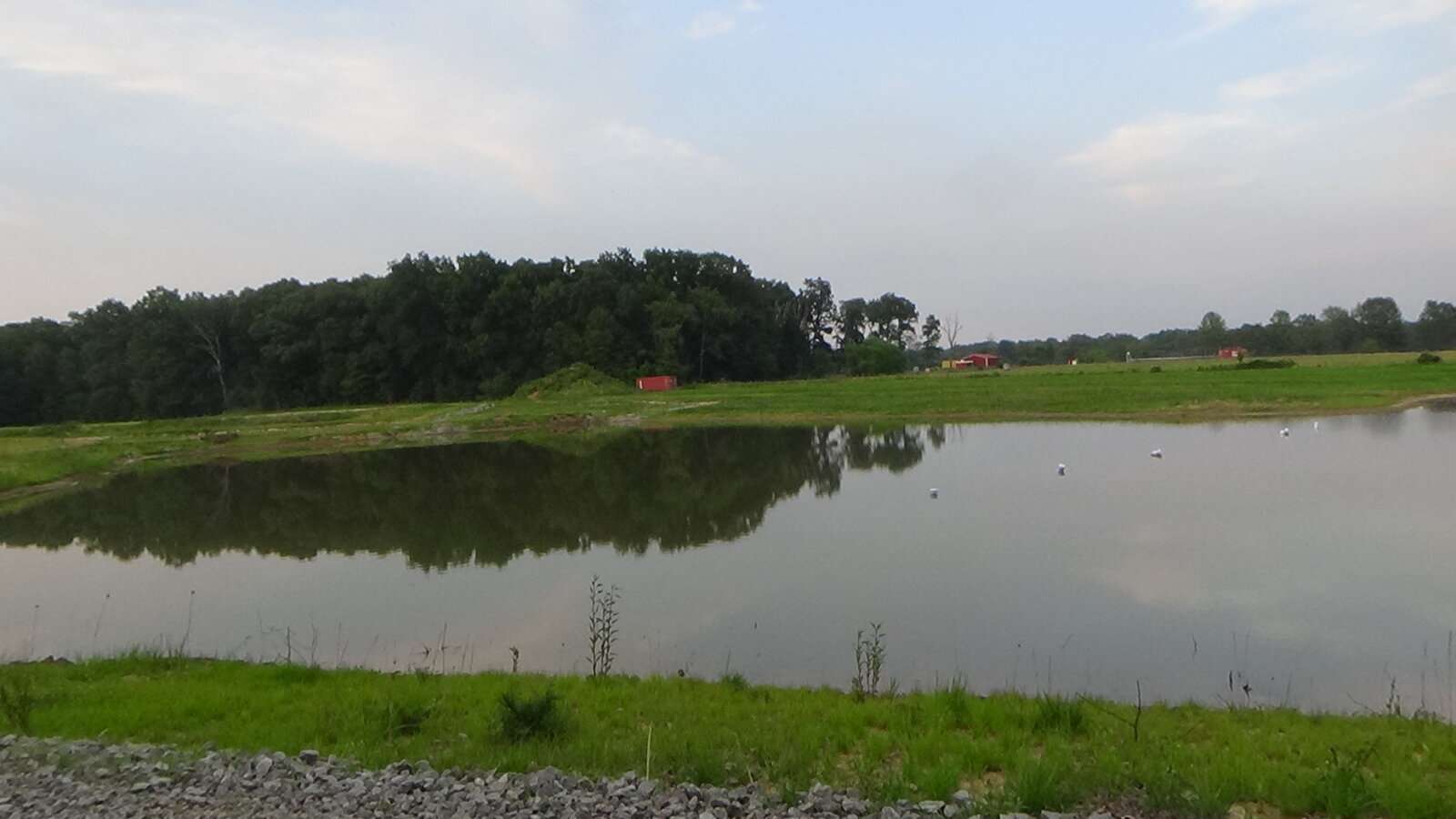
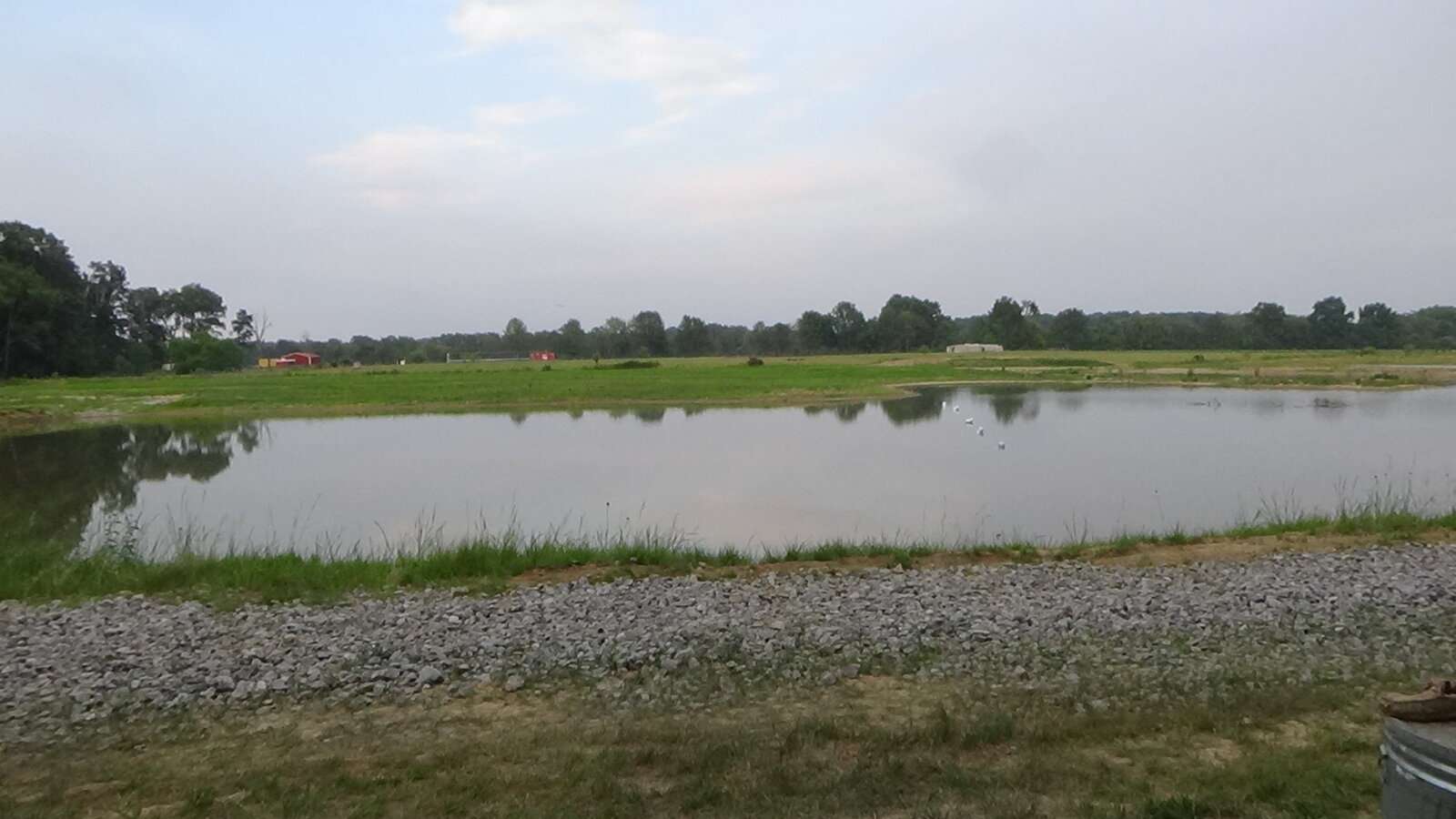
The big attraction at the moment and it got the hell used out of it by the kids and adults last weekend….. The Swimming hole. 260′ wide 370′ long and 8 feet deep on the deep side. Future beach side is a more gentle slope from 8″ deep out to the 8′ deep.
DSC00171.JPG

I have twenty 25 ton loads of coarse sand on order that my rock guy will start hauling in after he finshes planting beans and harvesting wheat.
DSC00173.JPG

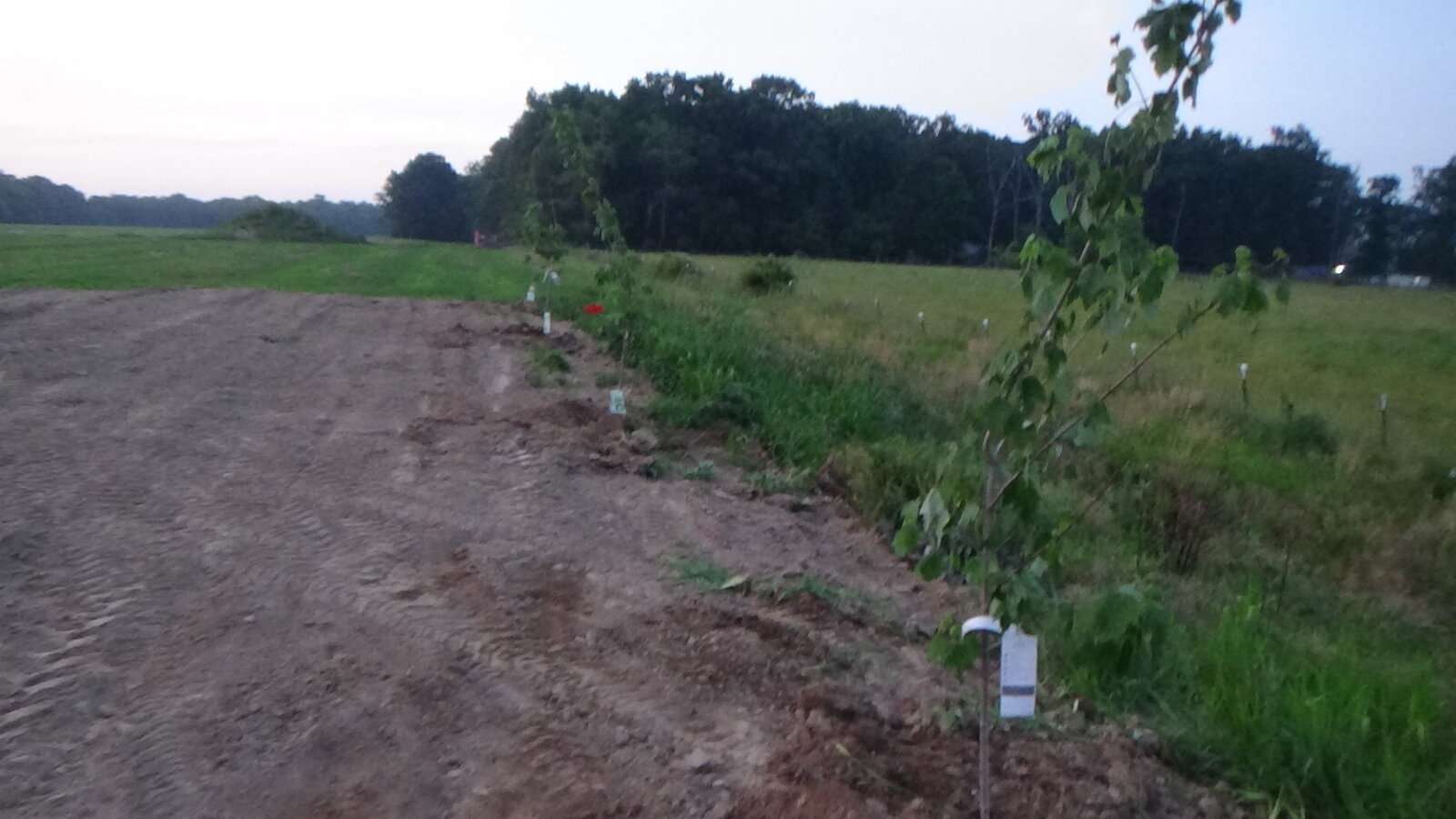
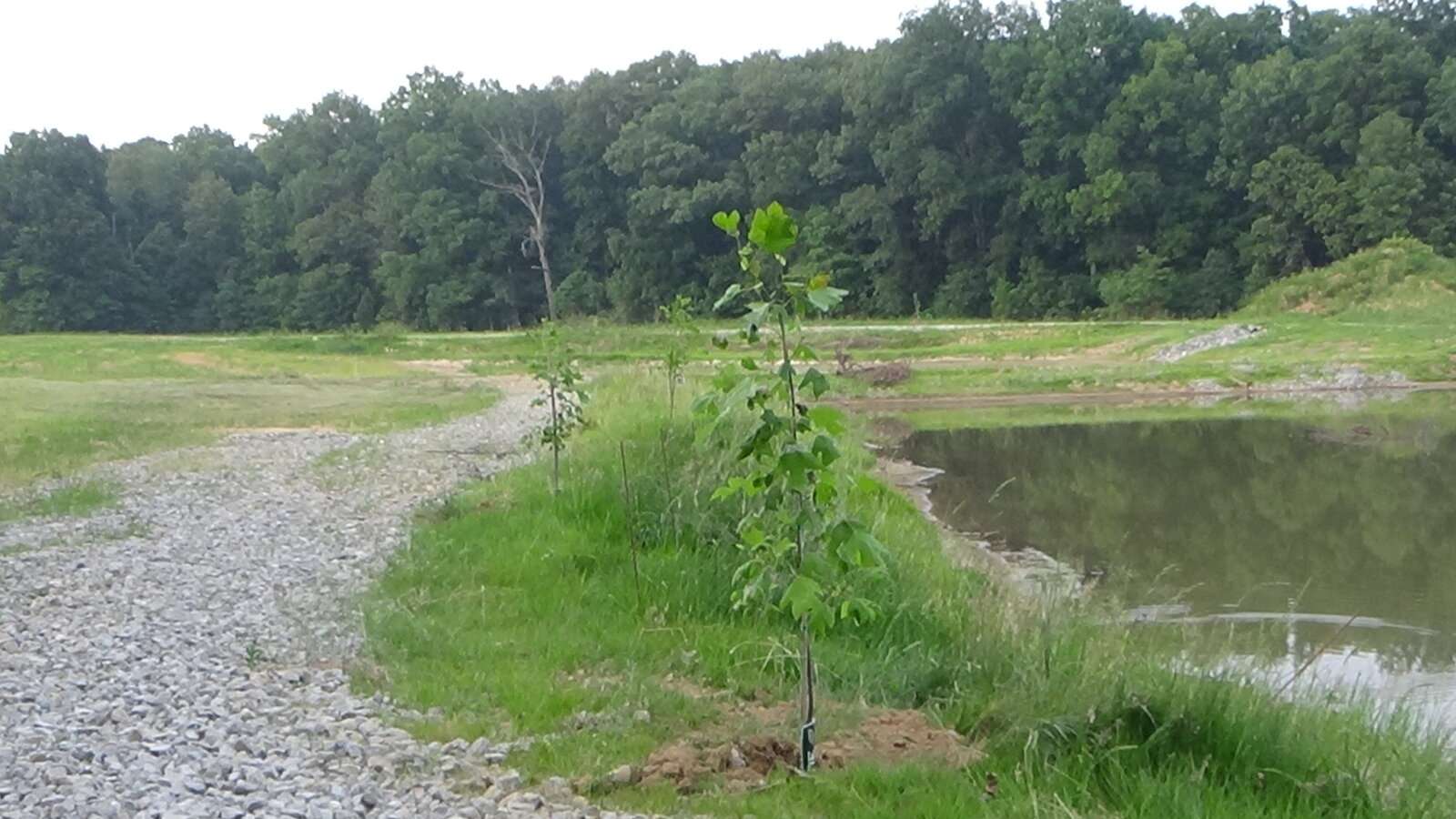
I have planted Tulip Trees, Red Maples and Weeping willows 125 total around the lake and the sites and mixed 50 white oaks in that should be getting decent sized about the time the other trees are petering out.

DSC00176.JPG

I went with the tulip trees, red maples and weeping willow trees because they are fairly fast growing, relatively strong and decently long lived. LOL they will outlive me by about 40 years. And get big enough to be making decent shade in about 4-5 years. Its still rough in some spots but I am getting all graded out and purdy :)
DSC00175.JPG

Nope I am NOT advertising in the last week I have gotten 18 applications to buy in memberships. Oh yeah we don’t walk around nekkid here with our junk flopping around and our big ole sloppy enhanced boobs bouncing free…… the swimwear is about as close as we get to that :)