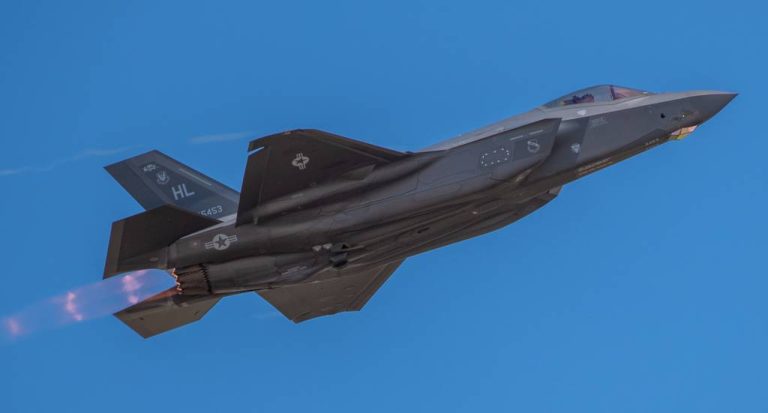
Indonesia buys Qatari Mirage jets to plug fighter gap

0

MELBOURNE, Australia — Indonesia has confirmed it signed a contract this year to buy Qatar’s fleet of French-built fighter jets in an effort to plug a long-standing air defense gap.

The Indonesian Air Force said in a news release it had signed a $795.14 million contract in January to buy the Qatar Emiri Air Force’s fleet of 12 Dassault Mirage 2000 fighters. The Middle Eastern nation operates a fleet of nine, single-seat Mirage 2000-5EDA aircraft and three, twin-seat Mirage 2000-5DDA aircraft.

The contract was signed with Czech company Excalibur International, which will act as the go-between. Indonesia will use foreign loans to finance the deal.

According to the Indonesia Air Force, the contract includes 14 engines, three years of support services, ground support equipment, crew training and other support. Under the deal, the aircraft will be delivered within two years from the contract date.

Indonesia plans to station the Mirage 2000s at the Supadio air base at Pontianak on the west coast of the island of Kalimantan. The base, near the South China Sea, and home to the Air Force’s 1 Squadron, which operates the BAE Hawk 109 trainer and Hawk 209 light combat aircraft.

The statement noted the decision was made to acquire the Qatari jets as a stopgap measure following the retirement of Northrop Grumman F-5E/F Tiger II interceptors and the obsolescence of the Hawks.

“It is considered that the purchase of the ex-Qatari Air Force Mirage 2000-5 aircraft is the right step to meet the readiness requirements of the Indonesian Air Force,” the statement read.

Indonesia had also planned to buy Russian-made Sukhoi Su-35 Flanker fighters but had to cancel that effort due to sanctions imposed on Russia. It instead turned to France, having signed a contract in early 2022 to acquire six of what is hoped to be an eventual 42 Dassault Rafale omnirole fighters. The first three Rafales will be delivered in 2026.

Indonesia is also negotiating the purchase of Boeing F-15EX Eagle fighters, with the AiF force revealing that it is discussing the letter of offer and acceptance with the U.S. government.

In addition to two squadrons of Hawks, Indonesia’s AiF force flies two squadrons of Lockheed Martin F-16 Fighting Falcons and a squadron of Russian Sukhoi Su-27/30 Flanker fighters.

Under its minimum force requirements, the archipelago nation of more than 17,000 islands seeks to have 10 fighter squadrons by 2024, a deadline it will likely miss.

Mike Yeo is the Asia correspondent for Defense News.

How To Conserve Garden Soil Moisture During The Summer Months

0

This past winter marked a record-breaking drought spanning two decades, causing significant challenges for farmers in meeting deadlines and meeting the required standards for crop size, yield, and quality. The situation worsened as the dry spell extended into spring, particularly affecting the southern regions, where rainfall plummeted to a mere fifth of the usual average.

In such extraordinary aridity, our young plants necessitate assistance to establish themselves and flourish. Early and adequate watering provides the much-needed moisture, enabling seedlings to exhibit robust and consistent growth. However, the frequency of subsequent watering depends on your soil’s ability to withstand dry conditions, and this is where your involvement becomes crucial.

The forthcoming advice aims to enhance your soil’s capacity to retain moisture during dry spells and effectively drain any surplus during prolonged heavy rainfall, creating a buffer against both ends of the spectrum.

Organic matters

Harnessing the power of organic matter is a fundamental and readily available method to enhance your soil’s condition. By incorporating ample quantities of well-rotted organic matter, you can effectively improve both the structure and nutrient content of the soil.

This approach proves particularly beneficial for heavy clay soils, as it prevents them from hardening excessively during dry weather. Moreover, when rainfall finally graces the land, the soil becomes more receptive, facilitating better absorption of the much-needed water.

Conversely, in periods of excessive precipitation or the typically damp winters we experience, clay soils enriched with organic matter offer improved drainage, allowing them to warm up more swiftly as spring arrives.

For soils that tend to be sandier, piling on organic matter works to impede drainage, thereby significantly augmenting the soil’s water-holding capacity. This proactive step ensures that your soil retains moisture for longer periods.

Now, the question arises: What organic matter should you add to your soil? The answer primarily depends on what resources you have access to. If you have the means, garden-made compost is an excellent choice. It boasts relatively high nutrient content, and chances are you already have some of it readily available.

However, if you struggle to generate sufficient amounts of compost, consider obtaining it from your local council. This option is often cost-effective (and sometimes even free in specific council areas), and although it may not be as nutrient-rich as garden-made compost, it still contributes significantly to building valuable soil structure.

In addition to compost, you can also consider incorporating spent mushroom compost into your soil. While it may have lower nutrient levels, it remains a valuable addition. Furthermore, don’t overlook the incredible potential of leaf mold—an organic material that can be added to the soil when it reaches the age of just one year.

Animal manures are another organic matter source that can be obtained in abundance. However, exercise caution when using them. In recent years, concerns have emerged regarding herbicide contamination in manures, which can be present either through ingestion or animal bedding.

To mitigate any potential risks, ensure that the manure you use comes from a trusted source. If uncertain, inquire about the use of herbicides. If the manure is fresh, it is advisable to stack it up and allow it to decompose for at least a year until it reaches a crumbly consistency. This practice also minimizes the chance of active chemicals persisting within the manure.

When it comes to adding organic matter, it’s challenging to go overboard. If you choose to incorporate it by digging, a layer around 4 inches thick will work wonders for your soil. Use a fork to mix it thoroughly into the soil, concentrating it within the top 8 inches—the depth where the roots of your plants reside. Alternatively, if you prefer a no-dig gardening approach, gradually introduce organic matter in small increments, taking advantage of any available gaps to add another layer. The diligent worms in your soil will gladly assist in incorporating it for you.

By harnessing the power of organic matter through these methods, you can establish a soil environment that thrives, promoting optimal plant growth and ensuring long-term soil health.

The marvels of mulching

Mulching is a magnificent technique that utilizes organic matter to its fullest potential. By applying mulch around growing crops, whether made from organic sources like compost or non-organic materials such as polythene or slate chips, we create a protective shield for the soil. This shield not only inhibits the penetration of light, making life difficult for weeds, but also prevents rapid drying of the soil.

When it comes to mulching, organic or biodegradable options are highly recommended. Not only do they serve as a barrier, but as they break down, they also enrich the soil with valuable nutrients. It is important to note that organic mulches require more frequent replacement. Consider using materials like bark and wood chips, straw, hay, seaweed, or even the ever-reliable grass clippings, which happens to be my personal favorite.

All these organic mulches can be applied directly to the soil surface as needed, and their impact is truly remarkable. They work wonders by significantly reducing moisture loss through evaporation. Furthermore, they act as a protective layer between the soil surface and the air, acting as a cushion for raindrops. During heavy rainfall, the mulch allows rainwater to trickle down gradually, ensuring it penetrates the soil instead of running off over the surface.

For optimal results, it is advisable to spread mulch after a substantial downpour or once you have thoroughly soaked the ground. This way, the valuable moisture is locked in, benefiting your plants in the long run. Prior to mulching, it is essential to remove any existing weeds, especially persistent ones like couch grass and bindweed. The amount of mulch you apply depends on the type of plants you are growing.

For annual vegetables such as lettuce, a thin layer, perhaps just half an inch thick, would suffice to prevent them from being overwhelmed. Conversely, established fruit bushes and trees thrive with a thick carpet of mulch, as deep as 4 inches, while ensuring the material is slightly pulled back from the central trunk.

The thickness of the mulch also varies depending on the type you are using. For instance, straw may appear loose initially, but it gradually compacts over time, allowing for a thicker layer to be applied. On the other hand, a 4-inch layer of seaweed mulch would require numerous trips with a heavy wheelbarrow to gather a significant amount from the beach.

Embracing the wonders of mulching empowers you to optimize plant growth while conserving moisture and suppressing weed growth. So go ahead, unlock the potential of your garden by embracing the marvels of mulches.

Nurturing your garden with grass clippings

When it comes to mulching, grass takes center stage as a popular choice. Many of us have lawns that require regular cutting throughout the growing season, providing a convenient and continuous supply of grass clippings—just when plants are in need of mulching.

Grass clippings possess remarkable qualities due to their high nutrient content. To maximize their effectiveness, it is essential to spread them out in a relatively thin layer. Otherwise, they may intertwine and form a slimy mat. The key here is to apply grass clippings little and often. Their lightweight nature and rapid decomposition make them perfect for scattering around various types of vegetables.

By mulching with grass clippings, you create a cool and shaded area beneath, which becomes a favored hangout for pest-munching insects like ground beetles. Moreover, this practice provides protective cover for the roots of vulnerable crops such as broccoli and carrots, shielding them from threats like cabbage root maggots and carrot fly.

Before applying fresh grass clippings, allow them to dry out slightly. Apply the clippings in a thin layer initially and replenish as they start to turn brown. Be mindful to avoid clippings with numerous seed heads—make sure to remove those dandelions before they complete their flowering cycle!

freedom water system

Get rid of the weeds

Strategic use of mulches can significantly contribute to winning the battle against weeds. However, any weeds that manage to infiltrate or grow in areas without mulch in your kitchen garden should be promptly removed. Weeds actively compete with your crops for vital resources, including water. Therefore, the fewer plants drawing on soil moisture, the longer it will last.

Annual weeds that have not yet produced seeds can be pulled up or hoed off and left in place, effectively acting as their own mulch. Sunny or windy days will quickly desiccate these weeds. However, if they have been uprooted instead of merely decapitated, wet weather can sometimes cause them to reestablish by re-rooting. As for perennial weeds, leave their foliage on the soil surface but be meticulous in digging out their roots and disposing of them away from your garden plot.

Embracing the power of grass for mulching not only nurtures your plants but also helps to maintain a cleaner and weed-free environment. Let the lushness of grass clippings work its magic in your garden, promoting healthier growth and minimizing the intrusion of unwanted weeds.

Other water saving ideas

Screens:

Utilizing shade netting is a popular practice in arid regions of the southern US. Apart from providing shade for cool-season vegetables like peas and lettuce, shade netting also acts as a barrier, reducing soil evaporation. Additionally, you can employ netting or shelterbelts to filter and redirect wind, which has the tendency to whisk away moisture on warm days.

Sheets:

Sheet mulches offer a low-maintenance solution, particularly suitable for larger crops such as squashes, beans, and robust brassicas. Simply roll or lay out the sheet mulch over the ground, secure the edges with pegs or weights, and create planting holes by cutting X shapes in the mulch and folding the flaps inward.

This method ensures most of the ground remains covered, eliminating the need for frequent weeding and preserving soil moisture. The most popular materials for sheet mulches are paper or generously overlapping layers of cardboard, preferably with a thick layer of organic matter beneath, providing an ideal growing environment.

Drip Irrigation Systems:

Consider installing a drip irrigation system, which delivers water directly to the plant roots, minimizing water waste through evaporation and ensuring efficient water distribution. This targeted approach promotes healthier plant growth while conserving precious water resources.

Rainwater Harvesting:

rainwater harvesting for your garden


Make the most of nature’s bounty by implementing rainwater harvesting techniques. Collect rainwater from gutters and downspouts into rain barrels or storage tanks. This harvested water can then be used for watering plants, reducing reliance on traditional water sources and saving money on utility bills.

Mulching with Gravel or Rocks:

For areas prone to extreme heat or in regions with limited water availability, mulching with gravel or rocks can be a practical solution. These non-organic mulches create a protective barrier, minimizing soil moisture loss through evaporation. Additionally, they can enhance the aesthetic appeal of your garden while conserving water.

Concludingselfsb b1

Implementing water-saving strategies in your gardening practices not only helps conserve this precious resource but also promotes healthier plants and more sustainable ecosystems. By exploring alternative mulching techniques such as shade netting, sheet mulches, and even gravel or rock mulches, you can significantly reduce water evaporation, suppress weed growth, and improve soil moisture retention.

Moreover, incorporating additional measures like drip irrigation systems and rainwater harvesting further enhances your ability to efficiently manage water usage in the garden. These innovative approaches empower you to nurture your plants while minimizing water waste and environmental impact.

By adopting these water-saving ideas, you play an active role in creating a more sustainable and resilient garden. Embrace the power of organic matter, explore diverse mulching options, and implement smart irrigation practices to ensure your plants thrive while conserving water resources for future generations. Let’s work together to create a greener and more water-conscious world through our gardening endeavors.

Additional resources:

Smart tips for gardening on dry soil

If you see this plant in your backyard, don’t touch it!

How to grow and maintain a drought-resistant garden

The #1 food of Americans during the Great Depression

Italy’s Army aviation chief talks helicopter advancements

0

ROME — As the commander of Italy’s Army aviation fleet, Maj. Gen. Andrea Di Stasio oversees a helicopter portfolio on the cusp of old and new.

Decision-makers in the country have been closely watching moves in Washington about remaking the U.S. Army’s fleet, itching to jump on the bandwagon with what some thought would be the next major accomplishment in propulsion technology.

Di Stasio spoke with Defense News about balancing the reliability of traditional rotorcraft technology with next-generation features that promise greater speed and maneuverability.

This interview was edited for length and clarity.

What does the future hold for helicopters?

The traditional helicopter has almost reached full maturity, which means there can be very few improvements in power and speed. So you either move toward coaxial rotors with pusher propellers or tiltrotors, or you stick with the “classic” helicopter, knowing that it has reached the limits of its performance.

I therefore see a future in which traditional helicopters fly alongside the new helicopters developed for the U.S. Future Vertical Lift program, NATO’s Next Generation Rotorcraft Capability program and the European Union’s Next Generation Fast Helicopter program.

This will mark a real doctrinal revolution, not just a simple technology upgrade. The main aim is increasing survivability on the battlefield, with speed an important factor. That will make helicopters better able to operate against enemies with well organized anti-air defenses in large-scale combat operations.

What technologies and capabilities will be key for the army of the future?

The essential technologies will be structural materials and know-how, for example, in rotors, engines and transmissions that allow increases in speed, autonomy, and the possibility to carry a large array of sensors and armaments. Helicopters must also be networked in a secure way, and active protection systems are needed to ensure the integrity of the helicopter and, consequently, the crew.

Open architecture can keep the helicopter price down, make the logistics sustainable and ensure the helicopter is reliable over time because it can be upgraded very quickly. It also needs to be able to interface with other systems or platforms that are built according to the same standards. I am referring to what the U.S. calls MOSA — or a modular, open-systems approach — which is a fundamental conceptual pillar to ensure the technological progress of the new helicopters.

We need standoff, fire-and-forget armaments so the helicopter can acquire over-the-horizon ground targets without exposing itself. An armed helicopter will have difficulty overcoming well-run air defenses up close. We already have such weapons on Italy’s A129 helicopters, and the U.S. is moving in this direction, having chosen the Spike NLOS to compensate for the limited-range Hellfire missile.

What are the advantages and disadvantages of coaxial helicopter and tiltrotor technology?

Given they are two completely different technologies, it is hard to compare them unless you look at the operational objectives they are expected to be used in. The U.S. has chosen the tiltrotor due to its new focus on the Pacific, as opposed to Europe and the Middle East. The tiltrotor currently has greater cruising speed and autonomy but greater size and less maneuverability.

If the priority is to transport passengers or material across greater distances in shorter times, its advantages are undoubted.

The choice made by the U.S. Army to purchase the Bell V-280 Valor is linked to the Indo-Pacific theater, where the U.S. envisages an increasing presence.

On the other hand the coaxial helicopter with propellers can perform sudden and fast maneuvers, albeit having less speed and autonomy than a tiltrotor in the same category.

In the future, both these platforms will enter service with NATO armed forces since both show, at least on paper or in preliminary trials, good performance. However, I would also say that no country can do without, at least for now, a fleet of reliable, traditional helicopters. The new technologies will increase performance but have not yet reached the maturity to be game changers for at least another 10 years.

Tom Kington is the Italy correspondent for Defense News.

Drawing or Drafting Table

0

mechstdr submitted a new resource:

Drawing or Drafting Table – nice drawing table

Read more about this resource…

Draft House bill would restore funding for next-gen fighter engine

0

WASHINGTON — The House Armed Services Committee’s proposed version of the 2024 National Defense Authorization Act would throw a lifeline to a program aiming to develop a next-generation fighter jet engine.

The chairman’s mark of the legislation, released Monday evening, would add $588.4 million for the Adaptive Engine Transition Program, to mature its technology and reduce risk.

The Pentagon in March released a proposed fiscal 2024 budget with no AETP funding, instead moving forward with the Engine Core Upgrade, Pratt & Whitney’s proposal to upgrade the F-35 Joint Strike Fighter’s existing, Pratt-made F135 engines.

But the House NDAA backs continuing work on both engine programs in 2024; it also fully funds the Engine Core Upgrade.

AETP was the other option the Pentagon was considering to modernize the F-35’s propulsion systems, which will need more power, thrust and cooling as the fighter receives key upgrades later this decade. These adaptive engines, prototypes of which have been developed by both Pratt & Whitney and General Electric Aerospace, would add a third stream of air to cool the engine, and would adapt to the best configuration for any given situation.

The Air Force was interested in putting the adaptive engine in its F-35As. But the adaptive engine’s lack of interoperability with the U.S. Marine Corps’ F-35Bs, which have a unique engine that allows it to vertically take off and land, meant the Navy and Marines were uninterested in AETP.

In a background briefing for reporters Monday, a senior congressional aide said lawmakers opted to restore AETP funding to keep the technology moving forward as the Defense Department continues developing the sixth-generation Next Generation Air Dominance platform, expected to use adaptive technology in its engine.

GE calls its adaptive engine the XA100, and Pratt’s adaptive engine is the XA101. Pratt said the adaptive engine it is developing is better suited for NGAD than the F-35.

The committee’s draft of NDAA would also strike entirely the $150 million the Air Force requested to prototype its troubled Air-launched Rapid Response Weapon, or ARRW. And it would add another $20 million to the service’s budget request to prototype the Hypersonic Attack Cruise Missile, or HACM, hypersonic program, which would bring its funding to more than $401 million.

ARRW’s future is uncertain after a failed test in March prompted Air Force Secretary Frank Kendall to tell lawmakers the program had “struggled a little bit in its testing program,” and that the service was more committed to HACM.

The committee’s tactical air and land forces panel also on Tuesday advanced without changes its section of the NDAA. That bill would grant the Air Force’s request to retire 42 more A-10 Warthogs, bringing its fleet of the attack aircraft down to 218, as well as 57 older F-15C and F-15D fighters.

Stephen Losey is the air warfare reporter for Defense News. He previously covered leadership and personnel issues at Air Force Times, and the Pentagon, special operations and air warfare at Military.com. He has traveled to the Middle East to cover U.S. Air Force operations.

As it plans NGAD fighter, Pentagon must learn from past failures

0

The U.S. Air Force has officially begun to accept proposals for the sixth-generation Next Generation Air Dominance fighter and plans to award the contract in 2024. Air Force Secretary Frank Kendall ominously stated that the classified and secretive NGAD will cost “multiples” of the F-35, meaning each aircraft will cost hundreds of millions of dollars.

While its fifth-generation fleet offers unsurpassed capability, it is vital that the Department of Defense correct the mistakes incurred in its development.

The NGAD is intended to replace the F-22. The F-22 was initially set to take nine years and $12.6 billion to produce, but that eventually became 19 years and $26.3 billion. The per-unit cost increased by 177%, from the initial estimate of $149 million to $412 million.

It has not proved to be a particularly reliable aircraft. The F-22 had a readiness rate of 50.81% in 2021, and just about half of the Air Force’s F-22 fleet was deemed combat effective. By the time the plug was pulled in fiscal 2010, problems with the plane and a lack of a mission led the DoD to purchase 187 F-22s, or 563 fewer than the originally intended 750.

The F-35 Joint Strike Fighter, which is the DoD’s largest procurement program, is being produced in different versions for the Air Force, Marine Corps and Navy. It is also being sold to U.S. allies, with eight countries helping to share some of the costs. But like the F-22 and many other DoD procurement programs, it is over budget and behind schedule. Indeed, the Joint Strike Fighter may be the foremost example of the DoD’s broken acquisition system, and its many travails are difficult to detail succinctly.

The F-35 has been under continuous development since the contract was awarded in 2001. Total acquisition costs exceed $428 billion, nearly double the initial estimate of $233 billion, with projected lifetime operations and maintenance costs of more than $1.7 trillion.

The biggest reason for the Joint Strike Fighter’s relentless problems is the fatal decision made by the DoD to develop and procure the aircraft simultaneously. Whenever problems were identified, contractors needed to go back and make changes to planes that were already assembled, adding to overall costs.

Speaking at the Aspen Security Forum on July 24, 2015, then-Air Force Secretary Deborah Lee James stated: “The biggest lesson I have learned from the F-35 is never again should we be flying an aircraft while we’re building it.”

The lengthy nature of the development time frame of the Joint Strike Fighter has meant that the DoD has been required to ceaselessly update features and incorporate new technologies, resulting in an overly complex platform that also suffers from a poor readiness rate. While a marginal improvement over the F-22, the Air Force’s F-35A has sustained a lower readiness rate than older jets. In 2021, 68.8% of F-35As were mission capable on average, down from 76.07% in 2020.

In February 2014, Secretary Kendall, who was then the undersecretary of defense for acquisition, technology and logistics, referred to the purchase of the F-35 as “acquisition malpractice.” Let’s hope Secretary Kendall remembers this experience when soliciting proposals for the NGAD.

DoD budget documents plot funding requests for the NGAD increasing from $1.9 billion in FY24 to $4.1 billion in FY28. Overall costs of the NGAD will also rise given that they are to be paired with collaborative combat aircraft, or CCA — drones that will serve alongside piloted aircraft. The Air Force anticipates acquiring 1,000 CCAs, with 400 earmarked for the NGAD and 600 for the F-35A.

The high cost, delays and underperformance of the DoD’s fifth-generation aircraft has created a readiness gap, which has forced the Air Force to rely on older generations as a substitute. The Pentagon will not have this luxury moving forward. The average Air Force fighter is approximately 28 years old, and its fleet of F-16s is on average more than 30 years old.

U.S. defense spending is already stretched thin, and the Pentagon cannot afford to miss the mark on consecutive generations of fighter aircraft. The DoD must wrap up the NGAD’s development phase as quickly as possible to avoid the snowballing effect of updates and new features that weighed down the fifth-generation aircraft.

Most crucially, it should take the advice of former Air Force Secretary James and avoid purchasing the NGAD prior to the close of the development phase.

It is vital for the DoD to learn the lessons of the F-22 and F-35, and reign in spiraling costs and slipped deadlines to produce sixth-generation aircraft that will be on budget and function as intended.

Sean Kennedy is the director of policy and research for Citizens Against Government Waste.

DIY Playground Equipment

0

mechstdr submitted a new resource:

DIY Playground Equipment – easy build stuff with wood

Read more about this resource…

Playground layouts

0

mechstdr submitted a new resource:

Playground layouts – layouts for baseball, football, tennis, etc..

Read more about this resource…

Fishermen selling fresh fish on the road side

0

Fishermen selling fresh fish on the roadside is a common sight in many coastal areas. It is a direct and convenient way for fishermen to sell their catch to local residents and passersby. Here are some key points about fishermen selling fresh fish on the roadside:

Freshness: One of the main advantages of buying fish from roadside fishermen is the freshness of the catch. Since the fish are typically caught that day or the previous day, they are often of high quality and retain their flavor and texture.

Locally sourced: Roadside fish vendors often sell fish that is locally sourced, supporting the local fishing industry and providing customers with a taste of regional seafood.

Variety: Depending on the region and the fishing practices in the area, roadside fish vendors may offer a wide variety of fish and seafood. This can include popular species such as salmon, trout, cod, snapper, or local specialty catches.

Pricing: Prices for fish sold by roadside fishermen can vary depending on factors such as the type of fish, demand, and the local market conditions. Generally, you may find competitive prices compared to fish available in supermarkets or fish markets.

Convenience: Buying fish from roadside vendors offers convenience, as customers can often stop by on their way home from work or while running errands. It eliminates the need to go to a traditional fish market or grocery store to purchase fresh seafood.

Direct interaction: Purchasing fish from roadside vendors allows customers to interact directly with the fishermen. This direct interaction can create a sense of trust and provide an opportunity to ask questions about the catch, fishing methods, or even get cooking suggestions.

Seasonal availability: Availability of certain fish species may depend on the fishing season and regulations in the area. Roadside fish vendors will typically have the freshest catch available during peak fishing seasons.

It’s important to note that regulations regarding the sale of seafood may vary from one location to another. Roadside fish vendors must comply with local health and safety regulations to ensure the fish they sell is handled, stored, nylon rope in Dubai and transported properly. As a customer, it’s always a good idea to assess the freshness and quality of the fish before making a purchase.


DIY Smokehouse

0

mechstdr submitted a new resource:

DIY Smokehouse – cool block smokehouse

Read more about this resource…