The above link is the newest model of the one I have. Mine is is a few years older. It will cut through 3/4″ plate/pipe like butter. It will sever just over 1″ with a new tip and going slow. It does leave a bit of a kerf on material over 1″ thick however that can be cleaned up with a grinder/sanding disc. Honestly on 1″ and above material I find it best to use a torch.
IMHO, after being in the trade for over 30 years Hypertherm or the older Thermodynamics plasma cutters are the best and a person can get the “generic” consumables for them very reasonably. Most folks won’t need a plasma cutter to cut anything over 1/4- 1/2″ thick material. These machines are still pretty reasonable considering what they can do. Many of these can be run on 115 or 220volt. Its a nice feature to have.
Because they don’t clean them selves. Forget about the hippie “no water” solar panel cleaning bullshit. It don’t work. Do you want scratched solar panels? Because that’s how you get scratched solar panels. The one way to clean them is the “car wash method” where you use soap plus water and some manual scrubbing… ain’t no body got time for that… I use my pressure washer. It’s a little generac 2.5gpm pump on a horizontal 208cc Honda clone. But it’s getting old, had it since 2015 or so.
I’m going to haul the old one to the tractor auction and sell it before it blows up and it’s worthless. I have an old Honda gx390 that ran for a while with effectively no air filter, so it burns oil. Well I’m rebuilding it. The bore has some taper and oil rings were worn down to nothing. I guess dirt likes to get caught in the oil rings and wear them out. It burned oil like crazy. Because of no air filter and sum dumb ass put the biggest carburetor jet they could find in it so the oil and dirt were getting washed down the cylinder by ridiculous amounts gasoline. That results in an engine you fill up with oil run it and the low oil shutdown kicks the engine off after 45 minutes to an hour.
Rebuilding this the be about a 48 state legal de-CARB’ed engine. With a new std bore block, std piston, new rod, new tappets, 0.01 over bore rings I’m using as file fit rings, ultra thin head gasket that will bump compression about a half number, I’ll test timing advance, retard and put a retro style adjustable carb on it. The higher compression, possibly advanced timing, and adjustable carburetor will give more power, use less fuel and make a tiny bit more NOx than the 50 state legal version.
I still have my new pandemic 4gpm, 4,000psi pressure washer pump still sitting in the box. Been sitting there for about 2 years, need to so someone with it already.
Mountain Essentials Grain Mill Summer is here, and we have an exciting offer just for you as a valued member of our community! Get ready to elevate your outdoor cooking experience with our exclusive Summer Sale on the Mountain House Grain Mill. For a limited time, enjoy a fantastic discount of $50 off the regular price, available only to our esteemed members like you. Exclusive Offer for first 50 Buyers
Get Flat $50 Off on our purchase of Grain Mill
Apply coupon “Grainmill50” during the checkout process.
Hurry Up Limited Spot Available
Comparison of the Most Expensive Grain mill Vs Mountain House Grain Mill
More From Mountain Essentials Mountain Essentials Whole Egg Crystals – Powdered Eggs Offer Price $74.99 You Save $45.00 Buy Now Mountain Essentials Non Fat Milk Powder Offer Price $33.99 You Save $36.00 Buy Now Mountain Essentials Freeze Dried Beef Dices – Protein Packed Meal Offer Price $35.99 You Save $34.00 Buy Now
In the aftermath of a devastating disaster, the landscape is strewn with wreckage and the echoes of desperate cries for help fill the air. Amidst this chaos, it becomes crucial to gather an assortment of essential tools in order to embark on the arduous task of clean-up and restoration.
It takes a village
The first and foremost reason why having the right tools is vital lies in their ability to facilitate effective and efficient clean-up operations. Disasters often leave behind a trail of debris, rubble, and hazardous materials, making the affected area highly unsafe and inaccessible. Tools such as heavy machinery, cutting equipment, and protective gear enable responders and volunteers to navigate through the wreckage, remove obstacles, and create safe pathways for rescue and recovery efforts.
Clean-up is not merely about restoring a semblance of order amidst the chaos; it plays a pivotal role in safeguarding public health and well-being. Disasters often contaminate the affected area with hazardous substances, including chemicals, biological waste, or damaged infrastructure.
If left unaddressed, these pollutants can pose severe health risks to the survivors and hinder the restoration of essential services such as water, electricity, and sanitation. Through systematic clean-up, these contaminants can be properly removed, reducing the potential for long-term health hazards and allowing for the recovery and rebuilding process to commence.
Moreover, the process of clean-up serves as a symbol of resilience and hope for the affected communities. It signals that assistance has arrived, and tangible steps are being taken to restore normalcy in the wake of tragedy.
The removal of debris and restoration of basic amenities like roads and infrastructure not only facilitates access for emergency services but also paves the way for residents to return to their homes and begin rebuilding their lives. By actively participating in clean-up efforts, volunteers and responders contribute to the emotional and psychological healing of the affected population, instilling a sense of unity, strength, and solidarity.
Tools needed for cleanup
SLEDGEHAMMER: Within the tangled mess of debris, concrete and lumber form a formidable barrier. When brute force becomes the only viable option, the resounding strikes of a sledgehammer serve as an initial breakthrough until more specialized tools can be employed. With determined effort, this mighty tool cracks through solid obstacles, paving the way for further progress.
PRYBARS: Leverage becomes an invaluable ally when disentangling debris and dismantling nailed beams. Large crowbars and smaller prybars adeptly exploit the principles of physics, providing the necessary force to pry apart entangled structures and lift heavy rubble. The sheer versatility of these tools allows for precise maneuvering even in tight spaces, aiding in the extraction of trapped survivors and the gradual dismantling of obstructions.
GLOVES: In the spirit of unity and collaboration, the provision of sturdy work gloves becomes essential. After a disaster, countless helping hands emerge to assist in the restoration efforts. These gloves shield volunteers from splinters, abrasions, and the pervasive presence of muck and dirt. By providing protection and instilling a sense of safety, gloves empower individuals to contribute effectively to the collective recovery endeavor.
ILLUMINATION: Often, the aftermath of a natural disaster demands toil in the dim recesses of collapsed structures or under the cover of darkness. Illumination becomes a critical companion, ensuring optimal visibility for effective rescue and restoration work. Headlamps are a trusted tool, liberating workers’ hands for precise tasks. With a combination of spotlights and floodlights, these headlamps pierce through darkness, guiding the way to potential survivors and aiding in meticulous clean-up efforts.
SAFETY-TOE WORK BOOTS: Amid the chaos of a ravaged community, hazards lurk at every turn. To continue lending a helping hand, it is imperative to safeguard one’s own well-being. Safety-toe work boots emerge as the guardians of resilience, protecting feet from potential injuries caused by falling debris or sharp objects. Waterproof designs ensure workers can navigate through waterlogged areas without compromising their ability to contribute. Innovative lacing systems add an extra layer of convenience, enabling a secure fit, eliminating the risk of tripping on unraveled laces.
CLEATS: Cleats provide a crucial advantage when working on slippery surfaces or unstable inclines, such as oil spills or sagging roofs. They offer enhanced stability and traction, reducing the risk of accidents and providing workers with confidence in their movements. These specialized footwear attachments ensure a secure grip, even in the most challenging post-disaster environments.
WIRE CUTTERS: Amid the chaos of a disaster aftermath, buildings are often turned inside out, revealing a tangled mess of hidden wires. Wire cutters become essential tools for safely navigating and removing these wire entanglements. Their precision cutting capabilities allow workers to tackle wires of all sizes, ensuring clear pathways and minimizing the risk of electrical hazards. From cutting through cables to removing tangled wiring, wire cutters play a vital role in the restoration process.
SHOVELS: Shovels of various shapes and sizes prove indispensable after a disaster strikes. Whether it’s scooping out mud and sludge or clearing debris, shovels are versatile tools for post-disaster cleanup. From snow shovels used for removing excess precipitation to garden spades repurposed for filling sandbags, these tools aid in the restoration of order and safety. In tight spaces or near collapsed structures, folding camp shovels provide the necessary digging power, allowing workers to access hard-to-reach areas.
CLOSE-QUARTER WORK: When confronted with the need to pry apart smaller objects, traditional knives are often inadequate. Specialized close-quarter tools fill this gap, offering the strength and precision required for safe dismantling. These tools, equipped with features like pry bars and chisel functionalities, excel at disassembling various materials, ensuring the smooth progression of post-disaster recovery efforts. Their robust construction and versatile capabilities make them indispensable companions in the restoration process.
TWO-WAY RADIOS: In the aftermath of a disaster, when cell phone service is disrupted, effective communication becomes a challenge. Two-way radios emerge as vital tools for coordinating efforts, ensuring the safety of workers, and disseminating critical information. With features like weather alerts, extended range, and durability, these radios enable seamless communication between team members, facilitating swift response and efficient allocation of resources.
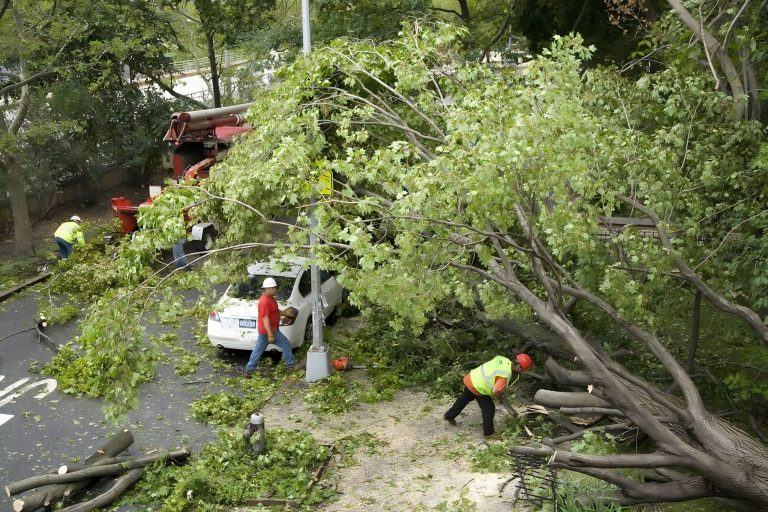
TREE WORK: In the aftermath of a disaster, the landscape becomes cluttered with fallen trees, turning the surroundings into an instant jungle. To tackle this challenge, essential tools are required. A chainsaw is often the tool of choice, but in situations where there is a shortage of gas, it is wise to use it sparingly and reserve its power for larger tasks. Additionally, tools like axes, hatchets, and loppers from reputable brands provide the necessary strength and precision for cutting down limbs and branches. These lightweight and well-balanced tools, known for their sharpness, significantly enhance the efficiency of clearing efforts.
DEPENDABLE CHAINSAW: A dependable chainsaw is invaluable when it comes to tree work. Nothing is more frustrating than encountering a chainsaw that refuses to start, and this frustration is only magnified during emergency situations. Seeking advice from experienced firewood cutters and professional tree trimmers can help identify reliable brands. Consider opting for an 18-inch bar, as it offers versatility for various tasks around the house or farm. Safety should never be overlooked, so wearing shooting glasses and earmuffs is essential when operating a chainsaw.
Overlooked items
overlooked items when cleaning debris
LANTERN: During power outages, candles may provide a cozy atmosphere indoors, but they become impractical in windy conditions. Instead, consider utilizing lanterns like Coleman lanterns, which can run on various fuels. These lanterns emit enough light to illuminate work areas or makeshift kitchens effectively. By saving flashlights and their limited batteries for specific tasks, you can optimize their usage and rely on lanterns for broader lighting needs.
PRUNING LOPPERS: Trees often play a significant role in natural disasters, causing damage to houses, blocking roads, and creating chaos. When dealing with large-canopied trees, it is necessary to clear some limbs before initiating chainsaw work. Pruning loppers prove to be faster and safer tools for this task compared to axes or hand saws. Their design allows for efficient limb removal, enabling smoother progress during tree clearance efforts.
FIVE-GALLON BUCKET: The versatility of a five-gallon bucket cannot be overstated. It serves multiple purposes, from hauling and storing various items to being used as a washing basin or even functioning as a convenient stool when paired with a swivel seat. The potential uses for these buckets are nearly limitless, but it is essential to choose ones that have never contained toxic materials for safety reasons.
HARD-PLASTIC WATER BOTTLES: Hard-plastic water bottles serve more than just a container for water. They prove useful for storing items that require airtight, waterproof, and durable protection. The transparency of these bottles allows for quick identification of their contents, making organization easier. Utilize them to store first aid and repair kits, as well as small hardware items like nuts, bolts, and nails. Additionally, their sturdy construction makes them effective for storing food items, as they provide protection against critters that might attempt to chew through the plastic.
SUPER-SIZED GARBAGE BAGS: Super-sized garbage bags have countless practical uses in disaster situations. They can serve as impromptu rain ponchos, ground tarps, or even makeshift shelters. When filled with soft materials, they can function as sleeping mattresses. Additionally, these bags are invaluable for waterproofing backpacks, sleeping bags, and other gear. In a post-disaster environment where debris and rubbish are abundant, the demand for garbage bags remains high due to their versatility and usefulness.
FENCE PLIERS: Fence pliers are versatile tools that find a place in the toolkits of farmers everywhere. With the ability to function as hammers, staple pullers, wire cutters, and pliers, they offer excellent value for their price range of $8 to $16. Their multifunctionality makes them indispensable in various post-disaster scenarios, allowing for efficient repairs, construction, and other tasks that may arise.
BREATHABLE FISHING WADERS: In flooded areas, breathable fishing waders can serve as makeshift biohazard suits. During extreme flooding, there is a heightened risk of fecal coliform contamination as sewage systems overflow, exposing individuals to hazardous bacteria and wastewater. Wearing fishing waders provides an added layer of protection, safeguarding against potential health hazards and allowing individuals to work in such hazardous environments.
KNEE PADS: In emergency or disaster situations, tasks often require crawling, kneeling, and working in close proximity to the ground. Knee pads become essential protective gear, offering comfort and preventing injuries. Surplus military knee pads, available at affordable prices, can be an excellent investment, providing durable knee protection during post-disaster activities.
Concluding
In the aftermath of a natural disaster, the importance of having the right tools and equipment cannot be overstated. From clearing debris and fallen trees to providing essential lighting and protection, these tools play a crucial role in the cleanup and recovery process.
Each tool serves a specific purpose, whether it’s using a chainsaw or pruning loppers to tackle tree work, employing lanterns for effective illumination, or utilizing versatile items like five-gallon buckets and hard-plastic water bottles for storage and various tasks.
Additionally, overlooked items such as super-sized garbage bags, fence pliers, breathable fishing waders, and knee pads prove to be invaluable assets in post-disaster situations. These items offer practical solutions, from waterproof covers and impromptu shelters to multi-purpose tools for repairs, protection, and personal safety.
The significance of these tools and overlooked items lies in their ability to enhance efficiency, safety, and resilience during the cleanup and recovery efforts. They enable individuals and communities to address immediate needs, clear obstacles, and restore a sense of normalcy in the wake of devastation.
By recognizing the importance of having a diverse range of tools and overlooked items readily available, we can better prepare ourselves and our communities for the unpredictable challenges that disasters bring. Investing in these tools, acquiring knowledge on their proper usage, and promoting their accessibility can significantly contribute to a more effective and efficient response in times of crisis.
WASHINGTON — A measure in the House’s fiscal 2024 defense policy bill aims to keep various technologies related to the Next Generation Air Dominance program moving forward in sync, even as one lawmaker said the Navy has fallen behind its Air Force counterparts here.
The provision in the FY24 National Defense Authorization Act would require both the Navy and Air Force secretaries to submit alongside their annual budget requests “development and technology maturation progress reports” for the Next Generation Air Dominance program and the complementary effort for collaborative combat aircraft.
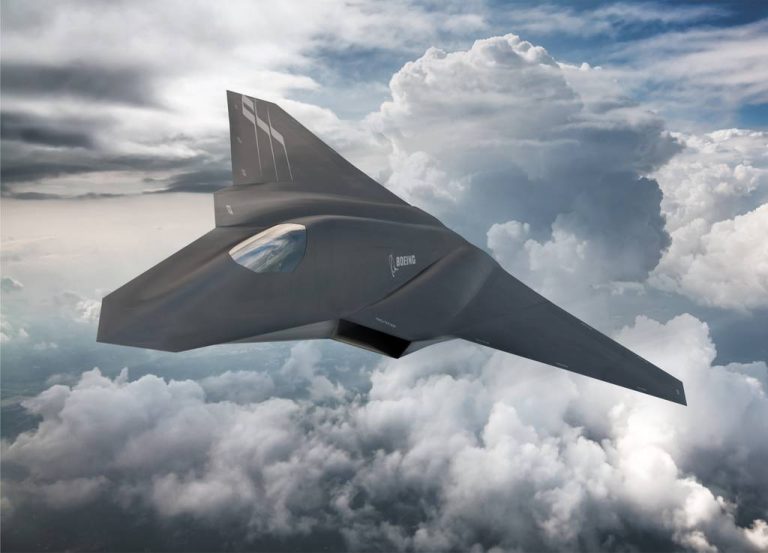
NGAD is a sixth-generation fighter program that would pair with unmanned aircraft, including the CCA acting as a so-called loyal wingman.
Rep. Rob Wittman, R-Va., who chairs the House Subcommittee on Tactical Air and Land Forces, told Defense News that “the Navy needs to speed that up, so that’s why we want to report on what they’re doing.”
The Air Force is juggling several technology development efforts in parallel, including work on advanced engines and a next-generation tanker to give the NGAD fighter additional range in highly contested environments. Wittman said he wants to ensure one technology doesn’t fall behind, and potentially lead to bad decisions for other components.
If the various technology development efforts are properly aligned, “we can either deliver on time or deliver to the left,” or ahead of schedule, he explained.
One nightmare scenario, he said, is that the aircraft’s development gets ahead of engine development, and the Air Force eventually realizes it made a bad decision that would have been avoided if the engine had matured faster.
“We want to see all those things happen in a sequence where one takes advantage of the other … so we’re making maximum use of resources,” Wittman said of the annual reporting requirement.
Asked about the gap between the Navy’s and the Air Force’s progress on NGAD, Wittman said the Navy must set its requirements beyond simply seeking a carrier-based fighter.
The Air Force about five years ago realized its fifth-generation fighters were at risk from Chinese weapons within the first island chain, Wittman noted. (The first island chain runs parallel to the mainland of the Asian continent, starting in the Kuril Islands, through the Japanese Archipelago; includes Taiwan and the northwestern portion of the Philippines; and finishes in Borneo.)
The Navy, he added, at first believed it could mitigate the threat by keeping its aircraft carriers farther away and sending its fifth-generation F-35Cs in along with tankers to increase their range. But, Wittman continued, the jets and the tankers are still at risk, and so this sixth-generation NGAD program is important to the sea service.
“The Navy is behind, and I don’t want the Air Force to mark time while the Navy’s trying to catch up,” Wittman said.
“But I do think the things that the Air Force is doing will inform the Navy, and the Navy should, with that, be able to make big steps forward that they otherwise couldn’t make if they were doing this on their own. So what our expectation is, is the Navy can do a significant amount of catch-up, based upon what the Air Force is doing.”
Megan Eckstein is the naval warfare reporter at Defense News. She has covered military news since 2009, with a focus on U.S. Navy and Marine Corps operations, acquisition programs and budgets. She has reported from four geographic fleets and is happiest when she’s filing stories from a ship. Megan is a University of Maryland alumna.
If enacted, the proposal could boost the Air Force’s effort to buy more new fighters to modernize its fleet.
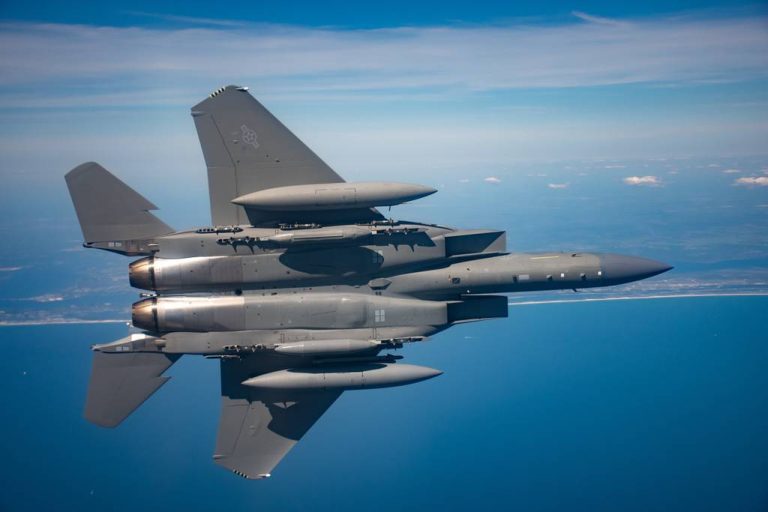
The service’s budget documents show it plans to request 24 Boeing-made F-15EX jets in 2025, the same amount as in 2023 and 2024. But the chairman’s markup of the draft NDAA, released Monday evening, includes an additional $92 million in advance procurement funding to buy six more of those fighters in 2025.
That would bring the service’s total Eagle II buy to 30, and bring advance procurement funding for the F-15EX to $320 million in 2024.
The committee, chaired by Rep. Mike Rogers, R-Ala., moved to increase the Air Force’s fighter purchases to speed up the pace at which it is replacing older, retiring fighters, a senior congressional aide told Defense News. The service plans to retire 801 tactical fighter aircraft over the next five years while bringing on 345 new F-35s and F-15EXs.
When combined with the Air Force’s plan to buy 48 new F-35A fighters — the service’s expected standard annual purchase going forward for the next few years — the increased number of F-15EX purchases would mean the service would get 78 new fighters in 2025.
That would be more than the 72 fighters top Air Force leaders regularly say need bought on each year to both modernize the fleet and lower fighters’ average age.
If the service can’t buy that many annually, top generals warn, it won’t have enough new fighters to replace aging and retiring fighters such as the F-15C.
For years, the Air Force frequently did not ask for that many fighters in its budget requests, nor did lawmakers approve those amounts. In 2023, for example, Congress approved a total of 67 new fighters for the Air Force, 24 F-15EXs and 43 F-35s.
That changed in 2024, when the Air Force asked for the full 72 fighters it says it needs. Lt. Gen. Richard Moore, deputy chief of staff for plans and programs, said in April that he believed the service would ask for 72 fighters again in the future.
But mistakes and quality issues on the F-15EX’s production line have caused the program to slip at least six months. The Government Accountability Office said in a report released in June that Boeing mis-drilled windscreen installation holes on four F-15EXs, and the holes will need to be redrilled.
GAO also highlighted other unspecified supplier quality problems on a critical forward fuselage component needed to ensure the F-15EX’s safety of flight.
The Air Force currently has two test F-15EXs. Boeing was originally scheduled to start delivering the first of six more F-15EXs in December 2022 before the production problems caused delays. It is unclear when the deliveries of the latest batch will take place, but it could begin later this summer.
The Air Force plans to buy 104 F-15EXs in all. The new version of the fourth-generation F-15 fighter is upgraded with advanced avionics and better electronic warfare capabilities.
Stephen Losey is the air warfare reporter for Defense News. He previously covered leadership and personnel issues at Air Force Times, and the Pentagon, special operations and air warfare at Military.com. He has traveled to the Middle East to cover U.S. Air Force operations.
Hey all,
Did a quick search for some key words and didnt see what I was looking for. Does anyone on here own a Harvest right freeze dryer? what is your experience with it, and your "Pro's & Cons" even some "favorites" and things youll "never do again"!
I think Freeze drying is the way to go from here on out… 3 freezer is just 3 tubs of goo in "grid goes down" situation.
let me know what you all think. looking to buy and just want some experianced folks opinions.
WASHINGTON — House lawmakers want the the U.S. Department of Defense to explore new flight range options for testing long-distance hypersonic systems.
A lack of test ranges and other infrastructure is a significant limiting factor in the U.S. Department of Defense’s development of hypersonic systems, which can fly and maneuver at speeds of Mach 5 or higher. Officials want to fly these aircraft and weapons at a more regular cadence but the aircraft and ranges it relies on are in high-demand, limiting major programs to a few flights per year.
RELATED
In its proposed fiscal 2024 defense policy bill, released June 12, the House Armed Services Committee called for the department to study “at least two additional corridors” for long-distance hypersonic testing and initiate any environmental reviews that would be required for those tests.
A separate provision would require the Secretary of Defense to brief the committee by early next year on its plan to “maximize” the use of its West Coast flight ranges. That plan should include the cost and schedule for making improvements at those locations.
“The committee is aware of the need for expanded test ranges for hypersonic, autonomous systems and new aerospace developments that require access to restricted, air, land and sea space,” the committee said. “The need to expand rages for seamless interoperability is paramount to address the complexity of weapon systems.”
The bill also notes that DoD is overdue in delivering a hypersonic testing strategy, which was required in the Fiscal 2023 National Defense Authorization Act. Lawmakers proposed blocking a portion of the travel budget for the Pentagon’s undersecretary for policy until that plan is submitted.
Speaking June 14 at a Defense One Technology Summit, Air Force Research Laboratory Chief Technology Officer Timothy Bunning said his team is trying to do more of its testing in virtual and simulated environments, but that flight-test constraints are a major detriment to the service’s hypersonic programs.
In fact, he highlighted a recent review from the Air Force Scientific Advisory Board that identified test limitations as “the number one threat right now to the portfolio.”
“We don’t have what we need to operate at the speed of relevance right now,” Bunning said.
RELATED
The Air Force’s Air-Launched Rapid Response Weapon had a notable test failure in late March, and service acquisition chief Andrew Hunter has signaled it may not move forward with the program beyond the prototyping phase.
The House Armed Services Committee’s policy bill — which does not ultimately determine defense appropriation levels, but has influence on the process — recommends cutting the $150 million in fiscal 2024 funding that the service would need to finish ARRW’s prototype phase.
Bunning said today that while failures aren’t ideal, they’re a biproduct of a rigorous test program.
“We’re really exercising muscles that we haven’t exercised in a while,” he said. “These are complex systems and things go wrong, and we have to be tolerant of that failure.”
Courtney Albon is C4ISRNET’s space and emerging technology reporter. She has covered the U.S. military since 2012, with a focus on the Air Force and Space Force. She has reported on some of the Defense Department’s most significant acquisition, budget and policy challenges.
WASHINGTON — Lawmakers would curb the U.S. Army secretary’s travel until the service shows a thorough analysis of alternatives to pursuing a Future Attack Reconnaissance Aircraft, according to a draft of the fiscal 2024 policy bill released this week by the House Subcommittee on Tactical Air and Land Forces.
No more than 70% of the Office of the Secretary of the Army’s travel budget can be obligated or spent until Secretary Christine Wormuth submits that analysis for the FARA program to congressional defense committees, the mark of the bill laid out.
The Army completed a “very robust” analysis of alternatives in 2019 for its Future Long Range Assault Aircraft program, subcommittee Chairman Rob Wittman, R-Va., told Defense News in a June 14 interview. “So our question was why not the same for FARA?”
The Army chose Textron’s Bell to build the Future Long Range Assault Aircraft in December 2022.
“Apparently they started out but never completed [the analysis of alternatives for FARA] and then came to a decision, and here’s where we’re going to go with the request for proposals on FARA,” Wittman said. “What we’re saying is that with all the things going on today with all the different service branches and looking at these platforms and looking at how do we have capability and capacity at the same time, they should do a very rigorous look at alternatives.”
There are other schools of thought on future attack and reconnaissance capabilities, Wittman said, pointing to the Marine Corps’ vision for semiautonomous and autonomous aircraft to reduce risk and “have a bigger footprint in that realm.”
An artist rendering of a potential Future Attack Reconnaissance Aircraft. The U.S. Arm has not yet selected a company to formally build the helicopter. (Bell)
Doug Bush, the Army’s acquisition chief, told Wittman during a hearing in April that the service is conducting an analysis of alternatives for the FARA program, noting the process was slowing the program in addition to the ITEP engine struggles.
Wittman said during the hearing that he is alarmed the Army is just now conducting an analysis of alternatives AOA for FARA — having already spent $2 billion on the program — and pressed Bush for what might happen if the review showed a better alternative to what is in development now.
Bush explained the analysis kicked off now because the Army had not decided on an acquisition pathway earlier in the program. The Army debated between whether it could enter the program at the engineering and manufacturing development stage, or if it should take a more traditional approach and go through a technology development phase.
“We decided the more responsible approach would be to go to a traditional Milestone B, which requires the AOA,” Bush said. “I think I’m confident though that the AOA, the way it’s structured, is fair. It’s very thorough, examining many alternatives. I think that’s good.”
“We’ll know more later this year,” he added. “I think we will be in a good place to know exactly where things are going to land in terms of the program schedule.”
Because of delays within the program, Bush said during the hearing, FARA’s technology maturation phase won’t begin until the first quarter of FY26.
The Army is continuing to develop systems for FARA, despite delays, that go beyond just the airframe, Maj. Gen. Wally Rugen, who is in charge of the service’s vertical lift modernization, told Defense News in April.
While the Army waits for the engine, it is developing the weapons systems and a critical modular, open-system architecture for the aircraft, Rugen said. “This is our effort to claw back schedule and claw back scope.”
Jen Judson is an award-winning journalist covering land warfare for Defense News. She has also worked for Politico and Inside Defense. She holds a Master of Science degree in journalism from Boston University and a Bachelor of Arts degree from Kenyon College.
Last month, in France, a Muslim man told an underage girl with whom he had been chatting on Facebook, “I will burn you all. I will cut your throats. I will rape you and your mother because I have the right to do so.”
The girl’s father, described as “devastated and angry,” responded to the terror threats with which his family and he had been living, saying, “Islam is not what I have been hearing [it is]… Religion is peace, tolerance, respect… We have been living in fear for a year!”
The ongoing narrative is that Islam means peace; what is not said is that this peace comes only after everyone enjoys the “peace” of being Muslim. Until then, what is often presented to hasten this result is the exact opposite: jihad, or violence in the service of Islam. Many Muslims, just want, of course, to live in quiet lives, have good jobs and enjoy the blessings of this life. Others however, such as Western converts to the “religion of peace” suddenly and inexplicably become terrorists.
Such men routinely cite the same hadiths and verses from the Koran. Verses 4:3 and 4:24, for instance, permit Muslim men to have sexual relations with as many women as “their right hand possesses” — meaning as many women — all non-Muslim, of course — as they are able to take captive during a jihad.
“In the moments before he raped the 12-year-old girl, the Islamic State fighter took the time to explain that what he was about to do was not a sin. Because the preteen girl practiced a religion other than Islam, the Quran not only gave him the right to rape her — it condoned and encouraged it, he insisted.” [Emphasis added] —New York Times report.
In Germany, some Muslim migrants act out their conviction that all “German women are there for sex.” In the 2016 New Year’s celebrations in Cologne, migrants ended up molesting a thousand women.
In Britain, where a large Muslim minority has long existed, thousands of British girls in various regions have been by abused and gang-raped by “grooming gangs” made up largely of Muslims, who apparently deemed it their Islamic right. One rape victim said, “The men who did this to me have no remorse. They would tell me that what they were doing was OK in their culture.”
In a separate case, another Muslim convicted of rape told a British court that sharing non-Muslim girls for sex “was part of Somali culture” and “a religious requirement.”
[T]he subhuman treatment and sexual degradation of non-Muslim women and children by Muslim men who deem it their “right” is apparently another “exoticism” the West is apparently expected to embrace at the altar of multiculturalism.
In Britain, where a large Muslim minority has long existed, thousands of British girls in various regions have been by abused and gang-raped by “grooming gangs” made up largely of Muslims, who apparently deemed it their Islamic right. Pictured: The English town of Rotherham (population ca. 265,000), where at least 1,400 children were sexually abused by a gang of Muslim men of Pakistani descent. (Image source: Wikimedia Commons)
Last month, in France, a Muslim man told an underage girl with whom he had been chatting on Facebook, “I will burn you all. I will cut your throats. I will rape you and your mother because I have the right to do so.”
When she refused to marry him, he defaulted to even more severe threats against her and her family — at one point texting, “Soon we will cut your throats and play football with your heads.” The communication was accompanied by a video showing the scene of a beheading.
Based on the name given in the French report, Fabio Califano, who was subsequently arrested, appears to have been a convert to Islam.
The girl’s father, described as “devastated and angry,” responded to the terror threats with which his family and he had been living, saying, “Islam is not what I have been hearing [it is]… Religion is peace, tolerance, respect… We have been living in fear for a year!”