
Buttermilk | Survival Monkey Forums

I love the stuff and it is great for the body as well. I always made my own when I kept a milk cow. Now days I just buy Prairie Farms Whole Buttermilk, not as good as the rancid stuff I made but better nutritionally than mine was… LOL I tended to ferment mine a bit
So a new friend stopped by today when I was getting ready to eat lunch. So I offered her a pork steak and some grilled squash and glass of ice cold buttermilk. “OMG That shit is nasty and unhealthy!” She says. Referring to the Buttermilk. Now I realize that while I find the taste of buttermilk to be very pleasant mos folks probably do not. But Unhealthy??? Not true at all. After the Ulcer Problem and my body learning how to eat and digest food again, buttermilk was one of the few things I could consume and not feel sick for hours after. I credit it, oatmeal and cream of wheat for getting me back to good health after being near death with that ulcer and scar tissue problem. Doc might have been the one that found the problem and opened things back up, But I fully believe it was the buttermilk that healed everything back up. LOL now days I drink at least a quart every day and often a half gallon per day. LOL sometimes a whole half gallon with just lunch. Before the ulcer and scar tissue I drank a pint here and there and used most of what I made in biscuits and pancakes and was fond of adding it into my sourdough breads.
Buttermilk: Are There Health Benefits?
A little Marine Corps history – The Marine who was a duck

The Marine who was a duck (yes, an actual duck)
On Nov. 20, 1943, 18,000 Marines were met with withering fire, poured out by elite troops of the Imperial Navy’s Special Naval Landing Force.
The attack on Betio, the largest and southernmost island in the Tarawa atoll, required a direct assault on the beachheads by U.S. Marines.
On that day, alongside those Marines clutching the beachhead amid a lethal hailstorm of mortars, machine gun and rifle fire, was a duck.
Won in a raffle at a New Zealand pub by Sgt. Francis “Pappy” Fagan, the duck was given the rank of sergeant and named Siwash after Sgt. Jack “Siwash” Cornelius of Skagit County, Washington. According to the Marine Corps Chevron, Cornelius acquired the nickname due to it sounding similar to his home county’s name.
(Note, Siwash is a derogatory term for Native Americans in the Pacific Northwest, and as such, the name “Siwash” will be replaced in this story with “duck.”)
Becoming the 2nd Marine Division’s unofficial mascot, the duck followed Fagan everywhere he went, developing a penchant for guzzling beer — just like her owner.
“Siwash just can’t pass up a free drink” Fagan told the Pittsburgh Post-Gazette in 1944. “A long one and a short one is her limit, but she doesn’t know it. She won’t touch draft beer though. And it’s got to be warm beer. The way it was in New Zealand.”
While the “devil duck” was beloved by her men, it was her actions on Tarawa on the second day of the invasion that cemented her place in Marine Corps lore.
By the end of the first day, the Marines had a tenuous hold on all three landing zones — designated Red 1, Red 2 and Red 3. From this precarious position, General Julian Smith radioed General Holland Smith midafternoon, stating, “Successful landings on Beaches Red 2 and 3. Toehold on Red 1. The situation is in doubt.”
Corralled onto the narrow beaches, no units had penetrated more than 70 yards inshore by nightfall. Being driven back into the sea was a legitimate threat.
Protected by coral reefs, the flat, small island was one of the most heavily fortified in the Pacific, and because of the island’s geography, the nearly 5,000 Marines would have no immediate room to maneuver.
For the duck, however, the situation was never in doubt. Channeling Col. David Shoup report — ”Casualties many; percentage of dead not known; combat efficiency: We are winning” — the duck reportedly locked eyes with a Japanese rooster and took the enemy encounter into her own webbed feet.
“The rooster didn’t have a chance,” Fagan later related to the St. Louis Post-Dispatch. “Siwash whipped him and chased him 30 feet up the beach.”
While there was initial talk among Marines of rewarding the duck with a Purple Heart, she was eventually cited for bravery. (The Marines initially believed she was a he until the duck began to lay eggs.)
“For courageous action and wounds received on Tarawa, in the Gilbert Islands, November 1943. With utter disregard for his own personal safety, Siwash, upon reaching the beach, without hesitation engaged the enemy in fierce combat, namely, one rooster of Japanese ancestry, and though wounded on the head by repeated pecks, he soon routed the opposition,” the citation read. “He refused medical aid until all wounded members of his section had been taken care of.”
From there, the duck served during the Battle of Saipan — this time from the safety of a destroyer — and the Battle of Tinian.
But the Marines couldn’t keep a good duck down, and at Tinian, the duck “hit the beach on D-Day and personally captured a tiny Jap duck,” TIME reported in 1944. After Tinian, however, the duck’s war was over.
Upon returning home, the devil duck was given a hero’s welcome before parting with Fagan to live out the rest of her days at Chicago’s Lincoln Park Zoo.
There she stayed until the hard drinking girl passed away from liver disease in 1954.
Her body was later stuffed and presented to the National Museum of the Marine Corps in Triangle, Virginia.

For Sale – GROUP BUY Fuel Your Adventures and Be Prepared with Mountain House- Up to 10% Off

No Code Required– Add the Above said quantities and you will get the Discount on the checkout page
Unlock the Benefits of Buying From Us:
-
Free Shipping, Expedited Delivery,
-
Lowest Price Guarantee,
-
Bundled Offers,
-
Exclusive Member Deals,
-
Assured Product Replacement for any Transit Damage or Loss.
-
Brilliant Customer Service for All your Needs
Russia likely to cancel July’s Moscow air show amid sanctions
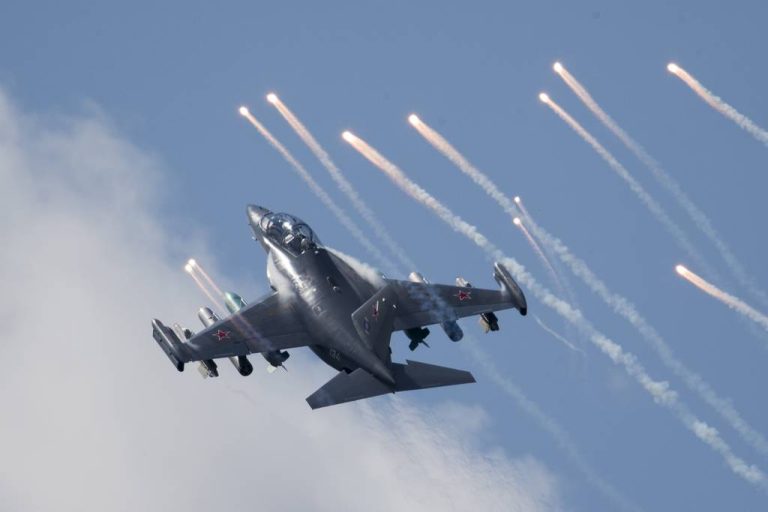
MOSCOW — Russia is likely to cancel this year’s Moscow air show, which for decades has been a major venue for showing off new military aircraft and negotiating aerospace contracts, a top official of its organizing agency said Friday.
Viktor Kladov, director for international cooperation at the state-owned defense conglomerate Rostec, was quoted by the state news agency Tass as saying that the show “in all probability” won’t take place this year. It had been scheduled for the end of July.
Kladov did not state a reason for putting off the event, but Russian news media earlier suggested it was due to Western sanctions on Russia connected to the conflict in Ukraine that would shrink international participation and have affected parts supplies to manufacturers.
Those reports also cited unnamed sources as saying there are security worries in the wake of drone attacks that hit the Kremlin and the outskirts of Moscow in May,
International attendance at Russia’s annual investment showcase, the St. Petersburg International Economic Forum, was notably lower than it had been prior to Russia’s sending troops into Ukraine in February 2022.
House defense bill pushes US Air Force on jet trainer availability
WASHINGTON — The House’s proposed version of the fiscal 2024 National Defense Authorization Act includes provisions that would push the Air Force to make available more pilot training aircraft — both old and new — and tap the brakes on some future fighter retirements.
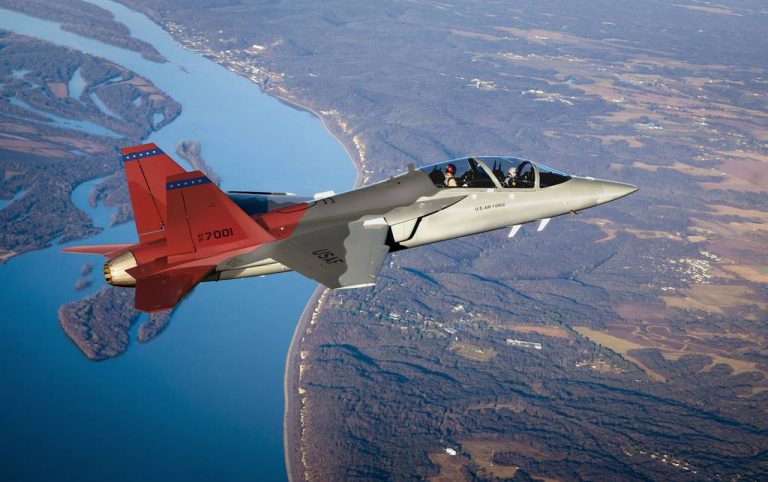
The bill, which the House Armed Services Committee advanced early Thursday, includes an amendment from Rep. Ronny Jackson, R-Texas, that would aim to speed up the Air Force’s acquisition of the delayed T-7A Red Hawk training aircraft.
The committee wants a briefing by next March from Air Force Secretary Frank Kendall on how it might speed up procurement and fielding of the T-7 and its simulator training systems. This should include consideration of speeding up a Milestone C production decision, identification of additional authorities or resources that would be needed, and a list of what might be holding the Air Force back from accelerating the timeline, the amendment said.
The Boeing-made T-7, which has struggled with safety problems and schedule and testing delays, is now expected to reach initial operational capability in spring 2027, three years later than originally planned.
And with the T-7 years away from training new pilots, the Air Force will keep flying longer the older T-38 Talon, which the T-7 is meant to replace.
But the T-38 is also plagued by an ongoing shortage of its J85 engines, and lawmakers raised concerns over its consequences. These engine backlogs are worsening the Air Force’s current pilot shortfall, the bill says, because it restricts how many sorties the T-38 can fly and the number of new pilots the service can train.
The bill would require a briefing from Kendall by the end of January 2024 on the status of the T-38 fleet and its engines. This briefing should include airworthiness and readiness rates for the T-38 and its engines, a strategic maintenance plan for the T-38 and information on how the T-7′s delays have affected the Talon and how the Air Force plans to increase the number of sorties the T-38 can fly to produce more pilots.
An amendment to the bill would also restrict the Air Force’s ability to retire F-16 Fighting Falcon jets until the service provides more information on its future plans for the fighters, although the Air Force is not planning to retire F-16s in 2024.
Lawmakers want Kendall to send them a report spelling out any plans to divest F-16C or D fighters during the most recent future years defense program. And beginning in 2024, the Air Force would not be able to divest or prepare to divest any of those fighters until six months after the delivery of this report, the amendment said.
An amendment from Rep. Don Bacon, R-Nebraska, would also prevent the Air Force from ending the fighter mission of any Air National Guard fighter squadrons until 180 days after submitting a plan for recapitalizing all such squadrons.
This plan should lay out options for modernizing these guard fighter squadrons and replacing their aircraft with relevant and more capable fighters, the amendment said, and make sure each squadron has the required minimum number of fighters to meet the needs of combatant commanders.
The amendment also said the plan should consider temporarily reassigning fighters from other components of the Air Force to the guard squadrons, when necessary. Lawmakers also want to hear what funding would be needed to put this plan in place.
And the bill would continue to prevent the Air Force from using any funds to terminate, or get ready to terminate, the production line for the HH-60W Jolly Green II combat rescue helicopter.
The Air Force originally planned to buy 113 of the Sikorsky-made HH-60Ws. But as the service grew concerned a traditional search-and-rescue helicopter would be too easily shot down in a highly contested combat zone in a future war, the service sought to scale back that total purchase to 75, with the final 10 procurements in 2023.
Lawmakers last year bumped up the Air Force’s planned HH-60W procurement by another 10 helicopters and moved to stop the service from winding down its production line. If this provision again makes it into law, it would hold open the possibility of building more Whiskeys, as the helicopter is nicknamed.
Stephen Losey is the air warfare reporter for Defense News. He previously covered leadership and personnel issues at Air Force Times, and the Pentagon, special operations and air warfare at Military.com. He has traveled to the Middle East to cover U.S. Air Force operations.
F-16 pilot calls the fighter jets sought by Ukraine ‘easy to fly’
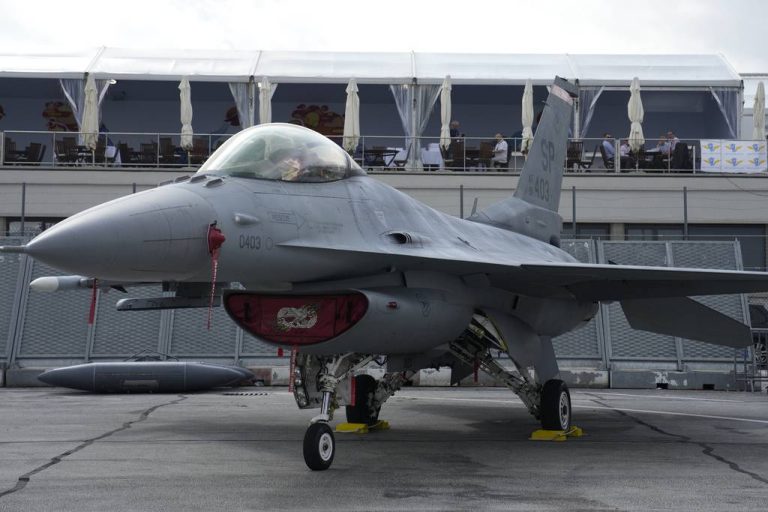
LE BOURGET, France — F-16 fighter jets hurtle pilots through the sky at up to 2,000 kilometers per hour (1,243 miles per hour). In tight turns or sudden climbs, gravity is pressing so hard on their bodies that some of them might even pass out.
Even so, it’s an experience Ukraine is seeking for its own pilots after getting U.S. approval to train and eventually receive the American-made jets to bolster its more than year-old fight against Russia. Ukrainian President Volodymyr Zelenskyy had long pressed Western allies for the planes to gain an advantage in the sky.
But to be a “Top Gun,” you need more than just the aircraft: You need the training to get you there.
Speaking at the Paris Air Show this week, the world’s top aerospace trade show, U.S. Air Force Capt. David “Spicy” Brown, an F-16 pilot, said training takes about a year for American military pilots.
It’s not clear how long it will take Ukrainian pilots to learn to fly the aircraft.
“This jet is incredibly easy to fly,” said Brown, an pilot instructor with over 1,000 hours of flight time who is stationed at Spangdahlem Air Base in Germany. “It’s all of the other stuff that goes along with the flying.”
He told The Associated Press that “you don’t have to worry about it going out of control. The main thing is being able to work the sensors, being able to work your radar” and the other systems of the jet.
President Joe Biden announced in May at the summit of the Group of 7 major economies that the U.S. will allow shipment of the American-made jets to Ukraine and help provide training, although no official plans or dates have been discussed publicly.
RELATED
Now, Ukraine is relying on older aircraft such as Russian-made MiG29 and Sukhoi jets. While they are similar in many ways, F-16s have newer technology and targeting capabilities.
The appeal of the F-16s also lies with their versatility and sustainability, said George Barros, a Russia analyst for the Institute for the Study of War.
They’re made to adapt to different weapons systems — such as heat-seeking missiles — and any spare parts needed will be easier to get because Western allies use the same jets.
“In the long term, it’s just more sustainable,” he said.
The debate about whether to send jets to Ukraine has been raging since the early days of the war. Originally, the U.S. was concerned that it would provoke Russia to attack Western allies.
And while the U.S. has changed its mind, the F-16s won’t be available in time to help Ukraine’s counteroffensive.
Russia has been able to fly aircraft like attack helicopters and bombers in the south where Ukraine is trying to retake ground, Barros said.
“The Ukrainians don’t control the airspace where they’re attacking,” Barros said. “Those are extremely difficult conditions under which to wage offensive operations.”
And that reduces the effectiveness of other weapons systems that the West has provided, such as tanks, he said.
House defense bill adds special Ukraine IG, Taiwan cyber cooperation

WASHINGTON — The House’s $886 billion National Defense Authorization Act for fiscal 2024, advanced early Thursday, would establish a special inspector general for Ukraine aid, mandate Pentagon cybersecurity cooperation with Taiwan, authorize procurement of nine battle force ships and permit some aircraft retirements.
The bill is the first of three major defense bills Congress expects to move forward in less than three days. The Armed Services Committee voted in favor of the bill 58-1 after 14 hours of debate, setting the stage for the full House to vote in July before negotiating final legislation with the Senate. Rep. Ro Khanna, D-Calif., was the lone no vote.
“It is a good bill that will strengthen our national defense and provide for our warfighters,” House Armed Services Chairman Mike Rogers, R-Ala., said at the beginning of the mark up on Wednesday. “It will help build the ready, capable and lethal fighting force we need to deter China and our other adversaries.”
Still, Rogers and other Republican defense hawks previously have criticized the bill’s $886 billion top line as “inadequate” because it doesn’t keep pace with inflation. The top line is up 3.3% from last year, and is locked in place after Congress negotiated a deal to raise the debt ceiling while cutting non-defense spending to $704 billion.
Rogers has joined Senate Republicans in calling for Congress to circumvent the debt limit deal’s defense spending caps through supplemental spending packages for the Pentagon later this year, though House Speaker Kevin McCarthy, R-Calif., has resisted that idea.
Ukraine and Taiwan
The Armed Services Committee used electronic voting for the first time this year to mark up the defense authorization bill and more than 800 amendments, allowing lawmakers to move through the marathon session slightly faster than in prior years.
The amendments included a provision from Rep. Matt Gaetz, R-Fla., that would establish an independent inspector general to oversee Ukraine aid, similar to the Special Inspector General for Afghanistan. Republicans have called for this measure to provide an additional layer of Ukraine aid oversight beyond the Pentagon Inspector General. The committee approved the Ukraine inspector general as part of a package of nonpartisan amendments adopted by voice vote.
Democrats unsuccessfully sought to add $500 million to the Ukraine Security Assistance Initiative beyond the $300 million the Biden administration requested. Republicans argued the boost would harm readiness, with Rogers noting the offset “robs just about every operations and maintenance account in existence.” The proposed increase, introduced by Rep. Jared Golden, D-Maine, failed in a 28-31 party-line vote.
The bill stipulates that $80 billion of the Ukraine Security Assistance Initiative funds it provides should go toward giving Kyiv long-range Army Tactical Missile Systems, which the Biden administration has so far refused to send.
Additionally, the bill includes some bipartisan recommendations advanced by the House China Committee last month, including an amendment from China Committee Chairman Mike Gallagher, R-Wis., requiring the Defense Department to collaborate with Taiwan on cybersecurity.
Republicans passed 31-28 another China provision introduced by Rep. Ronny Jackson, R-Texas, over Democratic objections. That amendment requires the Pentagon to submit a report on plans to blockade fuel shipments to China in the event of a conflict. Rep. Adam Smith of Washington, the committee’s top Democrat, deemed the provision too aggressive and argued the Pentagon likely has classified plans for this scenario already.
Procurement
The bill authorizes procurement of nine battle force ships: two Virginia-class submarines, one Columbia-class ballistic missile submarine, two Arleigh Burke destroyers, two guided missile frigates, one T-AO fleet oiler and one amphibious transport dock ship.
The Navy did not request the amphibious ship, but the Marine Corps asked for $1.7 billion in its unfunded priority list to finish buying it.
The Armed Services Committee sided with the Marines, arguing the Pentagon’s plans to pause the line would allow the amphibious fleet to drop below the statutory 31-ship requirement. These ships are usually purchased every other year, but an amendment added by sea power subcommittee Chairman Trent Kelly, R-Miss., would authorize incremental funding through FY25 to allow the Defense Department to begin contracting and procuring the next amphibious transport dock in FY24.
Republicans also cited the Pentagon’s decision to pause buying amphibious ships as part of their justification for a provision in the bill that would abolish the Pentagon’s Cost Assessment and Program Evaluation Office and move its duties elsewhere, accusing the office of slowing down the acquisition process.
Lawmakers said the proposed pause could upend workforce and supply chains when Congress is focused on bolstering the shipbuilding industrial base. The bill also invests $251 million in the submarine industrial base in the hopes of getting it on track to build two Virginia-class and one Columbia-class submarines per year.
Republicans also passed an amendment from Strategic Forces subcommittee Chairman Doug Lamborn, R-Colo., that would institutionalize the sea-launched cruise missile nuclear program, while allocating nearly $196 million for its research and development in FY24. Democrats said instating the program would cost at least $31 billion and fundamentally change the mission of attack submarines.
But Lamborn failed to secure enough support to undo Rogers’ provision barring construction at the temporary Space Command headquarters in his Colorado district until Air Force Secretary Frank Kendall makes a long overdue final basing decision and justifies it to Congress. Lamborn withdrew the amendment in the face of opposition from Rogers and two other Alabama lawmakers on the committee, who want the Air Force to place the headquarters in Huntsville.
The bill would thwart Navy efforts to retire three amphibious ships and two cruisers, but it would allow the Air Force to retire 42 A-10 Warthog attack planes after long blocking efforts to do so. And the committee added by voice vote an amendment from Rep. Don Bacon, R-Neb., to prevent the retirement of Air National Guard squadrons until six months after Congress receives a report on how to fill the gap.
Bryant Harris is the Congress reporter for Defense News. He has covered U.S. foreign policy, national security, international affairs and politics in Washington since 2014. He has also written for Foreign Policy, Al-Monitor, Al Jazeera English and IPS News.
