Three Basic Shooting Principles You Need To Master Before Facing A Gunfight

0

Renowned martial arts instructor Sensei Hiroshi Kato ardently emphasized to his students the significance of honing their foundational skills. Kato firmly believed, and often reiterated, that mastery of the basics was the key to triumph in all aspects, spanning from novices to seasoned practitioners. Similarly, achieving mastery in marksmanship hinges on a solid foundation.

Marksmanship is a discipline that demands rapid reflexes, fine motor skills, and endurance. However, when training with a firearm, the objective shifts to preparing oneself for the gravitas of life-or-death situations, far surpassing the stakes of a mere competitive match. Nevertheless, there exist fundamental principles that must be thoroughly grasped before progressing further, and it is precisely these principles that shall be our primary focus.

Discard any illusions of shortcuts. Attempting to miraculously enhance your marksmanship with a quick-fix solution seldom produces favorable results. These three core tenets of marksmanship remain applicable regardless of the make or style of firearm held in your hands, be it aiming through a cutting-edge Trijicon RMR sight or a traditional gutter sight on a compact revolver.

Sight alignment

The range never fails to astonish me with the multitude of eye alignment methods on display. I’ve observed shooters employing various techniques, from keeping one eye open to having both eyes open, using their non-dominant hand and eye, and a plethora of other variations on the fundamental concept. Thus, it’s crucial to start from the very beginning.

Before you even pick up a firearm, you must determine your eye dominance and hand dominance. Eye dominance is a result of the brain’s ability to balance stereoscopic vision with intense focus, and it signifies that one of your eyes assumes a dominant role in providing a clear and balanced image.

Several methods exist to determine eye dominance, but the simplest approach involves locating a clock or picture on a distant wall. Extend your index finger and point it towards the bottom of the clock or painting. Then, close each eye individually. When you have one eye left open, your finger will remain aligned with the object, indicating your dominant eye. On the other hand, if your non-dominant eye is open, your finger will move away from the object.

Similarly, you can overlap your hands, leaving a triangular opening between your thumbs and index fingers. Frame the object on the wall within that triangle and slowly bring your hands back towards your face while ensuring the object remains visible through the opening. Naturally, your hands will gravitate towards one of your eyes—the dominant one.

If you possess parallel dominance, where your right eye aligns with your right hand (or left eye with left hand), you’ll encounter little difficulty in developing a proper sight picture. However, if you have cross dominance, you have a few options for achieving a proper sight picture. One option is to close one eye, although it’s not ideal because A) you need to remember to do so in a high-pressure situation, and B) closing one eye restricts your field of view precisely when being aware of your surroundings is crucial. Another option is to learn to shoot with your non-dominant hand.

In any defensive scenario, your primary focus should be on the front sight. The aforementioned stereoscopic vision allows you to perceive the world in three dimensions, but its limitation lies in the fact that you can only focus on one plane at a time. When it comes to shooting, your focus should be firmly on the front sight.

Giving primary focus to one object doesn’t render other objects invisible. While aligning your sights with the target, utilize the front sight as your anchor and align it with the rear sight and target within your peripheral vision. With practice, you can master this vital skill.

Trigger control

I’ve lost count of how many times I’ve heard shooters complain that their iron sights were “off,” only to witness an instructor take the same gun and effortlessly drill half a dozen holes dead center on the target. The primary culprit behind this? Your trigger control is lacking.

Triggers come in a variety of shapes and styles. Some, like those found on a quality 1911, break with a crisp 3 or 4-pound pull and minimal creep. Others, such as those on hammer-fired double-action pistols, may require a hefty 12 pounds of pressure to break, accompanied by a long trigger travel. However, the fundamental principles remain the same, applicable to any type of trigger.

Proper trigger control begins with using the correct part of your finger—the pad of the index finger just ahead of the last joint. This is the portion of your finger that engages the trigger and initiates the firing process. If you wrap your entire finger around the trigger as if you were squeezing a spray bottle of bleach into a toilet you’re cleaning, your accuracy will suffer.

Equally crucial is maintaining a trigger movement that is straight backward toward the shooter, rather than veering downward and to the left (or downward and to the right for left-handed shooters), which many tend to do. In my opinion, the best way to develop trigger control is through dry firing with an unloaded weapon or employing a laser target system. By eliminating live ammunition, recoil, and muzzle rise, you can closely observe the firearm’s behavior when you pull the trigger. Does it remain on target? Excellent! That means you are exerting proper control by using the correct part of your finger and pulling the trigger straight back.

While you learn these fundamentals during dry firing exercises, it is imperative to master them on the range. This is where repetition becomes key. When your shots start drifting away from the center of the target, resist the temptation to immediately tinker with your sights. Instead, focus on your trigger pull and ensure that you are applying pressure straight back towards yourself. Slow down, concentrate on these principles, and realign your aim.

Here’s another critical point, closely related to mastering fast and accurate defensive shooting: You don’t need to completely release the trigger before firing a follow-up shot. Many modern defensive pistols on the market feature a very short reset—the distance the trigger travels forward from its rearward position to reset the gun for the next shot.

If you’re releasing the trigger fully and then firing again, you’re wasting time and unnecessary finger movement—something you want to avoid in a defensive situation. Once you’ve mastered the trigger pull, focus on shooting slowly and, after each shot, gradually release the trigger until you feel it reset or hear the audible click. But be prepared— you won’t have to pull the trigger back very far to fire another shot. This is precisely why mastering this technique is crucial for delivering rapid, accurately aimed shots.

Proper grip

proper grip

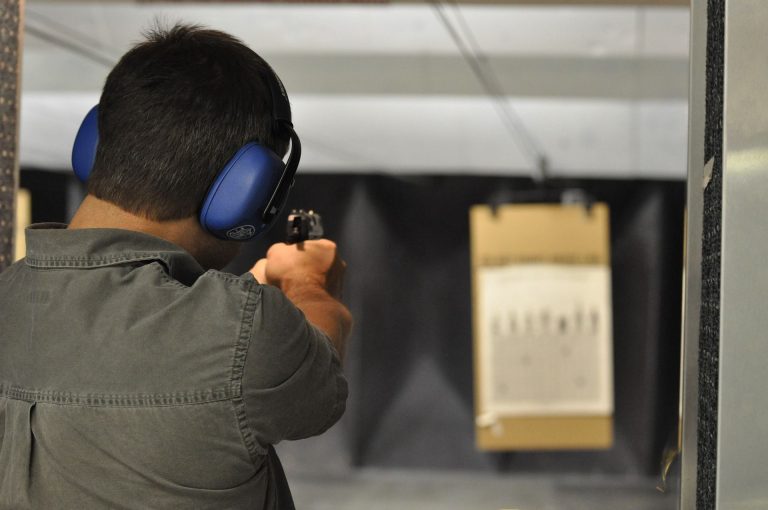
A proper grip on a firearm commences with a high handhold. By gripping the gun high, you can effectively mitigate muzzle flip. Conversely, a weak hold on a semi-automatic pistol can impede the gun’s cycling, leading to potential jams. The most common grip for semi-auto pistols is the two-thumbs-forward hold, where both thumbs rest parallel along the top of the frame (but not on the slide) on the side of the gun opposite the trigger finger.

This grip provides excellent control, especially when combined with the isosceles stance. In the isosceles stance, with your feet roughly shoulder-width apart, knees slightly bent, and both arms extended, the arms form an isosceles triangle when viewed from above. This stance allows you to maintain muzzle control and deliver rapid, accurate shots. Personally, I prefer a slight forward lean as it enhances gun control, and the forward weight distribution on the balls of the feet feels comfortable and does not hinder movement.

The isosceles stance is widely accepted because it offers a broad field of view from left to right, and its excellent balance enables swift movement. Once you have mastered proper shooting techniques, incorporating movement drills into your training routine better prepares you for tactical situations.

There are a couple of key points to consider regarding grip and stance. First, bring the gun up to your eye level, rather than bringing your eye down to the gun. When assuming your stance with a slight forward lean, the gun should be drawn from the holster (establishing the high grip early with your shooting hand) and brought up to meet the support hand at the chest.

From this position, the hands secure the grip on the gun, and the firearm extends forward from the body. As you extend your arm, elevate the gun to align it with your eye. Another critical element is maintaining stability in the upper body. If you need to engage multiple targets, initiate transitions through the hips. Keep a consistent grip and upper body position, and rotate at the waist to engage each target.

Apply the principles

Defensive shooting is a game of fundamentals. Learn the proper techniques, apply them and you’ll be better prepared to survive a deadly encounter. But mastering these skills takes time and practice, and that means dry fi ring and live fi re at the range. For you to become a competent shooter—or to advance to the next level—you need to focus on the basics.

To practice and reinforce the principles of grip, trigger control, and sight alignment, there are several shooting drills you can incorporate into your training routine. Here are three drills that can help you improve these fundamental skills:

Dry Fire Practice:

april banner 1

Dry firing is a valuable drill for refining trigger control and sight alignment without live ammunition. Ensure your firearm is unloaded and follow all safety protocols. Focus on maintaining a proper grip, pressing the trigger smoothly and straight back, while keeping your sights aligned on a target. Practice this drill regularly to develop muscle memory and enhance your overall shooting technique.

Slow-Fire Precision Shooting:

This drill emphasizes grip, trigger control, and sight alignment with deliberate and precise shots. Set up a target at a reasonable distance and take your time to carefully align your sights, control your grip pressure, and execute a controlled trigger press. Concentrate on maintaining a consistent grip and smoothly breaking the trigger without disturbing your sight picture. Slow-fire precision shooting allows you to reinforce these principles and improve your accuracy.

Controlled Pair Drill:

The controlled pair drill helps to develop proper grip, trigger control, and sight realignment for rapid and accurate follow-up shots. Start by engaging a single target with a controlled, accurate shot. Immediately transition to a second target and deliver another precise shot. Focus on smoothly resetting the trigger between shots and quickly acquiring your sight alignment on the second target. Repeat this drill, gradually increasing your speed while maintaining control and accuracy.

Concluding

Mastering the fundamentals of shooting, including grip, trigger control, and sight alignment, is essential for developing accuracy, control, and confidence with firearms. These foundational skills form the basis for effective shooting in various contexts, whether for sport, self-defense, or professional use.

By focusing on proper grip, which includes a high handhold and utilizing the two-thumbs-forward technique, shooters can mitigate muzzle flip and enhance their control over the firearm. This, in turn, contributes to consistent and accurate shot placement.

Trigger control is another critical aspect that demands attention. By using the correct part of the finger and pulling the trigger straight back, shooters can minimize disturbances to their sight picture, leading to improved accuracy and shot placement. It is through practice, both with dry firing and live fire exercises, that trigger control can be refined and become second nature.

Sight alignment, coupled with a proper grip and trigger control, allows shooters to precisely aim at their intended target. By focusing on the front sight and aligning it with the rear sight and target, shooters can achieve accurate and repeatable shots. The mastery of sight alignment is a continuous process that requires practice, concentration, and attention to detail.

Suggested prepping learning:

Turning the lady in your life into a reliable female shooter

Time tested lessons to protect your home against intruders

The Best Folding Guns You Can Get

Must-Have Knowledge to survive any medical emergency

Claymore

0

If I was ever going to form1 my own I would use less boom or one that's not as hot as the traditional stuff.
Less lethal that use a pound or half pound.

Canadian Armed Forces Transitions to SIG SAUER P320

0

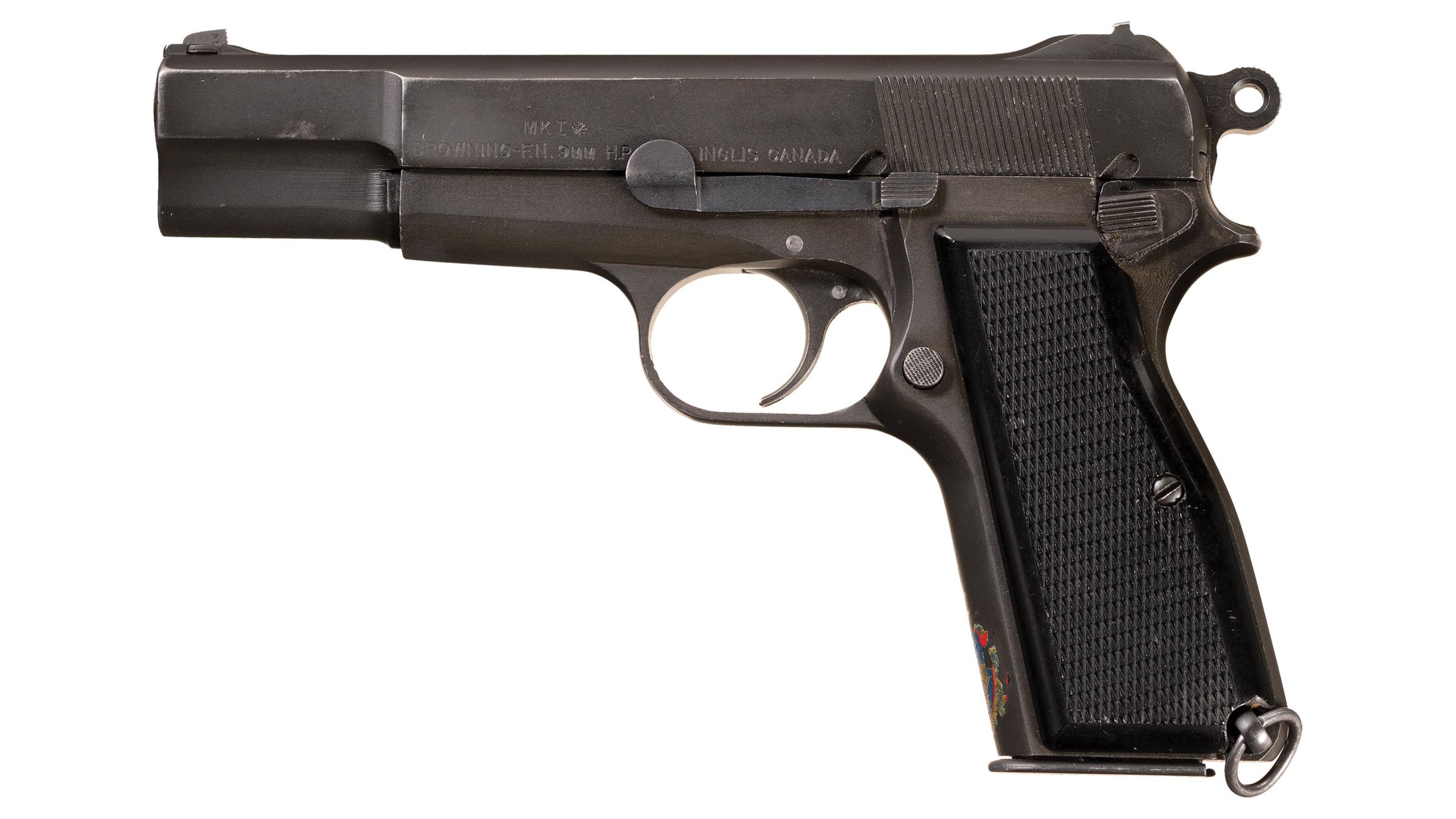
I will hold onto my Inglis Hi-Power
[​IMG]

''''''''''''''''''''''''''''''''''''''''''''''''''
Canadian Armed Forces Transitions to SIG SAUER P320
SIG SAUER, Inc. is pleased to announce that the Canadian Armed Forces (CAF) has officially transitioned to the SIG SAUER P320 and received the official…

Canadian Armed Forces Transitions to SIG SAUER P320

Lockheed backs next-gen engine for F-35, drawing rebuke from Pratt

0

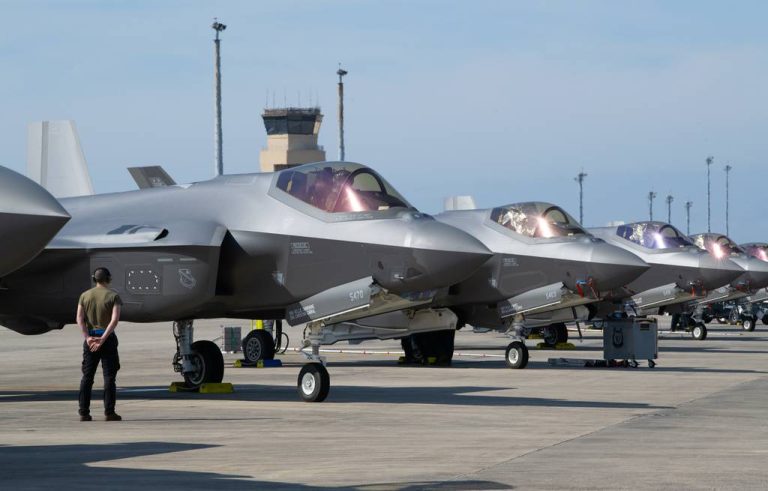
WASHINGTON — Lockheed Martin’s decision to publicly back a new next-generation engine for the F-35 — breaking with the Pentagon’s move to upgrade the fighter’s current Pratt & Whitney-made engines — drew a forceful rebuke from Pratt.

Greg Ulmer, executive vice president for aeronautics, said in a Wednesday interview with Breaking Defense at the Paris Air Show that the company supports the Adaptive Engine Transition Program for the F-35 fighter jet.

“I’m going to advocate, and I do advocate, for [AETP], another engine,” Ulmer told Breaking Defense. “I think some of the approaches today are very short sighted and not considering a longer-term view.”

In an email to Defense News, Lockheed Martin said an AETP engine would provide greater power and cooling capabilities that would carry the F-35 beyond upcoming Block 4 upgrades. Block 4 is expected to give the F-35 new sensors, the ability to carry more weapons and advanced electronic warfare capabilities, among other upgrades.

“We stand ready to support and continue to work with the U.S. government on the capability and performance upgrades that best support their requirements for the F-35 for decades to come — including an engine upgrade,” Lockheed Martin said. “AETP technologies deliver more power and greater cooling capability, which is required as we modernize the F-35 beyond Block 4.”

In a statement to Defense News, Pratt & Whitney said Ulmer’s statement “undermines” the Pentagon’s budgetary decision to back the Engine Core Upgrade, the company’s name for its plan to modernize the fighter’s current F135 engines.

“AETP is a technology that will feed into [sixth-generation] fighter platforms,” Jill Albertelli, Pratt & Whitney’s president of military engines, said in a statement. “Lockheed Martin wants to put an unproven adaptive engine on a single engine fighter jet, regardless of the hefty price tag and the significant delay in delivering critical capabilities to the warfighter at a time of urgent need.”

Albertelli noted the Pentagon has not yet defined a set of capabilities that the next set of upgrades beyond Block 4 should carry. And she said Pratt’s planned upgrade of the F135 engine, coupled with an updated power thermal management system, could provide enough power and cooling needs for the F-35 throughout the life of the program.

The F-35 is expected to fly until 2070, Lockheed said, which means further upgrades are required for the decades to come in order to stay ahead of emerging threats. An upgraded engine will be needed to provide the aircraft with greater capabilities, readiness, range and thrust, the F-35 manufacturer added.

Lockheed also noted that both General Electric Aerospace and Pratt & Whitney are developing their own AETP engines. GE’s adaptive engine is called the XA100 and Pratt’s is the XA101.

But while GE has consistently pushed for putting its adaptive engine in the F-35, Pratt maintains an adaptive engine is better suited for a sixth-generation aircraft such as the Next Generation Air Dominance platform currently under development by the U.S. Air Force.

The Air Force was intrigued by the increased power and cooling abilities an adaptive engine would bring to its F-35As over an upgrade to the existing F135 engine. But the adaptive engine’s inability to fit in an F-35B variant, flown by the Marine Corps, and questions over how suitable it would be for the Navy’s F-35C version meant the Air Force was the only service seriously interested in an adaptive engine.

The Pentagon decided the cost of funding both engine options would be too great and announced a decision to go with the Engine Core Upgrade in the fiscal 2024 budget proposal. The department did not request funding for AETP.

But the House Armed Services Committee this month proposed a version of the FY24 National Defense Authorization Act that would add more than $588 million for AETP, alongside funding the Engine Core Upgrade.

Ulmer’s comments in Paris were a departure from his previous approach to the F-35′s future propulsion system, when he opted not to pick a side.

In an interview with Defense News in September 2022, Ulmer said he was “agnostic” over whether an adaptive engine or an upgrade to the F135 was the better way to go. Ulmer said at the time that Lockheed’s role is to provide the Pentagon with information on what the F-35′s power and cooling needs will be, and that the department would ultimately make the decision.

“It’s not mine to decide, it’s the customer’s,” Ulmer had said.

Stephen Losey is the air warfare reporter for Defense News. He previously covered leadership and personnel issues at Air Force Times, and the Pentagon, special operations and air warfare at Military.com. He has traveled to the Middle East to cover U.S. Air Force operations.

US approves chicken made from cultivated cells, the nation's first 'lab-grown' meat

0

I can't say it loudly enough no Phucking way.
……………………………….
US approves chicken made from cultivated cells, the nation's first 'lab-grown' meat
For the first time, U.S. regulators on Wednesday approved the sale of chicken made from animal cells, allowing two California companies to offer “lab-grown” meat to the nation's restaurant tables and…

US approves chicken made from cultivated cells, the nation's first 'lab-grown' meat

Leonardo displays Falco Xplorer drone armed with MBDA missile

0

PARIS – In what many are calling an important shift in Italy’s mentality on arming unmanned aircraft systems, Leonardo showcased for the first time its Falco Xplorer drone fitted with an MBDA Brimstone missile at the Paris Air Show.

Italian defense company Leonardo has been in the business of producing UAS for two decades, and today some sixty units of its Falco drones are in use worldwide. The company has in the past advertised its systems primarily for civilian operations as well as intelligence and surveillance-based missions. This has in part reflected a tendency that has existed in the broader Italian defense culture over time, which could somewhat be considered as a resistance or even taboo towards arming these types of systems.

This could be changing as Leonardo displayed its light medium-altitude long endurance, or MALE, drone, the Falco Xplorer, mounted with MBDA’s lightweight Brimstone missile at the Paris Air Show, going on this week. Although only one was visible, a company representative told Defense News that it could be fitted with a total of four missiles.

“MBDA and Leonardo are cooperating together on integrating Brimstone on the Falco Xplorer and are also currently doing joint integration studies and demonstrations,” the representative said.

The ambition is to have this variant available on the market for customers by 2025. It was not developed in response to a requirement issued specifically by the Italian Air Force, rather responding to a demand by other customers, they said.

The FALCO Xplorer has a maximum payload of 350 kilograms (772 lbs) and has an endurance of 24 hours.

Concerning potential sales, it is likely to peak the interest of existing Brimstone operators. Beyond the U.K., the missiles have in the past been sold to Saudi Arabia, Qatar, Germany and most recently Ukraine for use as a surface-launched ground attack system. The Spanish Air Force also selected the weapon earlier this year to equip its fleet of Eurofighters.

Elisabeth Gosselin-Malo is a Europe correspondent for Defense News. She covers a wide range of topics related to military procurement and international security, and specializes in reporting on the aviation sector. She is based in Milan, Italy.

Boeing wants to boost KC-46 defenses as Air Force weighs tanker path

0

WASHINGTON — Boeing and its subsidiary Aurora Flight Sciences on Tuesday at the Paris Air Show unveiled plans to develop new and advanced defensive capabilities for the KC-46 Pegasus and other future aerial refueling and mobility aircraft.

Boeing and Aurora’s move to strengthen the Pegasus’s defensive measures comes as the military is preparing for the possibility of a war against an advanced adversary such as China. The Air Force worries such a conflict would involve fighting in heavily contested airspace.

Top Air Force officials have said such an air war would likely involve an enemy targeting aerial tankers that would be needed to refuel fighters, bombers or other aircraft flying near the battlefield, and said its future tankers need to be able to survive such a conflict.

The Air Force’s shifting focus earlier this year prompted the service to accelerate its plans for developing a next-generation refueling tanker, and to cut in half the number of tankers it would buy as an interim step between the current purchase of 179 KC-46s and the so-called next-generation aerial refueling system, or NGAS.

The Air Force is also considering forgoing a competition for the service’s next wave of refueling tankers. Instead, the service may go straight to Boeing and buy another series of modified KC-46s to tide it over until NGAS arrives in the late 2030s.

The Air Force originally planned to buy 150 interim tankers, but is now more likely to buy about 75.

Boeing said having new defensive measures would make the Pegasus better able to survive in a high-end conflict, and the Air Force could choose to use these capabilities on multiple platforms.

Boeing also said the unspecified defensive measures could be used on next-generation refueling and mobility aircraft, suggesting they could be incorporated into Boeing’s expected pitch for NGAS.

“The KC-46A already features defensive systems that are unprecedented in a tanker,” said Justin Hatcher, Boeing’s advanced technology director for the KC-46 program. “We continue to evolve the KC-46 and other next-generation refueling and mobility platforms to further enhance mission versatility and survivability.”

A Boeing spokesperson declined to share details about the research the company is funding into tanker defensive capabilities, or how much the company will spend, citing proprietary concerns. Boeing said that as the defensive systems mature, the company will work with customers such as the Air Force to see whether to include these new capabilities on the KC-46 or other platforms, and when they would be added.

Boeing pointed to the KC-46′s existing defensive systems and countermeasures, such as protection against electromagnetic pulses, chemical or biological weapons, infrared countermeasures, radio frequency warnings, and armor on its flight deck.

Aurora, which is based in Manassas, Virginia, and has a manufacturing facility in Columbus, Mississippi, specializes in developing advanced innovative designs for aircraft. Boeing acquired Aurora in 2017.

Earlier this month, Lockheed Martin announced it had selected a General Electric Aerospace engine for its proposed LMXT strategic tanker, which it hopes to sell to the Air Force as an interim tanker.

Stephen Losey is the air warfare reporter for Defense News. He previously covered leadership and personnel issues at Air Force Times, and the Pentagon, special operations and air warfare at Military.com. He has traveled to the Middle East to cover U.S. Air Force operations.

Brace your self winter is coming

0

Looks like a potentially cool wet winter?
Central Colorado struggling to hit 80s and central NM struggling to hit 90s.
First-ever stretch below 80-degree high

Primus kerosene stove | Survival Monkey Forums

0

Primus stoves were made on Sweden as far back as 1911. You might run across one cheap at a yard sale. Grab it! They are fantastic stoves and require little maintenance.

Fueled with kerosene and with the pre-heat cup filled with denatured alcohol.

IMG_20230619_215846.

We start with no pressure and add one to two pumps as the alcohol burns off.

IMG_20230619_220026.

then we can add pressure to make the burner roar.
IMG_20230619_220052.

If we want to simmer we just release pressure. Want more heat, add pressure by pumping.

To shut off, just open the valve. Fastest extinguishing stove I have.

This one is a 1937 No. 51. They’re all basically the same. I ran three year old kerosene tonight. I have some pre-Y2K kerosene in the barn that I’ll test after I burn this off. I suspect it’ll run just fine.

Can I preheat with kerosene? Yes. I did just that tonight. It created some carbon scale that burned off once the stove got hot. Slight smoke preheating this way. Nothing that can’t be overcome.

Great stoves.


"Normal" a post SHTF novel (Story 1 of the "Normal" Saga)

0

Grand58742 submitted a new resource:

"Normal" a post SHTF novel – by Grand58742 (PDF version)

"Normal" a post SHTF novel (Story 1 of the "Normal" Saga)