The Democratic governor said she expects legal challenges but was compelled to act in response to gun deaths, including the fatal shooting of an 11-year-old boy outside a minor league baseball stadium this week.
The firearms suspension, classified as an emergency public health order, applies to open and concealed carry in most public place, from city sidewalks to urban recreational parks.
The restriction is tied to a threshold for violent crime rates currently only met by the Albuquerque area. Police and licensed security guards are exempt from the temporary ban.
Violators could face civil penalties and a fine of up to $5,000, gubernatorial spokeswoman Caroline Sweeney said. The governor wants the order enforced by Albuquerque police, county sheriff’s deputies and state police.
Under the order, residents still can transport guns to some private locations, such as a gun range or gun store, provided the firearm has a trigger lock or some other container or mechanism making it impossible to discharge.
Sick of the cheap butane stove being such a pain in the rear in cold weather. Looked for a single burner model that would hook to a normal bottle but in looking found this…
$34 delivered. Runs off a $9 disposable propane bottle of 469gms capacity. Factory spec says it burns 104gms per hour. 5000BTU (so not the scorcher some are).
Unpacked it today, comes with a serviceable soft case…
Hooked it up and boiled 1 litre of cold water in a billy with a lid, took 11mins to a rolling boil (so not brilliant) and burned 13gms of gas.
It is just large enough that my usual cast iron pan sits centred and is NOT touching the bottle……
Did myself small vegan
lunch to see. …
….two things from that, needed to give it a little more time to heat the steel and it needs wind protection (no surprise for anyone in that I am sure). Down the side of the house there acts as a natural wind tunnel and today was more windy than usual. I will pack a shield for it. Start to finish that meal used 20gms of gas.
All in all I am happy enough. The test will be cooking early morning in the cold at the times the butane stove is most annoying. I ONLY want this to reside in the back of the TLC for my overnighters. I have smaller stoves for the pack and a larger dual burner jobby that is fine (but larger and heavier) that is great if setting up somewhere for beyond a weekend trip or with a few people. More often than not I am alone. One of those bottles will last a good few trips if the burn rate stays about the same. We shall see.
Generation 3, 2021 and up. Inspired by generation 2 and the window lickers in California only managing to burn more of their state than the previous year. I figure if more of California is going to burn more, every year till the fires run out of shit to burn I better go big. The single filter, single standard flow fan definitely worked, filter fan 3 will have that fan plus another one that moves twice the air as generation 2. Still under construction. It’s about 80% complete. It’s a divided, dual filter setup, dual fan setup. It’s made with 2 premium bathroom fans, the standard flow 3 inch fan from generation 2 and my 4 inch high volume fireplace woodstove fan, which is also a bathroom fan. The high volume premium bathroom fan was $130 in 2017. Pictures are upside-down.
The plywood is 3/4 inch premium birch plywood leftover from a 2017 project, I want to say this was like an $80 sheet of plywood 4 years ago, I’m sure it’s over $100 a sheet now if you can find it. I went with 24×24 filters they are big, 24×24 is easy to remember, the 24×24 filter is only slightly more expensive than filters half to 2/3 that size. There will be a high end number 13 filter on one side and an ultimate number 16 filter on the other side. Both sides will have a cheap trash filter to stop the big dust and protect the super filters. Difficulty level: can you make a cabinet that doesn’t look like total shit and wire some stuff up? The main disadvantage is to build this in 2021 it would probably be well over a $300 build in just materials. It’s about 3/4 of a sheet of plywood so it’s heavy, like a peice of furniture. You can make them any size or shape you want.
Give it a going over with the sander, some stain and some polyurethane.
A single smaller filter could be stashed behind a couch or under a table and be out of the way. I went big. I was going for over kill.
WASHINGTON — The U.S. Air Force’s plan to field a next-generation refueling tanker by the mid-2030s could be in jeopardy if the service has to operate under lengthy continuing resolutions, a top service official said Tuesday.
Andrew Hunter, the assistant secretary for acquisition, technology and logistics, said in an interview with Defense News at the Pentagon that a lengthy continuing resolution in fiscal 2024, and possibly the following year, could hinder how quickly the service begins work on the next-generation aerial refueling system, or NGAS, program, thus leading to problems down the road.
“The longer you take to get started, obviously, that has back-end consequences,” Hunter said.
When asked if those consequences could affect the mid-2030s goal, Hunter replied: “Correct.”
The Air Force still plans to launch a formal analysis of alternatives for NGAS in early fiscal 2024, Hunter said, adding that “hopefully we’ll get an FY24 budget sometime soon.”
That analysis is expected to produce recommendations on what a future NGAS tanker would need to meet the Air Force’s goals.
If Congress cannot pass a formal budget on time and the Air Force has to operate under a continuing resolution, Hunter said, the service will be able to continue its preparatory work on the analysis now underway. The NGAS analysis doesn’t require a lot of money, he explained, which makes it easier to reallocate funds to keep it going under a continuing resolution.
But once NGAS moves beyond the analysis and “to the stage of really wanting to work directly with industry — establish vendor pools, those kinds of things that we’ve talked about for NGAS — we’re going to need a real budget to do that,” Hunter said.
And other, larger new programs — meant to address “operational imperatives” Air Force Secretary Frank Kendall believes are necessary to transform and counter a potential threat from China — will also require more money in an FY24 budget to get started, Hunter said.
“The longer we wait on ’24, the further we will fall behind on addressing our operational imperatives,” Hunter said.
The Air Force earlier this year shifted course on the two tanker recapitalization stages that will follow the ongoing KC-46 acquisition. Originally the service envisioned following up with KC-Y, a so-called bridge tanker acquisition of roughly 150 refueling planes, and then a next-generation KC-Z in the 2040s.
But China’s rapidly developing air capabilities prompted the service to move up the next-gen tanker it now refers to as NGAS to the mid-2030s, and scale back its interim KC-135 recapitalization to roughly 75.
Hunter also said the Air Force hopes its revamped strategy for its next refueling tanker, in between the current KC-46 purchase and NGAS, will allow it to proceed with a less extensive engineering and manufacturing development phase than the previous KC-Y approach would have required.
Hunter said the service still plans to finish the KC-135 recapitalization’s joint capabilities integration and development system, or JCIDS, process and release a request for information later this month. Boeing and Lockheed Martin are expected to compete for the next tanker, with the former likely to offer a slightly modified KC-46, and the latter pitching its LMXT tanker.
An artist’s rendering shows the potential LMXT tanker refueling a Next Generation Air Dominance fighter. (Courtesy of Lockheed Martin)
Hunter said this RFI will ask industry to detail what it could provide that is “more aligned with the KC-X [or KC-46] requirement than with the KC-Y requirement that we had originally talked to them about.”
“We wanted to make sure that we went back to industry to give them an opportunity to offer information relevant to that [new] requirement, which is most of the way through the JCIDS process,” Hunter said. “It’s gotten very firm.”
The Air Force also wants to better understand how industry sees the timing of how quickly they could deliver a follow-on tanker to replace KC-135s, Hunter said. The length of time it might take for industry to deliver a KC-Y tanker was one factor that prompted the Air Force to rethink its strategy to accelerate NGAS and scale back its interim tanker purchase.
When Hunter announced the new tanker strategy in March, he predicted Boeing would be able to deliver modified KC-46s in 2032, and Lockheed’s LMXT tanker, if chosen, would likely come in 2034.
Lockheed Martin and Airbus, partners on LMXT, disagreed that delivery of its tanker would take that long. Hunter later said industry asked the Air Force to explain in greater detail its concerns about timing.
“They were not understanding how we saw things folding out,” Hunter said. “Now we’ve had much more opportunity to give them information about how we see deliveries happening, and for them to then take that and come back and say: ‘This is what we think we can really deliver on.’ ”
The Air Force’s current strategy is focused on how important it is to deliver the next iteration of tankers as quickly as possible after the end of the current KC-46 contract, without a significant gap. The service now plans to buy 179 KC-46s, and expects to receive the final KC-46 tankers in 2029.
Hunter said the greatest difference between how the Air Force saw the KC-Y procurement proceeding and how industry saw it was on the need for an engineering and manufacturing development, or EMD, program. Industry felt it could meet the KC-Y requirement using existing, off-the-shelf technologies, he added.
But, Hunter noted, it wouldn’t have been that simple; the individual technologies might have been off-the-shelf, but they had never been integrated into the kind of system that KC-Y would have needed. That would have required conducting risk reduction through an EMD program to demonstrate the proposed design would work, and then take it into production, he explained.
“What was different about how we were seeing the schedule, versus how industry was seeing the schedule is, they were just seeing it as: You start a program, and then after 2, 3, 4 years we start building and delivering aircraft,” Hunter said. “They were leaving out, I think, the time frame for an EMD program.”
Hunter said the Air Force also might not have had the money in its budget to begin and rapidly progress an EMD program for KC-Y.
“That was some of the disconnect,” Hunter said. “They had very favorable — for themselves — assumptions about: ‘Hey, we can go very rapidly towards aircraft production without doing much of an EMD effort. And to the extent that any EMD would be required, you could start it right away, and you could proceed very quickly.’ And you just have to bump that up against [the] reality of, what does the Air Force budget actually look like?”
“We have generally higher expectations than industry sometimes does about how much we want to know in an EMD program before we initiate production,” he added.
The Air Force hopes its new strategy of a more limited purchase of tankers not far off from the previous KC-X requirements will be simpler and proceed more quickly, Hunter said.
“Our hope is that there would be very modest, if any, new technology integration required [for the] KC-135 replacement,” he noted. “Because we have effectively done that with the [KC-46] aircraft that are out in the world flying today. So that does lend itself to the possibility that you could proceed to production significantly faster under this approach.”
When asked if he saw Lockheed and Airbus’s proposed LMXT tanker as still having a shot, Hunter responded: “Absolutely.
“I’m assuming Lockheed will include that in their RFI,” he said. “So that would that mean that it would still be under consideration.”
Hunter explained that the main change to the requirements for the next tanker are coming in its communications architecture. The requirements for the KC-46 were set nearly 14 years ago, he said, and communications requirements have evolved considerably since then.
The next aerial refueling fleet will also need much more ability to connect to and communicate with other aircraft or systems in a future war, he added, but those changes should not present a great challenge for industry.
“We’re not seeing that as things that industry fundamentally doesn’t know how to do, or that they’ve never had to integrate before.”
Stephen Losey is the air warfare reporter for Defense News. He previously covered leadership and personnel issues at Air Force Times, and the Pentagon, special operations and air warfare at Military.com. He has traveled to the Middle East to cover U.S. Air Force operations.
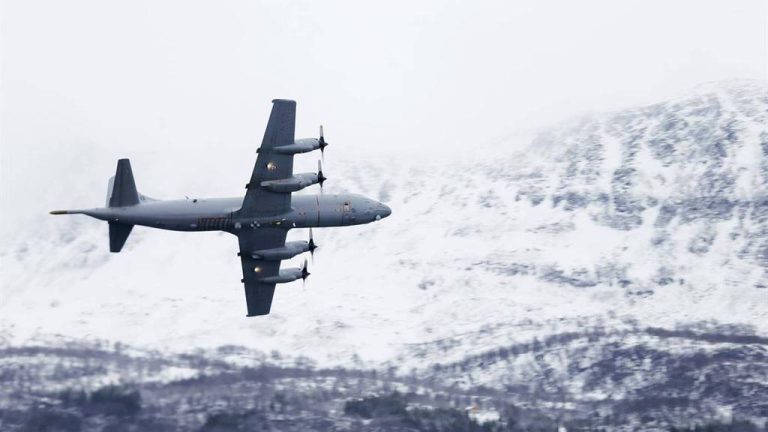
SANTIAGO, Chile — The Argentine government has finalized negotiations to buy four surplus P-3 Orion maritime patrol aircraft from the Royal Norwegian Air Force, meeting a requirement set in 2015 by the South American country’s Navy.
The agreement was reached Aug. 31 in Buenos Aires during a meeting between Defence Minister Jorge Taiana and representatives of the Norwegian Defence Materiel Agency.
Three of the P-3C aircraft are fitted for maritime surveillance, anti-submarine and anti-surface missions, and one P-3N is designed for search and rescue operations, according to a news release from the Argentine Defence Ministry. The statement also also noted the deal is worth $67 million.
Argentina originally intended to acquire surplus P-3Cs from the U.S. Navy. However, the American aircraft would have required refurbishment that exceeded the Argentine government’s funding, according to local military sources, who spoke to Defense News on the condition of anonymity due to the sensitivity of the topic.
Argentine and Norwegian officials began talks about purchasing the aircraft in late 2022. In February 2023, the head of the Argentine Navy, Adm. Julio Guardia, confirmed negotiations were underway with Norway to acquire three or four P-3s that the Nordic country would consider surplus after replacing them with P-8 Poseidon aircraft. Negotiations covered the financial conditions of the potential sale and included efforts to receive U.S. government permission for the transfer of the Lockheed Martin-made aircraft.
The first two planes are to arrive in Argentina by the beginning of October. The P-3s are expected to bolster the capabilities of the Argentine Navy’s surveillance squadron based at the Almirante Zar Air Naval Base near Trelew along the Patagonian coast of southern Argentina. Since 1997, the unit has operated P-3Bs acquired from the U.S. Navy, but their need for servicing has limited their use.
Between 2009 and 2016, before Norway decided to replace its P-8s, all of the country’s P-3s underwent life extension and upgrade work. That included Lockheed Martin replacing wings and parts of the horizontal stabilizers using components made of new alloys more resistant to fatigue and corrosion. The P-3C mission systems underwent an upgrade with the integration of AN/USQ-78B acoustic processor technology refresh, AN/ASQ-227 aircraft mission computers, and tactical mobile acoustic support systems.
“Even when the acquisition of a new, long-range maritime surveillance aircraft should have taken place several years ago, it is a very good and important step toward increasing surveillance, control and protection of Argentina’s extended exclusive economic zone,” Luis Piñeiro, an independent defense and security analyst based in Buenos Aires, told Defense News. “Illegal fishing, which is causing losses of $2.6 billion each year to this country, will be from now prevented and fought more effectively with the support of newer and more capable [maritime patrol aircraft].”
José Higuera is a Latin America correspondent for Defense News.
Naval Air Forces received a new commanding officer Thursday during a ceremony aboard Naval Air Station North Island, California, albeit a leader serving in an acting capacity.
Rear Adm. George Wikoff relieved Vice Adm. Kenneth Whitesell as the commander of Navy aviation, but is only serving as the acting “Air Boss” because his promotion to vice admiral and nomination to be the next commander of U.S. 5th Fleet is held up along with hundreds of other military confirmations in the U.S. Senate.
Rear Adm. Daniel Cheever was nominated to be the next Naval Air Forces commander and to get his third star in March, but his confirmation is also being held up by Sen. Tommy Tuberville’s blockade on military confirmations.
Whitesell took command of the community in October 2020 and oversaw the initial deployment of a carrier air wing that featured the F-35C Lightning II jet, the CMV-22B Osprey and the MQ-8C Fire Scout drone, according to the Navy.
“It has been my honor to serve among the men and women who give Naval Aviation its reputation of excellence, professionalism and quality,” Whitesell said at Thursday’s ceremony, according to a Navy release. “Our community’s legacy, and the legacy of our greater Navy, continues with you. I’m proud of all that we’ve done, and even more proud of what’s to come.”
RELATED
Whitesell is set to retire after 39 years in uniform.
Wikoff comes to the job after serving as vice director of the Joint Staff, a job he began in May 2021.
“To my Navy teammates, Vice Adm. Whitesell’s priority remains your order moving forward,” Wikoff said during the ceremony. “Naval Aviation will continue to sharpen our focus on capabilities, capacity, readiness and training to sustain our warfighting advantage against our increasingly advanced adversaries. I will relentlessly focus on supporting you to meet this imperative.”
Tuberville has held up expedited approval of military commanders, typically a noncontroversial procedural move for the Senate, for six months over his objections to the Defense Department’s abortion access policies that went into effect in the fall of 2022.
Under those rules, troops stationed in states where abortion services are limited or outlawed can receive unpaid leave and travel stipends to move across state lines for abortion counseling or procedures.
Tuberville has labeled the policy an illegal circumvention of state and federal laws, while defense officials have called it a readiness and fairness issue.
Senate Democratic leaders could approve the nominations individually through normal chamber parliamentary procedures, but lawmakers have said doing so would take months of floor work.
Geoff is a senior staff reporter for Military Times, focusing on the Navy. He covered Iraq and Afghanistan extensively and was most recently a reporter at the Chicago Tribune. He welcomes any and all kinds of tips at [email protected].
September is Emergency Preparedness Month and a great time to stock up on emergency supplies. We offer 15% off on Mountain House buckets and kits, a great way to have food in an emergency.
Mountain House meals are freeze-dried, have a long shelf life, are lightweight, and easy to store. They taste great, so that you won’t sacrifice flavor in an emergency.
Use the code MHSEP15%OFF at checkout. The promotion is valid until September 30th.
Correction: A previous version of this story erroneously described a commemorative patch. It did not include imagery of a Display and Sight Helmet system.
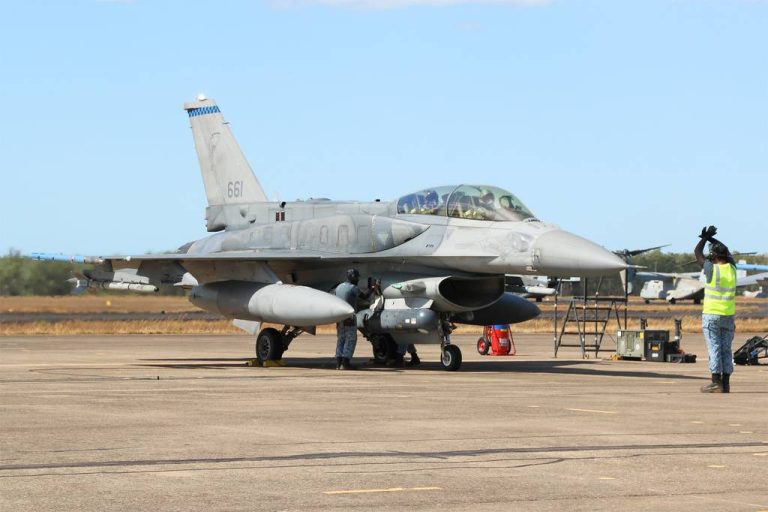
MELBOURNE, Australia — Singapore’s upgraded F-16 fighter jets can now fire the Python-5 air-to-air missile, the country has confirmed.
An information board showcasing the upgraded Lockheed Martin F-16 Fighting Falcons for the Republic of Singapore Air Force’s open house event lists the Python-5, made by Israeli company Rafael Advanced Defense Systems, among the weapons the aircraft can use.
The list also includes satellite-guided and laser-guided Joint Direct Attack Munition variants. Singapore had asked to integrate the two weapons in its Foreign Military Sales request to the U.S. as part of an F-16 upgrade package. The 2014 request to upgrade 60 Singaporean F-16s also sought integration of the GBU-39 Small Diameter Bomb and the CBU-105 (D-4)/B sensor fused weapon.
The Air Force’s F-16 upgrade program also included the AN/APG-83 active electronically scanned array radar, the Joint Helmet Mounted Cueing System, new mission computers, and identification friend or foe technology.
The Python-5 is a fifth-generation air-to-air and ground-based air defense missile. (Rafael USA)
Singapore’s 20 F-16D Block 52+ aircraft receiving upgrades first. The country also operates 40 older Block 52 aircraft delivered from 1998 onward.
A commemorative unit patch for the Singaporean F-16 upgrade program had shown a Python missile, hinting at its eventual integration with the jet. The U.S. Air Force’s 416th Flight Test Squadron, based at Edwards Air Force Base in California, issued the patch. The squadron is also supporting South Korea’s ongoing F-16 upgrade program.
The patch also showed what appears to be the ELL-8212 self-protection jamming pod, which was in use with Singapore’s F-16s prior to upgrade efforts. Elta Systems, a subsidiary of Israel Aerospace Industries, makes the pod.
Singapore’s F-16 pilots also use the Display and Sight Helmet system, made by Israeli firm Elbit Systems, that allows pilots to aim weapons by looking at a target.
The integration of the Python-5 will enable the service greater commonality in its munitions inventory. Singapore is already operating the Rafael-made Spyder ground-based air defense system, which uses the Python-5 and Derby medium-range missile, also produced by Rafael.
The company describes the Python-5 as a “fifth-generation air-to-air missile” and says it provides the pilot with a full-sphere launch capability, enabling engagements against targets from short to beyond-visual range at any point of the compass around the launch aircraft, with the missile locking onto a target after it’s fired.
The missile incorporates a dual-band imaging infrared seeker that enables it to engage “small, low-signature targets in look down, adverse background and cloudy environments,” the company says.
Singapore and Israel have had a close defense relationship since the former’s independence from Malaysia in 1965, with Israel proving instrumental in helping set up Singapore’s military.
Mike Yeo is the Asia correspondent for Defense News.