WTAF? they’re trying to get in our underwear?

0

is this for real???

U.S. government to launch “SMART ePANTS” and other computerized clothing to SPY on Americans’ bodies

![Clothes-Dryer-Laundry-Machine|640×360](upload://hZZEdnTN7Q4bmhwNbt31JHJLBAe.jpeg)

What has come to be known as the “deep state” is [pushing for](U.S. Spy Agencies to Launch ‘Smart Clothing’ Under Guise of ‘Better Health Monitoring’) the launch of “smart ePants,” which the Armed Forces Communications and Electronics Association (AFCEA) claims “could revolutionize the Internet of Things by collecting data to help intelligence, medical and sports communities.”

Computerized clothing is the latest effort by the United States intelligence community (IC) to biometrically surveil every person with precise detail by looking under their clothes and down their pants – for “national security,” of course.

The perverts over at the Office of the Director of National Intelligence (ODNI) announced on August 22 that IARPA (Intelligence Advanced Research Projects Activity), the advanced research and development arm of the IC, will be developing Smart Electrically Powered and Networked Textile Systems, or SMART ePANTS, over the next three-and-a-half years – the halfway point between now and 2030, which will mark the end of seven years and the fruition of Agenda 2030.

According to reports, the SMART ePANTS program involves the creation of digital clothing with “integrated audio, video, and geolocation sensor systems that feature the same stretchability, bendability, washability, and comfort of regular textiles.”

(Related: Did you know that e-commerce retail monopoly Amazon is guilty of [harvesting children’s data](Amazon illegally harvested kids’ data via Alexa-powered ‘smart’ speakers – NaturalNews.com) from its Alexa-powered “smart” speakers? Sickos.)

## Finance giants BlackRock, Vanguard both hold stakes in smart clothing

In partnership with the Naval Information Warfare Center, Pacific, IARPA is busy developing shirts, pants, socks, and even underwear that “listen” and record both video, audio, and pictorial “intelligence” for the spooks in Washington, D.C., to look at and consume – again, for “national security.”

IARPA awarded research contracts totaling more than $22 million to a company called Nautilus Defense and Leidos, Inc., according to an August 9 announcement from the Pentagon (aka, the *Pentagram*).

SRI International, the [*Massachusetts Institute of Technology*](The Massachusetts Institute of Technology (MIT)) (MIT), and Areté are all also receiving cash to help develop smart clothing technology, though in amounts that remain undisclosed.

Finance giants BlackRock and Vanguard, both of which profited from the sale of Wuhan coronavirus (COVID-19) “vaccines,” are similarly invested to the gills in smart clothing – they are also invested in so-called “vaccine passports” and “digital wallets,” which will likely play a major role in the coming new age.

“IARPA is proud to lead this first-of-its-kind effort for both the IC and broader scientific community which will bring much-needed innovation to the field of ASTs [Active Smart Textiles],” said Dawson Cagle, PhD, the SMART ePANTS program manager.

Cagle claims he came up with the idea while trying to concoct better health-monitoring options for his diabetic father – because there is always some “heartwarming” excuse for the latest dystopian nightmare to be unleashed.

Back in January, [an article](Electronic textiles: New age of wearable technology for healthcare and fitness solutions) published in PubMed hyped the possibility of electronic textiles as representing a “new age of wearable technology for healthcare and fitness solutions.” Its many possible applications include in bedding, diapers, and even COVID face masks.

Wearable smart clothing can also be used for “monitoring health conditions, treating chronic diseases, rehabilitation, and improving health and social lifestyles,” the paper further states.

“SMART ePANTS could revolutionize the Internet of Things by collecting data to help intelligence, medical and sports communities,” says the Armed Forces Communications and Electronics Association.

Critics like Ted Claypoole, meanwhile, a legal expert and cyberspace law committee chair for the American Bar Association, says the privacy concerns stemming from this invasive technology are “obvious.”

The fabrics currently in development by the IC are “not just for keeping our people safe,” he told *The Defender*, “but also for finding and following smart-fabric wearers who do not know they are being followed.”

If it has “smart” in the name, you would be dumb to buy it. Learn more at [Surveillance.news](Surveillance News | Surveillance News – Surveillance Information).

**Sources for this article include

[ChildrensHealthDefense.org](U.S. Spy Agencies to Launch ‘Smart Clothing’ Under Guise of ‘Better Health Monitoring’)

[NaturalNews.com](Amazon illegally harvested kids’ data via Alexa-powered ‘smart’ speakers – NaturalNews.com)

[ncbi.nlm.nih.gov](Electronic textiles: New age of wearable technology for healthcare and fitness solutions)

taken from…

https://www.newstarget.com/2023-09-11-us-government-smart-epants-spy-naked-bodies.html


Voodoo Innovations (Adams Arms) Witch Doctor AR-15 $400 “Half Price”

0

No affiliation

Witch Doctor 5.56 RIFLE – VooDoo Innovations

Our team selected a premium-blend of high-quality parts and must-have features for the everyday shooters. The upper and lower are Forged 7075-T6, Type III Class II Hard-coated anodized finish for the ultimate in durability and longevity. A Standard G.I. Trigger, 16″ Parkerized M4 barrel and 1:7 Twist ensure this rifle chambered in 5.56×45 NATO is a shooter. The ergonomic Free Float M-Lok compatible rail allows you to customize with your favorite setup and the A2 Flash Hider, a 7lb weight and 6-position adjustable stock ensure you’ll bring this with and shoot this whenever the opportunity arises. The Witch Doctor doesn’t disappoint and is the new prescription for reliability, performance and everyday use.

[H2]SPECS[/H2]

  • Upper Receiver: A4 Flat-Top, Forged
  • Barrel Length: 16″
  • Barrel Material: 4150 Chrome Moly Vanadium Steel
  • Muzzle Thread Pattern: 1/2″-28
  • Twist Rate: 1 In 7″
  • Chamber: 5.56x45mm NATO
  • Muzzle Device: A2 Flash Hider
  • Gas System Length: Carbine
  • Gas Block Diameter: 0.750″
  • Handguard: Ergonomic Free Float M-LOK Rail
  • Sights: None
  • Grip: A2
  • Trigger: Standard G.I.
  • Stock: M4 6-Position Collapsible Stock
  • Weight: 7 Lbs
  • OAL: 33″ Collapsed
  • UPC: 812151024787
  • Warranty: 1 Year Limited


Boeing to deliver first T-7 to US Air Force, outlines testing plans

0

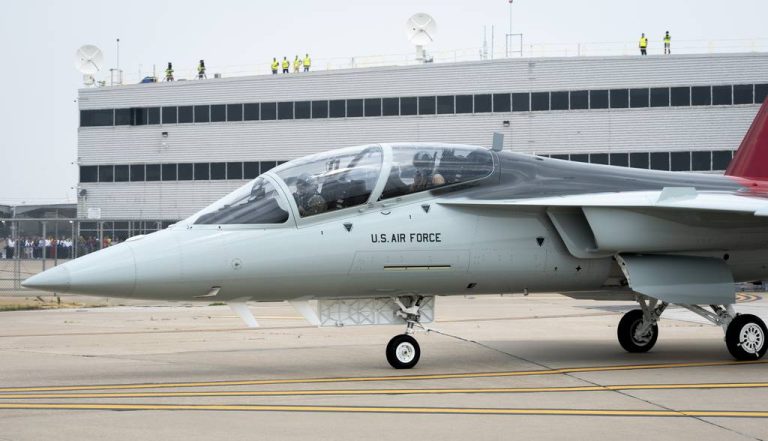
NATIONAL HARBOR, Md. — Boeing plans to deliver the U.S. Air Force’s first T-7A Red Hawk on Tuesday, marking a major milestone for the trainer aircraft that has struggled with safety issues, software problems and schedule slips.

In a briefing at the Air and Space Forces Association’s Air, Space and Cyber conference in National Harbor, Maryland, Col. Kirt Cassell, who leads the service’s T-7A division, and Evelyn Moore, Boeing’s vice president and program manager for the aircraft, also outlined plans for further deliveries and testing of the critical trainer.

The Air Force plans to buy 351 T-7s to replace its fleet of 504 aging T-38 Talon trainers. T-7s are designed to emulate a fifth-generation fighter, and will help new pilots learn how to fly advanced jets such as the F-22 and F-35.

But problems with the T-7, particularly its escape system and flight control software, caused the program to fall behind schedule. The Air Force said in April that the aircraft’s flaws had caused it to both re-baseline its schedule and fall further behind its timeline. The Air Force originally expected the T-7 to reach initial operational capability in 2024, but the service now expects that won’t happen before spring 2027.

In Tuesday’s briefing, Cassell said the Pentagon is processing the final paperwork that allows the Air Force to officially accept the trainer designated APT 2, which the Air Force took for its first test flight in June.

See the U.S. Air Force’s T-7A Red Hawk fly during its engineering and manufacturing development phase. (Boeing)

The Air Force’s first T-7 test pilots will start training and becoming acclimated to the aircraft in a week or so at Boeing’s factory in St. Louis, Missouri, Cassell said, and will start initial flight tests there to gauge qualities such as how well it handles. Boeing expects to deliver the second and third trainers in October, and they will then move to Air Force bases for more in-depth testing.

The fourth and fifth T-7s are in their final stages of construction, with delivery expected by the end of 2023, Moore and Cassell said. All five are needed for when the program moves past the engineering and manufacturing development phase and into the initial operational test and evaluation phase, Cassell said.

The first two T-7s will fly to Edwards Air Force Base in California, where they will undergo a series of increasingly intensive tests measuring performance and handling, Cassell said. This will include studying factors such as aerodynamic “flutter” and how much load the trainer can bear in flight.

The third jet will go to Eglin Air Force Base in Florida for about six weeks of climate testing at the McKinley Climatic Laboratory. That testing occurs in a chamber designed to emulate varying temperatures and weather conditions in order to ensure aircraft can operate safely in all climates.

Moore said the T-7 is on track for a milestone C decision authorizing low-rate initial production in the first quarter of 2025.

Saab, which makes the T-7′s aft fuselage in West Lafayette, Indiana, and other key suppliers to Boeing have already made major assembly components for the next wave of T-7s, Moore said. This will allow Boeing to have T-7s built at St. Louis and ready for delivery as soon as low-rate initial production is authorized, she said. Moore expects Boeing can built about 60 T-7s per year.

The Government Accountability Office earlier this year noted that Boeing’s plan to start building aircraft before the Air Force officially placed an order could pose “significant risks” to the service. The watchdog said the Air Force and the Defense Contract Management Agency would be unable to conduct all the necessary production oversight to ensure the planes meet requirements. And if the T-7 changed significantly between the test phase and award of a low-rate initial production contract, the GAO said, those planes already built might need retrofitted.

Moore and Cassell also provided updates on efforts to fix the T-7′s escape system and glitchy flight control software. Problems with the T-7s flight control software are still being worked out, Moore said, but an update to is on the way and expected to be released in the next few months.

Cassell said that following a successful and informative February test of the redesigned escape system, the Air Force and Boeing have since conducted further tests measuring the ejection seat’s center of gravity and inertia, as well as collecting data in a wind tunnel.

More tests will follow this fall on other elements of the escape system, including the seat’s drogue parachute, Cassell said. Another “full-up shot” to test the complete system is expected to take place in February 2025, he added.

Cassell said the Air Force did not issue a formal waiver allowing T-7 tests to take place before the final fixed escape system was in place. Instead, he explained, Air Force leadership was briefed that “the escape system is not exactly where we’d like it to be yet,” and have permission to conduct flight tests.

Stephen Losey is the air warfare reporter for Defense News. He previously covered leadership and personnel issues at Air Force Times, and the Pentagon, special operations and air warfare at Military.com. He has traveled to the Middle East to cover U.S. Air Force operations.

Value of Ukraine F-16s won’t be immediate, says US Air Force general

0

WASHINGTON ― President Joe Biden’s nominee to lead the Air Force has told lawmakers that F-16 fighter jets NATO is sending to Ukraine will mostly be effective in the long term as the war-torn country works to integrate them into the broader military.

Gen. David Allvin, the Air Force vice chief of staff on tap for a promotion to serve as the service’s No. 1 officer, said at his Senate confirmation hearing Tuesday that those F-16s would require additional training to benefit the rest of Ukraine’s forces. However, he added, the promised delivery also serves as a “symbol” of the intent to eventually transition Ukraine to Western weapons platforms.

“As with our Air Force, we’re only effective if we’re part of a joint force,” Allvin said in response to a question from Sen. Joe Manchin, D-W.Va. “The value of the F-16s will be in the longer term when it’s better integrated with a larger Ukrainian military.”

If confirmed, Allvin would replace Air Force Chief of Staff Gen. CQ Brown, whom Biden nominated as the chairman of the Joint Chiefs of Staff. It’s unclear when the Senate will confirm either nominee since Sen. Tommy Tuberville, R-Ala., has held up swift confirmation of more than 300 senior military nominees.

“What we understand through our successes in air power and air superiority is it’s not only the platform, but it’s the training,” Allvin said. “And that training is not just on the platform, but it’s the integration with the command-and-control elements, the integration with the joint force.”

Denmark and the Netherlands announced in August they would donate up to 61 F-16s total to Ukraine after Biden authorized the transfer following months of pressure from NATO allies and U.S. lawmakers, including Manchin. The U.S. will lead the training of Ukrainian pilots, which is expected to begin in the coming weeks at Morris Air National Guard Base in Tucson, Arizona.

U.S. officials predicted the jets wouldn’t be ready for combat in Ukraine until mid-2024, given the training timelines as well as logistics and maintenance considerations. Still, The Wall Street Journal reported this week that Ukraine expects it will be ready to use the jets by this winter.

Either way, the jets will not be ready to use amid Ukraine’s slow-moving counteroffensive. Gen. Mark Milley, the outgoing U.S. Joint Chiefs of Staff chairman, told the BBC on Sunday that Ukraine has between 30 and 45 days of fighting weather left before winter conditions make it hard to maneuver.

Additionally, the Biden administration is weighing whether to send the long-range munitions to Ukraine.

Laura Cressey, director of regional security and arms transfers at the State Department’s Bureau of Political-Military Affairs, said at the Defense News Conference last week that the Biden administration is “closely considering” giving Kyiv these capabilities after months of reluctance.

“There’s been a lot of talk about F-16s, a lot of talk about long-range fires,” Cressey said. “All of those the U.S. government is very closely considering, but it takes a lot in terms of training.”

Specifically, lawmakers have called on Biden to send Ukraine long-range Army Tactical Missile Systems.

A provision in the House’s fiscal 2024 defense policy bill would require the Pentagon to build the Lockheed Martin-made ballistic missiles for Kyiv via the Ukraine Security Assistance Initiative, which contracts out longer-term assistance to the European nation. Britain has already provided long-range Storm Shadow cruise missiles to Ukraine.

Bryant Harris is the Congress reporter for Defense News. He has covered U.S. foreign policy, national security, international affairs and politics in Washington since 2014. He has also written for Foreign Policy, Al-Monitor, Al Jazeera English and IPS News.

US Air Force prioritizing cloud-based command and control

0

NATIONAL HARBOR, Md. — The U.S. Air Force is prioritizing the delivery of cloud-based command-and-control networks to forces across the globe, and is preparing to follow through even under federal spending that falls short of a full budget.

The so-called CBC2 effort is closely tied to the service’s Advanced Battle Management System, or ABMS, itself a portion of the Pentagon’s larger connect-everything-everywhere campaign now known as Combined Joint All-Domain Command and Control.

U.S. Northern Command, North American Aerospace Defense Command and Pacific Air Forces, the air component of Indo-Pacific Command, were slated to be the first organizations to receive the program, which melds information from hundreds of radar feeds and lets users tap into machine-fueled analysis.

“The CBC2 plan that we have right now is one we intend to preserve, despite a slowdown with regards to getting budget when and where we need it,” Brig. Gen. Luke Cropsey, the integrating program executive officer for command, control, communications and battle management, told reporters Sept. 11 on the sidelines of the Air, Space and Cyber Conference at National Harbor in Maryland.

“It’s really about prioritization, right?” he said. “How far can you get with the dollar you have available?”

The Air Force in January tapped Science Applications International Corporation to orchestrate CBC2 software. The deal was worth up to $112 million.

Talk of a short-term spending bill — or even a partial government shutdown — is heating up as the last weeks of fiscal 2023 tick away. While a continuing resolution maintains the funding rates of the previous year’s appropriations and ducks a full-blown stoppage, it also jeopardizes the start of new projects.

Members of the House are expected in the coming days to vote on an $826 billion Defense Department budget for fiscal 2024. The White House has threatened to veto the measure, should it get that far, Defense News reported.

Air Force Secretary Frank Kendall on Monday said the service could endure a short-term continuing resolution, as it has in the past. But, he warned, a longer freeze could cause problems.

“Do not shut down the government in three weeks,” Kendall said. “Many of us have been through shutdowns. They are extremely damaging to our readiness, retention and morale.”

Colin Demarest is a reporter at C4ISRNET, where he covers military networks, cyber and IT. Colin previously covered the Department of Energy and its National Nuclear Security Administration — namely Cold War cleanup and nuclear weapons development — for a daily newspaper in South Carolina. Colin is also an award-winning photographer.

Can Fildena Super Active be used by women for any medical conditions?

0

Fildena Super Active is specifically designed and intended for use by men to address erectile dysfunction (ED). It is not indicated for use by women, as the active ingredient (sildenafil citrate) works on the physiological mechanisms specific to the male anatomy.

In women, the causes of sexual dysfunction are often different from those in men. Therefore, using Fildena Super Active for women would not be appropriate or effective in addressing their specific sexual health concerns.

If a woman is experiencing sexual difficulties or concerns, it is crucial for her to consult with a healthcare provider. They can conduct a thorough evaluation, identify any underlying causes, and recommend appropriate treatment options or interventions that are tailored to her individual needs.

Always remember to seek professional medical advice and guidance for any health-related concerns or conditions.


Hard Times and getting by

0

No secret that I spent A LOT of money last year on big projects. Pretty much my entire liquid cash reserve. Then in November Mrs Kraps Cancer turned everything sideways. I don’t care how good your insurance is the Travel, the Co Pays on every test, doc visit and prescription adds up to A LOT out of pocket pretty fast. She had like 150 days of sick days on the books and 130 vacation days that she used to keep her salary flowing in but all of the addition expenses ate through her pay checks pretty quickly. And Got pretty deep into my regular monthly income from some leases. And sporadic sales of grain and cattle. LOL at the end of the year we earn almost exactly the same amount of money but it comes in much differently. The original plan was to live on her income and recover the cash reserve with my income. It didn’t exactly pan out that way hehe.

So for the last Six weeks we have been falling around $2000-$3000 per Month short and this will continue until Mid November. She had to retire and her Pensions won’t Start until December and she was instantly approved for SSD That won’t start until mid November. I just wont liquidate my retirement investments investments as the taxes and penalties would be like throwing money down a Government Toilet. On paper I am in great shape with a very large asset number but I am not going to sell land, base livestock and equipment. We could take out a loan to get us through but we both agree that breaking out ZERO DEBT for ANYTHING Rule Shall Not be broken.

So how to make up the short fall in Monthly income until her income starts flowing again????? JUNK has became the answer LOL. Like most working farms equipment beyond repair ends up in a fence row or a junk pile. So I have been running the Acetylene Torch around cutting old implements into chunks that the M5660 can lift with the forks…. around 2500 pounds and loading the GN Trailer up with 7500-14000 pound loads and hauling to the scrap yard. Light loads on the 20′ utility trailer and heavy loads on the GN and have been bringing in $350-$1200 per load depending on what the implement I cut up is, or if I just use the utility trailer and take storm crunched steel roofing and siding , Chain Link and Cattle Panels and misc junk. lightest load I smashed into the utility trailer brought the $350.. There was a fair amount of old fence row iron here when I bought the place so its not all mine. Several old cars and trucks that I need a title for if I take them whole, no title required if I pull the engine take out the glass and cut them up into 3-4 sections I am a cheap ass and not going to pay the state for a junk title…… The acetylene and oxygen is cheaper.

After loading up two old haybines, a old square baler, a badly broken 4 bottom plow, a couple of wagons and the old mobile home this evening it will be another $1200 load tomorrow and put me right at $20,000 of junk hauled in over the last 6 weeks. I am quite pleased with myself cleaning up crap I should have done years ago and making good money at the same time. More than enough to get through this rough patch with money to spare…….. And I am only half way through the fence row junk. I have been cutting the alternators and starters off of the cars and trucks and throwing them in a separate pile and have scrounged up around 400 pounds of old copper pipe and wire from my wore out appliance pile, the pipe was a big stack in a fence row that someone ran over with a heavy something long before I owned it and smashed the center of the pile. Scrap yard guy tells me that stuff will make a FAT payout when I bring it in……….. and to be sure to shoot a hole in all of the appliance compressors before bringing them……………

The junk sure has taken a load of worry off of Mrs. Krap she had been fretting and worrying herself to death about paying the regular bills and the medical bills and that I would have to start selling off things I really don’t want to sell off. So me coming home every 2-3 days and handing her 350-1200 in cash makes her smile……. Not something I have seen a lot of from her since the cancer diagnosis. That little Lady is the world to me and if I had to liquidate some stuff on the sly to keep her from stressing and worrying I would be selling stuff off out the back gate in a heart beat. She has more than enough to worry about without adding financial worries to the list.

Edit just learned of BTs Passing……….. I am really not looking forward to being Where Alaskachick is now. The only thing harder than being the Cancer Patient is being the Cancer Patients Spouse :( It is damned hard to put on the brave face every morning and not let the negative emotion show and try to keep everything up beat and positive. This just ain’t how our story was supposed to go. I Retire and build our new house and lake and ponds and she retired and we live a long time sitting by the fire ring roasting marshmellows and laughing to the end…….. Can’t even imagine my world with Mrs Krap in it. She has found a lot more peace in this than I can find.

 

Anduril announces Ghost-X, with more payload capacity, longer flights

0

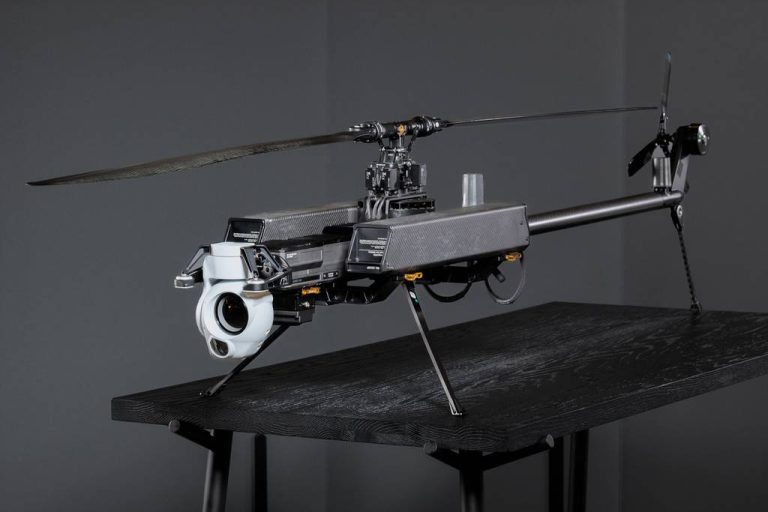
LONDON — U.S. tech firm Anduril Industries unveiled its Ghost-X autonomous uncrewed aircraft system here Sept. 12, an upgraded version of its Ghost system that can carry heavier payloads and fly for longer periods of time.

The system is flexible, modular and “purpose-built for reconnaissance, security and force protection,” the company said in a statement released during the DSEI conference. The design is based on feedback from the U.K. Ministry of Defence and other Ghost customers, including the U.S. Air Force, the U.S. Marine Corps and U.S. Special Operations Command.

“The Ghost platform was designed to adapt to user needs with a flexible and rail-centric design, and Ghost-X embodies that mission through the integration of new propulsion, payloads, and software to meet the needs of operators in challenging environments around the world,” Anduril said in the statement.

The X-variant’s upgraded propulsion system allows the aircraft to carry two batteries, extending its flight time to 75 minutes and doubling its payload capacity to 9 kilograms (20 pounds). The system also has an optional long-range communications kit and can be configured to fly a range of sensors and payloads, including electro-optical gimbals and a vision-based navigation module that allows it to fly without the Global Navigation Satellite System or GPS.

“These new capabilities contribute to a layered system of hardened navigation and communications to maximize resiliency in low-connectivity and denied environments,” the company said.

The announcement follows news Anduril has purchased Blue Force Technologies, an uncrewed aircraft system developer based in North Carolina. Blue Force builds a Group 5 UAS; these typically weigh more than 1,300 pounds and can operate above 18,000 feet. By contrast, Ghost is a group 2 UAS; they weigh less than 55 pounds and operate below 3,500 feet.

The purchase of Blue Force, according to Anduril’s head of strategy Christian Brose, builds on the company’s investments in mission autonomy software and small UAS development, adding larger systems to its portfolio.

It also positions the company to respond to calls from the U.S. Department of Defense for larger quantities of commercially available systems, particularly drones and AI capabilities, Brose told C4ISRNET in an interview.

“This has very much been a mantra of ours for the past several years, and we’re thrilled to see the progress that’s now emerging,” he said. “We have a lot to contribute to that type of objective if that is the direction the department and the United States head. It seems very clear that that is where they want to go.”

Defense Deputy Secretary Kathleen Hicks on Aug. 28 announced an initiative called Replicator, which aims to field thousands of low-cost autonomous systems over the next two years. Speaking at the Defense News Conference Sept. 6, Hicks said the effort is designed both to deter conflict with China and to ensure the U.S. has a tactical advantage if conflict does arise.

It’s also a move to drive a change in how the Defense Department develops and fields technology, signaling a push for affordable mass — whether that’s aircraft, ships, missiles or satellites.

“We’ve seen in Ukraine what low-cost, attritable systems can do — not to mention other commercial technologies,” Hicks said. “They can help a determined defender stop a larger aggressor from achieving its objectives, put fewer people in the line of fire, and be made, fielded and upgraded at the speed warfighters need, without long maintenance tails.”

Courtney Albon is C4ISRNET’s space and emerging technology reporter. She has covered the U.S. military since 2012, with a focus on the Air Force and Space Force. She has reported on some of the Defense Department’s most significant acquisition, budget and policy challenges.

Air Force to fall nearly 150 pilots short of annual training goal

0

The Air Force will fall short of its fiscal 2023 pilot training goal by about 120 airmen, missing its annual target of around 1,500 new aviators for the eighth consecutive year, the service confirmed Sept. 8.

A slew of maintenance woes, staffing issues and other unexpected setbacks led the Air Force to pin wings on around 1,350 airmen rather than its aspirational goal of 1,470. The shortfall makes it more difficult for the service to fill a pilot shortage of around 2,000 people that has persisted for years.

“We’re going to try to make sure we are still flying because that’s what we do as an Air Force,” Maj. Gen. Clark Quinn, the two-star general in charge of pilot training told reporters on a recent conference call.

The Air Force set a new target of around 1,500 new aviators a year in fiscal 2020 but has so far failed to meet its own bar. It will aim for that same goal in fiscal 2024, Air Force spokesperson Benjamin Faske said.

About half of unfilled pilot billets belong to the active duty Air Force, and most fall within the fighter community. To avoid shortchanging the operational squadrons that fly missions around the world each day, the Air Force instead leaves staff jobs empty that pilots would typically fill.

“It sounds like it’s not as big of a deal to short the staff,” Quinn said. “That actually does affect long-term mentoring and growth of the officers that we expect to be able to lead our Air Force in the future.”

It also puts more pressure on the service to retain experienced pilots. More than 650 airmen, or 67% of eligible people, have accepted bonus pay under a legacy program aimed at keeping aviators in uniform, the Air Force said Aug. 30.

At least 210 more airmen have signed contracts worth up to $50,000 a year as part of a new, congressionally mandated pilot retention program that opened this summer.

Slower-than-expected repairs to the engines used on the T-38 Talon jets have limited the number of aircraft that can be used for daily training missions for more than a year. T-38s are the Air Force’s sole intermediate platform for teaching airmen to fly fighter and bomber aircraft.

“It has not gotten worse, but it has also not gotten better,” Quinn said. “The government is looking at perhaps doing some in-house … parts production to try and help facilitate getting them back healthy.”

In July, a thunderstorm further set back undergraduate pilot training when it damaged nearly 20 T-6 Texan II turboprop aircraft at Vance Air Force Base, Oklahoma.

“Those spare parts are not sitting on a shelf where you can pull them out and fix it the next day,” Quinn said.

The service is also still struggling to fill its civilian instructor jobs, 30-40% of which sit open. Quinn said the Air Force is testing the possibility of hiring remote teachers to control a simulator or run a class from afar. Slow internet connections could limit how widely that option may be used, he added.

Those problems have made it difficult for the Air Force to fully reap the benefits of years of changes to its undergraduate pilot training, shrinking it to a seven-month process that allows airmen to move at their own pace using virtual reality and other educational technology.

The service had hoped the overhaul would eventually allow it to graduate more pilots who are better equipped to juggle the conflicting demands of modern combat.

As years of UPT refinements come to a close, other updates are still getting off the ground. A streamlined version of fighter pilot training, which combines introductory and graduate-level practice in the T-38 Talon jet, is underway at Columbus Air Force Base, Mississippi, Quinn said.

“They’re executing that right now,” Quinn said. “It is … maybe 15% to 20% of the way through the syllabus, so far too early to take any grand conclusions from it. But having notionally talked to some of the pilots, they’re already seeing where there’s going to be opportunities to make the entire pipeline more efficient.”

The Air Force is leaning into its plan to train new mobility pilots using simulators instead of the T-1 Jayhawk jet, which will gradually retire through fiscal 2026.

“Again, it’s a little bit too soon to make grand assessments, but at this point, the folks that have graduated from that … program are doing just fine at the formal training units,” Quinn said. “We’ve noticed no significant trends or dropoff in their performance.”

Lawmakers have requested more insight into that process as part of the fiscal 2024 defense policy bill, and proposed to block the service from retiring any T-1s until more questions on the plan’s impact on pilot production are answered.

A revamped version of helicopter training has ended the practive of first teaching airmen to fly the T-6 Texan II turboprop plane, and instead begins with rotary-wing training from the outset. After an introductory course, airmen head to undergraduate helicopter training at the Army’s Fort Novosel.

Defense company CAE announced in June it would run the Introductory Flight Training-Rotary course over the next 10 years under a contract worth up to $111 million. The class will move to the company’s facility near Fort Novosel in Dothan, Alabama. Quinn indicated that transition will be complete in the fall.

The various slowdowns have also created a bottleneck in the training pipeline itself, as hundreds of airmen wait for spots at those flight schools to open up.

More than 900 people were waiting to begin pilot training at the end of August, Faske said. The pool of pilot hopefuls typically spikes in the late spring and early summer as candidates graduate from college, then wanes as they enter the schoolhouses throughout the year.

But the downturn in aircraft availability means those students filter through the system more slowly, keeping them out of the cockpit for months.

Half of that pool must wait three to nine months to begin undergraduate pilot training, Faske said. Another quarter waits for less than three months, and the remaining quarter is in limbo for more than nine months.

In the meantime, airmen get their initial flight training classes and survival courses out of the way, start postdoctoral studies, or are slotted into office jobs where they can use their college degrees.

“You’ve completed your training. We had a commitment to you, we’re going to make you a lieutenant, and we will put you to work,” Quinn said.

Rachel Cohen joined Air Force Times as senior reporter in March 2021. Her work has appeared in Air Force Magazine, Inside Defense, Inside Health Policy, the Frederick News-Post (Md.), the Washington Post, and others.