Argentina eyes surplus CH-46 helicopters as Mi-17 replacement

0

SANTIAGO, Chile — The Boeing CH-46 medium-lift helicopter, retired from service in the U.S. Navy and Marine Corps, may get a new lease on life, this time with the Argentine Air Force.

Talking to local media after a Sept. 15 ceremony, Argentine Air Force chief Gen. Xavier Issac said he’s interested in buying surplus CH-46s currently stored with the 309th Aerospace Maintenance and Regeneration Group in Arizona. He added that the Argentine government has sent a letter of request to the U.S.

Issac said a delegation would visit the 309th in the next few weeks to check the condition of available CH-46s, and hinted that contacts were signed with Columbia Helicopters, a U.S.-based firm able to refurbish, upgrade and modify the helicopter type.

But a military source in Buenos Aires, talking to Defense News on the condition of anonymity to speak freely, said that “even when the potential procurement of surplus CH-46s is aimed to increased vertical lift capacities for a wide range of uses, the first priority would be to replace two Mil Mi-171Es, ordered in 2010 in a contract worth U.S. $26.5 million, and used since 2011 in support of Antarctic operations.”

The source added that both Russian-made Mi-17 aircraft are grounded because maintenance scheduled in the country cannot take, given Russia’s ongoing war against Ukraine.

“Sanctions applied to Russia made [it] impossible to send the helicopters there and even to transfer the payments,” the source explained. “The possibility to have the works made in Peru, Colombia or Mexico was explored afterward but proved fruitless, as those workshops do not have the certification to work on the engines of the Argentine Mi-171Es.”

Argentina gave up on the maintenance plans in Russia last month, according to the former’s Defense Ministry, leaving the future service of the helicopters in doubt and increasing pressure to acquire replacements.

“The idea is to procure a first batch of four CH-46s, with follow-on orders aiming to add machines to achieve a strength of at least eight helicopters,” the source said. “Not only surplus machines in store are being sought, but also those currently operated by civilian firms that may be available.”

Luis Piñeiro, an independent defense analyst based in Buenos Aires, said it’s a “good idea” to buy refurbished CH-46s, even more so if the reason is to replace the Mi-17s for Antarctic operations, “which are a high priority for Argentina.”

“But it looks unlikely that the current administration led by President Alberto Fernández, which is in its very last months in office, will manage to finalize it. [This] will be in the hands of the next government, to be elected on Oct. 22.”

José Higuera is a Latin America correspondent for Defense News.

Real false *News*

0

How long before a post like this or about another well known person is not walked back or not believed as being false and people react.

Donald Trump Jr's X account is 'hacked' & shares wild posts saying dad is dead

Democratic Republic of Congo orders Paramount Group’s Mwari aircraft

0

BEIRUT — The Democratic Republic of Congo has ordered “several” Mwari aircraft from the South African defense firm Paramount Group, according to a Sept. 13 company news release.

The purchase follows Paramount’s delivery of equipment to Mozambique, where the Mwari is already operational. According to the firm, the aircraft is designed for a wide range of missions, such as counterinsurgency, border patrol, precision strike, reconnaissance and surveillance.

The company did not respond to Defense News about how many Mwari were on order by the DRC and the contract value. Defense News has contacted a DRC embassy for additional information.

The aircraft, touted as requiring a minimal logistical footprint, can operate in remote and austere environments as well as equip different payloads.

“With decades of experience in asymmetrical warfare, we’ve designed the Mwari as a tool that is not only robust but incredibly adaptable, fitting the needs of modern militaries in Africa and around the world,” Steve Griessel, the chief executive of Paramount Group, said in a statement.

Paramount also announced during DSEI it integrated “advanced weapons systems” on the Mwari, noting it will disclose specifics “at a later date.” Weapons testing and certification are expected later this year or in early 2024, the news release stated.

Could A HEMP Attack Bring The End For The United States?

0

Imagine this scenario: In just a matter of seconds, a terrifying event unfolds. A nuclear device explodes high above the Earth’s surface, and suddenly, everything goes eerily quiet. The familiar glow of city lights that typically brighten the night sky vanishes instantly. The conveniences we rely on, powered by intricate electrical systems and microcircuits, abruptly cease to operate.

If you attempt to tune in to the latest news on your television, you’ll be met with frustration because the signal has been disrupted. Phone networks and the Internet, our lifelines to the outside world, are also rendered useless. Panic sweeps through the population as people grapple with the uncertainty of the situation. Little do they know that a high-altitude electromagnetic pulse (HEMP) attack has struck the United States, plunging them into a world of confusion and darkness. The road ahead remains shrouded in uncertainty.

What exactly is a HEMP attack?

Well, it’s crucial to grasp that a HEMP attack, is a unique form of nuclear assault that inflicts widespread devastation without immediate harm to people. This type of attack unfolds when a nuclear device detonates high up in the atmosphere and is then magnified by the ionosphere. The result is an expansive electromagnetic energy field that envelops everything within its line of sight below the detonation point.

This energy field wreaks havoc on electronic devices and electrical systems across a significant area. Consequently, it can trigger a domino effect of failures in critical infrastructure, including the power grid, water treatment facilities, gas refineries, and transportation and communication networks.

In a report titled “Nuclear Weapons EMP Effects,” The Federation of American Scientists underscored that, given specific conditions related to the type of device and its detonation altitude, a nuclear explosion occurring above Kansas could potentially impact the entire continental United States.

This dire scenario relies on wires and other conductive materials like overhead power lines, which can act as antennas to channel the energy shockwave into electronic systems found in communication equipment, automobiles, and aircraft.

Notably, back in 1962, the United States conducted a HEMP test over the Pacific Ocean, resulting in disruptions to radio stations and electronic equipment located 800 miles away in certain parts of Hawaii.

Here’s a simplified explanation of how a HEMP attack works

Let’s delve into the mechanics of a HEMP attack which according to a report prepared for Congress titled “High Altitude Electromagnetic Pulse (HEMP) and High Power Microwave (HPM) Devices: Threat Assessments,” a HEMP attack, triggered by a nuclear explosion high above the Earth, generates three distinct “energy components.” These components have various effects that, when combined, can wreak havoc on electronic equipment.

First and foremost, there’s the shockwave, lasting a mere one microsecond. Think of it as an intense burst of static electricity. This initial energy component is capable of overloading the circuitry of electronic devices situated within the detonation’s line of sight, making it a hallmark of a HEMP attack.

Following the shockwave is the second energy component, akin to a lightning strike. On its own, this pulse might not pose a threat to infrastructure that’s well-protected against lightning strikes. However, due to the intense and rapid nature of the first energy component, it can compromise these protective measures, rendering the second energy component potentially more destructive in a HEMP attack, as stated in the congressional report.

The final energy component is a “magnetohydrodynamic” signal, with a duration ranging from one microsecond to several seconds. This component inflicts damage on extensive networks of electronic equipment and is a critical aspect of a HEMP attack’s impact.

Within this third energy component, there exist two distinctive parts referred to as “blast” and “heave.” The “blast” is a consequence of the expanding and conductive fireball’s distortion of Earth’s magnetic field lines. Subsequently, the “heave” arises from the heating and ionization of the atmosphere beneath the fireball, further distorting the planet’s magnetic field.

As the fireball continues to expand, it induces a “localized magnetic effect” on the ground, which swiftly collapses. This collapse triggers another “power surge” that can overwhelm electrical equipment connected to the power grid and telecommunications infrastructure, amplifying the devastation caused by a HEMP attack. This can lead to more damage across interconnected communication systems and long-distance power lines.

It’s important to note that while smaller, isolated systems may experience somewhat less disruption from the third energy component, they are still susceptible to damage caused by the initial energy component. The occurrence and magnitude of this third energy component in a HEMP attack depend on the total energy of the nuclear detonation and may not manifest with smaller nuclear weapons.

What happens when there’s a HEMP attack?

If someone were to launch a HEMP attack on the United States, let’s imagine they use a powerful enough device at a high altitude to knock out the entire country’s power grid. While this wouldn’t cause immediate harm to people, it would create chaos in the electronic world.

Most electronic gadgets and equipment would get disrupted, although not necessarily everything. Anything connected to the power grid when the burst occurs is likely to become useless. This means electricity and electronic communication as we know it might go dark.

Furthermore, devices that rely on computer chips, from small gadgets to modern vehicles, could suffer damage. Even if some devices or systems manage to escape destruction, the disruption would be widespread. This is because electronic infrastructures are intricately connected, making the impact of a HEMP attack extensive.

What would that mean for us?

A HEMP attack can lead to some serious consequences.

bousaside1First off, phone networks would be completely knocked out. Even if your cell phone manages to turn on, you won’t be able to reach anyone. This means it would be tough to locate people who aren’t nearby since communication would be practically non-existent. And if modern vehicles that rely on electronic ignition and control systems are blocking the roads, traveling to find others would be a real challenge.

Now, if the country is hit by a widespread HEMP attack, and order isn’t quickly restored, our everyday lives would undergo a drastic transformation. Most folks typically have only a few days or weeks’ worth of food and water at home. Initially, people might rush to grab supplies from grocery stores, but anything that needs refrigeration won’t remain edible for long. Canned and non-perishable items would vanish from the shelves in no time.

Gasoline, kerosene, and other petroleum-based products all come from oil refineries that rely on electricity. Without electricity, delivery trucks can’t bring food to stores (assuming the trucks themselves aren’t rendered useless due to damaged electronic parts). Farmers might continue growing crops, but they won’t have a way to transport them to customers.

Trucks, trains, and most other modes of transportation would either cease to function or become extremely scarce. The same goes for water and water supplies. Although the Earth has plenty of water, the equipment we use to access and purify it is limited, and people might not be willing to share. This could lead to many tragic deaths from starvation and dehydration.

For those who depend on temperature-sensitive medicines like insulin, finding alternative storage methods would be crucial since refrigerators wouldn’t work. Those who rely on constant medical care, doctors, or medical devices might not survive for long. This is even before factoring in the lack of proper sanitation, which could lead to the spread of diseases.

Hospitals might end up resembling FEMA-like camps, and those who can reach them might get the help they need to survive. However, many people may not be so fortunate.

Banks would shut down without their electronic records, making cash obsolete. People would have to resort to bartering goods and services. Those who’ve thrived in the modern world through their skills and opportunities might find themselves at a loss in this new, almost 19th-century-like world. Surviving would require resourcefulness and adaptability, but even then, life as we know it would be profoundly altered. People would change, and not all of those changes would be for the better.

A changed world

living in a changed world

Imagine living in a new world shaped by the aftermath of a HEMP attack, where the term “HEMP attack” signifies a High-Altitude Electromagnetic Pulse attack. As various systems and modern conveniences gradually become obsolete, life might regress to resemble the way people lived in the 1700s and 1800s – a stark departure from our current civilization.

In this transformed world, your first priority will be securing a source of water, especially if you don’t already have access to a well or similar source. Gathering and transporting the gallons of water needed for daily use will be a time-consuming and energy-draining task. Currently, the average person uses about 80 to 100 gallons of water each day, as per the U.S. Geological Survey (USGS). Much of this usage is attributed to flushing toilets and taking showers and baths. Without these modern amenities, water consumption might decrease, but it will still be substantial.

Groundwater from wells typically undergoes natural filtration through rocks, reducing the likelihood of pathogens. However, it may still contain chemicals. Surface-water sources like rivers, lakes, and reservoirs will require filtration. Alongside boiling water, having access to a water purifier will be essential.

Grocery stores will become a thing of the past, and you won’t be able to rely on distant farmers who lack the means to transport their produce. People will have to take up farming or engage in hunting and gathering, unless someone skilled enough establishes a trading post (more on that later). Food, apart from nuts and plants, will spoil quickly without refrigeration, unless you learn preservation techniques.

Hygiene products like shampoos and deodorants will become scarce, and proper waste disposal will become crucial without running water. Contaminated water, whether by feces, urine, or animal waste, can spread diseases. In the absence of regular sanitation and medical care, diseases are likely to proliferate.

Finding a nearby doctor will be challenging, but if you do locate a medical professional, they will need to rely on available resources, such as medicinal plants or traditional medical treatments. You might have to offer incentives for their services, often in the form of bartering goods and services.

Resourceful individuals may establish shops and farmers’ markets, allowing people to live like rural farmers did in the 18th century. Industries like textile factories may thrive once more in this altered landscape after a HEMP attack.

Before electricity, steam-powered transportation like steam locomotives was prevalent, deriving power from coal and water. Steam carriages and similar vehicles could make a comeback, or people might resort to horse-drawn carriages for travel.

However, remember this: Possessing desirable items in this new world carries risk, as they may be forcibly taken from you. Government plans to mitigate HEMP attack consequences and restore order might prove ineffective. In this transformed world, you cannot rely on others for protection – you and your family’s safety will be solely your responsibility.

survivalstockpile

A HEMP attack may not cause immediate casualties, but it could lead to widespread death in the United States. Those reliant on modern medicines and medical care, as well as those struggling to secure water and food, maintain comfort, and safeguard their families from threats, could face devastating losses.

Many countries possess nuclear weapons capable of turning this scenario into reality. So, in the event of a HEMP attack, you should ask yourself some critical questions: Do I know what to do? Am I prepared for the world that follows? Do I possess the skills and resources required to survive? If you don’t have answers to these questions, the response to all of them is likely “No.” It’s time to start preparing.

Suggested resources for prepper and survivalists:

The #1 food of Americans during the Great Depression

What to do when the power grid goes down

The latest innovation in solar pannels – 3D technology

Find Out What’s the Closest Nuclear Bunker to Your Home

A use for a old camper trailer frame.

0

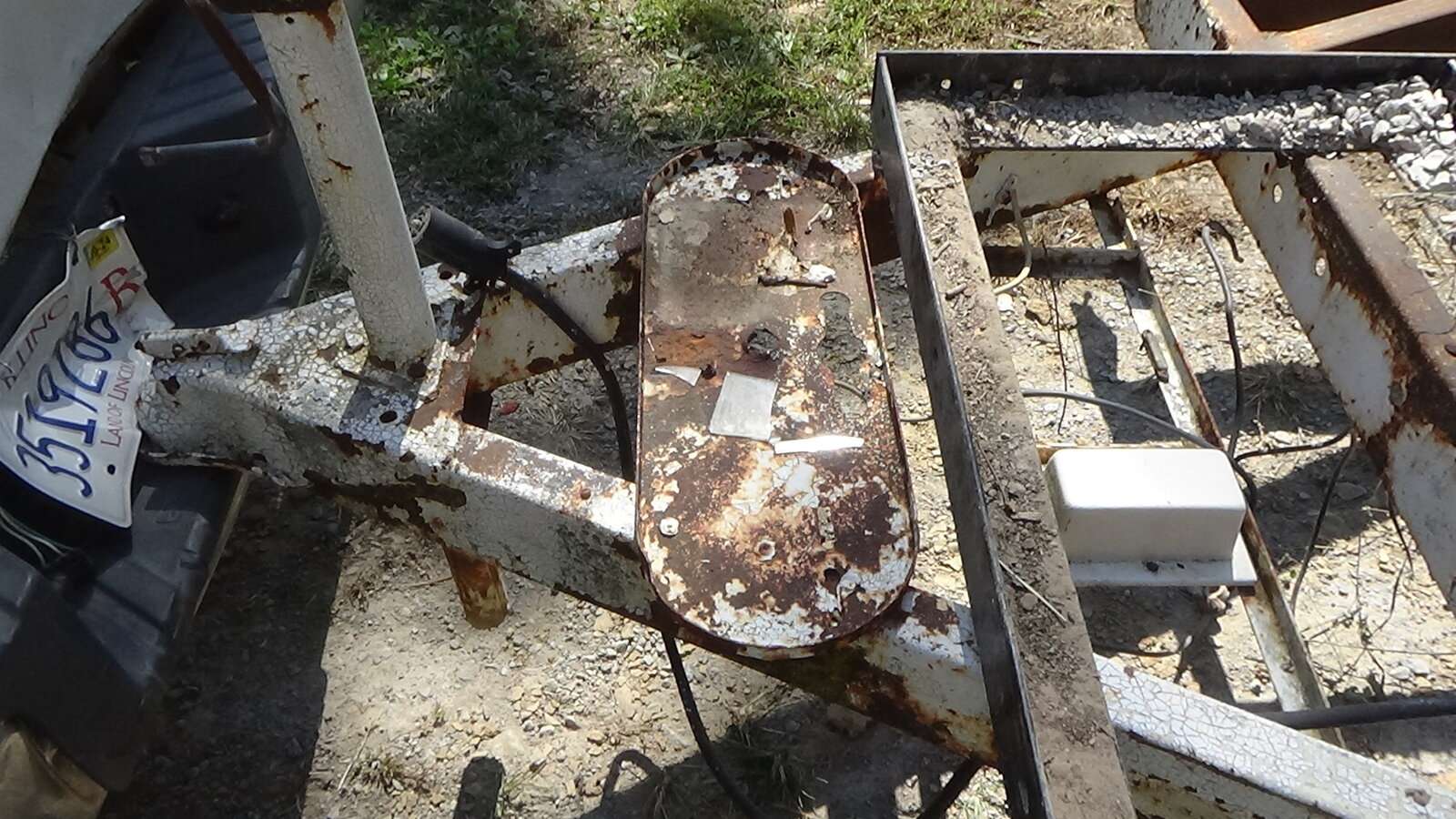
I am finally getting around to putting the new sawmill together and getting it up and milling. But had the ground track left from the old mill and thought Heyyyyyyy Make it a fixed and mobile mill! Soooo My idea is to weld 4 heavy screw type implement jacks on all 4 corners to lift the frame off the springs and level it and stabilize it. Make angle iron bumper to keep roll over logs from hitting the tires, once I cut the propane plate off that I forgot when I was cutting gas line, and other stuff off, it will slide right up to the tongue jack. First post oak log will cut however wide the sides are 3″ thick for a walkway to push and pull the head from. And saved $4,000 by not getting the factory trailer kit for the mill.

Where the fixed position track will go.

DSC00747.JPG

Can’t believe I forgot to cut the propane plate off. Ford only has a bumper hitch and I am a master at crunching the plate ;)

DSC00748.JPG

After the plate is off the will only be 12″ of overhang on the back. 20′ trailer 21′ of track.

DSC00749.JPG

Shrink that overhang down to a foot and no need to stand jacks under it.

DSC00750.JPG

Easy enough to move the mill head from old track on the trailer to new track on the concrete.
DSC00751.JPG

Was going to use one of the 24′ trailers but the 20′ has a heavier frame and better cross members. Can’t do the big logs on the trailer but should be able to go 20-23 inch diameter 8′ and 10′ logs on it.
DSC00752.JPG

Since I am getting older the step will remain :)

DSC00753.JPG


Israeli companies showcase drones that take off, land vertically

0

LONDON– Israeli defense companies made drone technology with a vertical take-off and landing capability a focus at this year’s DSEI defense and security trade exhibition in London, unveiling two new systems with launch customers already secured.

This past year, the tube-launched Hero series of loitering munitions produced by German company Rheinmetall and its Israeli-based partner Uvision have seen great success in Europe, with sales announced to Italy and Hungary.

This deployment method does bring about a number of logistical challenges for operators.

“The challenge of tube-launched loitering munitions in urban warfare environments is that you typically need a certain amount of open space in front of you and a clear path with no personnel in between,” Alon Tamir, senior business development and marketing manager at Israel Aerospace Industries told Defense News last week at the DSEI event. “It makes where you can launch more complex.”

In order to solve this issue and provide customers with greater flexibility for launch sites, IAI developed the Rotem Alpha loitering munition, capable of hovering, taking off and landing vertically. Unveiled at DSEI, the system is also equipped with a demonstrated anti-tank warhead and comes directly from the lessons learned from the Ukraine war, according to the company representative.

“Much of the world never thought we would widely see tanks fighting in Europe, yet here we are… We knew we had to develop a loitering munition with an anti-tank capability to respond to the demand for customers looking to destroy any type of military vehicle,” Tamir said.

The Rotem Alpha has a range of about 40 kilometers (25 miles) and can carry up to 8 kilograms (18 pounds) of payload. It has secured a launch customer, a NATO country, although the company would not say which one.

Another Israeli company to have launched a new system at the London-based conference is Elbit Systems with the reveal of its Skylark 1 eVTOL drone. It is the latest model of the Skylark unmanned aerial systems, which have been operated by the Israeli Defense Forces since 2008.

The company has been contracted to provide the Skylark 1 eVTOL to the Artillery Corps of the IDF. Training operators to use the drone only takes on average a few weeks, according to a company official.

Ziv Avni, vice president of marketing and business development at Elbit, highlighted the advantages of VTOL platforms, which he referred to as a clear market trend.

“This capability allows for greater ease of operation where the drone can land or be launched from anywhere as it is runway independent and landing is usually more precise, which makes it less likely critical payloads or infrastructure are damaged,” Avni said. “Its ability to hover in place also makes them ideal for operations requiring precise control and stability such as surveillance.”

Elisabeth Gosselin-Malo is a Europe correspondent for Defense News. She covers a wide range of topics related to military procurement and international security, and specializes in reporting on the aviation sector. She is based in Milan, Italy.

With F-35 still missing, Marine Corps holds aviation standdown

0

The Marine Corps is pausing its aviation operations for two days as the disappearance of a Marine Corps F-35B jet over South Carolina on Sunday remains unsolved.

The Corps’ Monday statement announcing the standdown cited three recent significant mishaps involving Marine aircraft.

“During the safety stand down, aviation commanders will lead discussions with their Marines focusing on the fundamentals of safe flight operations, ground safety, maintenance and flight procedures, and maintaining combat readiness,” the statement reads. “This stand down being taken to ensure the service is maintaining operational standardization of combat-ready aircraft with well-prepared pilots and crews.”

In August, a Marine pilot was killed after his F/A-18D Hornet crashed in southern California, and three Marines were killed in an MV-22 crash days later.

In the wake of these mishaps, the acting commandant, Gen. Eric Smith, ordered every unit in the Marine Corps to review its safety practices, and he said the Corps will establish a safety center led by a general officer by summer 2024.

The standdown comes in addition to these measures.

Where is the F-35?

Meanwhile, a Marine F-35B fighter jet is still missing after its pilot parachuted out on Sunday.

A pilot flying a Marine Fighter Attack Training Squadron 501 aircraft safely ejected from an F-35B on Sunday, a 2nd Marine Aircraft Wing spokesperson said.

The pilot, whose name has not been released, landed in a North Charleston neighborhood at around 2 p.m. Sunday, The Associated Press reported. The pilot was transferred to a nearby medical center in stable condition, Joint Base Charleston, South Carolina, said Sunday.

But just what happened to the jet remains unclear.

A day after the disappearance, the search for the stealth aircraft remains underway, with teams employing both ground and air assets, according to the base.

“Based on the jet’s last-known position and in coordination with the FAA, we are focusing our attention north of JB Charleston, around Lake Moultrie and Lake Marion,” Joint Base Charleston, South Carolina, said on X, formerly known as Twitter.

Among those involved in the investigation are Marine Corps Air Station Beaufort, South Carolina; 2nd Marine Aircraft Wing, based at Cherry Point, North Carolina; Navy Region Southeast; the Federal Aviation Administration; the Civil Air Patrol; and law enforcement across the state, according to the joint base.

The joint base has asked the public for help in locating the aircraft, providing even more fodder for ribbing by those startled that an approximately $100 million fighter jet could somehow vanish.

“How in the hell do you lose an F-35?” Rep. Nancy Mace, R-South Carolina, whose district includes Lake Moultrie and part of Lake Marion, tweeted Monday morning. “How is there not a tracking device and we’re asking the public to what, find a jet and turn it in?”

Mace said on X early that afternoon that she planned to meet with Marine Corps representatives to ask for answers on what happened to the jet.

She later tweeted, “One of the shortest meetings I’ve ever had, bc guess what, no one @usmc sent over to brief me and my staff had any answers. Shocker.”

“When there is an ongoing situation which potentially threatens public safety, the Pentagon has an obligation to keep citizens and their representatives informed,” Mace said in a statement to Marine Corps Times on Monday, calling the Marine Corps’ lack of answers “unacceptable.”

A 2nd Marine Aircraft Wing spokesperson said in a statement to media Monday that the mishap was under investigation, adding, “We are unable to provide additional details to preserve the integrity of the investigatory process.”

If the F-35 did go down in a lake, said retired Air Force Gen. Hawk Carlisle, the first thing a search team would likely do would be to look for debris from the plane’s impact, or slicks from fuel, oil or hydraulic fluid floating on the surface to try to narrow down the search area.

“They would look for telltale signs that something catastrophic happened in the lake,” said Carlisle, who flew F-15s and was head of Air Combat Command until his 2017 retirement.

If the search team spots such signs, Carlisle said, the military likely would bring in sonar or other detection equipment to look for where the F-35 might be submerged.

Joint Base Charleston, South Carolina, and the 2nd Marine Aircraft Wing declined to comment on the status of the fighter’s transponder, though The Washington Post reported that a base spokesman said the transponder was not working at the time of the crash for an unknown reason.

In an emailed statement Monday, the F-35 Joint Program Office didn’t address Defense News’ questions about whether transponders have had problems in the past. The office said that the pilot’s health and well-being were paramount and that it was working with the Marine Corps, industry and other involved parties to help with the investigation.

Carlisle said the unusual circumstances of the mishap and the difficulty finding the fighter raises other questions, such as whether the fighter was on a data link with another aircraft at the time. If the fighter was on a data link transmitting and receiving information, Carlisle said, that could have provided more clues to help track it down.

“Those are all things that an investigation or safety board is going to look at,” Carlisle said.

If the jet was on autopilot when its pilot ejected, Carlisle said, it conceivably could have flown for hours and hundreds of miles more, depending on how much gas it had left. A fully fueled F-35B can fly a little more than 1,000 miles.

Carlisle also wondered if this jet’s radar cross section had been augmented to make the F-35 more visible to radar, which the military sometimes does when F-35s are flown stateside for air shows or local training missions.

The military sometimes augments the F-35′s cross-section during public or semi-public flights so they will look different on a radar from how it would during an actual combat mission, Carlisle said. That way, he said, an adversary such as China wouldn’t be able to peek at a planned air show with an F-35 and figure out what it would actually look like at war.

If the lost F-35′s cross-section had not been augmented to mask its true radar signature and make it more visible, Carlisle said, that might explain why it has been so hard to find.

But even discussing ways the military might be able to find this missing F-35 can be fraught, Carlisle said.

“You’ve got to be a little careful about what you talk about,” Carlisle said. “Because if you have an airplane go down in combat, you don’t want the bad guys to know how to find it.”

Stephen Losey is the air warfare reporter for Defense News. He previously covered leadership and personnel issues at Air Force Times, and the Pentagon, special operations and air warfare at Military.com. He has traveled to the Middle East to cover U.S. Air Force operations.

Irene Loewenson is a staff reporter for Marine Corps Times. She joined Military Times as an editorial fellow in August 2022. She is a graduate of Williams College, where she was the editor-in-chief of the student newspaper.

Why improve Ukraine’s deep-strike capability?

0

As the counteroffensive progresses, Ukraine’s leaders are giving higher priority to striking Russian targets beyond the immediate battlefield. They urge the West to provide modern fighter jets, like the F-16, and longer-range rocket artillery, like the ground-launched Army Tactical Missile System. Both weapons now seem likely to enter the fight this year or next. How will they help Ukraine?

Throughout the war, Russian forces have relied heavily on artillery, consistent with their doctrine of emphasizing cannon and rocket artillery to wear down an enemy. NATO, in contrast, leverages its air forces, which are usually technically superior to Russia’s. Aircraft offer more flexibility and can attack multiple targets in a single sortie. Survivable air power can strike strategic and mobile targets deep behind enemy lines.

Until recently, the U.S. appeared hesitant to provide deep-strike arms. Allied initiative may have helped overcome this reticence. After Denmark and the Netherlands offered older F-16s, the Biden administration agreed to the transfer and offered help with pilot training. Allied provision of F-16s can be attractive to the U.S. because costs are shared.

Earlier, the White House seemed to fear that dispatching combat aircraft to Ukraine might cross a Russian red line, perhaps even prompting threats of a nuclear response. The United States rebuffed a Polish bid to send used MiG-29 aircraft to Ukraine.

Other NATO allies also have decided that providing deep-strike weaponry is important for Ukraine’s defense and worth any risk of escalation. Recently, the British and French sent air-launched Storm Shadow and Scalp cruise missiles, respectively. Some of Ukraine’s fleet of aging Soviet-era fighters have been modified to carry them.

Ukrainian attacks on logistics depots behind the front lines have resulted in Russia losing thousands of artillery shells along with fuel and other equipment. In devastating strikes on Crimea’s Sevastopol port, Storm Shadows, Scalps and seaborne drones may have seriously damaged a large Russian landing ship, diesel submarine and shore infrastructure.

As Ukraine transitions to European-provided F-16s, it will gain access to more advanced cruise missiles, such as the low-observable Joint Air-to-Surface Standoff Missile. Additional types of missiles might also help Ukraine hold at risk strategic Russian staging areas.

Russia’s air defense environment is one of the world’s most challenging. It could be risky for Ukrainian F-16s to fly deep into the battlefield and/or operate for long periods over Russian forces. Partly for this reason, ground-launched missiles are an essential complement to air power; they can be launched at any time and generally have increased survivability relative to manned combat aircraft.

Fast-flying ballistic missiles are especially survivable due to their speed and maneuverability, though they have less range compared to cruise missiles. A longer-range ballistic missile capable of precision attack, the Army Tactical Missile System, or ATACMS, can be fired from multiple launchers. Ukraine possesses several kinds, such as the U.S.-made M270 Multiple Launch Rocket System and the M142 High Mobility Artillery Rocket System.

The U.S. has been reluctant to provide ATACMS in part because stockpiles are limited while the Army awaits its replacement, the Precision Strike Missile. The Biden administration now hints that it may provide ATACMS. If it takes this step, however, Ukraine might receive only a few dozen missiles.

The U.S. could facilitate delivery of more ATACMS by allowing the re-export of European-owned systems. Poland, Romania, Greece and Turkey have ATACMS. Last year, Lithuania and Estonia signed purchase agreements.

Coordinated deep-strike capabilities — air-launched and ground-launched — will be most effective in degrading Russian forces and operations. Using air and ground launchers would force Russian commanders to devote substantial intelligence, surveillance and reconnaissance capabilities to attempt to find these systems. The commanders would have to divert these capabilities from other efforts.

In some cases, Ukraine might need to make hard choices. Since the U.S. may have a limited stockpile of deep-strike missiles like the ATACMS and the Joint Air-to-Surface Standoff Missile, Ukraine might not receive as many deep-strike arms as it wants.

John Hoehn is an associate policy researcher at the think tank Rand and a former military analyst with the Congressional Research Service. Hunter Stoll is a policy analyst at Rand and an Army Reserve intelligence officer. William Courtney is an adjunct senior fellow at Rand and was the U.S. ambassador to Kazakhstan, Georgia, and the U.S.-USSR commission to implement the Threshold Test Ban Treaty.

Food Preps When You Lack Money

0

Many folks express concerns about their inability to stock up on extra food due to financial constraints. For those intrigued by the world of “food preps” or preparedness, they might find themselves diving into online forums, devouring books, and scouring newspapers on the topic. However, these resources often lead to overwhelm as they delve into the nitty-gritty of how much to stock, what kinds of food to hoard, and the intricate art of preservation.

Facing this seemingly Herculean task can be intimidating, especially when your wallet is feeling rather light. It’s not uncommon to throw in the towel before even embarking on this journey.

But fear not, you don’t have to splurge on pricey freeze-dried, long-term food storage wonders or nitrogen-packed wheat, or any other extravagant food storage items. While they’re a luxury for those with ample funds, many of us must be resourceful with our provisions.

In this article, I’ll guide you through the essentials of food preps and how to make the most of them. You might come up with additional ideas along the way, but remember, some folks might be starting from scratch. In today’s world, it’s not unusual to have never laid hands on basic ingredients like flour. So, let’s kick off our journey there!

Food preps with the basics

Flour

Curious about what you can do with a simple bag of flour? Well, let’s delve into the world of food preps! With flour in your pantry, you’re equipped for a wide range of culinary adventures.

First off, consider whipping up some biscuits. All you need is a mix of flour, baking soda, salt, a touch of shortening or a similar fat, and a splash of water. That’s food preps 101, right there. If you’re craving pancakes, the recipe is almost identical, just swap out shortening for cooking oil, and add eggs and sugar if they’re part of your food preps arsenal.

What if you’re out of baking powder? No worries, you can create tortillas with the basics – flour, salt, and fat. It’s as straightforward as it gets in the realm of food preps!

Now, here’s a fascinating twist. Combine flour and water, let the mixture capture natural yeast from the air, and behold – you’ve got yourself a sourdough starter. While it’s helpful to seek advice from a friend or a trusty cookbook, don’t hesitate to experiment. You can even craft yeast-less bread using nothing but flour and water. Spice it up with salt, sugar, or any other flavorings you have stashed in your food preps arsenal.

Have you ever thought about making a “white sauce” or gravy with just flour and water? Elevate its flavor with a pinch of salt, a dash of pepper, or a medley of your favorite spices. Bouillon cubes are nifty additions for a flavor boost, or you can fashion your own broth from critter bones sourced through your food preps adventures. Blend it with flour, and you’ve got yourself a savory sauce.

With flour at your disposal, you can embark on culinary journeys making simple cakes, muffins, and cookies. If you happen upon wild berries, use flour to craft a crust – the essential food preps recipe involves flour, salt, fat, and water – and you’ve got yourself a delightful pie.

No pie pan? No problem. Tear off sections of the dough, flatten them by hand, add your chosen fruit, fold, and crimp the edges. You now possess an array of charming “personal” pies! Sprinkle some sugar or a hint of cinnamon if your food preps collection includes those.

Feeling adventurous? Mix meat and vegetables to create a hearty pot pie. Season to your heart’s content with spices, salt, pepper, or nothing at all. In the world of food preps, creativity knows no bounds. If you lack the appropriate pan, simply try an alternative. Recipes abound online or in cookbooks available at your local library.

So, in the realm of food preps, flour serves as your canvas, and the culinary possibilities are as vast as your imagination. Roll up those sleeves and dive into the world of food preps with flour as your trusty companion!

Sugar

Exploring the world of food preps offers a delightful journey where everyday ingredients like sugar, flour, and more come together to craft scrumptious delights. Let’s dive into this culinary adventure, shall we?

Sweet Delights: Sugar, that versatile sweetener, can transform ordinary biscuits or bread into heavenly sweet rolls or muffin-style desserts. But it doesn’t stop there; it can also elevate fruit cobblers. Just sprinkle some on your fruit and whip up a sweet biscuit dough to crown it.

Fruit Syrups: If pectin isn’t in your pantry, fret not. Crafting fruit syrups is a breeze. Simply crush your chosen fruit and gently boil it with sugar. Should you face issues with thickening, a dash of cornstarch can come to the rescue.

Preserving Power: Sugar isn’t just for sweetening; it’s also been used as a preservative. It’s a natural inhibitor of bacterial growth. While it’s commonly employed to preserve fruit, it can also extend the shelf life of meat. For those keen on learning more, a quick internet search will provide a wealth of information on this topic.

Baking Basics: If you’re contemplating food preps without baking powder, don’t worry. Flour, salt, and fat form the foundation for crafting simple yet satisfying tortillas.

Sourdough Starter: Venture into the world of sourdough with a mixture of flour and water that captures natural yeast from the air. While guidance from a friend or a reliable book is helpful, don’t hesitate to experiment. This starter opens the door to yeast-less bread, which you can personalize with salt, sugar, or other flavorings. Remember, in food preps, “edible” doesn’t always equate to “tasty.”

Savory Sauces: Whip up a flavorful “white sauce” or gravy using just flour and water. Salt and pepper can enhance its appeal, while a medley of spices can make it truly delicious. For an extra flavor boost, consider bouillon cubes (yes, they’re sodium-packed and often contain MSG) to enhance your flour-based gravy. Alternatively, transform critter bones from your food preps endeavors into a rich and savory sauce.

Sweet Treats: Flour, a staple in food preps, serves as the canvas for simple cakes, muffins, and cookies. Should wild berries cross your path, use flour to craft a crust (consisting of flour, salt, fat, and water) for a delectable pie.

Personal Pies: Lacking a pie pan? No problem! Tear off dough portions, flatten them by hand, add your chosen fruit, fold, and crimp the edges. Suddenly, you have a collection of delightful “personal” pies. If sugar’s in your repertoire, consider adding a sprinkle for an extra touch of sweetness. And if you have a can of cinnamon, why not sprinkle some on these miniature delights?

Savory Pot Pies: Meat and vegetables in your food preps inventory? It’s time to embark on savory pot pie adventures. Mix them with your preferred spices, whether it’s salt, pepper, or a blend of seasonings, or leave them unadorned for a simple yet satisfying meal. In the world of food preps, creativity knows no bounds.

Get Creative: If the right pan eludes you, don’t be discouraged; try an alternative. For those seeking recipes, the websites mentioned earlier or your own searches will unearth a trove of culinary inspiration. You might even have cookbooks tucked away in your collection or accessible at your local library, further expanding your food preps horizons.

So, whether you’re experimenting with sugar’s sweet touch, diving into the versatile world of flour-based wonders, or simply unleashing your culinary creativity, remember that in the realm of food preps, ingenuity and resourcefulness are your greatest allies. Embrace the adventure, and let your taste buds lead the way!

survivalstockpile1

Rice

Rice, a remarkably versatile staple, can find its place in both sweet and savory dishes. It effortlessly pairs with various ingredients, promising a delightful culinary journey.

We’re focusing on plain white rice here. While brown rice offers more nutrition and fiber, it comes at a higher cost and has a shorter shelf life due to its oil content, which can turn rancid unless stored in a freezer.

In contrast, white rice boasts an impressive shelf life, provided it remains dry. Furthermore, rice can be ground into flour, although it lacks gluten, making it unsuitable for yeast-type bread. However, it often joins forces with other flours, like potato flour, to create versatile doughs.

Let’s explore a simple pancake recipe:

Ingredients:

  • 3 eggs
  • 1/2 cup milk
  • 1 tablespoon vegetable oil
  • 1/2 teaspoon salt
  • 1 cup rice flour

Directions:

Beat the eggs in a mixing bowl, then stir in the milk, vegetable oil, and salt.

Whisk in the rice flour until no dry lumps remain.

Cover the bowl and let the batter rest at room temperature for an hour or refrigerate it overnight.

Heat a lightly-oiled griddle over medium-high heat. Drop spoonfuls of batter onto the griddle and cook until bubbles form and the edges are dry. Flip and cook until browned on the other side. Repeat with the remaining batter.

Now, you can even grind rice without a grain grinder. Find a large, flat rock with a somewhat smooth surface, and another rock, about the size of a soup can, that fits comfortably in your hand. Clean these rocks. Sprinkle a tablespoon or two of flour on the larger rock and grind it with the smaller one. You can push, pull, slide, or make circles as you grind the rice. Your favorite method will emerge as you go along.

Alternatively, you can cook rice as grains, opening up a world of culinary possibilities. From fried rice with eggs, onions, and peppers to rice mixed with fruit and cool whip, or even as a base for homemade stew with garden vegetables and venison – the options are endless.

Consider making homemade tortillas, as mentioned in the flour section earlier. These can be used for burritos, enchiladas, or even like Hot Pockets with rice, meat, cheese, and/or vegetables inside.

For a sweet twist, combine rice with pie filling, jam, or jelly, and roll it inside tortillas or crepes. Crepes, those thin, sweet pancakes, can be wrapped around a filling much like a tortilla.

Some folks prioritize rice over flour in their food preps, as it’s incredibly versatile. They can cook up rice and blend it seamlessly with garden or forest vegetables, or even “a couple of squirrels,” creating hearty meals without the need for specific recipes.

If this resonates with your food preps strategy, consider stocking up on rice before flour. Its long shelf life and adaptability make it a valuable addition to your culinary repertoire.

Beans

storing beansfor your food preps

Beans, while not a universal favorite due to their potential gassy aftermath, offer an economical and straightforward source of protein. Much like white flour, white sugar, and white rice, dry beans prove remarkably durable when stored properly.

There’s an exception to their longevity, though. After approximately a decade, beans may require extended cooking times. We once tried preparing 25-year-old red beans, and while they became soft enough for chewing, they retained a somewhat grainy texture.

Different beans have varying cooking times. White beans, for instance, cook relatively quickly compared to their red and pinto counterparts. If time efficiency is a concern, opt for beans with shorter cooking durations. This not only conserves resources, such as gas or electricity but also minimizes your cooking time investment.

Now, let’s delve into two methods for cooking beans. The first involves soaking them in water overnight, followed by draining, rinsing, and simmering them for a few hours. The second method, born from the occasional forgetfulness of soaking, requires boiling the beans for 2 minutes, then removing them from heat for an hour before simmering.

Beans, like rice, are versatile. They can serve as a side dish or take center stage in dishes like chili, baked beans, beans, and dumplings, or burritos. The choice of bean type dictates the culinary possibilities. For instance, baked beans often feature white beans, while chili tends to favor red beans, but there’s no hard-and-fast rule.

In some respects, beans parallel rice. You can enhance them with meat, cheese, vegetables, or spices, yielding diverse meals. Fruits aren’t typically a complementary addition to beans, unless one classifies tomatoes as a fruit, which botanically they are.

Leftover beans can be transformed into refried beans with a simple mash and fry. Add onions, garlic, or just salt and pepper for flavor. For an interesting twist, incorporate a touch of salsa. If you have some, a sprinkle of shredded cheese elevates the experience, though it’s considered a luxury in the realm of frugal cuisine and is used sparingly and with gratitude.

If beans truly don’t align with your palate and you anticipate alternative protein sources such as wild game or fish, you may consider omitting beans from your storage plan. Food preps should cater to your preferences and dietary needs, ensuring your preparedness aligns with your culinary comfort zone.

Salt

Salt, a peculiar essential, holds both a vital role and an optional one in your food preps. While it’s technically possible to survive without it, as most foods naturally contain sufficient sodium, having salt on hand is undeniably convenient. Particularly, when engaged in strenuous physical labor and sweating profusely, the need for additional salt becomes more apparent. While I don’t dwell too much on electrolyte balance, I do make an effort to ensure we’re replenishing sodium and sugar, along with water, during strenuous activities.

Salt, fortunately, is incredibly affordable. At my last check, store-brand salt in a 1-lb. cardboard can was still priced at 50 cents or less. For those with access to a Costco membership, a 25-lb. bag is available for around $3, though I understand that true poverty preppers might not have a Costco card. Unless you have a generous friend who can gift you a bag (remember to reciprocate, perhaps with a cash donation!), you’ll likely stick to purchasing the 1-lb. cans.

If you require larger quantities, pickling salt is an option, typically available in bigger containers. However, be sure to compare the price per pound. It’s worth noting that pickling salt is essentially the same as table salt, differing mainly in the coarser texture of its grains.

In times of adversity when others in your vicinity may also rely on emergency rations, salt can become a valuable bargaining tool. It’s highly tradable and can secure you other essential foods or goods through barter.

In the realm of food preps, salt remains a humble yet invaluable asset, offering both practicality and versatility for sustenance and trade.

Other Basics

bake bread without v2When considering your food preps, you might be tempted to splurge on items like macaroni, coffee, and cocoa powder – and if you hit it big, why not? However, before diversifying your storage, let’s take a moment to emphasize two often-overlooked, yet equally essential, food items.

Powdered Milk: Powdered milk earns its place on your list once you’ve secured the main staples. In long-term scenarios, it serves as a valuable source of calcium, protein, and other essential nutrients. For households with children, it’s an early inclusion, fitting comfortably into your monthly rotation of food purchases. Young ones tend to accept powdered milk without complaints, while older individuals accustomed to fresh milk may find it less appealing. Thankfully, its presence goes unnoticed when mixed into cooked or baked dishes, such as desserts or casseroles. Many recipes calling for milk can be prepared using water instead. When baking with powdered milk, I find it more efficient to add the dry milk powder to the dry ingredients and then incorporate the necessary amount of water into the wet ingredients.

Cooking Oils and Shortening: These are the last items I’d categorize as “basic.” They enhance the flavor and texture of many dishes, making them indispensable for several meal ideas discussed earlier. In times of scarcity, calories and fats become even more crucial in your diet, especially when you’re physically active, whether it’s walking instead of driving or engaging in laborious tasks like clearing storm debris or tending to a garden. During such times, prioritize affordability over luxury. Opt for store-brand vegetable oil, standard shortening, or even a can of lard if you’re not a vegetarian. While we may prefer extra-virgin olive oil or coconut oil in better times, practicality takes precedence when preparing for adversity.

Storage Tips: Oil and shortening can turn rancid relatively quickly, making proper storage crucial. Never leave your oil exposed on a countertop, especially if you don’t go through a bottle weekly. A dark cupboard is a better choice, as light is the nemesis of oil. Whenever possible, invest in cooking oil packaged in glass jars, preferably tinted ones. Unfortunately, budget-friendly oils often come in plastic bottles. If you have spare glass jars at home, consider transferring the oil for better storage.

Remember, the ideal storage spot for oils is a dark, cool place with a consistent temperature. Avoid locations where temperature fluctuations, like those in garages or sheds, can occur. These fluctuations can be particularly detrimental to oils and other high-fat foods.

While this information may not be an exhaustive guide on storing oil, it’s too crucial to be buried within paragraphs discussing various storage containers and places. So, whether you’re incorporating powdered milk for added nutrients or stocking up on cooking oils and shortening for sustenance during trying times, prioritize these basics to ensure your food preps are comprehensive and adaptable to various scenarios.

Suggested resources for preppers:

Harvesting and canning wild greens

The #1 food of Americans during the Great Depression

Survival Foods of the Native Americans

If you see this plant when foraging, don’t touch it!

Sanity trip

0

……west of Sydney in the Blue Mountains….timed it for a bloody un-seasonal heatwave !!! Hot in the day but still cold overnight.

Camp..

Big Lizard wandering around looking for an unattended child to dine on……

Sanity trip