5G Activated Zombie Apocalypse
Corona Investigative Committee: Todd Callender – Lawyer (Disabled Rights Advocates) worked in the disability, health and life insurance industry for more than 20 years and focuses on the international convergence of biomedical, morbidity and mortality risks in the global legal context.
5G Activated Zombie Apocalypse
Office of Gun Safety —or how we can take your 2nd amendment away

Bidumb has just established :
President Biden on Friday announced a new office dedicated to gun violence prevention, his latest effort to combat a growing national crisis through executive action instead of the more sweeping reforms that would require congressional approval.20 hours ago
This will be headed by Camel Harris
Enforce the laws on the books –like prosecuting Hunter Bidumb on illegal gun purchase

buying fur | Survival Monkey Forums
Who has experience with buying fur, where must take care of in buying fur and look at?
After 10 years off off-grid living we ( special my wife ) wanted try something new.
We both wanted to get more outside of human being, we wanted become more inside of animal being, we wanted to become a sort of animals.
The first step we wanted to take is to change from wearing denim/cotton/wool into wearing fulltime 24/7 fur, just because wearing fur we going to look more animality.
On etsy we found 2 fantastic coyote fur suits from OliversFurs compagnie, that takes our intrest, and this is also how we wanted to look like 24/7 when we reached our goal to living as animals.
Brand New Double Sided Coyote & Blue Fox Fur Snowsuit Jumpsuit – Etsy
and these one
Brand New Double Sided Coyote Fur Snowsuit Jumpsuit Bodysuit – Etsy
No we don’t have experience with buying fur, are here people with fur buying experience and can advice us ?
we're not new but
Hi All,
We are not new here, but after an lighting strike we lost all electrical gear, and also all our internet details so we must started it all over again.
We are a couple what is almost 10 years nonstop off grid living above the arctic circle in Europe.
GAO blasts contractor-led F-35 maintenance as costly, slow
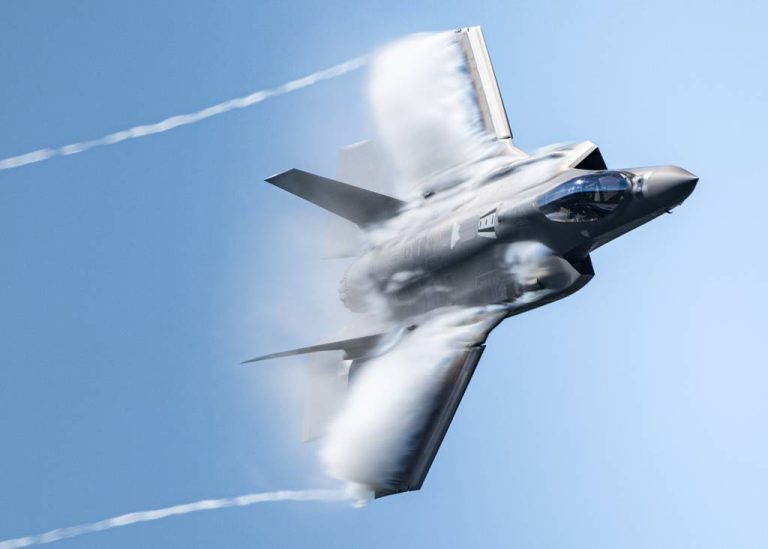
WASHINGTON — A lack of spare parts and technical data, poor training of maintainers, and a lagging effort to expand repair depots are dragging down the military’s ability to keep the F-35 Joint Strike Fighter in the air, a government watchdog said in a report released Thursday.
And the problems hindering the military from taking over more sustainment activities from the prime F-35 contractor, Lockheed Martin, will cost the government billions of dollars each year if a more cost-effective strategy isn’t found, according to the Government Accountability Office in its report.
The F-35 and its advanced capabilities make it a formidable weapon in the U.S.’s arsenal, GAO said. But if the plane can’t get off the ground because of problems with its maintenance and sustainment, the report said, that “valuable edge” does the Air Force, Navy and Marine Corps no good.
The three services combined have more than 450 F-35s, and the Defense Department eventually plans to buy a total of almost 2,500 fighters with a lifecycle cost of more than $1.7 trillion.
The vast majority of that lifecycle cost, $1.3 trillion, comes from the operation and sustainment of the jet, GAO said.
But the F-35′s availability has lagged for years, and if a war broke out today, many fighters would be unavailable to fight. In March 2023, GAO said, the mission-capable rate for all F-35s was at 55%. That’s well below the 70% mission-capable goal the Air Force has for its F-35As and the 75% goal for the Navy and Marine Corps’ F-35B and C variants.
Key lawmakers and watchdog groups have regularly criticized the military and Lockheed Martin for failing to improve the F-35′s availability. F-35 program executive officer Lt. Gen. Michael Schmidt has launched an effort he calls the “war on readiness” to fix the issue, although public details on this effort remain scarce.
GAO’s new report presents a deep dive into the many issues that combine to drag down F-35 availability — particularly in obtaining parts to fix broken F-35s.
The Pentagon agreed with GAO’s recommendations to reconsider its sustainment approaches to the F-35 and decide whether the government should take over more responsibilities, whether changes to the Navy and Air Force are needed to better sustain the jet, what technical data the services need to support any changes to maintenance processes, and what resources they might need.
In a statement from the JPO, Schmidt said the program continues to work on a “more resilient sustainment structure” and grow its capacity and efficiency worldwide. This includes standing up a network for repair, transportation and warehousing faster, and using incentives to industry to make more F-35s available at an affordable cost.
Lockheed Martin said in a statement to Defense News it’s ready to work with the government as it plans for the future of the F-35′s sustainment.
Lockheed said it has long worked with the government to fix the issues that degrade F-35 readiness through its reliability and maintainability program.
A spare parts conundrum
The backlog of broken spare parts that need to be fixed has more than doubled since spring 2019, GAO said, from 4,300 to more than 10,000.
It now takes an average of 141 days to repair a broken spare part — far above the F-35 program’s goal of 60 days — and nearly three-quarters of those parts are sent back to the original equipment manufacturer to be repaired.
Rather than wait nearly five months for a part to be repaired, GAO said the JPO often buys brand new parts at a higher cost. This helps get the fighter back in the air faster, GAO said, but it drives up sustainment costs, and Pentagon officials don’t think it’s a sustainable strategy.
Program officials told GAO military service depots can repair parts much more quickly than the original manufacturer, in about 72 days on average. The parts that most frequently lead to an F-35 not being able to carry out its mission include its canopy, engine, distributed aperture system sensor, and nacelle vent fan.
But the program’s habit of buying brand new parts instead of fixing broken ones is siphoning money that could go to establishing repair activities at six depots.
And the F-35 program has now fallen 12 years behind schedule in setting up those activities, GAO said, in part because of inadequate funding as the military focuses more on buying new jets than on sustaining those they have.
The military is now able to repair 44 of the 68 components at F-35 depots including Ogden Air Logistics Complex at Hill Air Force Base in Utah and the Fleet Readiness Center East at Marine Corps Air Station Cherry Point, North Carolina. Parts that depots will be able to repair include the fighter’s landing gear, ejection seat, and power thermal management system.
However, the depots won’t be able to repair all parts until 2027, the Pentagon projects. And these delays have led to slow repair times, lower readiness and a growing backlog of broken parts.
A lack of spare parts was a significant problem for 10 of 15 F-35 installations the GAO surveyed, and last year, fighters were not able to operate about 27% of the time because a spare part was unavailable.
Maintainers told GAO they often can’t do their jobs because they don’t have enough parts or know when they will receive spares, and identified Lockheed Martin’s supply chain process as the cause.
The report singled out the F-35′s distributed aperture system sensor as an example of a problematic part. This sensor, made by RTX subsidiary Raytheon, provides 360-degree situational awareness and is intended to allow an F-35 pilot to detect potential threats such as missiles.
One installation has resorted to “workarounds” to keep F-35s flying with broken sensors when they’re waiting for replacement parts to be delivered, GAO said, but this degrades the jet’s ability to fully carry out its mission.
The JPO told GAO it is looking for ways to fix the spare parts issue, including potentially entering into a performance-based logistics contract with Lockheed Martin. But buying enough spare parts and supplies to have each installation fully stocked would be too expensive, officials told GAO.
F-35 installations also often don’t have enough support equipment on the flightline, including equipment needed to provide the jet electric or hydraulic power or tow it.
At some installations, it is common practice for squadrons to borrow support equipment from other squadrons. But when an F-35 squadron deploys and takes most of the installation’s support equipment, that leaves the remaining squadrons “scrambling” to find equipment to maintain the remaining jets.
That support equipment frequently breaks, GAO said, and because it is proprietary, contractors have to come in to fix it — a process which can take months.
And in the last few years, the F-35 program has grown to conclude it can’t afford the current strategy of contractor-led sustainment of the jet. By 2036, GAO wrote in a 2021 report, contractor-led sustainment of the jet will be $6 billion more than the military can afford in that year alone.
Haunted by ‘acquisition malpractice’
Decisions made at the dawn of the F-35 are also coming back to haunt it — particularly the Pentagon’s early decision not to obtain technical data on the fighter from Lockheed Martin, and the considerable amount of concurrency in the program.
Concurrency refers to when a program’s development, testing, production and fielding phases overlap. In the case of the F-35 program, the jet has continued to be tested and refined for more than a decade after the first lot was built and delivered to the military and international customers. The F-35 is now in its 15th production lot, and GAO said aircraft as recent as lot 12 required repairs and modifications after testing showed major changes were needed.
There are now at least 14 different versions of the F-35 being worked on in depots, officials there told GAO.
When jets must be modified, the work further strains depots’ ability to conduct day-to-day repairs. Depot officials told GAO upgrading these jets takes thousands of workload hours apiece, and requires F-35s to stay in depots for an extended period.
And without necessary and complete technical data from Lockheed Martin and its subcontractors, repair times have lagged.
When the F-35 program began, GAO said, the Pentagon thought it would be more cost-effective to have contractors handle the bulk of the jet’s sustainment. As a result, the Pentagon didn’t require Lockheed to hand over the technical data that would allow the military to “organically” handle maintenance itself.
Air Force Secretary Frank Kendall has repeatedly criticized that decision, earlier this year calling it “a serious mistake” the service won’t repeat on its sixth-generation Next Generation Air Dominance fighter.
The acquisition philosophy in vogue at the time of the F-35 program’s launch two decades ago, Total System Performance, meant the contractor on the program would own it for the system’s entire lifecycle, Kendall said in a May breakfast with reporters.
This “create[s] a perpetual monopoly,” Kendall said, and amounts to “acquisition malpractice” on the F-35.
Officials at an unidentified depot told GAO maintenance manuals for some key parts are “ambiguous and rarely are detailed enough for depot personnel to make the repair.”
“As a result, depot personnel not only cannot fix the part, but they cannot learn and understand how to fix the part,” GAO said.
This is proving to be a particular problem as the military tries to add a software maintenance repair component to depots. Lockheed Martin and its subcontractors wrote the fighters more than 8 million lines of code and handle management and repair of this code.
The F-35 program has wanted to take over this sustainment for more than five years, and the military has long done the same work on other aircraft.
But the program’s inability to acquire the source code necessary to sustain the F-35′s software has prevented it from taking over that work.
In its statement to Defense News, Lockheed Martin said it delivers all data to the government required under its contracts “and is committed to providing data for the Department of Defense to sustain the aircraft under applicable sustainment contracts.”
“The U.S. government has unlimited rights to all operation, maintenance, installation and training data delivered to the government that allows the DoD to maintain and operate the aircraft,” Lockheed said.
The training process for service members to maintain the F-35 is also lacking, GAO said. Maintainers told GAO they mainly learned how to fix the jet while on the job. Initial Lockheed Martin-led training mainly relied on PowerPoint slides in a classroom, with limited hands-on lessons, GAO said.
Training personnel acknowledged to GAO the maintenance training is “poor and inadequate,” and said because Lockheed Martin runs the training, it controls what information is presented to maintainers.
“Since so much of the technical data used to maintain the aircraft is proprietary and unavailable to the military services, trainers in the military services cannot develop effective training programs for maintainers,” GAO wrote.
The situation differs considerably from F-15 and F-16 maintenance, which has detailed manuals spelling out how the systems operate that allow maintainers to troubleshoot nagging problems.
But at one location, F-35 maintainers told GAO “they have access to so little technical information on the aircraft that they do not fully understand the aircraft or how to troubleshoot common problems.”
This means they regularly have to go to contractor personnel to help with these maintenance tasks, GAO said. In one case, maintainers told GAO, a unit that had trouble with an F-35′s ejection seat had to helicopter a contractor out to a ship to fix the part.
Stephen Losey is the air warfare reporter for Defense News. He previously covered leadership and personnel issues at Air Force Times, and the Pentagon, special operations and air warfare at Military.com. He has traveled to the Middle East to cover U.S. Air Force operations.
Properly Assessing Your Survival Zone

When you suddenly find yourself thrust into a life-or-death survival situation, the experience can be overwhelming, sending shock waves through your mind and body. Panic can grip you in an instant, and it feels like your very existence is hanging in the balance.
Your heart races, blood pressure soars, and sweat drenches your clothing. It’s as though your brain temporarily abandons its usual rational functioning, leaving you vulnerable to irrational thoughts and impulsive decisions. This precarious situation can quickly spiral into something even more perilous, pushing your survival zone to its limits.
However, it’s entirely natural for most people to respond this way when confronted with the unknown and the fear of imminent danger. Yet, there’s a way to mitigate these instincts, and it begins with a well-thought-out game plan. This preparation isn’t restricted to any specific type of disaster or survival scenario; it’s a versatile strategy applicable to almost any urban or rural disaster, man-made threat, or even personal misfortune, like an accident or being in the wrong place at the wrong time.
It all starts with your mindset
To overcome panic and avoid unnecessary risks, it’s vital to assess your three crucial survival zones. These zones serve as your mental guideposts, helping you formulate a plan, maintain focus, and, ultimately, find a way out of any life-threatening situation that may confront you. By recognizing and addressing these zones, you enhance your chances of surviving even in the direst circumstances.
In the face of such adversity, it’s essential to maintain awareness. Here, you must stay alert and gather critical information about your surroundings and the situation at hand. This awareness will serve as the foundation upon which you’ll build your survival strategy. It’s your first step towards regaining control of your survival zone.
Next, you’ll delve into resource assessment. This involves evaluating the resources available to you, including physical supplies, knowledge, and skills. What tools, equipment, or supplies do you have at your disposal? How can you make the most of your environment to aid your survival? Identifying your resources is crucial for making informed decisions and maximizing your chances of making it through the ordeal.
Finally, the action you take is where your preparation and assessment come together. In this critical phase, you’ll decide what steps to take, whether it’s finding shelter, sourcing food and water, or signaling for help. Your actions will be the linchpin of your survival, and they’ll be guided by the information you’ve gathered in the previous phases.
Personal Space – The First Survival Zone
In the midst of an emergency, it’s imperative to swiftly assess your personal survival zone, including both yourself and the gear you have on hand. This initial evaluation should be conducted immediately after the emergency strikes, as it can set the stage for your overall survival strategy.
However, beyond the basics of self-assessment and utilizing readily available items, there’s a wealth of knowledge and creativity that can enhance your chances of thriving within your survival zone.
To commence this crucial process, it’s paramount to begin by calming yourself down. Panic is the arch-nemesis of clear thinking, and in high-stress situations, a few moments of composure can make all the difference within your survival zone. Find a moment to stop moving, sit down, and take a few deep breaths to regain your focus within this critical survival zone.
Once you’ve successfully regained your composure, it’s time to meticulously examine yourself for injuries. While obvious injuries like cuts, scrapes, or bruises may be immediately noticeable, it’s equally important to check for less apparent injuries, such as sprained fingers, hands, or swollen ankles.
The adrenaline rush and shock that often accompany emergency situations can temporarily mask these ailments within your survival zone. However, they may become more apparent once these effects wear off. Taking care of injuries promptly is essential for your well-being, and using pieces of your clothing as makeshift bandages or slings can be a lifesaver within your survival zone.
Now, let’s expand our perspective beyond the immediate needs of self-assessment and injury care within your survival zone. Every item you have on your person, no matter how seemingly mundane, can potentially serve a crucial role within your survival zone. Consider the versatility of these everyday items:
Pens: These unassuming writing tools can double as makeshift straws for sipping clean water if they happen to be available within your survival zone.
Shoelaces: These seemingly inconspicuous items provide valuable cordage for various survival projects within your survival zone, such as crafting a bow drill fire starter, fashioning homemade bolas for hunting, or setting up primitive snare traps to catch small game.
Eyeglass Lenses: Even your eyeglasses can contribute to your survival within your survival zone. The lenses can be employed as solar fire-starters, and their metal frames can be shaped into makeshift fishing hooks.
Cotton Socks: These common clothing items can play a vital role within your survival zone. Shavings from your socks can serve as excellent tinder for starting fires.
Cell Phone: Your smartphone, a ubiquitous modern device, can evolve into a Swiss Army knife of survival uses within your survival zone. It can function as a battery to create a fire, its glass cover can be broken and repurposed as a makeshift knife, and the metallic shell can assist in reflecting sunlight to signal for rescue within your survival zone.
As you take inventory of your available supplies, think creatively and outside the box within your survival zone. Concentrate on the four core categories of survival: fire, shelter, water, and food. Ponder how your personal items can contribute to obtaining one or, ideally, all four of these essentials within your survival zone. You may be pleasantly surprised by the ingenuity and adaptability that emerge when you view your possessions through the lens of survival within your survival zone.
By combining your resourcefulness with a calm and focused mindset, you can maximize your chances of not only enduring but thriving within your survival zone, even in the most challenging of circumstances.

Your Surroundings – The Second Survival Zone
In the realm of survival, assessing your immediate surroundings is the next crucial step within your survival zone. This zone encapsulates the area where you will establish your short-term haven, awaiting rescue or planning your next move. As you delve into this assessment, it’s vital to consider the potential hazards and resources that encompass your immediate survival zone.
First and foremost, survey the terrain within your survival zone for potential natural hazards. This includes scrutinizing the ground for uneven surfaces that could pose tripping risks. Stumps, roots, and rocky outcrops can all be perilous in your survival zone. Additionally, be cautious of looming threats from above, such as dead tree branches that might succumb to the elements and fall during a storm within your survival zone.
Water, the elixir of life, deserves special attention within your survival zone. In a matter of days, thirst can become an unbearable torment. Therefore, if you anticipate the need for long-term survival within your survival zone, having easily accessible water sources nearby is imperative.
Lakes, rivers, and ponds are obvious choices but don’t overlook the potential of natural springs bubbling from the earth or small streams cascading down rocky slopes. Even large leaves can become makeshift rainwater catchers within your survival zone, providing a precious source of hydration.
Food sources are another essential consideration within your immediate survival zone. Are there any indications of wildlife in the vicinity? Birds, small game, and fish in nearby bodies of water can serve as potential sources of sustenance within your survival zone.
Keep a keen eye out for tracks in the soil, animal trails leading to water sources or telltale signs like bubbles and ripples on the water’s surface, indicating the presence of fish or other aquatic life within your survival zone.
With your initial reconnaissance for food and water sources completed, it’s time to turn your attention to shelter and fire within your survival zone. Search for natural materials that could be utilized to create even a rudimentary shelter, offering protection from the elements within your survival zone.
This might include rock formations, fallen trees, or naturally concave terrain that can serve as a foundation for your shelter. Furthermore, gather ample quantities of leaves, bark, moss, and similar materials to insulate and weatherproof your shelter, ensuring that you stay dry and warm within your survival zone.
Lastly, fire is an indispensable element within your survival zone. You’ll need an abundance of firewood, readily available and easy to gather. In your quest for firewood, be on the lookout for materials that make excellent tinder, such as bird and squirrel nests, dense, dry grasses, or plants with cotton-like fibers, like pussy willows.
This comprehensive assessment of your local environment can be equally applicable in urban survival scenarios, as the fundamental principles of survival remain constant, regardless of your location within your survival zone. In urban settings, the search for sustenance might involve scavenging deserted stores or markets for remaining canned goods or long-lasting foods to keep you nourished and alive within your survival zone.
However, urban survival introduces unique challenges, notably in sourcing clean, fresh water. Contamination is a significant concern within your survival zone. While bottled products may provide a safe source, if other desperate individuals share your predicament, you might face the risk of theft or physical confrontations within your survival zone. Adapting to these urban challenges requires vigilance and resourcefulness, ensuring your survival within the ever-evolving dynamics of your survival zone.
The near future – The Third Survival Zone

When you find yourself in a situation where rescue seems improbable, the stark reality may necessitate that you take matters into your own hands and embark on a self-rescue mission. This pivotal decision marks the point where your final survival assessment becomes paramount within your survival zone.
This assessment entails a thorough survey of the surrounding terrain, with the gathered information serving as the foundation for your strategic planning within your survival zone. Whether you’re navigating rural or urban landscapes, this phase is critical to your survival.
In rural survival scenarios, you must consider the obstacles that might impede your progress. Dense brush and undergrowth can obstruct your movement, potentially slowing your journey to safety. Bodies of water, such as lakes and rivers, can act as formidable barriers, cutting off your intended route. Furthermore, the prospect of traversing mountainous or rocky terrain may pose significant challenges, potentially rendering some areas difficult or even impossible to cross within your survival zone.
Conversely, urban survival presents its own set of hazards and considerations within your survival zone. Unstable buildings and compromised concrete structures are ever-present dangers, especially in the aftermath of natural disasters. Live electrical wires, strewn across the ground, serve as treacherous obstacles that must be skillfully avoided. Physical barriers, such as fences and gates, can impede your progress within your survival zone.
To gain a comprehensive view of your surroundings and make informed decisions within your survival zone, ascending to the highest vantage point is often the most effective approach. This could be a hilltop with an expansive view, a towering tree, the roof of a building, or an easily climbable antennae tower within an urban setting. However, exercising extreme caution during ascents is paramount, as a fall could compound an already challenging situation in any environment within your survival zone.
Once your journey commences, it’s essential to periodically pause and re-survey your environment within your survival zone. Staying on your intended path and maintaining awareness of potential threats or opportunities can be a lifesaving practice. This constant vigilance ensures that you adapt to changing circumstances and make informed decisions as you navigate the complex landscape within your survival zone.
In essence, your final survival assessment is the bridge between adversity and the possibility of rescue or a safer haven. It’s a testament to your resourcefulness and adaptability, enabling you to take charge of your destiny within your survival zone when rescue becomes uncertain.
Concluding

In the ever-unpredictable realm of survival, the importance of assessing and mastering your “survival zone” cannot be overstated. Whether faced with the daunting challenges of wilderness survival or the complex urban landscape, a systematic approach to self-assessment, resource utilization, and strategic planning is the key to enduring and prevailing in the face of adversity.
From understanding the intricacies of your immediate surroundings to resourcefully repurposing everyday items, you empower yourself to not only survive but thrive when confronted with life-or-death situations. These assessments, driven by vigilance and adaptability, are the threads that weave the fabric of your survival story.
In the end, survival is more than a matter of chance; it’s a testament to the human spirit’s resilience and the power of preparation. Your “survival zone” is not merely a physical space; it’s a mindset—a mindset that embraces challenges as opportunities and adversity as a stepping stone to resilience.
Armed with knowledge, creativity, and the unwavering determination to prevail, you can navigate your survival zone with confidence and emerge from even the direst circumstances stronger and wiser.
Suggested resources for preppers:
A few unusual fire starters to get a campfire going
The #1 food of Americans during the Great Depression
Tips for starting a fire in any conditions
If you see this plant when foraging, don’t touch it!
I suck at concrete finishing.

I always have and I always will I am the reason they created self leveling epoxy concrete surfacing!
I have seen worse…. I thought I had one more concrete job in me with the bull float, push screed and puller….. I just didn’t half way through working it I was dying and sent Mrs Krap to the rental place to get a power trowel. By the time she got back with it the concrete was setting up good and the rental trowel was old than I am and in just as bad of physical condition LOL. But It did get the ridge knocked off. The mud puddles I will have to fill with my little mixer and epoxy over in a year.
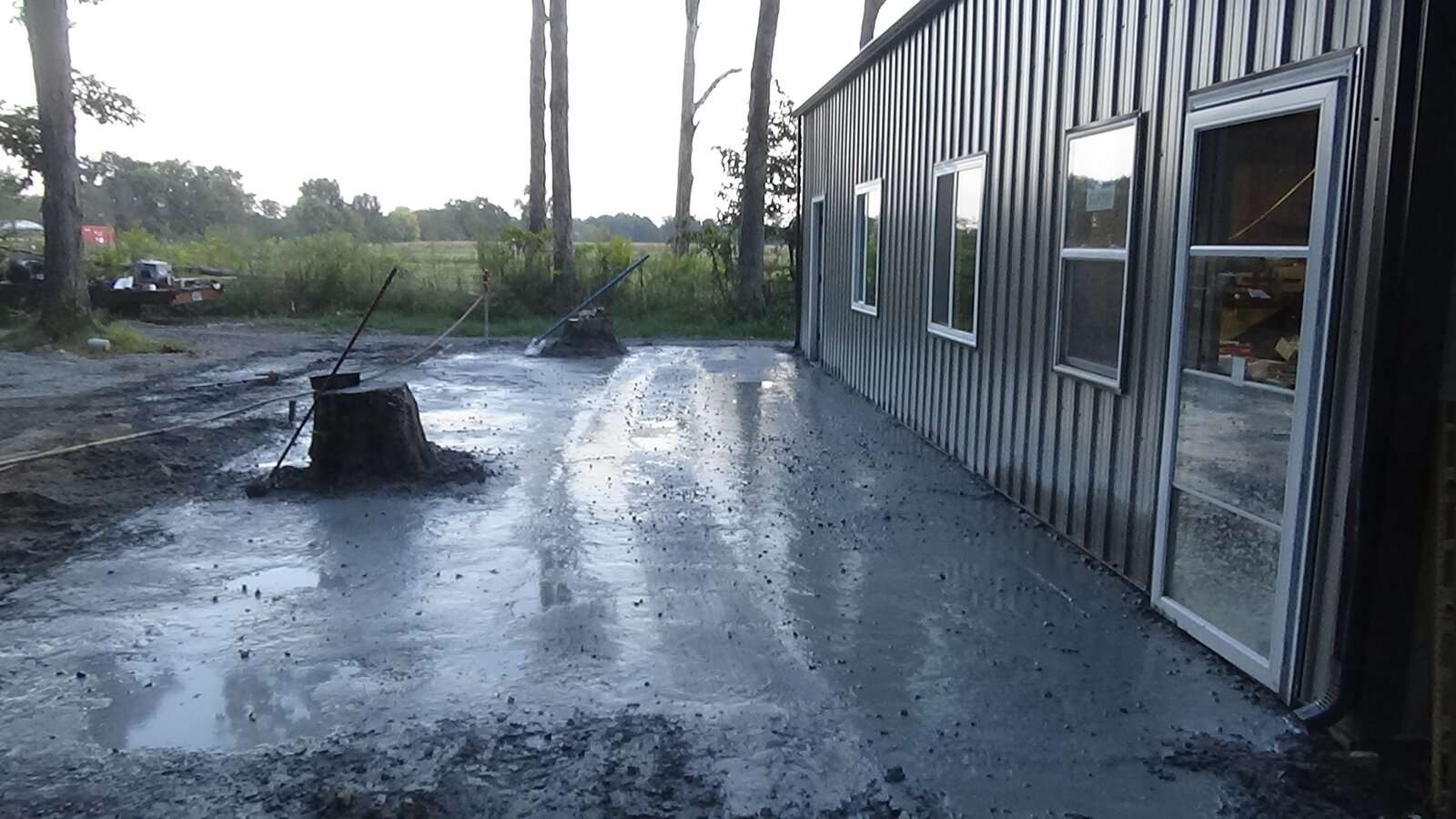
I did smooth out my foot prints after taking the picture! Not perfect by a long shot but better than spending $8,000 for a pro finishing crew.

The Pad for the Mill went a lot better than the patio. 8’x24′ 6″thick It is actually dead level with a dip on the right side to drain the water from the band lube off to the side and out. In 48 hours I will drill the holes for the inserts to bolt the ground track down with and put the track on and the head. In 28 days after it is well on its way to being cured and hard I will start milling the mountain of logs.
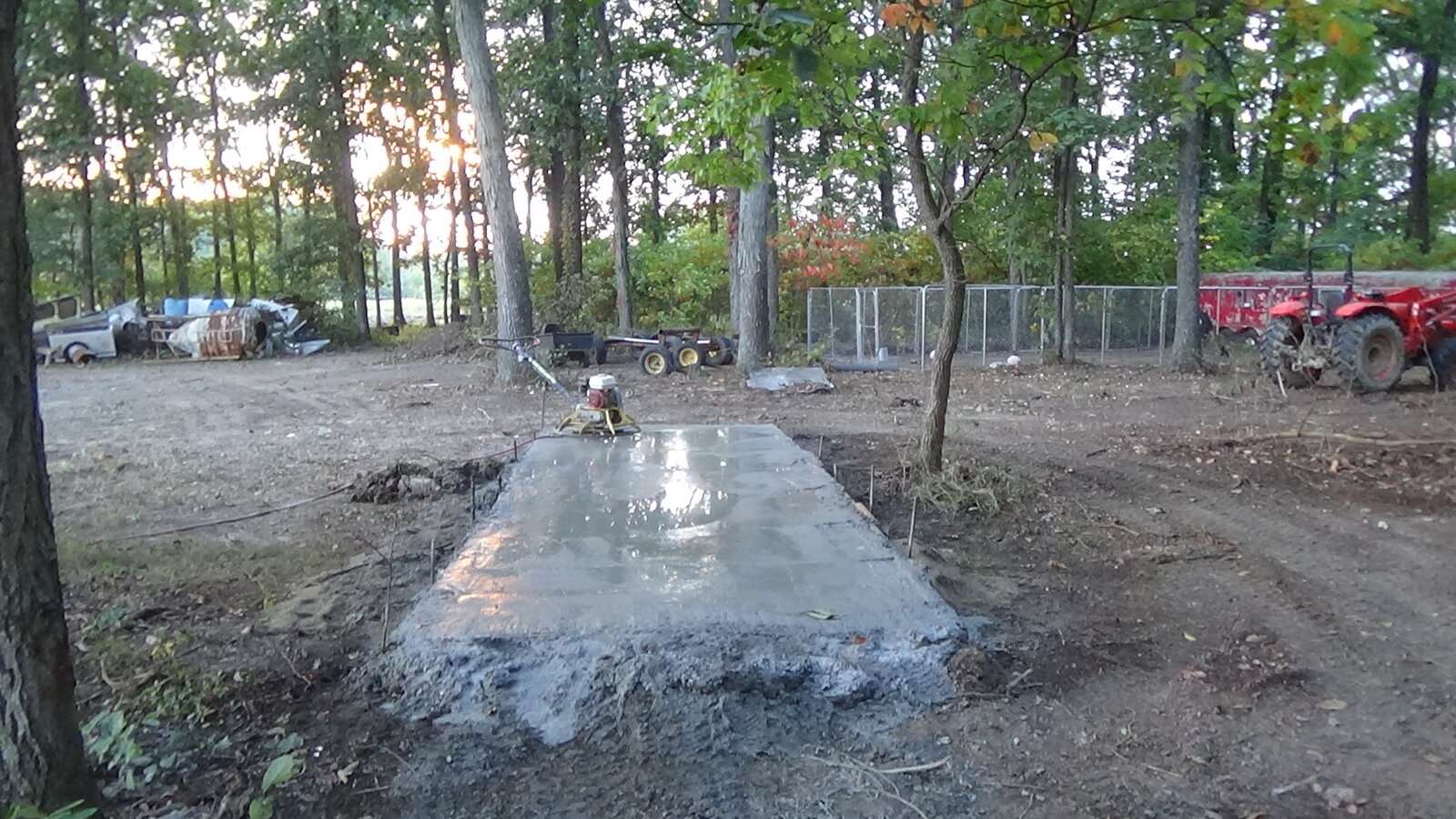
I am good at a lot of things, I will never be good at concrete finishing. It does not help that I absolutely hate concrete work. If I died and was given the choice of eternity in hell or 30 years of working concrete….. I would choose HELL!!!
KC-135 tanker autopilot now safer to use in flight, Air Force says
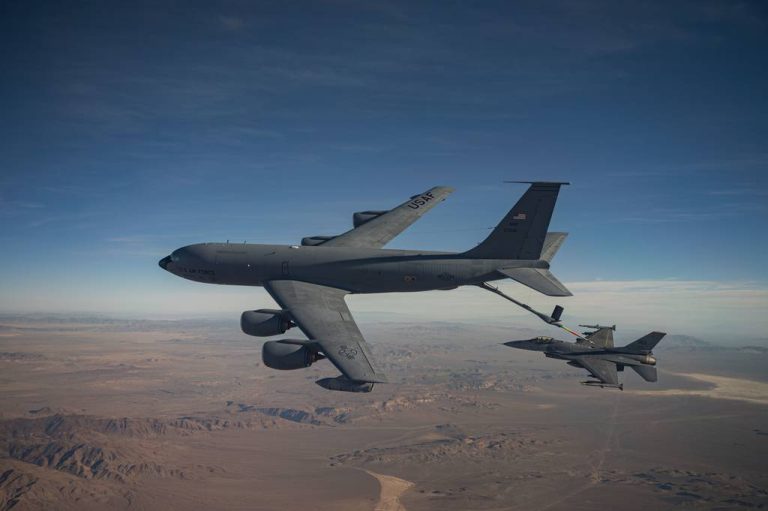
Air Force KC-135 Stratotanker pilots are inching closer to normal operations after incremental software fixes to the tanker’s glitchy autopilot have led the service to ease flight restrictions on the jets.
Airmen are now allowed to fly KC-135s with the Block 45 software upgrade — which includes the autopilot in question — at altitudes below 10,000 feet, Air Mobility Command boss Gen. Mike Minihan said Sept. 11.
“We’re just now bringing the operational capability of the autopilot back up. I’ve got confidence in the fixes,” he told Air Force Times at the Air and Space Forces Association’s annual Air, Space and Cyber Conference outside Washington.
It’s the latest step toward resolving a potentially dangerous problem that began more than two years ago.
In early 2021, KC-135 crews began reporting incidents of the autopilot turning on or off, unprompted, during flight. That has caused the jets to unexpectedly tilt toward the ground or pitch upward, including in at least one instance when the aircraft was within 3,000 feet of the ground.
The issue has occurred five times since May 2021, Air Force spokesperson 1st Lt. James Stewart said. All but one of those instances happened between May 2021 and May 2022.
The Air Force initially said a faulty power supply caused the autopilot to malfunction, but later attributed the problem to an error in the program’s code, defense technology publication The War Zone reported last year. Collins Aerospace, which designed the software, was expected to begin testing fixes in April 2022.
The Air Force is still rolling out the software patch across its fleet of more than 300 KC-135s, Stewart said. The service did not answer how many KC-135s are flying the original Block 45 software and how many have the updated version.
Block 45 was installed on 272 aircraft as of March 2023, according to the service’s budget documents. It is slated for use on 329 airframes based on the C-135 — all but a few dozen of which are KC-135s — plus 19 pilot simulators and five cockpit simulators.
Data collected by the Air Force to inform its Sept. 11 decision to change the flight restriction showed the autopilot had worked correctly over more than 10,000 hours in flight, Stewart said.
Now a new policy is in place to keep troops safe while they begin to use the updated autopilot on their daily missions. Airmen can’t turn on the autopilot when flying when flying in bad weather or at night at an altitude of less than 2,000 feet.
Allowing the autopilot above 10,000 feet gave airmen more time to react in case something went wrong. Lowering that bar indicates the service has enough confidence in the fixes to take on more risk, without getting rid of precautions altogether.
“We’ll build trust in those fixes with these restrictions in,” Minihan said. “Once we’ve got trust, then we’ll look at the full capability of the autopilot.”
He believes the Air Force will sign off on unfettered use of the autopilot within the next year.
“My biggest concern is for the safety of our airmen, always, and I don’t want to rush that,” he said. “The restrictions were great in its use, but they were safe. We’ve got to be cautious moving forward [and] allow the expert airmen that fly, fix and support it to do what they do best.”
Stewart said no aircraft have been damaged, or airmen injured, because of autopilot failures.
“AMC trusts KC-135 aircrew members to safely carry out their mission,” he said.
Rachel Cohen joined Air Force Times as senior reporter in March 2021. Her work has appeared in Air Force Magazine, Inside Defense, Inside Health Policy, the Frederick News-Post (Md.), the Washington Post, and others.
Biden taps Melissa Dalton for Air Force’s No. 2 civilian post
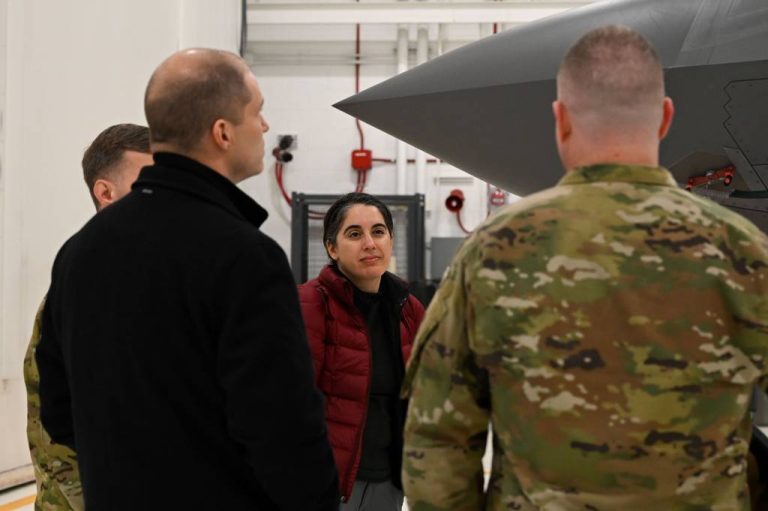
President Joe Biden on Thursday named Melissa Dalton as his pick to serve as the next under secretary of the Air Force, a shift from her current Pentagon post as the top civilian defense leader on homeland security issues.
If confirmed, Dalton would replace Gina Ortiz Jones, who left the second highest service post in March. Kristyn Jones, the assistant secretary of the Air Force, has been serving as the Air Force’s acting undersecretary since Jones’ departure.
Dalton has served multiple roles in Biden’s Pentagon as well as defense roles in the administrations of former Presidents Barack Obama and George W. Bush. Before being named assistant secretary of defense for homeland defense in March 2022, she served as principal deputy assistant secretary of defense for strategy.
Dalton also previously worked as deputy director at the Center for Strategic and International Studies’ International Security Program and as an intelligence analyst at the Defense Intelligence Agency.
She will need to be confirmed by the Senate before assuming her new role, putting a timeline for her start in doubt. Defense nominations have been stalled for seven months in the chamber amid a fight between Pentagon leaders and Alabama Republican Sen. Tommy Tuberville over the department’s abortion access policies.
The Senate confirmed three members of the Joint Chiefs of Staff this week, including new Joint Chiefs Chairman Gen. CQ Brown, the former top uniformed officer in the Air Force. But more than 300 others — including Brown’s replacement, Gen. David Allvin — are still awaiting a resolution to the political fight.
Leo covers Congress, Veterans Affairs and the White House for Military Times. He has covered Washington, D.C. since 2004, focusing on military personnel and veterans policies. His work has earned numerous honors, including a 2009 Polk award, a 2010 National Headliner Award, the IAVA Leadership in Journalism award and the VFW News Media award.