Swarm of loitering munitions draws attention at Serbian defense show

0

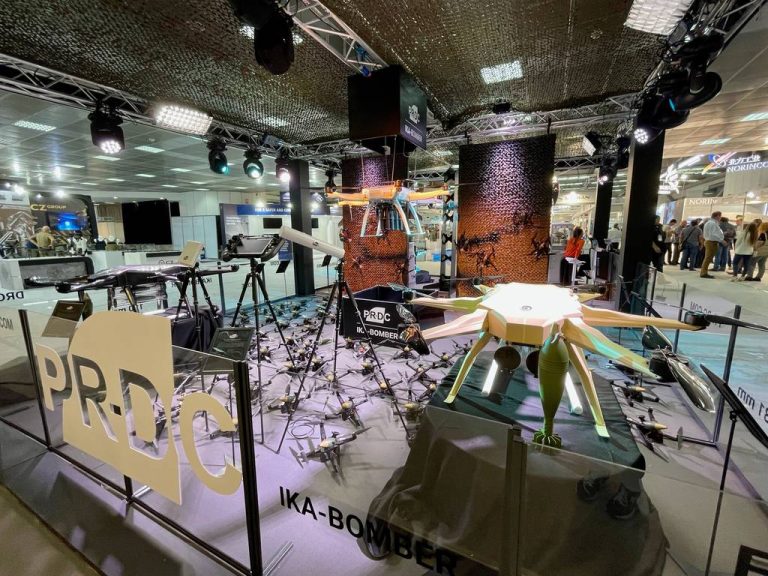
Belgrade, Serbia – At the heart of the main hall of the Belgrade Partner 23 Defense Fair, an unusual display of drone technologies captured the attention of visitors.

Over three dozen mini loitering munitions armed with aerial bombs were spread across the conference hall floor in a swarm formation. To their right a white rotary-wing hexacopter drone, about the size of a grocery shopping cart, was displayed, equipped with two 120mm aerial bombs, and to their left, the same system in black carried two 81mm aerial explosives.

The Serbian manufacturer behind this demonstration is Belgrade-based PR-DC, which is showcasing the third-series of its primary system, the Ika bomber. The rotary-wing drone is powered by six electric motors and has a flight time of 30 minutes when carrying a 20kg (44 lbs) payload. It’s offered in gray, white and black, as well as with different armament sets, typically produced by local supplier Krúsik.

Jovana Jevtić, marketing manager at PR-DC, told Defense News that the firm is eying the international market more than the domestic one.

“Saudi Arabia has shown great interest in the Ika bomber(s) for its military, which is expected to become operational in the next month or two. We are actually holding a demonstration for them today at our offices, to show them its capabilities and allow them to practice controlling it themselves,” she said.

These platforms are among a sea drone systems presented at the fair. Such a vast range of available technologies highlights the rising level of competition in the market, as well as the challenges that exist within the Serbian drone industry, in part due to the country’s procurement strategy.

As Belgrade attempts to strike a balance between greater diversification of international suppliers and further expanding its own domestic business, it often appears to create dual rivalries. Serbian drone manufacturers, although they do share some level of cooperation, must also battle each other for limited funding and contracts, both at a domestic and international level.

This was exemplified in February at the IDEX arms fair held in Abu Dhabi, where Serbia’s president announced that the country would buy UAE-made loitering munitions despite a number of domestic alternatives.

These challenges were highlighted by a representative of the Military Technical Institute, the developer of the Sparrow drone, also known as the Vrabac. The aircraft institute, which is tied to the Serbian Ministry of Defense, unveiled an armed version of this system in 2022. Thus far, the primary user of the standard Vrabac has been the Serbian Armed Forces, though MTI is eager to market it internationally.

“It has grabbed the interest of many non-European countries, but the international market [for this industry] is fierce,” said an MTI representative, who wished not to be named. “We have also encountered some organizational and funding issues.”

The Serbian MoD appears to be focused on rectifying this situation, where in the last two months, it signed contracts with domestic factories for $55,8 million worth of weapons to be delivered to the country’s military.

“We export to customers worldwide, making profit from this, which we invest back into our defense budget and towards enhancing our domestic production capabilities,” Aleksandar Lijakovic, marketing director at Yugoimport-SDPR, a Serbian state-owned arms manufacturer, told Defense News.

Elisabeth Gosselin-Malo is a Europe correspondent for Defense News. She covers a wide range of topics related to military procurement and international security, and specializes in reporting on the aviation sector. She is based in Milan, Italy.

Argentina signs agreement aimed at buying Leonardo AW109M helicopters

0

SANTIAGO, Chile — Argentina’s Defense Ministry has signed a letter of intention for the procurement of eight AW109M lightweight helicopters from Italian firm Leonardo.

The agreement was signed Sept. 21 as Argentine Defense Minister Jorge Taiana visited Italy to see the aircraft’s production line.

The AW109Ms would be used by the Argentine Navy in a seagoing role aboard French-built Bouchard-class offshore patrol vessels, acquired between 2019 and 2022 to patrol the country’s exclusive economic zone to deter and prevent illegal exploitation of fishing resources.

A military source in Buenos Aires, speaking on condition of anonymity due to the sensitivity of the defense program, told Defense News that “until now the OPVs have been going to sea carrying Airbus AS555 Fennec helicopters. But those aircraft are intended and needed for weapons-targeting functions and training with missile frigates and corvettes, instead of coast guarding work.”

Funding for the purchase of eight to 10 lightweight helicopters for the Navy was already included in the government’s draft budget for 2024, which was submitted Sept. 15 to the Chamber of Deputies within the Argentine Congress.

The budget request seeks $110 million for the maritime lightweight helicopter program, to be spent over 10 years.

Luis Piñeiro, an independent defense and security analyst based in Buenos Aires, told Defense News that “this is a long-due and necessary step, which will add to the recent acquisition of P-3C Orion [maritime patrol aircraft]. It will bolster Argentina’s capacities to detect, deter and fight illegal fishing that cost the country between $1 million and $2.6 million per year.”

José Higuera is a Latin America correspondent for Defense News.

G1M G-CORE QRP radio from Xeigu

0

The G1M is a low cost, Hencho en China, 4 band QRP (5 watt) radio.

“This is the new SDR version of the popular Xiegu G1M QRP transceiver with general receive 0.5-30 MHz and transmit capabilities on four popular amateur radio bands. Its highly portable and has a clear OLED screen with S-meter and spectrum display.”

These sell new for around $250 to $300, depending on the vendor.

I wrote an operators manual because the documentation that comes with is just so much crap.

I actually had a ham in the L48 ship his radio up to me to play with/write manual. That manual has since been posted to the related IO group. I spent 3 weeks running this thing thru the mill, so this is not just an opinion based on other’s web reports – it is based on observed performance.

In the manual I stated if gifted one of these, I’d give to someone else who wanted it I don’t.

Why?
– All SMT technology with wave soldering. Normally not an issue. In this case the jacks for headphones, key and other break off the board with little to no force.
-The interface is small and clunky
-The software works, but….gets zero factory support. In fact, all of the Xeigu ham rigs are supported by the ‘user base’ and a single dealer.
-Loading or reloading the software package in well past clunky, to the point of being bizarre…
– the display is tiny and can be hard to read in daylight. This is actually worse than the much maligned FT-817 display….
****
Requires 12 to 15 VDC to operate per the Vendor manual That’s not a typo. 12 VDC min input voltage. NOTE this radio set IS NOT reverse polarity protected. Hook it up “backwards” and the Magic Smoke will escape. This is specifically **not** covered under warranty,.

Current consumption on RX is 450Ma. Tx runs a couple of amps. By comparison, the SW3B uses 35mA on RX. This thing run warm on RX, really hot on TX digimodes..

Then again –
On the plus side, looking at this as a wide-band RX – not so bad. AM/CW/SSB and the last load provides a slightly narrower B/W for CW. So that now barely works. This is not a CW rig. It is small.

An ATS909 RX fro Sangean – a quality rig – sells for around $250 to $300. It does AM/FM/SSB and cover .5 to 30Mhz. The sound quality is ‘better’ for for communications, the -909 will work, I’ve used mine to monitor SSB nets while chasing around after DX.

So, the G1M is at the same price point, covers the same bands and offers low power TX. I see the FT8 crowd loves these, so there is a market niche.

I’ve attached the manual, should you be interested. The SW3B @$188 is the better deal for CW ops.

Bottom line,
Poor quality build
Zero factory support
Funky interface/crummybutton software
IOW, this acts and works like a engineering prototype with the customer base being used as the Beta testers.


Northrop wins $705 million contract for F-35 air-to-ground weapon

0

WASHINGTON — The Air Force awarded Northrop Grumman a $705 million contract to develop and test a high-speed air-to-ground weapon known as a stand-in attack weapon that the F-35 Joint Strike Fighter could wield to destroy enemy targets.

Northrop said Monday that its work on the second phase of the weapon, which is also referred to as SiAW, will take place over the next 36 months in Northridge, California, and the company’s missile integration facility at Allegany Ballistics Laboratory in West Virginia.

The work will include further development of the weapon, platform integration, and completing a flight test program so the SiAW can be rapidly prototyped and quickly sent to the field, the company said. A guided vehicle flight test will wrap up the first part of this second phase, and the second part will conclude with three more flight tests and the delivery prototype missiles and test assets.

The Air Force wants this weapon to reach initial operational capability by 2026.

Northrop was one of three companies, including Lockheed Martin and L3Harris, that in May 2022 each received $2 million contracts from the Air Force for the first phase of developing the SiAW.

The Air Force wants this weapon to strike enemy air defense targets on the ground that could be rapidly moved, such as integrated air defense systems, ballistic missile launchers, land-attack and anti-ship cruise missile launchers, GPS jammers, and anti-satellite systems.

A stand-in weapon has a shorter range than standoff weapons, so an F-35 would likely fire the SiAW close to the target after penetrating enemy airspace. A standoff weapon is meant to be fired from further away, beyond the reach of enemy defenses.

The Air Force in recent years has sought to update its aircraft and arsenals to be able to fight in a contested environment against an advanced enemy such as China, and away from the two decades of war in the Middle East which largely took place in uncontested airspace. The service’s work to develop a missile targeting enemy air defenses is another sign of that shift.

Northrop said it will build the SiAW using open architecture, which will allow its subsystems to be quickly upgraded with new capabilities.

A Northrop official told Defense News in June 2022 that the F-35 would have to carry the SiAW within its internal weapons bay to avoid compromising the jet’s stealth capabilities. This would rule out carrying the weapon on an external mount, he said. And he said it is unlikely that the F-22, which has a smaller internal bay, would have enough room to carry the SiAW.

The SiAW program is heavily focused on digital engineering and design, and is the first time the Air Force has had a fully digital weapons acquisition and development program.

“With our expert digital engineering capabilities, this next-generation missile represents an adaptable, affordable way for the Department of Defense to buy and modernize weapons,” Susan Bruce, Northrop’s vice president for advanced weapons, said in the company’s statement.

Northrop said last year that it planned to use its experience from creating the Advanced Anti-Radiation Guided Missile-Extended Range, or AARGM-ER, for the Navy and integrating it onto the F-35 as it develops the SiAW.

Stephen Losey is the air warfare reporter for Defense News. He previously covered leadership and personnel issues at Air Force Times, and the Pentagon, special operations and air warfare at Military.com. He has traveled to the Middle East to cover U.S. Air Force operations.

trump buys a Glock

0

They said he bought a Glock, then "revised" the statement saying he did not.
He "claims" he will take care of the ATF pistol brace rules.
At Palmetto Armory is SC.

New Sawmill in action. | Survival Monkey Forums

0

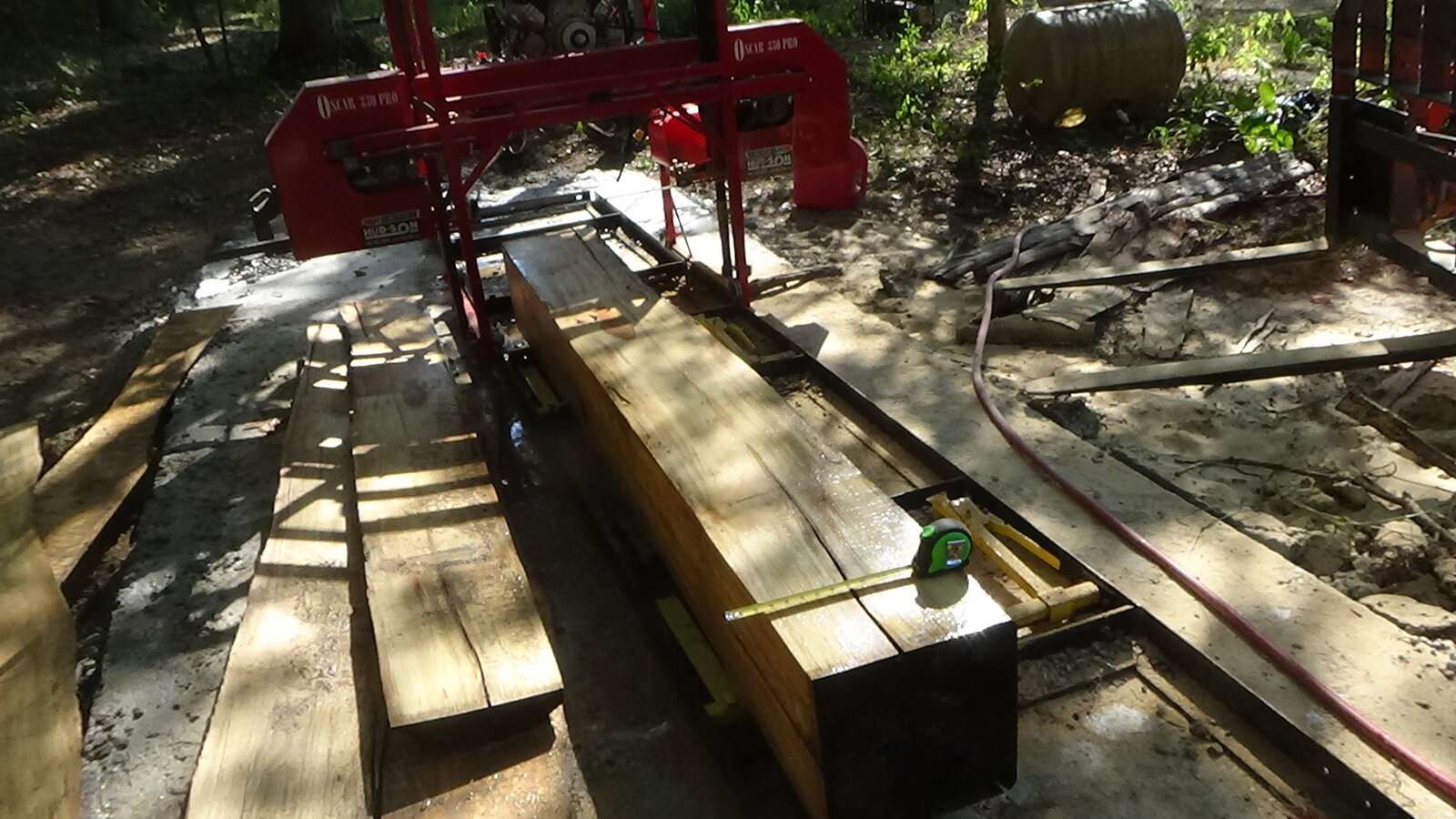
I Couldn’t wait and had to try the new mill out yesterday with a hickory log from the bottom a stack of 2 years down pile of hickory logs. I had a burning desire to see what was inside those logs and if they had gotten soft and rotten. I was pleased to find very good wood inside!

LOL I learned after the fact that I ran out of memory on the camera SD card about 2/3s of the way through the video. I knew it was getting close and that I needed to delete the old video or get a new little tiny SD card for it. Thus the video just kind of ends when the storage runs out.

The EPIC Fail fail was when I realized that I had put the ground track on the pad backwards! Easy solution for that error would be to just put the mill head on the opposite end. I am not going with the easy solution though. Going to unbolt it from the pad, turn the whole track around. Drill new holes in the concrete, add more inserts and bolt it down again. I will do most of my milling before noon and that Morning sun in the East is real bright and would be right in my face running the mill West to East.

This is what happens when you project supervisor is a Fence Post Lizard!

I did have room on the camera to take some pics….

The Nasty gnarly log selected to be the first. I do put 6mil black plastic sheeting under log piles that I know will be sitting for a long time. Thus the plastic hanging from the bottom. And set 8″ diameter long logs down to sit the logs on to keep them off the ground. Ground contact and ground moisture evaporation will ruin a log in a few months if you don’t do that. I chose this log because it is one the tree service guys cut down and well they don’t know how to make a plunge cut with hinges and ruined 2-4 feet of every trunk as far as milling goes.
DSC00785.JPG

All debarked, rinsed on on the ground track. Debarking is important IMO particularly for trees like Shagbark Hickory. That bark is HARD and all tree bark is full of grit and dirt that wears a blade down to dull 3x-4x faster than a pressure washed or debarked log will. LOL if you see sparks flying while you are cutting…… you have a dirty log and are abusing your band.
DSC00791.JPG

I like to let the shagbarks sit for 6 months and let the bark beetles and their larvae chew up the layer between wood and bark, so that it easily peels off in sheets by hand. 2 years is a bit of overkill on that :)
DSC00790.JPG

The split from not plunge cutting the log is very obvious in the cant. This one I can work with since it is pretty much center of the cant. I went ahead and made the cant with track backwards. The malfunction with running it this way is the blade guide on the right only has 4 inches of adjustment, while the blade guide on the right has 28″ of room to slide back and forth. Ideally you want the right guide in a fixed position that will be just back a inch or less from the track stops. And adjust the left guide to a inch or less from the the cant or log. The more space between cant and log the floppier the blade gets. I could get away with making the cant like this but no way I could mill actual lumber with that amount of flop in the band.
DSC00793.JPG

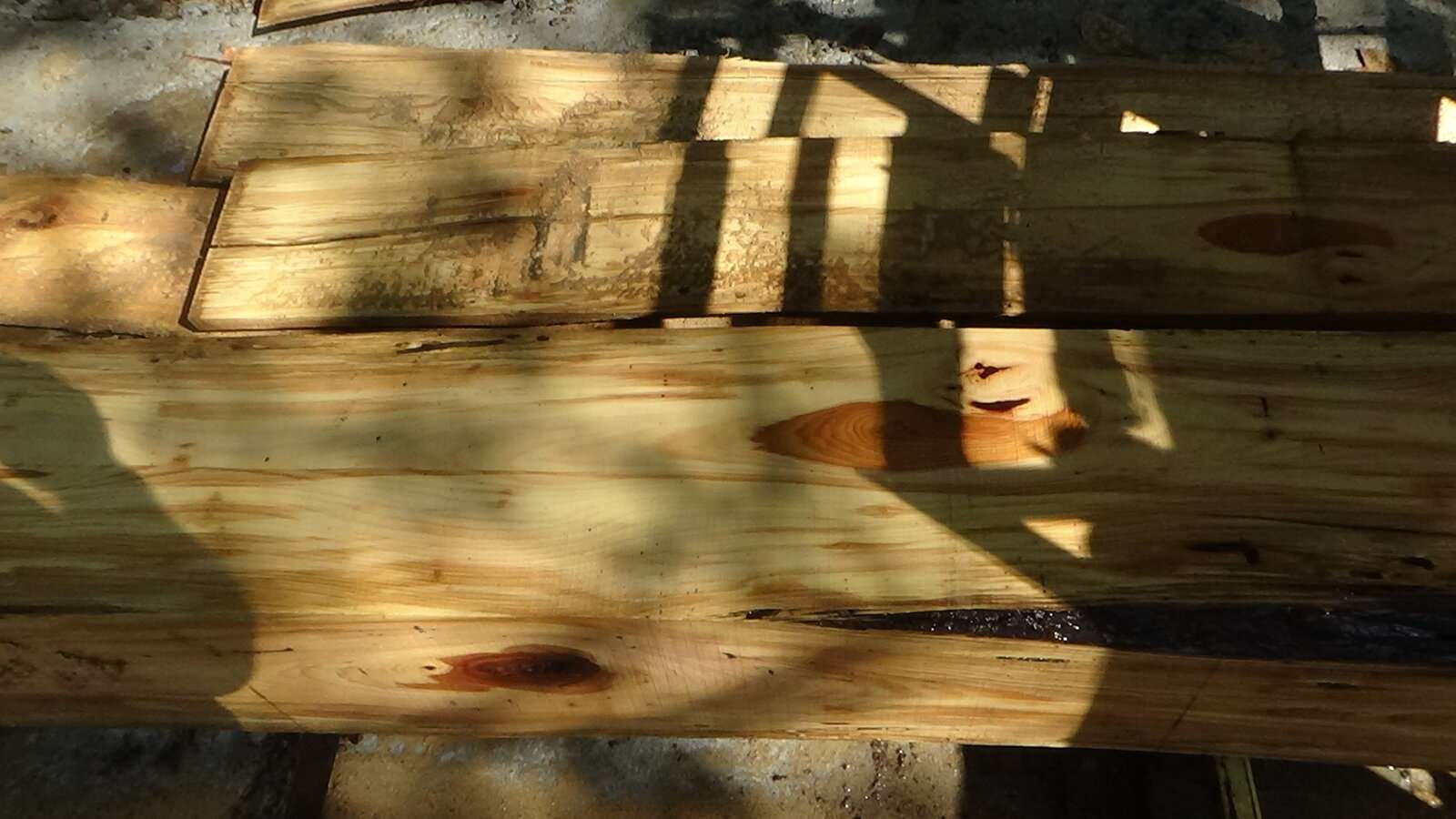
Very happy with the wood I found in the cant after cutting the slab off. The cant ended up being 12″x13″ That will = 22 1x6x8s have to account for the band and cut loss. I always figure A loss of 1″ per 12″ After I trim the cracks up, run the lumber through the planer and sander, this will make some fine Hickory 1x6x8s The slab will get stacked on the tractor forks and dumped in the cut cradle and turned into 18″ long firewood. The bark will get ran through the course chipper and some of it bagged for the smoker and the rest spread on the paths and trails around the lake and ponds and the woods, same with the sawdust after I make a pile of it. Nothing that goes to my mill gets wasted.
DSC00794.JPG

One of the BIG improvements Hud-Son made to their mills was the water lube tank. The biggest PITA of the old mill was the lube tank being built into the frame of the mill with tube steel that held a whopping 1 gallon of water. Constantly had to stop and fill it.
DSC00786.JPG

The second big improvement is the punch out cap for much larger water tank that lets you connect the hose direct to the tank and not have to refill the tank at all. The 3rd big improvement is the gas tank and changing the position and making it a low profile tank. On the old mill the gas tank was where the water tank is on the new one and YEAH EVERYONE LIKE HOLDING A 5 Gallon gas can head high to refuel :)
DSC00788.JPG

The MAJOR MALFUNCTION with the new mill and I have been dead up their ass since the mill arrived about this one. That Junk Ass, garbage, future expensive boat anchor Lifin Engine. Sure that no name imported Chinese piece of trash looks good, it even runs good and it will throw a rod through the block somewhere between 250 and 290 hours. I have had 3 pieces of equipment with these garbage engines that did just that and it ain’t because of me or my maintenance, if it were my 8-20 year old Kohler, Honda and Briggs engines would have pretty holes in the blocks. I expected a quality engine to arrive on the mill and got this POS. The warranty on these trash engines expires at 250 hours run time the shortest a Lifin Engine has lasted me is 256hours and the longest 290 hours. I simply would NOT have bought this mill if I had know it would have a Lifin on it. I will run it until it throws a a rod and replace it with one of my Kohler Command Pro 25hp engines I keep on the storage racks and it will annoy me that I had to put a $2500 Kohler on the mill when it should have came with one or a comparable Honda or Briggs. My junky ass new craftsman $2000 garden tractor riding mower has a better engine than my new $10,000 sawmill. Pathetic on Hud-Sons part.
DSC00789.JPG

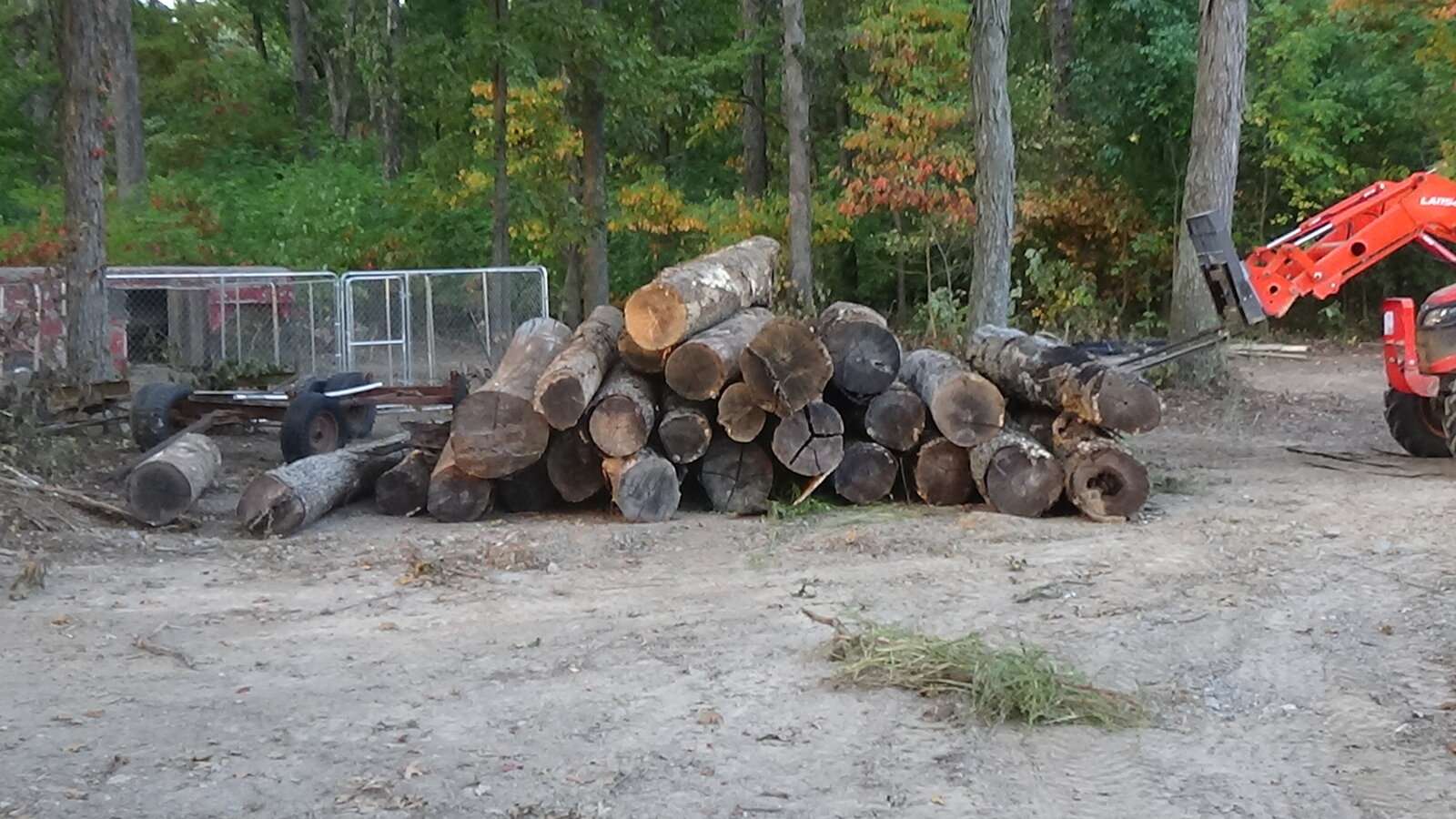
Going to reverse the mill track this morning, but last evening I started moving the log stacks closer to the mill and reclaiming my parking lot! There is one stack in the pictures…. Only 4 More stacks like that on sitting on my parking lot and 2 more sitting on the West Side Tree line.
DSC00795.JPG

All together I have like 170 logs that need milled that are about a equal split of Pecan, Hickory, Post Oak and Red Oak. My old bulk buyer offered me $130,000 if I milled them all in to 1x stuff and 2″ slabs and ran them through the planer and sander. Retail value of that finished lumber is around $180,000 Not going to sell any of this. A good bit of it will go on the floors, walls and build the cabinets and counters in the new house. And I am going to build a guest Cabin, a open air shed beside and over the mill, and I should have enough left over to build a 30×60 barn. Will run the house stuff through the planer and sander and what I finish the inside of the guest cabin with. Everything else will be true rough cut. feeding the planer is slow work and the sander is actually pretty quick but man is it a work out putting it in running to other end, pulling it out stacking it and repeating over and over for days on end. Even selling it bulk wholesale I can’t argue the money isn’t good. Quality Hardwood lumber ain’t cheap.
DSC00796.JPG

I looked at Home Depots 1x6x8 Hickory that is about = to the finished lumber I make…. Nope hardwood lumber is not cheap at all!

home depot 1x6 hickory.

A couple of friends have used these Nyle L200 units to turn shipping containers into kilns and report they get Oak and Pecan down to 6% Moisture in 35-40 days just as Nyle advertises. I happen to have a empty 20′ shipping container and the price tag on the L200 is not horrible. Call me lazy but this would beat feeding firewood into my old wood boiler and radiator kiln to keep it hot and sucking moisture from the lumber! And my old kiln is real bad shape after sitting unused since 2016. I had and idea that is forming into what I am thinking is a viable plan. I used to make tables, benches and other furniture type stuff and picnic tables LOL lots of and lots of post oak picnic tables that weighed like 600 pounds each. When we were pretty certain I was going to Croak in 2016 we packed up all of my wood working tools and were going to sell the whole shebang but Mrs. Krap Convinced me not to sell it all and that she could easily sell it after I croaked LOL. Gotta love her blunt logic in all things. She is my counter balance to my doing things without completely thinking them through, despite being so opposite in so many ways we make a very powerful team together! Probably why we made such good business partners before becoming Mr and Mrs Krap :)

https://www.nyle.com/wp-content/uploads/2023/01/NDK-L200-Sales-Sheet-Rev-2023.01.pdf

So all of my tools are stored away in the back of one of the 40′ containers. I am very good at making Epoxy River Tables and Epoxy tables in general and well tables and benches in general. I did it more as a hobby building 4-5 picnic tables per year and 1-2 custom slab epoxy tables over the winters. To put it in perspective it takes me 10-12 weeks from start to finish for a 3×8 table, base, end chairs and side benches and a average price then of $1500 for a picnic table and $5000-$6000 for a custom dining set from oak or pecan. Most folks done realize that Native Pecan is right up there with White Oak as one of the hardest and densest wood in North America. Thus it falls in the REALLY Expensive range…. going for $3-$5 per board foot in the lower quality stuff to $24 per board foot of the High Quality lumber. And back on track. I think that 30×60 barn I am going to build is going to be a big wood shop and racks with slabs 2″- 4″ thick for people to buy as kiln dried, rough planed slabs for DIY and my tables, chairs, benches etc on display for the not so DIY folks.

I just DO NOT want to sell food or run the food trailers anymore. I am so sick of the public in general and being surrounded by hundreds of people at events. Things in people changed a lot in 2020 and they have changed a lot more since. There is just a general feel of anger, anxiety and fear pulsing off of A LOT of people now days. The Risk of violent confrontation and having to deal with someone trying to rob you is way up now days. Food Trucks and Trailers seem to be a preferred target now days regionally. 2019 I didn’t know any of my fellow operators that had been robbed. Now I know 9 that have handed over their days work and sales at the end of a barrel or a blade. A couple of them twice and one on his 4th armed robbery. I am of the school that avoiding hostile situations is the best course and when they can’t be avoided dealing with them quickly and permanently. Most venues prohibit the vendors from carrying or being armed, and well this State is not exactly friendly to use of lethal force in self defense and believes you should just hand over anything and everything a thief wants. I just can’t operate like that in todays environment.

LOL the Chuck Wagon now sits on the Pond Point acting as guest quarters and where I keep my beer and brat fridge. And where I sit and relax by the fire ring in the evenings. I just don’t see it ever returning to a Mobile Kitchen with a big tent dining room around it again. The All American Food Trailer is pretty much a storage unit beside the machine shed now. And I really just can’t find the motivation to deal with the nuts of any flavor out in public anymore.
DSC00444.JPG

But I still want to do something constructive and productive that brings in a decent income and does not involve working 14-20 hours days 2/3s of the year :) Cutting live edge slabs and making high quality tables and dining sets seems to me a good way to accomplish that. And it is something I really enjoy doing. Can Sell here with the home turf advantage and not only feel but be much more secure than out in the public. Can also sell on Etsy and a couple of other market sites and ship…….. so long as the buyer pays the shipping on that heavy ass stuff. LOL a Epoxy Table Top Alone Weighs 200-300+ pounds. A stump and roots base can get way up there on weight for the big ones. One does not simply pick my tables up and move them ;) And it all comes down to what I can make at the start on the new sawmill.

And wood working and building things is so much less stressful than having 40 tickets with food orders to put together and everyone wanting it right now because they are trained to McDonalds instant gratification at the drive thru :)


Timing light advice | Survival Monkey Forums

0

  1. I haven’t used a timing light in years and broke mine out and it doesn’t work. But I have my dad’s. I was looking at it and the Mac tl820p and it has an AC plug and one wire with an alligator clip. I’m used to DC models. and I am not sure how to hook it up. The clip is too small for the plug wire. stick something between the number one plug and the boot to clip onto? I just did my timing chain and water pump, so much fun. My truck runs but I would like to set the timing. Maybe someone here can advise me.


survivalmonkey.com warrant canary

Joby’s air taxis to help US Air Force usher in electric aviation era

0

WASHINGTON — The Air Force’s project to add electric air taxis to its fleet took a big step forward Monday, as Joby Aviation delivered the first such vehicle to Edwards Air Force Base in California for real-world testing.

AFWERX, the Air Force’s innovation cell, launched its Agility Prime effort in 2020 to work with industry to develop electric vertical takeoff-and-landing aircraft. Until now, the service’s work on eVTOLs has focused on testing the aircraft in controlled experiments.

Edwards plans to use the Joby aircraft for day-to-day tasks, such as transporting spare parts or other cargo or passengers around the sprawling base, Maj. Phillip Woodhull, director of the Emerging Technologies Integrated Test Force at Edwards said in an interview.

The Joby aircraft is capable of carrying 1,000 pounds (454 kilograms) of cargo or four passengers, and can be flown remotely or by a single pilot in its cockpit. Meagher said it can fly up to 100 miles (161 kilometers) on a single charge and at speeds of up to roughly 200 miles per hour.

For the first several months, Lt. Col. Tom Meagher, division chief for AFWERX Prime, told Defense News, Joby pilots will remotely fly the aircraft around the base and only deliver cargo. As the Air Force gets more comfortable with the aircraft, he said, the service’s own pilots will start flying it and it will carry passengers.

Meagher said the Air Force plans to conduct remote piloting for the first few months for safety reasons.

“As you’re developing a new type of aircraft, remotely [piloting] removes that initial human risk,” Meagher said in an interview. “It’s a great way we’re seeing in industry, of how they can test a completely new power train, completely new type of vehicle, without putting a person in harm’s way as they prove out their systems.”

A second Joby aircraft is expected to follow next year, and the company could provide up to 9 aircraft to the Air Force under its $131 million Agility Prime contract. Joby will still own the aircraft, though the Air Force will eventually operate them.

Greg Bowles, Joby’s head of government affairs, said the California-based company first began working with the Defense Department’s Defense Innovation Unit in 2016 on electric aircraft.

“Very early on, the government recognized we’re at a unique period of time,” Bowles said. “Electric aviation is going to be a powerful tool. We need to make sure that we understand it and make sure it evolves in a way that is conducive for the U.S.”

Other potential uses

When asked about potential uses for the Joby aircraft once it starts carrying passengers next year, Woodhull pointed to a roughly 240-square-mile lake bed on Edwards that is used as an emergency landing area. The lake bed sometimes cracks as it dries or the earth shifts, he said, so Edwards personnel have to periodically check it to make sure the ground is still safe to land on. The inspectors usually drive around in trucks, he said, and that job might be done more efficiently using a Joby aircraft.

Edwards’ security forces also could use the air taxi to patrol the base’s perimeter, or it could quickly shuttle maintainers to check on or fix test equipment throughout the base, Meagher and Woodhull said.

“We’re doing assessments of how it would be used, and what the suitability and effectiveness in that kind of thing would be,” Woodhull said.

Meagher said this is the first time such tests have been done on an eVTOL, and that Joby’s aircraft was sufficiently advanced to take this step. Joby said this delivery took place about six months earlier than expected.

Other companies are also progressing quickly, Meagher said, and AFWERX is looking forward to conducting similar tests with their eVTOL aircraft. The Air Force has contracts with more than a dozen companies to produce aircraft for Agility Prime, including Lift Aircraft of Austin, Texas, and Beta Technologies of Burlington, Vermont.

Bowles said Joby wants its eVTOL aircraft to operate commercially in 2025. Joby now builds these aircraft in Marina, California, and it plans to open another factory in Dayton, Ohio, near Wright-Patterson Air Force Base.

Joby launched in 2009, and has worked since then to refine technologies such as high-torque electric motors, fast-charging batteries, and flight software that are necessary to create eVTOLs. Its team includes engineers with experience at other pioneering electric vehicle companies such as Tesla, Bowles said.

‘Torque-dense motors’

A major challenge in creating an electric aircraft is that the eVTOL’s engine has to be constantly turning to stay aloft, Bowles said. That differs from designing an electric automobile, which can coast at times and stops at traffic lights.

Bowles said Joby’s aircraft and its electric components are quiet, and show little heat signature in the air.

Part of the engineering on this aircraft included refining the shape of its rotors to “take a huge bite of air — like way more than you normally would in a traditional aircraft,” Bowles said.

This allows the aircraft’s “torque-dense” motors to turn more slowly while staying in the air, Bowles said, which helps reduce the aircraft’s sound. He said the Joby aircraft’s propellers can also tilt forward to fly, similar to the way an Osprey aircraft flies, and that using electric propulsion allows it to “do it in a much more eloquent way.”

NASA, whose Armstrong Flight Research Center is on Edwards, will be involved in the experiments at the base.

Teresa Whiting, a spokeswoman for the NASA Armstrong Flight Research Center, said the agency plans to work with AFWERX to find ways to safely fly such aircraft in everyday use, focusing on issues such as air traffic management and flight procedures.

“This testing will advance critical technologies needed for air taxis to fly safely in cities,” Whiting said. “NASA’s goal is to help mature the technology to push the entire air taxi and drone industry forward and to share these findings with the Federal Aviation Administration to inform new policy.

The Joby aircraft recharges fairly quickly. Most of its flights would be for about 25 miles and could recharge in less than ten minutes. Meagher said a full charge could take less than an hour.

The Joby aircraft’s electric motor will also require less maintenance than traditional vertical lift aircraft, Meagher said, similar to the way electric automobiles don’t need the oil changes a fuel-burning car requires

“The motors have one moving part,” Meagher said. “So from a maintenance perspective, from an operating cost perspective, that’s where we really see the advantage of the electrification in the industry.”

The Air Force is contemplating dozens of potential uses for Agility Prime aircraft, some of which would take advantage of how quiet an eVTOL aircraft is.

For example, the Air Force might use such aircraft to infiltrate and exfiltrate special operations troops into dangerous territory, or rescuing downed pilots or other personnel trapped behind enemy lines. The service fears that traditional helicopters would be too easily seen and targeted by advanced enemies in a future war, and has been looking for other ways it could carry out combat search-and-rescue operations.

“This is a huge milestone for the [Agility Prime] program,” Meagher said. “This is what we’ve been building up to over the last few years, going all the way from working with the companies on their testing, getting some of our folks qualified, to actually getting aircraft on the base to operate them with government operators. It’s an exciting step for us, as well as our industry partners.”

Stephen Losey is the air warfare reporter for Defense News. He previously covered leadership and personnel issues at Air Force Times, and the Pentagon, special operations and air warfare at Military.com. He has traveled to the Middle East to cover U.S. Air Force operations.

Using Kelp and Seaweeds As Survival Food

0

Imagine you’re at the beach, strolling on the sandy shore, breathing in the briny breeze as the wind rustles the waves. As the gentle waves wash over your feet, you spot some familiar leafy structures scattered on the rocks and buried in the sand.

Curiosity piqued, you pick one up. It feels a bit slimy, sticky, and emits an unusual scent. Upon closer inspection, you realize it carries a refreshing aroma, reminiscent of the sea itself.

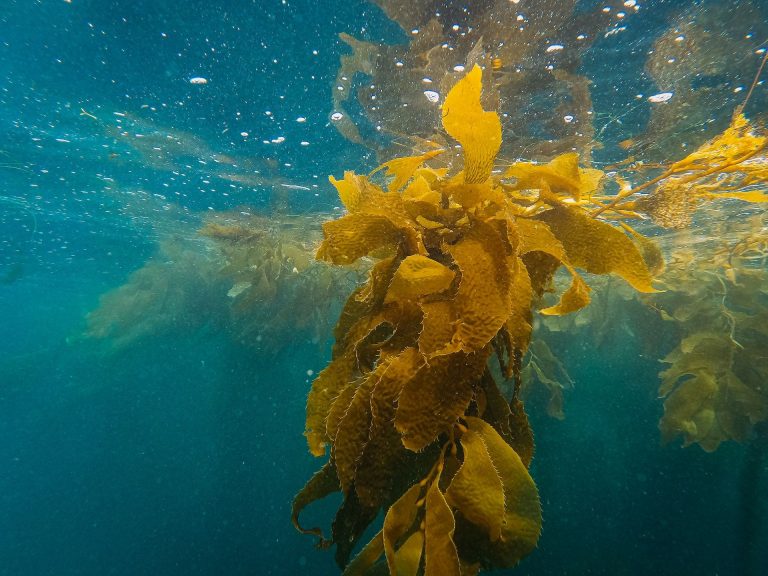
What you’ve stumbled upon are seaweeds. Most people can recognize seaweeds when they encounter them at the beach, whether they’re floating in the surf, forming piles on the shoreline, or clinging to rocks in various sizes and shapes. On the west coast, especially, you’ll often come across kelps, with their long stems and characteristic fronds, lying in abundance on the beach. And as you venture farther north, you’ll find an even greater diversity of these marine plants.

Seaweeds typically have leaf-like fronds, stem-like stipes resembling land plant stems, and root-like holdfasts for attachment. Some seaweeds are delicate and fragile, while others are sturdy, almost like leather. Many have air-filled sections, known as “floats,” which help them stay afloat. Some, like sea lettuce, are as thin as wet plastic sheets.

The colors of seaweeds, mainly green, brown, or red, are key in their botanical classification. Despite all seaweeds containing chlorophyll, their unique pigments give them distinct hues and are vital for identifying their specific types.

Brown Algae

The color of brown algae spans a spectrum from rich brown to earthy yellow, and it owes this palette to a pigment called fucoxanthin. While this group includes some tiny, nearly microscopic members, the dominant presence is held by larger seaweeds with tough, leathery textures.

The diversity in their shapes is striking, ranging from colossal kelps that can extend hundreds of feet in length to slender, whip-like fronds and leaf-like structures measuring anywhere from one to three feet in diameter.

All large brown algae, which encompasses various genera of kelp, along with rockweed and sargassum, have a common trait: they anchor themselves firmly to rocks. This anchoring is achieved through structures known as holdfasts, resembling the roots of terrestrial plants in appearance.

Their robust outer layer provides them with a level of protection against abrasion from fish and the harsh forces they encounter when torn away and washed ashore. These seaweeds remain upright thanks to numerous air bladders that help maintain their buoyancy. Globally, there are approximately 1,000 different species of brown algae.

Red Algae

In general, red algae are typically smaller in size compared to their brown counterparts. They possess delicate and graceful shapes, often resembling branching ferns adorned in a captivating array of colors, including violet, red, purple, and pink. The diversity within this group is remarkable, with some red algae taking on lance-shaped forms, displaying wrinkled edges, while others boast wide, elastic fronds that resemble sheer sheets of ruffled plastic. Some species grow in thin filament-like structures, while others take on the appearance of leafy structures.

Among the well-known members of the red algae family are Irish moss (Chondrus crispus), laver (Porphyra spp.), and dulse (Rhodymenia palmata). These are just a few examples of the approximately 2,500 species of red algae found around the world. Their vibrant colors and varied forms make them an intriguing and visually captivating component of marine ecosystems.

Green Algae

Green algae, much like their red and brown counterparts, also come in various forms, including filaments and branching fronds. Among them, the most frequently consumed seaweed is sea lettuce (Ulva lactuca), which bears a striking resemblance to a thin sheet of lettuce clinging to rocks.

While most green algae are typically associated with freshwater environments, the marine realm is home to a surprising diversity of them, with approximately 5,000 different species thriving in saltwater habitats. These marine green algae contribute to the overall vibrancy of aquatic ecosystems and, in the case of sea lettuce, even provide a source of sustenance for both marine life and humans. Their adaptability and unique appearances make them a fascinating component of the underwater world.

Eating Seaweed

Seaweeds aren’t just delicious, provided they’re prepared correctly, but they also pack a substantial nutritional punch. They might just be the closest thing you’ll find to “fast food” when you’re out in the wild. In fact, seaweeds have a wide range of uses, from being a source of sustenance to serving as food seasonings, medicinal ingredients, and nutritional supplements. Their versatility extends to various practical applications as well.

Many botanists assert that all seaweeds, which encompass nearly 10,000 macroscopic varieties, belong to a group of plants that are entirely non-toxic, making them generally safe for consumption. However, a more cautious perspective suggests taking the time to familiarize yourself with each specific type of seaweed you plan to eat. This caution stems from the sheer diversity of seaweeds, as not all of them have undergone thorough study to warrant a blanket statement of safety.

Nevertheless, seaweeds are widely recognized for their exceptional nutritional value and are generally considered safe to eat, provided you adhere to the guidelines we’ve outlined below. Exploring the culinary and nutritional potential of seaweeds can be an exciting and enriching experience, offering a taste of the natural world’s bounty.

A word of caution

survivalstockpile

Certain seaweeds can be unappetizing due to their rubbery texture and rigid structure. However, these issues can often be addressed through methods like drying, powdering, or various cooking techniques. It’s important to note that what works for one type of seaweed may not work for another.

Whenever possible, seek guidance from local experts who have experience with seaweed utilization. Learning which seaweeds are more palatable than others often comes through firsthand experience, so don’t hesitate to get creative with your culinary experiments.

If you’re considering incorporating seaweeds into your diet, there are some common-sense precautions to keep in mind:

Avoid Decomposed Seaweeds: Never consume seaweed that has been sitting on the beach, decomposing, and attracting flies. Decomposed seaweed can harbor harmful bacteria that may lead to illness if ingested.

Thoroughly Wash the Seaweed: Before consumption, make sure to wash the seaweed thoroughly. This helps remove any adhering sand and potentially harmful substances. One suggested method, especially if the water’s purity is questionable, is to wash the seaweed in your bathtub or sink. Begin with a hot water rinse and a small amount of biodegradable soap, then drain. Repeat this process three times using the hottest tap water available. Finally, give it a rinse in non-soapy water. You can then proceed to dry the seaweed or use it in various recipes.

Avoid Polluted Areas: Seaweeds growing near sewage effluents, river mouths, bays, or inlets where pollution is dumped can easily accumulate toxins. It’s best to steer clear of such seaweeds and not consume them. Unfortunately, in some regions, like much of the Southern California coastline south of Malibu, seaweed collection for food should be approached with caution due to pollution concerns. Always exercise good judgment when collecting and preparing seaweed for consumption to ensure your safety.

Exploring the world of seaweed as a culinary ingredient can be rewarding, but it’s essential to take these precautions to ensure a safe and enjoyable experience.

Consumption of kelp and other seaweeds

consumption of kelp and other seaweeds

Seaweeds offer a versatile array of culinary possibilities. Here are some ways in which you can incorporate them into your meals:

Raw in Salads: Some seaweeds, like sea lettuce, closely resemble thin sheets of lettuce growing on rocks. These can be washed and added raw to salads, providing a unique and nutritious twist to your greens.

Dried and Crumbled: Many seaweeds are best dried and then crumbled to be used as a seasoning for various dishes. They can add a delightful umami flavor to your meals.

In Soups and Stews: Certain seaweeds can be diced and added to soups and stews, enhancing their flavor and nutritional content. Cooking times may vary, but generally, seaweeds are cooked for up to 30 minutes.

Dried and Powdered: Drying seaweeds and turning them into powder can be an excellent way to use them as a salt substitute or flavor enhancer in a wide range of recipes.

If you live near the Atlantic, Pacific, or any other coast with easy access to seaweeds, consider researching specific seaweeds used for culinary purposes. There are numerous books and resources available with recipes and preparation methods to help you get started. Don’t be afraid to experiment and explore the culinary potential of these marine plants.

Here are some additional insights into seaweed usage:

Pickling Kelp Floats: Kelp seaweed offers a unique element in the form of its floats, the swollen hollow bubbles at the base of each frond. These can be cut off, washed, and soaked in jalapeño juice or other pickling liquids, absorbing their flavors. They can then be served as garnishes, similar to jalapeño peppers.

Raw or Boiled: Depending on the seaweed type, it can be consumed either raw, fresh from the sea or beach, or after drying. Boiling is preferred for some varieties, especially when they are bone-dry. Cooking seaweeds can make them more palatable, with both the seaweed and resulting broth often being delicious.

Dried Seaweed for Survival: Dried and powdered or shredded seaweed is an excellent addition to your survival pack. When placed in a pot of water with other wild vegetables, it can create an instant soup, providing vital nutrients in a challenging wilderness situation.

Air Bladders and Stalks of Brown Algae: Many parts of brown algae, such as the hollow stalks and air bladders, can be eaten raw or pickled. There’s a delicious recipe involving pickling air bladders with various vegetables and seasonings, offering a unique culinary experience.

Seaweed as a Thickening Agent: Some seaweeds can serve as natural thickeners in soups, similar to the way okra does. Tender seaweeds can be added directly to soups, while less tender ones can be blended into a fine mush and strained to create a liquid that serves as a soup or gravy base, substituting for flour. The strained-out pulp has various uses, from cooking to composting.

Seaweed in Cooking and Clambakes: When heated, seaweeds release flavorful steam, making them a valuable addition to clambakes. They can also add flavor and aid in steaming foods at home when layered in pots or roasting pans containing meat or vegetables.

Exploring the culinary versatility of seaweeds can be both exciting and rewarding, offering unique flavors and nutritional benefits to your dishes.

Medicinal Uses for kelp

Iodine, a crucial element for the proper functioning of the thyroid gland, is primarily sourced from two types of seaweed: brown algae and red algae. This essential mineral has been employed in the treatment of goiter, a condition characterized by the enlargement of the thyroid gland, visible as a swelling on the front of the neck, for over 5,000 years.

Kelp, a type of brown algae, is among the top ten plants known to promote healthy gland activity in the body. Many seaweeds, with kelp being one of the most common, can be powdered to yield potassium chloride, which serves as a valuable salt substitute. This is especially beneficial for individuals who need to limit their sodium chloride intake. Kelp, by dry weight, contains roughly 30 percent potassium chloride.

The gelatinous substance extracted by boiling seaweeds can also serve as a remedy for burns and bruises or even as a soothing hand lotion.

For those interested in the nutritional content of specific seaweeds:

Dulse: For every 100 grams of dulse, you can expect to find 3.2 grams of fat, 296 milligrams of calcium, 267 milligrams of phosphorus, 2,085 milligrams of sodium, and a substantial 8,060 milligrams of potassium.

Irish Moss: In a 100-gram portion of Irish moss, you’ll discover 1.8 grams of fat, 2.1 grams of fiber, 17.6 grams of ash, 885 milligrams of calcium, 157 milligrams of phosphorus, 8.9 milligrams of iron, 2,892 milligrams of sodium, and 2,844 milligrams of potassium.

Kelp: 100 grams of kelp contains 1,093 milligrams of calcium, 240 milligrams of phosphorus, 3,000 milligrams of sodium, and a substantial 5,273 milligrams of potassium.

These seaweeds not only contribute to the flavor and texture of various dishes but also offer valuable health benefits, particularly in terms of iodine intake and their rich mineral content. Incorporating them into your diet can be a wholesome choice for promoting overall well-being.

Other uses for kelp

other uses for kelp

Seaweeds offer a surprising array of versatile uses beyond their culinary and nutritional value. Here are some additional practical applications:

Lashing and Binding Material: The long, flat stipes of certain seaweeds can be treated with a leather softener to make them pliable and suitable for use as an interim lashing or binding material. This can be particularly handy in situations where traditional binding materials are not readily available, as long as you keep them dry.

Fishing Lines: The long, hollow stipes of specific kelps have historically served as fishing lines, especially for deep-sea fishing by Native Americans in Alaska. Their durability and flexibility make them a resourceful choice for crafting fishing gear.

Weaving: Seaweeds, including the stringy segments, can be woven into a variety of useful items such as moccasins, mats, baskets, and pot holders. These versatile materials can also come in handy for short-term furniture and clothing repair, showcasing the resourcefulness of seaweeds in everyday life.

Crafting: Seaweeds can be employed in various crafts, from creating decorative pieces to practical items. Their unique textures and shapes add character to handmade projects and can be used to enhance the aesthetics of everything from ornaments to home decor.

Fertilizer: Seaweeds are rich in nutrients and organic matter, making them an excellent natural fertilizer for gardens and crops. They can enhance soil structure, improve water retention, and promote plant growth. Seaweed-based fertilizers are a sustainable and eco-friendly choice for gardeners.

Animal Feed: Some types of seaweed are used as supplemental feed for livestock, aquaculture, and pets. They provide essential nutrients and minerals, contributing to the health and growth of animals.

Biodegradable Packaging: Seaweed-based materials are being explored as an eco-friendly alternative to conventional plastics. Seaweed-based packaging is biodegradable, renewable, and can help reduce plastic waste.

The adaptability and versatility of seaweeds in various aspects of daily life highlight their potential as sustainable and environmentally friendly resources. Whether used for practical purposes, artistic endeavors, or eco-friendly solutions, seaweeds offer a wealth of possibilities beyond their role in cuisine and nutrition.

Suggested resources for preppers:

Harvesting and canning wild greens

The #1 food of Americans during the Great Depression

Survival Foods of the Native Americans

If you see this plant when foraging, don’t touch it!
cheap made new beds

0

I've collected lots of hay for the winter and made out of the hay new beds for us both with an warm sleepbag is ths good to do to sleep the whole winter.