Making You Own Cheap Firestaters

0

Generating a fire is a fundamental survival skill, whether you’re in the wilderness or facing a power outage at home. It’s about more than just warmth and cooked meals; it can be a lifeline against hypothermia, signaling for help, and ensuring your safety.

To guarantee that you can start a fire whenever you need one, it’s wise to carry some reliable firestarters with you, whether it’s in your wilderness gear, emergency bug-out bag, or even tucked away in a kitchen drawer. Personally, I make sure to include a firestarter and a trusty lighter in my everyday carry (EDC) kit, always within easy reach in my right front pocket.

To ignite a fire successfully, you must have three essential components at your disposal: fire, fuel, and oxygen. A shortage of any one of these elements can make fire-making a challenging task.

Your firestarter plays a crucial role by providing fuel in a form that easily ignites and burns long enough to ignite the rest of your fuel source. In some instances, like the one we’ll explore shortly, a firestarter can supply both fuel and fire.

Not all firestarters are created equal; some, especially commercially manufactured ones, require an actual flame from a match or lighter to initiate combustion. However, the most practical ones are designed to work with just a spark. In this guide, we’ll cover both types.

Regardless of the kind of firestarter you use, whether it’s store-bought or crafted at home, they typically consist of two main components: a substance with oil content, such as wax or petroleum, and a wick-like material, such as a string or fine cotton-like fibers. The choice of materials determines whether you’ll need an open flame or just a spark to set your firestarter in motion.

A quick YouTube search for “firestarters” will yield numerous videos showcasing a wide range of wax or petroleum-based products combined with various wicking materials, from strings to cotton to cardboard to duct tape. In this article, we’ll introduce you to some of the most popular and reliable firestarter methods. So, let’s dive into the art of fire-making!

Utilizing Dryer Lint as a Firestarter

In the world of firestarters, simplicity can often be the key to success. One of the simplest and most accessible firestarters you can craft at home utilizes a common household item: dryer lint. This humble material offers a range of benefits, including cost-effectiveness, ease of acquisition, and the ability to ignite with just a spark. However, like any tool, it has its limitations. Dryer lint doesn’t burn as long as some other firestarters, especially those infused with accelerants, and it may not generate as much heat. Nonetheless, it serves as a reliable and handy solution for getting your fire going when you need it most.

Gathering Your Materials:

The primary ingredient for crafting this firestarter is dryer lint, which you can effortlessly collect from your household appliance. It’s a byproduct of your daily laundry routine, making it both cost-free and abundant.

Creating Your Dryer Lint Firestarter

  1. The process of fashioning this firestarter is incredibly straightforward:
  2. Start by removing the accumulated lint from your clothes dryer after each cycle.
  3. Store the collected lint in a waterproof container, such as a snack-sized or sandwich-sized plastic baggie. This step ensures that your lint remains dry and ready for use, even in damp conditions.

Effectively Using Your Dryer Lint Firestarter:

When the time comes to kindle a fire, follow these simple steps:

  • Place a small, loosely packed ball of dryer lint next to or beneath your carefully prepared fire lay.
  • Generate sparks directly onto the lint, or if you prefer, use a readily available lighter or match to ignite it.
  • Once the lint begins to burn, exercise caution as you move it into your fire lay to ignite the tinder. Be gentle to avoid extinguishing the fragile flame.

While dryer lint firestarters may not match the longevity of some commercial options with accelerants, their accessibility, ease of use, and ability to ignite with minimal effort make them an invaluable addition to your fire-making arsenal. Whether you’re out in the wilderness or facing a power outage at home, dryer lint can be your trusty companion in sparking the flames of warmth, comfort, and survival.

lostbannerlong

Utilizing Cotton Balls and Petroleum Jelly

In the realm of firestarters, versatility and reliability are prized qualities. Back in my days as a young Boy Scout, the rolled cardboard and paraffin firestarter reigned supreme. However, times have evolved, and today, the combination of cotton balls or cotton pads infused with petroleum jelly takes center stage as a favored choice. What sets it apart is its ability to ignite with nothing more than a spark, making it an accessible and efficient option for fire-making.

Gathering Your Materials:

To create this highly effective firestarter, you’ll need the following materials:

  • Cotton balls or cotton makeup removal pads (alternatively, you can use dryer lint).
  • Petroleum jelly or a liquid hand sanitizer with a petroleum- or alcohol-based formula.

Crafting Your Cotton Ball and Petroleum Jelly Firestarter:

Creating this firestarter is straightforward and can be done in two ways:

Method 1:

  1. Scoop out a portion of petroleum jelly from the container.
  2. Work the jelly deep into the cotton ball or pad until it becomes thoroughly saturated.
  3. Store the prepared cotton balls in an empty film container or pill bottle, keeping them ready for your fire-making adventures.
  4. Alternatively, you can store the cotton pads in a snack-sized plastic baggie or a small container, such as a compact Altoids tin.

Method 2 (Alternate):

  1. Instead of manually saturating the cotton, you can opt to melt the petroleum jelly using a double boiler.
  2. Submerge the cotton ball or pad in the melted petroleum jelly to ensure better saturation.
  3. This method results in a firestarter that burns for a more extended period. However, exercise caution as the melted substance will be extremely hot and can cause burns if mishandled.

Effectively Using Your Cotton Ball and Petroleum Jelly Firestarter:

Before igniting, gently pull apart the cotton ball or pad to expose its fibers, creating a fuzzy surface that facilitates ignition when struck by a spark.

  • If you’re using a sparking tool, make a designated space in your fire lay for the firestarter.
  • Strike sparks onto the prepared firestarter, and once it’s lit, carefully place it into your fire lay.
  • If necessary, gently blow on the firestarter to help ignite your tinder and kindling.
  • Alternatively, if you prefer to use a match or lighter, you can follow the same approach or simply light the firestarter within your fire lay.

Cotton balls and petroleum jelly firestarters have earned their popularity due to their simplicity, reliability, and ability to catch fire easily with minimal effort. Whether you’re in the great outdoors or facing an emergency at home, these firestarters can be your trusted companions in kindling the flames of warmth, survival, and comfort.

Utilizing Paraffin and Cotton

utilizing paraffin and cotton

When it comes to firestarters, simplicity meets effectiveness in the form of a cotton makeup removal pad soaked in paraffin. This method offers an alternative to the messier but equally potent cotton ball and petroleum jelly firestarter. Crafting it is a breeze, and it’s easy to store for your fire-making needs. However, unlike its petroleum jelly counterpart, this firestarter requires an open flame to ignite.

Materials You’ll Need:

  • Cotton makeup removal pads (or alternatively, cotton balls, sawdust, or any fine, combustible material).
  • Paraffin (readily available in various places) or candle stubs from your home, or even tea candles.
  • A metal container, such as an empty 20-ounce tin can.
  • A pot large enough to accommodate your metal container.
  • A stirring tool.
  • Pliers, hemostats, clamps, or tongs to handle the cotton pads when they are hot.

Crafting Your Paraffin and Cotton Firestarter:

  1. Prepare the paraffin for melting. If you have a block of paraffin, you can either melt a portion or speed up the process by shredding or flaking it with a knife. If you’re using candle stubs or tea candles, cut them into chunks, and remember to remove the wicks before melting the wax.
  2. Place your prepared paraffin into the metal container.
  3. Set the metal container inside the pot and add enough water to the pot to submerge the paraffin in the metal container.
  4. Heat the water over medium heat to melt the paraffin.
  5. Stir the paraffin periodically as it melts to ensure that solid pieces fully dissolve and to eliminate any cool spots.
  6. Keep an eye on the melting paraffin to prevent overheating or splattering.
  7. Once all the paraffin has melted, keep it on the heat source to prevent it from solidifying.
  8. Using your clamp or tongs, dip a cotton ball or pad into the molten paraffin, ensuring that it gets fully coated on both sides. Allow it to soak up the paraffin.
  9. Remove the soaked cotton ball or pad and place it on wax paper or plastic wrap to cool and dry.

Effectively Using Your Paraffin and Cotton Firestarter:

  • Gently pull apart the cotton ball or pad to expose its inner fibers, which will act as a wick when ignited.
  • While sparks may potentially ignite it if they strike the right location, the most reliable way to light this firestarter is with a flame from a match or lighter.
  • Once lit, carefully position the firestarter into your fire lay and blow gently to help ignite the tinder and kindling.

This paraffin and cotton firestarter offers a mess-free, efficient, and easily stored solution for kindling fires in various situations. Whether you’re in the wild or experiencing a power outage at home, this firestarter can be your dependable ally in igniting the flames of warmth, safety, and comfort.

TLW banner2

Crafting Special Matches

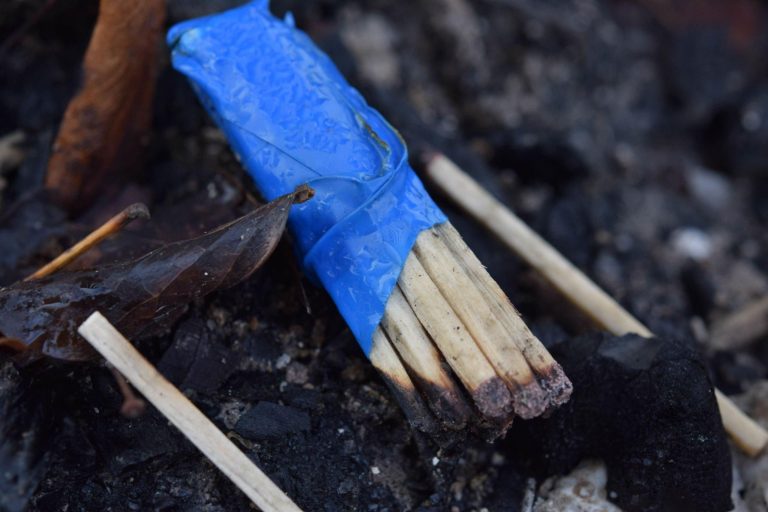
When adverse weather conditions, especially strong winds, challenge your fire-starting endeavors, a super match can be your saving grace. Super matches emit an impressive flame for an extended duration, making them highly effective even in inclement conditions. While they require a bit more effort to craft, their performance is worth it.

Materials You’ll Need:

  • Wooden matchsticks, either strike-anywhere matches or strike-on-the-box matches.
  • Toilet paper, with a preference for fluffier varieties.
  • Paraffin (as described earlier).
  • Equipment for melting the paraffin (as described earlier).

Crafting Your Super Matches:

  1. Begin by melting your paraffin, following the instructions provided earlier.
  2. Cut the toilet paper into strips that are as wide as the matchstick is long from one end to just below the match head. For instance, if the distance below the match head is 1.5 inches, cut the toilet paper squares into strips measuring 1.5 inches in width by the length of the toilet paper section.
  3. Optionally, you can use two or three matches for each super match, especially if you anticipate windy conditions that might extinguish a single-match firestarter.
  4. Wrap the toilet paper strips securely around the matchstick.
  5. Dip the matchstick wrapped in toilet paper into the melted paraffin, ensuring that you seal each end of the toilet paper.
  6. Submerge the entire assembly in the paraffin, allowing it to soak into the paper for approximately 15-30 seconds.
  7. Using your tongs, carefully remove the super match from the wax and set it aside to cool and dry.

Effectively Using Your Super Matches:

  • Before lighting, clean off any wax from the match head.
  • Strike the match, igniting the wax-covered toilet paper.
  • Position the burning super match into your fire lay, allowing it to ignite the tinder and kindling.
  • Super matches burn for several minutes, offering a significantly longer burn time compared to a regular match, which typically burns for a minute or less.

Super matches are your ideal companions when battling challenging weather conditions. Their ability to produce a sustained flame makes them a valuable addition to your fire-starting toolkit, ensuring that you can conquer the elements and find warmth, safety, and sustenance in the outdoors or during unexpected power outages.

Creating a Pine Resin and Birch Bark Firestarter

creating a pine resin and birch bark firestarter

In the wilderness, sourcing natural firestarters can be both practical and effective. One such option involves using pine resin and birch bark, readily available in many forested areas. Pine resin acts as a highly flammable fuel, while birch bark serves as an excellent tinder material.

Materials You’ll Need:

  • Pine resin (collected from pine trees).
  • Birch bark (easily obtained from birch trees).
  • A small container for carrying the prepared firestarter.

Crafting Your Pine Resin and Birch Bark Firestarter:

  1. Begin by collecting a sufficient amount of pine resin from pine trees. It can often be found in crystallized form on the bark or as droplets on the tree’s surface.
  2. Next, gather birch bark from birch trees. Look for dry, papery pieces of bark that can easily catch fire.
  3. In your container, place a layer of birch bark as the base of your firestarter.
  4. Melt the pine resin. You can do this by placing it in a heat-resistant container and heating it gently over a fire or a portable stove. Be cautious as pine resin can ignite if exposed to direct flame, so use indirect heat.
  5. Carefully pour the melted pine resin over the birch bark, ensuring that it soaks into the bark.
  6. Allow the resin-soaked birch bark to cool and solidify. Once it has hardened, your pine resin and birch bark firestarter is ready for use.

Effectively Using Your Pine Resin and Birch Bark Firestarter:

  • To use your firestarter, scrape or cut off a small portion of the resin-soaked birch bark. This will serve as your tinder.
  • Position the birch bark tinder within your fire lay, ensuring that it’s surrounded by additional kindling and fuel wood.
  • Use a sparking tool, a match, or a lighter to ignite the birch bark tinder. Birch bark is highly flammable and will readily catch fire.
  • Once the birch bark ignites, it will burn hot and help ignite the surrounding kindling and fuel wood, starting your fire.

Pine resin and birch bark firestarters are excellent choices in a wilderness setting, especially when you have access to these natural materials. They provide a reliable and sustainable method for igniting a fire, essential for warmth, cooking, and survival in the great outdoors.

A closing word

SVMD B1These firestarter methods offer versatile solutions for kindling fires in a variety of settings, whether you find yourself in the wilderness, facing adverse weather conditions, or dealing with unexpected power outages. From the simplicity of dryer lint and cotton balls combined with petroleum jelly to the resilience of paraffin-soaked cotton or pine resin-infused birch bark, each firestarter has its unique advantages.

These firestarting techniques not only provide you with warmth and sustenance but also instill a sense of self-reliance and preparedness. Whether you opt for the convenience of commercially available firestarters or choose to craft your own using everyday materials, the ability to ignite a fire when you need it is an essential skill.

By understanding and mastering these methods, you equip yourself with the knowledge and tools necessary to thrive in various scenarios, whether you’re exploring the great outdoors or simply facing an unexpected challenge at home. So, whether it’s a super match, cotton balls and petroleum jelly, or any other firestarter, may these techniques serve as your trusted allies in igniting the flames of comfort, safety, and survival whenever the need arises.

Suggested resources for preppers:

A few unusual fire starters to get a campfire going

The #1 food of Americans during the Great Depression

Tips for starting a fire in any conditions

If you see this plant when foraging, don’t touch it!

Anduril to hone Ghost drone autonomy under contract with US Air Force

0

WASHINGTON — The U.S. Air Force awarded defense technology firm Anduril Industries contracts totaling $8 million to refine the autonomous capabilities on two drone aircraft.

Anduril will work to hone the autonomy on its helicopter-like Ghost reconnaissance, security and force protection uncrewed aircraft and the recently unveiled enhanced version dubbed Ghost-X under these contracts, the company said Friday.

Anduril spokeswoman Sofia Haft said that the Air Force will also buy some Ghost aircraft as part of this contract, but the company would not say how many. The contracts will also allow Anduril to further refine Ghost’s hardware, she said, and develop specific autonomous behaviors for the aircraft to perform.

The Ghost contract will be for 12 months, and the Ghost-X contract will be for 18 months, Haft said.

Ghost-X made its debut Sept. 12 at the DSEI defense conference in London. Anduril said at the time that Ghost-X’s upgrades will allow it to fly longer than its predecessor, or up to 75 minutes, and carry a payload of up to 20 pounds, which would be roughly twice as much weight as the original Ghost.

Anduril said Ghost-X was created using feedback from a range of customers who have flown the original Ghost for more than 1,000 hours in a variety of environments, including combat theaters.

One of those combat zones is Ukraine, Haft said, though the company would not say anything else about how Ghost has been used there citing security concerns.

Ghost-X’s upgrades will give it a modular carriage that is able to carry multiple payloads, and more resilience to operate in more challenging operational environments, Anduril said.

Ghost uses Anduril’s Lattice software to control its autonomous capabilities and fly largely on its own, the company said, allowing it to automate mission planning, manage its airspace, and conduct flight operations, lessening the burden on operators.

Anduril’s work with the Ghost drones under this contract will support the Air Force’s AFWERX innovation unit, which aims to help industry develop technologies that can help counter threats worldwide. AFWERX in fall 2022 launched a new program called Autonomy Prime to collaborate with defense firms to push autonomous technologies forward and try to turn them into official programs of record.

As the Air Force and Anduril work to further develop the Ghost aircraft, the company said airmen will modify government software, integrate it into Ghost’s open architecture autonomous programming, and then test how well it performs. Anduril said the open architecture structure would allow Ghost to be quickly modified to meet a commander’s needs and adjust to changes on the battlefield.

“The Ghost platform adapts to user needs with a flexible design that allows operators to integrate sensors, communications, navigation and other modular mission payloads,” Anduril said.

Stephen Losey is the air warfare reporter for Defense News. He previously covered leadership and personnel issues at Air Force Times, and the Pentagon, special operations and air warfare at Military.com. He has traveled to the Middle East to cover U.S. Air Force operations.

Why learn Morse code? | Survival Monkey Forums

0

You should be aware the rig does not come close to spectral purity as required by the FCC.
uBITx serious filtering issue discovered : amateurradio

While these almost kits are something of a bargain, the ALX-SSB radio set from QRVtronics, out of Sugar City, ID, is now sold as a single or multiband rig is in the same price class, also uses an Arduino and has full documentation.

I’m waiting for the new QRP Labs SSB / CW rig, it has BITE and is all thru hole for parts.
QRVTronics.com, ALX-SSB Transceiver Kit


Brazil sets up fund for Army’s armored vehicle, missile capabilities

0

SAO PAULO — The Brazilian government has launched fund to dedicated to Army capabilities, including the acquisition and development of armored vehicles from the Italian manufacturer Iveco Defence, Astros missile system from Avibras and more.

The plan is part of the Growth Acceleration Program, or PAC, announced by the government in August. The effort is set to spend about 53 billion reals (U.S. $11 billion) on defense. Some of that money will go toward an armored forces strategic program, the Army told Defense News.

“This program has a profound impact not only on the modernization of military capabilities but also on the development of critical technologies,” the Army told Defense News in a Sept. 20 statement.

The focus on armored vehicles will see various types manufactured by the Iveco, which opened a local factory 10 years ago as part of its work with the Army, the service explained. Types include six-wheel drive Guarani armored vehicles, four-wheel drive multitask Guaicuru armored vehicles, eight-wheel drive Centauro combat vehicles, six-wheel drive Cascavel medium reconnaissance vehicles, and modernized Leopard 1 tanks made by Krauss-Maffei Wegmann.

The tank modernization effort was previously postponed “due to high demand for armored vehicle parts in the international market,” the military reported Sept. 17.

The Astros missile system is part of an overall effort to “contribute to the organization of missile and rocket artillery,” enabling long-range and high-precision strategic fire support, the Army said.

Earlier this year, Avibras unveiled new variants of the weapon: the Astros II MK6 and the Astros III. The former has a maximum range of 300 kilometers (186 miles). The latter, which has greater firepower, is designed to operate from an eight-wheel drive vehicle and can launch ballistic rockets, guided rockets, ballistic missiles and tactical cruise missiles, according to the company.

Another part of the investments is directed toward the Army’s aircraft and drones. The military reported aircraft acquisition efforts include “maneuver helicopters” used to transport troops and equipment. According to the armed forces, these helicopters would weigh more than 7.5 tons and could contribute to civilian missions, such as national emergencies.

According to the government, the PAC investment effort is funding the modernization of six HM-1A Pantera helicopters, manufactured by Brazilian firm Helibras, a subsidiary of the French company Airbus Helicopters. The company this year delivered the first modernized unit.

The plan also includes “the acquisition of ten general-purpose helicopters,” the military announced, without providing further details. However, the force has an aviation battalion composed of Helibras-made Caracal helicopters, which are known as HM-4 Jaguars within the Army. They were made under Brazil’s H-XBR project, which involves all three armed forces and continues to provide aircraft for the military.

Another part of the project involves the purchase of nine drones. According to the Army, which did not identify the manufacturers involved, these unmanned aircraft will belong to categories 0 through 2, which vary in terms of operating altitude and range. Category 0 corresponds to drones weighing up to 2 kilograms (4 pounds). Category 1 ranges from 2 kilograms to 150 kilograms, and the third category ranges from 150 kilograms to 600 kilograms.

Pedro Pligher is a Latin America correspondent for Defense News. He has reported on politics, economics and the Brazilian small arms industry.

From parts to hypersonics, Pentagon sees 3D printing as ‘game changer’

0

WASHINGTON — The growth of additive manufacturing is a “game changer” for the military — one that can facilitate everything from rapid repairs to aircraft after bird strikes to accelerating the development of hypersonic weapons, a top Defense Department official said Wednesday.

Keith DeVries, deputy director of the Office of the Secretary of Defense’s Manufacturing Technology Program, said in a Defense News webcast Wednesday that additive manufacturing has made “tremendous leaps” in the last few years and opened up novel possibilities for creating new weapons and components.

Additive manufacturing has particularly come in handy when designing new systems, DeVries said, allowing programs to iterate during the rapid prototyping process much more quickly than in traditional manufacturing processes.

It has also been used to create “one-off” spare parts to repair aircraft or other systems that might otherwise have to wait long periods for a replacement component to work its way through a slow supply chain, he said.

“We’ve even seen bird strikes repaired on aircraft overnight, or in a few days, through additive manufacturing,” DeVries added.

3D printers can also quickly create new tools, which typically take a long time to arrive when they are made in traditional ways, he said.

And DeVries said the scale of objects that can be 3D printed is also increasing, to the point where entire structures such as houses can be built that way.

The Defense Department has taken notice of those advancements, he said, and is looking for ways to apply them.

“In the defense side … having the ability to print a runway or a hangar or something literally overnight can be amazing,” DeVries said.

Additive manufacturing has advanced since its early days, when it made objects from more fragile polymers to materials with higher tensile strength. Today, DeVries said, these manufacturing techniques create objects from high-entropy metals that are particularly strong and stand up to wear and tear, using lasers to melt metals that can withstand high temperatures and allowing more complex shapes to be crafted.

“Those advancements have been fundamental unto themselves,” DeVries said. “Now, it feels like we’re turning a corner and we’re trying to find what the sweet spot is for how big of a build volume is appropriate for us to apply that technology.”

And hypersonic weapons are a prominent example of a program where additive manufacturing can be useful.

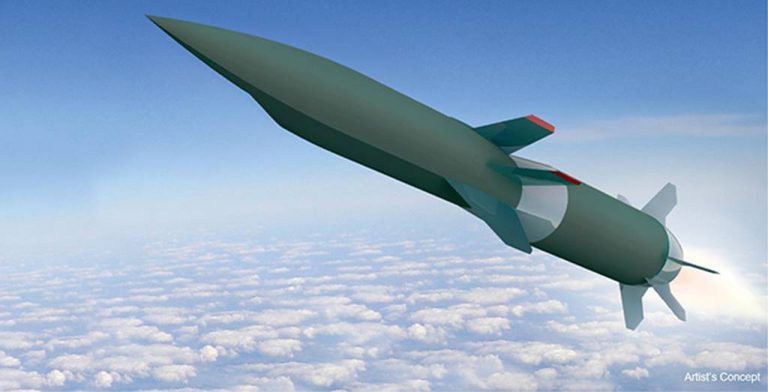
Scramjet propulsion systems that are central to some hypersonics, for example, require complex chambers that can be difficult to make, DeVries said. But 3D printing these components is allowing hypersonic weapons manufacturers “some fantastic capabilities,” he said.

Additive manufacturing would allow scramjet components to be made from high-temperature metals in a way that eliminates the need to have complex welds or brazing joints, DeVries said. Those joints need to be tested to ensure they’re sound, he said, but a component made via additive manufacturing that doesn’t have those joints won’t need such testing.

“Being able to incorporate additive manufacturing is enabling us to manufacture complexity that has not been able under the subtractive, traditional manufacturing methods,” DeVries said. He noted hypersonic development is still in the rapid prototyping phase.

But DeVries said traditional manufacturing techniques such as casting and forging still have a place, and warned the DoD and manufacturers should only seek to replace those techniques with additive manufacturing “in a very intentional and frankly limited way.”

“We want to treat [additive manufacturing] as a tool in the toolkit, and we want to apply it exactly where it’s necessary, and where it adds the most value,” DeVries said.

Stephen Losey is the air warfare reporter for Defense News. He previously covered leadership and personnel issues at Air Force Times, and the Pentagon, special operations and air warfare at Military.com. He has traveled to the Middle East to cover U.S. Air Force operations.

American Airlines … Only 1 pilot?

0

I read somewhere that American Airlines only has 1 pilot flying their jets.

I think this is a little unsettling. I think most airlines require 2 pilots in the event that one of the pilots becomes incapacitated.

If this is true, then there’s a lot of dangerous airplanes flying above our heads. If the single pilot becomes incapacitated, what happens?

Doe the plane just crash? Do they expect the passengers to land the plane? Scary stuff.


Geo Political – Politics and Power

0

Qwertyportne submitted a new resource:

Politics and Power – Power almost always corrupts.

Read more about this resource…


Australian F-35 crews end their Asian exercise spree in Indonesia

0

MELBOURNE, Australia — Australian F-35 fifth-generation stealth fighters are taking part in an exercise in Indonesia, on the last leg of a deployment that has seen the jets visit the Philippines, Japan and Indonesia for the first time.

The six Lockheed-Martin F-35A Lightning II Joint Strike Fighters from 75 Squadron of the Royal Australian Air Force, or RAAF, are currently taking part in Exercise Elang Ausindo with Indonesian Air Force Lockheed-Martin F-16 fighter jets at Manado on Indonesia’s North Sulawesi Island from Sept. 18 to Sept. 28.

The exercise will see Australian and Indonesian personnel and aircraft conduct air combat missions including offensive and defensive counter air missions; basic fighter maneuvers and air combat maneuvers and air-to-air refueling with an RAAF KC-30A multi-role tanker transport.

Squadron Leader Paul Anderton, an instructor-pilot with 75 Sqn, told Defense News that the exercise took a building-block approach to training, starting with one-versus-one air combat engagements before moving on to two-versus-one or two-versus-two training.

The engagements will then become more complex, with larger formations such as four-versus-four training dogfights.

However, Anderton said that the exercise was not just Australian jets going head-to-head with their Indonesian counterparts, but its aim also includes interoperability training with the Indonesian F-16s, flying in mixed formations and air-to-air refueling.

“There’s a heavy focus on the bilateral side of the aviator level engagement and that is us integrating with the Indonesian F-16s and providing joint training to each other,” he said.

The Australian F-35s had come to Indonesia from Komatsu, Japan, where they participated in Exercise Bushido Guardian with the Japan Air Self-Defense Force, or JASDF, Sept. 4-15.

According to Wing Commander Tony Parker, the commanding officer of 75 Sqn, Bushido Guardian was conducted roughly along the same lines as Elang Ausindo with the Indonesians. However, he noted that there were several key differences, with a key one being that the JASDF was also an F-35As operator.

The drill in Japan involved both services using the F-35-specific Multifunction Advanced Data Link, or MADL, to share information. “This was a first for us, for both nations, and was a was a really successful activity,” said Parker. “We were able to operate on data links across both platforms to achieve mutual effects within their operating airspace.”

The JASDF also participated at Bushido Guardian with its Mitsubishi F-2 multirole fighters and F-16 interceptors, and the larger number of aircraft enabled the participants to organize the missions into larger aircraft packages, deepening interoperability between the RAAF and the JASDF.

Komatsu is also the home of the JASDF’s Tactical Fighter Training Group, which flies F-15s in the dedicated role of adversary aircraft. These played the role of enemy forces Air during Bushido Guardian, with other JASDF or RAAF participants taking turns fighting alongside them as adversary aircraft.

“It was pretty common practice to have Australian F-35s on both Blue and Red Air,” Parker said referring to friendly and enemy formations. “It was the same for Japanese F-35s and their F-15s. The aggressors were playing their aggressor role, and being particularly well trained to being aggressors, they often did fill that function,” Parker added.

Parker also spoke about the reliability of his jets throughout the deployment, noting that there was only one instance of a jet not being able to fulfill a mission due to maintenance problems.

“The deployment was very successful from a maintenance perspective and very reliable as a platform. We will be walking away having operated this highly technical platform on the road in Asia with limited support for five weeks, and that has given us a great sense of confidence in our ability to do that.”

Mike Yeo is the Asia correspondent for Defense News.

Heating And Cooling Your Home With Geothermal Energy

0

Have you ever ventured into a cave and felt how the temperature gradually dropped as you ventured deeper inside, yet it never reached bone-chilling coldness? If you’ve had this experience, you’ve unwittingly tapped into one of the most efficient and budget-friendly ways to regulate the temperature in your home.

This natural phenomenon harnesses the Earth’s capacity to act as a heat reservoir, forming the foundation of geothermal heating and cooling systems for homes and buildings.

In simple terms, geothermal systems leverage the Earth’s consistent underground temperature to keep your living space comfortable year-round. This sustainable and energy-efficient method not only provides a reliable source of heating and cooling but also reduces your environmental footprint. Let’s dive deeper into how geothermal systems work and why they’re a smart choice for homeowners.

The Power of Geothermal Heating and Cooling

In the world of temperature control for homes and buildings, there are numerous methods available. Many of us rely on a heat pump as the core component of our heating, ventilation, and air conditioning (HVAC) system, using electricity to create warmth or coolness.

Heat pumps operate by concentrating the heat within a particular medium they use, and for most residential and commercial buildings, this medium is air.

When you want to cool the indoor air, heat pumps compress the air from inside and outside your house, making it more concentrated. This process extracts heat from the air, which is then expelled through radiators in the outdoor unit of the heat pump.

The remaining air, now cooler, circulates back into your home. Conversely, for heating, the heat pump compresses air from both inside and outside the building, similar to the cooling process. However, instead of removing the concentrated heat from the air, it redistributes it back into the living space. This method is akin to how both in-window and central air conditioning units generate cooler air.

Although widely used due to its ease of installation, heating and cooling through electricity can be costly and inefficient. Moreover, this method has limitations and expenses. In extremely cold weather, especially when temperatures approach or drop below freezing, air-based heat pumps become less effective because there’s insufficient heat in the air to concentrate and recirculate indoors.

Additionally, as the outside air gets colder, the heat pump needs to run longer to raise the indoor temperature to match the thermostat settings, resulting in higher electricity bills during the winter months.

By implementing effective building design, we can optimize insulation to reduce electricity consumption and utilize the right combination of materials and room layout to maximize solar heating and shading for cooling.

Moreover, we can integrate alternative electricity generation solutions such as solar, wind, water power, or even tap into the intense heat deep underground within magma to generate steam for electricity production. However, electricity isn’t the sole or most efficient means of producing heat and cold.

The ground, as mentioned earlier, serves as an excellent thermal insulator and has the capacity to retain heat at a consistent temperature when you venture deep below the surface. Once you go beneath the frost line in your region, typically six to ten feet below the surface, the temperature remains at around 55 degrees Fahrenheit year-round, irrespective of the above-ground weather conditions.

Geothermal heating and cooling systems leverage this phenomenon by using this stable temperature as a heat source during cold weather and as a cooling source during hot weather. This innovative approach offers a cost-effective and eco-friendly way to regulate indoor temperatures while reducing reliance on conventional electricity-based HVAC systems.

Going Green with Geothermal: An In-Depth Look at the Components of an Eco-Friendly Heating and Cooling System

When it comes to heating and cooling your home or building efficiently and sustainably, the active approach of a geothermal system presents an innovative and eco-conscious solution.

This advanced system consists of two major components, each playing a crucial role in creating a comfortable indoor environment while reducing your carbon footprint: the ground source heat pump and the transfer system composed of underground pipes filled with a heat-absorbing liquid.

The Ground Source Heat Pump

At the heart of every geothermal heating and cooling system lies the ground source heat pump, a remarkable piece of technology that operates on the principles of thermodynamics.

Unlike traditional HVAC systems that rely on burning fossil fuels or consuming vast amounts of electricity, geothermal heat pumps harness the Earth’s natural heat reservoir to provide a consistent source of warmth in the winter and cooling in the summer.

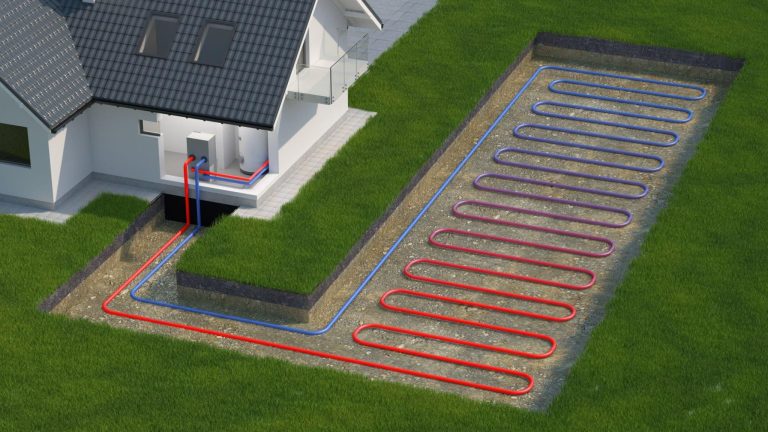
Here’s how it works: buried beneath the Earth’s surface are a series of loops or coils filled with a heat-transferring fluid, typically a water-based solution. These loops can be installed vertically in deep boreholes or horizontally in trenches, depending on the available space and geological characteristics of the site.

Regardless of the configuration, the goal remains the same: to tap into the Earth’s relatively stable temperatures below the frost line, typically six to ten feet below the surface.

During the winter months, when you’re in need of heating, the ground source heat pump draws heat from the Earth through the liquid circulating in the loops. This naturally occurring heat is then concentrated and transferred into your home through a heat exchanger.

It’s an energy-efficient process that doesn’t involve burning fossil fuels or generating excess heat, making it an eco-friendly choice.

Conversely, when you need cooling during the scorching summer days, the same system reverses its operation. The heat pump absorbs the excess warmth from your indoor space, transfers it to the circulating liquid, and then deposits it into the relatively cooler ground. This ingenious process creates a cooling effect in your home without relying on energy-hungry air conditioning units.

The Transfer System

Complementing the ground source heat pump is the transfer system, an underground network of pipes responsible for either absorbing heat from the ground or dissipating excess heat into it. These pipes are typically made from high-density polyethylene (HDPE) or other durable materials, ensuring longevity and efficiency.

In the heating mode, these underground pipes act as a thermal battery, absorbing heat from the Earth as the heat transfer fluid passes through them. This harvested heat is then transported to the heat pump for distribution into your living space.

Conversely, in the cooling mode, the pipes serve as conduits for releasing heat from your building into the Earth, allowing your home to stay comfortably cool without the need for energy-intensive air conditioning.

ssry svp in article v2.1

The Sustainability Advantage

One of the most significant advantages of geothermal heating and cooling systems is their sustainability. By tapping into the Earth’s renewable and consistent heat source, these systems significantly reduce reliance on fossil fuels and electricity, resulting in lower energy bills and a smaller carbon footprint.

Moreover, they require minimal maintenance and have a longer lifespan compared to traditional HVAC systems, ensuring years of efficient and eco-friendly temperature control.

In addition to energy and cost savings, geothermal systems contribute to a greener future by reducing greenhouse gas emissions associated with heating and cooling. With growing concerns about climate change and environmental conservation, geothermal technology aligns perfectly with the global shift towards sustainable living and responsible energy consumption.

The Future of Indoor Comfort

As the world continues to seek innovative solutions for sustainable living, geothermal heating and cooling systems stand at the forefront of energy-efficient technology. They provide a reliable and environmentally conscious way to maintain indoor comfort while reducing our impact on the planet.

With ongoing research and advancements, the future holds even greater promise for harnessing the Earth’s natural resources to create a more sustainable and comfortable world for generations to come.

Passive Strategies for Harnessing Earth’s Thermal Battery

passive strategies for harnessing earth

In the quest for sustainable and cost-effective ways to maintain indoor comfort, passive approaches that leverage the Earth’s natural thermal stability offer innovative solutions.

As discussed earlier in this article, you can tap into the thermal battery located beneath the frost line, exploring ingenious methods to escape extreme temperatures without the need for excessive energy consumption.

The Basement Retreat: A Natural Thermal Oasis

When sweltering summer days or frigid winter nights have you seeking refuge from the elements, your basement can become a sanctuary of comfort. This is particularly advantageous during power outages or when the weight of your electric bill becomes burdensome.

The basement, nestled below the Earth’s surface, maintains temperatures in the pleasant range of the 50s or 60s. It’s like having a built-in thermal oasis right beneath your feet.

To maximize this passive cooling or heating potential, ensure that you keep the basement door closed. This helps maintain the temperature differential between the ground level and the basement, preventing them from constantly striving to reach a thermal equilibrium. This simple act can significantly enhance your indoor comfort without relying on energy-intensive heating or cooling systems.

Re-imagining Your Basement: From Storage to Comfort Zone

While many people use their basements solely for storage, considering its passive temperature-regulating properties opens up a world of possibilities. By finishing your basement, you can transform it into a versatile living space.

This can serve as a family room for relaxation during regular times or even as a functional living area during emergencies, such as power outages or severe weather events. Your basement becomes a multi-purpose haven, offering a comfortable refuge for various situations.

Embracing Earth’s Insulating Embrace

selfsb b1Going beyond the basement, there are more ways to harness the Earth’s insulating embrace for passive temperature control. Building into the side of a hill or excavating into a below-ground site presents unique opportunities to leverage the Earth’s inherent thermal properties.

Covering an existing structure with earth and sod, creating a “green roof,” is another environmentally friendly strategy. These approaches not only enhance energy efficiency but also integrate harmoniously with the natural environment, reducing your reliance on conventional heating and cooling methods.

Thinking Outside (and Below) the Box

As you ponder how to efficiently heat your home or mitigate that frustratingly high electric bill, consider stepping outside the bounds of conventional thinking. Sometimes, the most effective solutions lie below ground level. Exploring passive approaches that harness the Earth’s thermal battery can offer surprising benefits in terms of comfort, energy savings, and environmental stewardship.

In conclusion, by embracing passive strategies and tapping into the Earth’s natural thermal stability, you can create a more sustainable and comfortable living environment. These methods not only reduce your energy costs but also contribute to a greener, more resilient future.

So, the next time you contemplate indoor comfort and energy efficiency, think about how going below the surface or re-imagining your basement can be the key to achieving your goals.

This article was submitted by Jason N Clark.

Recommended resources:

Raising livestock for self-sufficiency

How To Make Bread without Yeast, Fire, or Electricity

Grow native fruits on your homestead for self-sufficiency

How To Build The Invisible Root Cellar

TIP replacing emaille | Survival Monkey Forums

0

After years of using emaille dinnerbords and cups ( long before we started bush living ) they must be replaced beceaus of abrasion.
We looked all over but emaille is here hard to find .

Now we buy 6 months a go stainless steel dog bowls from the pet store to replace our emaille dinnerbords and cups.

It works as good as using emaille and after some practice we eat now out of them without using forks, knives and spoons.