New US Air Force PT uniforms delayed, again, until November

0

After years of setbacks, the U.S. Air Force will finally release its new physical training uniforms this November, the service confirmed.

The uniforms were initially slated to arrive in 2022, but the COVID-19 pandemic presented a slew of problems, including supply chain issues, that delayed the schedule. Fabric shortages and fabric color-match problems also contributed to delays.

After the pandemic subsided, the service planned to address the PT uniform release once again. However, the U.S. Space Force was stood up and attention was redirected toward issuing Space Force PT uniforms.

Now that the Space Force has begun rolling out its PT uniforms, the Air Force said it will fulfill its promise to deliver new PT uniforms.

Uniforms are expected to arrive at select CONUS Army and Air Force Exchange Service stores beginning in November, according to an Air Force spokesperson, with some optional uniform items currently in development, such as the long-sleeve shirt and sweatshirt, set to be released later.

In April, the Air Force said the new uniforms had started rolling out at basic military training that month, while the Army and Air Force Exchange Service said the uniforms would reach exchange shelves in July. However, the July deadline was missed.

“The fielding of a new uniform required time for mandatory government sources to find, and collaborate with, domestic fabric manufacturers to meet the technical requirements of the PT uniform materials,” an Air Force spokesperson said. “That process took longer than expected.”

The new Air Force PT uniform is introducing a running short with a spandex liner and a standard gym short. (Jon Simkins/Staff)

The collection includes a jacket, two shorts — a running short with a spandex liner and a pair of standard gym shorts — pants, long- and short-sleeve T-shirts with moisture-wicking material and two sweatshirt options that include a hoodie and a crewneck.

The new uniforms were rolled out only to fit-testers and those in basic military training, said Don Lee, acquisition program manager for the Combat Ready Airman program, at last week’s Air & Space Forces Association’s Air, Space & Cyber Conference in National Harbor, Maryland.

Fit-testers were utilized to assist with the tailoring process, Lee said, making sure the uniform’s materials fit the body while still allowing movement. Basic military training use focused on the uniform’s durability, testing the clothing’s ability to go through multiple wash and dry cycles.

In July, the Air Force began providing the short-sleeve shirt, running shorts, all-purpose shorts and track suit to airmen in basic training, according to a service spokesperson.

The revamped uniforms mark the first time in two decades the Air Force has updated its physical training uniforms.

The uniform, which airmen will be required to wear beginning in 2026, is similar to the current iteration but now comes in sizes for both men and women.

Courtney Mabeus-Brown contributed to this report.

Riley Ceder is an editorial fellow at Military Times, where he covers breaking news, criminal justice and human interest stories. He previously worked as an investigative practicum student at The Washington Post, where he contributed to the ongoing Abused by the Badge investigation.

China test-fires intercontinental ballistic missile into Pacific Ocean

0

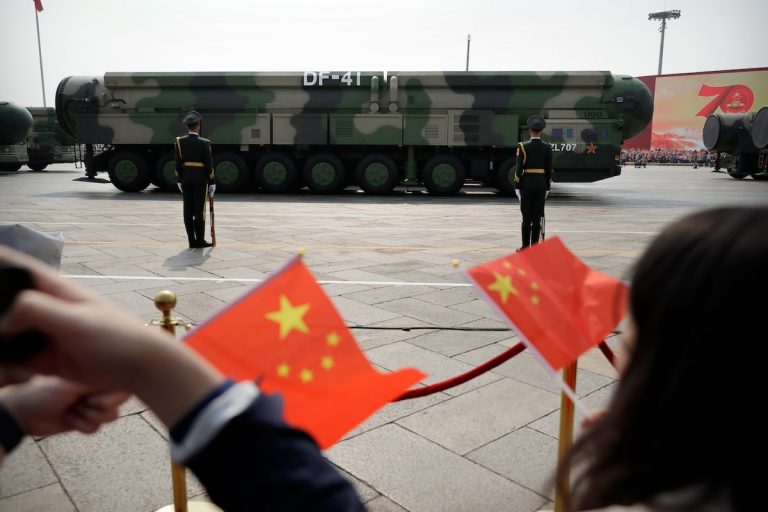
TAIPEI, Taiwan — China test-fired an intercontinental ballistic missile into the Pacific Ocean on Wednesday, stirring security concerns in the region already tense over Beijing’s territorial claims and rivalry with the U.S.

The ICBM carried a dummy warhead and fell into a designated area of the sea, the Defense Ministry said in a statement posted to social media.

The launch by the People’s Liberation Army’s Rocket Force was part of routine annual training, complied with international law and was not directed against any country or target, according to the statement.

It is unclear how often China conducts tests over such a distance. In 1980, China launched an ICBM into the South Pacific.

A map published in Chinese newspapers at the time showed the target area as roughly a circle in the center of a ring formed by the Solomon Islands, Nauru, the Gilbert Islands, Tuvalu, western Samoa, Fiji and the New Hebrides.

The U.S. and nongovernmental organizations have said China has been building up its missile silos, but it’s unclear how many missiles and nuclear warheads it has added to its arsenal.

The People’s Liberation Army, which functions as the ruling Communist Party’s military wing, runs China’s space program, which has established an orbital station and has ambitions to set up a moon base and land a spacecraft on Mars.

Rocketry has long been part of China’s development into a major global power, spurring nationalism and growth that has made China the world’s second-largest economy.

The U.S. remains China’s main global rival, although Japan, Taiwan, the Philippines and others have territorial disputes with Beijing that occasionally threaten to develop into military clashes.

China maintains a “no first use” of nuclear weapons policy, even as its desire for regional predominance grows.

Tests of China’s intercontinental ballistic missiles into international waters are rare. Experts and a historical survey of China’s program by the Washington-based Nuclear Threat Initiative suggest the last occurred in May 1980. That test saw China launch its DF-5 missile into the South Pacific.

China typically launches missiles toward its western deserts from its east coast, said James Acton, the co-director of the Nuclear Policy Program and a senior fellow at the Carnegie Endowment for International Peace. The fact that China launched a test that splashed down in international waters was unusual but mirrors testing that the United States does for its own ballistic missile fleet.

“When they haven’t done something for 44 years and then they do it, that’s significant,” Acton told The Associated Press. “It’s China’s way of telling us, ‘Like you, we’re not ashamed we have nuclear weapons and we’re going to behave like a great nuclear power.’”

The launch came amid the ongoing United Nations General Assembly in New York. China is one of five veto-holding permanent members of the U.N.’s Security Council and has sought to gain influence over its key departments involving human rights and that align with its authoritarian system.

A series of corruption arrests this year ensnared several leading officers in the Rocket Force, alongside the detentions of two previous defense ministers amid allegations of misconduct.

A test launch now could both provide assurances to China’s population amid an economic downtown and a signal to the world that the party remains firmly in control and is determined to rise to global prominence.

“We’re entering a new age. We’re entering an age where the U.S. and China are engulfed in what feels like an arms race,” said Jeffrey Lewis, a missile expert at the James Martin Center for Nonproliferation Studies at the Middlebury Institute of International Studies in the U.S.

“The Chinese government always prioritized diplomatic issues over operational readiness. It’s just a different China. It’s a China that does not feel constrained,” he said.

“There’s a renewed emphasis on assuring themselves these systems work and demonstrating to others they work,” Lewis added.

Meanwhile, tensions remain high over Taiwan, and with the Philippines, where the U.S. Army has deployed its new mid-range missile system, known as Typhon, to Northern Luzon. On Wednesday, two Filipino officials said the U.S. and the Philippines have agreed to keep the system there indefinitely to deter China.

“I don’t know what’s the plan, but if I were to be followed, if I were given the choice, I would like to have the Typhon here in the Philippines forever because we need it for our defense,” said Gen. Romeo Brawner Jr., the head of the Philippines’ military.

Defense officials in Japan and Taiwan declined to comment directly on the Chinese announcement. Both, along with South Korea, maintain robust defenses against Chinese moves, including early warning systems and air raid shelters.

Associated Press writers Jon Gambrell in Dubai, United Arab Emirates, Jim Gomez in Manila, Philippines and Mari Yamaguchi in Tokyo contributed to this report.

US missile system will remain in Philippines despite China’s alarm

0

MANILA, Philippines — American and Filipino security officials have agreed to keep a U.S. mid-range missile system in the northern Philippines indefinitely to boost deterrence despite China’s expressions of alarm, two Philippine officials said Wednesday.

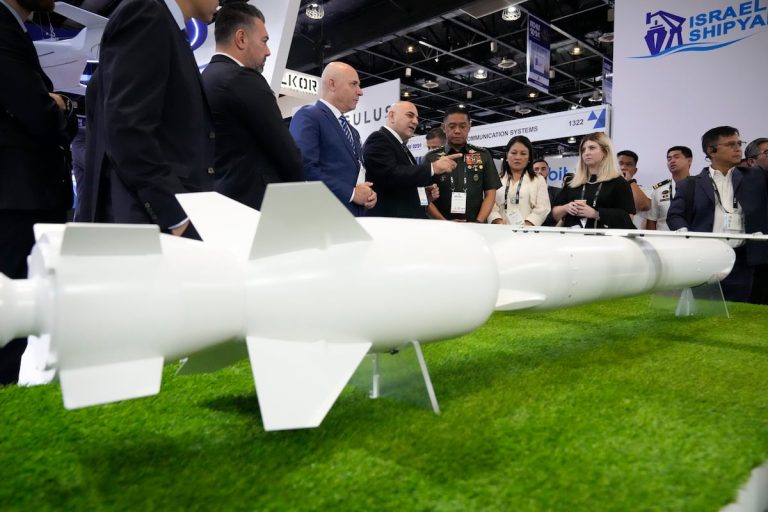
The U.S. Army transported the Typhon missile system, a land-based weapon that can fire the Standard Missile-6 and the Tomahawk Land Attack Missile, to the northern Philippines as part of combat exercises in April with Philippine troops and to test its deployability aboard a U.S. Air Force aircraft.

Tomahawk missiles can travel over 1,000 miles, which places China within their target range. Officials are considering keeping the missile system in the northern Philippines up to April next year, when U.S. and Philippine forces are scheduled to hold their annual Balikatan — Tagalog for “shoulder-to-shoulder” — large-scale combat exercises, he said.

The two officials spoke to The Associated Press on condition of anonymity because they were not authorized to discuss the sensitive U.S. missile deployment publicly. There was no immediate comment from U.S. officials.

Chinese diplomats have repeatedly conveyed their alarm to the Philippine government, warning that the deployment of the missile system could destabilize the region.

A Philippine army spokesperson said earlier that the system was scheduled to be removed from the country by the end of this month. Philippine Defense Secretary Gilberto Teodoro Jr. refused to confirm or deny the extension.

But Teodoro rejected China’s demands as interference in the Philippines’ internal affairs, speaking to reporters Tuesday on the sidelines of an Asian defense industry exhibition in Manila.

“China is saying that they are alarmed but that is interference into our internal affairs. They are using reverse psychology in order to deter us from building up our defensive capabilities,” Teodoro said.

“Before they start talking, why don’t they lead by example? Destroy their nuclear arsenal, remove all their ballistic missile capabilities, get out of the West Philippines Sea and get out of Mischief Reef,” Teodoro said. “I mean, don’t throw stones when you live in a glass house.”

Teodoro used the Philippine name for the disputed South China Sea and for a contested reef off the western Philippines that Chinese forces seized in 1995 and is now one of seven missile-protected island bases China maintains in the disputed waters.

Philippine military chief Gen. Romeo Brawner Jr. said he has asked U.S. military officials to keep the missile system in the Philippines, but declined to say what was their response.

“If I were given the choice, I would like to have the Typhon here in the Philippines forever because we need it for our defense,” Brawner told reporters.

Last month, Philippine Foreign Secretary Enrique Manalo said his Chinese counterpart Wang Yi expressed China’s “very dramatic” concern over the U.S. mid-range missile deployment to the Philippines during their recent talks in Laos on the sidelines of the Association of Southeast Asian Nations meetings with Asian and Western countries.

Manalo said Wang warned the presence of the U.S. missile system could be “destabilizing,” but he said that he disagreed. “They’re not destabilizing” and the missile system was only in the Philippines temporarily, Manalo said he told Wang.

Although the missile system was transported to the Philippines for joint combat exercises in April, it was not fired during the joint drills by the longtime treaty allies, according to Philippine and U.S. military officials.

China has strongly opposed increased U.S. military deployments to the region, including to the Philippines, saying they could endanger regional stability and peace.

The U.S. and the Philippines have repeatedly condemned China’s increasingly assertive actions to fortify its territorial claims in the South China Sea, where hostilities have flared since last year with repeated clashes between Chinese and Philippine coast guard forces and accompanying vessels.

Aside from China and the Philippines, Vietnam, Malaysia, Brunei and Taiwan also have overlapping claims in the busy waterway, a key global and security route which is also believed to be sitting atop vast undersea deposits of gas and oil.

Associated Press journalist Aaron Favila contributed to this report.

Saab to open munitions production facility in Northern Michigan

0

Saab will open a munitions production facility in Grayling, Michigan, the company announced Tuesday.

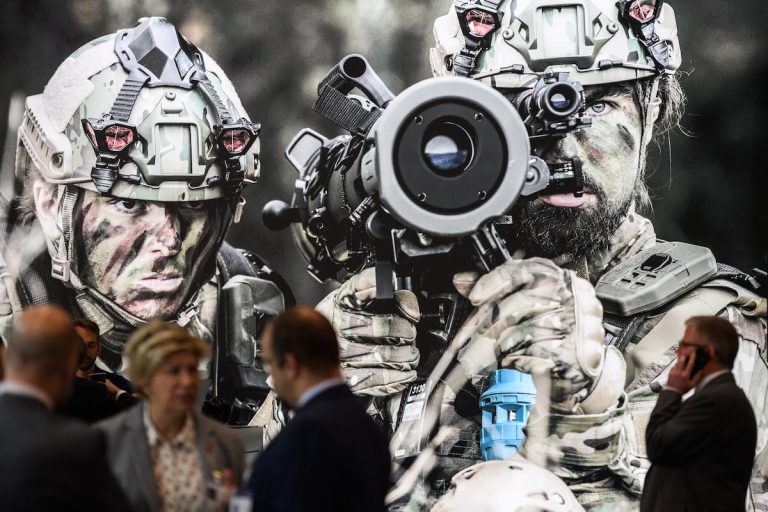
The Swedish company, which plans to break ground by the end of the year, said it will use the facility for final assembly and integration of shoulder-fired munitions and precision fire systems.

Manufacturing work will begin in early 2026, according to a company statement.

“We are making a long-term commitment not only to the U.S. defense industrial base, but to the local community as well,” Erik Smith, president and CEO of Saab in the U.S., said. “Saab plays a positive role in the communities where we live and work, creating jobs and investing in the local community, and we look forward to joining the Grayling community.”

The Michigan site, chosen from six possible locations, presented the “most efficient way to execute the work that we have to get done,” Smith told Defense News. The 388-acre plot is located near the largest Army National Guard training base in the country, and the region also has an experienced workforce needed for the type of production.

Smith first told Defense News of Saab’s plans to grow its footprint in the U.S. with a new facility focused on manufacturing ground combat weapons and missile systems in March. He noted six states were in the running.

The new site is part of a global manufacturing push by the company to quadruple its global capacity to produce its ground combat weapons, he said.

“As this facility ramps up, what you will see is a combination of products that Saab is very well known for and some new products that really haven’t hit the market yet.”

The new facility will create at least 70 jobs, the company statement notes. There is potential to hire even more employees as the facility gets up and running, according to Smith.

The site size “allows for expansion for when we need it,” Smith said. “I do envision engineering capacity there as well as the business evolves,” he added, but noted, “right now we are pretty laser focused on manufacturing capacity.”

The facility will feature advanced manufacturing capability and an innovation center to enhance munitions production capacity stateside, according to Smith. He also said it will support the production of components for the Ground-Launched Small Diameter Bomb, or GLSDB, system and close combat weapons.

Saab joins a wide variety of defense manufacturers in Michigan, a state with a long legacy of weapons production.

“We built the arsenal of democracy to win WWII and will keep rolling up our sleeves to protect our national defense,” Michigan Governor Gretchen Whitmer said in the company statement. “We are building on our economic momentum and strong reputation as a leader in advanced manufacturing.”

Saab will now have 10 facilities operating in the U.S. Other locations include West Lafayette, Indiana, for aerospace advanced manufacturing; Syracuse, New York, for radar and sensor systems; and Cranston, Rhode Island, and Quincy, Massachusetts, for autonomous and undersea systems.

The facility will follow a similar model to what Saab did with its West Lafayette site, Smith told Defense News. In that case, the first engineering and manufacturing development fuselages were built in Sweden, then, in parallel, Saab built the Indiana plant with high-end technology to produce the fuselages beginning with low-rate initial production.

Jen Judson is an award-winning journalist covering land warfare for Defense News. She has also worked for Politico and Inside Defense. She holds a Master of Science degree in journalism from Boston University and a Bachelor of Arts degree from Kenyon College.

Winter Preparation on the Homestead

0

As winter approaches, homesteaders face unique challenges that require meticulous planning and proactive measures. Winter preparation on the homestead is more than just a seasonal task; it’s about ensuring the survival of livestock, safeguarding your infrastructure, and securing food supplies for months when resources might be scarce. In this guide, we will explore the essential steps to ensure your homestead is well-equipped to weather the colder months.

Introduction to Winter Preparation

Winter brings with it a variety of difficulties, including freezing temperatures, heavy snow, icy conditions, and a lack of readily available resources. For homesteaders, being unprepared for the season can result in significant losses, both in terms of livestock and infrastructure. Preparing for winter is a critical part of living sustainably, as it allows for better resource management and ensures the well-being of your animals and property.

The Importance of Winter Readiness

Winter readiness on a homestead isn’t just about comfort or convenience; it’s about survival. Inadequate preparation can result in frozen pipes, loss of electricity, food shortages, and even livestock fatalities. The effects of winter weather can be long-lasting and severe if not adequately mitigated. The unpredictability of winter storms or temperature drops makes preparation essential.

The importance of winter readiness also extends to protecting the integrity of your homestead’s systems and structures. Your home’s plumbing, heating systems, and animal shelters all need to be fortified against extreme weather conditions. A frozen or burst pipe can not only lead to water shortages but also to significant repair costs, while animals exposed to the cold without proper shelter can suffer from hypothermia, illness, or worse.

The Benefits of Early Preparation

Early preparation provides several advantages, not least of which is reducing the stress that often comes with last-minute work. Starting early allows you to break down large tasks into smaller, more manageable chunks, which can be completed over weeks or months. This also reduces the risk of oversight, as rushing through winter preparation often leads to missed details, like a drafty window or an unprotected water line.

By beginning your preparations in the late summer or early fall, you also avoid the rush on supplies that often occurs in the weeks leading up to winter. The scarcity of materials like firewood, heating oil, or insulation can make it difficult to find what you need at a reasonable price. Additionally, the sooner you start, the more time you have to assess any weaknesses in your homestead infrastructure and make necessary repairs.

Being proactive in your winter preparations also has economic benefits. Spreading the cost of supplies over several months prevents the financial strain of making all your purchases at once. Furthermore, early preparation often means less energy usage over the winter, as properly insulated homes and barns will require less heating, saving on fuel costs.

Homestead Infrastructure Maintenance

Maintaining your homestead infrastructure is critical to surviving the winter months. A well-maintained property can withstand the harshest conditions, ensuring that you, your family, and your animals remain safe and comfortable throughout the season.

Checking and Insulating Pipes

selfsb b4

One of the most common winter hazards on a homestead is frozen pipes. When water freezes, it expands, potentially causing pipes to burst, which can lead to extensive water damage and costly repairs. To avoid this, it’s essential to inspect your plumbing system in the fall and make necessary adjustments.

First, identify any pipes that are exposed to cold air, particularly those in unheated areas like basements, crawl spaces, attics, or outbuildings. These pipes are most at risk of freezing. Once located, insulate them using foam pipe sleeves, heat tape, or heating cables. Heat tape, in particular, is beneficial because it can be plugged in during especially cold spells to keep pipes warm.

You should also consider turning off and draining outdoor water lines and hoses, as water left in these lines can freeze and burst. If you have livestock, consider using heated water buckets or troughs to ensure that their water supply doesn’t freeze over.

Finally, keep an eye on your home’s main water supply line. It’s a good idea to install a temperature alarm that will alert you if your pipes are at risk of freezing. This gives you time to act before a freeze occurs.

Stockpiling Supplies

In the dead of winter, road closures and power outages can make it difficult to access essential supplies. As a homesteader, it’s vital to have enough food, fuel, and medical supplies on hand to last through emergencies or prolonged periods of isolation.

Food Preservation Techniques

Preserving your harvest is a cornerstone of homesteading and ensures that you’ll have access to nutritious food all winter long. There are several food preservation techniques to consider:

Canning: Home canning allows you to preserve fruits, vegetables, meats, and soups for the long haul. While water bath canning works well for high-acid foods like tomatoes, jams, and pickles, pressure canning is necessary for preserving low-acid foods, such as meats, beans, and vegetables. Proper canning techniques can prevent spoilage and botulism, making this a reliable way to store large amounts of food.

Dehydrating: Dehydration is another long-term preservation method that removes moisture from food, making it shelf-stable for months. A dehydrator is useful for drying fruits, vegetables, and even meats (jerky), but you can also air-dry herbs or use an oven to dehydrate food at low temperatures.

Fermentation: Fermenting vegetables like cabbage (for sauerkraut) or cucumbers (for pickles) is a way to preserve fresh produce with the added benefit of enhancing its nutritional value through the fermentation process. Fermented foods are rich in probiotics, which can help maintain gut health during the colder months.

Freezing: While freezing is a convenient way to store excess harvests, it’s not always reliable during power outages. Still, it’s a valuable preservation method for short-term storage of fruits, vegetables, and pre-cooked meals. Be sure to have a backup generator in place if you rely heavily on your freezer.

In addition to preserving your garden harvest, consider stockpiling pantry staples such as grains, beans, dried fruits, and nuts. Having a robust supply of flour, sugar, and other non-perishables will allow you to continue baking and cooking through the winter without running to the store.

Livestock Care in Winter

livestock care in winter

Caring for your animals during the winter is a critical part of homesteading. Without proper shelter, bedding, and nutrition, livestock can suffer from cold stress, illness, or injury. Winter care requires careful planning and extra attention to ensure the well-being of your animals.

Shelter and Bedding for Animals

All livestock, from chickens to cattle, need some form of shelter to protect them from cold winds, snow, and ice. Chickens, for example, require a coop that’s not only insulated but also well-ventilated to prevent moisture buildup, which can lead to frostbite on their combs and wattles. A thick layer of straw or wood shavings can provide warmth and comfort, with many homesteaders opting for the deep litter method. This method involves layering fresh bedding on top of soiled bedding throughout the winter. The decomposing organic matter generates heat, which helps insulate the coop.

For larger animals like cows, goats, and sheep, barns or lean-tos that shield them from the wind are essential. While most livestock can tolerate cold temperatures, exposure to wet and windy conditions can lead to hypothermia. Providing windbreaks, such as natural barriers (trees, shrubs) or man-made structures (fences, walls), can help reduce the impact of cold winds.

Additionally, bedding is critical to keeping animals warm. Deep bedding with straw or hay can provide insulation from the cold ground. Make sure bedding is kept dry, as wet bedding can chill animals and create an environment conducive to mold and bacteria growth.

It’s also important to provide ample food and water. Livestock typically require more calories in the winter to maintain body heat, so increasing their feed can help them stay warm. Ensure that water sources don’t freeze; using heated water troughs or regularly checking and breaking ice in buckets will prevent dehydration.

Emergency Planning and Safety Measures

Even the best preparations can be undone by unexpected winter storms, extended power outages, or other emergencies. Developing an emergency plan ensures that you can manage crises without jeopardizing the safety of your family, livestock, or homestead.

Having an emergency kit is the first step. This kit should include flashlights, batteries, a first aid kit, enough food and water to last several days, and any necessary medications. Additionally, a backup heating source, such as a wood stove or propane heater, will ensure your home stays warm during power outages.

Backup Power

selfsb b1

If you rely on electric heating, invest in a backup generator. Generators can keep essential appliances, like your freezer and water heater, running during power outages. Solar-powered generators or battery banks can also provide limited electricity for smaller needs.

Road Safety and Maintenance

Maintaining access to your homestead is crucial in case of emergencies. Snow and ice can quickly make driveways and roads impassable, so it’s essential to have snow removal equipment on hand. Stock up on rock salt or sand for de-icing, and consider investing in a snowplow or hiring a service if your property has long driveways or private roads.

Communication

Ensure you have a reliable way to stay informed about severe weather conditions. A battery-powered or hand-crank radio can provide weather updates in the event of power outages. If you live in a remote area, establish a communication plan with neighbors to check in during major storms or emergencies.

Concluding

Winter preparation on the homestead requires a balance of foresight, planning, and hard work. By taking steps to secure your home, protect your animals, and stockpile resources, you’ll be better equipped to handle whatever the winter months bring. Winter can be harsh, but with the right preparation, you can keep your homestead running smoothly and ensure the safety and comfort of everyone on it.

Suggested resources for homesteaders and preppers:

Empowering women with homestead security

The #1 food of Americans during the Great Depression

Survival Foods of the Native Americans

If you see this plant when foraging, don’t touch it!

Boeing ousts defense chief Ted Colbert as firm seeks to right itself

0

Boeing executive Ted Colbert is out as head of the troubled firm’s defense sector, effective immediately, the company announced Friday.

Kelly Ortberg, Boeing’s chief executive, said in a memo to employees that Steve Parker will temporarily lead Boeing Defense, Space and Security until a permanent replacement for Colbert is named. Parker is the chief operating officer for Boeing’s $32.7 billion defense sector.

In the memo, Ortberg thanked Colbert for 15 years of service to Boeing. But he also spoke about the need for Boeing — which has had a series of prominent failures over the last year — to do better.

“At this critical juncture, our priority is to restore the trust of our customers and meet the high standards they expect of us to enable their critical missions around the world,” Ortberg said. “Working together we can and will improve our performance and ensure we deliver on our commitments.”

Colbert took over Boeing’s defense sector in March 2022 after running Boeing Global Services. Later that year, he reorganized it amid steep revenue losses and quality concerns.

Colbert also stuck firm to the company’s commitment to no longer agree to fixed-price contracts with the Pentagon. Such contracts have led to billions of dollars in losses for Boeing, leading the company to swear them off, even if it meant passing on some major programs like the Survivable Airborne Operations Center, or SAOC.

At the Farnborough Air Show in England in July, Colbert told reporters that the Air Force’s plan for SAOC would have required Boeing to agree to fixed-price elements and other components it felt were unacceptable. He said if the Air Force were to require fixed-price deals for its new collaborative combat aircraft autonomous drones, Boeing would similarly steer clear of that program.

“If it’s a fixed-price development program that requires a ton of maturity … that is a recipe for failure,” Colbert said.

But losses at Boeing Defense continued during Colbert’s tenure. The sector lost $1.8 billion in 2023 and is down $762 million so far in the first half of 2024.

Colbert’s removal marks Ortberg’s first major management change since taking the reins of Boeing last month.

And it comes nearly two weeks after Boeing’s Starliner space capsule returned to Earth from the International Space Station without its crew amid safety concerns.

During Starliner’s June 5 flight to the space station, engineers observed several helium leaks and problems with its thrusters, according to NASA. NASA and Boeing engineers spent nearly three months testing thrusters and reviewing data to try to figure out how to fix the problems. But on Aug. 24, NASA determined it was too risky to fly the two astronauts home on Starliner and opted to instead bring them home on a planned SpaceX mission next February.

Ortberg is trying to put Boeing back on course after years of quality and safety troubles with aircraft such as the Max airliners, the KC-46 Pegasus refueling tanker and the new Air Force One presidential transport planes, which upended the company’s once-strong reputation as an aerospace giant.

Boeing is also reeling from a massive strike declared Sept. 13 by tens of thousands of its machinists, which is also impacting the firm’s defense programs like the KC-46. Ortberg has been speaking directly with workers to try to find a way to resolve the disagreement over issues such as pay and end the strike, the company said. A lengthy strike would harm its production, deliveries and operations.

In July, Boeing pleaded guilty to conspiracy to defraud the United States over charges stemming from the crashes of two 737 Max aircraft. Then, in January, the door plug of another 737 Max blew out midflight, with videos of the frightening scene aboard going viral. The incidents prompted congressional hearings into Boeing’s safety problems.

Stephen Losey is the air warfare reporter for Defense News. He previously covered leadership and personnel issues at Air Force Times, and the Pentagon, special operations and air warfare at Military.com. He has traveled to the Middle East to cover U.S. Air Force operations.

Recruits need real rifles at boot camp, top enlisted airman says

0

The U.S. Air Force eventually wants its aspiring recruits to carry real rifles during basic military training, the service’s top enlisted airman said Tuesday.

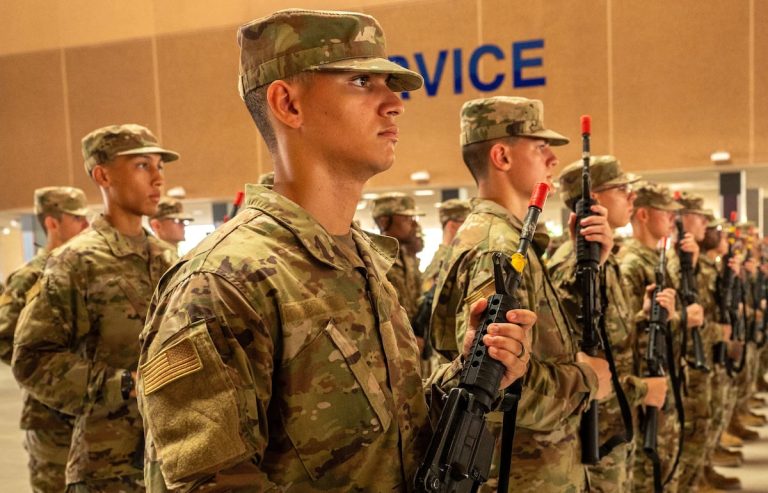
Enlisted trainees for the Air Force and Space Force are now issued nonfunctional replicas of M4 rifles during boot camp at Joint Base San Antonio-Lackland, Texas. The program, which began in July, aims to better prepare aspiring airmen and guardians for real-world situations in which they carry weapons, reviving a practice phased out in 2012.

Chief Master Sergeant of the Air Force Dave Flosi said during a roundtable with reporters at the Air and Space Forces Association’s Air, Space and Cyber conference that recruits carrying live weapons is his “desired end state.”

Flosi praised Air Education and Training Command’s decision to start giving recruits inert rifles. He said the command “is working on taking the next steps down the road” towards giving them actual rifles, though he could not say when that might happen.

Increasing recruits’ familiarity with weapons is necessary to make them as effective as possible, he said, and be ready to operate outside of secure bases.

“The threats are real,” Flosi said. “The environment is dangerous. … Understanding lethal means and understanding the responsibility that comes along with it, that’s time well spent. It’s a little bit of individual responsibility and accountability, and it also is another reminder that you’re in the profession of arms.”

Enlisted trainees for the Air Force and Space Force now receive their nonfunctional replicas of M4 rifles after their initial weapons familiarization course, which takes place during their first week of training. Those replicas can be distinguished from actual weapons by their red flash suppressors.

They then carry the rifles at all times during basic training, except when they have medical or processing appointments, wearing any combination of the service uniform or are on a detail preventing them from carrying the weapon.

Recruits store their weapons in assigned wall lockers while at their dorms, the Air Force said.

Stephen Losey is the air warfare reporter for Defense News. He previously covered leadership and personnel issues at Air Force Times, and the Pentagon, special operations and air warfare at Military.com. He has traveled to the Middle East to cover U.S. Air Force operations.

US Air Force names second and third B-21 Raider bases

0

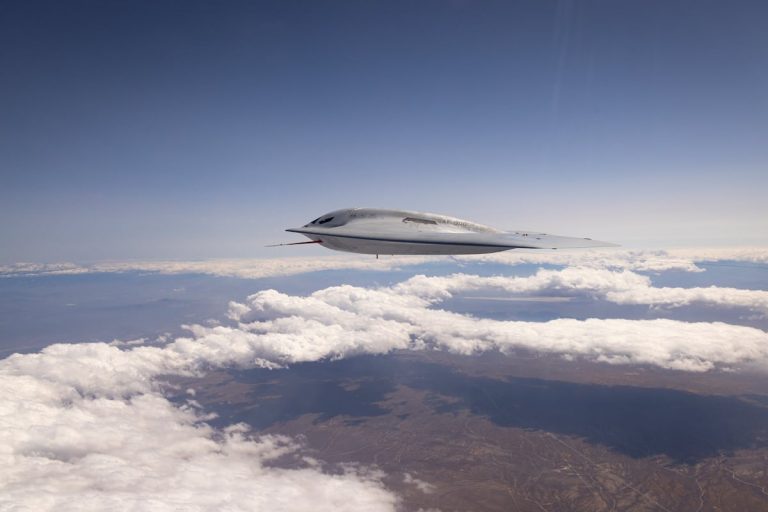
The U.S. Air Force’s newest bomber is officially getting two additional homes.

Air Force Secretary Frank Kendall approved basing locations for the B-21 Raider at Whiteman Air Force Base, Missouri, and Dyess Air Force Base, Texas, the service announced Friday.

The Air Force previously selected Ellsworth Air Force Base, South Dakota, as the B-21 Raider’s first base.

The aircraft, which is the first bomber the Air Force has introduced since the Cold War, is intended to become the “backbone of the Air Force’s flexible global strike capability,” according to the Air Force. Developed by Northrop Grumman, the stealth bomber will come equipped with nuclear capabilities, as well as regular munitions, and be able to assist with manned and unmanned operations.

The B-21 Raider made its first test flight Nov. 10, 2023, out of Air Force Plant 42 in Palmdale, California.

“We continue to achieve B-21 production milestones; through digital engineering and open architecture design, we are getting an agile strategic deterrent that delivers a decisive response as required,” said Gen. Thomas Bussiere, Air Force Global Strike Command commander, in a release.

The Air Force released the first video of the B-21 in flight Wednesday.

Airmen and defense industry representatives discussed the B-21 program’s progress this week at the Air and Space Force Association’s Air, Space and Cyber Conference in National Harbor, Maryland.

Thomas Jones, sector president of Northrop Grumman Aeronautics Systems, said the program was conducting two flight test flights “in a given week” in preparation for the B-21 Raider’s life as a daily flyer.

The Air Force anticipates purchasing at least 100 B-21s, which will replace the B-1 Lancer and B-2 Spirit bombers.

Riley Ceder is an editorial fellow at Military Times, where he covers breaking news, criminal justice and human interest stories. He previously worked as an investigative practicum student at The Washington Post, where he contributed to the ongoing Abused by the Badge investigation.

Air Force’s information warfare hub seeks high-tech sensors, AI tools

0

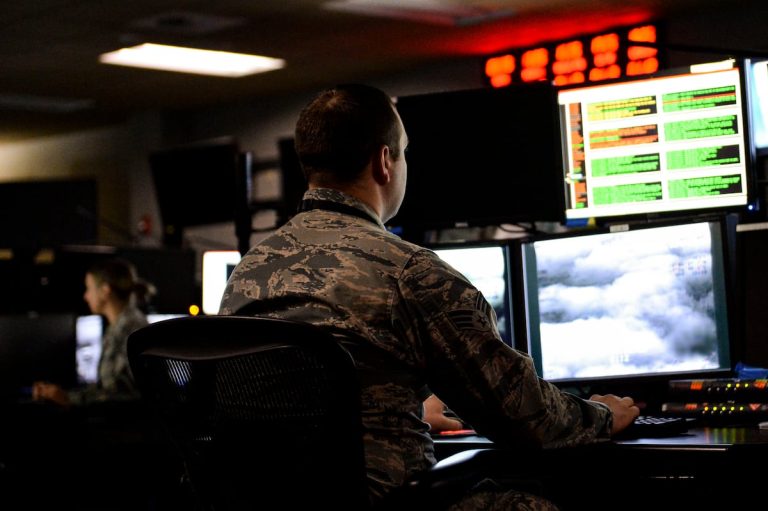
The Air Force needs higher-tech tools and sensors that can monitor networks for signs of malware and sort through the millions of alerts it receives each day indicating potential compromises, according to the leader of the service’s cyber enterprise.

The Air Force’s information warfare organization, 16th Air Force, has been working over the last year to better partner with industry, academia and other government agencies to meet those high-tech requirements through an effort called the Phoenix Initiative.

The team — which is charged with integrating cyber, electronic warfare, information operations and ISR — convened a summit in August 2023 to talk through its highest priority gaps and technology needs. It then led a months-long deep dive to identify its most important mission sets and consider the most significant vulnerabilities and dependencies within those missions.

Lt. Gen. Thomas Hensley, who took the helm as commander of 16th Air Force in August, told Defense News the organization identified targeting, cybersecurity and its Distributed Common Ground System enterprise — which provides key ISR analysis and exploitation — as its highest priority missions.

Now, with those focus areas driving its efforts, the service is analyzing where within those missions it can take risks and where it needs new sensors, artificial intelligence tools and other capabilities to help it operate efficiently and respond quickly to threats.

“We’re not going to be able to hire more people to work sensors, to work systems,” he said in a Sept. 17 interview on the sidelines of the Air Force Association’s Air, Space and Cyber conference. “So, we’ve got to better understand our networks and identify those key nodes where we can put precision sensors so that we can do persistent monitoring to be able to protect that.”

Air Forces Cyber already operates precision sensors for defensive cyber operations, but as platforms and weapons become increasingly more dependent on a range of classified and unclassified networks, it needs more sensing solutions to detect potential threats.

“Everything is connected,” Hensley said. “And so, you have to have layers of different weapon systems to do the persistent monitoring to check for malware.”

Among the other technologies 16th Air Force is exploring is artificial intelligence and machine learning.

The organization receives around 2.5 million alerts of possible compromises each day, Hensley said. And while it has high-performance computers and databases to process those indications, much of that work still involves a human in the loop.

The command wants to instead use AI and ML to do content triage and data analysis, freeing up personnel to conduct more nuanced work.

“That’s where we’re engaging with industry, with other partners to see how we can create these AI/ML tools to help us move faster and more efficiently,” he said. “We’re not going to mass our way out of this.”

When it comes to getting resources to pursue these capabilities, Hensley said the organization can work through the Pentagon’s normal budget processes, but it wants to move faster.

That means it will likely include the tools in its unfunded requirements list, which the military services and other Defense Department organizations use to notify Congress of high-need capabilities that aren’t included in DOD’s annual budget request.

Hensley said the organization could have a request ready as soon as next year as part of the Fiscal 2026 budget cycle.

However, plans to elevate 16th Air Force as a service component command could complicate the process. The service hasn’t set a timeline for that transition and, when it happens, it will require personnel shifts that could slow the funding request.

Hensley added that elevating Air Forces Cyber as a direct report to Air Force Secretary Frank Kendall is a clear sign of support for the organization’s mission, which could lead to more funding and flexibility as it pursues new capabilities.

“That’s sending a clear signal that our secretary of the Air Force wants to be able to support it as much as possible,” he said. “The intent is that we want to be able to resource it … to defend our nation.”

Courtney Albon is C4ISRNET’s space and emerging technology reporter. She has covered the U.S. military since 2012, with a focus on the Air Force and Space Force. She has reported on some of the Defense Department’s most significant acquisition, budget and policy challenges.

Air Force to deploy Ospreys in weeks as post-crash groundings lift

0

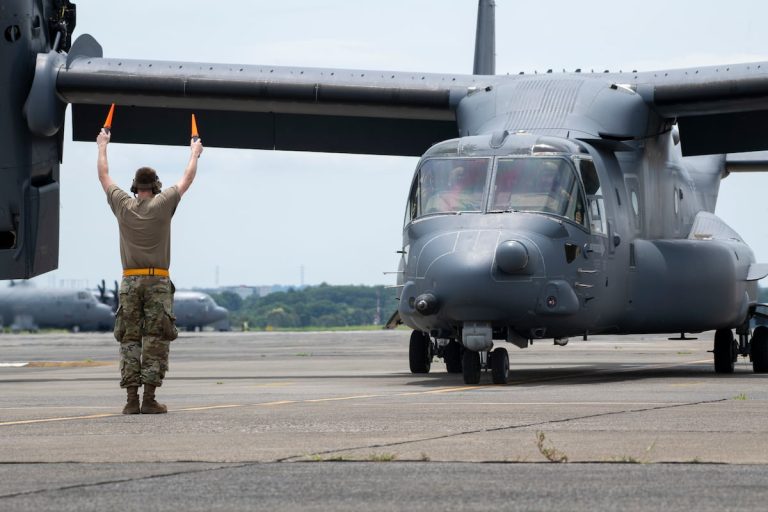
NATIONAL HARBOR, Maryland — Air Force Special Operations Command has returned about 60% of its CV-22 Osprey fleet to fully operational flight status and expects to once again deploy the tilt-rotor aircraft to support combatant commands in a matter of weeks.

In a roundtable with reporters at the Air and Space Forces Association’s Air Space Cyber conference, AFSOC commander Lt. Gen. Michael Conley said the command is clearing about three Ospreys for flight operations every 10 days as it gradually lifts the fleet’s grounding.

AFSOC has roughly 50 CV-22s, and expects to have all its Ospreys back to normal flying operations by late 2024 or early 2025. Conley would not say where Ospreys are likely to deploy.

The military in December 2023 grounded all its V-22s, which are flown by AFSOC, the Navy and the Marine Corps, following the fatal crash of an Air Force Osprey off the coast of Japan a week earlier. That crash killed all eight crew members aboard.

An Air Force investigation later found the crash was caused in part by cracks in a crucial gear driving the tilt-rotor aircraft’s proprotors, and also by the pilot’s decision not to land the aircraft after multiple alerts known as “chip burn warnings” sounded in the aircraft. Those alerts let Osprey air crews know when metal flakes are starting to come off of its gears, which can be a sign the aircraft is stressed.

After a three-month grounding, the Pentagon announced it would start to return its Osprey fleet to flight operations, after revising training for troops flying them and changing maintenance procedures. There were no equipment modifications instituted as a prerequisite for returning the aircraft to flight.

AFSOC put new operating guidance in place earlier this year to require Osprey pilots to land sooner when chip burn warnings go off, Conley said. Now, Osprey air crews are instructed to land as soon as practical after the first warning sounds, and after a second, land as soon as possible.

Pilots always have discretion to fly their aircraft the way they think it requires, Conley said, since each flight has its own unique circumstances. But the tighter guidance on landing is meant to “make it less ambiguous to the crews” to decide what they should do in dangerous situations.

AFSOC had to quickly requalify its Osprey instructors and evaluators before it could start retraining air crew members, Conley said.

And Conley said AFSOC has been “very deliberate and slow and methodical” as it goes through its Osprey fleet one by one, and paying particular attention to aircraft parts.

Naval Air Systems Command Boss Vice Adm. Carl Chebi, who oversees the military’s Osprey program, told lawmakers in June that the entire V-22 fleet would likely not be back to normal flight operations until at least mid-2025.

Stephen Losey is the air warfare reporter for Defense News. He previously covered leadership and personnel issues at Air Force Times, and the Pentagon, special operations and air warfare at Military.com. He has traveled to the Middle East to cover U.S. Air Force operations.