The Importance of Gleaning For Survival

0

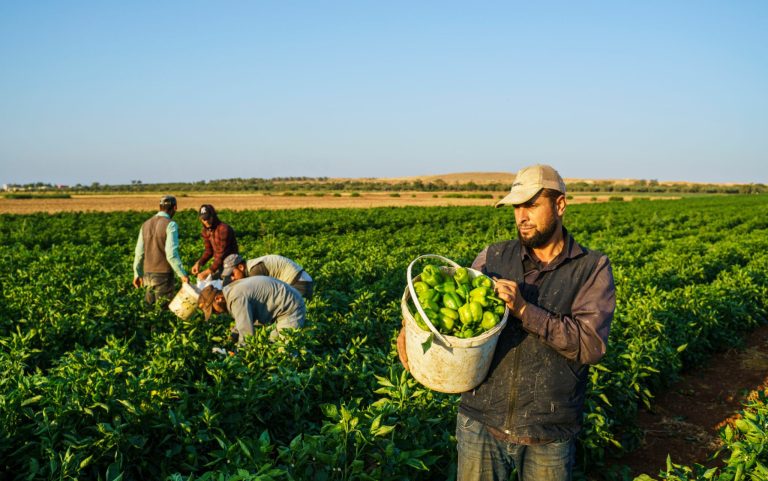
Tracing its origins back to ancient times, the act of collecting surplus produce from fields and leftover fruit post-harvest has a longstanding history, dating back to biblical eras. This communal practice was regarded as a gesture of goodwill among neighbors.

The advent of mechanical harvesting failed to diminish this tradition, as anything overlooked by the machines became fair game for the needy or those quick to seize opportunities.

The practice of gleaning gained even more traction during challenging economic periods, such as the Great Depression. Overlooked potatoes in a freshly harvested field held greater value than gold nuggets for families struggling with hunger. In times of significant disasters, the concept of “survival gleaning” assumes a pivotal role in ensuring the enduring survival of individuals.

What is the Essence of Gleaning?

In certain societies, gleaning seamlessly integrates into daily life—an ordinary task following the harvest, dedicated to ensuring the ongoing well-being and prosperity of one’s family. This practice, also known as gathering, foraging, or wildcraft, takes on diverse nuances influenced by regional, cultural, and societal factors.

Engaging in activities like digging clams or gathering oysters along the public coastal beaches of the United States represents a form of gleaning that serves both recreational and essential purposes for certain families. At its core, gleaning involves collecting remnants, distinguishing itself from scavenging, which leans towards a more illicit and predatory nature. Scavenging requires actively seeking resources amidst competition, while gleaners lawfully acquire usable food that would otherwise go to waste.

One could contend that potential gleaners must actively seek out farmers or other food producers to establish an agreement. However, the legitimacy of locating the rightful owner of a cultivator and obtaining permission to glean after their harvest surpasses the clandestine approach of surreptitiously collecting resources.

Not only does this method hold more legitimacy, but it also tends to yield significantly superior results. By far.

Gleaning’s Ancient Roots

Some of the earliest written references to gleaning come from the Bible’s Old Testament, but gleaning has been in progress since the Stone Age. Language in authoritative Bible chapters, such as Leviticus and Deuteronomy, promotes gleaning as a way for the poor to feed themselves, and instructs farmers to leave some edible produce in the ground specifically for the gleaners.

Through the late 18th century (the 1900s), gleaning was still standard practice throughout Europe. In some towns, clergymen would ring church bells to signal the start and end of the “Gleaning Day”. Once the Industrial Revolution was in full swing and commercial harvesting machines began appearing in the fields, gleaning as an institution, ended. The new farm machinery left little behind that was worth gathering.

However, in times of economic distress, individuals and families still glean to feed themselves. Depending on the size of the fields and the crops being grown, family-sized groups and even church leaders have proven able to negotiate arrangements that are akin to gleaning. Helping harvest hand-picked produce such as sweet corn or watermelons for the grower can easily result in food payments that benefit both parties, for example.

And let’s not forget, there are far more edible resources in the world than cultivated fields. Forests, lakes and rivers, seasides, and domestic gardens can all provide sources of edible food in times of need.

FLOY1 banner

The Contemporary Thrust of Gleaning Initiatives

In the 21st century, the pervasive issue of food insecurity has conferred legitimacy upon gleaning, especially for charitable purposes. The U.S. Food and Drug Administration (FDA) reports that a staggering 30 to 40 percent of the nation’s annual food supply goes to waste, with a substantial portion being farm produce. To address this wastage and provide sustenance to those facing hunger, organizations such as Feeding America and the U.S. Department of Agriculture (USDA) spearhead programs aimed at redistributing usable food.

Typically, these collaborations unfold between sizable farms and equally substantial “food bank” institutions. The intricacies of securing federal grant funding, coupled with the challenges of navigating bureaucratic hurdles, often result in organizations with robust legal resources being the primary participants in such initiatives. However, the democratization of information through the internet has expanded access, potentially empowering a broader range of organizations to overcome these obstacles and contribute to these programs.

The Significance of Gleaning in Survival Scenarios

In the face of any disaster, the stability of your food supply can be compromised. Even under normal circumstances, an extended power outage may result in the spoilage of all the food stored in your freezer. A period of unemployment can escalate into a dire situation, ranging from struggling to purchase groceries to finding oneself displaced and living out of a car. Life throws unexpected challenges, and suddenly, the fight for survival becomes a personal battle, even when it seems like nobody else is facing the same struggle.

In the event of a full-blown apocalypse, reliance on the once-efficient supply chains that delivered food to your doorstep becomes futile. The dependable “Grid” transforms from being impervious to becoming a distant memory virtually overnight, and society’s customary responses to system failures of such magnitude are seldom beneficial.

If you’ve prepared with a well-stocked survival food cache, immediate concerns about food in the short-term may be alleviated. Immediately after a disaster, your focus will be on adapting your shelter and safeguarding your family. While foraging for food may not be an immediate priority, it will eventually become crucial to replenish dwindling supplies.

Regardless of your shelter location, there are likely foraging resources nearby that you’ve never considered. In urban areas, you can find fruit and nut trees, edible weeds like dandelion greens, abandoned windowsill and rooftop gardens, and even resources in abandoned warehouses. In rural settings, foraging options include unused agricultural produce, berries (with a pocket guide for easy identification), orchard fruit, mushrooms (with caution), nuts, and various wild edible plants.

Reflecting on personal experiences, even in an off-grid lifestyle in the Montana mountains, our family enjoyed foraging and consuming the fresh, free bounty surrounding us, from chanterelle mushrooms in autumn to abundant morels in the spring. The glacial lake nearby provided trout in season, and wild game was plentiful in the deep wilderness.

When in survival mode, it’s prudent to research your shelter area beforehand to identify potential edibles, especially by considering the practices of indigenous tribes in the region. For instance, the Salish and other Northwest area tribes foraged for camas root, nettles, and various medicinal plants, all of which still thrive in the Pacific Northwest. Similarly, the Cherokees in the southeastern U.S. farmed staples like corn and beans but also gathered a variety of wild foods, including lamb’s quarters and nuts from hickory, oak, walnut, and chestnut trees—resources that might still be available near your survival shelter.

Navigating Gleaning Etiquette

It’s crucial to acknowledge that when you engage in foraging for food, you might not be the sole seeker in your vicinity. Others, possibly sheltering nearby, are likely foraging as well, and wildlife also relies on this practice for survival. For instance, huckleberry gatherers are well aware that bears share a fondness for the berries, depending on them for nutrition before hibernation.

To ensure harmony and prevent future food shortages, adhere to these sensible guidelines while foraging:

  • Forage only in legally permissible areas; avoid trespassing.
  • Verify that the food is free from pesticides.
  • Respect private property boundaries.
  • Refrain from consuming anything you cannot unequivocally identify.
  • Gather only what you can realistically use.
  • Leave no trace of your presence.
  • Thoroughly wash any foraged food before consumption.
  • If you’re aware of others engaging in gleaning, leave some resources for them.
  • Preserve the long-term sustainability of the environment by leaving several plants intact.
  • Keep in mind that the wildlife, which may serve as a food source for your family, relies on the same resources you are gathering—deplete their food, and they will depart.

Strategic Considerations for Effective Gleaning

blue bucket full of cherries is hanging on a tree

When prioritizing gleaning activities, several factors come into play, including the season, travel distance, available tools, and the suitability of tools for specific crops. As certain foods are only accessible during specific times of the year, understanding the seasonal variations is key. The distance to travel influences the frequency of return trips for gathering, while the availability of vehicles, livestock/carts, or wheelbarrows impacts the efficiency of gleaning, with different tools suited for different crops.

In the midst of a seasonal abundance, it’s imperative to prioritize foods available for a limited time frame, such as wild mushrooms, as well as those that offer maximum nutrition and enjoyment for your family, like berries.

Prioritize your foraging endeavors based on:

  • Distance to the food
  • Access to the food
  • Harvest window
  • Nutritional value
  • Enjoyment value
  • Storage and preservation considerations

Consider a scenario where you have access to abandoned apple trees a couple of miles away, huckleberry bushes near your shelter, and a beehive with honey a couple of hours away. Prioritize them based on distance, accessibility, nutritional value, and harvest window:

  1. Huckleberries (Distance: Closest, Accessibility: Easiest, Nutritional Value: High, Harvest Window: Continuous)
  2. Honey (Distance: Moderate, Accessibility: Moderate, Nutritional Value: High, Harvest Window: Limited)
  3. Apples (Distance: Farthest, Accessibility: Moderate, Nutritional Value: Moderate, Harvest Window: Extended)

Honey takes precedence due to its limited availability, high nutritional value, and versatile uses. Despite potential risks, the medicinal and long-lasting properties make it a top priority. Following that, apples are prioritized for their nutrient-rich qualities and extended storage potential. Huckleberries, easily accessible and with a continuous harvest window, are considered last, allowing for daily consumption without disrupting routines.

Harvesting the Abundance: Gleaning Fields and Beyond

stashside2

Gleaning has evolved from a simple, rewarding practice into a well-organized and economically efficient activity in numerous nations. In the United States, entities like The National Gleaning Project orchestrate extensive networks of volunteers. These volunteers, operating within legal frameworks, systematically gather surplus or leftover produce from commercial fields. Subsequently, they deliver the collected food to food banks for distribution to individuals facing economic hardships.

The assortment of legally acquired produce collected by these dedicated gleaners includes oranges, grapes, corn, squash, tomatoes, cucumbers, and a diverse array of other items, totaling millions of pounds annually. The reach of gleaning organizations extends beyond the fields, encompassing the gathering of usable but unwanted food from grocery stores and restaurants. Some organizations even go a step further by processing the gleaned food to enhance its longevity, ensuring it can feed a greater number of people over an extended period.

Closing Thoughts on Gleaning

As the gleaning movement gains traction, it emerges as a powerful force in alleviating hunger and ensuring individuals receive the necessary nutrition for maintaining good health. Embracing similar practices offers a sustainable means of feeding your family during periods of survival mode. The investment required is solely your own physical labor, and the gleaned food has the potential to be a lifesaver.

Whether facing a larger crisis or dealing with more personal setbacks like job loss or economic challenges, gleaning stands as a viable strategy to navigate through challenging times. Consider it as a practical approach to see you through tough circumstances, offering sustenance and resilience for the long term.

Suggested resources for preppers:

How to find Food in any Environment

The #1 food of Americans during the Great Depression

Survival Foods of the Native Americans

If you see this plant when foraging, don’t touch it!

Good find on storage totes (18 gallon/72 quart size)

0

Recently picked up some of the Hefty 72 quart storage totes (w/ hi-rise lids) at Target, for $8 each. Wanted to pick up 4 more, but found out that the price had gone up to nearly $12.50 each.

Time to practice my Google-fu! ;)

Saw a result in the Google Shopping search for these, at Lowe’s. Not the same brand, but the same capacity….and less than $7 each. (y)
Ugly as sin, imho….but what do I care, when they’re hidden in the closet? :ROFLMAO::ROFLMAO:

https://www.lowes.com/pd/Diamond-Plastics-18-Gallon-Storage-Tote-Christmas/5013988251

I’ll be swinging by my local store, later this week, to pick some up.


Out of Debt!!! And I Felt Comfortable spending some money.

0

One area Dee and I had a strong difference of opinion was in the use of credit and carrying debt. I think we all know that I am a anti Credit and Debt Zealot Dee was not she believed in maintaining that perfect 850 credit score and credit history. While I believe in maintaining a perfect 300 credit score and no credit history. Which is why we kept our individual finances totally separate and non marital beyond being listed as the beneficiary on each other financial accts but in no way being connected to each others Debts or Credit or lack of. The one exception to the His Financials and Her Financials was the OUR Joint Checking Account that we both contributed to equally to pay the shared Monthly/yearly expenses.

So when she passed away and I became the Executor, PA and Sole Beneficiary of her estate, I essentially inherited her outstanding debts and obligations. Or Rather her estate did but to my way of thinking I did since I am responsible for the Estate even if not personally responsible for paying those obligations.

At about week 2 after her passing I began a witch hunt to find and list all of her outstanding debts and assets. I really expected to find more than I did. I found $40,000ish in unpaid medical debt over the last year that was from Co-Pays and Medications/Treatments/Test that insurance didn’t Cover, She insisted on financing half of the New Tractor in 2022 and there was still $30,500 owed on it, She financed her new truck and left a balance of $20,000 due and had 3 credit cards with a $7500 balance between them outstanding. Which again to my way of thinking put me in $98,000 of debt. Almost all of the medical debt was under one Hospital and their network of hospitals and labs they own. They accounted for $38,000 of the medical debt I called their billing/collections last Thursday to pay the balance and was informed that there was no need to because the balances on all outstanding accounts for her were at ZERO and that the money owed had been waived. And that a document stating that had been mailed out on Tuesday. I received that Document today and yep they basically just waived and wrote the balance due off. Kind of annoyed me because they were legitimate debts that were owed but their choice not mine. I may not like or use debt but I do believe firmly in paying it if you owe it. That left a little over $2,000 from facilities outside of the main medical debts. They were happy to get paid Thursday and I am happy that they will no long be sending me nastygrams demanding payment :)

Between HER bank Accts and Her Life Insurance Check finally arriving there was enough in the new checking account I opened just for consolidating her financial assets in as they come in. I am pleased to say that as of 11:50AM this morning every outstanding debt and obligation that Dee owed is no paid in full! Kubota Credit Corporation was hands down the absolute worst nightmare to pay to the point that I will never spend another penny on Kubota Anything going forward! Great Tractors but a terrible Corporation now days and absolutely worthless customer service. GM Financial for her truck was the absolute BEST to work with, their customer service was top shelf all the way. Kubota Credit Corp should start attending the GM Financial Customer service trainings to learn how to NOT piss their 30+ year loyal customers off to the point that the Loyalty is gone.

The important thing though is EVERYTHING is paid and there is once again ZERO debt in my life in anyway……. LOL I am the guy that won’t write a check unless I absolutely have to because I consider it to be a debt and credit from the time it is written until the time it clears the bank :) Cash, Cashiers Checks,ACI Payments, Debit Cards and if I need a Credit Card I get a prepaid one. If I need a loan I keep $25,000 in a Perpetual CD Acct at the bank that I can borrow from and pay myself back with interest :)

So the money coming in from her estate into the checking account just for it. I have NOT touched that money other than to pay debts and did not touch it until I was 1000% certain all of her debts had been paid. Seen to many horror stories where someone spent the inheritance before the debts were paid and then those debts DO become your personal debts. LOL I don’t want to be that guy :) Now all that remains is to collect the Money that the State Owes the Estate and get my survivor benefits for her pension and health insurance reinstated. I met with my lawyer on Friday and he is very confident that the State is going to become much more amicable in the next week and everything they owe and are obligated to provide done and cleared in the the next 3-4 weeks. He said basically between Me, Him, the Accountant and the Union that we are being such a pain in their ass they are starting to really want me to just go away at this point.

A key thing in all of this has been keeping her estate out of Probate. Every bank and financial institution has a form where you can list beneficiaries or a sole beneficiary to the account (s) If any acct is worth more than $100,000 and that form in concert with a WILL does not exist the estate goes automatically into probate and then you have legal fees and court cost that are not exactly cheap. Naming a Sole beneficiary on every acct and having a well written will in place avoids ALL of that probate mess. It also effectively shoots down anyone that might want to dispute or contest things. The ‘I am the Spouse it automatically comes to me.” belief is true if the Estate is worth less than $99,999.99 in cash/liquid assets. That does exclude real estate, retirement funds, life insurance policies etc. There are also probate mandates if debts vs assets are at some threshold but I had no reason to learn about that side of it as the lawyer said we were not even close to that applying.

So after paying the last $50,000 in debts off today I am now the proud owner of a 10 Months old Ram 1500 with 4500 miles on it and own the half of the tractor that I didn’t before (I put the $30,000 down payment on it and Dee Financed $35,000 of it.) Kubota right out the gate started threatening to repo the tractor so my lawyer put lien on it based on the $30,000 I had put down on it calling it a loan secured by my interest in the tractor. So they couldn’t just repo it, I guess it also had protections from repo as being a asset in a estate. Anyway doesn’t matter now it is paid in full and the lawyer is withdrawing my lien against it on Monday. Basically I could pay $30,000 and keep the tractor or Kubota could pay me $30,000 and repo the tractor. 6 of one and a half dozen of the other. But I do love smart lawyers that know how to play the games and play them well….. when they are on my side :)

And back on track I was left with $46,900 from the cash assets collect so far. And I went on a wild spending spree buying paint and flooring to replace the flooring the dogs ate :) Since I am giving the new house to my daughter and staying in the Cabin, I decided to revamp the Cabin like me and Dee were going to do and decided not to do after we started planning the new house.

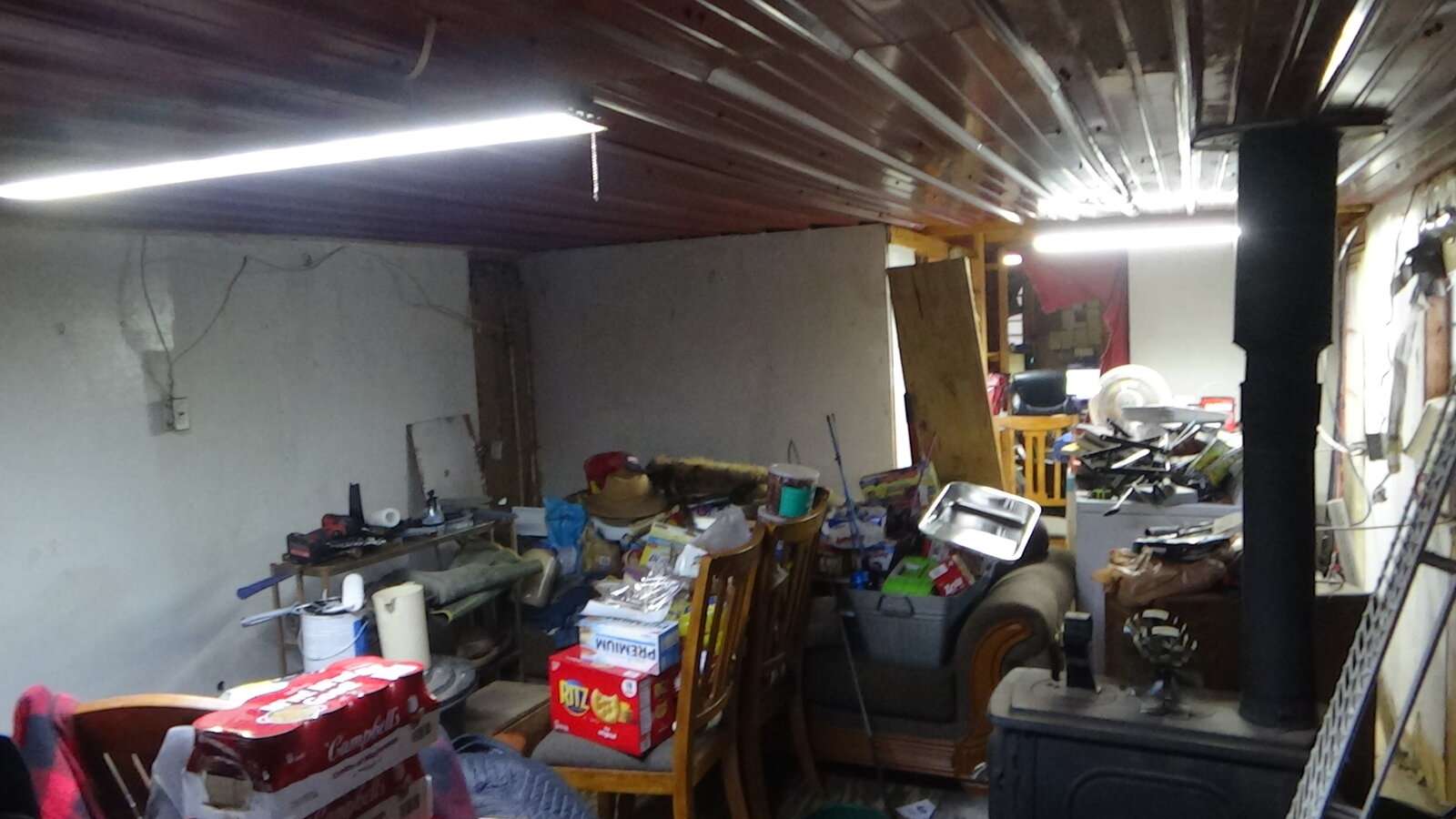
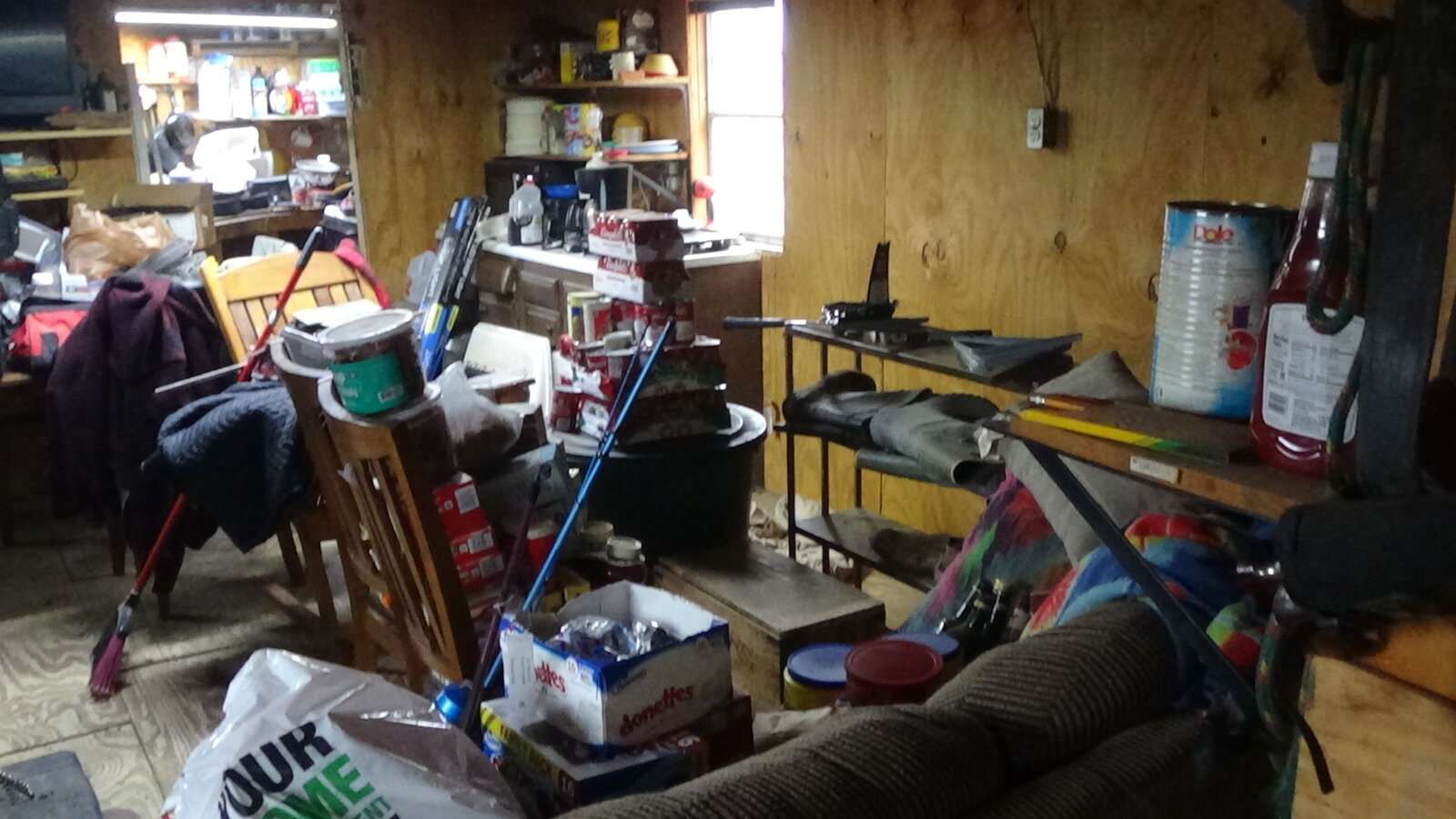
Sooo I got home with Primer, Paint, and new industrial vinyl floor planks and took all of the shelves down and piled it in the center of the cabin cleaned the walls good and started slinging primer on the walls. Yeah I need to get rid of that temp electric line I wired in back in 2020 when the Cabin became a work from home State field office LOL Dee needed a lot more outlets to run all of her office stuff and computers. I may keep them but pull the wire up and pull it down in the wall and make the outlets recessed. I is kind of handy having 3 additonal boxes on that side and anothr two on the opposite side. LOL right now letting the primer dry over night and looking in there…… it looks like all I accomplished today was making huge mess and piling everything that was organized on shelved in the middle of the living/dining room.
DSC01283.JPG

The start of creating the giant mess :) I like 1/2″ plywood walls and while I initially didn’t care for the barn steel ceiling Dee wanted…… it has kind of grown on me since I screwed it up. And it was a practical use to the steel left over from building the machine shed. I strongly dislike cabinets and pantries. I do like large open wall shelves. Mice and vermin love cabinets and pantries…… they strongly dislike open wall shelves :) We don’t get a mouse in the house very often but when we do they go straight for the few cabinets we have. Plus things are in plain sight on shelves and don’t disappear and get lost for all time like they tend to do in cabinets.
DSC01280.JPG

Paint first and then the flooring. The Grey was on clearance for 50% off VS the Oak or burnt pine. At half Price I really like the grey color flooring LOL.
DSC01274.JPG

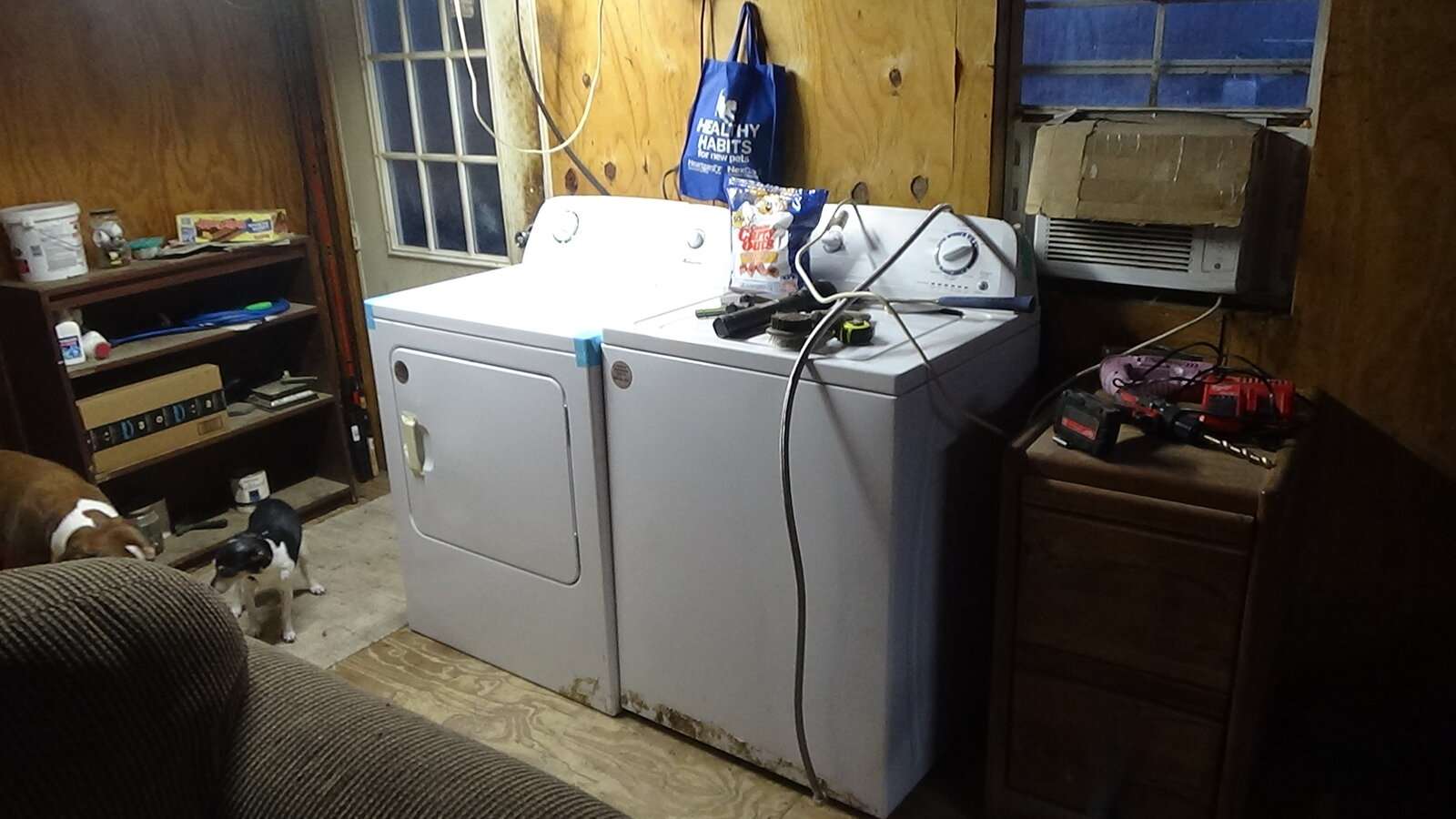
The washer and dryer used to be in the warehouse. I am no longer going to heat the warehouse over winter and washing machine water pumps it seems stay full of water and freeze and crack. I have no intention of waiting 12 weeks again for a replacement pump and then spending two hours wrestling the cracked on off and the new one on. So I moved both into the short hallway in the cabin. LOL I don’t use 240 appliance cords on electric stoves or dryers….. I just wire the cable straight in to them and skip having to have a outlet all together. I had to get the pipe fittings to go up from the hot and cold water lines above the HW heater in the bathroom. have to go up into the loft over and then back down and do some zig zagging with the pipe to get there. I found that my Connector, 90, 45 and threaded to hose adapter bins were pretty much depleted and so I restocked all of my plumbing parts today. Poo and BB are displeased with everything going on in their Cabin today and are having a meeting and discussing how to off me and still get fed.
DSC01271.JPG

I bought the cabin as a repo so it came as is…… For $5500 VS $12,000 back then I figured I could replace the tiny windows it came with. Except I never got around to replacing the tiny windows it came with. So today while at the box store I ordered 4 of these two of them 60×48 and two 36×48 Easy enough to cut the wall out for them head it, frame it and stick them in and seal them up. Big ones in the living/dining room and the smaller two in the bedroom. The passive airflow in the Cabin SUCKs these should correct that.

window.

Didn’t spend A LOT $1400 for the paint, flooring and plumbing stuff and $1600 on the 4 windows. Pretty low cost actually for some major Cabin Upgrades. We are going to resume finishing the new house up in the spring. It is still unfinished enough that we can customize it for my Daughter and her husband. Like she would rather split the 16′ x24′ master bedroom in to 2 smaller bedrooms and have 3 bedrooms on the ground floor rather than two. The Grand Daughter has no interest in a ground floor bedroom and and wants the 12×16 South loft room for her bedroom. So we are going to finish next spring and summer to however they decide they want it.

I really am very content and happy in the Cabin. It really did need to be updated and improved but like Dee said there is no point in doing anything with the Cabin if we are going to move in to the new house. Well now there is a point to doing all that stuff we talked about doing in the cabin :) And Going down and working on the house is just more than I can take, it invokes a visions of a future that was stolen and memories of everything WE had done building the house to where it is now. Just a emotional roller coaster every time I walk through the house door. It should be a lot easier working in there with the Daughter and SIL.

And I have to stay busy or things get quiet and then I start thinking and then that roller coaster takes off :)


737 Max in the news again – wear that seatbelt!

0

Also saw where some nearby passengers lost some items out the hole, like ear buds, and even phones.

Now to start the rumor, that the FAA believes it’s highly likely, that some idiot who didn’t have their phone in “airplane mode” caused this to happen. You people have been warned…..and now look at what’s happened!! ;):whistle::ROFLMAO::ROFLMAO:


The old military ethics | Survival Monkey Forums

0

I was rereading the old Blue Jackets Manual.

The Bluejackets Manual

The one in the archive in the Monkey is the 1917 or so version. Unlike the modern services it does not start out with the use of proper pronouns and DIE standards. I refuse to use DEI which by no accident in Latin is the singular form of god,as they had many instead of one. Rant off. The first section of the manual, pages 25 thru 55 deals with the duties of every man in the Navy, from recruit to Admiral. and is titled ‘Discipline and Duty”. It is in one sense the best codification of what was expected and delivered by an honorable man of that day and what could happen if you strayed from the true path.

These are the men who would be fighting in WW1 and knew it. They created a spirit of duty and of courage that allowed us to win WW2. The last torpedo bomber at Midway in VT8 continued the attack even as all of the rest of the squadron was shot down and was also shot down with 1 survivor out of 30 crewmen. The men in the Brewster Bufflos took off and fought the vastly superior Japanese aircraft and both actions led to the Japanese making mistakes that allowed the US to win the total battle.

The manual has sections that give the pay and benefits, the carrot, as well as a lit of punishment and court procedures, the stick.

While I don’t expect anyone but fools like me to read it, it is an excellent look at the reasoning behind the men that won WW1 and WW2 for us and a sad reminder of what we have lost in the woke and leftest generation. we now seem to have people entering the service of our with country who wish drag queen story hours and “female” officers.

An aside to cheloveck. I respect their right to do and call themselves whatever the reason. but it would seem to create problems when those few times come in our history when individuals did their duty knowing that they were going to die. But who placed their duty to God and Country above their own survival.


Wayne LaPierre to step down as National Rifle Association

0

It is about time, before he leaves, hopefully he will fly out to California on the NRA plane to get fitted for more custom tailored clothing and bill the NRA for thousands of dollars. Again.

https://www.reuters.com/world/us/wa…rifle-association-leader-nra-says-2024-01-05/

Flu – Protecting Your Family From an Influenza Pandemic

0

Note: Permission to reprint, repost or forward the following article in full is granted, but only if it is not edited or excerpted.

Protecting Your Family From an Influenza Pandemic

By James Wesley, Rawles — Editor of www.SurvivalBlog.com


The emerging threat of the Asian Avian Flu Virus (AAV H5N1) brings into sharp focus the vulnerability of modern, highly mobile and technological societies to viral or bacterial infectious diseases. The last major Asian flu outbreak, (H2N2 in 1957, which killed 69,800 people in the United States) took five months to reach the United States. With the advent of global jet travel, it is now likely that highly virulent disease strains will be transmitted to population centers around the world in a matter of just a few days.

In this article, I will describe how you can protect yourself and your family from the next great pandemic. Although the likelihood of AAV H5N1 mutating into a strain that can easily be transmitted between humans is relatively low, the potential impact if this were to occur would be devastating. The current strain of the virus has a 58% lethality rate for humans. But even if AAV H5N1 turns out to be a “non-event”, in the next few decades there is a very high likelihood that some other disease will emerge and suddenly make a pandemic breakout. The odds are against us, because influenzas have tendency toward antigenic shift. Because influenzas are viral and are spread by casual person to person contact, the majority of the world’s population will be exposed in just a few weeks or months. Even today, more than 30,000 Americans die each year from flu complications–mostly the elderly and those with compromised immune systems.

Here are the key things that you need to do to protect yourself and your family, and to help restore order during a pandemic:

A.) Raise Your Immune Resistance

B.) Be Ready to Fight the Illness

C.) Avoid Exposure.

D.) Stockpile Key Logistics.

E.) Be Prepared to Dispense Charity From a Safe Distance

I will briefly discuss each of these requirements in this article. I will also be posting more detailed follow-up articles on each topic in my daily blog (web journal) at http://www.SurvivalBlog.com

Raise Your Immune Resistance

There are two philosophies to fighting off influenza viruses. The first and mostly prevalent is to raise the body’s immune response. The other is to maintain normal immune response to prevent a collapse caused by over-response–a so called “cytokene storm”. While opinion is divided on this issue, I tend toward a strong immune response–particularly if combating a highly virulent illness.

To raise your immune resistance to disease it is important that you stop smoking. If you are a smoker you have already realized that you are much more susceptible to respiratory infections. Smokers are at high risk to develop complications. Get plenty of exercise, eat healthy foods, drink only in moderation, get plenty of sleep, and use top quality vitamin supplements. If you are overweight, you need to alter your diet get down to within five pounds of normal body weight. You need to change your diet for two important reasons: First, unhealthy foods weaken your immune system. Cut out refined sugar. Avoid candy, snack foods, soft drinks, and any processed foods with preservatives, artificial sweeteners, or MSG. Avoid store-bought meat, which is often tainted by the hormones and antibiotics used in commercial livestock feeds. Wild game or home-raised livestock is much healthier! Lastly, pray. Why? Anxiety is a form of stress that weakens the immune system, and prayer is a proven way to relieve anxiety and stress. And more importantly, as a Christian I believe that it is crucial to pray for God’s guidance, providence, and protection.

Be Ready to Fight the Illness

There are some symptoms that distinguish between colds and flus: Flus typically cause fever, chills, achy feeling (malaise), headaches, and extreme fatigue. Cold symptoms are usually restricted to the upper respiratory tract while flu symptoms tend to involve the entire body.

Influenzas tend to kill most of their victims in two ways: dehydration and lung congestion. Even the Avian flu, which is respiratory usually starts with stomach flu symptoms. Stomach flus usually induce diarrhea which rapidly dehydrates the victim. To fight this, you need to stock up on both anti-diarrhea medicines (such as Imodium AD–an anti-spasmodic) and electrolyte solutions such as Pedialyte. (The latter is available in bulk though large chain “warehouse” stores.) The various sports type drinks (such as Gatorade) can be used as oral rehydration solutions (ORSs) too. However, I prefer to dilute them about 50% with water, they have a lot of glucose in them which will exacerbate diarrhea symptoms.

If commercial ORSs are not available, I have read that you can make an emergency solution as follows:

• 1/2 teaspoon of salt

• 2 tablespoons honey, sugar, or rice powder

• 1/4 teaspoon potassium chloride (table salt substitute)

• 1/2 teaspoon trisodium citrate (can be replaced by baking soda)

• 1 quart of clean water

Imodium is a trade name for Loperamide. It can be purchased generically for relatively little cost, at such places as warehouse stores. The generic (house brands) are just fine. Stock up on Acetominophen (Tylenol) and Ibuprofen (Motrin) as well – for treating fevers. Might be unwise to drop a mild fever as this is the bodies way of fighting the virus These two antipyretics can be taken together or on an alternating 4 hour schedule (take each every 4 hours but split them, for example at 8 AM take acetaminophen, at 10 AM take ibuprofen, etc. This makes it easier to monitor the patient and get them to drink fluids, if they’re up every 2 hours they will have to drink some fluids). Either have a traditional glass thermometer for each person, or a digital thermometer with lots of disposable sleeves. The thermometers are a couple of bucks at the stores mentioned above. The sleeves are a buck or so per hundred. Don’t cross-contaminate your patients.

Because influenzas are viral rather than bacterial, most antibiotic drugs (antibacterials) are useless in combating them. If you suspect that you are coming down with influenza get bed rest! Too many people ignore their symptoms because “that project at work just has to get done.” Not only do they risk their own health, but they infect their co-workers! Liquids help ease congestion and loosen phlegm and are of course crucial to rehydration. Just a fever alone can double your body’s dehydration rate.

Respiratory flus such as the Asian Avian Flu kill with congestion. Buy a steam-type vaporizer. Stock up on expectorants containing guaifenesin as the main ingredient.

You will need to watch carefully for any symptoms of pneumonia develop. These include: difficulty or painful breathing, a grunting sound when breathing (quite distinct from the wheezing of bronchitis or the “barking” of croup), extremely rapid breathing, flaring nostrils with each breath, or coughing up rust-colored phlegm. Pneumonia can be a deadly complication of the flu and is the main cause of flu-related death. It is important to note that pneumonia is typically a co-infection that can be either viral or bacterial. In case of a bacterial pneumonia, antibiotics are crucial for saving lives. If it is viral, there is not much that can be done. While antibiotics can clear infection they cannot remove secretions. The patient must cough them all the way back up the respiratory tract. Do not use cough suppressants–anything with active ingredients like dextromethorphan or diphenhydramine. A “productive” (wet) cough that produces phlegm is a good thing! This is where you may need expectorants. One that works well is Robitussin (the original type of Robitussin without any capital letters after the name). These are also available as generics, and quite cheap, so stock up. You should also read up on postural drainage and percussion techniques for chest secretion clearance–for instances when your patient cannot or will not cough effectively.

Avoid Exposure

Aside from being actually coughed or sneezed upon by an infected person, the most common way to catch the flu is by touching something which has been coughed on or sneezed upon by an infected person. For instance, the person that used the shopping cart before you had the flu. They covered their mouth with their hand when they coughed then used that very hand to push the cart around the store. Now your hands are touching the same place. Without thinking while shopping, you rub your eye or nose and you have introduce the virus to your most vulnerable point of infection. When you are out in public do NOT touch your eyes or nose. Wash your hands frequently to remove any germs you have picked up. Teach your children this as well.

Even though the chances of a full scale “nation busting” pandemic are small, the possibility definitely exists. The recent public statements by President Bush about considering the use of the military to enforce an Asian Avian flu pandemic quarantine are indicative that government officials are taking the threat seriously. A full scale pandemic that starts taking lives on a grand scale may then reasonably cause you to take some extreme measures to protect the lives of your family members. You can cut your chances of infection by more than half if you prepare to live in isolation (a strict “self quarantine”) for an extended period of time. You need to be prepared to avoid all contact with other people during the worst of the pandemic. The self quarantine period might last as much as three years, as successive waves of influenza sweep through the country. Think this through, folks. What would you need to do to successfully quarantine your family? Grab a clipboard and start making some prioritized lists.

History has shown that infectious diseases do their worst in urbanized regions So if you can afford to, make plans to move to a lightly populated region, soon. Where? Read my blog ( http://www.SurvivalBlog.com) for some detailed recommendations, but in general, I recommend moving west of the Mississippi (because of the west’s much lighter population density) to a rural, agricultural region. When looking for a retreat locale, look outside of city limits and away from major highways that will serve as “lines of drift” for urban refugees. You are looking for a property that could serve as a self-sufficient farm–something over five acres, and preferably closer to 40 acres. In the event of a “worst case” pandemic situation, there is the possibility that power grid could go down. Even if your farm has well water, you may be out of luck. A home with gravity fed spring water is ideal, but uncommon. So you will either need to be able to pump well water by hand–only practical with shallow wells–or be prepared to treat water that you’ll draw from open sources: rivers, creeks, lakes, or ponds.

Plan to live at your retreat year-round. In the event of a full scale pandemic, the police and military will probably be ordered to enforce draconian quarantines of cities, counties, or perhaps entire states or regions. Having a well-stocked retreat is useless if you can’t get to it. Live there, and become accustomed to getting by self-sufficiently. Plant a big vegetable garden, using non-hybrid seeds. Raise small livestock that can forage on your own pasture. Get your digestive system accustomed to consumption of your bulk storage foods. Home school your kids. Develop a “hunker down” lifestyle with minimal trips to town. Each trip to town will constitute another opportunity for infection.

To make self-quarantine effective, it is essential that you are prepared to live in isolation for many months, and possibly years, to avoid contact and subsequent risk of infection. This can be practical for anyone that is retired or self-employed in an occupation that does not require regular face to face contact with clients or customers. (For example home-based mail order, self-publishing, recruiting, medical/legal transcription, or telecommuting.) But for anyone else it may mean having to quit your job and live off of your savings. So it is essential that you get out of debt and start building your savings, ASAP. If you can possibly change jobs to something that will allow isolation or semi-isolation, do so as soon as possible. For most of us in the middle class, this may mean “doubling up” with another family to share resources.

To protect yourself (at least marginally) from infected spittle, wear wrap-around goggles and buy or fabricate surgical style masks, in quantity. Note that even an N100 gas mask filter will not stop an airborne virus, since the viruses are too small. But at least a cloth mask will give you some protection from virus-laden spittle. Once the pandemic breaks out in your region, you won’t look out of place wearing these, even on a trip to the post office. Stock up on disposable gloves. Note that some individuals are allergic to latex. So do some extended wear tests before you buy gloves in quantity. Wear gloves whenever away from your retreat, and wash your hands frequently, regardless. Keep your hands away from your nose and eyes at all times. Stock up on soap and bottles of disinfecting hand sanitizer.

Stockpile Key Logistics

To make long term self quarantine effective you will need to buy a large quantity of long term storage food from a trustworthy vendor. Storage food is bulky and expensive to ship, so plan to buy locally or rent a truck and travel to a nearby state to pick up your storage food. In the eastern U.S., I recommend Ready Made Resources, of Tennessee. (See: http://www.ReadyMadeResources.com) In the western U.S., I recommend Walton Feed of Idaho. (See: http://www.WaltonFeed.com) It is also important to lay in extra food to dispense in charity–both to your neighbors and to any relatives that might end up on your doorstep at the 11th hour.

Stockpile fuel–firewood, home heating oil, or propane, plus fuel for your backup generator, vehicles and/or tractor. For liquid fuels, buy the largest tanks that you can afford to buy and fill, and that are allowable under your local fire code. If you heat with wood or coal, determine how many cords or pounds of coal you buy each winter and then triple that amount.

Build a sturdy gate to your driveway and get in the habit of keeping it closed and locked. It may sound far-fetched, but in the event or a “worst case” you may have to repel looters by force of arms. Buy plenty of ammo, zero your guns, and practice regularly. Hurricane Katrina showed how fragile our society is and how quickly law and order can break down in an emergency. Plan accordingly.

With the consent of your doctor and his prescription, you should stock up at least moderately on antibiotics such as penicillin and Ciprofloxacin (“cipro”) to fight co-infections. But they should only be used if it is abundantly clear that a co-infection has set in. (Again, watch for pneumonia symptoms.)

There are a few drugs that have been clinically proven to be useful in lessening the symptoms of viral influenzas, and shortening the duration of illness. These include Relenza (Zanamivir), Tamiflu (Oseltamivir phosphate), and Sambucol. These drugs are used immediately after the onset of flu symptoms. Of the three, Sambucol–a non-perscription tincture of black elderberry– is probably the best. I predict shortages of these drugs in coming months, so stock up while they are still readily available!

Be Prepared to Dispense Charity From a Safe Distance

I already mentioned that it is important to lay in extra food to dispense in charity. I cannot emphasize this enough. Helping your neighbors is Biblically sound and builds trustworthy friendships that you can count on. To avoid risk of infection, you need to be prepared to dispense charity from a safe distance–without physical contact. Think: planning, teamwork, and ballistic backup. While your family’s food storage can be in bulk containers (typically 5 to 7 gallon food grade plastic pails), your charity storage food should mostly be in smaller containers. Or, at least buy some extra smaller containers that you can fill and distribute to refugees. Also be sure to lay in extra gardening seed to dispense as charity. Non-hybrid (“heirloom”) varieties that breed true are available from several vendors including The Ark Institute. (See: http://www.ArkInstitute.com). By dispensing charity you will be helping to restore order and re-establish key infrastructures. The bottom line is that you’ll be part of the solution rather than part of the problem.

In closing, I highly recommend that you read Dr. Grattan Woodson’s monograph “Preparing for the Coming Influenza Pandemic”, available for free download at my blog site. Also see: http://www.fluwikie.com.

Postscript from SurvivalBlog.com Reader and Contributor “Dr. November”:

I’m not a big believer in Tamiflu (Oseltamivir) or the other neuraminidase inhibitors. It’s only demonstrated effect is to make the course of the flu slightly less long (on the order of 1-2 days less), but it has a critical requirement: IT MUST BE TAKEN within the first day or two of feeling ill. Most people (myself included) will just feel a little ‘off’ those first couple of days, or try to work through it. Tamiflu in this situation is pretty useless. Also, if someone is going to use it, they MUST have it on hand before they get sick: Getting the first symptoms, then deciding to call your physician and getting an appointment to get the prescription the week after next isn’t going to help. Finally, it’s pretty expensive (a standard 5 day adult dose is around $100 plus the physicians appointment). It’s also going to be in short supply as people start trying to get it (similar to Cipro following the anthrax attacks and scares). BTW, Mom’s old standby for respiratory infections (chicken soup) is as effective as oseltamivir. I doubt that it would be a good choice for an avian flu pandemic, though.

I was favorably impressed with a study done in Israel about the efficacy of Sambucol. At least, it’s not expensive and won’t hurt anything.

So, what should people do? In addition to the suggestions you’ve offered, I have a few more: If the pandemic strikes, and you can’t avoid going out among people, wear disposable gloves (they don’t have to be surgical or sterile). You don’t know who last touched that … whatever (door knob, elevator button, etc). Carry and use several pair, and learn how to take them off without touching the outsides (ask a medically trained individual to show you).

Keep your hands away from your mouth, nose and eyes! If your hands become contaminated, don’t transfer the virus to mucous membranes. Wash your hands often (and also, BEFORE and AFTER using public restrooms, then don’t touch the door knob on the way out – use an extra paper towel). Hand sanitizer gels are OK but plain soap and water is fine too. If nothing else is available, a ‘dry wash’ (vigorously rubbing your hands as though you were soaping them up) is surprisingly effective in removing the outer dead layer of skin cells that harbor virus particles or bacteria. It won’t get rid of every single one (nothing will) but it’s a matter of odds – the fewer, the better.

Teach everyone (especially the dear little germ transport mechanisms we call children) to cough into their elbow or armpit – NOT to cover their face with their hands (and then what?) or use a tissue (and then what?). And to wash their hands afterwards.

I can commend a medical blog that has an excellent article (and link to a free New England Journal of Medicine article) on avian flu: http://medpundit.blogspot.com/2005/10/flu-bug-variations-everyone-seems-to.html and

http://content.nejm.org/cgi/content/full/353/13/1363 – Dr. November

Disclaimer: I’m not a doctor, and I don’t give medical advice. Mention of any medical device, treatment, drug, or food supplement is for educational purposes only. Consult your doctor before undertaking any treatment or the use of any drug, food supplement, or medical device. SurvivalBlog.com is not responsible for the use or misuse of any product mentioned.

Copyright 2005. All Rights Reserved by James Wesley, Rawles – www.SurvivalBlog.com™ Permission to reprint, repost or forward this article in full is granted, but only if it is not edited or excerpted.

About the Author:

James Wesley, Rawles is a former U.S. Army Intelligence officer and a noted author and lecturer on survival and preparedness topics. He is the author of the novel “Patriots: Surviving the Coming Collapse” and is the editor of SurvivalBlog.com–the popular daily web journal for prepared individuals living in uncertain times.


Airborne Range Hawks enabling more hypersonic flight tests

0

WASHINGTON — Last spring, the Pentagon’s Test Resource Management Center received requests from two program offices to provide support for upcoming hypersonic flight tests — one over the Atlantic Ocean and one over the Pacific.

The flights would be 10 days apart.

In the past, the testing community wouldn’t have been able meet that demand, according to George Rumford, TRMC’s director. It would take weeks — and sometimes months — to reposition the ships the Pentagon has traditionally relied on to track hypersonic test vehicles in flight and ensure the programs had the proper instrumentation in place.

“One of those programs would have been told that they need to sit on their hands for weeks, if not months, waiting for us to arrange the infrastructure to support their test,” Rumford told C4ISRNET in an interview.

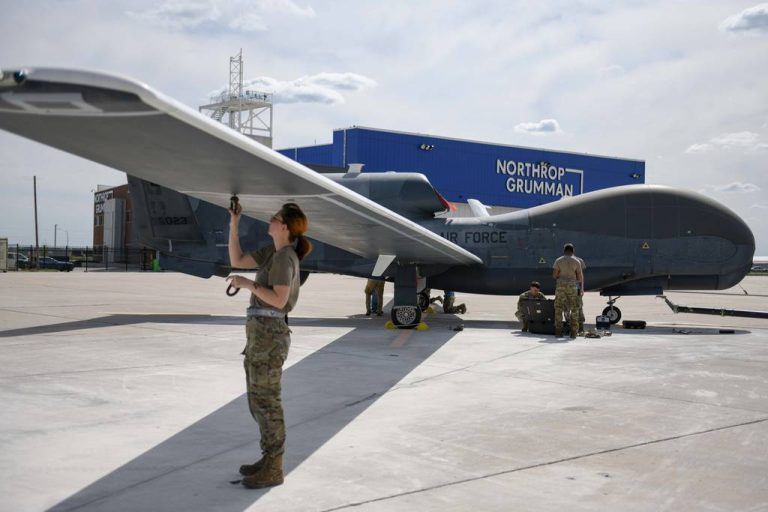
But this time, Rumford’s team had a new capability available — a fleet of three uncrewed Range Hawk aircraft equipped with sensors and instrumentation to support hypersonic flight tests from the air. The drones, part of a program called SkyRange, provide the Pentagon with a flexible, airborne testing infrastructure.

Rumford and his office declined to name the systems that were tested, but said that because of SkyRange, which became operational last year, TRMC was able to support the quick turnaround that the programs needed.

“With SkyRange, our nation was able to do a hypersonic test in the Atlantic and in a matter of days do a hypersonic test in the Pacific,” he said. “That is a significant accomplishment.”

The U.S. military is investing in hypersonic research and development efforts aimed at fielding weapons and aircraft that can travel and maneuver at speeds above Mach 5. Access to flight test support and ground test infrastructure has been a significant limiting factor in that development, and the Pentagon has been working in recent years to change that.

Growing the SkyRange fleet

In 2022, the department set a goal to increase its hypersonic flight test cadence from about 12 events per year to 50, or about one per week. Rumford said TRMC is prioritizing efforts like SkyRange that bring the speed and flexibility to hopefully help the department achieve that goal over time.

The aircraft that make up the SkyRange fleet are called Range Hawks — decommissioned RQ-4 Global Hawks, once used by the Air Force for intelligence, surveillance and reconnaissance missions. The first three of these aircraft are older, Block 10 models that have been converted to track overhead systems.

In fiscal 2023, SkyRange supported 10 hypersonic flight tests, and Rumford expects that to grow to more than 15 in FY24.

The SkyRange fleet is also poised to grow in the coming years as TRMC and Northrop Grumman, which built the Global Hawk, convert retired Block 20 and 30 Global Hawk models into the Range Hawk configuration. Those conversions will begin this year and by FY25, SkyRange should have additional Range Hawks in its fleet to support hypersonic testing, Rumford said.

Flying testbed

The Pentagon is investing in other efforts beyond SkyRange to boost hypersonic flight and ground testing. Through the Multi-Service Advanced Capability Hypersonics Test Bed program, or MACH-TB, TRMC and the Navy are working with industry to create a flying testbed that can validate subsystems, advanced materials and other technologies as a system is being developed.

Rumford noted that prior to MACH-TB, programs rarely had opportunities to validate that individual systems and components could function in a hypersonic flight environment before a full-up flight test.

“In a typical hypersonic flight test, there might be more than a dozen things flying for the first time, all having risk associated with them, all bundled into that big flight test,” he said. “MACH-TB can provide a flying testbed in a repeatable, affordable environment.”

TRMC is also working with the Defense Innovation Unit to funnel emerging technology into MACH-TB through the Hypersonic and High-Cadence Airborne Testing Capabilities program, dubbed HyCAT.

“The intent of that is to try to discover innovative approaches that are extremely affordable, reusable, that can possibly provide things that we currently don’t have today, make some tech maturity investments in them, and then once that once that technology matures, we will transition it from HyCAT to the MACH-TB program,” Rumford said.

On the ground side, TRMC is investing in improvements to government-owned test facilities and is partnering with private sector organizations to address shortfalls in propulsion testing for air-breathing hypersonic vehicles and aeroshell materials for boost-glide systems.

Rumford highlighted a test and integration company called CUBRC, based in New York, that provides hypersonic testing services and is looking to make its wind tunnels more representative of a hypersonic flight environment.

“There are some facilities that we are investigating, planning development strategies to refurbish and bring back online so that they can be able to meet our hypersonic needs,” Rumford said.

Courtney Albon is C4ISRNET’s space and emerging technology reporter. She has covered the U.S. military since 2012, with a focus on the Air Force and Space Force. She has reported on some of the Defense Department’s most significant acquisition, budget and policy challenges.

Pakistan to buy Chinese FC-31 fighter jets, says air chief

0

ISLAMABAD — Pakistan is set to acquire the Chinese FC-31 Gyrfalcon fifth-generation fighter, according to head of the Pakistan Air Force.

Air Chief Marshal Zaheer Ahmed Baber Sidhu was speaking Jan. 2 at an induction ceremony for new equipment — which included J-10C Firebird fighters — when he said the FC-31 would enter service in the near future.

The service did not reply to Defense News’ questions about an acquisition timeline and aircraft quantity, nor what this purchase means for Pakistan’s previously expressed interest in the Turkish-made Kaan fifth-generation fighter.

Indeed, it’s unclear what this purchase means for the fleet, as well as how it would impact the military balance between archrivals Pakistan and India, said Justin Bronk, an aerospace expert with the Royal United Services Institute think tank in London.

“The impact of a J-31/FC-31 acquisition by Pakistan is difficult to predict at this stage because the capabilities and time frames for delivery are so vaguely understood,” he told Defense News.

“A great deal will depend on the level of stealth achievable in practice, the sensors and sensor fusion in the aircraft when operational, and the time taken for delivery,” he added, “since the development of Indian sensor, fast jet, air defense and weapon capabilities will continue in the interim.”

However, the sale to Pakistan is significant for China, said Rick Fisher, an expert on China’s military at the U.S.-based International Assessment and Strategy Center think tank.

“Splitting this program with Pakistan is very important, as [it] provides a subsidy that then supports … production for the Chengdu J-20 heavy fifth-gen fighter and defends the Pakistan market from looming European and Turkish fifth-gen options,” he told Defense News.

“Since its inception, the FC-31/J-35 program has been [a] clear objective for the [Chinese People’s Liberation Army] PLA inasmuch as it requires a lower-cost fifth-gen fighter to build up its own numbers, provide a true fifth-gen platform for the PLA Navy, and to compete internationally with the F-35 and the fourth-gen-plus [European aircraft],” he added.

But there’s a downside to Pakistan’s acquisition plan, according to Kaiser Tufail, an analyst and former Pakistan Air Force pilot.

“Firstly, induction of too many types of fighters is not helpful from the training and maintenance aspects. Secondly, the country’s economic scenario is rather grim, and spending needs to be curtailed drastically,” he said. “I feel that the JF-17 [Block 3], J-10 and F-16s can perform the air superiority role adequately.”

“The need for stealthy platforms can be met by UAVs, which are excellent platforms for tactical support operations over the battlefield,” he added.

Usman Ansari is the Pakistan correspondent for Defense News.

Trump 'Scratch and Sniff' Trading Cards

0

The NFT's that have that certain scent that one can 'Depend®' upon.