Rabbit stick / hunting boomerang.
10 No Stress Strategies to Save Money In 2024

In the quest for financial stability, the desire to set aside some surplus funds resonates with everyone. The prospect of an unexpected expense or a sudden crisis is daunting, making the presence of a financial cushion a source of immense relief.
While the misconception persists that robust savings are contingent on a substantial income stream, it’s crucial to dispel this notion. While a higher income undoubtedly facilitates the saving process, it is by no means the exclusive determinant.
Embarking on the journey of financial prudence doesn’t necessitate a hefty paycheck. It’s about cultivating a mindful approach to your finances and embracing simple, stress-free strategies that can pave the way to a more secure financial future. Here, we delve into ten accessible methods that transcend the misconception that saving is reserved for those with substantial incomes.
Leverage Money-Saving Applications
Incorporating money-saving apps into your financial strategy can be a game-changer. Take advantage of innovative tools such as Ibotta to not only streamline your shopping experience but also to earn cash back on your purchases. These apps operate by identifying lower prices on items at competing stores, putting money back in your pocket.
Consider broadening your spectrum of money-saving apps to maximize your potential savings. For instance, apps like Honey and Rakuten offer browser extensions that automatically search for and apply coupon codes when you shop online, ensuring you get the best deals possible. Additionally, budgeting apps like Mint or YNAB (You Need A Budget) can provide insightful analyses of your spending patterns, helping you identify areas for potential savings and optimize your budget.
Embrace the power of cashback apps, such as Dosh or Fetch Rewards, which reward you for making purchases at specific retailers. These apps accumulate cashback rewards over time, contributing to your financial cushion. By diversifying your usage of money-saving apps, you create a comprehensive strategy that aligns with your financial goals and fosters consistent, incremental savings. Remember, it’s not just about the immediate savings; it’s about cultivating a sustainable and mindful approach to your finances for long-term financial well-being.
Save Spare Change
Transform the way you perceive loose change by adopting a proactive approach to savings. Instead of letting those stray quarters, dimes, and pennies clutter your space, designate a dedicated container—a coin jar, perhaps—and commit to accumulating spare change without tapping into it. This straightforward yet impactful habit can lay the foundation for a financial safety net, providing you with a reservoir of funds for special occasions or unexpected expenses.
Embarking on this financial journey early in the year can yield significant benefits by the time the festive season arrives. Picture the satisfaction of having a substantial amount tucked away by Christmas, ready to be utilized for thoughtful gifts or to alleviate the financial strain associated with holiday festivities.
As you embrace this saving strategy, consider customizing it to suit your unique goals. Perhaps set specific milestones or occasional check-ins to celebrate your progress. The act of saving spare change transcends its nominal value, evolving into a tangible representation of your commitment to financial prudence.

The perennial struggle between wants and needs is a universal challenge that often confronts us. Deciphering whether a purchase falls into the category of want or need is a constant deliberation. When contemplating the acquisition of new clothes, for instance, it’s essential to discern whether it’s a genuine necessity or a mere desire for a wardrobe refresh.
Consider the utility of your current possessions; does the reliable functionality of your paid-for car adequately fulfill your transportation needs? If the answer is affirmative, then the allure of a new vehicle solely for appearance’s sake may be deemed unnecessary. By adopting a discerning mindset that favors spending only when genuine needs arise, you lay the groundwork for accumulating savings over time.
Delve deeper into this dichotomy by examining your spending patterns and motivations. Questioning the rationale behind each purchase allows you to cultivate a mindful approach to expenses. For instance, instead of succumbing to impulsive wants, prioritize allocating funds to meet genuine needs, thereby fostering a more intentional and financially responsible lifestyle.
Expanding this contemplative approach, consider exploring minimalist principles. Embracing minimalism encourages a deliberate and curated approach to possessions, focusing on quality and functionality rather than the accumulation of superfluous items. This shift in perspective not only aids in distinguishing between wants and needs but also contributes to a more sustainable and financially prudent lifestyle.
Moreover, it’s essential to recognize that the wants-versus-needs dilemma extends beyond tangible purchases. Evaluate your spending habits in various facets of life, including subscriptions, entertainment, and dining out. By recalibrating your mindset and prioritizing needs over wants, you pave the way for a more purposeful and savings-oriented financial journey.
Make a Meal Plan
Embarking on a meal planning venture isn’t just about organizing your weekly menu; it’s a strategic move towards optimizing your grocery budget. The fundamental principle is simple yet profound: by methodically devising a list and plan, coupled with a meticulous assessment of your pantry’s inventory before heading to the store, you pave the way for substantial savings.
Immerse yourself in the art of meal planning by setting aside dedicated time to curate a diverse and cost-effective menu. Consider incorporating versatile ingredients that can be utilized across multiple meals, minimizing waste and maximizing efficiency. Engaging in this thoughtful process not only enhances your culinary creativity but also ensures that you purchase only the essential supplies and food items needed for the week.
Extend your meal planning prowess by exploring seasonal produce and sales, aligning your menu with cost-effective options. Capitalize on bulk purchases of non-perishable staples, which often come with discounted prices, contributing to long-term savings. By strategically planning your meals, you not only foster a more organized and efficient kitchen but also gain financial benefits that resonate beyond the dinner table.
Incorporate a holistic approach to your meal planning routine by considering factors such as dietary preferences, nutritional balance, and portion control. This not only promotes a healthier lifestyle but also minimizes the temptation of impulsive and costly food purchases. Additionally, by embracing leftovers creatively, you can stretch your ingredients further and reduce the frequency of grocery shopping, further optimizing your budget.
As you delve into the realm of meal planning, view it as a dynamic and adaptable tool that evolves with your needs and preferences. Experiment with diverse cuisines, cooking methods, and ingredients to infuse variety into your meals while maintaining a keen eye on financial prudence. Ultimately, meal planning becomes a culinary journey that not only satiates your taste buds but also nurtures your financial well-being.
Strategize Smart Shopping
Unveiling the secrets of savvy spending involves a discerning approach to where you choose to shop. The undeniable truth is that certain stores command higher prices than others, a fact particularly evident in the realm of grocery shopping. My personal strategy involves frequenting cost-effective options, with Aldi being a preferred choice due to its consistent ability to offer substantial savings compared to other stores in my vicinity.
Maximizing your budget entails not just identifying lower-priced outlets but also embracing tactics such as price matching, especially when it comes to items like fresh produce. By capitalizing on price matching policies, you can ensure that you obtain the best deals available across various stores, consolidating your purchasing power for maximum savings.
Broaden your horizons by exploring diverse shopping venues that cater to budget-conscious consumers. Local farmers’ markets, discount stores, and bulk retailers can be valuable alternatives to mainstream options, offering competitive prices and unique selections. Engaging with these diverse options not only introduces variety into your shopping routine but also introduces opportunities to discover hidden gems that align with your financial goals.
Additionally, stay attuned to promotions, discounts, and loyalty programs offered by different retailers. These initiatives can further enhance your savings potential, turning routine shopping into a strategic and economical endeavor. By remaining open to exploring new outlets and being proactive in seeking the best deals, you not only optimize your budget but also cultivate a more mindful and intentional approach to your purchasing decisions.
In essence, smart shopping is not just about finding the lowest prices; it’s a holistic strategy that involves a deliberate choice of venues, a keen awareness of promotions, and a proactive engagement with the market. By integrating these practices into your shopping routine, you empower yourself to make informed and financially astute decisions that contribute to your overall economic well-being.
Eat at Home, Don’t Eat Out

For a swift and impactful approach to amassing substantial savings, consider the transformative practice of dining in instead of dining out. The prospect of crafting a delicious meal from scratch within the comfort of your home not only proves to be a culinary adventure but often comes at a fraction of the cost compared to indulging in your favorite restaurant fare.
Elevate your home-cooking prowess by exploring diverse recipes and cooking techniques, tapping into the vast array of online resources and cooking platforms. The satisfaction derived from preparing a meal with your own hands extends beyond financial considerations, fostering a deeper connection with the food you consume.
Beyond the financial advantages, numerous studies underline the health benefits associated with home-cooked meals. By having control over the ingredients and cooking methods, you can tailor your dishes to align with your dietary preferences and nutritional goals. This not only contributes to a more wholesome and balanced diet but also serves as a proactive step towards enhancing your overall well-being.
As you embrace the art of cooking at home, consider transforming it into a shared experience. Involve family members or friends in the culinary process, turning meal preparation into a collaborative and enjoyable activity. Not only does this reinforce the joy of home-cooked meals, but it also becomes a social occasion that transcends the boundaries of mere sustenance.
Challenge yourself to recreate your favorite restaurant dishes at home, unlocking the potential for creative experimentation in the kitchen. By making home-cooking a regular part of your routine, you not only witness tangible financial savings but also cultivate a rich tapestry of culinary experiences that contribute to a more intentional and rewarding lifestyle.
Exercise Patience Before Making Purchases
In the realm of significant expenditures, instill a mindful pause by implementing a waiting period of 24-48 hours before committing to any substantial purchase. This deliberate interval serves as a valuable buffer, affording you the opportunity to assess the genuine necessity of the item and weigh its long-term impact on your finances.
By refraining from impulsive buying and introducing this waiting period, you allow space for reflection and discernment. During this time, you may discover that what initially seemed like an urgent need was merely a fleeting desire. This prudent approach safeguards you from making hasty decisions driven by temporary impulses.
Moreover, the waiting period becomes a strategic window to explore alternatives and potentially secure a better deal. Use this time to research and compare prices, leveraging online resources and various retailers to ensure that you’re making a well-informed and cost-effective choice. Harness the power of price comparison tools, customer reviews, and promotional offers to make a comprehensive assessment.
As you integrate this waiting strategy into your purchasing habits, consider making it a standard practice for both online and in-person transactions. The digital age offers convenience but also exposes consumers to a plethora of choices, making it crucial to exercise patience and due diligence. This method not only safeguards your financial well-being but also fosters a sense of empowerment and confidence in your decision-making process.
In essence, waiting before buying transcends being a mere delay tactic; it becomes a deliberate and empowering strategy to ensure that your purchases align with your true needs, and that you secure the best possible value for your hard-earned money.

Harness the Power of Your Tax Return
Unlock the full potential of your annual tax return by adopting a strategic and forward-thinking approach. While it’s common for many of us to allocate these funds towards immediate pleasures or settling outstanding bills, redirecting a portion of your tax return into a dedicated savings account can be a transformative financial move.
Consider reframing your perspective on the purpose of your tax return. Rather than viewing it as a windfall for discretionary spending or debt repayment, envision it as a golden opportunity to fortify your financial foundation. By consistently earmarking a portion of your tax return for savings, you set in motion the gradual accumulation of a substantial emergency fund over time.
Imagine the security and peace of mind that comes with having a robust financial cushion at your disposal. This disciplined approach not only shields you from unforeseen expenses but also provides the flexibility to navigate unexpected challenges without compromising your financial stability.
To implement this strategy effectively, establish a specific savings goal or emergency fund target. Break down your savings into manageable increments, ensuring that each year contributes meaningfully to the growth of your financial safety net. Consider automating the process by setting up a direct deposit into a designated savings account, streamlining the savings journey.
Additionally, explore avenues for optimizing the returns on your saved funds. Investigate high-yield savings accounts or investment opportunities that align with your risk tolerance and financial goals. By leveraging the potential returns on your tax return savings, you enhance the overall impact on your financial well-being.
Saving your tax return transcends a one-time financial decision; it evolves into a strategic and empowering habit that lays the groundwork for long-term financial resilience. By making this commitment each year, you not only harness the financial windfall of your tax return but also cultivate a disciplined approach towards building a secure and sustainable financial future.
Pay With Cash

Delve into a transformative financial practice by opting to pay with cash instead of relying on your debit card. Extensive studies highlight a compelling insight: individuals tend to spend less when transactions involve tangible cash rather than digital forms of payment. By incorporating this principle into your spending habits, you not only establish a conscious spending limit but also cultivate a more frugal and intentional approach to your purchases.
Start by setting a realistic spending limit for your shopping endeavors, be it for groceries, personal items, or leisure activities. Once you’ve determined your budget, withdraw the allocated amount in cash before embarking on your shopping excursion. The tangible nature of cash fosters a heightened awareness of your expenditures, promoting a sense of accountability and restraint.
Consider carrying cash instead of credit or debit cards whenever possible, particularly in scenarios where impulsive spending is a potential risk. This deliberate choice serves as a protective measure against the allure of overspending, allowing you to adhere to your predetermined budget without succumbing to the convenience of electronic transactions.
Paying with cash extends beyond its tangible benefits; it becomes a tangible manifestation of your commitment to financial discipline. It empowers you to rein in your spending impulses, fostering a heightened consciousness of the value of each transaction. This practice not only contributes to short-term savings but also lays the groundwork for long-term financial wellness by instilling a mindful approach to your financial decisions.
Concluding
Consider incorporating these uncomplicated substitutions or decisions into your daily routine—they have the potential to yield significant savings, often without you even noticing. Do you have additional straightforward money-saving tactics? Feel free to share them in the comments below!

Suggested resources for preppers:
Food preps when you lack money
The #1 food of Americans during the Great Depression
Survival Foods of the Native Americans
If you see this plant when foraging, don’t touch it!
Question about a book
Does anyone have the following book and, if so, can they recommend it? Basically, I am looking for a book that tells what antibiotics to use to treat specific infections, disease, illness and not sure this will do it for me. Anyone got this or can recommend a different book?
Alton's Antibiotics and Infectious Disease: The Layman's Guide to Available Antibacterials in Austere Settings
Alton's…
Are we all asleep ?

No more warnings here, cant believe there is nothing happen all that time, other hand more use there dumb smartphone where you cant turn anything off or remove anything nice sealed spy trap,and the call that safe. That is why I am so surprised that solders can have one of that I am here things.
Don t believe me just install noscript on your desktop and see how many java scripts of third parties are loaded that send data to hundreds of others, and do not forget java…
How Boeing won a US Air Force program and lost $7B

WASHINGTON — The U.S. Air Force’s next-generation tanker was supposed to be the ideal candidate for a fixed-price development program.
Indeed, when Boeing first won the deal to build what’s now known as the KC-46, the defense contractor said it would use a “low-risk approach,” basing its design on the existing Boeing 767 commercial airplane. The contract was firm-fixed-price, meaning Boeing was on the hook if costs ran higher than expected.
Nearly 13 years later, Boeing has absorbed $7 billion in cost overruns, far more than the contract value of $4.9 billion. For years, the tanker, designed to refuel aircraft in flight, has been plagued by delays, production errors and a faulty vision system that required a complete redesign.
While Boeing has paid the financial price, the company and the Air Force have spent years trying to make the program work. The initial contract award called for the combat-ready tankers to arrive in August 2017; the first arrived in January 2019.
In the years that followed, the KC-46 program was beset by further delays, including production line problems that regularly stalled deliveries and an underperforming vision system. That system is years behind schedule and expected to come in October 2025.
Boeing’s experience with the KC-46 and other programs in recent years has turned into a “cautionary tale” on the risks of entering into fixed-price development contracts, said Steven Grundman, a former Pentagon industrial base chief who now works as a senior fellow at the Atlantic Council think tank.
The KC-46 story “makes both sides of the market — the Pentagon and the contractors — sharpen their pencils,” Grundman said. “The Pentagon will be more cautious about programs that it thinks [lend themselves to] an efficient and effective fixed-price contract type. And contractors will be more discerning about the readiness of their engineering chops and the ability of their balance sheets to absorb risk.”
While analysts don’t expect the Pentagon to entirely shy away from fixed-price contracts, they said the military and businesses will think long and hard about which future deals make sense for such a contract structure — and when another path might better serve a program.
Air Force Secretary Frank Kendall, who was the Pentagon’s deputy acquisition chief when the original tanker contract was awarded, has said the service didn’t look closely enough at some design elements and wasn’t skeptical enough of the rosy picture Boeing painted.
And he has acknowledged a cost-plus contract, meaning one that covers a company’s expenses as well as some profit, might have been a better choice — for both sides.
“In a fixed-price, you’ve got to let the contractor kind of do what it wants because he’s taking the risk associated with the cost,” Kendall said.
L3Harris Technologies’ chief executive told investors in an April earnings call that concerns over the risk of fixed-price contracts prompted the company to pass on two opportunities it otherwise found “exciting.”
“It’s very hard to commit to a fixed-price development program when you don’t know the spec,” Chris Kubasik said. “We all look back at all the write-offs and losses, and more times than not they’re tied to that. So we will not be playing that game.”
‘No quarter’ for fixed-price mistakes
Under firm-fixed-price contracts of the kind Boeing received to build the KC-46, the contractor agrees to deliver a product or service for a hard-and-fast price, and shoulders the cost of any overruns or changes that weren’t originally agreed upon with the government.
But while the contractor bears the brunt of the risk under a fixed-price deal, it can also pay off considerably if the company plays its cards right. While other forms of contracts limit profit margins to between 5% and 12%, under a fixed-price contract, companies can keep any leftover money. If they come in under cost, they reap all the benefits.
Bryan Clark, the director of the Center for Defense Concepts and Technology at the Hudson Institute think tank, said there will always be a place in the Pentagon for fixed-price contracts.
“The idea of fixed-price contracts is still very popular within the [Department of Defense] because contracting officers like it; it’s a good way to show that you’re holding the line” against cost overruns, Clark said.
Some contracting experts said fixed-price deals can make sense for straightforward projects, but more complicated development programs are not necessarily an ideal fit.
Defense industry analyst Loren Thompson said if a company can’t turn a profit on a program — or worse, starts bleeding cash as it spirals — the company might start looking for places to cut corners to save. That, he explained, can lead to moves detrimental to the program over the long run — and perhaps years of delays and headaches for the client, even if they’re not financially on the hook.
“If you’re not breaking even on a program, then you start thinking: What don’t I have to do that was in my original plan?” Thompson said. “And it can lead to trouble.”
(Thompson previously consulted for Lockheed Martin, though he no longer does so. Lockheed and Boeing contribute to the Lexington Institute think tank, where Thompson is chief operating officer.)
Boeing’s KC-46 experience shows companies can’t expect the Pentagon to bail them out if things start to go sideways on a fixed-price contract, Grundman told Defense News. During the Cold War, he said, the Pentagon was more willing to help when such a contract started to balloon out of control and endanger a company. But those days are gone, he noted, ever since the wave of industry consolidations led to mega-firms with multibillion-dollar revenues.
“The Pentagon is going to give no quarter to companies that make mistakes in how they bid on these things,” Grundman said. “These [primes] are big boy companies, [with] big balance sheets that the Pentagon can ask to bear more risk.”
In recent years, Boeing has made more than one big bet on a fixed-price program. In 2018, the company won deals for the T-7A Red Hawk trainer, MQ-25A Stingray tanker drone and VC-25B Air Force One programs, all fixed-price efforts that have contributed to billions of dollars in charges for Boeing.
“Boeing wanted to win the work, so they went for these fixed-price [research and development] contracts and lowballed it, and now they’re suffering,” Clark said.
Lockheed Martin lost three major contracts to Boeing in 2018, including the T-7 and MQ-25. Lockheed’s chief executive at the time, Marillyn Hewson, told investors that if the company had matched Boeing’s price, then Lockheed would have lost more than $5 billion.
The Trump administration’s hardball renegotiating of the VC-25B contract with Boeing — which CEO Dave Calhoun has publicly lamented — also ratcheted up the company’s risk.
“There was a lot of risk in that [Air Force One project] because it’s not easy to convert a plane that already exists to perform a different function,” Clark said. “The government squeezed them pretty hard to give them a fixed price, and [Boeing] had to lowball it, and now they’re having to take those losses.”
Boeing, still smarting from the contracting licks it took — and, for now, will continue taking — is going to great lengths to show its investors it learned lessons.
“Rest assured, we haven’t signed any fixed-price development contracts, nor [do we] intend to,” Boeing’s chief financial officer, Brian West, said in the company’s October earnings call.
And on Dec. 4, a Boeing spokesperson confirmed the company is no longer competing to provide the Air Force with a successor to the E-4B Nightwatch, a so-called doomsday plane meant to serve as a survivable command, control and communications center during nuclear war.
“We are approaching all new contract opportunities with added discipline to ensure we can meet our commitments and support the long-term health of our business,” the spokesperson told Defense News.
Reuters reported the service’s insistence on using a fixed-price structure for the contract, which Boeing has sworn off, was an insurmountable disagreement.
Boeing declined to confirm whether a fixed-price dispute was a factor, and the Air Force declined to comment on the ongoing competition.
Clark said Boeing’s experience has prompted firms to be more wary of fixed-price contracts and more reluctant to accept those kinds of deals during the higher-risk research and development phase.
“There’s definitely been a new openness on the part of DoD contracting officers to accept cost-plus [contracts] on the R&D side,” he said. Companies now say they “want R&D to be a cost-plus endeavor, where we’re getting covered in terms of our overruns. Because the government always asks for something pretty ambitious, therefore, it makes sense that the government helps to pay for or cover the risk associated with those ambitious goals.”
No ‘vanilla Wedgetail’
For its B-21 Raider bomber, the Air Force has applied both a cost-plus and fixed-price approach. The service used a cost-plus approach for the 2015 contract it awarded Northrop to develop the Raider, and the soon-expected low-rate initial production contract will use a fixed-price structure.
That cost-plus structure raised eyebrows at the time, particularly from the late Sen. John McCain, R-Ariz., who worried it would lead to cost overruns and schedule slips. But after the Raider’s on-time and on-budget rollout in December 2022, former Air Force Secretary Deborah Lee James said it was clear the cost-plus structure and the way the Air Force had managed Northrop Grumman’s incentives worked.
Clark also praised the Air Force’s contracting approach.
“That’s obviously partly a function of Northrop Grumman’s superior execution, but it’s also a function of the contracting in a way that’s sustainable for the company,” he said.
But Thompson, the defense analyst, said rockier roads could lie ahead for Northrop in the production phase. Several times last year, the contractor’s chief executive, Kathy Warden, cautioned investors it’s unlikely the B-21 will initially turn a profit, and that Northrop could lose up to $1.2 billion on the low-rate initial production contract.
In January 2023, Warden attributed the rising cost estimates for the low-rate initial production contract to “unprecedented” inflation, supply chain disruptions and labor issues. However, she expressed confidence the B-21 would keep driving future growth for Northrop.
But Thompson said inflation isn’t the entire story here, as Northrop had bid aggressively to win the coveted and highly advanced bomber contract.
Northrop “actually underbid an aggressive proposal from Boeing and Lockheed,” Thompson said. Now “they’re concerned about how little money they may make on production. The way they presented this publicly is, ‘Oh, we forgot to put an inflation clause in the contract.’ And maybe that’s close to it, but when you have a very challenging concept for a future program and you bid fixed price, it’s a crapshoot.”
The Air Force’s $1.2 billion deal in March for Boeing to start rapid prototyping of the E-7A battle management aircraft took a different approach. That deal uses the cost-plus structure, the Air Force said.
In a statement to Defense News, the Air Force said it chose that approach to balance the risk between the service and Boeing, and because of modifications the American version of the E-7 will require.
The Air Force’s E-7 will be based on the configuration Boeing is already making for the United Kingdom, the service said, but its design will be tweaked to meet the United States’ standards for satellite communication, military GPS, and cybersecurity and program protection requirements.
The Air Force’s use of a cost-plus contract for E-7s, which will replace its aging and retiring E-3 Sentry fleet, makes sense because of the modifications, Clark and Thompson said. Australia also flies the E-7, which it dubbed Wedgetail, but its version too differs in several ways from the American one.
“This is not going to be a vanilla Wedgetail,” Thompson said. “Wedgetail has been flying a long time, and it’s a sole source for Boeing. From the Air Force’s point of view, those two facts make … going fixed price sound more reasonable. But I think that underestimates how much uncertainty there is in the integration and future evolution of the airframe.”
If the Air Force conducts rigorous oversight on the E-7′s prototyping, Thompson said, the cost-plus structure could give Boeing the flexibility it needs to meet the cost requirements while netting a decent return. And in return, he said, the Air Force could get a better product out of Boeing.
“Wedgetail presents an opportunity to rigorously balance the concerns of the customer with those of the contractor,” Thompson said. “As long as that [government oversight] happens, giving the contractors a little more flexibility can pay big dividends.”
Boeing had a stronger hand with which to negotiate, Clark said, since there wasn’t another ideal candidate to replace the older airborne warning and control system aircraft. Boeing was “in a good position and felt like they didn’t need to underbid everyone else,” he added.
But Thompson said the Air Force’s move to a cost-plus structure for the E-7 may be a sign of lessons learned about the risks that can come with fixed-price contracts.
“Kendall understands acquisition better than anybody else in the [Pentagon’s] E ring,” Thompson said, referring to the building’s outer ring of hallways where many of the military’s most senior leaders have their offices. “And I think he has relearned an old lesson: You get what you pay for. You can either pay for it up front or you can pay for it down the road, but at the end, you get what you pay for.”
Stephen Losey is the air warfare reporter for Defense News. He previously covered leadership and personnel issues at Air Force Times, and the Pentagon, special operations and air warfare at Military.com. He has traveled to the Middle East to cover U.S. Air Force operations.
**Report** New Jeffrey Epstein document is worst one for Trump yet

These docs seem to confirm what has been out there about slick Willy and Prince Andrew, we will see as more released if sticks to the others.
///////////////////////////////////////////////////////
New Jeffrey Epstein document is worst one for Trump yet
“[A]nother friend…was one of the many girls that had sexual relations with Donald Trump…She confided in me about her casual ‘friendship’ with Donald. Mr. Trump definitely seemed to have a thing for her and she told me how he kept going on about how he liked her ‘pert nipples,'” the document said. “I also know she had sexual relations with Trump at Jeffery’s NY mansion on regular occasions as I once met Jen for coffee, just before she was going to meet Trump and Epstein together at his mansion.”
In response to the release of the documents, Steven Cheung, a spokesperson for Trump, told Newsweek on Monday, “These baseless accusations have been fully retracted because they are simply false and have no merit.”
In 2002, Trump spoke about Epstein during an interview with New York magazine saying, “I’ve known Jeff for 15 years. Terrific guy.” However, in 2019 following Epstein’s arrest, Trump said he had not communicated with Epstein in several years due to “a falling out.”
Pocket Pistols | Survival Monkey Forums

Here are a couple of interesting pistols that are concealable, That may have some utility as backup pistols.
The Switch Gun:
Switch Gun .22WMR Single Action Folding Revolver
It’s not cheap at almost US$500 (plus shipping). It comes with .22 WMR / .22 LR 5 round cylinder options. There are several accessories that can be purchased to augment the fire arm, including additional cylinders, speed loader, sight, holster, tactical sling, all as optional extras above the base price.
There are a number of reviews and You Tube clips featuring this pistol on the inter webs
https://blog.cheaperthandirt.com/review-standard-manufacturing-switch-gun-22-wmr-revolver/
The LifeCard® Credit Card Gun:
LifeCard® Pistol | Trailblazer Firearms
A single shot, single action pistol, available in 22 WMR / 22 LR
These pistols may look like novelty toys, but they are both capable of lethal injury.
German leaders abandon blockade of Eurofighter sale to Saudi Arabia
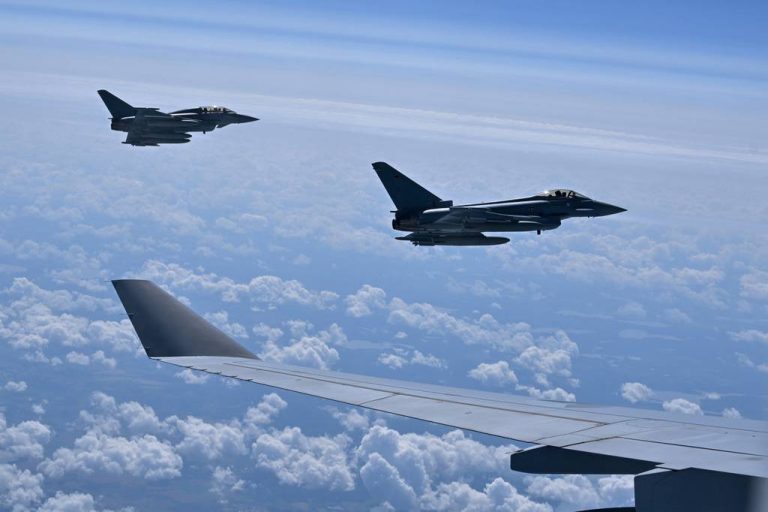
COLOGNE, Germany — The German government is no longer concerned over a proposed sale of 48 Eurofighter Typhoons jets to Saudi Arabia, following the kingdom’s help intercepting Houthi-fired missiles aimed at Israel, according to German media reports.
German Chancellor Olaf Scholz on Monday backed up Foreign Minister Annalena Baerbock’s overture from the day prior, the press agency dpa reported, citing a statement to that effect from government spokesman Steffen Hebestreit.
Baerbock had broached the Eurofighter blockade during a visit to Israel, saying Germany would no longer object to a U.K. sale of the aircraft.
Germany, as a co-producer of the jets along with the U.K., Spain and Italy, can veto Eurofigher sales to countries outside of the core user group. The aircraft are made by a consortium of Airbus, BAE Systems and Leonardo.
Saudi Arabia already operates a fleet of more than 70 Eurofighters. Saudi officials have said they want more, threatening to buy other fighter types elsewhere if their request goes unfulfilled.
The policy of Germany’s governing coalition — composed of the Social Democratic, the Green and the Free Democratic parties — was to prohibit weapons sales to parties involved in Yemen’s civil war. Saudi Arabia supports the Yemen government in fighting Houthi rebels, who have aligned themselves with Hamas against Israel. Berlin’s blockade was also grounded in human rights violations committed by Riyadh.
The German government’s about-face, which has led to backlash, especially in Baerbock’s Green Party, has its roots in what Scholz and his foreign minister consider Saudi Arabia’s constructive role in averting an expansion of the ongoing Israel-Hamas war.
Speaking in Jerusalem, Baerbock specifically mentioned Ryadh’s use of its Eurofighters in intercepting Houthi missiles and drones aimed at Israel, according to the Süddeutsche Zeitung newspaper.
Dan Darling, a defense analyst at Forecast International, said he is surprised German leaders changed their tune.
“The country has long held a critical view on Saudi Arabia’s human rights record, and the Saudis already field a large inventory of capable combat aircraft,” Darling told Defense News. “But British pressure on Germany to lift its export objections, coupled with a newfound bit of realpolitik in Berlin following Russia’s invasion of Ukraine, appears to have altered the current government’s stance on the matter.”
According to Richard Aboulafia, a managing director with AeroDynamic Advisory who has tracked aircraft programs for more than 30 years, said Berlin’s new approach will alleviate its neighbors’ concerns that future arms cooperation with Germany effectively means most export plans are dead on arrival.
“Given what’s at stake, there’s a good chance of a German policy change here,” Aboulafia said. “Germany’s credibility as an arms program partner is very much in doubt without a change. Saudi Arabia is one of the world’s largest export markets, and given recent developments, Germany’s government certainly has the rationale for a policy change.”
The move would also invigorate the industrial complex behind the Eurofighter, argued Douglas Barrie, a senior fellow for military aerospace at the London-based International Institute for Strategic Studies think tank.
“German arms export policy has placed it increasingly at odds with defense industrial partners, including those in the Eurofighter consortium,” Barrie said. “In effectively blocking the sale of additional Typhoons to Saudi Arabia, Berlin was also risking damaging its domestic defense aerospace sector as well as hindering other export opportunities.”
Sebastian Sprenger reported from Cologne, Germany. Elisabeth Gosselin-Malo reported from Milan.
Sebastian Sprenger is associate editor for Europe at Defense News, reporting on the state of the defense market in the region, and on U.S.-Europe cooperation and multi-national investments in defense and global security. Previously he served as managing editor for Defense News. He is based in Cologne, Germany.
Elisabeth Gosselin-Malo is a Europe correspondent for Defense News. She covers a wide range of topics related to military procurement and international security, and specializes in reporting on the aviation sector. She is based in Milan, Italy.
US Air Force logistics officer talks basing, drones in the Pacific
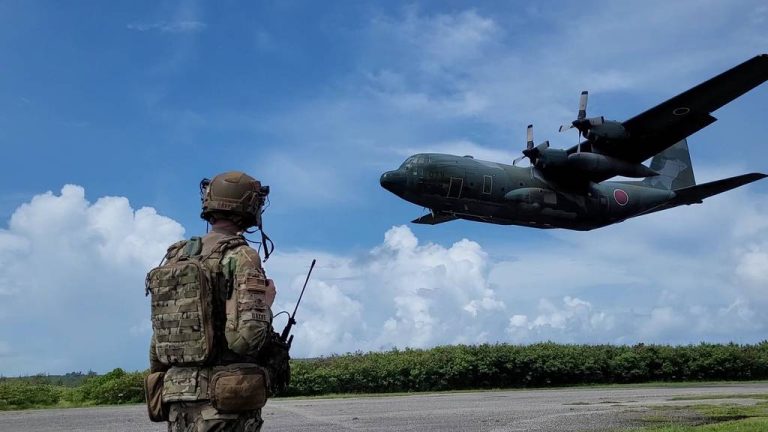
After decades of relying on major military hubs from Hawaii to South Korea, the Pentagon is laying the groundwork for more dispersed operations across the Pacific region.
Brig. Gen. Mike Zuhlsdorf is a key player in those discussions. He serves as the deputy director for resource integration under the Air Force’s logistics, engineering and force protection branch.
As other defense officials negotiate with foreign leaders for access to bare-bones airfields and more established bases overseas, it’s Zuhlsdorf’s team that is figuring out how to turn those sites into valuable Air Force lily pads in a maritime-dominant region for the decades ahead.
Zuhlsdorf spoke to Air Force Times at the Pentagon on Dec. 15. This interview was edited for length and clarity.
Is the Air Force talking to other countries about using foreign bases that already exist, or are you considering building new sites?
We are not putting in new bases. These are bases and airfields that we’ve had since World War II, where we were able to hopscotch across the Pacific to ultimately get close enough to Japan. There are a lot of airfields like that, whether it’s in the first island chain — Japan down through the Philippines — or the second island chain, near Guam and Tinian.
We’re talking about renovating, rejuvenating and rehabilitating. We will make sure the pavement is still viable, trim back the vegetation where the jungle has encroached on the runway, and set up the basic essentials that we need in the event that we need to flush aircraft from a hub into these spokes, keep them safe and then turn them.
What do we need? Things like fuel; major aircraft parts that six to 12 airmen might be able to fix there; maybe some munitions [and airfield repair resources]; the essential lighting or navigational systems for nighttime operations. A little bit of base air defense might be part of that, or camouflage, concealment and deception. Almost all the hubs will have a command, control and communication system that will fly in with them so that we can maintain connectivity to the mothership at all times.
We are working with allies and partners. Pacific Air Forces has identified airfields that we want to invest in, and they’re going to work with the Philippines and Australia to do that. We are teaming with them on some projects that will allow us to get fuel out there, some munitions capability and other long-range transport aircraft that would come in and be able to resupply.
Which existing airfields are currently on the list?
There are more in the second island chain that we are identifying. There are additional airfields that are in Guam and a few in the first island chain that we’ll eventually get to.
What we’re trying to do is nail down access and overflight stuff before a formal announcement would come out. Those that have been in the press are the ones where we’ve already teamed with those countries. We are working with other allies and partners in the area to secure that very critical access, overflight and basing.
[Editor’s note: A spokesperson for the Air Force’s international affairs branch declined to provide specifics about which countries the U.S. is in talks with to host air operations abroad.]
Will the Air Force expand Andersen Air Force Base on Guam or other areas on the island?
We have projects for some hangars that are going in at Andersen, and at some of the chosen hubs we want to operate out of, maybe a spoke or two — wherever we decide is optimal. We’re looking to maybe throw up a shelter system that allows us to safeguard critical equipment. We need to take into account the sustainment of all that equipment we pre-position, and so we will want to put those into a controlled-environment facility so that when we need it, it’ll operate as advertised.
We’re also thinking about protecting those hubs and spokes so that the airmen, soldiers, sailors, Marines and guardians that we’re going to send out there will be as safe as possible. There’s a big threat from ballistic missiles and hypersonic missiles. We’re trying to make sure those airmen can turn those aircraft as advertised.
None of us who wear this uniform are looking for war. Our job is to be prudent with taxpayer dollars, and what the American people want from us is to plan.
What’s the timeline to open these sites? How are you phasing them in?
Two to three fiscal year defense plans. We are working through [which sites should be prioritized].
Is 10-15 years too long?
We’re going to see concrete stuff within a [five-year] Future Years Defense Program and it will continue to manifest through that time period. We’ve got some weapon systems in the queue — Next Generation Air Dominance, collaborative combat aircraft. It’ll happen in that window.
What are you learning from Air Force spokes across Europe that you’ve used in partner countries since Russia’s full-scale invasion of Ukraine in February 2022? How are you applying those lessons to the Pacific?
This is a unique opportunity for us. We’ve been in U.S. Central Command, and being able to move pieces, parts, munitions, aircraft, personnel and everything like that has been relatively uncontested. Yes, the Army has had some challenges there when you talk about the main supply routes, but generally it was not a contested environment. Ukraine is a contested environment, and logistics lessons that we learn are invaluable.
What are the critical pieces and parts that they need? How did they get these parts from location X to location Y? Did they use this system or that system? How did they pull the data? We are rapidly getting to a data analytics framework that’s going to allow us to visibly see what supplies and equipment we need. We’re going to be able to throw that up into a basing and logistics data analytics environment that’s going to allow us to, as logisticians, figure out where we need to put the next aircraft part or the next load of fuel.
Russia and Ukraine have a lot of small unmanned aerial systems that are impeding each other’s progress. How are they tracking those systems? How are they taking those systems down? How are they doing air defense for air bases? Those lessons are being gathered up.
What is the proposed cost for Pacific basing projects in fiscal 2025?
We’re working through FY25. That’s part of the resourcing our senior leaders are churning through right now.
There hasn’t been a profound change in counter-drone technology over the past several years. Where does that capability stand and what would you like to see?
We are probably still nascent. We literally just had conversations about this — within the last four or five months — about expanding and investing more in that very important battlespace. There’s a lot of research and a lot of dollars that are being applied to that problem set. You see that coming into play not only in the Ukrainian-Russian war, but also now with Hamas and Israel.
Are small drones a threat in the Pacific, despite the region’s significant size?
These are all islands, and they all have an indigenous population. You can rest assured that there’s probably people who don’t like the United States on those islands. Some of these smaller systems could absolutely impact an air tasking order. To protect the integrity of that air tasking order, we need to think through how we can get at that small threat, while other people are thinking through those ballistic missiles and those hypersonic missiles.
It is a full-spectrum air defense platform for an air base that we’re looking at, along with the camouflage, concealment and deception program, electronic warfare, and all these bits and pieces.
What are the main hurdles to achieving this vision?
One of the big problems is not having a budget. When you think about procurement lines that we need to stand up and invest in, we absolutely need Congress’ help in getting a budget passed so we can get the capabilities that we know we need.
There’s always the joint interoperability piece that we are yearning for, and the ability to share information with our allies and partners. We’re trying to work a little bit more aggressively on what information we can share with them, and what tactics, techniques and procedures we might be able to share. We’ve had success in Australia recently on some refueling efforts with the F-35 fighter jet. That’s a big success.
We’re breaking down barriers where we can to make sure that we’ve got the necessary capability and that everybody understands what that is. We’re sending people over to Japan right now to work with them even closer on exercises and on different weapons systems. Those are big barriers, but we’re overcoming them.
The threat that’s been posed to us over the last three or four years from the People’s Republic of China has galvanized a lot of allies and partners of U.S. Indo-Pacific Command. There’s an impetus for us to work even closer together moving forward.
What near-term spending is on the horizon?
We’re investing in pre-positioned assets. That includes the kits with the tools and equipment that are necessary to do the maintenance on those aircraft. We’re investing in fuel bladders, in the renovation of the airfields, and in the airfield damage and repair equipment.
Think about heavy equipment — mobile aircraft arresting systems. Some of that stuff we have not put on a production line in a long time. We are investing in production lines to get that built and put in place within this Future Years Defense Program. We’re investing in communication equipment that will allow us to do command and control.
We’re investing in our airmen with multi-capable airman training. The Air Force Expeditionary Center at Joint Base McGuire-Dix-Lakehurst, New Jersey, is putting together the curriculum that’s necessary for us to train our airmen and get them ready to have a civil engineer do not just civil engineering work, but maybe change a tire or load a bomb or refuel a jet or protect the base. It’s about investing in all those things that are necessary for us to get at a threat that, frankly, we just haven’t had to think about as much in the last 30 years.
When I came in, it was the Soviet Union, it was protecting the Fulda Gap in Germany. We learned a lot of skills that were multi-capable back in the late 1980s that we are now dusting off. We’re going to apply that to this near-peer fight.
Rachel Cohen is the editor of Air Force Times. She joined the publication as its senior reporter in March 2021. Her work has appeared in the Washington Post, the Frederick News-Post (Md.), Air and Space Forces Magazine, Inside Defense, Inside Health Policy and elsewhere.