Hello to all members can't wait to mingle and share interests and information. Hope everyone is staying warm and safe thru this Artic Blast we are in .
Air Force’s next nuclear missile at risk after costs spike

WASHINGTON — The Air Force’s next nuclear missile program has exceeded its planned costs severely enough to trigger a report to Congress, potentially putting the program’s survival at risk.
The Northrop Grumman-made LGM-35A Sentinel intercontinental ballistic missile has overrun its initial cost projections and incurred a critical Nunn-McCurdy breach, an Air Force spokesperson confirmed to Defense News. The Air Force notified Congress about the breach Thursday.
The Office of the Secretary of Defense will now review the Sentinel program, the Air Force said, and will decide whether to restructure the program, or cancel it entirely.
“Work under the current contract will continue until OSD completes its review of the Sentinel program,” the Air Force spokesperson said. “Maintaining a strong nuclear deterrent is critical to safeguarding our nation and protecting our allies from a nuclear attack.”
The Sentinel program is planned to replace the Air Force’s Cold War-era LGM-30G Minuteman III ICBM as part of the U.S. nuclear triad. Northrop Grumman in 2020 received a $13.3 billion contract to build Sentinel, and the program was originally expected to cost about $96 billion.
The per-unit total cost for the Sentinel was $118 million when the program’s cost, schedule and performance goals in 2020, the Air Force said. Since then, that has grown at least 37% to about $162 million, triggering this cost overrun process.
A critical Nunn-McCurdy breach is declared when a major defense acquisition program’s cost grows 25% over the current cost targets or at least 50% over the original cost. The Defense Department must notify Congress when such a major cost overrun occurs and certify the program is essential to national security and must continue.
The Pentagon will also have to certify to Congress that there are no cheaper alternatives to the Sentinel program, that the new cost estimates are reasonable, that it is a higher priority than other programs whose funding could be cut to cover the cost growth, and that the program’s management structure can control further cost growth. If that certification does not happen, the program would be terminated.
William LaPlante, the undersecretary of defense for acquisition and sustainment, said in a statement that “Sentinel is one of the department’s largest, most complex programs” and the Pentagon has taken several steps to help it.
Defense Secretary Lloyd Austin in December 2022 declared the Sentinel program one of the Pentagon’s most important and gave it priority in the supply chain, LaPlante said. He also said that in 2023 he approved changes to its acquisition strategy meant to keep it on schedule.
“We are prepared to fulfill the department’s statutory responsibilities [in light of the Nunn-McCurdy declaration] and conduct a robust review of the program to determine what factors caused the cost growth,” LaPlante said. “As we do so, we will keep our partners in Congress informed and maintain open communications to the greatest extent possible.”
Northrop Grumman, the prime contractor on Sentinel’s engineering and manufacturing development phase, said in a statement to Defense News it is making “significant progress” on the program and reaching milestones to mature its design and reduce risk.
“As part of our work on the EMD contract, our team is committed to supporting the Air Force as it assesses and updates acquisition cost forecasts for the future phases of the program, to include construction projects, production, and deployment of the weapon system,” Northrop Grumman said. “We are focused on continuing to perform and meet our commitments under the EMD contract as we move toward delivery of this essential national security capability.”
The date Sentinel might reach initial operational capability also is now likely to slip by two years, the Air Force said. Sentinel was originally expected to reach IOC in 2029. The Government Accountability Office warned last year that deadline would likely slip until about spring 2030, and the program now appears to be falling further behind schedule.
The Air Force said the IOC delay will also be reviewed as part of the Nunn-McCurdy process.
The service noted the bulk of Sentinel’s cost growth is coming in its command and launch segment, the most complex part of the program.
This includes building more than 400 new launch facilities and laying thousands of miles of fiber optic networks, the Air Force added, as well as acquiring permanent and temporary real estate easements from hundreds of landowners.
The Sentinel program will also need to build more than 7,500 miles of utility corridors across missile wings spanning five states, the Air Force said, while keeping 400 ICBMs on alert.
The Air Force said it has not seen similarly severe cost growth in the missile itself.
Air Force Secretary Frank Kendall in November 2023 said the Sentinel program was “struggling” and its costs might rise.
Kendall called the scale and complexity of the Sentinel program “probably the biggest thing … that the Air Force has ever taken on,” highlighting the construction of launch complexes, real estate development and civil engineering work as particular challenges.
Stephen Losey is the air warfare reporter for Defense News. He previously covered leadership and personnel issues at Air Force Times, and the Pentagon, special operations and air warfare at Military.com. He has traveled to the Middle East to cover U.S. Air Force operations.
The Silent Epidemic Eating Away Americans’ Minds

Electronic screens of all types!
(The Silent Epidemic Eating Away Americans’ Minds | The Epoch Times)
Money quote:
“
Fast forward to post-pandemic times, with teachers reporting that the latest generation—Gen Alpha, also known as “iPad kids”—is aggressive, undisciplined, and regulates emotions poorly in the classroom.
Dr. Clifford Sussman, a psychiatrist specializing in screen addiction, has focused his practice on treating this condition due to increasing need. Especially after the pandemic, “demand for help with this issue exploded,” he told The Epoch Times.”
Read the rest at link.
***
Not sure of this is legit but this might also explain a lot as well. You get to decide for you. I’ve spent most of my adult life staring at a computer screen (D’oh, worked in IT) and I’m pretty normal. Least ways, I think so. Maybe to the Far Left, not so much.
I blame the utter crap on so-called Social media more than just the screen.
Private-equity firm acquires aviation firm Kaman for $1.8 billion

WASHINGTON — Private-equity firm Arcline Investment Management will acquire aviation technology company Kaman Corp. in a roughly $1.8 billion all-cash deal, according to a Jan. 19 announcement.
Kaman will become a privately held company when the transaction is final, it notes.
“Over the last several quarters, we have made significant progress executing our strategy by transforming our portfolio, through investing in innovation, pivoting to new growth technologies, and optimizing the Company’s cost structure,” Ian Walsh, Kaman’s chief executive, said in the company announcement. “[W]e look forward to benefiting from increased resources, expertise and flexibility as a private company post-closing.”
Under the agreement, Kaman shareholders will receive $46 per share in cash, the company announcement said. This price is roughly double Kaman’s closing share price on Jan. 18.
The Bloomfield, Connecticut-based Kaman, founded in 1945 by aviator Charles Kaman, is known for its heavy-lift K-MAX manned helicopter, which saw operations in an unmanned mode in Afghanistan in 2011.
The company spent nine months developing its KARGO unmanned aerial system to deliver a medium-lift logistics capability. It unveiled KARGO, a quadcopter meant to resupply small units of Marines scattered around island chains as part of the Corps’ expeditionary advanced base operations concept, in 2021.
Kaman also manufactures aircraft components and aerostructures for helicopters, fixed-wing and unmanned aircraft and has performed subcontract work to restore, modify and support the SH-2G Seasprite maritime helicopters.
“Kaman has long been a trusted solutions provider of engineered components and subsystems of mission-critical markets and we believe the Company is in a strong position to grow and benefit from attractive tailwinds,” Arcline said in the statement. “We look forward to working closely with Ian and the rest of the talented Kaman team to drive further growth through accelerated investments in both new product development and strategic acquisitions.”
Jen Judson is an award-winning journalist covering land warfare for Defense News. She has also worked for Politico and Inside Defense. She holds a Master of Science degree in journalism from Boston University and a Bachelor of Arts degree from Kenyon College.

Tractor ROPS lights – Recommendations?
I've had my Kubota LX2610 tractor for a bit over 2 years (July 2021) but I have never had to use it at night until last Wednesday. We had a snowstorm and normally I would just wait until the morning but the wife now works, and I didn't want to dig her little RAV4 out of the snow so…plow.
I couldn't see crap and it became apparent I need better front and rear lightening so… I thought I would ask the Monkeys what they are using and if they have any recommendations. Price isn't a…
Planned law would require students dressed as ‘furries’ to be removed by animal control

sometimes we needs us a sense of humor???
“BE IT ENACTED BY THE PEOPLE OF THE STATE OF OKLAHOMA: SECTION 1. NEW LAW A new section of law to be codified in the Oklahoma Statutes as Section 11-301 of Title 70, unless there is created a duplication in numbering, reads as follows: Students who purport to be an imaginary animal or animal species, or who engage in anthropomorphic behavior commonly referred to as furries at school shall not be allowed to participate in school curriculum or activities. The parent or guardian of a student in violation of this section shall pick the student up from the school, or animal control services shall be contacted to remove the student.”
A [report](Oklahoma lawmaker’s new bill would require students dressed as furries to be removed by animal control) at Not the Bee said, “Dressing up like anthropomorphic animal characters has become quite the trend these days, and there are quite a few reports of kids showing up for class looking like a Disney mascot.”
Planned law would require students dressed as ‘furries’ to be removed by animal control
‘bringing of red cows’
The “red cows” referred to by the Hamas leader were five red female calves brought to Israel in September 2022 by Boneh Israel, an organization that connects Christian lovers of Israel to the Holy Land, working under the auspices of the Temple Institute, an organization in Israel focusing on establishing the Third Temple….
10 Imperative Rules for Concealed Carry

In the realm of concealed carry, where responsibility intertwines with the weight of personal security, the following decalogue of advice stands resolute. These ten imperatives are not carved in stone by celestial hands, but rather etched by the formidable forces of sound reasoning, legal principles, and the undeniable facets of our shared reality.
This compendium of guidance, stripped of otherworldly origins, bears the weight of indisputable wisdom, a testament molded by the robust amalgamation of logic, lawful norms, and the tangible threads of our everyday existence. Embark on a journey through these essential guidelines, designed to shape a conscientious approach to concealed carry, ensuring a harmonious balance between personal empowerment and societal well-being.
10 Rules for concealed carry
RULE I: ENSURE FULL READINESS BY CARRYING AS MUCH AS POSSIBLE AT ALL TIMES
In the intricate theatre of personal security, where the script unfolds unpredictably and the stakes are genuine, the first rule underscores the paramount importance of being armed to the fullest extent possible. Unlike Hollywood actors who navigate fictional scenarios with foreknowledge, you, as an individual navigating the real world, lack the luxury of scripted encounters or staged threats with blank ammunition.
Criminals operate with a calculated edge, selecting times and places where victims are least likely to be prepared. Their modus operandi hinges on exploiting vulnerability. To counteract these predatory strategies, it is imperative to adopt a proactive approach – one that involves being routinely armed and consistently poised to respond to life-threatening situations.
This rule transcends considerations of mere convenience; it is a stark acknowledgment that personal safety is intricately tied to a state of constant readiness. This commitment is not just a matter of lifestyle but a crucial factor determining life and death outcomes, not only for yourself but also for those who depend on you for protection. Embracing this rule ensures a fortified defense against potential threats, underscoring the gravity of a reality where readiness becomes an indomitable shield.
RULE II: EMBRACE RESPONSIBILITY – ONLY CARRY A GUN IF YOU ARE READY TO UTILIZE IT
The second rule unfolds as a crucial guideline: if you choose to carry a firearm, you must be mentally and emotionally prepared to employ it effectively. It is imperative to dispel the notion that a gun serves as a mystical talisman warding off malevolence. Instead, perceive it as a specialized emergency rescue tool, possessing a specific purpose and no more.
Examining history reveals a noteworthy pattern – for both law enforcement and armed civilians alike, the mere presentation of a firearm often concludes a significant portion of criminal threats. Offenders, upon facing an armed response, typically choose to surrender or flee. Nevertheless, it’s essential to recognize that criminals form an armed subculture existing within an underworld saturated with stolen and illegal weapons.
They do not cower in fear at the sight of a gun; rather, their apprehension arises from the resolute individual brandishing that firearm. Criminals, as predators, possess an acute ability to discern between what constitutes prey and what represents a formidable threat to their predatory intentions.
In a twist of irony, the person who mentally and emotionally braces themselves to potentially use lethal force against a human predator is paradoxically the least likely to find themselves in such a situation. This rule underscores the principle that readiness to employ a firearm is a deterrent in itself, contributing to a safer environment by dissuading potential threats.
The armed individual, fully cognizant of the gravity of their responsibility, becomes a force against which would-be offenders think twice before engaging. In essence, this rule is a cornerstone of responsible firearm ownership, emphasizing not only the physical preparedness to wield a weapon but also the mental fortitude required to navigate the complex ethical dimensions of self-defense.
RULE III: EXERCISE CAUTION – DON’T LET THE GUN ENGENDER RECKLESSNESS
The third rule unfolds as a cautionary directive against succumbing to unwarranted impulses fueled by the presence of a firearm. Disregarding the misguided beliefs of amateur psychologists who claim that the mere possession of a gun triggers an innate desire for violence, it is crucial to dismiss such notions as baseless. The gun is neither an inherently malevolent talisman nor a virtuous charm; instead, it stands as a neutral tool, devoid of mystical influence.
Drawing from extensive experience in the intertwined realms of American law enforcement and responsible armed citizenship, a profound truth emerges. Seasoned individuals recognize that possessing a firearm does not morph a benevolent individual into a malevolent force; rather, it acts as a control mechanism, akin to a brake regulating natural human emotions. In essence, a responsible person views the firearm not as an amplifier for aggression but as a restraint that tempers innate responses.
The legal landscape further emphasizes this principle by holding those armed to a “higher standard of care.” This standard necessitates every effort to avoid resorting to deadly force until it becomes an absolute imperative. Understanding and internalizing this concept is pivotal, as it underscores the responsibility inherent in being armed.
The true mark of a responsible gun owner lies in their capacity to exercise self-discipline and restraint, recognizing the firearm as a tool to be wielded judiciously, and always acting in alignment with the principles of ethical conduct and legal obligations. Therefore, rule three serves as a reminder to prepare and comport oneself with the gravity that responsible firearm ownership demands.
RULE IV: ADHERE TO LEGALITY – PRIORITIZE LEGALITY IN CARRYING FIREARMS
The fourth rule underscores the critical importance of legality in the realm of carrying firearms. If your place of residence lacks provisions for legally carrying a gun to safeguard yourself and your loved ones, it is imperative not to succumb to the whims of timid politicians who might inadvertently lead you into becoming a convicted felon. In such a scenario, consider relocating; it becomes a matter of quality of life.
The rhetorical stance of interpreting the law based on personal beliefs, while ignoring existing laws, can jeopardize your freedom, your status as a gun-owning free American, and your ability to provide for your family. This rule advocates for a practical approach: if you reside in an area where a Concealed Carry Weapon (CCW) permit is available, obtain the necessary permit without hesitation. If your current location lacks this provision, consider moving to a place where such legal measures are in place. This seemingly straightforward decision becomes paramount in safeguarding your rights and responsibilities.
Additionally, for those who find themselves traveling, a proactive approach involves checking reputable sources, such as handgunlaw.us, to ensure compliance with local regulations in the jurisdictions visited. The goal is to avoid unwittingly violating the law and risking legal consequences that could compromise your ability to fulfill your responsibility to protect yourself and those dependent on you.
Tthe fourth rule serves as a vital reminder: if you choose to carry, prioritize legality. Upholding the law not only preserves your individual freedoms but also reinforces the principle that responsible firearm ownership goes hand in hand with compliance and respect for the legal framework.

RULE V: ACQUIRE PROFICIENCY – BE KNOWLEDGEABLE AND SKILLED
The fifth rule delves into the imperative of possessing comprehensive knowledge and proficiency when it comes to handling firearms. In the realm of self-defense, gunfights are decided by those who can shoot quickly and accurately, often measured in mere seconds. However, the repercussions extend far beyond the immediate encounter, with legal aftermaths enduring for years and emotional aftermaths resonating throughout a lifetime.
To navigate these multifaceted challenges effectively, it is paramount to invest in thorough education, equipping oneself with the necessary skills to manage all three stages of a confrontation. This entails not only honing shooting abilities but also delving into the intricate dynamics of legal and emotional aftermaths. By arming oneself with profound knowledge beforehand, an individual ensures a heightened level of preparedness that extends beyond the immediate physical aspects of self-defense.
Acquiring proficiency in the comprehensive management of these stages underscores a commitment to responsible firearm ownership. It acknowledges that successful self-defense involves more than mere marksmanship; it requires a nuanced understanding of the legal landscape and an acute awareness of the emotional toll such encounters can exact.
Therefore, rule five advocates for proactive education and training to foster a well-rounded, informed, and capable approach to self-defense, recognizing that true preparedness encompasses more than just the physical act of shooting.
RULE VI: MAINTAIN SECRECY – CONCEALMENT MEANS FULL CONCEALMENT
The sixth rule emphasizes the crucial importance of adhering to the concealed nature of carry, especially in areas where local licenses necessitate concealed carry. Concealed means concealed, and any inadvertent exposure of the handgun can be perceived as a threat in various quarters. This lapse may lead to serious legal consequences, including charges of criminal threatening and brandishing, among others.
The potential for false accusations adds an additional layer of complexity. A malevolent individual with ill intentions could falsely accuse you of brandishing a weapon, and the wrongful accusation gains credibility if law enforcement discovers you with a visible gun in the alleged location. Unfortunately, such situations do occur, underscoring the need for vigilance in maintaining the concealed status of the firearm.
While some jurisdictions permit “open carry,” the sixth rule cautions against this practice in most circumstances. While supporting the right to open carry in appropriate times and places, the rule highlights the practical reality that ideal situations for open carry are relatively few. In many instances, open carry can inadvertently and predictably alarm individuals who have no reason to feel threatened, emphasizing the importance of discretion and full concealment in the interest of public safety and individual well-being.
RULE VII: OPTIMIZE YOUR FIREARMS PROFICIENCY
The seventh rule underscores the critical necessity of maximizing familiarity with firearms. In the event that you find yourself in a situation where your firearm becomes indispensable, the occurrence will likely unfold with swift and severe intensity, demanding a rapid and decisive response. Failing to do so not only jeopardizes your own safety but also places those you care about at risk, as you handle a potentially lethal weapon in their presence.
To confront such exigencies effectively, it is imperative to make gun manipulation second nature. This involves honing the trifecta of skills encompassing safety, draw-fire, and hitting the target. These elements must become ingrained in muscle memory, ensuring that in high-stress situations, your response is not only swift and sure but also instinctive.
RULE VIII: GRASP THE INTRICACIES

The eighth rule directs attention to the imperative of understanding the nuanced aspects of firearm ownership and self-defense. It discourages a cursory approach, urging individuals not to rely solely on headlines or editorials but to delve into the fine print. This involves a comprehensive study of the laws within one’s jurisdiction, recognizing that legalities surrounding firearms can vary significantly from one place to another. Prohibitions at the city level may exist even if the state permits certain practices.
The rule underscores the importance of familiarity with local regulations, emphasizing that what may be legal in one jurisdiction might not be permissible in another. Cities might enforce restrictions that differ from state-level regulations. Adhering to the principle that “ignorance of the law is no excuse,” rule eight advocates for a proactive and informed approach to legal considerations associated with firearm ownership and self-defense.
RULE IX: UTILIZE ADEQUATE ARMAMENT
The ninth rule underscores the critical importance of selecting an appropriate firearm for self-defense. Drawing an analogy, it likens a Vespa motor scooter to a motor vehicle — functional but inadequate as a family car. Similarly, while a .22 or .25 caliber firearm qualifies as a weapon, it is deemed a suboptimal choice for defense purposes. Rule nine advocates for the adoption of a firearm loaded with ammunition that boasts a proven track record of swiftly halting lethal assaults.
A key piece of advice is embedded in the rule: if the chosen caliber is not commonly used by police or military forces, it may lack the necessary stopping power for its intended purpose. This insight encourages individuals to make informed decisions about their firearm selection, leaning toward options that have demonstrated efficacy in real-world situations.
RULE X: APPLY COMMON SENSE

The tenth rule highlights the paramount importance of employing common sense as an unwavering guide and companion when carrying a firearm. This directive emphasizes the need for a practical approach rooted in ethics, logic, and adherence to the law, rather than succumbing to idealism or rhetoric.
The rule underscores the weighty responsibility that comes with carrying a gun – the power of life and death. This potent capability is entrusted solely to those who demonstrate responsibility, a deep regard for consequences, and a profound respect for the sanctity of life, both their own and that of others. The essence of rule ten lies in recognizing that wielding such power demands a level-headed and conscientious mindset, grounded in the principles of human safety and ethical considerations.
Concluding
Navigating the realm of concealed carry demands more than just firearm proficiency; it necessitates a holistic commitment to responsibility, legality, and ethical conduct.
The ten rules presented herein serve as guiding principles, emphasizing the multifaceted aspects of responsible firearm ownership. From prioritizing legality and proficiency to understanding the nuances of the law and exercising common sense, each rule contributes to a comprehensive framework for those who choose to carry concealed.
As we embrace the empowerment that comes with carrying a firearm, let us not forget the weighty responsibility it entails. By adhering to these rules, we fortify our commitment to fostering a safer environment, both for ourselves and the communities we seek to protect.
May these principles serve as a steadfast companion on the journey of responsible concealed carry, ensuring that our actions align with the values of ethics, logic, and respect for life.
Other Useful Resources:
Roadside Emergencies – Keeping Your Getaway Vehicle Running
Find Out What’s the Closest Nuclear Bunker to Your Home
Learn How To Customize Your Bug-Out Vehicle
Learn how to Safeguard your Home against Looters
AI-enabled Valkyrie drone teases future of US Air Force fleet
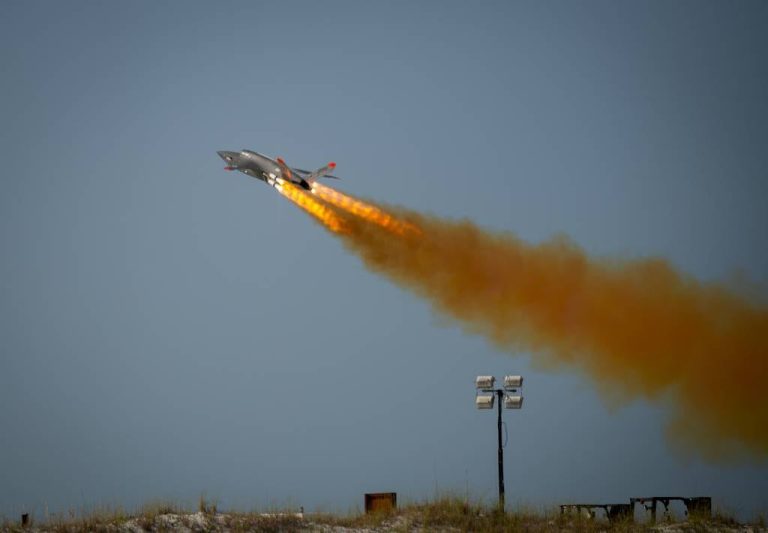
WASHINGTON — The testing of sophisticated software aboard an XQ-58A Valkyrie drone will influence how the U.S. Air Force develops and deploys autonomous technology in the near future, according to a service official.
The Kratos-made UAV flew a three-hour sortie in July near Eglin Air Force Base, Florida, relying for the first time on artificial intelligence algorithms. Its programming was matured over millions of hours in simulation and digital environments; in flights with an experimental F-16 jet known as the X-62 VISTA; and other events, according to the service.
Col. Tucker “Cinco” Hamilton, chief of AI testing and operations, on Jan. 16 said the Valkyrie proved to be “a great test bed” and one capable of illuminating novel approaches to traditional tasks.
“We have to give it some space as it’s doing its maneuvering and just recognize that it is a computer-controlled … aircraft, and it may do things differently than a human,” Hamilton said during a livestreamed event hosted by C4ISRNET. “We need to recognize there’s a huge benefit there — some things we are doing right now may not be the most efficient, most effective way of doing things.”
Tinkering with the Valkyrie builds upon years of the Air Force’s Skyborg program and is closely linked to its more recent effort for collaborative combat aircraft, or CCA. The service in the coming years wants to pair human pilots with CCAs to afford greater flexibility and firepower.
The uncrewed aircraft could execute a variety of assignments: conducting reconnaissance, gathering intelligence, jamming signals, serving as decoys and striking targets with their own missiles. Officials have said CCAs could range in cost and complexity, with some being expensive and precious while others could be easily sacrificed in combat.
“If I’m flying around in my fighter, I can imagine a world where I have multiple drones able to conduct some missions,” Hamilton said. “The key, though, is we’ve got to get the human-machine teaming right. It’s all about that. AI and this autonomy — it’s got to empower the decision-maker.”
Robert Winkler, a vice president at Kratos, said in September that the Air Force and the Defense Department have communicated their desires for a fleet of robotic wingmen. David Alexander, the president of General Atomics Aeronautical Systems, which makes the Gray Eagle and Reaper drones, has said the same thing.
The Air Force’s fiscal 2024 budget blueprint included at least $392 million for CCA work. Billions of dollars are forecast to be spent in the long term.
Colin Demarest is a reporter at C4ISRNET, where he covers military networks, cyber and IT. Colin previously covered the Department of Energy and its National Nuclear Security Administration — namely Cold War cleanup and nuclear weapons development — for a daily newspaper in South Carolina. Colin is also an award-winning photographer.