HELSINKI — Patria will build a site in Finland for the assembly of F-35 Block 4 fighter jets, now that the government’s Ministerial Finance Committee has approved the Defence Ministry’s land and facilities lease proposal.
The project is linked to the $9.6 billion jet procurement contract reached between Finland’s MOD and the American company Lockheed Martin in February 2022. The deal covers the delivery of 64 F-35s to the Finnish Air Force.
The building of the aircraft assembly facility forms part of the contract’s so-called stage one industrial component. The umbrella project required the signing of a lease for a suitable assembly plant development site. This was found near the town of Nokia. The site lease was signed in January between the Finnish Defence Forces and Defence Properties Finland, the state organization tasked with managing properties and assets owned by Finland’s defense administration.
Construction work on the engine assembly building is slated to commence during the second half of 2024. Under the terms of the industrial deal struck between Finland and Lockheed Martin, engine maintenance at the facility in Nokia will continue throughout the entire life cycle of the Air Force’s F-35 fleet.
“Industrial cooperation tied to the F-35 agreement will generate critical maintenance and repair expertise for Finland’s indigenous defense industry. This includes performance areas like reliability of maintenance. The agreement will also create significant know-how in Finland for F-35 engine assembly and testing,” Defence Minister Antti Häkkänen said.
The assembly plant will operate in close collaboration with the regional aircraft hub in Tampere run by Patria’s aviation division. An estimated 100 personnel will work in various assembly roles at the facility.
The government owns 50.1% of Patria, and the Norwegian company Kongsberg controls the remainder. Patria itself owns half of the Norwegian defense contractor Nammo.
The F-35s are set to replace the Air Force’s ageing McDonnell Douglas F/A-18 Hornet jets. These planes are scheduled to retire by 2030. The first batch of the F-35s on order are due for delivery and then deployment to Arctic air bases in Finland’s Lapland region by 2026.
The industrial cooperation component of the F-35 acquisition deal is expected to be scaled up in stages by 2030. The broadening of the industrial agreement may include the production or assembly in Finland of certain parts and systems used in the aircraft.
The Air Force has already tested the F-35′s suitability and adaptability to operate in extreme weather conditions, especially in Arctic areas of Finland during the country’s long winters that feature limited daylight.
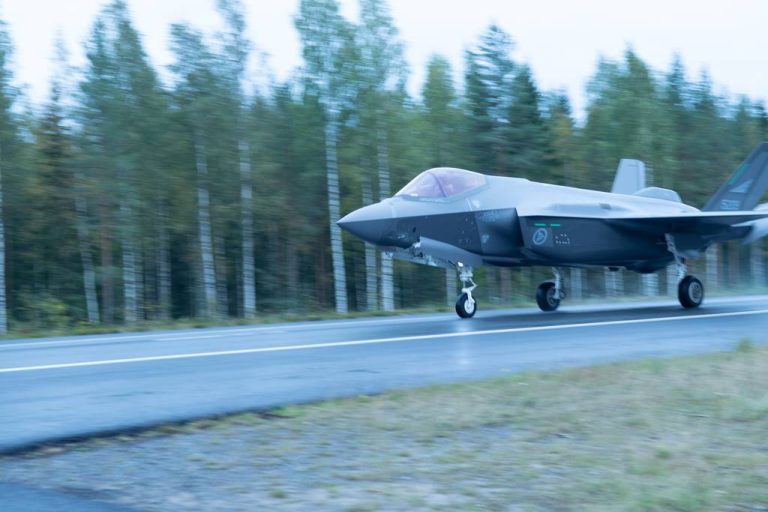
In recent exercises, the service routinely used stretches of “closed highway” in Arctic and sub-Arctic regions as temporary airstrips. The Air Force is currently running such maneuvers as part of the weeklong Hanki drills in the north of the country, which are to continue until March 2.
Gerard O’Dwyer is the Scandinavian affairs correspondent for Defense News.
CHRISTCHURCH, New Zealand — The Royal Thai Air Force has laid out its future aspirations in a document released Feb. 29, with counter-drone systems, new fighter jets and medium-range air defense systems among the most pressing concerns.
The 74-page whitepaper, which the service unveiled during its annual symposium this week and which builds on a similar document published four years ago, details planned procurements out to 2037.
“The Air Force is aware of [the importance of] long-term development planning and spending of the national budget to achieve maximum value,” said the service’s commander, Air Chief Marshal Panpakdee Pattanakul.
Indeed, part of the whitepaper’s raison d’être is to stake claims for long-term funding as its aircraft inventories age. For instance, the 2020 version stated the fighter fleet had an average age of 26 years, a figure that continues to increase.
But the government’s procurement process is disjointed, according to Greg Raymond, an expert in Asia-Pacific affairs at the Australian National University. He cited factors like political instability, inadequate strategic planning, annual rather than multiyear budgeting measures, and weak civil oversight that allows each armed service to makes its own decisions.
In the latest whitepaper, the Air Force gives priority to a medium-range air defense system possessing a minimum 30-nautical-mile range from fiscal 2025 to fiscal 2028. Afterward, from FY33 to FY37, the service plans to carry out a second phase for a medium- or long-range air defense system.
From FY28 to FY32, the force plans to buy a short-range air defense system boasting gun-, missile and laser-based weapons. Credence is given to counter-drone systems, too, and a nine-year project to procure these is to commence in 2025.
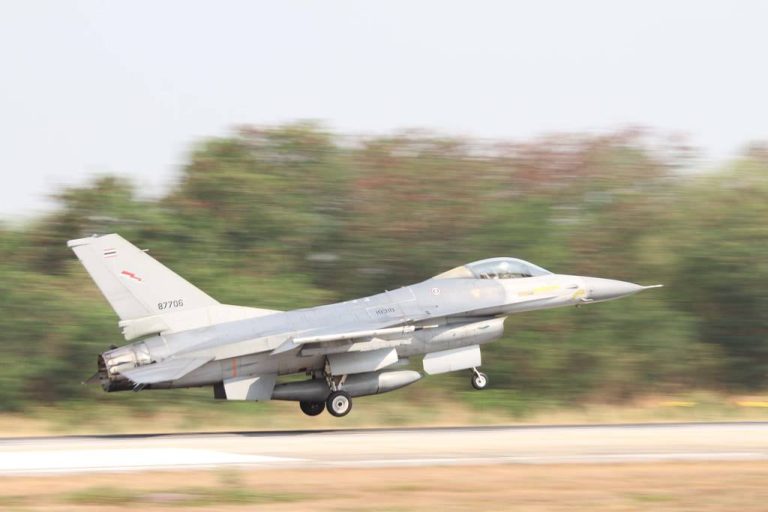
The service is also eyeing 12-14 new fighters to replace the F-16 jets of 102 Squadron based at Korat. The procurement is scheduled to take place from FY25 to FY34, two years later than originally planned. The squadron’s F-16s from the late 1980s are to retire by 2028.
Two contenders have emerged for the aircraft requirement: Lockheed Martin’s F-16 Block 70/72 and Saab’s Gripen.
“We’re confident the F-16 Block 70/72 will complement the RTAF’s existing F-16 fleet and deliver the advanced 21st century security capabilities and performance needed to address Thailand’s most pressing defense requirements,” a Lockheed spokesperson told Defense News.
Thailand ordered its first Gripen C/D fighters in 2008. Following a January 2021 contract, the aircraft were upgraded to what the manufacturer calls the MS20 configuration.
Thailand currently operates 11 JAS 39C/D Gripen fighters in 701 Squadron as part of a quick-reaction force. (Gordon Arthur/Staff)
Robert Björklund, who markets the Gripen to Thailand for Saab, told Defense News the existing fleet is integrated into the Saab-supplied Link T data system and that the aircraft provides its user with “a very wide range of weapon options, including its highly effective RBS15 anti-ship missile.”
A second fighter replacement project for 12-14 aircraft is slated for FY31 to FY35 to replace F-5E/F jets of 211 Squadron at Ubon that are to retire around the end of the decade. An identical number of fighters are needed to replace F-16A/Bs of 403 Squadron at Takhli from FY37 to FY46.
Thailand tries to maintain relations with several competing nations, including the United States, China, Russia and India, the whitepaper noted. Thailand previously purchase materiel from China, such as armored vehicles, air defense systems and a submarine.
Asked whether the Royal Thai Air Force would consider buying a Chinese fighter like the J-10CE, Raymond said the service values its relationship with the U.S. and likeminded allies too much to do so. He noted that Thai-U.S. relations have “largely stabilized,” despite the latter denying the former’s request to buy F-35A jets last year.
“They wouldn’t want to see themselves placed on the outer [circle] in terms of not getting invitations to things like [exercise] Pitch Black in Australia. I tend to think they’d be perhaps more careful about getting Chinese aircraft than the Thai Navy was about getting a submarine,” he said.
The whitepaper also detailed an effort starting this year to refurbish C-130H Hercules transport aircraft. The 2020 version recommended the service buy 12 replacements, but that idea was dropped.
As for pilot training, last year’s delivery of 12 T-6TH trainers allowed the Air Force to retire its Pilatus PC-9 fleet last month. New Zealand-built CT-4E trainers are to retire in 2031, so basic trainers will be needed from FY33. New lead-in fighter trainers are also sought from FY25, with Thailand already operating the South Korean T-50TH in this role.
Thailand plans to being work to modernize its pair of Saab 340B Erieye airborne early warning aircraft. (Gordon Arthur/Staff)
The new whitepaper also emphasized unmanned technologies. One effort underway is the Thai-developed M Solar X solar-powered drone. Loitering munitions are also schedule for purchase by 2026, as are medium combat drones from FY26 to FY29 and high-altitude pseudo-satellites from FY24 to FY35.
The Air Force also mentioned procurement programs for micro- and nano-drone swarms from FY26, and a research and development effort for weaponized tactical drones from FY29.
And two Saab 340B Erieye airborne early warning aircraft are to receive enhanced command-and-control capabilities, with their dorsal-mounted radars to be replaced. This would take place from FY26 to FY29.
The government’s FY24 defense budget bill calls for a 198 billion baht (U.S. $5.5 billion) fund, of which $1 billion is for the Air Force. The service has already applied for an allocation of approximately $530 million for a first batch of four fighters.
Gordon Arthur is an Asia correspondent for Defense News. After a 20-year stint working in Hong Kong, he now resides in New Zealand. He has attended military exercises and defense exhibitions in about 20 countries around the Asia-Pacific region.
The man had a weakened immune system because of cancer treatment, which probably contributed to the severity of his illness, officials noted.
Experts say that the illness is often mild and that infections remain rare in humans, as the virus is primarily found in small mammal populations throughout Alaska.
“Six of the seven cases have been mild and self-limited, so the patient didn’t even need to get any supportive care from a health care provider,” said Dr. Joe McLaughlin, state epidemiologist and chief of the Alaska Section of Epidemiology at the Alaska Department of Health.
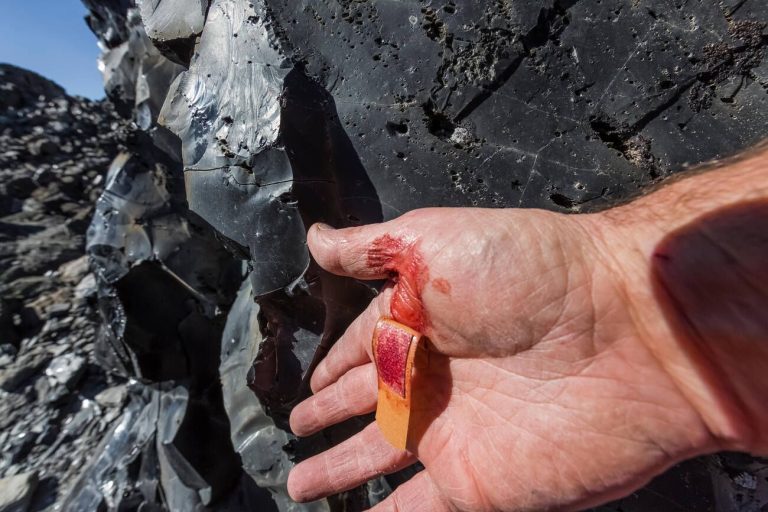
The picturesque secluded lake offers an abundant source of fresh fish. As you engage in cleaning your catch, a brief lapse in concentration results in the knife inadvertently slipping, causing a deep gash on your leg.
After successfully stopping the bleeding with applied pressure, the next steps become crucial. Where is the medical kit containing essential instruments? When was the last time you verified their sterility? The whereabouts of the emergency medicine guide and the precise technique for sutures become pressing concerns.
Dealing with wounds in the field
There exists a widespread misconception that the closure of wounds is imperative for the healing process. Wilderness medicine literature typically dedicates sections to suturing techniques and equipment, outlining recommended instruments, suture materials, and stitching methods.
Regrettably, these resources often omit the crucial fact that suturing is a skill that requires acquisition and is particularly challenging when self-administered. Furthermore, those contemplating suturing every laceration or wound in remote settings must also familiarize themselves with the identifying signs of various wildlife, such as clostridium tetani (tetanus), clostridium perfringens (gas gangrene), staphylococcus, streptococcus, and pseudomonas.
Overlooking the effects of these bacteria settling in can result in more than one can handle, posing a considerable risk.
Below are brief descriptions of the effects of infection with each of the aforementioned bacteria:
Clostridium tetani (Tetanus)
Effects: Tetanus bacteria produce a potent toxin that affects the nervous system. Symptoms include muscle stiffness, spasms, and difficulty swallowing.
End Result: Without prompt and appropriate medical intervention, tetanus infection can lead to severe complications, including respiratory failure and death.
Clostridium perfringens (Gas Gangrene)
Effects: This bacterium is associated with gas gangrene, a condition where the bacteria release toxins and cause tissue destruction. Symptoms include severe pain, swelling, and the production of gas within the tissues.
End Result: Gas gangrene can progress rapidly and may lead to widespread tissue damage, organ failure, and potentially fatal systemic infection.
Staphylococcus
Staphylococcus infection
Effects: Staphylococcus infections can range from minor skin infections to more serious conditions such as pneumonia, bloodstream infections, and toxic shock syndrome.
End Result: If left untreated, severe staph infections can lead to systemic complications, organ damage, and, in some cases, death.
Streptococcus:
Effects: Streptococcal infections can cause various illnesses, including strep throat, skin infections, and more severe conditions like necrotizing fasciitis (flesh-eating disease) and streptococcal toxic shock syndrome.
End Result: Invasive streptococcal infections can lead to rapid and severe tissue damage, systemic toxicity, and life-threatening complications.
Pseudomonas
Effects: Pseudomonas aeruginosa can cause infections in wounds, the urinary tract, and the respiratory system. It is known for its resistance to many antibiotics.
End Result: Infections with Pseudomonas can lead to chronic and challenging-to-treat conditions, potentially resulting in organ failure and a higher risk of mortality, especially in immunocompromised individuals.
It’s also important to mention that the severity of the effects and the end result can vary depending on factors such as the individual’s overall health, the specific strain of the bacteria, and the promptness of medical intervention. In any case, timely and appropriate medical care is crucial when dealing with these potentially dangerous infections.
.
Identifying a Contaminated Wound: A Surgical Perspective
Surgeons categorize wounds into four distinct classes: clean, clean-contaminated, contaminated, and dirty/infected. These classifications are based on the anticipated level of bacterial contamination present in the wound.
The first two categories are typically associated with hospital settings. A clean wound is characterized by the deliberate opening of prepared (cleansed) skin in a controlled manner without entering internal organs. An example of this is a hernia repair. Clean-contaminated wounds also occur in operating rooms, where internal organs are operated upon under controlled conditions, often with the use of antibiotics. An appendectomy serves as an illustrative example.
Contaminated wounds involve open traumatic injuries or surgeries with bacterial contamination originating from internal organs. For instance, slashing your hand with a knife previously used for cleaning fish or game exemplifies the former scenario.
Dirty and infected wounds encompass dead tissue, pus, foreign materials (e.g., wood, grass), gross contamination (e.g., dirt, manure), or wounds that have received no treatment within the initial hours post-injury but have been exposed to contamination.
This classification system proves valuable as it helps predict the likelihood of an injured area developing an infection. Infection rates by classification are as follows:
Clean: 1.5-3.9%
Clean-contaminated: 3.0-4.0%
Contaminated: 8.5%
Dirty wounds: 28-40%
It’s evident that the dirtier your wound, the higher the likelihood of subsequent infection. This risk is particularly pronounced if you decide to suture the wound, thereby sealing the contamination within. Within the confines of a warm, enclosed space, bacteria thrive on bloodied, injured tissue, multiplying rapidly.
Employing chemical means, these bacteria can extend into the surrounding healthy tissues, resulting in an infected wound characterized by redness and the drainage of pus. In cases where drainage is absent, the bacteria may traverse tissue planes, leading to fasciitis—commonly known as the flesh-eating disease—or disseminate throughout the entire body, culminating in a potentially fatal infection.
With proper cleansing and the administration of antibiotics, a contaminated wound can often be closed without succumbing to infection. However, even in hospital settings, surgeons typically opt to leave initially dirty wounds open. This approach facilitates the drainage of fluid and bacteria from the wound, allowing antibiotics to effectively combat the invading bacteria. After multiple rounds of cleansing and antibiotic treatment, closure can be achieved with minimal risk of infection.
Caring for wounds within six hours
Caring for wounds within six hours
The following recommendations outline the treatment of a wound when access to medical care is limited and are based on a fundamental question: Can you reach qualified medical assistance within six hours?
If the answer is affirmative, the suggested course of action includes:
a) Stop the bleeding by applying pressure to the wound.
b) After halting the bleeding, delicately remove any noticeable debris, such as wood particles and rocks. Exercise caution to avoid triggering renewed bleeding. Recognize that the affected area may be highly sensitive, so prioritize comfort for yourself and any injured companions. If local anesthetics are available in your medical kit, use them at this stage. Administer through injection or by dripping into the wound. Once the site is slightly numbed, saturate a gauze with the remaining anesthetic and place it in the wound. After a few minutes, the wound will become less painful and more amenable to cleaning.
c) Insert a sterile gauze or clean cloth into the wound and wrap the area with gauze or an ace wrap. If the wound is near a joint, make an effort to immobilize the joint to minimize further bleeding and alleviate pain.
d) Promptly transport the individual to a hospital. Reserve antibiotic usage for extended journeys. Hospital staff will likely sample the wound for bacteria and prescribe appropriate antibiotics. If antibiotics are necessary for a prolonged transport and are on hand, consider cephalexin or ciprofloxacin.
e) If blood loss is minimal and the person is not experiencing nausea, administer pain medication for the duration of the journey.
Caring for wounds over six hours
In situations where reaching medical care within six hours is impractical or in extremely remote areas, follow these guidelines:
a) Stop bleeding by applying pressure to the wound.
b) After halting bleeding, cautiously remove any visible debris, like wood particles and rocks. If conditions allow, put extra effort into physically removing these materials. If ample water is available, irrigate the area thoroughly. Though the water may not be sterile, it shouldn’t be grossly dirty or contaminated. Again, be mindful not to clean vigorously enough to induce bleeding, and utilize any available local anesthetics as previously directed.
c) Insert sterile gauze or clean cloth as deep into the wound as possible without causing excessive pain. Cover the site with additional gauze pads and wrap it with gauze or an ace bandage. If the wound is near a joint, try to immobilize the joint to prevent further bleeding and reduce pain.
d) Expect significant fluid seepage from the wound, necessitating frequent dressing changes in the initial 48 hours. Make an effort to cleanse the site with water and replace the gauze pack. Removing the pack aids in clearing debris that may have been challenging to eliminate initially. After several days, the wound will become less painful, making dressing changes more manageable.
e) If antibiotics are available, administer them in this scenario. Topical antibiotic ointments like Bacitracin, Triple Antibiotic, or Bactroban can also be applied to the gauze placed in the wound.
In cases of extensive blood loss, open fractures, or other serious associated injuries (head, chest, abdomen), promptly transport the individual to medical assistance or use available communication to summon help.
For contaminated lacerations with adequate dressing supplies, continuing open treatment is an option. The wound is expected to heal naturally within two to four weeks, potentially resulting in a wider scar. If desired, seeking the expertise of a plastic surgeon for revision is a future possibility.
In a recent movie, I saw, the protagonist, a hitman, displayed remarkable courage when faced with a gunshot wound to his chest. Reminiscent of the iconic Rambo style, he, without the luxury of anesthesia, stitched up the bleeding edges and pressed on with his mission. Unfortunately, his heroic effort came to a tragic end as he succumbed to adversaries, sparing a surgical team from attempting to save him from the complications of an infected wound.
A bullet carrying oil and gunpowder through cloth and unclean skin creates a severely contaminated wound. Closing the skin over trapped blood, dead tissue, and foreign material sets the stage for bacterial proliferation. Avoid repeating this error. Instead, keep the wound open, preventing infection and allowing for a clean healing process. Resist the temptation to seal it prematurely, as this can lead to more significant complications. Learn from both fiction and reality: pack the wound open, steer clear of infection, and let it heal thoroughly.
Concluding
.
Addressing injuries in the field becomes paramount, particularly when situated in the remote wilderness where medical resources are scarce. Without access to a complete first aid kit, proper wound cleaning becomes challenging, making it crucial to know how to prevent infections. This article aims to offer a comprehensive guide, intending to furnish readers with essential insights.
CHRISTCHURCH, New Zealand — The Indian government is closer to buying a multibillion-dollar package of cruise missiles, air defense weapons, surveillance radars and fighter jet engines following approval from the country’s highest decision-making body on security affairs.
At a Feb. 21 meeting, the Cabinet Committee on Security approved the four procurement projects cumulatively worth about 350 billion rupees (U.S. $4 billion).
According to local media reports quoting government sources, the approved items were BrahMos cruise missiles for the Navy, air defense guns for the Army, ground-based air surveillance radars and new engines for the Air Force’s MiG-29 fighters.
Approval by the committee, which Prime Minister Narendra Modi chairs, is a necessary step along the Defence Ministry’s contractual pathway.
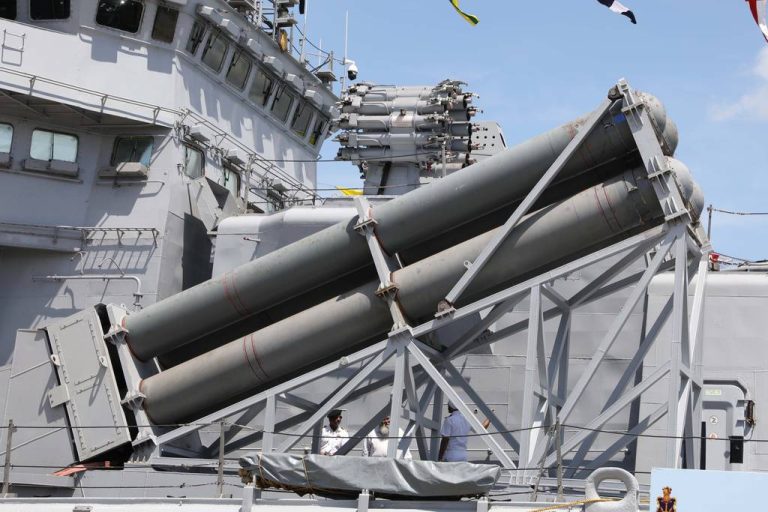
Local media reported the BrahMos missile deal would be signed in March. The consolidated contract would include some 220 weapons to arm Indian frigates and destroyers — the largest-ever individual BrahMos order for India.
The contract will reportedly involve a mix of standard 290-kilometer-range (180-mile-range) and extended 450-kilometer-range (280-mile-range) BrahMos missiles, of which 75% is locally made.
“The BrahMos is expected to considerably enhance the potential for surface-to-surface attacks by Indian Navy ships, especially with extended-range missiles,” Rahul Bhonsle, a director of the New Delhi-based consultancy Security Risks Asia, told Defense News.
India is also exporting BrahMos missiles to the Philippines under a deal worth about $375 million signed in January 2022. Atul Rane, who leads the missile manufacturer BrahMos Aerospace, said last year the company has set a goal of exporting $5 billion worth of BrahMos weapons by 2025.
The committee also approved the purchase of Sudarshan air defense systems from private firm Larsen & Toubro — an acquisition worth approximately $844 million. The Army would use the systems, which feature radars and 40mm guns, to protect its installations and the country’s border areas.
A scale model depicts a 40mm towed gun used on the Sudarshan air defense system, as developed by Larsen & Toubro in India. (Gordon Arthur/Staff)
The Sudarshan approval followed an October 2022 request for procurement seeking 141,576 ammunition rounds to accompany 220 guns, including pre-fragmented, programmable proximity fuses and smart rounds.
The Sudarshan is also competing in an Air Force competition for 244 close-in weapon systems.
“Air defense guns have assumed importance because of the overall weak air and missile defense profile with dated equipment, with the Indian Army in particular, and the add-on threat from drones,” Bhonsle explained.
Larsen & Toubro is also set to provide the air surveillance radars, worth about $723 million. India is prioritizing better radar coverage of its northern and western borders to guard against Chinese and Pakistani aircraft, respectively. Augmenting the existing radar network in phases, the Air Force will operate the new indigenous sensors.
And Hindustan Aeronautics Ltd. is to manufacture new RD-33MK engines for MiG-29 fighters in collaboration with Russia, with the project worth about $639 million.
These projects underscore India’s attempts to maximize indigenous input. The Make in India economic policy seems to be gaining groud, Bhonsle said.
“However, it should be noted there is also considerable foreign collaboration involved in many of the projects, as up to 50% or more is permissible under existing rules for acquisition,” Bhonsle added.
Gordon Arthur is an Asia correspondent for Defense News. After a 20-year stint working in Hong Kong, he now resides in New Zealand. He has attended military exercises and defense exhibitions in about 20 countries around the Asia-Pacific region.
First, I am not sure if someone has already posted this at an earlier date. I regret if that is the case; nevertheless, the scope and the impact of this is so huge that it is difficult to grasp, to get your mind around it yet it is something that all of us need to understand and certainly discuss. This is not something that is being considered for implementation in the future. It is now, it is active and has been happening for quite a while. I would point out that the majority of this was done by those that never stood for election, done by our own bureaucracy but blessed by our elected.
It is long, an hour and you will get swamped with details and data, it’s like trying to drink from a firehose; however, it is worth it to truly understand how far things have progressed, perhaps regressed is a better way of stating it. I’m literally in shock…
It’s depressing. I came away with the feeling that indeed the country is gone, America really no longer exists, and our freedom is nothing but a bunch of words which the government can and does ignore and will gladly stomp you, me, or Trump out of existence if we raise our eyes. Yet, with false hope, we sit here and wonder why Biden and his crooked cronies are not worried about the election: it’s because they have already won. We silly fools are simply too stupid to realize we lost.
Our government is a monster, one that is beyond control and devours us… I cannot see any way we can save it or ourselves, certainly not by voting. Sooner or later, when push comes to shove, there will be nothing left but to decide whether you live in shackles, on your knees or go down swinging. Frankly, I don’t see any alternatives and they obviously won’t give us any. We all need to understand this.
A full-year continuing resolution that would keep fiscal 2023 spending levels through the rest of 2024 means the U.S. Army, for instance, would run out of operations and maintenance funding in the European theater as it trains Ukrainian soldiers to defend against Russia’s ongoing invasion of the country, which has entered its third year.
The financial strain is compounded by the lack of certainty over whether Congress will pass a supplemental funding package that would reimburse the Army for expenses incurred so far in bankrolling support to Ukraine.
The Army already spent $500 million in the European theater in operations and maintenance, and “we were counting on a supplemental to be able to sort of replenish us for that,” Army Secretary Christine Wormuth said at a Feb. 27 Defense Writers Group event. “What that means is probably by late spring, summer, we would have to make some difficult choices about other [NATO] exercises, for example, that our forces participate in.”
Additionally, the Army has been funding support to Israel to include deployments of units to the Middle East in the event they are needed, she added.
Army Under Secretary Gabe Camarillo told reporters Feb. 28 at the Pentagon that the service spent $100 million in U.S. Central Command’s area of operations as well as another $500 million to support the U.S. Southwest border security mission.
“I do worry. Our budget has been flat for the last couple years. We don’t have a lot of cash under the sofa cushions, and if we don’t get a budget and we don’t get a supplemental, we’re going to probably have to cancel some things,” Wormuth said.
The Army is prioritizing current operations, Camarillo said, which means it is “going to have to look to other areas of O&M spending where they “can potentially take some risk,” including “exercises and the degree to which we participate in some around the globe. We might have to scale some of that back in the absence of an appropriation this year.”
For the Air Force, Kristyn Jones, who is performing the duties of the service’s undersecretary, told reporters alongside Camarillo that in order to pay its personnel, training exercises would take the hit.
“Anything that’s already on a [Foreign Military Sales] case won’t have a dramatic impact, but all of the replenishment that we’re expecting in the supplemental is currently impacted. And even things like F-35 [fighter jet] training that we’re planning … with our allies and partners, that’s impacted by not having this appropriation as well.”
The Air Force is focused on trying to ensure flight hours are maintained, but it’s also important, Jones noted, that pilots receive training.
Despite the military’s experience in warfare, “we’re in a different strategic environment and we need to do the exercises, often joint and allied, to prepare for that environment. And the lack of our ability to do that doesn’t allow us to, again, to test the new techniques, the new military tactics that we’d like to have primarily for an Indo-Pacific fight,” Jones said. “That’s really where we need to stretch our muscles a little bit more.”
Learning from sequestration
With a possible extended or full-year continuing resolution, the service undersecretaries said the last time the military felt such a painful budget crunch was during the 2013 sequestration, where the services were required by law to make percentage cuts evenly across spending lines.
One of the fallouts of the 2013 sequestration was a rise in aviation mishaps because vital training flight hours were cut. Military Times and Defense News took a deep dive into aviation mishaps from FY11 through FY18 and uncovered the trend.
“Safety is always going to come first,” said Navy Under Secretary Erik Raven, “but we did look at the lessons of 2013 and sequestration, where we spread risk around the enterprise, and I think the concerns about maintaining ready and trained forces are part of the lessons that we’re using to inform if we get into this worst-case scenario where we don’t have our ’24 budget enacted and we are under a CR.”
“We’re not going to repeat that same peanut butter spread,” he added.
But trade-offs will be inevitable, he acknowledged, and “we’ll have to look across the board to see how to maintain the focus on current operations.”
Jen Judson is an award-winning journalist covering land warfare for Defense News. She has also worked for Politico and Inside Defense. She holds a Master of Science degree in journalism from Boston University and a Bachelor of Arts degree from Kenyon College.