Raising Your Own Beef For Self Sufficiency

0

For many individuals managing a homestead, the role of raising livestock is pivotal for the local household economy. The selection of livestock for your property depends on factors such as your region’s climate, homestead size, accessible food sources, the potential market (if you decide to sell some animals), and your personal preferences.

Some people contend that purchasing all your meat—beef, chicken, pork, lamb, rabbit, etc.—is more cost-effective than raising it yourself. Although this argument holds true in purely monetary terms, there are additional considerations when it comes to producing meat for personal use on a homestead.

When deciding whether to buy or raise meat, factors beyond the financial aspect come into play. These include the quality of the meat, the control you have over the raising process, and the satisfaction derived from producing your own food. While it might seem more economical to buy meat from external sources, the unique advantages of raising livestock on your homestead contribute to a holistic perspective on the matter.

In pursuit of good beef

In today’s world, red meat, especially beef, is often criticized as a major threat to our health and well-being. I want to highlight that it’s entirely possible to produce delicious and nutritious beef on your own property, and you can do so without the excess fat and chemicals commonly found in commercially raised beef.

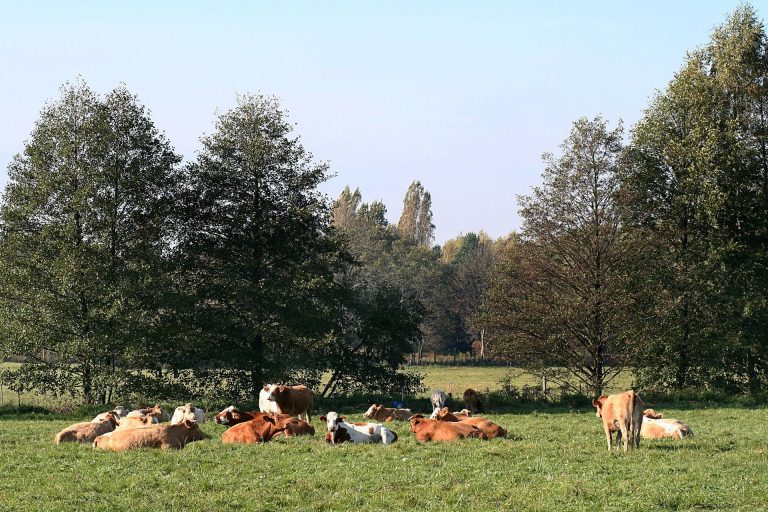
Our beef primarily thrives on a diet of grass and hay, with minimal grain or supplements. Offering free access to trace minerals, high-magnesium blocks, water, and pasture contributes to the production of leaner beef, surpassing the quality of store-bought options and remaining cost-competitive.

When comparing home-raised to store-bought meat, the foremost consideration is quality. Home-raised meat is bred, nurtured, and processed with the sole purpose of serving as nourishment for the family. On the contrary, commercially raised livestock is focused on maximizing marketability quickly and at the lowest cost, often compromising on quality.

Those of us who raise our own meat have a clear understanding of the feed and additives used in the process. While occasional medication may be necessary for the health of an animal, we can confidently say that our future dinner entrees are not injected with massive doses of hormones or steroids.

An additional crucial factor to ponder is the potential food source in the event of a serious emergency, whether economic or otherwise. Livestock raisers would have a valuable resource at their disposal, unlike the uncertainty faced by supermarkets and grocers during challenging times. In emergencies, grocery shelves and meat counters could rapidly deplete, leaving customers without a reliable source of sustenance.

Children will gain valuable lessons

.

If your family includes children, the significance of having livestock on the homestead cannot be overstated. The presence of animals contributes immensely to a child’s learning experience. Responsibilities such as feeding, assisting with hay, loading manure into the spreader, and similar tasks help instill a sense of self-esteem and a strong work ethic in young individuals.

Children learn the value of contribution and importance within the family structure. They understand that certain expectations exist, and their efforts play a vital role in family life. By engaging in these activities, we contribute to molding our youngsters into productive and responsible adults unafraid of hard work.

In addition, children grasp the no-nonsense life-death cycle of animals that were placed on Earth by God for wise use. Growing up on a homestead where animals are raised for food, a child has a clear understanding of the origins of their food, fostering direct appreciation and respect for the life cycle of meat animals, unlike their city-raised counterparts.

Many young people have learned fundamental life lessons by observing animals on the farm and homestead, often assisting in the miracle of birth. These experiences cultivate a deep respect for life and a profound understanding of the miracles bestowed by God.

While venturing into the cattle business, it’s crucial to remember that cattle are sizable animals. An old beef cow can easily weigh between 1000-1200 pounds, and even typically calm animals can unintentionally cause harm. Our personal experience with cattle has been enlightening and educational, though not necessarily highly profitable in monetary terms.

Cattle on smaller properties often serve the purpose of preventing overgrowth and providing butchering beef for personal consumption or sale. It’s important for small landholders not to anticipate substantial wealth from cattle farming. According to our veterinarian, small family herds with a modest number of cows and calves may not yield significant profits, but they can cover property taxes and maintain pasture upkeep.

In reality, selling a few fat calves, young steers, or butchering beef can potentially cover the program’s expenses, including property taxes, and assist in maintaining the homestead. Over the years, our experience with cows, bulls, calves, and steers has allowed us to form educated opinions on various methods of raising beef, including raising bucket calves and keeping cows with calves.

TLW banner1
.

Cattle breeds

When considering the type of cattle for your homestead, you’ll encounter two main categories: dairy and beef. Common dairy breeds include Jersey, Guernsey, Brown Swiss, and Holstein, while popular beef breeds comprise Angus, Hereford, as well as more exotic options like Limousine, Semintal, Charolais, Saler, and various others. Although dual-purpose breeds like Milking Shorthorns exist, they are less common nowadays but can still offer opportunities for homesteaders.

Both beef and dairy cattle have been selectively bred over time to excel in their intended roles, whether it’s milk production or meat. Dairy breeds are designed to efficiently convert feed into milk and lack the heavily muscled bodies seen in beef breeds, which are optimal for producing a meaty, well-muscled carcass.

However, this doesn’t mean that dairy calves cannot be raised for beef. Many Jersey bull calves, for instance, have been raised for steaks and roasts. Yet, when homesteaders breed their family milk cow, they often choose a smaller beef breed like Angus to ensure a renewed milk source and a calf more suitable for meat production. Breeding a Jersey cow to a smaller-framed bull helps facilitate an easier birthing process.

In my years around cattle, I hadn’t raised what we call “bucket calves” or “bottle calves” until we embarked on a project involving seven Holstein bottle calves from a local dairyman. In dairy operations, male calves are typically separated from the herd, and we acquired ours as day-olds or a few days old. The first week, closely monitored by the dairyman, allowed the calves to receive vital colostrum from the mother cow, containing antibodies and bacteria crucial for their well-being.

Our bull calves were raised on bottles with calf starter formula, incorporating dry feed at a few weeks old and being completely weaned off the formula by 10-12 weeks. The formula, a basic growing ration, consists of ground corn, calf supplement, molasses feed, and salt. As they reached 500 pounds, we engaged our local veterinarian to dehorn and castrate the calves, a procedure explained to enhance their growth during the initial months.

Though initially painful, the dehorning and castration were forgotten by the animals within a day or so. The procedure is not necessary but helps prevent accidental injuries and improves market value. Converting bull calves into steers, I recommend the “cutting” method as it is sure-fire and considered healthier for the animal.

Holstein cattle, bred for milk production, tend to focus on developing their frame in the first year and bulk up more in the second season. Despite not putting on muscle like beef breeds, Holstein beef rivals any in taste and texture, producing delicious steaks, roasts, and burger.

While raising bucket calves was interesting and educational, my preference shifted to letting the old cow raise the calf. Currently, we have beef-breed cows and calves on our property—Angus-Hereford cross cows bred to an Angus-Saler bull. In terms of birthing, problems have been few, with only one loss in dozens of calvings. Observing an old cow giving birth recently reinforced the notion that, in most cases, the cow is better at raising the calf than a person.

Hay is necessary for beef production

Ensuring a reliable hay source for your animals is essential. While summer allows grazing, winter necessitates the provision of hay. So, what exactly is hay? It’s essentially grass that has been cut and cured for later use as animal feed. Hay can be stored in various forms: loose, small square bales, or large round bales, with the latter coming in different sizes based on the baler used. Farmers can often provide the equivalent in square bales and adjust the price accordingly. However, dealing with loose hay is generally labor-intensive, and it’s uncommon in practice.

Addressing a common question, hay is distinct from straw. Hay serves as a vital food source for grazing animals, especially during winter. In contrast, straw is a by-product of the grain harvesting process, consisting of the stem and leaves of a grain stalk left behind after the seeds are harvested. Despite lacking nutritive value, straw proves valuable as bedding material. While wheat straw is prevalent, other cereal grains like oats, barley, and rye can also yield good straw after harvesting.

During winter or in the absence of pasture, a mature cow typically requires approximately a third to half a bale of hay per day. In our practice, hay is provided solely during winter, supplemented with a bit of mixed grain feed. Understanding the distinction between hay and straw is crucial for maintaining proper nutrition for your animals, especially when grazing is limited.

Fencing

fence for cows
.

Having effective fences is crucial for containing cattle. Allowing a cow or steer to graze freely in the neighborhood may result in neighbors’ displeasure, and it’s a risk not worth taking. To avoid potential issues and maintain a positive relationship with both neighbors and the cattle, investing in sturdy fencing is essential.

For standard fencing, I recommend using robust woven wire on stout posts, with a height of 39 inches. When installing woven fencing, leave a couple of extra inches at the bottom and top. After erection, stretch and add a strand of barbed wire at both the bottom and top along the entire length. Cattle often stretch to reach tasty plants beyond their fenced area, and these barbed wire strands deter them from attempting to go under or over the woven wire, saving you on maintenance and repairs.

In some sections, our fence consists solely of barbed wire. I prefer using four strands, but three can suffice if necessary. Opting for four strands generally results in a more secure fence. Alternatively, electric fencing is a viable option, offering flexibility in movement to fresh pastures. Once cattle are trained to recognize its discomfort-causing potential, maintaining containment becomes manageable.

The training process involves allowing them to bump or brush against the fence while grazing. In one of our pastures, a single strand of electrified barbed wire effectively kept in four large steers without any problems or escapes. Electric fencing proves to be a practical and movable solution for containing cattle, particularly when appropriately implemented.

Pasture

selfsb b1
.

Maintaining effective pasture management is crucial for sustaining livestock. On fertile pasture, approximately a couple of acres can support one animal, although in drier climates, a larger acreage per head is necessary. The choice of plant varieties for pasture varies based on the region, and seeking advice from local farmers, ranchers, and the Agricultural Extension Service is recommended for tailored recommendations.

Ideally, implementing a rotational grazing system is beneficial. Rotating animals between pastures periodically allows each pasture to rejuvenate its plant growth and facilitates the natural decline of parasites. This practice not only supports the overall health and vitality of the pasture but also helps in maintaining a balanced and sustainable environment for the livestock.

Shelter

Providing proper shelter for cattle involves striking a balance between draft-free conditions and avoiding airtight enclosures. Initially, this might seem contradictory, but a well-designed shed with three enclosed sides and an open side facing away from the prevailing wind serves as an effective shelter. It’s crucial not to make the shelter airtight since cattle release a significant amount of moisture, and inadequate ventilation can lead to various health issues in the animals.

While the shelter doesn’t need to be extravagant, it does require sturdiness. The sheer size and movements of these large animals can potentially dislodge or damage structures if not securely built. Ensuring a shelter that is both secure and well-ventilated contributes to the overall well-being and health of the cattle.

Concluding

If you’re considering acquiring a calf or two for personal use and maybe even for selling to family or friends, then raising bottle calves could be a suitable venture. Alternatively, you might prefer purchasing a mature bred cow or a cow and calf. Evaluating your options and available resources is crucial in determining the most suitable operation for you. Whether you choose to raise a single animal for personal consumption or a small herd for potential sales, the rewards for your efforts are likely to be fulfilling.

This article was submitted by Jason N Clark.

Recommended resources:

Raising livestock for self-sufficiency

The #1 food of Americans during the Great Depression

The basic livestock vetting requirements

How to be completely independent while living off-the-grid

FAA GOING WOKE? | Survival Monkey Forums

0

Oh boy howdy do I have a major beef with the FAA! They are one of those agencies with ZERO accountability and as bad as the ATF in making shit up as they go, and worse, their attitude in that they are the word of God and cannot be challenged, even when they are clearly wrong! Case in Point, look up Trent Palmer on youtube, the FAA has a major hard on for Trent, for doing exactly what he was supposed to to, but because he is a Influencer and is massively popular, the FAA has decided to make an example of him and have taken draconian steps against him! My own experience with the FAA mirrors Trent’s in that they are out of control, they rule with an iron fist, their work is the ONLY word, and even the court is owned by them, and worse, NOBODY has oversight over them! I hope that new case before SCOTUS will go the way we think it will, and Chevron Deference forces an overhaul of the FAA, I know i’m going to be flying to D.C. to challenge their authority in court after the SCOTUS rules, something absolutely MUST be done to reign them in!

Several years ago, the FAA decided we civilian pilots needed these new fancy fangled landing approach lights ( Called Wig-Wag lights) and they gave us a date of compliance which was unworkable at the time, but FAA, their word is Gods, so better comply! At that time, there were NO options, no aftermarket sources, and even the FAA offered ZERO guidance on the what, when, where, why, and how, so we had no chance! After they realized ( Were told by congress who had been told by us) the FAA gave us a 1 year extension, but warned that they would NOT be granting Exemptions or Variances to the rule, and after the date, we would be suspended until our planes were brought into compliance! Initially, the cost to modify my plane at that time, I estimated at around $15,000 u.s. dollars, plus my time and labor, and because there was no guidance, and no aftermarket options, the chances of meeting their requirements was almost zero, and then your facing a suspension! So, I joined a massive class action suit against them, flew to Warshington and testified among the thousands of others who flew in! Things didn’t go well in their court, which they own and operate illegally btw, so we took our cause to the Congress, and got an injunction and forced the FAA to actually sit down and negotiate and offer guidence and allow time for the aftermarket to catch up, now that said guidance would be forthcoming! Fast forward 2 1/2 years later and we finally got the “Rules” and a more reasonable term of compliance, and best of all, we were allowed to seek Variances ether for work we had already done, or for our unique airframes like mine that would not allow the prescribed mandates of lighting to which the FAA had spelled out precisely! it was almost another year before I was finally in compliance, and it still cost me around $8,000 to get it all done and pass inspection and get signed off on!

Now we have the fuel fiasco, both the Fed. and Several states DEMAND and now require unleaded fuels, but the FAA has not decided on which fuels it will allow, the fuel companies hands are tied becasue the FAA has been dragging it’s feet in deciding, their testing has not met with the required results, and now many States have blocked the sale of Leaded fuels, and have been sued and injunctive relief granted, even Cali, but today, we still do not have the new fuel available, or any viable options, and the FAA is still dragging it’s feet! I built both my Birds specifically to be able to run any gasoline fuel I can find, or any blend the Feds and states decide on, I can literally land on a highway and taxi to a gas station pumps and fill with auto fuel ( MOGAS) and be off and flying in no time at all, something I have had many folks stop and take pictures and video of, not even seeing an airplane land on a road and then motor up to the fuel island and pump fuel! I do it all the time, as auto fuel is much cheaper then AV-GAS, so when I can, I do, bonus is both birds actually make more power as the altitude increases, due to the Ethanol blends actually making O2 when burning, so I can climb higher and little faster due to having a little more power! The costs to build my fuel systems was quite a lot higher then normal, but I knew the AV-FUEL was going to be an issue and at some point we would be forced to change and it would be far more costly to have to convert my fuel systems then!

FUCK the FAA, ATF, IRS, FDA, FCC, And all the rest, we don’t need no Government, especially the government that believes it operates above We the People!
I cannot wait to fly into the D.C. Area and go to the fed court to testify on the FAA’s latest boondoggles, any time I can hold their feet to the fire, that’s a good day!


Boeing purchase of Spirit could strengthen defense business

0

Boeing’s potential acquisition of airframe manufacturer Spirit AeroSystems could help stabilize its defense business and give it a stronger hand in bidding on future military aircraft programs, analysts said Monday.

Boeing and Spirit confirmed Friday they were in talks about a possible acquisition, following a Wall Street Journal report. The move, were it to happen, would reunite the two companies after nearly 20 years apart — and would come after a series of troubles with Boeing’s 737 MAX commercial aircraft, of which Spirit is a supplier.

“It’s kind of ‘back to the future,’ right?” defense industry analyst Byron Callan told Defense News on Monday. “You’re bringing back a part of Boeing that has really been” separate since 2005.

That was the year Boeing spun off what would become Spirit, when it sold its airframe manufacturing operations in Wichita, Kansas, and Oklahoma to a private equity firm.

Spirit AeroSystems is now a manufacturer and supplier for structural components that go into military aircraft such as the Boeing-made E-7 Wedgetail and P-8 Poseidon, the B-21 Raider stealth bomber built by Northrop Grumman, Bell’s V-280 Valor, as well as struts and nacelles for the B-52H Stratofortress. Its role in the defense industry is growing, with defense revenues reaching nearly $650 million in 2022 and a goal of hitting $1 billion by 2025.

Boeing on March 1 confirmed the potential acquisition and said the reintegration “would further strengthen aviation safety, improve quality and serve the interests of our customers, employees, and shareholders.”

The troubles with the line of MAX aircraft — most recently, the January blowout of a door on an Alaska Airlines flight — have generated new concern over Boeing and Spirit’s quality control.

But Callan believes there’s likely more motivating this possible acquisition, such as Boeing’s desire to keep a closer eye on its supply chain and manage rates of aircraft production, as well as address quality issues that have cascading effects.

“You don’t go buy a company because of one specific incident,” Callan said. “This is probably a broader set of instances. … They’ve recognized what happens when there are quality issues, delays, all the other things that were tripping up Spirit, that fundamentally impacts their ability to do business.”

Bryan Clark, a senior fellow at the Hudson Institute, said Boeing could use its desire to increase quality oversight and exercise more control over its supply chain to support its case that federal regulators should approve a potential deal.

“That’s been somewhat problematic, especially now in light of these quality control issues, which arguably go back to Spirit in a lot of ways,” Clark said — though he also noted that “we’ve seen plenty of examples where Boeing’s quality controls” have fallen short.

Clark said a Boeing-Spirit acquisition would be an overall — albeit muted — benefit for the defense industry, by making it easier to improve their production facilities and methods.

Spirit has “started to use some new production techniques like additive manufacturing; they have a lot of experience with composites from the 787 Dreamliner,” Clark said. “Spirit’s got a lot of potential to be able to turn into this pretty high-tech supplier to a variety of programs. It’s just hard to do that as a standalone company, because you’re not dealing with a high-volume or high margin business.”

Acquiring Spirit would also “help stabilize Boeing in the defense space,” by allowing the company to contribute to more defense programs without being a prime contractor.

“As the DOD starts to shrink down the number of mainline manned aircraft programs … that means fewer and fewer opportunities for Boeing, Lockheed and Northrop to become the prime,” Clark said. “This way Boeing could be … through Spirit, a contributor to programs that they otherwise could have been locked out of.”

In the near term, Callan said, acquiring Spirit would give Boeing a piece of programs that company works on, such as the B-21 Raider stealth bomber — which Boeing lost to Northrop Grumman in 2015 — and the Bell V-280 Valor, the Army’s Future Long-Range Assault Aircraft.

Even if Boeing moves forward on its potential acquisition of Spirit, Callan said, it likely won’t boost Boeing on programs already in the works or nearing contract awards, such as the Air Force’s Next Generation Air Dominance future fighter platform.

But when the military moves forward on subsequent aircraft programs — such as a future Air Force mobility aircraft to succeed the C-17 Globemaster or C-130 Hercules, or the replacement for the Army’s CH-47 Chinook — having Spirit in-house could bolster Boeing’s position, he added.

Callan and Clark said they doubt the Pentagon or government would object to a potential Boeing acquisition of Spirit, even though federal regulators objected to Lockheed Martin’s attempted acquisition of solid rocket motor manufacturer Aerojet Rocketdyne. Unlike the exceptionally narrow solid rocket motor market, they said, there are multiple air frame manufacturers to sustain competition if Boeing took over Spirit.

Spirit has somewhat branched out, Clark said, such as by becoming a supplier to Northrop Grumman for the B-21 and working with Airbus. But most of its business is still with Boeing, he said, and in many ways, “they stayed in Boeing’s shadow.”

Callan said the acquisition may be a boon to Spirit’s president and chief executive, Pat Shanahan, who also formerly served as acting secretary of defense and was an executive at Boeing before that. While Boeing’s chief operating officer, Stephanie Pope, is seen by many as a potential successor to current Boeing CEO Dave Calhoun, Callan said Shanahan’s experience could make him another contender.

“He would put a very different flavor to what we’ve seen in recent years,” Callan said.

But the big question, Callan said, is whether these hoped-for improvements in supply management and quality control will materialize, if an acquisition happens. It all will depend on how Boeing chooses to manage Spirit’s culture, standards and workforce, he said.

“If it’s really the beginning of a rejuvenation of their safety focus on engineering and manufacturing — that clearly somewhere along the way they lost, so if this helps that would be good,” Callan said. “But I wouldn’t say, ‘Boeing buys Spirit, all the problems go away.’ It’s too soon to tell.”

Stephen Losey is the air warfare reporter for Defense News. He previously covered leadership and personnel issues at Air Force Times, and the Pentagon, special operations and air warfare at Military.com. He has traveled to the Middle East to cover U.S. Air Force operations.

Arizona Residents Force Maricopa County Board of Supervisors Out of Meeting, Call Them Treasonous

0

The entire Maricopa County Board of Supervisors in Arizona was forced to leave a recent meeting by a group of citizens who accused them of treason.

Michelle “Miki” Klann, addressing the board directly, stated that every member fled the room and abandoned their duties after being confronted about their alleged personal involvement in fraudulent activities during the 2020 election.

A forensic audit has reportedly uncovered systemic fraud in Arizona’s election results, suggesting that President Biden did not actually win in that state.

“My name is Michelle Klann, and I’m here today to put you on public notice and to inform you that you are not our elected officials,” Klann said to the board.

“None of you have ever signed an oath to the Republic of Arizona. Instead, you have signed an oath of office to a foreign corporation which means this is an act of insurrection.”

Klann would then proceed to notify the board members that they lack sufficient surety for their actions concerning We the People.

“Due to all the voter fraud, you have never been formally voted in,” Klann proclaimed. “Acting as if you have any authority over the people is a direct act of treason.”

The entire Maricopa County Board of Supervisors in Arizona was forced to leave a recent meeting by a group of citizens who accused them of treason.

Representing the “body sovereign,” Klann explained to each board member before they all fled the room that they are personally liable for $21 million each, and now have the opportunity to cure that liability.

“The fine is $1.75 million per claim and there are 12 signatures which means you are each personally liable for $21 million,” Klann explained about the liability breakdown based on each board member’s 12 signatures certifying the last election.

“If you do not resign in three days, you will be presented with a writ quo warrento, and a waiver of tort. If you do not rebut these truths and you remain in office, we will be notifying the military, and your act of treason will be grounds for an immediate military tribunal. I do not need to tell you the penalties for treason.”

Each board member received a jump drive containing a 5,000-page document that informed them about the risks associated with Wuhan coronavirus (COVID-19) “vaccines,” water contamination, and other critical issues concerning Arizona residents.

“These are high crimes and acts against humanity,” Klann said. “If you cover up high crimes, you will be held guilty for committing acts against humanity.”

“Therefore, I hereby command you to send a public broadcast to every resident in Maricopa County notifying them of these dangers within the next three days or you will be in direct violation and derelict of your supposed duty, making you even more accountable for your actions. Notice to agent is notice to principal. You have been formally served on record.”

The language that Klann used throughout her speech is based on common low, which you can learn more about at ThePeoplesOperationRestoration.com.

The aim of this action is to motivate Americans from all corners of the nation, urging them to hold their corrupt government officials accountable and demand immediate action or face the repercussions.

“Now this needs to be served on every politician in Washington,” wrote someone on X about the matter, encouraging others to be like Klann and get the job done.
Arizona Residents Force Maricopa County Board of Supervisors Out of Meeting, Call Them Treasonous – The Joe Messina Show


How To Make Hard Cider

0

Embarking on the journey of crafting your own hard cider is a delightful endeavor that connects you with centuries-old traditions and the artistry of fermentation. Beyond the shelves of commercial beverages lies a world of flavors waiting to be explored, and making hard cider at home provides the perfect gateway into this rich and rewarding realm.

Whether you’re an experienced homebrewer or a curious beginner, our detailed guide will take you through the step-by-step process of producing your own crisp and invigorating hard cider. From choosing the best apples to mastering the fermentation process, come along on this aromatic adventure as we unravel the secrets behind creating the perfect brew in the comfort of your home.

Many successful cider makers also double as orchardists, managing clean and efficient cider mills. In addition to their expertly crafted ciders, they offer a wide array of late-season apples for sale, including Northern Spy, Macoun, Baldwin, Roxbury Russet, Winesap, Macintosh, Cortland, and Golden Russet, just to mention a few tempting options.

Origin of the apple

Apples, though not native to North America, have left a significant mark on the country’s history. In this limited space, I’ll unfold some fascinating aspects of this story. Additionally, I’ll provide an overview of the steps involved in fermenting hard cider. For those with technical queries, I’ll suggest some insightful reading to delve into the intricacies of the process.

The intriguing tale of hard cider’s rise, fall, and revival in both America and Europe may captivate your interest. Perhaps, by the end, you might be persuaded that hard cider is not only a beverage worth sampling but also one worth producing in a small batch for yourself. It’s essential to note that, like beer, ale, and wine, crafting hard cider is enjoyable, and thankfully, it’s a less arduous process than some of its counterparts.

Within the recipe section, you’ll find some unique recipes utilizing fresh apples, French apple brandy, and apple cider to enhance flavors and textures. My family and I savored six months of apple-infused bliss, creating and relishing a variety of apple-based appetizers, beverages, entrees, and desserts.

We explored over 30 apple orchards so far, indulging in the fresh cider from the 12 that produce their own. Additionally, my husband and I tasted and experimented with popular commercial hard ciders from local cideries and global manufacturers.

An abundance of apples

Ever wondered about the sheer variety of apples? Post-Civil War, American nurseries listed over 800 distinctly different apple varieties, and worldwide, the count soared to nearly 7,000. However, the modern U.S. apple crop, comprising 80 percent, revolves around eight main varieties: Red Delicious, Golden Delicious, Granny Smith, Jonathan, Macintosh, Rome Beauty, Stayman Winesap, and York Imperial. Your typical supermarket, for most of the year, offers a rather limited selection, occasionally introducing newer varieties like Fuji and Mutsu.

But in apple-growing regions, everything changes during the fall months. Local orchard stands come alive, offering a myriad of varieties absent from supermarket shelves. Northern Spy, Roxbury Russet, Gravenstein, Spitzenberg, York Imperial, and the diverse Pippin variations await the ambitious and persistent apple enthusiast. It’s a lamentable truth that, in a country teeming with food purchase options, finding a diverse selection of one of the world’s favorite fruits can be quite challenging.

The apple, second only to the banana, holds its ground as the world’s most popular and cherished fruit. When the juice is extracted from this esteemed member of the rose family, the fruit’s tannins oxidize, transforming the juice into a dark and somewhat opaque liquid. While the rest of the world simply labels it as apple juice, in the U.S., we affectionately refer to it as sweet cider.

Insights into cider

Cider and apples

When carefully guided through controlled fermentation, the sugar in sweet cider transforms into alcohol, known as cider globally and hard cider in the United States. Unpasteurized and free from preservatives, sweet cider stands as a refreshing drink, rivaling the world’s best non-alcoholic beverages in aroma, taste, and diversity. It’s a thirst-quenching delight, on par with a glass of pure spring-fed well water.

Properly fermented fresh juice adds a nuanced complexity, enticing even the most discerning palate. Friends share tales of struggling to resist well-made sweet cider, attesting to its irresistible allure. Yet, when mishandled—mixed haphazardly, lacking consideration for apple variety characteristics, and fermented without control—even sipping becomes challenging. Whether sweet or hard, both demand a delicate balance of sweetness, tartness, aroma, and astringency for a truly exceptional drink.

Unfortunately, a significant portion of sweet cider on the market comes from high-volume producers who prioritize bulk-purchased cider-grade apples. They blend without concern for balance, heat-pasteurize, and occasionally add preservatives, compromising the beverage’s integrity.

Commercial hard ciders, while consistently well-made, often lack the diverse and intriguing flavors found in small regional cideries and wineries. These artisanal operations, scattered wherever apples thrive, produce the most interesting and varied hard ciders. Most hard ciders have a moderate alcohol content ranging from 2 to 6 percent, but some regional varieties boast an alcohol content of 11 percent, edging towards apple wines.

Despite their unique qualities, both sweet and fermented hard cider have faded into near anonymity over the past few decades. Sweet cider faced a blow in 1996 when an E. coli outbreak was linked to unpasteurized apple juice. In response, all unpasteurized juices, including sweet cider, were mandated to bear warning labels akin to those on cigarette packs.

In a bid to mitigate potential legal issues and customer loss, many cider mills now subject their fresh cider to heat pasteurization, eliminating E. coli but imparting an unpleasant cooked taste. Unfortunately, the ubiquity of mass-produced and flavor-altered foods in supermarkets has conditioned many American shoppers to overlook these changes. Sweet cider, like other authentic foods, has succumbed to a taste-altering fate, overshadowed by appearances rather than flavor.

freedom water system
.

Unraveling the origins and evolution of cider

The discovery of cider’s roots or its initial creation remains veiled in mystery, perhaps owing to the widespread distribution of apples across the temperate zones of the Earth. The resilient apple, a stalwart member of the rose family, thrives in diverse climate conditions, which is evident in Paleolithic cave art dating back between 35,000 and 8,000 BC. Throughout history, wherever apples grew, cider seamlessly wove itself into the gastronomic culture.

As the Romans swept through northwestern Europe and Britain in 55 BC, Julius Caesar’s soldiers documented the locals fermenting native crab apples into alcoholic elixirs. The Romans, bearing a wealth of horticultural knowledge and a trove of cultivated apple varieties, introduced orcharding techniques like grafting and pruning, practices that endure today.

By the 4th century AD, the Romans expanded their fermentation expertise to include the juice of pears, creating a variant known as perry. Propagating over 30 pear varieties and approximately 24 apple varieties, the Romans left an indelible mark on the world of cider.

Following the collapse of the Roman Empire in the fifth century AD, the Dark Ages ensued, posing a threat to the advancement of horticultural arts in Western Europe. Fortunately, the skills of fruit cultivation found refuge and refinement with Islamic Moors in Spain and Christian monastic orders elsewhere. It was during this period that classic high-tannin apple varieties, integral to crafting some of the world’s richest and most distinctive ciders, were developed and introduced.

Despite this kickstart, cider’s ascent to popularity in northwestern Europe was gradual. Before the 12th century, cider lingered as a secondary beverage to beer, ale, and other grain- and herb-based concoctions. The early 14th century witnessed cider gaining traction in places like Normandy and Paris, rivaling beer and wine in popularity. However, the Hundred Years War in the 12th century hindered cider’s growth in France due to heavy taxation, only to rebound in the 16th and 17th centuries.

The 17th century heralded technological advancements that further refined the taste and preservation of English cider. The introduction of robust coke-fired bottles significantly extended cider’s storage life, replacing the previous method of wooden barrel storage susceptible to spoiling aerobic organisms during cider withdrawal.

England’s cider industry received an unexpected boost when burnable wood faced a sudden shortage. Unlike the beer-making process, cider brewing, not reliant on heat, became an appealing alternative. In the late 19th century, the transition from small regional cider-making to a centralized industrial system marked a new era. Notably, H.P. Bulmer, Ltd., founded in 1887, now stands as the world’s largest cider maker, a testament to the evolution and enduring appeal of this timeless beverage.

Making your own hard cider

Ever wondered about the complexity of whipping up a batch of hard cider in the comfort of your home? Fear not, for what follows is a straightforward formula for fermenting sweet cider into the timeless, uncarbonated farmhouse cider popular since the 17th century.

This traditional concoction, a New England favorite, is brought to life with a touch of commercial yeast for a speedy fermentation start. While relying on natural yeasts in the sweet cider is possible, experts often recommend a reliable commercial yeast for your inaugural batch, readily available at brewing supply stores.

Before you dash out to grab that sweet cider, you’ll need some basic brewing equipment conveniently found at beer and wine supply stores at a reasonable cost. Skip the hardware shopping list; a call to your local supply store, expressing your brewing intentions, will set you up with everything you need for less than 60 dollars.

Here’s a snapshot of the essential equipment to give you an idea of what’s required:

  1. Glass Jugs: Whether recycling two one-gallon glass wine jugs or acquiring two five-gallon glass carboys, these vessels play a key role in primary and secondary fermentation.
  2. Fermentation Locks: A minimum of four of these cost-effective fermentation locks is crucial to prevent contaminants from ruining your cider during fermentation.
  3. Rubber Stoppers: Four bored rubber stoppers (size #5½ or #6 for gallon jugs) securely hold the fermentation locks in place, ensuring a tight seal.
  4. Hydrometer: A wine and beer hydrometer with a test jar aids in gauging the cider’s progress, complete with easy-to-follow instructions.
  5. Thermometer: A reliable food thermometer is a kitchen essential, ensuring accurate temperature monitoring during the brewing process.
  6. Measuring Tools: Include a two-cup Pyrex measuring cup, a full set of plastic measuring cups, and stainless steel measuring spoons.
  7. Siphoning and Bottling Kit: This kit, or its individual components, helps with siphoning and bottling, featuring a 6½-gallon plastic bucket, lid, fermentation lock, bottom draw spigot, and hose.
  8. Sanitizer: Two packets of suitable sanitizer are vital for maintaining a clean and bacteria-free environment.
  9. Beer Bottles: Opt for undamaged 16 or 12-ounce bottles, avoiding screw-off type necks.
  10. Cleaning Tools: A carboy brush and a bottle brush for keeping your equipment spotless.
  11. Bottle Capper and Caps: Secure these tools for sealing your hard cider in beer bottles.

While additional bells and whistles exist, the basic list provides all you need as a curious hobbyist venturing into cider-making. The process, although seemingly complex in books, is inherently simple. Despite the numerous variables, it’s worth remembering that ancient Celts mastered hard cider over 2,000 years ago without the knowledge of these intricacies.

To illustrate the simplicity of cider making, let’s walk through a basic batch. Keep in mind a successful batch, akin to beer or wine, necessitates a clean and sanitized brewing environment.

Directions:

making your own hard cider
Making cider

Embarking on the quest to craft your own hard cider starts with the hunt for a source of unpasteurized sweet cider. This initial step might pose a challenge, but persevere, for it’s a critical element in the entire process. If opting for the one-gallon jug approach, ensure you have enough sweet cider to fill a five-gallon glass carboy or brew bucket, leaving 4½ gallons of space. Reserve an additional couple of gallons to top off the cider during fermentation, and conveniently, you can freeze this surplus cider for up to three months without compromising its flavor.

With your sweet cider ready, it’s time to enhance its potential. Mix a rounded cup of cane sugar into the cider (or ¼ cup for a one-gallon batch), elevating the alcohol level and stability of the finished product. Introduce a packet of ale yeast, preferably one that has been pre-mixed in a starter solution as per the yeast package instructions. For beginners, ale yeast is recommended for its swift action. Cover the neck of the carboy or the brew bucket hole with plastic wrap, ensuring it’s lightly secured. Position the container in an area of your home with a consistent temperature ranging between 55 and 65 degrees.

Now, the anticipation begins. In about a week or sooner, fermentation kicks off, and the cider transforms. Remove the plastic wrap, allowing the “ugly sludge” to escape – a natural part of the cider cleansing itself. Wipe the outside of the container daily. Primary fermentation persists for a few weeks before subsiding. Once calm, clean the container exterior and attach a fermentation lock.

Now, the patience-testing stage sets in. Forget about your cider for approximately three months, letting the primary ferment slow down and the cider commence clearing. A layer of sediment, known as lees, will settle at the bottom. Use the siphoning kit to transfer the clear cider away from the lees into another sanitized container, fitting it with a new fermentation lock.

Over the next eight weeks, the cider undergoes a secondary fermentation, further clarifying and mellowing in taste. Eventually, you’ll be greeted with a clear and smooth-tasting cider ready for bottling and sampling. While there are more nuances to each step, this encapsulates the essence of the process.

If you’re looking for a swift introduction to hard cider without the brewing commitment, a visit to your local liquor store is your go-to option. Inquire about hard ciders, and you’ll find popular national brands conveniently sold in six-packs, offering a taste of the hard cider world without the hands-on brewing experience.

Cooking with hard cider

this survival ration lasts 100 years unspoiled v2Venturing into the realm of cooking with apples, apple cider, and the exquisite French brandy Calvados has unveiled a multitude of culinary possibilities for me. The distinct flavor and texture of apples possess the remarkable ability to complement various meats, seafood, and other flavor enhancers without overshadowing their inherent character. Incorporating a cup of hard cider or a mere few tablespoons of Calvados can elevate even the most mundane dishes to an exciting culinary experience.

The versatility of apple-infused ingredients opens up a world of creativity in the kitchen. Whether enhancing the succulence of meats or adding depth to seafood dishes, the harmony achieved with apples is unparalleled. The delicate balance between the sweet and tart notes of apple cider or the refined complexity of Calvados can turn ordinary recipes into extraordinary culinary delights.

What makes this culinary journey so compelling is the ability of apples and their derivatives to blend seamlessly with a myriad of flavors. The result is an enhancement rather than domination, allowing the distinct character of each component to shine through. Whether used as a marinade, glaze, or a subtle finishing touch, the addition of hard cider or Calvados brings a layer of sophistication to a wide array of dishes.

Concluding

Making your own hard cider connects you with age-old traditions and the art of fermentation. This guide simplifies the process, making it accessible for both seasoned home brewers and curious beginners. Exploring the rich history of apples and their varieties enhances the appreciation for this flavorful venture. From the forgotten charm of diverse apple varieties to the step-by-step cider-making process, this narrative unfolds the delightful and rewarding world of crafting your own hard cider.

Useful resources to check out:

How To Build The Invisible Root Cellar

The basics of making fruit wine – Step by step guide

The vital self-sufficiency lessons our great grand-fathers left us

Smart ways to preserve and enjoy and your apple harvest

Thailand’s Air Force unveils new wish list, eyeing jets and drones

0

CHRISTCHURCH, New Zealand — The Royal Thai Air Force has laid out its future aspirations in a document released Feb. 29, with counter-drone systems, new fighter jets and medium-range air defense systems among the most pressing concerns.

The 74-page whitepaper, which the service unveiled during its annual symposium this week and which builds on a similar document published four years ago, details planned procurements out to 2037.

“The Air Force is aware of [the importance of] long-term development planning and spending of the national budget to achieve maximum value,” said the service’s commander, Air Chief Marshal Panpakdee Pattanakul.

Indeed, part of the whitepaper’s raison d’être is to stake claims for long-term funding as its aircraft inventories age. For instance, the 2020 version stated the fighter fleet had an average age of 26 years, a figure that continues to increase.

But the government’s procurement process is disjointed, according to Greg Raymond, an expert in Asia-Pacific affairs at the Australian National University. He cited factors like political instability, inadequate strategic planning, annual rather than multiyear budgeting measures, and weak civil oversight that allows each armed service to makes its own decisions.

In the latest whitepaper, the Air Force gives priority to a medium-range air defense system possessing a minimum 30-nautical-mile range from fiscal 2025 to fiscal 2028. Afterward, from FY33 to FY37, the service plans to carry out a second phase for a medium- or long-range air defense system.

From FY28 to FY32, the force plans to buy a short-range air defense system boasting gun-, missile and laser-based weapons. Credence is given to counter-drone systems, too, and a nine-year project to procure these is to commence in 2025.

The service is also eyeing 12-14 new fighters to replace the F-16 jets of 102 Squadron based at Korat. The procurement is scheduled to take place from FY25 to FY34, two years later than originally planned. The squadron’s F-16s from the late 1980s are to retire by 2028.

Two contenders have emerged for the aircraft requirement: Lockheed Martin’s F-16 Block 70/72 and Saab’s Gripen.

“We’re confident the F-16 Block 70/72 will complement the RTAF’s existing F-16 fleet and deliver the advanced 21st century security capabilities and performance needed to address Thailand’s most pressing defense requirements,” a Lockheed spokesperson told Defense News.

Thailand ordered its first Gripen C/D fighters in 2008. Following a January 2021 contract, the aircraft were upgraded to what the manufacturer calls the MS20 configuration.

Robert Björklund, who markets the Gripen to Thailand for Saab, told Defense News the existing fleet is integrated into the Saab-supplied Link T data system and that the aircraft provides its user with “a very wide range of weapon options, including its highly effective RBS15 anti-ship missile.”

A second fighter replacement project for 12-14 aircraft is slated for FY31 to FY35 to replace F-5E/F jets of 211 Squadron at Ubon that are to retire around the end of the decade. An identical number of fighters are needed to replace F-16A/Bs of 403 Squadron at Takhli from FY37 to FY46.

Thailand tries to maintain relations with several competing nations, including the United States, China, Russia and India, the whitepaper noted. Thailand previously purchase materiel from China, such as armored vehicles, air defense systems and a submarine.

Asked whether the Royal Thai Air Force would consider buying a Chinese fighter like the J-10CE, Raymond said the service values its relationship with the U.S. and likeminded allies too much to do so. He noted that Thai-U.S. relations have “largely stabilized,” despite the latter denying the former’s request to buy F-35A jets last year.

“They wouldn’t want to see themselves placed on the outer [circle] in terms of not getting invitations to things like [exercise] Pitch Black in Australia. I tend to think they’d be perhaps more careful about getting Chinese aircraft than the Thai Navy was about getting a submarine,” he said.

The whitepaper also detailed an effort starting this year to refurbish C-130H Hercules transport aircraft. The 2020 version recommended the service buy 12 replacements, but that idea was dropped.

As for pilot training, last year’s delivery of 12 T-6TH trainers allowed the Air Force to retire its Pilatus PC-9 fleet last month. New Zealand-built CT-4E trainers are to retire in 2031, so basic trainers will be needed from FY33. New lead-in fighter trainers are also sought from FY25, with Thailand already operating the South Korean T-50TH in this role.

The new whitepaper also emphasized unmanned technologies. One effort underway is the Thai-developed M Solar X solar-powered drone. Loitering munitions are also schedule for purchase by 2026, as are medium combat drones from FY26 to FY29 and high-altitude pseudo-satellites from FY24 to FY35.

The Air Force also mentioned procurement programs for micro- and nano-drone swarms from FY26, and a research and development effort for weaponized tactical drones from FY29.

And two Saab 340B Erieye airborne early warning aircraft are to receive enhanced command-and-control capabilities, with their dorsal-mounted radars to be replaced. This would take place from FY26 to FY29.

The government’s FY24 defense budget bill calls for a 198 billion baht (U.S. $5.5 billion) fund, of which $1 billion is for the Air Force. The service has already applied for an allocation of approximately $530 million for a first batch of four fighters.

Gordon Arthur is an Asia correspondent for Defense News. After a 20-year stint working in Hong Kong, he now resides in New Zealand. He has attended military exercises and defense exhibitions in about 20 countries around the Asia-Pacific region.

Pentagon to lift Osprey flight ban after fatal Air Force crash

0

WASHINGTON — The Pentagon will lift the ban on flights by the grounded V-22 Osprey next week, U.S. officials told The Associated Press on Friday, following a high-level meeting where Defense Secretary Lloyd Austin endorsed the military services’ plans for a safe and measured return to operations.

The officials said that Naval Air Systems Command, which grounded the controversial tilt-rotor aircraft about three months ago, will lift it and allow the services to begin implementing their plans to get the Osprey back into the air. Austin met with the top service leaders, including for the Navy and Air Force, on Friday morning, according to the officials, who spoke on condition of anonymity to discuss plans not yet made public.

The Osprey has been grounded for almost three months following a Nov. 29 Air Force Special Operations Command crash in Japan that killed eight service members. The Japan incident and an earlier August Osprey crash in Australia that killed three Marines are both still under investigation. The Air Force has said that it has identified what failed in the Japan crash, even though it does not know yet why it failed.

The decision to end the flight ban is up to Naval Air Systems Command, but Austin had asked for an informational briefing on the matter because of the significant safety concerns and the fact that three of the services and a critical ally are involved in the program. While Austin does not have approval authority in the return to flight process, U.S. officials said his endorsement of the services’ plan was considered a key step.

In the months since, the services have worked on plans to mitigate the known material failure by conducting additional safety checks and establishing a new, more conservative approach to how the Osprey is operated.

Convention of States…has the time arrived?

0

The Convention of States has been discussed many times in the past; however, the need never wasn’t quite enough to make it happen. That has changed drastically in the past few years. Please view this short video (7:30 minutes) to refresh your memory so we can open this topic for discussion.

My first reaction is anything to prevent a civil war and save the nation is worth trying and if successful it truly would change the nation overnight. Imagine a Balance Budget Amendment that would pull the teeth of the Feds making them a toothless lion. Agencies would have to cut back, dissolve, foreign handouts would be forced to dry up and stay in country….

Secondly, is for me only, a personal one, and that is why in the hell my state of Idaho isn’t on the list of states supporting this? I intend to find out…

Comments, please.

Carl Higbie Touts Convention of States for Americans to Flip the Bird to Congress, Take Power Back – YouTube


Looks like it’s official, now….I’m moving back south!

0

Not quite 4 years ago, I decided to pull the plug on my federal civil service career, after 28 years, and start a new life. New location, new company to work for (trust me, the ONLY people surviving easy on civil service careers are the politicians!), etc. My GF and I were getting more serious about one another, and being half a country away wasn’t making life easy! I hired on for eastern NY (above NYC), then took the opportunity to transfer to the more sane part of the state, near Buffalo. My job is as an “authorized inspector”, for a shop that builds heat exchangers to the ASME Code.
One of the nice things about my company, is that I don’t have a 4-letter word (BOSS) hanging over my shoulder, and enjoy some autonomy. My supervisor is down in the Pittsburgh area, and our two east coast managers are in Maine and Virginia. The 2nd one is fairly new to the job, and stopped by for a visit, a couple weeks ago, to meet the client, and see what their operation looked like.
Before he left, he pulled me aside (along with the supervisor, who was there too), and told me that the company was really happy with the work I’d been doing here, but there was a problem. Seems the guy they brought in a year or so ago, to run the client’s business (who claims he’s all about quality, but is really more about quantity) wasn’t too happy with the fact that I’d held up shipping some jobs. Not because I’m a slacker…..but actually because they didn’t have their shit together, and I refused to sign the manufacturer’s data report. I’m well within my right to do so, but I guess he took it personally? The manager told me that the client had spoken to my company, and let it be known that if they didn’t replace me as the inspector, that they would replace my company as the inspection agency.o_O

Like I said, the good news is that MY company is happy with my job performance, and they don’t want to lose me. So the manager offered me three open locations: north of Syracuse, NY (serious snow country…. and I’m getting too old for that shit! (n)); Elmira, NY (southern tier), or a shop in the vicinity of Vicksburg, Mississippi. I told him I’d have to think it over, and talk with my GF, before I made a decision.
The neat thing? My GF and I had been talking about when it came time to retire, moving south. Not necessarily to Mississippi, but definitely OUT of NY state. Cost of living, stupid politics, and snowy winters were three perfectly good reasons to GTFO. I told her about my talk with the manager, and bless her soul, she came right out and said, “I’m good with Mississippi!” :love:
I’ll have to break the lease on my apartment here (~$2400, for leaving 5 months early), and after doing some research on all the ways I could move my stuff down, I’ve decided to hire a moving company, instead of U-hauling it down. Let their young bucks carry all that heavy stuff down the flight of stairs, instead of ME doing it! ;)
Right now, looks like I’ll be packing up around mid-May, and driving myself down. I’ll haul a few essentials to get me through, in case I have problems finding a place to live, and have the movers store my stuff in the meantime. Once I’m settled in, I’ll take some time off, fly over to Texas (where I still have my house), and U-haul what I’ve got there over, then put the place up for sale. Eventually, my GF will move down, too (she’s got some medical stuff coming up, and I know she’s not in a HUGE hurry to leave the grandkids behind, either).
The best part? My company’s going to shell out around $8000, to help me out with the costs of moving. (y)


Flash Sale AAC 77gr Sierra MK OTP 5.56 @ 55 Cents/Round

0

It’s really time to stock upon 5.56. The US has let military stockpiles run short via Ukraine and when they begin to replace that it will be a very long time before civilian availability will return to normal.

Buy now. Does not have to be this, but buy now. No affiliation.

https://palmettostatearmory.com/aac-5-56-nato-77-grain-otm-20rd-box-ammunition.html