Sierra Nevada wins $13B contract to build Air Force ‘doomsday plane’

0

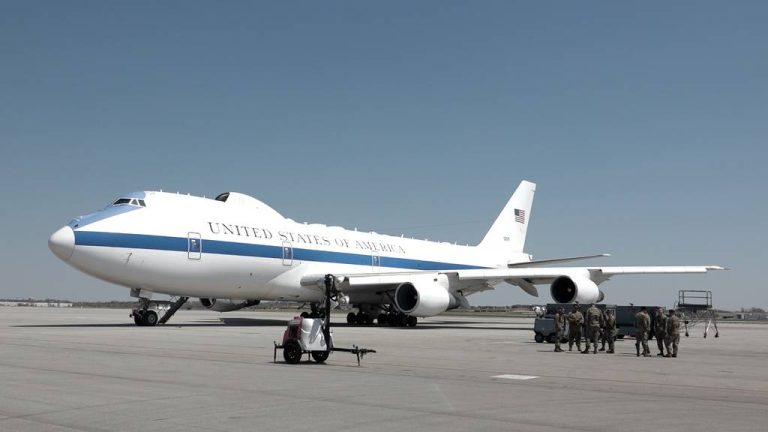
The Department of the Air Force on Friday said it awarded Sierra Nevada Corp. a $13 billion contract to replace the service’s aging E-4B Nightwatch “doomsday planes” that would fly during a nuclear war.

The company will develop and produce the Survivable Airborne Operations Center, the name for the aircraft that will succeed the E-4B, and is expected to finish the work by July 10, 2036. The Air Force is obligating $59 million in research, development, test and evaluation funds to Sierra Nevada to start work on SAOC right away.

“The development of this critical national security weapon system ensures the department’s nuclear command, control, and communications capability is operationally relevant and secure for decades to come,” an Air Force spokesperson said in an email.

The E-4B, officially referred to as the National Airborne Operations Center, is designed to allow the president to direct forces in the event of a nuclear war or other devastating emergency that destroys command-and-control centers on the ground. The Air Force’s four E-4s have been flying since the 1970s and are approaching the end of their service lives.

Sierra Nevada’s contract to develop and produce SAOC will cover the delivery of engineering and manufacturing development aircraft, production aircraft, associated ground systems, and interim contract support, the Pentagon’s contract announcement said. The company will perform work on SAOC in Englewood, Colorado; Sparks, Nevada; Beavercreek, Ohio; and Vandalia, Ohio.

The Air Force said Sierra Nevada will build SAOC out of a hardened and modified version of a commercial derivative aircraft. And it will use a modular open system approach to include modern secure communication and planning capabilities.

SAOC’s ground support systems will include trainers for aircrew, mission crew, and maintainers, as well as ground support equipment, test and sustainment system integration laboratories, and other systems.

The contract includes cost-plus-incentive-fee, fixed price incentive and cost-plus-fixed-fee components, the Pentagon’s contract announcement said.

Stephen Losey is the air warfare reporter for Defense News. He previously covered leadership and personnel issues at Air Force Times, and the Pentagon, special operations and air warfare at Military.com. He has traveled to the Middle East to cover U.S. Air Force operations.

Defense Innovation Unit moves to ease commercial drone certifications

0

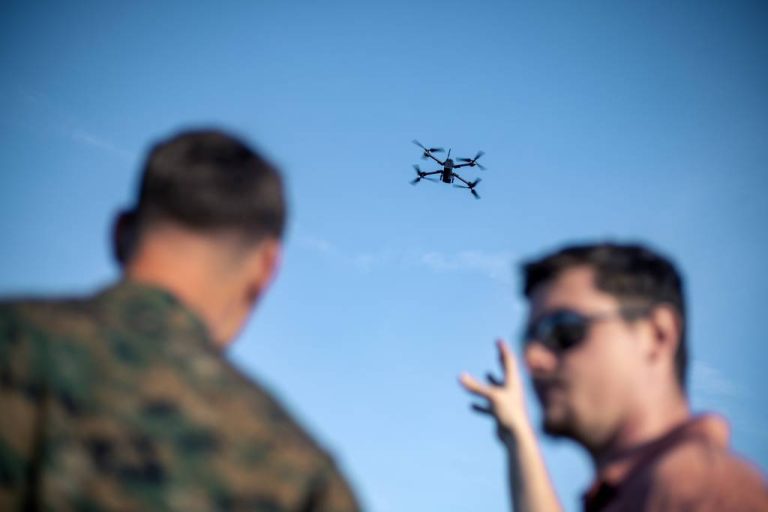
SAN DIEGO — The Defense Innovation Unit wants to improve its process for vetting commercial drones, with the goal of making it easier for companies to sell their systems to the U.S. military.

Director Doug Beck said April 23 the organization will host a competitive effort this fall aimed at onboarding more commercial drones through its Blue UAS certification, which validates that the systems are cybersecure and include no technology made by Chinese suppliers.

“It’s all about adding more capability and also finding ways to help reduce costs while do that so we can help go increase scale and also give more opportunities to more folks out there to be on the list,” Beck said during the Association for Uncrewed Vehicle Systems International conference in San Diego.

Small commercial drones, a broad category of uncrewed aircraft that includes those weighing less than 55 pounds, have played a more prominent role in military conflicts in recent years — including in Ukraine and Russia as well as the Middle East. As the market for these capabilities has grown, particularly in China, the U.S. government has been increasingly concerned about the security of the technology and the possibility that data collected by these systems could be shared with adversaries.

DIU established Blue UAS in 2020, after a series of congressional mandates blocked the Pentagon from buying or using certain drone components — like cameras, data transmission devices, radios and flight controllers — made by Chinese companies. At the time, the only option for units that wanted access to private sector drones was to go through a labor-intensive exemption process to secure a waiver that lasts only six months before needing to be re-submitted.

Blue UAS was designed to create another avenue for validation through a more streamlined process. Drones verified by DIU are included on its Blue list and made available for the military services to buy as well as other government users. Over the last four years, DIU has added 15 systems to the list and has created a parallel inventory of approved components and software through an effort it calls framework.

The process has since become the de facto government standard, with many agencies outside of DOD deferring to the list for their own small, uncrewed system purchases. As a result, demand for Blue has far surpassed DIU’s resources, limiting the number of systems it can process and making it harder for private sector drone companies to sell to the government.

Trent Emeneker, who leads Blue UAS for DIU, told C4ISRNET the organization has heard feedback from DOD and commercial firms alike who say the process is lacking on multiple levels. Military units say the list doesn’t provide the types of systems the military most urgently needs and companies — even those trying to reach non-defense agencies — say there are too many financial and procedural hoops to jump through to get on it.

“We’re not delivering what the warfighter needs today, period,” he said. “But we’re doing everything we can to fix that, to try to solve the problem.”

Refreshing the list

This fall’s refresh of the Blue list is one way to do that, Emeneker said, noting that he expects it to become an annual opportunity for new systems to join the list and for those not providing military utility to be taken off.

“The list does not need to be static because, frankly, the market is going to tell us what’s good — the market being the end users. If they’re not buying it and using it, then it’s not what they want and we don’t need to keep it around,” he said.

As it looks to reopen the list, Emeneker said DIU will consider factors like cost, capability, modularity and security as well as a company’s willingness to work with other partners.

“Closed, proprietary solutions are in generally not going to be looked at very favorably,” he said during a speech at the AUVSI conference. “This is a place where modularity and interoperability — you just can’t succeed in this space without them. Nobody has the one solution to everything.”

He noted that while the refresh is open to any company, Blue will continue to process other drones sponsored by military units or that are part of a program of record.

Another change DIU is making is to its process for approving software updates to Blue systems. Today, it can take between 30 and 45 days to sign off on software changes, but the organization wants to reduce that to four days or less, according to Emeneker.

To do this, DIU is working with a third party vendor to validate a company’s software code as it’s being written and updated.

“96 hours is still too long,” he told C4ISRNET. “But we are listening.”

DIU is also growing its list of certified Blue components to give companies more options for what they can install on their drones and to provide greater transparency about which hardware has been approved.

The organization this week signed a memorandum of agreement with the Association for Uncrewed Vehicle Systems International, a trade organization that last year created a Green UAS process designed to offload some of the demand for Blue.

Green UAS targets civil and commercial drones that are designed for non-DoD customers that don’t have the same stringent, defense-specific requirements. The MOU will allow better information sharing between AUVSI and DIU and creates a pathway for including Green-certified hardware on the Blue list.

While the Green list has been in place for more than a year, many federal and local agencies still want the uncrewed systems they buy to be certified through DIU’s process. Emeneker said the hope is that a stronger partnership with AUVSI will help communicate that the Green List is a viable option for these agencies.

“Part of our goal is to help communicate that it is a standardized and solid verification process,” he said. “The Blue list is a stamp of approval. We also want to help encourage the Green list to be thought of in the same way. These are different market segments to a certain extent, different people, but they all help achieve the same goal.”

Courtney Albon is C4ISRNET’s space and emerging technology reporter. She has covered the U.S. military since 2012, with a focus on the Air Force and Space Force. She has reported on some of the Defense Department’s most significant acquisition, budget and policy challenges.
MFJ to shortly close doors forever

0

If you had been thinking of buying any comm gear from MFJ – now is the time before they are gone for good.

MFJ Enterprises Inc.

they will sell off existing inventory and gear, work thru what repair items they have on hand.

Another victim of heavy handed FedGov COVID shutdown – they never recovered from that hit..

Before the chorus of – Mississippi's Finest Junk, don't. They won't be around long to kick.

US Army to field long-range combat aircraft to first unit in FY31

0

DENVER — The U.S. Army’s plan to field its Future Long-Range Assault Aircraft with an initial unit is delayed by one year, due to Lockheed Martin’s protest over the service’s choice of Textron Bell’s advanced tiltrotor design, according to the director of Army aviation in the service’s G-3/5/7 branch.

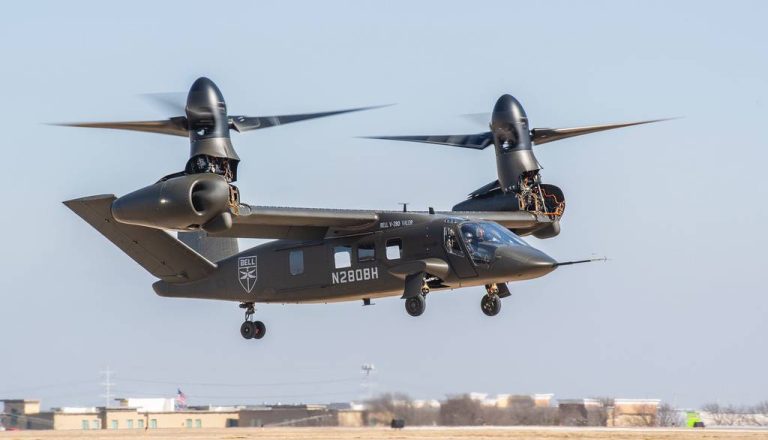
The FLRAA competition pitted Bell’s V-280 Valor against Sikorsky and Boeing’s Defiant X, which features coaxial rotor blades. Bell is a subsidiary of Textron, and Sikorsky a subsidiary of Lockheed Martin.

The Army chose Bell’s design in late 2022, and Sikorsky filed a protest following the decision with the Government Accountability Office. The GAO rejected the protest in April 2023.

Despite the protest disruption, “we are working steadily on [the program], and I will say that the team came together this past quarter and did a tremendously detailed plan to look at every aspect of this fielding,” Maj. Gen. Wally Rugen said at the Army Aviation Association of America summit, running April 24-26.

The Army will now equip the first unit with the capability in fiscal 2031. But that milestone is “not our pacing decision point,” Rugen said. “We really have to look to the limited user test in ’27-’28.”

“There are captains, majors, first sergeants and [warrant officer] 2s and W3s [that will] be participating in that with our experimental test pilots to make sure that the operational force sees this capability for what it is — truly transformation — and get the reps and sets needed to make that [first unit equipped] highly successful,” Rugen said.

Meanwhile, Bell is working on the preliminary design of the Future Long-Range Assault Aircraft’s production version, Jeff Schloesser, the company’s executive vice president of strategic pursuits, told Defense News at annual AAAA event.

The design work is “critical” because it will be necessary for the program to enter Milestone B — the engineering and manufacturing development phase — in the third quarter of 2024, Schloesser said, and then FLRAA will become an official program of record.

The design will not change much from the demonstrator version of the aircraft, Schloesser noted, but there have been some adjustments to outer mold lines, for instance.

Bell is also delivering two virtual prototypes over the next 12 to 24 months, Schloesser said. “You should probably think about it as a small simulator, outfitted the way the aircraft is going to look inside for production aircraft,” he explained.

Bell has also started building a weapon systems integration lab next its flight research center in Arlington, Texas. “We’re starting to populate that with the systems that we will run — and [the Army] will overwatch — as we go through all of this against the weapons systems. It’s not just the flight controls, it’s the actual weapons system,” Schloesser said.

The company also built a new drive system test lab in Grand Prairie, Texas, because Bell builds its own drive trains.

Parts for the first six aircraft are also coming together. “We’re bending metal for the first several aircraft,” Schloesser said. “And we are also simultaneously completing all the contracts with our suppliers … and we are ordering long lead-time materials.”

The Army will receive the first aircraft in 2026, Schloesser said.

Bell is also in the process of deciding where some manufacturing and production will take place, Schloesser noted. While final assembly will take place in Amarillo, Texas, Bell is looking for production sites for drivetrains and rotor blades. “We are looking at a couple of different states and … in Texas,” Schloesser said.

The company plans to announce the establishment of production facilities later this year, he added.

Jen Judson is an award-winning journalist covering land warfare for Defense News. She has also worked for Politico and Inside Defense. She holds a Master of Science degree in journalism from Boston University and a Bachelor of Arts degree from Kenyon College.

Food storage cooking school

0

Cooking your own Chow is a necessary skill to get by in the day ahead.

This is from the folks at Utah State U – a institution that should know, eh?

Enjoy

US Army’s next-gen helicopter engine could fly in Black Hawk next year

0

DENVER — The U.S. Army’s next-generation helicopter engine is projected to hit the skies early next year, powering a UH-60M Black Hawk, according to the service and industry representatives involved in the program.

The Improved Turbine Engine Program engine, developed by General Electric’s aerospace division, has experienced a slew of delays related to technology development and supply chain woes. A year ago, the Army predicted a nearly two-year delay getting the T901 engine into the UH-60.

The Black Hawk will be the first to receive the capability, and the AH-64 Apache attack helicopter will follow.

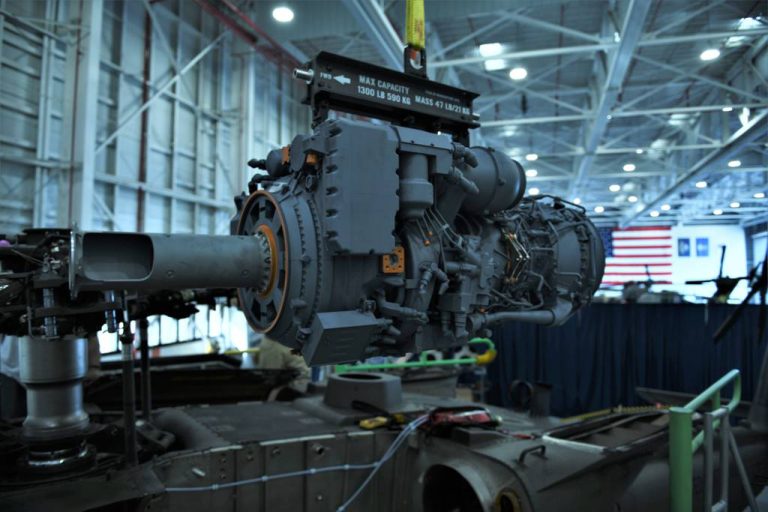
The T901 engine will replace the 1970s-era T700 and provide aircraft with a 50% power increase to restore performance. It’s 25% improved fuel consumption reduces energy usage and carbon emissions. The engine is also expected to have more durable components, which will lower life-cycle costs.

While the Army remains committed to the ITEP engine, earlier this year it decided to keep the program in development longer, pushing back plans for procurement and fielding. The service does not yet have a new plan for when fielding will take place.

Even so, ITEP engines are scheduled to arrive at Sikorsky’s West Palm Beach, Florida, test center this summer, Paul Lemmo, the company’s president, told reporters at the Army Aviation Association of America’s annual summit.

The Army had planned to use the ITEP engine in its Future Attack Reconnaissance Aircraft, or FARA, but canceled the helicopter program this year after two competing industry teams — Bell and Sikorsky — received the engine for the prototypes they were building.

Sikorsky had taken advantage of fiscal 2024 FARA program funding before the Army officially closed the program at the end of the year to run tests of the ITEP in the prototype, ahead of integrating the engine into the UH-60, in order to drive down risk, Lemmo said. On April 10, the company conducted its first ground run of the ITEP engine in the FARA prototype, Lemmo added.

“We lit off the engine and turned rotors for the first time on our FARA [competitive prototype],” Lemmo said. “Obviously watching the rotors turn could be mundane, but it’s pretty exciting to see multiple years’ worth of work that went into that aircraft, but also that engine by our partners General Electric.”

The ITEP engine had previously undergone testing in stands; it was the first time, Lemmo said, that the engine was under a full load, turning rotors.

“We collected that data [at] low speed, and we’re analyzing it,” Lemmo said, noting that “it performed well.”

The Army authorized Sikorsky to run the rotors at full speed to further test ITEP and collect more data, he added.

The ITEP engine, when installed, also fit into the aircraft with no issues, Lemmo noted.

“I think the fact that we proved it on FARA, that the engine fit the first time, it gives us good confidence that it should fit properly, that all the connections should match up when we fit it into the Black Hawk,” Lemmo said.

The Army plans to deliver two ITEP engines to Sikorsky in late May or June, according to Brig. Gen. David Phillips, the service’s program executive officer for aviation, who spoke at the AAAA event.

The company will conduct a fit check with an engine in one of the two modified Black Hawks and install one in the Black Hawk for actual ground runs and flight tests, Lemmo said. Once the company has the engines, it could begin ground runs within a month, he noted.

Then “it’s probably going to take us a good six months to integrate and do the ground runs,” Lemmo said. The aircraft is expected to begin “flying about six months after we get the engine,” he added.

Phillips predicted that getting in the air would “probably occur next year, just based on the schedule where we’re at today.”

Jen Judson is an award-winning journalist covering land warfare for Defense News. She has also worked for Politico and Inside Defense. She holds a Master of Science degree in journalism from Boston University and a Bachelor of Arts degree from Kenyon College.

Exploring BraindumpsFacts: Insider Insights

0

Braindumpsfacts the use of brain dumps can stifle professional growth. True learning involves grappling with complex concepts, making mistakes, and finding solutions—processes that foster critical thinking and problem-solving skills. By circumventing these challenges, individuals miss out on essential developmental experiences, limiting their ability to innovate and adapt in their careers. In the long run, the reliance on brain dumps can lead to a…

Exploring BraindumpsFacts: Insider Insights

Here are the two companies creating drone wingmen for the US Air Force

0

The U.S. Air Force on Wednesday announced it selected Anduril and General Atomics to keep designing, building and testing its first batch of drone wingmen known as collaborative combat aircraft.

The decision on contract option awards marks the service’s most significant step yet as it aims to create a series of drones using autonomous software to fly alongside piloted fighters, such as the F-35 and Next Generation Air Dominance system.

The Air Force has made the CCA program one of its key efforts to modernize its fleet with advanced capabilities. The service wants CCAs to be less expensive than piloted aircraft, but still able to carry out airstrikes, conduct reconnaissance or perform electronic warfare operations in combat, thus expanding the reach of crewed planes.

Anduril and General Atomics will now further develop detailed designs of their CCA concepts and build production-representative test aircraft for the Air Force. The service expects to follow this first increment of CCAs with a second wave of more advanced aircraft.

The service could field at least 1,000 CCAs, and the fleet is likely to include multiple types of drone wingmen with differing capabilities and levels of survivability.

“Just over two years ago, we announced our intent … to pursue collaborative combat aircraft,” Air Force Secretary Frank Kendall said in the service’s news release. “Now, following the enactment of the fiscal year 2024 budget, we’re exercising option awards to two companies to construct production representative test articles. The progress we’ve made is a testament to the invaluable collaboration with industry, whose investment alongside the Air Force has propelled this initiative forward.”

General Atomics is pitching its autonomous collaborative drone known as Gambit as the Air Force’s first CCA. General Atomics unveiled Gambit two years ago, and said its advanced artificial intelligence and autonomous software will help provide high-quality intelligence, surveillance and reconnaissance, and be able to sense and track targets of interest.

General Atomics spokesman C. Mark Brinkley said the company’s CCA design is a derivative of the XQ-67 drone the Air Force Research Laboratory earlier this year flew to test out a “platform sharing” construction concept.

Under that approach, the XQ-67 was built on a chassis that could provide a common foundation for multiple kinds of drones, which AFRL said could lower costs and allow greater mass production.

“The CCA program redefines the future of aviation and will shape the USAF acquisition model to deliver affordable combat mass to the warfighter at the speed of relevancy,” Mike Atwood, vice president of advanced programs for General Atomics Aeronautical Systems said in a statement. The Air Force “is moving forward with [General Atomics Aeronautics] due to our focused commitment to unmanned air-to-air combat operations and unmatched UAS experience, ensuring the production of the CCA aircraft at scale to deliver affordable combat mass for the warfighter.”

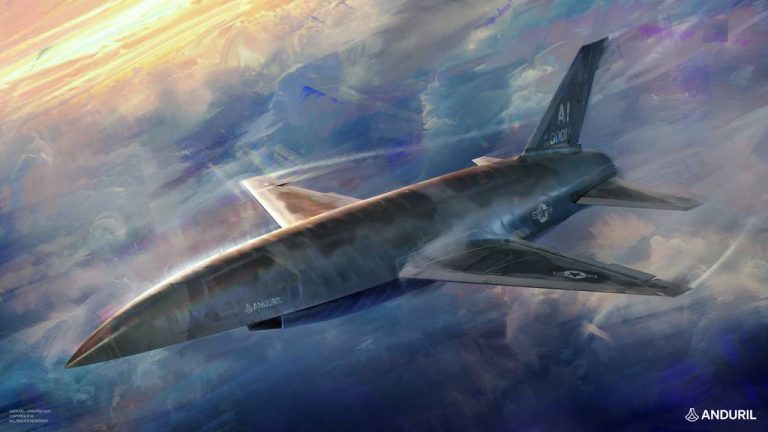
Anduril’s bid for CCA is called Fury. The company said Fury uses its Lattice operating system to provide autonomous capabilities and team up with piloted aircraft during operations.

“There is no time to waste on business as usual,” Anduril chief executive Brian Schimpf said in a release. “With the CCA program, Sec. Kendall and the Air Force have embraced a fast-moving, forward-looking approach to field autonomous systems at speed and scale. … Anduril is proud to pave the way for other non-traditional defense companies to compete and deliver on large-scale programs.”

The service did not respond to a Defense News inquiry asking for the value of each option award.

The two firms were part of an initial group of five companies, also including Lockheed Martin, Boeing and Northrop Grumman, that had contracts to work on CCAs. Kendall said in February that the Air Force wanted to whittle that list down to three at first, but said a total of two was more likely due to tight budgets.

The three companies not selected for these contract options will have further opportunities to work on the next wave of the program, the Air Force said. They will remain in the broader pool of more than 20 industry partners working on CCAs and can compete for future production contracts — including production of the first increment of the program — and other efforts.

Not all vendors on the CCA program are working on the air vehicle. Andrew Hunter, the Air Force’s assistant secretary for acquisition, technology and logistics, told reporters in February that some are working on software allowing them to fly autonomously — which he said was the hardest part of the program — among other elements.

Hunter said in February that the service is confident the first increment of CCAs will be able to operate autonomously, but that “will be more limited” than what subsequent generations will be able to do.

“As we navigate the next phase of CCA development, our collaboration with both current and potential industry partners remains pivotal,” Hunter said in Wednesday’s statement. “Their expertise, innovation and resources are instrumental in driving this initiative forward, ensuring its success and impact on future operations.”

The Air Force plans to make a decision on a contract to produce the first increment of CCAs in fiscal 2026, and field fully operational drone wingmen by the end of this decade.

The Air Force said it is already planning to develop the second increment of CCAs, and the first activities for this other increment will start later this year.

“Continuous competition is a cornerstone at every stage of this program,” Kendall said. “The transparency and teamwork between industry and government really accelerated how quickly we could mature the CCA program.”

Stephen Losey is the air warfare reporter for Defense News. He previously covered leadership and personnel issues at Air Force Times, and the Pentagon, special operations and air warfare at Military.com. He has traveled to the Middle East to cover U.S. Air Force operations.

Boeing’s defense unit shows profit, despite $222M loss on KC-46, T-7

0

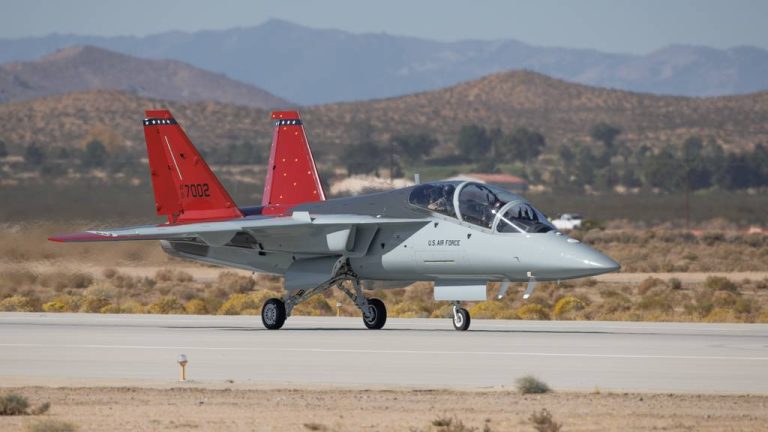
Boeing’s defense unit recorded $222 million in losses in the first quarter of 2024 on two of its main fixed-price development programs, the KC-46A Pegasus refueling tanker and the T-7A Red Hawk trainer, the company announced Wednesday.

The KC-46 suffered a loss of $128 million, Chief Financial Officer Brian West told investors in an earnings call, and the T-7′s losses amounted to $94 million. In documents submitted to the U.S. Securities and Exchange Commission, the American firm said the KC-46′s loss primarily stemmed from factory disruptions caused by supply chain constraints, and the T-7′s loss came from higher-than-expected production costs.

It marks the second quarter in a row in which Boeing lost money on those programs. In the last quarter of 2023, the company reported $139 million in losses combined on the KC-46, T-7 and MQ-25 Stingray refueling drone. However, those losses were small enough that the company did not have to publicly disclose them.

The latest figures bring the KC-46′s cumulative losses to at least $7.1 billion.

The T-7 program was also slowed by problems with the quality of some jet parts, which Boeing received from multiple suppliers. Some parts were sent back to their original manufacturer to be fixed, Boeing told Defense News in February, but the quality issues delayed the planned start of the T-7′s low-rate initial production by several months, to mid-2024.

Overall, Boeing Defense, Space and Security performed stronger than the entire company in the first quarter of 2024, which was dragged down by its struggling commercial aviation sector.

Boeing has been under intense scrutiny and criticism for months after an alarming in-flight emergency when a door blew out mid-flight from one of its 737 Max passenger aircraft.

Boeing recorded nearly $16.6 billion in revenue in the first quarter of 2024, an 8% decline from the $17.9 billion the company pulled in a year earlier.

It lost $355 million in the first quarter of 2024, although that was less than the $425 million loss the company suffered in the first quarter of 2023. Much of that decline came from the company’s commercial airplane sector — revenues for which dropped 31%, from $6.7 billion a year ago to $4.7 billion.

“Our first quarter results reflect the immediate actions we’ve taken to slow down 737 production to drive improvements in quality,” Boeing CEO Dave Calhoun said in a statement. “We will take the time necessary to strengthen our quality and safety management systems and this work will position us for a stronger and more stable future.”

Boeing’s defense sector brought in nearly $7 billion in revenue in the first quarter, up 6% from a year earlier. The company also reported $151 million in profits, which represented a 2.2% profit margin and a turnaround from the $212 million loss a year ago.

West told investors the company is on track to get the defense sector back to profits in the high single digits in 2025 or 2026. The Pentagon’s fiscal 2025 budget proposal shows “strong demand” for Boeing products, he said.

“The products are performing in the field, and we’re confident that our efforts … will return this business to performance levels that our investors recognize,” West said.

West noted the Air Force’s flight tests on the T-7 are “proceeding well,” and that the service wrapped up climate testing in February at Eglin Air Force Base, Florida. During that testing at the McKinley Climatic Laboratory, the Air Force subjected the T-7 to extreme weather conditions such as severe cold and heat, winds, dust, freezing rain, salt spray, and snow.

Boeing is making progress and “retiring risk every day” on its fixed-price programs that have struggled, West said, particularly on the VC-25B Air Force One program.

Boeing “will move our way through [building the pair of new Air Force Ones], and we will deliver two airplanes, and then that will be over as a program,” West said.

Stephen Losey is the air warfare reporter for Defense News. He previously covered leadership and personnel issues at Air Force Times, and the Pentagon, special operations and air warfare at Military.com. He has traveled to the Middle East to cover U.S. Air Force operations.