
Feeding hooks and building flesh…..and a clever way of feeding hooks without also feeding vermin.
da monkey is back up

Oh, I tried both urls and their actual network addresses.
It’s like the server box was just gone.
by the way the domain name expires next february .. just a heads up.
survivalmonkey.com
Registered On:
2004-02-18
Expires On:
2025-02-18
Updated On:
2022-02-02
Status:
clientTransferProhibited
Name Servers:
ns1.survivalmonkey.com
ns2.survivalmonkey.com
How To Secure Your House when You Leave On Vacation

Imagine you’re lounging on a sunny Caribbean beach or relaxing by the pool on your much-deserved break. The last thing you want is the worry of thieves breaking into your home, searching for money and valuables to ruin your peace of mind.
When you’re away, an unoccupied house becomes an easy target for burglars. According to FBI data, a burglary occurs every 15 seconds in the United States, with over $13 billion in personal property stolen annually.
But, by taking some simple steps to secure your home before you leave, you can ensure a more relaxed and enjoyable vacation, knowing your property is safe.
What motivates burglars?
A study by the University of North Carolina, titled “Understanding Decisions to Burglarize from the Offender’s Perspective,” surveyed nearly 500 convicted burglars to understand why they targeted homes. The study found that 88 percent of these burglars were driven by the need for drugs (51 percent) or money (37 percent).
When asked how they used the money gained from their crimes, 64 percent said it went towards buying drugs. Police departments in various Southern California cities report that the most commonly stolen items during home burglaries are cash, electronics, jewelry, firearms, and medications. Thieves also often take bills, personal documents, credit cards, and clothing.
How do burglars pick their targets?
The UNC study found that 41 percent of burglars chose their targets on a whim, highlighting the impulsive nature of most burglaries. Only a small portion, about 12 percent, took the time to plan their crimes or gather information about potential targets. This information might be as simple as calling a phone number to see if anyone answers, indicating whether the house is occupied.
Homeowners often unknowingly signal their absence, making their properties attractive to burglars. Actions taken out of ignorance, poor planning, or carelessness can inadvertently alert would-be thieves that a house is unoccupied and vulnerable. In “Suburban Burglary: A Tale of Two Suburbs,” George F. Rengert and John Wasilchick describe how burglars often do not carefully select their targets but instead seize upon obvious opportunities.
An empty house with clear signs that its occupants are away, such as accumulated newspapers, windows tightly shut without air conditioning on a hot day, and dark interiors at night, becomes an enticing target.
These visible cues signal to burglars that a home is unoccupied and ripe for the picking. Simple mistakes like letting mail pile up or failing to set timers for lights can transform a home into a prime target for criminals on the lookout for easy opportunities. Therefore, it’s crucial for homeowners to be aware of these signs and take steps to mitigate them, ensuring their homes do not appear vacant and susceptible to burglary.
A few prevention suggestions to keep your house secure
The primary goal of burglary prevention is to discourage criminals by giving them reasons to bypass your home. Creating a deterrent environment is crucial: well-lit entrances, sturdy locks, strong doors, an alarm system (or even fake alarms and stickers), and signs warning of a dog can all help.
However, the key is to make your house appear occupied, creating the illusion of real activity even when you’re not there. Since most burglars are opportunistic and prefer to avoid confrontations, making your home look lived-in can be an effective deterrent.
To achieve this illusion, you can use a combination of tricks, technology, and simple precautions. Here are some essential tips:
Pack discreetly: Don’t load your suitcases in the driveway where everyone can see. Instead, pack your car in the garage to avoid signaling that you’re leaving.
Secure your home: Lock all doors and windows, including interior doors that have locks. Unplug your garage door opener and use a padlock to manually secure the garage door.
Stay off social media: Avoid announcing your vacation plans online. Share your experiences only after you’ve returned.
Hide your keys wisely: Don’t leave spare keys outside. Burglars know the usual hiding spots.
Manage mail and newspapers: If you’ll be away for a while, stop your mail and newspaper deliveries or ask a neighbor to collect them daily.
Protect valuables: Keep valuables out of sight. Lock them up or hide them in unexpected places.
Inform local authorities: Some police departments maintain a vacant house list where you can register your address so they know the house is empty. If you’re part of a Neighborhood Watch program, inform them so they can help monitor your property.
By implementing these strategies, you create a perception that your home is occupied and reduce the likelihood of it being targeted by burglars.

Activity timers
To make it seem like someone is home, you can use timers on lights and radios. Set these timers to mimic the usual patterns of activity. For example, have lights turn on and off in the living room during the early evening, then switch to a random pattern of lights upstairs until late at night.
Additionally, you can attach a timer to a small radio placed near a window. Set it to a talk radio station so that voices can be heard from outside. Many smart home systems can automate these tasks, making it even easier to create the illusion of occupancy.
Cover the windows
To prevent criminals from peeking in and spotting valuables, keep the blinds closed on all downstairs windows. If you have Venetian blinds, angle them upward toward the ceiling. This way, you block the view inside while still letting in light.
Get a house sitter
To create a convincing “at home” illusion, nothing beats the real thing. Ask a trusted neighbor to spend a couple of hours in your home each evening. They can watch TV, leave lights on, and engage in routine activities, making it appear as though the family is home. You can even pay friends and family to do a little bit of house-sitting.
The invisible dog
Even if you don’t have a dog (or took yours on vacation), potential criminals don’t need to know that. You can use the threat of a big dog to your advantage by installing an electronic watchdog alarm that detects movement and emits barking sounds. Enhance this illusion with “beware of dog” signs on your gates, and place a dog bowl, toys, and a large dog collar or chain in your backyard.
The fake TV
You don’t need to use a real TV, which consumes electricity and wears out over time. Instead, a fake TV light with a photovoltaic timer can create the realistic illusion of a TV being on while your shades are down. Simply plug it in and aim it at a window, leaving the blinds partially open so the light can shine through. This device has a timer that activates at dusk and runs for six to nine hours. The alternating flashing lights perfectly mimic the flicker of a real television.
Park a car in the driveway

Ensure that the car you leave in the driveway doesn’t appear abandoned or rarely used. Entrust the keys to a reliable neighbor and ask them to move it around every few days. Begin with a clean car, and avoid leaving valuables or the garage door opener inside. It’s acceptable to leave some food wrappers, scattered papers, and gym clothes or sports gear on the seats to give the impression that the car is regularly used.
Invest in security doorbells
A lot of folks nowadays use Wi-Fi-enabled doorbells like Ring, which offer direct communication when someone rings the bell. Even if you’re lounging on a distant beach, you can give the impression that you’re just upstairs when a potential intruder rings the bell (and many check first to see if anyone’s home). If someone suspicious rings the bell, answer it and say you’re occupied and can’t come to the door. If they’re up to no good, they’ll probably move along.
Invest in window bars and security films
Simply locking your windows might not provide adequate security, as window locks can be flimsy and easily broken. Instead, reinforce your windows by placing a PVC pipe or wooden dowel in the window channel. Even if the lock fails, the window will remain blocked from opening.
Additionally, consider applying a security film to your windows to prevent easy shattering. Burglars are deterred by loud noises, and breaking glass is a significant attention-grabber. Window security film makes it harder to break windows, resulting in more unwanted noise.
Merely locking your doors and hoping for the best while you’re away on vacation isn’t sufficient. With lenient penalties and prosecution policies in some states, and a disregard for the law among some individuals, it’s crucial for ordinary citizens to take proactive measures. By safeguarding your possessions and making your home appear occupied and secure, you can enjoy your vacation with greater peace of mind, knowing you’ve taken steps to deter potential burglars from exploiting your absence.
Additional tips to keep your house secure:
 In addition to making your home less appealing to potential intruders, it’s essential to put your house on autopilot when you’re away. Not only does this maintain your home’s systems, but it also ensures a stress-free return from your trip to a clean and welcoming house—an excellent gift for your future self.
For instance, leaving one or two ceiling fans on low helps circulate air, preventing any musty smells from developing. It’s also wise to provide emergency contacts with details of your whereabouts and a list of regular service providers who might visit while you’re gone.
Before leaving, wash out your kitchen sink to prevent any waste from causing odors. Running the disposer with vinegar and water can help, too. Turning off the main water supply to your house but leaving the one in your yard open can prevent costly damage from burst pipes.
Ensure your pool pump and equipment are running correctly by checking them before departure. Dispose of perishable food from the refrigerator and consider unplugging it if you’ll be away for an extended period to prevent mold.
Confirm that your smoke detectors have fresh batteries and are in working order. Adjusting your thermostat to maintain a constant temperature, depending on the season prevents your house from appearing vacant.
Adding chlorine to toilet bowls can prevent bacteria buildup, odors, and staining. Saran wrapping them further prevents sewer gases from entering your home. Lowering your water heater’s temperature or turning it off saves energy and money.
Lastly, unplug kitchen appliances, computers, TVs, and stereo systems to prevent them from using electricity unnecessarily and protect them from power surges.
Concluding
Safeguarding your home while you’re away is essential for peace of mind and the security of your possessions. By implementing simple yet effective measures, such as reinforcing windows, creating the illusion of occupancy, and putting your house on autopilot, you can significantly reduce the risk of burglary and ensure a stress-free return from your trip.
Whether it’s using timers for lights and radios, securing windows with bars, or arranging for a trusted neighbor to keep an eye on your property, every precaution taken contributes to a safer home.
Remember, the goal is not just to deter criminals but also to make your home a less appealing target. By proactively addressing security concerns and making use of available technology and resources, you can enjoy your time away with confidence, knowing you’ve done everything possible to protect your home and belongings.
Recommended for survivalists and preppers:
The only wild medicinal plants you need to use WSHTF
How to extract moisture for air to make a water supply
The vital self-sufficiency lessons our great grand-fathers left us
More than 100 Survival Food recipes you should try
Boeing wins $7.5 billion contract from US Air Force for guided bombs
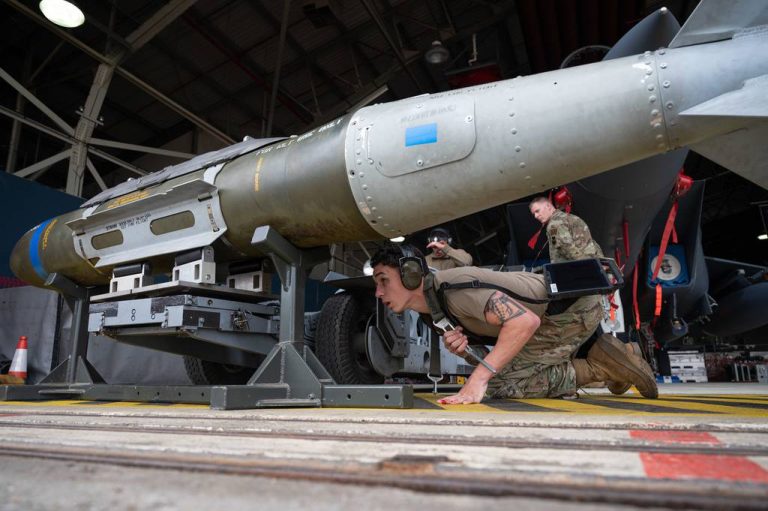
The Air Force awarded Boeing a contract worth nearly $7.5 billion to build more kits to convert bombs into guided weapons known as Joint Direct Attack Munitions.
The company will provide JDAM tail kits and other supplies under the sole-source fixed-price, indefinite delivery/indefinite quantity contract, the Pentagon said Friday. The company will work on the kits, as well as spares, repairs, technical assistance and laser JDAM sensor kits, at its St Louis, Missouri, facility through the end of February 2030.
The Air Force said that the number of JDAM kits Boeing will provide under this contract is not yet determined. Boeing referred questions to the Air Force.
Some of the JDAMs will also go to the Navy, which is helping fund the contract, the Air Force said. Foreign customers will also receive some of these JDAM supplies, with nearly $228.2 million of the contract coming from foreign military sales funds.
To create JDAMs, the Air Force or Navy attaches guidance tail kits to unguided “dumb” bombs that range from 500 pounds to 2,000 pounds. That tail kit includes a navigational system and a GPS guidance control unit that allows the bomb to be steered from an aircraft toward its ground target, even in rough weather. The per-unit cost of a JDAM kit ranges from about $25,000 to $84,000 apiece, depending on how many units the Air Force buys in a year.
The contract for more JDAM kits comes at a time when the U.S. military is worried about its ability to stock enough munitions for its own arsenal, as well as to support allies such as Ukraine, Taiwan and Israel. Defense firms also don’t have enough workers or materials to surge the supply of some munitions, constricting the defense industrial base’s production capacity.
Chairman of the Joint Chiefs of Staff Gen. CQ Brown told reporters in March that before the U.S. approves requests for weapons from even close allies, it takes a hard look at its own munitions stockpiles and considers how providing weapons will affect readiness.
The Air Force struggled to field enough munitions such as JDAMs during the war against the Islamic State. The service dramatically spiked its purchase of JDAMs to 30,872 in 2019, 24,794 in 2020 and 17,300 in 2021, before bringing its purchases down to the thousands in the years that followed.
Boeing previously received a $344.6 million contract modification from the Navy in September 2021 to provide up to 24,000 precision laser guidance sets for the military’s laser JDAM program. The Air Force awarded Boeing another contract, worth $40.5 million, in January 2023 to provide JDAM wing kits.
Stephen Losey is the air warfare reporter for Defense News. He previously covered leadership and personnel issues at Air Force Times, and the Pentagon, special operations and air warfare at Military.com. He has traveled to the Middle East to cover U.S. Air Force operations.
The Wild Cherry – A Tasty Summer Fruit You Can Forage Nationwide

Wild cherry (Prunus virginiana) trees are widespread across North America and are quite prevalent in some dry areas. Many are surprised to discover that these trees thrive in the western regions, which are often thought of as too dry for cherries.
However, wild cherry varieties have adapted well to the arid conditions. Their deep root systems and thick, waxy leaves help them endure droughts, making them well-suited to the semi-desert climate.
A Widespread Shrub
Botanists consider wild cherries among the most widespread wild shrubs in North America. The Prunus genus, to which wild cherries belong, also includes nectarines, peaches, plums, and almonds. This large group is known for its mostly edible fruits and seeds that can be either toxic or safe to eat after processing.
A notable historical mention of wild cherries being consumed by Southern California’s indigenous people comes from Father Junipero Serra. In July 1769, while traveling through the San Gabriel Valley, he observed the local tribes using cherries, grass seeds, and other wild seeds as food sources.
Some cherry bushes or trees retain their leaves year-round and can be mistaken for holly by hikers. When leading field trips about wild plants with friends, I often ask them to crush a cherry leaf. After a few seconds, they usually notice a smell similar to bitter almond extract, which is used in baking. This distinctive scent comes from hydrocyanic acid (cyanide), which is why it’s unsafe to brew tea from the leaves.
Always Pay Attention and Ensure You Know How to Use the Harvested Plant
Wild cherry fruits typically ripen in late summer. If you’re hiking during this season, you might come across bushes bearing fruit, some of which may be ripe enough to eat. While many can guess that the fruit is edible, it’s crucial never to eat any wild plant unless you are certain it is safe. Assuming a plant is edible based on appearance alone can lead to serious illness or even death.
Wild cherries differ in taste from commercially grown ones. They contain less sugar and have a distinctive bitter and tart flavor, which can be especially satisfying when food supplies are limited in the backcountry. Like commercial cherries, wild cherries have a single large seed surrounded by edible flesh. In years with plenty of rainfall, this flesh is thicker and sweeter, while in drier years, it can be as thin as paper.
Historically, indigenous populations valued the pulp of wild cherries, but they prized the seeds even more. After removing the thin shells, they used the solid pulp inside the pits, which, when chewed, offers a mix of bitterness and sweetness similar to that of store-bought cherry pits.
To remove the hydrocyanic acid, the seeds undergo a process akin to acorn preparation. Shell the seeds and boil the pulp for about 30 minutes, changing the water several times. Generally, three boilings are sufficient to make the cherry seeds safe to eat. Dr. James Adams, co-author of Healing with Medicinal Plants of the West, states, “Boiling the mashed cherry pits in water for 30 minutes destroys all the cyanide. The cyanide boils off.” The resulting product can be ground into flour and used in breads, pancakes, soups, or other dishes. The flour has a pleasant sweetness.
During my wild-food cooking experiences, I shell the cherry seeds, boil them whole three times, and then either eat them directly or grind them into flour. This flour, often mixed with wheat, makes delicious little pancakes.
Wild Cherry is also known as Chokecherry
The Cahuilla people from the desert area around Palm Springs, California, called this plant “cha-mish,” and today it is known as chokecherry. Instead of using the leached seeds for breads, they primarily used them in soups or mush. For storage, they sometimes formed the meal into small cakes, which, when dried, became very hard and black. These cakes could be stored for long periods and rehydrated before consumption.
One type of pemmican was made by combining the fruit of chokecherries with deer or elk meat. Naturalist Dr. James Adams enhances a cherry seed mush by adding applesauce, a combination that his students find enjoyable.
A Few Recipes Using Chokecherries
Cherry Chiller
Start with about five cups of ripe wild cherries, removing the stems. Place the cherries in a pot and cover them with spring or filtered water. Bring to a boil and gently mash the fruits. Let the mixture simmer for around half an hour. Strain the liquid through a colander or cloth. If desired, sweeten with honey and serve chilled.
Native American Culinary Uses
Most California tribes used the shelled seeds of wild cherries to make porridge or meal. The fruit’s flesh was commonly added to pemmican mixes for its sugar content. Fresh cherries were also used to make stews, jams, and jellies.
The porridge made from the shelled seeds was often a staple food, providing essential nutrients. By grinding the seeds into a fine meal and boiling it, tribes created a nourishing and filling dish. The addition of cherry flesh to pemmican, a mixture of dried meat and fat, not only added sweetness but also helped preserve the food, making it an important resource during long journeys or harsh seasons.
In making stews, fresh wild cherries were cooked with other ingredients to enhance flavor and provide a natural sweetness. Jams and jellies made from fresh fruits were likely enjoyed as a treat and used to preserve the cherries for later use, ensuring a supply of fruit beyond the harvesting season. These methods of preparation and preservation reflect the resourcefulness and adaptability of the indigenous peoples in utilizing wild cherries.
Wil-Cherry Jam
To make wild cherry jam, start with at least five cups of pitted cherry fruits. Place the cherries in a pot with a small amount of water. Add a cup of sugar, opting for a healthier alternative if desired. Add the juice of one lemon. Cook the mixture for about an hour or until it thickens and reaches 220 degrees Fahrenheit. Transfer the jam into sterilized jars and follow standard canning procedures. If you’re unsure about canning techniques, consult a home canning book or check online resources for guidance.

The Medicinal Value Of Wild Cherry
Wild cherry has several medicinal uses, both historically and in modern herbal medicine. Here are some of these medicinal uses:
Historical and Traditional Uses
Respiratory Issues: The bark of wild cherry has been traditionally used to make syrups and teas to treat coughs and other respiratory issues. Its natural expectorant properties help relieve bronchitis and soothe irritated throats.
Asthma Relief: Native American tribes sometimes used wild cherry bark in treatments for asthma.
Digestive Aid: Wild cherry bark tea was also used to reduce inflammation in the digestive tract, providing relief from colitis and other inflammatory bowel conditions.
Pain Relief: The bark contains compounds that have mild sedative and pain-relieving effects, making it useful for headaches and other minor pains.
Modern Herbal Uses
Anti-inflammatory and Antioxidant: Polyphenols and Flavonoids: Wild cherries contain polyphenols and flavonoids, which have antioxidant and anti-inflammatory properties. These compounds can help reduce oxidative stress and inflammation in the body.
Skin Health: Anti-Aging: Due to their antioxidant content, wild cherries are sometimes used in skin care for their potential anti-aging benefits.
Heart Health: Cardiovascular Benefits: The antioxidants in wild cherries may also support heart health by reducing inflammation and preventing oxidative damage to blood vessels.
Preparation and Use
Tinctures: Wild cherry bark can be prepared as a tincture, which can be used as a convenient form of administration for its medicinal benefits.
Infusions and Decoctions: The bark is often simmered to make decoctions, which are more concentrated than teas and can be used for more severe symptoms.
Topical Applications: Infused oils or salves made from wild cherry can be applied to the skin to reduce inflammation or soothe minor irritations.
Safety and Precautions
While wild cherry has numerous benefits, it is important to use it properly:
Dosage: Always follow recommended dosages, as excessive use can lead to toxicity due to the presence of cyanogenic compounds.
Preparation: Proper preparation is crucial to remove harmful compounds. For instance, boiling the bark and changing the water helps to remove cyanide.
Consultation: Before using wild cherry as a remedy, it’s advisable to consult with a healthcare provider, especially for pregnant or nursing women and individuals with existing health conditions.
This plant has been valued for its medicinal properties across different cultures and continues to be used in various forms to support health and well-being.
Wild Cherry as a Resource and Ornamental Plant

Wild cherry is not only valued for its medicinal properties but also serves as a versatile resource for woodworking projects. The long, straight branches of various wild cherry species are prized for making archery bows, backrests, baby cradles, and various crafts.
For those interested in cultivating native shrubs and trees in their yards, wild cherry is a compelling option. Its shiny leaves add aesthetic appeal, particularly the common holly-leaf cherry (P. ilicifolia), which features leaves resembling those of the camellia plant, with a simple ovate to round shape and fine teeth along the margins.
During spring, wild cherry trees burst into bloom with numerous white flowers. As summer progresses, these blossoms give way to small green cherries, which gradually ripen to pink, then red, and finally to a deep black when fully matured.
Cultivation and Appearance

Growing wild cherries can enhance the natural beauty of your landscape while providing practical benefits. Here are some key points to consider:
Attractive Foliage: The shiny leaves of wild cherry trees add visual interest to any garden or yard, particularly the common holly-leaf cherry, known for its camellia-like foliage.
Fruit Development: Observing the transformation of the fruits from green to pink, red, and black can be a delightful experience throughout the summer months.
Woodworking Potential: Beyond its ornamental value, wild cherry offers a renewable resource for woodworking enthusiasts, providing durable and versatile material for various projects.
Considerations for Cultivation
When considering growing wild cherries, it’s important to note the following:
Suitable Environment: Wild cherries thrive in a variety of climates and soil types, making them adaptable to different growing conditions.
Maintenance: While wild cherries are relatively low-maintenance, regular pruning may be necessary to maintain shape and encourage optimal fruit production.
Harvesting: If you’re interested in harvesting the fruits, ensure you plant a sufficient number of trees for adequate pollination and fruit set.
Wild cherry trees offer both practical utility and aesthetic appeal, making them an excellent choice for those seeking native plant species for their landscapes. Whether for woodworking projects or simply to enjoy the beauty of their blossoms and fruits, wild cherries can enrich any outdoor space.
Concluding
Wild cherry is an ideal summer fruit to harvest, offering a delightful blend of practicality and natural beauty. From its versatile medicinal properties to its woodworking potential and ornamental value, the wild cherry tree embodies the essence of a multifaceted summer companion.
Its shiny leaves, delicate white blossoms, and vibrant fruit progression from green to pink to deep black provide a visual feast for nature enthusiasts. Moreover, the ease of cultivation and adaptability to various environments make wild cherry an accessible choice for both experienced gardeners and beginners alike.
Whether relishing its sweet-tart flavor in homemade jams and pies, incorporating its wood into artisanal crafts, or simply admiring its presence in the summer landscape, the wild cherry stands as a testament to the abundance and beauty of the season.
Suggested resources for preppers:
Harvesting and canning wild greens
The #1 food of Americans during the Great Depression
Survival Foods of the Native Americans
If you see this plant when foraging, don’t touch it!
Philippines receives two delayed T129 combat helicopters
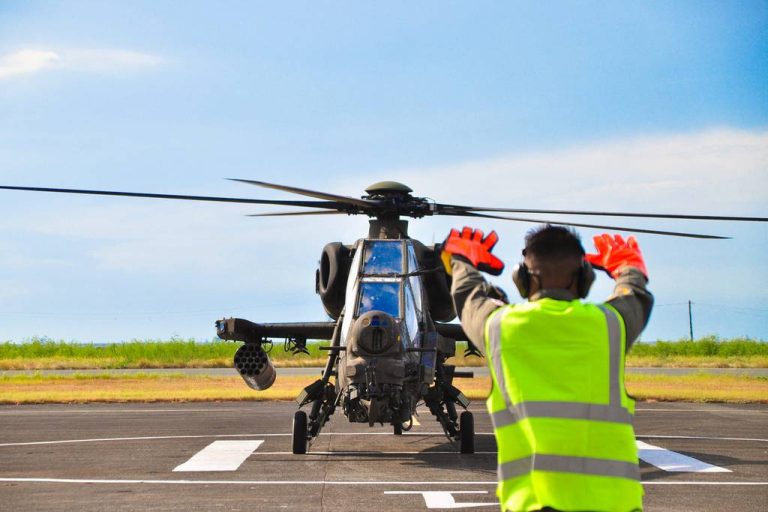
MERSIN, Turkey — The Philippines took delivery of the last two of six T129 combat helicopters from Turkish Aerospace Industries, the company announced this week, about a year behind the anticipated schedule.
The acquisition is part of the Philippines’ Horizon 2 program to modernize its armed forces.
The helicopters arrived at Major Danilo Atienza Air Base in Cavite on May 17. A ceremony marking their arrival involved the head of the Philippines’ Air Combat Command, the wing commander of the 15th Strike Wing, and other unit commanders and representatives from the country’s Air Force.
The two platforms, designated No. 1505 and No. 1506, are the fifth and sixth T129 Atak helicopters procured through a $269 million government-to-government agreement with Turkey. They were meant to arrive in early 2023, Defense News previously reported.
The Philippine Air Force confirmed that the two helicopters, which initially arrived in the Philippines on Nov. 29, underwent technical inspections before their commissioning this month.
“These helicopters, known for their high performance in hot, high, and maritime conditions, are expected to significantly enhance the air force’s combat capabilities, particularly in urban warfare scenarios,” the service said in a news release.
The T129 is a twin-engine attack helicopter designed for day and night missions. It features observation and targeting systems, precision weapons capabilities, and lethal fire support technology.
The Philippine military is realigning its modernization program amid tension with China in nearby waterways. According to Philippine Army Chief of Staff Gen. Romeo Brawner, these changes aim to protect the country’s territories in the South China Sea, particularly Thitu Island, one of several disputed islands in the region.
A territorial defense strategy, released last year by the Philippines, prioritizes the protection of islands claimed by the country, particularly in the West Philippine Sea, including Thitu Island, Loaita Cay, West York Island, Flat Island and Nanshan Island.
Tayfun Ozberk is a Turkey correspondent for Defense News.
DARPA picks six firms to develop experimental ship-launched drones

The Defense Advanced Research and Projects Agency has chosen six companies to move forward on an experimental, low-weight drone that can take off and land vertically from a ship.
The companies DARPA selected for its ANCILLARY program — also known as the Advanced Aircraft Infrastructure-Less Launch and Recovery program — include a mix of major defense contractors and smaller aeronautics companies. AeroVironment, Griffon Aerospace, Karem Aircraft, Method Aeronautics, Northrop Grumman, and Lockheed Martin’s Sikorsky will now further develop and refine their proposed ANCILLARY designs.
DARPA wants ANCILLARY to lead to a future drone that can one day be deployed and retrieved from Navy ships without large mechanical launchers or landing and recovery equipment. These drones could carry cargo, conduct intelligence, surveillance and reconnaissance missions, and track and target enemies beyond a ship’s line of sight, DARPA said.
These small drones must be able to take off and land like a helicopter from the flight decks of ships or rough surfaces in most weather conditions, and then fly missions like a winged aircraft, DARPA said. It also must be able to carry large payloads and fly for long distances when needed.
“The goal of ANCILLARY is to increase small vertical takeoff-and-landing uncrewed aerial system [or UAS] capabilities by a factor of three over the current state-of-the-art flying today,” DARPA program manager Steve Komadina said in a statement. “Our performers are searching for innovative ways to increase payload weight and range [and] endurance of small, ship-launched UAS by means of novel configurations, propulsion, and controls while also removing the need for special infrastructure.”
Komadina said the Navy and Marine Corps would be most likely to use this technology, but it could also be useful for the Army, Air Force, Coast Guard, and U.S. Special Operations Command.
In June 2023, DARPA picked nine companies to pitch their initial concepts for ANCILLARY, before now whittling the list down to six. Those firms will now enter a 10-month phase in which they try to reduce the risks on their design, and conduct hover testing of elements of their proposed aircraft. Once this phase is finished, the companies will submit proposals to move on to the next phase, which will include fabrication and flight testing.
Formal flight tests of the overall design are expected to start in early 2026, DARPA said.
Christopher Harris, the program manager for Northrop’s ANCILLARY effort, said in an interview the company is incorporating its work on autonomous capabilities, vertical takeoff and landing and long-endurance aircraft design for its ANCILLARY pitch.
Pulling together an aircraft that can carry out the kind of endurance requirements DARPA set, without needing launch and recovery infrastructure, is challenging, Harris said May 24.
Northrop’s aircraft will be able to carry payloads of 60 pounds, and fly a range of 100 nautical miles for up to 20 hours. The company’s version of ANCILLARY will use a pair of rotors to take off and land, and another rotor as a propeller to fly forward, he said.
ANCILLARY will be able to take off and land from a ship in adverse sea conditions, and operate in highly contested environments, Harris said. And it could help with logistics by helping unload a ship and moving cargo to shore. Northrop is incorporating its work on autonomous capabilities, vertical takeoff and landing and long-endurance aircraft design for its ANCILLARY pitch, Harris said.
“We have a wide array of supplier awareness, we have our own innovative technologies, and we have a team that we think is uniquely capable to deliver what DARPA is asking for here,” he said.
Sikorsky said Wednesday it is conducting flight tests on its version of ANCILLARY. The company refers to its design as a “rotor blown wing,” which sits upright on its tail to take off like a helicopter, then transitions to horizontal forward flight.
Sikorsky said such a design will reduce drag on the wing when the aircraft is hovering and shifting to forward flight, and result in better efficiency and endurance when cruising.
“Flight tests are under way to verify our tail-sitting rotor blown wing UAS can launch and land vertically with high stability, and cruise efficiently on wing,” Igor Cherepinsky, director of Sikorsky Innovations, the company’s rapid prototyping group.
Cherepinsky said the articulated rotor system in Sikorsky’s version of ANCILLARY is similar to a traditional helicopter’s rotors, and the aircraft will use Lockheed’s autonomous MATRIX technology in its flight controls.
Sikorsky’s aircraft now in flight tests is powered by a battery, but the company plans to build a 300-pound hybrid electric version if it is selected to continue on the program. That aircraft would carry a 60-pound ISR payload, the company said.
Method Aeronautics said in a statement that it is working with Sierra Nevada Corp., which has a background in landing systems an aircraft modification and integration, and Bechamo on this project. Bechamo is a company that specializes in using artificial intelligence to create aircraft flight controls.
“Method’s design brings a novel approach enabling efficient, robust VTOL [vertical takeoff-and-landing] capability for Group 3 UAS,” Method said in a statement. “Method sees this program as critical technology development to enable wider use of VTOL UAS by U.S. forces abroad, and is actively working to accelerate development beyond the scope of the award.”
Group 3 drones are under 1,320 pounds and fly at speeds of up to 250 knots.
Statements from AeroVironment, Griffon and Karem were not immediately available.
Stephen Losey is the air warfare reporter for Defense News. He previously covered leadership and personnel issues at Air Force Times, and the Pentagon, special operations and air warfare at Military.com. He has traveled to the Middle East to cover U.S. Air Force operations.
Mini-14 anyone actually own one?

Had a couple of them over the years. Never really put them on paper but they were fun to shoot and reliable.
I used to take cartridges that had misfed in an AR, leaving two creases in the brass case from the bolt locking lugs, chamber and fire them in a Mini-14 without a hitch. After being creased, those same cartridges would not chamber in an AR and resulted in a jam (bolt wouldn’t close) if it was attempted.
The chamber pressure would straighten out the creases and leave a piece of reloadable brass.
As 3M-TA3 stated, they are LOUD!
F-35 customers in Asia-Pacific monitor Lockheed upgrade saga from afar

CHRISTCHURCH, New Zealand — Lockheed Martin’s delay in rolling out the F-35 fighter’s Technology Refresh 3 upgrade package appears to have no immediate effect on customers in the Asia-Pacific region, but governments are monitoring their acquisition timelines closely.
The American firm paused F-35 deliveries pending acceptance of the TR-3 software suite, which comprises a mission system avionics upgrade to boost the aircraft’s data storage, display processing and throughput capabilities. The package also forms the basis of the Block 4 upgrade, which is slated to be more comprehensive.
Defense News asked Lockheed whether clients in Australia, Japan, Singapore or South Korea had voiced alarm over the delays. A spokesperson replied: “We’re staying in close contact with our customers to ensure they’re informed about any delivery impacts. Further questions are best addressed by the respective governments.”
A spokesperson at the Australian Defence Department said the TR-3 problems, which have prompted an uproar in Washington, have not affected the country’s “current fleet of F-35A.”
Defense officials in Japan and South Korea did not respond to Defense News’ inquiries.
Because of the delays, the Royal Australian Air Force is suffering the inconvenience of late delivery of nine remaining F-35As. This has a knock-on effect in regard to declaring final operational capability, which “requires delivery of all 72 aircraft,” the Australian defense spokesperson said.
The government now expects to receive all planes “during 2024-25″ — an indication the symbolic final operational capability milestone may stretch into next year, beyond the original target.
“The RAAF continues to work closely with the U.S. F-35 Joint Program Office on the delivery of the final F-35A Lightning aircraft for the RAAF,” the spokesperson said.
The department official was tightlipped about how or when in-service F-35As containing older TR-2 and Block 3 software would receive upgrades. “Subject to government approval, delivered RAAF F-35A aircraft will be upgraded to the TR-3 standard as part of the F-35A follow-on modernization program,” the official said.
The TR-3 delay is not expected to impact South Korea, as it previously received 40 F-35A fighters from 2018 to 2021. In December, Seoul procured 20 more F-35As in the Block 4 configuration, which will begin arriving in 2027.
Also in 2027, a South Korean maintenance, repair and overhaul depot at Cheongju Air Base will start operations, meaning the country will not have to rely on Australia for deeper F-35 upkeep.
Singapore could also avoid impacts from the TR-3 issue because the four F-35Bs the country ordered in 2020 are due in 2026. Last year, Singapore exercised an option for eight additional F-35Bs, which are slated to arrive in 2028. And in early 2024, the government announced the acquisition of eight F-35As, expected from 2030.
Japan is the only other Asia-Pacific country with active orders — 105 F-35A and 42 F-35B fighters. Nearly 40 F-35As have been handed over to date, with Japan running its own final assembly and checkout facility. The first six American-manufactured F-35Bs — configured with TR-3 since they fall under Lot 16 — are supposed to arrive early next year.
With Lockheed Martin expecting to deliver the first TR-3 combat training-capable aircraft this third quarter, it remains to be seen whether the timing holds.
According to a company spokesman, TR-3 is a “top priority,” with most of the new features of the package now in flight testing.
Gordon Arthur is an Asia correspondent for Defense News. After a 20-year stint working in Hong Kong, he now resides in New Zealand. He has attended military exercises and defense exhibitions in about 20 countries around the Asia-Pacific region.