I must be a monkey at Banana Progress

0

The first tree I ever planted here in Hawai’i was a dwarf apple banana tree. I named her Appellonia.
Now I think, Dwarf? You could have fooled me!

I chopped, pruned, and mulched a few weeks ago and we just got a new rack of bananas! I want to get some Blue Java bananas.

Which bananas are on your wish-list?

79039515_462969324409449_2393983314449924096_n.

273670613_928522464520797_8734861536690752161_n.

321276670_1317465482320713_2586371823774392602_n.


Global disasters have struck humanity several times and may strike again

0

Most of us believe that we live on a peaceful planet, where only disasters on a local scale occur. However, history knows of cases of global catastrophes that annihilated a large part of the human population and led to a deep collapse of civilization.

One example is the medieval Black Death pandemic. In the 14th century, the plague killed half of Europe’s population, but also wreaked havoc on other continents. Entire families were dying together. There were not enough living to bury all the dead. For the chroniclers, the plague was devastation more final than Noah’s Flood. So many died that everyone believed it was the end of the world. Contemporary scientists and witnesses to these events pointed to the conjunction of Mars, Jupiter, and Saturn, which had occurred a few years earlier, as the cause of the plague. They also pointed to the “corrupted air” released from the Earth’s interior during earthquakes, for cataclysms of this type were widespread and intense during the plague period. The witnesses of these events reported many unusual phenomena. For example, there are reports saying that in some places fire was falling from the sky and killing people.

Several centuries earlier – at the beginning of the Middle Ages – the first plague pandemic swept across all three continents of the Old World, inflicting similarly great losses on humanity. One chronicler wrote that the disease took the lives of a third of the world’s population. Animals also died out en masse. But the plague was not the only problem. According to the accounts in the chronicles, just before the epidemic, the sky was obscured by a huge amount of dust and gases, which could have come from the impact of a big asteroid. Eyewitnesses reported that for 18 months the sun gave forth its light without brightness. The climate disruption resulted in crop failures and famine in most of the world. People at the time were convinced that this was the apocalypse.

About 3,000 years ago, all the forces of nature seem to have colluded again to do the work of destruction. History recorded in tree rings testifies that there was a massive volcanic eruption or an asteroid impact at that time. There were also severe earthquakes, prolonged droughts, and possibly also a plague. All of this led to a complete collapse of the Bronze Age civilization. Famines and mass migrations set in, and the population declined drastically. Within 50 years, almost every major city in the eastern Mediterranean was destroyed. The world of organized state armies, kings, officials, and redistributive systems disappeared. It took the ancient civilization as long as three hundred years to recover from this collapse.

These are just a few of the global catastrophes that can be found in the pages of history. These examples show that every now and then the Earth is struck by massive cataclysms that reset civilization. It used to happen in the past, so it can happen again. Unfortunately, all signs of the earth and sky indicate that another such reset is about to happen.

My study is long and contains about 100,000 words, which is equivalent to a rather thick book. For those who generally do not believe that it is possible to predict future cataclysms, I encourage you to read my free ebook, if only to learn about civilization resets that have occurred in the past and changed the course of history. I am convinced that neither the school nor the media told you about it.

You can download the ebook from one of the links below.
gofile.io/d/Dx1XqU
mediafire.com/file/gy316cfed6vlhuw/
9zipy.com/B3fFiXy45ijasTK
reset676.com


Another Saturday and Another Box Store Run……..

0

Discussion in ‘General Discussion‘ started by Kamp Krap, Jan 21, 2023 at 19:07.


  1. Kamp Krap
    Monkey+


    Got the house stuff at Menard’s. Todays mission was for STUFF but I found REAL TREASURE while in the yard loading the stuff. BIG CABLE SPOOLS!!! I LOVE THESE THINGS!!! And they have gotten real hard to come by in recent years. They have about 101 great uses from Fish and Game Cleaning to a table for your out of the way Kampsite hiding area. Saw these 5 in the junk area and asked the yard guy about them and a few minutes later they are being forked up and slid into the truck. One Man’s trash…… Errr Box Store’s trash is another persons treasure! Probably should not have sat them on top of my new butcher block counter tops for the kitchen island……… As I was told this about ever 1.3 miles on the drive home :) 32 linear feet of unfinished oak kitchen base Cabinets that were on a sale at a very good price filling the front of the box but managed to squeeze the real treasure find of the day in!
    DSC03758.JPG


    SB21, CraftyMofo, Ura-Ki and 2 others like this.


survivalmonkey SSL seal


survivalmonkey.com warrant canary

The Brown Shirts (Antifa/BLM)

0

Don't recall what the actual name of that NAZI group was…

but IIRC Hitler and his crew used them to threaten, beat, up and terrorize his enemies…

also seem to recall many of the members of the Brown Shirts had a criminal record…

and some were considered to be basically… thugs…

and when the time came and their usefulness was at an end they were all… assassinated…

in one night… seem to recall Mao and Stalin doing similar things…

it SEEMS like it was felt that they…

The Brown Shirts (Antifa/BLM)

ammo sit gettin better? | Survival Monkey Forums

0

It’s been funny around here. I expected the range to see fewer and fewer shooters as ammo got harder to find. I did see a slight increase in trap shooters, and they admitted that they were shooting trap because it was the only ammo they could find. Other than that I felt like I’d better be bringing a book to work as we slowly wound down to having no shooters at all.

Happily, my predictions couldn’t have been more wrong. The line has been mostly full both Saturday and Sunday for the last three weekends. This weekend I made more radio calls that I had no open spots than I did reporting openings. Folks are finding ammo somewhere and are shooting up plenty of it.


COSMIC DISASTER: CIA CLASSIFIED

0

Cosmic Disaster, Solar Micronova, Superflare, Magnetic Reversal, Crustal Displacement, Ice Age, Tsunamis, Volcanoes… it's all here

"Cosmic Disaster, Solar Micronova, Superflare, Magnetic Reversal, Crustal Displacement, Ice Age, Tsunamis, Volcanoes… it's all here, it's all been done before and it's all coming again soon. Science tells us these magnetic events come on a cycle, we are due up again now, and shocker… the magnetic field is…

COSMIC DISASTER: CIA CLASSIFIED

Bought a 1981 Set of Encyclopedia Brittanica

0

I just bought this Encyclopedia Brittanica from 1981. I'm pretty sure it's too old to be woke and fake and if and when the net & coms say goodbye it will be good to have and pass on.
I still buy actual books if I think they'll be helpful in the future. This set was the best combination of price and condition I could find. I realize it will have shortcomings being dated, but it should have real information rather than political correctness and doublespeak.
The seller included shipping for me…

Bought a 1981 Set of Encyclopedia Brittanica

Long term storage foods | Survival Monkey Forums

0

Basic Long Term Storage (LTS) Foods.

This covers Chow – Rice, Beans, Wheat, Milk (Non-fat, Non-instant dry milk), salt and honey.
This does not cover planning; spices (needed) or any related logistics items – water/storage/purification; any related hygiene items; fuel for cooking; recipes or other parts that make up a full-spectrum storage plan. There are basic, long term, long lasting shelf life storage items.

This also is not a balanced food set; it does provide a base to work from/add to/build upon.

To follow this document, you will need to make a minimum investment in:
· Mylar bags, one gallon
· Oxygen absorbers, 300cc minimum. (500cc better) BTW 1 cc = 1 mL
· Four each, 5 gallon buckets, I used Home Depot as they are readily available and inexpensive, buy lids at the same time you get the buckets.

· To make the most of your wheat storage, you will need a mill. While you can use a blender/food processor to crack what, making flour, even coarse flour, will open a world of menu choices for you. I will cover mills in the next posting.

Mylar bags may be sealed with a common household iron

What
We begin with rice and bean in storage. For this document, I call out two bags of black beans, 25 lbs each; one bag of long grain white rice, enriched, 50 lbs. These can be purchased at your local Big Box store or a natural foods outlet.

How
Product will be loaded into a ‘1 gallon’ , 7 mil Mylar bag. Then a pair of O2 scavengers (300ml) are dropped in, then the bag is sealed with a hot wire sealer or household iron.

Amount of product per bag
During extensive testing, it was determined through empirical observation that 14 cups of product provided a good amount of product to volume and still allows a solid seal of the bag.

Note – You can fit up to an additional two cups in each bag, but then the bag becomes very fussy to close and seal. YMMV. Rolling or ‘burping’ the bag to remove air helps.

Results
You should get four bags of 14 cups each out of a 25lb bag of dry black beans. You should also be able to get 8 bags of rice, each with 14 cups of product from the 50 lb bag.

At the end, I had about 3 cups of beans and 4 or so cups of rice we chose not to bag.

Four bags of either rice or beans will fit comfortably in a Home Depot five-gallon bucket. These buckets are not food grade, but that is not a storage factor. These buckets were the least expensive new buckets in town. A total of four buckets will be used.

How many will it serve?

CAUTION –
Math ahead

One serving of cooked rice is normally listed as single one-half cup. I find that hard to believe – unless the rice is a side dish. But, ½ C is a ‘standard’ serving, so I’ll go with that.

Because 1 cup of raw (not instant) rice makes 3 cups cooked, then it follows that 8 teaspoons (1/6 of a cup) of raw rice equals a single one-half cup serving of cooked rice.

A 1 gallon bag of rice (as above) should provide 84, one-half cup servings per bag. (14 C raw = 42 C cooked – so that yields 84 ½ cup ‘servings’. 762 ½ cup servings per 50 lb bag.

That yields 336 ½ cup servings per 5 gallon bucket. . This IS NOT a meal, it is a serving.

One 50 lb bag of rice @ 16 USD – gives 8 1-gallon bags of rice.

Each 1-gallon bag gives 84 servings, so one 50 lb bag will give 762, ½ cup servings.

$16/762 gives a cost per serving of $0.02. Yes, two cents.

Eat a full cup and the cost rockets up to $0.04 per servings. I’ll came back to these numbers.

Minute Rice (TM) lists 1/2 cup of uncooked rice = 1 cup of cooked rice – 1 serving.
So 1 cup dry instant rice + 1 cup water = 2 “servings” Minute rice is .parboiled, and only requires re-hydration to eat.

Cost
The beans were about 16 USD at my local (Anchorage AK) Costco. The rice was about 26 USD at the same vendor.
The cost of 7 mil Mylar bags is very vendor dependent. (For us, the bag + 2 scrubbers was 0.61 USD)
The buckets are 1.98 USD at the local HD outlet, the lids, 0.98 USD each.

Alternate choices for the rich and lazy:
In contrast, I looked on the web, several web outlets listed a ‘bucket’ of instant rice (112 servings in 14 ea, “8 serving” pouches) – at a cost of 50 USD to 110 USD – depending on the vendor. This is $50/112= $0.45 per ½ cup serving to the high end of $0.98 per serving. Before you buy any commercial LTS product, do the math.

Oddly, all of the vendors DO NOT list the ‘serving’ size – I have to assume that the serving is the standard 1/2 cup, cooked. The FDA, Diabetic Assn, even MIT say 1/2 cup of cooked rice is a ‘serving’. Minute Rice (TM) also says 1/2 cup is a serving. You do the math.

Final thoughts on rice.
Raw rice has to be cooked – simmered for 20 min with conventional means.

I cook mine with boiling water in a thermal flask. 2 cups boiling water to 1 cup raw rice. Takes “about” a half hour. Yields 3 cups of rice.

Minute Rice (TM) takes 1 cup of boiling water to 1 cup of product. Yields (about) 1 cups of product. Takes about 5 minutes.

Fuel usage with thermal flask cooking is a wash for the same amount of rice. Time-wise, Minute Rice wins.
Just ensure you use a wide-mouth thermal flask or you will regret the choice of the standard mouth flask. This is experience speaking here.

Now, let’s do a math check.

50 lbs bag of rice = 8 storage bags (1 gallon) of 14 cups of raw rice each.
25 lbs bags of beans = 4 storage bags (1 gallon) of 14 cups of dried beans.
1/2 cup of raw rice = 1.5 cups cooked rice and
1 cup of dried beans yield 2 to 3 cups of cooked beans. Call it 2.5 per single cup dried.
14 cups raw rice = 42 cups of cooked rice. so then each 1 gallon bag yields 42 cups of cooked rice. 8 storage bags = 336 cups of cooked rice.
1.5 cups/day (336/1.5) = 224 days /person/50 lb bag of raw rice.
14 cups dried beans = 35 cups of cooked beans. Call it a cup a day or 35 days per 1 gallon storage bag or 140 days/25 lb bag of beans.

To balance out my storage (more or less) I need an additional 116 days worth of beans – or 84 cups. Call that 3 more 1 gallon bags of dried beans. So, just buy another bag of beans – I did.

For each 50 pound bag of rice, you should have 50 pounds (more or less) of dried beans. This will give you around 224 days of food (beans and rice) per person per 100 pounds of dried product. Space required– 4 x 5 gallon buckets.

Calories count would be
218 calories in 1 cup of Black Beans
240 calories in 1.5 cups cooked rice
458 calories/day and that is well short of a balanced diet or even a ‘survival’ level of nutrition.

Now, let’s add some wheat to this mix.:
One cup of wheat berries will yield one cup of flour – there are some minor losses in milling.
1 pound (450g) of dry (uncooked) Wheat Berries = 2 1/2 cups uncooked = 5 cups cooked.
25 lb bag (I looked in Walmart) of wheat is about 63 cups of dry product. At 14 cups per 1 gallon bag, you should get three each, 1 gallon bags, with about 7 cups of wheat berries left over.

Wheat must be cooked to be consumed. Uncracked dry wheat is cooked with 1 cup wheat berries to 4 cups water. Yield – 5 cups of ‘eatable’ product.

One 25 lb bag of wheat will give ~312 cups of cooked product. I use this for planning.

There are 407 calories in 1 cup of Whole Wheat Flour. So, 25 ln bag of wheat is 63 cups x 407 = 25.641 calories. Since I use flour, I use this calculation.

Currently a 25 lb bag of (bulk) wheat sells for ~ $15.00 That is (15/63) $0.24 per cup. YMMV depending on location.

Now, let’s add some dry milk to this mix:
I buy and use DariyX, a brand of non-fat, non-instant dry milk. It comes in 50 ln bags. This milk takes a while to fully rehydrate, so mixing and leaving set overnight in the fridge gives better tasting results.

Currently, a 50 ln bag of dry milk powder (Land o Lakes) sells for $97.50.

Dry milk is 3.76 cups / pound. So – 50 ln bag is 188 cups of dry product.

5 and 1/3 cups of dry product give 1 gallon of skim milk. So, a 50 ln bag should yield about 35.5 gallons. Cost – $2.77/gallon.

Now, just add salt.

Salt, in the standard container seen by most is 26 oz/1 lb, 10 oz. These sell for $1.50 per container. Five pounds will work for most folks – call it $7.50. Salt is cheap, stores ‘forever’ and is used for many things. Add pickling salt if you have a garden.

Finally, we should add some honey, molasses or sugar:
I store 10 gallons of honey, this instead of sugar. Cost varies wildly based on location. I got mine from the farmer’s field, right from the hives.

Real world cost varies because so much of what is sold as “honey” isn’t – it is not real, whole honey. Some of the less expensive crap (from China) is more sugar that anything.

Walmart sells 80oz of “pure, filtered'” homey. The brand I’m quoting is “Golden Heritage Foods” and it is certified as real honey. Cost $12.48 or $0.15/oz.

For comparison, white, granulated sugar sells for $0.23/oz.

Bottom Line:
Planning is key to a successful long term food storage program. I did the math so you can see it is worth the time to compare bulk or store brand, repackaged by you to the nasty, overpriced crap sold in “buckets”. Friends don’t let friends buy Bucket food.

I covered Rice, beans, wheat, milk, salt and honey – a solid base for any LTS food storage plan for you or your family. You add meat, spices, veggies (dry or canned) to round this out.

Only you know what your posse will eat, so you should do the planning and buying. Avoid the Bucket food vendors and not only will you save real money, you will have a far better idea what you really have stored.

As with any LTS food, rotation is the key – the items I listed (Rice, beans etc) will store for decades, so you can focus your rotation efforts on the other items in your pantry.


13 Proper Gun Storage Tips for Beginners

0

Part of being a responsible gun owner is knowing how to keep it safe. Research shows that one-third of American households with kids have a gun in the house. Considering how curious kids might be, there’s always a chance they’ll locate your firearm and start playing with it.

Things could go wrong if they unintentionally pull the trigger. Therefore, you must have a solid plan to secure your gun. But how can you do that? Read on for some helpful tips on how to store ammo.

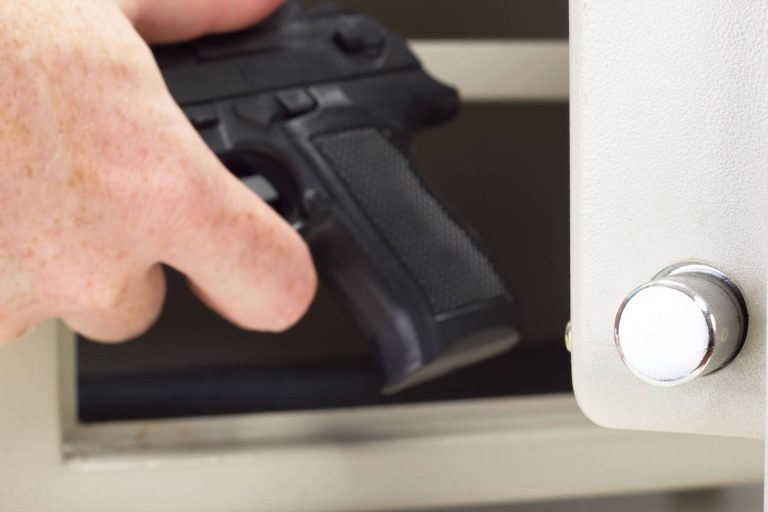
1. Buy a Gun Safe

A gun safe is one of the best purchases if you need somewhere to keep your firearm safe. The benefit of a gun safe is that it conceals the gun while preventing unauthorized individuals from gaining easy access to it.

For first-time gun owners, a perfect gun safe should be fire and theft-proof. If thieves try to steal your firearm, they’ll have a hard time attempting to break the safe with whatever power equipment they use.

Furthermore, gun safes are available in multiple sizes and forms. The conventional ones are compatible with ordinary handguns. There are cheaper models without the latest security features but opt for the premium model if you want to play it safe.

Some premium safes are fingerprint-access only since they come with biometric security features. Specific models feature a radio frequency identification (RFID), meaning you need a key fob, sticker, or access card to open them.

2. Bolt Your Gun Safe Down

The safe will become heavy, making it difficult for a robber to move or topple it. You’ll need to ascertain that your floor can withstand the safe’s weight. You may have to install more joists to sustain the safes and fasten system weight.

3. Discuss Gun Safety With Your Kids

While keeping your gun safe is a great idea, teaching your kids that they should never touch it in your absence is equally essential. If you deny your kids access to firearms and lead them to believe it’s a guarded secret, they’re likely to be more curious than when you teach them about gun safety.

It would be best to consider playing imaginary scenarios games with your kids. For instance, ask them what they’d do if their best friend said they wished to see your gun. By having open discussions, you can enforce boundaries and help your kids understand the dos and don’ts of gun handling.

4. Keep Your Gun in a Hidden Location

If you don’t have the financial means to afford a dependable gun safe, you can temporarily keep your firearm in a strategic location. As a general guideline, you should conceal your gun such that it’s not visible to others. The space behind your mirrors and clocks may be the perfect hiding area. To achieve this, you may need to adjust your wall’s appearance.

You’ll need to configure a little compartment on your wall and conceal it with a clock or a mirror. You can even use covert concealment features built into furniture, such as bookcases, to keep your gun out of sight. Nevertheless, remember that these choices are only sensible if you live alone. Keeping guns out of their reach is the safest option if you live with children.

5. Remember Your Ammo

remember your ammo

Knowing how to store ammo ensures your firearm remains in good condition. You should keep your bullets away from dampness and high off the ground. Ammos are very impact-sensitive. Consequently, you should buy some ammo cans and use rubber seals to prevent dampness from getting in.

In addition, ensure that your bullets’ storage location is cool and dry. Preferably, you can maintain the temperature at or below 150 degrees. If the temperature rises above that, condensation will occur.

It would help if you also got your ammo in order. Add labels on ammo cans so you can tell which ones are for training and which are for emergencies. Moreover, adhere to the “first in, first out” principle. That guarantees your bullets’ freshness.

6. Check on Your Gun Routinely

If you don’t use your firearm regularly, it’s easy to put it away and forget about it. Open the gun safe once every few months and perform an audit of the following things:

  • Firearms
  • Ammo
  • Other weapons you’ve kept inside

To help you remember, you might want to write down the list and put it somewhere other than the gun safe.

7. Store Each Ammo Separately

You may consider placing a small lockbox inside the gun safe to relocate ammo to an entirely different location. Nevertheless, the best way to secure ammo is to protect it from the firearm. That way, if thieves break into a gun safe, they won’t have immediate access to the gun and ammo.

8. Add Security Cameras Near a Gun Safe

Whereas most people do this after a burglary, a security camera may help you determine who has been accessing your gun safe and act as a source of evidence if someone steals your gun.

9. Consider Tactical Advantage

If you reside in a region where burglaries are somewhat common, and no kids are around, you can keep your gun close. Among the acceptable places to store a gun is the master bedroom.

You should put some money into a fast box or a gun safe and tuck it away under your mattress. If anyone attempts to break in, particularly at night, you’ll have quick access to your firearm.

The kitchen’s pantry is yet another safe and secure location to keep your firearm. In a daytime invasion, you’ll easily access your gun. Most burglars will go to the master bedroom rather than the kitchen when they break in.

10. Use a Trigger Lock

You ought to prioritize using a trigger lock before storing your firearm. It helps guarantee that the gun won’t inadvertently fire while preparing it for storage. You may buy a trigger lock at any local hardware store. You might also purchase them on the internet for a lower price on specific websites.

However, you’ll need to research beforehand to determine which brand is compatible with your firearm. Depending on where you get yours, you may expect to pay anything between $15 to $20 on average.

11. Reduce Humidity

Rusting happens even with minimal exposure to moisture. The National Firearms Museum recommends keeping your firearm at 70 degrees Fahrenheit throughout the year. That’s because any drastic temperature changes can force the wood stock to expand and compress, resulting in irreparable cracks.

Furthermore, temperature fluctuations might cause your gun’s rubber and plastic parts to crack. A 50% humidity level is optimal because anything below that might cause stock damage, whereas more than that may result in quick rusting.

Stabilizing the environment is of paramount importance. Various products exist to help you protect your firearm from rust and corrosion while it’s in storage. They include rust-preventing vapor capsules and VCI storage bags.

12. Disassemble Your Gun Before Storing It

disassemble your gun before storing it

When putting your firearm away, ensure it’s disassembled to the greatest extent possible. The disassembly prevents unskilled individuals from using the gun if they get their hands on it. But you might have guns in your collection that you’d rather not disassemble because it is difficult to do so or you need to use them regularly.

13. Keep Your Gun Clean

You must routinely clean your firearm even if you rarely use it. A gun in long-term storage necessitates less cleaning than a gun regularly fired, which requires cleaning at least once per week.

If you rarely utilize your gun, consider applying gun grease or gun oil at least once every six months, even though more regular cleanings are preferable. The chances of a gun jamming or deteriorating reduce with proper cleaning.

april banner 3

Final Thoughts

Safe storage is one of the most important aspects of gun ownership. You must have a solid understanding of certain fundamental guidelines if you’re a first-time gun owner. That’s because a gun is a lethal weapon capable of killing someone if they get hold of it by accident or malice. So, you ought to keep it secure when not in use.

We hope our guide on how to store ammo will help keep your gun safe.

Suggested prepping learning:

Seven Key Elements Your Home Defense Plan Needs

Must-Have Knowledge to survive any medical emergency

Pros And Cons of Various Firearms For Home Defense

Time-tested lessons to protect your home against intruders