
Rights and Responsibilities | Survival Monkey Forums

In recent years the attacks on the Rights protected and guaranteed by the Bill of Rights have been under unprecedented attack. Notably the 1st, 2nd, 4th, and 14th amendments seem to be targeted for extermination.
I read a article this morning under the headline this morning……
Where have Republicans been during California’s mass shootings? They’re busy appeasing the gun worshiping cult.
While I have little more use for the far right than I do for the far left, I find it offensive to call those that exercise their Inalienable Constitutionally Protected Right to keep and bear arms without infringement, members of a gun worshiping cult. About two weeks ago, I said to Mrs. Krap “Just watch in a week or two there will be a big ramp up in mass shootings, every damned time the Government pushes for more gun control and bans, like magic there is a spree of mass shootings to empower them.” It has became such a pattern that it is becoming predictable.
The 1st Amendment is under even harsher attack than the 2nd. It is just less heated and not as politically charged as the Bad Evil Guns going out and killing innocent people. It is pretty evident that the Government has been censoring by proxy of social media and compliant MSM from the shadows. A clear violation of the 1st and that has been the near death of the discourse of opposing ideologies in sometimes heated but generally civil venues. I am pretty sure we have all seen the people on various MSM stating that violence committed against people of opposing ideologies is in fact self defense. That has been expressed often enough by the far left and yes the far right LOL the far right just does not have the platforms to spread their toxin as readily as the left does. When there is no reasonable and rational discourse allowed thing start getting sideways.
The 4th Amendment has zero meaning when the Government finds probable cause either via warrants or on the scene. Now days a large portion of that probable cause is ultimately found to be manufactured and without consequence for the manufacturers. Civil Forfeiture being high up there on not being secure in you not being secure in your person or your property. The RICO law and Patriot Act were sold as they would never be used against the average law abiding American Citizen……… Here we are with both actively being used against law abiding American Citizens. Seems pretty unreasonable to me to Seize someones property and keep it without charges or trial. Personally my businesses were largely Cash businesses 70% Cash and 30% credit. If I did a big event it was not uncommon for me to have $20,000+ cash in the safe at the end of it. It was a total PITA depositing that cash into the bank. To the point that I opened a second business acct because the one I deposited into was effectively frozen for 10 days after a large cash deposit was made. I learned over the summer that withdrawing large amounts of cash is also open to Government Scrutiny. I get the bank needs 24 hours to have $100,000+ in Cash available for you to withdraw, I don’t get the Government needing 7-10 business days to approve your withdrawal. LOL I had no idea they monitored structured withdrawals and frown on them as mush as structured deposits. I know this now and that withdrawing $10,000 per day over 10 days red flags you Most of the Big things I buy or services I have done are paid in cash and a heft Cash discount applied.. Usually 10%-20% off the Check or Credit card price. Paying cash for one $30,000 job saved me $6000 and got the job done for $24,000 for example. What the service provider does with the cash or whether he claimed it and paid taxes on it, is NOT my concern or problem. How form of tender I pay for it with is not the Governments Concern. Would the IRS tracking all bank transactions over $600 be a unreasonable search? I think it would be. In the future I will not be depositing any money into any bank and will only be withdrawing the returns on my investments and savings Monthly as Cash income. The Government can’t track cash deals or impose wait times on deposits and withdrawals since I will only be depositing into my personal bank/treasury and strictly operating outside of the banking system from here on out. LOL if they can do it to Trump they can do it to you……… They have been doing that do us for decades, it only got attention because it was Trump. Get pulled over and let the cop find the $10,000 cash, you probably just gave your $10,000 to the police department and donated your vehicle as well. Then learn it will cost you more in court cost and lawyers to get your money and vehicle back than your money and vehicle are worth. Have a neighbor call in a bogus report that gets the cops to you property… And all kinds of probable cause to trigger a search of everything and anything without warrant can be found or created. Nope the 4th does not mean much now days.
The 14th Amendment has pretty much been butchered and equal protection under the law thrown out the window. Examples of States and Local Governments pissing on the 14th every place 
The sheer amount of Freedoms and Liberties lost in the USA just in my lifetime is astounding. The losses over the last 10 years epic. The losses and divisions among we the people sickening over the last 2 years alone. I am sick of hearing the Constitution GIVES (Insert the Right) NO! The constitution does not give anything! The Constitution PROTECTS the rights we are all born with. What the Constitution does more than anything is spell out in plain language the Restriction and limitations placed on the Governments. The Declaration of Independence and the Federalist Papers are great supporting documents for the Constitution that put everything in the Constitution in Perspective and in the Context the framers intended. The Constitution is real heavy on the rights of the individual and the collective parts focused to the benefit of Society by empowering the individual. Only by strong Independent people coming together and working and achieving individually could this Nation survive and grow to thrive. If the people today were the people of then, we would still be under the thumb of a King living under the law of decree as it best suited the Royalty.
What happens when the Constitutional Government transitions to American Royalty without Noble titles? Take a look around. What happens when the Governments at every level become the enemy of the Citizen??? Working for the Government and By the Government??? I don’t believe we are all the way down that Rabbit Hole yet…… I think we are still clinging to the edge with our toes.
Knowledge of Civics has been lost. I get so damned sick of hearing people scream about their RIGHTS!!! When 75% of the population can’t even list off the first 5 rights in the Bill of Rights and tell you what they mean. With every right comes responsibility. You will never hear anyone talk about their responsibilities that accompany the rights. But I guess people would have to actually know and understand what their Rights actually are to understand the responsibility side of the equation.
Where we are today has been a long time in the making, chipping away and subverting the Constitution for at least the last 150 years. We are just living in a time where it is not even remotely subtle anymore and moving at a much faster pace. Jefferson in particular warned us of this, of course Jefferson as President did his own part in chipping and subverting as it suited him. Of course Washington and the Whiskey Rebellion could be viewed as the first act of Govrnement over reach and preferential treatment of American Royalty. All I know where we are today and where we go tomorrow has been a very long time in the making.
MSM Ignores Story Of LGBT Couple Charged With Slew Of Child Sex Crimes

I have no problem with gays or lesbians… have know many and most were just people…
and IMHO they have the right to choose for themselves…
but this is something else entirely IMHO… if true… not sure how it should be dealt with…
Shocking new details on gay couple accused of sodomizing their young adopted sons…
MSM Ignores Story Of LGBT Couple Charged With Slew Of Child Sex Crimes
How To Grow And Maintain A Drought-Resistant Garden
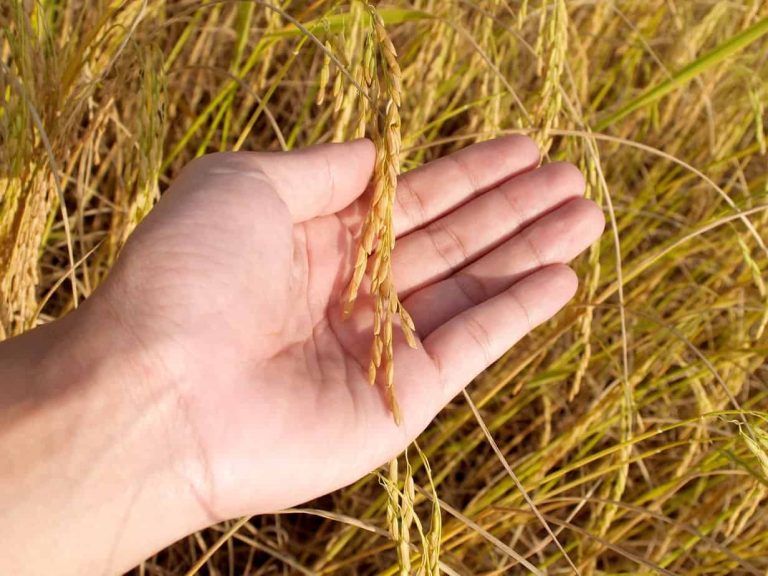
If you look at a map of North America, you’ll notice that there are many areas with low average rainfall, mostly in the western and southern states (as well as in many other parts of the world).
The rule appears to be erratic weather, and learning how to survive in an area with limited water is a good long-term skill to develop.
If you live in a desert or semi-desert area, you’ve probably looked into water-saving gardening techniques.
Nearly everything in a city is imported, and far too few of us have considered how to provide for our own food, water, medicine, and other necessities. When you learn to provide for some of your needs, no matter where you live, you strengthen your family and community.
So, how do you keep growing and producing food when the ground and skies seem to be drying out?
Let’s take a look at the different aspects of drought-resistant gardening.
Water is a precious resource
Water is essential to life. According to health officials, only 20% of the world’s population has access to safe drinking water. Consider this: The oceans contain 97 percent of the estimated 333 million cubic miles of water on the planet, with the remaining 2 percent locked in ice.
The remaining water is well over a mile underground, beyond the reach of conventional good drilling, and contains about 0.01 percent of the water in ponds, lakes, and rivers.
Agriculture is one of the most important uses of water, and fortunately, most farmers rely on rainwater for about 85 percent of their water needs. The remainder is supplied by wells, dams, aqueducts, and other man-made means.
Yes, rain is important, but consider that the amount of rain falling on the earth at any given time amounts to about 0.001 percent of the world’s water. Even if you live in an area where water is plentiful, it is still beneficial to learn some methods for doing more with less.
Why?
Droughts are not uncommon on Earth, and long stretches of severe drought have affected vast swaths of land throughout recorded history. Those who learned to adapt and live with the change were the ones who survived. Those who did not or could not move on died out or were wiped out.
Another, perhaps more ominous, point to consider: as the population of humans and other water-dependent organisms grows, so will the demand for and competition for potable water.
So, aside from reducing your needs, how can you make better use of limited water resources?
There are only two ways to do this: use your water multiple times and collect rainwater.
Using your water more than once
When water is scarce, you must learn to do more with less.
Here are a couple of examples:
Simply take the dishpan outside after washing your dishes and water plants with the “gray water” that remains.
I found ways to disconnect the drains of the bathtub, kitchen sink, and washing machine in nearly every place I’ve lived in the last 40 years, and I directed the water out into the yard. This is easier if your yard is hilly, especially if your house is on the upper part of the lot.
On larger properties, you can direct a hose from a washing machine’s drain, for example, and move the hose around to irrigate different trees or garden areas. This obviously necessitates a careful selection of detergents that are not harmful to the soil or your plants.
Don’t underestimate the amount of water that the average household can reuse. Even with a low-flow toilet (or a composting toilet), there is plenty of water for washing clothes, taking showers and baths, food preparation, and other kitchen tasks. The average American household uses about 80 gallons of water per day or more than 31 gallons per person.
If you have a slightly larger yard than a suburban lot, you should think about terracing it so that rainwater does not immediately wash away and can settle in basins (called “swales” in today’s jargon).
Dams and canals were built by ancient natives of the American Southwest and South America to bring water long distances to their desert homes.
We still do this today: For example, Los Angeles County is a classic case of a desert domain that would not exist if the great cement aqueduct that brings water from hundreds of miles north to the Los Angeles basin did not exist.

Collect and use rainwater
Collecting rainwater is also relatively simple, and your storage volume is only limited by the number of barrels you have.
When I first started doing this, I used trashcans with tight-fitting lids, as well as white, 5-gallon “food-grade” buckets that bakeries everywhere discarded.
Outdoor water containers must have snug lids because when the rain stops, the water must be covered. You don’t want to be a mosquito breeding ground for the neighborhood.
There are two primary methods for “harvesting” rainwater for agricultural use in the backyard or on a small farm.
One method is to dig swales, which are hollows in which rain settles and is slowly absorbed into your property. A swale is a channel carved into a hillside so that rainwater does not rapidly flow downhill, but rather is collected in a series of switchback-style fl at areas where the water can seep into the landscape.
If you don’t have the space for swales, you can simply collect rainwater in tanks or buckets and store it for later use when there is no rain. The simplest method is to collect runoff from a house’s, barn’s, or garage’s roof by placing a large drum at the bottom of each downspout.
However, because a 40-gallon drum of water weighs more than 330 pounds, you will not be able to move it once it is full. Filling many buckets without moving your drums is as simple as placing a row of buckets near the barrel, next to each other, and along the wall, out of the way.
Connect the first bucket to the barrel using half-inch tubing attached near the barrel’s top. Each bucket is then connected to its neighbor in a series using the same tubing. The tube directs the excess water to the first bucket when the barrel is about to overflow.
When bucket number one is nearly full, rainwater naturally flows into bucket number two, and so on. You can connect as many barrels as you can afford and have room for them. This system works best when the next bucket is level with, or slightly lower than, the previous bucket.
You could also use the buckets for consumption because the majority of the sediment from your roof will collect in the barrel.
If you use this system, it is highly recommended that you install a spigot at the bottom of each barrel so you can access the water, and that you attach a hose to any barrel to drain its water to the garden or orchard.
Remember that in the past, a city could never grow in an area where there was no available water. Water is the lifeblood of Las Vegas and many other cities in the Southwest. If you live in such an area, you should practice wise water use as well as any drought-tolerant gardening techniques you can find. Furthermore, you should get to know all of your water sources.
Trees help your garden
Trees are the world’s green miracles. They bring underground water to the surface, where it is released into the atmosphere by their leaves, providing both shade and cooling.
Trees should be planted around the perimeter of small homesteads to provide a wind barrier and to help capture moisture. Choose your trees wisely, beginning with those that are already drought-tolerant and native to your area. All the better if they can also provide you with food or medicine.
How do you figure out which trees thrive in your area?
Contact a local garden club or the botany department of a college or university.
It is a huge mistake to believe that you can save water by cutting down trees! Trees draw moisture from deep below the surface, influencing the local environment and even the weather. In fact, when you plant deciduous trees, they lay down a layer of leaves that helps to keep moisture in the soil even more.
Except for eucalyptus, we can always say that planting trees is a good thing. This tree is possibly the only one that has ever been accused of contributing to “desertification,” the process by which otherwise productive land eventually becomes a desert.
There are several reasons for this, but in summary, eucalyptus trees transpire at one of the highest rates, which means they release a lot of moisture into the environment through their leaves. While this appears to be a good thing, it implies that wells dried up when many eucalypti were planted.
Furthermore, the oils emitted by eucalyptus make it difficult for other crops to grow; and something in the eucalyptus oil makes the soil less permeable to water, causing it to absorb less. This causes more flooding or runoff after rain. So, instead of eucalyptus, plant something else.
Retaining water

What do you do in your drought-resistant garden to keep water from evaporating?
The key is to improve the soil and add layers of mulch. This will help trap moisture and keep it available for the plants you’re trying to cultivate for a longer period of time.
Mulching is one of the most effective methods of retaining moisture in the soil. Mulch comes in a variety of forms that are simply laid on the surface of the garden or landscape.
The majority are composed of biodegradable materials such as grass clippings, wood chips, sawdust, straw, alfalfa, and other materials. These are typically placed on the ground around the plants and help to retain moisture in the soil as well as absorb moisture.
When I first started gardening, I discovered that many layers of grass clippings made a huge difference in plants, allowing them to thrive even during dry spells. I’ve also used straw layers from discarded straw bales (and, in some cases, alfalfa). This alone made a significant difference in the quality of the crops I grew, as well as their ability to thrive later in the season, when they would otherwise have died off.
Non biodegradable materials, such as gravel and even rocks, can also be used. Some gardening supply stores now sell recycled rubber that resembles wood chips. Yes, it works as mulch, but I would not use it in my vegetable garden.
Other suggestions
 Growing your crops in containers is one way to control the amount of water they require. Containers can refer to a variety of things, including large, traditional gardening pots, stacks of tires, large wooden boxes, raised beds, and more.
When it comes to containers, bigger is better because small containers dry out too quickly and require constant monitoring to keep your plants alive. Native Americans in the Southwest built miles and miles of sophisticated canals to bring water to their otherwise desert environment.
But what are some of the more modest methods that can be used in an urban backyard or on a small farm?
Drip irrigation is a relatively new technique. Small hoses transport water to each plant and deliver it only to that plant, not the surrounding soil. It can be very effective on a small scale, but it is usually too expensive and takes a long time on a larger scale.
Every garden shop can tell you the benefits and drawbacks of drip irrigation and sell you whatever you require.
In some cases, burying clay (and, in some cases, plastic) pipes perforated with holes has resulted in great success. These pipes are hidden beneath a row of crops. Water can then be introduced into these pipes and reach the roots.
Others have had success by planting ceramic vessels beneath trees or other crops, filling them with water, and using a cotton wick to bring the water to the plants’ surface.
On a much smaller scale, if you have foods and herbs in clay pots, put basins beneath them to catch any water that drains out. As the water evaporates, it is absorbed by the soil.
These and many other methods are some of the strategies that inventive gardeners can employ to produce crops even if they are in the midst of a drought or live in the desert.
Additional resources:
Smart tips for gardening on dry soil
If you see this plant in your backyard, don’t touch it!
Tips for preparing gardening soil in winter
The #1 food of Americans during the Great Depression
Zippo lighter – extending fuel life

Some interesting Zippo facts:
George G. Blaisdell invented the Zippo® Windproof Lighter in 1932.
Mr. Blaisdell was nicknamed “Mr. Zippo” by famed World War II war correspondent Ernie Pyle.
The Zippo lighter was given its name as a derivation of the word “zipper” and because Zippo inventor George G. Blaisdell liked the sound of the word “Zipper”, which had been patented in nearby Meadville, PA.
The original price for a Zippo lighter was $1.95.
Zippo started engraving initials and providing metal insignias in 1936.
The first patent for the Zippo windproof lighter was granted on March 3, 1936, Patent Number 2032695.
The basic concept of the Zippo lighter has remained unchanged for the past 77 years.
The first corporate logo decorated 500 lighters in 1936 for Zippo’s cross-town Bradford neighbor Kendall Refining Company.
Zippo ran its first national advertising in Esquire magazine in December 1937.
Between 1934 and 1940 Zippo moved more than 300,000 lighters through the use of punchboard advertising. Considered a game of chance, punchboards were ruled illegal in 1940.
Zippo windproof lighters have been carried by GIs in every war from World War II to Desert Storm.
The Zippo factory in Bradford, PA produces close to 80,000 lighters a day.
Zippo produces about 12 million lighters a year.
Every Zippo product is guaranteed with an unconditional lifetime guarantee: Any Zippo product, when returned to its factory, will be put in first-class mechanical condition free of charge, for Zippo has yet to charge a cent for repair of a Zippo product, regardless of age or condition. The finish, however, is not guaranteed.
Every U.S. Navy Ship, from a small auxiliary vessel to a nuclear-powered aircraft carrier, has her own custom designed Zippo windproof lighter.
In the late 1950s, a Zippo lighter was removed from the belly of a fish. It lit the first time.
A cent has never been spent repairing a Zippo product.
A regular size Zippo lighter weighs 2.05 oz.
A slim Zippo lighter weighs 1.50 oz.
200,000 Zippo windproof lighters were used by Americans in Vietnam. Vietnam-era Zippo lighters are highly prized collectibles.
There are an increasing number of lighter clubs around the world, including several in the US, Italy, Switzerland and Germany, and others in England, Japan and The Netherlands. 21% of the people who own Zippo lighters are collectors.
Since 1932 Zippo has produced over 400,000,000 windproof lighters.
Zippo lighters are made in Bradford, Pennsylvania. The location is stamped on the bottom of every Zippo lighter.
Every Zippo is dated on the bottom of the case.
Remains of a corupt administration

Words getting out on on Obumer;
Obama Administration Scandals Are Coming to Light & His Legacy Is in Tatters | National Review
What is your workout Time?
I live in the country and during the Fall, Spring and even the hot months of Summer, there is enough hard labor to keep one more than fit. You could work yourself to death if you didn’t take an organized approach to what is necessary and what is not and prioritize. I always have a good laugh when people talk about living in the restful countryside, but they have no damn idea the amount of work it takes compared to city or suburb living. Hell, just the snow removal and wood gathering is a huge job but that’s just the tip of the iceberg. LOL!
I think I answered your question in a round-about way… LOL!
Crypto scam | Survival Monkey Forums



Are Back Up Sights Necessary?
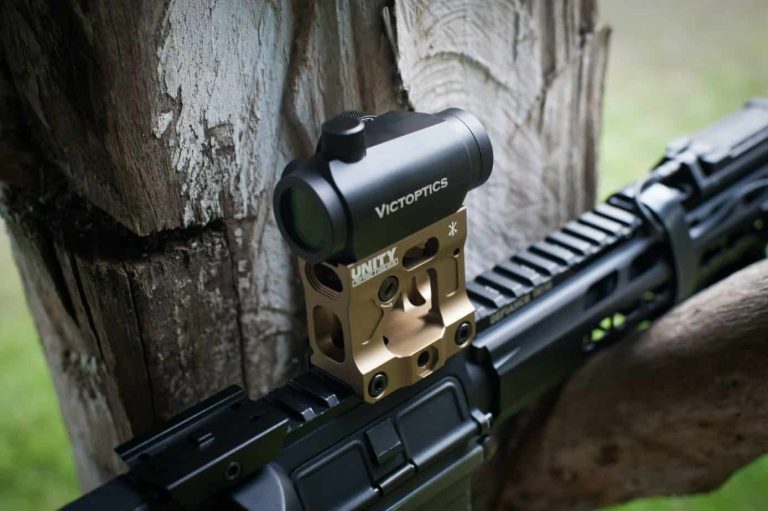
You might have heard of backup iron sights (BUIS) but do not know what they initially do. You might already know but still need to figure out whether they’re worth it for you.
What is a backup sight?
The first question to answer is what is a backup sight for?
As the name suggests, backup sights are sights that you can plug in and use should your primary sight stop working for whatever reason.
Backup sights were definitely all the rage back then. Before the age of night vision and holographic sights, backup sights were widely used by hunters and shooters alike.
But even so, they still have their uses. There are different kinds of backup sights, but the one in discussion is the iron backup sight.
They are usually mounted by a rail integration system and are adjustable.
Just like other types of back-ups, their role is to provide a sense of relief to the hunter during situations that call for a quick swap replacement.
Here are some reasons why you should consider getting a backup iron sight.
Long Hunting Trips
This should speak for itself. A long trip calls for backups. Whether it is a day trip or a weekend, you will need to bring extra equipment. This ranges from extra food, extra modes of communication, and extra gear for hunting.
You want to have a relatively stress-reduced trip to the great outdoors. It’ll be hard to have one when you start stressing about equipment shortage.
Long trips will call for backup sights. You might be two hours into your hunt and your holographic sight may lose battery. Should it be a far walk back to the camping site, a backup sight is your go-to solution for you to continue your hunting.
Not to mention, a hunting trip will involve more than one person. You might go on a trip with a group of other hunters. This will increase the need to bring backups.
Bring your own backup sight so you don’t have to worry about picking who gets the extra sight amongst yourselves.
Emergencies
The emergency to switch may even occur before you go out hunting. Malfunctions or shortages might occur during the campsite or the trip going there. The thing is, the hunting ground might be an area that will require a pair of extra eyes.
As mentioned in the previous point, your main scope could cease to work unexpectedly. Either this could be from low battery or break during your hunting session.
To ensure that you have something to help you, a backup sight will surely get the job done. It never hurts to be extra prepared. Remember, these things can happen, so it’s best to be prepared for it.
Practices
Even if you’re not on a trip, it’s still a good thing to bring along your practices. But wouldn’t it be better to practice with your main scope/sight?
Well, that is true, although practicing with a backup sight never hurts. Based on the previous points, anything can happen to your equipment, so being prepared for it is always a good thing.
Backup sights may seem a bit of a hassle because of the extra steps. Over time, you’ll start getting the hang of it. You’ll be easing your way into making the emergency switch.
That is the whole point of practice, after all. Which is why adding this to one of the things you’ll be practicing before your next trip will benefit you greatly.
It will be beneficial to know how to effortlessly switch to your BUIS and make the necessary adjustments to make the shot.
Adjustments and aiming from your main scope to your BUIS take a considerable amount of time. Your target may have already left by the time you’ve finished with that. Or you might have to move to the next location or run back to camp.
Practicing the steps enough times will make the process much more fluid and seamless.
When are times when you might not need BUIS?
So, are BUIS necessities that you need to purchase and bring along with you all the time?
Backups are not so much of a strict requirement that you absolutely need to bring along. Think of them more as safety nets that will make your trip less stressful.
If that is the case, are there times when I may not need to bring them? Whether it is because you’re saving up on one or don’t have enough space yet, these are some times when you won’t need to have one.
Specific practices
This might sound counterintuitive. I mean, there was a section dedicated to saying that having a BUIS is great for practice.
In this case, it depends on what you are practicing. You won’t need to practice using a BUIS if you are a beginner or novice. At this stage, it is best that you learn the basics of shooting first.
It is also ideal to learn more about the rifle you are using as is before adding upgrades or adjustments. Have a good grasp on the basics and foundations of shooting before advancing into more specific topics.
Short Hunting Sessions
Unless you go on a weekend-long hunting trip, you won’t necessarily need to bring backup sights along the way.
Backups won’t be as necessary if your hunting trip only lasts for around two to three hours. Just make sure to charge up your main scope or see if the main one is still new and intact.
This will also not be much of an issue if your main scope is brand new, as it won’t likely break.
Again, it won’t hurt to bring a backup iron sight if you have one since it’s always good to be prepared. However, if you don’t have one, there is no need to worry if you don’t plan on hunting for so long.
If you live close to a hunting area
Just as shorter hunting hours won’t necessitate bringing extra, the same applies if you live relatively near a hunting ground.
If it only requires a short drive to the area, then it won’t be much of a worry to bring extra to the trip.
Of course, just be careful with handling your main scope during the trip and the session.
How to Mount An Iron Sight
Putting on an iron sight will depend on what kind of mount it uses. Most of the time, it is the rail system.
Another thing you will have to determine is where to put it: The front or the back. There are two types of backup sights, the one for the front and the one for the back.
Once you’ve identified it, you can start mounting it. For a better sight radius and better accuracy, set it as far from you as possible (though not too far).
Placing the backup sight is pretty easy. Loosen the mounting screw then place the sight where you wish to put it. Once you’ve decided, tighten the mounting screw.
You want to make sure it holds zero under recoil. Tighten the screw until it does so. Test whether the backup sight folds up and down easily. This usually happens with the press of a button.
Frequently Asked Questions

Front backup or rear?
Front sights deal with elevation (up and down), while rear sights deal with windage (left and right).
It is always good to have both on standby just in case. As said previously, it is always best to be prepared.
 How to adjust
For adjusting windage, make some shots (three) to see if you are hitting the target. Adjust your sight to the left if your shots are hitting the left of the bullseye and vice versa.
For elevation, raise your front post if you are hitting above the bullseye. Should you be hitting below, lower it.
How many shots per round when adjusting?
Three shots per round should be okay. You don’t want to waste bullets on adjustments. This should be enough to see if you are hitting at the right spot or if you are far off.
During the actual hunt, try as little as you can. By this time you should be more adept with using the backup sights and making adjustments.
Conclusion
Backup iron sights still have a place with hunters even up to now. While they aren’t a must have, they have their use as a backup should something happen to your main scope.
We hope this gives you a better understanding of back up sights.
Suggested resources for survivalists:
Pocket Survival Recommendations And Tactics
Find Out What’s the Closest Nuclear Bunker to Your Home
10 Reliable Pocket Pistols For Your EDC
The latest innovation in solar pannels – 3D technology
Pulling teeth at home…

Ol wisdom tooths been haslin me last week or so, got a dentist appointmet coming up in a few weeks. Tried yanking er out but only managed to break a chunk or two off. Anyone succesfully yanked a molar out at home?