Advice to a new member

0

Don't be shy. We don't bite. Well, most of us don't. Pull up a branch and join the discussion. There's more collected knowledge here than you're likely to find in a lifetime of searching for survival topics online.
If that means we're old, have learned from our mistakes and know stuff that maybe we shouldn't. I'll wear that as a badge of honor, and I suspect a lot of old Monkey's here feel the same way.

You can buy all sorts of expensive survival junk online that you'll have to drag…

Advice to a new member

New bowie | Survival Monkey Forums

0

Time has come to invest in a new “toy”… it has come down to either a CS Natchez, or the CS Frontier bowie. I know that the Natchez is balanced and intended to be a “fighting knife” while the Frontier, made of lower carbon steel, is more likely a work bowie.. something that will deliver in a camp site and last under tough conditions.

Would like to hear the experience and opinions of others regarding these blades. Would be open to “counter-proposals” as well. But mostly opinions and experience with these two blades.

I have a collection of knives, work knives, bowies, and “fighters” and have been handy with a khukri (have several) as well. Am older but not yet senile, and way more likely to shoot a threat than engage in a “knife fight” so my question is more academic I suppose. What say you all?


surprised…

0

I'm surprised with the amount of intelligent people on this planet, that we haven't put together some sort of formalized resistance against the globalists who are trying to exterminate us.

We've known that they are trying to do this for a very long time. All of the James Bond movies were about this very theme. George Orwell wrote 1984 warning us about this issue.

How come there isn't a single organization that has banded together to create resistance to this existential threat?

Fire Ant’s Saved My Life

0

That’s right fire ants and I’ll tell you how and when.

Along long lifetime ago perhaps 59/60 I was a kid.

I was out in the front yard playing with the 2 dog’s, Both German Shepard’s
You see we lived on a ranch called the Big B at the time.
So I hear a racket and horses coming up the road.
Look up and see a 2 horse draw wooden wagon with 3 sheepherder’s on board.

The one thing I remember the most is the old trool looking man with the big round nose wearing a dark gray dirty felt looking hat.
Old SOB looks strait at me while they are tossing wieners into the front yard.
The 2 dogs are going crazy scarfing them up!
All the sudden 1 dog starts flopping around kicking and flipping around trying to run on its side
Then the mouth foaming starts, Dog is going into convulsions.

There’s a 1/2 wiener laying there on the ground so I reach over and grab it up, Smells good?
All the sudden my fingers start burning, Fire ants were on it and biting the snot out of my fingers, I throw it down in the dirt.
Rub my grubby paws on my pants leg and run inside to get mom.

Get her outside tell her something is wrong with the dogs !!!

She runs back inside dragging me with her, Gets on the phone with Dad telling him to get home in a hurry.

Dad rolls in after the herd of sheep pass on the road, Must of been a thousand of em.

He looks around, Asks me who was throwing the wieners and comes to the conclusion the wieners are poisoned and these sheepherder’s did the deed since I actually saw the wieners being thrown.

He probably uttered a few curse words will pulling out his 30/30, P-38 and a box of shells.

He leaves and goes about 5 miles down the road where the herds have piled up these sheep in a huge corral.

Parks the truck and gets out shooting sheep in the coral.
Herders come running out while he’s reloading

He yells at em’, You SOB’s killed my dogs and almost killed one of my boys.
This will teach you bastards, Unloads the 30/30 again into the herd.
Yells’ again, If yall would have killed that boy I’d be shooting the hell out of yall sob’s.

Seem’s these SOB’s had killed every dog along the route.

He figures he killed at least 20 sheep that day, Maybe more died later.
People along that road would shake his hand when they saw him.

I’m not much of a writer but there you have it,Thanks


Linux file cataloger-disk cataloger | Survival Monkey Forums

0

linux off line file/data finder.
To make a kind of disk cataloger to find where its stored.
Still surprised there are no good catalogers for linux
So i made something usable for the command line.
the first step is to collect the data from hard disk usb or anything readable and store it. one time type mkdir A-diskdrive-map in your home dir. change nameuser with your username and for every data source the dataname.

the code is ” ls -R1 /home/name user |sed -e ‘s/^.*nameuser nameuser //’ > //home/nameuser/A-diskdrive-map/name dataname.txt ” and for usb or external is mostly
“ls -R1 /media/jan/namedevice/ | sed -e ‘s/^.*nameuser nameuser //’ > //home/nameuser/A-diskdrive-map/namedata.txt like usb1.txt”
This write the data in the A-diskdrive-map where you can load it in any editor long as that have a search.

The to make it easy to find the directory the showed data is in we do the next step that add # after the directory name in the dataname.txt file.
that code ” sed -i ‘s/A-HOME/A-HOME###### ##### ####### *****************/g’ /home/nameuser/A-diskdrive-map/namedata.txt “

Hope this help to find things :)


Some thoughts about defending your retreat

0

#6: The technological and armament superiority myth

“I have this doodad that is the best on the market and will always work!” or “My gun is better than your gun because it’s superior!”

Glock lovers unite as this will be the only weapon still firing at D+15 post TEOTWAWKI! Or so the myth goes and the owners will claim. “Yeah, my pistol will last forever because it’s a Glock!” or insert firearm of choice here. Whether it’s a 1911, Glock, Springfield M1A, AKM, tacticool M-4, Remington 870 doesn’t matter. Far too often the reasoning is given for buying said firearm(s) because of the longevity of the design and the parts not breaking. Now I will give Gaston Glock his due when he created a seriously durable pistol, but it is not the “end all be all” of the pistol world as some will claim. Same goes for 1911s, Berettas, Sig-Sauers, CZ, Hi-Points or any other pistols that have been or are manufactured today. Some will last longer than others, but let’s face it; nobody has ever made an unbreakable firearm. How does this translate into a retreat environment? Simple, technology and high speed doodads are not going to keep you alive. They will enhance your efforts to survive, but alone they cannot keep you from getting killed by the ranging hordes.

And in turn, it doesn’t matter about the superiority of your pistol/rifle/shotgun design if you fail to defend your retreat properly and/or do not place the emphasis in the right areas. You can have 100,000 rounds of Black Hills match ammo for your Springfield M25 White Feather and it does you little good when your retreat is overrun. The armament superiority myth comes in full force when the discussion of AK vs. AR15 vs. M1A vs. FAL vs. SKS vs. HK91 vs. Mini-14 comes out. “My gun is better than your gun, my gun’s better than yours!” (And I bet none of you can read that without having the Ken-L-Ration Song stuck in your head for at least 10 minutes)

But anyway, people have a comfortable feeling because they have placed their faith in the ability of their firearms. The death dealing, super rifle concept still has limitations and we often get wrapped up in the debate of how great it is to ignore the limitations of the system itself. And ignoring those simple rules of the limitations of the system itself can be disastrous when we need it the most. In all, firearms are a mechanical device which falls under the following principles:

It can break
It will break
Fixing it will not be easy
These things will happen when Murphy decides it’s best and this is typically when you need it the most

Not to say firearms are not a vital tool in the defense of a retreat, but the lesson to be learned is “don’t get complacent with your system and ignore the limitations of same.”

The same can be said of any technology we use, no matter how primitive it might be. Now I’m not one of those that thinks we should be back to basics on everything, but we often rely on technology to make our retreats run. And in that reliance, we have no backups to the critical systems. Or we lack the knowledge to repair the systems and/or they are too complex to be repaired easily. We end up placing too much faith in technology and not enough in our brainpower and understanding of the systems needed to survive. Sure enough, we may know how to fix things, but can we do without them and go back to basics at our retreat? Do we have the capability to get water when our well breaks? Is our retreat packed away with the spare parts needed to repair our technology if and when it breaks? Do we have secondary and alternate systems in place if and when our items break? Do I need to preposition critical repair items and risk their theft or do I bring them in when I bug out?

In a retreat setting and in a defensive situation, be wary to not be too reliant on technology to survive. When planning defenses and security, take technology out of the equation and see how your plans may change. Technology should enhance your defenses, not replace them.

Just a few rambling thoughts I’ve had on my mind.


A Year Without Summer | Survival Monkey Forums

0

@BTPost, & @DKR what do you do for fresh greens in the winter?

I saw some people who used small tunnel greenhouses early spring and late fall (double walled) and alot who grew in buckets in Alaska in their greenhouse. You still have 20 hours of light in the summer don’t you?

@Bandit99 thanks for the thumbs up on the post. I don’t mean to scare people, that is counter productive, I just try to post stuff I think about. What if…. I’m weak on preps in alot of areas (I will have to pester @AD1 soon for communications) and I happen to be going thru my lists on food and seeds. Fall & winter garden rotation etc. I was in Washington when Mt St Helen’s blew, it was pretty grey that year, which is what prompted this thread.


JUST WHEN YOU THINK YOU’RE SAFE

0

  1. This last Friday, while I was at work, my neighbor and tenant was kidnapped from her home! Her daughter’s crazy ex-boyfriend was looking for her but took the Mother when he couldn’t find her. When I got home from work the Sheriff’s deputies were just leaving, and I had to let myself in to check on her dogs and to make sure that everything was cut-off. Then I started piecing together what had happened…it seemed like everyone had a piece of the story.
    He showed up at the trailer and pried the back door open and entered the trailer. He took her hostage at gun point and fired two shots inside the bedroom (thankfully he didn’t hit anyone or anything important). He then forced her into a rental car (the fastest vehicle known to man), tossed her cell phone out and drove away. He called the daughter on a cell phone, told her that he had her Mother and wanted to make an exchange. The daughter called the police and the chase was on.
    Because he had threatened to kill the Mother the police didn’t try to intervene right away, instead they followed his phone as he drove across north Alabama and waited. Numerous police and sheriffs dept. along the route had been warrened-off, so as not to endanger the hostage, and he was allowed to continue on to his home in eastern Alabama. Finally, after about 10 hours he became tired, and the hostage was able to escape into the waiting arms of the law and he was taken into custody. I’m happy to say that 24 hours after it all began that she is back home! I hope that she is going to be all right cause she is a nice lady and a good tenant.


    Last edited: Mar 13, 2023 at 16:29


    duane and Dunerunner like this.


survivalmonkey SSL seal


survivalmonkey.com warrant canary

USA Syrian refugee distribution 2015. 76,000 plus

0

NOTICE …. I received this from an email newsletter from my local Tea Party.
there was a small print disclaimer I missed "could not be independently verified"
My Bad. No idea how true or valid the numbers may be. Mods, feel free to lock or delete post. Tac

.
STATE AND CITY REFUGEE RESETTLEMENT 2015
AK Anchorage 125
AL Mobile 125
AR Springdale 10
AZ Glendale 895
AZ Phoenix…

USA Syrian refugee distribution 2015. 76,000 plus

Evacuate with a customized bug-out boat

0

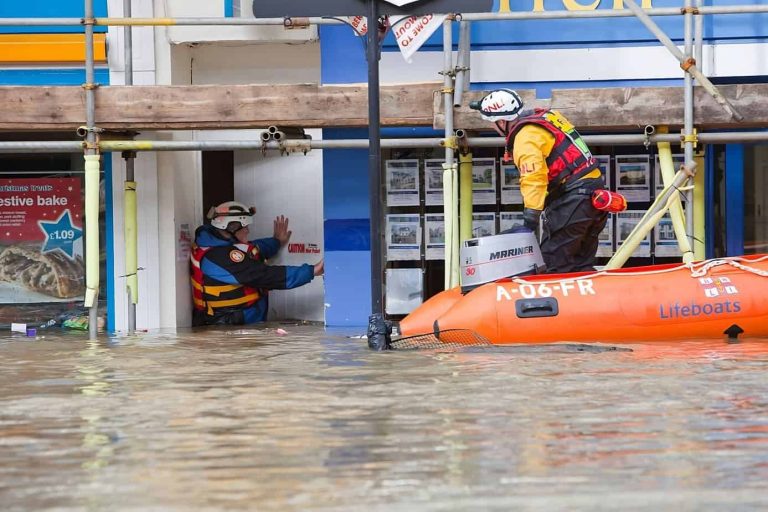
Many of America’s largest cities, including Manhattan, are paradoxically located in geographically isolated areas of the country. Although one in 38 Americans lives in New York City, much of the city is bound by water, making it only marginally connected to the mainland. Consequently, in the event of a major disaster, such as a grid outage, terrorist attack, or a national pandemic, the city’s eight million residents will be dependent on a few bridges for safe passage.

New York is not the only American city facing this geographical isolation. San Francisco, New Orleans, Portland, Charleston, Boston, and Seattle are among the many cities surrounded by water on multiple sides. This creates a precarious situation for evacuation planning, as few cities have considered their primary evacuation strategy or a backup plan in the event that reliable bridges and highways become inaccessible.

Thankfully, the same conditions that make these cities difficult to evacuate by car or on foot make them perfect for evacuation by boat. Evacuating by boat offers numerous advantages, including speed, the ability to travel further than land-based transportation, and the capacity to carry heavier loads. Additionally, boats rely on nature’s highways, such as coastlines, lakes, and rivers, rather than oil and gas.

However, navigating the sea comes with its own set of challenges and obstacles. Specialized gear, navigational skills, and safety precautions must be taken into account before embarking on a boat evacuation. While residents of New York may have only a few bridges to cross if evacuating by foot or car, a boat can be launched from almost anywhere and travel across the river to Newark, upstream along the Hudson to Albany, or out to sea.

Gearing Up

To increase your chances of survival in an emergency evacuation, it’s crucial to remain adaptable. Instead of creating multiple bug-out kits for different scenarios, consider crafting a flexible primary bag that caters to any disaster that may occur. After all, the fundamentals required to survive while evacuating on foot are not drastically different from what you would need while in a boat. Make sure to have a checklist prepared with the essential gear required for boat evacuations to avoid relying solely on memory during a critical situation.

Begin by scrutinizing the contents of your bug-out bag. It should already consist of several essentials necessary for your coastal evacuation, such as a first-aid kit, shelter, and a sleeping bag. Assess which items need to stay dry to be useful and which ones could be salvaged if your boat capsized. Sleeping bags, clothes, and first aid kits are crucial for survival and must remain dry. However, your cookware and sleeping pad can withstand a certain level of moisture.

You should avoid carrying any perishable food with you in a survival situation, but your meals can easily become unappetizing if they get submerged in water while in your boat. To keep your food dry at sea and prevent any unwanted critters, such as bears, from approaching your camp, consider using a Loksack or other food-grade storage that is smell-proof.

In addition, try to pack your bug-out bag in a way that maximizes its flexibility. Small adjustments can be a lifesaver during an emergency. Rather than storing fragile items like maps or electronics in a traditional stuff sack, consider placing them in a small dry bag or even a freezer zip-seal bag.

Another suggestion is to line your pack with a trash compactor bag, which can prevent water from seeping into your gear if you need to leave by boat quickly. Take a look around your home and think about which other household items could be repurposed during a disaster.

Lastly, ensure that each person in your group has a properly fitting life vest and attach a whistle to each one in case you become separated.

Bug-out boats

Reflect deeply on your specific circumstances when selecting a boat. What weather and tidal patterns are you likely to face? Will your vessel be easily accessible in the event of a disaster? Will it be easily accessible to unscrupulous individuals? If you don’t live near the water, how will you transport the boat there?

Numerous rural and suburban inhabitants already own watercraft for leisure or sports activities, and these can generally be easily adapted for survival situations. For instance, canoes in the Great Lakes area, white-water rafts in the Rockies, and sailboats on the coasts. Therefore, take the time to consider how you can modify the gear you already possess to fit the conditions you’ll face.

f this is your first time buying a boat, make sure to consider your limitations and needs. If space is limited or you lack sufficient indoor storage for a larger vessel, an inflatable raft may be a better option. These rafts have numerous benefits, including easy storage in your apartment alongside your bug-out bag and other survival gear, which allows for quick access in the event of an emergency.

In addition, they are lightweight, which means that even if you don’t live near the water, you can still carry your boat to the shore without the need for a vehicle. This feature is particularly helpful when you have to portage around a physical obstacle like Class 5 rapids or a collapsed bridge. If you decide to purchase an inflatable raft, make sure it has a reinforced hull made of high-pressure fabric, such as the Explorer series from Sea Eagle.

An inflatable raft’s size offers flexibility during a bug-out situation. If there is a portage longer than a few miles or if traveling by stealth is necessary for a section of coastline, a traditional boat may need to be abandoned. However, with an inflatable raft, you can simply pack it away, attach it to your bug-out bag, and quietly disappear into the woods.

lostbannerlong

Navigate To Safety

To simply gear up and launch into the water is not enough. It can be dangerous to aimlessly paddle out into open water. It’s crucial to have a safe location prepared and know how to reach it under various conditions and with multiple people in your group.

The importance of having the right maps cannot be overstated in any survival situation, including a boat bug-out. Make sure to keep maps of your local waterways close to your bug-out gear, and don’t forget to include maps of the entire river or coastline section that you may need to navigate to reach safety, not just the area that is within an overnight trip from your home.

If you’re planning to bug out by boat in canoe country, it’s crucial to know the best portage routes to reach your destination. Additionally, be aware of how white-water rapids can change from a Class 2 to a Class 4 based on the time of year. Knowing your endpoint is also important, so if you’re heading to a port, research in advance the best place to dock your boat. If you prefer to keep a low profile, explore river bends or ocean coves that could offer suitable shelter.

Before deciding on bugging out by boat, consider the risks specific to your area. White-water rapids are a common hazard throughout the country, so ensure that your boat can handle them and that you have enough experience to navigate them safely. Also, be mindful of predators that are unique to your local waterway. For example, if you live in the Southeast, carry an extra flashlight to watch for alligators at dusk. If you’re traveling on the Great Lakes, be aware of the dangers of rip tides. On the ocean, it’s advisable to carry hydrocortisone cream in case of a jellyfish sting.

Don’t overlook the importance of being prepared for the specific risks in your area when planning a boat bug-out. Knowing the best portage routes, understanding the changing conditions of white-water rapids, and being aware of local predators are crucial. Take the time to research and plan accordingly to ensure a safe and successful journey.

Family evacuation

family evacuation using a bug out boat

To prepare for a coastal evacuation plan, start by discussing it with your family. They should know the most efficient way to get to an agreed-upon meeting place from any place they go regularly, like school, work, or relatives’ houses. This will help ensure that everyone knows what to do and where to go in case of an emergency.

Assigning specific responsibilities to each family member can help keep everyone focused during a high-stress situation. Younger children can be responsible for gathering certain items, and older children can learn important skills like how to navigate and handle a boat. By assigning roles and responsibilities, each family member can feel like they have a purpose and are contributing to the group’s safety.

Finally, practicing your evacuation plan is critical to ensuring its success. Unannounced practice drills that simulate real-life emergency scenarios can help identify flaws in the plan and improve it before a disaster strikes. If any family member is uncomfortable with any aspect of the plan, it may be necessary to revise it to ensure that it is as effective as possible.

Bug-out boat on the go

If you’re looking for a space-saving and portable option for your bug-out boat, the all-purpose backpack from Sea Eagle might be just what you need. Included in the packages for their inflatable stand-up paddle boards and RazorLite kayaks, this backpack can also be purchased separately and fits other models as well. Here are six different options from Sea Eagle that can be packed in the backpack and carried on your back for easy transport and storage.

NeedleNose: This board provides increased flotation, rigidity and stability for different environmental conditions. It comes in three sizes: 11’6″, 12’6″ and 14′.

LongBoard: Designed for comfortable paddling on both flat water and surf, this board allows you to stand up or sit down. It comes in two sizes: 11′ and 12’6″.

Explorer: With a combination of buoyancy and durability, this kayak is designed to maneuver through the toughest whitewater, open-water and surf like a race car. It comes in three sizes: 9’10”, 12’6″ and 14′.

RazorLite: This inflatable kayak is the world’s first and only made entirely with Drop Stitch technology, making it super light and easy to maneuver. It can reach speeds up to 6 mph and cut through waves cleaner, straighter and sharper. It comes in two sizes: 12’10” and 15’6″.

SE9 Motormount Boat: If you already have your own boat motor or prefer to row, this lightweight inflatable fishing boat can hold up to four people and works great with small gas or electric motors. It comes in one size: 11′.

FastTrack: This kayak features a sharper, narrower, tapered bow for faster entry through wind, waves, current, and water, along with a rigid, inflatable keel for a faster, smoother paddling experience. It comes in two sizes: 12’6″ and 15’3″.

Concluding

BHHSBMar19v1

A catastrophic event is inevitable, and being prepared with survival bags filled with necessities for three days or more is crucial. Knowing the rendezvous point and having a route to safety marked on a map are also important, but in case the roads are unusable, having a backup plan is essential. For many Americans, this means preparing for a coastal evacuation.

Other Useful Resources:

Including An Inflatable Boat In Your Bug Out Plan

Learn how to Safeguard your Home against Looters

How To Buy A Canoe – Tips And Recommendations

Knowledge to survive any medical crisis situation during a major disaster