
trying to figure out | Survival Monkey Forums



Next-gen fighter not dead, but needs cheaper redesign, Kendall says
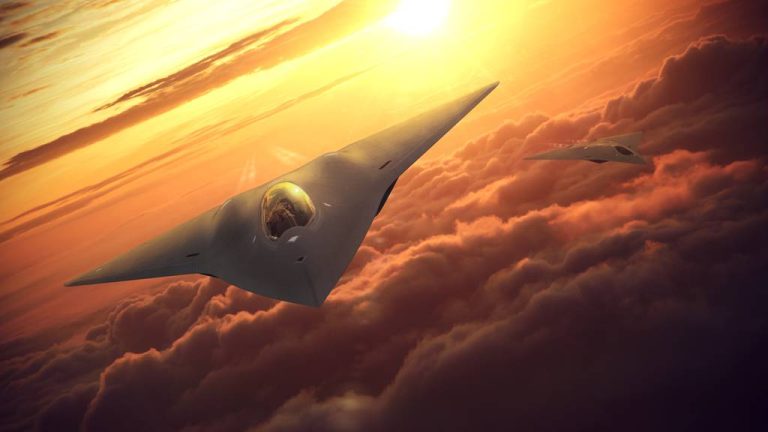
The U.S. Air Force has not abandoned its program to build an advanced next-generation fighter, but it does need a redesign to get costs under control and better integrate its planned drone wingmen, the service’s secretary told Defense News in an exclusive interview.
Secretary Frank Kendall also said a revamped Next Generation Air Dominance fighter platform could end up with a less complex, smaller engine than originally intended to try to hold down its price.
“The family of systems concept of Next Generation Air Dominance is alive and well,” Kendall said June 28. “I can tell you that we are looking at the NGAD platform design concept to see if it’s the right concept or not. … We’re looking at whether we can do something that’s less expensive and do some trade-offs there.”
NGAD is intended to replace the F-22 Raptor fighter fleet in the 2030s. It is a highly classified program featuring a crewed sixth-generation fighter with adaptive engines that can switch to the most efficient configuration as flying conditions change. The effort also calls for autonomous drone wingmen — known as collaborative combat aircraft, or CCA — and other new systems such as cutting-edge sensors, weaponry, and technology that improves the jet’s ability to connect with satellites and other aircraft.
Top Air Force officials have repeatedly stressed such a network, including aircraft beyond the capabilities of fifth-generation F-35 jets, will be necessary to win wars.
“It is crystal clear to us that in order to get into the early to mid-[20]30s with a force that can win, we have to get to a sixth-gen fighter, and that’s NGAD,” retiring Lt. Gen. Richard Moore, who was the Air Force’s deputy chief of staff for plans and programs, said in April 2023.
But the price tag for such a system has long been a looming stumbling block, and rumors have swirled in recent weeks that NGAD might be endangered as the cash-strapped Air Force draws up its fiscal 2026 budget. The Air Force is now in the process of modernizing two expensive legs of its nuclear triad, even as it faces rising personnel costs and deals with the fallout from the Fiscal Responsibility Act’s budget caps for FY25.
At an Air and Space Forces Association event in June, Air Force Chief of Staff Gen. David Allvin hedged when asked whether the service can proceed with NGAD given its tight budgets. He later told reporters the service is still considering which way to go with the program.
Kendall also told Aviation Week that the service is having to reconsider its spending plans for FY26 as competing priorities mount up, and that it must identify the mix of systems necessary to provide dominant air power.
In his interview with Defense News at the Pentagon, Kendall said NGAD is now expected to cost roughly three times as much as an individual F-35 Joint Strike Fighter. With F-35s costing about $80 million to $100 million, that means NGAD’s price tag could be verging on $300 million apiece — and would greatly limit the size of a its potential fleet.
“It’s a very expensive platform,” Kendall said. “It’s three times, roughly, the cost of an F-35, and we can only afford it in small numbers.”
When asked what target cost he wants for NGAD, Kendall said the Air Force isn’t far enough along to set such a goal — but added with a chuckle: “Ideally, I’d like to get it down to less than an F-35, or at least in the ballpark of an F-35. F-35s, as you know, are not cheap airplanes.”
Kendall reiterated that the Air Force will build a next-generation crewed fighter platform, and said he believes it will be based on the technologies developed for the Aerospace Innovation Initiative. That initiative was a strategy — which Kendall kicked off in his previous role as the Pentagon’s acquisition chief, and the Defense Advanced Research Projects Agency initially led alongside the Air Force and Navy — to develop prototype X-planes and a next-generation engine that ultimately led to the current NGAD effort.
However, Kendall said, “the design concept that came out of that [initiative] is a very expensive concept. Scale matters, numbers matter, and so does time. We want to get something there quickly.”
Along with looking for ways to bring down costs, Kendall said the Air Force wants to ensure NGAD can take full advantage of CCAs as it is redesigned. He noted the CCA concept came along after the service had begun working to develop NGAD.
“Having something that’s optimized to work with CCAs is another consideration as we look at NGAD,” Kendall said.
A smaller, cheaper engine?
The Air Force is also looking at NGAD’s cutting-edge propulsion system — a so-called adaptive engine — as it reconsiders its future fighter concept, Kendall said.
Clint Hinote, a retired three-star general and former deputy chief of staff for strategy, integration and requirements in the Air Force, told Defense News on June 21 that the Next-Generation Adaptive Propulsion program was quite expensive and could be driving up NGAD’s overall costs.
“The last numbers I saw on NGAP [Next Generation Adaptive Propulsion] were pretty high,” said Hinote, who was previously in charge of the Air Force Futures organization. “I do think that’s a factor. I don’t know if that’s the only factor, or the factor that’s really contributing to this decision. But it is true that the NGAP program, the development of an adaptive engine for the NGAD, was very costly.”
When asked if the propulsion system’s cost is making it harder for the Air Force to afford NGAD, Kendall replied: “What we’re looking for there is the most cost-effective propulsion system for the platform.”
The Air Force still wants to use the engine technologies it developed to give NGAD more range and fuel efficiency, he said. But as it seeks to bring costs down for NGAD, he noted, “the way you do that is if you can reduce the complexity, but also the size of the engine.”
While the engine and other systems intended for NGAD represented a technological leap forward, Hinote said, it was not out of reach from what he saw before he retired last year.
“We were making really good headway,” Hinote said. “High-pass engines, sensors — all that was coming together, I thought, pretty well.”
The adaptive engine technology that would be the foundation of NGAP is “revolutionary,” Hinote added.
General Electric Aerospace as well as Pratt & Whitney have each developed their own versions of an adaptive engine. The engine’s ability to shift its configuration to best respond to any given situation would be a major advancement in propulsion technology, Hinote said.
“If the [airplane’s] need is efficient cruise at high altitude, then [the adaptive engine would shift to a configuration] that looks a lot like a high-bypass engine, not all that dissimilar from the engines you’re seeing on the bottom of Airbus and Boeing airliners right now,” Hinote said.
High-bypass engines on aircraft such as 737s have large inlets that allow a great deal of air to pass through, he explained, which makes them very efficient. It’s not feasible to put an engine with such a large inlet on a fighter, but Hinote said adaptive engines can produce the same performance characteristics as a high-bypass engine at cruising speeds and altitudes.
And when a pilot needs to hit the afterburner and go to supersonic speeds, he added, “then you crank the engine down, you change the geometry of the winglets, and now you have a totally different engine that adapts to the demand given by the pilot.”
But those capabilities don’t come cheap. The cost of an adaptive engine was one of the factors that thwarted the Air Force’s desire to put it in the F-35, along with its incompatibility with the Marine Corps’ vertical-landing version and possibly the Navy’s carrier-based variant.
When asked about the potentially high cost for NGAP, Pratt & Whitney told Defense News it is working with the Air Force to use a collaborative digital design to drive down costs.
“We have already seen improved efficiency and effectiveness, resulting in cost and time saving thanks to digital collaborative work environments,” Peter Sommerkorn, the company’s executive director of sixth-generation programs, said in the statement.
Sommerkorn added that upgrades to the firm’s ceramic matrix composites facility in Carlsbad, California, as well as its turbine airfoil factory in Asheville, North Carolina, will save money on current and future propulsion programs.
GE Aerospace referred Defense News’ inquiries to the Air Force.
Kendall highlighted an op-ed one of his predecessors as secretary, Deborah Lee James, published in Defense News arguing NGAD is too important to kill for budgetary reasons, and said he is in almost total agreement with her.
In the op-ed, James wrote the Air Force must “explore alternative design and acquisition strategies” to get NGAD’s costs down and speed up its delivery. She said Congress and the Pentagon need to provide the Air Force enough funds for all of its major programs, and that the service should look to “innovative design and acquisition strategies” such as building less expensive fighters that can be more quickly made and regularly updated.
The Air Force hopes to spend more than $2.7 billion on research and development for NGAD in FY25, with another $557 million slated for CCAs. The service projects its R&D spending on NGAD to steadily rise in the years to come, reaching more than $8.8 billion in FY29, alongside $3.1 billion in CCA spending.
The Air Force has repeatedly sought to retire about 32 older Block 20 F-22A Raptor fighters — which the service says would cost too much to make combat-capable — to free up billions of dollars for NGAD. Moore said in 2023 that mothballing those F-22s would save about $2.5 billion over five years.
But Congress last year rejected the Air Force’s F-22 retirement proposal and appears poised to again stymie those plans in the FY25 budget.
The Air Force took a major step forward on NGAD in May 2023 when it sent industry a classified solicitation for the program’s engineering and manufacturing development contract. Northrop Grumman has ruled out competing for NGAD as a prime contractor, leaving Lockheed Martin and Boeing the likely two remaining contenders.
The Air Force last year said it intended to award that contract in 2024.
When asked if that contract is still coming this year, Kendall said: “I’m not ready to talk about any specific changes yet.”
Courtney Albon contributed to this report.
Stephen Losey is the air warfare reporter for Defense News. He previously covered leadership and personnel issues at Air Force Times, and the Pentagon, special operations and air warfare at Military.com. He has traveled to the Middle East to cover U.S. Air Force operations.
Can four big commands prepare the Air Force to win wars?
The Air Force is mulling a bureaucratic shuffle that would refocus the service on four key areas it believes can improve how it organizes, trains and equips airmen for war.
Those core missions — combat readiness, careerlong training, acquisition and future force planning — will eventually fall under the purview of four major organizations, dubbed “institutional commands,” in charge of force-wide planning and policymaking, Air Force officials said in public remarks earlier this month.
RELATED
The plan aims to streamline the Air Force’s fragmented internal structure, which currently spreads those missions across nine major commands that oversee various types of aircraft and geographic regions, to become more effective and mirror other branches of the armed forces.
The four commands would include:
- Air Combat Command, which would expand its focus on fighter, intelligence and other units to instead manage readiness for the entire service;
- Airman Development Command, which would handle education and training over the course of a service member’s career;
- Air Force Materiel Command, which would run acquisition programs across the force; and
- Integrated Capabilities Command, which would handle long-term planning.
Those core commands would absorb some assets from current Air Force major commands, like Air Mobility Command and Air Force Global Strike Command, to give them the resources they need to manage troops and weapon systems across the force, Chief of Staff Gen. David Allvin said in a talk at the Air and Space Forces Association June 13 and in a roundtable with reporters at the Pentagon the following day.
RELATED

In practice, it could look much like the Army, which since 2018 has spread those missions across Army Training and Doctrine Command, Army Forces Command, Army Materiel Command and Army Futures Command.
It’s unclear how the other current major commands will interact with the four overarching organizations, or whether the service will look to add more subordinate commands as well.
The Air Force would also turn each of its service components into standalone organizations that supply forces to higher combatant commands around the globe. Right now, some service components, like Air Forces Cyber, fall under Air Combat Command’s purview, while others like Pacific Air Forces and U.S. Air Forces in Europe, don’t report to a higher Air Force command and have more control over their own planning.
“We adapted to the time that we were in. … But when you think about the things that the environment asked of us, it drove us to be a little bit more diffuse and distributed,” Allvin said. “We didn’t have a clear existential threat like we had in the Cold War.”
The reorganization is the latest piece of a sweeping effort launched in February to realign the Air Force to outpace China and other advanced militaries after decades of fighting in the Middle East, when the Air Force responded piecemeal through siloed commands that focused on a single type of air mission, like bombers or tankers. Now the service wants a more holistic approach to lending those air packages to the joint force.
Some pieces of the plan, including standing up the new Integrated Capabilities Command and turning Air Education and Training Command into the new Airman Development Command, were unveiled by Air Force Secretary Frank Kendall in February.
Now, additional parts of the puzzle are beginning to emerge.
Air Forces Northern, Air Forces Southern and Air Forces Central — which supply forces to commanders in North and South America and the Middle East — would move out from under Air Combat Command to instead sit on par with the other service components like U.S. Air Forces in Europe-Air Forces Africa and Pacific Air Forces.
With less to watch over, ACC would work with “other institutional commands to generate the readiness, the exercises, have the inspections to ensure that we’re mission-ready, not just task-ready,” Allvin said.
“ACC is transitioning into a different type of a command,” he said.
That would include ensuring the Air Force’s combat wings are prepared to fight, including the attack assets that fall under so-called “deployable combat wings” or the wings that will supplement them with airlift and other assets, referred to as “combat generation wings.” They’ll leave behind separate units tasked with keeping Air Force bases running at home during deployments, as well as wings that perform their mission from home station, like intercontinental ballistic missile units.
Lt. Gen. Adrian Spain, the service’s deputy chief of staff for operations, said the Air Force predicts it will be eventually be able to resource 24 deployable combat wings, 16 of which would be active duty and the remainder from the reserves. Those wings are expected to dispatch teams of airmen from the same bases who have already trained together, rather than filling empty jobs overseas as needed from different squadrons.
Their precursor units, referred to as air task forces, are spinning up this summer at six bases across the country in preparation for deployments to the Middle East and the Pacific in October 2025. Another three are slated to replace them overseas in 2026.
ACC will need to work with the other commands to ensure airmen across the force are getting the training they need, beyond the fighter units it has traditionally managed.
“There’s going to be this relationship in building the exercises, building the training mechanism for the whole force that deploys not just what has traditionally been the fighter force,” Allvin said. “That’s where ACC is going to be really accountable and responsible for the readiness of the whole force. That’s a big mission.”
If executed well, the revamp could benefit the service, said Clint Hinote, who worked on the reorganization before retiring from the Air Force as its three-star strategy boss in 2023. He cautioned that it could encounter opposition if the service opts to move the three- and four-star leadership positions that currently govern those commands. But he argues failing to evolve would be a mistake.
“I think they do it wrong by not changing,” Hinote said.
Courtney Mabeus-Brown is the senior reporter at Air Force Times. She is an award-winning journalist who previously covered the military for Navy Times and The Virginian-Pilot in Norfolk, Va., where she first set foot on an aircraft carrier. Her work has also appeared in The New York Times, The Washington Post, Foreign Policy and more.
Marines sink moving vessel at sea with new missile in Pacific training
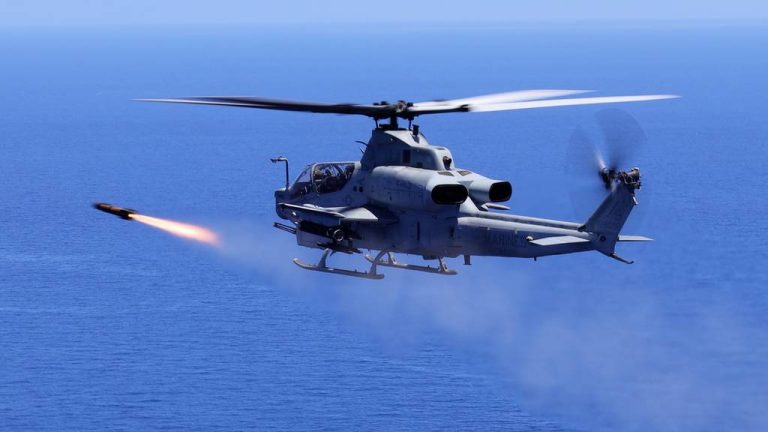
A Marine helicopter crew sank a moving training vessel near Okinawa, Japan, using a newly acquired “fire and forget” missile for the first time in the Indo-Pacific region.
The two Marine crew of an AH-1Z Viper attached to the Marine Medium Tiltrotor Squadron (VMM) 262 Reinforced with the 31st Marine Expeditionary Unit fired the missile Wednesday in training mission in the Philippine Sea in which another vessel towed the target.
Marines used the newly acquired AGM-179 joint air-to-ground missile for the first time in such a strike mission, according to a press release.
“The missile can be used to defend key maritime terrain against a wide range of targets from armored vehicles to maritime patrol craft during conflict,” wrote Capt. Pawel Puczko in the release.
As part of the training, a UH-1Y Huey helicopter accompanied the Viper on a forward arming and refueling, or FARP, which is how the Marines plan to resupply aircraft across the Pacific in any future conflict.
The missile replaces both the radar-guided Longbow missile and the laser-guided AGM-114, according to manufacturer Lockheed Martin. The missile can be fired from fighter jets, ground vehicles or helicopters.
It combines features of both the Longbow and AGM-114, according to Lockheed Martin.
The missile weighs about 114 pounds, is nearly six feet long and 7 inches in diameter, according to the company’s website. It uses a solid rocket motor and can carry a multipurpose warhead with a shaped-charge package inside a fragmenting case, according to the U.S. Navy Air Systems Command.
The weapon can be used on combat vehicles, air defense equipment, launchers, buildings, bunkers, patrol craft and command and control nodes, according to the command.
In 2022 the company announced that it had doubled the range of the AGM-179, showcasing a 10 mile strike in testing at the Naval Air Weapons Station China Lake, California, Marine Corps Times sister publication Defense News reported.
The Marine Corps did not provide distances or target speed of the recent target strike near Okinawa, Japan.
The company also added a tri-mode seeker that pairs a low-cost imaging sensor with the seeker’s semi-active laser and millimeter wave sensors.
Those capabilities allow the shooter to fire the weapon and fly away, increasing survivability and accuracy.
The sensors and range give users greater stand-off distances from enemy air defenses, Lockheed Martin program director for air-to-ground missile systems told Defense News at the time.
The Army also purchased the new missile to arm its Viper equivalent, the AH-64E Apache helicopter, Defense News reported.
A Viper crew with Marine Light Attack Helicopter Squadron 367 used the missile during Exercise Steel Knight off the California coast on Dec. 5, 2023, according to a I Marine Expeditionary Force release.
In that exercise, targets were marked with a laser designator from a U.S. Navy MH-60R Seahawk helicopter, used to guide the missile to the objective, according to the release.
Todd South has written about crime, courts, government and the military for multiple publications since 2004 and was named a 2014 Pulitzer finalist for a co-written project on witness intimidation. Todd is a Marine veteran of the Iraq War.
"American Quality?" Or imported crap? You tell me

Customer States Brand New Car Has A Weird Noise – YouTube
Clips of new (predelivery inspection) or very low mileage vehicles. Now you know why I buy used….
You have any stories?