Russian jet, US drone crash over Black Sea, US military says

0

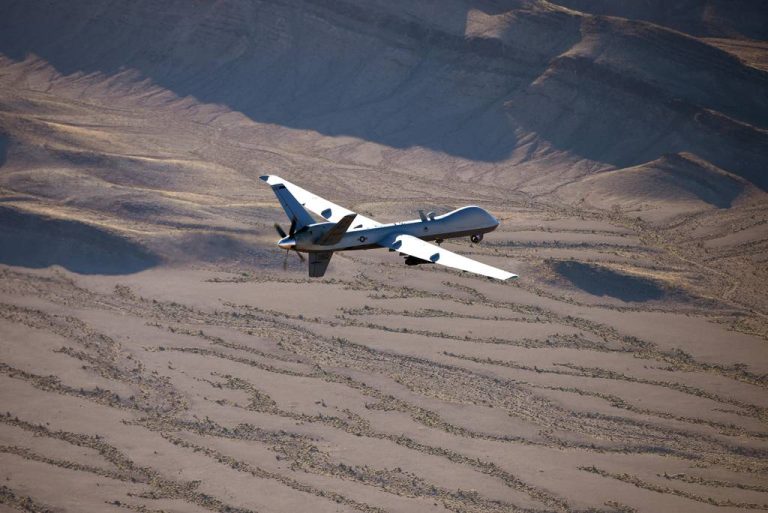
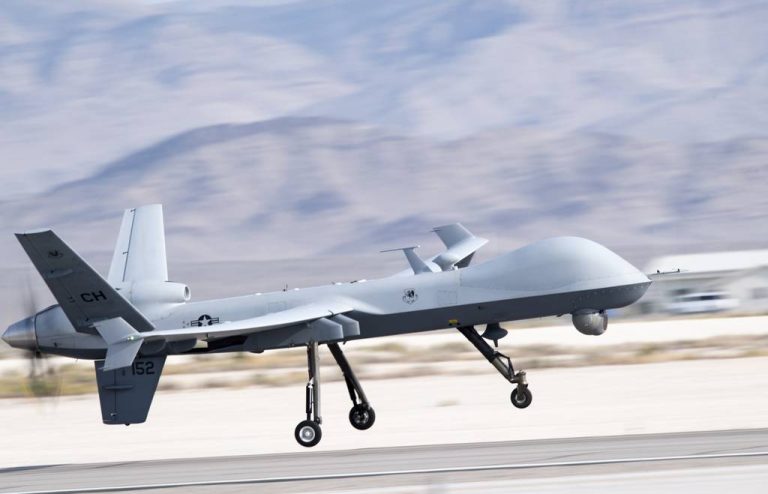
An American intelligence drone crashed after colliding with a Russian fighter over the Black Sea on Tuesday, the U.S. Air Force’s European headquarters said in a release.

The MQ-9 Reaper drone was flying a routine surveillance mission in international airspace when it crossed paths with two Su-27 fighters around 7 a.m. local time, according to U.S. Air Forces in Europe.

The Russian jets began antagonizing the unmanned aircraft, repeatedly dumping fuel on and buzzing in front of the much smaller Reaper, the Air Force said. One Su-27 drew close enough to hit the drone’s tail propeller, causing its remote operators to lose control of the plane.

“Because of the damage, we were in a position to have to essentially crash it into the Black Sea,” Pentagon spokesperson Brig. Gen. Patrick Ryder told reporters at a briefing Tuesday afternoon. “It was unflyable and uncontrollable, and we took it down.”

He declined to answer whether the drone was armed at the time.

The incident resulted in a “complete loss” of the MQ-9 and nearly caused the Su-27 to crash as well, USAFE Commander Gen. James Hecker said in a release. The command declined to answer further questions on Tuesday.

Ryder said the Russians have not recovered the MQ-9, referring questions about American efforts to find the aircraft to the U.S. Navy. The Navy referred questions to U.S. European Command, which said it had no further details to offer.

Ryder confirmed that the Russian pilot landed after the collision, but did not say where. The Defense Department is working to declassify imagery of the incident.

It’s the first time an unsafe interaction with Russian aircraft has downed a U.S. drone, according to John Kirby, a spokesman for the White House National Security Council.

“U.S. and allied aircraft will continue to operate in international airspace and we call on the Russians to conduct themselves professionally and safely,” he said.

American and European air forces routinely intercept Russian aircraft that encroach on NATO airspace and push the limits of risky maneuvers. MQ-9 drones — known for their “eye in the sky” role in counterterrorism operations — have been a key part of U.S. efforts to surveil Russia’s war in Ukraine for more than a year. The U.S. has flown Reapers from Poland, Romania, Greece and Estonia.

“These aggressive actions by Russian aircrew are dangerous and could lead to miscalculation and unintended escalation,” USAFE said.

Defense Secretary Lloyd Austin has not talked to his Russian counterpart, Sergei Shoigu, about the collision, Ryder told reporters. The State Department said it would personally complain to Anatoly Antanov, Russia’s ambassador to the United States.

President Joe Biden was briefed on the incident by National Security Adviser Jake Sullivan earlier in the day, Kirby told reporters.

“This MQ-9 was operating in international airspace over international waters and posed a threat to nobody,” Kirby said.

While Kirby acknowledged that intercepts between American and Russian aircraft over the Black Sea are common, especially in recent weeks, he said Tuesday’s run-in was “unique” and “noteworthy” for its disregard for safety and professionalism.

The U.S. has been consistently flying over the Black Sea’s international airspace and will continue to do so, Kirby said.

In 2019, Iran shot down a U.S. Navy Broad Area Maritime Surveillance—Demonstrator drone, a version of the Air Force’s RQ-4 Global Hawk, in the Strait of Hormuz, prompting then-U.S. President Donald Trump to consider a retaliatory strike. He later backtracked, citing potential civilian casualties. The two countries made contradictory claims, and U.S. military officials ultimately downplayed the incident.

The same year, the U.S. military alleged Libyan forces using Russian air defenses brought down a drone near Tripoli.

Rachel Cohen joined Air Force Times as senior reporter in March 2021. Her work has appeared in Air Force Magazine, Inside Defense, Inside Health Policy, the Frederick News-Post (Md.), the Washington Post, and others.

Joe Gould is the senior Pentagon reporter for Defense News, covering the intersection of national security policy, politics and the defense industry. He served previously as Congress reporter.

South Korea clears multibillion-dollar buy of more F-35s, SM-6 missile

0

MELBOURNE, Australia — The South Korean government has approved its military to acquire more fifth-generation stealth fighters, while also starting the process to acquire the SM-6 ship-launched interceptor, according to the country’s arms procurement agency.

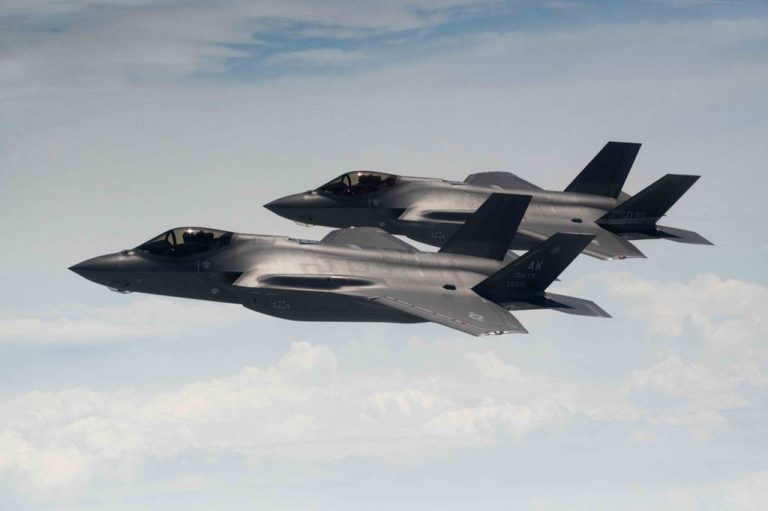
The Defense Acquisition Program Administration, or DAPA, said the Defense Project Promotion Committee approved a $2.85 billion plan to buy more Lockheed Martin-made F-35A fighter jets. South Korea is to receive the aircraft by 2028.

DAPA did not state how many more F-35As the military will acquire under the latest plan, although South Korea received the U.S. State Department’s approval for 60 F-35As in 2013 and has already ordered 40.

The committee also gave approval for the first of a two-phase, $582.8 million plan to acquire the Raytheon Technologies-made SM-6 air defense missile to equip a second batch of KDX-III destroyers equipped with the Aegis weapons system. The missiles will be used for air defense and to counter ballistic missiles for the 8,200-ton ships, which currently operate the SM-2.

South Korea has three KDX-III destroyers from its first batch, which are also known as Sejong the Great-class ships, in service with its Navy. The ROKS Jeongjo the Great, which will be the lead ship of the second batch, was launched in July 2022 and is expected to enter service in 2024.

South Korea’s Defense Ministry also confirmed it still wants to develop an aircraft carrier. The local SBS news outlet reported that the ministry responded to inquiries from a parliamentarian that it will soon start feasibility studies into the prospects of building a 50,000-ton design.

The ministry had told Jung Sung-ho, who sits on the parliament’s National Defense Committee, that it would also be possible to develop a carrierborne variant of the KF-21 fighter, locally made by Korean Aerospace Industries, within a decade if the government allocates sufficient funding.

South Korea previously floated the idea of developing a 30,000-ton class carrier for operating the F-35B, the short-takeoff-and-vertical-landing variant of the Joint Strike Fighter. But a larger ship from which the KF-21 could operate means the military can conduct flight operations using catapults for aircraft launches and arrested landings.

This would be a more complex and expensive system than F-35B carrier operations, and it is expected the ministry will make a decision by the end of this year about whether to proceed with the program and which option it will pursue.

South Korea is technically still at war with its nuclear-armed neighbor, North Korea, having only signed an armistice agreement. The North has continued to develop its ballistic and cruise missile programs, and frequently test-fires these into the waters around the Korean Peninsula.

Mike Yeo is the Asia correspondent for Defense News.

US Army’s new helicopter engine hit with another delay

0

Editor’s note – This story has been updated to include comments from GE Aerospace.

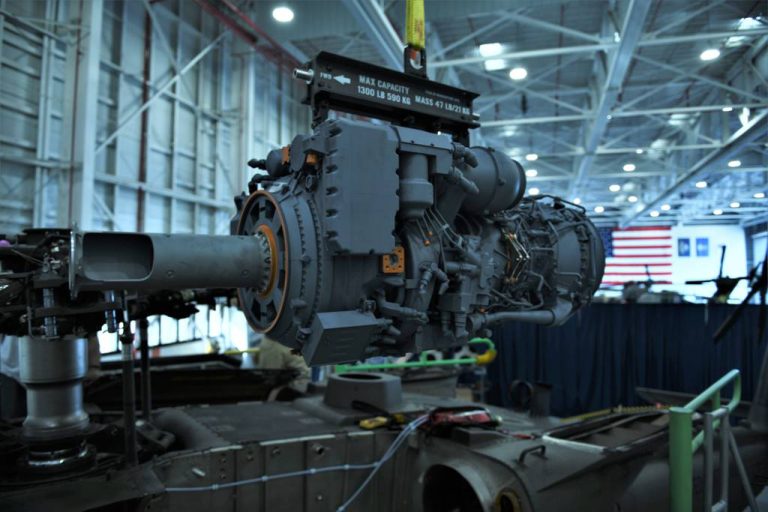
WASHINGTON — The U.S. Army’s new, next-generation helicopter engine meant to replace engines in UH-60 Black Hawks, AH-64 Apaches and the Future Attack Reconnaissance Aircraft, which is still in development, is delayed until 2024, according to the service’s acquisition chief.

The Army was expected to deliver by the end of 2022 the General Electric Aerospace-built system for the Improved Turbine Engine Program to two teams, which were competitively building prototypes of the Future Attack Reconnaissance Aircraft. But that timeline had slipped to the spring of 2023 before the new year.

Now, according to the Army’s acquisition chief, Doug Bush, the service will not deliver ITEP engines for installation on the FARA prototypes until “early next year.”

GE’s T901 engine will replace the 1970s-era T700 in both the Army’s Black Hawk and Apache helicopters, and it is the engine of choice for FARA.

Both competitors in the FARA program — Lockheed Martin and Bell — have essentially completed building their FARA prototypes, and the teams are waiting for the ITEP engines. The plan was to execute a first flight for each aircraft in 2023, albeit closer to the end of the year.

That flight schedule had already slipped by roughly a year, according to a comparison of fiscal 2022 and fiscal 2023 budget documents.

The problems for ITEP are unrelated to the engine design, which went entered initial testing in March 2022, Bush said on the sidelines of the McAleese & Associates conference. The T901 engine testing campaign wrapped up in late June 2022, accumulating 100+ hours in testing, according to GE Aerospace.

“I would characterize them as more manufacturing challenges, not design, per se. This is complicated stuff,” he said Wednesday. “Some of these parts are very difficult to manufacture. … I think we’ve got it under control, but GE has to perform.”

Once the ITEP engine is delivered, “assuming things go well, you have to start with ground testing. A brand new engine, brand new helicopter — obviously you have to do a lot of diligence on the ground before … flying around. But I think we are still on track for next year. So it’s in the category of … months, not years, of delay, but it’s there.”

In a statement sent to Defense News, a GE Aerospace spokesperson said, “The delay stemmed from a small number of components that were impacted by industry-wide supply chain delays.”

The company seems to be driving toward an earlier delivery timeline, stating, “Following assembly, we will extensively test the flight-test engines prior to delivery to the Army this fall. Per our agreement with the Army, each engine with be tested, disassembled and inspected, reassembled, and retested before delivery this fall (2023).”

In addition to the flight test engines, GE has five qualification engines currently in assembly, the company said.

Delays have plagued the ITEP engine program for a decade as the service wrestled with funding, development strategies and a protest from the Advanced Turbine Engine Company — a Honeywell and Pratt & Whitney team, which competed against GE to build the engine for the Army. But more recently, the engine experienced delays due technical issues as well as the coronavirus pandemic, which caused supply chain issues.

When GE won the contract, it touted a plan to move more quickly, but that window to accelerate has closed.

Compared to its predecessor, the T901′s 50% power increase will restore aircraft performance, and its 25% improved fuel consumption reduces fuel usage and carbon emissions. The engine is also expected to have more durable components, which will lower life cycle costs.

Jen Judson is an award-winning journalist covering land warfare for Defense News. She has also worked for Politico and Inside Defense. She holds a Master of Science degree in journalism from Boston University and a Bachelor of Arts degree from Kenyon College.

Downing of MQ-9 Reaper is latest US drone lost in contested zone

0

WASHINGTON — An American intelligence drone splashed into international waters this week, after Russian fighter jets intercepted, harassed and ultimately careened into it over the Black Sea near Ukraine, U.S. defense officials said.

The uncrewed General Atomics MQ-9 Reaper was flying a routine surveillance mission when it and one of two nearby Su-27 jets collided March 14 around 7 a.m. local time, U.S. European Command said. The drone’s propeller was damaged, according to Pentagon spokesperson Brig. Gen. Pat Ryder, rendering it “unflyable, uncontrollable, so we brought it down.”

While military intercepts of aircraft are common — and typically follow a set of engagement rules — the alleged antagonistic nature of the Tuesday incident cast it in sharp relief.

Samuel Bendett, an expert at the Center for Naval Analyses, told C4ISRNET Russian media and other parties closely monitor “drone flights in the Black Sea and the proximity to Crimea, publishing flight maps of American drones in that area.” The general sentiment, he said, is “one of anger and resentment that the U.S. has such tools to conduct surveillance and reconnaissance, without an apparent Russian response.”

“Sooner or later,” he continued, “that pent up anger was going to erupt and Russians would respond in one way or another.”

The collision marked the first known physical contact between U.S. and Russian forces since the latter’s invasion of Ukraine in February 2022.

Here are five other U.S. drones that were downed, lost or crashed in contested areas, since 2015:

Libya, 2022 and 2019

An Air Force MQ-9 Reaper crashed near Benghazi, Libya, in August 2022, prompting an investigation from U.S. Africa Command.

A command spokesperson told Military Times at the time that the drone was “operating in support of U.S. Ambassador and Special Envoy to Libya Richard Norland’s diplomatic engagements” when it went down. It was unclear what the cause was.

In 2019, officials with the self-styled Libyan National Army apologized for shooting down an unspecified U.S. drone near Tripoli, the capital, after mistaking it for a Turkish-made model used by rival militias.

The U.S. uses uncrewed aircraft in Africa to monitor extremist groups and kill militants.

Strait of Hormuz, 2019

Amid already high international tensions concerning the Islamic Revolutionary Guard Corps and violence in the Strait of Hormuz, an international oil chokepoint, the U.S. in June 2019 said a Northrop Grumman-made Navy RQ-4 Global Hawk surveillance drone was hit with an Iranian surface-to-air missile.

Air Force Lt. Gen. Joseph Guastella Jr., then the commander of U.S. Air Forces Central Command, described the attack as unprovoked.

“At the time of the intercept, the RQ-4 was operating at high altitude, approximately 34 kilometers from the nearest point of land on the Iranian coast,” Guastella told reporters at the Pentagon. “This dangerous and escalatory attack was irresponsible and occurred in the vicinity of established air corridors between Dubai, United Arab Emirates and Muscat, Oman, possibly endangering innocent civilians.”

The incident nearly resulted in armed conflict between the U.S. and Iran, as then-President Donald Trump mulled his options for retaliation, including strikes on missile and radar installations.

Iranian officials contend the RQ-4 violated their airspace.

Yemen, 2019

Houthi rebels shot down an MQ-9 Reaper over Yemen in June 2019 with what U.S. Central Command described as an SA-6 surface-to-air missile.

The drone was likely targeted with assistance from Iran, the command said at the time, citing a clear “improvement over previous Houthi capability.”

Days later, CENTCOM said, a modified SA-7 surface-to-air missile failed to take out another MQ-9 that was monitoring activities in the Gulf of Oman. The missile missed by at least 1 kilometer.

Syria, 2015

The Air Force in 2015 acknowledged a General Atomics MQ-1 Predator was downed in Syria, after previously saying contact was lost with a drone during an intelligence-gathering flight.

Syria’s official news agency at the time said air defenses hit a “hostile U.S. surveillance plane,” the Washington Post reported.

Air Force Times reporter Rachel Cohen contributed to this article.

Colin Demarest is a reporter at C4ISRNET, where he covers military networks, cyber and IT. Colin previously covered the Department of Energy and its National Nuclear Security Administration — namely Cold War cleanup and nuclear weapons development — for a daily newspaper in South Carolina. Colin is also an award-winning photographer.

T-38 Talon engine repair woes could slow pilot training for months

0

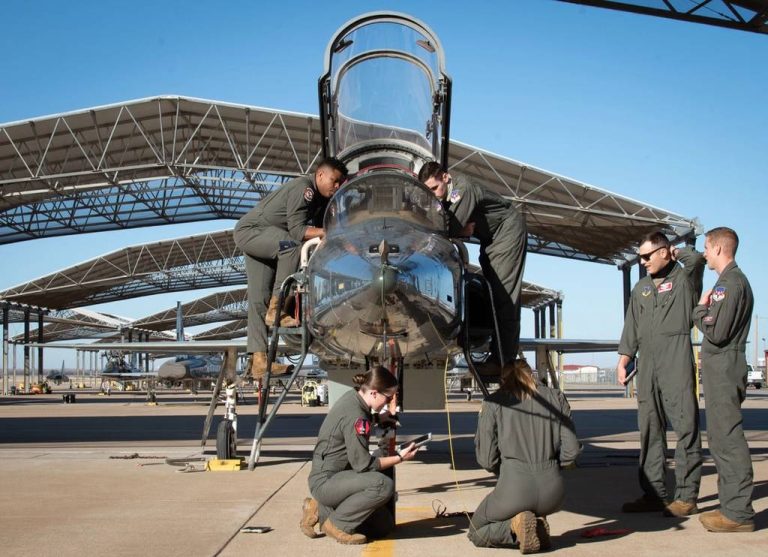
The Air Force’s T-38 Talon training jet fleet is digging out of engine maintenance delays that could slow military pilot production for at least another six months.

Service officials say the main contractor, Arizona-based StandardAero, hasn’t delivered enough freshly refurbished engines to train American and foreign combat pilots. Those deliveries have lagged the usual rate for several months due to a web of complications.

The problem comes as the Air Force struggles with a growing pilot shortage that particularly affects the fighter community. T-38s are the Air Force’s sole intermediate platform for teaching airmen to fly fighter and bomber aircraft.

After months of intervention, however, the T-38 enterprise is beginning to see improvements.

“It’s an old engine. … There’s a lot of moving parts,” Air Education and Training Command boss Lt. Gen. Brian Robinson said Feb. 16 in an exclusive interview at Joint Base San Antonio-Randolph, Texas. “But as a customer, I just want to produce pilots.”

He said the Air Force has tried to give StandardAero the time and resources to get up to speed and meet their contractual requirements. That’s paid off: The J85 enterprise produced 30 engines as required in February, and it hopes to be able to service all parts in the next month or so, according to Air Force Materiel Command spokesperson Brian Brackens.

But the Air Force said it expects to see pilot training shortfalls through the end of the fiscal year, and that the J85 turbojet engine enterprise won’t fully recover until April 2024.

Air Force Materiel Command is “all hands on deck, talking to the company that won the contract: ‘Hey, you’ve got to start producing,’” Robinson said.

The problems began with an effort to improve the engine’s long-term reliability.

The Air Force stopped using maintainers at Columbus Air Force Base, Mississippi, and Laughlin AFB, Texas, and decided to instead rely on an outside company to do full overhauls.

StandardAero won the $237 million multiyear contract to repair the GE J85 engines in May 2020. That placed the company as the sole contractor in charge of long-term maintenance, including any needed overhauls, testing, parts support and on-site service calls.

Officials expected the shift would “greatly improve J85 reliability and increase ‘time on [the] wing,’ resulting in more T-38 daily sorties,” Brackens said.

“StandardAero will offer the same high-quality service on the J85 contract as on other multiyear agreements, including the Rolls-Royce T56 engines that power C-130 aircraft and the GE F110 engines on F-15 and F-16 fighters,” the company said in a release at the time.

But several factors — including the coronavirus pandemic — got in the way, Brackens said:

  • The Air Force already had trouble getting the right parts for the aging J85 under its previous approach.
  • Efforts to build up a surplus of ready engines, hoping to bridge the gap while the old maintenance contract wound down and the new one began, failed because of COVID-19′s impact on staffing.
  • The Air Force flew less than usual in fiscal 2020 and 2021, so less funding was allocated toward buying and repairing those aircraft parts.
  • The military did not provide a complete list of acceptable parts for StandardAero to order.
  • Equipment the government provided to the company was worn out and unserviceable.

So, the J85 enterprise bought fewer parts while demand for those components grew, thanks to the more intensive maintenance that the new contract required, Brackens said.

Together those factors “strained the system and throttled production,” causing StandardAero to fall behind on their contract requirements for nine months, he added. Also, the time it has taken to produce new parts means repairs have not kept pace with Air Force flight training needs for as long as 18 months.

Brighter outlook

Now those parts are arriving sooner, and engine repair rates have consistently improved over the past three months.

In a March 15 email to Air Force Times, StandardAero said it is “aware of, and sensitive to, the engine readiness levels situation.”

The company speaks to officials within the Air Force, Defense Logistics Agency and General Electric on a daily basis to make sure the supply chain is running smoothly, said StandardAero spokesperson Kyle Hultquist. The Air Force’s propulsion directorate within AFMC has been “very complimentary of our efforts to turn the program around,” he said.

“Our engine production has been at all-time program highs recently, with last month’s engine production at 30 engines,” he said. “We expect that production rate to continue [to] increase over time, which would provide the program with sustained production levels never before seen in the program.”

Hultquist said the company has seen metrics for engine reliability increase, while reducing material costs and better forecasting its future needs. StandardAero has flagged hundreds of changes needed in the engine’s technical manuals and is using predictive maintenance to catch failing parts before they create a problem.

“StandardAero is a long-time partner of the USAF and [foreign military sales] countries and is committed to the success of this and all of our military programs,” he said.

To help StandardAero along, the Air Force has sought workarounds to add some capacity back into its training pipeline. It has temporarily shifted some of the maintenance burden onto M1 Support Services, another contractor that handles engine work, while AFMC monitors StandardAero’s progress.

In December, the service also awarded a 10-year, $84.8 million contract to California-based Aero Turbine to repair unserviceable J85 components, as well as an $18.4 million contract to General Electric for engine compressor rotors.

The service will add on new contracts as needed to heal the J85 enterprise, Brackens said.

In the meantime, Air Force spokesperson Capt. Lauren Woods said, it’s “impossible” to know precisely how the number of graduates has been affected by the delays.

Air Force Times previously reported that the service put 1,276 airmen through undergraduate pilot training last year, about 100 fewer than in fiscal 2021 and around 250 fewer than its annual goal. It is shooting for 1,470 pilots in 2023.

Fallout overseas

There’s another complication: The issue could prevent NATO from getting the steady stream of new frontline aviators it needs amid its most pressing European security challenge in decades.

At Sheppard Air Force Base in North Texas, where American airmen learn to fly along with their European counterparts in the Euro-NATO Joint Jet Pilot Training program, officials have pulled back on training new instructor pilots so they can keep its pipeline of basic flight students relatively stable.

Representatives from the program’s 14 participant countries were due to gather at Sheppard March 6-10 to discuss their priorities for the next six months and sign off on new initiatives. Officials expected that the allied nations could push Sheppard to take on more student pilots as the Russo-Ukrainian war on NATO’s doorstep continues into its second year.

But engine troubles would likely prevent the unit from upping its output.

“Due to the fact that we do not have the flying hours available on T-38, we cannot stick additional student pilots into the program without prolonging the flying training,” said German Air Force Col. Jan Gloystein, commander of the 80th Operations Group at Sheppard.

“This machine pumps out student pilots at a set date, and it has to, because they go into [follow-on training]. It cannot wait,” he said. “If you shift a week, it might kill an entire class.”

Still, Gloystein said the program is optimistic about where pilot training is headed despite what he calls the “J85 crisis.”

If Sheppard shifts some of its fighter jet training curriculum from the T-38 to the T-6 Texan II, a less-advanced aircraft used to teach basic flight skills, the base could try to grow pilot production by a “small amount” next year, Gloystein said.

“Only time will tell if we’re on the right track,” he said. “We have an engine issue at hand that will keep us, over maybe years to come, at a lower-level outcome.”

Rachel Cohen joined Air Force Times as senior reporter in March 2021. Her work has appeared in Air Force Magazine, Inside Defense, Inside Health Policy, the Frederick News-Post (Md.), the Washington Post, and others.

US Air Force secretary wants ‘another shot’ at adaptive F-35 engine

0

WASHINGTON — U.S. Air Force Secretary Frank Kendall is having second thoughts about the Pentagon’s decision to upgrade the F-35 fighter jet’s current engines instead of developing a next-generation replacement.

In a discussion at the McAleese & Associates conference in Washington, Kendall said the decision to upgrade the fighters’ current Pratt & Whitney-made F135 engines instead of developing a new adaptive engine “was the right decision, given the constraints that we have, but [a choice] that I worry about a little bit.”

“If we had the opportunity to reconsider that, I think that would be something I’d like to have another shot at,” Kendall said. “Right now, it’s unaffordable. The only service that wants the new technology is the Air Force right now, and we can’t afford it by ourselves.”

The F-35 is scheduled to receive a series of significant upgrades in the coming years known as the block 4 modernization effort, which will include the ability to carry more weapons, better recognize targets and conduct advanced electronic warfare. But to handle those upgrades — which F-35 manufacturer Lockheed Martin said will introduce about 518 capabilities — the military says the fighter will need much greater power and cooling abilities.

Since 2016, the Air Force has allocated nearly $2.7 billion for the Adaptive Engine Transition Program, which sought to fund research, development, prototyping and testing of a new kind of engine intended to provide greater thrust, power and cooling abilities. The adaptive engine model uses three streams of air for greater cooling, and has an adaptive cycle that would allow it to switch to the most efficient configuration for any given situation.

General Electric Aviation and Pratt & Whitney each developed adaptive engines as part of AETP — the XA100 and XA101, respectively. But while GE pitched its XA100 as a replacement for the F-35, Pratt said an upgrade of the current engines — which it calls the Engine Core Upgrade — would be a more cost-efficient option that would work on all F-35s.

Ultimately, the Air Force announced in its budget briefings March 10 and 13 that the military would not transition AETP to a program of record, and would instead go with the F135 upgrade.

The potential cost of an adaptive engine, which Kendall last year pegged at more than $6 billion, proved a major sticking point. So did doubts over whether it could be made to fit in the Marine Corps’ F-35B, which has an engine that swivels down to allow the jet to vertically land. While GE said it had found a way to make its engine work in the F-35B, the Pentagon was apparently skeptical.

Installing an adaptive engine into “the Marine Corps variant was going to be very, very difficult, if not impossible,” Kendall said in the March 10 budget briefing with reporters at the Pentagon.

Kendall also called the adaptive engine “a really good fit” for the Air Force’s F-35A variant on March 10.

And at Wednesday’s McAleese conference, he expanded further on what made an AETP engine attractive to the service noting that the adaptive engine would have provided more fuel efficiency than the F135 Engine Core Upgrade.

He explained the adaptive engine’s greater fuel efficiency would have translated to less fuel burned and more cost savings, plus extended range, which he described as a “really attractive” benefit — a handy capability in a fight in the large Pacific region.

Kendall said it also would have introduced competition into the F-35 engine market, which Raytheon Technologies-owned Pratt & Whitney has dominated.

If the Air Force were to decide to go it alone on AETP, Kendall said, it would be a multiyear, multibillion-dollar program — one that would have been out of the service’s reach. “It’s a major lift, and you just can’t do everything,” he added.

The Air Force plans to roll some of the technologies developed as part of AETP into its Next Generation Adaptive Propulsion program, which aims to produce similarly advanced engines for its future sixth-generation fighter known as Next Generation Air Dominance.

“The AETP technology advanced the state of the art,” Kendall said. “So we’re going to benefit from that indirectly.”

Stephen Losey is the air warfare reporter for Defense News. He previously covered leadership and personnel issues at Air Force Times, and the Pentagon, special operations and air warfare at Military.com. He has traveled to the Middle East to cover U.S. Air Force operations.

Raising roosters for meat

0

If you find yourself with a surplus of cockerels that you don’t want to keep, don’t lose hope. With proper care, these birds can be transformed into a valuable source of homegrown food.

It’s common to end up with more male chicks than you need or want, whether due to local regulations, concerns about fertilization, or fear of aggression. But there’s no reason to worry! By approaching the situation with some foresight and an open mind, excess cockerels can be raised humanely and turned into a delicious source of meat.

Determining sex

When hatching eggs, the chances of getting male chicks are roughly 50%, whether you’re using an incubator or a broody chicken. With unsexed chicks from a hatchery or farm store, the male-to-female ratio may be lower or higher than 50%, but it’s a reasonable expectation to have at least half the chicks turn out to be male. However, even if you purchase “pullets” (female-only chicks), there’s still a chance that some may turn out to be cockerels due to the margin of error in vent sexing, which has an accuracy rate of about 90%.

For breeds that can’t be autosexed or sex-linked, it may take a few weeks before you can determine the sex of the chicks. Male chicks may exhibit physical characteristics like faster comb growth, larger body size, and longer hackle and sickle feathers, as well as behavioral traits such as assertiveness and chest-bumping with other chicks. However, these signs may not be obvious in some breeds or individual birds, and it may not be clear whether you have a male bird until it starts crowing.

If you end up with more males than you want, you can try to re-home them, but keeping them is also an option. Male birds raised on your farm can be a delicious source of homegrown chicken.

Raising roosters

On our farm, we frequently hatch eggs and accept the reality of raising cockerels. Once we can determine the sex of the chicks, which usually happens around 3 to 4 weeks for the breeds we raise, we move the males to secure low tractors or hoop tractors located away from the females. This separation reduces the likelihood of conflict and allows us to raise the cockerels to an ideal weight.

The breeds we raise are dual-purpose, intended to provide both eggs and meat. Consequently, they grow more slowly than meat-specific breeds, which allows for the development of more complex and flavorful meat. Commercially raised chickens, such as Cornish Cross, are typically processed by 6 to 8 weeks of age, which results in comparatively bland flavor.

We move our cockerels frequently on pasture, ensuring that they have access to fresh bugs and greens in addition to the high-protein fermented feed we provide. In their tractors, the cockerels can dust-bathe, bask in the sun, get some exercise, and make choices about where to sleep and which bugs to chase. The dual-purpose birds we raise have small breasts and large thighs, which is a sign of their unimpaired mobility.

Our cockerels reach their peak growth at around 5 months old. If they continue to mature beyond this point, they may become more aggressive and engage in dominance-related conflict more frequently. At this point, we begin processing them.

Processing birds at home

Processing chickens for personal consumption is an involved process, but it can be done on a small scale with some basic supplies and equipment. If you are only handling a few birds at a time, you can likely make do with supplies that you already have on hand.

One essential item that you’ll need is a clean plastic garbage can lined with a garbage bag to contain the feathers and other discarded parts. You’ll also need a stainless-steel prep table, or any table that can be thoroughly disinfected before and after use.

A large plastic tub for keeping the carcasses cool in ice, sharp knives and a sharpening steel, plastic bags for the carcasses, organs, and feet, paper towels, bleach or other disinfectant, ice, and running water are also necessary.

In addition to these basic supplies, you will also need a way to scald the carcasses prior to plucking. A turkey-frying setup (burner, liquid propane tank, and sturdy stainless-steel stockpot) works well for this purpose.

selfsb b4

To prepare for processing day, we withhold supplemental food from the birds the day prior to processing. This helps ensure the birds’ digestive tracts are empty, which makes the processing environment cleaner, particularly when dressing out birds. However, whether to withhold supplemental food is a matter of preference.

On processing day, we carry each bird to the processing area, keeping them calm by talking to them along the way. We understand that this is their one “bad day” (really, a few bad moments), and we want to minimize stress as much as possible.

We keep any birds awaiting processing far from our work area so they don’t hear or smell the activities. Ideally, they shouldn’t be aware of what’s occurring. We do our processing in a sheltered area well away from the waiting birds, and we usually end up trekking out into the pasture to retrieve birds two at a time from their tractors.

Once we are ready to begin processing, we place the birds into killing cones to hold them in place. We use cut-down traffic cones for this purpose. We then quickly remove their heads with one swift cut from a sharp pair of loppers.

It’s typical for the birds to have a reflexive movement after decapitation, so we keep the bodies in the cones until they’re still. We prefer this method because it’s quick and nearly foolproof, in keeping with our aim of humane processing. However, if you’re new to processing chickens, learn how to properly dispatch a bird before you attempt it.

Next, we scald the carcasses to loosen the feathers and facilitate hand-plucking. Plucking is the most labor-intensive and time-consuming part of the process, and if your budget allows for a mechanical plucker, it’ll save you a lot of time and effort. However, we haven’t been able to justify buying a plucker for the relatively small number of birds we process, so we just do it the old-fashioned way.

Once the carcasses are cleanly plucked, we eviscerate them and then give them a final rinse. Next, we bag the carcasses and place them in ice water to keep cool until packaging. If you’re new to processing, familiarize yourself with the conditions for safely storing processed chickens until you can get them bagged and into a freezer or refrigerator.

Though we’ve used shrink bags for packaging in the past, we prefer to vacuum-seal our processed birds because we’ve had far fewer failures with vacuum-sealed bags. After recording the date, breed, and weight of the processed birds on the bags, we put them in our chest freezer until we’re ready to cook chicken. Recording this data is useful for comparing the growth rates of different breeds to inform future planning.

Techniques for tender meat

When it comes to taste, there is no comparison between the pasture-raised chickens we raise and the commercially-raised birds sold in grocery stores. Our chickens are raised in a free-range environment that allows them to move around, peck for food, and enjoy the sunshine. This lifestyle translates into a more flavorful and nutrient-dense meat, thanks to the terroir of their environment and the specific breeds we raise.

We believe in using every part of the chicken possible, as it is not only respectful but also ensures nothing goes to waste. This includes the organs, such as the gizzard, heart, and liver, which are all highly nutritious and can be enjoyed by humans and pets alike. Even if the idea of consuming organs doesn’t appeal to you, your furry friends will be grateful for the tasty treats.

When it comes to cooking the chicken, we have found that a pressure cooker is an excellent tool for making tender and delicious meals. This is especially helpful when cooking pastured rooster, which can be tough due to its age. A pressure cooker can tenderize a fully frozen bird, eliminating the need for lengthy thawing times, and it makes collagen-rich bone broth much more quickly than other methods we’ve tried.

For a slightly frozen cockerel of about 5 months old, we typically pressure-cook it for about 45 minutes. For an older rooster of 1 year or older, we increase the cook time to around an hour. Checking for tenderness is essential, and we use the fork-poking method to make sure we get it right. The result is always a tender and juicy bird that can be used in a variety of meals, including soups, ramen, sandwiches, and casseroles.

One of our favorite ways to use our farm-raised chicken is to make a warm and comforting chicken soup. This dish is deceptively simple but incredibly nourishing, thanks to the complex flavor of our pasture-raised chicken and the luscious bone broth we create from the bones. It’s a meal that not only satisfies our taste buds but also supports our overall health and wellbeing.

In conclusion, our pasture-raised chickens are not only more flavorful and nutrient-dense than commercially-raised birds, but they are also a more sustainable and respectful way of raising animals. By using every part of the chicken and making delicious meals with them, we honor their life and the impact they have on our lives.

A final word

a final word on raising roosters for meat

Growing your own food is more than just a hobby or a trend – it’s a way of life that promotes self-sufficiency, sustainability, and a deeper connection to nature. For those who are interested in taking the first steps toward growing their own food, raising chickens for meat can be an excellent starting point.

As discussed earlier, raising pasture-raised chickens provides a unique flavor profile that is hard to find in commercially raised birds. By raising and processing your own chickens, you have the power to control their diet and environment, resulting in a high-quality, nutrient-dense meat. Moreover, by utilizing the entire bird, including the organs and bones, you can maximize the benefits and minimize waste.

Pressure-cooking is an efficient method of cooking pasture-raised chickens, which saves time and energy while retaining the nutritional value and flavor of the meat. With an electric pressure cooker, you can cook a fully frozen bird and create a collagen-rich bone broth in a matter of hours. This delicious and nourishing broth can be used as a base for soups, stews, and other dishes.

Raising and processing chickens for meat is not just about the end product – it’s about the entire process. It teaches us about where our food comes from and how it is produced. It also provides us with a sense of accomplishment and pride in knowing that we are capable of producing our own food.

In conclusion, growing your own food, specifically raising cockerels for meat, can be a fulfilling and rewarding experience. It allows us to become more self-sufficient, promotes sustainable practices, and provides us with a deeper appreciation for the food we eat.

banner tlw 2 foods to hoard

Suggested resources for preppers:

7 Essentials When Choosing Chickens For Your Homestead

The #1 food of Americans during the Great Depression

Protect Your Chickens From Their Top Predators

If you see this plant when foraging or gardening, don’t touch it!
FedNow Service Launching In July – GOODBYE FREEDOM

0

FedNow Service Launching In July – GOODBYE FREEDOM

B-21 first flight running ‘a few months’ behind

0

WASHINGTON — The first flight of the B-21 Raider stealth bomber will occur a few months later than the Air Force anticipated, the service’s secretary said Wednesday.

“It’s slipped from the original schedule — that we were using as a schedule to manage by — by a few months,” Frank Kendall said at the McAleese & Associates conference in Washington, before noting he is recused from making decisions on the program due to his previous consulting work with B-21 manufacturer Northrop Grumman. “It’s still within the baseline [schedule] that we originally had for the program.”

In a statement to Defense News, Northrop Grumman said it still expects to conduct the B-21′s first flight in 2023, “informed by events and data.”

“The program remains on track to the government baseline for cost, schedule and performance,” Northrop Grumman said. “The program continues to focus on system maturity, production readiness and sustainment preparedness to best position the B-21 for first flight and an effective flight test campaign, leading to initial operating capability.”

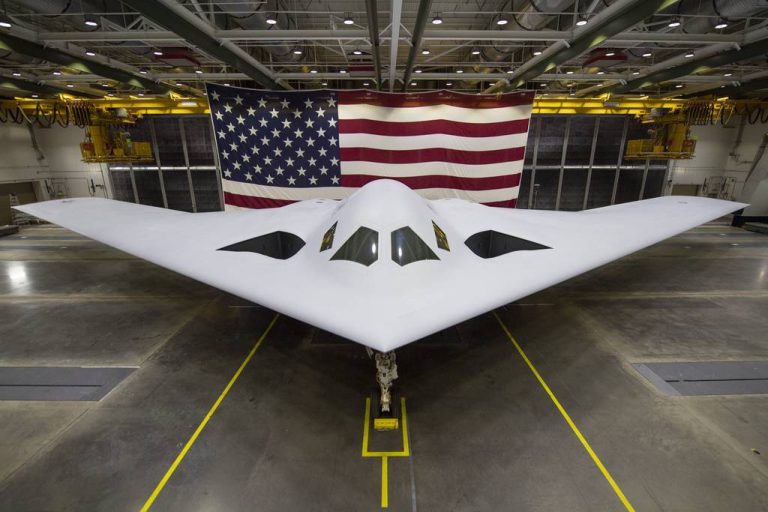
The first B-21 was unveiled to the public Dec. 2. The Air Force and Northrop Grumman never publicly provided a date for this bomber’s first flight, only saying it would follow the rollout, occur this year and be “data and event-driven.”

The first flight of the B-2 Spirit stealth bomber, the last bomber the Air Force introduced to its fleet, took place in July 1989, about eight months after its November 1988 rollout.

In a press conference with reporters after the McAleese conference, Kendall declined to say what caused the schedule to slide. He said the delay was with the internal schedule the Air Force had set, and did not indicate a more serious problem with the program.

“You manage to a schedule, which you tend to make a little bit aggressive to try to keep pressure on people to move fast,” Kendall told reporters. “There’s a baseline schedule, which is on the books … but there’s been no breach of that. But with the internal schedule, there’s been a slip of a few months.”

Kristyn Jones, the Air Force’s top finance official who is now serving as the department’s interim undersecretary, said in a budget briefing Monday the service has six B-21s in various levels of production at Air Force Plant 42 in Palmdale, California. That confirmed number is unchanged from about a year ago.

In a roundtable with reporters last week at the Air and Space Forces Association’s conference, Kendall pledged that the B-21 program would not repeat the “excessive concurrency” problems of the F-35 Joint Strike Fighter. Concurrency is what happens when an aircraft moves through development and into procurement at the same time; if problems are discovered in testing, those problems then have to be fixed in already-built or under construction aircraft.

Kendall noted he once called the F-35′s concurrency problems “acquisition malpractice,” and said the B-21 would not repeat those mistakes.

Kendall said at the McAleese event he and William LaPlante, now undersecretary of defense for acquisition, technology and logistics, structured the B-21 program during the Obama administration “to be aggressive, but not crazy.” At the time, Kendall held the job LaPlante does now, and LaPlante was the Air Force’s assistant secretary for acquisition, technology and logistics.

“Given the threats that we face, we need to take some risk,” Kendall said. “There’s no such thing as a risk-free program. But there’s prudent risk, and there’s crazy risk.”

Because the B-21 is a completely new aircraft design, Kendall said, it’s wise to conduct some flight testing and make sure “the hard things to do” are successful before committing to production.

“But that doesn’t mean you want to do all the flying program before you start production,” Kendall said. “You want to do enough to feel comfortable that the design is stable, and that what you take into production isn’t going to have to have major modifications after you’ve made that commitment.”

In January, Northrop Grumman executives said in an earnings call the company expected the Air Force to award the first production contract for the B-21 later this year.

But at the AFA conference, Kendall and Air Force acquisition chief Andrew Hunter declined to say whether they were planning to award such a contract in 2023, and said the service is focused on the bomber’s first flight.

The first B-21, which is numbered 001, has been undergoing ground tests in recent months in preparation for its first flight to Edwards Air Force Base in California, where the Air Force will conduct further flight tests.

Stephen Losey is the air warfare reporter for Defense News. He previously covered leadership and personnel issues at Air Force Times, and the Pentagon, special operations and air warfare at Military.com. He has traveled to the Middle East to cover U.S. Air Force operations.

repeating crossbow full plans

0

mechstdr submitted a new resource:

repeating crossbow full plans – repeating crossbow, multi-shot (5)

Read more about this resource…