US Air Force plans to request 72 fighters every year

0

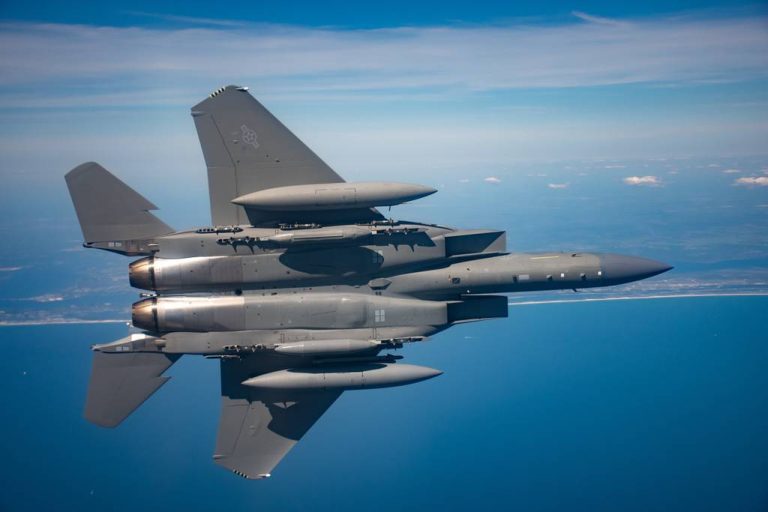
WASHINGTON — For the first time in recent history, the U.S. Air Force this year directly asked Congress for the full complement of 72 fighters it says it needs in its next budget request. And the general in charge of planning for the service’s future said Thursday this won’t be the last time.

Top Air Force leaders have said for years that it needs to buy at least 72 new fighters each year to both modernize its fighter fleet and lower the age of the average plane. If it doesn’t bring on that many new fighters annually, generals warn, the service won’t have enough new aircraft to replace aging and retiring fighters, such as the F-15C.

But that goal has long been out of reach. For years, Congress has approved fighter procurements that are below the Air Force’s desired goal, sometimes significantly so, and the service hasn’t asked for everything its leaders say it needs.

The fiscal 2024 budget proposal released in March broke that trend by directly asking for money to buy 48 new F-35As and 24 F-15EX Eagle IIs.

And in an online forum hosted by the Mitchell Institute for Aerospace Studies, Lt. Gen. Richard Moore, the Air Force’s deputy chief of staff for plans and programs, said that won’t be “a one-time thing” — a sign of how the service is changing its strategy for budget planning.

“This year, for the first time since I’ve been in this business, there are 72 new fighters in the Air Force’s budget,” Moore said. “We’re super excited about that. … I certainly think you’ll see it again.”

Expectation vs. reality

Typically in recent years, the Air Force has not asked for everything it wants in its base budget request and included some desired items in an unfunded priorities list.

For example, the FY23 budget request originally asked for 33 new F-35As and 24 F-15EXs — 57 in all. The service asked for seven additional F-35As as part of its $4.6 billion wish list that year.

Congress eventually approved a total of 43 F-35As, along with 24 F-15EXs, for a total of 67 fighters.

But the Air Force is shifting away from that approach as it tries to more reliably plan for future needs, Moore said.

“Some of the things we’ve talked about over the last several budget cycles are now a part of the base budget,” Moore explained. “They’re not a part of the unfunded priorities list, they’re not a wish list. Seventy-two fighters is a great example.”

The Air Force’s $2.5 billion wish list for FY24 was a little more than half the size of the previous fiscal year’s list, and did not ask for any additional fighters.

It asked for more than $633 million to accelerate the delivery of the Boeing E-7A aircraft that will replace the E-3 Sentry, and nearly $64 million to buy a dozen conformal fuel tanks for the F-15EX, which will extend their range and weapons capacity.

But while the Air Force wants to make it a trend to ask for 72 fighter, Moore said some of this depends on Lockheed Martin’s ability to build F-35s.

“As we reach what we believe is a sustainable fleet size in what we need in the F-15EX, we’ll have to see what capacity is available in the F-35 world, or whatever else it may be that we look at,” Moore said. “Right now, it’s predicated on the fact that we have two hot fighter production lines, and that will be the case by the middle or the end of the” Air Force’s spending plan over the next five years.

The service now plans to buy a total of 104 F-15EXs, with the final 24 scheduled to be requested in FY25. Air Force budget documents show the service expects to request 48 new F-35s each year through FY28.

Moore said the defense-industrial base also has limitations, including lingering supply chain and workforce issues stemming from the COVID-19 pandemic, that would make it hard to bring on more than 72 fighters per year.

“We will bring on advanced capabilities at the max rate we can,” Moore said. But “the defense-industrial base can only support so much procurement.”

Moore also said the budget proposal shows how the Air Force intends to update its fighter fleet with future capabilities — some of which are still being designed — to be able to counter China in a possible future war.

Moore said the Air Force’s plan to retire 32 block 20 F-22A Raptor fighters would save roughly $2.5 billion over five years, which would be steered toward the sixth-generation Next Generation Air Dominance platform.

“It is crystal clear to us that in order to get into the early to mid-[20]30s with a force that can win, we have to get to a sixth-gen fighter, and that’s NGAD,” Moore added.

While those F-22s earmarked for retirement are fifth-generation fighters, Moore said, they aren’t combat-capable and never will be without a significant investment. Updating them with modern communications systems, electronic warfare capabilities and weapons would take about a decade to get started, cost about $3.5 billion and take Lockheed Martin’s already short-staffed engineers away from the F-35 program’s block 4 modernization effort.

“That is a trade to us that doesn’t make any sense at all: to upgrade aircraft a decade from now at great expense, while impacting the F-35 block 4 at the same time,” Moore said. “We don’t think that’s a viable course of action.”

Moore also said focusing on research and development investments is a top priority for Air Force Secretary Frank Kendall.

In a sign of how important Kendall sees this effort, the Department of the Air Force’s proposed budget for research, development, test and evaluation would rise nearly $5 billion to $55.4 billion in its FY24 budget proposal — a nearly 10% increase, and most of the department’s proposed total budget increase of $9.3 billion.

That wave of R&D is crucial, even if some of those programs don’t end up going into procurement.

“The secretary actually is fine with that,” Moore said. “He believes that if we don’t do the research and development now while we have time on our side, when the time comes that we need to put things into procurement, there’ll be nothing to procure because the research and development won’t have been done yet.”

Stephen Losey is the air warfare reporter for Defense News. He previously covered leadership and personnel issues at Air Force Times, and the Pentagon, special operations and air warfare at Military.com. He has traveled to the Middle East to cover U.S. Air Force operations.
A recap of news and tech from the Navy League event

0

NATIONAL HARBOR, Md. — U.S. military and defense industry officials flocked to the Navy League’s Sea-Air-Space conference south of Washington, D.C., this week. And so did Defense News, C4ISRNET, Marine Corps Times and Navy Times reporters.

From breaking news about an unmanned technologies hub within U.S. Southern Command to industry collaboration on the Navy’s next command-and-control aircraft to be used if nuclear war breaks out, here’s what you may have missed:

  • The U.S. Navy and Marine Corps are nearing an agreement on the requirements and cost of the Landing Ship Medium program, formerly called the Light Amphibious Warship, after the services previously diverged in their visions for this program. Click here to read all about it.
  • The F-35 Joint Strike Fighter will need a more resilient supply chain to ensure the military can keep it flying in a future, highly contested war, according to a U.S. Air Force officer in charge of the program. Get all the details.
  • The U.S. Navy is testing technology developed as part of its secretive Project Overmatch using the Carl Vinson Carrier Strike Group in the waters off California, a move one official described as the “starting gun.” Find out more.
  • U.S. Marines may soon use uncrewed systems and robots to gain an upper hand in faraway places like the Indo-Pacific region. Here’s what that could look like.
  • Nearly 200 of the Amphibious Combat Vehicle’s basic variant were already fielded to the U.S. Marine Corps, with several other variants coming soon. Find out what the service has planned.

Colin Demarest is a reporter at C4ISRNET, where he covers military networks, cyber and IT. Colin previously covered the Department of Energy and its National Nuclear Security Administration — namely Cold War cleanup and nuclear weapons development — for a daily newspaper in South Carolina. Colin is also an award-winning photographer.

Knots for tying stuff down

0

I take out 2-3 loads of stuff, 2-3 times a week. Sometimes, I need to secure the stuff in the back of my truck. On the anchor end, I use a Siberian hitch/evenk knot tied with a quick release, but I run a second quick release loop through the first one for security. Sure fast.
Siberian hitch – Wikipedia

On the other end, I use a truckers hitch to tension and tighten everything down. Same thing, end with a quick release with a second one through the first loop for security.

Trucker’s hitch – Wikipedia

I use that same set of knots when I set up a ridge line for something, like a tarp shelter for camping.

Only thing is that if you have a big load on the rope, the loop used to pass the end of the rope through for tightening, can be jammed tight and just pulling on it may not release it. No matter for my light loads and even ridge lines most times. If the load is heavy, I will use this.


Hello from Qwertyportne | Survival Monkey Forums

0

  1. Hello, just joined the forum and look forward to participating. For most of my life I’ve lived in the country where I had enough acreage for a garden, compost piles, chickens and a building large enough to store food, water, gas and so forth for several years. Now, in our senior years, my wife and I live in a condo where that approach to survival just isn’t possible. We have space to store enough food and water for maybe six months or so. Beyond that, well, we’re sol. For a year or so after moving into our condo, we had the mindset that at our age, any SHTF, apocalyptic scenario was unlikely to happen before we were both in the ground pushing up daisies. Lately, however, the news around the world looks ominous to say the least. One option is that we locate a group of like-minded survivors in some rural area where we can bug out to if things get ugly before we die. Meanwhile, life is good as long as the idiots in our government, and other governments, don’t do anything stupid until we are gone. Everyone dies. Survival is saying not today. Cheers to all you survivors!


  2. VisuTrac

    VisuTrac
    Ваша мать носит военные ботинки
    Site Supporter+++

    Welcome aboard! Glad you found us!


survivalmonkey SSL seal


survivalmonkey.com warrant canary

Mind control: we can make pro gun people into antis

0

Pretty much boils down to "we should be able to get them agree to ban high capacity magazines".
Mmmmmm nice try by you can turn over a bar stool and go f your self 4 times.

Magnum rifle, need or want?

0

Dangerous wounded game up close and personal with a Browning A5 loaded to the gills with slugs.

Some old heads used to rechamber 8X57 to 8X63 or 8mm-06 another was a 8MM Mauser barrel change to 35 cal to 35 Whelen, look up extending the magazine in a Mauser basic cut and weld folower remains the same or get a magnum follower.

People have taken a P14 Enfield and built it into a 45-70.

There are plenty of pawn shops with some exotic calibers but before you buy you need to research the round and how much the dies and brass cost a cheap rifle is like a free puppy it’s hidden cost is way more than one thinks.

If anyone wants a true magnum but has reservations just remember that overall rifle weight is relevant to recoil getting it up to 10 pounds with glass rings bases to leading the stock with lead shot, you want shot so it can move with recoil, One of the best accessories is a Kickeze recoil pad.

Some thinking undercuts the basic tenant of killing power, the bullet is more responsible for this effect heavier bullets penetrate deeper the bullet design is important so the bullet does not break up and too much expansion does not allow for the deeper penetration needed to anchor the game in place because if it runs your chance of loosing your game increases. there is a sweet spot for every caliber where you get the velocity and the penetration with less rainbow effect of trajectory for example the 30-06 is 180 grain bullets. Comparing the 150 to 180 are within inches for impact increasing to 220 grain you almost double the bullet drop longer ranges the effect is exponential. at some point a bullet drop scope is a real help out to 500.


National Vaccine Injury Compensation Program

0

go down a ways on the page and there is a list of what is in the vax's…

I currently see 3 list of vaccine injury and they are rather long…

National Vaccine Injury Compensation Program | HRSA

Hurricane versus solar panels and wind turbines

0

It would be much easier to comment on this if there were a link to the actual media story.

Anyway, I can take a good guess how it went: They found one single solar installation that somehow survived the storm. The media then extrapolated that out to suggest that renewables are superior to everything and if the entire island had solar, or wind, or whatever, all the power would be on right now and the world would be wonderful. They didn’t forget to slip in something preachy along the lines of “it’s for the children” or “for our future” or some similar hippy canon.

If this loopy logic sounds familiar, it’s because it is also used all the time to push for gun control. It’s an old trope: Take some gun control policy or procedure that would work only 0.01% of the time, presume that means it will work for the other 99.99% of the time, and overlook all the baggage that goes with it.

The media is classically famous for left wing “if only” arguments that make assumptions even a drunk Vegas gambler on a hot streak would not go near.

People who actually use renewable/alternative energy (myself included) will tell you that it is complex, difficult, rarely cost effective, and no more hardened against disasters than anything else. In many ways, it’s more vulnerable.

On second thought, you don’t have to post a link. I think I nailed it pretty good.


A Few Notes About Shotgun Gauges and Game

0

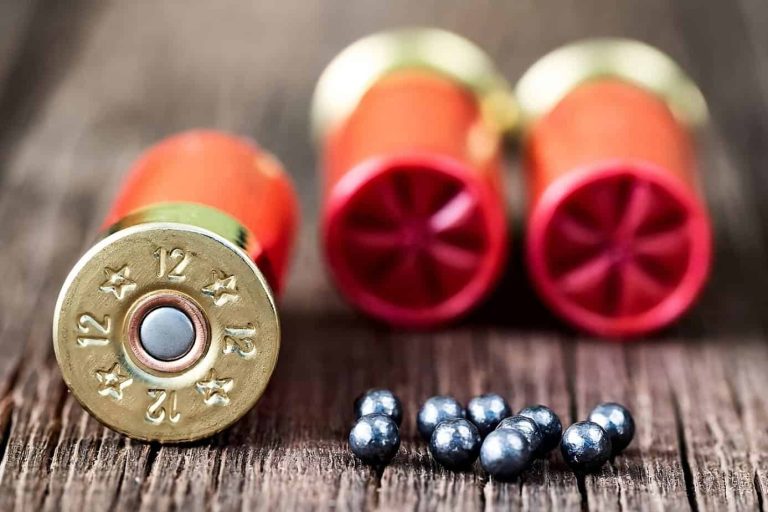
Shotguns are popular firearms used for hunting a wide variety of game, including birds, rabbits, squirrels, and larger animals like deer and bear. One of the key factors to consider when choosing a shotgun for hunting is the gauge, which refers to the diameter of the gun’s barrel. The most common shotgun gauges are 12-gauge, 20-gauge, and 410-gauge, but there are several others as well, including 16-gauge and 28-gauge.

I have a strong affinity for smaller-gauge shotguns, having used both 20 and 28-gauges for hunting quail, partridge, grouse, and doves throughout the years. These guns provide a fun and effective alternative to their larger counterparts.

While I also have a soft spot for the .410, I believe it is best used for clay shooting rather than hunting. I have used a 16-gauge for upland bird hunting and find it to be satisfactory, but it does have some drawbacks, which I’ll discuss later.

On the other end of the spectrum is the 10-gauge, which I consider to be a specialized weapon with limited hunting potential, similar to the .410. Finally, the 12-gauge is the most popular of all the gauges and offers the most versatility in terms of hunting capabilities, although it may not always be the ideal choice.

It’s essential for hunters to recognize that there is no perfect shotgun gauge for every situation. Each option has its own set of pros and cons that should be carefully considered before making a decision. Let’s delve deeper into each of these gauges to examine their strengths and weaknesses.

The little .410

Many shooters may not realize that the little .410 is not technically a “gauge” at all, but rather a “410 bore” – a name that accurately reflects its bore diameter of 0.410 inches. In contrast, all other shotgun gauges are measured differently.

The number associated with each gauge is determined by the number of round lead balls of that gauge’s bore diameter required to make one pound. For example, it takes 12 lead balls measuring 0.725 inches in diameter to weigh one pound, which corresponds to the 12-gauge.

Initially, .410 shotshells were only 2 inches in length, but today, 2.5- and 3-inch shells are standard. These shells contain shot charges ranging from about 1/2-ounce in the 2.5-inch shells to about 11/16-ounce in the 3-inch version.

While I enjoy shooting the .410 for clay targets, I do not consider it a viable option for bird hunting. It is not a good choice to start a young hunter on, as it may limit their ability to succeed and possibly cause them to lose interest in the activity. Instead, a much better option would be to start with a 20-gauge, using light loads that can be gradually increased as the young hunter grows in size and stamina.

The 28-Gauge (My Favorite)

When pursuing doves, grouse, quail, and partridge, I highly recommend utilizing a 28-bore shotgun due to its light weight and nimble handling. However, I do caution against using a 28-gauge for pheasant hunting.

While some 28 enthusiasts may disagree, I believe that it is not suitable for handling the tenacity of these notoriously difficult-to-kill birds. Attempting to do so would be unfair to the birds and would likely result in many of them being wounded and escaping.

Most hunters prefer shot sizes no smaller than #6 when hunting pheasants, with many even using shot as large as #4. Unfortunately, there aren’t many pellets in the typical 3/4-ounce shot charge of a 28-gauge. Conversely, for the smaller game mentioned earlier, shot sizes of #7 1/2 and even #8 can produce devastating results due to the denser shot patterns created by smaller pellets.

The Popular 20-Gauge

non addictive frontier morphine recipe and more v2I have many cherished memories of hunting with my 20-gauge shotguns. While hunting chukars, my little 20s have amazed my fellow hunters who were carrying 12s. On several occasions, I managed to take down multiple speedy chukars with shots that even impressed me.

Although it may lack the firepower of the 12-gauge, I feel the 20-gauge is perfectly suited for this type of game. Its speed and quick handling abilities, like the 28-gauge, provide an advantage over the larger gauges.

The 20-gauge gained popularity around the early 1960s with the introduction of the 3-inch version. It was often promoted as performing similarly to the 2 3/4-inch 12-gauge, but performance data does not support these claims. The 12-gauge has a slightly larger shot capacity and much greater potential for increased velocities over the 3-inch 20.

Moreover, the difference between the 3-inch and 2 3/4-inch 20-gauge in performance is only marginally better for the 3-inch. And the cost of the 3-inch ammunition is considerably higher than the 2 3/4-inch.

However, the good news is that a 3-inch chambered 20-gauge shotgun can fire 2 3/4-inch shells as well. I have owned an over-and-under 3-inch 20-gauge for many years, and I have never felt the need to shoot a 3-inch shell. The performance of the 2 3/4-inch shells is exceptional when loaded properly.

The 16-gauge which is rapidly becoming obsolete

Admittedly, my personal experience with the 16-gauge is limited. Many years ago, during the early stages of the requirement for steel shot when waterfowl hunting, I purchased a Browning “Sweet 16” A5 semi-automatic shotgun. At that time, it was allowed to use lead shot on National Wildlife Refuges if you were using any gauge other than a 12.

However, shortly after my purchase, the regulations changed, and my 16-gauge never got to demonstrate its effectiveness on ducks. Despite my limited experience, I do know some bird hunters who swear by their 16s.

The primary advantage of the 16 over its closest competitor, the 12-gauge, is its smaller size. However, some manufacturers just put a 16-gauge barrel on the same frame they used for their 12-gauges, rendering the 16 pointless.

So, when purchasing a 16-gauge, it is important to choose a model that is appropriately sized for its smaller bore. The typical lead shot charge for the 16-gauge is 11/8 ounces, although lighter shot charges are available, and occasionally larger 11/4-ounce loads can be found. As the shot charge increases, however, the velocities decrease to compensate for the potential of higher pressures, making it a trade-off between more shot and benefits and sacrifices.

The 16’s scarcity of ammunition is perhaps its most significant obstacle to popularity. Because it is one of the least popular shotgun gauges, ammunition can be challenging to locate, and if you do find a few boxes, the choice of loads and shot sizes will likely be severely limited.

The Venerable 12

the venerable 12

The popularity of the 12-gauge shotgun among bird hunters is comparable to that of SUVs among families. It is the most widely used shotgun gauge of all time, owing to its versatility. Although I tend to avoid using it for smaller game, it is an excellent choice for birds of all kinds and, when loaded correctly, can even be used for hairy game and deer in certain situations.

When I go pheasant hunting, I usually bring one of my 12-gauges along. For turkeys, ducks, and geese, there is simply no better option. When the government banned lead shot for waterfowl hunting, it only increased the popularity of the 12-gauge, leading eventually to the development of the 31⁄2-inch 12-gauge.

Undoubtedly, non-toxic shot options such as steel pale in comparison to lead shot in terms of killing potential. If I had to compare the performance of steel versus lead shot, I would say that a heavily loaded lead 23⁄4-inch shell provides roughly the same level of killing potential as a 31⁄2-inch shell loaded with steel.

However, if you have to use those longer shells, you will pay a premium for that pleasure, both in terms of price and recoil. Like the 20-gauge, though, a 31⁄2-inch chamber can still fire the shorter shells.

The Beefy 10-Gauge

bannerlost1I view the 10-gauge as a relic of the past, reminiscent of the days of market hunting when the main objective was to quickly fill the boat with game by maximizing the amount of shot in the air.

However, in today’s world, I see the 10-gauge as an example of excess, and I can hardly imagine any practical use for it besides hunting geese in a blind. Even then, if you are seeking higher potential, the 3.5-inch 12-gauge might be a more versatile option.

If you still insist on having a 10-gauge in your collection, it’s important to acknowledge its limitations. The shotgun is likely to be significantly heavier and kick with tremendous force, and the shells will be both expensive and difficult to find. Even if you are fortunate enough to come across shells, you will have limited options available to you.

The Bottom Line

Determining the ideal shotgun gauge for oneself is a personal decision that depends on individual shooting requirements. Personally, I take pleasure in owning various shotguns with different gauges, allowing me to choose the most suitable one for each shooting scenario. However, some hunters prefer to have a single shotgun that caters to all their hunting needs.

In such a case, the 12-gauge is likely the best option. It offers exceptional versatility and can effectively hunt waterfowl, upland birds, turkeys, or even doves. For larger game, a 3-inch chamber would be ideal, but a 23⁄4-inch chamber would suffice for other uses and be more affordable. If hunting larger birds is not your preference, you may want to consider the benefits of a smaller 20- or 28-gauge shotgun.

Suggested resources for preppers:

The #1 food of Americans during the Great Depression

What You Should Know About Hunting On Public Land

If you see this plant in the wild or in your garden, don’t touch it!

Tips For Hunting Turkeys With A Bow