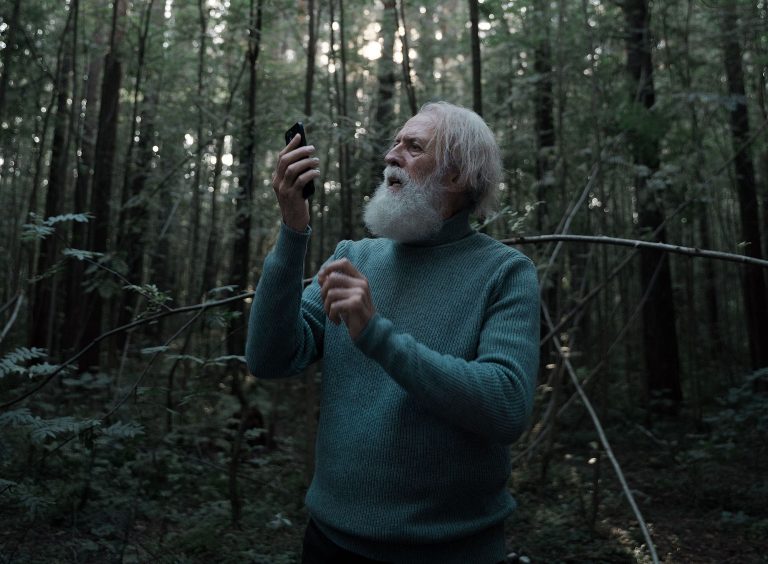
A Few Ways To Determine Your Direction Without A Compass

0

Around AD 1100, the Chinese came up with a revolutionary tool to help people navigate the unknown terrain: the practical compass. Prior to that, humanity relied on various other methods to determine the four cardinal directions, without the aid of a compass.

These techniques included observing natural phenomena and using elements in their surroundings to establish direction. With a little bit of practice and familiarity with some fundamental concepts, anyone can also learn these methods of orientation.

For centuries, people have been using the sun as a directional guide. For instance, during the day, they can observe the direction in which the sun rises and sets to determine east and west. Alternatively, they can use shadows as indicators of the sun’s position and deduce which direction is north or south.

Another crucial natural marker for orientation is the stars. By identifying constellations and following their movements in the sky, people could navigate even in the dark of night. For example, the North Star, or Polaris, has served as a reliable marker of true north for sailors and travelers for centuries.

Furthermore, nature offers many other cues that can aid navigation, such as the direction of prevailing winds, the flow of rivers, and the pattern of vegetation. Familiarity with these signs, along with some basic understanding of navigation principles, can help anyone navigate their way around an unfamiliar area.

Finding your direction during the day

Terrain Association:

Terrain Association is a reliable way of determining direction, especially if you have a map or a general idea of the location of Point A and Point B. When using a topographic map without a compass, you can use terrain association to orient yourself. This method is also helpful when navigating familiar places since you can use landmarks to guide you, such as knowing that a particular ridge is your northern boundary.

Sunrise and Sunset:

Knowing how to determine direction using the sun can be a lifesaving skill, particularly when you are lost in the wilderness without a compass. The sun can be a reliable directional indicator, especially when it is used in conjunction with other methods.

If you are facing the sunrise, then you are facing east. Similarly, if the sun is setting, you are facing west. In the morning, when the sun is still rising, it is in the east, so if you put the sun on your right, you are facing north. Conversely, after high noon, putting the sun on your left indicates that you are facing north. At noon, the sun is at its highest point in the sky, and in the Northern Hemisphere, it is due south. However, in the Southern Hemisphere, it is due north at noon.

It is important to note that the sun does not always rise and set exactly in the east and west directions. During the spring and autumn equinoxes, the sun rises and sets directly in the east and west. However, on any other day of the year, the sun will rise and set slightly to the north in the Northern Hemisphere and slightly to the south in the Southern Hemisphere. For example, in the United States, the sun tends to rise more from the northeast rather than the east. The farther you go from the equator, the more the sun will move from the due east and due west directions.

Use Your Watch as a Reverse Sundial:

You can also use your analog watch as a reverse sundial to determine the north-south line. By pointing the hour hand at the sun and drawing an imaginary line dividing the acute angle formed by the hour hand and 12 o’clock on the watch face, you can establish the north-south line. In the Northern Hemisphere, this line points to the south, while in the Southern Hemisphere, it points to the north.

banner tlw 2 foods to hoard

A Shadow Stick:

Another daytime technique involves using a shadow stick to determine the east-west line. This method takes a little longer than the sun and watch technique, but it allows you to draw a compass rose on the ground for easy reference. To use this method, place a foot-long stick into the ground, pointing straight up, and mark the end of the shadow with a small stone or twig.

After about 15 minutes, the tip of the shadow will have moved, and you can mark it again. By drawing a line between the two markers, you can determine the east-west line. The first marker represents the west, and the second marker represents the east. You can then add a north-south line to complete the compass rose.

Finding your direction at night

To determine your direction at night, you can rely on the stars and moon, just as you do with the sun during the day. The principles remain the same, based on the Earth’s movement in relation to celestial objects. Here are some techniques to find your way:

Locate the North Star:

Polaris, also known as the North Star, always indicates north in the night sky. While not the brightest star, you can use the two pointer stars in the Big Dipper to locate it. These two stars form the front end of the ladle in the Big Dipper. By drawing a line from the bottom pointer star through the top pointer star, you can find the North Star. It is also the last star in the handle of the Little Dipper.

Use Star Movement:

Similar to the shadow stick method used during the day, you can use two sticks to determine your direction by aligning them to a bright star like the sights on a rifle. After 15 minutes, the star will have moved from its original position. If it has moved up, it is in the east. If it has moved down, it is in the west. If it has moved left, it is in the north, and if it has moved right, it is in the south. Note that this technique is for the Northern Hemisphere, so it should be reversed for the Southern Hemisphere.

Use the Crescent Moon:

use the crescent moon for natural navigation

Another technique involves using the crescent moon to find south. Draw a line across the points of the crescent moon pointing downward toward the Earth. The point where the line touches the horizon will be south in the Northern Hemisphere and north in the Southern Hemisphere.

What to do in an suburban environment?

Direction finding is not limited to wilderness settings as it can also be a challenge in suburban areas. Luckily, there are techniques for determining direction that are tailored for navigating the urban landscape.

Satellite Dishes:

Satellite dishes for television reception are aimed at communication satellites that are located in geosynchronous orbits over the Equator. In the Northern Hemisphere, all satellite dishes will be pointing south, while those in the Southern Hemisphere will be pointing north. Note that the satellite a dish is pointing to may not be exactly due south or north, so it may be off by 15 degrees or so. Additionally, some dishes may be pointed to a satellite far to the left or right, so it’s best to look at multiple dishes to get a general sense of direction.

Streets and Avenues:

Many major cities, including those in the U.S., are designed on a grid work of streets and avenues that intersect at right angles. Normally, avenues run north to south and streets run east to west. If the city has a central road, the roads that cross it often have a direction in their names, such as West First Street or North Highlands Avenue. However, note that each grid-based city may have its own orientation, so it’s best to check the city you’re in.

Wind Weathering:

In regions with a prevailing wind, buildings will have more weathering or erosion on their windward side than on their leeward side. For instance, in North America, where the predominant wind comes from the west, western facades of buildings will be more worn due to erosion.

President Eisenhower comes to your rescue:

In 1956, President Dwight D. Eisenhower introduced the Interstate Highway System to help America remain competitive. As part of this national road system, interstates were named using a standard approach. Highways that run north to south have odd route numbers, such as I-95, while those that run east to west have even route numbers, like the famous Route 66.

Folklore myths you should ignore

folklore myths you should ignore

The idea that moss always grows on the northern side of a tree or rock is partly true but misleading. Moss thrives in damp and cool environments, which are often found on the northern side of objects like trees, rocks, hillsides, and ridges. However, moss can grow on all sides of an object, and the presence of moss on the northern side does not necessarily indicate the direction. Therefore, it is not a reliable indicator of direction for an average person.

It is true that streams and rivers flow downhill, but their direction does not always lead towards the Equator. The direction of their flow can change frequently as they follow the contours of the land, and they can flow in any direction. Although following a stream or river may lead you to civilization because people tend to settle near water bodies, they can also end abruptly in the middle of nowhere or in places like swamps and marshes that are difficult to navigate.

Clouds can be a useful tool for determining direction in urban environments. Tristan Gooley, The Natural Navigator, suggests observing the direction in which clouds are moving with respect to your intended direction before entering a building or subway. This information can help you adjust your course accordingly when you come out of the building or subway.

Concluding

bannerlost4

Now you know a dozen useful methods to determine direction without relying on a compass or other navigation tool. These techniques can be utilized at any time of the day and in any location, you find yourself in. Practice applying this knowledge in your everyday routine so that it becomes a natural skill instead of something you only think about during an emergency.

Other resources to check out:

Land Navigation Using a Map and a compass

Learn To Identify this Tree – All its parts are edible!

What To Do When You’re Lost

Survival Lessons from the 1880s Everyone Should Know

Out of nowhere | Survival Monkey Forums

0


  1. Hanzo
    Monkey+++


    After we got back home, was greeted by this guy.

    When I was getting ready to feed the dogs, I looked out the kitchen window and saw a fly flitting about outside. Then I saw a lizard poke its head out the side of the frame. Then I started cheering for the lizard to get the fly. Fly still flitting about, then out of nowhere a lizard shot up from the bottom of the window frame and chomped the fly. Then I cheered for the second lizard. Reminded me of the velociraptors hunting in the first Jurassic Park. Somehow, that minute made me happy.


    chelloveck likes this.


survivalmonkey SSL seal


survivalmonkey.com warrant canary

D Perry found gilty of murder for shooting BLM ‘protester’

0

Daniel Perry verdict: Guilty of murder in Garrett Foster case (statesman.com)

Welcome to Austin, a place in Teas.

I always thought that if you pointed a loaded AK-47 at someone – you got wherever you deserved. Seems, in Austin at least, that ain’t the case.

Waiting for the appeal…..


Facts not being forth-Coming… in Boulder Shooting…

0

and if you get your information from Twitter, you are as Brain Dead as SloJoe & his Hoe…

The FACTs are the Shooter is a Syrian born, Naturalized. US Citizen, who was raised Muslim, but may, or may not, be practicing that Religion… He purchased a Ruger AR-556 Pistol from an FFL and passed a NICS. Background Check, six days before the Incident… There has been No definitive answer as to if he had two FireArms in his possession during the Incident, and the whole question may have been caused by the LEOs confusion on trying to identify whether the firearm in Question, which they knew was a Ruger AR-556, was the Rifle, or Pistol variant… This was later verified by an ATF Agent on scene, as the Pistol Variant, and confirmed when they got the FFLs Form 4437, from the Sale… It takes a close examination, and knowing the differences, between the two variants, to tell them apart, especially if you are NOT familiar with the Ruger Products…
This all goes to show that the “Reporters” do NOT know didley about FireArms in general, and the LEOs that spread this BS, OFF the Record, to these so-called Reporters didn’t have the first clue about the BS they were spreading, trying to sound, “ In the Know”… When they didn’t know CRAP… Never trust a single source of information, within the first day after and Incident… Because invariabley the source will get much of it WRONG…


Printing solution | Survival Monkey Forums

0

  1. I recently tried to print my own fabric using a digital printing method, but I noticed that the colors on the printed fabric came out faded and dull compared to my original design. Can anyone provide guidance on how to achieve vibrant and accurate colors when printing on fabric using a digital printing technique? Are there any specific settings or color management techniques that I should be aware of to ensure high-quality color reproduction on fabric? Any tips or suggestions would be greatly appreciated!


survivalmonkey SSL seal


survivalmonkey.com warrant canary

Productivity | Survival Monkey Forums

0

I would really like to know what you all do to stay productive.

About 30 some years ago, I started my business. Worked 12-15 hour days, six days a week. Made an ok income. Cannot call it a living, because it is not a sustainable practice. And during that time, I developed bad habits. Prior to this, I ate very regularly and was in good shape. When I started my business, I started skipping breakfast to start work early. And by the afternoon, I was starving, so I would eat a huge (mostly unhealthy) meal and work until the evening. By then, I would be starving and would eat a huge late dinner. And sleep a few hours later. Then rinse and repeat. I went from martial arts five times a week, working out in the gym four times a week, and lots of play to just sitting on my butt and working. Gained 20 pounds of fat that first year. I also lived on caffeine. One or two cups of coffee in the morning, then coffee or soda with clients throughout the day. Developed heartburn during this time that still affects me. But I did curtail my caffeine and soda consumption. One Saturday (my busiest day in terms of volume of meetings), I was busy and scheduled meetings every 30 minuted from 8 until 4. I did not have breakfast, as was my new normal by then. Had my morning coffee and coffee/soda with clients. I thought I would have at least one appointment not be able to make it and I could grab a bite. No such luck. Everyone came and it was a very productive day. By the time my last appointment came, my office trash can was full of coffee cups and soda cans. And as we were doing our paperwork, I felt very jittery and my normally steady hands were shaking. I had people tell me that they thought I could be a surgeon, my hands were so steady. Wake up call! Figured I was going to kill myself if I kept it up like that. Cut my coffee down to two, maybe three cups over the course of a day and cut out the soda. Tried to eat more regularly and get more exercise.

During that time, I also realized how much time I was wasting being in the office. I started to implement some of the productivity things I learned, hired a couple of assistants to help me, and went from crazy hours to about 20 hours a week and my business went 2x.

Here’s what I did. First of all, the ideas were not created by me. I just used them. First thing was to focus on the right activities.

I used these grids to help me decide what things to do. I did the things that were profitable for me and easy for me to do and delegated the rest with the focus on the profitable taks. Some things have to be done even if they are not profitable. I try to eliminate as much of that as possible and delegate the rest that cannot be done away with.

And then tried to stay away from the urgent things to focus on the important things. Urgent things could be something like a phone call, or someone knocking on your door to talk to you. I always have calls go to voicemail so I can deal with them when I want, not when they come up. When someone knocks, I will ask if it is important. If not, have them get on my calendar. Getting out of the office helped with some of that stuff too.

That leads to the PIN system. Productive, Indirectly Productive, and Not Productive. I would track my time doing my activities and mark them, P, I, or N. And mark my start and end time. Anything I miss, I call it an N. Productive tasks to me were meeting with clients or being on the phone with clients. That’s pretty much it. Indirectly productive would be admin/paperwork, planning, education, etc. Everything else was an N. My focus was to spend my time in P and I. I got my assistants to do a chunk of my I’s. I did the P’s. And I left early to avoid the N’s and not waste my time getting caught with them. I wouldn’t track every day forever. But I do track for a few months. And then if I feel I need a dose of discipline, I would track the minutes for a month or two.

Every Monday morning, my assistants and I had a short meeting to make sure everyone knew what they were doing for the week. We had it all on a checklist. And every Friday, I took them out to a nice lunch to review the week and hang out. Then I left. I took good care of them and they took good care of me and my clients. I went through some growing pains with assistants until I ended up with the right ones. They were so good. They even came out to my house unannounced on a weekend to clean my place “since I was single.” I just ordered food and we hung out. I felt bad making them clean. And appreciative that they even thought to,

I downsized when I had a family. Happy that my assistants are still friends to this day even though I have not employed them for 20+ years. When my wife was pregnant, I told her my priority has changed. I did not want to miss any time with the kids, so I will work less, maybe make less money. Money stayed about the same. And I never missed anything with the kids. Told wife when the kids are grown, I can work more and make more then. Kids are grown now. But sheesh, I do not want to work more.

One more thing I incorporated was learning and testing. I met a very successful man decades ago. He told me he splits his time in segments. 60% of the time, he works on his business. 20% of the time, he is learning something new. And the remaining 20% of the time, he is testing to see if what he learned is something he should incorporate into his business of not. If he thinks he should, it gets incorporated into the 60% of time. If not, it gets chucked but remembered. His “secret” to making $5 million a year decade ago.

Please share your methods and “secrets” because I do not want to work more.

I am working different though. I am writing a couple of books that are about done. Now I have to learn about how to publish or get published. I appreciate any insight you might have. First book is about life lessons from a lifetime of martial arts (over 50 years). Second is a children’s book series like Berenstain Bears. I have three written. My challenge is the art. Artists are so slow.

Also want to learn how to make a webpage or hire someone to do it.

So please share your methods! And knowledge.


Toilet paper | Survival Monkey Forums

0

Either I’m regular,, irregular,, a freak ,, oddball ,,, and not that I really care , because I’m getting along just fine. But ,, just how much damn crapping paper does a person use ??? Since this whole damned virus thing started ,,, I have used maybe 2 1/2 rolls of crapping paper ,,, and I shit you not ,,, I dropped 1 whole roll in the crapper by accident. So ,, I’m thinking I can get by on 1 roll per month ,, and that’s normal for me ,, so what the hell are these people going to do with a 5-10 year supply of crapping paper ???? How much freaking paper does 1 person need ????

Click to expand…

Stuff for Granted? | Survival Monkey Forums

0

Discussion in ‘General Discussion‘ started by Gator 45/70, Apr 6, 2023 at 17:33.


  1. Gator 45/70
    Monkey+++


    I always thought cigarette lighter flints and wicks would be carried just about anywhere baaahhaa…
    Not seeing it says the blindman.
    Been to at least 4 places and only one has a complete understanding what the hell a flint is?
    Anyone else seeing things we take for granted are slowly going away..not counting common sense.
    Like 2 lady’s today that were completely baffled as what makes a lighter function other than its magic sprinkled with pixie dust on the side?


    techsar, Cruisin Sloth and mechstdr like this.


survivalmonkey SSL seal


survivalmonkey.com warrant canary

Chile’s Air Force seeks industry input to replace Huey helicopters

0

SANTIAGO, Chile — The Chilean Air Force has kick-started the process to buy 14 light helicopters by issuing a request for information to potential vendors.

The planned acquisition is meant to replace the handful of Bell UH-1H Huey helicopters used for training at the service’s tactical helicopter school with Aviation Group 9, where prospective rotary-wing aircraft pilots receive flight and tactical training.

The RFI, seen by Defense News, follows the government’s approval in late February for the service to begin the procurement process.

The UH-1Hs have a secondary transport and liaison mission supplementing both Bell 412s and Sikorsky S-70s. As such, the Hueys are also frequently used for community support and civilian emergencies, including fighting wildfires in central and southern Chile in the summer season while fitted with Bambi Buckets provided by the Agriculture Ministry.

The RFI notes the replacement helicopters should offer the same capacities and be able to operate in daytime and nighttime search and rescue missions, as well as provide medical evacuation, administrative transport and liaison services.

A military source in Santiago told Defense News that “the acquisition of the new helicopter has urgency,” and that the process leading to the selection and purchase “is planned to be completed within the second half of 2023.″

The source added that it is becoming more expensive to fly and maintain the UH-1Hs, while operational availability is dwindling, and that half of the 10 helicopter types in inventory are airworthy. The military source spoke on the condition of anonymity because the individual was not authorized to discuss such details with the press.

Other requirements include a glass cockpit and external lights both compatible with night vision goggles, as well as ancillary equipment including wire cutters, an external cargo hook, a winch with a cargo capacity up to 200 kilograms (441 pounds) and snowshoe pads.

José Higuera is the Latin America correspondent for Defense News.