I discovered this method for sharpening axes and found it to work a lot better than using a file or stone. Just makes it easier to stay true to the shape of the convex edge of an axe.


Sikorsky won’t sue US Army after GAO rejected protest over future helo

WASHINGTON — Lockheed Martin’s Sikorsky said Tuesday it won’t sue the U.S. Army after the Government Accountability Office rejected its protest of the service’s decision to choose Textron’s Bell to build the Future Long Range Assault Aircraft.
The FLRAA competition pitted Bell’s V-280 Valor tiltrotor aircraft against Sikorsky and Boeing’s Defiant X, which features coaxial rotor blades.
Sikorsky “has decided not to pursue additional legal action regarding the [FLRAA] program,” a company statement said. “We are disappointed with the [GAO] decision and remain convinced that our [Defiant] X offering represented both the best value for the taxpayer and the transformation technology that our warfighters need to execute their complex missions.”
Instead, Sikorsky will turn its focus to the Army’s other future vertical lift pursuit, the Future Attack Reconnaissance Aircraft. Sikorsky is pitted against Bell in the FARA competition. Each company was selected in 2020 to build prototypes in a competition that will culminate in a flight demonstration phase that has now been delayed by several years beyond original plans to fly in 2023.
Flights of the prototypes are now scheduled to begin in the fourth quarter of fiscal 2024, wrapping up a year later, according to fiscal 2024 Army budget documents. The delays are due to issues the Army is having with its Improved Turbine Engine Program, the engine chosen for FARA.
The company will also continue its modernization of the Army’s UH-60 Black Hawk utility helicopters that will remain in service for decades as well as “future technology critical to mission readiness for the United States and Allied nations,” the Sikorsky statement added.
Sikorsky filed a protest late last year, but the GAO denied it on April 6.
“In denying the protest, GAO concluded that the Army reasonably evaluated Sikorsky’s proposal as technically unacceptable because Sikorsky failed to provide the level of architectural detail required by the [request for proposal],” an April 6 statement from the office read. “GAO also denied Sikorsky’s various allegations about the acceptability of Bell’s proposal, including the assertion that the agency’s evaluation violated the terms of the solicitation or applicable procurement law or regulation.”
The GAO determined that Sikorsky’s proposal was “technically unacceptable” for an award due to a failure to fully substantiate subsystem design in the digital architecture.
The 38-page protest decision also revealed that Sikorsky’s bid price of $4.445 billion came in at about half of Bell’s $8.087 billion bid price.
Lockheed Martin CEO Jim Taiclet said during an April 18 earnings call that the company believes it offered the best technology to support the requirements for FLRAA at the best value.
“The technology that we can provide as you would expect … we have the leverage, we have the capability, the wherewithal to provide favorable pricing and outstanding technology offerings to our customer, and we don’t do it at the expense of financial returns,” Taiclet said, adding that a significant amount of its offerings included efficiencies made possible through its model-based and digital thread enhancements that “significantly improved our cost competitiveness.”
The deal for the next-generation helicopter is worth up to $1.3 billion and is set to replace about 2,000 Black Hawk utility helicopters. FLRAA won’t serve as a 1-to-1 replacement for existing aircraft, but it will take over the roles of the Black Hawk — long the workhorse of the Army for getting troops to and around the battlefield — in the 2030 time frame.
The engineering and manufacturing development stage, as well as the low-rate production phase, could be worth roughly $7 billion in total.
If the Army purchases the full complement of aircraft across the entire life of the fleet, the program could be worth about $70 billion, including potential foreign military sales, the program executive officer for aviation, Maj. Gen. Rob Barrie, said during a Dec. 5 media roundtable following the Army’s selection of Bell.
Jen Judson is an award-winning journalist covering land warfare for Defense News. She has also worked for Politico and Inside Defense. She holds a Master of Science degree in journalism from Boston University and a Bachelor of Arts degree from Kenyon College.
F-35 upgrade delays will lead to fewer 2023 deliveries

WASHINGTON — Lockheed Martin may not be able to deliver as many F-35s as it had hoped this year due to delays involving the fighters’ upcoming Technology Refresh 3 upgrades.
Lockheed chief executive Jim Taiclet and chief financial officer Jay Malave said in a Tuesday earnings call with investors that the company now expects F-35 deliveries to be lower than it originally predicted because of software maturation issues with TR-3 and delays in delivering TR-3′s hardware.
Lockheed said in December 2022 that it expected to deliver between 147 and 153 F-35s this year as well as in 2024.
Malave said the company will “refine the impact” as the year continues, but Taiclet downplayed the magnitude of the delivery drop, saying it would be a “fraction” of total 2023 deliveries. Lockheed Martin was not immediately able to say how many fewer F-35s the company might deliver this year.
Taiclet also said the company expects the potential delivery delay to have “little to no” effect on the company’s aeronautics revenues or profits for 2023.
TR-3 is the name for a slate of hardware and software upgrades for the F-35 that is intended to give the jet better displays computer memory and processing power. The update is needed before the F-35 can receive a more wide-ranging modernization known as block 4, which will include new sensors, the ability to carry more long-range precision weapons, better data fusion, and updated electronic-warfare capabilities.
But TR-3 is slipping behind schedule. Lt. Gen. Michael Schmidt, the F-35′s program executive officer, told lawmakers March 30 that the upgrade is now expected to arrive somewhere between December 2023 and April 2024 — up to a year later than the original expected due date of April 2023.
The delay drew the ire of Rep. Rob Wittman, R-Va., chairman of the House Armed Services tactical air and land forces subcommittee, who said “the program has to do better.” Wittman also said TR-3 is running about $700 million over budget.
In Tuesday’s earnings call, Taiclet acknowledged the delays, but said Lockheed is “in the very late innings of fully implementing this Tech Refresh 3.”
Taiclet said flight tests of the TR-3-enabled F-35, which began in January, could be wrapped up sometime between October and December 2023. Lockheed will also have to review the test results, work with the government to ensure all parties are ready to start implementing TR-3, and start folding the new software loads into the F-35′s production system, he said.
But knitting together the multiple components that make up TR-3 is a “pretty intricate, fairly leading-edge [task] for the aerospace industry to accomplish,” Taiclet said.
“I would consider this [an] extremely high degree of difficulty dive, and we’re going to make sure that it’s done right, and we can produce at rate in our lot 15,” Taiclet said.
Schmidt told lawmakers in the March 30 hearing that the development of TR-3′s hardware fell behind and initial production was slow. But, he said, the hardware is now more reliable and passing flight safety requirements. Software integration also lagged, Schmidt said.
The next software drop for TR-3, which Schmidt told lawmakers would come in about a month, will be crucial, and it “unleashes most of the tactical capabilities in there so we can truly do a flight test for score across a large spectrum of the requirements.”
Schmidt also told reporters at the Navy League’s Sea Air Space conference April 3 that he’s concerned about the infrastructure available to conduct TR-3 flight tests. Those test aircraft tend to be some of the oldest F-35s, he said, and their age sometimes hinders the Air Force’s ability to conduct tests.
“When you see the issues, why they didn’t fly today, it’s usually not a TR-3 issue, it’s an old-airplane issue,” Schmidt said. “We’re trying to increase our flight test capacity.”
Schmidt said the Air Force had conducted 25 flight tests of TR-3-enabled fighters by the end of March.
Lockheed reported sales of about $15 billion and profits of about $1.7 billion in the first quarter of 2023, each roughly the same as a year earlier. Lockheed’s quarterly aeronautics sales of $6.4 billion and missiles and fire control sales of nearly $2.5 billion were each slightly higher than the first quarter of 2022, when those divisions recorded sales of nearly $6.3 billion and $2.4 billion, respectively.
Taiclet pointed to the U.S. military’s proposed 2024 budget, which requested funds to buy 83 F-35s for the Air Force, Navy and Marine Corps, and Canada’s January announcement that it would buy 88 F-35As to replace its retiring CF-18s, as a sign that demand for the fighter remains strong internationally.
Stephen Losey is the air warfare reporter for Defense News. He previously covered leadership and personnel issues at Air Force Times, and the Pentagon, special operations and air warfare at Military.com. He has traveled to the Middle East to cover U.S. Air Force operations.
Report claims the UN wants to decriminalize some thing

that is the claim in this video… says you can find it on the UN site???
IMHO this is not good if true… but SEEMS to fit in with some of the stuff going on in some blue cities???
SO?????
The United Nations just lost it’s F**king MIND with this | Redacted with Natali and Clayton Morris
Opinions welcome…
Drinking water or any soda, after finished my meal is good or bad?
Drinking water or any soda, after finished my meal is good or bad?
Because I have habit of drinking water after finished my meal.
Using Vermicomposting To Obtain A Nutrient-Rich Fertilizer
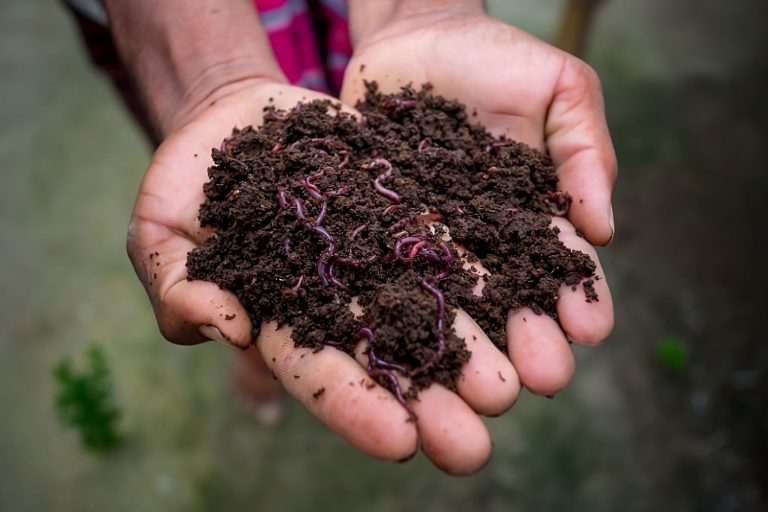
Vermicomposting, or worm farming, is a fascinating and effective method of utilizing worms to break down organic materials into nutrient-rich fertilizer. This process involves the use of a specially designed vermicomposting bin, which creates a conducive environment for the worms to thrive and reproduce.
The beauty of this approach is that it offers a simple and sustainable solution for transforming food waste into compost. Instead of throwing away table scraps or other organic matter, which may end up in landfills, vermiculture provides a practical way of repurposing such materials. Through the action of the worms, the organic matter is transformed into a high-quality fertilizer known as “worm castings.”
Furthermore, a vermicomposting bin can help maintain the ideal conditions for hosting a worm-friendly habitat. The bin can be filled with bedding material such as shredded paper, coconut coir, or peat moss, which serves as a comfortable home for the worms. Additionally, the bin should be kept at a moderate temperature and moisture level to support the worms’ growth and reproduction.
Vermiculture is a natural and eco-friendly approach to composting that offers numerous benefits. By creating a vermicomposting bin and using worms to break down organic material, one can create nutrient-rich fertilizer and help reduce waste that would otherwise end up in landfills.
Benefits of vermicomposting
Vermicomposting, the practice of using worms to break down organic materials into fertilizer, offers a host of benefits for backyard gardens. Here are a few reasons why:
- Vermicomposting can enhance an existing composting operation by creating a nutrient-rich supplement to traditional compost. Worms like red wigglers and earthworms are particularly effective at breaking down organic matter, which speeds up the composting process.
- The end product of vermicomposting is a high-yield fertilizer that contains more humus than traditional compost. Humus, a key component of soil, improves aeration and water retention, leading to healthier plants and more robust growth.
- Vermicompost is also rich in essential nutrients like nitrogen, phosphorus, and potassium, as well as micronutrients that promote plant health. It contains worm castings, partially decomposed organic materials, and fragments of plants, food, and other detritus that can stimulate plant growth and vitality.
- Micronutrients in vermicompost, such as magnesium and sulfur, are slowly released into the soil and bound in a way that prevents them from being washed away in heavy rain. This means that plants can access these nutrients over a longer period, which can lead to stronger and more resilient growth.
The benefits of vermicomposting go beyond plant health and environmental sustainability. It can also be a cost-effective way to produce high-quality fertilizer. Starting a vermicomposting system requires minimal investment and can even be done for free if you have a friend who already keeps worms. Once your system is set up, simply ask your friend for a dozen or so worms to get started.
Within a few months, your worm population will begin to multiply, and you’ll have a steady supply of natural fertilizer at your disposal. In fact, producing your own vermicompost can save you money in the long run. Retail fertilizers can be expensive, with finished vermicompost selling for up to $40 for a 20-pound bag. By contrast, you can make your own 20-pound bag of castings in your basement or backyard for just pennies after the initial set-up costs.
Building an outdoor bin for vermicomposting can also be a cost-effective project, especially if you use reclaimed materials. The only real expenses are worms and straw bales, which can be used for occasional bedding and insulation during the winter months. With a little creativity, you can keep costs down and enjoy the benefits of vermicomposting in your own backyard.
Setting up a Worm Bin
To set up a worm bin, you will need two plastic containers, an inner bin, and an outer bin. The inner bin should have several holes drilled on all four sides and about three dozen holes through the bottom for drainage.
On the other hand, the outer bin should have several holes drilled through all four sides, but none on the bottom, so it can catch any excess liquid. To promote drainage and prevent water buildup, add a layer of small pebbles, river rocks, or sand on the bottom of the inner bin.
The next step is to create worm bedding, which is a mixture of shredded paper or torn newspaper, leaf litter, grass clippings, and small pieces of cardboard, such as toilet paper rolls. Once the bedding is ready, spray it with water until it’s damp, but not soaking wet. The bedding should sit until it reaches the correct temperature, which is between 55- and 80-degrees Fahrenheit. Make sure that the temperature stays below 90 degrees F for at least two days before proceeding.
Once the bedding is at the right temperature, add the worms, push aside the bedding, and cover them with the bedding again. You can start adding food scraps slowly, remembering that worms can eat their weight in one day. For example, if you have 1 pound of worms, they will go through 1 pound of food scraps daily.
After one to two months, the bottom layer of the bin will contain rich and nutrient-dense vermicompost. To harvest it, simply remove the bottom layer and add a few handfuls of new worm bedding. You can then continue adding kitchen scraps, and the cycle will continue. By following these simple steps, you can create a thriving ecosystem in your worm bin and produce natural and effective fertilizer for your plants.
What to Add to Your Bin
When composting with worms, there are certain items that should be avoided. However, there are several materials that make great additions to a vermicompost bin. Food scraps (excluding meat, dairy, and spicy peppers), eggshells, coffee grounds, black and white newspaper (no glossy or colorful pages), cardboard, leaves, grass clippings, small twigs, and non-invasive weeds (before they go to seed) can all be added.
 It’s important to avoid composting items that belong in the landfill or recycling, as well as materials that won’t decompose. Additionally, invasive weeds and diseased plants should not be added to the compost bin; instead, they should be burned away from the garden and compost bin.
Recycled paper and newspaper can be used as bedding for the worms. Shred newspaper, thin cardboard, and black and white paper waste using a simple paper shredder and keep them in a bin with a tight-fitting lid. You can ask friends and family to save newspapers for you or check with your local newspaper office for leftover materials.
Fall leaves are an excellent addition to a vermicompost bin. If you have a leaf blower, it may come with an attachment that grinds up leaves and deposits them into a collection bag, which makes it easier for the worms to process them. Grass clippings from untreated lawns can also be added to the bin, but only if the lawn isn’t treated with chemical pesticides.
Sawdust from untreated lumber can be used in a vermicompost bin, but it’s important to avoid sawdust from species that produce allelopathic chemicals, such as black walnut and relatives, or aromatic cedars that may contain oils toxic to worms. Wood chips are also useful for long-term composting and adding a carbon component to a large pile, aging manure, or adding a base layer to a long windrow system.
Spent grains are a good source of food for microorganisms in a vermicompost bin during winter when large volumes of vegetable scraps aren’t as available. However, they generate a lot of heat when decomposing and can change the pH of the pile. To cool them down, they can be added to a compost pile first or aged in a 5-gallon bucket with several holes drilled into the bottom for drainage and airflow.
Coffee grounds are readily available from most coffee shops and make a great addition to a vermicompost system or windrow. Animal manure is also beneficial, but pre-composted or aged manure is best for a vermicompost bin. Cattle, poultry, sheep, goat, hog, rabbit, and horse manure all offer good nutrition for worms, but it’s important to watch out for weed seeds in uncomposted animal manure.
Pile division

Composting on a larger scale can involve creating piles or windrows of organic matter. Dividing the composting piles into one-year, two-year, and five-year piles is a great way to manage the process and ensure the finished product is of the best quality.
The one-year pile is the first stage of composting and contains materials that will decompose within a year, such as food scraps, leaf litter, newspaper, and grass clippings. This pile is full of worms and microorganisms that work hard to transform the organic matter into a usable growing medium. It has a 1-to-1 carbon-to-nitrogen ratio, which is optimal for composting.
The two-year pile builds on the one-year pile, and we add more materials such as cardboard and manures from goats, rabbits, cows, and horses. We also include lots of fallen leaves, straw, and paper goods to this pile, and we turn it weekly. Turning the pile ensures that the materials are mixed well, and it allows for oxygen to be introduced, which is essential for the composting process to take place.
The five-year pile is the final stage of composting and contains everything the two-year pile has, plus chicken manure. Chicken manure is high in nitrogen, so we try to balance it by adding more straw. This pile takes longer to decompose and break down, but it produces a nutrient-rich compost that is ideal for use in the garden.
In summary, dividing composting piles into one-year, two-year, and five-year piles allows for a controlled and efficient composting process. It ensures that the materials are properly mixed, and it allows for the production of a high-quality finished product that is perfect for gardening.
Concluding
 Vermicomposting is a sustainable and eco-friendly way to transform organic waste into nutrient-rich compost. It involves using worms to break down food scraps, yard waste, and other organic materials into a usable fertilizer for plants. Vermicomposting is a great option for those who want to reduce their environmental impact and create a healthier garden or farm.
By following the guidelines for what to compost and what to avoid, and by setting up a proper vermicomposting system, anyone can successfully produce high-quality compost that benefits both the environment and their own gardening endeavors. With a little bit of effort, anyone can turn their kitchen and yard waste into a valuable resource, while also contributing to a more sustainable future.
Additional resources:
A few compost recipes for all your gardening needs
If you see this plant in your backyard, don’t touch it!
Smart tips for gardening on dry soil
The #1 food of Americans during the Great Depression
I'M Finally Taking a Vacation
I'm finally taking a vacation, if only for one day. On October 14th, I will fly out of Huntsville, Alabama and travel to Midland, Texas (aka the garden spot of the west Texas plains) to hopefully view the solar eclipse, and then return to Huntsville. With any luck, I will only be gone for 24 hours, and sleep in my own bed before returning to work the next day! I chose Midland because #1-the path of the eclipse passes between Midland and Odessa, which is the exact location of the airport,…